ISSN 2286-4822
www.euacademic.org DRJI Value: 5.9 (B+)
Effects of Supplementation of Different Levels of
Selenium in the Indicators of Growth of Broilers,
the Efficiency of Production and its Concentration
in the Blood
VEZIR JANUZI1 LUMTURI SENA Faculty of Agriculture and Environment, Agricultural University of Tirana, Albania
XHEVDET ELEZI
Faculty of Agriculture and Veterinary, University of Prishtina, Kosovo
FATIMA SENA
Ministry of Agriculture and Rural Development, Tirana, Albania
Abstract:
It was studied the effect of supplementation of broiler diets with different levels of selenium organic in performance, in efficiency of production and its content in blood for the period 0-35 days.
Factors (EPEF) and European Broiler Index (EBI). The supplement of organic selenium in the diet of broilers increased their concentration in blood.
Key words: blood; broiler; organic selenium; performance; selenium content
INTRODUCTION
SE is a microelement with important biological functions in Animals. Organic Selenium is found in cereals, animal food and particular food ingredients, mainly in the form of selenometionin. Therefore its way of metabolism is the same with the one of methionine (Jokic Ž., Pavlovski Z., Mitrović S., Đermanović V. 2009). Recent studies have shown that selenometionina is not synthesized in the body of animals or human, but has origins from plant sources. Because of the deficit of selenium in the body of animals can be as a consequence of its slight level on the ground, (Suchy P., Straková E., Herzig I. 2014) But the risk of selenium deficit in the birds is smaller, because in the combined foods is included inorganic Se. Inorganic Selenium is kept for a short time in the muscles, easily incorporated in selenoproteins, but a great part of it is excreted with urine. Compared with selenitin, organic selenium ensures more effectively its reserves in muscles.
P., Jiang Y.B, Yin Q.Q, Chang J, Zuo R.Y, Zheng Q.H, Liu J.X. 2012); (Chen G, Jinfeng W, Chong Li. 2013); (Habibian M., Ghazi S., Moeini M.M, Abdolmohammadi A. 2013) (Rama Rao S.V, Prakash B., Raju M.V.L.N, Panda A.K, Poonam S., Murthy O.K 2013). Selenium is added at poultry food mainly to be protected by special illnesses due to the positive effect in the immune system, and in the improvement of the production performance, including body weight and feed conversion (Mahan D.C, Cline T.R, Richert B. 1999) (Jokic Ž., Pavlovski Z., Mitrović S., Đermanović V. 2009), Okunlola D.O et al., 2015).
Objective of this study is to be investigated the effect of supplementation of broiler foods different levels of organic selenium in the performance, in the indicator of the production efficiency and in its deposition in the blood plasma.
MATERIAL AND METHODS
The experiment was carried out on a broiler growing farm in Podujevo, Kosovo for a 35 day period. 3 experimental groups were set up for this with 300 birds each aged 1 day. Birds of all groups consumed the same diet. While the control was not supplemented with Se, E1, it was supplemented with 0.4ppm during the entire growth period. E2 diet (consisting by two sub groups) was supplemented with 0.4ppm Se in the first three weeks (the first phase), while in the second stage E2/1 it was supplemented with 0.8ppm and E2 / 2 with 1.0ppm Se. Birds of all groups consumed floured food. Birds were provided ad libidum food and water during the whole period.
Indicators that were registered: Vitality (in headings and in %)
Eating consumed for each group in kg. Calculation of total food consumption per bird and for extra weight kg (FCR) and calculation of addition weight, realized for food units.
The weight of the birds was realized for each week. Every week weighing was done in the morning before eating food at 5% of the number of heads (15 heads). The content of Se in plasma, at the age of 21 and 35
days.
Food Samples according to the experiment scheme were analyzed at the beginning and at the end of each experimental phase following groups.
Blood samples were taken at the end of the first phase as well as at the end of the second phase (completion of the experiment). Blood samples were taken from arm veins by 10 individuals for each group.
All samples of the material were mineralized according to the selected program standardized with M W3+ (microwave oven) Berghof production, Germany. Mineralized samples were subjected to the measurement of the content of Se in ICP-OES, manufactured by Perkin-Elmer, USA, under specified working conditions (length of value) selected for Se, element which under these conditions is detected up to 4 ppb.
Determination of the content of Se under the aforementioned conditions was carried out in the laboratory of SOE Agrovet, Kosovo, which is accredited according to ISO 17025-2006.
BWG (body weight gain), ADG (average daily gain – g / chicken / day) FCR (feed conversion ratio), viability, PI (performance index), EPEF and EBI the following formulas were used:
B WG (grams on period), BW (g) at the end period – BW (g) in first day;
ADG (g /chick / d) =
FCR (kg feed / kg gain) =
Viability (%) = chicks remaining at the end of period (%);
The Performance Index (PI) (Jahan M.S, M. Asaduzzaman, A.K Sarkar. 2006) was calculated as follows:
European Production Efficiency Factors (EPEF)
European Broiler Index (EBI)
The obtained results were subjected to ANOVA statistical processing and descriptive analysis and t Test was used for comparisons.
Table 1. Experiment scheme
Age to day Control (C)
Experiment 1
(E1)
Experiment 2 (E2) Experiment 2/1(E2 / 1)
Experiment 2/2(E2 / 2)
F 1 (1-21) - 0.4ppm Se 0.4ppm Se 0.4ppm Se FII (22-42) - 0.4ppm Se 0.8ppm Se 1.0ppm Se The structure of the used feed rate and the analysis of its chemical composition for the two phases of growth is presented in the following table:
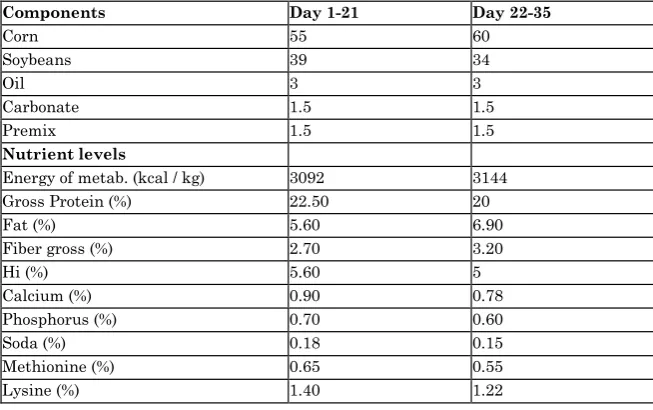
Table 2. Feed rate structure for birds according to the phases used on the farm
Components Day 1-21 Day 22-35
Corn 55 60
Soybeans 39 34
Oil 3 3
Carbonate 1.5 1.5
Premix 1.5 1.5
Nutrient levels
Energy of metab. (kcal / kg) 3092 3144
Gross Protein (%) 22.50 20
Fat (%) 5.60 6.90
Fiber gross (%) 2.70 3.20
Hi (%) 5.60 5
Calcium (%) 0.90 0.78
Phosphorus (%) 0.70 0.60
Soda (%) 0.18 0.15
Methionine (%) 0.65 0.55
Lysine (%) 1.40 1.22
worked statistically with ANOVA method, for descriptive analysis and comparisons will be used t Test.
RESULTS AND DISCUSSION
It was investigated the effect of different levels of Se in the diet comparing three different concentrations of Se: 0.4, 0.8 and 1.0 ppm.
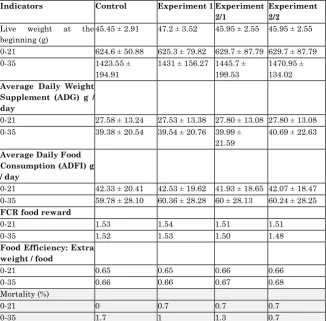
Table 3. Effect of different levels of selenium on growth indicators and mortality
Indicators Control Experiment 1 Experiment
2/1
Experiment 2/2
Live weight at the beginning (g)
45.45 ± 2.91 47.2 ± 3.52 45.95 ± 2.55 45.95 ± 2.55
0-21 624.6 ± 50.88 625.3 ± 79.82 629.7 ± 87.79 629.7 ± 87.79
0-35 1423.55 ±
194.91
1431 ± 156.27 1445.7 ± 199.53
1470.95 ± 134.02
Average Daily Weight Supplement (ADG) g / day
0-21 27.58 ± 13.24 27.53 ± 13.38 27.80 ± 13.08 27.80 ± 13.08 0-35 39.38 ± 20.54 39.54 ± 20.76 39.99 ±
21.59
40.69 ± 22.63
Average Daily Food Consumption (ADFI) g / day
0-21 42.33 ± 20.41 42.53 ± 19.62 41.93 ± 18.65 42.07 ± 18.47 0-35 59.78 ± 28.10 60.36 ± 28.28 60 ± 28.13 60.24 ± 28.25
FCR food reward
0-21 1.53 1.54 1.51 1.51
0-35 1.52 1.53 1.50 1.48
Food Efficiency: Extra weight / food
0-21 0.65 0.65 0.66 0.66
0-35 0.66 0.66 0.67 0.68
Mortality (%)
0-21 0 0.7 0.7 0.7
Supplementation of the broiler diet with three different levels of selenium did not affect the performance of the broiler growth
(P<0.05). Results are conform to (FW 1996), (Yoon, I., T.M Werner, and J.M Butler. 2007). No significant differences between groups are also associated with food consumption. The feed efficiency (gain: feed) was improved slightly, particularly at the end of the experiment, with the growth of Se dose. E2/2 efficiency increased 3.03 % compared to Control (C) and E1 and 1.49% compared to E2/1.
(Edens, F.E., T.A Carter, C.R Parkhurts, and A.E Sefton. 2000) and (Spears JW, Grimes J., Lloyd K., Ward TL. 2003) also reported non-significant differences over the live weight of birds, whose diets were supplemented with different levels of selenium. According to (Perić L, Milošević N, Zikić D, Kanački Z, Džinić N, Nollet L, Spring P., 2009), no effects were observed on the performance of broilers by the use of different Se organic concentrations. (Briens, M. Mercier, Y. Rouffineau, F. Vacchina, V. Geraert PA 2013), have reported that the use of different levels of selenium in the feed did not significantly influence in the performance of broilers for the first three weeks of their lives.
This is also confirmed by other studies (Payne R L Southern L L 2005); (Yoon, I., T.M Werner, and J.M Butler. 2007); (Upton JR Edens F. W. Ferket PR 2008,) (Wang, Yan Bo, and Bao Hua Xu. 2008); (Jiang Z. Lin Y. Zhou G. Luo L. Jiang S. Chen F. 2009) for the entire period of growth. According to (Chen G, Jinfeng W, Chong Li. 2013), the productive performance of broilers did not significantly improve when their diet was supplemented with 0.3, 0.5, 1.0 or 2.0 ppm organic selenium.
study it is observed that there is no significant difference between groups of experiment associated with mortality.
The impact of different levels of selenium in the efficiencies of broiler production
Performance data analysis (living weight, weight gain, mortality, and FCR) are essential for calculating economic efficiency in broiler growth.
To judge the real performance of broilers, it is important to evaluate the biological performance as well as the economic indicators. There are several indices for measuring broiler performance. Many of them express the biological performance of broilers. Indices can be used to measure the genetic potential of birds, the quality of food and the farm's technical efficiency. Based on the growth indicators for the whole period, we calculated by indexes also the economic growth efficiency indicators for all groups: IP, EPEF and EBI.
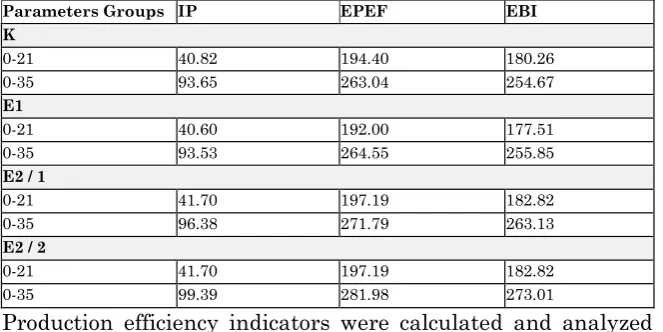
Table 4. Production Efficiency Indicators
Parameters Groups IP EPEF EBI
K
0-21 40.82 194.40 180.26
0-35 93.65 263.04 254.67
E1
0-21 40.60 192.00 177.51
0-35 93.53 264.55 255.85
E2 / 1
0-21 41.70 197.19 182.82
0-35 96.38 271.79 263.13
E2 / 2
0-21 41.70 197.19 182.82
0-35 99.39 281.98 273.01
If we analyze the performance index (PI) for the first phase, it is evidenced a higher value in E2 compared to the other two groups, respectively 2.16 and 2.71% higher than K and E1. While for the whole period superiority of E2/2 is estimated 6.13%, 6.26%, 3.12% respectively to K, E1 and E2/1. Thus, with the increase in selenium dose in ration (up to 1ppm), a slight improvement in the performance index is observed.
We analyze the EPEF for the first phase of growth. Again it is observed a superiority of E2 as follows: 1.44%, 2.70%, to K, and E1. Even for the whole period it is E2/2, which leads over the others as follows: 7.20%, 6.59%, and 3.75% respectively over K, E1, and E2/1. The higher the EPEF value, the higher the revenue will be. According to (Bakhshalinejad, R., Akbari Moghaddam Kakhki, R. and Zoidis, E. 2018) supplementation organic Se resulted slightly in the improvement of EPEF compared to feeding with inorganic Se. If we analyze EBI for the first phase, it is noticed the same phenomenon as with IP and EPEF. E2 predominates over other groups as follows: 1.42% and 2.99%, while for the whole period it represents values as follows: 7.20%, 6.71% and 3.75% respectively to K, E1, and E2/1.
E1 has the value of IP, EPEF and EBI smaller than the other groups in the first phase, because it has also higher FCR. While at the end of the experiment, there is a slight increase in these indexes, respectively with the addition of selenium to food.
Table 5. The effect of different levels of Selenium in its deposition in the blood (mg / L)
Phase Control Experiment 1 Experiment 2/1 Experiment 2/2 1 0.190 ± 0.026 0,241 ± 0.012 0.236 ± 0.008 0.236 ± 0.008 2 0.194 ± 0.028 0.263 ± 0.019 0.283 ± 0.007 0.300 ± 0.010
the same dose of Se (0.4ppm) did not statistically differ (for P≤0.05). At the end of growth it can be concluded that with the increase of Se in the diet, it is increased progressively its deposition in blood (with significant difference). Results of this study are similar to those reported by (Yoon, I., T.M Werner, and J.M Butler. 2007.).
Selenomethionine as the most used organic form in the poultry industry is easily absorbed by erythrocytes through an active mechanism similar to that of methionine. In contrast to inorganic Se, similar to sodium selenite, it is absorbed by simple diffusion. If we compare each group between the two phases (F1: F2) related to the deposition of Se in blood we will notice: Because the control group has not been supplemented with Se, even the change from one stage to the next is insignificant. In all other groups it is noticed a significant increase of deposited Se in blood (significant difference) from week 3-5.
CONCLUSIONS
Supplementation of diet of broilers with different levels of Organic Se (0.0-1.0) did not affect performance indicators. The performance index (IP) improved with the addition of Se level in the diet.
Se supplementation up to 1ppm (in the second phase of growth) affected the increase production efficiency (EPEF and EBI).
LITERATURE
1. Attia YA, Abdalah AA, Zeweil HS, Bovera F., Tag El-Din AA, Araft MA. "Effect of inorganic or organic selenium supplementation on productive performance, egg quality and some physiological traits of dual-purpose breeding hens." Czech Journal of Animal Science, 55, (2010): 505 – 519.
2. Bakhshalinejad, R., Akbari Moghaddam Kakhki, R. and Zoidis, E. "Effects of different dietary sources and levels of selenium supplements on growth performance, antioxidant status and immune parameters in Ross 308 broiler chickens." Br. Poul. Sci. 59 (1): (2018): 81 – 91. 3. Briens, M. Mercier, Y. Rouffineau, F. Vacchina, V.
Geraert PA. "Comparative study of a new organic selenium source v. seleno – yeast and mineral selenium sources on muscle selenium enrichment and selenium digestibility in broiler chickens." Br J Nutr. 110 (2013): 617 – 624.
4. Chen G, Jinfeng W, Chong Li. "The effect of different selenium levels on the production performance and biochemical parameters of broilers." Italian Journal of Animal Science 12: (2013): 486 – 491.
5. Chen G, Jinfeng W, Chong Li. "The effect of different selenium levels on the production performance and biochemical parameters of broilers." Italian Journal of Animal Science 12; (2013): 486 – 491.
6. De Medeiros LG, Oba A., Shimokomaki M., Pinheiro JW, Da Silva C.A, Soares A.L, Pissinati A., De Almeida M. "Performance, broiler carcass and meat quality characteristics, supplemented with organic selenium."
7. Deniz, G., SS Genzen, and I.I Turkmen. "Effects of two supplemental dietary selenium sources (mineral and organic) on broiler performance and drip – loss." Revue Med.Vet. 156: (2005): 423 – 426.
8. Dlouha G., Sevcikova S., Dokoupilova A., Zita L., Heindl J., Skrivan M. "Effect of dietary selenium sources on growth performance, breast muscle selenium, glutathione peroxidase activity and oxidative stability in broilers." Czech Journal of Animal Science 53 (2008): 265 – 269.
9. FW, Edens. "Organic selenium: From feathers to muscle integrity to drip loss. Five years onward: No more selenite." Nottingham, UK Proc. Alltech's 12th Ann. Sympa., 1996: (165 – 185).
10.Heindl J., Ledvinka Z., Englmaierova M., Zita L., Tumova E. "The effect of dietary selenium sources and levels on performance, selenium content in muscle and glutathione peroxidase activity in broiler chickens."
Czech Journal of Animal Science, 55 (2010): 572 – 578. 11.Jahan M.S, M. Asaduzzaman, A.K Sarkar. "Performance
of broiler fed on mash, pellet and crumble." Performance of broiler fed on mash, pellet and crumble Int J Poult Sci, 5; (2006): pp. 265 – 270.
12.Jiang Z. Lin Y. Zhou G. Luo L. Jiang S. Chen F. "Effects of dietary selenomethionine supplementation on growth performance, meat quality and antioxidant properties in yellow broilers." J Agri Food Chem. 57, (2009): 9769 – 9772.
13.Jokic Ž., Pavlovski Z., Mitrović S., Đermanović V. "The effect of different levels of organic selenium."
Biotechnology in Animal Husbandry (Institute for
14.Mahan D.C, Cline T.R, Richert B. "Effect of dietary levels of selenium-enriched yeast and sodium selenite, serum glutathione activity, carcass characteristics and loin duality." Journal of Animal Science, 77, (1999): 2172-2179.
15.Payne R L Southern L L. "Changes in glutathione peroxidase and tissue selenium concentrations of broilers after consuming a suitable diet in selenium."
Poultry Sci. 84, (2005): 1268-1276.
16.Perić L, Milošević N, Zikić D, Kanački Z, Džinić N, Nollet L, Spring P.,. "Effects of selenium sources on performance and meat characteristics of broiler chickens." J Appl Poult Res. 18: (2009;): 403- 409.
17.Rama Rao S.V, Prakash B., Raju M.V.L.N, Panda A.K, Poonam S., Murthy O.K. "Effect of supplementing organic selenium on performance, carcass traits, oxidative parameters and immune responses in commercial broiler chickens." Asian Australasian Journal of Animal Sciences, 26, (2013): 247- 252.
18.Spears JW, Grimes J., Lloyd K., Ward TL. "Efficacy of a novel organic selenium compound (zinc- 1.selenomethionine, available Se) in broiler chicks."
Cancun, Mexico Proc. 1st Latin Am. Congr. Anim. Nutr,
2003: (197-198).
19.Suchy P., Straková E., Herzig I. "Selenium in poultry nutrition." Czech J. Anim. Sci. 59 (2014): 495-503.
20.Upton JR Edens F. W. Ferket PR. "Selenium yeast effect on broiler performance." Int J Poultr Sci. 7, (2008,): 798-805.
21.Wang, Yan Bo, and Bao Hua Xu. "Effect of different selenium source (sodium selenite and selenium yeast)."
22.Yang Y.R, Meng F.C, Wang P., Jiang Y.B, Yin Q.Q, Chang J, Zuo R.Y, Zheng Q.H, Liu J.X. "Effect of organic and inorganic selenium supplementation on growth performance, meat quality and antioxidant property of broilers." African Journal of Biotechnology, 11, (2012): 3031-3036.
23.Yoon, I., T.M Werner, and J.M Butler. "Effect of source and concentration of selenium on growth performance and selenium retention in broiler chickens." Poultr Sci.