Course enhancement: a road map for devising
active-learning and inquiry-based science courses
WILLIAM S. HARWOOD*
Science Education, School of Education and Department of Chemistry, Indiana University, Bloomington, Indiana, USA
ABSTRACT Many college science faculties are frustrated at the performance of students in their courses. While faculty may not have much control over the nature of the students, we do have a great deal of control regarding what and how we teach. Lately, research and policy experts have been calling for college faculty to use new ways of teaching that are “inquiry-based” or use “active-learning techniques.” These calls, however, do not provide a clear pathway for making changes that are likely to succeed and that are relevant to specific disciplines. Course development can be approached in much the same way as our research. This paper develops a strategy for “course development” in terms that are familiar to developmental biologists. Just as research on gastrulation movements benefited from the use of a variety of activities (e.g., vital dye tracking, scanning electron microscopy), course development needs to consider multiple techniques and to make changes in straightforward and purposive ways. Examples from the literature and questions to consider will help the reader find their way to a new style of teaching.
KEY WORDS:
course development, reform, teaching style, learning style
0214-6282/2003/$25.00 © UBC Press
Printed in Spain
www.ijdb.ehu.es
*Address correspondence to: Dr. William S. Harwood. 201 N. Rose Avenue, ED 3010, Indiana University, Bloomington, Indiana 47405, USA. Fax: +1-812-856-8116. e-mail: [email protected]
Background Information
Scholarly Interests of the Author
My research focuses on science teaching and learning in the college context. In particular, I am exploring the requirements for effective reform of college science classrooms so that they become more active and/or inquiry-based. Current projects explore the beliefs and practices of college science faculty with regard to instruction. I am also interested in the impact of college science reform efforts on student learning, attitudes toward science, and conceptions of scientific inquiry. Details of our recent projects with Biology and Chemistry courses are available at http:// php.indiana.edu/~wharwood.
Representative Publications
BARNETT, M., HARWOOD, W.S., KEATING, T. and SAAM, J. (2002). Using emerging technologies to help bridge the gap between university theory and classroom practice: Challenges and successes. School Sci. Math. 102(6): 299—313.
HARWOOD, W.S., MAKINSTER, J.G., CRUZ, L. and GABEL, D.L. (2002). Acting out science: Using Senate hearings to debate global climate change. J. Coll. Sci. Teaching, 31: 442-447.
HARWOOD, W.S., REIFF, R., and PHILLIPSON, T. (2002). Scientists’ conceptions of scientific inquiry: Voices from the front. AETS Proc. 2002. Available at: http:// www.ed.psu.edu/CI/Journals/2002aets/tl_harwood_reiff_p.rtf
PETRUCCI, R.H., HARWOOD, W.S. and HERRING, F.G. (2002). General Chemistry-Principles and Modern Applications, 8th edn. Prentice Hall, Upeer Saddle River, NJ.
General Teaching Philosophy
Most of my academic career has been at large research univer-sities, although I have previously taught at a small college and a regional university. At each of those institutions, research produc-tivity (i.e., publication of scientific manuscripts) represents the main priority of science faculty. Indeed, I love to do research. Trying to push back the border between the known and the unknown is a wonderful and exciting adventure for me. At the same time, I feel that teaching students science is also an exciting and rewarding experience. Thus, I seek a balance in my philosophy and believe that undergraduate education is best improved by devising strate-gies for improving student learning effectiveness in ways that can peacefully co-exist alongside the powerful forces of the scientific research enterprise.
To achieve this goal, I treat teaching as a research task. After all, research is the most fun thing I know. This idea of teaching as a form of research helps me make decisions regarding changes in my course and how to assess the effect or impact of those changes on my students’ performance.
me to see students begin to think like scientists and to work through ideas that are new to them. As they do, students begin to take responsibility for their own learning, and I am able to take responsi-bility for creating a context where learning can happen. Thus, my role is to adapt or devise methods that help more students succeed in the challenging learning tasks associated with college science.
The Call for Reform in teaching Undergraduate Science
Courses
Over the past decade, there have been increasing numbers of calls for reform in science education (Tobias, 1992; Boyer, 1998; Bybee, 2002). Many of these focus on K-12 level teaching. Recently, however, there is renewed focus on college-level science education for both science majors and non-science majors (NSTA, 2001, Siebert and McIntosh, 2001). These summons for the reform of college science instruction are not just from so-called educators or policy-makers. Many come from colleagues in science departments who have become deeply concerned about both the quality of students’ understanding of the basic principles of various science disciplines and about the recent diminution in the number of students interested in pursuing science majors in colleges and universities.
Often, the focus of criticism is the quality of teaching at the undergraduate level. Indeed, it has recently been proclaimed by a biology professor that typical undergraduate science teaching does not have a beneficial or even a neutral benefit. Rather, it is harmful (Herreid, 2001)! In addition, the president of the U.S. National Academy of Sciences (and textbook author) - Bruce Alberts - asked,
Why do the same scientists who remember with distaste their own college laboratory experiences continue to run their own college students through the same type of com-pletely predictable, recipe-driven laboratory exercises that once bored them? (Alberts, 2000).
A general principle to which most science faculty adhere is the notion that students absorb information as a lecturer presents it. Most courses are therefore designed to be teacher-centered. This
ap-proach validates the teacher as the “authority,” subjugates students in the process, and minimizes the time and effort a professor must devote to the undergraduate classroom learning experience. Al-though that strategy contradicts the principle that generating an effective classroom learning experience is intrinsically labor inten-sive, it conveniently provides increased time for the professor’s laboratory research endeavors. Since virtually all research-oriented universities, regardless of size or country, share a common culture that emphasizes research publications, a conflict exists between devoting time and effort to the undergraduate classroom experience and the professor’s research enterprises.
Generating reform in the undergraduate learning experience (i.e., classroom teaching activities) is therefore inherently difficult. This paper reviews some of the challenges faced by undergradu-ate science teachers who want to improve the quality of student-oriented learning in their courses. Several of those challenges can be addressed in one or another manner. Thus, various criteria for deciding which changes are appropriate will be presented, along with descriptions of resources for developing strategies for imple-menting those changes.
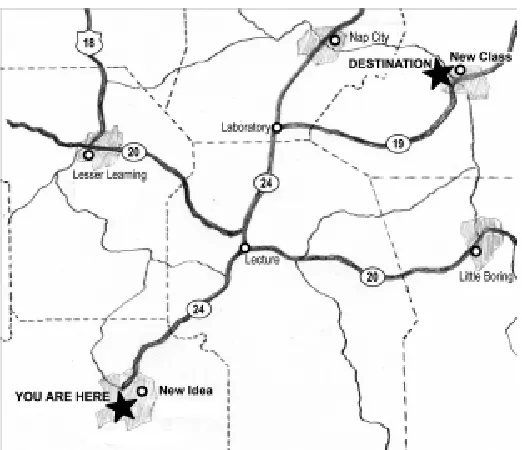
A Road Map for Change - Brief Overview
Figure 1 contains a schematic illustration of the route that can be taken to enhance the quality of an undergraduate science course. Developmental Biology courses can be reviewed with this illustra-tion in order to recognize opportunities for improving the under-graduate learning experience. The descriptions of situations and issues associated with improving science courses that are in-cluded in the text are keyed to Fig. 1.
Preparation for Departure - Setting Course Goals with a
Checklist
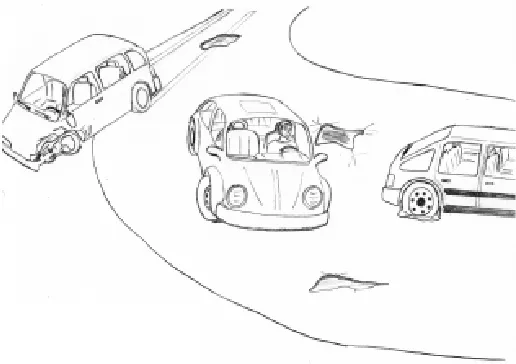
The dominant metaphor in this paper is the road map. The process of reforming one’s course can be viewed as a journey with lots of opportunity for wonderful experiences as well as the risk of an accident. The deliberate use of a road map likely will enhance the former and minimize the latter. Keeping with this metaphor, then, it is a good idea before setting out on a trip to have some idea of the goal(s). The same is true for enhancing or reforming your course. These goals should be written down, though they may be revised en route. For a course such as Developmental Biology, you should consider issues of content and structure as well as the intellectual features expected of an undergraduate science course (Nelson, 2001a). You may begin setting course goals by confront-ing the followconfront-ing checklist of questions:
- What information should students have learned by the end of the course?
For example: How many different cleavage patterns should be named, understood, and memorized for quick recall? Will one, two, or more fertilization reaction mechanisms be learned profi-ciently so that they can be diagrammed? Ought the morphological features of one or two, or three or four gastrulation movement patterns be committed to memory? Shall students be expected to describe the histological features of organ and tissue specializa-tion in a range of invertebrates, as well as in vertebrates?
- Which key conceptual ideas should students understand and be able to apply?
For example: The vertebrate body plan is the product of cell and tissue interactions? Early embryonic patterning is under the control of cytoplasmic determinants? Zygotic gene expression eventually establishes control over tissue and organ morphogen-esis? Phylogenetic history is the single most important consider-ation when explaining “why patterning is the way it is”?
- What scientific thought processes should students practice? For example: Devising hypotheses, for the purpose of building knowledge? Designing practical, technical features of experi-ments? Evaluating data that are presented in graphs? Formulat-ing appropriate crosschecks of data such as the use of both positive and negative control samples? Understanding the mean-ing of measurement, in the context of a specific data set?
- Which intellectual skills (e.g., analysis, verbal reasoning, etc.) should students develop during the course?
For example: Interpreting information included in graphs and tables into a concluding statement? Devising optimal formats for presenting data (histograph vs. table; photograph vs. diagram, etc.)? Preparing models which connect various developmental events in a progressive, holistic fashion? Using verbal reasoning to explain the meaning of gene knockout data? Employing ab-stract thinking to formulate a regulatory circuit to explain the complexities of interconnected signal cascade pathways?
- In what ways will students develop their capacity for independent learning?
For example: Writing extensive and detailed reports? Preparing mock grant proposals? Assembling data into a thesis, which includes appropriate introductory comments and discussion points? Collecting requisite supplies and equipment, and running an experiment to test a hypothesis? Organizing a seminar presen-tation on journal reports?
Selecting a Route from among Many Choices
Since most developmental biology courses typically engage students for only one semester (e.g., 15 weeks) it is unrealistic to expect that all of the above course goals can be reached in such a short time span. Indeed, deciding what to “leave out” of a contemporary developmental biology course is a much more difficult task than deciding what to include. The following set of checklist questions are offered for focusing on specific features:
-
Where does developmental biology end and molecular biology begin?For example: How to strike a balance regarding information content between morphological patterning and mechanisms which control alternative splicing?
-
Where does evolutionary biology end and developmental biol-ogy begin?For example: How much emphasis should be placed on reviewing the phylogenetic history of, for example, notochord morphogen-esis, vs. the cellular mechanics of notochord cell packing?
- Which of the “departure” checklist issues raised above (e.g., information content, concepts, intellectual skills, independent learn-ing, etc.) should be given primary vs. secondary priority? For example: How much time/effort should be devoted to analyzing data vs. drawing diagrams of morphogeneticpatterning events?
- What measurement devices will be employed to assess student achievement of the course goals?
For example: Will a portfolio of written reports be evaluated at the end of the course? Will a series of examinations be specifically
designed to test for learning skills associated with the course goals?
- How should the goals of this course be coordinated with the goals of previous and succeeding courses?
For example: What administrative mechanism will be set in place to insure that the professors of those courses meet periodically to discuss student progress and to select appropriate skill develop-ment exercises such that unnecessary repetition and/or gaps are avoided?
Those checklist questions should of course be refined and extended within the specific context of any single course. Since most science courses are partitioned into separate lecture and laboratory sections, those will be reviewed separately. In the case of Developmental Biology, this consideration is important, be-cause many of the laboratory model organisms require days or even weeks to develop. It is, therefore, often difficult to coordinate lecture topics and laboratory activities.
Reducing Information Content (Eliminating Excess
Bag-gage)
It is difficult for most developmental biology professors to imagine deleting information from their course. After all, this discipline is in a golden era, with new information accumulating each day. A quick comparison of recent editions of textbooks or Internet sites will reveal the rapid rate of expansion of the knowledge base. Yet this first step is absolutely necessary!In many science courses, especially survey courses taught to first-and second year college students, but also including many developmental biology courses, we suffer from a cancer-like growth of information. It is consuming us and needs to be removed in order for our discipline to survive in a healthy and attractive (to students) fashion. Like any surgery, however, it is a frightening notion and leads to worries regarding whether our course will really be better for it.
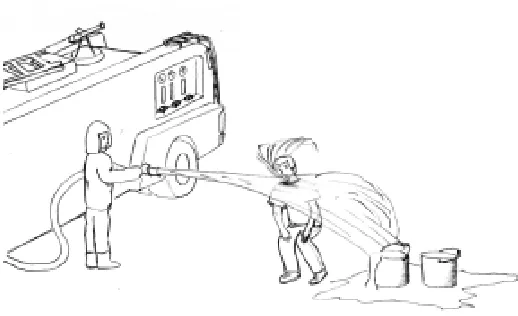
Research has shown, however, that removing content in-creases student understanding (Sundberg and Dini, 1993). Some of my colleagues have offered the following metaphor: their courses are like asking students to “drink from a fire hose.” They are so packed with dense information that students cannot reasonably make sense of it. In such situations, students are
office to chat. He explained that he had just delivered what he considered to represent a lecture that was “crystalline” in its perfection. Coincidentally, earlier a stream of stu-dents had bemoaned to me how lost they felt in that lecture, and how it had reached a new low point for them.
Thus, perception, intention, and purpose need to be viewed not only from the professor’s perspective, but also from the viewpoint of the student audience. From my experience, setting highly specific goals is the appropriate place to begin designing an effective lecture format. Using the research project metaphor mentioned earlier, goals should be broken down into small seg-ments that are relatively easy to address. The following checklist should help define the components of the goals of the lecture’s superstructure:
- What is the single most important idea, concept, or information fragment presented in a single lecture that students should remem-ber long after having finished the course?
- Viewed as a whole, does each additional idea presented in a sequence of lectures connect to the central concept in an explicitly stated way?
- Are disparate details that might otherwise obscure the central theme or concept deliberately omitted? This has been explained as the “less is more” approach (Nelson, 2001b).
- In what ways does the structure/content of the lectures encourage students to want to learn that important idea/information? - What strategies for learning that idea/information dooes the professor recommend to students during the lecture presentation? - What incentives does the professor offer to encourage students to attend (required) lectures?
Especially important are those considerations in courses in which more than one professor presents lectures. Coordination of lecture goals is paramount to success when lectures are presented by a series of so-called experts/specialists.
Lecture Format: Our First Destination
There is a great deal of consensus that the traditional lecture with its structure of a teacher talking and students writing is not the most effective means of helping undergraduates learn science. This mode of instruction requires only passive learning from the students. Research results encourage us to teach in ways that engage students in active learning during our “lecture” time (Zoller, 2000; Siebert and McIntosh, 2001). How much of a change in the traditional lecture format should be made is, however, an important question.
Some education researchers advocate eliminating the tradi-tional “sage on stage” and taking a completely new approach (Ebert-May, 2001). Others suggest a more gradual approach (Taylor et al., 2002; Gess-Newsome et al., 2003). My personal preference is for the gradual approach, because this allows me to view the process of course reform in the same way that I view doing science research. Thus, one can change a portion of the course format or structure to promote active learning and evaluate its effectiveness. Based upon that evaluation, I may continue to optimize that portion and/or make additional changes that I believe will achieve the goals I have established for my students.
The most difficult challenge is to identify what to change. I suggest that a professor determine what aspect of a traditional lecture presentation most frustrates him/her or the students, and
Fig. 3. Content overflow. Some courses provide so much information so quickly that for students it is like drinking from a fire hose.
fortunate to remember even a portion of the information for an examination, much less to really understand anything that can be recalled or applied after the course is over. A current research project I am involved with has shown that as much as one-third of the content in an upper-level Virology course can be removed without the professor or the students feeling that they are missing significant content. The following checklist might guide the “downsizing” of the information content of a developmental biol-ogy course:
- Which concepts or principles have outlived their usefulness to experimentalists, and thus can be deleted from the course outline? - How much of a review of standard molecular biology/cell biology issues is necessary as a foundation for inquiry into developmental phenomena?
- Which processes are not truly unique to developing embryos/ organisms, and thus do not help define the disciplines of develop-mental biology/embryology?
- Which developmental phenomena merely represent alternative routes to a common endpoint, and thus need not be discussed? - Can review of a process in one or two organisms, rather than a survey of several model systems, be used to reduce lecture content? - Where can an experimental design/data set be substituted for a description or characterization?
- Which experimental data—rather than providing cause/effect links— represent a correlation or suggestion, and need not be reviewed? - Where does the study of natural history (e.g., evolution) end and the study of developmental phenomena begin?
Using a Compass to plot Lecture Principles
The traditional lecture presentation has, with some justification, been criticized (Davis, 1976; Lord, 1994). We should be reminded, however, that the lecture format is the preferred mode for present-ing research findpresent-ings at professional meetpresent-ings. Indeed, durpresent-ing a typical graduate education, future professors are groomed to become skillful at conveying information to a (prepared) audience. With positive reinforcement from peers, a perception gap can develop as in this story:
consider how to affect that particular area. In biology courses, one of the most persistent challenges is moving beyond a teaching of facts and algorithms to develop higher order thinking skills (Zoller, 2000). In this view, one of the goals for an undergraduate science course such as Developmental Biology is to give students prac-tice at thinking like scientists. For scientists engaged in profes-sional inquiry, facts and names are necessary, but they are not the key items that scientists focus on. The connections among the facts that deepen our understanding of a concept or pattern are more relevant, and the names are necessary mainly to be able to clearly describe the system. Limiting our approach to teaching facts, however, produces students that have little understanding or appreciation of the scientific process that generated those facts (Herreid, 2001). In our recent study of scientists’ conceptions of scientific inquiry (Harwood et al., 2002), we found that scientists at Indiana University spoke with disdain about the teaching of facts. Two biologists interviewed in the study stated:
You are saying, here’s a fact, here’s the procedure you can use to demonstrate to yourself that the fact is true. That’s not science. That’s history. Science is finding out what we don’t know.
And,
I mean simply telling people this is the name of this, this, this, this, doesn’t really strike me as science. But having students make inferences about what happens when you cross this one with this one strikes me as having some-thing to do with science.
Of course, many of us do teach lots of facts and names. It seems unavoidable because the ability to use the language of science is important to being able to discuss underlying concepts unambiguously. At the same time, the plethora of new terms can obstruct student learning (Griffiths, 2002).
What can one do to help students become more active and engaged in a 45-minute or one hour lecture? Simply put, one needs to help students get involved in thinking about and talking about the subject. This is the core principle of “active learning.” Two examples from the recent literature include the following:
John Allison of Michigan State University (Allison, 2001) made three significant changes to the format of his upper level chemistry instrumentation class. First, he changed the meeting times from Monday/Wednesday/Friday for 50 minutes to Tuesday/Thursday for 75 minutes. Second, he reduced the number of topics pre-sented from 25 to 18. Third, he used each of the two days differently. Tuesdays became “lecture days,” when he provided formal lectures on the topic with the typical examples and insights extracted for use on the Thursday class. Thursdays, then, be-came “learning days,” when students worked on problems in small groups (see report by Malacinski in this issue). Allison also made extensive use of analogies as an explicit way to help his students master unfamiliar terminology.
In general, active learning involves some amount of working together by student groups (Malacinski and Zell, 1996). My second example is from Daniel Klionsky at the University of Michigan (Klionsky, 2002). Klionsky’s primary goal was to alter the study habits of his students. Thus, he focused on developing habits in his students that would help them to become more successful in studying science. He wanted students to work outside of class as well as during class and to be able to answer not only knowledge and comprehension questions on topics such
as fermentation, but also higher order questions involving analy-sis and application.
The key format change in his course was to have no exams -no midterm or final examination. All grades were based upon quizzes. Quizzes were of two types: reading quizzes and concept quizzes. Reading quizzes focused on material from the class notes. Concept quizzes were based on the discussion of the previous class day. Each day, the students had two quizzes: First, the concept quiz, followed by a short opportunity to review their notes, and then the reading quiz. Afterward, Klionsky delivered a brief lecture on the topic of the day and then provided problems for small groups to discuss. After small-group discussion, a whole-class discussion ensued.
These sorts of active lectures, where little traditional lecturing by the professor is being done, have been correlated with im-proved student performance (Malacinski and Zell, 1996; Wyckoff, 2001; Klionsky, 2002). As you consider how to format your lecture to improve active learning, you may want to address the following questions:
- What time format will work best for student learning—three days per week or two days per week?
- What structures will be regular features of the class and how will these help meet the goals established for students?
How will assessment of student achievement be carried out -short answer or multiple choice questions only, or will there be significant analysis and synthesis questions requiring students to explain their reasoning?
- How many topics will be covered?
- How can students be helped to master the language they need?
Our Next Stop - Laboratory Learning Experiences
Laboratory exercises can of course be the most exciting place for learning Developmental Biology. It is here that stu-dents really see and experience science. There are surprises,
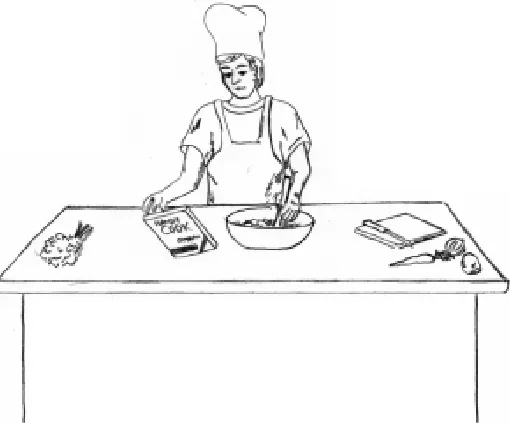
frustrations, and delights in laboratory work. But too often, laboratory exercises suffer from formats that result in students seeking the “right” answer instead of thinking through the meaning of the data they collect. These sorts of labs are often described as “cookbook” labs, where students blindly follow a set of procedures to produce a result that was known at the outset. One result of such labs is that students, seeking to obtain a good grade/score, fabricate their data to match expec-tations (Lawson et al., 2000). Lawson et al. (2000) report that over two-thirds of the students across courses in biology and chemistry report that they sometimes, often, or almost always fabricate data in course lab assignments!
The central issue that incites student fabrication seems to be students’ knowing the “correct” answer before they begin. This, of course, is not reflective of real science investigations, where researchers may have expectations, but no assurance, that their ideas are correct. In research, data are gathered and researchers reflect on the validity of their data. If their data are satisfactory, researchers spend a great deal of time thinking about the meaning of their results and how the results do or do not fit into existing literature and models (Reiff et al., 2002).
Students, however, are not to blame for the situations in which we place them. Lawson et al. (2000) ask, “Why is it taking so long for teachers to replace ‘verification’ laboratory exer-cises with meaningful student inquiries?” The answer seems to be that verification (or cookbook) lab exercises are convenient for the teacher, even though they provide little opportunity for students to learn desired concepts (Montes and Rockley, 2002). One approach for upper level courses such as Developmen-tal Biology is the introduction of semester-long projects (Dar-ling, 2001). In setting such a lab up for her animal behavior course, Darling set the project as worth 25% of the course grade. She then used the first portion of the term to explicitly introduce the skills the students would need to design and carry out their independent projects. This segment was followed by conducting a few multi-week-long experiments that help stu-dents practice analyzing the sort of data they will collect in their independent projects. What sets these laboratory exercises apart from more traditional exercises is the clear context for the student. In the traditional setting, lab is often divorced from lecture, and students may have difficulty seeing the point of conducting an exercise. In Darling’s course, however, students understand that they will very soon be on their own as research-ers, and they can recognize the need to acquire specific skills as quickly as possible and to carry procedures out with care. After all, a large part of their course grade/score depends upon it. But, as well, they have a sense of pride and ownership of the project. Another factor is the large amount of time that Darling spends with the students discussing papers from the literature and helping them refine and focus their ideas. Thus, this approach is very labor intensive, which likely accounts for why it is seldom employed, even at so-called research universities. In general, if we want our students to have practice modeling real science, we need to provide opportunities for them to work like a scientist. This means doing fewer labs in order to provide students with time to reflect on their data, possibly gather additional data, and work through the process of analyzing and describing their results. Time, of course, is the most challenging factor, especially in a course like Developmental Biology.
Or-ganisms need to grow to the proper developmental stage, and, depending on when problems arise, there may not be time to repeat a defective (whether for technique, accident, or just bad luck) experiment during a semester. Opening the lab during “nonclass” hours may be one solution for small classes, but will not be possible for large-enrollment courses. As you attempt to enhance the student’s learning experience in your laboratory course, you may want to use the following checklist questions: - What is the purpose of each experiment?
- Do most (all) of the experiments focus on technique or verification of known results?
- What opportunities do students have to reflect on their results and then take action based on their ideas?
- Are students encouraged to look at the research literature (and given help in learning how to read these papers)?
- How does the laboratory course develop students’ approach to doing good science?
- Are issues of scientific ethics explored and discussed openly and explicitly?
- Is the process of doing scientific inquiry fully articulated (see Reiff
et al., 2002, for an empirically derived model of scientific inquiry)?
Navigating Challenges and Special Issues
The research literature on college/university teaching provides numerous “cautions” that should be considered as you reform your course. I view the process of improving my teaching in the same way that I approach research in science. For example, the first time I (or students) try to use a new technique results are usually mixed and not at all what someone expert in the technique would obtain. In research, this is expected and the technique is not discarded after a pilot run yields a failure. Rather, one usually tries again. Frequently, I am more familiar and confident on the second attempt, so fewer unobserved errors occur and the technique is more effective. With practice, I gain mastery and am then able to be confident that the results are valid, allowing me to assess their meaning.
In trying a new teaching technique, I hope for a lot, but don’t expect much the first few times. Indeed, if the new technique seems to do no harm the first time tried, I view that as very positive. Such is the case for the reforms at Arizona State University, where interactive lectures are replacing traditional lectures (Wyckoff, 2001). The nearly null result of the first effort was quickly replaced by positive impact. Our current study of an upper-level biology course is exploring the impact of taking one day per week for student presentations. In brief, we found that the course was no worse for having given over one-third of the time to presentations and that these changes produced a modest positive effect on student attitude. However, interviews showed that there are sev-eral steps to be taken in the next offering of the course that should bring about the much larger impact desired by the professor. Thus, it is important to remember that there is no “magic bullet” or quick cure to a course that you feel needs to be changed. Like research, it is an iterative process. Below, two specific “cautions” are dis-cussed:
Group Learning Situations require Caution
on the side.” As described in many of the publications referenced herein, having students working in collaborative groups, whether in lecture or laboratory, can improve student learning. It also im-proves their attitudes towards science, but it remains to be seen, however, whether that encourages more students to elect science as a major course of study (Stokstad, 2001).
There are, needless to say, some cautions to be mindful of should you choose to introduce collaborative or small-group learning into your class. You may expect that some students do not know how to work in groups, and this can be addressed by providing explicit instruction in roles for groups. In this issue, one of the reports (Malacinski, 2003) provides an excellent discussion regarding how one might go about setting up groups in a small class.
What a professor may not expect is that students often do not appreciate the work a teacher does to support them in their groups. Spence (2001) discusses a story involving a student who claimed never to have learned so much in a particular course. Spence replied, “That professor must be a wonderful teacher.” The student laughed. “We did all the work; he just assigned the problems and helped out. He doesn’t know how to teach.”
This attitude comes about because students also have a tradi-tional notion of what constitutes “teaching.” Even as they hate it, they believe that teaching science is about long lists of facts to be memorized and regurgitated on exams. When we change the routine to one where they are expected to learn concepts and be able to provide reasoned responses to problems, students can become disconcerted. While they may enjoy the class more, and admit that they learned more, their expectations for it are unmet. One initial response, then, can be a negative view on the professor’s “teaching.” In other words, professors and administrators need to be aware that in the short term conventional teaching evaluations could suffer. Experience suggests that this may not happen and, if it does, that it will be short lived. But, still, you should not get discouraged (remember, a new technique rarely works perfectly the first time).
A more disturbing potential downside can be a negative re-sponse during class. Sometimes, one encounters students who object to the diminishment of fact regurgitation. This may be because they are good at it, but also these students may realize that they don’t understand how the facts connect. Connecting the dots, of course, requires higher order thinking, and some students may hope to avoid that by rebelling. One tactic that I have experienced with a few disruptive students in a non-majors class is for a student to put forth the view that “I have not done right by the class.” This is different from the view discussed in the previous paragraph. Here, the student has moved the traditional model of teaching facts up to the status of a social contract; a contract that I have violated. They feel genuinely aggrieved and cheated. At least, they express that point of view.
This leads to a discussion of the next challenge. It may be self-evident, but it is important to note that our students are not like us. That is, they are not “miniature versions of ourselves.” They come to our class with many goals that are not necessarily coincident with our own goals as academic researchers. Thus, they approach learning the subject differently than we approach learning about developmental biology. More to the point, our students may ap-proach learning developmental biology in ways that are different from how we approach teaching developmental biology.
Caution: The Learning Style vs. Teaching Style Conflict
There is a wealth of literature on the subject of “the way college students learn.” Much of this is summed up nicely by Felder (1993), a chemical engineer who also developed an online assessment of learning style (http://www.ncsu.edu/felder-public/ILSdir/ilsweb.html). Felder’s model identifies four sets of contrasting styles of learning: active/reflective, sensing/intuitive, visual/verbal, sequential/global. The questionnaire, developed by Barbara Solomon (1992), seeks to identify one’s preferences. This questionnaire can be used by students to assess their preference for “ways to learn” (aka learning style), and the class can spend some time discussing the implications (Smith, 2001). This discussion can result in providing effective directions for changing how a course is presented to biology students (Smith, 2001).
There are, however, several ways to determine and describe student learning styles. Perhaps the most widely used and accepted are based on Jungian personality types as developed by Myers and Briggs (Myers and McCaulley, 1985). Clark and Riley (2001) show that success in freshman (first-year) chemistry can be influenced by a student’s personality type. More importantly, they show that lack of success, is strongly correlated with certain personality types.
So, what can a professor do? Like Smith (2001), we can use the personality indices as a way to develop strategies for enhancing student-oriented learning methods. We could first index ourselves, as individual professors, to discern our own natural proclivity for learning and use that to guide our efforts to approach students that have different preferred ways of learning from our own. We can use the personality types to create good collaborative working groups (Malacinski and Zell, 1996). Or, we can just accept what the literature indicates and understand that our students will be different from ourselves in their approaches to learning.
Regardless, understanding that our students will have multiple approaches to learning leads to the suggestion that we consider multiple approaches to teaching. Leonard (2000) suggests that we use a hands-on approach, in which students are required to
gather and then analyze data. Goodman and Berntson (2000) also suggest that we use dynamic questioning techniques in our lectures. This kind of technique is one where “a good question is a stimulating question, which is an invitation to a closer look, a new experiment or a fresh exercise” (Elstgeest and Harlen, 1985). Several additional strategies for biology classes are also de-scribed by Allen and Tanner (2002).
In general, however, it is wise to (a) provide information through both verbal and visual means; (b) allow students time to reflect on information, but also to get their hands on the material; (c) provide grounding in basic facts and information, but to also develop oppor-tunities for students to work together to “connect information bits” and refine their understanding of concepts and ideas. The following set of checklist questions is offered:
- Do I teach using only one method to convey ideas and information (lecture at the blackboard, for example)?
- Do I ask questions of my students in class? If so, what sorts of questions do I ask (rhetorical, attention focusing, comparison, prob-lem posing or other)?
- Do I provide students time to think and discuss possible answers to questions?
- How do I handle incorrect or incomplete answers?
- Do I provide visual as well as verbal descriptions and discussion aids?
- Do I have a structure that is explicit to help students connect recent ideas to new topics?
Reaching Our Destination
Our destination is a place that is somewhat new and much more effective for our student’s learning experience. It is reasonable to wonder how we will know that we have succeeded in reaching that destination.
In some very important ways, we will never really get there. Today’s students bring a different life experience to our classes than those of earlier decades. As teachers, we also change based on our experiences, readings and learning about how to help students become more effective. We are always making some change, even in a course that we feel is functioning well. Here is a checklist of questions that might be answered as a way of determining success level:
– Have you seen evidence that your goals (written down earlier) have been achieved?
– Are graduation rates, retention rates, and/or number of majors being affected as a result of your course?
– How do graduates of your program feel about your course(s)? – Do you feel more comfortable in the classroom?
– Is your classroom active with a good back-and-forth discussion between students and teacher?
– Are there good student-to-student discussions occurring during class?
– Has the proportion of underachieving students diminished? – Can you demonstrate that the standard for A (top) level work has
remained the same or increased (with little or no decrease in number of students able to demonstrate excellence)?
Good luck and safe travels on your journey!
Acknowledgements
I would like to thank Professor George Malacinski for many helpful suggestions and comments. His advice has helped me to better frame this paper for developmental biologists. I would also like to thank Semiral Oncu for his help in drawing the figures for this paper.
References
ALBERTS, B. (2000). Some thoughts of a scientist on inquiry. In Inquiring into Inquiry Learning and Teaching in Science (Eds. Minstrell, J.and v. Zee, E.H.). American Association for the Advancement of Science, Washington, D.C., pp. 3-13.
ALLEN, D. and TANNER, K. (2002). Approaches in cell biology teaching. Cell Biol. Educ. 1: 3-5.
ALLISON, J. (2001). A model for substantial deviations from the traditional lecture format for graduate and upper-level undergraduate courses in science—lecture and learning classes. J. Chem. Educ. 78: 965-969.
BOYER, E. (1998). Reinventing undergraduate education: A blueprint for America’s research universities. SUNY Stony Brook, Stony Brook, NY.
BYBEE, R.W. (2002). Biology education in the United States: The unfinished century. BioScience, 52: 560-567.
CLARK, G.J. and RILEY, W.D. (2001). The connection between success in a freshman chemistry class and a student’s Jungian personality type. J. Chem. Educ. 78: 1406-1411.
DARLING, R. (2001). Don’t settle for imitation laboratory assignments. J. Coll. Sci. Teaching 31: 102-105.
DAVIS, J.R. (1976). Teaching strategies for the college classroom. Westview Press, Boulder, CO.
EBERT-MAY, D. (2001). Research-based change: How one college professor approached the challenge of changing teaching. In College Pathways to the Science Education Standards (Eds. Siebert, E.D. and McIntosh, W.J.). NSTA Press, Arlington, pp. 36-37.
ELSTGEEST, J. and HARLEN, W. (1985). Primary science: taking the plunge: how to teach primary science more effectively. Heinemann Educational Books, London; Portsmouth, NH.
FELDER, R. (1993). Reaching the second tier: Learning and teaching styles in college science education. J. Coll. Sci. Teach. 23: 286-290.
GESS-NEWSOME, J., SOUTHERLAND, S. A., JOHNSTON, A. and WOODBURY, S. (2003). Educational reform, personal practical theories, and dissatisfaction: The anatomy of change in college science teaching. Am. Educ. Res. J. (submitted).
GOODMAN, L. and BERNTSON, G. (2000). The art of asking questions: using directed inquiry in the classroom. Am. Biol. Teacher, 62: 473-476.
GRIFFITHS, N. (2002). What does that word mean? The importance of language in learning biology. In Transforming Undergraduate Science Teaching (Eds. Taylor, P.C., Gilmer, P.J. and Tobin, K.). Peter Lang, New York, pp. 69-86 HARWOOD, W.S., REIFF, R. and PHILLIPSON, T. (2002). Scientists’ conceptions
of scientific inquiry: Voices from the front. AETS Proc. 2002, Available at: http:/ /www.ed.psu.edu/CI/Journals/2002aets/t1_harwood_reiff_p.rtf.
HERREID, C. F. (2001). The maiden and the witch: the crippling undergraduate experience. J. Coll. Sci. Teaching 31: 87-88.
KLIONSKY, D.J. (2002). Constructing knowledge in the lecture hall: A quiz-based group-learning approach to Introductory Biology. J. Coll. Sci. Teaching 31: 246-251. LAWSON, A. E., LEWIS, C. M. and BIRK, J. P. (2000). Why do students “cook”
data? J. Coll. Sci. Teaching 29(3): 191-198.
LEONARD, W.H. (2000). How do college students best learn science? J. Coll. Sci. Teaching 29(6): 385-388.
LORD, T.R. (1994). Using constructivism to enhance student learning in college biology. J. Coll. Sci. Teaching 23: 346-348.
MALACINSKI, G.M. (2003). Student-Oriented Learning: An Inquiry-based Devel-opmental Biology Lecture Course. Int. J. Dev. Biol. 47: pp.
MALACINSKI, G.M. and ZELL, P.W. (1996). Learning Molecular Biology means more than memorizing the formula for tryptophan. J. Coll. Sci. Teaching 25: 198-202.
MONTES, L.D. and ROCKLEY, M.G. (2002). Teacher perceptions in the selection of experiments. J. Chem. Educ. 79: 244-247.
MYERS, I. and MCCAULLEY, M. (1985). Manual: A Guide to the Development and Use of the Myers-Briggs Type Indicator (2nd edn.). Consulting Psychologists Press, Palo Alto, CA.
NELSON, C.E. (2001a). What might help a pretty good teacher become a great teacher? Natl. Teach. Learn. Forum 10: 5-6.
NELSON, C.E. (2001b). What is the most difficult step we must take to become great teachers? Natl. Teach. Learn. Forum 10: 10-11.
NSTA (2001). Practicing Science: The Investigative Approach in College Science Teaching. NSTA Press, Arlington, VA.
REIFF, R., HARWOOD, W.S. and PHILLIPSON, T. (2002). A scientific method based upon research scientists’ conceptions of scientific inquiry. AETS Proc. 2002, available at: http://www.ed.psu.edu/CI/Journals/2002aets/f3_reiff_harwood_p.rtf SIEBERT, E.D. and MCINTOSH, W.J. (Eds.). (2001). College Pathways to the Science
Education Standards. NSTA Press, Arlington, VA.
SMITH, N. (2001). Identifying and using learning styles to facilitate instruction. In College Pathways to the Science Education Standards (Eds. Siebert, E.D.and McIntosh, W.J.). NSTA Press, Arlington, VA, pp. 6-7.
SOLOMAN, B.S. (1992). Inventory of Learning Styles. North Carolina State University, Raleigh.
SPENCE, L.D. (2001). The case against teaching. Change 33(6): 11-19. STOKSTAD, E. (2001). Reintroducing the intro course. Science 293: 1608-1610. SUNDBERG, M.D., and DINI, M.L. (1993). Science majors vs. nonmajors: Is there a
difference? J. Coll. Sci. Teaching 22(5): 299-304.
TAYLOR, P.C., GILMER, P.J. and TOBIN, K. (2002). Introducing transformations. In Transforming Undergraduate Science Teaching (Eds. Taylor, P.C., Gilmer, P.J. and Tobin, K.). Peter Lang, New York, pp. ix -xxiv
TOBIAS, S. (2001). Revitalizing Undergraduate Science: Why Some Things Work and Most Don’t. Research Corporation, Tucson, AZ.
WYCKOFF, S. (2001). Changing the culture of undergraduate science teaching. J. Coll. Sci. Teaching 30: 306-312.