Graph Theoretic Features of the Adult Mental Lexicon Predict
Language Production in Mandarin: Clustering Coefficient
Karl David Neergaard
The Hong Kong Polytechnic
University
136 Shanghai St. 7/F
Hong Kong
karl.neergaard@conn
ect.polyu.hk
Chu-Ren Huang
The Hong Kong Polytechnic
University
11 Yuk Choi Rd.
Hong Kong
[email protected]
du.hk
Abstract
Graph theory has recently been used to explore the mathematical structure of the mental lexicon. In this study we tested the influence of graph measures on Man-darin speech production. Thirty-six na-tive Mandarin-speaking adults took part in a shadowing task containing 194 mon-osyllabic words, 94 of which consisted of 3 phonemes and were the items under analysis. Linear mixed effect modeling revealed that clustering coefficient (C) predicted spoken production of Mandarin monosyllabic words, while network de-gree, in this case its phonological neigh-borhood density (PND) failed to account for lexical processing. High C resulted in shorter reaction times, contrary to evi-dence in English. While these findings suggest that lexical processing is affect-ed by the network structure of the mental lexicon, they also suggest that language specific traits lead to differing behavior-al outcomes. While PND can be under-stood as the underlying lattice for which a similarity network is created, lexical selection is not affected by only a target word’s neighbors but instead the level of interconnectivity of words (C) within the network.
1
Introduction
Graph theory is currently an active tool within the language sciences. Networks constructed from the semantic knowledge of children have shown typi-cal versus disordered development (Beckage et al., 2011) and helped to explain the growth of vocabu-lary (Hills et al., 2009). The network structure of phonological networks has been found to influence children’s productive vocabulary development and failed lexical retrieval in adults (Vitevitch et al., 2014). The new methodology coming to form in-volves the combination of graph theoretic models and psycholinguistic tasks, allowing for a view into the lexicon to examine language processing ac-cording to structural relations.
The manner in which a phonological network is constructed is through what is known as phonolog-ical neighborhood density (PND), which is a simi-larity metric that involves the addition, deletion or substitution of a single phoneme (Vitevitch, 2008). Thus, in the network, words (nodes) are connected (edges) to one another based on their sound simi-larity. Words that are connected via this similarity are known as neighbors and give us the network feature known as degree (k). In the psycholinguis-tic literature PND has been extensively investigat-ed. It has been shown to influence word recognition (Luce and Pisoni, 1998), production (Sadat et al., 2014), and word learning (Storkel et al., 2006) to just name a few.
Once the network is built, other measures are then available, such as each node’s clustering
was pseudo-randomized so as not to allow for the serial presentation of words that began with the same onset or that had the same tone.
The stimulus words were selected from a data-base of movie subtitles (Subtlex-CH: Cai and Brysbaert, 2010). As is common amongst data-bases that provide calculations of PND and other lexical information (See Marian et al., 2012 for an in-depth discussion), a representative sample of orthographic words is chosen from either a dic-tionary or subtitle movie corpora. The current study calculated PND and four of the following word characteristics from the top 17 thousand en-tries of phonological words. The pinyin transcrip-tions of the Subltex-CH database were made using the Lingua Sinica corpus (Chen et al., 1996). Pho-nological representations of spoken Mandarin were then taken from Neergaard and Huang (2016) ac-cording to the maximal syllable structure: CVVX plus tone.
The frequencies of homophonous words were summed together such that spoken word frequency (SWF) (M: 0.0271 million; SD: 0.0556 per-million), and homophone density (HD) could be calculated. HD (M: 5; SD: 4) was calculated based on the number of orthographic words that were used in the corpus per each phonological word. Neighborhood frequency (NF) (M: 18,1950; SD: 20,2318) was calculated from the combined fre-quency of a word’s neighbors. C (M: 0.4065; SD: 0.1623) was calculated through the use of the net-work analysis tool, Gephi (Bastian et al., 2009). It should be noted that the correlation between PND (M: 14; SD: 5) and C within our stimuli set was low: 0.3. For an illustration of the difference be-tween PND and C see Figures 1 and 2. Note that both represent words with equivalent densities.
2.3 Procedure
Participants were seated in a quiet room in front of a computer running experimental software, E-Prime 2.0 (Psychology Software Tools, 2012). They were instructed to repeat experimenter-provided auditory stimuli into a headset as quickly as possible. The onset of each trial was activated when a participant spoke via a PST Serial Re-sponse Box. They were given a practice set of 10 words.
Each trial consisted of the same sequence: “下 个词” (next word) was presented at the center of
the screen for 1000ms, followed by a blank screen and the onset of the target audio which changed either upon the onset of a participant’s spoken re-sponse or a maximum of 3000ms, then finally a pause of 3000ms. The entire experiment took less than 15 minutes and was recorded on a second computer using Audacity 2.0.6.
Reaction times were measured offline using SayWhen (Jansen and Watter, 2008). The audio recordings were also used to transcribe the partici-pants’ spoken production by two native-Mandarin speaking volunteers. Incorrect responses were re-moved from the analysis, accounting for less than 6% of the data.
3
Results
Statistical analyses were done using linear mixed effect modeling (lmerTest in R). The first constructed model revealed that SWF (t
= -2.462; p = 0.014) and C (t = -2.771; p = 0.0056) were predictors in the production of Mandarin monosyllabic words, while PND, NF, and HD were non-significant. In order to eliminate the effect of SWF on the other pre-dictors, 96 trials, identified as outliers, were removed from the total of 3,177 trials. The removal of the outliers, which accounted for 3% of the total, limited the responses’ reac-tion time to within 450 and 1000ms.
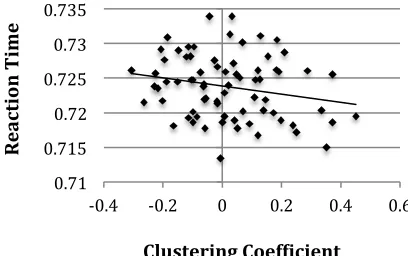
Figure 3. The effect of Mandarin clustering coefficient on reaction time
A second model was then created accord-ing to stepwise backwards model comparison. While the SWF effect disappeared, and none of the other predictors changed status, the ef-fect of C remained through each successive
0.71 0.715 0.72 0.725 0.73 0.735
-‐0.4 -‐0.2 0 0.2 0.4 0.6
Rea
ct
io
n
T
im
e
model iteration (Std. Error: 0.00820; df: 3037; t = -3.27; p = 0.001). Unique to this study, high C values resulted in shorter reac-tion times as can be seen in Figure 3.
4
Conclusion
The present study is the first to find an influ-ence of network measures on language pro-duction in a tonal language. Of particular note is the fact that the direction of the C effect is contrary to that of the English findings (Chan and Vitevitch, 2009, 2010). While the two prior studies implemented different tasks to what is currently featured, the direction was the same for English speakers: words with low C were produced faster and more accu-rately than words with high C. The present results, in contrast, suggest that the greater the interconnectivity of phonological words the less the competition for lexical selection.
One direction for further investigation is the role that network density plays across the Manda-rin lexicon, specifically duManda-ring development. If, like the present findings suggest, greater connec-tivity speeds processing, then this would imply the emergence of an adaptive trait learned through the acquisition of highly similar words. Such a lan-guage specific adaptation would have impli-cations for vocabulary acquisition and possibly be of note for children with phono-logical delay (Gierut et al., 1999).
An alternative hypothesis is that a signifi-cant C effect concurrent with a null PND ef-fect points to an error in the model’s construction. There have been multiple pro-posals as to the segmentation of the Mandarin syllable (Duanmu, 2009). In the current study we examined a segmental approach with pho-nological tone. Future experimental designs would benefit from contrasting stimuli that have been calculated according to multiple segmentation schemas.
References
Duncan J. Watts, and Steven H. Strogatz. 1998. Collec-tive dynamics of ‘small-world’ networks. Nature
393(6684):440-442.
Holly L Storkel, Jonna Armbruster, and Tiffany P. Ho-gan. 2006. Differentiating phonotactic probability and neighborhood density in adult word learning.
Journal of Speech, Language, and Hearing Research,
49(6): 1175-1192.
James Myers, and Jane Tsay. 2005. The processing of phonological acceptability judgments. Proceedings of
Symposium on 90-92 NSC Projects, pp. 26-45.
Jasmin Sadat, Clara D. Martin, Albert Costa, and F-Xavier Alario. 2014. Reconciling phonological neighborhood effects in speech production through single trial analysis. Cognitive psychology, 68:33-58. Judith A. Gierut, Michele L. Morrisette, and Annette H.
Champion. 1999. Lexical constraints in phonological acquisition. Journal of Child Language, 26:261-294. Karl Neergaard, and Chu-Ren Huang. 2016. Phonologi-cal neighborhood density in a tonal language: Man-darin neighbor generation task. 90th Annual Meeting of the Linguistic Society of America, Washington, DC.
Keh-jiann Chen, Chu-Ren Huang, Li-ping Chang, and Hui-Li Hsu. 1996. Sinica Corpus: Design Methodol-ogy for Balanced Corpora. Proceeding of the 11th Pacific Asia Conference on Language, Information
and Computation (PACLIC 11). pp. 167-176. Seoul,
South Korea.
Kit Ying Chan, and Michael Vitevitch. 2009. The influ-ence of the phonological neighborhood clustering co-efficient on spoken word recognition. Journal of Experimental Psychology: Human Perception and
Performance, 35:1934-1949.
Kit Ying Chan, and Michael Vitevitch. 2010. Network structure influences speech production. Cognitive Science, 34(4):685-697.
Mark Yates. 2013. How the clustering of phonological neighbors affects visual word recognition. Journal of Experimental Psychology: Learning, Memory, and Cognition, 39(5):1649.
Mathieu Bastian, Sebastien Heymann, and Mathieu Jacomy. 2009. Gephi: an open source software for exploring and manipulating networks. The Interna-tional AAAI Conference on Web and Social Media, 8:361-362.
Michael S. Vitevitch. 2008. What can graph theory tell us about word learning and lexical retrieval?. Journal
of Speech, Language, and Hearing Research.
51(2):408-422.
from network science. Cognitive Psychology, 68:1-32.
Michael S. Vitevitch, and Melissa K. Stamer. 2006. The curious case of competition in Spanish speech pro-duction. Language and Cognitive Processes, 21(6):760-770.
Nicole Beckage, Linda Smith, and Thomas Hills. 2011. Small worlds and semantic network growth in typical and late talkers. PLoS ONE, 6(5):e19348.
Paul A. Luce, and David B. Pisoni. 1998. Recognizing spoken words: The neighborhood activation model.
Ear and hearing, 19(1):1.
Pei-Tzu Tsai. 2007. The effects of phonological neigh-borhoods on spoken word recognition in Mandarin Chinese. Unpublished masters thesis.
Peter A. Jansen, and Scott Watter. 2008. SayWhen: An automated method for high-accuracy speech onset detection. Behavioral Research Methods, 40(3):744-751.
Psychology Software Tools, Inc. [E-Prime 2.0]. 2012. Pitsburch, PA.
Qing Cai, and Marc Brysbaert. 2010. Subtlex-CH: Chi-nese word and character frequency based on film subtitles. PLoS ONE, 5(6):e10729.
San, Duanmu. 2011. Chinese syllable structure. van Oostendorp, Marc/Ewen, Colin J./Hume, Eliza-beth/Rice, Keren (Hg.): The Blackwell Companion to Phonology (5), 2754-2777.
Seth Weiner, and Rory Turnball. 2015. Constraints of Tones, Vowels and Consonants on Lexical Selection in Mandarin Chinese. Language and Speech:1-24. Thomas T Hills, Mounir Maouene, Josita Maouene,
Adam Sheya, and Linda Smith. 2009. Longitudinal Analysis of Early Semantic Networks Preferential Attachment or Preferential Acquisition?. Psychologi-cal Science, 20(6):729-739.
Viorica Marian, James Bartolotti, Sarah Chabal, and Anthony Shook. CLEARPOND: Cross-linguistic easy-access resource for phonological and ortho-graphic neighborhood densities. PloS ONE, 7(8):e43230.
Appendix A. Experimental Stimuli
Stimulus Tone SWF HD PND NF C
ban1 1 0.0077 8 20 83792 0.3895
bei3 3 0.0010 1 9 325390 0.4444
bing1 1 0.0025 2 14 165280 0.2857
bo1 1 0.0027 7 13 241279 0.6154
cai2 2 0.0370 4 15 214339 0.4000
cong2 2 0.0473 3 9 24192 0.4444
cuo4 4 0.0363 4 18 431772 0.6928
dai4 4 0.0385 10 21 896543 0.5333
die1 1 0.0003 1 13 46232 0.4744
fei2 2 0.0011 2 9 279495 0.5000
fen4 4 0.0159 6 15 39299 0.4571
feng1 1 0.0115 9 17 35947 0.5809
gai1 1 0.0342 1 19 108154 0.4327
gang1 1 0.0115 7 23 133498 0.3913
gao3 3 0.0185 3 21 151546 0.5190
gun3 3 0.0040 2 12 33905 0.3030
hei1 1 0.0457 3 6 43405 0.4667
hen3 3 0.2011 3 11 24792 0.5273
hong2 2 0.0031 8 11 64484 0.3091
hou4 4 0.0226 4 16 450310 0.6583
hua2 2 0.0026 5 9 199436 0.2222
hun4 4 0.0035 2 16 227090 0.2917
huo2 2 0.0115 1 14 334170 0.4396
jia1 1 0.0332 13 12 106018 0.2121
jie1 1 0.0148 8 18 125483 0.3007
jin4 4 0.0247 10 11 104577 0.2000
jing3 3 0.0054 9 16 126033 0.3083
jue2 2 0.0026 13 5 16343 0.1000
jun1 1 0.0016 5 7 9095 0.1429
kua3 3 0.0004 1 9 8227 0.2222
kun4 4 0.0015 1 14 117829 0.3516
lao3 3 0.0177 4 22 1062897 0.4762
lie4 4 0.0016 8 12 112347 0.3333
lun2 2 0.0032 4 9 12206 0.2222
mai3 3 0.0158 1 15 48933 0.4476
mao1 1 0.0035 1 19 350311 0.5439
mei2 2 0.1617 13 9 129539 0.4444
men2 2 0.0089 2 12 248251 0.3485
min2 2 0.0005 4 11 45135 0.2182
ming2 2 0.0115 7 13 75796 0.3077
mo2 2 0.0035 8 12 176888 0.5909
nan2 2 0.0171 5 15 98327 0.5524
nong4 4 0.0136 1 9 83669 0.7778
pao4 4 0.0014 3 23 798622 0.4545
pei2 2 0.0035 5 9 274588 0.4444
pin1 1 0.0012 1 13 42567 0.2051
qia1 1 0.0004 1 9 60204 0.2222
qin2 2 0.0007 8 11 135499 0.2545
qing3 3 0.0306 2 14 56346 0.3516
que1 1 0.0007 2 7 22955 0.1905
qun2 2 0.0032 2 5 13142 0.2000
ran2 2 0.0007 3 14 260802 0.6044
rang4 4 0.1238 2 16 180346 0.7583
ren2 2 0.1950 5 11 24812 0.4000
reng1 1 0.0041 1 14 41806 0.8571
rou4 4 0.0025 1 15 123569 0.7429
ruo4 4 0.0022 5 17 467943 0.7794
san3 3 0.0002 2 22 58109 0.5974
sang1 1 0.0004 2 20 113667 0.5158
shan1 1 0.0034 12 19 81325 0.4152
sheng3 3 0.0014 1 13 58529 0.3205
shua1 1 0.0006 2 12 299841 0.2424
shuo1 1 0.2270 1 13 25019 0.5897
song4 4 0.0133 5 10 84434 0.6444
tang3 3 0.0023 4 19 57176 0.3626
ting1 1 0.0555 3 13 76196 0.3077
wai4 4 0.0041 1 26 773415 0.3908
wan2 2 0.0244 6 20 201339 0.3421
wang4 4 0.0077 4 23 319519 0.4150
wei2 2 0.0493 13 13 289022 0.3077
wen4 4 0.0205 3 14 40995 0.5275
xia4 4 0.0557 4 11 115839 0.2182
xie2 2 0.0028 12 12 92857 0.1818
xin1 1 0.0265 9 12 69575 0.2576
xue2 2 0.0062 1 8 8282 0.1786
xun1 1 0.0004 5 7 34976 0.1429
yan3 3 0.0064 5 15 236670 0.3810
yang3 3 0.0036 4 22 317363 0.2944
yao4 4 0.2435 4 30 696392 0.3471
yong3 3 0.0010 12 14 381844 0.4066
you3 3 0.2896 6 22 175262 0.3463
yuan2 2 0.0121 15 7 24682 0.1905
zai3 3 0.0007 2 15 527024 0.4667
zao3 3 0.0129 5 21 193120 0.5190
zeng4 4 0.0001 3 13 42450 0.5897
zhan4 4 0.0132 9 22 245617 0.4286
zhen4 4 0.0024 7 15 469888 0.4476
zheng4 4 0.0207 5 16 315381 0.4000
zhong1 1 0.0382 6 14 56887 0.4176
zhua1 1 0.0084 1 10 34372 0.3111
zong3 3 0.0099 1 12 92516 0.5606
zun1 1 0.0004 5 8 6180 0.5357
Note: Stimulus words are presented in pinyin; SWFis spoken word frequency; HD is homophone density; PND is phonological