What Radiologists Need to Know Now
Paul H. Ellenbogen, MD
a, Thomas R. Hoffman, JD
b, Bradley W. Short, MA
b,
Ariel Gonzalez, MA
bStates are increasingly considering legislative and regulatory avenues to establish the role of radiologist assistants (RAs) under current state medical practice acts or state radiation control regulatory programs. It is critical that radiology practices be cautious to comply with federal and state laws and regulations to ensure that these advanced practice professionals provide the appropriate services under the appropriate level of supervision. For quality-of-care reasons, the ACR remains concerned about the scope of practice of radiology practitioner assistants and some misinformation that has spread to state officials about the assistants’ role in radiology practice. Another potential source of confusion may be the fact that physician assistants and nurse practitioners are being increasingly used in many areas of health care (including radiology) and may derive delegated authority (from physicians) to perform services that physicians determine nurse practitioners or physician assistants to be qualified to perform. The authors in particular emphasize current federal and state legislative activities and describe possible exposure and risks associated with the extension of the scope of practice by radiologic technologists without commensurate changes in state statutes and regulations.
Key Words:Radiologist assistant, radiology practitioner assistant, role delineation, state laws and regulations
J Am Coll Radiol 2007;4:461-470. Copyright © 2007 American College of Radiology
INTRODUCTION
Since the ACR and the American Society of Radio-logic Technologists (ASRT) established a joint state-ment (Appendix) recognizing radiologist assistants (RAs) in 2003, states are increasingly considering leg-islative and regulatory avenues to establish the role of RAs under current state medical practice acts or po-tentially under state radiation control regulatory pro-grams. Before the establishment of RAs, Weber State University in Ogden, Utah, at the request of the US Department of Defense, established a program for radiology practitioner assistants (RPAs). The ACR is aware of reports that radiology practices that use RAs and RPAs may not be fully in compliance with federal and state statutes. It is critical that radiology practices comply with federal and state laws and regulations to ensure that these advanced practice professionals pro-vide the appropriate services under the appropriate level of supervision.
For quality-of-care reasons, the ACR remains
con-cerned about the scope of practice of RPAs and some misinformation that has spread to state officials about the role of RPAs in radiology practice. Another poten-tial source of confusion may be the fact that physician assistants (PAs) and nurse practitioners (NPs) are be-ing increasbe-ingly used in many areas of health care (including radiology) and may derive delegated au-thority (from physicians) to perform services that phy-sicians determine NPs or PAs to be qualified to per-form.
A previous article in this journal [1] described the development and concept of RAs (Table 1). Our aims in this paper are to briefly discuss the history and definition of RAs, RPAs, and PAs and to compare and contrast these entities. In particular, we emphasize current federal and state legislative activities and de-scribe possible exposure and risks associated with the extension of the scope of practice by radiologic tech-nologists without commensurate changes in state stat-utes and regulations.
We cover the current certification of RAs and RPAs and discuss what RAs can and cannot currently do for you or your facility. The direction and status of RA and RPA programs will be covered, along with a de-scription of ongoing efforts by the ACR, ASRT, and the American Registry of Radiologic Technologists
a
Department of Radiology, Presbyterian Hospital of Dallas, Dallas, Tex. b
American College of Radiology, Reston, Va.
Corresponding author and reprints: Paul H. Ellenbogen, MD, Presbyterian Hospital of Dallas, Department of Radiology, 8200 Walnut Hill Lane, Dallas, TX 75231; e-mail: [email protected].
© 2007 American College of Radiology
0091-2182/07/$32.00●DOI 10.1016/j.jacr.2007.03.006
(ARRT) to ensure proper legal footing for RA gradu-ates.
HISTORY, DEFINITION, AND ROLE DELINEATION OF RAs and RPAs Radiologist Assistants
The RA program was developed out of the work of the Advance Practice Advisory Panel, established by the ASRT in 2002. The panel, consisting of representatives from the ASRT, the ARRT, state regulatory agencies, the National Society of Radiology Practitioner Assistants, the ACR, industry, and academic programs, met to es-tablish “an advanced level radiologic technologist who could take responsibility for patient assessment, patient education and patient management, perform fluoros-copy and other radiology procedures, and make initial image observations” [2]. It was determined from the beginning that RAs would not perform interpretations (preliminary, final, or otherwise) of any radiologic exam-ination, nor would they transmit observations, other than to supervising radiologists. In 2003, the ACR and the ASRT passed a joint statement on the role
delinea-tion of RAs that served as the foundadelinea-tion for the forma-tion of the new professional category (see Appendix).
In 2004, the ARRT established a role delineation doc-ument that would serve as the basis for the certification examination for RAs[3]. Each procedure was selected on the basis of the experience and knowledge of RAs and also included a suggested level of physician supervision. A registered RA is an ARRT technologist who has success-fully completed an advanced training program and is certified by ARRT.
Radiology Practitioner Assistants
In 1993, the Department of Defense asked Weber State University to design an RPA program in an attempt to address a shortage of radiologists in the armed forces medical programs[4]. Although the Department of De-fense subsequently withdrew support because of budget-ary cutbacks, Weber State continued the program, which has graduated roughly 300 RPAs who are currently working in the field. According to the Certification Board for Radiology Practitioner Assistants (CBRPA) [5], RPAs can perform all fluoroscopic procedures, static and dynamic; evaluate imaging procedures to determine normal from abnormal and provide radiologists with
Table 1. Existing educational programs for radiologist assistants Currently Existing Radiologist Assistant
Training Programs
Date of First Graduating Class and Program Director Contact Information Loma Linda University, Los Angeles, Calif July 2005
Contact: Laura Alipoon E-mail:[email protected] Midwestern State University, Wichita Falls, Tex May 2006
Contact: Donna Wright, Jeff Killion
E-mail:[email protected],[email protected] University of Arkansas, Little Rock, Ark Summer 2007
Contact: Rebecca Ludwig
E-mail:[email protected],[email protected] University of North Carolina, Chapel Hill, NC Summer 2007
Contact: Joy Renner
E-mail:[email protected] Bloomsburg University, Bloomsburg, Pa August 2008
Contact: Judith Kipe-Nolt E-mail:[email protected] University of Medicine and Dentistry of New
Jersey, Newark, NJ
Uncertain
Contact: Norman McLeod, Gladys Montane E-mail:[email protected],[email protected] Virginia Commonwealth University, Richmond,
Va
May 2007 Terri Fauber
E-mail:[email protected]
Web site:www.sahp.vcu.edu/radsci/ Source:American Society of Radiologic Technologists.
technical reports; and perform invasive procedures, such as arthrography, fluid drainage, biopsies, the placement of nasogastric and enteroclysis tubes, myelography, and any other procedures in which competency has been demonstrated and that radiologists are comfortable let-ting RPAs perform. The CBRPA[4]maintains that the RPA program enables RPAs to evaluate medical images and review preliminary reports and images with staff radiologists.
Although the role delineation of the two groups is generally similar (Table 2), two significant differences have emerged. The scope of practice for RPAs includes language that presumes that their scope is not limited and may be determined under the discretion of physicians, similar to the delegated authority of NPs. Indeed, in comparing RAs and RPAs, the CBRPA [5] states that RPAs’ scope of practice is “flexible to allow expansion and progression and a degree of independence in clinical performance and decision-making.” In contrast, the role delineation of RAs is described by the CBRPA [5] as “specific and constricting.” The ARRT’s role delineation allows RAs to perform additional procedures deemed appropriate by radiologists, with a higher level of super-vision. This was done in part to ensure that procedures for which RAs were not trained, educated, or examined on are appropriately supervised. Despite the organiza-tions’ considerations, it must be noted that the authority
to perform such services is established by states, not by the presumptive conclusions of certification boards or academic programs. Radiologists would be well advised to determine whether their states’ statutes or regulations recognize RAs or RPAs in advance of hiring and to avoid allowing RAs to perform services for which they are not recognized. Although the CBRPA now recognizes Medi-care supervision requirements consistent with federal statutes, the correct implementation of those rules, as noted below, is critical to ensuring proper compliance and avoiding potential civil and criminal penalties.
LEGAL ANALYSIS
Federal laws and regulations strictly control the activities of radiology extenders (Table 3), whether they are RAs or RPAs. For purposes of this article, extenders generally refers to RAs or RPAs who assist physicians with imaging studies. Because the ACR recognizes RAs as qualified radiology extenders, this section focuses on guiding read-ers on complying with applicable requirements for RAs.
Radiology Extender Reimbursement
Under Medicare’s Part B program, a physician’s office or a freestanding clinic (eg, a multispecialty group) is a nonhospital entity. A physician-directed office or clinic that uses radiology extenders such as RAs generally must
Table 2. Comparison of radiologist assistant and radiology practitioner assistant programs Radiologist Assistant
Radiology Practitioner Assistant
Date established 2003 1997
Number of programs 7 1
ACR input at time of development Yes No
Certification body American Registry of Radiologic Technologists
Certifying Board for Radiology Practitioner Assistants Radiologists serving on
certification body board
4 0
Scope of practice ● Specifies procedures to which certification applies
● Strictly prohibits interpretation
● Ascribes supervision levels per procedure
● Does not limit the potential scope of practice
● Prohibits interpretation
● Does not ascribe supervision levels per procedure
Minimum degree requirements Baccalaureate, postgraduate certificate or masters
Not currently determined; baccalaureate specified beginning in 2007 Organization recognition ACR, American Society of
Radiologic Technologists
National Society of Radiology Practitioner Assistants
State recognition 10 states 3 states
Source:Web sites of the ACR (http://www.acr.org), American Society of Radiologic Technologists (http://www.asrt.org), American Registry of Radiologic Technologists (http://www.arrt.org), and Certification Board of the Radiology Practitioner Assistants (http://www.cbrpa.org).
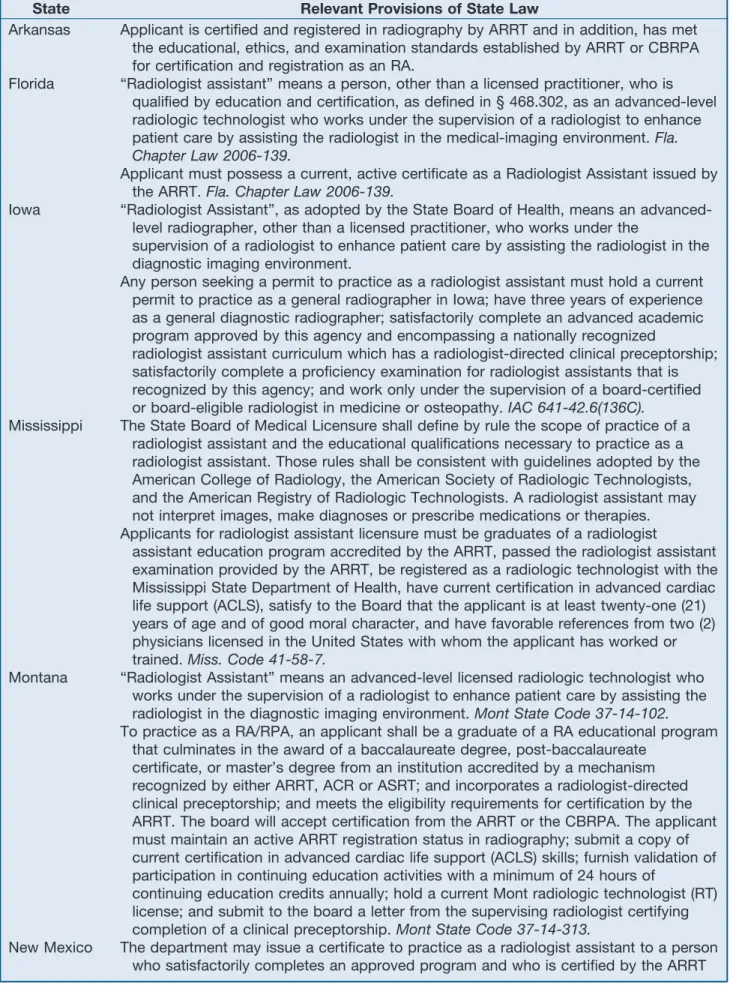
Table 3. State laws, regulations, and requirements for radiologist assistants State Relevant Provisions of State Law
Arkansas Applicant is certified and registered in radiography by ARRT and in addition, has met the educational, ethics, and examination standards established by ARRT or CBRPA for certification and registration as an RA.
Florida “Radiologist assistant” means a person, other than a licensed practitioner, who is qualified by education and certification, as defined in § 468.302, as an advanced-level radiologic technologist who works under the supervision of a radiologist to enhance patient care by assisting the radiologist in the medical-imaging environment.Fla. Chapter Law 2006-139.
Applicant must possess a current, active certificate as a Radiologist Assistant issued by the ARRT. Fla. Chapter Law 2006-139.
Iowa “Radiologist Assistant”, as adopted by the State Board of Health, means an advanced-level radiographer, other than a licensed practitioner, who works under the
supervision of a radiologist to enhance patient care by assisting the radiologist in the diagnostic imaging environment.
Any person seeking a permit to practice as a radiologist assistant must hold a current permit to practice as a general radiographer in Iowa; have three years of experience as a general diagnostic radiographer; satisfactorily complete an advanced academic program approved by this agency and encompassing a nationally recognized
radiologist assistant curriculum which has a radiologist-directed clinical preceptorship; satisfactorily complete a proficiency examination for radiologist assistants that is recognized by this agency; and work only under the supervision of a board-certified or board-eligible radiologist in medicine or osteopathy.IAC 641-42.6(136C).
Mississippi The State Board of Medical Licensure shall define by rule the scope of practice of a radiologist assistant and the educational qualifications necessary to practice as a radiologist assistant. Those rules shall be consistent with guidelines adopted by the American College of Radiology, the American Society of Radiologic Technologists, and the American Registry of Radiologic Technologists. A radiologist assistant may not interpret images, make diagnoses or prescribe medications or therapies. Applicants for radiologist assistant licensure must be graduates of a radiologist
assistant education program accredited by the ARRT, passed the radiologist assistant examination provided by the ARRT, be registered as a radiologic technologist with the Mississippi State Department of Health, have current certification in advanced cardiac life support (ACLS), satisfy to the Board that the applicant is at least twenty-one (21) years of age and of good moral character, and have favorable references from two (2) physicians licensed in the United States with whom the applicant has worked or trained.Miss. Code 41-58-7.
Montana “Radiologist Assistant” means an advanced-level licensed radiologic technologist who works under the supervision of a radiologist to enhance patient care by assisting the radiologist in the diagnostic imaging environment.Mont State Code 37-14-102.
To practice as a RA/RPA, an applicant shall be a graduate of a RA educational program that culminates in the award of a baccalaureate degree, post-baccalaureate
certificate, or master’s degree from an institution accredited by a mechanism recognized by either ARRT, ACR or ASRT; and incorporates a radiologist-directed clinical preceptorship; and meets the eligibility requirements for certification by the ARRT. The board will accept certification from the ARRT or the CBRPA. The applicant must maintain an active ARRT registration status in radiography; submit a copy of current certification in advanced cardiac life support (ACLS) skills; furnish validation of participation in continuing education activities with a minimum of 24 hours of
continuing education credits annually; hold a current Mont radiologic technologist (RT) license; and submit to the board a letter from the supervising radiologist certifying completion of a clinical preceptorship. Mont State Code 37-14-313.
New Mexico The department may issue a certificate to practice as a radiologist assistant to a person who satisfactorily completes an approved program and who is certified by the ARRT
Table 3. Continued
State Relevant Provisions of State Law
as a radiologist assistant; is certified by the ARRT as a radiographer; is certified in advanced cardiac life support (ACLS); furnishes to the department an employment letter from the supervising radiologist; and holds a full certificate from the department.
NMAC 20.3.20.
New York An applicant for registration as a specialist assistant-radiology shall submit the required application form to the department and shall have met the requirements of § 6541 of the Education Law. An applicant who has completed a program for the training of specialist assistants, which has been approved by the department, shall be eligible for registration. An applicant who has completed a program for the training of specialist assistants outside New York State shall be eligible for registration if the applicant meets the requirements of § 6541 of the Education Law and the program is
determined by the department to be substantially equivalent to programs registered in New York State. In lieu of all or part of a registered program for the training of
specialist assistants, the commissioner may accept evidence of an extensive health oriented education and of appropriate experience and training. The commissioner may require such an applicant to pass an examination acceptable to the department and to make up any deficiencies in education or experience prior to registration. Title 8, Article 131-B, § 6541, New York Education Law.
Oregon Radiologist assistants are not required to be licensed, however the code defines Radiology Physician’s Assistant (RPA)/Registered Radiology Assistant (RRA) as an American Registry of Radiologic Technologists (ARRT) technologist who has successfully completed an advanced training program and is certified by the Certification Board for Radiology Practitioner Assistants (CBRPA). RRA means an ARRT technologist who has successfully completed an advanced training program and is certified by ARRT. The regulation also provides for requirements for the operation of fluoroscopic x-ray equipment. The operation of fluoroscopic equipment shall be restricted to the following categories of properly trained operators:
radiologists; nonradiologist practitioners with proper training in the operation and use of fluoroscopic X-ray equipment; RTs; RPAs; and RRAs. The operation of fluoroscopic equipment by RTs, or RPAs or RRAs shall be performed under the supervision of a radiologist and is restricted to the healing arts exclusively for the purpose of
localization and/or to assist physicians in obtaining images for diagnostic purposes.
OAR 333-106-0045.
Tennessee To be certified as a radiologist assistant (RA), an applicant must, on or after July 1, 2007: be a graduate of a radiologist assistant educational program and a radiologist directed clinical preceptorship culminating in the award of a baccalaureate degree or its equivalent from an institution offering a program accredited by an entity recognized by the American Registry of Radiologic Technologists for certification purposes; be currently certified by the American Registry of Radiologic Technologists for
certification purposes; be currently certified by the American Registry of Radiologic Technologists as a radiologist assistant (RA); be currently certified by the American Registry of Radiologic Technologists as a radiologic technologist (RT); be currently certified in advanced cardiac life support (ACLS); and possess current and
unencumbered full certification as an x-ray operator by the Tennessee Board of Medical Examiners, pursuant to Rule 0880-5-.04.Tenn. Rules 0880-9-.01.An RA may not interpret images, make diagnoses or prescribe medications or therapies.
Wyoming “Radiology Practitioner Assistant/Radiologist Assistant” means a person who has been certified by the American Registry of Radiologic Technologists (ARRT) or the
Certification Board for Radiology Practitioner Assistants (CBRPA). The Board shall recognize for general licensure successful completion of the National Registry Exam administered by ARRT, NMTCB or CBRPA. The radiologic technologist issued a general license shall be able to assist a licensed practitioner with all aspects of
adhere to more rigorous supervision requirements. Radi-ology extenders who serve in hospitals or office settings lack independent billing authority under Medicare. Their services are reimbursed solely through their em-ployers’ practice expenses. The practice expense relative value units primarily represent the amount of nonphysi-cian clinical labor (eg, that of technologists), medical supplies, and medical equipment consumed during a procedure[6].
Radiologist assistants who serve at freestanding clinics and independent diagnostic testing facilities fall under Medicare supervision rules. For instance, physicians (ra-diologists or their physician designees, not PAs or NPs) must supervise radiology extenders who personally per-form diagnostic studies at freestanding clinics or inde-pendent diagnostic testing facilities, applying the appro-priate supervision level that Medicare assigns to the particular tests[6]. Medicare will reimburse for diagnos-tic tests performed accordingly under its physician fee schedule[6]. Significantly, physicians and extenders who do not satisfy the applicable supervision criteria should not bill Medicare. Otherwise, they risk violating Medi-care payment rules. The ACR and the ASRT are discuss-ing with the Centers for Medicare and Medicaid Services whether Medicare would cover and reimburse select im-aging services that RAs perform.
More ominously, physicians and extenders could in-cur liability under the federal False Claims Act if they submit false or fraudulent claims for extender-related services [7]. The act imposes steep fines of $5,500 to $11,000 per claim for each false, fraudulent, or fictitious claim submitted to the United States [7]. False-claims lawsuits brought against health care practitioners have skyrocketed since the early 1990s. These usually origi-nate from whistleblowers, frustrated by medical prac-tices’ alleged noncompliance with federal law, who seek the government’s enforcement resources and stand to gain monetarily if courts award damages. Whistleblowers have brought false-claims actions against several radiol-ogy groups in the past 2 years [8]. Consequently, any practice that is tempted to skirt the supervision
require-ments is well advised to consider the implications of its actions.
The Medicare supervision rules generally do not apply in hospitals when a radiologist extender personally per-forms a test in an inpatient or outpatient setting. Therefore, extenders have more latitude in that realm to perform diag-nostic studies without physicians in the room during the procedures. Yet reimbursement limits still constrain radi-ologists and extenders from submitting separate claims for reimbursement for the extenders’ services. Rather, Medicare deems diagnostic tests performed in inpatient or outpatient settings as “hospital services,” which are included in Medicare’s payment to hospitals for inpa-tient or outpainpa-tient cases[9].
Incident-to rules, covering services that a nonphysi-cian furnishes in conjunction with a physinonphysi-cian’s treat-ment plan, generally do not apply to diagnostic tests. However, they might benefit some ACR members, such as interventionalists, radiation oncologists, and perhaps breast imaging specialists [6].
As Thorwarth[6]noted in his 2004JACRarticle on reimbursement for physician extenders, radiologists should understand that Medicare’s fee schedule value for a given procedure might decrease if the government deems that an extender such as an RA may capably per-form the procedure at a lower supervision level.
States Exert Police Power Over Radiology Extenders
Individual states primarily regulate nonphysician practi-tioners such as RAs. States zealously guard their “police power” authority, which encompasses licensing, the scope of practice, supervision requirements, medical lia-bility, and radiation safety. They are unlikely to yield authority or control to private organizations[10].
The ACR, ASRT, and ARRT are seeking appropriate state legislation and regulation to enable RAs to work efficiently with their physicians. They have gained ground with decision makers in several states. Florida enacted a law, effective June 9, 2006, that codifies RAs as advanced radiologic technologists who have completed
Table 3. Continued
State Relevant Provisions of State Law
special procedures, use of contrast media, assist with fluoroscopy, radioisotopes or therapeutic procedures as may be required. The Board shall grant a general license to an applicant who: has submitted a complete and legible application form along with the proper fee; and has submitted a photocopy of their current ARRT, NMTCB or CBRPA certificate in good standing. The General License shall expire two (2) years from the date of issuance.Wyoming Board of Radiologic Technologist Examiners Rules, Section 190.
educational requirements and ARRT credentialing and certification to work under radiologists’ supervision to enhance patient imaging care[11]. Any individual who wishes to practice as an RA in Florida must obtain a certificate from the state department of health. Radiolo-gist assistants in Florida must work under the supervision of radiologists and may not interpret imaging examina-tions, make diagnoses, or prescribe medications or ther-apies. Notably, any radiologic technologists who perform the duties of RAs and lack the appropriate certification may be fined up to $1,000 and charged with a second-degree misdemeanor[11].
Iowa has adopted regulations that similarly require an individual to meet educational requirements and have ARRT certification before applying for a certificate to be deemed an RA. Effective July 12, 2006, the Iowa rules mandate that an RA work under the supervision of a board-certified or board-eligible radiologist [12]. Iowa RAs may not interpret images, make diagnoses, or pre-scribe medications or therapies.
Mississippi and Tennessee also have enacted statutes and regulations that authorize RAs to practice in those states. Mississippi particularly acknowledges the ACR and ASRT guidelines in framing its RA educational qual-ifications[13].
WHAT SHOULD RADIOLOGISTS DO?
What legal jeopardy could radiologists encounter in hiring and employing RAs? It is uncertain whether it is preferable to hire an RA or any physician extender as an employee or as a contractor. Radiologists have more oversight and control over employees. However, there is also increased vicarious liability for employees’ acts or omissions, which may increase malpractice ex-penses[10, 14]. Hospital-based radiologists who serve as independent contractors may have reduced liability for supervising RAs, if they can obtain indemnity from the hospital by contract or negotiate lower malpractice rates with their liability insurers. Yet some courts have ruled that if patients regard independent contractor radiologists as hospital employees who are providing medical care, or if the hospital holds them out to the public as its employees, the contractor distinction may not matter legally [15].
What should radiologists consider before hiring RAs? First and foremost, they should ensure that the RAs are licensed in the states in which they practice. Verify with the appropriate state authority that your prospective ex-tender is in good legal standing. A physician cannot del-egate to a nonphysician any activity that a state could deem as the “practice of medicine” absent another state law or rule authorizing such activity.
Additionally, radiologists or their business staff
mem-bers need to check the educational and training bona fides of RAs. Radiologist assistants should have com-pleted the advanced academic program that the ARRT has established, along with radiologist-directed clinical preceptorships (see Appendix). Certification by the ARRT also is critical.
Consult your hospital medical staff bylaws and hospi-tal policies, as well as your contract with the hospihospi-tal for radiology services, if your practice has an agreement. They may prescribe the manner in which you may inter-act with radiology extenders, or they may even prohibit you from hiring RAs altogether. Understand the process for amending your staff bylaws, hospital policies, and hospital contract.
Consider conducting a background check on a pro-spective RA. One source of useful information might come from a document similar to the “radiology qualify-ing questionnaire” that the Utah Division of Occupa-tional and Professional Licensing has developed for indi-viduals who apply to become radiology technologists or radiology practicing technicians[16]. The questionnaire requires that prospective radiologic technologists disclose any prior misconduct, including pending criminal ac-tion, licensure adverse actions, or termination from prior employment. Avoid surprises that could result in signif-icant civil or even criminal liability for you, your practice, and institution.
Should an RA, rather than a radiologist, ever provide informed consent directly to a patient? That key issue turns on state law and the nature of the study performed, among other factors. Long-standing ACR policy indi-cates that for interventional or radiotherapeutic proce-dures, radiologists or their physician designees “be involved on a personal level” with patients, family mem-bers, or guardian depending on the clinical situation [17]. The policy notes that no consensus exists regarding obtaining consent for procedures with a “low incidence of serious complications” that might not require in-formed consent under state statute. Yet in today’s liti-gious world, a radiologist could face liability for failing to provide informed consent about those procedures if a patient injury occurred.
On the basis of principal-agent liability, if a radiologist delegated consent responsibility to an RA, the RA would assume the role of the radiologist’s “agent” and represent the radiologist when interacting with patients. Accord-ingly, the radiologist would remain liable for the legal adequacy of the consent that the RA obtains from pa-tients[18]. This is not an academic issue, because a recent study revealed that radiologic technologists are more likely than radiologists to obtain informed consent from patients regarding computed tomography and its associ-ated risks[19]. Therefore, we recommend that radiolo-gists adopt and refresh as necessary a comprehensive
writ-ten policy covering informed consent for all procedures, at least for those that involve contrast media. The policy should address who on the radiology team obtains con-sent, what the consent entails, and how the practice doc-uments it[20].
Physician Assistants
Some radiologists have begun hiring PAs to perform diagnostic procedures or tests at their practices. Several states have developed scope-of-practice laws with regard to PAs’ ordering diagnostic imaging procedures as well. In each case, the authority of PAs to perform diagnostic procedures or to order diagnostic imaging tests typically derives from the state medical practice act, which often allows supervising physicians and PAs to enter into col-laborative agreements. These agreements typically grant PAs authority, through the affirmation of supervising physicians, to perform certain radiographic procedures as well as to order certain diagnostic imaging procedures.
Radiologists should understand that the education, training, and skill sets of PAs are different from those of RAs. The PA profession began in the mid-1960s.
PAs are educated in intensive medical programs ac-credited by the Accreditation Review Commission on Education of the Physician Assistant (ARC-PA). The average program curriculum runs for approximately 26 months. Physician assistants are found in all areas of medicine but practice mostly in primary care medicine as well as in some surgical subspecialties. Although physi-cian assistants originally were envisioned as a primary care profession, at least a few have practiced with radiol-ogists since the profession’s earliest days. In recent years that number has begun to increase[21].
It must also be noted that an RPA is not a radiology PA. Although PAs offer certain advantages to radiol-ogy practices in providing excellent patient manage-ment and patient care, on the basis of their education, training, and skill sets, they do not generally possess the same concentrated radiology-specific training, ed-ucation, and background as RAs. There is also some question as to whether PAs possess the requisite train-ing and education necessary to perform certain ioniz-ing radiation procedures that are regulated by states’ radiation control branches within their departments of health or education.
Physician assistants are allowed to prescribe drugs and may obtain their own DEA number. As of January 1, 1998, Medicare pays the employers for medical services provided by PAs in all settings at 85 percent of the phy-sician’s fee schedule[21]. This includes hospitals (inpa-tient, outpa(inpa-tient, and emergency departments), nursing facilities, homes, offices and clinics, and first assisting at surgery. Radiologists are well advised to understand both the training and education implications of hiring PAs or
RAs and to note the legal implications that they will assume before consideration of hiring.
WHY DOES THE ACR SUPPORT RAs?
The ACR worked with ASRT and ARRT to recognize RAs to perform a higher level of selected radiologic ser-vices within the radiology office suite or hospital setting. The ACR has not developed a position statement on RPAs. Although the ACR applauds the efforts of radio-logic technologists to seek an advanced level to increase their training and education to provide quality radiology services, the ACR chose to embrace the RA designation because of the endorsement of the program by an estab-lished and accredited certifying body (the ARRT) and because the ACR was able to provide critical physician input into the development of the curriculum, role de-lineation, and definition of RAs. These factors ensure the best quality care for our patients while striking an impor-tant balance of efficiency and effectiveness to attract pro-spective RAs to the field in an effort to ease radiology professional shortages.
Upon acceptance of the new position by the ACR Council, E. Stephen Amis Jr, MD, chairman of the ACR Board of Chancellors stated: “This new position will no doubt further change the way we practice radiology. The ACR accepted the challenge of being a leader on this issue and affecting a positive outcome rather than continuing to allow economic and political pressures control this critical aspect of radiology. We feel that this will produce a worthwhile outcome that will allow us to address our critical workforce needs while ensuring the highest level of care for our patients[22].”
The ACR recognizes that having two professional des-ignations for similar positions may not be in the best interest of our collective memberships and may add to the confusion of this developing field. Therefore, the ACR is working with the ASRT, ARRT, National Soci-ety of Radiology Practitioner Assistants, and CBRPA to determine whether there is the potential for merging these designations. As always, the ACR will be mindful of the best interests of its membership and the quality of care it provides to patients in determining the most ap-propriate actions to take.
SUMMARY
At this time, only RAs have the endorsement of the ACR and the ASRT. The ACR worked closely with the other interested parties to ensure that the role delineation of RAs would be consistent with quality radiologic care and that the newly emerging profession would be able to practice in an environment consistent with state and federal regulations. It was also critical that the profession have consistent standards for education and training and
that the examination of RAs be accomplished by an ex-perienced and recognized body that has formal input from the physician community. Seven training programs for RAs are in place, and graduates are now entering the workplace. The ARRT’s RA examination is offered sev-eral times per year. Importantly, 10 states now recognize RAs, with many others considering similar laws or regu-lations.
The ACR has worked to ensure that RAs be properly recognized to enable these newly created professionals to work with radiology teams to deliver both excellent and efficient quality services to patients. The ACR, ASRT, and ARRT have established well-defined role delineation for RAs, including specific supervision levels consistent with their training and education. The ACR and ASRT continue to work with state and federal authorities to further establish the role of RAs in the field. For radiol-ogists thinking about hiring RAs or RPAs, it is critical that they understand the permissible role that RAs or RPAs may legally perform.
APPENDIX
ACR ASRT Joint Statement: Radiologist Assistant Roles and Responsibilities
A radiologist assistant is an advanced-level radiologic technologist who works under the supervision of a radi-ologist to enhance patient care by assisting the radiradi-ologist in the diagnostic imaging environment. The radiologist assistant is an ARRT-certified radiographer who has suc-cessfully completed an advanced academic programa en-compassing a nationally recognized radiologist assistant curriculum and a radiologist-directed clinical preceptor-ship. Under radiologist supervision, the radiologist assis-tant performs patient assessment, patient management, and selected exams, including:
● Obtaining consent for and injecting agents that facili-tate and/or enable diagnostic imaging;
● Obtaining clinical history from patient or medical record;
● Performing pre-procedure and post-procedure evalua-tion of patients undergoing invasive procedures; ● Assisting radiologists with invasive procedures; ● Performing fluoroscopy for non-invasive procedures
with the radiologist providing directb supervision of
the service;
● Monitoring and tailoring selected exams under directb supervision (e.g. IVU, CT urogram, GI studies, VCUG, and retrograde urethrograms);
● Communicating the reports of radiologist’s findings to the referring physician or an appropriate representative with appropriate documentation;
● Providing naso-enteric and oro-enteric feeding tube placement in uncomplicated patients; and
● Performing selected peripheral venous diagnostic procedures.
The radiologist assistant will not perform interpreta-tions (preliminary, final, or otherwise) of any radiological examination, nor will he or she transmit observations other than to the supervising radiologist. The radiologist assistant may make initial observations of diagnostic im-ages and forward them to the supervising radiologist.
The education of the radiologist assistant should be granted through nationally recognized academic pro-grams that lead to certification through the ARRT. Ad-visory committees to such programs should include rep-resentation of radiologists.
The radiologist assistant should actively participate in a facility quality assurance program.
Any formal national or state certification or credential-ing of RA competency should include the representation of radiologists. Any facility RA credentialing process should involve radiologists.
The ACR believes that the advent of the radiologist assistant, with defined responsibilities as described herein, will enhance the performance of radiological pro-cedures and patient care and also provide a professionally satisfying career pathway for radiologic technologists.
REFERENCES
1. Williams CD, Short B. ACR and ASRT development of the radiologist assistant: concept, roles, and responsibilities. J Am Coll Radiol 2004;1: 392-7.
2. American Society of Radiologic Technologists, Advanced Practice Advi-sory Panel. The radiologist assistant: improving patient care while provid-ing work force solutions. Consensus statements from the Advanced Practice Advisory Panel. Available at:http://www.asrt.org/media/pdf/ra_ consensuspaper.pdf.Accessed May 21, 2007.
3. American Registry of Radiologic Technologists. Registered radiologist assistant role delineation: January 2005. Available at:http://www.arrt. org/radasst/finalraroledelineation.pdf.Accessed May 21, 2007. 4. Certification Board for Radiology Practitioner Assistants. Frequently
asked questions. Available at:http://www.cbrpa.org/FAQ.htm.Accessed May 21, 2007.
5. Certification Board for Radiology Practitioner Assistants. Comparison: RPA and the RA: a comparative fact sheet. Available at:http://www.cbrpa. org/pdf/RPAvs%20RA.pdf.Accessed May 21, 2007.
6. Thorwarth WT. Reimbursement risks with radiologist extenders: there is no free lunch! J Am Coll Radiol 2004;1:405-9.
7. False Claims Act, 31 USC § 3729-30 (2006). a
“Advanced academic program” means a baccalaureate or postbaccalaureate program.
b
The Centers for Medicare and Medicaid Services (CMS) direct supervision requirement states that the “physician is required on site and immediately available.”
8. United States ex rel Susan Walker v Radiology Regional Center (MD FL); Case No 2:00-CV-558-FTM-29DNF.
9. ARRT FAQs at 4.
10. Dunnick NR. ACR Intersociety Conference 2003: radiologist assistants and other physician extenders. J Am Coll Radiol 2004;1:386-91. 11. Florida chapter law 2006-139.
12. Iowa administrative code 641-42.6 (136C). 13. Mississippi code 41-58-7.
14. Berlin L. RT Image 2006.
15. Berlin v Sarah Bush Lincoln Medical Center, 179 Ill 2D 1 (1997). 16. State of Utah, Division of Occupational and Professional Licensing.
Ap-plication for licensure: radiology technologist or radiology practical tech-nician. Available at:http://www.dopl.utah.gov/licensing/forms/022.pdf.
Accessed May 21, 2007.
17. ACR Digest of Council Actions. 2006:77.
18. Zibners H, Smith J. Medical legal issues in radiology. American College of Radiology 2005:8.
19. Lee CI, Flaster HV, Haims AH, Monico EP, Forman HP. Diagnostic CT scans: institutional informed consent guidelines and practices at academic medical centers. AJR Am J Roentgenol 2006;187:282-7.
20. Berlin L. Informed consent. AJR Am J Roentgenol 1997;169:15-8. 21. American Academy of Physician Assistants. Information about PAs
and the PA profession. Available at: http://www.aapa.org/geninfo1. html.Accessed May 21, 2007.
22. Boshamer C. ACR approves statement on radiologist assistant functions. Available at: http://www.acr.org/s_acr/doc.asp?TrackID⫽&SID⫽1& DID⫽16006&CID⫽969&VID⫽2&RTID⫽0&CIDQS⫽&Taxonomy⫽ False&specialSearch⫽False.Accessed May 21, 2007.