University of Arkansas, Fayetteville
ScholarWorks@UARK
Theses and Dissertations
12-2016
An Analysis of Secondary Integrated STEM Lesson
Plans: Common Characteristics, Learning
Expectations and the Impact from the Teacher's
Definition of I-STEM
Jacob Hayward
University of Arkansas, Fayetteville
Follow this and additional works at:http://scholarworks.uark.edu/etd
Part of theEducational Assessment, Evaluation, and Research Commons,Science and Mathematics Education Commons, and theSecondary Education and Teaching Commons
This Dissertation is brought to you for free and open access by ScholarWorks@UARK. It has been accepted for inclusion in Theses and Dissertations by an authorized administrator of ScholarWorks@UARK. For more information, please [email protected], [email protected].
Recommended Citation
Hayward, Jacob, "An Analysis of Secondary Integrated STEM Lesson Plans: Common Characteristics, Learning Expectations and the Impact from the Teacher's Definition of I-STEM" (2016).Theses and Dissertations. 1804.
An Analysis of Secondary Integrated STEM Lesson Plans: Common Characteristics, Learning Expectations and the Impact from the Teacher’s Definition of I-STEM
A dissertation submitted in partial fulfillment of the requirements for the degree of Doctor of Philosophy in Curriculum and Instruction
by
Jacob B. Hayward Hendrix College Bachelor of Arts in Biology, 1997
University of Arkansas
Masters in Educational Leadership, 2009 University of Arkansas
Educational Specialist in Educational Leadership, 2012
December 2016 University of Arkansas
This dissertation is approved for recommendation to the Graduate Council.
___________________________________________ Dr. Stephen F. Burgin Dissertation Director ___________________________________________ Dr. Jason Endacott Committee Member ___________________________________________ Dr. William F McComas
Abstract
This qualitative study investigated teachers’ understanding of their definition of I-STEM (Integrated STEM education), how those understandings manifested into lessons and associated lesson artifacts, how they assessed students in such lessons, and what factors or rationales supported their ability to conduct or not conduct I-STEM lessons. A survey was sent to the members of four professional organizations representing I-STEM disciplines to solicit their participation in this project. Ten teachers ranging from grades 9-12 participated in this study. Of those who responded, six teachers identified with National Science Teachers Association
(NSTA), three teachers selected International Technology and Engineering Education Association (ITEEA), and one teacher claimed International STEM Education Association (ISEA). No teachers identified with National Council of Teachers of Mathematics. In addition to surveys, data were collected using interviews, email responses, and a review of lesson artifacts.
Three distinct factors emerged from this study. First, there was a lack of consistency among I-STEM disciplines, then, assessments of students was predominately focused on soft-skills, and finally, several participants shared three characteristics that seemed to define experiences for conducting what they believed were I-STEM lessons. Additionally teachers emphasized factors effecting implementation of I-STEM describing rationales enabling participants’ to implement I-STEM lessons. Responses provided insight and revealed how teachers understood I-STEM definition, how they interpreted integration of the disciplines, and “why” they conducted I-STEM lessons. The majority of participants implemented I-STEM in the absence of an official school/district definition.
identified expected outcomes or products based on their I-STEM definition and in their responses. However, the rubrics submitted measured or awarded points to various soft skills, such as teamwork and communication abilities. Participants discussed the implementation of I-STEM skills and knowledge, however, of the submitted rubrics, only a very criteria were presented that actually awarded points to students based on their understanding or growing in I-STEM knowledge or skills. Most points or grades were awarded based on the students’ abilities to communicate either in a presentation or paper. Few points were awarded to the process of I-STEM or to the constructed products.
©2016 by Jacob B. Hayward All Rights Reserved
Acknowledgements
Several people made this process and completion of the dissertation possible. First, I would like to thank Dr. Stephen Burgin, committee chair, for agreeing to take on this
responsibility, for providing time, feedback, and support. Your guidance throughout this process has been invaluable and has helped me grow as an educator. I look forward to our continued I-STEM conversations.
I would also like to recognize Dr. Bill McComas and Dr. Jason Endacott who, as valuable members of the dissertation committee, continued to offer insight and comments, respective to their expertise. This was a long and laborious process; I thank you for your patience and for being a part of the entire experience.
Finally, I certainly would be overlooking an important part of this acknowledgement, if I did not take time to thank and show my gratitude to my wife and family. Michelle, you and our kids have been most patient and encouraging of me through my entire academic career. Thank you. Dr. Marsha and Hartzell Jones, and Dr. Joel and Elizabeth Hayward, thanks for always being uplifting and supportive through this entire process.
May the Force be with you all. Always.
Dedication
Michelle Owens Hayward, I dedicate this edition of my dissertation to you. You are the only person, who truly understands my personal goals, my passion for education, and most importantly me. You are my love, my life. I fail to find words that grasp how truly grateful I am to you as you have supported me through this process and have ensured that I finish it.
Table of Contents
Chapter 1-Introduction
Introduction ...1
Statement of the Problem ...1
Purpose of the Study with Theoretical Framework ...3
Theoretical Framework ...4
Experiential and Situational Learning ...5
Designing Lessons ...5
Research Questions ... 7
Brief Overview of Methodology ... 7
Assumptions ... 9
Limitations on Generalizability ... 9
Delimitations Related to Nature of Product ...10
Chapter 2-Literature Review Overview of STEM ...11
Emergence of STEM...11
Need for STEM Education...12
Defining Integrated STEM ...14
Professional Organizations Definitions of I-STEM ...15
I-STEM Schools and Pathways ...16
Designing Integration STEM Experiences ...17
Principals of Integrated STEM Lessons ...17
Understanding By Design ...20
Experiential and Situational Learning ...21
Science and Engineering Practices ...24
Studies Analyzing Integrated STEM ...25
Teachers’ Perceptions about I-STEM ...31
Teacher Efficacy in STEM ...32
Pedagogical Content Knowledge ...33
Barriers to Integrated STEM Experiences ...34
Summary ...35
Chapter 3-Methodology Statement of the Problem ...38
Purpose of the Study ...39
Research Questions ...39
Nature of the Study ...39
Participants- Secondary Teachers Grades 9-12 ...40
Data Collection Methods ...42
Surveys ...42
Interviews ...42
Unobtrusive Data ...43
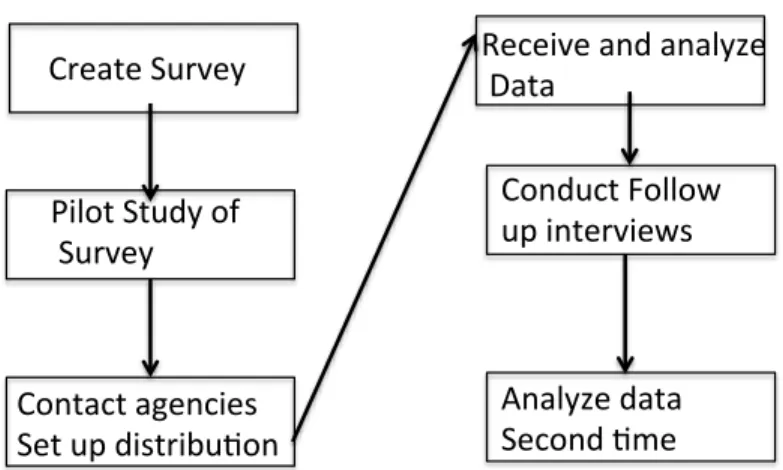
Specific Research Procedures ...44
Organization of Data and Analysis Procedures ...45
Typological Analysis ...45
Inductive Analysis ...46
Selection Procedures ...48
Timeline for Research ...48
Ensuring Reliability and Rigor ...48
Credibility ...50
Transferability ...51
Dependability ...52
Confirmability ...53
Reflexivity...53
Author’s Perception and Definition of I-STEM ...54
Author’s Definition of I-STEM Education ...56
STEM Literacies ...56
Author’s Perception of What I-STEM is Not ...58
Ethical Practices ...60
Summary ...61
Chapter 4- Results Introduction ...62
Findings on Research Question 1 ...63
STEM Disciplines Identified in Subjects’ Definition/Description ...63
Subjects’ Description of Integration in their Definition ...68
Lesson Delivery Methods ...72
Stated Products/Outcome Expectations ...75
Findings on Research Question 2 ...79
STEM Disciplines Identified in Subjects Definition/Description ...80
Integration as Found in Submitted Artifacts ...80
Lesson Delivery Methods ...83
Stated Products/Outcome Expectations ...84
Findings on Research Question 3 ...88
Characteristics of Submitted Rubrics...94
Criteria Identified from Submitted Rubrics ...94
Findings on Question 4 ...99
Subjects’ Statements Regarding School Influence ...100
Collegial Support in Implementing I-STEM ...101
Subjects’ Perceptions of Authentic Experiences ...101
Time Allocated by Teachers to Conduct I-STEM Lessons ... 103
Rationales Influencing I-STEM Implementation ... 104
Prior I-STEM Experience ... 104
Subjects Perceptions about the Ethos of I-STEM ... 105
Chapter 5- Conclusion Overview of Study ...111
Discussion ...112
Lack of Consistency Among I-STEM Definitions ...112
Neglecting the “T” in I-STEM ...115
I-STEM as a Unique Experience ...119
Desire of an Authentic Experience in I-STEM Lessons ...120
Prior I-STEM Experience for Participants ...122
Comparing my Definition with Participants’ Definitions ...126
Assessment of Students was Predominately about Soft Skills ...127
Two Notable Factors Related to Teachers Implementation of I-STEM ...131
School Influence on I-STEM Models of Instruction ...131
Collegial Support for I-STEM Instruction ...132
Future Opportunities for Research ...133
Implications Regarding I-STEM Instruction ...135
Recommendations ...136
Develop a Shared Understanding of Integrated STEM ...136
Conduct Studies Based on Established Definition...137
Limitations ...137
Summary ...138
REFERENCES ...141
APPENDICES ...145
APPENDIX A- Teacher Survey with Disclaimer ...145
APPENDIX B- Semi-Structured Survey Questions-Initial ...148
APPENDIX C- Follow-Up Survey Questions ...149
APPENDIXD-IRB...150
List of Tables
2-1Types of STEM Schools with Criteria unique to each school ...17
2-2 Side-by-Side comparison of six identified principles for integrated STEM lesson ...19
3-1 Demographic Data of Participants ...41
3-2 Categorical Types of Assessment Questions ...47
3-3 Procedures associated with Naturalistic Inquiry ...49
4-1 STEM Disciplines Mentioned in Subjects’ Definition of I-STEM ...65
4-2Summary of I-STEM Disciplines from Subjects Definitions/Descriptions and Interviews ....67
4-3 Subjects Descriptions of Integration from Subjects’ Definition, Survey Items, and Interview Questions...71
4-4 Lesson Delivery Methods ...72
4-5 Lesson Delivery Methods as Described in Subjects’ Definitions and Responses ...75
4-6 Subjects’ Stated Products/Outcomes from Subjects’ Definition, Survey Items, and Interview Questions...78
4-7 Four Themes that Emerged from Participants’ Submitted Artifacts ...86
4-8 Four Themes Based on Subjects’ Perception of their Assessment Responses ...92
4-9Criteria from Submitted Rubrics from Four Subjects ...95
4-10 Subjects’ Perception of Authenticity in I-STEM Lessons/Activities ...103
4-11 Ethos of the I-STEM Experience Based on Subjects’ Perceptions ...108
5-1Table Summarizing Participants’ Definition, Perceptions of Integration, and Attributes Influencing I-STEM Implementation ...125
List of Figures
1-An Overview of approaches to STEM Education ...9 2-Flow Chart of Procedures ...44
Introduction
For some time conversations about Science, Technology, Engineering, and Mathematics (STEM) shaped how several schools consider STEM as learning experiences (Lynch, Peters-Burton, & Ford, 2015) and their efforts to increase the number of students in the STEM fields (www.usnews.com/news/stem-index). The sense of urgency for U.S. schools to produce more students prepared to enter STEM related careers and fields have been addressed at both the national (www.whitehouse.gov, 2014; National Research Council, 2014; NRC, 2011) and state levels (National Governors Association, 2007). These conversations have caused some districts to redesign or even open new schools labeled as “STEM schools” (NRC, 2011; Researchers without Boarders, 2013).
As schools transform to or open as “STEM schools”, the question arises as to what exactly STEM means. Currently, various understandings of STEM have established three models; selective, inclusive, and career and technical pathways (NRC, 2011) and are categorized depending on intent or focus of the school. A ranking system is already in place for STEM schools to be considered in the Top 500 schools based on students’ Advance Placement math and science scores. These are described in the US News and World Report rankings
(http://www.usnews.com/education/best-high-schools/national-rankings/stem). However, one has to question if Advance Placement scores are sufficient enough criteria to determine the “top” rankings for STEM programs, particularly if one is interested in the nature of instruction in those schools.
Statement of the Problem
STEM could be represented or interpreted in a variety of ways, particularly in the design of lessons, depending on a school or teacher’s interpretation of the concept (NRC, 2009). What
contributed to this situation was currently no agreed upon model of or definition for a STEM school (NRC, 2011), no agreed upon definition of STEM itself (Bybee, 2010), or even a clear definition for integrated STEM (called here I-STEM) (NRC, 2014). I-STEM was one of the ways frequently recommended to engage students in STEM learning. So, one of the challenges had been a broad interpretation of what STEM means and in what optimal ways a STEM school might operate from a curriculum perspective.
Some used the term STEM when referring to instruction involving any or all of the four STEM elements including, but not demanding formal integration of all four elements (Barakos, Lujan, & Strang, 2012). Heil, Pearson, and Burger, (2013) used the phrase “iSTEM” to
represent lessons that were integrated with some or all of the STEM components and thus assisting students in making connections between the disciplines to enhance the learning experience (NAE & NRC, 2014; Heil, et al., 2013). The National Research Council (2014) expressed similar interpretations when they discussed the definition of integrated STEM. They wrote,
Developing a precise definition of integrated STEM education proved to be a challenge for the committee because of the multiple ways such integration can occur. It may include different combinations of the STEM
disciplines, emphasize one discipline more than another, be presented in a formal or informal setting, and involve a range of pedagogical strategies. For example, one model suggests that “integrative” STEM education must include technological or engineering design as a basis for creating connections to concepts and practices from mathematics or science or both . . . [T]he term integrated is used loosely and is typically not carefully distinguished from related terms such as connected, unified, interdisciplinary,
multidisciplinary, cross-disciplinary, or transdisciplinary. Defining integrated STEM education is further complicated by the fact that connections can be reflected at more than one level at the same time: in the student’s thinking or
between and among teachers themselves, or in larger units of the education system, such as the organization of an entire school (p.23).
Researchers, such as Nathan, Srisurichan, Walkington, Wolfgram, Williams, and Alibali (2013) found in their research positive outcomes in student learning from lessons involving STEM, such as transferring of knowledge, the linking of concepts across disciplines, and the promotion of collaboration and discussion with students. However, this team also reported that such effects on learning were “uneven” (p. 82) and inconsistent in the “high quality
implementation” (p. 82) of STEM lessons. Therefore, according to Nathan, et. al, (2013), it appeared lesson-designing impacted the effectiveness of a student’s learning and outcomes. This raised some important points that I believed needed to researched, such as determining if there were patterns or shared characteristics of an integrated STEM lesson based on a teacher’s understanding of integrated STEM education, or if the teacher’s concept of integrated STEM influenced how information could be presented or how activities are conducted, or how teachers assessed their lesson outcomes as a result of their understanding of integrated STEM.
Despite not having an agreed upon a definition, schools were continuing with various opportunities for STEM education (Lynch, et al., 2015), integrated or otherwise. Time and research had been dedicated to identifying types of STEM schools (NRC, 2011; NRC, 2012), along with identifying characteristics associated with STEM schools (Researchers without Boarders, 2013). However, characteristics of integrated STEM lessons remained unclear. This question about the nature of integration had been the impetus for study reported here. How do teachers’ interpretations of integrated STEM become represented in actual lessons?
Purpose of the Study with Conceptual Framework
9-understood how integrated STEM influenced components of an integrated STEM lesson, such as lesson plans, notes, handouts, Powerpoints, and videos; 3) reacted to I-STEM as it influences assessment design, and 4) determined what factors were addressed in their implementing an I-STEM lesson/activity.
Part 1 of the Purpose was designed to better understanding how teachers were defining and describing the concept of integrated STEM and that hoped to shed light on what influences impacted a teacher’s perception or definition of I-STEM, such as a school or district definition or if teachers were developing their own definitions.
Part 2 of the Purpose was an investigation of teachers’ perceptions about their understanding or definition of integrated STEM and how it was expressed throughout the I-STEM lesson/activity, like exploring what components were found in I-I-STEM lessons or activities. From the materials provided by the subjects, artifacts, responses and interviews were analyzed to determine if there are patterns or categories consistent amongst by the materials provided. Each artifact and statement made provided by the participant was assessed to determine how the teacher’s understanding of I-STEM manifested itself within the lesson planning, presentation, definition, and student handouts.
Part 3 of the Purpose targeted how students were assessed and/or how students were expected to demonstrate their understanding of expected outcomes based on the provided artifacts. Student work was not expected to be part of the artifacts submitted. Part 4 of the
Purpose sought to better understand why a teacher may or may not conducted an I-STEM lesson
by examining responses to determine any particular reason or reasons.
Theoretical Framework
so there “is not single theoretical framework” (Lynch, Behrend, Burton, & Means, 2013, p. 4) that describes the impact or effectiveness of integration in a STEM setting. However, there are some concepts that are being employed within these experiences that are applicable to I-STEM that can establish a possible framework for such conversations.
Experiential and Situational Learning. Many researchers argued that experiential learning was essential to an integrated STEM lesson (Nathan, et al, 2013; Kolodner, Camp, Crismond, Fasse, Gray, Holbrook, Puntambekar, & Ryan, 2003; Mehalik, Doppelt, & Schunn, 2008; Fortus, Dershimer, Krajcik, Mars, & Mamlok-Naaman, 2004). Gilmore (2013) believed this improved STEM education and was the key to its success. She wrote, “Experiential
Learning is the process of making meaning from direct experiences. Direct experiences include hands-on projects in which students are able to apply science, technology, engineering and mathematical skills to real life situations. Students are learning beyond core subjects when engaged in hands-on STEM experiential learning” (p. 1).
Coupled with experiential learning were two types of situational learning theories: Situated Learning (Lave & Wenger, 1991) and Situational Context Learning (SCL) (Bell, et al., 2013). Situated Learning had at its center a concept called “legitimate peripheral participation” (p. 29) where the learner became an active and full participant in one’s current setting. Similar to Lave and Wenger’s (1991) theory, the SLC also required a participation in the setting he or she belonged. Bell et. al., (2013), citing much of McLellan’s work (1996), claimed, “learning cannot be achieved or looked at separately from the context in which it occurs” (p. 350). Both resources illustrated the importance of emerging the participant within the setting in order to impact the learner.
effectiveness of expected learning outcomes and the experiences had by participating students (Wiggins & McTighe, 2005). Roehrig, Wang, Moore, and Park (2012) conducted a study where they understood integrated STEM as one of two models, content integration and context
integration. For them, content integration focused on the “merging of content fields into a singular…activity or unit” (p. 35), while context integration focused on the “content of one discipline and [used] contexts from [other disciplines] to make the content more relevant” (p. 35). In their study they found “four structural approaches to planning for integrated STEM” (p. 37): Co-teaching, team teaching, team planning but individual implementation, and individual planning and implementation. Understanding various implementations occurred in instructional strategies, such as co-teaching, team teaching or individually taught, the planning of such a lesson was a deliberate process to ensure the lesson objectives align with activities and outcomes (Wiggins & McTighe, 2005).
To achieve true integration (Schmoker, 2011; Wiggins & McTyghe, 2005), teachers could use a popular method known as the “backwards design” (Wiggins & McTyghe, 2005, p. 3). This process guided a teacher to work through the three different stages of 1) identifying desired results, 2) determining the assessments and the evidence that is acceptable from the assessments, and 3) planning the instruction so students can have deliberate learning experiences.
While some teachers may prefer to develop integrated STEM lessons/activities on their own, commercially produced integrated STEM lessons for schools and teachers were available. Carter (2013) analyzed eleven commercially produced STEM curricula, including The Infinity Project, Project Lead the Way, and Math Trailblazers. His study concluded these commercially produced STEM curricula were not truly integrated. I wondered if they were perceived as
or if selected and used for convenience. This study did not investigate teachers using prefabricated lessons, rather it investigated from select teachers lessons they believed were integrated STEM.
Research Questions
I researched a select group of teachers who demonstrated an ability to write and implement integrated secondary science lessons and was interested determining if certain characteristics existed among their perceptions. The questions that guided this study were
1. How do secondary teachers (grades 9-12) of various STEM disciplines define the concept of I-STEM?
2. How does a select group of teachers defining I-STEM manifest their definition in elements or components related to a lesson or activity as gauged from a review of artifacts submitted?
3. How do select teachers who have designed and/or contributed I-STEM lessons assess student achievement?
4. What factors and/or rationales influence select teachers to conduct or not conduct an I-STEM activity or lesson?
Brief Overview of Methodology
To get participants involved, an initial email was sent to area and regional representatives and organizations that represented each of the STEM disciplines, specifically the National Science Teachers Association (NSTA), the International STEM Education Association (ISEA), National Council of Teachers of Mathematics (NCTM), and International Technology and Engineering Educators Association (ITEEA). Each organization distributed my email with the survey and overview (Appendix A) on their list-serve. Subjects provided their best example of a
secondary integrated STEM activity, which could have included a lesson plan, a textbook activity from a specified page number and book, PowerPoint slides, teacher notes/handouts, worksheets, laboratory activities, assessments (tests and quizzes), and brief summaries of expected outcomes and beliefs about how the lesson was an exemplar STEM lesson. The study was designed around a purposeful sampling technique called “snowball or chain sampling” (Merriam, 2009, p. 78). There was no maximum number of persons solicited or pieces of
evidence collected, since it was based on a system of referrals. A goal of six responses was set as a minimum. Artifacts were collected for a three-week period or until it appeared the data
collected began to be duplicated and repetitive and did not add new information to the collected data.
Artifacts, survey responses, and interviews collected in the study were analyzed primarily using a hybrid of open coding (Merriam, 2009). The analysis of typologies (Merriam, 2009, Hatch, 2002) for the studies two original groupings “Teachers who do conduct I-STEM lessons,” and “Teachers who DO NOT conduct I-STEM lessons”, did not have a separate analysis due to lack of data.
One category already identified for analysis was the Level of STEM Integration as based on Figure 1 description. This diagram captured the types of integration that may exist and may be submitted as part of a lesson or teacher description. As part of this study, I was interested in receiving artifacts that represented into the “fully integrated STEM,” however, it was unknown what exactly would be submitted and perceived as an I-STEM lesson. If a lesson/artifact were submitted that fell on either side of the continuum, then it would be classified and analyzed accordingly.
Figure 1: An overview of approaches to STEM education from Barakos, et al. 2012, p. 8.
Two items from this figure needed to be addressed. First, my study anticipated analyzing lessons and activities from a variety of disciplines; therefore, any discipline was considered central to the integration of STEM and not just science, as stated in the figure. Second, the concept of STEAM lessons/artifacts, the integration of the arts into STEM (Jolly, 2014), if submitted, was accepted and analyzed. This author would have accepted any lesson a subject considered an integrated STEAM lesson, however, if the arts were considered a central concept in which the lesson was designed around, it was rejected.
Assumptions
The design of this study was asking secondary teachers (grades 9-12) to volunteer and to provide artifacts related to their best example of an integrated STEM lesson. It was assumed their submissions were their most exemplar and representative example. Those who answered any questions via email or phone were assumed their answers were truthful.
Limitations on Generalizability
Surveys were sent to those who taught grades 9-12. These teachers were asked to submit artifacts they believed represented integrated STEM lessons. Results from this study were intended to aggregate data from teachers representing various science, technology, engineering,
and mathematics organizations. All grade levels had self-reported representation. However, only three of the four disciplines were represented based on the subjects self-reported
association. Mathematics was the only STEM discipline that did not have a self-reported representative.
Delimitations regarding Nature of Project
The extent of this study was limited to the number of participants who submitted responses. Therefore, it was not possible to guarantee a comprehensive evaluation of lessons representing teachers equally from across the United States. It was also not possible to guarantee the lessons submitted were from a diverse group of secondary teachers. Requests were sent asking teachers from all grade levels 9-12 to send artifacts relevant to their best integrated STEM lesson, however, not all grade levels had equal representation.
Chapter 2 Literature Review
“Now is the time to move beyond the slogan and make STEM literacy for all students an educational priority.” Bybee, 2010b
Overview of STEM
Emergence of STEM. According to Sanders (2009), the National Science Foundation (NSF) in the 1990’s began to use the acronym SMET, as “…shorthand, for ‘science,
mathematics, engineering, and technology’” (p. 20). Yet someone in NSF said SMET sounded too much like “smut”; STEM, therefore, became the acronym of choice (Sanders, 2009). The process to not only identify an appropriate acronym, but to identify what STEM is not as simple as it would appear.
STEM is a rather recent acronym (within the past two decades) that captures and quantifies science education. By the late 1980’s to the early 1990’s, there was a push to create new content standards (Deboer, 2000) across various educational communities (Sanders, 2009). Several versions of specific content standards were created and most were content specific, in the early versions. Sanders (2009) identified various organizations, such as the American
Association for the Advancement of Science (AAAS) and its Benchmarks for Science Literacy,
Project 2061 (1994) and the National Research Council’s (NRC) National Science Education
Standards (NSES, 1994), and their attempts to create K-12 science content standards for basic science courses, such as biology, physics, chemistry and show interaction between fields. Other organizations, like International Technology Education Association (now called International Technology and Engineering Education Association, ITEEA) and National Council of Teachers of Mathematics (NCTM) produced their own content specific reformations and revisions. More recently, two resources were published directly impacting science, technology and engineering
standards: A Framework for K-12 Science Education: Practices, Crosscutting Concepts and
Core Ideas (2012) and the Next Generation Science Standards (Achieve, 2013). The very
nature of design for these resources was to remove the silos surrounding the disciplines (Nathan, et al., 2013; Katehi, Pearson, & Feder, 2009,) and to exert a greater emphasis on integration of the four disciplines.
Need for STEM Education
STEM education’s status was elevated to a critical in the Rising Above the Gather Storm
publication (NRC, 2007). From this report it was clear there was a warning about the need to do things differently when it comes to preparing United States’ students in the area of science, technology, engineering and mathematics. The committee wrote,
Education in science, mathematics, and technology has become a focus of intense concern within the business and academic communities. The domestic and world economies depend more and more on science and engineering. But our primary and secondary schools do not seem able to produce enough students with the interest, motivation, knowledge, and skills they will need to compete and prosper in the emerging world (NRC, 2007, p. 94).
This concern continued to be perpetuated when the United States was compared to other nations in areas of math and science in different international assessments. A recent Program for
International Student Assessment (PISA) reports (2012) the U.S. was lower than 17 other nations in science literacy (National Center for Educational Statistics, 2013). National Research Council (2011a) cites a 2010 National Assessment of Educational Progress (NAEP) report where nearly “75 percent of U.S. 8th graders are not proficient in mathematics” (p. 3) upon completion of 8th
grade. This decline in math and science proficiency was, unfortunately, further intensified between subpopulations like gender and poverty (NRC, 2011a; Drew 2012). This ongoing trend
programs raised concerns about the future of the American economy (NRC, 2007). NRC (2011a) cited several earlier reports linking the impact on America K-12 STEM education on “continued scientific leadership and economic growth” (p. 3). One such solution to a positive impact on the economy and scientific leadership was to increase the number of persons proficient in mathematics, technology skills, and problem-solving skills. However, gaps still remained between jobs and persons qualified for highly technical positions.
The interest in the STEM field had grown so quickly and was so pervasive that Sanders (2009) suggested we entered a period of “STEMania” (p. 20). This mania was most likely being fueled by reports warning how the U.S. was falling behind several industrial nations in math and science, such as the PISA report (2014) mentioned above, and by the Rising Above the Gathering Storm publication (NRC, 2007). For many, educators and politicians alike, the solution to
improving our educational status in key certain areas was to establish a STEM school or a STEM curriculum in an existing school focusing more clearly the STEM disciplines of on science, technology, engineering, and mathematics (National Governors Association, 2007; Researchers without Boarders, 2013).
Another reaction to this crisis was to direct fiscal resources to programs and curriculum containing a STEM label (Herschback, 2011), which focused on various levels of integration regarding the disciplines of science, technology, engineering and mathematics. This was seen in the design of various schools or pathways dedicated to STEM, which was addressed below.
I did not want to imply the concept of integrated STEM had been vacant in previous decades. Salinger and Zuga (2009) identified “interest in education involving the study of STEM subjects began in the colonial era” (p. 4). They went on to note the federally funded career and technology education (CTE) due to the Vocational Education Act of 1917. Bybee
(2010) also argued a community of STEM existed before the term STEM was coined. He wrote, “The STEM community responded vigorously to produce the Sputnik-spurred education reforms of the 1960’s” (p. 996). The point being here was regardless of the decade, STEM concepts and disciplines were valued and supported in the educational community, even if they were not seen as unified or integrated ideas.
Defining Integrated STEM. What may have started as a simple change from “SMET” to STEM in order to make it more clearly understood has evolved, “and yet…remains a source of ambiguity” (Sanders, p. 20); it was even more so with the concept of integrated STEM (NRC, 2014). As described previously, the idea of integrated STEM could be thought of as something that was taught in one classroom or across classes or event the spectrum of grades if so designed in a school (NRC, 2014). The one notion that seemed to emerge and gave it its ethos was the interdisciplinary-ness of the four concepts, which some had also called a multidisciplinary approach. Kelley (2010), citing Mallon & Burton (2005), kept each discipline separate and applied by different individuals from the different disciplines. It appeared the one goal most could agree upon, as Sanders (2009) pointed out, was a central theme that addressed the “inherent connections among science, mathematics, …technology” (Sanders, 2009, p. 23) and engineering.
This idea of connecting concepts across the disciplines was supported by the “STEM integration that spans the design and natural sciences” (Nathan, Srisurichan, Walkington, Wolfgram, Williams, & Alibali, 2013, p. 82), where design was understood as the combining of technology and engineering and natural sciences was math and science. This philosophy, according to Nathan, et. al, 2013, citing Sanders and Wells, 2006-2011, was the driving force behind Virginia Tech’s integrative STEM program, which later became known as the Purposeful
Design and Inquiry (PD&I) method (Carter, 2013, Hayward & McComas, 2014). This style of learning was defined by Wells and Earnst (2012/2015) as a pedagogical approach that taught “content and practices of science and mathematics education through the content and practices of technology/engineering education…[and was] applicable at the natural intersections of learning within the continuum of content areas…” (http://www.soe.vt.edu/istemed/).
As higher education institutions were beginning to address the needs for students to graduate in STEM fields (NRC, 2007), so to were high school (grades 9-12) programs. Four different models or pathways for STEM experiences in the secondary grades began to emerge over the past decade (NRC, 2011a; NRC, 2011b).
Professional Organizations Definition of I-STEM. How various professional organizations understood and address I-STEM may impact how a teacher, who was associated with an organization, defined I-STEM. Researching each of the four professional organizations websites, I discovered which of them did and did not have a working definition of I-STEM for their members.
National Council of Teachers of Mathematics (NCTM) did not appear to have a definition for I-STEM on their website. Based on the information found on NCTM’s website (http://www.nctm.org) their focus was primarily math education and not I-STEM education. However, it did appear they recognized some degree of relationship of mathematics to other disciplines in STEM and had several artifacts related to STEM, such as the organization’s support of funding for STEM activities, as was seen in the letter of support for to Congress to continue providing funds for such activities (http://www.nctm.org). The organization was also soliciting articles for a future publication regarding how teachers used mathematics in STEM contexts.
The International STEM Education Association (ISEA) stated on their website
(http://www.isea-stem.org/#!about/cipy) it was interested in “[bridging] the connection between all areas of STEM, to show the hands-on application to math and science through real-world, engaging, and fun activities” (www.isea-stem.org). Their goal was “to establish a professional association that supports STEM Educators in the K-12 classroom and promote STEM Education as the foundational cornerstone of innovation and excellence in educational experiences that are imperative for success in the technological world of today and tomorrow” (www.isea-stem.org). Maverick, the one participant who identified with ISEA, designed a lesson using scientific investigation pedagogy with physics concepts.
ITEEA has posted on their website (http://www.iteea.org/About.aspx)a definition for Integrative STEM education.
Integrative STEM Education is operationally defined as "the application of technological/engineering design based pedagogical approaches to intentionally teach content and practices of science and mathematics education through the content and practices of technology/engineering education. Integrative STEM Education is equally applicable at the natural intersections of learning within the continuum of content areas, educational environments, and academic levels" (Wells & Ernst, 2012/2015).
As could be seen from their definition, this organization made a deliberate effort to integrate STEM disciplines with the engineering design process. This was the only organization to explicitly defined I-STEM.
I-STEM Schools and Pathways
The context in which teachers operated and instructed could influence the production of I-STEM lessons/activities (Barakos, et al., 2012; NRC, 2014). This study was designed to survey
they would be found. Each participant was asked to identify a school pathway the most
represented them in the survey (Appendix 2) and the data was analyzed to determine if patterns or correlations existed with the artifacts provided and the school associated with. Research did identify some schools and pathways based on I-STEM and STEM disciplines. The National Research Council in 2011 published two resources that helped classify or categorize four types of schools (NRC, 2011b) based on specific criteria (NRC, 2011a) found within a that school setting. Table 2-1 summarizes four types of schools, along with select criteria associated with that school.
Table 2-1
Types of STEM Schools with Criteria unique to each school
Selective STEM School
Organized around one or more of the STEM Disciplines
School population is low
Select students talented and highly interested in STEM disciplines.
Inclusive STEM Focused School
Organized around one or more of the STEM discipline, but have no selection criteria Seek to serve a broader population Wishes to provide underrepresented subpopulations with access to STEM
STEM Focused Career and Technical Education Typically found in a high school setting Can be placed in a regional center, CTE programs, or career academies
STEM Education in Non-STEM-Focused Schools
Found in a more traditional school setting Typically does not have a STEM focus, but does provide courses in various STEM disciplines, such as Accelerated Program (AP) Courses
Designing Integrated STEM Experiences
Principals of Integrated STEM Lesson. Creating an integrated STEM lesson must
entail some distinguishable forms, qualities or characteristics. Wiggins and McTighe (2005) described conditions needed maximize learning experiences that highlighted the need for
appropriate planning and when implemented paralleled several qualities identified by NRC (2014) that were considered necessary “implications for the design of approaches to integrated STEM education” (p.89).
NRC (2014) emphasized strategies that built knowledge and skills “within and across disciplines” (p. 89). From the research, they found the following four principles related to the “design of integrated STEM learning experiences” (p. 89). They were
1. Making integration explicit (p. 89),
2. Attending to students’ disciplinary knowledge (p. 91), 3. Attending to the social aspects of learning (p. 92), and 4. Supporting the development of interest in identity. (p. 94) Explicitly connecting materials and expanding upon the student’s content knowledge was necessary since many of the concepts were found within the activities themselves and were not designed to help students make connections without appropriate teacher support. This was problematic if the activity or lesson was designed to occur over several days or class periods. Student may not carry over information from previous days to the present and build upon the content.
NRC (2014) mentioned the importance of “social aspects” (p. 92) in the design of I-STEM lessons. Teachers must consider the relationships and interactions between the students and between the teacher and the students. How much discussion and collaboration will occur in the lesson/activity that identifies when they will be learners and when they will be the directors of learning. Coupled with this aspect was the need to understand the “social process” (p. 93) of how the learning occurs. Simply because students were working in groups did not automatically imply learning had occur. What techniques the teacher and even the students to ensured students employed was reaching the desired learning outcomes.
research to better understand not just the what, but the how these were developed within the learner. However, NRC (2014) outlined some research identifying particular elements related to this topic in relation to the design of an I-STEM lesson/activity. These elements consisted of lessons/activities that 1) gave students time to pursue specific interests within a project, 2) had processes in place that provided feedback to students, 3) had time built into lesson for visiting with other students, 4) were given opportunities to make connections in what is called “triggers of interest” (p. 95), and 5) implemented project- or problem-based learning experiences, meaning multiple solutions are possible. If some or all of these elements were included then there was an increase in students’ interest in STEM disciplines and possibly even identifying with certain STEM careers.
Jolly (2014), who also agreed that STEM was more than a “grouping of subject areas” (http://www.edweek.org/tm/articles/2014/06/17/ctq_jolly_stem.html), identified six specific qualities found in a well-designed STEM lesson. These characteristics overlap greatly with Cunningham and Higgins (2014) six principles that helped “girls and minority students embrace the “E” in STEM” (p. 42). Table 2-2 outlines the each of the respective authors guidelines. Table 2-2
Side-by-Side comparison of six identified principles for integrated STEM lesson Focus on Real World Issues and
Problems Set in Real-World Context
Lessons are guided by Engineering Design Process Highlight How Engineers Help Others Immerse Students in Hands-On Inquiry and
Open-ended Exploration Construct Activities with Multiple Solutions Involve Students in Productive Teamwork Value Failure
Apply rigorous Math and Science Content your
Students are Learning Foster Collaboration
Allow for Multiple Right Answers and Reframe
Failure as a Necessary Part of Learning Use Readily Available Materials
listed previously. Understanding by Design (UbD), has three different stages in the development of an effective lesson: identifying desired results, determining the assessments and the evidence that is acceptable from the assessments, and planning the instruction so students can have deliberate learning experiences. The UbD method is non-content specific, yet provides a design process applicable to the integration of STEM disciplines, particularly in identifying the
appropriate “intersections” (Wells & Earnst, 2012/2015) found amongst the STEM disciplines. Previous research (NRC, 2014; Wang, et al., 2011) has shared some concerns regarding planning and designing of I-STEM lessons/activities. This author believes much of that is attributed to a more traditional way of creating a lesson, the “twin sins” (p. 16) Wiggins and McTighe (2005) describe the “twin sins of traditional design” (p. 16), are lessons designed to be activity oriented or designed to simply cover the content, undermine the effectiveness of
instruction. Therefore, a teacher has not taken the effort to flesh out the four elements listed previously by NRC (2014) or worked to understand the “intersections” found amongst the STEM disciplines. To successfully achieve this, one must decipher between “knowledge” and
“understanding” (p. 35) as he or she begins to design a lesson. Knowledge for these authors represents a student knowing facts or concepts related to a concept, as compared to the description given to understanding where the learner knows the meaning of facts along with ability to discern when to use the information in an appropriate setting. This is a critical
difference between the two concepts for it is when understanding is obtained that transferability is attainable.
Two essential components to the success in the design of the lesson is the selection of one of the six “facets of understanding” (p. 82) and pairing it with a mechanism that collects the acceptable evidence of successful learning. It is at this point where the “backward design
process depart[s] more from conventional practice” (p. 146). Each facet of understanding (explanation, interpretation, application, perspective, empathy, and self-knowledge) contains qualities and characteristics unique to them; selecting an appropriate assessment device creates the conditions in which the learner can demonstrate his or her understanding as related to the selected facet.
This model may be effective in the designing of integrated STEM lessons, but does not necessarily identify or outline the marks of a quality integrated STEM lesson. Putting the lesson together encourages the teacher to consider research-based teaching and strategies and learning activities that allows the student to move through the learning progression.
The terms “deliberate” (Wiggins & McTighe, 2005) and “coordination” (Nathan, et al., 2013) has been used previously to describe the intent of an integrated STEM lesson design and seems to be emphasized in the findings of NRC committee and their report (2014). Four design principals are identified as necessary for integrated STEM experiences: “making integration explicit, attending to the students’ disciplinary knowledge, attending to the social aspects of learning, and supporting the development of interest and identity” (p. 89).
Experiential and Situational Learning. As discussed previously, integrated STEM is
best learned through an experiential process. Wells (2010) cites research that encourages the integration of science with other disciplines for it provides an “authentic context for problem solving” (p. 203) and the transferring of knowledge. Two problems that arise for teachers in designing an integrated STEM lesson/activity is the integration of two or more STEM disciplines and creating an authentic context for a student. One possible solution to accomplishing an integrated STEM lesson/activity was presented by Nathan, et. al, (2013). They write, “one possible means of achieving STEM integration…is through learning experiences that foster
cohesion production” (p. 83). Cohesion, according to these researchers, is important in supporting teachers’ ability to integrate STEM concepts for it helps the instructor deliberately link concepts by the instructor and is seen as a “key mechanism of integrated STEM education” (NRC, 2014, p. 58).
An authentic context can be accomplished through the application of the Situated Learning (Lave & Wenger, 1991) and Situational Context Learning (SCL) (Bell, et al., 2013) theories. These describe the importance of emergence into the learning environment a student must find him or herself in to maximize the learning experience. To create such conditions, Bell, et al, (2013) identify four components of the SLC theory creating a framework where this should occur: cognitive apprenticeship and coaching, opportunities for multiple practice, collaboration, and reflection. Each has a specific purpose within the theory to enhance student learning. For example, cognitive apprenticeship works to “generalize” (p. 351) information so it can transfer to other situations, while coaching facilitates learning by scaffolding resources and asking guiding questions to encourage learning. The theory is “most effective when it occurs in an authentic context” (Bell, et al., p. 352). SLC and Situated Learning compliments Vygotsky’s Zone of Proximal Development (ZPD) as a “cognitive-development theory” (Gredler, 2009), since it identifies “events and conditions necessary to attain [the highest levels of human thinking]…” (p. 263). The ZPD is simply the gap between what a student can do without any help and what cannot do unless assistance is provided (Gredler, 2009). Each teacher’s classroom will have students at various stages of understanding in each of the STEM disciplines and practices; design of a lesson should address pedagogical practices that permit the overlaps and interactions
between the different ZPDs between both teacher and student and reflect appropriate learning strategies to engage students at multiple entry points.
While important to understand the theoretical concepts regarding the context in which authentic learning experiences can occur, Strobel, Wang, Weber, and Dyehouse (2013) outline four principles to consider in the design of such authentic experiences. For them, teachers must consider which type of authentic experience the students will experience in their activity. From their study, Strobel, et al., (2013) analyzed literature the included the concept of authentic in the learning experience, specifically for engineering education. They discovered four types of authentic categories: context authenticity, task authenticity, impact authenticity, and personal/value authenticity.
Strobel, et al., (2013) summarize most succinctly their explanations of each the four categories. They wrote
After careful reading and discussion of the 59 descriptions and definitions, we categorized them as “Context Authenticity,” “Task Authenticity,” “Impact Authenticity,” and “Personal/Value Authenticity” ...The common theme of all the different authenticity definitions is their relation to real-world experiences. Context
Authenticity answers the question, What makes a context authentic? This type of authenticity should take place in authentic contexts and resemble daily life experiences. For example, the activity should contain a suspension of disbelief process, such as when watching a movie. Task Authenticity answers the question, What makes a task authentic? This type of authenticity focuses on constructivist type learning environments in which students may be
challenged to make decisions in practical contexts. Impact Authenticity focuses on what impacts an authentic
experience can deliver and asks, What impacts can an authentic experience deliver outside of school? Finally, Personal/Value Authenticity asks, What makes an experience authentic on a personal level? Personal/value authenticity includes actions that make an experience authentic on a personal level such as self-exploration. (p. 146, 148)
As the interest in I-STEM grows, the concept of authenticity must also be understood and applied appropriate for students to have the intended outcomes expected by the teachers
conducting such lessons. Being able to consider which factor of authenticity students may wish to explore or grow in could be great foundations in which to construct a lesson and also reduce confusion about expected outcomes. For example, Larmer (2012), of Edutopia, discussed three different types of authenticity: Not Authentic, Somewhat Authentic, Fully Authentic. To be Fully Authentic, the work must be real to the student or can have an impact on the world in some manner. This is in contrast to Not Authentic lessons where one is asking students to create a poster that only asks a student reproduce information from a book or Internet site or write an essay. (http://www.edutopia.org/blog/authentic-project-based-learning-john-larmer). When compared with Strobel, et. al., (2013) findings, there is agreement that the experience must be more than an activity, however, Larmer’s (2012) description appears to be a blend of task and impact authenticity.
Content is a primary component in the design of the lesson with each lessons/activities working to apply various levels of and backgrounds in the use of content knowledge during lesson interactions (Alonzo, et al., 2012; NRC, 2014). But another factor that must be considered in the design of a lesson: the doing of science.
Science and Engineering Practices. The K-12 Frameworks (2011) and the Next Generation Science Standards (NGSS Lead States, 2013) emphasize the relationship of the
knowing of content as well as the doing of science and engineering. Two terms may be
referenced by participants and referred to in this this paper: practices and inquiry. These terms will have distinct meanings for this author. NGSS (NGSS Lead States, 2013) quotes the following statement from the K-12 Framework
Dimension 1 describes (a) the major practices that scientists
employ as they investigate and build models and theories about the world and (b) a key set of engineering practices that engineers use
instead of a term such as “skills” to emphasize that engaging in scientific investigation requires not only skill but also knowledge that is specific to each practice (Executive Summary, p. 4).
Using the term practices is an important distinction for it encompasses both the skills and the knowledge unique to the specific science or engineering practices. So why not use the term “inquiry,” since this term also has a hallowed place in the halls of science? Scientific inquiry “refers to the diverse ways in which scientists study the natural world and propose explanations based on the evidence derived from their work. Inquiry also refers to the activities of students in which they develop knowledge and understanding of scientific ideas, as well as an understanding of how scientists study the natural world” (NRC, 2000, p. 1). NGSS (NGSS Lead States, 2013, Executive Summary) and Bybee (2011) both address this. Again, quoting the Framework, NGSS states,
the term “inquiry,” extensively referred to in previous standards documents, has been interpreted over time in many different ways throughout the science education community, part of our intent in articulating the practices in Dimension 1 is to better specify what is meant by inquiry in science and the range of cognitive, social, and physical practices that it requires. As in all inquiry-based approaches to science teaching, our expectation is that students will themselves engage in the practices and not merely learn about them secondhand. Students cannot comprehend scientific practices, nor fully appreciate the nature of scientific knowledge itself, without directly experiencing those practices for themselves (p. 4).
Bybee (2011) argues scientific inquiry is “one form of scientific practice” (p. 10) and does not replace it, but rather expands and enriches the “teaching and learning of science” (p. 10).
Studies Analyzing Integrated STEM
curricula. This problem may be less of an issue today as it was when they conducted their research, but Wang, et al., (2011) succinctly suggest that we “treat STEM integration as a type of curriculum integration” (p. 3), therefore it manifests itself in a curriculum that integrates the four STEM disciplines. Barakos, et al., (2012) earlier described a continuum in how STEM
integration could visually be represented, but it appears much of the manifestation is centering around engineering design concepts or environments. Several of the studies looking at I-STEM teachers and lessons were involved with engineering design environments or programs.
Nathan, et al., (2013) were interested in better understanding how the “mechanisms of integration” (p. 77) occurred in classrooms. For their particular study, they observed two different high schools that contained Project Lead the Way (PLTW) courses. In essence, they conducted a qualitative study, but they described their methodology as a “learning sciences perspective”…[and assumed] that knowledge and action are socially constituted are situated in the embodied, material, social, and cultural ecologies under observation” (p. 86).
The findings of the their study are two fold. First, cohesion is an important concept that can offer “new insights into pedagogical processes for fostering STEM integration” (p. 90). As described on pages 58 and 60, NRC (2014), citing Nathan, et al., (2013) outlines the four pedagogical mechanisms impacting the effectiveness of cohesion:
. identification of invariant relations and disciplinary concepts regardless of the surface features (Nathan et al. 2013);
. coordination that “supports students’ reasoning and meaning making by
constructing clear links across representations and activities” (Nathan et al. 2013, p. 110);
representations and future ideas and activities, which “facilitates planning, highlights pending importance, and prepares students for future learning opportunities” (Nathan et al. 2013, p. 110); and
. backward projection to previously encountered ideas and events, which “prompts students to engage in reflection and emphasizes making connections between new and prior knowledge” (Nathan et al. 2013, p. 110).
Second, Nathan, et al., (2013) argued this cohesion experience promoted “STEM integration at content and curriculum levels…connect[ed] ideas to representations…change[d] how students perceive these objects...and what meaning they [held] for students” (p. 109). It was this one concept called cohesion that permitted essential content standards to be represented and retained across the “range of representations, objects, activities, and social structures” (Nathan, et. al, 2013, p. 77) within the classroom. This group demonstrated examples of students
improving their understanding of STEM concepts “during the course of project-based learning in the classroom” (p. 90). Further, students were able to make connections to concepts within the lesson/activity and across various lessons and activities, also called a “metalevel discussion” (p. 108). This study implies there are techniques teachers can use in the process of learning that can have both content level (more narrow) and curricular level (more broad) level implications.
Roehrig, Wang, Moore, and Park (2012) examined how secondary science, math, and technology teachers use an integrated STEM model to implement their new state STEM standards, which now included an engineering component. They asked the question, Is adding the “E” enough? to ensure integration would/could occur. More specifically, is the addition of engineering content enough to construct an integrated STEM lesson or activity?
science, 33 were math, and 8 teachers has a background in technology education. They represented a total of 10 schools, 4 middle schools and 6 high schools. In the course of the professional development sessions, the 46 teachers created 41 lessons. Their initial analysis of 41 lessons found four categories as designed around the engineering design process: “1)
integrated engineering design- product focus; 2) integrated engineering design- process focused; 3) engineering design with no integration; and 4) absence of engineering” (p. 37). Based on these preliminary lesson analyses, teachers’ understanding of integrated STEM varied both in design process and content integration.
STEM integration was found to be on a “continuum from lessons that attempted to integrate all of the STEM disciplines”(p. 41) to lessons containing only two of the four disciplines. These two-discipline lessons made up the majority created by the teachers. Combinations of the integrated STEM lessons consisted of science and math, science and engineering, or math and engineering, which had the greatest number of lessons represented. Roehrig, et al., (2012) did clarify that science teachers prepared all integrated STEM lessons, even though other content teachers could participate in the instruction and execution of the lesson. In fact, the authors make a note that the “highest quality of STEM integration was found in the lesson co-planned and implemented by a science and mathematics teacher” (p. 41).
This study highlighted the variations of implementation and the impact state standards can have on the integration of engineering concepts into science standards. Of the 41 lessons created in both the middle school and high school settings, 18 of them were designed to go into some version of a science course. Variations in lessons were minimal with only three reflecting any life science standards; the majority consisted of physical science concepts. Even more revealing is the fact only two of the life science lessons combined engineering processes, even
though several science concepts, like “genetic engineering, prosthetics, artificial heart valves, and neuroengineering,” could have been incorporated.
The findings did illustrate a diverse approach to the curricular design of the lessons, in addition to the structural approach of the instruction. The level of STEM discipline integration in the lessons established a continuum that ranged from 12 lessons attempting to integrate all the STEM disciplines, five lessons using only engineering and technology standards, four lessons integrating science and mathematics standards, six lessons having combined science and engineering standards and 14 lessons consisting of engineering and mathematics standards.
Hershback (2011) would argue that teachers who use only two disciplines, specifically science and math, while meaningful, are giving schools the “illusion of STEM programming” (p. 111). However, researchers, like Stohlmann, et al., (2012) believe an, “integrated STEM
education can involve multiple classes and teachers and does not have to always involve all four disciplines of STEM” (p. 30). It leaves one to wonder how frequently are lessons created to include multiple classes and multiple teachers in the design and implementation of an integrated STEM lesson. Additional curiosities are frequency of the intentional absence of two of the four disciplines in the design of an “integrated STEM” lesson in a classroom and if a teacher ever integrates the missing disciplines at any point during the school year.
It is important to recognize that integrated STEM lessons may not be organically generated at the school level. Teachers may use commercially produced resources intended to meet the integrated STEM expectations of the school or lesson. Both Nathan, et al., (2013) and Roehrig, et al., (2012) conducted their studies at a school that implemented the Project Lead the Way curriculum. This may help explain why there was an emphasis on engineering design processes in their studies.
Carter (2013) investigated six of the more common STEM curricula to better understand what characteristics make up an integrated STEM curriculum. This study “emerged from the inconsistencies between goals and outcomes that exist in the current STEM literature and
commercially available STEM curricula” (p. 36). To determine if a consensus existed as to what and if any characteristics were needed or evident in the construction of a framework in
developing integrated STEM curricula, he devised a modified Delphi study.
Carter (2013), put together a panel of 12 participants who had some experience or background working with STEM integration and its literature. The panel had representatives claiming to have a math, science, and engineering and technology background with diverse academic backgrounds from Masters degrees to Ph.Ds. According to the paper, the majority of participants on the study were male who had an engineering and technology background. After three rounds of the Delphi study, the panel concluded that much of the current STEM curricula was not integrated, but rather aligned to a specific STEM discipline: engineering. Based on this, Carter (2013) concluded that most did not provide a truly integrated experience. The panel also revealed an agreement that any curricula designated as integrated STEM “should include project-based work on open-ended problems, appropriate grade-level educational standards/content of each STEM discipline (without isolating it to one discipline), and that instruction in reading, writing, and numeracy used to enable effective communication in problem-solving” (p. 104). As with the previously listed characteristics of integrated STEM curriculum, this study also found that lessons needed a real-world problem.
Teachers’ Perceptions about I-STEM
The success of an I-STEM lesson may lie in how comfortable a teacher is in teaching such a lesson or activity, because a “lack of confidence in mathematics and science
knowledge…and fear of engineering…” (NRC, 2014, p. 119) are factors impacting a teacher’s ability to teach an I-STEM lesson (NRC, 2014; Wang, et al., 2011; Rittmayer & Beier, 2008). In a 2011 study, Wang, et al., found that teachers’ “perceptions of STEM integration strongly influenced how they designed their STEM integration unit” (p. 10). Purposefully selecting three secondary teachers (2 teachers from 6th grade and 1 teacher who taught grades 6-8), the research team examined the teacher’s beliefs and practices after providing professional development and implementing “STEM integration activities” (p. 3). Of the three teachers (1 male, 2 females), Nate taught math with no history of teaching I-STEM, Kathy taught physical science, who was considered a novice by the authors in I-STEM, and Amy taught engineering, who was identified as intermediate in I-STEM experience. After a year’s worth of training, planning and
implementing, the researchers observed their lessons and interviewed the teachers afterwards. They found that Nate “considered mathematics to be an important skill…and STEM integration provided an opportunity for students to apply mathematics skills and concepts in a real-world situation” (p. 8, italics removed by author). In other words, Nate understood to believe the concepts of science, math, and engineering were related, however STEM integration did not necessarily “help him teach his subject in a more effective way” (Wang, et al., 2011, p. 8). He also believed that collaboration with other teachers was necessary when an I-STEM lesson/activity was needed. For the lesson he conducted, Nate did collaborate with Kathy. According to the article, Nate appeared bound to his curriculum and the I-STEM approach did not help him cover the curriculum, therefore his lesson was only designed for one day.
Kathy collaborated with Nate in the design and implementation of her lesson, which lasted a total of seven days. She approached the idea of I-STEM with the belief that problem solving was the “key concept to integrated STEM subject and [was] the main focus of STEM