Procedia - Social and Behavioral Sciences 56 ( 2012 ) 233 – 242
1877-0428 © 2012 Published by Elsevier Ltd. Selection and/or peer-review under responsibility of Centre of Engineering Education, Universiti Teknologi Malaysia
doi: 10.1016/j.sbspro.2012.09.650
International Conference on Teaching and Learning in Higher Education (ICTLHE 2012) in
conjunction with RCEE & RHED 2012
Motivation in Problem-based Learning Implementation
Nor Farida Harun
a, Khairiyah Mohd Yusof
b*, Mohammad Zamry Jamaludin
c, Syed
Ahmad Helmi Syed Hassan
da,b,cProcess System Engineering Centre (PROSPECT), Universiti Teknologi Malaysia, UTM Skudai, 81310 Johor, Malaysia bFaculty of Chemical Engineering, Universiti Teknologi Malaysia, UTM Skudai, 81310 Johor, Malaysia dFaculty of Mechanical Engineering, Universiti Teknologi Malaysia, UTM Skudai, 81310 Johor, Malaysia
Abstract
Students’ motivation is a key to success in problem-based learning (PBL) implementation. Transition from conventional teaching method to PBL infuses negative mindsets towards PBL among students who are not familiar with inductive learning methods. This paper describes the approaches in motivating students to learn in a cooperative problem-based learning (CPBL) environment. PBL implementation in an undergraduate chemical engineering course at the Universiti Teknologi Malaysia (UTM) is taken as a case study to demonstrate the effect of motivation. It is revealed that through systematic motivation given by the facilitator, the level of students’ motivation can be increased to encourage them to reach deep learning. Students’ responses about motivation they gained through the course are included to demonstrate the impact of motivation towards learning process in PBL.
© 2012 Published by Elsevier Ltd. Selection and/or peer-review under responsibility of the Centre of Engineering Education, Universiti Teknologi Malaysia
Keywords: Problem-Based Learning; motivation; self-directed learning; engineering education, deep learning
1. Introduction
Problem-based learning (PBL) has been implemented for in various disciplines of higher education; medical, business, education, engineering, dentistry, law, and so on. PBL improves teaching and learning process because it focuses more on developing students as self-directed learners compared to traditional lectures that encourage students to be spoon-fed by lecturers. Many researchers have shown the effectiveness of PBL in enhancing
* Corresponding author. Tel.: +6019-7034880. E-mail address: [email protected]
© 2012 Published by Elsevier Ltd. Selection and/or peer-review under responsibility of Centre of Engineering Education, Universiti Teknologi Malaysia Open access under CC BY-NC-ND license.
students’ performance in learning [1, 2, 3]. Nevertheless, the transition from the conventional teaching method is a challenging process in most disciplines, as PBL itself will challenge the students’ learning behaviour [4].
In the learning environment in which conventional modes are still predominant, students are generally not ready to undertake PBL. When they first encounter PBL class, most students normally express frustration to show their resistance before they can adapt to the new learning environment. While getting introduced to the course contents without prior experience in PBL, students may have difficulty in determining what is important for them and what is not. This phenomenon is due to the use of problems as the main learning instrument in the class. The new knowledge they have to gain is constructed after melding the basis of prior knowledge which is brought with them. Hence, they are in dilemma to get the correct direction in learning because they are expected to be responsible for their own learning. It is common for students to experience shock, denial, strong emotion and resistance [5]. Perhaps, not surprisingly, there are some students that resist learning using PBL, taking a withdrawal action. Therefore, motivation from the facilitator is essential to ease frustration and strong emotion among students and step by step develop the students’ acceptance, leading up to a new level of performance and maintain their perseverance in task engagement.
Based on experience gained from the implementation of cooperative problem-based learning (CPBL) in an undergraduate chemical engineering course, Process Control and Dynamics, which is the only PBL course that students take in that semester (that is, other courses uses conventional teaching and learning methods), this paper addresses the framework of how students’ motivation can be stimulated in a PBL class by describing the facilitator’s roles and the activities that can be done during both class and outside of class time. A more detailed description of the CPBL model can be seen in Khairiyah et al. [6]. The discussion will be started with brief overview of motivation to learn theory to orient the readers into the field. Then, the impact of motivation in PBL is interpreted according to the students’ responses.
2.Motivation to Learn
In PBL, getting students to engage in the learning process is important to ensure that the richness of PBL is achieved. Nevertheless, how to motivate students to be mastery oriented learners, instead of performance approach oriented? Individuals with performance approach orientation are more likely to compete with their peers to be the best. They will work hard in order to learn and achieve their personal goal. Grades have value as an external motivator for this group of learners. Unlike performance oriented learners, mastery oriented groups attempt to master what they learn, focusing on learning process and making progress rather than being perfect [7].
Biggs and Tang had declared that the importance of task and students’ expectation of success are the two primary factors that can make students learn [2]. Students will immerse in tasks that seem worthwhile for them and promise them the possibility of success. Nobody wants to take a risk if they believe they will fail. This theory is called expectancy-value motivation theory [8]. Another model of students’ motivation from Pintrich [9] also points out the similar views.
Three components which could affect motivation were listed as: x Students’ beliefs about the importance and value of the task x Students’ beliefs about the ability to perform the task
Both theories relate directly to the cause of students’ resistance during the initial period of PBL implementation. It is a norm if students resist when they feel unsecure with the PBL approach as they do not possess any prior experience about PBL. In contrast, if students realize that the task fits these two sets of criteria, students are more likely to adopt mastery orientation. So, facilitator has a lot of options to steer the students’ motivation, whether design a course or tasks that students value or structure the promising learning environment to succeed.
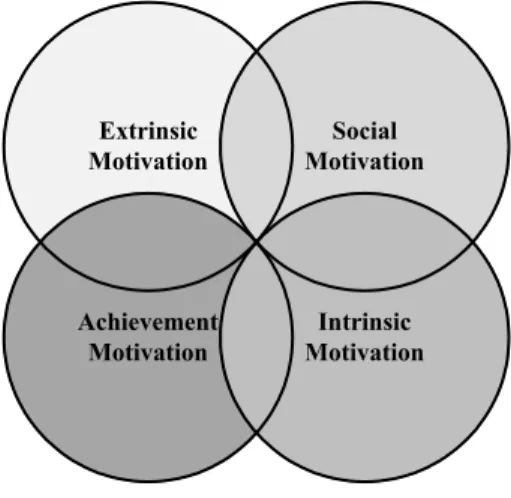
Tasks that seem to be valued by students are actually influenced by several factors of motivation. It can be seen worth doing from different angles. Biggs and Tang [2] referred to extrinsic, social, achievement and intrinsic motivation as the factors affecting students to engage in tasks as shown in Figure 1. These elements can be closely linked to the expectancy-value theory and the goals that students can set and the process to attain those goals.
Extrinsic, social and achievement motivation is the result of traditional teaching modes and conventional assessment methods. Those motivations can kill life-long learning, deep-learning and cooperative learning because it drives students for the wrong reasons. Intrinsic motivation is the academic ideal [2]. Intrinsically motivated students are interested in the course content itself, persist in facing the difficulty, willing to seek out new ideas, keep asking questions and their learning progress are strongly affected by curiosity whereby it is constructed on the pre-existing knowledge base [10]. The more curious a student is, the more knowledge he/she acquires. Thus, students with intrinsic motivation tend to adopt deep-learning style. When they realize the existence of gap between the current knowledge they have and the desired knowledge they are expected, they will put a lot of effort to understand what they learn and explore the reasons behind the assignments without having any prior experience in the task. Meanwhile, extrinsically motivated students are referred to as surface-learners, who are strongly attached to the outcomes of the task. They focus only on the topics that will be tested on [11].
Fig. 1. Motivational factors affecting task engagement
The truth is the number of students who are intrinsically motivated are much less than those who are extrinsically motivated. Expectation of success at PBL implementation primarily lies in the students’ motivation to persist during the learning processes. It is a vital role of facilitators to stimulate students to be motivated and help them to adopt mastery orientation and develop intrinsic motivation. Hence, it enables students to find the fun of learning using PBL teaching methods and to discover and reap its benefits.
Extrinsic Motivation Social Motivation Achievement Motivation Intrinsic Motivation
3. Motivating Students in PBL Class
Transforming the typical spoon-fed learners to the self-directed learners is a painstaking process. At the very beginning, most of students rebel PBL approach as if PBL is the worst teaching mode they encounter. In PBL, they are no longer given lectures or notes, but they have to learn on their own based on the problems. They will not get information if they do not read, explore or ask for the information. They need to work in a cooperative learning climate, exchange ideas and opinions, proactively argue what others think, and be trained to accept failures and mistakes. In addition to that, in PBL, there is no one right answer. Therefore, there is a room of freedom for them to decide how to work on the problem and which solution they can justify as correct. If possible, students are allowed to surpass their syllabus. These distinctive features of PBL make students feel uncomfortable and unsecure. Due to these negative mindsets, students show their frustration.
Thus, effective facilitation to motivate students is very important during the early transition period. Having a good structure of the course contents and course deliverables may help the facilitator not only to recover students’ strong emotions and frustration resulting from their trauma of PBL, but also to maintain their engagement in PBL case studies throughout the semester. A lot of studies have analyzed the effective techniques that can be implemented by PBL facilitators to motivate their students. Ideas about the strategies from the research done in Royal Melbourne Institute of Technology (RMIT) [12] and Center for Teaching and Learning at Stanford University (CTL) [13] are found to be in parallel with Barbara [14].
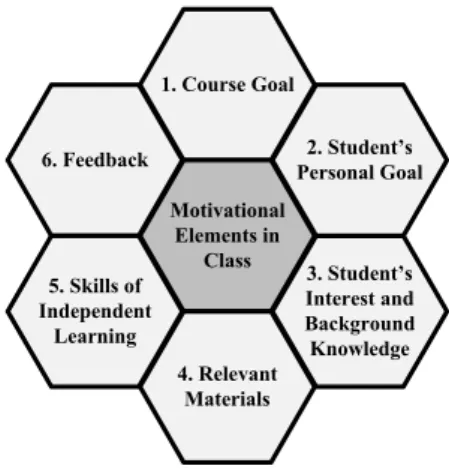
As shown in Figure 2, there are six criteria emphasized in those researches. In order to motivate students and stimulate their interest, all the elements should be taken into consideration. The important issue is facilitator needs to tap them with the proper ways based on the criteria, hence it will promote better learning. Usually, class instructors in conventional curriculum are only able to deliver the first element of motivation, by highlighting the expected course outcomes at the beginning of the semester. They are more likely to neglect other motivation elements. On the other hand, PBL environment permits all six elements to be tackled.
In the following section, based on the experience in a chemical engineering course at UTM, Process Control and Dynamics, two major aspects of motivation in the PBL implementation; fourth and fifth element, which are rarely addressed in conventional teaching and learning environment, are discussed. The rationales behind the practices are stressed to see its effect on the development of the students’ motivation in PBL class.
Fig. 2. Key elements of motivation in PBL class
1. Course Goal Motivational Elements in Class 6. Feedback 5. Skills of Independent Learning 4. Relevant Materials 3. Student’s Interest and Background Knowledge 2. Student’s Personal Goal
4. Stimulating Students’ Motivation in Chemical Engineering Course
CPBL was first introduced to chemical engineering program in Universiti Teknologi Malaysia in 2003 [15]. Rather than giving the normal lectures and conventional assessment of learning, CPBL encourage the chemical engineering students to gain new knowledge through exploring the unstructured problem in systematic approaches.
After a seven year period of CPBL implementation, a lot of improvements have been made. The original PBL mode that has been implemented initially was the groundwork phase to the new one. Year after year, ideas and strategies for motivating students and stimulating their interests always changes, it seems that bringing out and developing students’ natural motivation is conscientious. The efforts taken are to fulfil the current requirements from stakeholders. Thus, the PBL practitioners nowadays are looking at motivation as an important issue that needs to be tackled.
In the chemical engineering course at UTM, two main aspects of motivation, contextualisation and directed learning are identified as major contributors that can encourage students in PBL class to become self-motivated independent learners. Both elements can be mapped in the element of relevant material and independent learning skill respectively (see Figure 2).
4.1. Contextualisation
When introducing students to PBL, the elements that should be put particular emphasis is not just in thinking about the teaching and learning strategies, but also in designing the course and devising the structure how to ensure that students are able to achieve their goals in the course. Contextualisation means that relevant and realistic of topics learned by students are highlighted to illustrate the significance of the course and the application of the principles. Hence, it can drive students’ focus on the skills they are developing.
In Process Control and Dynamics, the contextualisation can be divided into several parts, such as: x Authentic and realistic PBL problems, with the last one being real
x Communication with professional experts x Real case study with plant visit
x Interaction with ex-students and engineers i. Authentic and realistic PBL problems
Authentic and realistic problems are crafted for students to work on throughout semester to reveal the importance of the content being learned in industry, its benefits and the skills being developed. It reflects the working scenario in the field which students will be working in the future by placing the use of the content learned in the context that it is being used while taking into consideration work place expectations, such as job specifications, professionalism and the challenges in professional practices. Four problems per semester are presented with plausible scenario. Usually, data and calculation sheets with mock company heading and logo are provided to induce immersion in the tasks.
As part of the power of PBL lies in the problems crafted, the coverage of the intended learning outcomes is introduced in the case studies. Students are challenged to perform required activities that can be helpful for scaffolding them to manage the existence gaps in knowledge. By providing explicit learning context through
authentic and realistic problems for students to work on, the facilitator is able to stimulate the students’ motivation up to desired learning and knowledge level. More detail on the crafting engineering problems for PBL class can be referred to Mohammad-Zamry et al.[16].
ii. Communication with professional experts
In PBL class, including fictitious plant personnel in the case study, who the students can contact through the electronic forum, is essential to per students’ interest by immersing them in the context of learning environment. In actual fact, the class tutor or lecturer is behind the person answering all students’ question and doubts in the electronic forum. This technique is helpful in offering opportunities for facilitator and tutor probing their students with thought-provoking questions related to the case study. Thus, it can promote students to critically think and learn in a greater depth to master the principles. On top of that, this can also empower students with the skill of learning through questioning, and developing etiquette of asking questions to experts, and what are questions worth to asking. These skills are introduced into this course for students to master progressively. iii. Real case study with plant visit
Incorporating collaboration between academia and industries is another way of motivating students to appreciate the course, the skills developed and also in PBL itself. By exposing them to the current industrial practices, standards and issues in problem, students can gain a great confidence in their learning and know that the materials that are structured for them are useful to prepare themselves for the future.
For example, in the course, the final case study is designed to represent a real problem in industry. Arrangement with the corresponding company is planned ahead to get detailed process description including a basic P&ID and permission for plant tour. Due to the restriction of the company, typically, only one representative from each team is allowed to visit the respective plant. However, prior to that, each student in the teams is assigned to do self-reading and discuss with one another to develop understanding about the process and start asking themselves what information or data will be required to carry out the project.
Students discuss and brainstorm among their team mates and then prepare a set of questions that will be clarified during plant visit. They must submit these questions before going for the plant visit. The presentation of final findings for this case study is different compared to the case study 1 to case study 3. In the recent semester, instead of having a typical presentation mode, a poster presentation was held. All students are required to set their own booth to present the result. Experts from the company are invited to be the plant judges assessing the students’ works.
iv. Interaction with ex-students and engineers
Furthermore, to encourage students to persist at the task engagement, interaction with successful students from the previous years and industry professionals, such as process control engineers, is beneficial. Through the communication via electronic forum or emails, students will be exposed to the variety of practical applications in the respective field. So, this contextualisation can help facilitator to motivate their students to look over the course and steer their strategy and focus on career development.
In normal practices of the course, the PBL facilitator will also show the evident from forum of ex-students discussing PBL; the problem they faced at initial stage of getting involved in PBL, their expectations in the course, the skills they developed through PBL, the rationale of learning particular principles and developing skills
and the advices how to be a good engineer. Sometimes, if possible, a talk given by a guest speaker or several ex-students is arranged to share the anecdotes and stories how PBL actually helps and the similarity with their industrial experience. Therefore, by providing those kinds of motivation, students are able to obtain different perspectives to the facilitator’s alone which can further assist them to become self-motivated independent learner. 4.2. Self-directed Learning
PBL is a learning approach that grooms students for the development of many generic skills. Self-directed learning which is the major component in PBL mode, is thought to be the key motivational element in order to achieve PBL goals. To have a lasting effect on students’ qualities, it is the facilitator’s role to provide scaffolding and guidance, not only in defining what to acquire but also how to find the way and master the skills and knowledge outside the class. Inadequate coaching from the facilitator will obstruct the students from progressively master the skills required to be self-independent learner.
The components of self-directed learning which empower students in this course are: x Ability to learn independently
x Critical thinking and problem solving
x Ability to learn collaboratively in a team and with others in the class i. Ability to learn independently
PBL offers opportunity for students to learn. The layout of the course contents and the outlines of the course outcomes will provide continuous stimulation for them to engage in the task. In Process Control and Dynamics class, the structure of the tasks in the course including subtopics to be covered in case studies, suggested reading materials and timeframe for the task throughout the semester usually are clear and accessible in the e-learning site since day one of class. Once students realise the gaps of knowledge exist between the current knowledge level and the desired knowledge state, their motivation tends to increase. Therefore, the entire layout of the course can be one of student references in planning their strategy and enhancing their self-directed learning.
Typically, the intended learning issues addressed in the case studies require students to tackle through self-directed learning. The knowledge gap provided in this course is definitely manageable by students. It is neither too great nor too small, hence it can discourage students’ learning from attempting to achieve the new level because the level is unattainable or students are apathetic to persist at the challenges. Each of students in a team has their own responsibility to perform this kind of learning process.
The CPBL process introduces numerous opportunities for students to learn on their own, discuss with their team mates, then finally with the whole class both in and outside of class. At the beginning cycle of CPBL, students have to do individual problem identification and self-reading before coming to the class. Otherwise, they will end up with staring down to the problem sheet without participating in the class activities. For the proactive students, they always find that reading the suggested textbook is insufficient to develop understanding about particular topics, thus usually these students will go beyond the course syllabus when solving the case studies.
To come up with solution for the tasks within a fixed period, students have to do a lot of technical reading and discussion. They are even given tips on extracting information or identifying questions from technically challenging material in the early part of the semester. Thus, through this activity, students are actually trained to
do technical reading and manage their time properly. They have to balance their learning time among subjects and their social life. When the problems were due, students were seldom unsatisfied with their own works. However, the facilitator always reminds that learning from their mistake in the earlier problems is a part of PBL. Students are encouraged to accept the failures and mistakes, but they should be reflective and examine their goals, motivational methods and learning approach for the continuous improvement.
ii. Critical thinking and problem solving
Since the case studies are contextualised and realistic problems, students are reinforced that there is no one right answer for the case studies. Sometimes, it is an open-ended problem. Therefore, the only thing that students need to do is developing critical thinking strategies for further analysis towards solving the case studies. Students are stimulated to think out of box, keep questioning themselves which will assist them to seek for more information, formulate the solutions, and eventually come to a consensus to choose the best alternative, including strong justifications, precise evidence and extensive discussion. The design of course content in this particular subject also permits free enquiry so that students are intrigued to be critical thinker and problem solver when encountering the real scenario in the future.
iii. Ability to learn collaboratively in group
In the learning progress in this PBL course, students are expected to cover all required self-directed learning processes by collaboratively work with their team members. It offers motivating learning environment through the activities in group rather than on the individual.
As the semester progresses, the level of complexity and difficulty of case study increases to cover the intended course outcomes. Therefore, to attain the learning expectation, students in this class are required to share their ideas and learn together with their peers. The facilitator tries to impart a collaborative learning community in this course, encouraging students to be positive as they face the challenging problem in the case studies. By preparing peer teaching notes and performing peer learning, team and overall class discussion, students not only can successfully solve the case studies, but they are also exposed to the social interaction within the course in the context of learning [6].
Students in the class are motivated when collaboratively doing work and actively participating in their team activities. Such approaches promote them to help one another in the process of understanding the course deliverables and support their team mates in achieving their learning goals.
5. Feedback from Students
Students’ responses are incorporated in this paper to reflect the impact of motivation in PBL implementation. The feedback is taken form meta-reflection journal from the previous semester. Details on the feedback are illustrated in Table 1.
Table1. Students’ responses about PBL activities Key Elements of PBL Motivation Motivational Aspects Feedback Contextualisation Authentic and
realistic PBL problems
Feedback 1:
“I felt that control is not something new that we need to study but the purpose of control subject is
to integrate what we have studied. Drawing back and applying it to existing problem or case study. It makes me realize that study does not mean only reading but also finding ways to apply.”
Feedback 2:
“I think from what I have learnt from the control class, it is a good start for me to prepare myself as an engineer. The technical knowledge that I gain from this class is absolutely useful for me
especially if I join the process control field one day later.” Communication
with professional experts
Feedback 1:
“Besides, I also learn to how to ask a proper questions so that I able to seek information from
my friends.”
Feedback 2:
“When you encounter new problem, you cannot directly get the answer or knowledge from the books or lectures, but you have to ask and communicate with other professionals to help you solve the problem.”
Real case study with plant visit
Feedback 1:
“Case study four is totally different from the previous three case studies that we had done. In this case study, we are given the chance to design suitable control system for wastewater plant and wet-mix process plant in Kerry Ingredient Sdn Bhd...The most interesting part in this case study is the poster presentation. We ought to prepare a booth to present our final idea to those experts
and lecturers….Those experts are from Kerry engineering and really helpful in giving their
suggestions and opinions to improve our system. I think I really enjoy at that moment because we gave the chance to deal with industrial people and get exposed to how industrial expectation
on us.”
Interaction with ex-students and engineers
Feedback 1:
“ So, Mr Derek...I would like to ask you these: the more mistakes we did while learning the better outcomes will be, so, in doing and applying PBL, what is the stupid and serious mistakes u ever did? To be sincere, in my team I always be the one who end up with blurred and confused face while discussing, so many things I misunderstood but my team mates would never give up up on me, they keep supporting and teaching me till i got the point, but somehow I just feel that
my stupidity level is getting higher day by day...”
Self-directed Learning
Ability to learn independently
Feedback 1:
“The one major difference in this class compared to the other classes is the application of independent learning and cooperative learning. In this class, although cooperative learning is applied, each student has to learn independently and not solely rely on his or her team members’ for information. The more effort you put in the more you gain.”
Critical thinking and problem solving
Feedback 1:
“Now, I realize that one problem will have one best solution instead of one answer. There might be other ways to tackle the problem but it is up to us to evaluate the suitability and the need of it based on our previous knowledge and justification. There might be people that will influence us but it is up to us to judge the message conveyed by others.”
Ability to learn in
collaboratively in group
Feedback 1:
“From this CPBL, I can see that process control this subject needs cooperation between team
mate and our own self. This trains me more responsibility and independent. For me, I need to prepare my teaching note and verify my understanding about the information together with my team mate. With a discussion, I will try to search more information on the issues so that able to
answer my team mate and my own question.”
Feedback 2:
“I am glad that I have my team members’ support to help me overcome all these. My team
members are willing to accept me and notice me when I repeat my problems. Through them, I learn how to work with people from different background.”
5. Conclusion
Stimulating students’ motivation is crucial issue that should be tackled by PBL facilitator to ensure that students are able to successfully attain the intended learning outcomes. Having a good design of the course and learning activities for the whole semester under the collaborative learning climate is essential in maintaining the student’s motivation to persist at the tasks given. In PBL, students are trained to be self-directed learners, function effectively in their respective teams to solve real world problems. It is no doubt that the two of motivational elements; 1) contextualisation and 2) self-directed learning are significant to promote student’s motivation.
References
1. D. E. Allen, B. J. Duch, S. E. Groh. (1996). The power of problem-based learning in teaching introductory science courses, in: L. Wilkerson, W. H. Gijselaers, Bringing Problem-Based Learning to Higher Education: Theory and Practice, New Directions for Teaching and Learning, 68 43-51.
2. J. Biggs, C. Tang. (2007). Teaching for Quality Learning at University, 3rd ed., McGraw Hill, New York.
3. M. Albanese, S. Mitchell. (2000). Problem-based learning: A review of literature on its outcomes and implementation issues, in: P. Lai, C. Tang Obstacles to the implementation of problem-based learning (PBL) in local universities of Hong Kong.
4. J. E. Stinson, R. G. Milter. (1996). Problem-based learning in business education: Curriculum design and implementation issues, in: L. Wilkerson, W. H. Gijselaers, Bringing Problem-Based Learning to Higher Education: Theory and Practice, New Directions for Teaching and Learning, 68 33-41.
5. D. R. Woods. (1994). Problem-based learning: How to gain the most from PBL.
6. M. Y. Khairiyah, S. A. Helmi, J. Mohammad-Zamry, H. Nor-Farida, (7-9 June 2010). Cooperative problem-based learning (CPBL): Framework for integrating cooperative learning and problem-based learning, Proceeding of the 3rd Regional Conference on Engineering Education and Research in Higher Education (RCEE & RHEd 2010). Kuching, Sarawak, Malaysia.
7. M. D. Svinicki. (2005). Student goal orientation, IDEA Paper 41 1-5.
8. N. Feather, Expectations and Actions, in: J. Biggs, C. Tang. (2007). Teaching for Quality Learning at University, 3rd ed., McGraw Hill, New York.
9. P. R. Pintrich, (2001). The dynamic interplay of student motivation and cognition in the college classroom, in: J. G. Gentry, Motivating students: An initial attempt to operationalize the curiosity gap model, Developments in Business Simulation and Experiential Learning, 28 69-75.
10. G. Loewenstein, (2001). The psychology of curiosity: A review and reinterpretation, in: J. G. Gentry, Motivating students: An initial attempt to operationalize the curiosity gap model, Developments in Business Simulation and Experiential Learning, 28 69-75. 11. N. Savage, R. Birch. (2008). An evaluation of motivation in engineering students, employing self-determination theory, Innovation,
Good Practice and Research in Engineering Education, 1-10.
12. Motivating students and stimulating interest: A good teaching tip-sheet. URL: http://mams.rmit.edu.au/p8qsx9780vqxz.pdf. Accessed on April 29, 2010.
13. Capturing and directing the motivation to learn, in: Speaking of Teaching, Stanford University Newsletter on Teaching, 10 (1) Fall (1998).
14. G. D. Barbara. (1993). Tools for Teaching, Jossey-Bass, San Francisco. URL:
http://honolulu.hawaii.edu/intranet/committees/FacDevCom/guidebk/teachtip/motiv.htm. Accessed on May 2, 2010.
15. M. Y. Khairiyah, T. Zaidatun, H. Jamaludin, S. A. Helmi. (2005). Promoting problem-based learning (PBL) in engineering courses at the Universiti Teknologi Malaysia*, Global J. of Engng. Educ., 9 (2) 175-184.
16. J. Mohammad-Zamry, M. Y. Khairiyah, H. Nor-Farida, S.A. Helmi. (7-9 June 2010). Crafting engineering problems for problem-based learning curriculum, Proceeding of the 3rd Regional Conference on Engineering Education and Research in Higher Education, Kuching, Sarawak, Malaysia.