2017
Faculty perceptions regarding the infusion of global
perspectives into the College of Agriculture and
Life Sciences curriculum: A comparative study
Ronaldo Lising MagtotoIowa State University
Follow this and additional works at:https://lib.dr.iastate.edu/etd Part of theAgricultural Education Commons
This Dissertation is brought to you for free and open access by the Iowa State University Capstones, Theses and Dissertations at Iowa State University Digital Repository. It has been accepted for inclusion in Graduate Theses and Dissertations by an authorized administrator of Iowa State University Digital Repository. For more information, please [email protected].
Recommended Citation
Magtoto, Ronaldo Lising, "Faculty perceptions regarding the infusion of global perspectives into the College of Agriculture and Life Sciences curriculum: A comparative study" (2017).Graduate Theses and Dissertations. 16174.
Faculty perceptions regarding the infusion of global perspectives into the College of Agriculture and Life Sciences curriculum: A comparative study
by
Ronaldo Lising Magtoto
A dissertation submitted to the graduate faculty in partial fulfillment of the requirements for the degree of
DOCTOR OF PHILOSOPHY
Major: Agricultural Education Program of Study Committee: Robert A. Martin, Major Professor
David G. Acker Nani G. Ghoshal William Wade Miller
Michael S. Retallick
The student author, whose presentation of the scholarship herein was approved by the program of study committee, is solely responsible for the content of this dissertation.
The Graduate College will ensure this dissertation is globally accessible and will not permit alterations after a degree is conferred.
Iowa State University Ames, Iowa
2017
DEDICATION With love to: my wife, Viena, daughter, Mica, and son, Elijah.
TABLE OF CONTENTS Page LIST OF FIGURES ... v LIST OF TABLES ... vi ACKNOWLEDGMENTS ... viii ABSTRACT ... ix CHAPTER 1. INTRODUCTION ... 1
Background of the Study ... 3
College of Agriculture and Life Sciences Departments at Iowa State University ... 5
Purpose of the Study ... 8
Significance of the Study ... 9
Definition of Terms... 10
Summary ... 11
CHAPTER 2. REVIEW OF RELATED LITERATURE ... 12
Functional Views of Global Education ... 12
Benefits and Barriers to Educational Globalization... 20
Motivation for Globalization ... 30
A Reconstructivist Approach to Globalization ... 34
Faculty Role in Surveys ... 36
Theoretical Framework ... 37
Conceptual Base... 42
Research Questions ... 43
Summary ... 44
CHAPTER 3. METHODS AND PROCEDURES ... 46
Research Design... 46
Use of Comparative Methodology ... 47
Survey Instrument ... 48
Assumptions ... 50
Limitations and Delimitations ... 50
Data Collection ... 51
Data Analysis ... 52
Ethical Considerations ... 53
CHAPTER 4. RESULTS AND DISCUSSION ... 55
Reliability ... 55
Description of the Respondents ... 56
Activities Used to Infuse an International Perspective in the Curriculum ... 63
Opinions on Curriculum ... 68
Perceptions Regarding Internationalization of Curriculum ... 76
Critical Content/Topics to be Taught ... 80
Demographic Results ... 84
Inferential Statistics ... 87
Faculty Opinions for Encouraging Internationalization ... 94
CHAPTER 5. SUMMARY, CONCLUSIONS AND RECOMMENDATIONS ... 98
Summary ... 98
Conclusions ...102
Recommendations for Practice ...104
Recommendations for Further Study ...106
CHAPTER 6. IMPLICATIONS ...107
Theoretical and Conceptual ...107
Practice in Agricultural Education ...109
REFERENCES ...111
APPENDIX A. INSTITUTIONAL REVIEW BOARD APPROVAL ...120
APPENDIX B. SURVEY INSTRUMENT ...121
APPENDIX C. ADDITIONAL FIGURES FOR DISTRIBUTION OF THE MEANS ...128
APPENDIX D. FREQUENCY DISTRIBUTION OF DEMOGRAPHIC AND INFORMATIONAL DATA ...134
LIST OF FIGURES
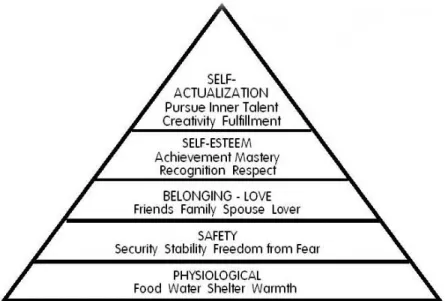
Page Figure 1. Cognitive approach to behavior ... 38 Figure 2. Hierarchy of needs ... 39
LIST OF TABLES
Page
Table 1. Reliability test for the instrument ... 55
Table 2. Comparative gender of the respondents ... 57
Table 3. Comparative age of the respondents ... 58
Table 4. Comparative academic rank of the respondents ... 58
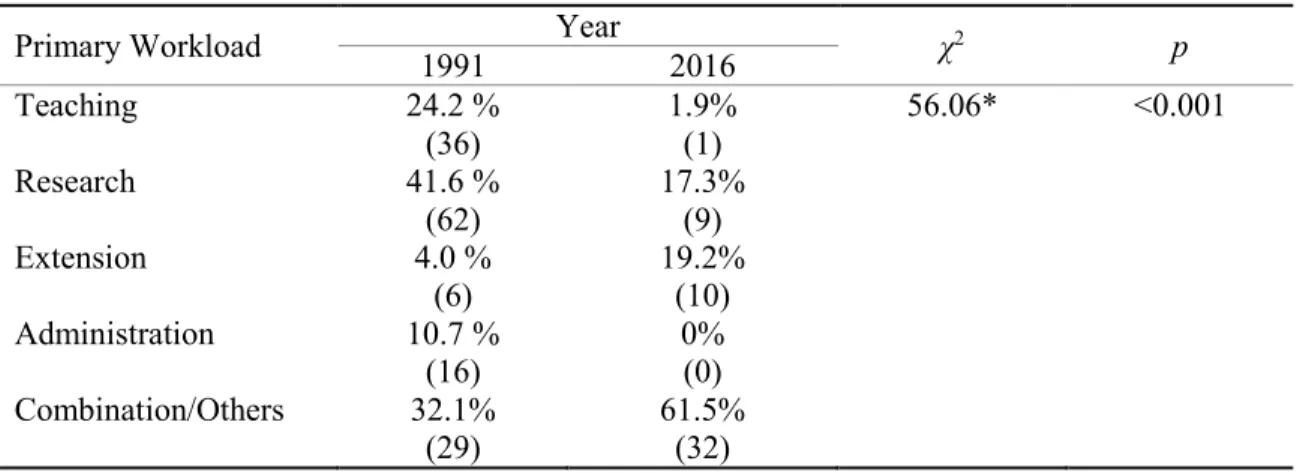
Table 5. Comparative primary workload of the respondents ... 59
Table 6. Comparative identified race of the respondents ... 60
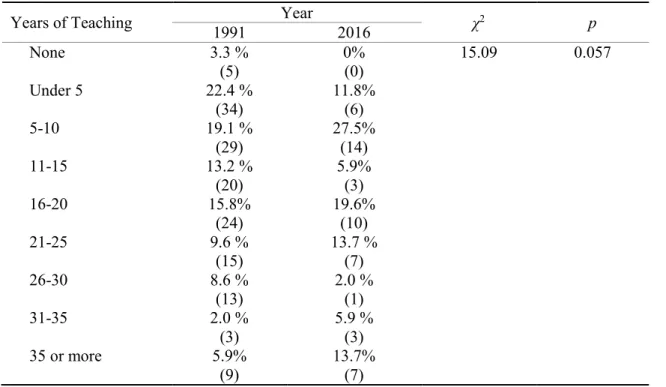
Table 7. Comparative years of teaching of the respondents ... 61
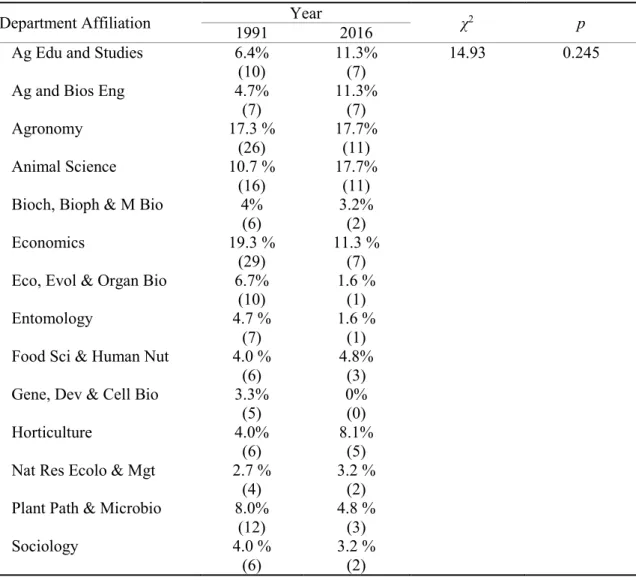
Table 8. Comparative department affiliations of the respondents ... 62
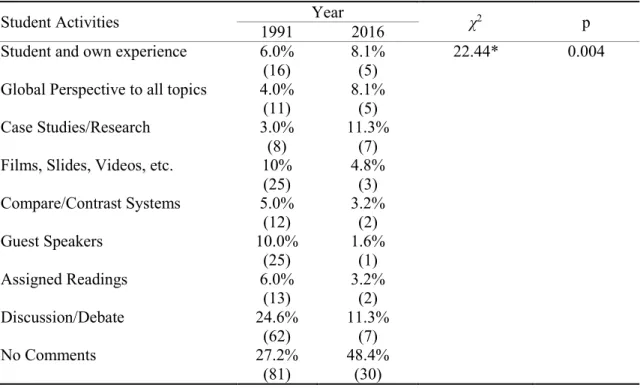
Table 9. Comparative student activities of the respondents... 64
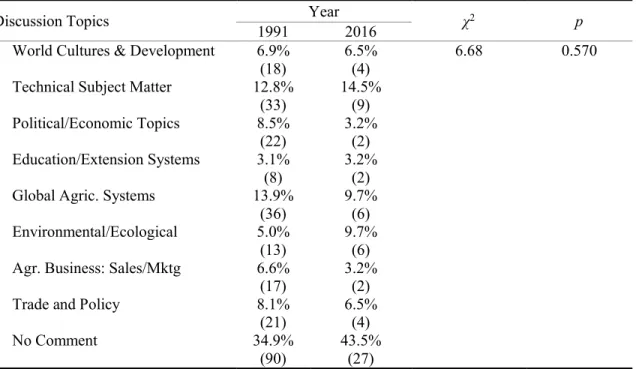
Table 10. Comparative discussion topics of the respondents ... 66
Table 11. Comparative reasons for adding a global perspective ... 67
Table 12. Comparative reasons for departmental curriculum problems ... 69
Table 13. Comparative activities for curriculum improvement ... 70
Table 14. Comparative responses on the conduct of department review ... 72
Table 15. Comparative responses on the availability of institutional documents ... 74
Table 16. Comparative responses on the importance of global issues ... 75
Table 17. Comparative responses on the level of internationally related programs and activities ... 76
Table 18. Means, standard deviations and number of perception statements regarding the infusion of global perspectives into the curriculum in the College of Agriculture and Life Sciences (CALS) at Iowa State University ... 78
Table 19. Means, standard deviations and number of critical content areas/concepts taught from a global perspective in the College of Agriculture and Life Sciences (CALS) at Iowa State University ... 82
Table 20. Correlation between age of respondents, and perception statements and
critical content/topics in 1991 and 2016 ... 85 Table 21. Correlation between academic rank of respondents and perception
statements and critical content/topics in 1991 and 2016 ... 86 Table 22. Correlation between teaching experience of respondents, and perception
statements and critical content/topics in 1991 and 2016 ... 86 Table 23. Analysis of variance of perception statement and critical content/topic mean
scores when grouped by the variable age group in 1991 ... 89 Table 24. Analysis of variance of perception statement and critical content/topic mean
scores when grouped by the variable age group in 2016 ... 89 Table 25. Analysis of variance of perception statement and critical content/topic mean
scores when grouped by the variable academic rank in 1991 ... 90 Table 26. Analysis of variance of perception statement and critical content/topic mean
scores when grouped by the variable academic rank in 2016. ... 90 Table 27. Analysis of variance of perception statement and critical content/topic mean
scores when grouped by the variable race in 1991 ... 91 Table 28. Analysis of variance of perception statement and critical content/topic mean
scores when grouped by the variable race in 2016 ... 91 Table 29. Analysis of variance of perception statement and critical content/topic mean
scores when grouped by the variable department affiliation in 1991. ... 93 Table 30. Analysis of variance of perception statement and critical content/topic mean
scores when grouped by the variable department affiliation in 2016. ... 93 Table 31. Faculty opinion for encouraging internationalization ... 96
ACKNOWLEDGMENTS
I wish to express my sincerest thanks and appreciation to the following:
• My major professor, Dr. Robert A. Martin, for taking time to provide professional guidance during the course of my studies and patiently edit my dissertation research;
• The members of the Program of Study Committee: Drs. Michael S. Retallick, David G. Acker, William Wade Miller, and Nani G. Ghoshal, for their suggestions and constructive criticisms;
• Ms. Patricia A. Hahn for her expert editing assistance;
• My parents and siblings in the Philippines, friends, and colleagues for their support;
• My loving wife, Viena, precious daughter, Mica, and dearest son, Elijah, for their inspiration and understanding; and,
ABSTRACT
A comparative study was conducted to explore faculty perceptions regarding the infusion of global perspectives into the College of Agriculture and Life Sciences (CALS) curriculum at Iowa State University. King (1991) provided the previous base for the study, which enabled a comparison with data recently collected. This study may fill a void in the literature published in the context of the CALS faculty members’ perceptions in infusing a global perspective into the curriculum over the periods covered. The gap between the previous and current study may reveal a possible new mindset and trend in the perceived benefits and barriers of infusing global perspectives into the curriculum.
An online survey using Qualtrics was used to collect data. The survey material was comprised of five parts: perception statements, critical content/topics, activities used to add global perspectives, opinions on the infusion of global perspectives and demographic information. Descriptive and inferential analyses were used to compare the data collected. Statistical differences were noted in the demographic and occupational information of gender, age and primary workload. There were also significant differences in students’ activities used to add international perspectives, comparative reasons for the departmental curriculum problems, and activities for curriculum improvement. Four of the 16 identified perception statements and 10 of the 48 identified critical content/topics were found to be statistically different in the two years that were compared. ANOVA results for both perception statements and the critical content/topics were significantly different on the identified races in the 1991 study but not on the 2016 study.
Even after 25 years, the perceptions of CALS faculty members regarding the infusion of global perspectives has remained the same on majority of the statements for
CHAPTER 1. INTRODUCTION
Today, with advancements in technological and social media, the world is becoming smaller. This presents a challenge for educators to update and develop an awareness in their students of the global nature of society, particularly of the agriculture industry. It is also becoming apparent that agriculture education must consider interlinks among different agricultural systems, government, cultures and societies in which they function (Martin, 1989). Many scholars and administrators in universities have suggested the requirement to get involved in global learning; thus, there is a need to update the curriculum to reflect greater global issues (Bruening & Shao, 2005). Prior to the 21st century, Acker and Scanes
(1998) had noted that international perspectives are important, centrally connected to the three-fold functions of agricultural universities. A recent Harvard University review on curriculum recommended that emphasis be given to internationalization of the curriculum (Bruening & Shao, 2005). Nevertheless, internationalizing undergraduate agricultural curriculum calls for multi-faceted efforts in curricular reform (Navarro, 2004).
Related to preparing and engaging students and also monitoring societal needs in the global arena, Molina and Lattimer (2013) asserted the high degree of significance for faculty members to prepare the students in having global knowledge and encourage them to
appreciate more the cultures and traditions of other people around the world. The tendency to monitor needs in a global market and train students to meet these demands has been a
growing trend in many countries to enable college graduates to work with international counterparts and compete in the global marketplace (Molina & Lattimer, 2013). While the process of globalization is not considered new because of the occurring regional
greatest periods of rapid change accelerated by new communication, transportation, and information technologies. The growing integration of local, national, and global economic, environmental, cultural, technological and political systems are characteristic outcomes of globalization (Arthur, Davies & Hahn, 2008).
The key elements of globalizing post-secondary student education at a Colleges of Agriculture requires the provision of an international component including research and undergraduate education to mark improvement and make the program be more relevant (Acker & Scanes, 2000). With the global revolution of the 21st century marked by
breakthroughs in technology, researchers from different countries can communicate faster and can easily change the conduct of business, education, and research (Harder, Wingenbach & Rosser, 2007).
Internationalization of the curriculum can lead to cultural enrichment, greater knowledge of global systems, and desire to participate in sustainable food systems in the world (Bruening & Frick, 2004a). The importance of global education could not be underemphasized with the advent of technological breakthroughs in communication,
information technology and transportation. It is not only necessary to simply be aware of the production aspects of food and fiber but also learn how they are interlinked with other
nations’ agricultural systems. In order for students to attain this knowledge, it is important for faculty members to appreciate the relevance of global perspectives in the subject matter that they are teaching. Each faculty member should pursue his or her discipline from three
geographical perspectives: the United States, another developed country, and a developing or low-middle income country (Acker, 1999).
An immediate approach to globalizing agriculture is the infusion of global perspectives into existing subject matter in the curriculum. Nevertheless, why do some teachers choose to infuse more global views into their curriculum and some do not despite existing mission statements promoting internationalization? Andreasen (2003) conjectured that there are “…barriers that exist, real or imaginary regarding the internationalization of courses, departments, colleges and the university as a whole” (p. 1). Jones and Crawford (1985) indicated there is a declining trend among individuals taking part in overseas program activities previously observed when there are actually needs being anticipated.
As our world is becoming a globalized village, schools need to adopt a
global-friendly curriculum for students to have greater understanding of a diverse society (Hendrix, 1998). While students have options of doing study abroad or international internship,
appreciation of a global society will become more apparent if it is introduced, infused, or integrated in the curriculum. White (2016) asserted that, “…it is curriculum that merges self-awareness with global societal issues” (p. 278).
Background of the Study
A study conducted at the College of Agriculture at Iowa State University by
Sammons (1995) recommended internationalizing existing courses by including international contents rather than simply requiring students to take classes with global perspectives.
Because of the changes in the global scope of the agricultural industry, prospective
employers are looking for graduates with global view and experiences, which would justify the globalization of existing curriculum (Conner & Roberts, 2013).
The strategic plan of Iowa State University for 2017-2022 includes the provision for educational opportunities to educate students in a way that they will be ready for jobs in the global market. It is in this context that infusion of global perspective into the curriculum becomes more important to educate highly competitive, market-ready graduates. The involvement of faculty members (especially from land-grant institutions) in international program activities is profoundly essential. U.S. land grant universities are entities, which are more than capable to lead in developing an awareness about the growing issues in
agriculture. These universities were to provide technical assistance in agriculture to various institutions involved in agricultural research and extension needed in third world to reduce poverty. Acker (1999) posited that land-grant universities have strategic missions that promote the internationalization and the adoption of international components in their educational programs. With this is the assumption that Colleges of Agriculture should be looking at avenues on the integration/inclusion international components into the three-fold mission of research, teaching, and extension. Moreover, Etling and McGirr (2005) stated that partnerships among U.S. higher learning institutions and universities from other countries have often been challenging. Issues with trust, power, risks, and rewards have been common pitfalls. Partnership with other institution is crucial in the globalizing the education of students. There exists the need to understanding the mindsets of faculty members in the global infusion of agricultural knowledge and skills in order to provide useful information to help maximize their contributions to their institutions and to other countries. This will also be beneficial for strategic planning and policy directions within each department in the College.
In our interdependent world, the need to infuse global perspectives in education is becoming important for students to understand the benefits of an interconnected economy,
culture and politics around the world (Merryfield, 1998). Developing an appreciation of the different cultures, tradition, customs and history of other countries is important for
agriculture students and should include the learning of the agricultural and economic systems of nations (Acker &Scanes, 1998). In order to accomplish this, faculty members should enhance students’ experiences in the global arena to successfully infuse global perspectives in teaching their assigned courses (Acker & Scanes). In order to understand the need to help students become global citizens of the world, VanDerZanden and Iles (2013) suggested requiring courses with international perspectives be integrated to undergraduate curricula in universities, including Iowa State University.
College of Agriculture and Life Sciences Departments at Iowa State University
Fifteen departments are currently housed in the College of Agriculture and Life Sciences (CALS):
1. Agricultural and Biosystems Engineering (ABE): Formerly known as Department
of Agricultural Engineering; it is has been a known to lead in giving engineering remedies to agricultural problems in the U.S. and around the world. It was previously called Agricultural Engineering.
2. Agricultural Education and Studies (AGEDS): The Department of Agricultural
Education and Studies focuses on the teaching and learning processes.
3. Agronomy (AGRON): The objective of the department is to make crop production
4. Animal Science (ANS): The programs in the department include the combination of science and practice with innovation to cater to the emerging needs of animal
producers.
5. Biochemistry, Biophysics & Molecular Biology (BBMB): This department’s research is focused on the frontiers of biology such as metabolic networking; structure and function of enzymes, membranes, and hormones; computational approaches; genomic and proteomic technology; protein engineering; plant
biotechnology; muscle structure and function; and the design and evaluation of drugs for the treatment of disease. It was previously called Biochemistry/Biophysics.
6. Ecology, Evolution, and Organismal Biology (EEOB): Comprised of 30 faculty
members helping students whose research and education benefit from the interdisciplinary environment. It was formerly known as Animal Ecology.
7. Economics (ECON): Undergrad students are educated to analyze independently and
objectively about the inherent economic nature of many of the world’s problems, from basic decisions facing businesses and individuals, to the performance of the macroeconomic system, to global resource utilization issues.
8. Entomology (ENT): Students acquire a broad understanding of insects and related disciplines and are expected to have an in-depth command of their concentration.
9. Food Science and Human Nutrition (FSHN): The objective of the department is to
improve human nutrition and health to have better quality of life through effective teaching, discovery, and extension in food and nutrition sciences. It was previously called Food Science and Technology.
10. Genetics, Development and Cell Biology (GDCB): Studies are primarily focused on the biological functions at the cellular level with the use of biochemical, molecular, genetic, and biochemical approaches to understand various biological function. It was previously called Zoology/Genetics.
11. Horticulture (HORT): The department is involved in the production and utilization of fruits and vegetables, nursery crops (trees, annuals, and perennials), turf grass, and ornamental crops in greenhouses.
12. Natural Resource Ecology and Management (NREM): With the use of
comprehensive courses and practical experience, the students learn the necessary skills and knowledge needed to become successful professionals. It was previously called Forestry.
13. Plant Pathology and Microbiology (PLP): Faculty, students and staff conduct research studies in different discipline that include virology, bacteriology,
nematology, mycology, and epidemiology and disease management. Educational programs are geared towards understanding the breadth of these areas. This was combination of the previous Plant Pathology and Microbiology.
14. Sociology (SOC): The department offers coursework leading to Bachelor of Arts,
Bachelor of Science in Sociology or Criminal Justice.
15. Statistics (STAT): The main purpose of the Department and the Statistical
Laboratory is the advancement of knowledge in statistics. This department was not previously in the CALS.
Purpose of the Study
This comparative study was conducted to explore faculty perceptions regarding the infusion of global perspectives into the College of Agriculture and Life Sciences curriculum in two periods. Currently, no similar studies have been conducted to further understand the perceptions of faculty members at this university except for a dissertation study, which was conducted 25 years ago by King (1991), who suggested at that time that further study in this area that should include younger, untenured faculty. A thorough search of current literature has not revealed any new or follow-up studies.
Thus, the current study attempted to fill a void in the literature published in the context of the CALS faculty members’ perception of infusing a global perspective into the curriculum. The gap during this period of time (1991-2016) and findings of the current study may reveal a new mindset and a trend toward understanding the perceived benefits and barriers of infusing global perspectives into the curriculum.
The purpose of the study was to assess, analyze and compare the perceptions of the faculty members of Iowa State University – College of Agriculture and Life Science (ISU-CALS) regarding the infusion of global perspectives into the curriculum. More specifically, the study was conducted to:
1. Identify the extent to which ISU-CALS teaching faculty agree or disagree with the perception statements regarding the infusion of global perspectives into the
curriculum;
2. Identify topics that present challenges to including a global perspective in the study of agriculture at ISU-CALS;
3. Enumerate and analyze the demographic information of faculty members in the CALS;
4. Identify activities presently utilized by ISU-CALS faculty to include a global perspective in the curriculum; and,
5. Make a comparison of the perspectives faculty members from 25 years ago and the current faculty members in ISU-CALS.
Significance of the Study
The results of this study may serve several purposes. The findings may provide useful information to ISU-CALS program planning efforts to help maximize the infusion of a global perspective into the CALS curriculum. The results may also be helpful in strategic planning and policy direction within the ISU-CALS including faculty mobility and study abroad programs. The data regarding possible changes in the perceptions of faculty members over time may be rendered useful for long-term planning in human resource development and hiring policies that are consistent with the mission and vision of the institution.
The findings of this study may be used by other colleges within the university to undertake similar studies to determine their faculty members’ level of perception in infusing international perspectives into their respective curriculum. The educational advances through research accomplished in U.S. land-grant universities are more meaningful in the context of the role they play in assisting and providing technical expertise to other countries.
Furthermore, this study is in support of Iowa State University’s strategic plan that encourages high impact research that addresses the grand issues of the 21st century for which one of the
Definition of Terms
The following terms were defined for application in this study:
Agricultural Education: “The scientific study of the principles and methods of teaching and learning as they pertain to agriculture.” (Barrick, 1988, p. 5)
Assessment: “Conducted to determine whether students are achieving those educational outcomes that the creators of academic plans intended them to achieve.” (Lattuca, 2009 p. 231)
College of Agriculture: It is, “generically colleges that offer undergraduate degrees in some of the following areas: agriculture, agricultural, applied, and life sciences, crop and animal sciences, biotechnology and related areas; international agriculture; food and fiber science and technology; agricultural economics and agribusiness; natural resources and
environmental sciences; forestry, wildlife, recreation, fisheries, range, and water sciences; agricultural and biological engineering and technology; agricultural leadership, education, extension, and communication” (Kunkel, Maw, & Skaggs, pp. 3-4)
Curriculum: As an academic plan, “it implies a deliberate planning process that focuses attention on important educational considerations, which will vary by field of study, instructors, students, institutional goals, and so on.” (Lattuca, 2009 p. 4)
Globalization: “Globalization is the flow of people, ideas, technology and trade across borders.” (AUCC, 1998 p.1)
Inferential statistics: “Procedures that permit one to make tentative generalizations from sample data to the population from which the sample was drawn.” (Ary et al., 2010 p. 643)
Reliability: “The extent to which a measure yields consistent results.” (Ary et al., 2010 p. 649)
Survey: “Useful and efficient tool for learning about people’s opinions and behaviors.” (Dillman et al., 2009, p. 1)
T-test: “A statistical procedure for testing hypotheses concerning the difference between two means; also used for other purposes.” (Ary et al., 2010 p. 652)
Summary
This chapter provided an introduction, background of the study, the names of College of Agriculture and Life Sciences departments, purpose of the study, significance of the study and definition of terms. The next chapter will present an in-depth review of related literature review.
CHAPTER 2. REVIEW OF RELATED LITERATURE
The purpose of this study was to compare and analyze the perceptions of the faculty members of Iowa State University – College of Agriculture and Life Sciences (ISU-CALS) regarding the infusion of global perspectives into the agricultural curriculum. This chapter is divided into the following sections: (1) Functional Views of Global Education; (2) Benefits and Barriers to Educational Globalization; (3) Motivation to Globalization; (4) A
Reconstructivist Approach to Globalization; (5) Faculty Roles in Survey; (6) Theoretical Framework; (7) Conceptual Base; (8) Research Questions; and (9) Summary.
Functional Views of Global Education
Global education may have several meanings to different individuals. In this study, the definition provided by Tye (1990) is used as a reference in setting the stage for discussion regarding the functional views of global education:
Global education involves learning about those problems and issues that cut across national boundaries and about the interconnectedness of systems - ecological, cultural, economic, political and technological. Global education involves perspective taking – seeing things through the eyes and minds of others – and it means the realization that while individuals and groups may view life differently, they also have common needs and wants. (p. 5)
According to Sny (1980), “Global education is the lifelong growth, in understanding, through study and participation, of the world community and the interdependency of its peoples and systems – ecological, social, economic and technological” (p. 3). Given the significance of globalized education, the next logical step would be to determine what path a person might select to include global agriculture programs. Henrix (1998) recommended that a school should start to involve other stakeholders like the parents, teachers, administrators, students and members of the community in discussing goals they need to pursue in global
education. He further suggested, “…one encompassing goal can be that global education will expand the meaning and vision of citizenship – from the idea that a person is a citizen in a local community, state, and nation to the broader idea that each person is also a citizen in the global community” (p. 306).
When considering the context of global education, Torres (2015) posited that the quest for global citizenship education should consider the complex processes of globalization that are effectively changing one’s conscious understanding of self in relationship to those in other parts of the world. There are three main trends in underscoring the need for global citizenship education:
First, it should be noted that the world is changing, cultures are interesting and borders are more permeable than ever. The second reason is we have moved from a concept of citizenship in a city to a concept of citizenship in a nation-state and now we are at the sunrise of global citizenship in the age of global interdependence and cosmopolitanism. Historically, education has played a major role in these transformations, hence the quest for global citizenship education. The third main reason for global citizenship education is that the different forms of globalization are confronting cosmopolitan democracies as emerging models of political organization of citizenship. There must be a vision towards global citizenship education or the people and the planet will perish. (p. 28)
In order to successfully integrate a global agricultural perspective into the curriculum, faculty members need to acquire experience with globalization. Acker and Scanes (1998) noted that “…the inclusion and teaching of international perspectives in courses are enhanced when professors have firsthand experiences of what they are talking about” (p. 60). To help accomplish this goal, “…a college should encourage its scientists to link-up internationally in various synergistic manners” (p. 61).
In a study about global citizenship education and its implications for curriculum goals at the new global age, Zahabioun, Yousefy, Yarmohammadian, and Keshtiaray (2013) stated
that in setting and updating the objectives of the curriculum, it must meet the call for a deeper understanding of being citizen in a global community. In general, the objective of the
curriculum should focus on educating citizens who will become ready in the fulfilling the present needs and become active participant in the local, national and global levels. With this understanding, the most crucial part in educating students to be global citizens is to prepare everything to realize it (Zahabioun et al.). The emergence of a global economy and
breakthroughs in transportation and communication technology has created an interwoven global community. Davis, Evans, and Reid (2005) indicated that citizenship and global education are both currently receiving higher appreciation than what was seen before. Moreover, this claim proves to conceal the important achievements of global education compared to citizenship education, which was accorded a higher level of legitimacy than global education by others (Davis et al.).
The idea of an interwoven global education was first considered decades ago. Standish (2014) asserted “…the beginning of global education as a movement to reform education and society in the 1960s and 1970s” (p. 166). Moreover, globalization became a more dominant trend years later: “…a second wave of global or international education occurred from the 1990s alongside discussion of globalization, which brought the movement into mainstream education” (Standish, 2014, p. 166). Prior to this, Becker (1982) enumerated the goals of global education, one of which is:
…to incorporate into the educational curriculum and the educational experience of each student a knowledge and empathy with cultures of the nation and the world … (and to) draw into existing courses of study
illustrations and references to political, social and cultural themes; students will be encouraged to take a global perspective, seeing the world as a whole. (p. 231)
Global education can bring about unity among different cultures and peoples. According to Hendrix (1998), “…the impetus of a philosophical foundation for global
education is the affirmation of our common unity with people throughout the world” (p. 306). The motivating force for global education implementation is broad, in which “…the scope of the global education curriculum must be determined by the philosophy of an evolving world, an analysis of the current realities in which students live, an analysis of the requirement of world citizenship in the 21st century, and an understanding and appreciation of those realities from the viewpoint of history, humanities and policy studies, and other fields” (p. 306). This assertion is consistent with fully understanding the breadth of global agricultural curriculum.
Miller-Perrin and Thompson (2014) studied outcomes of global education with external and internal change associated with study abroad, and indicated that “…by stretching college campus borders across the globe, we avail the students with the
opportunity to transform internally and externally in ways that will last a lifetime” (pp. 86-87). This statement refers to the students and the institutions who wish to engage to the priceless transformation of life experience of study abroad by “…learning to embrace, cultural, spiritual and intellectual diversity and conflict will broaden students’ horizons, enhance respect for others’ views and deepen their sense of place in the world” (p. 86). Furthermore, in a study about globalizing the secondary agricultural education curriculum through participation in study abroad program, Sharp and Roberts (2013) suggested that “…efforts to develop globalized curricula for secondary students should be increased” (p. 56). The increase suggested was to develop a globalize curricula require the adjustment based on the social movements that calls for reform efforts. In a book chapter on an international perspective on science curriculum development and implementation, Coll and Taylor (2012)
posited that “…science curriculum development and implementation internationally have been enacted in an enormous variety of educational contexts” (p. 771). They emphasized that “…developing countries have invested heavily in school science education since the 1960s, mostly in order to foster economic development and improve the quality of life” (p. 772).
In a study about changing higher education curricula for a global and multicultural world, Morey (2000) posited: “…dramatic demographic changes in the cultural and linguistic diversity of people are occurring in many nations throughout the world” (p. 25). To address the growing changes in the global educational arena, higher education institutions must adopt to changes and “…these changes have challenged higher education institutions to modify their curricula and instructional strategies to meet the needs of diverse learners and to prepare all graduates to have the awareness, knowledge and skills to be effective in a diverse society” (p. 25). Morey’s assertions support the findings of a study of governor school scholars on global awareness conducted by Radhakrishna and Dominguez (1999), which revealed that “…awareness and understanding of international concepts among governor schools scholars has provided ample justifications to accelerate curricular changes relative to international education in our schools, colleges, and universities” (p. 21). The authors added that “…schools, colleges and universities have major role to play in infusing international awareness and understanding concepts into the curriculum” (p. 21).
In an article on international curriculum for the professions, Christensen (1988) posited that “…no college or university graduates have been properly educated unless they have attained an international perspective in their curricula or profession … in carrying out their responsibilities to their students, universities must provide them with an understanding of how the diversity of cultures will affect them professionally and personally” (p. 27).
Related to this, Gouldthorpe, Harder, Roberts, and Stedman (2012), in their work on
understanding the outcomes from a faculty travel abroad, claimed that “…faculty aspired to change their teaching by developing study-abroad programs, integrating global activities into their on-campus courses, and adopting culturally sensitive textbooks” (p. 22). The faculty broadened their horizons on the cultural, social, environmental issues, which will be useful in their research and teaching endeavors (p. 22).
When awarding a scholarship for the teaching of international ethics and globalizing the curriculum, Runte (2001) proposed that: “…several means by which all students at all levels of education can achieve global awareness of a personalized basis; these would require entering university freshmen and of exiting graduating seniors to be taught simultaneously in networks of higher education institutions all over the world” (p. 39). Runte argued, “…if we do not essay to meet the challenges of globalization by renewing our commitment to the education and re-education of the generations to come, we shall have failed in our responsibilities as global citizens” (p. 45).
In a commentary by Acker and Scanes (2000) about the case of globalizing post-secondary student education at colleges of agriculture, the authors opined that “…the globalization of research and graduate education in agriculture is a key driver of quality improvement whether the context is in the U.S. land-grant system or another agricultural university system” (p. 53).They also added that “…departments of agricultural and extension education can benefit from increased efforts to globalize both the coursework offered as well as the research undertaken by faculty and students” (p. 53).
Related to the aforementioned commentary on globalizing post- secondary education at colleges of agriculture, Conner, Roberts and Harder (2014) noted in a faculty cultural adaption study that “…college of agriculture graduates must be prepared to work effectively within global workforce and have and have cross cultural experiences” (p. 115). Since not all students can take part in international travel, at least faculty members should gain
international exposure so they can successfully infuse global perspectives when teaching their courses to benefits those students who have not experienced study abroad (p. 115).
It must be noted that faculty cultural experience may take different stages and this has to be considered for future studies (Conner et al., 2014, p. 121). With regards to faculty perspectives on ways on how to internationalize the post-secondary agricultural curriculum, Navarro (2004) recommended to “…support a quality, multifaceted effort in curricular reform, with a complementary academic program and institutional strategies implemented in a balanced and synergistic manner” (p. 304). Navarro further suggested to “…increase, diversify and balance provision of funds, support, recognition, and release time among faculty participating in different academic program strategies including emphasis on (but not limiting it to) mobility and infusion efforts; also provide intellectual support to those
requesting it” (p. 304).
In a separate study, Bruening and Shao (2005) argued that “…adding relevant international examples in the coursework represents the first level of student academic international awareness” (p. 48). In addition, “…a fully actualized internationalized
curriculum means that students should demonstrate a positive attitude toward other cultures, understand and articulate the relationship between countries, and possess the ability to work effectively in a global setting” (p. 48-49).
When writing about the goals for global education, Becker (1982) emphasized that “…consideration of goals advocated for global studies provides one useful insight into what proponents of global education take to be the most important and worthwhile elements of their program” (p. 228). In addition, “there is a need for broad use of existing statements of institutional goals and objectives to select materials and assess programs that would
encourage the dialogues needed to clarify definitions, goals, and objectives in global education” (p. 228). While White (2016) deliberated about Brameld’s thought of infusing into the higher education curriculum an awareness of global issues and remarked,
“Brameldian thought argues that education’s cultural role was to reconstruct society, specifically toward greater global unity and planetary cohesion for humankind” (p. 278). White further stated: “…that indeed to acculturate a global citizenry into similar habits of mind, action and practice will require a plurality of discipline and processes liberating the value of all individuals within all cultures” (p. 285).
“Global perspectives in agriculture are critical to the safety of food and agricultural resources, trades and consumers globally, yet very few opportunities exist for their study” (Ekir, Khaitsa, & Kabasa, 2013, p. 74).The authors postulated that “…an increasing interdependence among the nations of the world poses important challenges for today’s scientists and policymakers” (p. 74). Thus, a study was conducted “..to enhance the
international content of college curricula to promote globalization of research and education with the intent of providing a globally engaged workforce of scientists” (p. 74). Findings revealed that, despite some shortcomings, internationalizing the curricula in the area of infectious diseases management was advantageous as reflected by the feedbacks by those participated in the program (pp. 80-81).
The continued evolution of educational establishments based on societal and cultural changes, such as global agricultural literacy, would require working to change the curriculum that can be accomplished incrementally within the existing academic structure (Powell, Agnew & Trexler, 2008). Multiple approaches can be used to adjust and adopt the curriculum to effectively deliver agricultural literacy content in different teaching methods (Powell et al.).
Benefits and Barriers to Educational Globalization
Today, more than ever before, land-grant universities play significant roles in forging international bilateral partnerships, with the faculty becoming actively involved in research and teaching collaborations. The advancement in technology allows for easier
communication and exchange of ideas relative to mutually implemented projects. Faculty members who have more exposure in the global arena are more likely to infuse global perspectives into the curriculum.
This section of the review of literature focuses on the benefits and barriers of faculty infusion of global perspectives into the curriculum. Hand, Ricketts, and Bruening (2007) studied the benefits and barriers in faculty international professional development, and noted that “…faculty members who themselves participate in international exchanges are much more likely to incorporate similar experience into their curriculum” (p. 148). Some of the barriers include “…the cost or resources required for program participation as well as fear or uncertainty of the unknown situation” (p. 152). Similarly, Sammons and Martin (1997) conducted a study at ISU-CALS about the perceptions of college students on a curriculum with global perspectives and posited that internationalizing the curriculum in agricultural
colleges is important to make ready the students with living in the 21st century. However,
they found significant barriers to international involvement, which included funding sources, non-continuance of the academic work, and the need for information about opportunities. Both studies, which are ten years apart, had identified funding cost as a barrier in the infusion of global perspectives.
Andreasen (2003) described the barriers to international involvement and divided them based on whether they are internal and external. Example of the external barriers were: “…lack of administration support, tenure track position, lack of time, financial constraints, conflict with classes, lack of opportunity, leaving current research, international work not conducive with raising a family, and lack of financial stability” (p. 67). The internal barriers included “…fear of different culture, ethnic prejudices, cultural biases, lack of desire, not being able to communicate, fear of political unrest, sense of American superiority, fear of lost opportunities, fear of appearing articulate, and, introverted personality” (p. 67). The identified barriers conformed to prior literature particularly the lack of support mechanism from administration. Andreasen (2003), however, was able to put forth some suggestions on how to cope up with these barriers. For example, he suggested that administrators must reduce or eliminate external barriers in order make sure that there are qualified and skillful professionals who are willing and able to carry the mission of the institution to other countries. The results of these assertions reinforce assumptions that there are, indeed, obstacles in the involvement of faculty in international program activities.
In a study on developing international research partnerships, Harder, Wingenbach, and Rosser (2007) remarked that “…the advancement of many technologies now allows researchers in different countries to communicate in ways that are changing how business,
education, and research are conducted” (p. 78). The signing of overseas partnership is especially important in places that are close to territorial borders like south Texas and northeastern Mexico (Harder et al.). While globalizing education is considered important, assertions were also made regarding the limited involvement of faculty in fulfilling their mandate to collaborate and expand their horizons outside their own school (Harder et al.).
Etling and McGirr (2005) wrote about the issues and procedures for forging international university partnerships. Assumptions were made based on the existence of a need to nullify the present trial-and-error styles that often lead to stationary and unsustain collaborations. They perceived there is a need to develop vibrant institutional cooperation that will be profitable for all institutions and individuals who are directly involved. Some of the practical tips suggested were: choose partners carefully, develop capability statement, identify areas of common interest, build upon personal relationships, and market your success and accomplishments so they are not forgotten (Etling & McGirr).
In a study by Harder, Wingenbach, and Rosser (2007) found the most important challenge in involvement in international collaboration is communication. Nevertheless, the issue of communication must not discourage the faculty members from participating in different overseas projects because it has been proven that a lot can be acquired in getting involved in international projects both on professional and personal levels (Harder et al.).
According to the National Association of State Universities and Land Grant Colleges (2004):
At its core, internationalization is the critical means whereby the quality of our academic learning, discovery, and engagement can be enhanced, broadened, and enlivened. When we integrate international perspectives, experience, and discovery into our institutions, it expands our capacity to address the challenges of the new century and the needs of the world. It
enables us to better serve our students, our communities, our nation and the academy. (p. 4)
As global education and global citizenship are becoming inevitable in a globalized community, Meidema and Bertram-Troost (2015) analyzed the challenges of global
citizenship in the context of worldview education. Their findings suggested to help students see how the world can be shaped locally and globally with a strong concern on the
uniqueness of every person and humanity, in general, and on a global scale and make them sensitive to the political and social, that is, intercultural, transcultural, inter-religious
components of these processes and practices. In a study on community college globalization, Earp (2014) indicated the increasing sophistication technologies and the lowering of
economic, geographic and cultural barriers has been a boundless workforce, which has brought globalization to the forefront of higher education. Thus, global forces are creating an impact on what universities and colleges must provide for students in order to be successful in this interconnected world. Nevertheless, even with growing movement in globalization by community colleges, faculty members are often unfamiliar with the concept about global thinking or how it potentially connects to their specific areas of teaching (Earp). It should be noted that some faculty members may be aware of how to infuse or include global topics in their curriculum.
In order to provide a model for infusion of global perspectives, Conte and Cavaliere (1982) argued that “…in global education, the goals and themes rely mostly on the issues of values, on self-discovery, and on looking on to the future of planning” (p. 76). They also noted that “…the paradigm developed by the staff of the Institute for the 21st century utilizes
three major education modes for infusion of global perspectives into existing curricula and instructional strategies: process, content and philosophy” (p. 76).
In a study of student perspectives on the infusion of multicultural issues in curricula, Anderson, MacPhee and Govan (2000) noted that “…former students reported that
addressing multicultural issues in courses had a long-term impact on knowledge, attitudes, and professional skills” (p. 37). The authors concluded:
…the effective infusion of diversity issues is a two-way process: instructors maybe trained and willing to infuse multicultural issues in their course work; however, students’ perceptions of that experience need to be considered otherwise, faculty’s noblest intentions may have little enduring impact. (pp. 54-55)
Findings of a study by Fugate and Jefferson (2001) indicated the need to re-structure the traditional partnerships among governments, accreditation institutions, business schools and local business. With the emerging new global economy, the combination characteristics of global education will be same as in the past if the re-structuring is not implemented (Fugate & Jefferson). Regarding reflective practice in global education, Merryfield (1993) stated, “…in order to prepare teachers for the diffuse, complex, and controversial nature of global education, teacher educators need to plan reflective exercises as part of their
instruction” (p. 31). In addition, “…teachers and teacher educators benefit from ongoing reflection on the evolution of their conceptualizations of global education and on experiences in applying such ideas to their own instruction” (p. 31).
While conducting a case study on an infusion approach to internationalization, Skidmore, Marston and Olson (2005) found that “…the success of an infusion approach to internationalization depends upon strong top-down support from administrators and broad-based bottom-up support from faculty, staff and students from across the campus” (p. 200).
Like any academic program involving infusion issues into the curriculum, the support of administrators is necessary otherwise, such could not be institutionalized must more become a policy in the department and college levels.
Bao and Ferrara (2009) said that “…globalization has resulted in the call for greater diversity and multiculturalism in higher education” (p. 1). While land-grant universities in the U.S. are in position to implement a globalized curriculum in agriculture, private
universities currently are also integrating in their mission statement the need for students to be responsible global citizens (Bao &Ferrara). Relative to the study of extension in land-grant international activities that connects knowledge and overseas development, Collins (2012) noted the need to transform economies and key institutions so that the universities can influence the countries around the world; however, this change is more evident in developed countries because they possess advancement of science and technology. Similarly, a nation should be allowed to develop the capacity to come up with local and global response that will make the under-developed nations join in the global knowledge economy.
Schoorman (2000) posited: “…if internationalization efforts are to be sustained as an integral part of the educational process, it is crucial that educators – especially those
committed to such process – have a definite vision of the rationale, goals and implementation strategies desired” (p. 5). Such a strategy could include curricular efforts in
internationalization to center around issues of contents that will show “…a view of
internationalization as ongoing emphasizes the need to build on current efforts to create new opportunities for global awareness” (p. 7).
Educators need to commit to the process of globalization. Coorts (1987) wrote about his views regarding the need to update the curriculum for the agriculture of tomorrow, and
noted, “…college curricula must be dynamic and constantly modified in order to graduate students who are at the “cutting edge” of knowledge and technology … faculty must be encouraged and rewarded for reviewing and upgrading their courses” (p. 20). Moreover, Coorts challenged “…for agriculture faculty of today is to continue to modify curricula in order to provide the very best education for students to meet our society’s agricultural employment needs now and in the future” (p. 21). Schoorman and Coorts both agree on the crucial roles that the educators play in the process of global education.
When making a case study of the advantages of an overseas agriculture field-base course, Bruening and Frick (2004a) suggested that “…students need opportunities to
understand culture, improve language skills, learn about international markets, and possess a contextual awareness of international communities” (p. 89). Moreover, they added,
“…professors need to understand the context of agriculture within other countries and how international colleagues view the dynamic interrelationships between science, the economy, and the workforce” (p. 90).
Irani, Place, and Friedel (2006) did a study about the attitudes, beliefs, views and challenges in involvement in international programs among the students of College of Agriculture and Life Sciences. It was noted that “…many of our students come from small town s and rural areas where opportunities for international acculturation experiences are very limited, a fact that may need to be considered by institutions when planning
international program experiences” (p. 36). Thus, the intentions regarding their participation in international activities may be affected by various perceptual variables, not the least of which is cost (Irani et al.).
Acker (1999) studied the constraints and opportunities in improving the standards of global higher agricultural education, and noted:
Challenges discussed are the lack of global cooperation, the limited frame of reference associated with educational nationalism, underutilized sources of knowledge, the need for globalization of educational content, gender imbalances among students and faculty members, narrow disciplinary approaches used in organizing learning, and the narrow definition of scholarship and its impact on recognition systems at institutions engaged in higher education in agriculture. (p. 47)
Moreover, regarding opportunities to improve the quality of higher education in agriculture, Acker added, “…advances in communication technology coupled with rebirth of global cooperation make it possible to achieve significant advances in higher education in agriculture” (p. 47).
In a paper on the perception of employers in the preparation of agricultural and
extension students who recently graduated, Graham (2001) noted that “…preparing graduates to work in a highly competitive global market is the major motivator for the fast forming partnerships between higher education and business and industry” (p. 3). Based on this result, many agricultural colleges are undertaking innovations in their programs and re-examining the philosophy of their institutional missions and some of the notable improvements are in the curricular and extra-curricular options in order to increase the technical competencies of agriculture graduates in the global market (Graham).
Based on findings of a survey of the present status, barriers and implementation of internationalization of animal science undergraduate curriculum, Forsberg, Taur and Chesbrough (2003) asserted, “…although, administrators strongly believed
internationalization had value, implementation was limited” (p. 1088). The authors identified that “…barriers included finances and limited commitment from higher administration” (p.
1088). They concluded that, in order to determine the merits internationalization, departments should evaluate their undergraduate curriculum (Forsberg, et al.).
The debate on whether to internationalize the curriculum or not is no longer an issue but the important question is how to include or infuse global or international perspectives into the curriculum. The relevance and providing priority to internationalization are still not observed in other colleges of agriculture. Navarro and Edwards (2008) in their study on the inclusion of internationalized curriculum in colleges of agriculture in the two universities revealed that, “increasing international awareness ranked last priority; however,
internationalization of the curriculum was viewed as very relevant” (p. 72).
In a paper entitled, A plan for internationalizing agricultural education in the United States of America, Martin (1987) stated:
The need for developing an awareness of the global nature of the agricultural industry has become one of the major issues of our time. It has become increasingly apparent that if a person is to be considered educated in agriculture, he/she must be cognizant of the inter-relationships of various agricultural systems and the governments, cultures and societies in which they function. It is no longer sufficient to know how to produce food, fiber, and conduct or manage the many tasks in today's agricultural industry.
Development and enhancement of one nation's agricultural system is unavoidably inter-woven with those of other nations. If these developments and inter-relationships are to be successful, it is critical that students of agriculture learn as much as possible about systems of agriculture in cultures and societies around the world. (pp. 4-5)
Bonanno (1992) noted that the internationalization of the agricultural college
program, then, becomes a key instrument both to development awareness of the global nature of agriculture as well as overcome the lack of knowledge of other cultures and agricultural systems. In this respect, the internationalization of curricula is identified in terms of the introduction of activities, which open students, faculty members and administrators to
different world realities, and the interrelated character of the new global era. It may be concluded that “…the international dimension of agriculture needs to be fully integrated into course offerings and into the broader array of activities constituting the various aspects of post-secondary education” (p. 23).
Bruening and Frick (2004a) did a study about the assessment of chosen courses meant to infuse international perspectives into the curriculum in the College of Agriculture at MSU. It was suggested: “…colleges of agriculture need to find ways to integrate international curriculum models that will provide students with broad based international experiences so that they are prepared to meet the challenges of global society” (pp. 23-24).
Wingenbach et al. (2003) researched student knowledge and attitudes about
international agricultural issues, and posited, “…given the rapidity of communicating global events and their possible effects to food distribution and consumption worldwide, one of the goals for an undergraduate program should be to teach students about international
agricultural issues” (p. 34).
McKenna (1991) reiterated the addition of an international option in the
undergraduate curriculum, attesting that “…with the increasing emphasis on the global nature of environmental concerns, markets and economies, a global component becomes a necessity in a curriculum” (p. 14). The emphasis in attaining a successful globalization of the
curriculum lies on the faculty (p. 17). In spite of their important role, “…faculty members frequently think that there is insufficient time and staff to include more international content in the curriculum” (p. 17).
In the study about transforming the curriculum by Navarro (2009), it was indicated that, “for decades, under the pressure of changing social, economic, cultural, technological,
and globalization forces, and in the effort of adapting to their environment, universities have often revisited and changed their education, outreach, and research agendas” (p. 15). In addition, “ particularly intense has been the debate among higher education scholar regarding the ideal purpose, content, format, methods, process, learner roles, rigor, and learning
requirements of the curriculum” (p. 15). While it was acknowledged that there is no one single solution to the transforming the curriculum for the students to acquire appreciation of global issues, it was nonetheless suggested that teaching topics related to hunger are useful tools in the context of teaching and learning processes (p. 18).
Motivation for Globalization
It is important to understand the motivation of faculty members in infusing global perspectives into the curriculum. A humanistic view on motivation indicates that, out of each behavior is a direct link to a hidden source of motivation. It emphasizes the person’s striving to be “…competent, effective, creative and imaginative” (Arkes & Garske, 1977, p. 87). Thus, when abiding to institutional policy statement that encourages faculty members to strive to enhance global engagement, it is imperative to acquire competence, effectiveness, and be creative and imaginative regarding use of a variety of mechanisms that may include infusion of global perspectives inside the classroom. In the time of increasing conflict and chaos worldwide, the significance of obtaining international perspectives by the students should increase.
Jones (1985) identified three of the most important sources of initial motivation for participating in international agricultural development of faculty a university: (a) the desire to obtain a larger view and higher appreciation of other people and cultures; (b) it is important
and interesting work; and (3) it provides an opportunity to expand one’s experience. Jones also recommended that policymakers should consider donor agencies and universities who are interested in international development work. There is a need to reward, recognize and even encourage the new mentors to participate in international program work. The personal characteristics of mentors who are currently taking part in international development work should be compared with the personal characteristics that is being developed by mentors who are becoming interested in overseas development activities. Mentors with broad experience in overseas work should be considered as experts in the field of international development, which would qualify them to guide and assist other mentors striving to establish a reputation in the international program work. Faculty interested in international development activities must be kept informed of departmental and college-level involvement in development work. These people should be considered as valuable resource in the formulation of university strategies toward development work. Some developing country experience appear to breed a desire for more involvement. Strategies leading to involving interested faculty in short-term assignments may well lead to more involvement by that faculty (Jones).
Weiner (1985) argued that, to answer the question of why people behave as they do, psychologists studying motivation assert or presume that there are one or more basic
principles of behavior, such as people strive to fulfill their potential or people strive to satisfy their aggressive urges. A study of the basic approaches of motivation can be experimental as well as clinical. The former attempts to develop mathematical models that account for limited aspects of behavior, while the later posits psychological axioms that are pertinent to a diverse range of action. However, even within these stratagems, the theories that have been
developed differ in the phenomena that they examine. Thus, conception of motivation, typically, is not commensurate and cannot be judged as “better” than the others can.
Collings, Doherty, Luethy, and Osborn (2011) suggested for a re-framing of
professional support for international trainees to reflect the importance the experience. They suggested that future research on the impact of overseas work on professional development should utilize appropriate methodologies. This may include longitudinal studies to monitor career development trajectories and the acquired experiences. In addition, it is crucial to undertake inter-personal and cross-cultural training to participants prior to deployment in foreign assignments. The training would help them develop the capacity to be competent in making decisions relative to the successful performance of their assigned duties in the international fieldwork. Supervisors are aware of some requirements that competency and skills development trainings are now required in many in many institutions.
Brinkerhoff (2005) remarked that where your energy goes is what you become. For many of us, there is a fine line between professional life and personal life. Your professional life is the expression of your being. To be dedicated in the life of international public service does not mean that it is all you are, or all that you do. It is also not just a question of
happiness, although that is important. If all you do is pursue your service career, you will not likely be able to sustain your motivation and passion. You are likely to burn out or, to some degree, become less and less effective. We touch upon challenges and choices regarding life partners and families. As a faculty, consider how you can balance your personal and
professional life in a way that can contribute to your happiness and sustained motivation. According to Theall (1999), the challenge with motivation is that we cannot see nor touch it. Such characteristics is called hypothetical construct in the field of social sciences, a
meaning that was brought up to give descriptions to this kind of behavior. Since it cannot be seen nor touch, it would be hard to measure it. There is a need to observe intently and look for signs like persistence and satisfaction. There is a need for careful inference on the actions of each individual. Motivation can result in attaining rewards. It is goes without saying that with proper motivation, individuals who lack the desire and drive to pursue interests in a particular area can lead to fulfillment and satisfaction. Continued motivation can promote success and self-esteem that could elevate in the attainment of higher needs. Familiarity or monotony can cause the disappearance of a dream or a passion.
One motivation or reason Ockerman (1990) noted regarding internationalizing the food industry curriculum is because the food industry is rapidly turning global. A survey conducted during that time revealed that “…the top fifty food companies in the United States would suggest that they are already global in nature or rapidly moving more in that direction” (p. 14). With this anticipation, findings of the study suggested “…curriculum of university students specializing in the food area should be internationalized” (p. 14).
Along this line in the same era, McKenna (1989) had already recommended globalizing of courses to increase the scope of a curriculum. McKenna suggested that “…with the increasing emphasis on the global nature of markets and economy, a survey course with a global perspective can accomplish both goals: that of introducing an international component into the curriculum and providing a popular service course for others in the college community with global interests” (p. 8). This approach was also found to “…provide an excellent vehicle to use the expertise of faculty with international