O R I G I N A L R E S E A R C H
Global Burden of Disease of Mercury Used in
Artisanal Small-Scale Gold Mining
Nadine Steckling, PhD, Myriam Tobollik, MSc, Dietrich Plass, PhD, Claudia Hornberg, PhD, Bret Ericson, MSc, Richard Fuller, BE, Stephan Bose-O’Reilly, MD
Bielefeld, Munich, and Berlin, Germany; Hall in Tirol, Austria; and New York, New York
Abstract
B A C K G R O U N D Artisanal small-scale gold mining (ASGM) is the world’s largest anthropogenic source of mercury emission. Gold miners are highly exposed to metallic mercury and suffer occupational mercury intoxication. The global disease burden as a result of this exposure is largely unknown because the informal character of ASGM restricts the availability of reliable data.
O B J E C T I V E To estimate the prevalence of occupational mercury intoxication and the disability-adjusted life years (DALYs) attributable to chronic metallic mercury vapor intoxication (CMMVI) among ASGM gold miners globally and in selected countries.
M E T H O D S Estimates of the number of artisanal small-scale gold (ASG) miners were extracted from reviews supplemented by a literature search. Prevalence of moderate CMMVI among miners was deter-mined by compiling a dataset of available studies that assessed frequency of intoxication in gold miners using a standardized diagnostic tool and biomonitoring data on mercury in urine. Severe cases of CMMVI were not included because it was assumed that these persons can no longer be employed as miners. Cases in workers’families and communities were not considered. Years lived with disability as a result of CMMVI among ASG miners were quantified by multiplying the number of prevalent cases of CMMVI by the appropriate disability weight. No deaths are expected to result from CMMVI and therefore years of life lost were not calculated. Disease burden was calculated by multiplying the prevalence rate with the number of miners for each country and the disability weight. Sensitivity analyses were performed using different assumptions on the number of miners and the intoxication prevalence rate.
F I N D I N G S Globally, 14-19 million workers are employed as ASG miners. Based on human
bio-monitoring data, between 25% and 33% of these minersd3.3-6.5 million miners globallydsuffer from moderate CMMVI. The resulting global burden of disease is estimated to range from 1.22 (uncertainty interval [UI] 0.87-1.61) to 2.39 (UI 1.69-3.14) million DALYs.
C O N C L U S I O N S This study presents thefirst global and country-based estimates of disease burden caused by mercury intoxication in ASGM. Data availability and quality limit the results, and the total disease burden is likely undercounted. Despite these limitations, the data clearly indicate that mercury intoxication in ASG miners is a major, largely neglected global health problem.
Funding source: Pure Earth, UNIDO, GEF, EmeraMed Ltd, DG Research (Grant agreement no: 603946, HEALS), Deutsche Forschungsgemein-schaft and the Open Access Publication Fund of Bielefeld University.
Conflict of interest: The authors declare no competingfinancial interests. All authors had access to the data and supported writing the article.
From the Bielefeld University, School of Public Health, Department Environment & Health, Bielefeld, Germany (NS, MT, CH); University Hospital Munich, WHO Collaborating Centre for Occupational Health, Institute and Outpatient Clinic for Occupational, Social and Environmental Medicine, Unit Paediatric Environmental Epidemiology, Munich, Germany (NS, SB-O); Department of Public Health and Health Technology Assessment, Uni-versity for Health Sciences, Medical Computer Science and Technology, Hall in Tirol, Austria (NS, SB-O); German Environment Agency, Section Exposure Assessment and Environmental Health Indicators, Berlin, Germany (MT, DP); Pure Earth, formerly Blacksmith Institute, New York, NY (BE, RF). Address correspondence to N.S. ([email protected]).
K E Y W O R D S artisanal small-scale gold mining, burden of disease, disability-adjusted life year, global, DALY, mercury, mercury intoxication
©2016 The Authors. Published by Elsevier Inc. on behalf of Icahn School of Medicine at Mount Sinai. This is an open access article under the CC BY-NC-ND license (http://creativecommons.org/licenses/by-nc-nd/4.0/).
I N T R O D U C T I O N
Artisanal small-scale gold mining (ASGM) is the largest consumer of mercury worldwide and the largest anthropogenic source of mercury emissions in the environment.1In ASGM, gold is extracted using rudimentary techniques, including the use of mercury to bind the gold contained in the ore.2 Smelting the amalgam releases mercury and leaves gold.3 The occurring mercury vapor contaminates the environment and affects miners as well as resi-dents living nearby.4In these groups, large
quanti-ties of mercury are measurable in human
specimens and various health problems, such as neurological disorders (eg, tremor) and kidney effects, occur.5,6
Because the amount of gold produced in ASGM is still increasing worldwide,7,8a rising health bur-den can be assumed. However, data scarcity restricts the quantification of this disease burden. ASGM is mostly not regulated9,10and it is an informal or even illegal activity. Thus, data collection on the health situation at mining sites is difficult, which probably leads to an underestimation of the corresponding disease burden.11-13
Some preliminary work has been done to show the extent of this public health issue. Recent reviews summarize studies presenting mercury concentra-tions in human specimens of miners and residents as well as their related health effects.5,6A combina-tion of both human biomonitoring (HBM) and health data was used in a diagnostic algorithm to identify cases of chronic mercury intoxication.14 This diagnostic tool was applied in severalfield stud-ies14-18and used to calculate preliminary estimates of the burden of disease (BoD) as a result of the use of mercury in ASGM in Zimbabwe. The burden was estimated at about 95,400 disability-adjusted life years (DALYs) using an incidence-based approach and a approximative disability weight (DW).18 Pure Earth and Green Cross Switzerland19assumed a global ASGM BoD of 1.5 million DALYs as a rough estimate. Besides the generally limited data-base, a missing DW, a factor needed for DALY quantification, hampered the calculation of more
valid estimates. Recently, DWs for chronic mercury intoxication as a result of metallic mercury vapor were derived to improve the input data for DALY quantifications.20The DWs were based on detailed case descriptions of moderate and severe chronic metallic mercury vapor intoxication (CMMVI),21 which is assumed to be the main health outcome resulting from exposure to mercury in ASGM.
There is an urgent need to quantify the health burden of mercury used in ASGM to raise awareness and to foster actions targeting a reduction of disease burden. An established method should therefore be used to quantify the burden, so that it can be com-pared with other risk factors and health conditions. The objective of this project is a rough estimate of the number of DALYs attributable to chronic met-allic mercury vapor intoxication in gold miners caused by the use of mercury in ASGM on a global level and for a set of selected countries.
M E T H O D S
DALYs are the sum of years of life lost (YLLs) and years lived with disability (YLDs).22 YLLs are the product of disease-specific death cases multiplied by a remaining life expectancy at age of death. Prevalence-based YLDs are the product of the num-ber of prevalent cases of a given disease multiplied by its corresponding DW.23 The DW represents the severity of a disease anchored on a scale between 0 (perfect health) and 1 (a health state comparable to death). The DW is the key element to be able to sum up the time lost due to premature death and time lived in a state of reduced health.24 DALY quantifications were performed without age weight-ing and time discountweight-ing.25Assuming no fatal effects of CMMVI, the DALYs in our estimates only rep-resent the morbidity component YLDs.
Available data on key parameters were used to calculate DALYs resulting from the use of mercury in ASGM. All model components, underlying con-cepts, and assumptions are described below and summarized inTable 1.
Subgroup of Interest.The estimation focuses on artisanal small-scale gold miners. This includes all
workers involved in any step of the gold mining process, with direct or indirect contact to mercury: workers and millers mixing the ore with mercury, smelters conducting the amalgam smelting process, as well as refiners, also called gold dealers or gold shop workers. Environmentally exposed residents and family members of miners are not included.
Number of Miners. There are no registers or official numbers of artisanal small-scale gold (ASG) miners worldwide available. Telmer and Veiga26 created a list of countries with ASGM activity. Seccatore et al27 summarized estimates of country-specific numbers of miners and supplemented them with modeled estimates and thus this review was the most complete source for numbers on miners working in ASGM per country. These estimates were supplemented by information from a structured literature search performed in PubMed, Google, and Google Scholar (search terms:“country name”AND
“artisanal small-scale gold mining“). To consider alternative estimates, different scenarios were for-mulated: one with the highest estimates of miners (maximum scenario), one with the lowest estimates of miners (minimum scenario), and one restricted to the numbers estimated by Seccatore et al.27
Health Outcome. The quantification focuses on the health effects of chronic exposure to metallic mercury vapor, which is the main exposure in ASGM.4There is no standardized and internationally agreed upon definition or diagnosis for chronic mercury intox-ication. In a separate project,21 85 distinguishable health symptoms related to this type of mercury exposure were identified. The most common symp-toms were used to develop disease descriptions of moderate and severe CMMVI.
Drasch et al14 developed a practical diagnostic tool for chronic mercury intoxication. The tool includes information about mercury in human
Table 1.Summary of Assumptions and Methodological Decisions
DALY quantification dDALYs¼YLLsþYLDs dYLDs¼prevalent cases * DW
dAs no mortality is assumed (see row“mortality”), the DALYs consist of 100% YLDs dPrevalence-based approach
dNo age weighting and time discounting
Subgroups included dArtisanal small-scale gold miners, of all ages, male and female, were included. dNo stratifications by sex and age were intended because of a scarcity of data.
dSubgroups other than miners (eg, family members, other residents in ASGM areas) were not included in the analyses because of data restrictions.
Health outcome dThe outcome considered was moderate CMMVI as defined by Steckling et al.20
dSevere CMMVI as defined by Steckling et al20was excluded from the analyses because it cannot be assumed that a gold miner with such a severe intoxication is still able to work.
dIt was assumed that the miners had not received medical treatment for their condition. dMercury-related and nonemercury-related health effects other than moderate CMMVI caused by ASGM were excluded from this analysis.
Prevalence dThe prevalence estimates were based on a pooled analyses of primary data from 5 countries (Ecuador, Indonesia, Philippines, Tanzania, Zimbabwe) applying the rapid diagnostic algorithm developed by Doering et al,30on the basis of Drasch et al.14Diagnosis included urine samples (no blood or hair samples).
dPrevalence was then applied to published HBM data by adapting the analyses to the data structure of every single HBM study.
dIt was assumed that the estimated prevalence rates reflected the approximate range of prevalence globally.
dStratifications regarding involvement in ASGM (panners vs smelters), sex, and gender were not intended because of a scarcity of data.
Disability weight (DW) dDW for moderate CMMVI was 0.368 (uncertainty interval [UI]: 0.261-0.484).20
dIt was assumed that the DW reflects the severity of CMMVI on a scale between 0 (perfect health) and 1 (status equal to death)
Mortality dBased on published research, mortality as a consequence of CMMVI was excluded.18
dYLLs therefore are assumed to be zero.
ASGM, artisinal small-scale gold mining; CMMVI, chronic metallic mercury vapor intoxication; DALY, disability-adjusted life year; DW, disability weight; HBM, human biomonitoring; UI, uncertainty interval; YLDs, years lived with disability; YLLs, years of life lost.
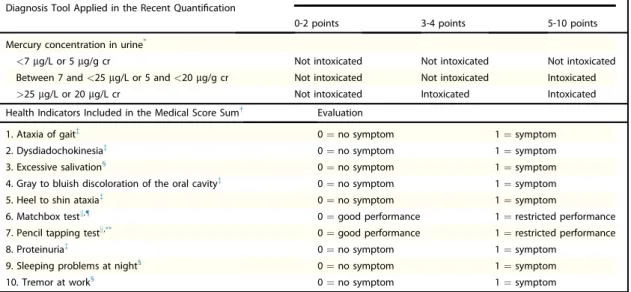
specimens (blood, hair, urine) in combination with health data summarized in a medical score. This diagnostic tool, recommended by the United Nations Environmental Programme (UNEP) and the World Health Organization (WHO)4 as well as Veiga and Baker,28was used in studies examining health outcomes in ASG miners.14,15,17,29Recently, the tool was reevaluated by Doering et al30 to develop a set of essential indicators to simplify data collection. For the current analysis, the con-densed version20of the detailed disease description of moderate CMMVI21 was used to define the health outcome of interest. The health outcome was assessed applying the diagnostic tool called “essential indicators”30 but limited to the single information on elemental mercury in urine. Ele-mental mercury vapor is the primary form to which ASG miners are exposed, and this can be accurately measured in urine.31 A detailed description of the diagnostic tool applied in the current project is given inTable 2, in which differences with the previous diagnostic tools14,30are also described.
Although exposures to other forms of mercury (eg, methylmercury from contaminated food or
water) are also common in some ASGM areas, this project focuses on the main occupational exposure pathway. Because of the hazards of gold mining, gold miners are additionally affected by a great num-ber of other health outcomes and risk factors such as infectious diseases, accidents, and dust-related health effects.32The disease burden of these other risk fac-tors was not considered in the current analysis.
Prevalence.The diagnostic tool developed by Drasch et al14 has previously been applied to sam-ples of gold miners in Indonesia,16,17 Tanzania,29 Philippines,14 and Zimbabwe.18 For the current analysis, raw data from these studies were pooled and reanalyzed in the new built primary dataset. The analysis was based on urine samples, and the essential indicators of the diagnostic tool30 were applied (Table 2). Additionally, it was possible to supplement this dataset with raw data containing health and HBM data from a sample of 36 gold miners in Ecuador33 which had not yet been assessed to diagnose intoxication.
This primary dataset was analyzed using cross-tabs in SPSS version 23 (SPSS Inc., Armonk, NY). The resulting prevalence of chronic mercury
Table 2. Diagnostic Tool (based on Drasch et al14
and Doering et al30
) Used to Identify Cases of Moderate Chronic Metallic Mercury Vapor Intoxication (CMMVI) Applied to Analyze the Primary Dataset
Diagnosis Tool Applied in the Recent Quantification
Medical Score Sum
0-2 points 3-4 points 5-10 points Mercury concentration in urine*
<7mg/L or 5mg/g cr Not intoxicated Not intoxicated Not intoxicated Between 7 and<25mg/L or 5 and<20mg/g cr Not intoxicated Not intoxicated Intoxicated >25mg/L or 20mg/L cr Not intoxicated Intoxicated Intoxicated Health Indicators Included in the Medical Score Sum Evaluation
1. Ataxia of gaità 0¼no symptom 1¼symptom 2. Dysdiadochokinesiaà 0¼no symptom 1¼symptom 3. Excessive salivation§
0¼no symptom 1¼symptom 4. Gray to bluish discoloration of the oral cavityà 0¼no symptom 1¼symptom 5. Heel to shin ataxiaà 0¼no symptom 1¼symptom
6. Matchbox testk,{ 0¼good performance 1¼restricted performance
7. Pencil tapping testk,** 0¼good performance 1¼restricted performance 8. Proteinuriaà 0¼no symptom 1¼symptom
9. Sleeping problems at night§ 0¼no symptom 1¼symptom 10. Tremor at work§
0¼no symptom 1¼symptom
cr, creatinine. * In Drasch et al14
and Doering et al,30
hair and blood samples were additionally included.
In Drasch et al.14
the following health indicator were additionally included: metallic taste,§
health problems worsened since Hg exposed,§finger to nose tremor.k §
Surveyed by a questionnaire.
à Surveyed by clinical examination. k Surveyed by neuropsychological tests.
{ Matchbox test was developed by Zimmer and Volkamer.63The test was evaluated as good performed if 17 seconds or less were needed to put 20 matches into
the matchbox (15 cm away) by using alternating hands. ** Pencil tapping test was developed by Zimmer and Volkamer.63
intoxication was applied to available samples of urine data using the following method: First, publi-cations containing data on mercury in human urine samples from ASG miners were identified using 2 current reviews.5,6 The original publications were obtained and useful data on mercury in urine were extracted. An ideal dataset would have been a com-plete list of the individual mercury concentrations in the urine of each miner. If not available, the range (minimum value, maximum value), median, percen-tiles, quartiles of mercury in human specimens of miners or percentages of individuals exceeding a defined value (eg, more than 25
m
g/L) were used. Mercury concentrations in urine measured in micro-grams per liter (m
g/L) were preferred. If not avail-able, mercury concentrations in micrograms per gram creatinine (m
g/g cr) were extracted and used.Then the primary dataset was reanalyzed accord-ing to the respective structure of the data given in the publications (exemplary data structure: 2-25
m
g/L: 35% of the sample; 25.1-99.9m
g/L: 55%; 100-120m
g/L: 10%). The prevalence of moderate CMMVI for the sample in the original publication was determined in the primary dataset per concen-tration category given in the original HBM publica-tion. A detailed list is included in SupplementalMaterial 1. One overall prevalence estimate for all studies included was derived. This was done by weighting the prevalence estimates by the number of individuals in the respective category. One resulting overall prevalence rate was applied to the gold mining population of each country with ASGM activity included in this quantification (minimum scenario). Using a country-specific prevalence based on the data available was not intended, because it cannot be assumed that the HBM studies available are representative for the mercury exposure of miners in the entire country. Furthermore, for most countries no HBM studies were available.
In a second scenario, an alternative prevalence estimate was derived based on the exclusion of studies with a specific focus on subgroups (eg, chil-dren, women, gold miners using retorts) or that included specific subgroups besides miners (eg, exposed residents in ASGM or former miner). Consequently, the second scenario had a narrowed focus on gold miners and gold shop workers (max-imum scenario).
Disability Weight. To calculate YLDs, a disease-specific DW is necessary. Steckling et al20 derived DWs for moderate (DW: 0.368; uncertainty interval
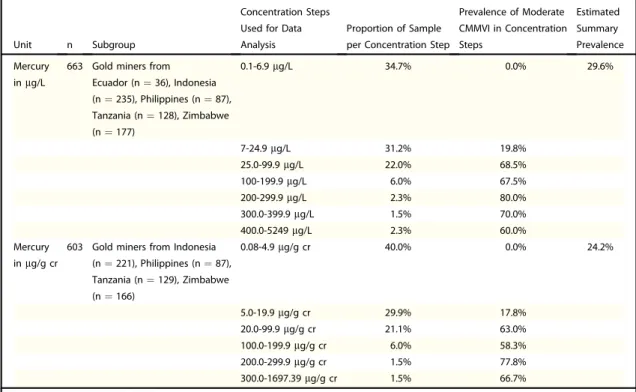
Table 3.Prevalence of Chronic Mercury Intoxication as Determined in the Primary Dataset Based on 677 Gold Miners
Unit n Subgroup
Concentration Steps Used for Data Analysis
Proportion of Sample per Concentration Step
Prevalence of Moderate CMMVI in Concentration Steps Estimated Summary Prevalence Mercury inmg/L
663 Gold miners from Ecuador (n¼36), Indonesia (n¼235), Philippines (n¼87), Tanzania (n¼128), Zimbabwe (n¼177) 0.1-6.9mg/L 34.7% 0.0% 29.6% 7-24.9mg/L 31.2% 19.8% 25.0-99.9mg/L 22.0% 68.5% 100-199.9mg/L 6.0% 67.5% 200-299.9mg/L 2.3% 80.0% 300.0-399.9mg/L 1.5% 70.0% 400.0-5249mg/L 2.3% 60.0% Mercury inmg/g cr
603 Gold miners from Indonesia (n¼221), Philippines (n¼87), Tanzania (n¼129), Zimbabwe (n¼166) 0.08-4.9mg/g cr 40.0% 0.0% 24.2% 5.0-19.9mg/g cr 29.9% 17.8% 20.0-99.9mg/g cr 21.1% 63.0% 100.0-199.9mg/g cr 6.0% 58.3% 200.0-299.9mg/g cr 1.5% 77.8% 300.0-1697.39mg/g cr 1.5% 66.7%
[UI]: 0.261-0.484) and severe CMMVI (DW: 0.588, UI: 0.193-0.907). The DW of moderate CMMVI, which is used in this analysis, is based on the same disease description used in this study and described earlier. Severe cases of CMMVI were excluded because it is assumed that gold miners suffering from such severe health effects are no longer able to work and thus not included in the prevalence numbers. YLDs are presented with UIs basically indicating the impact of the uncertainty of the DW.
Mortality. Mortality as a consequence of chronic mercury intoxication is ruled out. This assumption was made based on the published research as sum-marized previously.18 Therefore, only the morbidity partdthe YLDsdis calculated and added to zero
YLLs to express DALYs.
R E S U L T S
Sixty-two countries were considered in the analysis, with most countries from the WHO African Region (34) and the least from the WHO South-East Asia Region (2). No data on miners or preva-lence data on mercury intoxication were found for the WHO European Region, which therefore was excluded. Other countries had to be excluded because no information on the number of miners could be found through the review by Seccatore et al27 and the new literature search. However, for some of these excluded countries, the UNEP report stated the use of mercury in ASGM, such as Gam-bia, Guatemala, Honduras, Lesotho, and Malaysia. The literature search turned up new information on the number of miners for 6 further countries (Bur-kina Faso, Cambodia, Dominican Republic, Ghana, Mongolia, Nigeria) not listed by Seccatore et al.27
Of these 62 countries, the estimated number of miners in the minimum scenario is 14.0 million, 2 million less than Seccatore et al27 have estimated. The maximum scenario comprises 18.9 million min-ers (34% more minmin-ers). With a number above 2.7 million miners, most of the miners live in China. The greatest difference between the assumed mini-mum and maximini-mum was seen for the Democratic Republic of Congo (difference: 2,310,000), Sudan
(709,000), Ghana (594,000), and Ethiopia
(428,000).Table 4contains the numbers of miners by country and the reporting references.
The primary dataset was based on 677 miners from Ecuador, Indonesia, Tanzania, Philippines, and Zimbabwe. Overall prevalence of moderate CMMVI in the primary dataset was estimated at 24.2%-29.6%, depending on whether mercury
concentrations were measured in micrograms per liter or micrograms per gram creatinine (Table 3). Twenty-five HBM studies including mercury concentrations in urine were analyzed in addition to the 5 studies whose data were included in the primary dataset. The analysis covers 15 countries (seeSupplementary Material 1). One HBM study contained no useful information for this project (study conducted in Thailand34). This reduced the number to 29 studies from 14 countries. The most HBM studies were found for Brazil (7 studies).
The sample size of the studies varies considerably from 1135to 865 individuals.34A total of 3194 indi-viduals were analyzed, including 677 from the pri-mary dataset and 2517 from 24 additional HBM studies. The mean weighted prevalence rate of chronic mercury intoxication over the pooled studies was estimated at 23.7%, resulting in a total number of 3.3-4.5 million intoxicated miners (depending on the total numbers of miners assumed). Because some studies have a focus on subgroups, such as female miners,36 children,37,38 or a sample of the subgroup with the greatest exposure,37,38these stud-ies were excluded for a second scenario to determine the overall prevalence. The remaining studies with a total number of 1590 individuals include only active miners and gold shop workers. The mean weighted prevalence rate is much higher with 34.3%. The underlying quantification of study-specific preva-lence is shown in theSupplementary Material 1.
The burden ranges from 1.22 (UI 0.87-1.61, minimum number of miners, lower prevalence) to 2.39 (UI 1.69-3.14, maximum number of min-ers, higher prevalence) million DALYs lost as a result of chronic mercury intoxication (Table 4). The scenario based only on the lower estimates of miners from Seccatore et al27 yielded 1.42 (UI 1.0-1.87) million DALYs if using the lower prevalence rate of 23.7% and 2.05 (UI 1.46-2.70) million DALYs if using the higher preva-lence rate of 34.3%. The resulting disease burden is between the minimum and maximum estimate shown earlier.
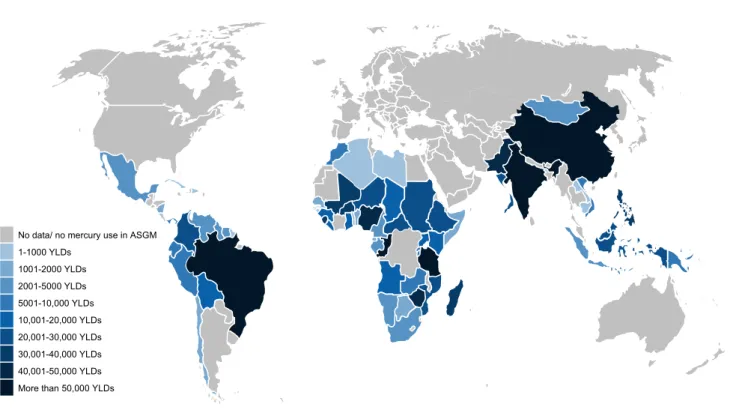
The burden is not equally distributed throughout the WHO regions (Figure 1). Although the same mean prevalence was assumed for all countries, the burden varies based on the number of miners per coun-try. The burden per 100,000 inhabitants39is highest in the African region and lowest in the South-East Asian region (Fig 2). However, only India and Indonesia were included in the South-East Asian region, com-pared with 34 African countries.
Table 4.Numbers of Miners per Country and Years Lived With Disability (YLDs, corresponding to Disability-Adjusted Life Years [DALYs]), Minimum and Maximum Scenarios With Uncertainty Intervals (UI) Based on Disability Weights (DWs)
WHO Regions
Countries Where ASGM Is in Practice
No. of miners YLDs (corresponding to DALYs) Minimum Estimate Reference Maximum Estimate Reference Minimum Scenario* (UI) Maximum Scenario (UI) African Region Algeria 7000 27 7000 27 610 (433-803) 882 (626-1161)
Angola 218,000 27 218,000 27 19,010 (13,482-25,002) 27,482 (19,491-36,144) Benin 15,000 27 15,000 27 1308 (928-1720) 1891 (1341-2487) Botswana 15,000 27 15,000 27 1308 (928-1720) 1891 (1341-2487) Burkina Faso 400,000 66 400,000 66 34,880 (24,738-45,875) 50,425 (35,763-66,320) Burundi 91,000 27 91,000 27 7935 (5628-10,436) 11,472 (8136-15,088) Cameroon 44,000 27 44,000 27 3837 (2721-5046) 5547 (3934-7295) Central African Republic 291,000 27 291,000 27 25,375 (17,997-33,374) 36,684 (26,018-48,248) Chad 146,000 27 146,000 27 12,731 (9029-16,744) 18,405 (13,054-24,207) Democratic Republic of Congo 600,000 66 2,910,000 27 52,320 (37,107-68,812) 366,841 (260,178-482,476) Equatorial Guinea 15,000 27 15,000 27 1308 (928-1,720) 1891 (1341-2487) Ethiopia 300,000 1 728,000 27 26,160 (18,554-34,406) 91,773 (65,089-120,702) French Guiana 7000 27 7000 27 610 (433-803) 882 (626-1161) Gabon 36,000 27 36,000 27 3139 (2226-4129) 4538 (3219-5969) Ghana 200,000 67 1,000,000 66 17,440 (12,369-22,937) 126,062 (89,408-165,799) Guinea 200,000 27 300,000 27 17,440 (12,369-22,937) 37,819 (26,823-49,740) Guinea Bissau 7000 27 7000 27 610 (433-803) 882 (626-1161) Kenya 146,000 27 146,000 27 12,731 (9029-16,744) 18,405 (13,054-24,207) Liberia 147,000 27 147,000 27 12,818 (9091-16,859) 18,531 (13,143-24,373) Madagascar 437,000 27 437,000 27 38,106 (27,026-50,118) 55,089 (39,071-72,454) Mali 361,000 27 400,000 66 31,479 (22,326-41,402) 50,425 (35,763-66,320) Mozambique 291,000 27 291,000 27 25,375 (17,997-33,374) 36,684 (26,018-48,248) Namibia 29,000 27 29,000 27 2,529 (1794-3326) 3,656 (2593-4808) Niger 291,000 27 291,000 27 25,375 (17,997-33,374) 36,684 (26,018-48,248) Nigeria 500,000 68 500,000 68 43,600 (30,923-57,343) 63,031 (44,704-82,900) Rwanda 73,000 27 73,000 27 6366 (4515-83,729 9203 (6527-12,103) Senegal 15,000 27 70,000 66 1308 (928-1,720) 8824 (6259-11,606) Sierra Leone 437,000 27 437,000 27 38,106 (27,026-50,118) 55,089 (39,071-72,454) South Africa 37,000 27 37,000 27 3226 (2288-4243) 4664 (3308-6135) Tanzania 800,000 66 994,000 27 69,760 (49,476-91,749) 125,306 (88,872-164,805) Togo 20,000 27 20,000 27 1744 (1237-2294) 2521 (1788-3316) Uganda 218,000 27 218,000 27 19,010 (13,482-25,002) 27,482 (19,491-36,144) Zambia 87,000 27 87,000 27 7586 (5381-9978) 10,967 (7779-14,425) Zimbabwe 509,000 27 509,000 27 44,385 (31,479-58,375) 64,166 (45,509-84,392) Eastern Mediterranean Region Libya 7000 27 7000 27 610 (433-803) 882 (626-1161) Morocco 73,000 27 73,000 27 6366 (4515-8372) 9203 (6527-12,103) Pakistan 515,000 27 515,000 27 44,908 (31,850-59,064) 64,922 (46,045-85,387) Somalia 15,000 27 15,000 27 1308 (928-1720) 1891 (1341-2487) Sudan 291,000 27 1,000,000 66 25,375 (17,997-33,374) 126,062 (89,408-165,799) Region of the Americas Bolivia 130,000 27 130,000 27 11,336 (8040-14,909) 16,388 (11,623-21,554) Brazil 861,000 27 861,000 27 75,079 (53,249-98,745) 108,540 (76,981-142,753) Chile 17,000 27 17,000 27 1482 (1051-1950) 2143 (1520-2819) Colombia 268,000 27 418,000 27 23,370 (16,575-30,736) 52,694 (37,373-69,304) (continued)
D I S C U S S I O N
To our knowledge, this is thefirst country-specific estimation of the burden of disease caused by chronic mercury intoxication resulting from mercury expo-sure in ASGM. A range of 1.22 (UI 0.87-1.61) to 2.39 (UI 1.69-3.14) million DALYs was estimated. According to the high number of miners, the burden is highest in the WHO African Region and lowest in the South-East Asian Region. There was no burden quantifiable for the WHO European Region.
For comparison, the estimated disease burden according to the Global Burden of Disease (GBD) 2015 study yielded 2.45 million DALYs as a result of hepatitis B and 2.06 million DALYs for Parkinson’s disease,23 which are close to our maximum scenario. However, both diseases globally get much more attention andfinancial support com-pared with CMMVI. Truly, the comparison is limited because the GBD studies use more
sophisticated methods to estimate disease burden. However, to give a rough valuation of our estimates and to show the relevance of the burden caused by CMMVI in a broader context, the numbers can be used as a start to indicate the non-negligible health impact of CMMVI.
ASGM is a nonformalized sector, often even an illegal activity,26which results in little reliable data. Therefore, data available are discussed in the follow-ing section, and options for data improvement are proposed.
Subgroup of Interest. The quantification focused on workers involved in ASGM and excluded other subgroups, although noneoccupationally involved
residents and family members at mining areas might also be adversely affected by the exposure to mer-cury.5Thus, the current quantification of the BoD underestimates the burden from mercury pollution at ASGM sites. In Indonesia, for example, ore amalgamation commonly takes place inside housing
Table 4.continued
WHO Regions
Countries Where ASGM Is in Practice
No. of miners YLDs (corresponding to DALYs) Minimum Estimate Reference Maximum Estimate Reference Minimum Scenario* (UI) Maximum Scenario (UI) Cuba 7000 27 7000 27 610 (433-803) 882 (626-1161) Dominican Republic 2000 69 3000 69 174 (124-229) 378 (268-497) Ecuador 90,000 70 128,000 27 7848 (5566-10,322) 16,136 (11,444-21,222) Guyana 28,000 27 28,000 27 2442 (1732-3211) 3530 (2503-46,429) Mexico 56,000 27 56,000 27 4883 (3463-6422) 7059 (5007-9285) Nicaragua 20,000 27 30,000 27 1744 (1237-2294) 3782 (2682-4974) Panama 63,000 27 63,000 27 5494 (3896-7225) 7942 (5633-10,445) Peru 70,000 27 70,000 27 6104 (4329-8028) 8824 (6259-11,606) Suriname 28,000 27 28,000 27 2442 (1732-3211) 3530 (2503-4642) Venezuela 25,000 27 70,000 27 2180 (1546-2867) 8824 (6259-11,606) South-East Asia Region India 915,000 27 915,000 27 79,788 (56,589-104,938) 115,347 (81,809-151,706) Indonesia 250,000 27 250,000 27 21,800 (15,461-28,672) 31,516 (22,352-41,450) Western Pacific Region Cambodia 5000 1 6000 1 436 (309-573) 756 (536-995) China 2,746,000 27 2,746,000 27 239,450 (169,828-314,929) 346,167 (245,515-455,285) Laos 3000 71 3000 71 262 (186-344) 378 (268-497) Mongolia 30,000 1 30,000 1 2616 (1855-3441) 3782 (2682-4974) Papua New Guinea 108,000 27
108,000 27 9418 (6679-12,386) 13,615 (9656-17,906) Philippines 366,000 27 366,000 27 31,915 (22,635-41,9759) 46,139 (32,723-60,683) Vietnam 63,000 27 63,000 27 5494 (3896-72,259) 7942 (5633-10,445) Sum 14,042,000 18,922,000 1,224,458 (868,433-1,610,4289 2,385,352 (1,691,785-3,137,256) ASGM, artisanal small-scale gold mining; DALYs, disability-adjusted life years; UI, uncertainty interval; WHO, World Health Organization; YLDs, years lived with disability.
For the UI, the UI of DWs was applied as presented in Steckling et al.20
* Minimum scenario: lowest number of miners, lower prevalence rate of 23.7% intoxication.
areas.40 Large quantities of semivolatile elemental mercury are released into the air in crowded neighborhoods without emission controls, thereby exposing people of all ages. Similarly, in Peru gold shops regularly burn off mercury vapors into resi-dential streets in towns and cities.41 For future research, it is recommended to focus specifically on children, because mercury is particularly toxic to brain development.42
Some HBM studies distinguished between groups of occupationally exposed individuals such as miners, smelters, and gold shop workers. This is reasonable because the exposure to mercury differs significantly between these occupational groups.43 Consequently, variations in the disease burdens can be assumed. Having data on how many people work in the different areas would allow a stratified BoD quantification and may shed further light on the most vulnerable groups.
Gold dealers were not excluded from the analy-ses, although no focused search for gold dealers was done. Eight HBM studies included gold shop workers (6 in Brazil,35,43-47 1 in Ecuador,10 and another 1 in Peru48). This subgroup involved in gold refinement is strongly exposed. Some studies analyzed miners and gold shop workers separately, and all10,43,47 but one48 identified a much higher mercury concentration in human specimens from gold shop workers compared with gold miners. It could be beneficial to survey this subgroup in more detail and develop specific intervention strat-egies to reduce their burden.
We did not include people suffering from severe mercury intoxication in the DALY estimate. Besides the DW of a moderate CMMVI, a differ-ent DW for severe CMMVI is available.21 How-ever, the available data do not allow a stratified estimate on the prevalence distinguishing between moderate and severe cases. Because of its severe effects on the human body, such as severe coordina-tion problems and difficulties in concentrating, and its restrictions on the quality of life, such as not being able to perform usual activities,21 it is likely that this health condition would restrict mining work. Hence, severe cases are to be expected in the subgroup of former miners. Estimating their burden is important in detecting the entire burden from exposure to mercury in ASGM. However, so far, comprehensive data about former miner are not available.
Number of Miners. An exact number of individuals exposed to mercury from ASGM belongs to the most crucial input for a valid BoD estimate. Comprehensive official registers and numbers are needed. For some countries, the presence of ASGM was reported but there were no estimates about the number of miners available. Conse-quently, these countries could not be included in this analysis, which might have resulted in an underestimate of the disease burden. For the countries with available estimates on the number of miners, this information was included without further verification. Here, it is necessary to foster research activities that focus on the estimation of Figure 1.Years lived with disability (YLDs) per 100,000 inhabitants by World Health Organization (WHO) regions (minimum scenario: lowest number of miners, lower prevalence rate of 23.7% intoxication; and maximum scenario: highest number of miners, higher prevalence rate of 34.3% intoxication (YLDs correspond to disability-adjusted life years, DALYs). Numbers of inhabitants were taken from WHO39
reliable numbers of miners working in ASGM. Formalization and regulation of ASGM could improve official reports of the number of miners involved.
Health Outcome. Mercury is one of many health issues related to ASGM. Several other health effects are common in gold mining communities, such as infectious diseases, accidents, and lung diseases caused by dust.32 Exposure to other chemicals such as lead49or cyanide26is also possible. ASGM-related health restrictions other than chronic exposures to elemental mercury vapor were not considered in this assessment. Also excluded were exposures to other kinds of mercury (eg, methyl-mercury) and other mercury-related health out-comes like acute intoxications, acrodynia, and mild mental retardation.50
Prevalence.Earlier analyses of the primary data14,15,17,18,29 yielded diverging prevalence esti-mates, because an extensive diagnostic tool14 was used rather than the essential indicators30and com-bined with mercury concentrations in blood, hair and urine rather than, as was done in this analysis, focusing on urine samples. It was decided to focus on urine data to only consider exposures to mercury vapor.
An overall prevalence rate (in 2 scenarios) was calculated through a data analysis of 24 HBM stud-ies in addition to the primary dataset. This summary prevalence was applied to all countries according to the estimated number of gold miners involved. This decision was made because of the large range of the mercury exposure (<1-5240
m
g/L17) reported in the individual studiesdwhich is mostly the result ofdif-ferent techniques to separate gold from ore27dand
the fact that these studies are not representative of the miners of the entire country. Also, most studies are based on very small samples (14 of 24 studies had fewer than 50 participants).35,44-46,48,51-57 To improve the reliability of the prevalence estimates, the study-specific prevalence estimates were pooled to one estimate due to weighting by the sample size. This pragmatic approach was used because of the missing representativeness, the small sample sizes, and the lack of comprehensive data.
The studies on mercury concentrations in human specimens from gold miners were found through liter-ature reviews.5,6In the future, a comprehensive dataset should be generated, including all available HBM data for gold miners and other relevant subgroups. The database should be further expanded by conducting representative HBM studies in ASGM regions.
No data/ no mercury use in ASGM 1-1000 YLDs 1001-2000 YLDs 2001-5000 YLDs 5001-10,000 YLDs 10,001-20,000 YLDs 20,001-30,000 YLDs 30,001-40,000 YLDs 40,001-50,000 YLDs More than 50,000 YLDs
Figure 2. Number of total years lived with disability (YLDs; corresponding to total disability-adjusted life years, DALYs) per country with artisanal small-scale gold mining (ASGM) activity, estimated in the minimum scenario (lower number of miners and lower prevalence rate).
Furthermore, there are several studies available that report health symptoms possibly associated with the exposure to mercury. These data were not included in the current analysis. It would be beneficial to develop a strategy to use these data for identifying cases of chronic mercury intoxication. So far, the essential indicators of the available diagnostic tool weredlimited to urine samplesdapplied to the
pri-mary dataset. Including further individual health data, which were differently collected, was not addressed in this first rough estimate. Beyond that, the collection of representative health data from gold miners needs to be further intensified. A generally accepted and standardized tool to collect these data would also help. The available diagnostic tools14,30 are a good starting point to ensure comparability.
Disability Weights.DWs are one of the most critical parts of the DALY concept. However, DWs enable the comparison of life years lost as a result of mortality and years lived with disability.24For the GBD study, 255 DWs were derived in 2 large population studies including more than 30,000 respondents each.58-60 However, DWs for chronic mercury intoxication were not derived in the GBD study. Thus, Steckling et al estimated DWs for moderate and severe CMMVI to calculate YLDs as a result of the use of mercury in ASGM.20The validly of these DWs is limited because only a small sample of respondents (n ¼ 105) was used to evaluate the severity of a selected set of different diseases. Moreover, com-parability with GBD is limited because similar but not exactly the same methods were used to derive DWs.
Mortality. Underestimation could also result from the assumption that chronic inorganic mercury intoxication is not fatal. This assumption was based on a study comparing the mortality of workers exposed to elemental mercury vapor and nonexposed workers. No difference was found and so it was con-cluded that chronic exposures to metallic mercury vapor do not result in an increased mortality.61
Interpretation of the Results. Besides these limita-tions, this work presents thefirst burden of disease estimates for mercury exposure in ASGM on a global scale and thus offers important insights. Our analysis indicates that the use of mercury is a considerable health threat in the developing world. Therefore, it should gain more attention by politics. More funds for research are urgently needed to fill data gaps on the numbers of affected miners and their health effects. The development of affordable mercury-free technologies should be enforced.
Also, the treatment of already intoxicated miners needs to be addressed.
To allow a comparison of mercury intoxication with other diseases, we recommend including mer-cury intoxication in the GBD study to reach the study’s goal of giving “a comprehensive picture of what disables and kills people.”62
C O N C L U S I O N S
These preliminary and rough estimates of the global burden of disease as a result of inorganic mercury exposure in ASGM underline the use of mercury for gold extraction as a serious health hazard. Because of diverging data, a broad range of 1.22 (UI 0.87-1.61) to 2.39 (UI 1.69-3.14) million YLDs was estimated. Nonetheless, even the lower estimate indicates the worrying public health dimension. It is further of major importance because the effects mostly hit the poor segments of the society. Technical and health interventions are needed to reduce this specific environmental bur-den. Mercury use in ASGM is principally avoidable by other techniques than mercury amalgamation. These estimates should raise awareness of this global health problem.
A C K N O W L E D G M E N T S
Funding by Pure Earth is gratefully acknowledged. Data from differently funded projects were the basis for this paper. The projects in Indonesia, Philippines, Tanzania, and Zimbabwe were executed by UNIDO (United Nations Industrial Development Organization) as part of the Global Mercury Project with means from the Global Environment Facility. EmeraMed Ltd funded the project in Ecuador. Paul Schutzmeier provided and analyzed the Ecuador data. Two of the authors (N.S., S.B.) received funding from the European Union’s Sev-enth Programme for research, technological development, and demonstration under Grant Agreement No. 603946 (Health and Environment-wide Associations based on Large population Surveys, HEALS). We acknowledge support for the Article Processing Charge by the Deut-sche Forschungsgemeinschaft and the Open Access Pub-lication Fund of Bielefeld University.
S U P P L E M E N T A R Y D A T A
Supplementary material for this article (http://dx. doi.org/10.1016/j.aogh.2016.12.005) can be found online atwww.annalsofglobalhealth.org.
R E F E R E N C E S
1. United Nations Environment Pro-gramme (UNEP). Global Mercury Assessment. Nairobi, Kenya: UNEP. Available at: http://www.unep.org/ PDF/PressReleases/GlobalMercuryAs sessment2013.pdf; 2013. Accessed March 12, 2016.
2. United Nations Environment Pro-gramme (UNEP). Module 3: Mercury Use in Artisanal and Small Scale Gold mining. Nairobi, Kenya: UNEP. Avail-able at,http://www.unep.org/hazardous substances/Portals/9/Mercury/Awareness Pack/English/UNEP_Mod3_UK_Web. pdf; 2008. Accessed October 24, 2016. 3. United Nations Environment
Pro-gramme (UNEP). A pracitcal guide: Reducing Mercury Use in Artisanal and Small-scale Gold mining. Nairobi, Kenya: UNEP. Available at: http:// www.unep.org/hazardoussubstances/ Portals/9/Mercury/Documents/ASGM/ Techdoc/UNEP%20Tech%20Doc% 20APRIL%202012_120608b_web. pdf; 2012. Accessed March 12, 2016. 4. United Nations Environment
Pro-gramme (UNEP), World Health Organization (WHO). Guidance for Identifying Populations at Risk from Mercury Exposure. Geneva, Switzer-land: UNEP, WHO. Available at:
http://www.who.int/foodsafety/publi cations/chem/mercuryexposure.pdf; 2008. Accessed October 11, 2016. 5. Gibb H, O’Leary KG. Mercury
expo-sure and health impacts among individuals in the artisanal and small-scale gold mining community: a com-prehensive review. Environ Health Perspect 2014;122:667e72.
6. Kristensen AK, Thomsen JF, Mikkelsen S. A review of mercury exposure among artisanal small-scale gold miners in developing countries. Int Arch Occupat Environ Health 2014;87:579e90.
7. Arctic Monitoring and Assessment Program (AMAP)/United Nations Environment Programme (UNEP). Technical Background Report for the Global Mercury Assessment 2013. Geneva, Switzerland: UNEP Chemi-cals Branch; 2013.
8. United Nations Environment Pro-gramme (UNEP) Chemicals Branch. The Global Mercury Assessment. Nairobi, Kenya: UNEP; 2013. 9. Hentschel T, Hruschka F, Priester M.
The Mining, Minerals and Sustain-able Development (MMSD) Project: Global Report on Artisanal & Small-Scale Mining. London, UK: Interna-tional Institute for Environment and Development; 2002.
10.Harari R, Harari F, Gerhardsson L, et al. Exposure and toxic effects of
elemental mercury in gold -mining activities in Ecuador. Toxicol Lett 2012;213:75e82.
11. Zolnikov TR. Limitations in small artisanal gold mining addressed by educational components paired with alternative mining methods. Sci Total Environ 2012;419:1e6.
12. Landrigan PJ, Fuller R. Global health and environmental pollution. Int J Public Health 2015;60:761e2.
13. International Labour Office (ILO). Social and labour issues in small-scale mines. Report for Discussion at the Tri-partite Meeting on Social and Labour Issues in Small-scale Mines. Geneva, Switzerland: ILO. Available at:https:// unites.uqam.ca/gmf/globalmercury forum/files/articles/small_scale_ mining/General%20ILO%201999% 20-%20Social%20and%20labour% 20in%20small-scale%20mines.pdf; May 17-21, 1999. Accessed March 12, 2016.
14. Drasch G, Bose-O’Reilly S, Beinhoff C, Roider G, Maydl S. The Mt. Diwata study on the Philippines 1999dassessing mercury intoxication of the population by small scale gold mining. Sci Total Environ 2001;267: 151e68.
15. Bose-O’Reilly S, Dahlmann F, Lettmeier B, Drasch G. Removal of barriers to the introduction of cleaner artisanal gold mining and extraction technologie in Kadoma, Zimbabwed Final Report, Part B Health Assess-ment. Orléans, France: Bureau de Recherches Géologiques et Minières (BRGM); 2004.
16. Rodrigues-Filho PS, dos Santos RLC, Villas Bôas RC, et al. Environmental and Health Assessment in Two Small-Scale Gold mining Areasd Indonesia. Final Report. Sulawesi and Kalimantan. Rio de Janeiro, Bra-zil: Centro de Tecnologia Mineral; 2004.
17. Bose-O’Reilly S, Drasch G, Beinhoff C, et al. Health assessment of artisanal gold miners in Indonesia. Sci Total Environ 2010;408:713e25.
18. Steckling N, Bose-O’Reilly S, Pinheiro P, et al. The burden of chronic mercury intoxication in artisa-nal small-scale gold mining in Zim-babwe: data availability and preliminary estimates. Environ Health 2014;13:111.
19. Pure Earth, Green Cross Switzerland. World’s Worst Pollution Problems. The New Top Six Toxic Threats: A Priority List for Remediation. New York, NY, Zurich, Switzerland: Pure Earth, Green Cross Switzerland. Available at:http://worstpolluted.org/
docs/WWPP_2015_Final.pdf; 2015. Accessed March 12, 2016.
20. Steckling N, Devleesschauwer B, Winkelnkemper J, et al. Disability weights for chronic mercury intoxica-tion resulting from gold mining activ-ities: results from an online pairwise comparisons survey. Int J Environ Res Public Health 2017;14:1e19.
21. Steckling N, Plass D, Bose-O’Reilly S, Kobal AB, Krämer A, Hornberg C. Disease profile and health-related quality of life (HRQoL) using the EuroQol (EQ-5DþC) questionnaire for chronic metallic mercury vapor intoxication. Health Qual Life Outcomes 2015;13:1e12.
22. Murray CJ. Quantifying the burden of disease: the technical basis for disabil-ity-adjusted life years. Bull World Health Organ 1994;72:429e45.
23. GBD 2015 DALYs and HALE Col-laborators. Global, regional, and national disability-adjusted life-years (DALYs) for 315 diseases and injuries and healthy life expectancy (HALE), 1990-2015: a systematic analysis for the Global Burden of Disease Study 2015. Lancet 2016;388:1603e58.
24. Haagsma JA, Polinder S, Cassini A, Colzani E, Havelaar AH. Review of disability weight studies: comparison of methodological choices and values. Popul Health Metr 2014;12:20. 25. Murray CJ, Ezzati M, Flaxman AD,
et al. GBD 2010: design, definitions, and metrics. Lancet 2012;380: 2063e6.
26. Telmer K, Veiga MM. World emis-sions of mercury from artisanal and small scale gold mining. In: Pirrone N, Mason R, eds. Mercury Fate and Transport in the Global Atmosphere. Emissions, Measure-ments and Models. New York, NY: Springer ScienceþBusiness Media; 2009:131e72.
27. Seccatore J, Veiga M, Origliasso C, Marin T, De Tomi G. An estimation of the artisanal small-scale production of gold in the world. Sci Total Envi-ron 2014;496:662e7.
28. Veiga MM, Baker RF. Protocols for Environmental and Health Assess-ment of Mercury Released by Artisa-nal and Small-Scale Gold miners. Vienna, Austria: United Nations Industrial Development Organization; 2004.
29. Bose-O’Reilly S, Drasch G, Beinhoff C, et al. Health assessment of artisanal gold miners in Tanzania. Sci Total Environ 2010;408: 796e805.
30. Doering S, Bose-O’Reilly S, Berger U. Essential indicators
identifying chronic inorganic mercury intoxication: pooled analysis across multiple cross-sectional studies. PLoS One 2016;11:e0160323. 31. World Health Organization (WHO).
Elemental Mercury and Inorganic Mercury Compounds: Human Health Aspects. Geneva, Switzerland: WHO. Available at:http://www.who.int/ipcs/ publications/cicad/en/cicad50.pdf; 2003. Accessed December 23, 2016. 32. Eisler R. Health risks of gold miners:
a synoptic review. Environ Geochem Health 2003;25:325e45.
33. Schutzmeier P. Gold mining in Ecua-dor: a cross-sectional assessment of mercury in urine and medical symptoms in miners from Portovelo/Zaruma. Munich, Germany: Ludwig-Maximili-ans-Universität München; 2016. 34. Umbangtalad S, Parkpian P,
Visvanathan C, Delaune RD, Jugsujinda A. Assessment of Hg con-tamination and exposure to miners and schoolchildren at a small-scale gold mining and recovery operation in Thailand. J Environ Sci Health A 2007;42:2071e9.
35. Branches FJ, Erickson TB, Aks SE, Hryhorczuk DO. The price of gold: mercury exposure in the Amazonian rain forest. J Toxicol Clin Toxicol 1993;31:295e306.
36. Steckling N, Boese-O’Reilly S, Gradel C, et al. Mercury exposure in female artisanal small-scale gold min-ers (ASGM) in Mongolia: an analysis of human biomonitoring (HBM) data from 2008. Sci Total Environ 2011;409:994e1000.
37. Counter SA, Buchanan LH, Ortega F. Mercury levels in urine and hair of children in an Andean gold-mining settlement. Int J Occupat Environ Health 2005;11:132e7.
38. Counter SA, Buchanan LH, Ortega F. Neurocognitive screening of mercury-exposed children of Andean gold miners. Int J Occupat Environ Health 2006;12:209e14.
39. World Health Organization (WHO). World Health Statistics. Monitoring Health for the SDGs Sustainable Development Goals. Geneva, Switzer-land: WHO. Available at:http://apps. who.int/iris/bitstream/10665/206498/ 1/9789241565264_eng.pdf?ua¼1; 2016. Accessed December 23, 2016. 40. Sinta YT. Delivering alternative practice
and technology to the use of mercury in artisanal gold mining in Indonesia. Available at: http://www.esp3. org/images/Library/PapersReports/ ASGM_Wonogiri_Final_ENG.PDF; 2014. Accessed December 23, 2016. 41. Plenge FO, Jaimes JER,
Estrada CHML. Informal and illegal mining and mercury pollution in
Madre de Dios: A public health prob-lema. Acta Medica Peruana. Available at: http://www.scielo.org.pe/scielo. php?script¼sci_arttext&pid¼S1728-5 9172012000100012; 2012. Accessed December 23, 2016.
42.Bose-O’Reilly S, McCarty KM, Steckling N, Lettmeier B. Mercury exposure and children’s health. Curr Probl Pediatr Adolesc Health Care 2010;40:186e215.
43.Malm O, Castro M, Bastos W, et al. An assessment of Hg pollution in dif-ferent goldmining areas, Amazon Bra-zil. Sci Total Environ 1995;175: 127e40.
44.Akagi H, Malm O, Branches F, et al. Human exposure to mercury due to gold mining in the Tapajos River basin, Amazon, Brazil: speciation of mercury in human hair, blood and urine. Water Air Soil Pollut 1995;80: 85e94.
45.Akagi H, Naganuma A. Human exposure to mercury and the accumu-lation of methylmercury that is associ-ated with gold mining in the Amazon Basin Brazil. J Health Sci 2000;46: 323e8.
46.Aks SE, Erickson T, Branches FJ, et al. Fractional mercury levels in Bra-zilian gold refiners and miners. J Tox-icol Clin ToxTox-icol 1995;33:1e10.
47.de Jesus IM, de Oliveira Santos EC, da Silva Brabo E, et al. Exposure to elemental mercury in urban workers and gold miners from the Tapajos Region, Para, Brazil. Bull Environ Contamin Toxicol 2001;67:317e23.
48.Hurtado J, Gonzales GF, Steenland K. Mercury exposures in informal gold miners and relatives in southern Peru. Int J Occupat Environ Health 2006;12:340e5.
49.Dooyema CA, Neri A, Lo YC, et al. Outbreak of fatal childhood lead poi-soning related to artisanal gold mining in northwestern Nigeria, 2010. Envi-ron Health Perspect 2012;120:601e7.
50.Agency for Toxic Substances and Dis-ease Registry (ATSDR). Toxicological Profile for Mercury. Atlanta, GA: ATSDR; 1999.
51.Kwaansa-Ansah EE, Basu N, Nriagu JO. Environmental and occu-pational exposures to mercury among indigenous people in Dunkwa-On-Offin, a small scale gold mining area in the South-West of Ghana. Bull Environ Contam Toxicol 2010;85: 476e80.
52.Yard EE, Horton J, Schier JG, et al. Mercury exposure among artisanal gold miners in Madre de Dios, Peru: a cross-sectional study. J Med Toxicol 2012;8:441e8.
53.Oosthuizen MA, John J, Somerset V. Mercury exposure in a low-income
community in South Africa. South African Med J 2010;100:366e71.
54. de Kom JF, van der Voet GB, de Wolff FA. Mercury exposure of maroon workers in the small scale gold mining in Suriname. Environ Res 1998;77:91e7.
55. Ikingura JR, Akagi H. Monitoring of
fish and human exposure to mercury due to gold mining in the Lake Victo-ria gold fields, Tanzania. Sci Total Environ 1996;191:59e68.
56. Drake PL, Rojas M, Reh CM, Mueller CA, Jenkins FM. Occupa-tional exposure to airborne mercury during gold mining operations near El Callao, Venezuela. Int Arch Occupat Environ Health 2001;74: 206e12.
57. Rojas M, Drake PL, Roberts SM. Assessing mercury health effects in gold workers near El Callao, Vene-zuela. J Occup Environ Med 2001;43:158e65.
58. Salomon JA, Vos T, Hogan DR, et al. Common values in assessing health outcomes from disease and injury: disability weights measure-ment study for the Global Burden of Disease Study 2010. Lancet 2012;380:2129e43.
59. Salomon JA, Haagsma JA, Davis A, et al. Disability weights for the Global Burden of Disease 2013 study. Lancet Glob Health 2015;3:e712e23.
60. Haagsma J, Maertens de Noordhout C, Polinder S, et al. Assessing disability weights based on the responses of 30,660 people from four European countries. Popul Health Metr 2015;13(1):10. 61. Cragle DL, Hollis DR, Qualters JR,
Tankersley WG, Fry SA. A mortality study of men exposed to elemental mercury. J Occup Med 1984;26: 817e21.
62. Institute for Health Metrics and Eval-uation (IHME). The Global Burden of Disease: A Critical Resource for Informed Policymaking. Seattle, WA: University of Washington, IHME. Available at: http://www. healthdata.org/gbd/about; 2016. Accessed December 23, 2016.
63. Zimmer R, Volkamer M.
MOTdMotoriktest. Weinheim, Germany: Beltz; 1984.
64. Bose-O’Reilly S, Lettmeier B, Gothe RM, Beinhoff C, Siebert U, Drasch G. Mercury as a serious health hazard for children in gold mining areas. Environ Res 2008;107:89e97.
65. Baeuml J, Bose-O’Reilly S, Matteucci Gothe R, et al. Human biomonitoring data from mercury exposed miners in six artisanal small-scale gold mining areas in Asia and Africa. Minerals 2011;1:122e43.
66.United Nations Environmental Pro-gramme (UNEP). Second Global Forum on Artisanal and Small Scale Gold Mining. Lima, Peru: UNEP; 2013.
67.Hilson G, Hilson CJ, Pardie S. Improving awareness of mercury pol-lution in small-scale gold mining communities: challenges and ways for-ward in rural Ghana. Environ Res 2007;103:275e87.
68. Hilson G, McQuilken J. Four decades of support for artisanal and small-scale mining in sub-Saharan Africa: a crit-ical review. Extractive Industries Soc 2014;1:104e18.
69. Veiga M. Mercury in Artisanal Gold Mining in Latin America: Facts, Fan-tasies and Solutions. UNIDO Expert Group MeetingdIntroducing New
Technologies for Abatement of Global Mercury Pollution Deriving From Artisanal Gold Mining. July 1-3, 1997; Vienna, Austria. Available at: https://www.hsph.harvard.edu/ mining/files/Veiga.pdf. Accessed December 23, 2016.
70. United Nations Environment Agency (UNEP). Analysis for stakeholders on formalization in the artisanal and small-scale gold mining sector based on experiences in Latin America,
Africa, and Asia. UNEP Paragraph 29 StudydEcuador Case Study.
Nai-robi, Kenya: UNEP. Available at:
http://www.unep.org/chemicalsand waste/Portals/9/Mercury/Documents/ ASGM/Case%20Study%20Ecuador% 20Draft.pdf; 2011. Accessed Decem-ber 23, 2016.
71. Boungnaphalom E. Gloal Mercury Project: Information about the Project Sites in the LAO PDR. Available at: https://unites.uqam. ca/gmf/intranet/gmp/files/doc/gmp/ lao/Information%20on%20Lao%20 PDR%20ASM%20site.pdf; 2003. Accessed December 23, 2016.

![Table 4. Numbers of Miners per Country and Years Lived With Disability (YLDs, corresponding to Disability-Adjusted Life Years [DALYs]), Minimum and Maximum Scenarios With Uncertainty Intervals (UI) Based on Disability Weights (DWs)](https://thumb-us.123doks.com/thumbv2/123dok_us/10124224.2913061/7.877.72.810.186.1060/disability-corresponding-disability-adjusted-scenarios-uncertainty-intervals-disability.webp)