MARKS: 150 TIME: 3 hours
This question paper consists of 18 pages. This question paper must be printed in full colour.
DESIGN P1
(THEORY)
FEBRUARY/MARCH 2013
NATIONAL
SENIOR CERTIFICATE
GRADE 12
INSTRUCTIONS AND INFORMATION
1. 2.
3.
This question paper consists of SEVEN questions.
There are choices within some questions in this question paper. Read the options carefully.
This question paper consists of THREE sections: SECTION A:
SECTION B:
SECTION C:
Design literacy (80 marks) QUESTIONS 1 to 4
Design in a social/environmental context (40 marks) QUESTIONS 5 and 6
Design in a business context (30 marks) QUESTION 7 4. 5. 6. 7. 8.
Read the requirements of the questions carefully. Answer in full sentences and avoid the listing of facts.
Use the mark allocation to determine the time to be spent on each question. Do NOT repeat the same facts and examples in different questions.
SECTION A: DESIGN LITERACY QUESTION 1: 'UNSEEN' EXAMPLES
1.1 Study the designs below and answer the questions that follow.
FIGURE A: Coco,
magazine cover page.
FIGURE B: Joe,
magazine cover page.
Designed by Peet Pienaar's design studio, The President (Cape Town), 2009.
1.1.1 The two magazine covers in FIGURE A and FIGURE B above are referred to as gender exclusive. Explain the meaning of the words
gender exclusive in relation to the images above.
(2) 1.1.2 Discuss how the following elements and principles in FIGURE A
highlight the 'gender exclusive' feeling: • Colour
• Shape • Texture
• Unity and variety
1.2
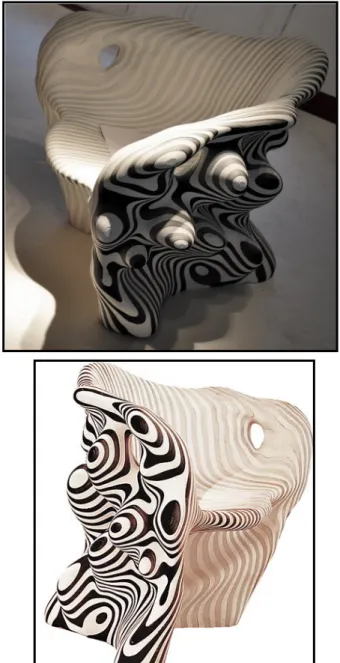
FIGURE C: Esgrimage, benchby Paco Camus (Spain), 2010. 1.2.1 The designer has created an excellent example of optical illusion.
Define optical illusion and refer to ONE element used in creating the effect above.
(2) 1.2.2 Analyse and discuss the use of the following elements of design in
FIGURE C above: • Colour and tone • Form
(4) 1.2.3 Explain how the following terms can be used to describe
FIGURE C: • Anti-design • Sculptural (4) [20]
QUESTION 2
2.1
FIGURE A: Alchoholics
Anonymous, poster by Pernod
Ricard (London), 2010.
FIGURE B: Arrive Alive, poster by unknown designer (South Africa), 2010.
Discuss the message communicated in FIGURE A and FIGURE B and compare their similarities and differences.
(6) 2.2
FIGURE C: Love Your Body Campaign, poster (South Africa), 2010.
Identify the bias or stereotype that the poster (FIGURE C) addresses. Explain how the design highlights the message of stereotype and bias.
(4)
QUESTION 3
3.1 Refer to FIGURE A and FIGURE B when answering the questions that follow.
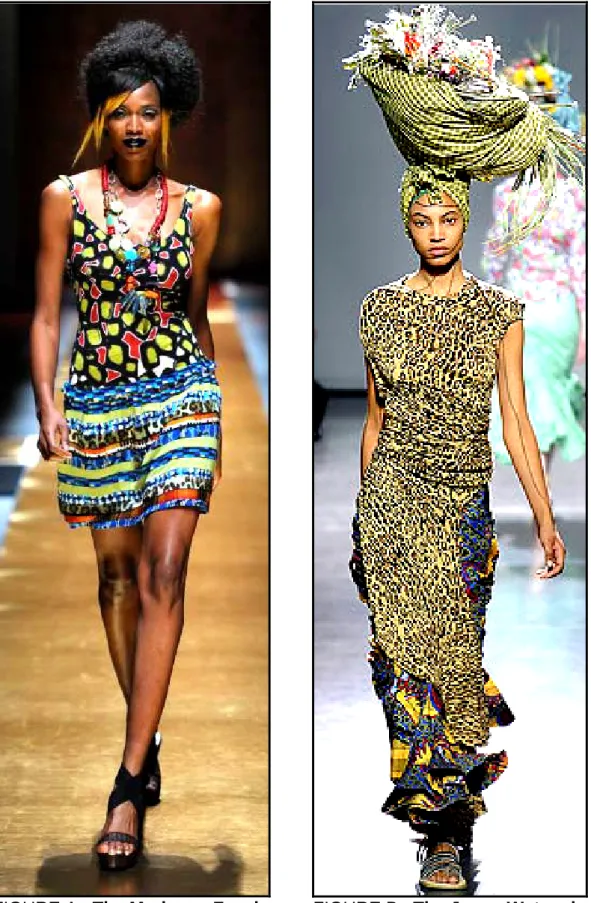
FIGURE A: The Marianne Fassler Spring Summer Collection, Africa
Fashion Week (Johannesburg, South Africa), 2010.
FIGURE B: The Junya Watanabe
Spring Summer Collection
(New York, USA), 2009.
Marianne Fassler: 'I am of course also always influenced by urban subculture (for example emo, hippie, rap, hip-hop, "alternative Afrikaner", "township" bourgeois, et cetera), traditional tribal dress and ancient traditions. We are all a sum of many parts.'
3.1.1
3.1.2
Explain how the designs in both FIGURE A and FIGURE B were influenced by urban subculture and/or traditional tribal dress. Motivate your answer.
Compare the designs in FIGURE A and FIGURE B by discussing their similarities and differences according to:
• The use of surface pattern • Fashion accessories • Style/Cut of the dress
(4)
(6) 3.2 Discuss a South African designer/agency/studio influenced by indigenous
traditions and/or subcultures, for example emo, hippie, rap, hip-hop, "alternative Afrikaner", "township" bourgeois, et cetera.
Use the following in your discussion:
• Name the designer and a design product. • Briefly describe the design.
• Explain what influenced the design(s) or business.
(10)
QUESTION 4: DESIGN HISTORY 4.1
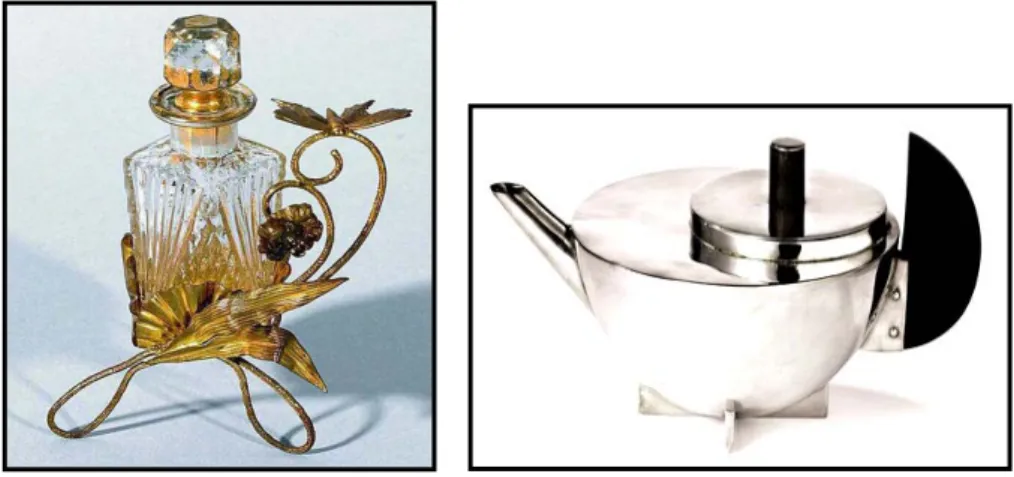
FIGURE A: Perfume bottle, Matson, 1920s.
FIGURE B: Tea infuser, Marianne Brandt, circa 1927.
FIGURE C: Black Fan chrystal perfume bottle,
1930s.
FIGURE D: Teapot, Soholm
studio, 1950s.
FIGURE E: Kettle for Alessi, Michael Alessi, circa 1985.
The products in FIGURES A to E are typical of the design movements/styles that you studied this year.
Choose TWO of these products and answer the following for EACH product: • State which product you are discussing. NAME the movement to which it
belongs. Explain why this product belongs to that movement. • Discuss TWO other typical characteristics of the movement that this
product represents. • Discuss TWO influences on this product and its style.
• Name ONE OTHER work/product and designer from EACH movement/style and give a brief analysis of it.
(20) 4.2
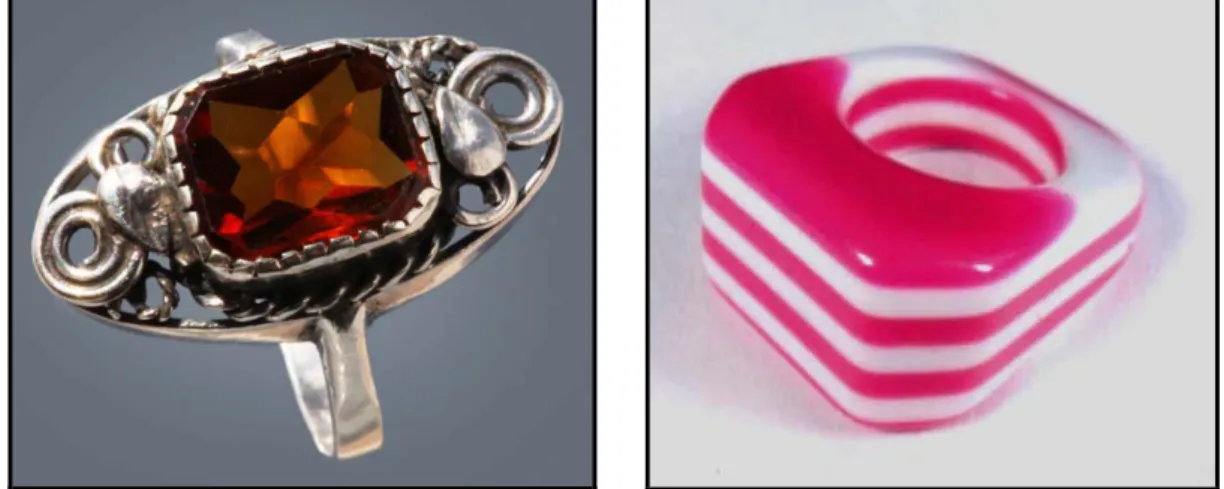
FIGURE F: Ring, Arts and Crafts Movement, circa 1882.
FIGURE G: Ring, Pop Era, circa 1950.
The two images above, FIGURE F and FIGURE G, have been chosen from two different movements in design history.
4.2.1
4.2.2
Name ONE other design and designer from ONE of the styles/movements represented by FIGURE F and FIGURE G that you think clearly reflects that movement.
Compare FIGURE F and FIGURE G above by referring to: • Line • Possible inspiration/Influences • Colour • Texture (2) (8) [30] TOTAL SECTION A: 80
SECTION B: DESIGN IN A SOCIAL/ENVIRONMENTAL CONTEXT QUESTION 5
5.1 Study the social design below and answer the questions that follow.
FIGURE A: Belkiz Feedaway, a portable flat-packcardboardhigh chair designed by Betul Madakbas (Australia), 2009–2010.
5.1.1 5.1.2
Briefly discuss TWO social benefits of the design shown above. Discuss ONE INTERNATIONAL designer you have studied who
has addressed a social issue(s). Name the designer, discuss a design or designs and explain the way the social issue has been
addressed. You may NOT refer to any designer(s) that you have used previously or designer(s) used in this paper.
(2)
5.2
FIGURE B: End Conscription Campaign, unknown designer, poster during apartheid, (South Africa), 1980s.
5.2.1
5.2.2
Discuss TWO symbols used in FIGURE B, explaining how they support the social message of the poster.
Discuss any ONE SOUTH AFRICAN designer who has addressed a social issue in his/her/their work.
You may NOT refer to any designer(s) that you have used previously or designer(s) used in this paper.
(4)
(6)
QUESTION 6
Answer TWO of the following three questions.
6.1
FIGURE A: Quazi Designs, made from waste magazines (Swaziland), 2009. 6.1.1
6.1.2
Explain why the products in FIGURE A above can be viewed as 'eco-design'.
Discuss ONE SOUTH AFRICAN designer whose work can be considered green or eco-friendly. Name the designer, give a design title, describe the design and explain how it addresses green issues.
You may NOT refer to any designer(s) that you have used previously or designers used in this paper.
(2)
(8)
6.2
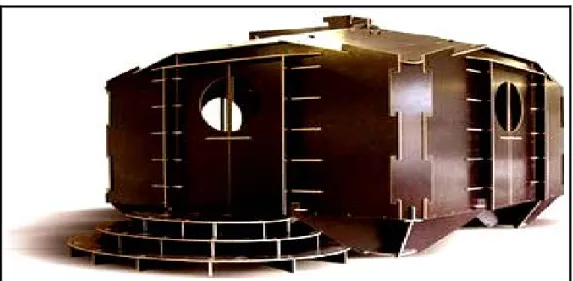
FIGURE B: Disaster House, made for natural disasters. It is made with interlocking birchwood panels, Gregg Fleishmann, 2006.
6.2.1
6.2.2
Name TWO benefits of the design in FIGURE B.
Name and discuss the work of any ONE INTERNATIONAL designer of your choice who has worked towards recovering the damaged environment through his/her designs.
You may NOT refer to any designer(s) that you have used previously or designers used in this paper.
(2)
(8)
AND/OR
6.3 'Designers should search for innovative solutions that respect the environment.'
Discuss the work of ONE SOUTH AFRICAN OR ONE INTERNATIONAL designer whose work shows a search for innovative solutions to the world's environmental crisis.
Use the following structure in answering the question: • Name of the designer
• Influences on the designer
• Description and/or characteristics of one or more designs
• How innovative solutions are used to address environmental issues in these design(s)
You may NOT refer to any designer(s) that you have used previously or designers used in this paper. (10)
[20]
SECTION C: DESIGN IN A BUSINESS CONTEXT QUESTION 7
Answer only ONE question from this section. Answer either QUESTION 7.1 OR QUESTION 7.2.
7.1
FIGURE A: 'QuaDror' system,applied by Dror Benshetrit (New York), 2011. Basic Unit
Township Housing
'Quadror' systemshowing a structural and modular formation and application with which to build bridges, houses, et cetera.
Dror Benshetrit's goal is to inspire change in urban design, architecture and public art. He realised that his revolutionary system could potentially bring a groundbreaking solution to the global issue of building and housing.
7.1.1
7.1.2
7.1.3
You work for the South African National Housing Department. Formulate a proposal to the government on how to use the 'Quadror' system shown in FIGURE A, by presenting a SWOT
analysis. As part of your proposal, write a pitch for the 'Quadror' system in
FIGURE A to the South African National Housing Department. Use at least TWO of the following terms as a guideline:
• The structural method of building • The use of modular units
• The use of soundproofing
• The use of pre-manufactured materials
• The advantages of using flat-packed units (Pitch: An initial presentation of your design to the client, focused
on creating interest and possible investment.)
Study the packaging designs below and answer the question that follows.
(8)
(5)
FIGURE B: Boxed and Labelled, New Approaches to Packaging Design,by Gestalten, 2009.
7.1.4 How would you ensure that any design idea is marketable? Name THREE possible methods you could explore.
(3) 7.1.5
FIGURE D
Study the DISPLAY METHODS above and answer the question that follows.
Every design concept must be unique in a competitive marketplace. What tactics would you use to ensure a unique brand value? You may refer to the examples shown in FIGURE D.
(10)
[30] OR
7.2
FIGURE A FIGURE B
FIGURE C 7.2.1
7.2.2
Which poster is more successful, FIGURE A or FIGURE B? Give reasons.
FIGURE C is a formal poster design. How does it differ from FIGURE A and FIGURE B? Refer to the use of:
• Materials and techniques
7.2.3
FIGURE D: Multichoice is an independent media
broadcaster.
FIGURE E: A train service operating in Gauteng
Discuss the visual clues used in FIGURE D and FIGURE E shown
above to identify the purpose of each business. (4) 7.2.4
FIGURE F FIGURE G
Compare the two logos shown above (FIGURE F and FIGURE G). Refer to the use of the following in your answer:
• Shape • Colour • Font
• Symbolism (8)
7.2.5 Give FOUR reasons why a business plan is important. (4) 7.2.6 In any business an employee has certain expectations of his/her
employer. State FOUR expectations.
(4) 7.2.7 Name TWO cost-free or low-budget ways to advertise your
product. (2) [30] TOTAL SECTION C: GRAND TOTAL: 30 150