University of South Florida University of South Florida
Scholar Commons
Scholar Commons
Graduate Theses and Dissertations Graduate School
October 2019
Digital Corpus Use in Learning L2 Prepositional Collocations: A
Digital Corpus Use in Learning L2 Prepositional Collocations: A
Pilot Study
Pilot Study
Matthew A. Siegel University of South FloridaFollow this and additional works at: https://scholarcommons.usf.edu/etd Part of the Other Education Commons
Scholar Commons Citation Scholar Commons Citation
Siegel, Matthew A., "Digital Corpus Use in Learning L2 Prepositional Collocations: A Pilot Study" (2019). Graduate Theses and Dissertations.
https://scholarcommons.usf.edu/etd/8074
This Dissertation is brought to you for free and open access by the Graduate School at Scholar Commons. It has been accepted for inclusion in Graduate Theses and Dissertations by an authorized administrator of Scholar Commons. For more information, please contact [email protected].
Digital Corpus Use in Learning L2 Prepositional Collocations: A Pilot Study
by
Matthew A. Siegel
A dissertation submitted in partial fulfillment of the requirements for the degree of
Doctor of Philosophy in Technology in Education and Second Language Acquisition Department of Teaching and Learning
College of Education University of South Florida
Major Professor: John I. Liontas, Ph.D. Yiping Lou, Ph.D. Sanghoon Park, Ph.D. Michael Sherry, Ph.D. Jennifer Wolgemuth, Ph.D. Date of Approval: July 17, 2019
Keywords: instructional technology, TESOL, ELL, COCA Copyright © 2019, Matthew A. Siegel
ACKNOWLEDGEMENTS
I would like to extend my deepest gratitude to my major professor, Dr. John Liontas, who has taught me so much about second language acquisition, academia, and the doctoral process. I cannot begin to express my appreciation for his expertise, patience, and caring. I am deeply indebted to him for guiding me over the past few years, always with much encouragement, brilliant insight, and a welcome sense of humor. Our long conversations about research and SLA were always insightful and enjoyable. As I look back on my years as a doctoral student and candidate, I will always remember him with the greatest fondness and respect.
I would also like to extend my sincere thanks to the members of my doctoral
committee—Dr. Sanghoon Park, Dr. Jennifer Wolgemuth, Dr. Yiping Lou, and Dr. Michael Sherry—for their guidance through the defense process and for the helpful suggestions and recommendations they made. Special thanks to Dr. Park for his willingness to share his expertise in multimedia learning and theory, and for his suggestions for quantitative data collection and analysis. I am grateful to Dr. Wolgemuth for introducing me to the world of qualitative research, and for her invaluable input in giving this mixed-methods study a robust qualitative component. I gratefully acknowledge the time and effort of the forty-four participants who took part in this study. Without them, this dissertation would not have been completed.
I am also grateful to my colleagues in the TESLA program for their help and inspiration. We have travelled on this journey together, and I wish them all much success for the future.
Thanks to my good friends at USF—María, Rebeca, Gary, and Youssef—who always provided a welcome respite from the rigors of doctoral study.
Special thanks to Sujay, whose encouragement has sustained me through a long and arduous process, and without whose love and support none of this would have been possible.
i
TABLE OF CONTENTS
List of Tables ... iv
List of Figures ...v
Abstract ... vi
Chapter One: Introduction ...1
Statement of Problem ...2
Purpose of Study ...3
Research Questions ...3
Significance of Study ...4
Justification for Pilot Study ...5
Theoretical Framework ...5
Gaps in Current Research ...10
Assumptions and Caveat ...12
Definition of Key Terms ...12
Collocation ...13 Prepositional collocation ...15 Colligation...15 Phrasal verb ...15 Mutual information ...16 Input enhancement ...16 Concordance ...17
Congruent and non-congruent collocations ...17
Explicit and implicit learning...17
ESL, EFL, and L2 ...18
Organization of Dissertation ...18
Summary ...19
Chapter Two: Review of Literature ...20
Introduction ...20
What are Collocations? ...22
Types of Collocations ...33
Why Learn Collocations? ...33
General Instructional Considerations ...35
Context of educational setting ...35
Access to technological tools ...36
Learner characteristics ...36
ii
Philosophical approach ...37
Major Lines of Research on Collocations ...37
Corpus-Based Research ...40
Challenges for L2 Learners ...42
Collocational Use by L2 Learners ...46
Pedagogical Approaches ...49
Input Conditions and Enhancement ...54
Use of Technology to Teach Collocations ...56
Attitudes and Perceptions toward Technology Use ...60
Summary ...61
Chapter Three: Methodology ...65
Overview of Study ...65
Overall Mixed-Methods Design ...67
Rationale ...67 Paradigm ...68 Overall Design ...68 Quantitative Design ...69 Qualitative Design ...71 Sequence of Events ...71
Treatment Group Sequence ...72
Control Group Sequence ...74
Participants ...75 Determination of Proficiency ...77 Instruments ...79 Tests ...79 Surveys ...83 Instructional Materials ...84
Instructional Module for Treatment Group ...84
Instructional Module for Control Group ...85
Design Considerations ...85
Specific Design Decisions for Treatment Module ...89
Procedures and Data Collection ...91
Data Analysis ...92
Summary ...96
Chapter Four: Findings ...97
Introduction ...97
Participants ...97
Demographic Information ...98
Proficiency Determination ...100
Pretest Item Analysis ...101
Research Question One ...101
Research Question Two ...107
Research Question Three ...112
iii
Discussion of Findings ...120
Summary ...125
Chapter Five: Conclusion ...126
Introduction ...126
Summary of Findings ...126
Revisiting Theoretical Framework ...128
Limitations ...129
Lack of direct supervision and control...130
Complexity of COCA instruction ...130
Motivation of participants ...131
Use of a single instructional module for each group ...131
Instrument validation ...132
Determination of proficiency level of participants ...132
Qualitative data restricted to survey responses ...133
Sample size ...133
Pedagogical Implications ...134
Inclusion of prepositional collocations specifically ...134
Integration of digital corpora into instruction ...134
Training in COCA (or other digital corpus) for both instructors and students ....135
Coordination of digital corpora with other resources ...135
Future Directions ...136
Changes in treatment instructional module...136
Expansion of course modules over larger period of time ...137
More detailed and extensive instrumentation and validation ...137
Specific attention to proficiency levels ...138
More detailed qualitative data relating participants’ experience with COCA ...138
Greater accountability and buy-in of participants ...138
Pedagogy ...139
Final Thought ...140
References ...142
Appendix A: Pre-Study Survey ...156
Appendix B: Pretest ...158
Appendix C: Post-Study Survey (Treatment Group) ...160
Appendix D: COCA Quick Guide ...162
iv
LIST OF TABLES
Table 1: Categorization of reviewed literature by topic ...23
Table 2: Sample sizes of comparable research studies ...77
Table 3: Target collocation frequency in COCA ...82
Table 4: Participant demographics: Country of origin ...98
Table 5: Participant demographics: First language ...99
Table 6: Participant demographics: College of enrollment ...99
Table 7: Pretest item analysis ...101
Table 8: Instrument raw scores and gains: Treatment group ...102
Table 9: Instrument raw scores and gains: Control group ...103
Table 10: Descriptive statistics: Mean comparison of pretest to posttest gains ...104
Table 11: T-test results for pretest to posttest gains ...104
Table 12: Descriptive statistics: Mean comparison of pretest to delayed posttest gain ...106
Table 13: T-test results for pretest to delayed posttest gains ...106
Table 14: Two-way ANOVA results for pretest to posttest gains ...108
v
LIST OF FIGURES
Figure 1: Study conceptual overview ...3
Figure 2: Sequence of events ...72
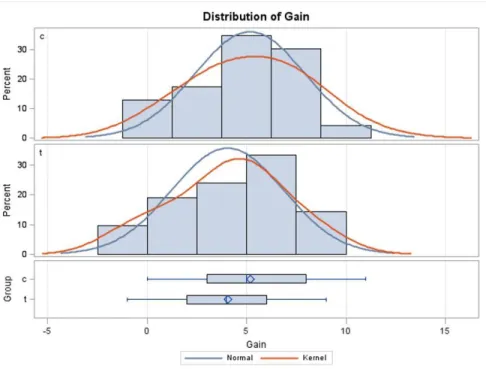
Figure 3: Distribution of gain: pretest to posttest ...105
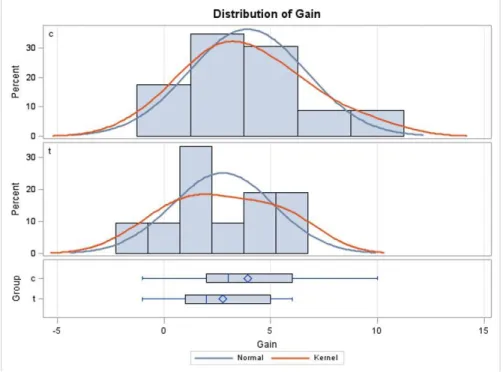
Figure 4: Distribution of gain: pretest to delayed posttest ...107
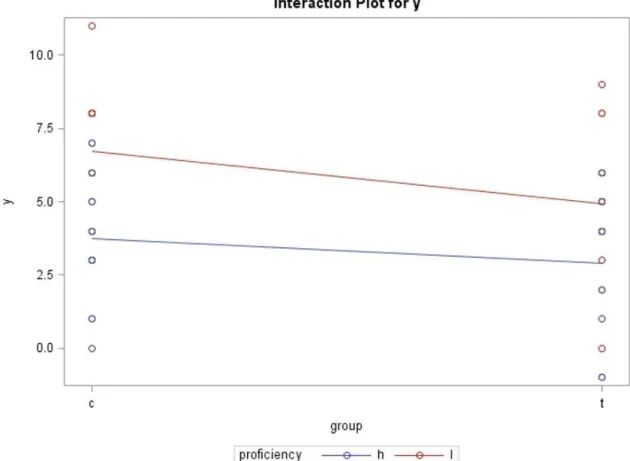
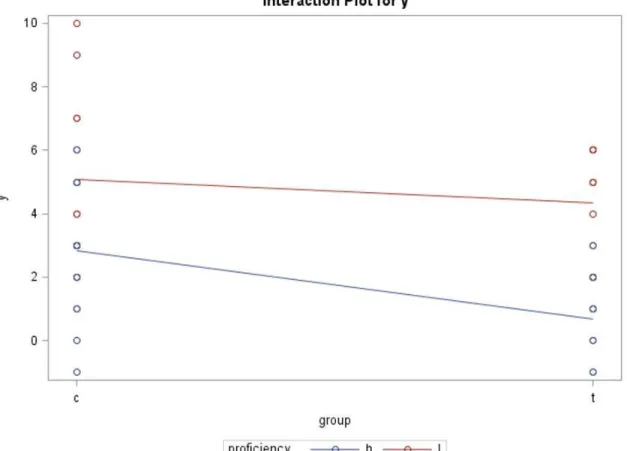
Figure 5: Interaction plot: Pretest to posttest gain ...109
vi
ABSTRACT
Because of their prevalence in both spoken and written English, collocations—words that go together—are important for the English language learner. Collocations that contain prepositions have been shown to pose particular difficulty (Hong, Rahim, Hua, & Salehuddin, 2011).
Collocational errors are common, even among advanced learners (Laufer & Waldman, 2011). The purpose of this pilot study was three-fold: (1) to determine whether the use of a digital corpus by English language learners is effective in learning prepositional collocations, (2) to determine if proficiency level exerts any influence on effectiveness of using a digital corpus to learn prepositional collocations, and (3) to examine learner perception regarding the use of a digital corpus to learn prepositional collocations.
Forty-four international undergraduate students participated in this mixed-method study, and were randomly assigned to either a treatment or control group. Study materials were
delivered via Canvas, a learning management system. All participants completed a pretest (gap-fill format) consisting of 15 target prepositional collocations to establish a baseline. Target collocations were presented to treatment group participants via an instructional module utilizing the Corpus of Contemporary American English (COCA), while control group participants used an instructional module without COCA. Following instruction, participants completed an immediate posttest and a delayed posttest two weeks later. Treatment group participants completed a survey to gauge their satisfaction with COCA and perception of its usefulness.
Immediate and delayed posttest gains were compared using statistical analysis, but results did not show a statistically significant difference, suggesting that the impact of COCA on
vii
collocational learning is inconclusive. Utilizing factorial analysis of variance for pretest to immediate posttest gains, there was a statistically insignificant effect of group (treatment vs. control) after controlling for proficiency. For pretest to delayed posttest gains, a statistically significant effect of group was indicated, although the effect size was small. A statistically significant effect of proficiency on test score gains (for both pretest-immediate posttest and pretest-delayed posttest) was shown after controlling for group. There was no statistically significant interaction effect for either pretest-immediate posttest gains or pretest-delayed posttest gains. Results seem to indicate an impact of proficiency on gains, although higher baseline pretest scores may have played a role. Thematic analysis of feedback from the post-study survey revealed several areas that participants emphasized in their responses: user
interaction/interface, usefulness, context/examples, functionality, and layout/design. Responses were positive overall, suggesting that participants viewed COCA favorably in terms of
satisfaction and usefulness. There were mixed responses regarding user friendliness and ease of use, highlighting the importance of effective training on the use of COCA prior to instructional integration. The most frequently cited positive attribute of COCA was the use of authentic examples of collocations in context. Overall, despite some inconclusive quantitative results, qualitative findings suggest positive perceptions and benefits of using COCA for learning collocations, and the extension of this pilot study to a main study seems feasible and promising.
1
CHAPTER 1 INTRODUCTION
The acquisition of second language collocations—sequences of words that commonly occur together—can present challenges for language learners. Because these sets of words often appear together as the result of repeated usage and convention, and often have little to do with either correct grammatical construction or meaning of its constituent parts, collocations have been shown to pose difficulty for second language learners, especially since they have already acquired collocations in their native language (e.g., Bahardoust & Moini, 2012; Durrant, 2014; Granger & Bestgen, 2014). Recent corpus-based research has revealed much about the nature and use of collocations by both native and non-native speakers and writers, including the relationship between collocational acquisition and generalized L2 language proficiency (e.g., Durrant & Schmitt, 2009; Fan, 2009; Laufer & Waldman, 2011; Siyanova & Schmitt, 2008). The means by which learners are exposed to collocations, in terms of input conditions and
enhancement, has been researched as well, yielding valuable findings with significant
pedagogical implications. Technological innovation and application have been studied in the context of both explicit instruction and self-directed practice, solidifying the role of technology in successful learning of collocations, as well as language learning generally. Research based on various corpora (including the British National Corpus, the Corpus of Contemporary American English, and various corpora consisting of written samples from native and non-native speakers), investigating the impact of input conditions (e.g., Choi, 2016; Peters, 2009), exploration of pedagogical approaches (e.g., Gitsaki, 1999; Jiang, 2009; White, 2012), and technological
2
innovation (e.g., Chan & Liou, 2005; Geluso & Yamaguchi, 2014; Vyatkina, 2016)—these are the strands of academic inquiry that have dominated the field of L2 collocational acquisition over the past decade.
Statement of Problem
Because of their prevalence in English, collocations are important for the English language learner. Further, collocations are frequently present in both spoken and written
language, as well as in academic text. Although English language learners can sometimes utilize a strategy of avoidance, choosing alternative wording to express themselves in spoken and written language, students are often asked to read and write extensively for academic purposes, and collocational comprehension and usage are therefore required.
Further, learning L2 collocations can pose a challenge due to their origins in repeated use and convention (which may be difficult for the L2 learner to predict without knowledge of those conventions), the existence of multiple collocations with the same root word (each with a
different meaning), and the inability to rely on the meanings of individual component words to determine the meaning of the collocation as a whole. Vocabulary knowledge alone is insufficient to determine the meaning and appropriate use of a collocation.
Some types of collocations (categorized by part of speech of components) have been shown to pose greater difficulty than others. Specifically, collocations that contain a preposition, because they are grammatical rather than lexical collocations (see Definitions of Key Terms, below), are particularly difficult (Hong, Rahim, Hua, & Salehuddin, 2011). Errors and misuse are prevalent, even among advanced learners (Laufer & Waldman, 2011).
3
Purpose of Study
The purpose of this study was three-fold: (1) to determine whether the use of a digital corpus by English language learners is effective in learning prepositional collocations, (2) to determine what influence proficiency level exerts on effectiveness of using a digital corpus to learn prepositional collocations, and (3) to examine learner perception of the effectiveness and usefulness of a digital corpus in learning prepositional collocations. This study utilized online instructional delivery, via the Canvas learning management system, to provide instruction of prepositional collocations using the Corpus of Contemporary American English (COCA), as illustrated in Figure 1 below.
Figure 1. Study conceptual overview
Research Questions
The following research questions guided this study:
1. How does the use of a digital corpus facilitate the acquisition of prepositional
collocations by undergraduate English language learners, as compared to a control group which does not utilize a digital corpus?
Collocations (prepositonal) Digital corpus (COCA) Online insructional delivery (Canvas)
4
2. How does the effectiveness of use of a digital corpus in learning prepositional
collocations vary among undergraduate English language learners of different proficiency levels?
3. What is the perception of the usefulness of a digital corpus for prepositional collocation learning by undergraduate English language learners?
Significance of Study
This study has the potential to impact research, pedagogy, and technological innovation in the following ways:
First, some of the gaps in current research in L2 collocation learning highlighted below were addressed. Specifically, a mixed-methods approach, missing from the majority of recent studies, was utilized. A qualitative component can add depth of understanding to the quantitative results. Additionally, focus on a particularly troublesome type of collocation (i.e., the
prepositional collocation), as well as inclusion of a heterogeneous set of proficiency levels, provided data not present in much of the current research.
Second, there are practical pedagogical implications resulting from this study. Type of instruction, focus of instruction, and method of instruction may be impacted by the results of this research. While it may be agreed that technology has a significant role to play in the learning of L2 collocations, the extent to which technological tools are utilized, as well as the key attributes of those tools which are deemed to be most effective, may emerge from research results.
Third, while an emphasis on technology is timely with regard to offering technological solutions to educational issues, purposeful focus on the most efficacious aspects of specific technological tools have ramifications for future technological innovation.
5
Justification for Pilot Study
There are three primary justifications for an exploratory pilot study. First, it is necessary to determine the feasibility of the main study. Because there is little research in the literature which includes all three major elements of this study—specifically, focus on prepositional
collocations, use of a digital corpus, and online delivery via a learning management system—it is desirable to preface further research in this niche with preliminary study and results. Second, it would be beneficial to get feedback based on the results to apply to the main study as
adjustments in design, instrumentation, and instructional materials. Each of these would benefit from additional refinement and improvement that would result from the rich data derived from a pilot study. Third, it would be desirable to determine whether inclusion of additional variables in the main study could give a more complete picture of the use of digital corpora for learning of prepositional collocations. Such factors could emerge from the results, holding promise that those factors could be introduced in future research in the area.
Theoretical Framework
The definition of the root term on which this dissertation is based—collocation—is itself the subject of a long, extensive debate. Although the definitions of collocation used by various researchers are discussed at length in the next chapter (see What are Collocations in Chapter 2), it should be noted here that the approach to the definition of collocations can be either from a frequency-based or a phraseological perspective, each of which has unique theoretical
ramifications. The study of second language collocation learning and the application of
technology in that pursuit is likewise informed by multiple theoretical perspectives. The use of corpora by L2 learners involves both the inclusion of context (via concordance lines) and the
6
utilization of authentic materials, each of which have theoretical justification. In addition, because the use of technology in education is intertwined with the subject of motivation, it is imperative that motivational theory be included as well. Therefore, this discussion of theoretical framework will consist of the following: learning theory applicable to the unique nature of collocations, theory related to the use of corpora for L2 learning, and motivational theory associated with use of computer assisted language learning (CALL).
Collocations are groups of words rather than individual lexical units. As such, learning collocations may be quite different from learning single words for the following reason: because of non-compositionality, the collocational meaning cannot necessarily be derived from the meanings of the collocational components. Therefore, individual lexical component vocabulary knowledge cannot be relied upon to learn the collocations formed by such components. Ellis (2001) conceptualizes collocations as chunks of lexical information. Working memory limitations, insofar as vocabulary knowledge is concerned, can be overcome through learning chunks, rather than bits, of information; in other words, if one assumes that working memory can store approximately seven bits of information, seven collocations can be stored as easily as seven individual words (Nation, 2001). This chunking commonly takes place when the same
components are often seen together, characteristic of the mutual association aspect of collocations. According to Ellis, learning collocations is a type of chunking—the long-term storage of associative connections. An alternative to chunking is rule based processing, in which the item is recreated each time it is used productively. As Nation (2001) points out, in comparing these two input processing mechanisms, there seems to be a tradeoff between processing time and storage capacity. Consequently, high-frequency items tend to follow the chunking procedure, whereas low-frequency items tend to follow the rule based processing mechanism (Nation,
7
2001). The distinction between high- and low-frequency collocations has important ramifications for L2 collocation learning because low-frequency collocations that are strongly associated are prevalent in both written and spoken language.
According to Sinclair (1991), there are two principles which govern the ways in which words occur in a text: the open-choice principle (in which choice of words is constrained solely by grammaticality) and the idiom principle (in which there is much greater restriction on word choice. Although these two principles are discussed at greater length in the next chapter, it is important to note that collocations follow the idiom principle of word choice (Sinclair, 1991), and the consequent restriction on word choice, often arbitrary and conventionalized, could represent a cognitive burden to second language learners.
Corpora are collections of linguistic data (written and/or spoken) used as a basis for the descriptive analysis of language. Examples are the British National Corpus and the Corpus of Contemporary American English, which are compilations of written and spoken data from various sources, including books, newspapers, and speeches. Corpora are useful because they are descriptive, rather than prescriptive—that is, they represent language in use from authentic sources, such as those described above. There are two major areas in which the use of corpora impact L2 collocation learning from a theoretical perspective. First, corpora are a reflection of the frequency of collocations. As Ellis (2002) points out, “language processing is intimately tuned to input frequency, (and)…usage-based theories hold that the acquisition of language is exemplar based” (p. 143). Second, corpora represent authentic use of collocations presented in context (generally within concordance lines, which include the words preceding and subsequent to the word or phrase under investigation). This quality may enhance meaning (to complement
8
form) of target collocations, allow easier comprehension and learning than through isolated collocation exemplars, and provide motivation for the L2 learner (discussed below).
In their survey of second language learning theories, Mitchell and Myles (2004) discuss multiple theoretical perspectives which inform L2 learning, including cognitive, functional and pragmatic, input and interaction, sociocultural, and sociolinguistic perspectives on SLA. It seems clear that any one of these approaches alone is insufficient to describe the process of L2
collocation learning. Chapelle (2009), in her research on the relationship between second language acquisition theory and CALL, illustrates the applicability of multiple theoretical approaches (cognitive linguistic, psycholinguistic, general human learning, sociocultural, and others) to computer assisted language learning. Input processing and interactionist approaches have implications for CALL in general and L2 collocation learning in particular; the former provides a basis for suggesting that “the format of instructional materials (can) draw learners’ attention to target form-meaning mappings”, while the latter provides a basis for suggesting that “meaning-oriented activities (can) engage learners’ attention to form” (Chapelle, 2009, p. 744). The repeated exposure of learners to L2 collocations, through multiple concordance lines in digital corpora, aligns well with Ellis’s (2006) Associative-Cognitive CREED, which
…holds that SLA is Construction-based, Rational, Exemplar-driven, Emergent, and Dialectic, (and)… language learning involves the acquisition of constructions that map linguistic form and function. Competence and performance both emerge from the dynamic system that is the frequency-tuned conspiracy of memorized exemplars of use of these constructions, with competence being the integrated sum of prior usage and performance being its dynamic contextualized activation (p. 100).
9
The importance of motivation in learning cannot be overestimated. In Krashen’s (1982) Monitor Hypothesis, it is posited that, in order for L2 learning to occur, there must be both comprehensible input and a low (or weak) affective filter. Affective variables which impact this filter include motivation, self-confidence, and low anxiety. Gardner and MacIntyre (1993) point out that motivation can be viewed as having three components: the desire to achieve a goal, the willingness to expend effort, and satisfaction with the task at hand. Based on the overwhelmingly positive attitude toward the use of technology in L2 collocation learning by participants of multiple studies elucidated in the next chapter, even despite sometimes mixed performance results, it seems that motivation can be a strong influence supporting the use of digital corpora in this study.
How information is presented to learners can be as important as what information is presented. This is especially applicable to the use of technology to deliver instruction, as in this study, in which instruction was delivered through a multimedia approach. It is desirable to maximize learning and minimize cognitive load in instructional delivery. Mayer (2001)
identified 12 principles of multimedia learning which are useful in identifying how people learn best. Examples include the Coherence Principle, the Signaling Principle, and the Segmenting Principle. The Coherence Principle states that people learn best when extraneous information (words, images, and sounds) are removed. The Signaling Principle posits that people learn best when cues highlighting the organization of essential material are provided. The Segmenting Principle maintains that people learn best when information is broken down into manageable segments. These principles (along with the other nine) can be helpful in guiding how instruction is delivered in this study and in the classroom.
10
In sum, L2 collocational learning is informed by multiple theories from multiple perspectives, and this theoretical framework can be applied to this study by virtue of the multiword and non-compositional nature of collocations, the use of authentic and contextual material through digital corpora, and the importance of motivation in learning L2 collocations. While the sources of SLA theory pertaining to digital corpora use in L2 collocational acquisition are varied, and the perspectives underlying this theory multi-faceted, the framework described here provides a solid structure on which this study may be conducted.
Gaps in Current Research
Based upon an extensive review of the literature (see Chapter 2), it becomes evident that there are certain gaps that exist in recent research in L2 collocational learning. Specifically, there are five areas in which further research is needed.
First, the overwhelming majority of research in the area of L2 collocational acquisition is quantitative, primarily either experimental or quasi-experimental. While these approaches are conventionally viewed as the gold standard of empirical study, there is a depth of understanding that could be gained through qualitative methodologies. There were a few mixed-methods studies found in the literature (e.g., Myers & Chang, 2009; Nassaji & Tian, 2010); the former had a bona fide qualitative arm, while the latter utilized some qualitative data in an otherwise quantitative analysis. Reynold’s (2015) study of the use of a web-based concordancer (WBC) by Taiwanese university students is classified as action research and was mostly quantitative in terms of data analysis, yet had a qualitative research question relating to WBC perception. Overall, however, serious qualitative inquiry seems to be lacking, for the most part.
11
Second, although prepositional collocations are the primary focus of the literature review which follows in the next chapter, it was difficult to find research specifically addressing this type. A few studies, however, approach prepositional collocations in a peripheral manner. Bahardoust and Moeini (2012) noted that EFL writers tend to use lexical collocations (i.e., collocations containing nouns, verbs, adjectives, and adverbs) more frequently than grammatical collocations (i.e., collocations containing words with a grammatical function, such as
prepositions). Hong et al. (2011) observed that the most frequent type of collocation error was preposition-related. Mueller (2011) noted that collocational frequency affects L2 learners’ comprehension of prepositional meaning. Considering the relative difficulty of prepositional collocation learning implied by these studies, further investigation in this area is warranted.
Third, whether for sampling convenience or to control for L2 proficiency as a confounding variable, nearly all the research studies consist of participants who are
homogeneous with respect to proficiency level. The notable exception is the corpus-based study of Israeli L2 English writers at three proficiency levels by Laufer and Waldman (2011), who found both similarities and differences in the L2 collocational knowledge at these levels. It may be useful to examine the impact of L2 proficiency more closely, as it may represent an important variable to be considered.
Fourth, most of the research relating to technological use focuses on the web-based concordancer. Although WBC is a significant tool, especially in the area of collocations, it is not the only one. A greater variety of technologies should be examined, particularly mobile
applications, which are likely to become more prominent in language learning. Ashiyan and Salehi (2016) utilized WhatsApp in their research, which is the only study in this review which explored mobile assisted language learning (MALL) and its effect on L2 collocation acquisition.
12
Fifth, there is a dearth of studies which include informal learning environments. All of the studies in this literature review were conducted in formal learning contexts. Perhaps these types of studies are easier to conduct (since researchers are generally affiliated with educational institutions, formal learning contexts in themselves). However, as the importance of informal learning becomes more evident and its prevalence more widespread, it would be desirable to include informal contexts in the research. This lack represents a significant gap in what is currently available.
Assumptions and Caveat
In this study, three assumptions are made with regard to the participants. First, the participants have Internet access. Second, participants know how to access and use the Canvas learning management system. Third, participants know the meanings of the individual words that comprise the target collocations that are included in the instruments and instructional materials.
There is one caveat. The study utilizes a corpus of American English and participants are international students located in the United States. However, it is recognized that participants may have been exposed to non-US varieties of English (e.g., British, Indian, or Singaporean English), in which collocations may be considerably different. Therefore, there is a possibility that a particular collocation, acceptable to the standards of other Englishes, may not be judged as correct by the researcher within the context of this study.
Definition of Key Terms
The following terms, due to their pervasive nature in the research and central role in the presentation of this study, warrant definition prior to discussion of this, or other, specific studies.
13
Collocation. From a corpus linguistics perspective, collocations are sequences of words that appear together more frequently than would be dictated by pure chance. From a language use perspective, collocations are fixed (or semi-fixed) groups of words that have become accepted and established by virtue of their repeated usage in context. From a second language acquisition perspective, knowledge of collocations is vital to fluency and competence in the L2; even a grammatical sentence will sound awkward (to the native speaker) if collocations are misused. In layman’s terms, collocations are words which go together in authentic language use; L1 speakers usually know these intuitively, whereas L2 speakers must learn them.
A collocation may be categorized based on the part of speech of its constituent elements, as follows:
Adverb – adjective collocations (e.g., fully aware, richly decorated, deeply concerned, highly probable, utterly ridiculous)
Adjective – noun collocations (e.g., hard time, excruciating pain, inclement weather, heavy traffic, strong supporter)
Noun – noun collocations (e.g., ceasefire agreement, absentee ballot, stock option, speech impediment, color blindness)
Noun – preposition collocations (e.g., dissatisfaction with, example of, interest in, reason for, awareness of)
Verb – noun collocations (e.g., do my homework, have lunch, make an effort, miss an opportunity, cross the street)
Verb – prepositional phrase collocations (e.g., participate in, belong to, compatible with, depend on, contribute to)
14
Verb – adverb collocations (e.g., drive carefully, wait patiently, agree completely, run quickly, sit quietly)
Words can be classified as content words or function words. Content words (nouns, verbs, adjectives, and most adverbs) carry meaning, whereas function words (such as
prepositions and conjunctions) may have ambiguous meanings that require context. A function word fulfills a structural or grammatical relationship in a sentence, such as and joining two phrases or the acting as a determiner of a noun phrase. By themselves, these words have little meaning and require additional context. By contrast, content words such as dog or house have clear unambiguous meanings. The former category is said to have a lexical nature, while the latter has a grammatical/functional nature. As this concept relates to collocation categorization, collocations which contain a prepositional phrase are examples of the second (functional) type, such as run out of money or make up your mind (Bahardoust & Moeini, 2012; Sicherl, 2004).
Alternatively, collocations can be categorized based on whether their meanings are literal, figurative, or both (Macis & Schmitt, 2016a). Collocations can be strong or weak (depending on the strength of association between constituent parts), or congruent versus non-congruent (which refers to the degree of similarity between the L1 and the L2 regarding a particular collocation) (Zaferanieh & Behrooznia, 2011).
Collocations are sometimes referred to by other names in the literature, although the definitions of these other terms by researchers overlap the definition of collocation, as described here. Liu (2012) uses the term multi-word constructions, and Lindstromberg, Eyckmans, and Connabeer (2016) use the term formulaic sequences; both are closely related to collocations in the context of their research. Hoang and Boers (2016) refer to multiword expressions in their study, which is an all-encompassing term which includes collocations and phrasal verbs.
15
Prepositional collocation. For purposes of this study, the term prepositional collocation refers to any collocation with contains a preposition or a prepositional phrase. Utilizing the categorization of collocations above, this subset of collocations includes noun—preposition collocations and verb—prepositional phrase collocations. Additionally, it should be noted that phrasal verbs are included as well, specifically prepositional phrasal verbs and prepositional— particle phrasal verbs (described in the next section).
Colligation. The term colligation is closely related to the term collocation. Both terms were first used by Firth (1968) to describe the co-occurrence of lexical items (in the case of collocation) and grammatical categories (in the case of colligation). It is most frequently used today to refer to the syntagmatic attraction between a lexical item (e.g., a word) and a
grammatical category (e.g., a part of speech) (Lehecka, 2015). In other words, whereas collocation generally refers to specific words that “go together,” colligation refers to word groups that tend to pair with particular classes of words, such as possessive adjectives, particular verb tenses, or modal verbs. For example, true feelings is a collocation, but because true feelings is usually preceded by a possessive adjective (e.g., my, your, her), the resultant word
combination (my true feelings, your true feelings, or her true feelings) is a colligation. Sinclair (1998) mentions another example, the phrase naked eye,which is commonly preceded by the definite article the, as in to the naked eye.
Phrasal verb. Darwin and Gray (1999) note that the research literature lacks consistency and agreement regarding the definition of phrasal verbs. According to Yule (2009), a phrasal verb is formed when “a particle is regularly combined with a particular verb” (p. 156); non-compositional verbs followed by prepositions are sometimes called prepositional verbs, but, for purposes of this discussion, phrasal verbs will be assumed to include these.
16
Phrasal verbs, then, are created when a verb is followed by a particle, a preposition, or both, in a non-compositional manner. The first type is called a particle phrasal verb (e.g., dress up), the second type is called a prepositional phrasal verb (e.g., pick on), and the third type is called a prepositional-particle phrasal verb (e.g., put up with). Particles are differentiated from prepositions in that the former does not take a complement, whereas the latter does (creating a prepositional phrase). Phrasal verbs (e.g., to pick up, to drop off, to stand by) can be categorized by transitivity and by separability. Transitive phrasal verbs must have a direct object (e.g., to take off your shoes, to look for the keys, to set up the software), whereas intransitive phrasal verbs do not take a direct object (e.g., to break down, to get by, to eat out). Separable phrasal verbs may have a word between the main verb and the particle (e.g., to make something up, to turn me down, to write the phone number down), whereas inseparable phrasal verbs may not (e.g., to get off the bus, to run into a friend, to look after a sick parent).
Mutual information (MI). MI is a measurement of strength of association between components of a collocation. It is commonly used in collocation extraction from a corpus to find collocations which are low-frequency, yet strongly associated. For example, commit suicide, boost production, and take one’s blood pressure may not be very common, but the components are strongly associated. For more detailed information on mutual information as it relates to collocation extraction, including calculations and examples, see Bouma (2009).
Input enhancement. When collocations or phrasal verbs are presented to the L2 learner in the form of text (through extensive reading, for example), the nature of the input in terms of context is a pertinent factor. Sonbul and Schmitt (2013) distinguish among three types of input: enriched, enhanced, and decontextualized. With enriched input, the text is seeded with the target collocational structure so that the reader is exposed to high frequencies, over a period of time. By
17
contrast, enhanced input contains the target feature that has been emphasized; this can be done by highlighting or bold-facing, for example. Decontextualized input has neither the enrichment nor the enhancement described and is devoid of any contextual cues.
Concordance. A concordance is a listing of occurrences of a word in its immediate context. This is done in large corpora, such as the British National Corpus (BNC) or the Corpus of Contemporary American English (COCA), and facilitates identification of collocations, among other uses. Digital concordancers are software tools that construct concordances, allowing the comparison of different usage, determining frequencies, and identifying
collocations. [Note: The term digital corpus is used throughout this dissertation to describe the large corpora mentioned above (e.g., BNC and COCA). The term web-based concordancer (WBC) is often used synonymously by certain researchers. When referring to the work of these researchers, WBC is used. However, the term digital corpus is the default term for purposes of this dissertation.]
Congruent and non-congruent collocations. Congruent collocations are those in which there is a direct, word-for-word equivalent in the L1. For example, the English collocations drive recklessly and waste time are congruent with the Spanish collocations manejar imprudentemente
and perder el tiempo, respectively. By contrast, non-congruent collocations do not have a direct equivalent in the L1. For example, break the law and make money cannot be literally translated into Spanish, as the result would be meaningless. (One would say violar la ley and ganar dinero, not romper la ley and hacer dinero,) Of course, the congruence of a collocation depends on the L1 of the learner.
Explicit and implicit learning. Explicit learning refers to intentional learning; the learner is aware of what he or she is learning. It may or may not occur within a classroom—that
18
is the distinction between formal and informal learning environments. In implicit learning, the learning is incidental. In the case of language acquisition, for example, the learning of new words through extensive reading would be considered implicit learning of vocabulary. The distinction, however, is not always clear-cut. For example, if an L2 reader who encounters an unfamiliar word looks it up in a dictionary, a case could be made that this learning is explicit because it becomes intentional on the part of the learner.
ESL, EFL, and L2. The focus of this study is on English as a second language (ESL) because the participants are located in the United States. More generally, ESL refers to an educational context in which English is the primary language: Australia, Canada, New Zealand, the United Kingdom, and the United States. Conversely, EFL refers to an educational context in which English is not the primary language. L2 refers to the additional language (English in the case of this dissertation) being learned.
Organization of Dissertation
Following this introduction chapter, a review of the literature on collocational acquisition by second language learners is presented in Chapter 2. Chapter 3 contains the design of the mixed-methods pilot study on the use of digital corpora to learn L2 prepositional collocations, including specific design, procedure, data collection, and data analysis for the quantitative and qualitative portions, as well as for the study overall. Chapter 4 presents the results from the data analysis, interpretation of results, and discussion of results. Chapter 5 concludes the presentation of the study with limitations, pedagogical implications, and recommendations for future research. Appendices follow the reference section.
19
Summary
In this introductory chapter, a statement of the problem of L2 prepositional collocation learning has been presented, and the purpose of the study has been put forward. Following the three research questions, the significance of the present study has been elucidated. A theoretical framework relating to L2 collocation learning in a CALL environment has been presented, with emphasis on various cognitive and affective elements associated with this endeavor. Following some assumptions and a caveat, key terms used throughout this dissertation have been defined, and the organizational structure of the dissertation has been given. In the next chapter, following a detailed discussion on the definition of collocations, recent research in the area of L2
20
CHAPTER 2
REVIEW OF LITERATURE Introduction
The volume of research on collocations, particularly with regard to second language learners, is quite large and spans at least three decades. Included in this literature is research on the definition and nature of collocations (e.g., Schmitt, 2012; Shin & Nation, 2008; Sinclair, 1991), use of L2 collocations by language learners (e.g., Durrant & Schmitt, 2009; Mueller, 2011; Nesselhauf, 2003), pedagogical approaches to L2 collocation instruction (e.g., Mueller, 2010; Nation, 2001; Szudarski, 2012), and use of digital corpora I L2 collocation learning (e.g.,
Çelik, 2011; Daskalovska, 2015; Vyatkina, 2016). In addition to scholarly inquiry into the prevalence of collocations in the English language (underscoring the importance of collocational knowledge for English language learners), there is considerable research on how students learn and use collocations in both oral and written expression, pedagogical approaches to development of collocational competence, strategies utilized by instructors, use and effectiveness of an
assortment of technological tools, and student attitudes toward the use of technology. Geographically, the research is truly global in scale, representing 21 countries. The most common locations are Iran (10), Taiwan (6), the United States (6), and Turkey (5). Participants range in age from adolescence to middle age, although university undergraduates (26) are disproportionately represented. In order to approach the task of this literature review in a systematic manner, a meaningful organization of the material is paramount.
21
Since the term collocation was first used many decades ago, its meaning has evolved and expanded. Consequently, there is not universal agreement among academics regarding the definition of collocations, particularly with regard to inclusion and exclusion criteria. Because the term is central to this dissertation, a detailed discussion on definition is warranted. In addition to the inclusion of various perspectives and approaches used in defining collocations, discussion of other types of multiword sequences—specifically, idioms and phrasal verbs—is necessary, due primarily to confusion which often arises in distinguishing among these sequence types. Categorization issues logically follow definitional ones, so a discussion of types of collocations is presented next.
After discussion of definition and categorization, the prevalence of collocations in the English language, as well as the importance of teaching collocations to second language learners, is addressed. A brief discussion of the major lines of research in the area of collocations is presented, which includes corpus-based research, pedagogical approaches, input enhancement, and use of technology in collocation learning. Each of these major areas of research is then presented in greater detail. Corpus-based research of different types is discussed, along with challenges for L2 learners and a detailed discussion of collocational use by second language learners. Pedagogical approaches to teaching and learning collocations, the effect of
enhancement of input on collocation learning, and the role of digital corpora (as well as other technologies) in L2 collocational acquisition, are each discussed in the context of research findings. The affective component of collocational learning through utilization of
aforementioned tools, methods, and strategies is addressed in a section dealing with
22
synthesis of the multiple strands of research in the area of second language collocational acquisition within the context of innovative technological educational practice.
A categorization of reviewed literature by major topic area is presented chronologically on the next page in Table 1. These topic areas consist of definition and use, L2 collocational processing, L2 collocational use, pedagogy, input conditions and enhancement, digital corpora use, other technologies used, and literature reviews and meta-analyses. Although many of these works deal with more than one area, they are grouped according to the purposes for which they are used in this dissertation.
What are Collocations?
Between the word level and the sentence level, language consists of groups of words that seem to go together. Within the literature, the nomenclature used to describe these groups of words is quite varied. In the context of EFL writing, Granger (1998) refers to prefabricated patterns, which consist of collocations and lexical phrases. Biber (2009) uses the term multiword pattern to describe the overarching concept which includes collocations. Henriksen (2013) points out that there is general agreement that collocations are a subset of formulaic sequences.
Regardless of the terminology used, one is still faced with the task of defining the term collocation, a task which is not quite as straightforward as it may seem at first glance.
Although the large quantity of research in the area seems to indicate agreement on the importance of collocations for second language learners, there is far less agreement on the definition of collocations. The term collocations, coined by noted linguist J. R. Firth (1968), was originally conceptualized as the “habitual and recurrent juxtaposition of semantically related
23 Table 1
Categorization of Reviewed Literature by Topic Area
Topic area Literature related to topic area
Definitions and use
Firth (1968); Bolinger (1971); Sinclair (1991); Howarth (1998a); Darwin and Gray (1999); Wray (2000); Liontas (2002b); Sicherl (2004); Gardner and Davies (2007); Shin and Nation (2008); Biber (2009); Bouma (2009); Yule (2009); Liu (2012); Schmitt (2012); Bartsch and Evert (2014); McPherron and Randolph (2014); Macis and Schmitt (2016a); Macis and Schmitt (2016b)
L2 collocational processing
Liontas (2002a); Liontas (2007); Siyanova and Schmitt (2008); Durrant and Schmitt (2010); Yamashita and Jiang (2010); Phoocharoensil (2013); Sonbul and Schmitt (2013); Wolter and Gyllstad (2013); Szudarski and Conklin (2014); Gyllstad and Wolter (2016); Hoang and Boers (2016); Peters (2016)
L2 collocational use
Schachter (1974); Granger (1998); Howarth (1998b); Nesselhauf (2003); Barfield and Gyllstad (2009); Durrant and Schmitt (2009); Fan (2009); Jaén (2009); Hong, Rahim, Hua, and Salehuddin (2011); Mueller (2011); Laufer and Waldman (2011); Bahardoust and Moeini (2012); Levitzky-Aviad and Laufer (2013); Durrant (2014); Granger and Bestgen (2014); González Fernández and Schmitt (2015); Siyanova-Chanturia (2015) Pedagogy Gitsaki (1999); Nation (2001); Nation (2008); Jiang (2009); Myers and
Chang (2009); Mueller (2010); Nassaji and Tian (2010); McEnery and Xiao (2011); Szudarski (2012); White (2012); Zarifi and Mukundan (2012); Webb, Newton, and Chang (2013); Pellicer-Sánchez (2015); Rezaee, Marefat, and Saeedakhtar (2015); Yang (2015); Nguyen and Webb (2017); Tsai (2018)
Input conditions and enhancement
Peters (2009); Birjandi, Alavi, and Najafi Karimi (2015); Choi (2016); Lindstromberg, Eyckmans, and Connabeer (2016)
Digital corpora use
Sun and Wang (2003); Chan and Liou (2005); Çelik (2011); Zaferanieh and Behrooznia (2011); Geluso and Yamaguchi (2014); Kheirzadeh and Marandi (2014); Daskalovska (2015); Nour Mohammadi and Tashakori (2015); Uçar and Yükselir (2015); Vyatkina (2016); Akinci and Yildiz (2017); Mansour (2017); Kartal and Yangineksi (2018); Basal (2019); Girgin (2019)
Other
technologies and unspecified
Chang, Chang, Chen, and Liou (2008); Son (2008); Chen (2011); Gao (2011); Fuchs and Akbar (2013); Reynolds (2015); Ashiyan and Salehi (2016); Mirzaei, Domakani, and Rahimi (2016)
Literature reviews and
meta-analyses
24
words” (Bartsch & Evert, 2014, p. 48). In an effort to combine the original Firthian notion of collocation with the technological tools available in the form of digital corpora of ever-increasing size, Bartsch and Evert (2014) refer to statistical identification of collocations and offer quantitative insights to their categorization. Over the last several decades, the definition has been expanded to include grammatical as well as lexical elements. For example, the online EnglishOxford Living Dictionaries (https://en.oxforddictionaries.com/definition/collocation)
define collocation as “the habitual juxtaposition of a particular word with another word or words with a frequency greater than chance.” A more general notion of collocation is offered by Gitsaki (1999), who defines a collocation as “any well-formed combination of words” (p. 27). Nation (2008) puts it more colloquially, stating that collocations consist of “the company words keep” (p. 167). Adopting a definition that is more functionally oriented, Howarth (1998a) posits that collocations are “combinations of words with a syntactic function as constituents of sentences (such as noun or prepositional phrases or verb and object constructions)” (p. 24).
Unfortunately, the generality inherent in the aforementioned definitions render them less than useful for several reasons, three of which are discussed here. First, the element of
chance/probability suggests a continuum. Although reflective of the descriptive, rather than prescriptive, nature of collocations by virtue of frequency of use, this aspect of definition causes one to question where one must draw the line between what is, and what is not, to be considered a collocation. Second, there are other types of multiword expressions, such as idioms, that could qualify as collocations, given a definition based on frequency and convention alone. Clearly, other characteristics of collocations—those which would distinguish them from other word sequences—need to be considered. Third, a frequency-based definition, in addition to including non-collocations, may serve to exclude expressions that are collocations. Collocations that are
25
infrequently used (perhaps due to association with a specialized field) should nonetheless qualify under a comprehensive definition. Other measures, such as mutual information, which gauge strength of association may be used in lieu of frequency.
In defining collocations, two primary approaches have traditionally been used: the
frequency-based approach and the phraseological approach. In the frequency-based approach, as the name implies, collocations are generally extracted from large corpora based on frequency. Collocations, then, are co-occurring words within a certain limited distance of each other (not necessarily contiguous, but close to each other); a distinction is made between words that are frequently and infrequently occurring (Barfield & Gyllstad, 2009). The underlying assumption is that, because collocations have an element of repeated usage and conventionalization, thorough examination of large corpora, made possible and feasible by the technological innovation in digital databases over the last few decades, should allow one to uncover frequently-used exemplars. Unfortunately, sole reliance on a frequency-based approach may omit word pairs that, while not frequent in usage, are nonetheless strongly associated (i.e., when one of the lexical components is present, the other is likely to be present as well); due to this association, the word pair should be viewed as a collocation. Strength of association, however, can be related, albeit indirectly, to frequency. Sinclair (1991) noted that the relative frequency of a collocation’s node (i.e., the word in a collocation whose lexical behavior is under investigation) and its
collocate (i.e., the word in a collocation which occurs in close proximity to the node) can affect the strength of the relationship between them, categorizing collocations as either downward collocations (in which the node is more frequent than the collocate) or upward collocations (in which the reverse is true). For example, if the word under investigation is back, upward
26
back, back again, and looking back; the components of downward collocations tend to have a stronger mutual relationship than those of upward collocations (Sinclair, 1991). In the
phraseological approach, rather than focusing on frequency of occurrence, semantic
specialization and restriction are the determining factors (Durrant, 2014). The collocation is viewed from the perspective of a word combination, which possesses certain structural and functional characteristics, such as the fixedness of the combination, and there is greater emphasis on the decontextualized categorization of collocations (Barfield & Gyllstad, 2009). Utilizing a phraseological approach, Howarth (1998a) developed the Continuum Model, in which
collocations can be viewed on a continuum between free combinations and idioms. In addition to the frequency-based and phraseological approaches, Durrant (2014) mentions a third alternative, the psycholinguistic approach, in which collocations are defined as “combinations of words which have psychological reality in that they are stored holistically or there is an associative link between their elements” (p. 447). This approach would capture the less frequent, yet strongly associated, collocations mentioned earlier as a limitation to the frequency-based approach.
In reality, a combination of these approaches is generally used in defining what a
collocation is (and is not). Nation (2001), in listing a set of criteria for determining categorization as a collocation, includes elements of frequency, phraseology, and psycholinguistics: frequency of occurrence; adjacency; grammatical connectedness, structure, uniqueness, and fossilization; collocational specialization; lexical fossilization; semantic opaqueness; and uniqueness of meaning. Although the criteria used by Shin and Nation (2008) are primarily related to frequency, they nevertheless address the issue of distance between constituent elements (i.e., these elements may not cross the immediate constituent boundary), clearly a phraseological concept relating to how far collocational components are from each other in a sentence. For
27
example, one may consider the collocation play a role. It is possible to insert an adjective (e.g., play an important role) while maintaining the collocation. How far apart can collocational components be within a sentence, then? The term constituent boundary refers to the limit past which the words no longer form a collocation. In the last example, the word important is within the constituent boundaries, so the collocation remains valid. In all three approaches to definition, collocations are viewed as entities that must be viewed as partially independent units whose behavior cannot be explained from its components (Durrant, 2014).
Language, at the sentence level, involves choices, both lexical and phraseological. In the view of Sinclair (1991), these choices are governed by two competing (yet complementary) principles: the open-choice principle and the idiom principle. From the perspective of the open-choice principle, the formation of a text results from a large number of complex choices, in which slots are filled with words to satisfy local constraints (e.g., the need for a particular part of speech in a certain location). Grammar, as an example, generally follows this principle. By contrast, the idiom principle restricts the choices that would otherwise be available, and allows the existence of semi-preconstructed phrases, and the preference of certain words over others. Collocations are an example of the idiom principle (Sinclair, 1991).
In defining collocations, it is necessary to distinguish them from other multiword expressions. One could begin with a set of characteristics common to collocations, such as semantic opaqueness, non-compositionality, and conventionalized usage. However, idioms possess these same characteristics (McPherron & Randolph, 2014). How does one distinguish between the two? Three approaches to the distinction between collocations and idioms are presented here. First, one could start with a distinguishing property of collocations: fixedness— that is, the restriction on substitutability of one word for a synonym. According to Howarth
28
(1998a), one can envision degrees of fixedness; indeed, there is a continuum (Howarth’s Continuum Model) of this characteristic ranging from free combinations to idioms, and collocations, as a category, fall somewhere in between, further complicating the issue. On the one end of the spectrum are word combinations that have no restriction whatsoever (i.e., any group of words in which components can be substituted, such as drive a car); on the other end of the spectrum are word combinations that are completely restricted (i.e., idioms, such as raining cats and dogs or beat around the bush). In the latter examples, one may not replace any of the words without changing the meaning. Nesselhauf (2003), utilizing a phraseological approach, defines collocations as word combinations in which there is an arbitrary restriction on
substitutability. In the case of a verb-noun word combination, if both components are
unrestricted, they represent a free combination (e.g., eat lunch; eat dinner and have lunch are both possible). If both components are restricted, they represent an idiom (e.g., kick the bucket; neither kick nor bucket can be changed without altering the meaning). If one is restricted while the other is not, they represent a collocation (e.g., commit suicide; commit a crime is possible, but commit is restricted) (Nesselhauf, 2003). Collocations themselves can be categorized as either restricted or unrestricted; an example of the former is pitch black (in which no substitution is permitted), while an example of the latter is run a business (in which other words, such as department or show can be substituted for business) (Liontas, 2002b). Second, one could consider whether the meaning of a given word combination is literal or figurative. Idioms are known for having both literal and figurative meanings, although the generally-accepted preference is for the figurative. For example, when one says kick the bucket, it is possible that one could mean that literally, but it would be assumed that the phrase is being used to mean die. Can collocations have both literal and figurative meanings? According to Macis and Schmitt
29
(2016a), they can and do. In their search for collocations in the Corpus of Contemporary American English (COCA), 78% of collocations were classified as literal (combinations where the literal meanings of the words are just added together); the remaining were either figurative collocations (i.e., have figurative meanings not derivable from constituent parts) or duplex collocations (i.e., polysemous) (Macis & Schmitt, 2016b). One could reasonably argue that this last category would be more properly classified as idioms. Idioms are characterized by having both literal and figurative (idiomatic) meanings, and the latter has little or nothing to do with the former (Liontas, 2002b). In addition, it is necessary to distinguish between figurative meaning of the word sequence as a whole (as in our example kick the bucket) and figurative meaning of a constituent part (as in the phrase reach a conclusion, in which the word reach is used
figuratively). The former would be considered an idiom, whereas the latter would be considered a collocation. Third, one could approach the dilemma from a more functional perspective. From the perspective of an English language learner, this perspective is especially relevant. Jaén (2009) noted that, compared to idioms, collocations are very difficult to paraphrase; whereas one could easily use the word die in lieu of the idiom kick the bucket, the language learner may be hard-pressed to find a substitute for a given collocation, such as commit suicide or pay your respects. Because non-native speakers may use a strategy of avoidance to circumvent unknown word groups, the learner would face a challenge. It is likely that the second language learner would select a synonym for one of the constituents of the collocation, the result of which would sound non-nativelike.
Another related type of word combination which appears frequently in the literature is the phrasal verb, a single verb combined with an adverb or preposition, used as a verb phrase (e.g., turn down, look after, put up with). More specifically, Gardner and Davies (2007) use a
30
frequency-based approach, including “all two-part verbs in the [British National Corpus] BNC consisting of a lexical verb…followed by an adverbial particle…that is either contiguous
(adjacent) to that verb or noncontiguous….” (p. 341) (e.g., sit down, sit yourself down). Bolinger (1971) outlines nine tests to determine whether a verb-particle combination is a phrasal verb: replacement, formation of passives, formation of action nominals, object movement, pronoun placement, adverbial insertion, stress definite noun phrases, and listing. Without going into unnecessary specifics, suffice it to state that, in addition to being extremely cumbersome and complex, these tests are also riddled with exceptions. As a solution, Darwin and Gray (1999) propose that, rather than requiring phrasal verb candidates to be positively identified as phrasal verbs, it would be wiser to consider all verb-particle combinations to be phrasal verbs until shown otherwise. A possible source of confusion is that an adverbial particle may look like a preposition (e.g., put your hat on; although on looks like a preposition, it is tied to the verb rather than to a noun or pronoun, so is considered a particle). Indeed, prepositions can have an
adverbial function when used as particles (Yule, 2009). Prepositions are generally means of expressing locations—in space, in time, and in metaphor (Yule, 2009). Because phrasal verbs possess many of the criteria which would characterize a word sequence as a collocation, phrasal verbs are often viewed as a subset of collocations. To further complicate the issue, phrasal verbs may be distinguished from prepositional verbs; in the former (as in switch on), contiguity is unnecessary, but in the latter (as in jump on), the elements must be adjacent (Yule, 2009). For purposes of this dissertation, only the so-called prepositional verbs are includable as
collocations—specifically, prepositional collocations (i.e., phrasal verbs are excluded). For example, rely on, subject to, and dispose of are included, but put off, stop by, and pick up are excluded.