A
University
of
Sussex
DPhil
thesis
Available
online
via
Sussex
Research
Online:
http://sro.sussex.ac.uk/
This
thesis
is
protected
by
copyright
which
belongs
to
the
author.
This
thesis
cannot
be
reproduced
or
quoted
extensively
from
without
first
obtaining
permission
in
writing
from
the
Author
The
content
must
not
be
changed
in
any
way
or
sold
commercially
in
any
format
or
medium
without
the
formal
permission
of
the
Author
When
referring
to
this
work,
full
bibliographic
details
including
the
author,
title,
awarding
institution
and
date
of
the
thesis
must
be
given
EXAMINING SYSTEMATIC INFORMATION PROCESSING AS A MECHANISM
OF PERSEVERATIVE WORRY
Suzanne Dash
Thesis submitted for the degree of Doctor of Philosophy
University of Sussex
Statement
I hereby declare that this thesis has not been, and will not be, submitted in whole or in part
to another University for the award of any other degree.
Suzanne Dash
September, 2012
Preface
Data from this thesis has been published in the following article:
Dash, S. R., & Davey, G. C. L. (2012). An experimental investigation of the role of negative mood in worry: The role of appraisals that facilitate systematic information processing. Journal of Behavior Therapy and Experimental Psychiatry, 43(2), 823-831. doi: 10.1016/j.jbtep.2011.12.002
Data from this thesis has also been presented at the following conferences:
Dash, S. R., & Davey, G. C. L. Catastrophic worry and systematic processing: Exploring an information processing account of perseveration. Poster presentation at the World Congress of Behavioral and Cognitive Therapies. Boston, MA, 2010.
Dash, S. R., & Davey, G. C. L. Exploring the role of intolerance of uncertainty in perseverative worry: Is the mechanism increased systematic processing? Poster presentation at the British Association for Behavioural & Cognitive Psychotherapies. Manchester, UK, 2010.
Dash, S. R., & Davey, G. C. L. Differential effects of negative mood, intolerance of uncertainty, and problem-solving confidence on systematic processing and worry.
Poster presentation at the British Association for Behavioural & Cognitive Psychotherapies. Guilford, UK, 2011.
Dash, S. R., & Davey, G. C. L. Catastrophic worry and systematic processing: Exploring an information processing account of perseveration. Symposium presentation at the British Association for Behavioural & Cognitive Psychotherapies. Guilford, UK, 2011.
Dash, S. R., Meeten, F., & Davey, G. C. L. Systematic processing in perseverative worry: Issues of measurement in assessing this mechanism. Symposium presentation at the European Association of Behavioural and Cognitive Therapies. Reykjavik, Iceland, 2011.
I am grateful to the anonymous reviewers and conference attendees who provided helpful feedback on this work.
Acknowledgements
First and foremost, thank you to Graham Davey. I am eternally grateful for your guidance, encouragement and patience, and for teaching me where the curry houses are in each conference city. It has been a privilege to work with and to learn from you.
Thank you to Frances Meeten, Zoë and Andy Field, and Donna Ewing for being both friends and colleagues. I am indebted to Sam Cartwright-Hatton for her unwavering support and for teaching me to face my fears. I have also been lucky to have two excellent mentors – thank you to Kate Lester and Miles Hewstone for always believing in me.
Natalie Gould has been a gem with her generosity, big heart, and never-ending patience for my to-do list monologues; our friendship is one of the most prized things that I have gained from the PhD experience. I could write a thesis about the merits of each of the following people, but space precludes me. Thanks to Anna Baranski, Kat ffrench-Constant, Pippa Courtnage, Hannah Knight, Kimberley Jefferies, Kayleigh Patrick, Lucy Tarver-Jones and Charissa Reynolds for providing a party to go to and a place to rest my head when I needed dragging away from my desk. Special thanks to Naz Chia for providing the soundtrack to my thesis writing and always having the right words of encouragement. To the friends and family members who painstakingly proof read chapter drafts, thank you.
I’ve had some wonderful office mates: Anne-Marie, Carol, Clare, Francesca, Jack, Mark, Matt, Megan and Rita. Thanks to Gary Britton, in particular, for the work chats and the teaching partnership, but most of all for the Friday afternoon sing-alongs. Thanks also to Andy Mealor, Nikki Luke and Leanne Trick for sharing the journey. I could not have got through it without Martha Casey, Dan Hyndman, Pennie Ingram and Jenny Rusted. Likewise, this thesis would not be here if it was not for the hundreds of participants who were willing to worry for me – thank you.
Finally, thank you to my wonderful, encouraging family. Mum, Dad, and Claire, your love and support are in every page of this thesis.
This work was funded by a University of Sussex Graduate Teaching Assistantship awarded to Suzanne Dash.
UNIVERSITY OF SUSSEX
Suzanne Dash
Thesis submitted for the degree of Doctor of Philosophy
SYSTEMATIC INFORMATION PROCESSING AS A MECHANISM OF
PERSEVERATIVE WORRY
Summary
The mechanisms accounting for how negative mood, intolerance of uncertainty (IU), and low problem-solving confidence (PSC) increase worrying are poorly understood. One possibility is that these variables result in a detailed, analytical, and cognitively demanding form of information processing, known as systematic processing. This thesis examines whether worry promoters (negative mood, IU, and low PSC) increase an individual’s likelihood of deploying systematic processing. Furthermore, the impact of these variables on threat perception and coping beliefs – factors affecting both worry and systematic processing – is explored. Six studies were conducted. The first five utilised experimental manipulations of mood, IU and PSC, whilst the sixth used questionnaires. Systematic processing deployment
was indexed by sufficiency threshold measures (confidence that processing goals are
satisfactorily accomplished) and a questionnaire.
Participants induced into a negative mood had raised sufficiency thresholds; they were more likely to deploy systematic processing
High IU and low PSC manipulations did not cause an increase in the likelihood of using
systematic processing, but these variables correlated with an increased likelihood of
deploying systematic processing
Only negative mood correlated with increased threat perception when regression analyses were conducted controlling for each of the worry promoters
All three worry promoters correlated with decreased threat coping beliefs
A small negative correlation was found between worry and systematic processing PSC showed some construct overlap with systematic processing.
Consequently, negative mood states may encourage individuals to systematically process threats that they perceive. But worry is also defined by IU and low PSC, factors which diminish self-efficacy appraisals in the form of coping beliefs. These low coping beliefs may serve to dissuade the individual from typically deploying cognitively demanding systematic processing. The implications of these findings are discussed in terms of the role of systematic processing as a mechanism of perseverative worry.
Table of Contents
Contents
Statement ... ii Acknowledgements ... iv Summary ...v Table of Contents ... vi List of Figures ... ix List of Tables ...xCommon Abbreviations ... xiii
An extract from ‘The Battle’ ... xiv
1 The what, who, when and why of worrying...1
1.1 General Overview ...1
1.2 Introduction ...1
1.3 Worry and psychopathology ...1
1.4 The nature of worry thoughts ...4
1.5 Prevalence and epidemiology of worry ...6
1.6 Factors implicated in worry perseveration ...9
1.7 Negative mood ...9
1.8 Intolerance of Uncertainty ...16
1.9 Problem-Solving Confidence and Poor Problem-Orientation ...18
1.10 Summary and concluding remarks ...22
2 Information processing style and perseverative worry ...23
2.1 Introduction ...23
2.2 Dual-process models of information processing ...23
2.3 The Heuristic-Systematic Model of information processing ...25
2.4 Sufficient and motivated information processing ...26
2.5 The relationship between systematic and heuristic processing ...33
2.6 Factors determining information processing style ...35
2.7 Application of the HSM ...41
2.8 The HSM and perseverative worry ...42
2.9 Summary and concluding remarks ...48
3.1 Introduction ...49
3.2 Measuring worry ...49
3.3 Measuring systematic processing ...54
3.4 Manipulating causal variables ...58
3.5 Ethical considerations ...63
3.6 Summary and concluding remarks ...64
4 Negative mood and appraisals that facilitate systematic information processing ...66
4.1 Introduction ...66
4.2 Method ...69
4.3 Results ...74
4.4 Discussion ...82
5 Intolerance of uncertainty and appraisals that facilitate systematic information processing ...86
5.1 The role of intolerance of uncertainty in perseverative worry ...86
5.2 Intolerance of uncertainty and the sufficiency threshold ...87
5.3 Intolerance of uncertainty in relation to systematic processing facilitators ...87
5.4 Experiment 2 ...88 5.4.1 Introduction ...88 5.4.2 Method ...89 5.4.3 Results ...95 5.4.4 Discussion ...102 5.5 Experiment 3 ...104 5.5.1 Introduction ...104 5.5.2 Method ...104 5.5.3 Results ...106 5.5.4 Discussion ...111 5.6 General Discussion ...112
6 Problem-solving confidence and appraisals that facilitate systematic information processing 114 6.1 Introduction ...114 6.2 Method ...118 6.3 Results ...121 6.4 Discussion ...127 7.1 Introduction ...130
7.2 Method ...137 7.3 Results ...147 7.4 Discussion ...161 8.1 Introduction ...167 8.2 Method ...171 8.3 Results ...176 8.4 Discussion ...185 9 General Discussion ...189 9.1 Introduction ...189
9.2 Main findings: A review ...190
9.3 Theoretical implications ...195
9.4 Limitations of the current research ...202
9.5 Further studies ...207
9.6 Clinical implications ...207
9.7 Final conclusions ...207
11.1 Appendix A: Experiment 1 ethical approval certificate ...225
11.2 Appendix B: Experiments 2 and 4 ethical approval form ...226
11.3 Appendix C: Experiment 3 ethical approval form ...227
11.4 Appendix D: Experiment 5 ethical approval form ...228
11.5 Appendix E: Study 5 ethical approval form ...229
11.6 Appendix F: Male high intolerance of uncertainty script ...230
11.7 Appendix G: Female high intolerance of uncertainty script ...232
11.8 Appendix H: Male low intolerance of uncertainty script ...234
11.9 Appendix I: Female low intolerance of uncertainty script ...236
11.10 Appendix J: Example problem-solving feedback sheet ...238
List of Figures
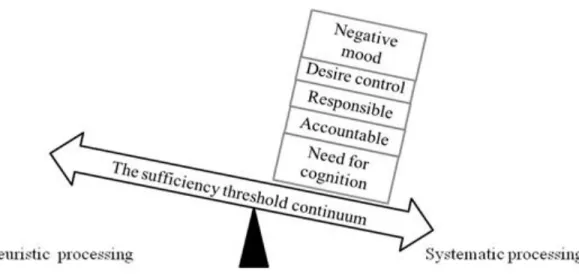
Figure 2.1 Schematic diagram of variables that increase the likelihood systematic
processing will be deployed...41
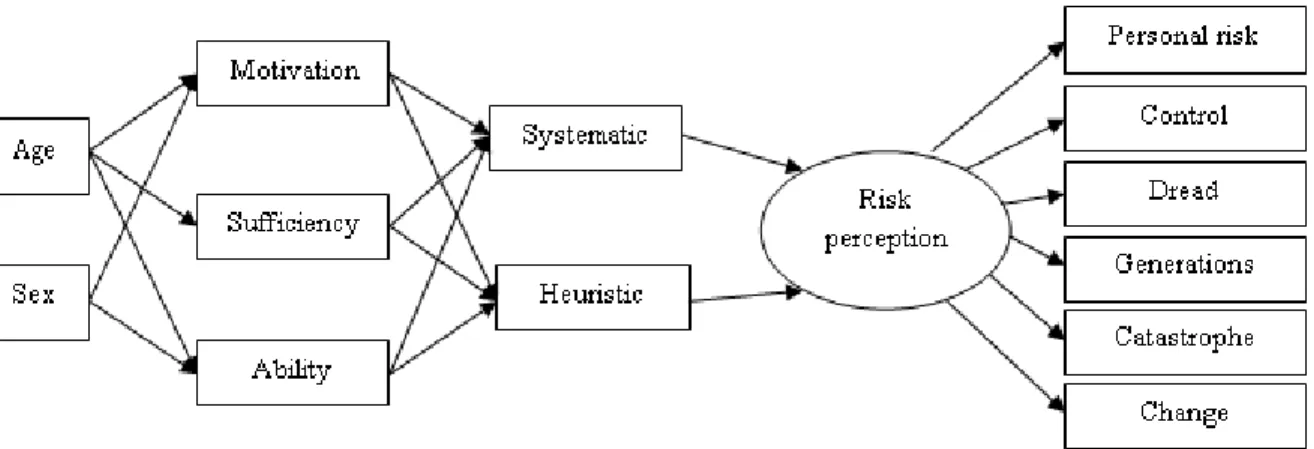
Figure 2.2 Reproduced from Trumbo (2002); the heuristic-systematic model applied to
predicting risk perception...42
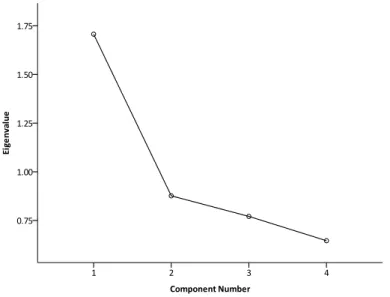
Figure 4.3 Scree plot of eigenvalues for each component in the composite systematic
processing facilitator measure scores...76
Figure 4.4 Error bar graph showing mean Penn State Worry Questionnaire scores by
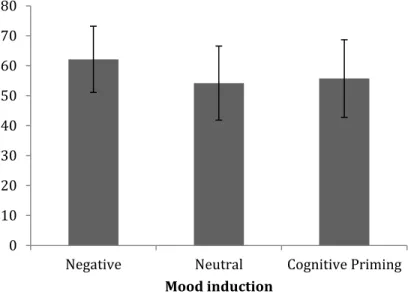
mood induction conditions...78
Figure 4.5 Error bar graph showing mean number of catastrophising interview steps by
intolerance of uncertainty condition ...99
Figure 5.6 Scatterplot showing the relationship between intolerance of uncertainty
composite scores and the sufficiency threshold...109
Figure 5.7 Scatterplot showing the relationship between intolerance of uncertainty
composite scores and Penn State Worry Questionnaire scores...110
Figure 6.8 Error bar graph showing the mean number of catastrophising steps generated
by problem-solving confidence condition...125
Figure 7.9 Schematic diagram representing that the balance of self-efficacy beliefs and
task importance determines whether systematic or heuristic processing is deployed...136
Figure 8.10 Scree plot showing the components and their corresponding eigenvalues for
the worry, worry promoter, and information processing items...181
Figure 11.11 Histogram of threat residuals...238
Figure 11.12 P-P Plot of threat residuals...238
Figure 11.13 Scatterplot of standardised residuals against predicted residuals for
threat...239
Figure 11.14 Histogram of coping residuals...240
Figure 11.15 P-P Plot of coping residuals...240
Figure 11.16 Scatterplot of standardised residuals against predicted residuals for coping
List of Tables
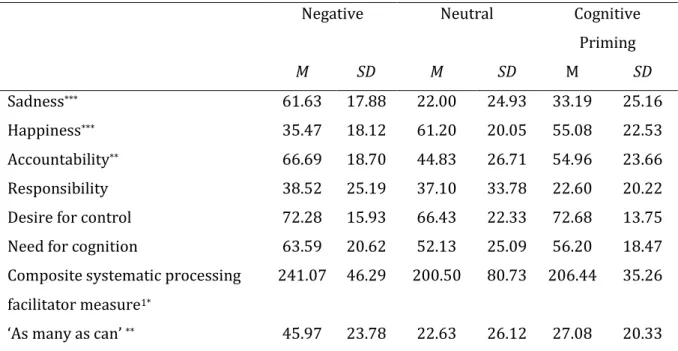
Table 4.1 Descriptive statistics for the mood and systematic processing facilitator
measures...75
Table 4.2 Factor loadings for the composite systematic processing facilitator items...76
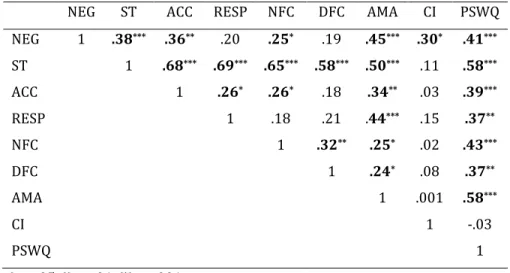
Table 4.3 Correlations between negative mood, systematic processing facilitators, and
worry...79
Table 4.4 Summary of unstandardised mediation results...81
Table 4.5 Summary of standardised mediation results...81
Table 5.6 Items measuring intolerance of uncertainty, problem-solving confidence and
mood...91
Table 5.7 Items measuring systematic processing facilitators...92
Table 5.8 Descriptive statistics for the intolerance of uncertainty manipulation check
items by intolerance of uncertainty condition...96
Table 5.9 Descriptive statistics for the mood manipulation check items by intolerance of
uncertainty condition...97
Table 5.10 Descriptive statistics for the problem-solving confidence manipulation check
items by intolerance of uncertainty condition...97
Table 5.11 Descriptive statistics for the composite measures of the cognitive appraisals
that facilitate systematic processing, shown by worry vignette and intolerance of uncertainty condition...98
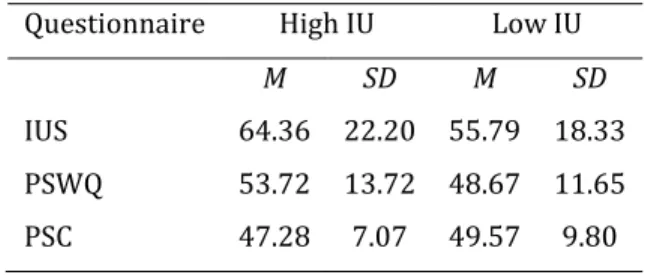
Table 5.12 Descriptive statistics for the validated questionnaires by intolerance of
uncertainty condition...100
Table 5.13 Correlations between intolerance of uncertainty, systematic processing
facilitators in relation to the coursework vignette, and worry ...101
Table 5.14 Correlations between intolerance of uncertainty, systematic processing
facilitators in relation to the financial vignette, and worry ...101
Table 5.15 Baseline descriptive statistics for intolerance of uncertainty, problem-solving
confidence, and sadness, by intolerance of uncertainty condition...107
Table 5.16 Descriptive statistics for the manipulation check items shown by intolerance of
uncertainty condition...108
Table 5.17 Correlations between intolerance of uncertainty, systematic processing
Table 6.18 Descriptive statistics for the problem-solving confidence manipulation check items by problem-solving confidence condition...121
Table 6.19 Descriptive statistics for the mood manipulation check items by
problem-solving confidence condition...122
Table 6.20 Descriptive statistics for the intolerance of uncertainty manipulation check
items by problem-solving confidence condition...122
Table 6.21 Descriptive statistics for the composite measures of the cognitive appraisals
that facilitate systematic processing, shown by worry vignette and problem-solving confidence condition...123
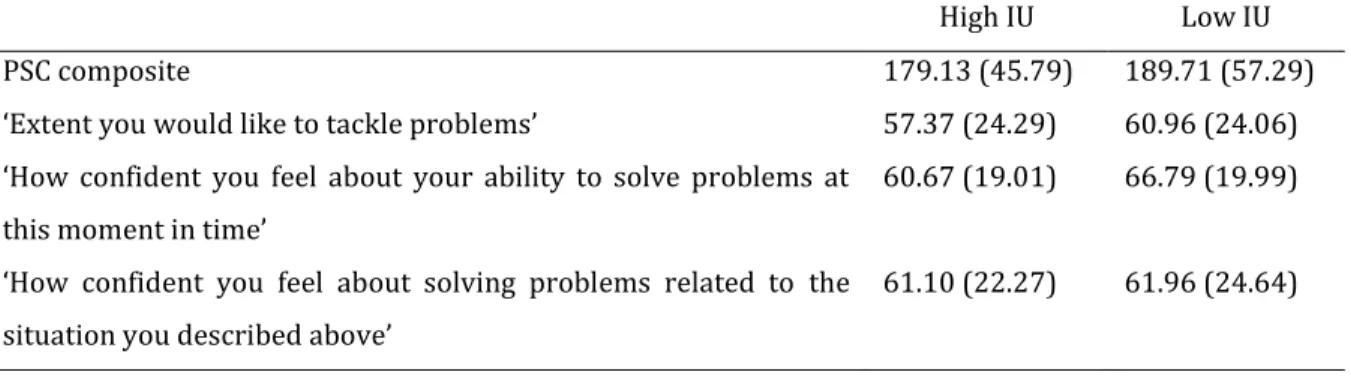
Table 6.22 Descriptive statistics for the validated questionnaires by problem-solving
confidence condition...125
Table 6.23 Correlations between problem-solving confidence, systematic processing
facilitators in relation to the coursework vignette, and worry...126
Table 6.24 Correlations between problem-solving confidence, systematic processing
facilitators in relation to the financial vignette, and worry...127
Table 7.25 Items measuring mood, intolerance of uncertainty, and problem-solving
confidence...138
Table 7.26 Items measuring threat and coping beliefs...141
Table 7.27 Descriptive statistics for the baseline measures of mood, intolerance of
uncertainty, and problem-solving confidence, by manipulation condition...148
Table 7.28 Descriptive statistics for the manipulation checks by mood induction
condition...150
Table 7.29 Descriptive statistics for the threat and coping belief items for mood and
problem-solving confidence conditions...152
Table 7.30 Correlations for the worry promoters, threat and coping belief items,
Monitoring and Blunting Questionnaire, Penn State Worry Questionnaire, and homophone scores...155
Table 7.31 Regression coefficients for the worry promoter and threat perception
model...157
Table 7.32 Regression coefficients for the worry promoter and coping beliefs model....158
Table 7.33 Mean number of words spelt in threat form for the threat/neutral (‘threat’)
and positive form for the positive/neutral (‘positive’) words, by word list and manipulation condition...159
Table 7.34 Descriptive statistics for the validated questionnaires by manipulation condition...159
Table 8.35 Questionnaire descriptive statistics...176
Table 8.36 Correlations between total scores on the worry and systematic processing
measures...178
Table 8.37 Factor loadings for the worry, worry promoter, and information processing
Common Abbreviations
For ease of reference, frequently used abbreviations are listed below.
AMA ‘as many as can’
ANOVA analysis of variance
CI catastrophising interview
GAD Generalized Anxiety Disorder HSM heuristic-systematic model IU intolerance of uncertainty MEPS Means-Ends Problem-Solving
NFC need for cognition
PSC problem-solving confidence
PSWQ Penn State Worry Questionnaire VAS visual analogue scale
An extract from ‘The Battle’
She had to break into the prison where Hope was held hostage by Desperation and free Energy from the grip of Lethargy. These two generals would surely round up the rest of the troops, among them Activity, Achievement and Ambition. They might even mobilise the neighbouring warlords Love, Laughter and Liveliness.
The battlefield is bleak and surreal, like a Dali desert. Each side advances with alarming speed. Doubt confers with Inadequacy and they join forces to attack Self-belief. Guilt earmarks Enjoyment in the line-up. On the other side of the field, Sociability makes a bee-line for Isolation and Cheerfulness gives Grumpiness the finger.
At first glance their numbers seem evenly matched, but as they clash together with a whirring of weapons and war-like shouts an advantage becomes clear. The army of Desperation is fragmented, each fighting for their own selfish ends. They brawl with anything they can get their hands on and distract themselves with their own anarchical destruction.
The armies of Hope and Energy remain focused and united, sallying forward with Courage and Determination at the vanguard. Happiness, the elusive monarch, too fragile to fight, waits and prays at the rear. His bishop Faith stands beside him asking the heavens for victory today. Someone seems to be listening. The battlefield becomes more animated, the sullen sky parts to reveal a glint of blue. The ghosts of Happiness’ predecessors gain vibrancy and breathe again. These monarchs of the past march down Memory hill to spread the word. Hope’s army has been joined by Confidence, that indefinable deal-breaker.
The rout is over as soon as it is started. Lethargy limps off as fast as his languid legs will carry him. Desperation ignominiously flees with a flesh wound. Worry, that slippery turncoat, is taken as a prisoner of war, but will manage to sweet-talk his way to freedom in an hour or two. The battle is won, the enemies are fled and the exhausted soldiers retire to the taverns to celebrate. Humour and Amusement, the ever genial landlords keep the drinks topped up with Hope’s special brew and Laughter puts on a cabaret. No one has noticed Worry slip away into the night.
Reproduced with permission.
© Katherine ffrench-Constant, 2009.
1
The what, who, when and why of worrying
“Worry – a God, invisible but omnipotent. It steals the bloom from the cheek and lightness from the pulse; it takes away the appetite, and turns the hair gray” – Benjamin Disraeli
1.1 General Overview
This thesis opens with an overview of the phenomenon of worry, with particular focus on the role of negative mood, intolerance of uncertainty (IU), and problem-solving confidence (PSC) in worry perseveration. Chapter Two details a different literature, that of systematic and heuristic information processing, and outlines the potential role of information processing styles in perseverative worry. Chapter Three covers the methodological approaches used to study worry and manipulate factors relevant to the worry process. Chapters Four to Eight contain the experimental work conducted for this thesis. Finally, in the general discussion in Chapter Nine, the experimental findings are summarized and integrated with existing theoretical models, before closing with a discussion of the limitations of the work, and suggestions for future research.
1.2 Introduction
This chapter has two purposes. Firstly, it aims to provide an overview of the nature of worry and its significance in psychopathology, most notably Generalized Anxiety Disorder (GAD). Secondly, it introduces the three main independent variables in this thesis (the ‘worry promoters’1: negative mood, IU, and low PSC) and explores accounts of their role in worry.
This provides a framework for the discussion in Chapter Two considering whether systematic processing could be a mechanism between these three key variables and worry perseveration.
1.3 Worry and psychopathology
Worry is something we all do from time to time. The general population has a good understanding of what someone means when they say that they are worried. Alongside depression, the term ‘worry’ is perhaps the most widely used psychopathology term by lay people. Academically and clinically, worry has been defined as “a chain of thoughts and images, negatively affect-laden and relatively uncontrollable” (Borkovec, Robinson, Pruzinsky,
1 Throughout this thesis, negative mood, intolerance of uncertainty and low problem-solving confidence are
jointly referred to as ‘worry promoters’, both for ease of expression and to reflect research showing that these variables increase worry levels
& DePree, 1983). Later definitions of worry incorporate problem-solving, e.g., “[worry] is seen as a constructive and appropriate task-oriented process that contributes to the solving of problems and the reduction of anxiety” (Borkovec, et al., 1983; Davey, 1994b, p. 327). The latter interpretation supports the dimensional nature of worry; worry is something that most people experience to a greater or lesser extent. Nonetheless, for some individuals worrying is highly distressing (Vasey & Borkovec, 1992).
Initially, some researchers and clinicians considered worry to be little more than the cognitive component of anxiety (e.g. O'Neill, 1985). However, the inclusion of worry as the cardinal symptom of GAD in the third revised edition of the Diagnostic and Statistical Manual of Mental Disorders (DSM-III; American Psychiatric Association, 1987), catapulted the status of worry to a phenomenon of interest, and research into worry blossomed. Davey (1993b) demonstrated that worry has its own cognitive profile, characterised by information-seeking, a monitoring cognitive style, and avoidant coping behaviours. Furthermore, worry scores were independent of trait anxiety. Davey, Hampton, Farrell and Davidson (1992) elucidated the differences between trait anxiety and worry. They found that worry correlates with adaptive problem-focused coping strategies and information processing, while trait anxiety correlates with low PSC, poor perceived personal control, taking responsibility for negative outcomes, heightened threat interpretations, and avoidant coping styles.
A diagnosis of GAD is made if an individual presents with excessive worry that has occurred for more days than not during the past six months. The individual must report difficulties controlling worry, and experience three of the following on more days than not during the past six months: restlessness, feeling tired after less exertion than previously, concentration difficulties, irritability, muscle tension, and sleep difficulties. The worry must cause significant distress, and not be solely confined to another Axis I disorder subject matter (e.g., worries about cleanliness in an individual with Obsessive-Compulsive Disorder) (American Psychiatric Association, 2000, DSM-IV-TR, 4th ed., text rev.). High worriers with GAD differ from high worriers without GAD in that those with GAD experience more negative intrusions, have less belief in their ability to remember things, possess more superstitious beliefs about the power of worry, and have raised beliefs about the danger and uncontrollability of worry (Ruscio & Borkovec, 2004).
GAD is highly comorbid with other psychological disorders. Bruce, Machan, Dyck and Keller (2001) report that comorbidity occurs in two-thirds of GAD cases. In their study, only
one participant out of 20 “pure” GAD patients remained free of comorbid conditions through eight years of follow-up. Brown, Campbell, Lehman, Grisham, and Mancill (2001) found that 20% of individuals with an anxiety disorder had comorbid GAD. In terms of mood disorders, Brown et al. (2001) report that 14% of individuals with Dysthymia have comorbid GAD, as do 25% of those with Major Depressive Disorder. These comorbidity figures do not take into account worry that occurs only in the context of a mood disorder (DSM-IV-TR prohibits a GAD diagnosis in these cases), and when such cases are included, comorbidity estimates rise to 57%. Clearly, worry is an issue for many people experiencing psychological difficulties, and is not limited to those with GAD.
Purdon and Harrington (2006) reviewed the role of worry in psychological disorders beyond GAD. They report that it plays a role in the anxious apprehension surrounding social and performance situations seen in Social Anxiety, in the concerns about Panic Attack symptoms in Panic Disorder, and in the fears about bodily symptoms in Hypochondriasis. Furthermore, worry has been implicated in checking and doubting subtypes of Obsessive-Compulsive Disorder (Tallis & DeSilva, 1992). Worry also predicts treatment outcomes in psychosis. Individuals with persecutory delusions report greater worry as measured by the Penn State Worry Questionnaire (PSWQ) (Meyer, Miller, Metzger, & Borkovec, 1990) and also higher levels of anxiety measured using the Beck Anxiety Inventory (Beck, Epstein, Brown, & Steer, 1988), compared to non-clinical controls. Worry and anxiety significantly predicted persecutory delusions at three-month follow-up, with those scoring higher on measures of worry and anxiety at baseline showing less symptom improvement (Startup, Freeman, & Garety, 2007).
High levels of worry do not always occur within the context of GAD. Ruscio (2002) reported that non-GAD high worriers far outnumber high worriers with GAD. Kertz and Woodruff-Borden (2011) found that individuals who exhibit high levels of worry (whether with GAD, with sub-threshold GAD, or without a GAD diagnosis) report poorer physical health, greater levels of stress, and increased sleep difficulties, compared to a control group who did not experience worry or GAD symptomatology. The GAD and sub-threshold GAD groups were indistinguishable on the measures of health, stress, or sleep. Worriers were also twice as likely as non-worriers to report inadequate social support. Given the similarities in the human cost to worriers with or without a diagnosis of GAD, it is important to understand worry beyond the GAD context.
1.4 The nature of worry thoughts
1.4.1 Negative thoughts
Worry predominately consists of negative thoughts, and is rarely experienced as images (e.g. Borkovec, Ray, & Stöber, 1998). Stokes and Hirsch (2010) explored the impact of processing worry using verbal mentation (typical of worry) or imagery mentation (atypical). High worriers who used verbal processing showed a significant increase from time 1 (baseline) to time 2 (after a mentation training phase and a five-minute worry period) in the number of negative cognitive intrusions that they experienced during a five-minute breathing focus period. Conversely, those who had used imagery processing showed a significant decrease in the number of negative intrusions that they experienced. This shows that verbal processing may also maintain, and even increase, negative thoughts.
1.4.2 Worry content
There is conflicting data regarding the topics that worriers worry about. Craske, Rapee, Jackel and Barlow (1989) found that participants with GAD worried more about illness, health, and injury than those without GAD. Sanderson and Barlow (1990) reported that the most common worry themes in people with GAD are family, finances, work and personal illness. Research has moved away from studying the content of worry to studying processes involved in worrying, which is likely to be more useful in determining effective treatments given the heterogeneity found in terms of worry content. Dugas, Freeston, Ladouceur, Rhéaume, Provencher and Boisvert (1998) suggest that the change in focus away from worry content is partly because the DSM-IV criteria for GAD dropped the DSM-III-R criterion that the individual worries about two or more topics. Dugas et al. (1998) also suggest that this change in focus may be attributable to the fact that worry content does not reliably discriminate individuals with pathological versus normal worry experiences. A fairly consistent finding, however, is that worriers generate more worry topics when asked what they worry about (e.g. Hoyer, Becker, & Roth, 2001; Roemer, Molina, & Borkovec, 1997). Dugas et al. (1998) also demonstrated that worriers were more likely to worry about things in the future, particularly remote future events (e.g., their child becoming seriously unwell). Based on the principles of metacognitive theories of emotional disorders, Wells (1995) developed a metacognitive model of worry. The metacognitive model distinguishes between worries (Type 1) and appraisals of worrying (Type 2). An additional distinction is made between metacognitions that are positive beliefs about worry (e.g., ‘worrying keeps me in
control’) and negative beliefs about worry (e.g., ‘my worrying could make me go mad’), which includes worrying about worrying (meta-worry). Type 2 worry is evident in chronic worriers (Wells, 1994, 1995).
1.4.3 Anticipating threat and solving problems
Worry thoughts commonly involve negative outcome anticipation and attempts at problem-solving. Szabó and Lovibond (2002) used a diary-based approach to examine worry content. Content analysis demonstrated that approximately 20% of the worries listed were related to negative outcome anticipation and approximately 50% were related to problem-solving. This suggests that once the worry process is initiated, individuals anticipate negative outcomes, but then spend significantly longer generating possible solutions to these potential negative outcomes. The relative amount of negative outcome anticipation versus problem-solving content did not vary as a function of worry severity. This provides further support for the notion that high and low levels of worry differ in quantity but have less qualitative differences than a categorical model would suggest.
1.4.4 Catastrophising
During a worry bout, individuals typically generate thoughts about progressively worse outcomes, a process known as catastrophising, which is usually the result of pondering ‘what if…?’ questions (Kendall & Ingram, 1987). Breitholtz, Westling, and Öst (1998) found
that individuals with GAD were significantly more likely to report experiencing thoughts related to mental catastrophes when feeling anxious than individuals with panic disorder. Vasey and Borkovec (1992) considerably advanced the study of catastrophising by developing the catastrophising interview (CI) (see also Davey, 2006a). In this interview, the experimenter begins by asking “What is it that worries you about X?” where X is the participant’s current main worry. The experimenter repeats the question, substituting X with the participant’s answer to the first question, and so on. For more information on the CI, see Chapter 3 (Section 3.2.2). Vasey and Borkovec (1992) found that worriers generated significantly more catastrophising steps than non-worriers. Furthermore, worriers experienced increased emotional discomfort as the CI progressed whereas non-worriers did not experience a change in emotional discomfort. However, it should be noted that Vasey and Borkovec (1992) did not control for the CI length, and as such, this effect may reflect that increased catastrophising is related to greater distress, rather than a difference in the way in which worriers react to catastrophic thoughts. Davey and Levy (1998b) found that worriers had a general iterative
thinking style as they engaged in catastrophising (perceiving progressively more extreme consequences) for both negative and positive topics. Worriers were also able to catastrophise a new hypothetical worry topic (‘being the Statue of Liberty’), which they had no previous experience worrying about. Therefore they could not have ‘practised’ thoughts about potentially negative outcomes. This finding counters Vasey and Borkovec’s (1992) suggestion that worriers generate more steps during the CI because they have more ready available access to memory stores of answers to ‘what if..?’ questions than non-worriers.
1.4.5 Themes of personal inadequacy
Davey and Levy (1998b) demonstrated that personal inadequacy commonly emerges as a theme in the worries of high worriers. They found worriers frequently couched their catastrophising steps in terms of personal inadequacy, such as “I’ll never be the best at anything”, “being at the end of my life with no future ahead and not having achieved very much” (Davey & Levy, 1998b, p.582). Davey and Levy (1998a) examined the types of statements associated with catastrophic worrying. They created a questionnaire by asking individuals to list the kinds of thoughts they had when they were thinking about something that made them feel worse. Using factor analysis, they determined that catastrophising is associated with four kinds of internal statements: (1) problem-specific pessimism, e.g., “There just seems to be no solution to this problem”; (2) personal inadequacy/incompetence, e.g., “Everyone can do better than me”; (3) personal despair/hopelessness, e.g., “How will I manage?”; and (4) need to analyse the problem, e.g., “I must consider all the options associated with this problem” (Davey & Levy, 1998a, p.24). These four factors predicted PSWQ scores after controlling for anxiety, depression, PSC and control, suggesting that the internal statements associated with catastrophising are an important part of pathological worry.
1.5 Prevalence and epidemiology of worry
1.5.1 Worry frequency
In a sample consisting of adults and students, 38% reported worrying everyday (Tallis, Davey, & Capuzzo, 1994). The mean worry duration was 5-10 minutes, but some respondents endorsed fleeting worries, while others experienced worries that lasted one-two hours. Forty-two percent of Tallis et al.’s (1994) participants were aware of their worries
occurring at specific times of day. The most frequently endorsed times of worry were 9pm-midnight (32.8%) and 9pm-midnight-3am (25.9%).
1.5.2 Rates of pathological worry
Assessing precise rates of GAD prevalence is complicated by the changing diagnostic criteria of GAD between the third DSM edition (American Psychiatric Association, 1987) and the current diagnostic criteria (American Psychiatric Association, 2000). Nonetheless, Holaway, Rodebaugh and Heimburg (2006) reviewed the rates of GAD in international population-based surveys, and found an average current rate of 2.03% (range: 0.8%-3.7%), an average 12-month prevalence rate of 2.98% (range: 1.1%-5.1%), and an average lifetime prevalence of 4.99% (range: 1.4%-11.1%).
1.5.3 The worry spectrum
Worry can be a distressing, uncontrollable, catastrophic, perseverative process, but as demonstrated by the high frequency of worry in individuals for whom it does not reach pathological proportions, the worry process can also be normal (e.g., a coping strategy used to assist in problem-solving). Ruscio, Borkovec and Ruscio (2001) demonstrated using taxometric analytic methods that normal and pathological worry are best conceptualized as occupying extreme ends of a single continuum, rather than as discrete entities. Explanations of worry need to account for worry at both ends of the continuum, and high levels of worry both with and without GAD.
1.5.4 Worry across development
The frequency and severity of worry varies across age groups. Younger adults are reported to worry more than older adults, with young females worrying the most (Hunt, Wisocki, & Yanko, 2003). However, this is dependent on the measure of worry. Hunt et al. (2003) found that young adults (18-25) worried more when assessed using the PSWQ, but older adults scored higher on the subscales of health, family concerns and world issues on the Worry Scale for Older Adults – Revised (Wisocki, 1994). The majority of studies examining changes in worry behaviour over time have used cross-sectional designs, and where longitudinal assessment of worry has been undertaken, it has not been across the lifespan, but instead has focused on one age period, such as teenage years (Hale, Klimstra, & Meeus, 2010) or university students (Swerdzewski, 2008).
1.5.5 The role of gender in worry
Females experience (or at least report) greater levels of worry than males (Robichaud, Dugas, & Conway, 2003). An explanation for this finding comes from Barahmand (2008) who demonstrated that, in adolescents at least, positive beliefs about worry were a key determinant of worry levels, and that females were more likely to endorse these beliefs. However, Barahmand (2008) did find that male adolescents were more likely to report greater negative problem-orientation, which is another worry predictor. It is unclear why females hold more positive beliefs about the utility of worry than males. Robichaud et al. (2003) review work by Stavosky and Borkovec (1988), Gove (1980) and Rosenfield (2000), who suggest respectively that worry is seen as a feminine gender role stereotypic trait, that women experience greater levels of stress due to lower-status positions in society and the home, and that females show greater tendencies to internalise versus externalise problems. Robichaud, et al. (2003) found that gender played a role in confidence, as measured by the lack of confidence subscale of the Worry Domains Questionnaire (Tallis, Eysenck, & Mathews, 1992). Robichaud et al. (2003) found that females reported less confidence than males. Females also scored higher on the measure of negative problem orientation, which is contrary to the finding of Barahmand (2008). This contradiction could be due to a number of factors. Firstly, the developmental time frame is different; Barahmand (2008) examined adolescents aged 16-19 and Robichaud et al. (2003) examined students aged 18-37. Secondly, the participants came from different cultures; Barahmand’s (2008) participants lived in Iran, while Robichaud et al.’s (2003) lived in Canada. Thirdly, different measures of negative problem orientation were used. Barahmand (2008) used the Negative Problem Orientation Questionnaire, while Robichaud et al. (2003) used the Social Problem-Solving Inventory-Revised Short Form (D'Zurilla, Maydeu-Olivares, & Kant, 1998).
1.5.6 Marital status
Hunt et al. (2003) found that individuals who were single endorsed more PSWQ items than those who were married or widowed. However, as mentioned above, younger individuals report higher levels of worry, and are less likely to be married than older participants. Thus, it is difficult to disentangle the effects of age and marital status.
The research reviewed in this section indicates that worry occurs across demographic groups, but finds that worry is most common in single females in early adulthood. The
experimental work conducted in this thesis utilizes samples representative of this demographic group who are at an increased likelihood of experiencing worry.
1.6 Factors implicated in worry perseveration
Worry can be understood within a biopsychosocial framework; worry is associated with neuroanatomical differences (e.g. Mohlman, et al., 2009), functional brain differences (e.g. Hoehn-Saric, Lee, McLeod, & Wong, 2005), and greater levels of anxious and rejecting parenting (Muris, Meesters, Merckelbach, & Hülsenbeck, 2000). However, worry is predominantly a product of cognition, involving thoughts about imagined negative outcomes and the generation of problem-solving strategies. As such, approaching understanding worry from a cognitive stand-point will probably be the most fruitful avenue and the basis for the most successful psychotherapies for worry-based problems. In this section, three important variables implicated in worry perseveration are covered: negative mood, IU, and low PSC.
1.7 Negative mood
Chronic worriers experience endemic negative mood (Meyer, et al., 1990). A detailed discussion of the conceptualisation of negative mood is beyond the scope of this literature review but in this thesis, the understanding of negative moods is based upon Watson, Clark and Tellegen’s (1988, p. 1063) definition that negative mood is “a dimension of subjective distress and unpleasurable engagement”.The association between negative mood and worry may emerge from the negative cognitive processes associated with chronic worrying such as negative outcome anticipation (Szabó & Lovibond, 2002), processing negative thoughts (Borkovec, et al., 1998), catastrophising (Davey, 2006a), and personal inadequacy appraisals (Davey & Levy, 1998b). However, a number of studies support the view that, rather than simply being a consequence of worrying, negative mood is a causal contributor. Johnston and Davey (1997) found that inducing a negative mood resulted in significantly more catastrophising steps being generated during a CI than positive or neutral moods. This and similar studies (e.g., Startup & Davey, 2001) demonstrate that negative mood has a causal
effect on worry perseveration, and is not simply an outcome of worrying.
There are a number of candidate mechanisms that potentially explain why negative mood states increase worry, including that negative mood (1) provides information about whether task goals are met (mood-as-input hypothesis) (e.g., Meeten & Davey, 2011); (2) facilitates retrieval of material that is congruent in valence (Bower, 1991); (3) primes the
retrieval of semantically similar material (Neely, 1977); (4) raises an individual’s performance standards (e.g., Scott & Cervone, 2002); (5) increases an individual’s desire to understand the cause of their mood with the goal of ‘repairing’ the negative mood state to a more positive one (Schwarz & Clore, 1983); (6) intensifies the persuasiveness of strong messages (e.g., Briñol, Petty, & Barden, 2007); (7) evokes appraisals of uncertainty (Tiedens & Linton, 2001); and (8) either independently, or as a result of some or all of points 1-7, alters the way in which individuals process information, resulting in systematic information processing (e.g., Bohner, Bless, Schwarz, & Strack, 1988).
1.7.1 Mood-as-input Hypothesis
Worry is typically open-ended; there is no definite end-point. Consequently, an individual must make a decision about whether to continue with their worry bout, or terminate it. These decision processes may be unconscious, but can nonetheless be communicated in verbal form (see Wells, 2006, for the same description of metacognitive beliefs). The decision will be determined by (1) an individual’s goal for their worrying (e.g., ‘resolve a problem’, ‘feel prepared’, ‘feel better’); (2) the stop rules that are derived based on the worry goals (e.g., ‘I must continue to worry until I have resolved the problem’, ‘I must continue to worry until I feel prepared’, I must continue to worry until I feel better’); and (3) the information used to decide whether worry goals are met.
There is usually a lack of objective evidence to help the worrier identify if they have, for example, resolved their problem, and instead, it is suggested that individuals use their mood to decide if they have met their worry goals. According to mood-as-input theory, mood provides information about whether the stop rules have been met (Davey, 2006b). Stop rules are criteria for deciding when to stop a task, and as such, are conceptualised as decision rules (e.g., Vaughn, Malik, Schwartz, Petkova, & Trudeau, 2006). For example, if an individual is worrying, they may either apply an ‘as many as can’ (AMA) stop rule, whereby they believe that they must do as much worrying as possible, or a ‘feel like continuing’ (FLC) stop rule, which involves stopping when the worry process is no longer something they feel like doing (Davey, Startup, MacDonald, Jenkins, & Patterson, 2005). If an individual is in a negative mood and using an AMA rule, their negative mood suggests that the task has not been completed as much as possible (positive mood is usually experienced when a task is completed), and the individual is likely to persevere at the task. In contrast, an individual in a positive mood would interpret their mood in terms of having completed the task and will stop. For an individual
using the FLC rule, a negative mood would encourage the individual to stop the task sooner than if the individual was in a positive mood, as the negative mood would signal that the task was no longer enjoyable.
Over the past 10 years, a wealth of research has demonstrated that mood-as-input theory can successfully predict patterns of perseveration in analogue samples performing clinically-relevant tasks. Startup and Davey (2001) demonstrated that perseveration at a CI was greatest under a combination of a negative mood and use of the AMA stop rule, and a positive mood and use of the FLC stop rule. Furthermore, Davey et al. (2005) found that high worriers were more likely to use an AMA rule when approaching a worry task, and hence high worriers are more likely to perseverate given that they experience being in a negative mood more frequently than low worriers. Additionally, checking behaviour in OCD has been shown to fit the mood-as-input predictions, with more checking occurring when the AMA rule is deployed in the presence of negative mood, or the FLC rule is deployed in the presence of positive mood (Davey, Startup, Zara, MacDonald, & Field, 2003). Mood-as-input also accounted for patterns of depressive rumination when different moods were induced and stop rules were deployed (Hawksley & Davey, 2010). In terms of clinical populations, the combination of a negative mood alongside AMA stop rule deployment is of greatest significance, given that clinical populations experience heightened negative mood and possess dispositional characteristics that increase AMA deployment, such as perfectionism, IU, inflated responsibility and increased concern about making mistakes (Dugas, Freeston, & Ladouceur, 1997; Stöber & Joormann, 2001b; Tallis, Eysenck, & Mathews, 1991; Wells & Papageorgiou, 1998).
While the empirical data is consistent with mood-as-input theory, there is currently no independent evidence that individuals actually do use their mood as information. Furthermore, mood and stop rules may not be independent; mood may affect the goal an individual has for their worrying, and the subsequent stop rule that is deployed. In addition, it is unclear whether the positive/FLC configuration occurs during perseverative processes relevant to psychopathology. Elevated negative mood in worry is also partially supportive of other theories, which are outlined below.
1.7.2 Mood congruent recall
Some suggest that negative mood states increase worry perseveration because these states facilitate the retrieval of information from memory that is congruent with the mood
state, i.e. mood congruent recall (e.g., Bower, 1991). However, Startup and Davey (2001) instructed participants to generate positive thoughts about a topic (positive aspects of being the Statue of Liberty). Individuals in a negative mood were able to generate more items in this reverse-catastrophising procedure than individuals in a positive mood, suggesting that a negative mood state is more accurately implicated in perseverative worry as a state that is associated with an iterative thinking style, rather than a state that leads to better recall of negative thoughts.
1.7.3 Semantic priming
Semantic priming occurs when individuals are quicker to report items from the same semantic category as the prime. Neely (1977) presented participants with a prime (‘bird’ or ‘xxx’) and found that participants were quicker to identify ‘robin’ as a real word when ‘bird’ was the prime, rather than ‘xxx’. In terms of the role that negative mood has on worry, such effects are likely to occur when word-based vignettes are used to induce mood states. Participants may generate more worry thoughts when in a negative mood because such thoughts emerge more rapidly due to the semantic closeness of the content of the worry with the negative verbal material in the mood induction vignettes. However, semantic priming is less likely to occur when non-verbal materials are used, such as music. Startup and Davey (2003) demonstrated that individuals would persevere with their worry when in a positive mood if they were using the FLC stop rule (i.e. the mood-as-input interaction effect) when music was used to facilitate mood states. As such, this effect is unlikely to be due to semantic priming.
1.7.4 Raised performance standards
Another possible mechanism of the link between negative mood and worry perseveration is that negative mood states may increase an individual’s performance standards. Derived in part from the finding that depressed individuals often have performance standards that exceed their self-efficacy beliefs (Ahrens, 1987, cited in Cervone, Kopp, Schaumann, & Scott, 1994), Cervone et al. (1994) examined the role that negative mood states have on performance standards. They induced negative, positive or neutral mood states using vignettes and asked participants to complete a questionnaire indicating their performance standards. Participants in a negative mood generated higher performance standards than participants in a positive or neutral mood. Those in the negative mood group
also demonstrated a greater discrepancy between their relatively high performance standards and their perceived self-efficacy.
Scott and Cervone (2002) examined whether the increased performance standards obtained under negative mood states are the result of affective priming or affect-as-information processes. They focused on the ‘discounting hypothesis’, which posits that if mood states have identifiable sources that are deemed irrelevant to the current task, then any effect of this mood on the judgement is eliminated. This is presumably because the individual does not use their mood as information. Scott and Cervone (2002) reasoned that, if an affect-as-information process accounts for negative mood’s effect on performance standards, then when the mood source is made salient, participants should discount the informational properties of the mood state as irrelevant to their judgements about their performance standards. If an affective priming mechanism is in play, then it should not matter if the mood source is made salient, the spread of activation should still occur between interconnected cognitions, affecting judgements about performance standards. Half of the participants were alerted to the mood induction procedure prior to listening to the mood-inducing vignettes, and half were not. They found that participants in the non-salient negative mood condition reported raised performance standards, but that when attention was drawn to the fact that the negative mood experienced was due to the experimental procedure (salient condition) induced negative mood did not raise performance standards. This is consistent with an affect-as-information process, but does not fit well with affective priming accounts, which indicate that associated networks are primed regardless of the emotional salience. It is plausible that raised performance standards are operationalised within the worry process through the adoption of AMA stop rules. This suggests that mood states and stop rules may not be truly independent. Indeed, Davey and MacDonald (2009) demonstrated that after undergoing a negative mood induction, participants were more likely to endorse using an AMA stop rule.
1.7.5 Understanding and ‘repairing’ mood states: The role of emotion
regulation
Schwarz and Clore (1983) report that individuals in a negative mood have higher motivation to search for information that explains their affective state than individuals in a positive mood. Worry has been proposed as a means of avoiding negative emotional experiences (Borkovec & Inz, 1990). Worriers report that they worry to avoid/prevent
negative occurrences, and individuals with GAD endorse “distraction from more emotional topics” (Borkovec & Roemer, 1995, p. 26) as a reason for worrying.
Mennin, Heimberg, Turk and Fresco (2005) have suggested that the use of worry as a cognitive avoidance technique (Borkovec, 1994) is driven by an individual’s response to, and regulation of, emotional experiences. Gross (1998, p.275; cited in Mennin et al., 2005) defines emotional regulation as how individuals influence, control, experience and express their emotions. Individuals with GAD experience more intense emotions, poorer understanding of emotions, greater negative reactivity to emotional experiences, and are less effective at self-soothing (Mennin et al., 2005). Salters-Pedneault, Roemer, Tull, Rucker, and Mennin (2006) also demonstrated that students’ PSWQ scores were positively correlated with difficulties in emotion regulation, and PSWQ scores were negatively correlated with emotional acceptance, ability to engage in goal-directed behaviour, impulse control, clarity of emotional experiences, and access to emotion regulation strategies. However, PSWQ scores were not correlated with emotional awareness. High worriers are as aware as low worriers that they are experiencing an emotion; difficulties appear to surround regulating emotional experiences. Research into emotion regulation abilities in worriers is predominantly correlational. It is unclear whether having difficulties with emotion regulation leads to the adoption of avoidance techniques such as worry, or if worrying leads to less ability to effectively regulate emotional experiences.
1.7.6 Intensified persuasiveness of strong messages
Typically, individuals in a negative mood are more persuaded by strong, compared to weak, messages, whereas individuals in a happy mood are equally persuaded by weak and strong arguments as they are less likely to engage in detailed processing of counter-attitudinal messages (Schwarz, 2002). Consequently, individuals in a negative anxious mood state may be more motivated to generate reasons why solutions to their worrisome thoughts are likely to be unsuccessful. Petty, Briñol and Tormala (2002) report that when an individual has predominantly positive thoughts in response to a message, increasing the individual’s confidence increases persuasion. Whereas when an individual has predominantly negative thoughts about a message, increasing the individual’s level of confidence in their thoughts decreases persuasion. As reported above, worriers experience high levels of personal inadequacy, and these beliefs are likely to be strengthened when in a negative mood (providing confidence in their judgement that they are inadequate), resulting in chronic worriers having less confidence that they can resolve their worries. In a series of experiments
conducted by Briñol, Petty and Barden (2007), participants were presented with strong or weak persuasive arguments, underwent a mood induction procedure, and then completed a thought-listing task. Participants in the sad mood induction condition were less confident in the accuracy of their thoughts than those in a happy mood, consistent with the notion that happiness is associated with self-validation. Consequently, the attitudes formed by individuals in a negative mood were less affected by argument quality than individuals in a happy mood. These differential effects were only found to occur when individuals were motivated to undertake deep processing; when motivation levels were low, participants showed mood effects on attitude formation regardless of the quality of the arguments. Given that worriers believe that worrying is necessary to avoid future threats (e.g., Davey, Tallis, & Capuzzo, 1996) they are likely to be highly motivated to examine worry thoughts.
1.7.7 Uncertainty appraisals
Tiedens and Linton (2001) examined the role of emotions in certainty appraisals. Participants were induced to feel one of four emotions based on valence (positive vs. negative) and level of certainty (certainty vs. uncertainty): disgust (negative, certainty), fear (negative, uncertainty), happiness (positive, certainty), or hope (positive, uncertainty). Following the mood induction, participants were asked to make judgements about how certain they felt about their predictions for the forthcoming Year 2000. Those participants induced to feel emotions associated with certainty (disgust, happiness) were more certain about their judgements than participants induced to feel emotions associated with uncertainty (fear, hope). Mood valence did not affect the participants’ judgements. Given that anxiety is a negative emotion related to uncertainty, worriers are likely to have a heightened sense of uncertainty. Worriers are more intolerant of uncertainty than non-worriers (see Section 1.8) and thus may be more motivated to deploy strategies, such as prolonged periods of worrying, to avoid emotions associated with uncertainty.
1.7.8 Increased deployment of systematic information processing
An additional way in which negative mood states may prolong worry periods is by increasing the scrutiny, attention, and effort devoted to processing information. A large body of literature supports the idea that individuals in a negative mood are more likely to deploy systematic (detailed, effortful) processing (e.g. Armitage, Conner, & Norman, 1999; Batra & Stayman, 1990; Bodenhausen, Sheppard, & Kramer, 1994; Bohner, et al., 1988; Bohner, Crow, Erb, & Schwarz, 1992). Furthermore, many of the accounts provided above to explain the
relationship between negative mood and perseverative worry (increased recall of negative thoughts, raised performance standards, a desire to understand negative moods, attention to argument quality, and uncertainty appraisals) are all factors that would increase an individual’s motivation to process thoughts about an issue carefully. The notion that systematic processing may be a mechanism explaining the link between negative mood and worry is central to this thesis, and will be covered in detail in Chapter 2.
1.8 Intolerance of Uncertainty
1.8.1 Defining intolerance of uncertainty
Worriers frequently couch their worries in the form of ‘what if?’ questions. Given that most worries are based on negative things that might happen in the future, it is difficult for the individual to know whether they will or won’t occur. This ‘not knowing’ is experienced as an unpleasant state and gives rise to IU. Birrel, Meares, Wilkinson and Freeston (2011) chart the changes in the way IU has been defined. Initially conceived out of the literature on intolerance of ambiguity (cf. Furnham & Ribchester, 1995), the definition has expanded following new insights in the way that IU is linked to worry, the processing biases that are present in those experiencing IU, and the nature of IU as a cognitive vulnerability factor for GAD. Ladouceur, Blais, Freeston, and Dugas (1998) define IU as “the way in which an individual perceives information in uncertain situations and responds to this information with a set of cognitive, emotional and behavioral reactions” (p. 141). Koerner and Dugas (2008) extended this definition by considering IU as a dispositional cognitive vulnerability factor for worry. They define IU as a “dispositional characteristic that arises from a set of negative beliefs about uncertainty and its connotations and consequences” (p. 631).
1.8.2 Intolerance of uncertainty and processing biases
High IU individuals hold processing biases that result in the perception of ambiguous or uncertain events as threatening and intolerable (Butler & Mathews, 1983, 1987), despite the low probability of such events actually occurring (Ladouceur, Talbot, & Dugas, 1997). Significantly, given these processing biases, high IU individuals also perceive negative events as more probable in uncertain situations than low IU individuals (MacLeod, Williams, & Bekerian, 1991). In addition, high IU individuals seek more information before making decisions that they are confident with (Carleton, Sharpe, & Asmundson, 2007).
1.8.3 Associations between intolerance of uncertainty and worry
A number of studies have demonstrated that IU correlates with trait worry2 (e.g., Buhr
& Dugas, 2006). In Dugas et al.’s (1998) cognitive model of GAD, IU plays a central role, and is posited to drive ‘what if…?’ questioning. Also incorporated in the model are beliefs about worry, poor problem orientation, and cognitive avoidance. Dugas et al. (1998) tested their model to see if these variables could successfully discriminate individuals with and without GAD. IU accounted for the most variance in terms of whether an individual had a diagnosis of GAD or not.
Berenbaum (2010) included IU in his two-phase model of worrying. In this initiation-termination model, the first phase is concerned with threat perceptions, which initiate worrying. The second phase is associated with factors involved in the termination of worry, which Berenbaum (2010) argued is closely related to the acceptance of uncertainty. Consequently, IU is likely to prolong worry bouts as individuals struggle to accept uncertainty.
1.8.4 A causal role for intolerance of uncertainty in worry
Changes in IU precede changes in worry levels during therapy (Dugas & Ladouceur, 2000). Although not a direct assessment of whether IU is involved in the etiology of worry, this finding lends support to the idea that IU at least plays a maintenance role in pathological worrying. To examine whether IU has a causal influence on worry, Ladouceur, Gosselin and Dugas (2000) manipulated IU using a gambling procedure in which participants were motivated to win as much money as possible. One group of participants were told that their odds were better than a previous group’s odds (decreased IU) and another group of participants were told that their odds were worse than a previous group’s odds (increased IU). Those in the increased IU group reported higher levels of worry than those in the decreased IU group. However, the questions examining IU and worry were linked to the specific gambling task in question, and it is unclear whether this finding extends beyond this particular context.
Deschenes, Dugas, Radomsky and Buhr (2010) manipulated beliefs about IU by informing participants that uncertainty was helpful in solving problems (low IU) or that uncertainty was unhelpful in solving problems (high IU). They found that participants in the high IU group rated worry steps in a CI as significantly more likely than those in the low IU
2 De Bruin et al. (2007) found that, while IU predicted trait worry, there was little, if any association