Exploring functionings and conversion factors
in biodiversity teacher
professional learning communities
A thesis submitted in fulfilment of the requirements of the degree of
Doctor of Philosophy
Rhodes University
by
Sirkka Alina Nambashu Tshiningayamwe
Abstract
The study explores the conversion factors, functionings (valued beings and doings), agency and structures in Professional Learning Communities (PLCs) for Life Sciences teachers‟ biodiversity knowledge. The teachers‟ valued beings and doings as well as conversion factors associated with these beings and doings were discussed within the conceptual framework of the capability approach using three PLCs in South Africa. Two PLCs were in the Eastern Cape Province (Grahamstown and Idutywa district), and one PLC wa s in the Western Cape (Cape Town) province. The PLCs involved in this study were course initiated and were positioned in the Fundisa for Change national teacher education programme. Fundisa for Change is a partnership programme that aims to enhance transformative environmental learning through teacher education. To illuminate constrained capabilities and how and to what extent the Life Sciences teachers‟ empirical actions are related to these, the concepts of the capability approach were underlaboured with critical realism‟s causal view of human action. A critical realist theory of causation was useful in explaining how the teachers‟ valued beings and doings, conversion factors and capability sets can be partly accounted for via an understanding of underlying mechanisms that are generative of events and empirical experience.
The study used a qualitative case study research methodology. Interviews, questionnaires, observations (of PLC activities), document reviews (of teachers‟ portfolios of evidence, Fundisa for Change implementation plan, evaluation forms and resources materials, and policy documents) and reflection tools were used to collect data. Using the critical realism modes of inference (induction, abduction and retroduction), the data was analysed in two phases. Phase one analysis was primarily inductive and used thick descriptions (mainly in the form of quotes) to present and discuss the teachers‟ valued beings and doings and associated conversion factors in the PLCs. This phase of analysis was abductive.
The study reported four main functionings valued by teachers: subject content knowledge, teaching practices, assessment practices, and use of teaching and learning support materials. These valued functionings were discussed in light of the beings and doings in the PLCs and the underlying mechanisms related to teachers‟ biodiversity teaching. Conversion factors that were associated with the teachers‟ valued beings and doings in the PLCs were discussed in line with capability approach‟s environmental, social and personal conversion factors. The
study found that most of the conversion factors within the PLCs and the Fundisa for Change professional development programme (good facilitation, collaborative learning space, site where PLC activities happened, individual teachers‟ capabilities, teaching and learning support materials and policy documents) were enablers to the teachers‟ capabilities for biodiversity teaching, and thus enhanced teachers‟ knowledge for biodiversity teaching. The study further found that teachers realised some of their achieved functionings in their actual teaching of biodiversity content in the Life Sciences curriculum, and that factors such as lack of resources, large class sizes, learners‟ abilities and lack of interest among some teachers were amongst the factors that constrained teachers‟ realisation of their achieved functionings in the PLCs.
The study therefore revealed that if professional development programmes take account of underlying mechanisms and respond to teachers‟ capabilities i.e. their valued functionings for biodiversity teaching in the Life Sciences curriculum, the professional development programmes can be an important conversion factor that enables the expansion of teachers‟ capabilities (especially their biodiversity knowledge, pedagogical and assessment practice but also other capabilities) in ways that have the potential to reshape teachers‟ classroom practices related to the teaching of biodiversity.
Acknowledgements
I thank Almighty God who has been my guide throughout this overwhelming project. Without the gift of life and His tender mercies, this project would have never started.
My highest appreciation and gratitude goes to my supervisor, Professor Heila Lotz-Sisitka for her patience, confidence in me, and for funding my study. Professor Heila, words in an acknowledgement section of the thesis will not express it all; all I can say is: you are the best! To my second supervisor Professor Rob O‟Donoghue, thank you for the impromptu corridor supervisions. They helped unlock moments of confusion. You always knew what to say. My appreciation also goes to Dr Tony Ribbink for trusting me to work for Sustainable Seas Trust. Without the humbling experiences in the Transkei, I would never have understood the need for research on professional development processes for teachers‟ biodiversity knowledge.
I acknowledge my Environmental Learning and Research Centre family that I have learned to rely on throughout the years of my study. Ingrid and Lausanne, your open doors never made me think twice when I needed to be heard. Keep them open to those who will come after me. Samantha and Sashay, my fieldwork would have not been possible without you. For those who came before me, and whose work has shaped mine, I am truly grateful. Zintle, Caleb, Lebona, Michelle, Caroline, Kim, Priya – you are the true definitions of peer support. Kim Ward, thanks for your efficiency and for diligently editing my work. Bronwyn, thank you for improving my diagrams. To everybody who even just once asked how the study was going, I should admit this was not my favourite question but it kept me reflexive. Thank you.
I am truly indebted to my dearest Mom, Dad and siblings for their endless support. Mom and Dad, thank you for teaching me the value of education. If it was not for you, I would have never gotten this far. Eliakim, Ethilde, Paulus, Loini, Tessa and Mbili, I am deeply grateful for the support you offered throughout the three years. So many times you said “mana nduno wuye kegumbo” – these words were not only a constant reminder of your love and care, but were also so full of encouragement. Tulela and Ndinekwatho, I hope you find some inspiration in this project for your career endeavours.
Finally, even though most remain anonymous, this piece of work is dedicated to the teachers and the Fundisa for Change partners who participated in this study, as well as to the type of professional development support you receive (or offer) to improve the quality of education and the state of the environment in South Africa and beyond.
T
able of Contents
Abstract ... i
Acknowledgements ...iii
List of Appendices ...viii
List of Figures ... x
List of Tables ... x
Acronyms and Abbreviations ... xi
Chapter 1: Introduction and orientation to the study ... 13
1.1 Introduction... 13
1.2 Personal interest and motivation of the study ... 14
1.3 Biodiversity context ... 16
1.4 Biodiversity in the South African school curriculum ... 18
1.5 Teachers‟ professional development on biodiversity ... 22
1.6 The Fundisa for Change programme ... 24
1.7 The integrated strategic planning framework for teacher education and
development (2011-2025) ... 29
1.8 The South African socio-ecological context ... 31
1.8.1 Eastern Cape province ... 32
1.8.2 Western Cape province... 34
1.9 Research goals and research questions ... 38
1.9.1 Research goals... 38
1.9.2 Research questions ... 38
1.10 Key concepts in the study ... 39
1.10.1 Capabilities and functionings ... 39
1.10.2 Conversion factors... 39
1.10.3 Agency ... 39
1.10.4 Structure ... 40
1.10.5 Professional Learning Communities ... 40
1.10.6 (Continuing) professional development ... 41
1.10.7 Biodiversity ... 41
1.12 Thesis overview ... 42
1.13 Conclusion ... 43
Chapter 2: Professional development and teachers’ biodiversity knowledge... 44
2.1 Introduction... 44
2.2 Environmental education and biodiversity ... 44
2.3 Teacher education and biodiversity education ... 46
2.3.1 Initial teacher education and biodiversity ... 46
2.3.2 Professional development and biodiversity education... 53
2.4 Professional development modalities ... 58
2.5 Professional Learning Communities ... 63
2.5.1 History of the concept of Professional Learning Communities ... 64
2.5.2 Theories on Professional Learning Communities ... 66
2.5.3 Characteristics of Professional Learning Communities... 70
2.6 Professional Learning Communities: South African perspectives ... 75
2.7 Life Sciences Curriculum Policy Statements ... 79
2.8 Conclusion ... 81
Chapter 3: Theoretical framework ... 82
3.1 Introduction... 82
3.2 Conceptualisation of the theoretical frameworks ... 82
3.3 The capability approach ... 83
3.3.1 Brief history of the capability approach and education research ... 83
3.3.2 Key concepts of the capability approach ... 85
3.3.3 Further considerations linked to using the capability approach in the
study ... 91
3.4 Critiques of the capabilities approach ... 93
3.5 Critical realism ... 97
3.5.1 Introduction to critical realism ... 97
3.5.2 Key aspects of critical realism drawn on in the study ... 98
3.6 Critiques of critical realism ... 102
3.8 Conclusion ... 107
Chapter 4: Research design and methodology ... 109
4.1 Introduction... 109
4.2 Implications of critical realism and capability approach for research
design ... 109
4.3 Case study ... 110
4.3.1 Case study 1: Idutywa PLC ... 111
4.3.2 Case study 2: Grahamstown PLC ... 112
4.3.3 Case study 3: Cape Town PLC ... 113
4.4 Selection of case studies and participants ... 114
4.5 Data generation methods ... 116
4.5.1 Contextual profiling ... 116
4.5.2 Semi-structured questionnaires ... 117
4.5.3 Document analysis ... 118
4.5.4 In-depth interviews ... 120
4.5.5 Observations of PLC activities ... 122
4.5.6 Portfolios of evidence, reflections and evaluations ... 123
4.6 Data analysis ... 124
4.6.1 Index coding... 124
4.6.2 Analysis of data ... 128
4.6.3 Modes of inference ... 130
4.7 Validity, trustworthiness and generalisation ... 132
4.8 Researcher position and reflexivity ... 136
4.8.1 Researcher stance ... 136
4.8.2 Reflexivity... 137
4.9 Ethical consideration ... 139
4.10 Conclusion ... 141
Chapter 5: Valued beings and doings of teachers related to the teaching of biodiversity ... 142
5.2 Teachers‟ valued beings and doings related to biodiversity teaching .... 142
5.2.1 Subject content knowledge ... 146
5.2.2 Teachers‟ valued functioning with regard to pedagogical approaches
... 157
5.2.3 Assessment practices ... 163
5.2.4 Teaching and learning resources... 169
5.2.5 Other valued functionings ... 172
5.3 Discussion ... 173
5.4 Conclusion ... 180
Chapter 6: Conversion factors associated with teachers’ valued beings and doings.... 181
6.1 Introduction... 181
6.2 Conversion factors ... 181
6.2.1 Personal conversion factors ... 182
6.2.2 Social conversion factors ... 193
6.2.3 Environmental conversion factors ... 206
6.3 Discussion ... 211
6.4 Conclusion ... 216
Chapter 7: Teachers’ achieved, realised and new functionings ... 217
7.1 Introduction... 217
7.2 Teachers‟ achieved functionings ... 217
7.2.1 Subject content knowledge ... 217
7.2.2 Pedagogical practices ... 220
7.2.3 Improved assessment practices ... 222
7.2.4 Other achieved functionings ... 223
7.3 Teachers‟ realisation of achieved functionings ... 227
7.3.1 Realised achieved functionings ... 227
7.3.2 Unrealised functionings at classroom level ... 232
7.4 Teachers‟ new valued beings and doings ... 241
7.4.1 Further support from Fundisa for Change ... 241
7.4.3 Strengthen cluster activities ... 254
7.4.4 Support from other stakeholders ... 256
7.4.5 Other new valued beings and doings ... 259
7.5 Discussion ... 261
7.6 Conclusion ... 269
Chapter 8: Causal processes surrounding teachers valued beings and doings; summative perspectives, recommendations and conclusions ... 270
8. 1 Introduction ... 270
8.2 The causal processes surrounding teachers valued beings and doings as
they relate to biodiversity teaching ... 270
8.3 Summative perspectives ... 280
8.4 Recommendations ... 286
8.4.1 Fundisa for Change ... 287
8.4.2 Continuing professional development ... 290
8.4.3 PLC policy in South Africa ... 292
8.5 Limitations of the study and recommendations for further research ... 294
8.5.1 Limitations ... 294
8.5.2 Further research ... 295
8.6 Conclusion ... 297
References ... 298 Appendices ... 322List of Appendices
Appendix 1: Biodiversity content and concepts in the FET Life Sciences CAPS curriculum Appendix 2: Teachers semi-structured questionnaires
Appendix 3: Teachers semi-structured interview schedule Appendix 4: Fundisa for Change partners interview schedule Appendix 5: Fundisa for Change reflective interview schedule Appendix 6: Observation schedule
Appendix 7: Fundisa for Change assignment (portfolio of evidence) Appendix 8: Reflection tool
Appendix 9: Examples of coded interview transcripts Appendix 10: Rhodes University ethical clearance letter
Appendix 11: Consent letter for teachers to participate in the research
Appendix 12: Consent letter for Fundisa for Change partners to participate in the research Appendix 13: Permission to conduct research from the Western Cape Department of Education Appendix 14: Permission to conduct research from the Eastern Cape Department of Education Appendix 15: Activity on assessment (done in the Idutywa PLC)
List of Figures
Figure 1.1: Fundisa for Change programme course structure... 27
Figure 1.2: History of environmental education and teacher professional development activities for the curriculum changes in South Africa ... 28
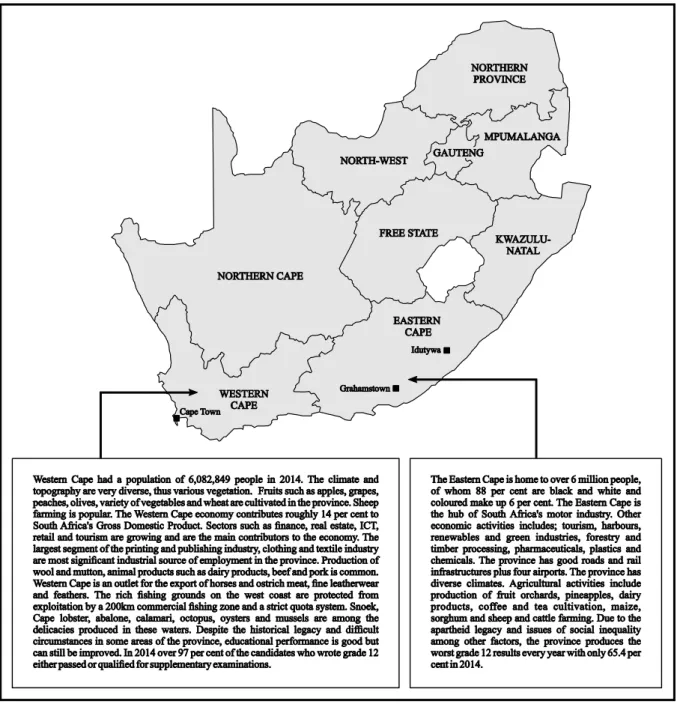
Figure 1.3: Summary of the economic, social and political activities in the Eastern Cape and Western Cape provinces ... 37
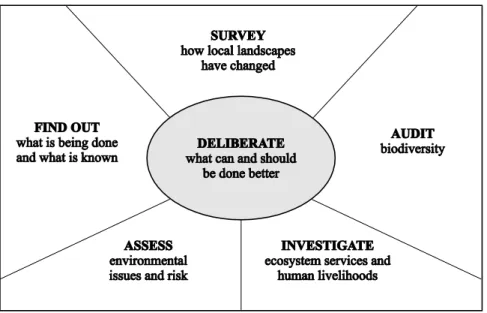
Figure 2.1: Conceptual diagram of the teaching methods and concerns in biodiversity education for school students ... 50
Figure 2.2: Biodiversity education practices framework ... 52
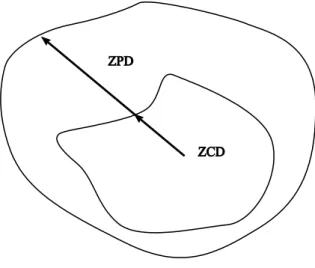
Figure 2.3: Movement through the zone of proximal development from the zone of current development through successful scaffolding ... 67
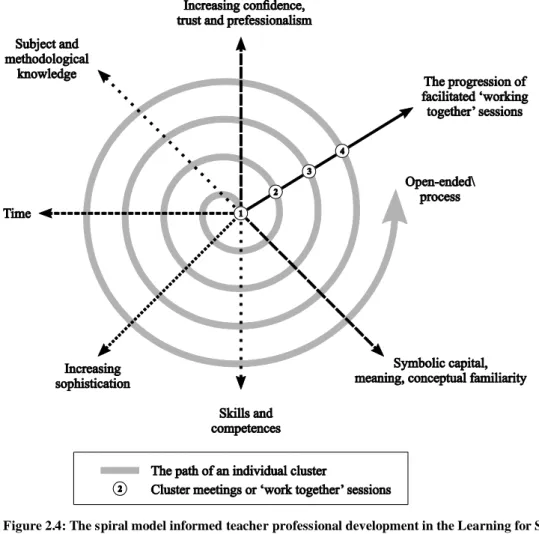
Figure 2.4: The spiral model informed teacher professional development in the Learning for Sustainability pilot project ... 76
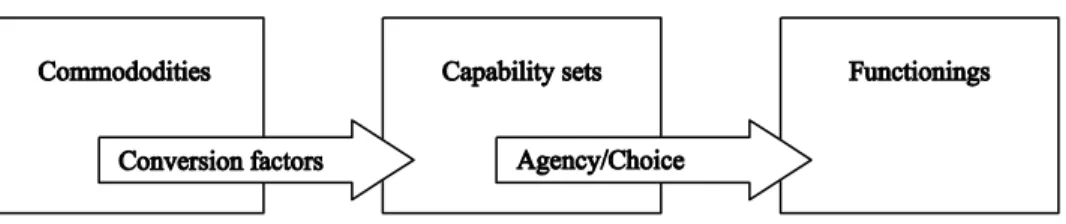
Figure 3.1: The building blocks of capability approach ... 90
Figure 3.2: Critical realist view of causation ... 101
Figure 3.3: Locating capability approach concepts in a critical realist theory of causation ... 104
Figure 8.1: A visualisation of critical realism and capability approach ... 272
List of Tables
Table 3.1: Modes of capability approach analysis ... 91Table 4.1: Summary of the participants in the PLC activities ... 113
Table 4.2: Teachers‟ participation in the study... 117
Table 4.3: Summary of documents reviewed and rationale for choosing them ... 119
Table 4.4: Summary of all research participants ... 125
Table 5.1: Teachers' valued beings and doings related to biodiversity teaching (from the PLC) ... 142
Table 5.2: Teachers‟ valued beings and doings related to biodiversity teaching (from Grahamstown and Cape Town PLCs) ... 144
Table 5.3: The learning units in the biodiversity booklets ... 150
Table 5.4: Uses of biodiversity ... 155
Table 5.5: Weighting of cognitive demands in grade 10-12 Life Sciences CAPS curriculum 163 Table 5.6: School-based assessment for grade 10 and 11 Life Sciences CAPS curriculum . 164 Table 5.7: Assessment of biodiversity components in grade 11 (paper 2) ... 164
Table 5.8: Linking knowledge to assessment practices (link to unit 1) ... 165
Table 5.9: Marks allocated for the assessment activity done by teachers in groups ... 167
Table 6.1: Teachers‟ qualifications and experiences... 182
Table 7.1: Teachers‟ achieved functionings in the PLCs ... 228
Table 7.2: Teachers‟ realised functionings ... 261
Acronyms and Abbreviations
CAPE Cape Action for People and the Environment CAPS Curriculum and Assessment Policy Statement DBE Department of Basic Education
DEA Department of Environmental Affairs
DEADP Department of Environmental Affairs and Development Planning DEAT Department of Environmental Affairs and Tourism
DEDEAT Department of Economic Development, Environmental Affairs and Tourism DHET Department of Higher Education and Training
DoE Department of Education
DST Department of Science and Technology
ECSECC Eastern Cape Socio-Economic Consultative Council EECI Environmental Education Curriculum Initiative EEPI Environmental Education Policy Initiative ESD Education for Sustainable Development FET Further Education and Training
GET General Education and Training HEI Higher Education Institution
ISPFTED Integrated Strategic Planning Framework for Teacher Education and Development
IQMS Integrated Quality Management System MEA Millennium Ecosystems Assessment NCS National Curriculum Statement
NCTAF National Commission on Teaching and America‟s Future NEEC Namibian Environmental Education Certificate
NEEP-GET National Environmental Education Project for General Education and Training NGO Non-Governmental Organisations
OECD Organisation for Economic Cooperation and Development PLC Professional Learning Community
RNCS Revised National Curriculum Statement RSA Republic of South Africa
SACE South African Council for Educators
SANBI South African National Biodiversity Institute
UNDESD United Nations Decade of Education for Sustainable Development UNDP United Nations Development Programme
UNEP United Nations Environment Programme
UNESCO United Nations Educational, Scientific and Cultural Organisation WESSA Wildlife and Environment Society of South Africa
ZCD Zone of Current Development ZDP Zone of Proximal Development
Chapter 1: Introduction and orientation to the study
1.1 IntroductionThis chapter introduces a study that explored the conversion factors, functionings (valued doings and beings), agency and structures in Professional Learning Communities (PLCs) for Life Sciences teachers‟ biodiversity knowledge. The study is located in the field of Environmental Education1. Of particular interest are PLCs positioned in the Fundisa for Change2 national teacher education programme in South Africa (see Section 1.5). I begin the chapter with some biographical data which provides insights into personal motivation for the study. The chapter then draws on existing literature to provide the context of biodiversity nationally and internationally. Next I discuss literature to provide an overview on the inclusion of environmental education3 (encompassing the biodiversity components) in the changing South African curriculum. The chapter highlights the different professional development initiatives that have attempted to assist Life Sciences (among others) teachers implement environmental education in South Africa. The emerging policy concept of PLCs in South Africa is introduced to provide a basis for the study, and the main goals of the study are outlined along with the specific questions the study sought to answer. The chapter includes a brief description of the key concepts used in the study, and concludes with an outline of the thesis.
The capability approach to continuing professional development emphasises the valued beings and doings (functionings) of teachers, but also how existing resources (of teachers and Fundisa for Change partners) are converted into new functioning and capabilities. The capability approach is therefore useful for interpreting Life Sciences teachers‟ functionings in relation to biodiversity. Critical realism‟s theory of causation offers an analysis to demonstrate how Life Sciences teachers‟ functionings on biodiversity are constrained or enabled by structures in PLCs and structures provided by continuing professional development programmes such as Fundisa for Change. The study therefore works with the capability approach and critical realism as two theoretical frameworks (see Chapter Three).
1 Also called Education for Sustainable Development (ESD), Sustainability Education, Education for Sustainability, Learning for Sustainability, environment and sustainability, but because of the South African context in which the study is situated, I will use environmental education (this is a PHD in Environmental Education). However ESD will be used interchangeably with environmental education in the study especially when drawing on literature.
2Fundisa is an isiXhosa word meaning “teach”. The Fundisa for Change programme thus encourages teachers to “teach for change”.
1.2 Personal interest and motivation of the study
As a young girl growing up in the early eighties, in the Northern part of Namibia, my life was mainly defined by duties such as collecting firewood. Collecting firewood would go on for hours as my friends and I would play and watch boys hunting birds while herding the livestock. As time went by, collecting firewood would mean walking long distances to get to the wood. Today much of the area has become bare and everybody blames my alcoholic uncle who makes a living from selling firewood. The love I have for nature and the passion I have for education motivated me to train as a high school Geography and Biology (Life Sciences in the South African context) teacher. I taught Biology grade 11 and 12 for six years. In 2007, I had an opportunity to enrol for an Honours degree in Environmental Education at the University of South Africa. During my honours studies I came across a quote by Loubser (2008:27):
We only have one planet to live on; we and our children may still be able to prevent the destruction of our planet. Please devote your attention to convincing students in your classes of the importance of this fact. The implementation of an environmentally directed teaching approach in ordinary classroom teaching is not only worthwhile, but also rewarding.
Upon completion of my Honours degree in 2010, I enrolled with the Polytechnic of Namibia for a Namibian Environmental Education Certificate (NEEC) course. As a requirement for the NEEC course, I had to identify an environmental issue in my context, and then propose a response. I chose to develop an educational booklet that aimed at raising awareness on loss of biodiversity in Havanna4. I chose this issue because 1) the year 2010 was declared an international biodiversity year by the United Nations, and 2) the City of Windhoek5 continuously reported on activities that led to environmental issues such as loss of biodiversity in Havanna.
Developing the booklet was a participatory process with the Havanna community members, City of Windhoek and the Ministry of Environment and Tourism officials. Part of the activities involved sharing of knowledge related to biodiversity. What was evident was the lack of biodiversity knowledge among those who participated in the process. This was not surprising because as a teacher at that time, I also had very limited knowledge on biodiversity. It is this observation, the quote from Loubser given above and the reflections of my own practice as a Biology teacher that led to my questioning the implementation of biodiversity topics in the Namibian Biology curriculum. An opportunity to enrol for a Master‟s degree in Environmental Education with Rhodes University in 2011 made it possible to research this. Among other recommendations, my master‟s
4
Havanna is an informal settlement on the outskirt of Windhoek with a population growth twice the overall population growth rate of the city. Havanna has low income residents who rely mainly on selling fuelwood and carpentry for survival (Republic of Namibia. Ministry of Environment and Tourism, 2002).
study recommended a need to strengthen Biology teachers‟ environmental knowledge and change in assessment practices for environmental learning (Tshiningayamwe, 2011). Similar findings are reported by environmental education researchers in South Africa (Lotz-Sisitka, 2011; Mbuyazwe, 2011; Songqwaru, 2012; Lotz-Sisitka & Songqwaru, 2013; Chitsiga, 2015; Isaacs, 2015).
In 2012 and 2013 I worked on an educational project for the Sustainable Seas Trust in South Africa. Among other objectives, the project developed an educational programme for supporting coastal schools and communities with a focus on marine biodiversity conservation, in the Eastern Cape province. During the implementation of this project, I travelled along the coastline of the Eastern Cape province. My attention was constantly attracted by fisherman along the road selling fish and lobsters among other sea resources. Most of the fishermen described having an ocean as “a gift from God”, believing that marine resources would never be depleted. On some nights my Sustainable Seas Trust colleagues and I enjoyed home cooked meals in the villages that had been prepared on an open fire. This implies that the people in the Eastern Cape relied on firewood as a source of energy, and on marine resources as a source of food and income. On-going reliance on fuelwood and marine resources could lead to the loss of biodiversity (Groenewald, 2008). The objective of the educational project was therefore to educate the rural communities and support coastal schools on the importance of biodiversity and how human activities could potentially lead to the loss of biodiversity.
In working with the coastal schools, because of lack of human capacity in the Sustainable Seas Trust, lack of time and resources and available expertise, the focus was mainly on Life Sciences teachers in the Further Education and Training (FET) phase6. Working with these teachers revealed an urgent need for professional development support with a focus on biodiversity. Life Sciences teachers‟ expressed that due to contextual challenges such as lack of transport for subject advisors, poor infrastructure, lack of resources, long distances between schools and the district offices, they hardly received any support from the Department of Basic Education. Supporting Life Sciences teachers to develop knowledge of complex and controversial environmental issues such as biodiversity is critical for achieving transformation of education in South Africa (O‟Donoghue, 2015). Science teachers‟ knowledge has an effect on Science Education results and also the foundational knowledge capacities of those graduating from the Sciences.
It was from all the above observations and reflections that a PhD study emerged. My initial interest was to explore resource materials on biodiversity and how teachers are capacitated to work with those in their actual teaching of biodiversity. Further observations, experiences and discussions with
6
colleagues and supervisors made me realise that if Life Sciences teachers are to become capacitated on how to teach biodiversity knowledge, they need to identify their own valued beings and doings related to the teaching of biodiversity. Teachers should then participate in professional development activities that will expand their capabilities for biodiversity teaching. This motivated a study on professional learning communities.
1.3 Biodiversity context
South Africa is rated as one of the countries with the most biological diversity in the world (South Africa. Department of Environmental Affairs [DEA], 2014). The country is home to about 95 000 known species (ibid.). This represents six per cent of the world‟s mammal species, eight per cent of the bird species, five per cent of the reptile species and six per cent of the plant species (ibid.). More species are still being discovered. South Africa has three internationally recognised biodiversity hotspots: the Cape Floristic Region, the Succulent Karoo Region and the Maputaland-Pondoland-Albany Region hotspot (ibid.). However, an assessment of South Africa‟s biodiversity and ecosystems in 2011 found that compared to other southern Africa countries, South Africa has a high number of threatened plant and animal species (Driver et al., 2012). South Africa is a leading country for the international Red Listing processes. The Red List assessment shows that in South Africa:
One in five inland mammal species is threatened; one in five freshwater fish species is threatened; one in seven frog species is threatened; one in seven bird species is threatened; one in eight plant species is threatened; one in twelve reptile species is threatened; and one in twelve butterfly species is threatened. (South African National Biodiversity Institute [SANBI], 2013:48)
In South Africa, some of the endangered species are protected. Examples of endangered species in South Africa are the black rhinoceros (in 2012 alone 650 rhinos were killed for their horns), riverine rabbits, African wild dog, diverse bird species, leatherback turtle and several species of cycads (SANBI, 2013).
In South Africa, the number of people that rely on natural resources is in the millions (Driver et al., 2012). Between nine and twelve million people are dependent on the natural environment to meet their needs (ibid.). Political, economic and social inequities of the past have resulted in high rates of poverty and unemployment (ibid.). This contributes to overharvesting of biological resources which is one of the main causes of biodiversity loss in the country
(SANBI, 2013; South Africa. DEA,
2014). Globally, 80 per cent of people in developing countries rely on traditional medicines of which the majority are derived from plants (UNEP, 2012).Biodiversity loss is not only a South African crisis; it is a global phenomenon (UNEP, 2002a; UNEP, 2007; UNEP, 2012; UNESCO, 2014a). These United Nations reports emphasised that global biodiversity continues to decline, with substantial and on-going losses of populations, species and habitats. Biodiversity plays an important role in maintaining and enhancing the well-being of over 7 billion people in the world (Department of Economic and Social Affairs, 2014). It is predicted that the world‟s population will increase to 8.1 billion by 2025 and to 9.6 billion by 2050. This will put more pressure on the biological resources (ibid.).
There are many viewpoints as to why biodiversity needs to be preserved; this can be for spiritual reasons or because of its utilitarian value for humankind (Driver et al., 2012). The Millennium Ecosystems Assessment (MEA, 2005a; 2005b) noted that the following ecosystem services depend on biodiversity: i) provisioning services such as genetic resources and food; ii) regulating services such as the regulation of climate and water quality; iii) cultural services such as cultural heritage and spiritual fulfilment; and iv) supporting services such as nutrient cycling and soil formation. Species diversity in and of itself, for example, is valuable because the presence of a variety of species helps to increase the capability of an ecosystem to be resilient in the face of a changing environment (MEA, 2005a; 2005b). Loss of biodiversity can therefore potentially lead to the loss of food production, cultural practices, energy resources and tourism.
Some of the emerging responses to biodiversity include international conventions, policies, legislations, gene banks, collaborative management (Shava & Schudel, 2013). At the global level, there have been low carbon and green economy initiatives which encompass technological interventions to reduce impacts of climate change, ultimately reducing the impact of climate change on biodiversity (ibid.). The realisation of biodiversity conservation as a global concern has resulted in various international conventions to conserve biodiversity. These include the Convention of Biological Diversity of 1992; Convention of International Trade in Endangered Species of 1973; and the United Nations Framework Convention on Climate Change of 1992 (Shava & Schudel, 2013). South Africa is a signatory to these international conventions for biodiversity conservation (ibid.). The country also has national policies aiming at conserving biodiversity. Those include the National Environmental Management Act 107 of 1998; and particularly the National Environmental Management Biodiversity Act 20 of 2004 (Shava & Schudel, 2013). The National Environmental Management Biodiversity Act introduced a legal framework for governing sustainable development in South Africa and it includes a clause for all training and education programmes to integrate ESD (Republic of South Africa [RSA], 1998). There is thus no doubt that various policies and regulations are in place to help minimise the pressure on biodiversity by encouraging species recovery, habitat restoration and sustainable harvesting (UNEP, 2012). Despite all the policies and
regulations, in 2013, more than 17 000 species of plants and animals were threatened with extinction (UNFPA, UNDESA, UN-HABITAT, 2013).
This year (2015) the Millennium Development Goals expired. Millennium Development Goal seven aimed at ensuring environmental sustainability (Pisupati & Rubian, 2008). Despite all the efforts made in most countries to meet this goal, a considerable amount still needs be done to ensure environmental sustainability. This justifies why the United Nations have proposed 17 goals for sustainable development to succeed the Millennium Development Goals (ICSU & ISSC, 2015). The Sustainable Development Goals were adopted at the United Nations Sustainable Development Summit in New York, in September this year (2015) and will be implemented in January 2016. The Sustainable Development Goals aim to take action on climate and the environment, improve access to education and more (United Nations, General Assembly, 2015). In the interest of biodiversity conservation, goal 14 of the Sustainable Development Goals aims to conserve and sustainably use the oceans, seas and marine resources for sustainable development (ICSU & ISSC, 2015). Goal 15 aims to protect, restore and promote sustainable use of terrestrial ecosystems, sustainable manage forests, combat desertification, and halt and reverse land degradation and halt biodiversity loss (ibid.).
Clearly, the importance of biodiversity has been recognised by policy makers. There is thus no doubt that the defence of biodiversity requires literate citizens who understand the various dimensions of biodiversity and the influence of human activity on biodiversity (Ramadoss & Poyyamoli, 2011). Some scientists claim loss of biodiversity is a natural phenomenon (Gayford, 2000). This notion implies that biodiversity is a controversial issue, and education has a role to play in biodiversity conservation (UNESCO, 2014a). “No education will be complete without understanding the significance of biodiversity for human life and well-being, and for the health of the planet, related species and life on earth” (Cape Action for People and the Environment [C.A.P.E], 2010:3). These debates have contributed to South Africa, like many other countries in the world, including „biodiversity‟ and „a healthy environment‟ in its different curriculum reforms (C.A.P.E, 2010; Holtman, 2010). Successful implementation of biodiversity education does, however, require high quality teachers (UNESCO, 2014a).
1.4 Biodiversity in the South African school curriculum
The environment is as much a matter of economic policy and social processes as it is a matter of natural systems and resources (Reddy, 2011). This statement suggests why environment and sustainability knowledge have been integrated in most subjects, from Mathematics, Social Science, Life Orientation, Languages to Economics Management and Science in all phases (ibid.). The inclusion of environmental education in the different curriculum reforms were motivated by the
South African Environmental Education Policy Initiative (Lotz-Sisitka, 2011; Reddy, 2011). This initiative contributed to the 1995 White Paper on Education and Training (Sisitka, 2004; Lotz-Sisitka, 2011; Reddy, 2011). The White Paper on Education and Training (1995) emphasised the integration of environmental education into all levels and phases of the education and training system. The Constitution of South Africa highlights that every South African citizen has a right to an environment that is not detrimental to his or her health or well-being (Republic of South Africa [RSA], 1996). All curricula and training programmes in South Africa are mandated to resonate with the South African Constitution.
In 1996 the Environmental Education Policy Initiative changed its focus to curriculum and thus became the Environmental Education Curriculum Initiative (NEEP-GET, 2005; Reddy, 2011). The Environmental Education Curriculum Initiative was a state-civil partnership project that contributed to the inclusion and development of environmental education in the curriculum (Reddy, 2011). The Environmental Education Curriculum Initiative started gaining momentum and support from different provincial Departments of Education, but most efforts at provincial level failed because of lack of leadership and time for consultation (Lotz-Sisitka, 2002). Even though some environmental organisations enthusiastically assisted in the work of environmental education and teachers showed enthusiasm, there was a lack of systemic support from the Department of Basic Education for implementation (Reddy, 2011). This led to many environmental education activities being uncoordinated (ibid.).
Since 1994 South Africa has undergone four major curriculum reforms. Curriculum changes have been influenced by socio-political conditions in the country as well as external political and societal factors including a global shift in thinking about education and economics (Reddy, 2011). The first curriculum change sought to rid the school system of racially offensive curriculum materials inherited during the apartheid era (Maringe, 2014). However the most ambitious curriculum reform was the introduction of first post-apartheid curriculum: Curriculum 2005 (C2005) was built on the notion of outcomes based, learner centred and constructivist education frameworks (ibid.). With Curriculum 2005 environmental education (encompassing biodiversity) was introduced for the first time in South Africa (Reddy, 2011) as a „phase organiser‟ across subjects (ibid.). Owing to its complexity and multiple challenges in its implementation (such as poorly trained teachers and ineffective preparation of the curriculum reform), Curriculum 2005 was reviewed (Chisholm, 2000) and the outcomes of the review led to a Revised National Curriculum Statement (RNCS) for the
General Education and Training7 (GET) together with the National Curriculum Statement (NCS) for Further Education and Training (Dada, Dipholo, Hoadley, Khembo, Muller, & Volmink, 2009). Unlike Curriculum 2005, the RNCS curriculum had a well-defined structure (Maringe, 2014). The RNCS outlined the type of teachers required (competent, dedicated, caring and qualified) in accordance with the requirements of the department‟s norms and standards (South Africa, Department of Education [DoE], 2000). The RNCS had eight learning areas; in each area the values, skills and knowledge underpinning the content of the curriculum were clearly stipulated (Maringe, 2014). In reviewing the RNCS curriculum, Dada et al. (2009: 47) found that “content is found in different forms in different documents and at different levels of specificity”. Unlike Curriculum 2005, the RNCS clarified the distinction between outcomes and assessment standards making the selection of the content for teachers clear (ibid.; Maringe, 2014). This allowed teachers to grapple with issues of access, equity and equality in a more realistic way (Maringe, 2014). Despite the RNCS‟s “vision of teachers and learners who are knowledgeable and multifaceted, sensitive to environmental issues and able to respond to and act upon the many challenges that will still confront South Africa in this twenty first century” (Dada et al., 2009:1), the revised curriculum was critiqued for having inadequate guidance and support on assessment.
Reviewing Curriculum 2005 also meant reviewing the environment content in the curriculum as one of the underpinning principles (Reddy, 2011). As a result, the RNCS had environmental learning outcomes in various learning areas (ibid.). The report of the review committee on Curriculum 2005 made a range of findings including the following challenges: i) a skewed curriculum design and structure; ii) lack of alignment between curriculum and assessment policy; iii) inadequate orientation, training and development of teachers; and iv) learning support materials that are variable in quality (Chisholm, 2003). These findings contributed to the Department of Basic Education‟s decision to develop the current curriculum: the Curriculum and Assessment Policy Statement (CAPS). CAPS came into effect in January 2011, “signalling the end of a 14-year attempt to focus teaching and learning primarily on outcomes rather than, for example on processes or inputs” (Motala, Morrow, & Sayd, 2014:21). CAPS has been designed as a comprehensive framework for teaching and learning from reception to grade 12 (Maringe, 2014). CAPS clearly stipulates “the content to be taught, activities to support the learning of content standards for assessment of knowledge, skills and values, and the amount for each learning area in the curriculum” (ibid.:45). CAPS is seen to be a prescriptive curriculum with clear guidelines to support the work of the teachers grade by grade and subject by subject (ibid.).
7
General Education refers to the first ten years of compulsory schooling and the first four levels of Adult Education and Training (ABET) in South Africa (Reddy, 2011:15).
[CAPS] introduced a more strongly content-referenced curriculum which has commitment to active and critical approaches to learning, and to environment and sustainability content, which is integrated into a range of subjects at all levels and phases of the schooling system. It also has clearly defined, structural guidance for assessment. (Lotz-Sisitka, 2011:31)
An analysis of the CAPS documents revealed that in some subjects about 50 per cent of the content is related to environment and sustainability concerns (Lotz-Sisitka, 2011). The main environmentally related themes identified in the CAPS review are: climate change, biodiversity, water security, environmental health and sustainable development (ibid.). In some subjects the environmental themes across the different phases are explicit. For example, in Life Sciences grade 10 to 12 „environmental studies‟ is a theme. For a full analysis of biodiversity in Life Sciences CAPS, see Appendix 1 (South Africa. Department of Basic Education [DBE], 2011a). But in summary, the CAPS curriculum covers key concepts of biodiversity including biomes, genetic diversity, population, taxonomy, human-environment relationships, ecosystem services, global warming and climate change (ibid.).
Underpinning principles in the curriculum relevant to environmental learning are: human rights, social justice, inclusivity and a healthy environment (South Africa. Department of Education [DoE], 2002; South Africa. DBE, 2011a). Inclusion of environmental education in the national curriculum also shows the Department of Education‟s commitment to sustainable use of biological resources for the benefit of all South Africans in the present and the future (Holtman, 2010). While integration of environmental education in policies has been successful (South Africa. DBE, 2011a), its implementation still lacks systemic coherence. Efforts have been made to support teachers with the implementation of environmental education in South Africa (NEEP-GET, 2004; 2005). However research shows that most teachers in South Africa still lack the capacity to implement environment and sustainability knowledge in the curriculum (Lotz-Sisitka, 2011; Songqwaru, 2012; Lotz-Sisitka & Songqwaru, 2013; O‟Donoghue, 2015). The attitude is normally to „leave out‟ what they do not understand in their teaching (Fundisa for Change, 2014). This is offering incomplete education to learners (UNESCO, 2012). To reconcile this, teachers need to be supported through continuing professional development activities (Songqwaru, 2012). Writing from India, Ramadoss and Poyyamoli (2011) maintained that biodiversity in the curriculum and teachers‟ capacity to teach biodiversity cannot be separated: they are intertwined and one has an impact on the other. Teacher education and professional development have a role to play (UNESCO, 2014a; 2014b). This leads to a question of what type of teacher education and professional development programmes are effective for teachers‟ biodiversity knowledge. Recent studies conducted in South Africa, focusing on teachers‟ biodiversity knowledge, have identified this as an area of further research (Mbuyazwe,
I will argue in this study that effective teacher education and professional development activities will have to consider teachers‟ valued beings and doings related to biodiversity teaching. This is in line with the Department of Basic Education that noted that teachers as individuals or as a collective should be at the centre of professional development activities (South Africa. DBE, 2014). They should then be supported to meet their professional needs (ibid.). This policy document argued that in South Africa “the process of getting teachers to shape their own professional development is long overdue” (ibid.: 2). To date most South African professional development activities have been described as burdensome, not taking into account what motivates teachers to engage in such activities (South Africa. DBE, 2015). This study will therefore argue that for professional development activities to expand the teachers‟ capabilities for biodiversity teaching and to be responsive to individual teachers‟ needs. This requires an understanding of individual teachers‟ valued beings and doings related to the teaching of biodiversity. Such a study is of significance in South Africa as it has the potential to provide information on what really motivates teachers to participate in professional development activities. Focusing on biodiversity knowledge makes the research of global significance. Bailey (2013) argued that any research that focuses on global phenomena, or research produced and articulated through a global frame such as environmental knowledge, contributes to global knowledge. As noted in Section 1.3, biodiversity and biodiversity loss is a global phenomenon, thus researching teachers‟ biodiversity knowledge has the potential to contribute to global knowledge.
1.5 Teachers’ professional development on biodiversity
In her speech on 5 January this year (2015) at the announcement of the 2014 National Senior Certificate (NSC) examinations results, the Minister of Basic Education, Mrs Angie Motshekga said “the quality of education of any system is predicated on the quality of its teachers”. From the United States, Wood (2007) argued that people may differ in the way they define teacher quality. She maintained however that “quality teachers know how to craft engaging and effective learning experiences, despite constant changes in the student population. They need to be knowledgeable and they need to know how to use their knowledge. On-going professional learning simply must be integral to their work” (p.281). This implies that for South African teachers to offer quality education, they need to continuously engaging in professional development activities. This means for quality biodiversity teaching, teachers need to be participating in on-going professional development activities to enhance their biodiversity knowledge. Given that South Africa researchers (Lotz-Sisitka, 2011; Songqwaru, 2012; Lotz-Sisitka & Songqwaru, 2013) have identified teachers‟ lack of biodiversity knowledge as a concern, on-going professional development activities might be the solution to this concern. However, there is little evidence of if and how on-going professional development activities may enhance teachers‟ biodiversity knowledge. There is however evidence
that the Department of Basic Education in South Africa has recognised on-going professional development activities as effective for improving teachers‟ practice, as is evident in a recent policy document:
Much professional development is still organized as isolated and onetime trainings, lacking a coherent strategy, monitoring and follow-up. Research has indicated that these one-off initiatives often fail to have durable effects on teaching and learning. Research also stresses the importance of working together as a cornerstone of effective professional development. (South Africa. DBE, 2015:4)
There is however no doubt that there have been initiatives in South Africa which aimed at supporting teachers to implement environmental knowledge (i.e. biodiversity knowledge) in the curriculum. For example, the Learning for Sustainability project was piloted in Gauteng and Mpumalanga province between the year 1997 and 2000 (Janse van Rensburg & Lotz-Sisitka, 2000). The project followed a three pillar approach of integrating environmental education in the curriculum: teacher development, curriculum development and materials development. The Learning for Sustainability project was shaped by influential educational theories such as learner centred education, critical pedagogy and reflective practitioner theories (ibid.). As part of the project, a spiral model approach (see Section 2.6) (Du Toit & Squazzin, 2000) to teacher professional development was introduced.
In the year 2000, the National Environmental Education Project for General Education and Training (NEEP-GET) expanded upon the Learning for Sustainability Project taking it into nine provinces (NEEP-GET, 2004). NEEP-GET was established by the South African Ministry of Education to support professional development of subject advisors and teachers (ibid.). NEEP-GET also aimed at strengthening environmental learning in the South African curriculum, within an outcome-based, learner centred curriculum framework (ibid.). Professional development processes and programmes were structured around a spiral, cluster based model (Du Toit & Squazzin, 2000). NEEP supported the emergence of a draft Education for Sustainable Development Strategy in South Africa (Lotz-Sisitka, 2011). A parallel programme also supported by NEEP is the Eco-School programme implemented by the Wildlife and Environment Society of South Africa (WESSA) (ibid.). In the NEEP-GET synthesis report, Lotz-Sisitka (2004) discussed the key outputs of the project as well as their achievements and challenges. One of the outputs she highlighted was the implementation of teachers‟ professional development in environmental education within which she observed the following achievements:
Improved understandings of environment and environment in the curriculum;
Broader exposure to, and knowledge of available teaching and learning support materials for environmental learning;
A more in-depth understanding of the contextual nature of environmental issues, and contextual approaches to lesson plans; and
Improved understanding of active learning processes. (p.13)
However despite the above achievements, “the project was not able to develop an in-depth focus on the environmental focus in the learning areas, and there is still an issue of superficial interpretations of the environmental focus in the learning areas …” (Lotz-Sisitka, 2004:13). She recommended further support for teachers in environmental learning to ensure that learners are not exposed to superficial knowledge on environmental issues, a trend in South Africa over the years. In recent work, Lotz-Sisitka (2011) acknowledged the good practices and positive influence of the above mentioned projects (Learning for Sustainability project, NEEP-GET and Eco-Schools) on the curriculum. She emphasised, however, that “very little has been achieved in ensuring that environment and sustainability issues are consistently and coherently integrated into teacher education” (ibid.:33). Due to inadequate capacity to make a wide systemic impact, achievements were noted mainly at the pilot level (ibid.). Fundisa (Teaching) for Change, a national teacher education programme was established in 2011 as a response to this (Lotz-Sisitka, 2011).
1.6 The Fundisa for Change programme
Fundisa for Change8 is a national collaborative programme of state and parastatals, non-governmental organisations (NGOs) and Higher Education Institutions (Lotz-Sisitka & Songqwaru, 2013). Many Fundisa for Change partners were involved earlier in the NEEP-GET and the Learning for Sustainability project (discussed in Section 1.5). The Fundisa for Change programme was established from a set of findings in the major South African environmental sector (Environmental Sector Skills Plan, the Green Matter Biodiversity Human Capital Development Strategy, and the Global Change Grand Challenge National Research Plan Human Capital Development strategy) (Lotz-Sisitka & Songqwaru, 2013). These strategies found that the „foundations of environmental learning‟ in South Africa require further attention (ibid.). Core to this are two issues, identified in all the strategic research:
The quality of teachers‟ knowledge, and teachers‟ abilities to teach „new‟ environmental knowledge;
The curriculum content necessary for building national capacity for biodiversity management, sustainable use of natural resources, resilience to climate change challenges, and building a green economy. (Lotz-Sisitka & Songqwaru, 2013: no page number)
Following a two-year piloting programme involving a consortium of all national environment and education sector in South Africa set up to understand these issues, the Fundisa for Change
programme was established (Lotz-Sisitka & Songqwaru, 2013). Among others, the Fundisa for Change programme implements a key objective of the South African Environmental Sector Skills Plan of the Department of Environmental Affairs: “put measures in place to ensure a longer term, more sustainable supply of quality skills to the environmental sector” (South Africa. Department of Environmental Affairs [DEA], 2010:36). The Fundisa for Change programme also implements the recommendation of the Global Change Grand Challenge National Research Plan Human Capital Development strategy on the “integration of global change pedagogical content knowledge into existing schools science education and sustainability programmes” (South Africa. Department of Science and Technology [DST], 2010).
The Fundisa for Change programme responds to the Department of Basic Education by focusing on environment and sustainability education content in the Science, Geography, Life orientation and Technology Curriculum and Assessment Policy Statements across the GET and FET phase (that was the initial focus) (South Africa. DBE, 2011a). The programme also responds to the Department of Higher Education and Training and Department of Basic Education policy framework that seeks to strengthen PLCs (South Africa. DHET & DBE, 2011a) and the quality of teachers‟ knowledge and assessment practices (ibid.). Fundisa for Change is based on the notion of strengthening Literacy and Numeracy support in South African schools (Lotz-Sisitka & Songqwaru, 2013). The programme does this within the “broader notion of education quality, and recognises the histories and contextual challenges faced by teachers and schools in the South African education system” (ibid.: no page number). This is related to the fact that many South African schools struggle to achieve quality education and many school leavers make poor study choices leading to no access to career pathways (ibid.). Fundisa for Change aims at responding to these concerns by strengthening teachers‟ environment and sustainability knowledge (such as biodiversity), including their teaching and assessment practice (ibid.). The key objective of Fundisa for Change is to enhance transformative environmental learning through teacher education (Lotz-Sisitka & Songqwaru, 2013). To help achieve this objective, Fundisa for Change has five sub-objectives:
Capacity building: develop teacher education capacity which in turn will be oriented towards teacher capacity development for transformative environmental learning in the schooling system, as guided by the National Curriculum (CAPS) and its requirements. Policy and advocacy (influence): enhance national take-up of transformative environmental
learning within the national system of teacher education.
Build the national system of engagement: expand the network of providers and the community of practice engaged with transformative environmental learning through tea cher education.
Strengthen and review curriculum and learning and teaching support materials: strengthen the quality, progression and validity of existing curriculum knowledge and its representation in the national curriculum system.
Provide co-ordination support to establish the Fundisa for Change partnership programme: this objective seeks to provide the „underlabouring‟ structural co-ordination, monitoring and evaluation and systemic implementation support necessary for the four objectives above. (Lotz-Sisitka & Songqwaru, 2013)
Central to the study is the objective on capacity building of teachers with a biodiversity focus. Capacity building in environmental education means to build capacity not only for what we understand but also for what we do not fully understand (UNEP, 2002b). The Fundisa for Change objective on capacity building responds to national and international policies on capacity building and biodiversity education. Among other policies at international level, the Fundisa for Change programme responds to the Global Action Programme on Education for Sustainable Development priority action area three “building capacities of educators and trainers: Increase the capacities of educators and trainers to more effectively deliver ESD” (UNESCO, 2014b:15). The Global Action Programme identified biodiversity, climate change, disaster risk reduction and sustainable consumption as key areas for sustainable development (ibid.). The Incheon Declaration on Education adopted this year (2015) at the World Education Forum, commits to support the implementation of the Global Action Programme on Education for Sustainable Development: “we will ensure that teachers and educators are empowered, adequately recruited, well-trained, professionally qualified, motivated and supported within well-resourced, efficient and effectively governed systems” (UNESCO, 2015a:2). The Fundisa for Change programme further aims to contribute to target 4.7 of the „Education 2030: A framework for Action‟ draft document that highlights:
By 2030, ensure all learners acquire knowledge and skills needed to promote sustainable development, including among others through education for sustainable development and sustainable lifestyles, human rights, gender equality, promotion of a culture of pea ce and non-violence, global citizenship, and appreciation of cultural diversity and of culture‟s contribution to sustainable development. (UNESCO, 2015b: 11)
At the national level, the Fundisa for Change programme is aligned with the CAPS curriculum policy (South Africa. DBE, 2011a). The programme is further aligned to the Teacher Education Qualifications Framework which requires teacher education institutions and programmes to foreground the different types of knowledge (fundamental, situational, practical, disciplinary, and pedagogical) in their accredited programmes (South Africa. Department of Higher Education and Training [DHET], 2011). The pilot phase of Fundisa for Change found that teachers can be
supported to understand and work with environment and sustainability content knowledge (such as biodiversity knowledge) through continuing professional development (Songqwaru, 2012). The Fundisa for Change programme aims at addressing these findings, through developing teachers‟ environmental knowledge and curriculum and textbook contributions (Lotz-Sisitka & Songqwaru, 2013). The programme aims to expand teachers‟ environmental and sustainability knowledge to be able to work with more than merely the curriculum requirements (Fundisa for Change, 2013).
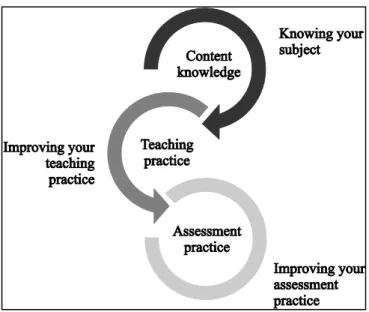
The Fundisa for Change pilots recognised teaching as a complex practice in which a variety of different forms of knowledge intersect (Lotz-Sisitka, 2011). The pilots investigated pedagogical content knowledge and the relationship between knowledge and teaching practice (ibid.). Teachers‟ subject matter knowledge, pedagogical content knowledge and teachers‟ assessment practices are critical for teachers‟ practices (ibid.). Therefore the Fundisa for Change model for teacher professional development focuses on these three main aspects, as shown in Figure 1.1 (further discussed in Chapter Five) below:
Figure 1.1: Fundisa for Change programme course structure (adapted from Fundisa for Change, 2013:2)
Environment and sustainability knowledge such as biodiversity knowledge is new and thus requires new content matter and new methodologies (Fundisa for Change, 2013; O‟Donoghue, 2015). This includes imagining new futures, predicting possibilities and dealing with complexities and uncertainties, field-learning in and with the local community (UNESCO, 2014a). It is arguable that for teachers in South Africa to achieve new content matter and new methodologies for biodiversity teaching, they need to engage in professional learning communities (South Africa. DHET & DBE, 2011a; 2011b; South Africa. DBE, 2014; 2015). Figure 1.2 summarises the timeline events for the
curriculum changes in South Africa, and the teacher professional development initiatives that aimed at supporting teachers to engage with the environmental topics in the changing curriculum.
Figure 1.2: History of environmental education and teacher professional development activities for the curriculum changes in South Africa (adapted from Schudel, 2012)
1.7 The integrated strategic planning framework for teacher education and development (2011-2025)
In 2009, a teacher development summit took place in South Africa (South Africa. DHET & DBE, 2011a). The summit was described a ground-breaking event which for the first time in the history of South Africa brought together all stakeholders9 across the teacher education and development sector (ibid.). The summit‟s primary goal was to highlight and address the challenges experienced in teacher education and development in South Africa, especially by teachers (South Africa. DHET & DBE, 2011a). The outcome of the summit was the Integrated Strategic Planning Framework for Teacher Education and Development in South Africa (2011-2025), hereafter abbreviated as ISPFTED, prepared by the Department of Higher Education and Training and Department of Basic Education (South Africa. DHET & DBE, 2011a). The primary outcome of the ISPFTED is “to improve the quality of teachers‟ education and development in order to improve the quality of teachers and teaching” (South Africa. DHET & DBE, 2011a:1). To achieve this primary goal, the ISPFTED aims to support teacher education through recruitment of teachers, preparation of teachers, induction of new teachers in the world of work and most importantly, through continuing professional development activities (South Africa. DHET & DBE, 2011a).
The ISPFTED is aligned to the national policies such as the Department of Basic Education‟s Action Plan, 2014, which aims to improve professionalism, teaching skills, and subject knowledge of teachers throughout their careers (South Africa. Department of Basic Education [DBE], 2010), and the DHET Revised Strategic Plan (2010/11-2014/15) aims at strengthening capacity and capability of the development of practising teachers (South Africa. Department of Higher Education and Training [DHET], 2010). Emphasis in the ISPFTED is to promote Continuing Teacher Professional Development (CTPD) through support systems that promote establishment of Professional Learning Communities (PLCs) to strengthen teacher professionalism. Establishment of PLCs will move teachers from being „subjects‟ in the teaching and learning spaces to becoming „agents‟ of educational change that motivates their work and provide spaces to teachers that affirm their voices in developing their own profiles on professional development matters (South Africa. DBE, 2014). PLCs are inherently connected to the concept of teacher agency, thus implementing PLCs aims to change the roles of teachers in continuing professional development activities (ibid.). This raises the question of whether the current climate in South Africa is
9 Participants included the Education and Training and Development Practices Sector Education and Training Authority, the Education and Labour Relations Council, the South African Council for Educators (SACE), the national