MAKING
FISCAL
COMMITMENTS
CREDIBLE
MICHAL
HORVÁTH,
ĽUDOVÍT
ÓDOR
D
ISCUSSION
P
APER
2/2009
© National Bank of Slovakia www.nbs.sk Imricha Karvaša 1 813 25 Bratislava [email protected] December 2009 ISSN 1337-5830
The views and results presented in this paper are those of the authors and do not necessarily represent the official opinion of the National Bank of Slovakia.
MAKING FISCAL COMMITMENTS CREDIBLE
1Institutions for a Responsible and Transparent Fiscal Policy in Slovakia
NBS Discussion paper
MICHAL HORVÁTH
2, ĽUDOVÍT ÓDOR
3
11 We thank George Kopits, Gábor Kiss, Zdenko Krajčír, Martin Filko and seminar participants at the NBS and MKKT.
2Nuffield College, University of Oxford, [email protected].
3The National Bank of Slovakia, [email protected].
JEL classification: E02, E61, E62.
Key words: Fiscal rules, Fiscal Council, Time inconsistence, Net worth.
Downloadable at http://www.nbs.sk/en/publications-issued-by-the-nbs/working-papers
Abstract
The study critically analyzes the weak points of current fiscal institutions in Slovakia, while proposing a new institutional framework. It is based on the concept of the net worth and reflects international experience. The main part of the proposal is additional fiscal rules to the Stability and Growth Pact – a gross debt limit and expenditure ceilings, new rules for the financial management of municipalities, and requirements for greater transparency. It is our proposal to set up a Fiscal Council under the National Council of the Slovak Republic, which would check and monitor fiscal processes and rules. The new framework should increase the credibility of Slovakia when looking for exit strategies following unfavourable impacts of the current economic crisis; it should also lead to lower interest rates and more dynamic and stable growth from the long-term perspective.
I
NTRODUCTION
Over the last ten years Slovak public finances have undergone significant changes. An administration reform has significantly contributed to their higher transparency and efficiency; and gradually the issues of responsibility and long-term sustainability have also become subjects of analyses. Upon joining the European Union, Slovakia also took on obligations resulting from the Stability and Growth Pact (SGP). At first glance it might seem that the institutional changes and fiscal rules of the Pact provide sufficient guarantee for the transparent and responsible preparation of the general government budgets. It is our opinion that in spite of strong progress, there is still scope for improvement in this area. The study is a critical analysis of the current state of fiscal institutions in Slovakia. Its aim is not to criticize a particular government, but merely to propose the package of measures necessary for the type of substantial reform which would help a subsequent government to move quickly towards making the Slovak public finances sustainable in the long term, and also in this way to contribute to stable and high economic growth. The study aims to initiate an expert discussion about this topic, and its conclusions are offered to public policy actors as an inspiration for a programme of transparent, responsible and credible fiscal policy. Since the Slovak Republic became an independent country, the public finance deficit4has
been basically consistently much higher than its long-term sustainable value. This fact alone should motivate economic-policy makers to reassess existing fiscal institutions.5 Other
reasons for a change are stated hereunder.
We do not have utopian ideas about the fact that fiscal policy could work in a similar way as monetary policy, i.e. by means of an independent institution, this is simply not possible in a parliamentary democracy. However, we consider that in spite of the mostly normative character of fiscal policy, it is possible to formulate principles of a responsible policy which should be accepted independently of one’s opinion about the role of the state in the economy, about the nature of the tax system, or public policy priorities.
With a reform of fiscal institutions in Slovakia, it is our objective to create a stronger commitment device whereby it would be more costly and difficult for economic-policy makers to deviate from a responsible track than today. The basis for reform should be a net worth concept offering a more complex view of public finance than flow variables, and at the same time it should limit the opportunity for perverse incentives and possible non-transparent accounting.
The paper consists of five main parts. In the first, we describe the current situation of fiscal institutions including the most important reform steps taken recently. They are mostly measures performed within the ‘Public Finance Management Reform’ project in cooperation with the World Bank. Apart from that, we give a brief review of the fiscal rules resulting from Slovak membership in the European Union (SGP).
4 In this study we understand the ‘public finance deficit’ as a general government deficit (Eurostat), if not stated otherwise.
5 In the study we understand the term of ‘fiscal institutions’ in a broader sense of the word including fiscal rules, budgetary
The second part points out the weaknesses of the current institutional setup. Public finances are negatively influenced by a phenomenon which we will call a ‘deficit bias’ resulting from time inconsistency of decision-making about fiscal policy. At the moment, fiscal policy does not contain a mechanism which provides a stabilizing effect, particularly important in the absence of a national currency. It is essential that fiscal policy responds countercyclically to asymmetric shocks, and automatic stabilizers should get the opportunity to work freely. It is also highly necessary to rectify these weak points of macroeconomic management when looking for exit strategies after the strong growth of deficits as a result of the current economic and financial crisis. In addition to the stated points, there remains a problem with transparency in many areas which subsequently creates scope for the inefficient spending. There is also still some scope for a non-transparent reporting of the state of public finances which has not entirely disappeared either.
The third part is a discussion about possible solutions. It begins with a review of literature and best practice from around the world, followed by arguments which were heard in Slovakia in relation to the design of fiscal institutions in the past.
The fourth part contains our reform proposal. It includes criteria on the basis of which we are looking for an optimal form of rules for Slovakia. The aim of the fiscal responsibility package is to increase responsibility, efficiency and transparency in public resource management. A fundamental criterion is also neutrality against different views on the role of the state in the economy and public policy priorities. The chapter introduces the concept of net worth which, according to the authors, should act as a basis for reflections on fiscal institutions. The study recommends introducing an upper limit for gross public debt, expenditure ceilings, new rules for municipalities, and transparency rules. Part of the proposal is also the creation of an independent Fiscal Council. This suggestion is fully in accordance with the coordination of policies within the EU, since the European Commission also recommends that member states create national fiscal institutions to complement the SGP.
The fifth part is a brief analysis of some implementation aspects in relation to introducing fiscal rules and independent institutions.
The study does not deal with detailed legislative proposals, but only with the concept of the reform of fiscal institutions; it also does not aim to deal with the efficiency of programme budgeting. The proposed changes can help in this area, but a solution of this problem is complementary to our intentions.
I.
B
RIEF REVIEW OF FISCAL INSTITUTIONS
IN SLOVAKIA
As in most neighbouring countries, the state of the Slovak public finances was still unclear and complicated for many years after the change of the political regime. A key problem was the absence of a standard methodology which would enable the analysis of developments in a more complex way. For many years, the emphasis was on cash payments of the state budget, while creative accounting and misleading activities were flourishing. Usually, the
period of focus was only one year, a time period of course which lent itself to patching up rather than systematic measures. Funding was from the great part institutional and not project (Ministry of Finance, 2006).
The fundamental turning point in this area was the Public Finance Management Reform made in cooperation with the World Bank. The Bank evaluated the project as very successful, which can serve as an example for many developing countries (Clarke, 2005). The main contributions of the reform, according to the authors, are the following:
• Standardization of methodology. Gradually, the ESA95 methodology was introduced,
forming the basic standard of the European Union. Priority was shifted from the cash principle to accrual principle6 and the whole general government, not only state budget,
became visible to the public. Several non-systemic state funds were abolished.
• Multi-year budgets. For a long time, planning was made only from year to year.
Budgets planned for several years are a key element of a more responsible and efficient fiscal policy, as they show the impact of current decisions in the long time-period. And of course many projects are more than one-year long.
• Programme budgeting start. In order to better check the meaningfulness of financial
spending, the public should know the main aims of individual expenditure titles. The first budgets in a programme structure form an important milestone on this road, although it must be clearly said that there is still huge scope for improvement.
• Realistic forecasts and two Committees. Public finance must be spent in a responsible
way, the assumptions on which a budget is built have to be set very carefully. The aim of the establishment of two committees, a Committee for Macroeconomic Prognoses and a Committee for Tax Prognoses, was to separate political discussions from technocratic discussions. Macroeconomic scenarios and tax revenue estimations should in no case be the subject of political discussion. Participation of renowned expert institutions in the Committees is a guarantee that the public will get a trustworthy (based on the information available at that time) picture of how real the assumptions of the Ministry of Finance are.
• Improved analytical capacities. The extent, as well as the quality, of analyses in the
fiscal area have undergone substantial changes. The Financial Policy Institute (FPI) is currently an acknowledged analytical capacity not only among ministries, but also among the public.
• Rules of privatization income and state guarantees. It is very important that one-off
incomes are not used for common expenditures; the best thing is to use them for debt reduction. State guarantees have often been used as a substitute for necessary subsidies. The decision to abolish the provision of guarantees was a good one.
• Fiscal decentralization. The authors find it right to decide about local problems at the
local level; in spite of the fact that now we cannot clearly confirm that finances are spent in a more efficient way. Municipalities have the opportunity to be more flexible in reacting to their needs by means of establishing several tax rates and fees.
6 Accrual evaluation allocates items to the time period which they are economically related to, regardless of the fact if a cash
• Establishment of the Treasury and ARDaL debt management agency. The gathering
of a great majority of financial assets of public administration and professional state debt management brought significant savings in interest costs in a relatively short time. Likewise, the Treasury also contributed to the creation of a quicker and more detailed electronic database.
• 1%-rule. In an effort to consolidate more quickly in good times, the option to
increase state expenditures in the case of an unexpected positive evolution in the income area was greatly limited. However, this is only true for state budget expenditures.
• Rules for municipalities. There are two rules for municipalities: their debt must not
exceed 60% and debt service costs must not exceed 25% of operational incomes from the previous year.
• Higher transparency. The contents of budgets as well as state closing accounts have
improved substantially.
After joining the EU, the issue of public finance management became part of the common interest of all member states. Slovakia is subject to fiscal rules in the form of the Stability and Growth Pact (SGP). These fiscal rules are more complex, but the general public is mainly familiar with public finance deficit limits of 3% of GDP; and a limit of 60% of GDP for gross debt.
The main intention of SGP creation was to prevent gross economic policy errors. In a monetary union, it is essential that single member states do not take irresponsible action at the expense of others (free rider problem). The most important target of the Pact is to achieve approximately balanced budget in the medium-term. The SGP has two arms – preventive and corrective.
The aim of the preventive arm is to prevent excessive deficits. It stresses the fact that a 3% GDP deficit is in no way to be understood as a target, but as a maximum possible limit (for automatic stabilizers to work freely). An important part of the preventive arm is the medium-term objective (MTO), set individually by each country. It is clear that countries with higher debts, low potential growth, or a higher expected impact of aging population should have more ambitious MTOs. If a country fails to meet its MTO, it must consolidate its structural deficit by at least 0.5% of GDP on average until the objective is met. This benchmark is calculated without one-off influences. However, it is important to stress that a failure to meet the recommended consolidation has not had a major impact on any member state to date. Convergence programmes and stability programmes (for Euro area countries) form the platform for evaluation of results; they are drawn up yearly by member states. Each year the Commission expresses its opinion on these programmes and it can warn the states about potential shortcomings. The pattern for MTO calculation is set in such a way that - according to the authors - the relation between implicit obligations and MTO is relatively benevolent. The corrective SGP arm examines ‘excessive deficit’, i.e. deficit which substantially or for a long time exceeds 3% of GDP. An exception might be the case that a deficit is close7to this
level under exceptional circumstances and only temporarily. Member states send Eurostat
their statistics on public finance management (‘notifications’) twice a year. If the European Commission discovers that rules have been broken, it proposes the country for an ‘Excessive Deficit Procedure’ (EDP). Countries are usually obliged to rectify defects within one year after they have been identified (e.g. two years after they originated). At the same time, the particular country has to submit reports and information on the prepared measures and total public finance developments more frequently. If efficient measures are not taken in the defined period and the excessive deficit is not eliminated, the member states are publicly called on to implement specified measures, and in the next step EU countries have to make an interest-free deposit (between 0.2% and 0.5% of GDP). If the situation does not improve, they lose the deposit, although to date no country has received the mentioned penalty. Some countries may be threatened with a suspension from drawing Eurofunds. As we can see, Slovakia is now operating within standard fiscal rules and the situation of other fiscal institutions has also improved. It is definitely a big step forward; however, in the next chapter we introduce arguments explaining why this is still not enough.
II. WHY IS THE CURRENT SITUATION
INSUFFICIENT?
Even if we knew nothing about fiscal institutions in Slovakia, the following charts sufficiently prove that changes are necessary. We have not seen a surplus by now and we have not used the economically good times sufficiently for public finance consolidation.8
Chart 1: Fiscal indicators in Slovakia (%
of GDP) Chart 2: Fiscal impulse and economic cycle
Source: MoF, own calculations
Current events serve very well for a more extensive explanation of the background of the problem. The financial and economic crisis, usually for objective reasons, has increased global public finance deficits. However, for economic-policy makers and the public it is less obvious that the crisis also means a negative impact on economic potential and that the budget impact will not only have a cyclical character. As in good times, the potential for
8 The surplus need is not a normative announcement, but relies on long-term sustainability of public finance (see below).
-14 -12 -10 -8 -6 -4 -2 0 19941995 1996 1997 19981999 20002001 20022003 2004 20052006 2007 20082009E 2010 B 0 10 20 30 40 50 60 balance gross debt 2003 2004 2005 2006 2007 2008 -2,0 -1,5 -1,0 -0,5 0,0 0,5 1,0 1,5 2,0 2,5 -2,0 -1,5 -1,0 -0,5 0,0 0,5 1,0 1,5 2,0 counter-cyclical expansion
pro-cyclical restriction counter-cyclical restriction
pro-cyclical expansion output gap f iscal impulse
consolitadion was not used to the full extent, the crisis found budgets in a lot of countries unprepared. Debts are high and still growing. At the same time Europe is facing the problem of an aging population, which will be an additional burden for public finance. The best would be to tackle these problems with low public finance debt; however, this is growing and it increases the risk of a negative reaction from the financial markets. Unless something changes there is the threat that countries will see an increase in debt service expenditures, and that this will complicate private sector recovery and limit the opportunity for public policies to support growth. So in this context and at times of higher insecurity regarding the future development, it is necessary that countries devise a trustworthy plan of financial consolidation with durability beyond electoral terms.
The confrontation of fiscal institutions with this scenario uncovers various shortcomings of maintaining the status quo in Slovakia. These shortcomings are characterized in more detail below. As neither markets nor people are fully convinced by SGP’s efficiency in dealing with such shortcomings in the future, we have to consider additional rules at the national level. In the end it is also a suggestion of the European Commission itself (2009); it is therefore high time, also with regard to the crisis, to discuss changes to the fiscal policy framework.
The shortcomings of the current fiscal institutions in Slovakia can be divided into several groups:
1. Deficit bias
For governments, the best time for consolidation is tomorrow. It has been a well-known problem of time inconsistency since the pioneering work of Kydland and Prescott (1977). Each year discretionary decision-making can be suboptimal against policy rules.9 The literature about monetary policy therefore often mentions, for example, simple decision-making rules. To make things clearer, we can state a real-life example. Good examples are starting a slimming diet or having a final cigarette. When tomorrow comes and we have no strong obligations or rules, it is very easy for us to keep old bad habits for one more day. In public finances it manifests itself as a deficit bias. And yet problems are more chronic for transitive economies (Kopits, 2004). Furthermore, governments increase deficits much more quickly than they decrease them. Apart from time inconsistency, Drazen (2004) mentions five political-economic reasons for a deficit bias: (1) voters usually underestimate the amount of public expenditure, (2) voters have a tendency to underestimate inter-temporal constraints, (3) bureaucrats try to maximize their influence and budgets, (4) deficits serve as constraints for the subsequent government which can have different preferences, and (5) benefits from a higher deficit are immediate, but expenditures appear only in the future10. Cukierman and Meltzer (1986) point to the fact that politicians often do not maximize public wealth, but rather only their own chances to be re-elected. It is a problem in Slovakia that the good times were not used to more significantly decrease public finance deficit; the point is that we are missing a stronger tool for the enforcement of commitments (a commitment device). At present, when even 3-4% growth can be seen as “good times”, it is questionable if governments can find the courage for necessary substantial steps which they should bind themselves to, if they take the long-term health of public finance seriously. It would be
9 Another basic work is Barro and Gordon (1983) who in the context of a simple but intuitive model highlight consequences for
monetary policy and social welfare.
socially more costly to rely on the power of enforcement of markets in the form of interest rate growth, making it more difficult for debt to be refinanced, than a well-considered consolidation programme.11 Additional fiscal rules and institutions could help in this way. It is
therefore necessary to continue to de-politicize fiscal policy.
2. The absence of a mechanism providing a countercyclical character of fiscal policy
In January, Slovakia adopted the Common European Currency. Independent monetary policy ceased to exist and stabilization in the case of asymmetric shocks is only to be reached by means of fiscal policy and structural policies (through increasing the flexibility of the economy; mainly with labour market policies). In this context it is essential that automatic stabilizers could work freely and potential discrete measures could have a stabilizing effect. Slovakia needs to have rules set in such a way that this function is provided.
Procyclical policy has clear negative economic effects. De Ferranti et al. (2000) state that for example in Latin America as much as one third of higher volatility macroeconomic variables against OECD countries comes from fiscal and monetary policy. In addition, it also has redistribution effects. As Perry (2004) argued, poorer groups do not have enough human capital and savings to adapt to labour market drops. Moreover, they also have worse access to loans to cope with unfavourable situations. In the past we also experienced a procyclical policy in Slovakia. In this regard a too early but mainly too late decreasing of public finance imbalance is a threat for the future. A suitable institutional background could help to find the appropriate timing of an exit strategy in public finances.
3. Information asymmetry and credibility
Fiscal policy includes, even on an aggregate level, non-trivial decisions, the correctness of which can be judged by the public with great difficulty. Yet there is no independent institution the opinion of which can be taken as a basic reference. The Central Bank can serve these tasks to only a limited extent, as its tasks are concentrated in completely different areas.
It is also a lot more difficult to perform professional and public control due to the huge information advantage of the Ministry of Finance. While renowned institutions may be really helpful in the Committees for Macroeconomic and Tax Prognoses (slightly less so in this case), the evaluation of a situation is much more difficult on the part of expenditures. This problem can be solved only by establishing an institution whose main task would be to perform budget analyses.
Moreover, the optimal response of fiscal policy to events in the economy can sometimes be externally very similar to suboptimal alternatives. Sometimes it may even be desirable to temporarily suspend or modify rules which until that time had given credibility to the system. In such case, it is fundamental to have an independent institution which is able to promote such policy in a credible way (Kirsanova et al., 2006).
11 Limiting in the form of an immediate reaction through an exchange rate channel is “switched off” under common currency
4. SGP Shortcomings
As we have stated, the Stability and Growth Pact was introduced with the intention to prevent major policy errors in the fiscal policy of member states. However, practice showed that the pressure exerted by the SGP is only mild, as the penalty mechanisms have never been used. Apart from that, there is a wide range of literature about other shortcomings of these fiscal rules (Clamfors 2005, de Grauwe 2003, Buiter and Grafe 2004), of which, let us stress three.
Firstly, in our opinion public debt is a more important indicator of a fiscal situation than a deficit (creative accounting). Nevertheless, the SGP puts much greater emphasis on the deficit, which from the long-term point of view can be a serious problem for member states. For a country with weak potential growth, it is relatively painless to operate with a 2% deficit and at the same time still increase its debt. There is some progress concerning a greater emphasis on debt when assessing countries, as advised by the EC in relation to the rapid growth of debt in EU countries during the crisis.
The second frequently discussed shortcoming is the absence of pressure on consolidation in the good times. Therefore it happens very often that in the period of expansion, countries successfully meet SGP requirements; however, in a recession they get into excessive deficit procedure very easily. Politicians still see the 3% of GDP as a magic number instead of a requirement of structurally (almost) balanced budget. When reaching zero, there is only a minor likelihood for most countries that common economic cycles can catch them short (with a public finance deficit increase above 3% of GDP).
The third problem, from the point of view of Slovakia, is the small emphasis on the long-term sustainability of public finance. If MTOs took more into account the estimated costs of an ageing population (which we find reasonable), then some countries should operate with surpluses rather than balanced budgets. We think that for Slovakia, also in view of higher expected ageing costs, fiscal rules should more clearly reflect the question of long-term sustainability.
On top of that, people see the SGP as an outside limitation. Not respecting one’s own fiscal institutions should probably have higher political costs.
5. Non-flexibility
The general problem of fiscal policy is also the relative non-flexibility which does not allow prompt reaction to unexpected events (Blinder, 2006). This problem cannot be removed completely, although it can be mitigated. For example an independent institution could recommend (without legislative force) releasing or tightening the fiscal lever throughout the year. This aspect is particularly important at times with higher insecurity regarding development and also a greater need to maintain fiscal policy credibility.
6. Irresponsible acts constituting an amendment
Each Member of Parliament can practically file an act constituting an amendment during a budgetary procedure without having a clearly calculated (a direct as well as indirect) impact on public finance. It is not our aim to limit the freedom of MPs when filing the acts; we only wish Parliament to know exactly what they are voting about. With an independent institution
introducing obligatory calculations of fiscal impacts, there might perhaps be fewer proposals, but their quality may increase substantially.
7. Transparency in disclosing relevant indicators and creative accounting
With its public finance management reform, Slovakia has clearly achieved a higher standard of fiscal reporting, and transparency has improved notably. However, there are areas where the current framework still allows for the fogging or avoidance of rules. In addition, the way some items are accounted in the ESA95 system distorts the total economic impact of fiscal policy (on aggregate demand). As examples12we can state a reclassification of transfers to
recoverable financial assistance, PPP projects, optical budget improvement at the expense of state enterprises, maintenance costs, one-off incomes from the sale of assets, extra-budgetary funds, and accounting capitalization insurance schemes.
Apart from that, the information content of budgets and state closing accounts change flexibly depending on which data is more or less politically sensitive. Often not, even an expected outcome of the current year or a result from the previous year are stated. We can also see shortcomings when disclosing the beneficiaries of public resources. There should be minimum standards independent of the sitting government or economic cycle.
In many cases transparency can even replace fiscal rules as a result of public pressure. Under Slovak conditions, however, it is a question of the not very near future. According to von Hagen (2005), there are basically three tools for limiting information asymmetries among voters and politicians: ex-ante rules, political competition, and budgetary processes including transparency.
III.
T
HEORY AND INTERNATIONAL
EXPERIENCE
We don’t have any utopian ideas that a fiscal policy could work in a similar way as the monetary one, i.e. by means of an independent institution; it is simply impossible in a parliamentary democracy. It is our aim to create a stronger ‘commitment device’ where it would be more costly and difficult for economic-policy makers to deviate from a responsible track than today. All in all, each law can be changed and many things depend on the political will of the current government.13 The important thing is that if economic-policy
makers mean it seriously with consolidation plans (ex-ante), appropriately selected institutional limitations could help them to reach their aims efficiently.
Different countries have different approaches to the creation of such “commitment devices”. The point is that there is no uniform or only correct recipe; many things depend on where a
12 A complex view of examples can be found in the ‘Net worth’ chapter.
13 We can state an example from microeconomics to clarify the situation. People threatened by only a small actual penalty for
breaking their obligation are much more successful at giving up smoking. This is why some websites are popular where people wishing to lose weight publicly declare that they will pay a certain sum of money to their friends if they fail to lose a determined weight. Another example is work by Benartzi and Thaler (2004) describing the success of a “save more tomorrow” program in the case of pension schemes. The amount of savings increased a lot more with people who decided to gradually put aside more money on their pension; and that in spite of the fact that it was relatively easy to cancel the obligation.
broad consensus among political parties can be found and what exactly individual countries need. A suitable compromise has to be found between simplicity and efficiency, or between flexibility and enforceability.
Since 1994, when the Fiscal Responsibility Act was passed in New Zealand, a lot of countries have tried to establish complex institutions14for limiting growing deficits and debts. A good
review of the issue can be found in the work of Kopits and Symansky (1998), Banca d´Italia (2001), and for emerging markets Kopits (2004). By constructing indicators, some studies try to quantitatively measure differences in the approaches of individual countries to fiscal institutions – von Hagen (1992) and Gleich (2003).
This study understands fiscal institutions as a set of the following components: - fiscal rules;
- budgetary procedures; - transparency rules; - independent institutions.
Fiscal rules are defined (Kopits and Symansky, 1998) as permanent limitations for the evolution of the development of some aggregate fiscal indicators (deficit, debt, expenditures). These indicators can be counted as nominal, real, or in proportion to GDP. In some countries the main legislation does not even mention quantitative requirements but only qualitative ones (New Zealand). From the point of view of legislative power, rules can be laid down directly in the Constitution or in the Budgetary Rules Act. Nevertheless, there are cases when rules are stipulated only in coalition agreements or even only as unwritten rules.
Rules for the budgetary process usually identify the powers of the Ministry of Finance, the Government, and Parliament. They tend to contain limitations for filing amendments to acts, time schedules or, for example, the obligatory force of some limits.
Transparency rules are explicitly stated in the recommendations of the MMF (2007), OECD (2001) or, for example, in the study by Kopits and Craig (1998). It is the OECD’s recommendation to provide transparency in three areas (overlapping also with rules for drawing up budgets). Firstly, the OECD defines what information a budget should include, what principles it should be built on, and what accompanying studies the government should disclose. Secondly, for the public to obtain more complex budget information, the government should explicitly disclose some assumptions and problematic items, such as detailed economic prognoses, tax expenditure data, non-financial assets or, for example, conditional commitments. The third area of recommendations is an internal as well as external inspection (inspection offices, Parliament).
Independent institutions serve mainly for breaking the information advantage of the Ministry of Finance. They make the Government reflect on fiscal commitments; they help to put the
14 Of course, simple rules for limiting debt or deficit existed before, mostly on a sub-national level (USA, Switzerland, Germany,
budget on slightly conservative macroeconomic scenarios or, for example, they provide independent impact studies for proposed legislative amendments. Some of the most famous institutions include the Congressional Budget Office (CBO) in the USA, the Institute for Fiscal Studies in Great Britain, the Central Planning Bureau in the Netherlands, and the Federal Planning Bureau in Belgium.
Although each country has a different approach to issues of fiscal responsibility, several studies have tried to find out if better rules and institutions also mean better budgetary results. These works have quite optimistic conclusions: for example Fatas and Mihov (2003) on the basis of data from 51 countries point to a higher volatility of economic cycles as well as to lower economic growth in the case of discretionary decision-making in fiscal policy. Eichengreen (1994) analyses the behaviour of individual states in the USA with limitations existing in the form of rules. According to him, numeric and procedural rules are very efficient to achieve and maintain fiscal discipline. Hausmann (2004) argues that fiscal rules have to be monitored by a politically independent panel or court, and a failure to meet targets has to be significantly penalized. For Drazen (2004) fiscal rules are a signalizing mechanism when debates about fiscal responsibility attract the attention of media. The existence of rules helps to increase the interest of the public in this topic. No government wants to be the subject of negative criticism in the media (“negative spotlight effect”). Sometimes it is politically costly to abolish something which has been successfully working for a few years.15
Nevertheless, when identifying the benefit of the rules, the biggest problem is the fact that stricter rules are introduced mostly by more responsible countries and it is therefore difficult to estimate the real impact of these reforms. Another difficulty is the fact that in many countries these institutions are not older than 10 years. The time series is short, and for a complex evaluation it is necessary to see the results of at least two economic and election cycles. Kopits (2007) shows results for the countries which have not only introduced but also met rules and institutions, and these have survived at least one election cycle without change. It can be said16 that generally in these countries the debt and interest rates have
dropped, economic growth has risen, and output volatility has decreased. The lesson to learn is that if a broader political consensus can be found regarding the need for greater fiscal responsibility reform, there is a bigger chance for success in the form of stable and sustainable public finance. According to Kopits (2001), governments with a strong reputation do not need fiscal rules. If they do not have such a reputation, fiscal rules can be a useful framework to achieve high and stable economic growth.
15 As for authorized institutions in Slovakia, the period of service of the two mentioned committees under the Ministry of
Finance is also longer than the period of service of the government which established them.
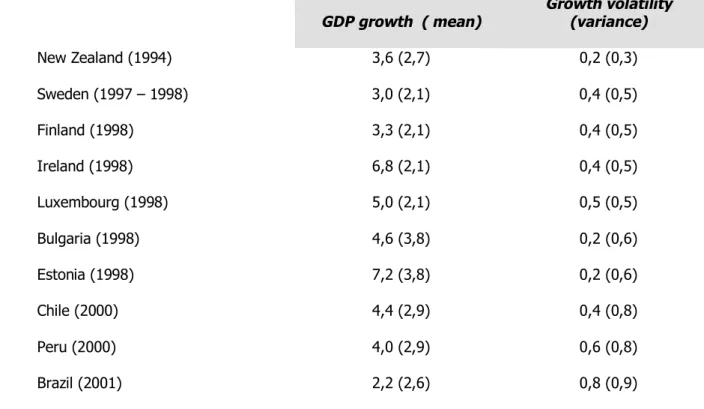
Table 1: Growth and volatility of selected countries after introducing fiscal responsibility frameworks (figures in brackets are values of comparable countries)
GDP growth ( mean) Growth volatility (variance)
New Zealand (1994) 3,6 (2,7) 0,2 (0,3) Sweden (1997 – 1998) 3,0 (2,1) 0,4 (0,5) Finland (1998) 3,3 (2,1) 0,4 (0,5) Ireland (1998) 6,8 (2,1) 0,4 (0,5) Luxembourg (1998) 5,0 (2,1) 0,5 (0,5) Bulgaria (1998) 4,6 (3,8) 0,2 (0,6) Estonia (1998) 7,2 (3,8) 0,2 (0,6) Chile (2000) 4,4 (2,9) 0,4 (0,8) Peru (2000) 4,0 (2,9) 0,6 (0,8) Brazil (2001) 2,2 (2,6) 0,8 (0,9)
Source: Kopits (2007), IMF Note: Comparison until 2005
The literature reveals that it were mainly crises and growing debts that led to the introduction of more responsible fiscal frameworks. One of the pioneers on this road – similarly to inflation targeting – was New Zealand which adopted the Fiscal Responsibility Act in 1994. Interestingly, it contained mainly requirements on a qualitative and not quantitative level. Some of the main principles of fiscal responsibility include: decreasing debt to a reasonable level, reaching an adequate net worth level, and good management of fiscal risks. An important part of the act is a requirement for analyses and reports including long-term projections and calculations of deficit adjusted for cycles (Janssen, 2001). Janssen argues that institutions and processes are more important than numeric rules which can easily be avoided.
Sweden underwent a major financial crisis in the 1990’s. Public debt strongly accelerated and its sustainability became an issue of expert discussion. Therefore in 1997 new frameworks for fiscal policies were introduced working on top-down principles. Expenditure ceilings, which are determined well ahead (see Brusewitz and Lindh (2007)), became a key part of the reform. These limits are based on reflections on the long-term sustainability of public finance. Their result is that Sweden should try to maintain a structural surplus. In Sweden there is also an independent Fiscal Council for monitoring and observing rules.
The USA is an example of a strong position of independent institution in the budgetary procedure (also when there are no fiscal rules at a federal level). The US Congress has very strong powers in drawing up the budget, it practically does not need to respect the President’s proposal. If there are differences in data between the President’s proposal and the CBO, the CBO’s calculations have to be used in the debates. Apart from the President’s proposal analysis, the CBO also produces long-term prospects, budgetary alternatives, monthly reports, and for example analytical studies. It employs more than 200 people, of whom 30 make macroeconomic analyses, 18 examine tax incomes, 76 the ‘expenditures’ side of the budget, and over 50 deal with impact studies and microeconomic analyses (Emery, 2007).
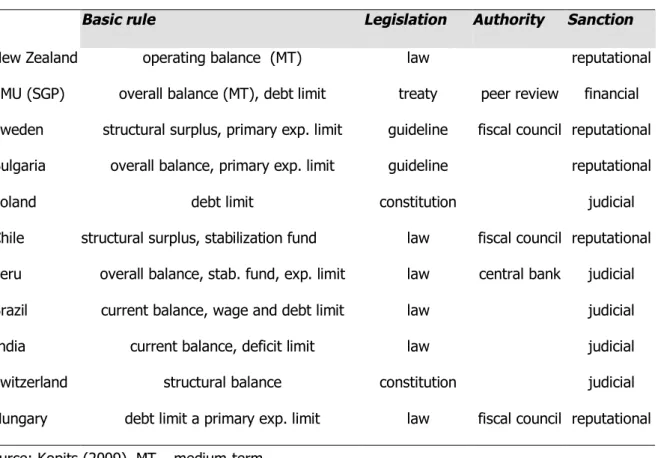
Table 2: Frameworks of selected countries
Basic rule Legislation Authority Sanction
New Zealand operating balance (MT) law reputational
EMU (SGP) overall balance (MT), debt limit treaty peer review financial
Sweden structural surplus, primary exp. limit guideline fiscal council reputational
Bulgaria overall balance, primary exp. limit guideline reputational
Poland debt limit constitution judicial
Chile structural surplus, stabilization fund law fiscal council reputational
Peru overall balance, stab. fund, exp. limit law central bank judicial
Brazil current balance, wage and debt limit law judicial
India current balance, deficit limit law judicial
Switzerland structural balance constitution judicial
Hungary debt limit a primary exp. limit law fiscal council reputational
Source: Kopits (2009), MT – medium-term
Great Britain has introduced two rules for achieving fiscal stability: the Golden Rule and the Sustainable Investment Rule. The Golden Rule requires the government to borrow only for investment funding purposes and not for common expenditures over the business cycle. The other rule represents a limitation for investment, setting a target for net debt (also over the business cycle). The main disadvantage of introducing such rules on a central level is the fact that it discriminates investment in human capital which, in fact, can have even more substantive benefits for society than investment in infrastructure.17
17 At the moment the implementation of these rules is (temporarily) suspended. In the future the return to a similar system can
Hungary is quite a fresh reform example. For a longer time, Hungary has been well-known for its high deficits and problems with the refinancing of its foreign debt. Apart from rules for a real debt development and expenditure limits, Hungary has established a Fiscal Council which is planned to have about 40 employees. Its task is to strengthen the public control of the budget. The main anchor is the requirement that real gross debt must not increase. In addition to that, the government can also limit the growth of public expenditures and in this way also the role of the state in the economy.
Of other countries, let us mention Chile which did not learn their lesson from their own mistakes, but rather from the mistakes of others. After turbulences in Argentina, Chile decided to strengthen the trust of investors by means of unofficial fiscal rules. The country has introduced structural surplus requirements and started to create reserves in the budget. Poland has a constitutional act for an upper limit for debt. Currently, Germany, seeking an exit strategy, has introduced a new rule with a constitutional act. On a federal level, this amendment to the SGP determines a limit for the structural deficit at the level of 0.35% GDP, which Germany plans to meet starting from current values until 2015. Further rules apply for regional budgets (Federal Ministry of Finance, 2009).
It is important to determine the legislation appropriate for setting up the framework for fiscal responsibility. There are examples of a constitutional amendment (e.g. Poland) as well as of subordinate legislation. Consequences of non-compliance with rules have to be determined too. In many countries there is only a reputation risk, in others it is considered to be a criminal act (Brazil). Brazil is also a good example of a very detailed specification of enacted rules and procedures, while for example New Zealand relies on qualitative elements of fiscal responsibility. For a few years, Chile did not even have rules laid down in acts.
In Slovakia there was an expert discussion18 about questions of further fiscal institution
reform as early as 2005. It was then discussed if rules or fiscal board are better and more efficient (similar to Wyplosz, 2002). The result was that it would be enough to include the SGP into our legislation. We believe that there is a better way. Instead of refusing rules because of their rigidity, and fiscal board because of their problematic application in Slovak conditions, we should discuss a complex package where both rules and the Board would have their place.
The reason is significant synergic effects. Rules can always be avoided in creative ways
to a smaller or greater extent. The Board could therefore be an independent guardian of compliance with the rules. According to Milesi-Ferretti (1997), numeric rules can play a positive role only when they are accepted as a part of budgetary procedure reform. Otherwise, there is not only the risk that the rules will not be efficient, but they may even be counter-productive, as they can extend creative accounting practices. Moreover, there are extreme cases when it is easy for politicians to drop all rules saying that they are too rigid and the country needs to increase the deficit. In such case, the Board is an ideal place for evaluating the justification and at the same time represents a greater guarantee of return to sustainable tracks. On the other hand, a Board without rules may be a useful tool for increasing transparency; its assessments can start to be purely academic in the course of time, without a response in economic policy. Another argument is the fact that in order for the rules to be successful, they must be communicable in a simple way to the public. Then
there is the risk of their avoidance. The Board may be a kind of prolonged arm of the public which can also guard compliance of more complex rules. As Perry (2004) says, it is about finding a compromise between flexibility and credibility. In our opinion the combination of rules and the Board can help achieve this compromise better, and in this way give a partial response to critics who would introduce state-contingent rules. It is also interesting to have a look at the issue of government composition. Schick (2004) argues that with coalition governments (including Slovakia), it can be more efficient to delegate some fiscal responsibility issues on a professional level.
We are therefore convinced that the question is not “the one or the other?” but rather “how to combine the Board with the rules in the most efficient way?” (together with transparency and procedural questions).
Box 1: Rises and falls of fiscal responsibility frameworks
It is interesting to have a look at two questions: why some established schemes have failed and how the best frameworks work in times of the current financial and economic crisis? The best failure examples can be seen mostly in some Latin-American countries. New fiscal frameworks did not bring many benefits to Venezuela, Equador, or Argentina. It is important that institutions of this kind are not established as a result of external pressure, and that they do not represent an opinion of only one part of the political spectrum. Of course the failure in these countries can be attributed also to a not too solid democratic base.
The most successful examples could be the frameworks in New Zealand, Chile, Sweden, and the Netherlands. In New Zealand there isn’t an independent “inspection” institution, as public finance is very transparent there. The key to success in these countries was a general understanding that we cannot live at the expense of future generations, and mainly that the political fight is not about the public finance balance, but about the role of the state (amount of expenditures) and expenditure priorities.
The current crisis will intensively test all fiscal responsibility regimes. It is too early now to make evaluation, as the shock would be very sharp and a real test of single regimes will be the fact how quickly they will manage to return to sustainable values (exit strategy). However, there is some optimism in the fact that both Sweden as well as Chile are among the countries which do not show a significant deviation from responsible tracks and do not plan to change the existing systems. The case of Poland is still pending though, where the debt ceiling in the Constitution is starting to be a subject of intense political discussion.
IV.
A
REFORM PROPOSAL FOR FISCAL
INSTITUTIONS IN SLOVAKIA
Our reform proposal is based on a theoretically most acceptable concept – the net worth concept. Apart from that, criteria such as transparency, credibility or providing
sustainability and enough room for the work of automatic stabilizers are very important when designing the system. The main criterion for any institutional structure is neutrality against different opinions of the role of the state in the economy, rate of redistribution, and public policy priorities. All our proposals meet this criterion.
The following table compares different fiscal rules from the point of view of meeting our targets. Expenditure limits are, for us, definitely in first place.19
Table 3: Importance of individual fiscal rules according to various criteria
Rule regarding: deficit structural balance expenditures
Fiscal responsibility 1. 2. 3.
Macroeconomic stabilization 3. 2. 1.
Comprehension 1. 3. 2.
Credibility 3. 2. 1.
Cooperation with monetary policy 3. 2. 1.
Predictability 2. 3. 1.
Administrative difficulty 1. 3. 2.
Source: authors
In the table we do not consider annual debt rules, as in the end such have to be transformed into the general government budget. Also, our concept counts with a maximum debt ceiling. We do not include the option of introducing the Golden Rule on an aggregate level either, due to a great disadvantage in the form of discrimination of investment in human capital and a possible increase in the degree of non-transparency , as there would be a strong motivation to account common expenditures as capital ones.
Countries which have successfully introduced a kind of fiscal rules use mainly deficit limitats, and limitats for primary balance adjusted for cycles (structural deficit) or expenditures. A great advantage of deficit limitats is the fact that, providing plans are observed, they can relatively efficiently provide fiscal responsibility. On the other hand, they can have a
19 The verdict regarding expenditure limits assumes their suitable formulation. Too rigid rules include the unwanted risk of
destabilizing effect (as they do not respond to a business cycle phase) or they can be quickly doubted due to their inflexibility.
The most attractive alternative from the professional point of view is a rule for the cyclically-adjusted primary balance. In theory, this can ensure that fiscal policy will be both sustainable as well as working countercyclically. Apart from greater scope for avoidance, some of its main disadvantages also include a lower level of understanding for the public and problems with determining the current phase of a business cycle.
Expenditure ceilings offer a very clear and transparent view of observing the rules; their disadvantage though is lower pressure on the deficit decrease in good times. Our proposal is a kind of combination of economic logic of rules for a cyclically-adjusted primary balance and the simplicity of expenditure rules.
Apart from expenditure ceilings, we also propose a ceiling for gross debt, a Golden Rule for municipalities, and rules for the transparent drawing up and checking of the budget. These four pillars are roofed by the Fiscal Board which, as an independent institution, offers the public expert opinions and detailed information on the public finance status in Slovakia.
Scheme 1: Proposed reform of fiscal institutions in Slovakia
Proposals for fiscal rules are in literature evaluated on the basis of the so-called ‘Kopits- Symansky criteria’ (1998). Annex 1 contains an evaluation of our complex proposal on the basis of these criteria.
NET WORTH D E B T C E I L I N G E X P E N D I T U R E C E I L I N G S R U L E S F O R M U N I C I P A L I T I E S T R A N S P A R E N C Y B O A R D
IV.1 NET WORTH
Economic analyses, but also political debates around the public finance budget, mostly focus on flow variables, such as incomes, expenditures, and deficit. Stock variables are mentioned much less frequently. There is therefore a significant disharmony between the view of economists on the financial management of businesses, where apart from profit and loss statement also balances are commonly presented, and their view of the financial management of the state; and it is not only about the complexity of analyses but, as we argue below, also about incorrectly set motivations for economic-policy makers.
It is our ambition to introduce the concept of net worth in discussions about fiscal and budgetary policy. We see it as an important benchmark for economic-policy
makers. Although it is a hard task to introduce this concept into practice, in our opinion it is necessary to draw a balance of the state as soon as possible (at the beginning only indicative though).
As can be seen in the following scheme, the state balance offers a much more complex picture of public finance management than only incomes and expenditures.
Scheme 2: Simplified public sector balance
In the end, the most important indicator for the public is not the deficit evolution, but net worth change. Some countries, such as New Zealand, Australia and Great Britain monitor this concept and consider it to be an important indicator.
Let us now mention a few examples of bad motivations or economic-policy makers, if only the budget, and not the net worth, is under public scrutiny. Then scope for creative accounting and fogging is still rather wide. We will show that with correct handling of net worth concept, these tricks would have no significance.
Motivation No. 1 – Sales of some assets
Governments may have a motivation to sell a building or to privatize a state enterprise not because it has economic importance, but for example because they do not want to exceed
ASSETS LIABILITIES
A1 Buildings L1 Explicit debt A2 Infrastructure L2 Implicit liabilities A3 Capital stock L3 Contingent liabilities A4 Deposits L4 Other liabilities A5 Central bank net worth
A6 Net worth of state entreprises A7 Natural resources
A8 Ecological wealth
A9 Other assests including taxing capacity
the 3% public finance deficit or the 60% limit (of GDP) of government debt. It is often the rule that a favourable price plays only a secondary role in these reflections.
Example 1a: The government sells a building for half price and in this way will decrease the
deficit.20 The target has been achieved. If it took into consideration the net worth concept,
results would be negative. If we assume that all income will be transformed into capital stocks, the net worth decreases. A3 namely grows a half, against the A1 drop.
Example 1b: The government privatizes a state enterprise and decreases its gross debt from
the revenues, in order to meet Maastricht Criteria. Although the gross debt drops, the net worth will not change. Both A6 and L1 will decrease by the same value (we suppose that the privatization will be performed at market price).
Motivation No. 2 – Neglecting repairs and maintenance
With public pressure on saving, it is often the easiest solution for budget-makers to nullify expenditures on repairs and maintenance. Roads will be of lower quality and computers old-fashioned, but in the end the point is to decrease expenditures, i.e. savings at first glance. However, if we look at the state balance, a problem comes to light very soon.
Example 2: The government decreases expenditures on the repair of schools. A look at the net worth will reveal a negative evolution, as A1 will go down (depreciation).
Motivation No. 3 – Too big an emphasis on PPP projects
A real motivation for performing PPP projects should be the fact that in some cases the private sector can be more efficient in delivering a project than the state (e.g. thanks to longer experience in the particular area or a stronger motivation to decrease costs efficiently). Or in the background, there might be reflections about a transfer of a major part of risk to the private sector or about bigger inter-generation fairness: often future generations profit from the current investment too. However, it can be said, and is confirmed by foreign experience, that in fact in most cases the real motivation is lower budgetary expenditures in the short-term. As the efficiency question is in these cases secondary, the real effect on tax-payers can often be negative.
Example 3: The government, instead of building a highway from public sources for EUR 1
bill. will conclude a PPP project of total value of EUR 1.5 bill., paying EUR 150 mil. annually (for 10 years). The budget expenditures will drop by EUR 850 mil. in the first year and it looks like a saving. However, a look at the net worth will show that together with the A2, also the L2 will grow. Even with low interest rates, the current net present value of the implicit debt can be significantly higher than the highway’s value. In such a case, the net worth of the state will drop.
Motivation No. 4 – Saving at the expense of state enterprises
As mainly general government deficit is under the scrutiny of analysts and statisticians, there are often attempts to decrease public finance deficits, and at the same time problems in
20 According to ESA95 rules, sales of assets are a public finance income, while revenues from privatization are only a financial
state enterprises accumulate. In other cases, problems of state enterprises are solved by transactions which, in spite of the high risk of their unsettlement, are declared as financial (guarantees, recoverable financial assistance, or capital increase).
Example 4a: The government will decrease a public enterprise subsidy for actions performed
in the public interest. Public finance expenditures will drop, as well as deficit. Looking at the state balance it is clear that the L1 will go down, but at the same time the A6 will decrease too, at least by the same sum, because the enterprise will have to borrow from the market (the risk margin of the enterprise is higher than that of the state).
Example 4b: The government does not deal with the problem of the state enterprise and
when there are problems, it simply increases the capital or provides recoverable financial assistance (loans) on paper. Though the impact on the public finance budget is zero, the net worth will decrease by means of the A4 decrease or by means of the L1 rise. When not dealing with the situation, the A6 drops.
Motivation No. 5. – Aversion to funded schemes
Although some funded schemes (e.g. in the area of pensions or the health system) can bring higher stability and better results of systems in the long-term, current official statistics of public finance discriminate them against common systems.
Example 5: The government is considering introducing a fully-funded pillar in the pension
system. In the end though, it will choose not to carry out the reform because of a negative impact of the change on public finance in the short-term, as the reallocation of a part of social contributions to private pension fund management companies means a drop of income and so a higher deficit. A look at the net worth shows that through a higher deficit the L1 will grow, but at the same time the L2 will decrease, and in the end it can even have a positive impact on the net worth of the state.
Motivation No. 6 – Asymmetric handling of Central Bank profit/loss
It may happen that if the Central Bank makes a profit, the government will wish to obtain a part of the profit; however, with a loss it will not provide a subsidy to the Bank.
Example 6: Although in the case of strong domestic currency appreciation foreign
government debt decreases, the value of foreign exchange reserves of the Central Bank decreases too. The result is a clear positive impact on the budget, yet a questionable impact on the net worth of the state. The L1 will drop, as will the A5 .
Motivation No. 7 – Too rapid natural resources depletion
States rich in natural resources can very quickly ‘overeat themselves’ if they do not have a correct view of the state balance.
Example 7: The government is extracting crude oil quickly and from the revenues provides
common expenditures. Though the deficit is all right, net worth is clearly decreasing through the A7. This is the reason why many countries place revenues from crude oil into funds for future generations (the A7 is decreasing, but at the same time for example the A4 is rising).
Motivation No. 8 – Tendency for greater risk with legally ambiguous issues
If contingent liabilities are not recorded, motivations for the government may be wrongly set when deciding about some legal issues.
Example 8: For political reasons, the government decides to cancel a contract with a supplier
in spite of risks that it will lose the law-suit. The immediate impact on the budget is zero, but the impact on net worth can be negative through the L3.
Motivation No. 9 – Ignoring environmental costs
The quality of the environment is part of the wealth of a state (even though its quantification may be rather problematic). State activities may disturb this quality rather significantly.
Example 9: The government cuts down forests and builds a highway. The impact on net
worth may be questionable if we also consider environmental costs. The A2 will grow, but the A8 will drop.
As we have seen, looking at public finance in a more complex way through the net worth prism, the scope for deformed motivations of economic-policy makers and non-transparent accounting is considerable smaller. It would therefore be ideal to fully focus on the net worth of the state and not on public finance deficit. In regard to some methodical issues and the difficulty of data collection, this possibility is now rather distant. Yet we find it important that first state balances start to be disclosed and such should be improved gradually. Apart from that, the net worth concept can serve as a very useful benchmark for evaluating and analyzing real fiscal development. At least it makes economic-policy makers take into account the wider context of their decisions. In our fiscal institutions reform proposal, we also rely on the net worth concept and we will try to deal with incorrect motivations No. 1, 3, 4, 5, 6, and 8.
IV.2 SAFETY BRAKE – A DEBT CEILING
No matter how precisely we can try to set fiscal rules, it is never possible to cover all situations which may potentially crop up in real life. Therefore the first pillar of the reform should be a simple and clear rule which does not allow for flexible interpretation, and which would at the same time serve as a strong warning for both the government and the public. It would work as a safety brake in the case of danger.
In our opinion the best candidate is a debt limit which would be specified in a constitutional act, the breaking of which would have serious consequences for the current government. In the extreme, it could even lead to the fall of the government.
How to determine the limit? There are various selection criteria: simplicity, transparency, and economic logic. The scope for ambiguous interpretation must be absolutely minimal.
Of course, the starting point has to be economic reflections. There is no magic figure; even the 60% of GDP in the SGP is only an arbitrarily selected constant. We believe that it is necessary to consider a few economic factors:
- size and output capacity (investors’ trust is more fragile in the case of smaller countries with a shorter democratic history); as Hausmann (2004) shows, the gross debt amount to GDP is a very weak predictor of country rating; it is also necessary to take into account the level of taxation, macroeconomic volatility, and for example debt composition; such are exactly those countries with smaller economic activity (such as Slovakia) which have to pay a higher risk margin even with low debts. A very good current example is the Baltic states which had problems to refinance their debts with as little as 20% of GDP.
- long-term sustainability of public finance in relation to an ageing population; if we now get carried away with debt, we will get into serious problems at times of significant strains on the public social-security system balance in the area of pensions and health care; simulations of long-term sustainability suggest an optimum amount of gross debt for the following period at about 30% of GDP. It is therefore our opinion that it would be too risky to approach the 60% level (as allowed by the SGP).
Chart 3: Long-term sustainability of public finances (illustration)
-20 0 20 40 60 80 100 2004 2012 2020 2028 2036 2044 2052 2060 2068 2076 -5 -4 -3 -2 -1 0 1 2 3 4 Gross debt Net debt
Deficit (incl. PAYG shortfall) Maastricht criterion on deficit Maastricht criterion on debt
Source: Convergence Programme 2004
- reserve against the current value for unexpected big economic shocks (which will, of course, make it easier for such proposal to be politically acceptable);
The current draft public finance budget counts with gross debt at 40% to 43% of GDP in the following period. Net debt is estimated at the level lower at 3% to 5% of GDP. Economic reflections often prefer the net debt concept, as with gross debt there is still scope for avoidance by means of the sales of assets. On the other hand, the net debt concept is less known to the public, and Eurostat does not officially calculate it.
On the basis of this consideration, our proposal is to set a top limit for official gross debt at the level of 50% of GDP in a constitutional act, and also to increase frequency and transparency when accounting net debt.