RESEARCH ARTICLE
NUTRITIONAL ASPECTS OF EGUSI MELON – CITRULLUS COLOCYNTHIS L.
*
1Abbah, O. C.,
1Sanni, M. and
1,2Ejembi, D. O.
1
Department of Biochemistry, Kogi State University, Anyigba, Kogi State, Nigeria
2
Department of Biochemistry, University of Nigeria, Nsukka, Enugu State, Nigeria
ARTICLE INFO
ABSTRACT
Egusi melon is an annual herbaceous, monoecous plant which is grown mostly in tropical regions. It is up to 28% protein and 35% fats, with about 72% by weight unsaturated fatty acids, and 57.4% of it being polyunsaturated fatty acids (PUFA). PUFAs being essential fatty acids must be provided in the diet and egusi melon serves as a rich source. Egusi melon oil contains nutritionally good amounts of linoleic acid and other essential fatty acids which have protective effect against coronary heart disease and also aid in the absorption of fat soluble vitamins. Egusi is a good source of protein, with up to 17
amino acids, 9 of which are essential, and contains vitamins B1, B2, niacin, sulphur, calcium,
magnesium, manganese, potassium, phosphorus, iron, and zinc. These are very essential requirements by the body for optimum health, as they have varied synergistic functions. This food plant being found as a rich source of protein, essential fatty acids, polyunsaturated fatty acids is hereby discussed.
Copyright © 2014 Abbah et al. This is an open access article distributed under the Creative Commons Attribution License, which permits unrestricted use, distribution, and reproduction in any medium, provided the original work is properly cited.
INTRODUCTION
Egusi Melon – Citrullus Colocynthis L., commonly known as the colocynth, bitter apple, bitter cucumber, egusi, or vine of Sodom, also refered to as Curcurbita citrullus L., Colocynthis citrullus L.or Citrullus lanatus Thumb., as documented by Quattrocchi (2000) in the CRC World Dictionary of Plant Names A-C belongs to the Cucurbitaceae family, a large plant family which consists of nearly 120 genera and 825 species (Milind and Kulwat, 2011). This plant family is known for its great genetic diversity and widespread adaptation which includes tropical and subtropical regions, arid deserts and temperate locations. Curcubits are known for their high protein and oil content. Seeds of cucurbits are sources of oils and protein with about 50% oil and up to 35 % protein (Achu, 2005). Specifically for these reasons they are cultivated and consumed world over. “Egusi” (Citrullus colocynthis L.) belongs to the species of the genus Citrullus of cucurbitaceae family, which usually consists of a large number of varieties that are generally known as melons. Egusi (Citrullus colocynthis L.) is among the 300 species of melon found in tropical Africa and it is cultivated for its seeds, which have been reported to be rich in oil and protein. The regions of its cultivation are Middle East, West African (Nigeria, Ghana, Togo, Benin) and other African countries for the food in the seeds and as a crop inter-planted with maize, cassava and yam.
*Corresponding author: Abbah, O. C.,
Department of Biochemistry, Kogi State University, Anyigba, Kogi State, Nigeria
As reported by Giwa et al., 2010, in Nigeria only, ‘‘egusi’’ is cultivated over an area of 361,000 ha with a production figure of 347,000 tonnes (as seeds) in 2002. It is used both as condiment and thickener in Nigerian local soup, and the industrial scale production of the oil is yet to be utilized despite the huge potential. Various studies have reported predominantly high linoleic fatty acid content in egusi melon seed oils. Due to the unsaturated fatty acid composition of its oil, it has been reported to resemble that of safflower (Yaniv et al., 1999), corn, cottonseed, sunflower, soybean and sesame oil (Oluba et al., 2008).
Almost all “melons” have nutritional, therapeutic and economic value. The edible family member, Momordica charantia, called bitter melon or bitter gourd in English, is a tropical and subtropical vine of the family Cucurbitaceae, widely grown in Asia, Africa, and the Caribbean for its edible fruit. This has been reported to have quite a number of
medicinal uses ranging from antiviral, antidiabetic,
antiulcerogenic, antioxidant and hepatoprotective (Semiz and Sen, 2007) to antihelmintic (Beloin et al., 2005), antimalarial (Waako et al., 2005), anticancer (Kohno et al., 2004; Kobori et al., 2008) to cardio protective properties (Gadang et al., 2011). Also, Cucumis melo (musk melon or cantaloupe) has been shown to possess useful medicinal properties which include anti-oxidant, free-radical scavenging, anti-platelet, anti-ulcer, microbial, cancer, diabetic, helmintic, anti-fertility, analgesic and anti-inflammatory (Milind and Kulwant, 2011). The cantaloupe is rich in caretenoids which
ISSN: 0976-3376
Asian Journal of Science and Technology Vol. 5, Issue 3, pp. 176-180, March, 2014ASIAN JOURNAL OF
SCIENCE AND TECHNOLOGY
Article History:
Received 25th December, 2013
Received in revised form
31st January, 2014
Accepted 12th February, 2014
Published online 25th March, 2014
Key words:
Egusi melon,
Citrullus colocynthis,
the body uses as vitamin A. Throughout this write-up, “egusi” (Citrullus colocynthis L.) has been referred to as “egusi” or “egusi melon” for proper identification and consistency with the literature. A traditional food plant in Africa, this little-known vegetable, we agree with NCR (2006), has potential to improve nutrition, boost food security, foster rural development and support sustainable landcare. In this review, the nutritional and medicinal benefits of egusi melon – Citrullus colocynthis L. are discussed, with a view to ellucidating and presenting the immense benefits hidden away in these seeds around us which have the potential to unlock better health by serving as both food and medicine at relatively low cost for our needy world..
Discription
They grow in gourds which are mainly cultivated for their seeds as the flesh is neither sweet nor edible. Egusi seeds are small and flat. One end of the seed is rounded while the other is tapered. Egusi melon is an annual herbaceous, monoecous plant which is creeping but non-climbing. Pollination is by insects and egusi melon fruits which are indehiscent smooth berries, often large and seedy, are ready for harvest 3-4 months after planting (Ng, 1993). In a work published in 2004 in the Journal of Heredity titled “Inheritance of Egusi Seed Type in Watermelon,” the authors, Gusmini et al. refered to egusi as an unusual seed mutant in watermelon (Citrullus lanatus var. lanatus) and has seeds with a fleshy pericarp, commonly called egusi seeds.
Figure 1. Egusi melon seeds (Image courtesy: All Nigeria Recipe, 2012)
Figure 2. Egusi melon powder (Image courtesy: All Nigeria Recipe, 2012)
They reported that the origin of the phenotype is unknown, but it is widely cultivated in Nigeria for the high protein and carbohydrate content of the edible seeds. Egusi seeds have a thick, fleshy pericarp that appears during the second to third week of fruit development. After harvest, the gourds are left to ferment; the fermented flesh is then washed off the seeds. The seeds are then dried and the light brown husks removed by hand or mechanically. When ready to be used in food recipes, the white/cream seeds (shown in Figure 1) are ground into powder (Figure 2) and used as soup thickener.
Egusi seeds are in a class of their own and should never be mistaken for pumpkin or watermelon seeds. In particular the name "egusi" may refer to either or both plants (or more generically to other cucurbits) in their capacity as seed crops, or to a soup made from these seeds and popular in West Africa.
Botanical Description
Botanical Name: Citrullus colocynthis
Kingdom: Plantae
Division: Magnoliophyta
Class: Magnoliopsida
Order: Cucurbitales
Family: Cucurbitaceae
Genus: Citrullus
Species: C. colocynthis
Habitat
Citrullus colocynthis (shown in Figure 3) could be rightly described as a desert plant of the Cucurbitaceae, naturally adapted to arid environments although Ng (1993) reported that they thrive in temperate locations in addition to tropical, subtropical and arid deserts.
Figure 3. Egusi melon - Citrullus colocynthis (Picture courtesy: H. Zell, 2012)
Season
ecological zones: these are the forest zone, the derived savanna zone (reclaimed from forest) and the southern Guinea savanna zone, where it is usually grown in conjunction with tuber and cereal crops. Two or three seeds are usually sown per hole and seedlings appear 4-7 days after sowing. As a result of the plants' spreading habit, early ground cover is attained which enhances weed suppression.
Nutritional Benefits
Egusi melon is used as a common component of daily meals in West Africa. Its seed, which is edible but similarly bitter, nutty-flavored, and rich in fat and protein, is eaten whole or used as an oilseed. As an oilseed, of course, of natural origin, it is not out of place that different reseachers may have results of its oil composition that differ slightly. These differences may be due to various factors acting independently or in synergy and could include, but not limited to, the quality of the stock planted, the nature of the farmland, climatic conditions, processing techniques and analytical methods. Interestingly, one thing that has been reported in unison is that egusi melon oil predominantly contains unsaturatted fatty acids (Oguntola, 2010; Oluba et al., 2010; Oluba et al., 2008; Bankole et al., 2005 and Schafferman et al., 1998). According to Schafferman et al. (1998), the oil content of the seeds is 17-19% (w/w), consisting of 67-73% linoleic acid, 10-16% oleic acid, 5-8% stearic acid, and 9-12% palmitic acid. They also reported that its oil composition is similar to safflower oil, with a total of 80-85% unsaturated fatty acids, and that its oil yield value is estimated at 250-400 L/hectare. Oluba et al. (2008) report that the percentage composition by weight of the oil is: lauric, 0.21%; myristic, 0.78%; palmitic, 13.45%; stearic 13.71%; oleic, 14.50%; linoleic, 56.94% and linolenic, 0.46%. This composition amounts to about 72% by weight unsaturated fatty acids, with 57.4% of it being polyunsaturated fatty acids (PUFA). Polyunsaturated fatty acids (PUFAs) are essential fatty acid, meaning the body cannot manufacture them and as such, they must be provided in the diet. In fact, essential fatty acid deficiency has been reported to result in a dermatitis similar to that seen in zinc or biotin deficiency (Pariza et al., 2001).
Absorption of Vitamins
For absorption of vitamins, unsaturated fats aid the body to absorb the fat-soluble vitamins which are vitamins A, D, E and K. When a fat-soluble vitamin is consumed, the body absorbs the vitamin and stores it in the fatty tissue; because the body stores fat-soluble vitamins, it is possible to consume too much of them and develop the symptoms of vitamin toxicity (Zaykoski, 2011).
Proteins
Proteins provide structure for the bones and muscles, which helps to preserve the skeletal structure of the body. Unsaturated fats control a different type of structure - the cell wall. Each cell has a wall to support the cell, determine the shape of the cell, control the rate of cell growth and resist water pressure. Basically, without cell walls the cell membrane would burst. The seeds of egusi are the true delicacy of this melon. Apart from its rich oil composition, egusi melon is composed of about 30% pure protein [Oguntola (2010), Oluba
et al., (2010), Oluba et al., 2008), Bankole et al., (2005), Schafferman et al. (1998) and Akubundu (1982)], and an amazing 60% in defatted flour (Akubundu, 1982), these little seeds pack a lot of nutrition into a very small package.
Meat and Dairy Supplement
In many parts of Africa, where farmers lack access to meat or dairy, the high oil and protein content can make an excellent dietary supplement. The oil expressed from the seeds is used for edible purposes, while the residual cake is eaten as snack.
Table 1. Amino acid composition (g/100 g protein) of egusi melon seed flour
Source: Ojie et al. (2008).
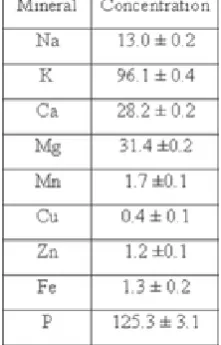
Table 2. Mineral composition (mg/100 g) of egusi seed flour
Values are mean ± standard deviation of triplicate determinations
Table 3. Proximate Composition (% dry weight) of Egusi melon
Values are mean ± standard deviation of triplicate determinations Source: Ojie et al. (2008).
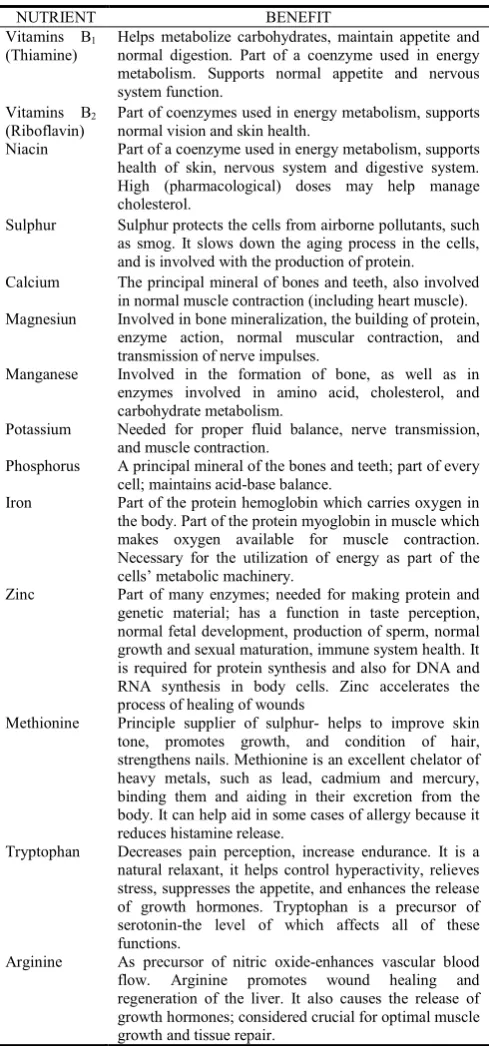
Table 4. Vitamins, Minerals and Amino Acids in Egusi and their Functions
NUTRIENT BENEFIT
Vitamins B1
(Thiamine)
Helps metabolize carbohydrates, maintain appetite and normal digestion. Part of a coenzyme used in energy metabolism. Supports normal appetite and nervous system function.
Vitamins B2
(Riboflavin)
Part of coenzymes used in energy metabolism, supports normal vision and skin health.
Niacin Part of a coenzyme used in energy metabolism, supports
health of skin, nervous system and digestive system. High (pharmacological) doses may help manage cholesterol.
Sulphur Sulphur protects the cells from airborne pollutants, such
as smog. It slows down the aging process in the cells, and is involved with the production of protein.
Calcium The principal mineral of bones and teeth, also involved
in normal muscle contraction (including heart muscle).
Magnesiun Involved in bone mineralization, the building of protein,
enzyme action, normal muscular contraction, and transmission of nerve impulses.
Manganese Involved in the formation of bone, as well as in
enzymes involved in amino acid, cholesterol, and carbohydrate metabolism.
Potassium Needed for proper fluid balance, nerve transmission,
and muscle contraction.
Phosphorus A principal mineral of the bones and teeth; part of every
cell; maintains acid-base balance.
Iron Part of the protein hemoglobin which carries oxygen in
the body. Part of the protein myoglobin in muscle which makes oxygen available for muscle contraction. Necessary for the utilization of energy as part of the cells’ metabolic machinery.
Zinc Part of many enzymes; needed for making protein and
genetic material; has a function in taste perception, normal fetal development, production of sperm, normal growth and sexual maturation, immune system health. It is required for protein synthesis and also for DNA and RNA synthesis in body cells. Zinc accelerates the process of healing of wounds
Methionine Principle supplier of sulphur- helps to improve skin
tone, promotes growth, and condition of hair, strengthens nails. Methionine is an excellent chelator of heavy metals, such as lead, cadmium and mercury, binding them and aiding in their excretion from the body. It can help aid in some cases of allergy because it reduces histamine release.
Tryptophan Decreases pain perception, increase endurance. It is a
natural relaxant, it helps control hyperactivity, relieves stress, suppresses the appetite, and enhances the release of growth hormones. Tryptophan is a precursor of serotonin-the level of which affects all of these functions.
Arginine As precursor of nitric oxide-enhances vascular blood
flow. Arginine promotes wound healing and
regeneration of the liver. It also causes the release of growth hormones; considered crucial for optimal muscle growth and tissue repair.
Source: Biscontini (2007) (Modified)
In 1987, Nwokolo and Sim reported that in some rural parts of southeastern Nigeria, the inhabitants mix milled egusi seed with ground pleurotus tuber reguim and shaped into balls and used as meat substitute in their diet. Oluba et al. (2010) coroborates with this, that egusi melon-seed meal is made by compacting the seeds into patties, that serve as meat substitute.
Akubundu et al. reported in the 47th edition of Journal of Food
Science of 1982 in a paper titled “Chemical, Functional, and Nutritional Properties of Egusi (Colocynthis citrullus L.) Seed Protein Products” that egusi is a good source of essential amino acids, especially arginine, tryptophan and methionine,
vitamins B1, B2, and niacin, and S, Ca, Mg, Mn, K, P, Fe, and
Zn. These are very essential requirements by the body for optimum health, as they have varied synergistic functions. Tables 1 to 4 below show the amino acid composition of egusi melon flour, the mineral composition of egusi melon flour, proximate composition of egusi melon flour and functions of vitamins, minerals and amino acids found in egusi melon.
REFERENCES
Achu, M. B., Fokou, E., Tchiegang, C., Fotso, M., Tchouanguep, F. M. 2005. Nutritive value of some cucurbitacea oil seed from different regions in Cameroon. Afr. J. Biotechnol., 11, 1329-1334.
Akubundu, E. N. T., Cherry, J. P., Simmons, J. G. 1982. Chemical, Functional, and Nutritional Properties of Egusi (Colocynthis citrullus L.) Seed Protein Products. Journal of Food Sci., 47, 829–835.
All Nigeria Recipe 2012. Egusi (Melon) Seeds.
http://www.allnigerianrecipes.com/food-ingredients/egusi-melon-seeds.html., accessed January 28, 2012.
Bankole, S. A., Osho, A., Joda, A. O., Enikuomehin, O. A. 2005. Effect of drying method on the quality and storability of “egusi” melon seeds (Colocynthis citrullus L.). Afr. J. of Biotech., 4 (8), 799-803.
Basch, E., Gabardi, S., Ulbricht, C. 2003. Bitter melon (Momordica charantia): a review of efficacy and safety. Am. J. Health Syst. Pharm., 60, 356-359.
Baylin, A., Kabagambe, E. K., Acherio, A., Spigelman, D., Campus, H., 2003. Adipose tissue alpha linolenic acid and nonfatal acute myocardial infarcton in Costa Rica. Circulation, 107, 1586-1591.
Beaglehole, R., Bonita, R., Stewart, A. 1988. Cardiovascular disease mortality trends in Western Pacific, 1968-1984 N. Z. Med. Journal, 441-443.
Beloin, N., Gbeassor, M., Akpagana, K., Hudson, J., de Soussa, K., Koumaglo, K., Thor Arnason, J. 2005.
Ethnomedicinal uses of Momordica charantia
(Cucurbitaceae) in Togo and relation to its phytochemistry and biological activity. Journal of Ethnopharm., 96, (1-2), 49-55.
Biscotini 2007. Alive and Well: Millenium Nutrition. Findlawrence.com, accessed July 1, 2012.
Callaway, J., Schwab, U., Harvima, I., Halonen, P., Mykkanen, O., Hyvonen, P., Jarvinen, T. 2005. Efficacy of dietary hempseed oil in patients with atopic dermatitis. Journal of Dermatol. Treat., 16, 87–94.
Delvin, T. 2006. Textbook of Biochemistry with Clinical
Correlation. 6th ed, Wiley-Liss, Hoboken.
Gadang, V., Gilbert, W., Hettiararchchy, N., Horax, R., Katwa, L., Devareddy, L. 2011. Dietary bitter melon seed increases peroxisome proliferator-activated receptor-γ gene expression in adipose tissue, down-regulates the nuclear factor-κB expression, and alleviates the symptoms associated with metabolic syndrome. Journal of medicinal food, 14 (1–2): 86–93.
Giwa, S., Abdullah, L. C., Adam, N. M. 2010. Investigating “Egusi” (Citrullus colocynthis L.) Seed Oil as Potential Biodiesel Feedstock. Energies, 3 (4), 607-618.
Gusmini, G., Wehner, T. C., Jarret, R. L. 2004. Inheritance of Egusi Seed Type in Watermelon. Journal of Heredity, 95 (3), 268-270.
Hetzel, B. S., Harnock, J. S., Dwyer, T., Maclennan, P. L. 1989. Fall in mortality rate of coronary heart disease in U. S. A. and Australia due to sudden death: evidence for the role of polyunsaturated fat. J. of clin. epidermiol., 42, 855-893.
Milind P., Kulwant S. 2011. Musk melon is eat-must melon. Int’l Res. J. of Pharm., 2 (8), 52-57.
Nwokolo, E., Sim J. S. 1987. Nutritional assessment of defatted seed meal of melon (Colocynthis citrullus L.) and fluted pumpkin (Talefaria occidentalis Hook) by chick assay. J. of Sci. Food Agric., 38, 237-246.
Oguntola, S. 2010. Why Egusi melon oil protects against heart problems. The Tribune Online, Thursday, 09 December. Retrieved January 28, 2012.
Ojieh, G. C., Oluba, O. M., Ogunlowo, Y. R., Adebisi, K. E., Eidangbe, G. O., Orole, R. T. 2008. Compositional Studies of Citrullus lanatus (Egusi melon) Seed. The Internet Journal of Nutrition and Wellness. 6 (1). DOI: 10.5580/e6f Ojieh, G. C., Eidangbe, G. O., Oluba, O. M. 2010. Effect of
egusi melon oil on lecithin: Cholesterol acyltransferase activity in rats fed a cholesterol diet. Afr. J. of Biochem. Res., 4 (1), 001-005.
Oluba, O. M., Adeyemi, O., Ojieh, G. C., Isiosio, I. O. 2008. Fatty acid composition of Citrullus lanatus (egusi melon) and its effect on serum lipids and some serum enzymes. Internet J. Cardiovasc. Res., 5, 2.
Oluba, O. M., Eidangbe, G. O., Ojieh, G. C., Idonije, B. O. 2011. Palm and Egusi melon oils lower serum and liver lipid profile and improve antioxidant activity in rats fed a high fat diet. International J. of Med. and Medical Sc., 3 (2), 47-51.
Oluba, M. O., Ogunlowo, Y. R., Ojieh, G. C., Adebisi, K. E., Eidangbe, G. O., Isiosio, I. O. 2008. Physicochemical properties and fatty acid composition of Citrullus lanatus (Egusi melon) seed oil. J. Biol. Sci., 8, 814–817.
Pariza, M.W., Park, Y., Cook, M.E. 2001. The biologically active isomers of conjugated linoleic acid. Prog Lipid Res. 40 (4): 283–98.
Quattrocchi, U. 2000. CRC World Dictionary of Plant Names A-C, CRC Press, Boca Raton.
Schafferman, D., Beharav, A., Shabelsky, E., Yaniv, Z. 1998. Evaluation of Citrullus colocynthis, a desert plant native in Israel, as a potential source of edible oil. J. of Arid Environments, 40 (4), 431–439.
Semiz, A., Sen. A 2007. Antioxidant and chemoprotective properties of Momordica charantia L. (bitter melon) fruit extract. African Journal of Biotechnology, 6 (3), 273-277. Stamler, J., Wentworth, D., Neaton, J. 1986. Is the relationship
between cholesterol risk of death from coronary disease continuous and graded? J. Am. Med. Assoc., 256, 2823-2828.
Tanaka, T., Hosowaka, M., Yasui, Y., Ishigamori, R., Miyashita, K. 2011. Cancer Chemopreventive Ability of Conjugated Linolenic Acids. International Journal of Molecular Sciences. 12 (11), 7495-7509.
Tsuzuki, T., Igarashi, M., Miyazawa, T. 2004. Conjugated eicosapentaenoic acid (EPA) inhibits transplanted tumor growth via membrane lipid peroxidation in nude mice. J. Nutr. 134, 1162-1166.
Waako, P.J., Gumede, B., Smith, P., Folb, P.I. 2005. The in vitro and in vivo antimalaria activity of Cardiospernum halicacabum L. and Momordica foetida Schumch. Et Thonn. J. Ethnopharmacol., 99 (1), 137-43.
Wijendran, V., Hayes, K.C. 2004. Dietary n-6 and n-3 fatty acid balance and cardiovascular health. Annu. Rev. Nutr., 24: 597-615.
Yaniv, Z., Shabelsky, E., Schafferman, D. 1999. Colocynth: Potential arid land oilseed from an ancient cucurbit, in: Janick, J. (Eds.) Perspectives on New Crops and New Uses. First edition, ASHS Press, Alexandria, VA, USA. Zaykoski, L. 2011. Benefits of Unsaturated fats and Protein in
a Diet. Livestrong.com. Accessed 28th January, 2012.
Zell, H. 2012. In: Elena Davert, Seeds, seeds, seeds: Egusi, the Miracle Melon. Nourishing the Planet Project. Copyright © 2012, accessed January 28, 2012. http://blogs.worldwatch. org/nourishingtheplanet/seeds-seeds-seeds-egusi-the-miracle-melon/