Original Research Article
Epidemiology of preoperative hyperglycaemia among patients
undergoing surgery at a tertiary health care facility of Eastern India
Souvik Banerjee
1, Rakesh Kumar
2*, Debasis Basu
3INTRODUCTION
Diabetes mellitus (DM) is a chronic metabolic disorder resulting from either insulin resistance and/or relative or absolute insulin deficiency.1 With about 425 million
patients globally and 72.9 million patients in India, DM is one of the global health emergency of 21st century.2 Diabetes mellitus is associated with high morbidity, mortality and increased health care cost to the diabetes patients than non diabetes people.3-5 Even in the absence
ABSTRACT
Background: With about 425 million patients globally and 72.9 million patients in India, diabetes mellitus (DM) is one of the global health emergency of 21st century. Perioperative hyperglycaemia is reported in 20-40% of patients undergoing general surgery. A substantial body of literature demonstrates a clear association between perioperative hyperglycaemia and adverse clinical outcomes. This study aims to find out the frequency of preoperative hyperglycaemia and factors influencing it among patients undergoing surgery at a tertiary health care hospital of Eastern India.
Methods: This Institution based, cross-sectional, observational study was conducted among study subjects who were operated at IQ City Medical College and Multispecialty Hospital, Durgapur, India during January-February 2019. Relevant medical records were reviewed to collect data regarding clinic-social data. Estimation of fasting plasma glucose (FPG) has been done as per World Health Organization (WHO) guidelines. Hyperglycaemia was defined and classified as per American Diabetes Association (ADA). Anthropometric measurements were taken as per standard WHO protocols.
Results: A total 158 study subjects participated in study. The mean age and mean FPG of the study subjects was 42.63±12.95 years and 103.3±17.37 mg/dl respectively. As per the ADA criteria, 58.9% had normal FPG, 24.0% had impaired fasting glucose (IFG) and 17.1% had diabetes. Out of total 27 T2DM patients, 22 (13.9%) were known cases of T2DM and 5 (3.2%) were undiagnosed. The frequency of preoperative hyperglycaemia i.e. sums of IFG and diabetes was found to be 41.1%. Increasing age, male gender and overweight and obesity significantly influenced the occurrence of preoperative hyperglycaemia.
Conclusions: The prevalence of preoperative hyperglycaemia among patients undergoing surgery is higher than the prevalence of hyperglycaemia among non surgical patients. Routine HbA1C should be done in all surgical patients to differentiate between chronic undiagnosed hyperglycaemia and stress hyperglycaemia.
Keywords: T2DM, Preoperative hyperglycaemia, Perioperative hyperglycaemia, HbA1C, Stress hyperglycaemia
1
Department of Anaesthesiology, IQ City Medical College and Multispecialty Hospital, Durgapur, West Bengal, India
2Department of Community Medicine; Integrated Diabetes and Gestational Diabetes Clinic, IQ City Medical College
and Multispecialty Hospital, Durgapur, West Bengal India
3Diabetes Awareness and You, Kolkata, West Bengal, India
Received: 02 June 2019 Accepted: 18 June 2019
*Correspondence: Dr. Rakesh Kumar,
E-mail: [email protected]
Copyright: © the author(s), publisher and licensee Medip Academy. This is an open-access article distributed under the terms of the Creative Commons Attribution Non-Commercial License, which permits unrestricted non-commercial use, distribution, and reproduction in any medium, provided the original work is properly cited.
of pre-existing DM, hyperglycaemia itself is associated with increased morbidity and mortality among hospital inpatient, both in medical and surgical populations.5-8 Perioperative hyperglycaemia is reported in 20-40% of patients undergoing general surgery.9-11 A substantial body of literature demonstrates a clear association between perioperative hyperglycaemia and adverse clinical outcomes.9,12,13 The risk for post-operative complications and increased mortality relates to both long-term Glycemic control and to the severity of hyperglycaemia on admission and during the hospital stay.9 Patients with diabetes are more likely to undergo surgery than are those without diabetes.14,15 Surgery in diabetic patients is associated with longer hospital stay, higher health care resource utilization, and greater perioperative mortality than in non diabetic subjects.16 Evidence from observational studies suggests that in surgical patients, with and without diabetes, improvement in Glycemic control positively affects morbidity and mortality.17,18 Identification of both diagnosed & non-diagnosed hyperglycaemic will be crucial in achieving uneventful perioperative and post operative outcomes in surgical patients. This study aims to find out the frequency of preoperative hyperglycaemia and factors influencing it among patients undergoing surgery at a tertiary health care hospital of Eastern India.
METHODS
An Institution based, Observational; Cross-Sectional study was conducted among patients who were operated at IQ City Medical College & Multispecialty Hospital from January-February 2019. A total of 158 study subjects participated in the study.
Ethical clearance
Study was ethically approved by Institutional Ethics Committee, IQ City Medical College and Multispecialty Hospital.
Study setting
General Surgical Operation Theatre of IQ City Medical College & Multispecialty Hospital, Durgapur, India.
Study type: Institution based, observational.
Study design: Cross-sectional.
Study period: January-February 2019.
Study duration: 2 months.
Study population
Adult patients undergoing elective surgical procedures at IQ City Medical College and Multispecialty Hospital, Durgapur, India.
Inclusion criteria
≥18 years, surgical procedure requiring general, regional or local anaesthesia.
Exclusion criteria
Patients on steroids, chronic liver failure, CKD stage 3B onwards (eGFR <45).
Sample size: 158
Sampling technique: Non probability, consecutive
Study tool
Pre designed, pre tested, semi structured schedule
Relevant medical records. Operational definitions
Fasting plasma sugar classification20-21
Normal plasma glucose/ non diabetic: Fasting Plasma Glucose (FPG) <100 mg/dl
Pre diabetes/ impaired fasting glucose: FPG 100-125 mg/dl.
Diabetes: FPG≥126.
Hyperglycaemia: Fasting plasma glucose either in the IFG and/or diabetes range.
BMI classification22
Overweight: BMI 25.00-29.99
Obese: BMI ≥30 Outcome variables
Frequency of pre operative hyperglycaemia among study subjects
Factors associated with pre operative hyperglycaemia
Study technique
Statistical analysis
Data were codified and analyzed using Statistical Package for Social Sciences for windows (SPSS, version 20.0). Frequency of hyperglycaemia and other clinic-social variables were calculated. Pie chart and simple bar diagrams were used to show frequency of hyperglycaemia and classification of hyperglycaemia respectively. Chi-square test was used to show association between categorical variables. All statistical tests were 2-tailed and a p<0.05 was considered significant.
RESULTS
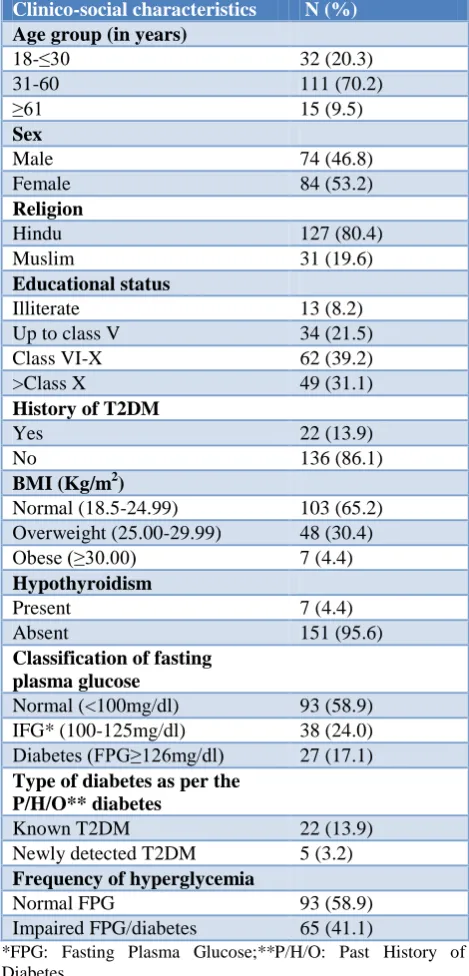
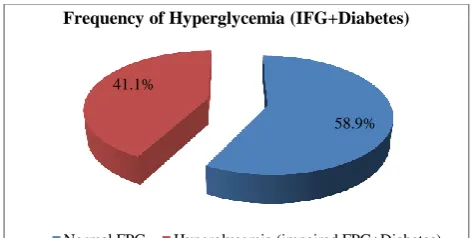
A total 158 study subjects participated in study. The mean age and mean FPG of the study subjects was 42.63±12.95 Years and 103.3±17.37 mg/dl respectively. 70.2% of the study subjects were in age group of 31-60 years followed by 20.3% and 9.5% in the age group 18-30 years and ≥61 years respectively (Table 1). The study population had little female preponderance as 53.2% of them were female (Table 1). About 3/5th of the study subjects were Hindu and 2/5th were Muslim (Table 1). 39.2% of them had education between class VI-X followed by 31.0%, 21.5% who had education > class X and up to class V respectively. 8.2% of them were illiterate (Table 1). As per WHO classification of Body Mass Index (BMI) 65.2%, 30.4% and 4.4% of study subjects were normal, overweight and obese respectively. 4.4% of study population was on levothyroxin replacement therapy for hypothyroidism. 13.9% of the study population was diagnosed case of type 2 diabetes mellitus (T2DM) (Table 1). As per American Diabetes Association (ADA), 58.9% had normal FPG, 24.0% had impaired fasting glucose (IFG) and 17.1% had diabetes (Table 1 and Figure 1).
Figure 1: Pattern of FPG (n=158).
Out of total 27 T2DM patients, 22 (13.9%) were known cases of T2DM and 5 (3.2%) was diagnosed first time during our study (Table 1). The frequency of
hyperglycaemia i.e. sums of IFG and Diabetes was found to be 41.1% (Table 1 and Figure 2). Increasing age, male gender, overweight and obesity significantly influenced the occurrence of hyperglycemia (Table 2). A non significant preponderance of hyperglycaemia was found among Muslims. Although statistically non significant and except for a slight more preponderance of hyperglycaemia among those who had education up to class V, better education was associated with less cases of fasting hyperglycaemia (Table 2). 57.1% of study subjects who were hypothyroid had fasting hyperglycaemia as compared to only 40.4% of those who had normal thyroid function (Table 2).
Table 1: Clinico-social characteristics of study subjects (n=158).
Clinico-social characteristics N (%) Age group (in years)
18-≤30 32 (20.3)
31-60 111 (70.2)
≥61 15 (9.5)
Sex
Male 74 (46.8)
Female 84 (53.2)
Religion
Hindu 127 (80.4)
Muslim 31 (19.6)
Educational status
Illiterate 13 (8.2)
Up to class V 34 (21.5)
Class VI-X 62 (39.2)
>Class X 49 (31.1)
History of T2DM
Yes 22 (13.9)
No 136 (86.1)
BMI (Kg/m2)
Normal (18.5-24.99) 103 (65.2) Overweight (25.00-29.99) 48 (30.4)
Obese (≥30.00) 7 (4.4)
Hypothyroidism
Present 7 (4.4)
Absent 151 (95.6)
Classification of fasting plasma glucose
Normal (<100mg/dl) 93 (58.9) IFG* (100-125mg/dl) 38 (24.0) Diabetes (FPG≥126mg/dl) 27 (17.1) Type of diabetes as per the
P/H/O** diabetes
Known T2DM 22 (13.9)
Newly detected T2DM 5 (3.2) Frequency of hyperglycemia
Normal FPG 93 (58.9)
Impaired FPG/diabetes 65 (41.1)
*FPG: Fasting Plasma Glucose;**P/H/O: Past History of Diabetes.
58.90%
24.0%
13.90%
3.20%
0.00% 10.00% 20.00% 30.00% 40.00% 50.00% 60.00% 70.00%
Normal FPG Impaired FPG Known T2DM Newly
Detected T2DM
Figure 2: Frequency of hyperglycaemia (n=158).
DISCUSSION
In this study we found that about 1/4th of the study participants had pre diabetes and about 1/6th of the study population had diabetes using ADA criteria. In this study, prevalence of previously diagnosed and undiagnosed diabetes was 13.9% and 3.2% respectively. A little higher prevalence of 19.0% was reported among surgical patients by Kotagal et al.13 Epidemiological research indicates that about 40.0% of surgical patients have undiagnosed diabetes.23 The prevalence of pre operative hyperglycaemia is higher than the prevalence of hyperglycaemia among non surgical patients. A study by Barik et al from rural West Bengal reported almost similar 3.34% prevalence of undiagnosed diabetes and a lower 2.95% prevalence of diabetes.24 A South Indian study reported a 10.8% prevalence of diabetes among rural population.25 The National Urban Diabetes Survey reported a prevalence of 12.1% and 14.0% for diabetes and pre diabetes respectively.26 The INDIAB study reported almost a similar 13.6% prevalence of diabetes among Chandigarh residents.27 High prevalence of pre diabetes in our study may be due to the stress and anxiety caused by the fear of surgery which unmasked the undiagnosed hyperglycaemia. It may also be due to the release of stress hormones which could have blunted the action of endogenous insulin. Another reason for high prevalence of hyperglycaemia may be due to the fact that diabetes patients are more prone to undergo operations than their non diabetic counterparts. About 3/5th of the study subjects who were ≥61 years were found to have hyperglycaemia as compared to about 2/5th and 1/5th of study subjects who were in the age group of 31-60 years and 18-30 years respectively. Increasing age as a risk factor for diabetes and pre diabetes was also reported by many other studies.28,29 The present study results indicate a significant male preponderance of diabetes and pre diabetes. Male gender as a risk factor for diabetes and pre diabetes is also reported by Anjana et al and Meshram et al.25,30 However, few other studies reported no role of gender in the development of diabetes.24,25,31
A non significant numerical preponderance of hyperglycaemia was observed among Muslims. It may be due to the relatively small number of Muslim study subjects as compared to Hindus. 71.5% of obese study
subjects had hyperglycaemia as compared to 52.1% and 34.0% hyperglycaemia among overweight and normal BMI study subjects respectively. Increasing BMI was found to be a significant risk factor for hyperglycaemia among surgical patients. The finding of this study is in agreement with various other researches who also reported increasing BMI as a risk factor for developing hyperglycemia.24,27,30,32. Indians have a lower BMI as compared to their western counterparts and also the risk of hyperglycaemia increases at a lower BMI than the overweight/obese cut-off of their western counterparts.33 Although statistically non significant, the frequency of hyperglycaemia was numerically more among hypothyroid study subjects. The relationship between hypothyroidism and hyperglycaemia is complex and both regulate each other’s metabolism. Diabetes mellitus influences thyroid function either by acting at hypothalamus to control TSH release or at the peripheral tissue level to regulate conversion of T4 to T3.34 On the other hand hypothyroidism is linked to metabolic syndrome via various mechanisms. Hypothyroidism is associated with insulin resistance and decrease glucose uptake into muscle and adipose tissues.35,36 Insulin resistance has been observed even in euthyroid people having low-normal free thyroxin level37-38. Down regulation of the hepatic glucose transporter GLUT2 and impaired translocation of GLUT4 receptor on the plasma membrane has been found to be associated with hypothyroidism.39,40
CONCLUSION
The prevalence of hyperglycaemia among patients undergoing surgery is higher than the prevalence of hyperglycaemia among non surgical patients. Increasing age and male gender are non modifiable risk factors for pre operative hyperglycaemia. Overweight and obesity are modifiable risk factors for hyperglycaemia. Routine HbA1C should be done in all surgical patients to differentiate between chronic undiagnosed hyperglycaemia and stress hyperglycaemia
Funding: No funding sources Conflict of interest: None declared
Ethical approval: The study was approved by the Institutional Ethics Committee, IQ City Medical College and Multispecialty Hospital, Durgapur
REFERENCES
1. Thakur JK, Kumar R, Basu D, Hansda K, Munshi BD, Chakraborty SN, et al. Prevalence of Diabetic Foot Syndrome and Its Determinants among Type 2 Diabetes Mellitus patients attending Integrated Diabetes & Gestational Diabetes Clinic of a Tertiary Health Care Level Hospital of Eastern India. IOSR J Dent Med Sci. 2019;18(1):24-9.
2. IDF Diabetes atlas 8th Edition; International Diabetes Federation. 2017. Available at: www.diabetesatlas.org Accessed on 3 March 2019. 58.9%
41.1%
Frequency of Hyperglycemia (IFG+Diabetes)
3. Roper NA, Bilous RW, KellyWF, Unwin NC, Connolly VM. Excess mortality in a population with diabetes and the impact of material deprivation: longitudinal, population based study. BMJ. 2001;322:1389–93.
4. Currie CJ, Gale EA, Poole CD. Estimation of primary care treatment costs and treatment efficacy for people with type 1 and type 2 diabetes in the United Kingdom from 1997 to 2007. Diabet Med. 2010;27:938–48.
5. Manuel DG, Schultz SE. Health-related quality of life and health-adjusted life expectancy of people with diabetes in Ontario, Canada, 1996-1997. Diabetes Care. 2004;27:407–14.
6. Gandhi GY, Nuttall GA, Abel MD, Mullany CJ, Schaff HV, Williams BA, et al. Intraoperative hyperglycemia and perioperative outcomes in cardiac surgery patients. Mayo Clin Proc. 2005;80:862-6.
7. Ouattara A, Lecomte P, Le Manach Y, Landi M, Jacqueminet S, Platonov I, et al. Poor intraoperative blood glucose control is associated with a worsened hospital outcome after cardiac surgery in diabetic patients. Anesthesiology. 2005;103:687-94.
8. Kersten JR, Pagel PS, Warltier DC. Aggressive control of intraoperative blood glucose concentration - a shifting paradigm? Anesthesiology. 2005;103:677-8.
9. Frisch A, Chandra P, Smiley D, Peng L, Rizzo M, Gatfcliffe C, et al. Prevalence and clinical outcome of hyperglycemia in the perioperative period in noncardiac surgery. Diabetes Care. 2010;33(8):1783–8.
10. Cook CB, Kongable GL, Potter DJ, Abad VJ, Leija DE, Anderson M. Inpatient glucose control:a glycemic survey of 126 U.S. hospitals. J Hosp Med. 2009;4(9):E7–E14.
11. Kwon S, Thompson R, Dellinger P, Yanez D, Farrohki E, Flum D. Importance of perioperative glycemic control in general surgery:a report from the Surgical Care and Outcomes Assessment Program. Ann Surg. 2013;257(1):8–14.
12. Umpierrez GE, Isaacs SD, Bazargan N, You X, Thaler LM, Kitabchi AE. Hyperglycemia:an independent marker of in-hospital mortality in patients with undiagnosed diabetes. J Clin Endocrinol Metab. 2002;87(3):978–82.
13. Kotagal M, Symons RG, Hirsch IB, Umpierrez GE, Farrokhi ET, Flum DR, SCOAP-Certain Collaborative. Perioperative hyperglycemia and risk of adverse events among patients with and without diabetes. Ann Surg. 2015;261(1):97–103.
14. Clement S, Braithwaite SS, Magee MF, Ahmann A, Smith EP, Schafer RG, Hirsch IB, Hirsh IB. Management of diabetes and hyperglycemia in hospitals. Diabetes Care. 2004;27:553–91.
15. Smiley DD, Umpierrez GE. Perioperative glucose control in the diabetic or nondiabetic patient. South Med J. 2006;99:580– 91.
16. Edelson GW, Fachnie JD, Whitehouse FW. Perioperative management of diabetes. Henry Ford Hosp Med J. 1990;38:262–5.
17. Noordzij PG, Boersma E, Schreiner F, Kertai MD, Feringa HH, Dunkelgrun M, et al. Increased preoperative glucose levels are associated with perioperative mortality in patients undergoing noncardiac, nonvascular surgery. Eur J Endocrinol. 2007;156:137–142.
18. Pomposelli JJ, Baxter JK 3rd, Babineau TJ, Pomfret EA, Driscoll DF, Forse RA, Bistrian BR. Early postoperative glucose control predicts nosocomial infection rate in diabetic patients. JPEN J Parenter Enteral Nutr. 1998;22:77–81.
19. World Health Organization. Definition and diagnosis of diabetes mellitus and intermediate hyperglycemia :report of a WHO/IDF consultation; Geneva, 2006.
20. American Diabetes Association. Diagnosis and classification of diabetes mellitus. Diabetes Care. 2014;37(Suppl 1):S81–S90.
21. The International Expert Committee. International Expert Committee report on the role of the A1C assay in the diagnosis of diabetes. Diabetes Care. 2009;32:1327–1334.
22. World Health Organization. Waist circumference and waist-hip ratio: Report of a WHO expert consultation; Geneva, 2008.
23. Levetan CS, Passaro M, Jablonski K, Kass M, Ratner RE. Unrecognized diabetes among hospitalized patients. Diabetes Care. 1993;21:246– 9.
24. Barik A, Mazumdar S, Chowdhury A, Rai RK. Physiological and behavioral risk factors of type 2 diabetes mellitus in rural India. BMJ Open Diabetes Res Care. 2016;4(1):e000255.
25. Ramachandran A, Snehalatha C, Kapur A, Vijay V, Mohan V, Das AK, et al. High prevalence of diabetes and impaired glucose tolerance in India: National Urban Diabetes Survey. Diabetologia. 2001;44(9):1094–101.
26. Little M, Humphries S, Patel K, Dodd W, Dewey C. Factors associated with glucose tolerance, pre-diabetes, and type 2 diabetes in a rural community of south India:a cross-sectional study. Diabetol Metab Syndr. 2016;8:21.
27. Anjana RM, Pradeepa R, Deepa M, Datta M, Sudha V, Unnikrishnan R, et al. Prevalence of diabetes and prediabetes (impaired fasting glucose and/ or impaired glucose tolerance) in urban and rural India:phase I results of the Indian Council of Medical Research-INdia DIABetes (ICMR-INDIAB) study. Diabetologia. 2011;54(12):3022–7. 28. D Roberts, T Meakem, C Dalton, D Haverstick, C
Lynch III. Prevalence of Hyperglycemia in a Pre-Surgical Population. Internet J Anesthesiol. 2006;12(1):1.
diabetes, and obesity-related health risk factors, 2001. JAMA. 2003;289:76-9.
30. Meshram II, Vishnu Vardhana Rao M, Sudershan Rao V, Laxmaiah A, Polasa K. Regional variation in the prevalence of overweight/obesity, hypertension and diabetes and their correlates among the adult rural population in India. Br J Nutr. 2016;115(7):1265–72.
31. Goswami AK, Gupta SK, Kalaivani M, Nongkynrih B, Pandav CS. Burden of hypertension and diabetes among urban population aged ≥60 years in South Delhi:a community based study. J Clin Diagn Res. 2016;10(3):LC01-5.
32. Ravikumar P, Bhansali A, Ravikiran M, Bhansali S, Walia R, Shanmugasundar G, et al. Prevalence and risk factors of diabetes in a community-based study in North India:the Chandigarh Urban Diabetes Study (CUDS). Diabetes Metab. 2011;37(3):216– 21.
33. Chan JCN, Malik V, Jia W, Kadowaki T, Yajnik CS, Yoon K-H, et al. Diabetes in Asia: epidemiology, risk factors, and pathophysiology. JAMA. 2009;301(20):2129–40.
34. Ahmed A. A study on prevalence of hypothyroidism in diabetics. Int J Med Sci Educ. 2014;1:120-4. 35. Dimitriadis G, Mitrou P, Lambadiari V. Insulin
action in adipose tissue and muscle in hypothyroidism. J Clin Endocrinol Metab. 2006;91:4930–7.
36. Teixeira SS, Tamrakar AK, Goulart-Silva F, Serrano-Nascimento C, Klip A, Nunes MT.
Triiodothyronine acutely stimulates glucose transport into L6 muscle cells without increasing surface GLUT4, GLUT1, or GLUT3. Thyroid. 2012;22:747–754.
37. Roos A, Bakker SJ, Links TP, Gans RO, Wolffenbuttel BH. Thyroid function is associated with components of the metabolic syndrome in euthyroid subjects. J Clin Endocrinol Metab. 2007;92:491–6.
38. Ruhla S, Weickert MO, Arafat AM, et al. A high normal TSH is associated with the metabolic syndrome. Clin Endocrinol (Oxf). 2010;72:696– 701.
39. Maratou E, Hadjidakis DJ, Kollias A, et al. Studies of insulin resistance in patients with clinical and subclinical hypothyroidism. Eur J Endocrinol 2009;160:785–90.
40. Weinstein SP, O’Boyle E, Fisher M, Haber RS. Regulation of GLUT2 glucose transporter expression in liver by thyroid hormone:evidence for hormonal regulation of the hepatic glucose transport system. Endocrinology. 1994;135:649–54.