Original Research Article
A study on prevalence of dry eyes among menopausal women attending
a tertiary care centre in Hyderabad, Telangana
Gokul Vinod Kumar, Asma*, Gokul Praneetha, Apoorva Pandharpurkar,
Bhavan Prasad, G. Pavani, T. Vasavi, Abhishek Naik
INTRODUCTION
Dry eye is defined as a disorder of the tear film due to tear deficiency or excessive tear evaporation, which causes damage to the interpalpebral ocular surface and is associated with symptoms of ocular discomfort.1 It is not a disease entity, but a symptom complex which occurs due to deficiency or abnormalities of tear film.2 Dry eye disease (DED) is a disease of the tears and ocular surface and leads to symptoms of ocular discomfort, visual
disturbance and tear film instability with potential damage to ocular surface.3
The tear film is formed by an outermost oily lipid layer, middle watery layer and inner mucous layer. The lipid layer is secreted by Meibomian glands, lacrimal glands secrete watery layer and goblet cells of conjunctiva secrete mucous layer of tear film. The tear film secretion is regulated by hormonal and neuronal regulatory systems.4
ABSTRACT
Background: Dry eye syndrome arises due to chronic lack of sufficient lubrication and moisture on the surface of the
eye. Symptoms of dry eye syndrome includes burning sensation, itchy eyes, blurred vision, and fatigued eyes, redness of eyes, gritty and dry eye sensation / foreign body sensation. Studies reveal that post-menopausal women are at greater risk of developing dry eyes than men of same age. Aims and objectives were to determine the prevalence of dry eye syndrome among post-menopausal women at tertiary care center, Hyderabad and to assess the socio-demographic factors related to dry eye syndrome among study population.
Methods: A cross sectional study was carried out from March to June 2017 among post-menopausal women
attending Gandhi Hospital, in Hyderabad, Telangana. A convenient sample of 200 post-menopausal women was taken. Schirmer’s test was used to determine presence of dry eyes.
Results: The mean age of study population was found to be 51.66±5.8 years. The mean age of onset of menopause in
study subjects was 45.63±1.8 years. The prevalence of dry eye syndrome was found to be 39.5%. Mild dryness of eyes was most common among study subjects (20.5%). Prevalence of dry eyes increased with age and had significant association.
Conclusions: Dry eye syndrome is not a life threatening disease, but causes ocular discomfort and compromises quality of life. If neglected, can even lead to blindness and debility due to complications arising due to dry eye.
Keywords: Dry eye syndrome, Postmenopausal women, Schirmer test
Department ofCommunity Medicine, Gandhi Medical College, Hyderabad, Telangana, India
Received: 24 October 2018
Revised: 02 December 2018
Accepted: 03 December 2018
*Correspondence: Dr. Asma,
E-mail: [email protected]
Copyright: © the author(s), publisher and licensee Medip Academy. This is an open-access article distributed under
the terms of the Creative Commons Attribution Non-Commercial License, which permits unrestricted non-commercial use, distribution, and reproduction in any medium, provided the original work is properly cited.
Dry eye syndrome is more common among post- menopausal women. This is attributed to the changes in balance of sex hormones. Estrogens and androgens greatly influence production and maintenance of all three layers of the tear film. Besides decrease in hormonal levels, variations in feedback mechanisms and changes in receptor receptivity interplay to alter the ocular surface homeostasis and subsequently result in Dry eye disease among post-menopausal women.5
Dry eye impairs reading newspaper, driving, watching television, doing near work. It also impacts social life and psychological functioning. 6 The symptoms of dry eyes like itching, burning, tearing, and grittiness (feeling of sand in the eyes), discomfort, fatigue, and visual disturbances may pose a significant hindrance in the daily activities of an individual and thus should not be ignored. Screening for this condition will help in its eventual diagnosis and treatment.
Dry eyes if left untreated can increase the risk of bacterial and viral infections of eye. Infections can lead to corneal ulcers, corneal scarring, staphylomas and permanent blindness in severe cases. Considering all this effects, the present study was conducted to estimate the burden of dry eyes among post-menopausal women.
Objectives
To determine the prevalence of dry eye syndrome among post-menopausal women at tertiary care center, Hyderabad.
To assess the socio-demographic factors related to dry eye syndrome among study population.
METHODS
Study design: Cross sectional study.
Study period: March-June 2017
Study area: Gandhi Hospital, tertiary care center, Hyderabad.
Study sample: A convenient sample of 200 was taken.
Study population: Post-menopausal women
Inclusion criteria
All the women who attained natural menopause (Menopause was defined as ceasing of menstruation for at least 1 year).
Exclusion criteria
Post-menopausal women with already existing dry eye disease due to other causes like Sjogren syndrome or any eye infections or corneal injuries; contact lens users and women not willing to be a part of the study.
Study tools
A pre-designed, pre-tested, semi-structured questionnaire, Special standardized filter paper, topical anesthetic agent - Paracain (proparacaine hydrochloride) drops.
Data collection
All the post-menopausal women after applying inclusion and exclusion criteria were first asked socio demographic details and then subjected to Schirmer’s test. Schirmer’s test is a screening test for dry eyes. Special standardized filter paper strips were placed inside the lower eyelid of both the eyes. The subjects were asked to close their eyes for 5 minutes and the paper was removed after 5 minutes. The amount of moisture on the filter strips was noted immediately. In order to measure only the basal secretion of tears, anaesthetic Paracain (proparacaine hydrochloride) drops were administered 5 minutes prior to testing. This ensured that there was no reflex tearing due to the insertion of a foreign body (Schirmer's strip) into the eye.
A value of <5 mm is considered pathological; 5-14mm is suspicious of dry eye and >15mm is normal. Patients with reading of <15 mm were taken as those having dry eye disease.
Data analysis
The data obtained was analyzed using Microsoft Excel and openepi. Descriptive statistics were calculated. Statistical tests of significance were applied wherever necessary.
Ethical considerations
Ethical clearance was obtained from Institutional Ethics Committee prior to start of study. Informed consent was taken from every participant.
RESULTS
A total of 200 post-menopausal women took part in this study and mean age of onset of menopause was 45.63 ± 1.8 years. The mean age of study population was found to be 51.66±5.8 years.
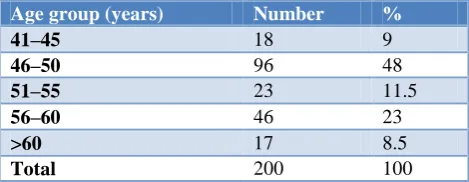
Table 1: Distribution of study population according to age.
Age group (years) Number %
41–45 18 9
46–50 96 48
51–55 23 11.5
56–60 46 23
>60 17 8.5
Majority (48%) of study subjects were in the age group of 46–50 years. Twenty three percent of study population was in the age group of 56–60 years and 11.5% were in the age group of 51–55 years. Around 9% of study population was in the age group of 41–45 years and 8.5% were in the age group of >60 years.
Most of the study subjects were from Hyderabad (74%) which is an urban area and only 26% of them were from rural areas.
In this study, it was observed that 75% were Hindus, 24% were Muslims and 1% were Christians.
In this study, it was found that only 14% of post-menopausal women were illiterate and 34% had primary level of education; 16% had middle school education and 36% of them had secondary level of education. Majority (63%) of post-menopausal women were house wives; 19% were agricultural farmers; 4.5% were daily wage labourers and 13.5% were semi-skilled to skilled workers (cleaners, tailors etc.).
In present study, 83.5% of study population belonged to Upper lower (class IV) socio economic status; 6.5% belonged to lower middle (class III) and 10% belonged to lower class (class V).
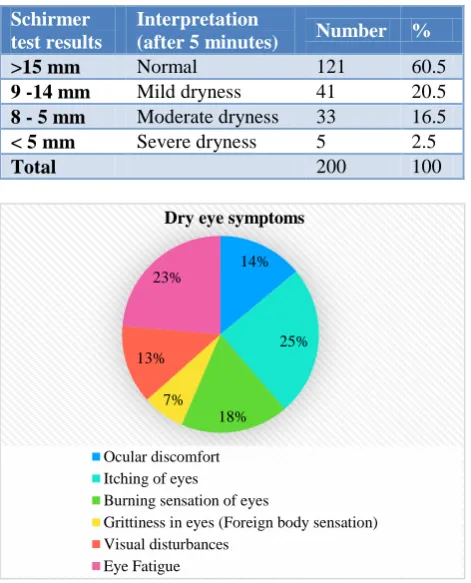
Table 2: Distribution of study population according to Schirmer’s test readings.
Schirmer test results
Interpretation
(after 5 minutes) Number %
>15 mm Normal 121 60.5
9 -14 mm Mild dryness 41 20.5
8 - 5 mm Moderate dryness 33 16.5
< 5 mm Severe dryness 5 2.5
Total 200 100
Figure 2: Distribution of study population according to symptoms of dry eye (more than one symptom in
one patient).
The overall prevalence of dryness in eyes was found to be 39.5%. Around 20.5% of study subjects had mild dryness in their eyes; 16.5% had moderate dryness and 2.5% of them had severe dryness.
Around 27% of study population complained of dry eye syndrome symptoms. The most common symptom in dry eye syndrome among study population was itching of eyes (25%); followed by eye fatigue (23%); burning sensation in eyes (18%). Fourteen percent of women complained of ocular discomfort and 13% complained of visual disturbances and 7% complained of foreign body sensation in eye.
Around 13% of women informed that their daily activities like reading newspaper, doing near work was affected because of dry eye symptoms. It was also observed that health care seeking behavior for dry eye disease symptoms was absent among study population. Most of the study subjects did not relate this symptoms to menopause. Around 46.5% of women were already using spectacles for refractive error.
Table 3: Relationship between dry eye disease and age.
Age (years)
Dry eye disease
Total (%)
Present (%)
Absent (%)
>50 45 (52.3) 41 (47.7) 86 (100)
≤50 34 (29.8) 80 (70.2) 114 (100)
Total 79 (39.5) 121 (60.5) 200 (100)
Chi square value – 9.4; p <0.001; statistically significant.
In this study, it was observed that prevalence of dry eye disease among post-menopausal women aged >50 years was 52.3% and it was 29.8% among women aged ≤50 years. The difference of 22.5% was found to be statistically highly significant.
Table 4: Relationship between dry eye disease and occupation.
Occupation
Dry eye disease
Total (%)
Present (%)
Absent (%) Working
women 36 (48.6) 38 (51.4) 74 (100)
Housewives 43 (34.1) 83 (65.9) 126 (100)
Total 79 (39.5) 121 (60.5) 200 (100)
Chi square value – 3.5; p <0.05; statistically significant.
In this study, it was observed that prevalence of dry eye disease among working post-menopausal women was 48.6% and it was 34.1% among housewives. The difference of 14.5% was found to be statistically significant.
14%
25%
18% 7% 13%
23%
Dry eye symptoms
Ocular discomfort Itching of eyes
Burning sensation of eyes
Grittiness in eyes (Foreign body sensation) Visual disturbances
DISCUSSION
In present study, prevalence of dry eye in postmenopausal women was 39.5%. Our finding was closely related to study done by Aditi et al where the prevalence was found to be 37%.7 The present study finding is also similar to a study by Adlakha et al where the prevalence of dry eyes among post-menopausal women was 34.66%.8
The present study findings were different to a study done in Japan where the prevalence of dry eyes was very high - 73.5%.9 Very less prevalence (14.4%) of dry eye syndrome was reported in a study conducted by Moss et al.10
The mean age of study population was found to be 51.66±5.8 years. The present study findings were in contrast to a study by Uchino M et al where the mean age of study population was 67.5±5.7 years.9 This finding was also different to a study conducted by Anna et al where the mean age was 61.2±9.1 years.11
In this study significant association was found between dry eye disease and increasing age. Similar findings were found in a study conducted in Australia where the odds for developing dry eyes were 1.04 at 95% CL=1.01, 1.06).12 In another study by Adam et al, increasing age was found to be significantly associated with dry eye syndrome.13
In a study by Aditi et al the Pearson correlation factor(r) was found to be 0.9714 for increasing age and prevalence of dry eyes.7
In present study, the prevalence of dry eye syndrome symptoms was 27% which was similar to a study conducted in China where 33.7% of study subjects were symptomatic.14
Similar findings were also seen in a study by Uchino M et al where ocular tiredness, irritation, dryness, and foreign body sensation were the most frequently reported symptoms by the patients.9
In the present study significant association was found between working women and dry eye disease. Similar findings were seen in a study conducted by Schaumberg et al where significant odds ratio was found between socio economic status and dry eye disease.15
CONCLUSION
Prevalence of dry eye disease was found to be very high among study subjects. Significant association was found between dry eye disease and increasing age. Alteration of sex hormones among the post-menopausal women is leading to impaired production of tear film and thus causing dry eye disease in this age group.
The subjects who tested positive for dry eye were counselled and prescribed lubricating eye drops to alleviate the symptoms. Awareness was created among the study population about the various complications of dryness of eyes and were advised not to ignore any symptoms.
Recommendations
There is a need to identify dry eye disease as significant health problem among post-menopausal women as it remains one of the very common under recognized morbidity in this age group.
Simple treatment with lubricating eye drops or artificial tears can help overcome this problem to a greater extent and help this women in improving their quality of life.
There is also a need to screen all the post-menopausal women for dry eyes using simple schirmer’s test or refer for an ophthalmic checkup as a part of assessment in post-menopausal women when they attend Gynecology Outpatient Department.
There is a need to carry out adequate research in this field with larger sample size so as to ascertain the real burden of dry eye disease among post-menopausal women and also studies should be carried out on the role of hormone replacement therapy in treating and preventing dry eye disease.
Awareness generation among health care providers and post-menopausal women is also recommended so as to identify symptoms of dry eyes and seek health care at the earliest.
Limitations of study
The findings of this study cannot be generalized to whole community as it is a hospital based study and the sample size was less.
ACKNOWLEDGEMENTS
The authors are grateful to the Principal of Gandhi Medical College and Superintendent of Gandhi Hospital for providing an opportunity to carry out this study. The authors are thankful to the study subjects for their cooperation and support in carrying out this study.
Funding: No funding sources Conflict of interest: None declared
Ethical approval: The study was approved by the Institutional Ethics Committee
REFERENCES
2. Sihota R, Tandon R. Systemic Ophthalmology. In: Sihota R, Tandon R, editors. Parson’s Diseases of the Eye, 21st ed. New Delhi: Elsevier; 2010: 463-464.
3. The definition and classification of dry eye disease: Report of the Definition and Classification Subcommittee of the International Dry Eye WorkShop. Ocul Surf. 2007;5:75‑92.
4. Christophe Baudouin. The Pathology of Dry Eye. Survey of Ophthalmology. 2001;45(2):S211–20. 5. Peck T, Olsakovsky L, Aggarwal S. Dry Eye
Syndrome in Menopause and Perimenopausal Age Group. Midlife Health. 2017;8(2):51–4.
6. Uchino M, Schaumberg DA. Dry eye disease: impact on quality of life and vision. Curr Ophthalmol Rep. 2013;1:51-7.
7. Aditi G, Surabhi S. Study of Dry Eyes in Post-Menopausal Women-A Rural Hospital Based Study. Int J Adv Res Ideas Innov Technol. 2017;3(1):473-78.
8. Adlakha N, Tirkey ER, Lakhtakia S. To assess the prevalence of dry eye disease in postmenopausal females in a tertiary care centre in Central India. J Med Sci Clin Res. 2017;05(10):29012-7.
9. Uchino M, Dogru M, Yagi Y. The features of dry eye disease in a Japanese elderly population. Optom Vis Sci. 2006;83:797–802.
10. Moss SE, Klein R, Klein BEK. Prevalence of and Risk Factors for Dry Eye Syndrome. Arch Ophthalmol. 2000;118(9):1264-8.
11. Ablamowicz AF, Nichols JJ, Nichols KK. Association between serum levels of testosterone and estradiol with meibomian gland assessments in postmenopausal women. Invest Ophthalmol Vis Sci. 2016;57:295–300.
12. McCarty CA, Bansal AK, Livingston PM, Stanislavsky YL, Taylor HR. The epidemiology of dry eye in Melbourne, Australia. Ophthalmol. 1998;105(6):1114-9.
13. Adam J, Cruickshanks PJ, Fischer ME, Huang G-H, Barbara EK, Ronald K, et al. Dry Eye in the Beaver Dam Offspring Study: Prevalence, Risk Factors, and Health-Related Quality of Life. Am J Ophthalmol. 2014;157(4):799–806.
14. Lin PY, Tsai SY, Cheng CY, Liu JH, Chou P, Hsu WM. Prevalence of dry eye among an elderly Chinese population in Taiwan: the Shihpai Eye Study. Ophthalmology. 2003;110(6):1096-101. 15. Schaumberg DA, Sullivan DA, Buring JE, Dana
MR. Prevalence of dry eye syndrome among US women. Am J Ophthalmol. 2003;136(2):318-26.
Cite this article as: Kumar GV, Asma, Praneetha G,