The University of San Francisco
USF Scholarship: a digital repository @ Gleeson Library |
Geschke Center
Doctoral Dissertations Theses, Dissertations, Capstones and Projects
12-2018
The 'Land of Opportunity' or the Land that Makes
Us the Opportunity: An Examination of Latinx
For-Profit Choice within the Central San Joaquin
Valley
Joe A. Vasquez
Follow this and additional works at:https://repository.usfca.edu/diss
Part of theEducation Commons
This Dissertation is brought to you for free and open access by the Theses, Dissertations, Capstones and Projects at USF Scholarship: a digital repository @ Gleeson Library | Geschke Center. It has been accepted for inclusion in Doctoral Dissertations by an authorized administrator of USF Scholarship: a digital repository @ Gleeson Library | Geschke Center. For more information, please [email protected].
Recommended Citation
Vasquez, Joe A., "The 'Land of Opportunity' or the Land that Makes Us the Opportunity: An Examination of Latinx For-Profit Choice within the Central San Joaquin Valley" (2018).Doctoral Dissertations. 477.
University of San Francisco
THE ‘LAND OF OPPORTUNITY’ OR THE LAND THAT MAKES US THE OPPORTUNITY: AN EXAMINATION OF LATINX FOR-PROFIT CHOICE WITHIN
THE CENTRAL SAN JOAQUIN VALLEY
A Dissertation Proposal Presented to
The Faculty of the School of Education Department of Leadership Studies
In Partial Fulfillment
Of the Requirements of the Degree Doctor of Education
By Joe A. Vasquez
San Francisco December 2018
THE UNIVERSITY OF SAN FRANCISCO Dissertation Abstract
The Land of Opportunity or the Land that Makes Us the Opportunity: An Examination of Latinx For-Profit Choice within the Central San Joaquin Valley
The San Joaquin Valley in Central California is known as an abundant agricultural epicenter with an extensive history of farming, migration, and political movements. Though this geography holds a rich representation of agricultural economy, it is also the site of major inequalities and underrepresentation, especially with regard to
This dissertation, written under the direction of the candidate’s dissertation committee and approved by the members of the committee, has been presented to and accepted by the Faculty of the School of Education in partial fulfillment of the requirements for the degree of Doctor of Education. The content and research methodologies presented in this work represent the work of the candidate alone.
Joe Vasquez____________________________ February 20, 2019 Candidate
Dissertation Committee
Desiree Zerquera, Ph.D.___________________ February 20, 2019 Chairperson
Genevieve Negron-Gonzales, Ph.D. February 20, 2019
DEDICATION
To my loving wife Coco, you are the true fruition of Christ’s love for me. None of this would have been possible without you. To my kids: Marc, Jessica, Nicolas, and “Guy” Joe, I’m sorry for how tough this was on all of you, and I thank you for your
ACKNOWLEDGMENTS
Dr. Desiree Zerquera, Ph.D.: Desi, there is nothing I could say to thank you enough for your never-ending support throughout this process. I knew I had to have you as my chair the first week of my Doctoral program, when what seems like ages ago. Thank you for not letting me run away, and for pushing me through the tough times. I will forever miss my “Desi Revisions.”
Dr. Genevieve Negron-Gonzales, Ph.D.: Genevieve thank you for always being there to challenge my thinking, writing, and for keeping me humble. I cannot think of another professor, besides Desi, that I am truly inspired yet equally frightened by. Long live La Profa.
Dr. Susan Katz, Ph.D.: Susan, thank you for giving me my first taste of the dissertation experience with you tremendous teaching in my first writing class. Thank you so much for the long conversations in your office about my thought process as well as building my character with your tough yet caring feedback. I will truly miss your teaching!
The Office of Admission and Outreach at The School of Education (USF): My wonderful family of colleagues, I loved every moment spent working next to you for something we were all passionate about! You helped me in too many ways to write about, but I have to say that I will never forget my time with you all (PC, AF, LK).
John Roscigno: John, thank you for not only being a supportive colleague and supervisor, but for the way you continuously pushed my growth as a post-secondary data
professional. I am proud to not only call you my colleague and boss, but more a brother I truly care about.
Ingrid McVanner: Ingrid, thank you for always being there for me amidst the tough times and for always listening. The endless truths and humor we share are priceless and I truly appreciate our friendship. You are more of a sister than a colleague, and I am forever grateful for you.
TABLE OF CONTENTS
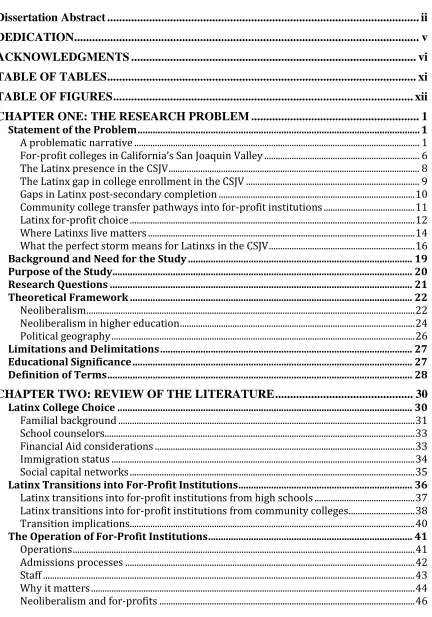
Dissertation Abstract ... ii
DEDICATION... v
ACKNOWLEDGMENTS ... vi
TABLE OF TABLES ... xi
TABLE OF FIGURES ... xii
CHAPTER ONE: THE RESEARCH PROBLEM ... 1
Statement of the Problem ... 1
A problematic narrative ... 1
For-profit colleges in California’s San Joaquin Valley ... 6
The Latinx presence in the CSJV ... 8
The Latinx gap in college enrollment in the CSJV ... 9
Gaps in Latinx post-secondary completion ... 10
Community college transfer pathways into for-profit institutions ... 11
Latinx for-profit choice ... 12
Where Latinxs live matters ... 14
What the perfect storm means for Latinxs in the CSJV ... 16
Background and Need for the Study ... 19
Purpose of the Study... 20
Research Questions ... 21
Theoretical Framework ... 22
Neoliberalism ... 22
Neoliberalism in higher education ... 24
Political geography ... 26
Limitations and Delimitations ... 27
Educational Significance ... 27
Definition of Terms ... 28
CHAPTER TWO: REVIEW OF THE LITERATURE ... 30
Latinx College Choice ... 30
Familial background ... 31
School counselors... 33
Financial Aid considerations ... 33
Immigration status ... 34
Social capital networks ... 35
Latinx Transitions into For-Profit Institutions ... 36
Latinx transitions into for-profit institutions from high schools ... 37
Latinx transitions into for-profit institutions from community colleges ... 38
Transition implications... 40
The Operation of For-Profit Institutions ... 41
Operations ... 41
Admissions processes ... 42
Staff ... 43
Why it matters ... 44
Opportunity by Geography ... 48
Geography of opportunity and post-secondary education ... 49
Geography of opportunity and post-secondary education for Latinxs ... 50
Geography of Opportunity and the CSJV ... 51
Race characteristics... 51
Educational attainment characteristics ... 51
Poverty characteristics ... 52
Proximity characteristics ... 53
Summary of the Literature ... 54
CHAPTER THREE: METHODOLOGY ... 57
Restatement of the Purpose of the Study ... 57
Research Questions ... 58
Research Design ... 59
Participants ... 60
Data Collection ... 62
Data Analysis ... 63
Data Validity ... 64
Ethical Considerations ... 65
Delimitations and Limitations of the Study ... 65
Background of the Researcher ... 66
CHAPTER FOUR: FINDINGS OF THE STUDY ... 68
Overview ... 68
Participants ... 68
Demographics ... 72
Themes ... 73
Parental focus on labor ... 73
Parental financial concern with college ... 74
Parental choice of labor instead of college ... 77
Parental perceptions of college for career capital ... 81
Theme summary... 84
Limit of public-sphere secondary and post-secondary counseling support ... 86
Low level of secondary support from high school counselors ... 86
Low level of post-secondary support from community college counselors ... 91
Theme summary... 96
A competitive market of for-profit institutions ... 97
Influence from for-profit institutions’ luring competitive market strategies ... 98
Theme summary... 106
Disillusionment with for-profit institutions... 107
Financial remorse, as accumulated debts and career deficits ... 108
Theme summary... 117
Chapter Summary ... 118
Recitals ... 118
Primary themes and clusters of meaning (subthemes) ... 118
CHAPTER FIVE: DISCUSSION, RECOMMENDATIONS,
AND CONCLUSION ... 122
Summary of Study ... 122
Summary of findings ... 122
Research Question 1: What factors play into why Latinxs in the San Joaquin Valley choose to enroll in for-profit institutions?... 126
Research Question 2: How do inequities from different experiences and opportunities shape these decisions? ... 130
Research Question 3: What do the narratives of Latinx alumni from for-profit institutions reveal about attributes that for-profit institutions offered or promised them that led them to their choice? ... 138
Discussion of Findings According to Theoretical/Conceptual Framework... 143
Recommendations ... 149
Recommendations for future research ... 149
Non-profit does not necessarily mean non-profit ... 151
Recommendations for practice ... 152
Conclusion and Final Thoughts ... 158
REFERENCES ... 161
APPENDICES ... 178
Appendix A: ... 178
NCES list of registered for-profit institutions ... 178
Appendix B: ... 182
U.S.C.B. Census Hispanic Populations ... 182
Appendix C: ... 188
U.S.C.B. Census Characteristics by County ... 188
Appendix D: ... 191
TABLE OF TABLES
TABLE OF FIGURES
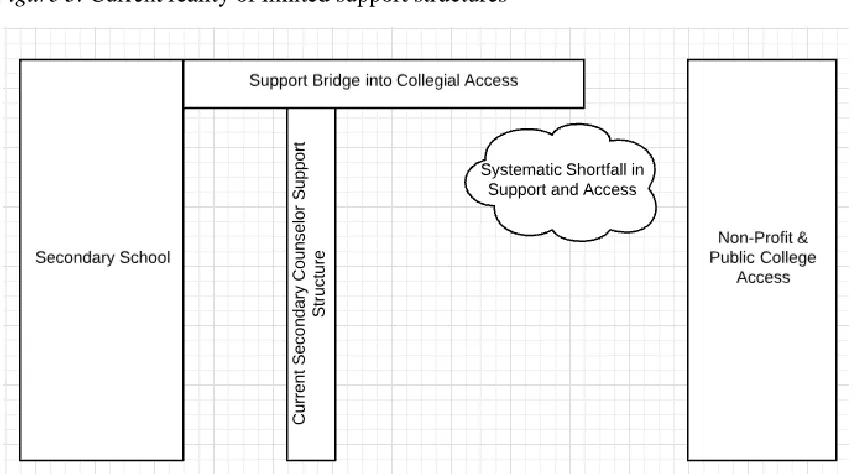
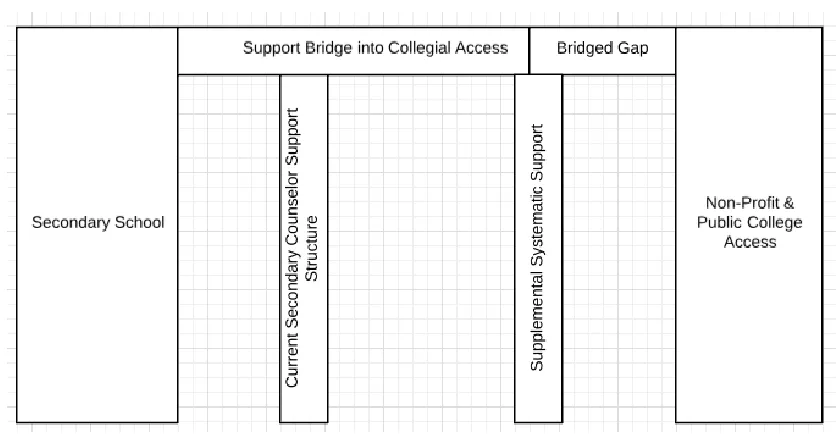
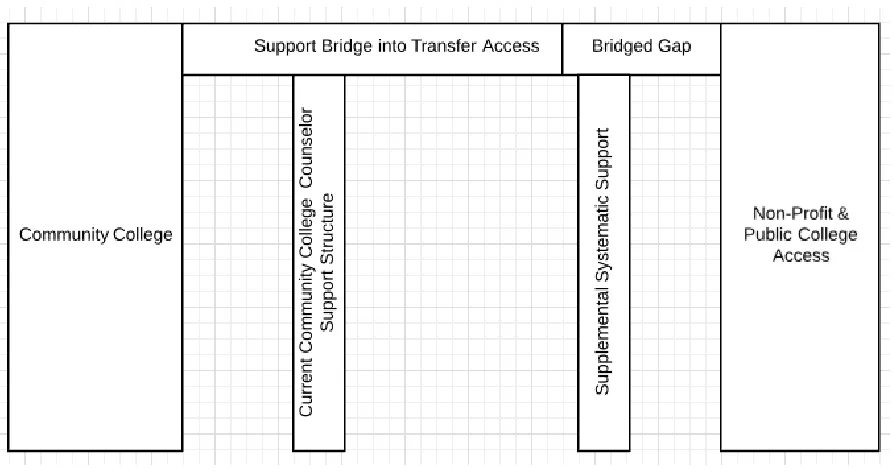
Figure 1. Reality of Participants ...153 Figure 2. Perceived Reality of Participants ...153 Figure 3. Current reality of limited support structures ...155 Figure 4- System intervention with added support and resources to bridge the gap of
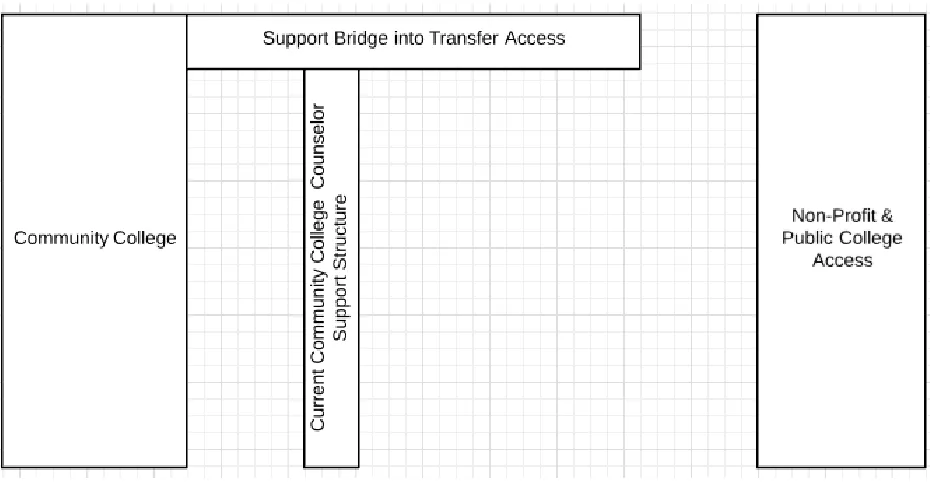
inequity ...156 Figure 5. Current reality of limited support structures within community college
system ...157 Figure 6. Systematic intervention with added support and resources to the counselors,
CHAPTER ONE: THE RESEARCH PROBLEM
Statement of the Problem
A problematic narrative
“José” was a young 18-year-old, energetic, optimistic first-generation college- bound Latinx1 student from Madera, California. Though José had encountered academic setbacks in high-school, he had managed to find himself as a first-year freshman at a major four-year college institution in Fresno, California. José felt proud of finding himself admitted into this institution, given his high school experiences with staff. José remembers being told by his high school counselor that he might be best served pursuing a vocational institution, perhaps considering electrician certification or another “good job” option post-high school; that is, one that would have high likelihood of placement into a lucrative career and short training period. José’s counselor even once told him: “Just to prove college might not be the best fit for you, you should try the city college for a semester or two, you’ll see.”At the time, what further confused José was that his parents absolutely agreed with his counselor, as they would say: “Sí, mijo, que pasa si no terminas, ay que terminar con la secundaria y garar buen trabajo, no?” (Translated:
“That’s right son, what happens if you don’t finish college, it’s better to finish high school and find a good job, right?”). José felt accomplished and on top of the world, until the end of his first year when his father’s health took a turn for the worse. José was
forced to withdraw since he could not maintain the full-time class schedule, with work in the evenings and help with his father at the same time.
Several years later, José found himself unhappy amidst a public-serving city career. He felt he had no choice but to take the job for financial reasons. One day, José saw a television advertisement, where the actor, played by a young Latinx male, was explaining his “testimony” to viewers about how this college institution changed his life. He described how he was now able to take care of his family and “give-back” to his parents and “take care of them.” Jose had no idea that this institution was a for-profit college, moreover, Jose really didn’t know the difference between a for-profit college and not-for-profit college for that matter. All Jose knew, at the time, was that he wanted to go back to school, and become the actor he saw on the screen.
Feeling a spark of encouragement, and having nobody to tell him otherwise, José drove down to the large for-profit institution and inquired. What José experienced once he walked in the door was all but a structured, fine-tuned, well-oiled “process” that transformed his inquiry into an enrollment. All of José’s concerns were addressed immediately, as though rehearsed, playing out as such between himself and the intake counselor:
Jose: How long will this program take?
Counselor: You can be done in anywhere from 3 years to 18 months; it’s up to how hard you want to work.
Jose: How much will this cost?
Counselor: It’s pricey, but don’t worry we will help you apply for financial aid and loans if need be.
Counselor: Totally up to you, you can either come to campus 2-3 days a week in the evenings, or attend completely online. This program is tailored for hard-working people like yourself.
Unfortunately, experiences such as José’s are all too common, especially within Latinx populations where sibling, communal, and parental collegiate experience is lacking. What Jose would later learn, is that the ease of the onboarding process would quickly redirect into mountains of tuition monies spent, along with the encountered difficulties of finding a job that would consider his education real.
As you may or may have not guessed by now, I am José (Joe). At the summation of my for-profit college experience, I felt short-handed and somewhat embarrassed over where I currently found myself. I felt embarrassed primarily due to my job-seeking encounters, where I was regularly met with closed doors once the prospective employer would find out that I was a graduate of a large for-profit institution. Simultaneously, at this point in my life, I was reuniting with former colleagues from high school who were graduating from public and private institutions, both in-state and abroad. I recall being met with the common iterance of “oh” when I would address their question of where I recently graduated from. Based on their facial expressions, tone, and body posture, I concluded that they disapproved or thought less of this particular institution. Ironically, the only job I was able to secure, even after endless interviews, was at a for-profit
institution in San Francisco, California. I can say that this shame followed me to my new profession, given that I did not believe in, nor trust, the education I was selling to
prospective students, but I had a family to take care of.
for this institution for quite some time. Through careful mentorship and with his guidance, I was able to gain employment at this institution, subsequently escaping the for-profit machine, but not without its costs. Specifically, I had a hard time adapting to my new position, as this new institution operated as one of higher learning, that is student focused, not a business machine that held me to meet sales quotas. My supervisor would continuously find the need to tell me to “calm down, you don’t have to try to talk the student into applying; we’re here to answer questions for them, not close them.” Simultaneously, and also with my mentor’s guidance, I decided to pursue another
Master’s degree, and subsequent doctoral degree at the University of San Francisco. Both programs, I felt, played pivotal roles in my new-found passion for post-secondary student service, as the programs focused on equity and social justice. Still, were my experiences a lost cause? Were these experiences for nothing? No! I intend to utilize them as a catalyst.
individual may be more shocked to learn that there are nearly four times (15) as many state prisons in the eight counties that make up the CSJV, then there are public four-year institutions (4) (Department of Corrections & Rehabilitation, 2018; California State University, 2018). How can it be, this individual may ask, that Fresno, California, a populous of nearly three-quarters of a million people (USCB, 2018), only have one state four-year public institution, that by the way is impacted2? But, by the same measure, Fresno, California has three major for-profit institutions, one of which is the largest chain in the world, and dozens upon dozens of vocational schools? Needless to say, I can continue listing these abnormally critical facts, but, similarly to the final line from the movie A Bronx Tale, spoken by the character ‘C’, which was: “but you can ask anybody
from my neighborhood, and they'll just tell you this is just another Bronx tale” (author, 1993), you can ask anyone from the Central Valley, and they’ll just tell you: this is just life in the Valley.
As the above narrative shows, a myriad of critical issues exists within the geographic region of the CSJV. However, my critical issue focuses around the realm of for-profit colleges and the Latinx populations who chose to attend them. You may see the word problem in the chapter title of this section, but to be clear, the problem was not their (students’) choice, but the social and geographical circumstances of these students that led them to that choice; that is my issue. The best method of comprehending the
following sections of this issue is through a political geography lens. A practical or even historical assumption of the word political geography might lead you to the conclusion that this has to do with politics; however, this definition has changed its dominant
meaning over time. For the purposes of this research and the description of this issue, political geography can be defined as the social and economic differences between places, without necessarily ascribing these to physical differences (Agnew & Muscara, 2012). In line with political geographies, the review of this problem attempts to unpack the understanding of power and place along with the systematic issues at play within this geography of people.
In an effort to understand the systematic issues shaping for-profit college choice within the CSJV by Latinx students, we need to examine several realms of the problem, including: the presence of for-profit institutions in the CSJV, the overrepresentation of Latinxs in the CSJV, the Latinx gap in college enrollment and completion within the CSJV, Latinx college choice, and the integrations of inequities by geography within the CSJV.
For-profit colleges in California’s San Joaquin Valley
A for-profit institution can be defined as an institution that is privately funded and aims to generate profit by offering post-secondary degrees and credentials (Iloh, 2014). For-profit students, statistically speaking, tend to be older, female, students of color, and come from lower socioeconomic status backgrounds and undereducated familial
median total amount borrowed for 25% of students who graduated from a private non-profit, and 12% of the students who graduated from the public sector (HELP, 2012).
For-profit institutions can cause inequity amongst Latinx populations within the CSJV, given that they can lead to severe financial indebtedness amongst its alumni, or to those who do not finish at all. According to a 2017 U.S. News and World Report, the five universities that produced the greatest number of dropouts with debt in 2016 were all for-profit institutions, including University of Phoenix (avg. debt: $7,843), ITT Technical Institute (avg. debt: $9,500), Ashford University (avg. debt: $4,750), Kaplan University (avg. debt: $6,837), and DeVry University ($13,843). Regarding gainful employment after program completion, findings show that nearly six years after enrollment, for-profit students have higher unemployment rates and lower earnings than their peers who attended non-profit and public institutions (Harvard Law Review, 2015). Likewise, findings also show that employers find graduates of for-profit, or online, degrees least desirable to hire (Chronicle of Higher Education., 2012).
When compared to public California community college availability (n=7), as well as public four-year institution availability (n=4), there are far more for-profit institutions within the CSJV than any other institution type (n=40) (National Center for Education Statistics, 2018) (See Appendix A). Of the 40 NCES registered for-profit institutions located within the CSJV, nearly 38% (n=15) are registered as
CSJV is populated with a plethora of small mom-and-pop vocational schools that offer private third-party loans, often at higher interest rates than that of federal funding (National Center for Education Statistics, 2018). In addition to these 40-registered for-profit institutions, along with the numerous unregistered ones, are for-for-profit super-systems that are registered in states outside of California but with locations represented within the CSJV, including: DeVry University, University of Phoenix, and Kaplan University (Integrated Postsecondary Education Data System (IPEDS), 2018).
Previous findings indicate that for-profit super-systems, like these, tend to focus on industry-specific programs, based on the regions job-market demand (Mannapperuma, 2015). These vocational intensive for-profit institutions deprive Latinxs of STEM
(Science, Technology, Engineering, and Mathematics) and liberal arts specializations, as embodied by public and non-profit institutions (Iloh, 2014), subsequently affecting their career trajectories and possibilities. Given the issue of overrepresented for-profit
institutions within the CSJV and the ability of these institutions to cause inequity amongst Latinxs, an appendable issue of noteworthiness is the overrepresentation of Latinx populations within this region.
The Latinx presence in the CSJV
contends that as of 2016, Latinxs comprised approximately 38% of the California population set, with a projected growth upwards of 41% by the year 2020. A majority of the surrounding counties of the CSJV (Image A) hold noticeably lower rates of Hispanic or Latinx populations, including: Sacramento 23.0%, Amador 13.6%, Calaveras 11.6%, Tuolumne 12.2%, Mariposa 11.0%, Mono 27.7%, Inyo 21.4%, San Luis Obispo 22.3%, Santa Clara 25.9%, Alameda 22.5%, and Contra Costa 25.4% (U.S. Census Bureau, 2016, County Quick fact sheet) (See Appendix B). However, as of 2016, according to the U.S. Census Bureau, the following Hispanic or Latinx population characteristics held true by Central San Joaquin county: San Joaquin 41.20%; Kings 54.20%; Fresno 52.80%; Kern 52.80%; Merced 58.90%; Stanislaus 45.60 %; Madera 57.40 %; and Tulare 64.10%. Seemingly, the CSJV is densely comprised of Latinx populations and as discussed
previously, of for-profit institutions. Given the overrepresentation of for-profit
institutions and the overrepresentation of Latinx’s within the CSJV, an additional issue comes to fruition; that is, the systematic educational gaps that lead to these types of institutions, including high school-to-college enrollment, four-year institution completion, and California community college transfer rates.
The Latinx gap in college enrollment in the CSJV
(HACU, 2018). Though these HSI’s would be best suited for meeting the cultural, sociological, psychological, and academic needs of Latinx populations (Fryar, 2015) as well as providing an affordable vessel towards a college degree (Fryar, 2015), an entry gap exists (CPEC,2015). Adding to the fact that Latinxs are overrepresented within the CSJV when compared to the rest of the state counties is that Latinxs are underrepresented with regard to secondary-to-post-secondary transition, especially with regard to
California’s public institutions like CSUs, UCs, and California’s Community Colleges (CPEC, 2015). According to the College Postsecondary Education Commission (CPEC), of the 2010 Latinx high school graduating pool in California, only 39% transitioned into a public university setting, including California Community Colleges (CCCs), California State Universities (CSUs), or Universities of California (UCs) (CPEC, 2015).
Furthermore, of the 39%, 25% transitioned into CCC’s, 10% transitioned into CSU’s, and only 3.8% transitioned to a UC (CPEC, 2015).
These findings leave an imminent gap; wherein a majority of Latinxs are not entering the California public post-secondary system immediately after high school and instead either: (a) attempt to return to school later as a non-traditional student, (b) enter a private non-profit university, (c) enter a private for-profit university, or (d) do not return to or start college at all. These types of systematic gaps not only affect Latinxs who are in high school but relatedly even affect Latinxs who enter a public post-secondary institution.
Gaps in Latinx post-secondary completion
Contreras, 2015). Graduation rates are significantly impacted for California State University Latinx students, for instance, with six-year graduation rates of: 46% at CSU Bakersfield, 38% at CSU Fresno, and 40% at CSU Stanislaus (CSU, 2017). Troubling statistics also arise when we examine the Latinx completion rates within CCCs. Latinxs are severely underrepresented with regard to college transfer or completion within this realm as well. In 2015, The California Community College Data Mart (2015) tracked a 2005 cohort’s completion/SPAR rate (that is, whether the student completed their two-year program or transferred to another institution) and found that on average, six two-years after enrolling, nearly 80% of Latinx students failed to complete their respective program or to transfer to a university (Moore & Shulock, 2010).
Latinxs within the CSJV are underrepresented with regards to college entry from secondary schooling and are underrepresented with regards to college completion within four and two-year institutions alike. These gaps are often the product of systematic failures that do not know how to support underrepresented populations of color, such as Latinxs. However, pathways into for-profit institutions are not always the fruition of the aforementioned educational gaps, as increasing numbers of Latinxs are transferring into these institutions from California community colleges.
Community college transfer pathways into for-profit institutions
community college-to-for profit transfer rates (Moore & Shulock, 2010). These rates are significantly concerning when compared to other race/ethnicity populations transferring into for profit institutions from California community colleges, with example rates of: Black transfer students (19%); Latinx transfer students (16%); White transfer students (8%); and API Transfer students (7%).
A probable cause of the increasing growth in transfers to for-profit colleges may include several systematic failures, including: capacity constraints within CSU and UC campuses due to budgetary restrictions; complex transfer requirements into CSU and UC systems; and even recruitment efforts led by for-profit institutions (Contreras &
Contreras, 2015). Still, the necessity of understanding Latinx for-profit college choice calls for the understanding of Latinx choice influences, including, familial, social, and external.
Latinx for-profit choice
A theme develops within previous research as to why Latinxs might decide to enroll or transition into a for-profit, which may include the influence of the following aspects of their experience, to be explained more in-depth in this section, including: (a) parental school involvement; (b) parental education attainment; (c) familial influence; (d) communal influence; and (e) for-profit institutional recruitment (Iloh, 2014). Latinx parental support and aspirations of their children going to college have long been identified as being key factors to initiating the urgency of going to college for Latinx students (Carolan-Silva & Reyes, 2013). However, those students identified as less likely
collegiate pursuit and enrollment (Carolan-Silva & Reyes, 2013; Oseguera & Malagon 2011). Similarly, Latinx students who had parent(s) who were not engaged in schooling were found to be more likely to enroll into a for-profit institution (Perez & Ceja, 2015). Thus, parental involvement plays a seminal role with regard to understanding Latinx college choice; however, other spheres of social influence come into play as well.
In the instance that a parent has no college experience, Latinxs are more likely to turn to siblings and peers for collegiate advice (Perez & Ceja, 2015). Relatedly, Latinxs are more likely to enroll into a for-profit institution if they have a sibling or peer currently attending that institution (Munoz & Rincon, 2015). Parental, sibling, and peer networks aside, one of the biggest influences of Latinxs’ decision to enroll into for-profit
Where Latinxs live matters
Though previous studies have examined the geographical effects of inequality (Briggs & Wilson, 2005; Rothwell & Massey, 2015; Stewart, Stewart, & Simons, 2007), Nicholas Hillman and Taylor Wichman (2016) of the University of Wisconsin-Madison have coined and expanded on the realm of the “education desert” (p. 5). The fundamental
ideology behind the concept of the educational desert is that place and proximity matter with specific regard to collegiate opportunity. Viewing collegiate opportunity through the traditional lens of process versus geography can perpetuate malignant spaces for
continued inequities to occur when considering higher education policy (Hillman & Wichman, 2016).
nearby. Hillman (2016) has labeled these education-desolate zones as ‘‘education deserts,” which are “disproportionately located in the nation’s poorest and most racially
minoritized communities” (p. 988).” An example of the aforementioned community groups, or region for that matter, is the CSJV.
Given that merely three CSU campuses are serving the CSJV, which include CSU Bakersfield, CSU Fresno, and CSU Stanislaus (CSU Department of Analytic Studies, 2014), one UC campus (UC Merced), and a handful of community colleges, it may be safe to classify the CSJV as an educational desert. With regard to Hillman’s (2016) contention on the correlation of these educational deserts centrally located within the nation’s poorest and racially minoritized communities, it is important to note that as of 2016, the eight counties within the CSJV hold an average Median Household Income
(2012-2016) of $47,819.50 USD (San Joaquin: 55,045, Stanislaus: 51,591, Merced: 44,397, Madera: 45,742, Fresno: 45,963, Kings 47,241, Tulare: 42,789, and Kern: 49,788) (U.S. Census Bureau Quick Facts by county table, 2016) (See Appendix C). Similarly, as of 2016 the eight counties within the CSJV hold an average Persons in poverty percent of 19.98% (San Joaquin: 41.60%, Stanislaus: 14.50%, Merced: 20.30%, Madera: 20.40%, Fresno: 25.50%, Kings 17.40%, Tulare: 24.70%, and Kern: 22.40% (U.S. Census Bureau Quick Facts by county table, 2016) (See Appendix C).
Geographic distance inequities exist within the CSJV with regards to access to the nearest four-year university. Specifically, of the 71 cities (See Appendix D) located within the CSJV, the following percentages hold true to having a commuting distance of
Stanislaus 69% of cities; and distance to UC Merced 75% of cities (Google MAPS, 2018) (See Appendix D). As the aforementioned identifies, the CSJV can be classified as an inequitable geography, with scarce educational resources in its proximities, thereby classifying it as an educational desert.
The aforementioned sections have identified several problems within the CSJV, which can create continued inequities towards its Latinx populations of college-bound students. First, the issue of the overrepresentation of for-profit institutions in the CSJV is eminent, and growing (National Center for Education Statistics, 2018). These types of institutions cause academic and financial barriers on Latinx populations, as well as their prospectus for career opportunities (Iloh, 2014). Similarly, the fact that Latinxs are overrepresented within the CSJV is problematic, given the systematic failures that are related to educational gaps into college for this population, in higher numbers, when compared with other populations (Moore & Shulock, 2010; Contreras & Contreras, 2015). These systematic failures can, similarly, be supplemented by not only a lack of legacy college experience and social influence, but by institutional influencers as well (Oseguera & Malagon 2011; Iloh, 2014). Likewise, these institutional influencers hold more opportunity, given the scare availability of public four-year education in the valley, due not only to capacity and budgetary issues, but proximity issues as well.
The above-referenced issues cause a perfect storm of inequitable constraints that negatively affect prospective college-bound Latinx populations, within the CSJV. Similarly, these identified systematic gaps in supporting Latinx students are amplified given the integrated inequalities by geography, within the Central San Joaquin Valley.
What we’ve identified in the above sections mark the opportunity, or the living conditions, for opportunistic actors like for-profit institutions to prey on and subjugate Latinx populations within this geography, that is, a The Perfect Storm3. Why? As Professor Tressie Cottom explains in her work Lower Ed-The Troubling Rise of For-profit Colleges in the New Economy: “Lower Ed [for-profit institutions] is, first and foremost, a set of institutions organized to commodify social inequalities and make no social contributions beyond the assumed indirect effect of greater individual human capital (pg. 13).” What can this mean to Latinxs living in the CSJV? Well, a lot,
considering that: nearly 20% of the Valley lives in poverty; there is an overrepresentation of Latinxs; an underrepresentation of public four-year institutions; and an
overrepresentation of for-profit institutions.
A partial hazard of the storm includes financial implications on Latinxs, given the extreme indebtedness, from high tuition rates, that these institutions cause on their students, even with a large majority of them not completing their programs (Chronicle of Higher Education., 2012). For-profit institutions, specifically, are the institutions whose tuition rates appear to be “pegged to maximum student loan limits, arguably to extract as much profit from students who can borrow the most because they have the least amount of assets and the fewest college choices (Cottom, 2017, pg. 13).” Let us unpack that last quote: “the least amount of assets.” To reiterate, the median household income (between 2012-2016) in the CSJV was $47,819.50 USD, and nearly 20% live in poverty (USCB, 2018). Now, let us unpack the next portion of the quote: “the fewest college choices.”
Given the fact that the CSJV can be considered and Educational Desert (See Chapter 2), with regards to accessible public four-year institutions within commuting distance, options become a malignant space for these businesses (for-profits) to flourish. Within
educational desserts, for-profit colleges and vocational programs, quite simply, “become a way of life (Cottom, 2017, pg. 92).” Still, let’s say there are some cases (much like myself) wherein some students finish their program, what then? Experimental studies have found that students with for-profit credentials listed on their resume, or job
application, are as likely to receive a call-back from an employer as someone with only a high school diploma (Cottom, 2017). This notion of employability becomes problematic as it creates a recursive funnel back to: (a) high tuition debt; (b) the inability to pay that debt; (c) the continuous temporal growth of that debt via interest; and (d) the possible seizure of assets for defaulting on that debt (e.g. levies, check garnishment). Therefore, this maximum financial extraction guarantees the continued financial slavery of Latinxs attending these institutions within the Valley, should they fail to graduate, or not find a job, which most do not (Chronicle of Higher Education, 2015)
To separate from the above financial implications, partially, is the critical consequence on wellbeing and way-of-life. Implications of carrying high debt not only can have practical financial implications, but also health and mental implications. Furthermore, the inability to obtain a career in a field one has invested substantially in: temporally, monetarily, and especially within a familial realm, may hold strong mental implications including: stress; depression, as well an unknown array of medical
relationships). Note: I purposely do not cite any research in the above claims on purpose, given that I, first-hand, have witnessed these occurrences within personal networks of close colleagues and friends who have encountered these effects, post for-profit life. This portion is a tribute to you, I hear your struggles, I’ve seen what you have gone through, and I will never leave your side, friends (For: M, L, A, M, B, V).
Background and Need for the Study
Latinxs are the fastest growing racial minority population within the United States (Perez & Ceja, 2016). As of 2012 Latinxs, ages 18-24, for the first time, surpassed white counterparts as the largest racial/ethnic group enrolled within a post-secondary institution (Perez & Ceja, 2016). However, of the Latinx population that enrolled into college, only 56% enrolled into a four-year institution, versus 72% of their white peers. These findings agree with previous research, that a majority of Latinx’s begin their college career at community colleges (Fry & Taylor, 2014). Though Latinx’s tend to begin their post-secondary career at a community college, for a majority, that is where it ends, that is, they do not finish or transfer out (Nunez & Elizondo, 2013). In the instance that Latinxs transfer out of a community college, specifically a CCC, an increasing percentage (16%) is enrolling into for-profit institutions (California Community College Data Mart, 2015), which are overrepresented within the CSJV while public four-year institutions are underrepresented. Findings indicate that Latinx students are more likely to enroll into a for-profit institution after visiting their website, or especially, when meeting with an institutional representative (Iloh, 2014; Oseguera & Malagon 2011). For-profit
Ed., 2012). Simultaneously, geographic inequities exist within the CSJV that stratify college access to Latinx populations via long commuting distances to their nearest four-year public institution. These geographic inequities incubate opportunistic regimes, like for-profit institutions, that thrive on the business opportunity of need and demand via the provision of education for sell. Therefore, research is needed to further extract why and how Latinxs within the Central San Joaquin Valle, are coming to their for-profit
enrollment decision and how these decisions are shaped by inequities within their region.
Purpose of the Study
The purpose of this phenomenological study is to develop a better understanding around the effects of geographies of inopportunity on Latinx students’ college choices within the CSJV, as well as how recruitment practices at for-profit institutions intersect with the broader [in]opportunistic structures within this region. Along with the concept of geographies of [in]opportunity, this study will integrate a neoliberal lens in an effort to identity how these experiences have shaped the college-choice process for CSJV Latinx students, specifically, into for-profit institutions.
advertisement) Latinx students, in an effort to recruit them to their institutions, as well as how these practices intersect with broader [in] opportunistic structures within the CSJV. By identifying and understanding the aforementioned attributes and choice-processes that lead CSJV Latinx students into for-profit institutions, I hope to challenge the policies and conditions that shape these choices in an effort to mitigate these inequities for Latinx students within the CSJV.
Research Questions
Following the phenomenological approach, this study situates the research through the eyes of its participants and answers its questions through that lens. Thus, the following research questions will guide the inquiry of this study:
1) What factors play into for-profit college enrollment for Latinxs in the CSJV?
2) How do inequities from different experiences and opportunities shape these decisions?
Theoretical Framework
The framework of this research exists in two parts. First, I utilize neoliberalism as a theoretical framework for viewing the experiences and findings within this study’s qualitative data. This theoretical underpinning serves as an appropriate means of
understanding larger systemic occurrences and inequities, as they relate to this research. Secondly, I utilize the concept of political geography as a conceptual lens to ascribe the dispersion of power as well as occurrence of inequities, as they relate to geographical spaces. This conceptual underpinning serves as a means of understanding these findings through their specific existences within given geographies of examination, in this case, specifically within the CSJV.
Neoliberalism
The formation and existence of capitalistic regimes at the expense of prospective Latinx student populations, deriving from intersectional geographic inequalities, provides a prolific environment for the emergence of neoliberalism and its actors. Lipman (2011) contends that neoliberalism has not only defined the social paradigm for the past several decades, but also in effect holds historically-generated state strategies to manage
opportunities for capital (p. 6). Lipman (2011) describes a neoliberal regime as an ensemble of economic, social, governmental, actors paired with ideologies that promote individual self-interest, unrestricted capital, reduced labor-cost, and sharp “cut-back” of the public sphere (p. 17).
Lippman (2011) further argues that neoliberalism “champions the privatization of social goods and withdrawal of government from provision of social welfare on the premise that competitive markets are more effective and efficient” (p. 7). Taylor (2003) ascribes the conceptualization of the neoliberal lens as an imaginary “social image,” wherein we as ordinary societal actors “imagine” our world, meaning the common understandings (myths or stories), that we share and subsequently believe for the overall legitimization of the particular social order. In essence, the overarching power schema of neoliberalism lies within the saturation of social ideologies and social consciousness, making it difficult for societal actors to reimagine otherwise. Relatedly, with regard to the saturation of social ideologies, neoliberalism platforms construct people of color as the “undeserving poor”), lazy, pathological, and welfare dependent) and feeds key
governmental policy makers with agenda rationale to retrench or altogether eliminate government-funded social programs, subsequently eliminating state responsibility for social welfare (Katz, 1989).
invest towards one's child or oneself in an effort to “add value” and increase an
individual's worth within the labor sphere, not for personal growth or social good (p. 15). Ong (2007) coined the term “self-mastery” with specific regard to neoliberalism, wherein the actors of the regime promise freedom through self-governance and “requires people to be free and self-managing in different spheres of everyday life—health, education, bureaucracy, the professions, etc.” (p. 4).
Goldberg (2009) adds that neoliberalism manages the purported problem of race via the promissory dream of increased freedom and opportunity via a market driven by “choice and efficiency rather than racial ideology or allegiance (pg.14).” Melamed (2011) contends that neoliberalism’s “multicultural racialization” has made the aforementioned types of disparity appear “fair” by integrating racialized privilege as a causation to neoliberalism’s beneficial actors and purporting a racialized stigma to its deprived actors. Specifically, neoliberalism has labeled its beneficial actors as multicultural, reasonable, law-abiding, and “good” global citizens however, it has also labeled its deprived actors as devalued, monocultural, backward, weak, irrational, and unfit global citizens, specifically due to their lack of neoliberal subjectivity (Melamed, 2011).
Neoliberalism in higher education
traditions like standardized testing and skill-based instruction are leading to the
destruction of education, as the format has shifted from a critical to a conformity model which negatively affects students. Seemingly, these conformities ascribe to what’s best for capital accumulation and institutional standing, versus the higher education and social welfare of the student. Furthermore, Giroux argues that “higher education matters only to the extent that is promotes natural prosperity and drives economic growth, innovation, and transformation” (Giroux, 2014, pg. 58). Inevitably, the mere existence of politics surrounding education and funding subsequently eliminate opportunities for growth in higher education, for the field and the student (Giroux, 2014). Giroux’s (2012)
contentions are especially relatable to for-profit institutions given that he considers academics as “public intellectuals responsible for protecting the purpose and meaning of education in a society becoming increasingly focused on labor” (pg. 36).
The realm of economic growth and production, with higher education as a vessel, is also similarly contended by Slaughter and Rhoades (2009), who hold that the
provide a beneficial lens to view these institutions through, given the specific focus of for-profits around capital accumulation and labor.
The work of Saunders (2007) directly integrates as a viable framework within which to view for-profit institutions. Saunders (2007) contends that from a neoliberal lens, education is increasingly dominated by individualistic goals and benefits wherein students become consumers of an educational product. Furthermore, education is no longer seen as a social good with intrinsic value, but is instead seen as a commodity that a student purchases, for his or her own good (Saunders, 2007). This very capital, that is purchased by the student (their education), is believed to increase their human capital, thus enabling them to pursue a better job, salary, and life.
Political geography
As previously mentioned, the term political geography might imply that the content in question is related to politics; however, this definition has changed its
framework is used to understand the effects of these markets as they relate to a specific group of people within the region, Latinxs.
Limitations and Delimitations
The underlying catalyst for this research encompasses the examinations of Latinx for-profit alumni’s decision-making processes with regard to choosing for-profit
institutions within the CSJV (California). The study focuses on for-profit Latinx alumni that reside within the eight CSJV counties, which include: San Joaquin; Kings; Fresno; Kern; Merced; Stanislaus; Madera; and Tulare (San Joaquin Valley Fact Sheet, 2016). The study also solely focuses on alumni of for-profit institutions and exclude alumni of non-profit institutions. However, future research is urgently needed within the
examination of non-profit institutions, as many have been found to operate like for-profit degree mills (Iloh, 2014) (Oseguera & Malagon 2011) (Harvard Law Review, 2015). A second area of noteworthiness is the possibility of author bias, in that I am an alumnus of the largest private for-profit university in the United States, where I received both
undergraduate (BS) and graduate (MBA) degrees. I attempt to account for author bias via the utilization of peer review when analyzing and compounding my thematic narrative findings.
Educational Significance
aims to focus on the Latinx experiences of alumni located within the CSJV, wherein, few for-profit Latinx choice inquiries have occurred. Similarly, the study aims to add to the existing literature regarding the manifestation of for-profit institutions by geography, within this underrepresented region, as well as adding to the existing literature regarding Latinx college choice in general. Additionally, this study intends to inform and address public policy regarding the need for more accessible public four-year education
institutions, within the CSJV via the provision of branch campuses or online expansions. Lastly, this research strives to inform secondary counselors and post-secondary
counselors alike, with regard to the support of college-bound, or potential college-bound Latinx populations.
Definition of Terms
Latinx: gender-neutral term that is often used in lieu of the term Latino or Latina, typically referencing Latin American racial identity (Princeton University Latinx Perspective Organization
,2016).
CHAPTER TWO: REVIEW OF THE LITERATURE
This review of the literature employs a claim of concept (Machi & McEvoy, 2012), that is, a proposition, idea, or phenomenon that is defined and justified by expert testimony. This review of the literature identifies a justification for the need of capturing how geography of inopportunity shapes for-profit college enrollments by Latinx students, by identifying emergent gaps surrounding existing research related to Latinx for-profit choice, including: Latinx college choice, Latinx transitions into for-profit institutions from high schools and community colleges, the operation of for-profit institutions, and geographic inequalities by proximity.
Latinx College Choice
Traditional models of college choice, such as Hossler and Gallagher’s (1987) model, have held previous influence over college choice research. Notably, Hossler and Gallagher’s model has played a seminal role in shaping college choice research. The three-stage model includes the phases of: predisposition, which is when students make the decision to attend a postsecondary institution; search, which is when students proceed to investigate institutions and their characteristics; and ultimately choice, which is when students complete their post-secondary applications and select a particular institution. This model, and others derived from it (Hossler, Braxton, & Coopersmith, 1989; McDonough, 1997), do not adequately capture the experiences of underrepresented populations, such as Latinxs (Bergerson, 2009).
immigration status (Perez, 2010), and Social Capital Networks (Martinez & Cervera, 2012). Conclusively, these works suggest that Latinx students often have no means of legacy information regarding college (Santos & Saenz, 2013), and often count on external resources, including high school counselors (Motel, 2012), social circle community members (Perez, 2010), and institutional actors (Perez, 2010). Though a majority of the underlying research focuses on personal characteristics and not population location, these findings do contribute to this study via key considerations when examining the Latinx populations within the Central Valley. The following sections analyze key contributions of research within the areas centering around Latinx college choice. Each section derives from thematic findings via a multitude of research. Discussed themes include: familial background, school counselors, financial, immigration, and social capital.
Familial background
Holistically, a major influencer on any individual student’s college choice is their habitus, that is, their viewpoint, as to whether they see college as a realistic option, or not (Perna, 2006). An individual’s habitus accounts for an individual’s background
characteristics, including: race, gender, socioeconomic status, and cultural and social capital (Perna, 2006). Seemingly, socioeconomic status (SES) holds major influence over a student’s habitus, as SES is correlated to multiple forms of capital, which in turn, help facilitate college choice and enrollment (Nunez & Kim, 2012). Capital, with regard to the aforementioned use, can be defined as a means of assets (social, financial) that an
backgrounds are more likely to hold parental support with regards to finances and making decisions for college as they are more familiar with the college-going process (Santos & Saenz, 2013).
However, Latinxs are less likely to have this type of parental support, given that Latinxs, on average, tend to come from a household where neither parent holds a college degree (Santos & Saenz, 2013). Still, parental support plays a seminal role in Latinx college choice. Findings indicate that Latinx parents hold high aspirations for their children and play a crucial role of support (Perez & McDonough, 2008). In fact, parents’ expectations and support of their children during the college application stage has been identified as a major indicator for college enrollment for first-generation Latinx students (Ceja, 2006). For Latinas, in particular, parents are often found to be the most important source of influence during the predisposition phase, and were who they most spoke to during the planning process.
Though previous misconceptions hold that less formally-educated households are often from backgrounds that do not value education, due to non-traditional support (e.g. savings, college planning), this is more a systematic failure than negligence
(Kiyama,2010). Systematic failures occur, especially within Latinx families, given that a majority of college information disbursed is limited to local institutions, with much of the provided information stemming from individuals within their social networks (e.g.
college education for the Latinx population, thus creating a major accessibility limitation for college-bound Latinxs.
School counselors
Though some institutional actors are meant to support underrepresented
populations within secondary school (e.g. counselors), this may not always be the case. Given that most Latinxs are the first in their family to pursue a college degree, school counselors are seen as major sources of information for Latinx students (Motel, 2012). The fact that Latinx students may hold a heavy reliance on school counselors for college information is troubling, given that Latinx students tend to be concentrated within large, poor, urban, under-resourced schools where counselors are overwhelmed and tend to focus on their interpretation of the few college-bound students in their queue (Kimura-Walsh, Yamamura, Griffin, & Allen, 2009). In an effort to offload some of their workload, studies have found that school counselors have even been known to steer Latinx students towards two-year institutions immediately, or more troubling, towards for-profit institutions (Oseguera & Malagon, 2011). The iterance of inadequately pointing Latinx students towards two-year institutions and for-profit college, creates a space for inequality, given that this action deprives the Latinx student of the opportunity of choice, since these barriers enact limited college opportunities. Still, other variables exist that may cause similar inequalities with regard to Latinx college choice.
Finances also come into play with regard to Latinx college choice and process. Seemingly, rising tuition costs have been found to increase reliance on financial aid, thus creating an influence on specific college choice (Santos & Saenz, 2013). Financial considerations have been found to play a critical role in determining a first-generation Latinx’s college choice (McDonough & Calderone, 2006). However, even with the integration of financial assistance, Latinx students often face substantial unmet need and are often not able to pay for college (Heller, 2005). In the cases where a Latinx student is unable to come up with the unmet need funding, they are found to either find a more affordable alternative or not enroll into an institution at all (Heller, 2005). Another common finding with regards to Latinxs and finances is the existence of misinformation. Purported findings indicate that all too often only a small amount of Latinx high school students know anything about any type of financial aid (e.g. FAFSA, grants), their parents included (Zarate & Fabienke, 2007). Given this inaccessibility to adequate financial resources and misinformation, another inequality develops for Latinx students and college choice, since these barriers create limited spaces for college choice.
Immigration status
A major segment of the Latinx population, often at the forefront of political debate over immigration policy, is composed of undocumented students. Previous studies have identified key adversities that negatively affect undocumented Latinx college
pursuits. Limitations in outreach and counseling due to fears around undocumented status have created major barriers between Undocumented Latinxs and the resources and
inequality via higher out of state tuition rates due to their status (Nienhusser, 2014). Integrated and appended onto the aforementioned inequalities are the realities of the negative psychological and emotional effects on these Latinx students, created by the fear of an uncertain future within the college and job environment (Nienhusser, 2014).
Though undocumented Latinxs may face similar inequalities with regard to college choice as their U.S. born counterparts, the unimaginable fear centered around access to information, added financial costs, and emotional wear create specific barriers and limitations for these students around college choice (Zarate & Burciaga, 2010).
Social capital networks
Social capital refers to networks of people and community resources who can provide support to students and communities of color as they navigate social institutions (Yosso, 2005). Social capital is a major influence on Latinx college choice, given that Latinxs, as previously stated, tend to have limited parental legacy information to depend on in regard to college. Latinxs tend to follow the patterns of chain migration for
members, professors, students) (Perez, 2010). These findings can create spaces for inequality toward Latinx students, since they are limiting their college selection to pools of institutions where they currently hold social capital circles.
The literature on this issue indicates that Latinx populations are seemingly dependent on social capital networks, given that in most cases their parents have no college legacy experience to contribute. Latinx students, following chain enrollment attributes, are also more likely to pursue a specific institution if they hold current social networks there, such as staff, professors, or peers. In the instances when Latinx students turn to school support, that is, school counselors, they (counselors) are often
overburdened with heavy caseloads and point Latinx students towards two-year
institutions or even in some cases, for-profit institutions, since Latinx students are often located within large, poor, under-resourced school settings. Based upon the
aforementioned findings, eminent gaps exist in the understanding of implications on Latinx college choice and the integrational effects of geographies. Specifically, the need to understand how the aforementioned findings are impacted when rurality and
inequitable geographies are integrated presents a pressing issue for Latinx communities with scarce collegiate resources nearby.
Latinx Transitions into For-Profit Institutions
An important extension to Latinx college choice, and the primary goal of this research, is understanding the choice of for-profit institutions by Latinx students. Though for-profit institutions have existed since the 1800s, the development of research to
to U.S. Department of Education reporting guidelines (Chung, 2009). This reporting deficit, scholars argue, is why most research attempts to develop findings by
incorporating investigative comparisons with community colleges (Iloh, 2014). Though limited research exists within the area of Latinx for-profit choice, we will focus on findings around transitions into for-profit institutions by Latinxs at both the high school level and the community college level.
Latinx transitions into for-profit institutions from high schools
Though limited findings exist for the transition of Latinxs’ into for-profit
institutions from high school, several important characteristic findings exist. With regard to parental influence, Latinx students were found to be more likely to enroll into a for-profit institution if they had parents with lower educational attainment. Similarly, Latinx students were more likely to enroll into a for-profit institution if they had parents who were not engaged in their school activities. Immigration also plays a pivotal role as to whether a Latinx high school student enrolls into a for-profit institution, in that their chances of enrollment increase significantly if they entered the U.S. schooling system within middle school or later (Moore & Shulock, 2010).
choice at large, which holds that the probability of a student choosing a for-profit college is heavily influenced by socioeconomic background and parental involvement in child schooling (Chung, 2012). This literature identifies a theme of parental and social influence with regard to Latinx college choice; furthermore, it also identifies the development of malignant spaces for institutional actor influence to take advantage of Latinx students’ lack of information.
Latinx transitions into for-profit institutions from community colleges
Of the total Latinx population in the United States, nearly 27.8% (14 million) live in California (U.S. Census Bureau, 2016). Though as of 2012 Latinxs represent the largest racial/ethnic group enrolled in college, of the totality, only 56% begin their career within a four-year institution. This fact is troubling, given that nearly 72% of their white peers begin their career within a four-year institution (Fry & Taylor, 2014). This finding contends that Latinxs are underrepresented within high school to four-year institution enrollment at large. Moreover, further deficiencies exist given that of the Latinx populations that enter community colleges, only a small percentage end up earning a bachelor’s degree or are still enrolled within their four-year institution six years later. A 2010 study found that a mere 14% of Latinxs entering community colleges nationally were earning a bachelor’s degree or were still enrolled within their original four-year institution six years later, when compared to their white counterparts, which showed 34% (Radford, Berkner, Wheeless, and Shepard, 2010). These figures are especially
The California post-secondary system with the largest representation of Latinxs is the California community college system (California Community Colleges Chancellors Office, 2013). Latinxs make up nearly 35.9% of the total enrollment across the entire system (California Community Colleges Chancellors Office, 2013). Seemingly, Latinxs are not only overrepresented within California community colleges, but nationally within community college systems at large (Kurlaender, 2006). Previous findings indicate that Latinx populations attend community colleges for several reasons, including: cost, proximity to home and family, schedule flexibility, open admission, and transferable coursework to four-year institutions (Flores & Park, 2013).
In comparison with first-time university students, community college students are three times more likely to possess risk factors that negatively impact their college
persistence, including: delayed start of enrollment, part-time enrollment, and working full-time (Katsinas & Tollefson, 2009). These risk factors can lead to the subsequent occurrence of Latinx students not transferring to a four-year institution and eventually dropping out altogether. In fact, when we examine Latinx SPAR4 completion rates within the eight CSJV counties by community college district, we find an underrepresentation of transfer/completion by Latinxs: Kern 35.58%, Merced 33.87%, San Joaquin Delta
40.40%, Sequoias 38.61%, State Center 35.61%; West Hills 42.89%, and West Kern 25.38% (California Community College Data Mart, 2015. These dormant spaces of not completing or transferring from a community college program may provide spaces for opportunistic organizations to step in, including for-profit institutions.
In the instances when Latinx students transfer out of California community colleges, 50% are transferring to California State Universities, 9% are transferring to Universities of California, 10% are transferring to in-state private institutions, 10% transfer to out-of-state public institutions, 5% transfer to out-of-state private institutions, and 16% transfer to a for-profit institution (California Community College Data Mart, 2015). Aside from California State Universities, Latinx transfer populations from California community colleges are overrepresented within for-profit institutions when compared to all other categories. This portion of the literature identifies a theme of both underrepresentation with regard to community college completion by Latinxs, as well as an overrepresentation of Latinxs transferring into for-profit institutions within the CSJV. Eminent gaps exist with regard to understanding Latinx for-profit choice and the effects of integrated inequitable geographies that hold few post-secondary resources, especially public four-year institutions. Given that Latinxs are increasingly choosing to transfer to for-profit institutions, it is imperative we understand the institutions method of operation and existence.
Transition implications
Though some of the above sections focus on Latinx college completion, others concentrate on direct high-school to for-profit transitions as well as community college to for-profit transfer. Though these sections do not directly align with the population of this study, given that my participants will fall under the criteria of non-traditional 5 students,
this literature may provide scope in understanding the holistic realms of Latinx college choice. Furthermore, specific research is needed within this area which directly examines the choice processes of both these high school and transfer populations.
The Operation of For-Profit Institutions
A post-secondary for-profit institution is defined as a privately funded taxpaying institutional entity that generates profit by providing post-secondary degrees and or credentials and reports to stockholders (Deming, Goldin, & Katz, 2012). This differs from private, non-profit institutions that similarly do not receive tax-payer funding from their states, but are not tax-paying entities and report to a board, typically comprised of trustees (Deming, Goldin, & Katz, 2012). For-profit institutions have been found to develop their primary program offerings in line with the college’s local industries, in response to labor needs of specified trades and professions (Gilpin, Saunders, & Stoddard, 2015). Regarding the sector’s heterogeneity, the 15 largest for-profit
institutions account for nearly 60% of the sector’s total enrollments (Bennett, Lucchesi, & Vedder, 2010). Though a majority of the sector can be comprised within these large institutions, the remainder are classified as mostly smaller career colleges that focus on shorter degree programs and specializations.
Operations
adjunct faculty, versus holding tenure pools, thereby allowing for greater financial control over academic resources and expansions (Bennett, Lucchesi, & Vedder, 2010). For-profit institutions also hold major control over site expansions (e.g. branch
campuses), given that a majority of these businesses lease commercial spaces, versus building on permanent locations.
Another key differentiation between for-profit institutions and other types of institutions (e.g. public, non-profit), is that on average, they invest the least amount per student ($9,758) when compared to the rest of the post-secondary sector. Notably, the public sector, on average, spends twice this amount, and the private non-profit sector spends nearly four times the amount (Bennett, Lucchesi, & Vedder, 2010). Findings indicate that most for-profit institutions’ tuition and fee rates are considerably higher than the average community college, subsequently forcing 90% of their students to take out student loans (Cellini & Chaudhary, 2011). Similarly, for-profit institutions enroll the highest amount of student borrowers (Cellini & Chaudhary, 2011). Nearly 57% of bachelor’s students who graduated from a for-profit institution owe $30,000 or more on average (HELP Committee, 2012).
Admissions processes
A heavy area of scrutiny for these institutions is admissions culture and