The University of San Francisco The University of San Francisco
USF Scholarship: a digital repository @ Gleeson Library | Geschke
USF Scholarship: a digital repository @ Gleeson Library | Geschke
Center
Center
Doctoral Dissertations Theses, Dissertations, Capstones and Projects
10-2019
Exploring Ways to Bring Culturally Relevant Pedagogy into
Exploring Ways to Bring Culturally Relevant Pedagogy into
Rehabilitative Programs
Rehabilitative Programs
Reginold P. Daniels
The University of San Francisco
EXPLORING WAYS TO BRING CULTURALLY RELEVANT PEDAGOGY INTO REHABILITATIVE PROGRAMS
A Dissertation Presented to
The Faculty of the School of Education Department of Leadership Studies Organization and Leadership Program
In Partial Fulfillment
of the Requirements for the Degree Doctor of Education.
by
ABSTRACT
The present study analyzes the effectiveness of a culturally relevant prison
rehabilitation program carried out with 41 inmates at a California jail. The aspect of prison
rehabilitation has not received enough attention by researchers previously. In this case, the
author conducted an in-depth quantitative analysis on a survey with participants that he was
teaching. Regression analysis was used to explore the data. The results of the regression
indicated that the culturally relevant instructor significantly enhanced violence prevention
(r(37) = .410, p<0.05). Furthermore, the study also found that cultural relevance significantly
Signature Page
This dissertation, written under the direction of the candidate’s dissertation committee and
approved by the members of the committee, has been presented to and accepted by the
Faculty of the School of Education in partial fulfillment of the requirements for the degree
of Doctor of Education. The content and research methodologies presented in this work
represent the work of the candidate alone.
Reginold Pazelee Daniels October 3, 2018 Candidate
Dissertation Committee
Darrick Smith, Ed.D. October 3, 2018 Chairperson
Nicola McClung, Ph.D. October 3, 2018
Rick Ayers, Ph.D. October 3, 2018
DEDICATION
This dissertation is dedicated to Johnny and Unjolla Daniels, my parents, love kept me
able to move forward during the most challenging times in this process. I further dedicate this
work to my maternal and paternal family, especially the generations to come, may they be
ACKNOWLEDGEMENTS
To my lifetime advocate with unconditional positive regard, Floyd Johnson: because
you were the surrogate of this accomplishment when I could not envision it. Eternal gratitude!
My guardian angel and grandmother, Rosemary Williams, for caring for me throughout my
life. I could not have accomplished this without you.
Special gratitude goes out to Amie Dowling, Jerry Scoggins, and Ruth Morgan for
opening doors in my process of academic and professional development, that will not ever be
closed. My eternal cheerleaders, Najuawanda, and Saniah Daniels, you are a constant source of
love and support that continually renews my spirit. I love you to infinity and beyond!
I would also like to express my sincere gratitude to my advisor Prof. Darrick Smith for
the continuous support of my doctoral study and related research for his patience, motivation,
and immense knowledge. His guidance helped me the most difficult times of research and
writing of this thesis.
Besides my advisor, I would like to thank the rest of my thesis committee: Dr.
Nichola McClung, Dr. Rick Ayers, and Professor Amie Dowling, for their insightful comments
and encouragement, but also for the insightful inquiry which incented me to widen my research
from various perspectives.
Lastly, I would like to thank both sides of my family: Daniels and William's family for
Table of Contents
ABSTRACT ... II SIGNATURE PAGE ... III DEDICATION ... IV ACKNOWLEDGEMENTS ... V
CHAPTER ONE INTRODUCTION ... 1
BACKGROUND OF STUDY ... 1
STATEMENT OF THE PROBLEM ... 5
PURPOSE OF THE STUDY ... 12
DEFINITION OF TERMS ... 16
CHAPTER TWO REVIEW OF THE LITERATURE ... 18
RESTATEMENT OF THE PROBLEM ... 18
PRISON REHABILITATION AND MEN OF COLOR ... 20
PRISONS FOCUS ON PUNITIVE MEASURES ... 23
PUNITIVE MEASURES RESULT IN DIMINISHING RETURNS ... 24
HISTORY OF REHABILITATIVE PROGRAMS WHAT WORKS? ... 28
REHABILITATIVE PROGRAMS THAT ARE CONSISTENTLY FUNDED YIELD POSITIVE RESULTS ... 31
CULTURALLY RESPONSIVE TEACHING ... 33
CHAPTER THREE ... 36
DATA COLLECTION AND PROCEDURES ... 37
COMPOSITE VARIABLES ... 38
RESTRICTIONS/LIMITING CONDITIONS ... 39
POSITIONALITY ... 39
MATERIALS ... 40
CHAPTER 4 ... 41
ANALYTICAL STRATEGY ... 41
DESCRIPTIVE STATISTICS ... 41
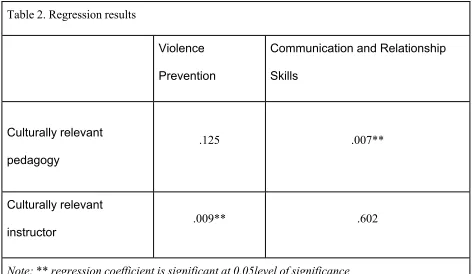
REGRESSION RESULTS ... 45
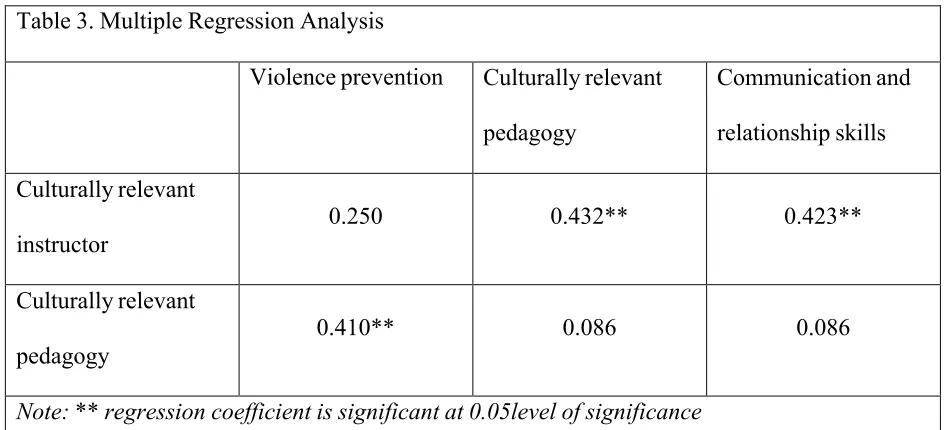
MULTIPLE REGRESSION ANALYSIS ... 47
CHAPTER 5 ... 49
SUMMARY AND CONCLUSION:THE BENEFITS OF CULTURALLY RELEVANT PEDAGOGY ... 55
FOLLOW-UP ... 62
LIST OF TABLES
LIST OF FIGURES
Figure 1 Histogram of Culturally Relevant Curriculum ... 42
Figure 2 Histogram of Instructor Culturally Relevant Pedagogy ... 43
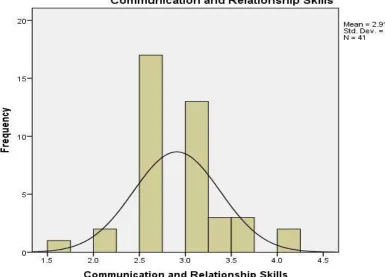
Figure 3 Histogram of communication and Relationship Skills ... 43
1
CHAPTER ONE
INTRODUCTION
Background of Study
Manalive, a batterer’s intervention curriculum, started in 1990, after the Domestic
Violence Mandatory Arrest Law went into effect on January 1st, 1991. It was founded and
designed by Hamish Sinclair (White male) and a group of white feminists in Marin County. As a
result of that legislation, Manalive established a partnership with the criminal justice system to
institute programs that address the needs of mandated batterers. Up until that point, domestic
violators participated in the Manalive program voluntarily. In 1997, Manalive partnered with the
San Francisco Sheriff’s Department to spearhead a program called Resolve to Stop the Violence
Project (RSVP), with an in-custody approach providing domestic violence classes to mandated
offenders as well as to other violent offenders.
The act of violence can be incredibly devastating to individuals, families, and the
communities in which they live, with short and long-term consequences that affect the quality of
life. Both the World Health Organization (WHO) and the U.S Center for Disease Control and
Prevention recognize violence as a major public health issue (World Health, 2002). It has been
noted that violence directly affects health care expenditures worldwide (Public Health Timeline,
2013).
A 2004 WHO report provides estimates of the cost of interpersonal violence (including
domestic violence, sexual assault, rape and child abuse) in the United States at greater than $300
billion per year, with the cost to victims estimated at more than $500 billion. The U. S.
2
32.2 million victims of violence were victims of family (or domestic) violence (Department of
Justice, 2005).
According to a 2010 Center for Disease Control and Prevention study, researchers
estimated that 74 million Americans (both men and women) had experienced intimate partner
violence in their lifetime, with 13 million (men and women) having experienced violence in the
previous year. At the state level, the California Department of Justice reported 174,649 domestic
violence-related calls for assistance in 2007. Forty percent of these calls involved the use of
weapons. In 2008, the California Department of Justice’s Criminal Justice Statistics Center
reported that there were 99 domestic violence fatalities, female only (Department of Justice,
2008).
The U.S. Center for Disease Control estimated that the cost of intimate partner violence
exceeds $5.8 billion each year, of which $4.1 billion is for direct medical and mental health
services. One study suggests that witnessing violence between one’s parents or caretakers is the
strongest risk factor of transmitting violent behavior from one generation to the next (Break the
Cycle, 2006). Adult men are twice as likely to abuse their own partners and children if they
witnessed domestic violence as young boys. As Edelson (1999) reported, 30% to 60% of
perpetrators of intimate partner violence also abuse children in the household. These statistics
point to domestic violence as a public health issue that affects the overall health of the
community and country. Domestic violence is non-discriminatory, affecting all aspects of
society and threatening humanity. Fundamentally, it is paramount as a humanitarian issue as well
3
Questions about the curriculum, how it was developed, and its origins are difficult and
not easy to ascertain, which gives me the impression that it was not well documented. In an
interview in Tikkun magazine, “Manhood and Violence,” Hamish Sinclair states that he is the
founder and developer of the Manalive curriculum. The article further states, Sinclair founded
Manalive in 1984 while designing the Marin Abused Women’s Services batterer intervention
program for the partners of women in the shelter (Sinclair, 2012). On the other hand, Sinclair
states the curriculum is a synergetic effort in which all its participants collaborated (Sinclair,
2012). But what is concerning is, it does not appear that people from the community this
curriculum was intended to serve, were involved in the development of the Manalive curriculum.
I mention this phenomenon because I believe it is where the lack of responsiveness to the
communities it serves begins. Lowe (2013) proposed he would describe an organization as white
if it meets at least two of the following criteria: the organizational culture (attitudes, beliefs,
behavior and values) is predominantly white as opposed to inclusive; the organization’s senior
leadership is white or almost white as opposed to diverse; the mode of thinking of the
organization’s leaders is Eurocentric, which means that it sees the organization from a white,
often middle class, perspective, believes itself not to be racist, and will marginalize people who
challenge this way of thinking about the organization by regarding them as negative or
unhelpful.
In the case of Community Work West, the senior leadership is all white and they have
marginalized Black leaders who have challenged its ways of thinking. I have met resistance from
the organization since I sought to introduce the concept of cultural relevance to the organization.
The Federal government started developing prison schooling and educational programs back
4
they were initially constructed to discipline school delinquency, these forms of education
expanded and became increasingly punitive as a consequence of the explosion in prison
population and adjacent cost (French and Gendreau, 2006). The trend in 2000, towards punitive
measures in jail-based programs, proved least productive, and emphasized that “Longer
incarcerations were related to a greater risk of recidivism, as measured by time to re-
incarceration. Length of first incarceration also was associated with a greater likelihood of
recidivism”, indicating that longer sentences end with diminishing returns, as far as recidivism is
concerned (Knott, Gainey, Payne and O’Toole, 2001).
Unstable funding for educational programs is a constant problem and when the budget gets
tight education programs are the first to get cut. Their profits increase when inmates return to
prison, therefore private prisons do not have bottom-line incentives to interrupt the cycle of
incarceration. Ineffective punitive measures continue to increase cost, while tax payers are held
responsible for the expense. This vicious cycle is allowed to continue, as the causality is looked
at singularly and not systemically. When systemic issues are not discussed, people in jail are
assumed to be solely responsible for their struggles and judged for being incarcerated as singular
failures (Reininger-Rogers, 2014). This is problematic because individuals get scapegoated for
systemic issues that are not addressed. As an example, the tradition of redlining and ghettoization
led to increased unemployment and a massive shortage of resources. Consequently, drugs and
violence infested Black communities.
Programs in jails face a litany of challenges. The majority of the American establishment
prefers ineffective punishment measures over rehabilitative programs (Reininger-Rogers, 2014).
Not only is funding unstable but private prisons have a profit motive to keep their jails at full
5
recidivism. Educational programs yield better results. On top of that, when punitive measures
result in longer sentencing, they in turn increase the risk of recidivism, resulting in diminishing
returns.
Furthermore, there is a problem with measuring the success of programs from the standpoint
of reducing recidivism. When a released prisoner does not come back to jail, it does not mean
that the person has been rehabilitated. It could indicate the person just has not been caught, or
they might be deceased. It would be more useful to measure things like connections to the
community, personal development, and self-advocacy (Reininger-Rogers, 2014).
Statement of the Problem
I have worked nine years for Resolve to Stop the Violence Project (RSVP), an in-
custody violence prevention program of the non-profit organization Community Works West.
Although RSVP is an award-winning violence prevention program, it offers a one-size-
fits-all solution to clients of culturally and ethnically diverse backgrounds. When new men come
into the program, they are asked to sit in the new man seat, at the far left of a semicircle. They
are not allowed to speak during the first class; the rationale is so they can absorb the information
being offered in the class. In order to join the class, men are asked to declare to the group they
are violent. Immediately the new man is aware that he does not have a voice in the group. The
program encounters low achievement rates, more understudy protests, and low enthusiasm for
11
One day during class I witnessed an African American participant being ejected from the
program because he stated the program did not relate to him. I watched the student sit through a
class and listen to the class routine. The new participant raised his hand to ask a question, but the
student was told to save his questions until the end of the class and he was not allowed to ask any
questions. At the end of the class, the potential member stated the class did not reflect any of the
dangers he faced living in a low-income neighborhood proliferated with gang violence, and that
intimate partner violence was not his greatest threat. His community was plagued with violence:
police brutality, fratricide and drug abuse. That client was told to leave the group and come back
when he was ready to be accountable for his own violence. The class was addressing intimate
partner violence, but the client was facing different forms of violence in his community, and
because he voiced his truth, he was removed from the program.
Another example is, in a standard RSVP class, members of the group are monitored and
supported to use program jargon, not (‘street’) familiar language. Students are encouraged to
describe their experiences in program terms. In the traditional RSVP class, the facilitator leads
the group, and the information is disseminated in a calculated manner. The senior advocates
(men with the most active time in the program) conveyed the program information to the
intermediate advocates (men with less active time in the program than the senior advocates but
more active time than the new members). Then the intermediate advocates would teach the new
men the program information.
How can RSVP tap into cultural capital to provide insight and learning for clients of
ethnically and culturally diverse backgrounds? These are the questions I want to address in my
12
Purpose of the Study
In this study, I seek to gain a clearer understanding of the relationship between students,
facilitators, curriculum, policies and procedures and how these latter organizational structures
can better support clients from marginalized communities. It also strives to interrupt systems of
oppression through research and data and foster equitable learning environments. Through the
sharing of personal stories, students will transform the class into a learning environment where
they become the instructors. Students identify relevant themes in their personal stories and
develop these themes into lessons. The students will then present these lessons in a classroom of
their peers. Traditional education so far has not taken into account the lived experiences and the
narratives of incarcerated people, but rather has imposed preconceived methods of teaching and
analysis on populations of color. The specific merit of this study is that it undermines and
reverses this dynamic by placing learners at the center of the learning process and turning them
from the role of recipients to the one of creators of the educational experience.
In this study we will be using personal narrative to give voice to the students’ experience and
to keep the information relevant. As students share their story, they will have an opportunity to
apply critical thinking skills to their life experiences. The competencies of critical thinking are:
detecting inconsistencies and common mistakes in reasoning, learning to solve problems
systematically, having the ability to identify the relevance and importance of ideas and reflect on
the justification of one's own beliefs and values (Unpacking Culturally Relevant Real-World
Learning, 2018). This will provide them with a platform that does not suffer from researcher
bias.
This project is designed to be an intervention that disrupts an arrangement or paradigm which
13
incarcerated at the San Bruno County Jail, my goal is to bring out the lived experiences and
narratives of a marginalized population that is often not allowed to speak for itself and to think
critically in order to solve the problems of its own communities. In general, incarcerated people
are stigmatized and perceived as fundamentally flawed and suffering from various deficits.
The misconception about “deficit thinking” is one of the driving forces behind this
inequitable system. Adopting the idea of deficit thinking impairs the ability of service providers
to listen to the voices of the communities they seek to serve. This impaired listening is conducive
to the creation of a “banking” approach to violence prevention. As conceptualized by Paulo
Freire (2014), this type of top-down communication is devoid of dialogic learning and critical
thinking. The dominant members of society use the privilege of Whiteness as the norm to set and
impose oppressive policies and rules on populations of color (Owen, 2007).
Additionally, deficit thinking places the fault of underachievement on the oppressed, rather
than societal structures and institutions that do the oppressing (Anyon, 1981; Giroux, 2010;
Valencia, and Solórzano, 2004). Victim blaming contributes to the harming of the students by
reproducing stereotypes that further marginalize them. These students are made to feel solely
accountable for their social marginalization, which has in fact been bestowed upon them over the
years through discrimination and neglect. When students are not educated on the harms of
structural violence, they are deprived of the knowledge of hope. Students might start to
internalize that they are inferior to their peers and become complacent with underachieving,
while starting to act out in deviant ways.
Along the same lines, the vision of the dominant group is given priority and marginalized
students are evaluated and judged from the standpoint of how much they receive and adopt this
14
To change the oppressive system that colonizes its members or constituents by coming in
with outside information that is considered cultural capital, which the inmates or students do not
possess, we have to incorporate the experiences and histories of the individuals and groups who
are the most typical victims of structural violence, including incarcerated people. While the
outside information is privileged, the lived experience of marginalized communities is not a
priority and is silenced. Consequently, in order to change this dynamic, the story and voice of
‘deficit thinkers’ has to become the main foundation of any curriculum designed to prevent
recidivism. My goal is to create a learning community of incarcerated individuals that fosters
dialogic thinkers who are able to analyze and rethink their life strategies based on a critical
assessment of their environment. Students learn best in dialogic and dialectical situations, when
their thinking involves dialogue or extended exchange between different points of view or
frames of reference (Foundation for Critical Thinking, 2018). In the classroom, we intend to use
dialogue as a means of applying different problem-solving methods.
My plan is to employ critical thinking as means of analyzing and challenging problems and
replacing the “banking system” method of thinking. Critical thinking is the ability to think
clearly and rationally about what to do or what to believe. It includes the ability to engage in
reflective and independent analysis. Critical thinking will provide opportunities for learners to
evaluate thought processes and identify inconsistencies in thinking. This can empower students
by raising their esteem through learning to rely on their own thinking ability.
Among other aspects, critical thinking would entail a deep understanding of what it means to
live within one’s financial means and strategically build a safe platform, as a springboard to
15
would expose structural violence unequivocally, underlining its profound impact on communities
of color.
Research Questions
1.Is there a relationship between violence prevention and culturally relevant pedagogy, when
controlling for culturally relevant pedagogy?
2.Is there a relationship between communication and relationship skills and culturally relevant
pedagogy, when controlling for culturally relevant pedagogy?
3.Is there a relationship between violence prevention and culturally relevant instructor, when
controlling for the culturally relevant instructor?
4.Is there a relationship between communication and relationship skills and culturally relevant
instructor, when controlling for the culturally relevant instructor?
Delimitations
In writing my dissertation as a labor of love, there are some limitations that needs to be
addressed. I am an active researcher, and I will be researching the program where I facilitate
classes. I facilitate a group of 12 individuals who will be participating in my surveys. The in-
custody participants have been working with me for a good while. Some of these learners have
been in my class for a few years. We have built trust and we have developed a connection. They
are aware that I am a researcher at the University of San Francisco. This may cause them to
answer some of the questions in ways that are favorable to my interest in culturally responsive
pedagogy. I realize this fact and I plan to have other staff there to assist me with giving out the
16
sign waivers stating they realize they won’t be offered anything special for the content of their
answers.
The second limitation has to do with the fact that clients will be self-evaluating whether
they feel like their participation in culturally relevant practices is raising the program efficacy
and if their experience in the program is deepening. This portion of the study will rely on the
veracity of the participants’ statements. As it is with any study, there is always a risk that
students will not answer questions completely and honestly. If total honesty were the standard,
there would not be any studies conducted, as all studies run this risk. I will attempt to minimize
the risk of students not answering questions entirely or honestly by giving the opportunity to opt
out of taking the survey. I will let them know that opting out of the survey will not put them in
any situation where they will be considered at risk of penalties of any kind.
Lastly, I will only be offering the survey to participants that are in custody. I will not
have time or resources to go back and present surveys to other clients because they will not have
taken the relevant courses that I am offering the students currently in-custody. This is a small
study that is not meant to provide conclusive evidence but to provide more insight into what this
population responds to, concerning non-violent options and what practices may better assess and
assist in the efforts to increase program efficacy.
Definition of Terms
Punitive measures -Here we will define what we are referring to when we use the terms punitive/
retributive measures as compared to rehabilitative strategies as a means to crime prevention and
17
Rehabilitative measures -Here we will define what we are referring to when we use the terms
punitive/ retributive measures as compared to rehabilitative strategies as a means to crime
prevention and correcting criminal behavior.
Recidivism- Due to the various definitions of recidivism the term presents challenges when
being used. The National Institute of Justice defines recidivism broadly as, recidivism refers to
both the type of stopping event (such as the arrest) and the amount of time between the starting
and stopping criminal justice events (such as between entering a program and re-arrest).
Sometimes researchers report only statistics on the stopping event, such as the percentage of
people arrested. Other times, researchers report the average amount of time from starting to
stopping event(s). In this study when we use recidivism we are referring to rearrests and new
18
CHAPTER TWO
REVIEW OF THE LITERATURE
Restatement of the Problem
This project is designed to be an intervention that disrupts an arrangement or paradigm of
deficit thinking, which is fundamentally inequitable. Through a series of dialogues with
individuals currently incarcerated at the San Bruno County Jail, my goal is to bring out the lived
experiences and narratives of a marginalized population that is often not allowed to speak for
itself and to think critically in order to solve the problems of its own communities. In general,
incarcerated people are stigmatized and perceived as fundamentally flawed and suffering from
various deficits.
The misconception about “deficit thinking” is one of the driving forces behind this
inequitable system. Adopting the idea of deficit thinking impairs the ability of service providers
to listen to the voices of the communities they seek to serve. This impaired listening is conducive
to the creation of a “banking” approach to violence prevention. As conceptualized by Paulo
Freire (2014), this type of top-down communication is devoid of dialogic learning and critical
thinking. The dominant members of society use the privilege of Whiteness as the norm to set and
impose oppressive policies and rules on populations of color (Owen, 2007).
Additionally, deficit thinking places the fault of underachievement on the oppressed,
rather than societal structures and institutions that do the oppressing (Anyon, 1981; Giroux,
2010; Valencia, and Solórzano, 2004). Victim blaming contributes to the harming of the students
by reproducing stereotypes that further marginalize them. These students are made to feel solely
19
years through discrimination and neglect. When students are not educated on the harms of
structural violence, they are deprived of the knowledge of hope. Students might start to
internalize that they are inferior to their peers and become complacent with underachieving,
while starting to act out in deviant ways.
As matters stand at the moment, the narratives of the disenfranchised remain untold.
Along the same lines, the vision of the dominant group is given priority and marginalized
students are evaluated and judged from the standpoint of how much they receive and adopt this
imposed vision.
The current framework colonizes its constituents by coming in with outside data that is
viewed as a social capital, which the prisoners are not perceived to have attained (Memmi,
2013). In order to change this dynamic and foster a learning environment, we will fuse the
encounters and narratives of the inside learners with the curriculum. The personal stories of the
inside learners will be themed and become the core of the learning process.
My goal is to create a learning community of incarcerated individuals that fosters
dialogic thinkers who are able to analyze and rethink their life strategies based on a critical
assessment of their environment. Students learn best in dialogical and dialectical situations, when
their thinking involves dialogue or extended exchange between different points of view or
frames of reference (Foundation for Critical Thinking, 2018). In the classroom, we intend to use
dialogue as a means of applying different problem-solving methods.
My plan is to develop the students’ critical thinking skills as means of analyzing and
challenging problems and replacing the “banking system” method of teaching that is prevalent in
the faculty. Critical thinking is the ability to think clearly and rationally about what to do or
20
inside learners critical thinking skills will provide opportunities for learners to evaluate thought
processes and identify inconsistencies in thinking. This can empower students by raising their
esteem through learning to rely on their own thinking ability.
Among other aspects, developing student’s critical thinking skills could promote a deep
understanding of what it means to live within one’s financial means and strategically build a safe
platform, as a springboard to pursuing relevant life goals. Furthermore, such a community
tailored around critical thinking might expose structural violence unequivocally, underlining its
profound impact on communities of color.
Prison Rehabilitation and Men of Color
If we are going to move away from this history of marginalizing and targeting vulnerable
communities, we must start to look at the needs of these vulnerable populations. One of the
unaddressed needs that has been grossly neglected is a set of opportunities for incarcerated
individuals to participate in formal education. There is a relationship between lack of education
and incarceration “Studies have shown a direct correlation between a lack of education and
incarceration: about 40% of state prisoners do not have their high school diploma or GED, 62
compared to 18% of the unincarcerated population” (Koo, 2015). If we continue to neglect this
population, they will continue to be vulnerable to the revolving door of mass incarceration.
This need is real: populations that are incarcerated considerably trail their outside peers
with regard to formal education. Inside learners have lower than average formal education when
compared to their peers that are not incarcerated (Harlow, 2003; Foley and Gao, 2004; Klein and
Tolbert, 2007; Flores, J. 2012; Drake et al., 2017). Furthermore, the high rates of incarceration of
21
color as more perilous than ever: “Historically unprecedented growth in the penal population has
been highly concentrated among young, low-skill minority men (Western, Kling, and Weiman,
2001). When compared to the national average, around 41% of prisoners in the Nation's State
and Federal detainment facilities in 1997 and 31% of probationers had not finished secondary
school or its equivalent; while only 18% of their outside peers failed to complete the twelfth
grade (insert quote). These statistics speak to the urgent need for education rather than
punishment.
Incarcerated men fall behind their social peers in critical areas, formal secondary
education, unemployment, and less social skills also contribute to the disadvantages. However,
punitive measures have continued to prevail as the de facto response to crime (Kubrin, Squires,
and Stewart, 2007; Snodgrass, Blokland, Haviland, Nieuwbeerta, and Nagin, 2011; Reininger-
Rogers, 2014).
Furthermore, compared to their social peers the incarcerated individuals represent an
extraordinarily high percentage of adults with learning disorders. The estimated number of
incarcerated adults with learning disabilities, estimated at double the amount of their social
peers.
If we do not address these needs, individuals will continue to come into the criminal
justice system and return to their communities in the same condition, or worse, making them
prime candidates for recidivism. “The rise in incarceration rates marked a massive expansion of
the role of the justice system in the nation’s poorest communities. Many of those entering prison
come from and will return to these communities. When they return, their lives often continue to
be characterized by violence, joblessness, substance abuse, family breakdown, and neighborhood
22
streets, however when those inmates lack the necessary educational or work skill to support
themselves, many of them recidivate (Klein, Tolbert, Bugarin, Cataldi, and Tauschek, 2004).
Recidivism remains at about 70% (quote). Successively, for the majority of inmates, jails and
prisons are a revolving door, as Todd states: “The California percentage is nearly double other
States’ recidivism rates. The California Adult Institutions Outcome Evaluation Report (2010)
estimated the three-year state recidivism rate at 67.5%, compared to a national average of 40%
(Todd, 2011). The system of “tough on crime” initiative and punitive measures is clearly not
working.
It is notable that members of society with access to better education and resources have
an advantage in society, “People who are better educated are better able to find work and,
therefore, more likely to lead productive lives and avoid returning to prison” (Knott, 2011).
Petersilia (2003) depicted the hardships inmates face upon release:
“The average inmate coming home will have served a longer prison sentence
than in the past, be more disconnected from family and friends, have a higher
prevalence of substance abuse and mental illness, and be less educated and
less employable than those in prior prison release cohorts. Each of these
factors is known to predict recidivism, yet few of these needs are addressed
while the inmate is in prison or on parole.”
One of the potential ways to address the disparities in education is to provide more education to
23
Prisons Focus on Punitive Measures
In this section, I will refer to punitive and rehabilitative approaches to criminal offenses.
Here I will define what we are referring to when we use the terms punitive/ retributive measures
as compared to rehabilitative strategies as a means to crime prevention and correcting criminal
behavior. According to (Travis and Western, 2014), there are three potential purposes for a
prison sentence. One possible purpose for a prison sentence is what the author describes as
retribution or ‘just deserts,’ the length of the sentence is defined by the seriousness of the crime,
with the focus of the sentence being on depriving the person that committed the crime of the
liberty of their freedom. Secondly, a prison sentence can serve the purpose of deterring crime.
Crime deterrence is defined in three possible categories: Specific deterrence is directed to deter
the individual being sentenced; General deterrence is more directed more at deterring society
from committing similar offenses; incapacitation deterrence is when the sentence is intended to
deprive the individual of their freedom to prevent that individual from committing more crimes.
Lastly, a prison sentence can serve as a means of preventing more crime by rehabilitating the
individual. The author makes note that these justifications are not necessarily mutually exclusive
and may overlap in some cases.
Wacquant makes it understandable that mass incarceration cannot be adequately
explained without analyzing the crime and punishment also referred to as the tough-on-crime
initiative (Wacquant, 2001). Prison policy legislated within the last two decades has been
motivated by the will to punish offenders. Punitive advocates propose there is a correlation
between punishment and lower recidivism rates. (Ward and Salmon, 2009) Many authors agree
that punitive measures have been the preferred method of crime reduction in America (Byrne,
24
Stewart, 2007; Reininger-Rogers, 2014; Snodgrass, Blokland, Haviland, Nieuwbeerta, and
Nagin, 2011). According to Reininger-Rogers, historically American society has always
preferred punishment over rehabilitation (Reininger-Rogers, 2014). However, research indicates
that punitive measures are costly and do not provide the desired outcome of lowering of
recidivism.
Punitive Measures Result in Diminishing Returns
There are several problems with the tough on crime initiative. The first problem is that
tough on crime initiatives and punitive measures that have historically been implemented in the
United States are not adequate. Reininger-Rogers explained that unstable funding for educational
programs is a problem and when the budget gets tight education programs are the first to get cut.
Secondly, private prisons increase their profits when inmates return to prison (Reininger-Rogers,
2014). Therefore, private prisons have not bottom-line incentive to interrupt the cycle of
incarceration. Finally, large amounts of money that are funneled to religious organizations, which
have low efficacy should be rechanneled to educational programs that can offer improved
results in lowering recidivism. Subsequently, with the tough on crime initiative, private prisons
being monetarily incentivized to do nothing to interrupt the cycle of violence, and with the public
preference of punitive measures over rehabilitative services, prison population continues to
increase, and cost continue to burden taxpayers. As the population of citizens incarcerated in the
US increases so does the burden of cost on taxpayers.
Knott points out; the tough-on-crime policies are not producing the desired results of
reducing recidivism. Crime has increased so punitive measures are not proving to be a deterrent
and the public is not safer because of these punitive measures. While authors Gainey, R. R.,
25
jail-based program least effective, and that “Longer incarcerations were related to a greater risk
of recidivism, as measured by time to reincarceration. Length of first incarceration also was
associated with a greater likelihood of recidivism”, indicating that longer sentences end with
diminishing returns, as far as recidivism is concerned.
One question that persists is why do legislators continue to invest in punitive measures
that fail to give the results of lowering crime and rehabilitating offenders? Some researchers
indicate one of the motives for mass incarceration is profits. Prisons for profit is nothing new,
and in fact, this practice has a long, rich history in the United States, especially in the South.
Individuals started to advocate for prisons as they are known today—extensive, forcing
establishments of concrete or stone intended to restore guilty parties or house them
inconclusively in the endeavor to do as such, (Todd, 2011). What is even more alarming is that
while incarceration rates continue to rise, our nation keeps investing in punitive measures despite
the fact that they continue to produce diminishing returns (French and Gendreau, 2006; Andrews
and Bonta, 2010; Knott, 2011; French and Gendreau, 2006; Snodgrass, Blokland, Haviland,
Nieuwbeerta, and Nagin, 2011). The cost of expanding prisons due to prison overcrowding is
immense, and the burden is borne on the backs of taxpayers (Travis and Western, 2014). A
recent article in the Los Angeles Times reported the annual cost of housing a state prisoner has
surpassed the annual cost of a Harvard education, surmounting 75 thousand a year to house a
prisoner (At $75,560, housing a prisoner in California now costs more than a year at Harvard,
2017). Incidentally, the high rates of incarceration of minorities are so alarming to the point that
one article describes the current condition of unskilled youth of color as more perilous than ever:
Historically unprecedented growth in the penal population has been highly concentrated among
26
tends to demonstrate that imprisoning citizens that commit crimes may not be a viable hindrance
to crime. There is developing confirmation that detainment is identified with increased rates of
recidivism (Chen and Shapiro, 2007). It is no wonder that Michelle Alexander calls civil rights
advocates to action. Given the magnitude—the sheer scale—of the New Jim Crow, one would
expect that the War on Drugs would be the top priority of every civil rights organization in the
country (Alexander, 2012). In fact, it appears that research tends to indicate on punitive measures
are not only proving to be ineffective but increasing evidence is surmounting that demonstrates
increasing incarceration may increase the levels of recidivism (Chen and Shapiro, 2007).
Rehabilitative programs are the least funded
Rehabilitative programs in the early 1950’s to 1970’s operated under the belief that
trained experts could administer individualized assessments and treatment that would diagnose
and treat the causes of criminality. This practice became known as the “rehabilitative ideal,” a
correctional philosophy based on the notion that prisoners could be reformed to fit into society
(Phelps, 2011). The “rehabilitative ideal” started to lose its credibility, due to the lack of ability
to prove its treatment plans could effectively reduce crime. As the “rehabilitative ideal” lost its
luster, the model was politically attacked and eventually dismantled. The new term was “nothing
works,” quickly followed by the notion that reform and sentencing structured should be
independent of one another. The decline of the conceptual foundation of the “rehabilitative idea”
is for some scholars the reasoning for the demise of prisons programming (Garland, 2001).
Rothman explains the condition of rehabilitative programs in prison in this way, The distaste for
rehabilitation has also contributed to making prisons human warehouses. If education and
training programs are seen as futile, why should the state spend money on them? (Rothman,
27
funded. Funding is unstable funding for educational programs is a major and lingering problem
(Reininger-Rogers, 2014). The public became less concerned about felon reform and the center of
discussion became public safety. Felons were demonized in the media as the concept that
“nothing works” grew more common. The new mode of governance focused on populist and
racially coded “law and order” rhetoric (Scheingold, 1984; Beckett, 1997; Simon, 2007). As
political climate grew progressively more conservative, the laws became harsher and more
punitive. In 1972, Nixon established the Office of Drug Abuse and Enforcement (ODALE),
which effectively waged the domestic war on drugs. Its officials, unfettered by state laws, could
carry out warrantless raids, tap wires, and conduct “no-knock” searches, and zealously hunted
down drug dealers (Rogers, Corley, and Ashforth, 2017). As advocates of the tough on crime
initiative gained momentum, it became increasing difficult for rehabilitative programs in prison
to secure viable funding sources (Jacobson, 2005). It is currently well established among scholars
that corrective programs are effective in lowering recidivism (Hollin, 1999; Lipsey,
Chapman, and Landenberger, 2001; McGuire, 2002; Parhar, Wormith, Derkzen, and Beauregard,
2008). California was a progressive leader in rehabilitative programs making progress
considerable progress in the 1950’s and 1960’s and is currently playing prominent role in
bringing the rehabilitation philosophy back to the nationwide stage (Prendergast and Wexler,
2004). However, prison reform is still being impacted by the war on drugs, prisons are
overcrowded, and it can be difficult for inmates to get the program services they need. The
educational staff to prisoner ratio is severely impacting programs, “educational staff, whose
inmate to staff ratios have increased dramatically, particularly after 1990, leading to steep
declines in academic program participation (Phelps, 2011). Subsequently, when the budget gets
28
are not a priority when funding is scarce, and they must respond to constantly expanding and
shrinking budgets (Reininger-Rogers, 2014).
History of Rehabilitative Programs What Works?
A review of the historical foundations of the criminal justice system revealed that various
methods developed to support the rehabilitation of prisoners, before and after their release from
prison. Prior to the New York Auburn prison rehabilitation model in 1816, in the mid 1700’s
prisoners were put to death for crimes such as burglary, treason, rape, sodomy and buggery
counterfeiting, as well as for the second conviction of any felony (Rolston, 2011, Esperian,
2010). It would appear evident that putting a person to death for burglary, a crime against
property, would not seem as justifiable as executing a person for taking a life. However, there
was a one size fits all approach to felonious crimes. Prison reformers began to call for systems of
reformation. Thus, came the origin of Rehabilitative Programs (Rolston, 2011, p. 107). This new
approach to the criminal justice system created the avenues on which the current criminal justice
system exists; this shift is noted by John Esperian, “policy: A shift of focus occurred during the
latter part of the 18th century. Rather than stressing physical punishment of the offender, efforts
began to be directed to the reformation of the offender” (Esperian, 2010, p. 318).
French and Gendreau (2006) track the development of schools and programs back to the
earlier development in 1930 and illustrates the wicked trend of tough on crime initiatives. The
article states that prison inmate education programs started in the 30’s with the idea of training
school’s delinquents. According to (French and Gendreau, 2006), early corrective programs were
supposed to remedy the deficits of its delinquent students. The authors do propose that when
given the opportunity students do want to learn. However, the inflated cost has, and prison
29
Rehabilitative programs were conceived of in penitentiaries, including the Pennsylvania
system. At the Walnut Street Jail in 1790, the isolation of the prisoners was introduced (Rolston,
2011, p. 106, Esperian, 2010, p. 319). The confinement of the prisoners was meant to force
inmates inward, hence coining the term penitentiary. This process was borrowed from the
Quaker doctrine of Inner Light. The Inner Light belief consists of the idea that divinity was deep
inside each person and if a person fell into darkness by committing a crime, that could be
rectified by isolating them in silence until their inner light emerged and the individual would be
rehabilitated. This forced isolation was believed to compel the prisoner toward internal reflection
and to come to terms with the divine inner-self, leading to eventual repentance (Rolston, 2011, p.
106). Apparently, this model was believed to be effective because the New York model,
discussed below, was just like the Pennsylvania one but with increased solitary confinement.
In 1816, New York’s Auburn prison adopted a more aggressive program than the
Pennsylvania system which preceded it. In New York, prisoners were subjected to complete
segregation and silence, while the Auburn system allowed prisoners to work together in silence
during segregated silence at night. The goal with both systems was meant to bring the prisoner
into a place of death and rebirth through isolation and silence, in alignment with Quaker beliefs
about the possibility of spiritual resurrection (Rolston, 2011). It was hoped the prisoner would
return to society transformed and prepared to function in compliance with societal law and order.
Later prison reformers would keep the same form of punishment, isolation, and silence
but they would replace religious terms like “rebirth” or “resurrection” with more scientific terms
derived from the constitution. This conversion from religious doctrines as a form of
30
ideal or the “Rehabilitation Era” (Rolston, 2011). Thus, early prison rehabilitation reforms were
based upon reforming the prisoner so that they could return to society as productive members.
These initial prison-program reforms were meant to progress beyond punishing and toward
reformation (Rolston, 2011, p. 108).
Early prison reformers did not necessarily have a clear goal of what complete reformation
for a prisoner looked like, but many prisoners learned to read and write during the early
rehabilitation era, sparking an emergence of published writers. Prisoners becoming published
authors became the early model of reformation, although this was not a frequent occurrence.
When a prisoner became a published author, prison reformers marked this progress as evidence
that reformation programs were effective (Rolston, 2011, p. 108). This is crucial in assessing the
impact of such a practice on the transformation of prisoners to be better and do better in their
lives.
Prison reform programs evolved from a necessity to respond to crimes with less severe
measures. The impetus came from Quaker religious ideology about the notion that the inner soul
is redeemable and that this redeemable, god-like self, can be accessed through silence and
isolation. The seclusion would allow prisoners to reflect on their inner selves without the usual
distractions from the outside world. This offered an alternative to the death sentence and created
an opportunity for prisoners to become productive members of society, an option the death
sentence could not provide. Rehabilitative programs also offered a more viable option for repeat
offenders that did not commit capital crimes like murder, kidnapping, and robbery. Ultimately
rehabilitative programs offered hope that prisoners could participate in the advancement of
31
intended to make societies safer and more inclusive by allowing more of their citizens to be
productive.
As the prison advanced as a reasonable rectifications establishment, the reformatory
provincial corrective framework dependent on revenge was viewed as contradictory with a
general public focused on the possibility of human perfectibility. The prison was imagined as a
spot where criminal guilty parties would be segregated from the terrible impacts of society and
of each other so that by thinking about their offenses while occupied with profitable work, they
could be improved (Esperian, 2010 p. 319).
Current perspectives mirror a pendulum swing back to an inclination for requital. Starting
in the late 1960s, society wound up worried about rising conviction rates. This ushered in the
“Nothing Works” era, and conservative politicians launched a series of legislation from the
Tough on Crime initiative to the War on Drugs.
Rehabilitative Programs that are consistently funded yield positive results
The proof that restorative treatment programs can be viable in lessening recidivism rates
is presently settled (Hollin, 1999; Lipsey, Chapman, and Landenberger, 2001; McGuire, 2002;
Parhar, Wormith, Derkzen, and Beauregard, 2008). When educational programs are properly
funded and supported, they tend to yield positive results. Various states like California Florida
and Texas have reported success within educational programs. When inmates completed these
programs, these states also reported recidivism rates decreased (Reininger-Rogers, 2014).
Scholars Andrew and Bonta posits a more effective way of dealing with crime is to place more
32
However, is worth noting that not everyone agrees with prisoners receiving formal
education on taxpayer’s money, “Some critics of correctional education argue that formal prison
education is wrong because it uses taxpayer money to give a material benefit to criminals” (Koo,
2015). Funding for Rehabilitative programs is scarce; thus, it has been difficult for program
services to keep up with the growing population of overpopulated prisons (Koo, 2015).
Apparently, the information regarding the success of rehabilitative programs in prisons needs to
be more accessible to the public because, “The public will not support community-based
punishments until they have been shown to “work,” and they will not have an opportunity to
“work” without sufficient funding and research (Petersilia, 2001). We are arguing that
rehabilitative programs need to be properly funded and educational programs that adhere to
teaching methods that are culturally relevant should be offered in jails and prisons, in order to
lower recidivism and increase inmate’s potential to become productive citizens.
Culturally Relevant Pedagogies
Culturally responsive teaching (CRT) is a “collection of best teaching practices” that
seeks to support the success of culturally diverse students (CDS) in the classroom (Gay, 2002;
Santamaria, 2009; Ladson‐Billings, 1995). Gloria Ladson-Billings defined culturally relevant
pedagogy as an act of resistance, devoted to the “collective empowerment” of CDS and central to
the success of African-American student. According to Ladison-Billings, CRT rest on three
criteria or propositions: student must experience academic success; student must develop and/or
maintain cultural competence; and students must develop a critical consciousness through which
they challenge the status quo of the current social order (Ladson‐Billings, 1995). There are also
some apparent disparities when it comes to diverse groups of incarcerated men, not only when
33
it came to high school diplomas, whites were more likely to have a high school diploma, and
younger inmates were more likely to have less education than older inmates (Harlow, 2003).
According to Harlow, About 44% of Black State prison inmates and 53% of Hispanic inmates
had not graduated from high school or received a GED compared to 27% of whites in State
prisons (Harlow, 2003). So even amongst inmates, there are disparities in diverse learning needs
amongst inmates. Men of color are disadvantaged amongst their inside peers. Incarcerated men
are at a disadvantage amongst their outside peers.
Culturally Responsive Teaching
Theoretically, CRT strengthens the empowerment of distinct learners through education
and its purveyors need to address three issues: constant oversimplifying of the true meaning of
CRT; the data supporting CRT is growing but it is currently slim; and political backlash
prompted by fear of its potential to upset the existing social order (Sleeter C. , 2011). CRT
acknowledges and infuses culture into learning process of students and thereby make the
learning process more engaging to culturally diverse students by using, meaningful cultural
connections to convey academic and social knowledge and attitudes (Vavrus M. , 2008b).
Culturally responsive teaching is defined as educating students using familiar concepts
and cultural icons, accomplishments and cultural strengths (Gay, 2002). The author further states
that, students of color come to school having already mastered many cultural skills and ways of
knowing. To the extent that teaching builds on these capabilities, academic success will result,
(Gay, 2002). Ladson-Billings (1995) proposed three dimensions of culturally relevant pedagogy:
holding high academic expectations and offering appropriate support such as scaffolding; acting
on cultural competence by reshaping curriculum, building on students’ funds of knowledge, and
34
The Omega Boys Club in San Francisco is an example of community leaders holding
high standards for students in the most crime-infested areas in San Francisco, with high homicide
rates like Potrero Hill, Sunnydale and Hunter's point area. The Omega Boys club developed an
appropriate cultural peer to peer learning system that encouraged black youth to attend
historically black colleges. Since its inception that program has graduated 300 youth, many of
which were formerly offenders before learning about the Alive and Free curriculum.
In the gathering of 14 men that I worked with, we endeavored to improve social
capability through program curriculum. The conventional RSVP instructing techniques
employed to teach inmates to curb violence familiarized them with such technical terms as “re-
substantiation,” a term that was given as the reason for their ruinous conduct. However, "re-
substantiation" was not presented in a critical context where Brown and Black men could relate.
Most men expressed they were exposed to violent trauma at a young age and they perceived that
they should meet violence with ruthlessness. In contrast to a portion of the Caucasian inmates,
Black men were reacting to life-threatening circumstances and mercilessness. They were
basically guaranteed to be shot at for living in a particular neighborhood, and their companions
were being killed right before their eyes. The RSVP educational program, in its traditional and
flawed form, discussed cruelty strictly by underlining patriarchal societal norms of control. What
was omitted was the systemic injury and woundedness that young men of color were
communicating in my gathering, which stemmed from their dread of losing their lives to gun
violence. Consequently, one could not blame everything on their patriarchal impulses.
Although RSVP is an award-winning violence prevention program, the program offers a
heal-all solution to clients of culturally and ethnically diverse backgrounds. Building on Funds of
35
that merges ex-offenders with college students. Over a semester, we explore funds of knowledge
the students bring, both learners that are enrolled students and those learning for a semester. We
explore issues of inclusion and systemic racism and foster an environment that allows the
students to create a final project at the end of the semester that gives them a platform to share
what they have learned with the community at large. It is relevant that this course is being taught
by both a tenured faculty member and a formerly incarcerated adjunct professor to create an
atmosphere that builds on funds of knowledge from both communities.
Schools and educators that have embraced a socially responsive teaching method can act
as change operators in their schools to help connect the separation and empower more impartial
learning encounters for diverse students (Banks, 2007; Cochran-Smith, 2004; Delpit, 2006; Gay,
2000; Kopkowski, 2006; Kraft, 2007; Ladson-Billings, 2009; Lalas, 2007; Meece, 2003; Moll,
Amanti, Neff, and Gonzalez, 2005; Montgomery, 2001; Noddings, 2005; Risko, Walker-
Dalhouse, 2008).
As jails and prisons continue to be overcrowded, teachers, especially those that are not
from the communities they serve, should be trained in culturally diverse teaching methods,
should have an empathetic sense of the students' cultures, understanding and responsive to
cultural differences. Instructors need to be able to make the adjustments to accommodate the
diverse learning needs of the student body (Martin, 1997). To develop sociocultural
consciousness, teachers need to look beyond individual students and families to understand
inequities in society (Villegas, Maria, and Lucas, 2007). It would greatly benefit culturally
36
CHAPTER THREE
METHODOLOGY
In this study regression analysis was utilized to understand the effect that the independent
variables had on the dependent variables. A 22-question survey was used in order to gather the
data on these variables. The survey was offered to 41 participants in an in-custody program with
a total capacity of 48 men. A statistics program, SPSS, was employed to determine the regression
line that best fit the data. The results of the regression indicated that the culturally-relevant
instructor significantly enhanced violence prevention (r (37) = .410, p < 0.05). Furthermore, the
study also found that cultural relevance significantly impacted communication and relationship
skills (r (37) = .423, p < 0.05).
Sample size
The total sample of males with a total number of 41 (100%). The sample included 25 (61%)
Blacks/African Americans, 7 (17%) Native Hawaiian or Pacific Islanders, 4 (10%) Latino, 2
(5%) Middle Eastern, 2 (5%) Whites, and 1 (2%) other. A number of 33 (80%) were incarcerated
for the first time, 7 (18%) were incarcerated two times, 1 (2%) were incarcerated four times. The
number of those who had been convicted of a violent crime was 27 (65%), the number of
participants who were not convicted of a violent crime was 13 (32%), and one participant refused
to answer (2%). The participants’ time spent in the program ranged from 1 week to 208 Weeks.
The number of participants born in the United States was 37 (90%). The number of participants
who had no children was 16 (39%), while 25 (61%) of the participants had one or more children.
Ages ranged from 20 years to 50 years old. The number of participants who had English as their
37
not have a disability, while 15 (37%) reported some type of disability. Examples included
psychological/mental, addiction and institutionalization. A number of 33 (80%) participants
reported facing charges of more than one year for their current offense. Furthermore, 1 (2%)
participant reported facing 40 years to life.
Sampling Technique
The Cluster sample is applied in this study. The survey was distributed to a group of 41
participants, in a housing unit with a total occupancy of 48 men. The survey was only offered to
men from the Resolve to Stop the Violence program and no other subjects were included in this
study.
Data collection and procedures
The data from this study comes from a survey designed to probe participants’ views on a
violence prevention program located in a prison of a large city in Northern California. The
survey was conducted in approximately one hour and a half. The residents of the 7B housing unit
were notified that a survey was being undertaken to attempt to measure the efficacy and
potentially improve the Resolve to the Stop the Violence Project. The men were informed the
survey was voluntary and that no penalties or incentives were to impose if they should for any
reason decide not to participate. RSVP staff asked the individuals that agreed to participate in the
survey come to the common area where tables and chairs are present. The participants were asked
to be seated at the tables so that studies could be handed out to each. Facility approved writing
utensils were provided, and the study was briefly explained. The 23 questions in the
survey were a mixture of yes/no, open-ended questions and pre-coded responses that were
offered on a Likert scale. Staff informed participants they would be on hand to assist with any
38
and honestly as they can. The researcher would respect the anonymity of the participants.
Participants completed the survey process in approximately 30 minutes. The surveys were
collected by staff members and placed in a manila envelope and sealed at the end of the survey.
Composite Variables
Culturally Relevant Curriculum: The composite variable for culturally responsive pedagogy.
This variable was created by taking the row mean of the following items: “The people in the
program curriculum and materials have had experiences like me,” “The issues discussed in the
program relate/related to my life,” “I am/was bored or confused in the program because the
topics were not important to me or my community” (reverse coded). The possible response for
each item: Strongly disagree, Disagree, Agree, Strongly agree.
Instructor Culturally Relevant pedagogy: The composite variable for instructor cultural
relevance. This variable was created by the following item: “The instructor
understands/understood my background.” The possible response to this item: Strongly disagree,
Disagree, Agree, Strongly agree.
Communication: The composite variable for communication. The variable was created by taking
the row of the following items: “After taking the program, I have learned to talk through things
that bother me with people I care about,” “My relationships with friends and family have
improved because the program,” I have not changed the way I relate to others in the program
because of the program,” (reverse coded). The possible response for each item: Strongly
39
Violence Prevention: The composite variable for violence reduction. This variable was created
by taking the row mean of the following items. The possible response for each item: Strongly
disagree, Disagree, Agree, Strongly agree.
Restrictions/Limiting Conditions
The survey was completed within the hour and a half standard class period. There were
41 participants and three staff members conducting the study. Consent forms were required for
inmates to participate in the survey. It took several weeks to get approval from the command
staff with the San Francisco Sheriff’s department.
Positionality
I am a native of San Francisco, formerly incarcerated African-American male with an
advanced degree. For the last ten years, I have worked with incarcerated youth, ages 18-25. I
currently work for a program called Resolve to Stop the Violence Project. The program is an in-
custody violence prevention program located inside the San Francisco county jail. In my work
experience, I have observed violence prevention methods, some effective and some that appear
to be less effective. Black and brown youth are disproportionately at risk for
incarceration, death, and addiction.
When I first came to Community Works West, I was barely employable. I also noticed
the organizational support for me when I decided to return to school, so I attended City College
of San Francisco. At that point in my life I got a load of support from my organization, and as I
transferred to USF to complete my undergraduate degree, things were great!
However, when I announced to my family, friends, and work colleagues that I was