Routing Challenges in Wireless Sensor Network
Mr. Vivek T. Patil, Mrs. Vidya S. Thorat[email protected], [email protected] Asst. Prof, Department of Computer Engineering,
D.Y.Patil College of Engineering, Akurdi
ABSTRACT
The key challenge a Wireless Sensor Networks (WSN) routing needs to handle is the energy potency and prolonging network life. WSN consists of a collection of device nodes and a sink node. The role of sensor nodes is to collect information from their surroundings and channel it to the sink node. In addition, the sensor nodes to recompense the infra-structure nodes act as routers that forward information for different sensor nodes. Moreover, sensor nodes are terribly vulnerable to failure because of several factors like environmental hazards, energy reduction and device failure. The failure will have an effect on the whole network life time and degrades the whole performance of the network. Therefore, in order to stay WSN operational, the clustering and routing algorithms ought to survive with the fault tolerant aspects. So, from the improvement purpose of view of WSN, the proper alternative of the optimizer or algorithmic program for WSN troubles is incredibly important. The algorithmic program that is chosen for an optimization depends upon numerous factors just like the nature of the algorithm, the kind of the matter, the required quality of solutions, the existing resources, time constraints, etc. Keywords: WSN, Manet, QoS, networking, routing
INTRODUCTION
Now-a-days, Wireless Communication technology is one among the key technologies for enabling the traditional operation of a Wireless sensor Network (WSN). It’s been extensively studied for standard wireless
networks within the last couple of decades and vital advances are obtained in various aspects of wireless communication. At the physical layer, a range of modulation, synchronization, and antenna techniques are designed for various network situations and applications. Whereas, at higher layers, efficient communication protocols are developed to deal with various networking problems, for instance medium access control, routing QoS, and network security. These communication techniques and protocols give an upscale technological background for the look of wireless communication in WSNs. It has been extensively studied for standard wireless networks within the last number of decades and vital advances are obtained in varied aspects of wireless communication. At the physical layer, a range of modulation, synchronization, and antenna techniques have been designed for various network situations and applications. Whereas at higher layers, efficient communication protocols are developed to deal with various networking problems, for instance medium access control, routing QoS, and network security. These communication techniques and protocols give an upscale technological background for the look of wireless communication in WSNs.
technology that guarantees a large vary of potential applications in each civilian and military areas. The development of WSNs mostly depends on the provision of inexpensive and low-power hardware and software package platforms for sensing element networks. With the micro-electro-mechanical system technology, the scale and value of a sensing element node are considerably reduced. On the opposite hand, energy potency will considerably be increased if energy awareness is incorporated within the style of system software package, including the OS, and application and network protocols. System period of time will significantly be prolonged by incorporation energy awareness into task programing method [6].
The wireless detector network (WSN) needs a huge breadth of information from a huge type of disciplines, thus its study becomes difficult [1]. A wireless detector network primarily consists of little devices referred to as detector nodes having the aptitude of sensing the atmosphere around them, computation the task, and activity wireless communications. Sensor networks may additionally contains differing types of sensors like unstable, low rate magnetic, thermal, visual, and infrared, radar and acoustic that monitor a good type of close conditions that has [2]:
• Temperature • wetness
• conveyance movement • Lightning condition • Pressure
• Soil makeup • Noise levels
• The presence or absence of sure styles of objects
• Mechanical stress levels on connected objects
• this characteristics like size of an object, its speed and direction additionally
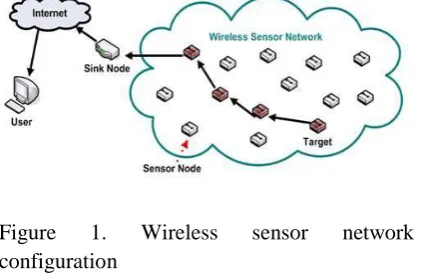
Figure 1. Wireless sensor network configuration
Due to numerous wireless network constraints, the look of routing protocols is extremely difficult for WSNs. There are several network design problems for WSNs, such as, energy, bandwidth, central process unit, and storage. The design challenges in device networks involve the following main aspects [5][7]: a. Restricted energy capability:
Since sensor nodes are battery high-powered, they need restricted energy capacity. Energy poses huge challenge for network designers in hostile environments. Furthermore, when the energy of a device reaches an explicit threshold, the device can become faulty and cannot be able to operate properly, which will have a serious impact on the network performance.
b. Sensor locations:
Another challenge that faces the look of routing protocols is to manage the locations of the sensors. Most of the planned protocols assume that the sensors either area unit equipped with global positioning system; receivers or use some localization technique [3] to be told regarding their locations.
c. Restricted hardware resources:
and network protocol design for device networks.
d. Huge and random node deployment:
Sensor node preparation in WSNs is application dependent and can be either manual or random that finally affects the performance of the routing protocol. In most applications, sensor nodes is scattered at random in an intended area or dropped massively over an inaccessible or hostile region.
f. Network characteristics and unreliable environment:
A device network typically operates in an exceedingly dynamic and unreliable setting. The topology of a network, which is defined by the sensors and also the communication links between the sensors, changes oftentimes because of device addition, deletion, node failures, damages, or energy depletion. Also, the device nodes area unit connected by a wireless medium, which is noisy, error prone, and time variable. Therefore, routing methods should think about configuration dynamics because of restricted energy and device quality further as increasing the scale of the network to take care of specific application necessities in terms of coverage and property.
g. Information Aggregation:
Since device nodes could generate important redundant information, similar packets from multiple nodes is aggregative in order that the number of transmissions is reduced. Information aggregation technique has been accustomed win energy potency and information transfer optimisation in an exceedingly variety of routing protocols.
h. Numerous sensing application
requirements:
Sensor networks have a good vary of numerous applications. No network protocol will meet the necessities of all applications. Therefore, the r outing protocols ought to guarantee information
delivery and its accuracy in order that the sink will gather the desired data regarding the physical phenomenon on time.
i. Scalability:
Routing protocols ought to be able to scale with the network size. Also, sensors might not essentially have a similar capabilities in terms of energy, processing, sensing, and particularly communication. Hence, communication links between sensors might not be bilateral, that is, a pair of sensors might not be able to have communication in each directions. This could be taken care of within the routing protocols.
LITREATURE SURVEY
Ahmed E.A.A. Abdulla et al.In 2012[5] Power-conscious routing in wireless sensor networks (WSNs) makes a speciality of the essential problem of extending the network life of WSNs, that are constrained by means of low-capacity batteries. However, most of the contemporary works fail to decide the hotspot problem, that's the isolation of the sink node because of the electricity exhaustion of sink near-by using nodes. In this paper recommend a option to address this problem through a hybrid approach that combines two routing strategies, flat multi-hop routing and hierarchical multi hop routing. The former ambitions to minimize the general strength consumption within the network, and the latter tries to reduce the amount of traffic through
using information compression.
Mathematically investigate the energy expenditure of projected algorithm, then we show via tremendous simulations that the projected scheme is capable of extend the community lifetime through assuaging the hotspot problem.
a kind constraints, which includes computational power, storage potential, strength deliver and etc; of path the maximum essential trouble is their power constraint. Energy conscious routing protocol may be very tremendous in WSN, but routing protocol which only considers power has no longer efficient performance. Therefore thinking about different parameters beside energy performance is critical for protocols efficiency. Depending on sensor community software, specific parameters may be measured for its protocols. Congestion management can have an effect on routing protocol overall performance. Congestion happening in community nodes results in growing packet loss and power intake. Another parameter which affects routing protocol competence is presenting fairness in nodes electricity consumption. When fairness is not measured in routing technique, community might be partitioned very quickly after which the community performance can be decreased. In this paper a (TECARP) Tree based Energy and Congestion Aware Routing Protocol is proposed. The projected protocol is a strength efficient routing protocol which attempts to deal with congestion and to provide equity in network. Simulation outcome shown on this paper mean that the TECARP has finished its dreams.
Application of WSN
WSNs were originally actuated by military applications, which vary from large-scale acoustic surveillance systems for ocean surveillance to little networks of unattended ground sensors for ground target detection [1]. However, the availability of low -cost sensors and wireless communication has secure the event of a good vary of applications in each civilian and military fields. During this section, we introduce a number of samples of sensing element network applications. In addition to the higher than applications, self-configurable WSNs can be employed in several different application areas, as an example, disaster relief,
control, warehouse management, and civil engineering.
• Environmental Monitoring • Military Applications • Health Care Applications • Industrial Process Control • Security and Surveillance • Home Networks
CONCLUSION
Routing in wi-fi sensor networks is a place of studies, with a restricted, however swiftly growing set of research results. In this paper, we offered a survey of some of the essential routing techniques for sensor networks. They have the not unusual goal of seeking to amplify the life time of the sensor community, even as now not compromising records & QoS. Overall, the routing strategies are widely classified into four categories: data centric, hierarchical, location centric and QoS based totally routing protocols. In addition, those protocols are classified into low, mild and excessive overheads, low and excessive QoS based routing strategies relying on the protocol operation. We also spotlight the design tradeoffs between energy utilization, mobility and conversation overhead financial savings in some of the routing paradigm, in addition to the selection of each routing technique for particular programs. Although lots of those routing techniques look promising, there are still many design troubles and challenges that want to be solved inside the sensor networks. We highlighted the ones troubles, demanding situations and pinpointed future studies instructions on this regard.
REFERENCES
[1]. Ahmed E.A.A. Abdulla, Hiroki Nishiyama, Nei Kato,” Extending the lifetime of wireless sensor networks: A hybrid routing algorithm”, 2012
Congestion Aware Routing Protocol for Wireless Sensor Networks”, 2010
[3]. Jamal N. Al-karaki a nd A h me d E . Kamal, “Routing techniques in wireless sensor networks”, IEEE wireless communications, Dec 2004.
[4]. I.F. Akyildiz, W. Su, Y. Sankarasubramaniam, E.Cayirci, “Wireless sensor networks:a survey”, Computer Networks 38 (2002) 393–422.
[5] P. Bonnet, J. Gehrke, P. Seshadri, Querying the physical world, IEEE Personal Communications (October 2000) 10-15.
[6] A. Cerpa, J. Elson, M. Hamilton, J. Zhao, and Habitat monitoring: application driver for wireless communications technology, ACM SIGCOMM’2000, Costa Rica, April 2001.