INTERNATIONAL RESEARCH JOURNAL OF PHARMACY
www.irjponline.com
ISSN 2230 – 8407
Research Article
ATTITUDE, BELIEVES AND DECISION OF PRACTITIONERS ASSOCIATED WITH COMPLEMENTARY
AND ALTERNATIVE THERAPY IN THE TREATMENT OF PEDIATRIC POPULATION
Shaimaa. M. Nashat *
1, Mohamed. M. Abdelwahab
1, Asmaa. M. Almowalad
2, Alaa. H. Yousef
2, Amjad. A. Alkanali
2,
Dhuha. K. Sharaf
2, Kholood. W. Moaminah
2, Maad. I. Mkawwi
2, Nehal. M. Fatani
21
Lecturer of Clinical Pharmacy, College of Pharmacy, Umm Al Qura University, Kingdom of Saudi Arabia
2Pharmacy student, College of Pharmacy, Umm Al Qura University, Kingdom of Saudi Arabia
3
Clinical Pharmacy Department, College of Pharmacy, Umm Al Qura University, El Abedeya Campus 24211,
Makkah City, Kingdom of Saudi Arabia
*Corresponding Author Email: [email protected]
Article Received on: 17/07/18 Approved for publication: 31/07/18
DOI: 10.7897/2230-8407.097136
ABSTRACT
Complementary and alternative medicine (CAM) is defined as a group of diverse medical and health care systems, practices, and products that are not presently considered to be part of conventional medicine. CAM is used in pediatric patients for back or neck pain, musculoskeletal conditions, cold, anxiety or stress. The aim of the study is for determination of the pediatric physicians orientation about using CAM therapy in the treatment of pediatric diseases. The data were generated through a questionnaire distributed among pediatric physicians at different medical wards in the Maternity and Children hospital. The data were collected and analyzed so we could detect and describe using CAM in children. The findings from the survey that were filled from about 57 physicians revealed that 70% of them used or recommend CAM for some pediatric diseases, while there were about 30% of physicians limited in prescribing of CAM. The attitudes of physicians toward CAM showed an increased willingness and became much more positive to use CAM to address pediatric care needs.
Keywords: Complementary and alternative medicine, Pediatric diseases, Treatment.
INTRODUCTION
Complementary and alternative medicine (CAM) is defined as a Group of diverse medical and health care systems, practices, and products that are not considered to be a part of conventional medicine1. National Center for Complementary and Integrative Health (NCCIH) generally uses the term “complementary health approaches” when discussing the practices and products we study for various health conditions. When describing health approaches with non-mainstream roots, people often use the words “alternative” and “complementary” interchangeably, but the two terms refer to different concepts: “Complementary” generally refers to using a nonmainstream approach together with conventional medicine while “Alternative” refers to using a non-mainstream approach in place of conventional medicine2.
Types of cam therapy
The National Center for CAM, classifies CAM in five major domains: alternative medical systems (e.g. traditional Chinese medicine, Ayurveda, homeopathy), mind–body interventions (e.g. imagery, meditation, music therapy), biologically based therapies (e.g. herbals, nutritional supplements), manipulative and body-based methods (e.g. massage, chiropractic, osteopathy), and energy therapies (e.g. Reiki, healing touch, therapeutic touch) 2.
It is important for clinicians to be aware of some of the more common forms of CAM, especially since some therapies can have
adverse effects and may interfere with conventional medications 2.
The use of complementary and alternative medicine (CAM) is common and increasing among children. Particularly those with chronic, recurrent, or incurable conditions, turn to CAM 3.
The most frequently used approaches for children were natural products and it includes: Echinacea, Fish oil / omega-3 fatty acids, Garlic supplements, Ginseng, Glucosamine and chondroitin, Melatonin, Probiotics, and mind and body practice and it includes: Chiropractic or osteopathic, Manipulation, Massage, Meditation, yoga 1.
Uses of cam therapy
Also, other study found that lactulose was significantly more likely to give a greater number of days of normal stool motions compared to Senna. In pediatric Diabetes: The most common CAM therapies reported: vitamins and minerals, herbal therapies and dietary supplements 4.
In Chronic Pain: Over 60% of patients elected to try at least one CAM approach for pain. The most popular CAM therapies were biofeedback, yoga, and hypnosis; the least popular was art therapy and energy healing, acupuncture and massage being intermediate. A recent study found that children with chronic illnesses (i.e. cancer, cerebral palsy and inflammatory bowel disease) were three times more likely to use CAM than healthy children. In many of these chronic conditions, pain may be a significant problem 4.
Inflammatory bowel disease which is a chronic and relapsing condition characterized by inflammatory infiltrates in the gastrointestinal tract, often requiring repeated exposures to steroids and other immune-modulators and frequent invasive procedures. Conventional therapies are associated with significant adverse effects, especially corticosteroids with their common side effects and negative impact on the growing and developing child and adolescent. Considering these factors, published national and international pediatric studies report a wide range of use: 7% to 72% of this population have used CAM therapy or seen an alternative medicine practitioner. The most common types of CAM used were identified as nutritional supplements, followed by special diets (milk-/dairy-free, low carbohydrates, gluten-free), and only a small percentage used herbal remedies (5.1%) 4.
Cam therapy adverse effect
Parents should be aware that many complementary health products, including dietary supplements and herbal medicines, have not been tested for safety or effectiveness in children, it is important to note that children’s small size, developing organs, and immature immune system making them more vulnerable than adults to having allergic or other adverse reactions to dietary supplements 1.
Alternative medicine can be very dangerous if it’s used in place of conventional treatments, but many forms of complementary medicine like -meditation -don’t have many side effects and can be used safely. Some herbs, supplements, and vitamins also have potential side effects that may contain contaminants, including drugs, chemicals, or metals 5.
There are some cases associated with pediatric CAM use were reported by pediatricians across Canada as:
• A 13-year-old patient with chronic rhinitis was treated by her family with bee pollen for symptomatic relief. After the first use, she became anaphylactic with sudden airway swelling, rash, and swollen eyes 5.
• A 13-year-old patient had back pain after a motor vehicle collision. The treatments, which included spinal manipulation, lasted for one h three times a week. After one of these treatments was report as spinal cord ischemia 5.
• An 11-month old patient had recurrent upper respiratory tract infections; the family-initiated herbs Three weeks after initiation of these herbs, the patient developed muscle pain, muscle weaknesses, and dark urine 6.
Although CAM use is common in children, there have been few reports of serious adverse effects. Most current safety data come from case reports. Some population-based surveillance studies to
monitor adverse events have been conducted in adults receiving acupuncture, and the resulting data are reassuring. The need for rigorous safety evaluation is questioned by some who perceive “natural” to be equivalent to “safe. “More complete data about safety in children would re-quire prospectively gathered, population-based studies, which are expensive to conduct.7
The benefits of using cam
There are different benefits from using CAM therapy, many people turn to alternative medicine therapies for pain relief when conventional treatments fail to work. There are various reasons for the growing use of CAM. Many users of CAM reported use “not so much because of being dissatisfied with conventional medicine, but largely because they found these health care alternatives to be more congruent with their own values, beliefs, and philosophical orientations toward health and life.” Parents’ reasons for seeking care for their children from CAM providers included, in decreasing order of frequency, word of mouth, treatment was considered effective, fear of drug adverse effects, dissatisfaction with conventional medicine, and the need for more personal attention. In addition, many cultural groups may use CAM because of cultural values and beliefs 6.
CAM therapy is less expensive than the conventional therapy. So, if we use CAM therapy to replacement the medication, it will lower overall health care costs .6
MATERIALS AND METHODS
Study design
The data were generated through a questionnaire distributed among pediatric physicians at different medical wards in the Maternity and Children hospital( Al Abedeya, district Makkah city- Kingdom of Saudi Arabia).
After collecting and analyzing data, we could detect and describe the orientation of pediatric physicians toward using CAM therapy in children for their pediatric diseases.
Data collection Questionnaire form
A questionnaire conducted to determine the orientation of pediatric physicians toward using or prescribing CAM therapy.
1. Have you ever prescribed CAM therapy?
2. Do you believe that CAM therapy improve the patient condition?
3. What were the types of CAM you have prescribed?
4. Who do you think is responsible to teach the family about CAM, is it the Doctor, Pharmacist or the Special trainer? 5. Have you ever witnessed any adverse effects from using
CAM? yes or no? If yes, what was the condition?
6. Do you provide instructions for the family about CAM and its expected results in improving their child condition?
7. From scale 1 to 5 how can you assess your knowledge about CAM therapy and its different types?
8. Do you think that providing courses for the physicians about CAM therapy will be helpful?
A questionnaire conducted to determine the orientation of parents toward using CAM therapy for their children in treating the different disease
1. Do you use any CAM approaches for your child?
2. If yes, what were the types of CAM you have used and for which health conditions?
3. If no, what were the reasons for your refusing to use CAM for your child?
4. Do you believe that CAM can improve the child health condition?
RESULTS AND DISCUSSION
The findings from the survey that were filled from 57 physicians at Maternity and Children hospital revealed that 70% of them used or recommended CAM for some pediatric diseases. On the other hand, there were about 30% of physicians limited in their prescribing of CAM because they did not feel that they were sufficiently knowledgeable about CAM safety or efficacy on the pediatric population.
Physicians views the contribution of CAM therapy in improving patient condition
About 54.39% of physicians said yes CAM improved the patient condition, while 31.58% of them said it was improved in some cases, and the rest of them with a percentage of 14.04% said it did not improve their health condition at all (Figure 1).
Physicians views about providing courses in CAM therapy and its types
About 85.9% of physicians in the hospital emphasized the need for providing such courses so that they can well acknowledge different CAM therapy approaches and their promising benefits, while 14.1% of physicians did not agree on taking such courses, because they saw that it is not their responsibility.
The opinions and beliefs of physicians about the addition of CAM therapy approach in clinical practice:
About 87.7% of the physicians believed that incorporation of CAM therapy approaches would increase patient adherence, compliance, and overall satisfaction. Some physicians said that if there were recent evidence and approved CAM therapy studies, it would significantly contribute to clinical practice. While 13.3% of physicians thought that the addition of CAM therapy approaches in clinical practice would not be useful.
The percentage of pediatric physicians knowledge about CAM therapy and its different types
About 8.8% of physicians had good information about CAM therapy, while 68.4% of physicians had very little information about it in addition to 22.8% of physicians which nearly had no information's about CAM therapy approaches.
The percentage of physicians providing instructions for the patient’s family about CAM therapy and its expected results: About 57.9% of physicians gave enough instructions to the patient family about CAM therapy and its expected results on the patient condition, while 42.1% of physicians did not.
Physicians point of view on the responsibility of educating a patient's family about CAM therapy
Physicians differed about this responsibility, some of whom saw it as a shared responsibility between health care providers, while others were divided into: 59.6% of physicians saw it as the doctor responsibility, while 28.1% said that it is the pharmacist
responsibility and 24.6% saw it as the clinical pharmacist responsibility in addition to 38.6% of physicians who thought it is the special trainer responsibility.
The most common health conditions in which CAM therapy was prescribed and the type of CAM prescribed by practitioners in different departments
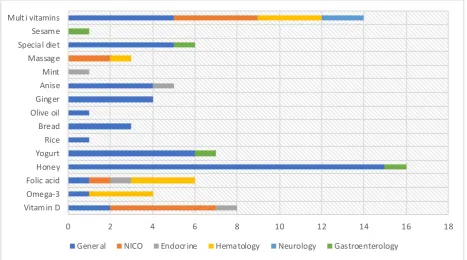
At General Internal Medicine department, the physicians said that CAM therapy significantly improved the patient condition, compliance, and immunity. The most common types of CAM that they recommended were:
(Yoghurt, Anise tea, Glucose free diet and Olive oil) for gastroenteritis. (Ginger, Honey and Hot herbal tea) for upper respiratory tract infections, cough and sore throat. (Honey) for wound healing, and (Ginger )for joint pain (Figure 2).
At Gastroenterology department, physicians prescribed CAM therapy most often for chronic conditions and stable patients only, which by their saying it has a great improvement in the patient conditions.
The most common types of CAM that they recommended were: (Yoghurt) for persistent diarrhea which act as Lactobacillus it reduces the severity and duration of diarrhea. (Honey with water as a drink and bowel rest), for persistent vomiting. (Sesame oil and dried fruits) for constipation (Figure 2).
At Metabolic diseases department, physicians had some orientation for CAM therapy.
The most common types of CAM that they recommended were: (Vitamins and carnitine) for Phenylketonuria. (Vitamin b12) for Methylmalonic academia. (Biotin) for Propionic academia, and (Riboflavin) for Isovaleric academia (Figure 2).
At Hematology and Oncology department, The most common types of CAM that they recommended were:
(Omega 3 and multivitamins) alongside with the patient's conventional therapy for RBCs diseases, Sickle cell anemia, Thalassemia, and Iron deficiency. Physicians said that it increased appetite, improved mentality state and memory. Furthermore, they prescribed (Massage) for patients aged 6 to 12 years old that have sickle cell anemia who usually suffer from severe pain, which by physicians saying it enhanced relaxation and eased their pain (Figure 2).
At Neonatal intensive care unit (NICU), The most common types of CAM that they recommended were:
(Vitamin D, Ferrous, Folic acid and Multivitamins) for preterm infants, in order to enhance their growth and treat vitamin deficiencies. (Massage) also was applied in some cases (Figure 2).
In contrast, at Cardiology department, physicians said that CAM therapy was not very helpful in improving patient condition. But there was a physician who provided us with an approach to CAM therapy based on an experimental study. (Fenugreek), for ventricular septal defect which was helpful in closing holes in the heart. Also (Vitamins and Carnitine supplements) were prescribed for carnitine deficiency (Figure 2).
Figure 1: Physicians views about the contribution of CAM therapy in improving patient condition
Figure 2: The most common health conditions in which CAM therapy is prescribed and the type of CAM used by practitioners in different departments
The most important factors considered by the physicians before prescribing CAM therapy are
Age, weight, the severity of symptoms, other drugs that patient use to ensure there is no interactions, the patient's kidney and liver functions, the safety of the prescribed CAM therapy and its price.
Physicians feedback about the adverse effects of CAM therapy and the misuse of it in each department
Physicians from different departments had provided us with some of the cases that have been exposed to side effects regarding the use of CAM therapy.
General Internal Medicine Department
In some cases, parents gave their child sesame oil as nasal drops which aggravated their condition.
Nephrology Department
Gum Arabic in some cases caused dehydration, and some herbal supplements caused kidney failure.
Endocrinology Department
• Acupuncture led to an edema and inflammation.
• A physician at this department told us that parents use some CAM therapy approaches because they think that they are better than conventional therapy, but the major concern for us as doctors before prescribing any CAM approaches like herbs is that it can be mixed with a lot of impurities which may lead to severe adverse effects sometimes. For example, there was
0 2 4 6 8 10 12 14 16 18
Vitamin D Omega-3 Folic acid Honey Yogurt Rice Bread Olive oil Ginger Anise Mint Massage Special diet Sesame Multi vitamins
a patient that took unknown origin herb for his thyroid gland which led to severe bleeding.
Hematology and Oncology Department
Some conditions came to the clinic suffering from severe thalassemia and the parents insisted on giving licorice, which by doctor claim she said it caused changes in the morphology of the red blood cells.
CONCLUSION
The attitudes of physicians toward using CAM became much more positive and high among them. Also, physicians showed an increased willingness to use CAM in order to address pediatric care needs. However, knowledge of and experience with many specific CAM treatments did not change as physicians needed more resources that are evidence-based and readily available. Most responds showed that using some types of CAM were helpful and did not cause potential harms.
REFERENCES
1. Black, L., Clarke, T., Barnes, P., & Stussman, B. et al,. Use of complementary health approaches among children aged 4-17 years in the United States National Health Statistics Reports, 2015; (78), 1-19.
2. Cırık, V. and Efe, E. The Use of Complementary and Alternative Medicine by Children. J Family Med Community Health 2015; 2(2): 1031.
3. Adams, D., Dagenais, S., Clifford, T., & Baydala, L. et al,. Complementary and Alternative Medicine Use by Pediatric Specialty Outpatients. Pediatrics, 2013; 131(2):125-232. https://doi.org/10.1542/peds.2012-1220 PMid:23319526 4. Noras, M. R., Yousefi, M., & Kiani, M. A. Complementary
and Alternative Medicine(CAM) Use in Pediatric Disease. International Journal of Pediatric, A Short Review, 2013 ;1(2), 45-49.
5. Geller AI, Shehab N, Weidle NJ, et al. Emergency department visits for adverse events related to dietary supplements". New England Journal of Medicine. 2015; 373(16): 1531–1540. https://doi.org/10.1056/NEJMsa1504267 PMid:26465986 6. Zorzela, L., Boon, H., Mior, S., & Yager, J. et al,. Serious
adverse events associated with pediatric complementary and alternative medicine. European Journal of Integrative Medicine, 2014; 6(4):467-472. https://doi.org/10.1016 /j.eujim.2014.05.001
7. Kemper, K., Vohra, S., and Walls, R. The Use of Complementary and Alternative Medicine in Pediatrics. American Academy of Pediatrics. 2008; 122(6):1374-1386. https://doi.org/10.1542/peds.2008-2173
Cite this article as:
Shaimaa. M. Nashat et al. Attitude, believes and decision of practitioners associated with complementary and alternative therapy in the treatment of pediatric population. Int. Res. J. Pharm. 2018;9(7):126-130 http://dx.doi.org/10.7897/2230-8407.097136
Source of support: Nil, Conflict of interest: None Declared