
CONSTRUCTION OF YEAST EXPRESSION VECTOR CONTAINING ELT-B GENE FOR HIGH LEVEL OF HEAT LABILE ENTEROTOXIN-B SUBUNIT (LT-B)
6
0
0
Full text
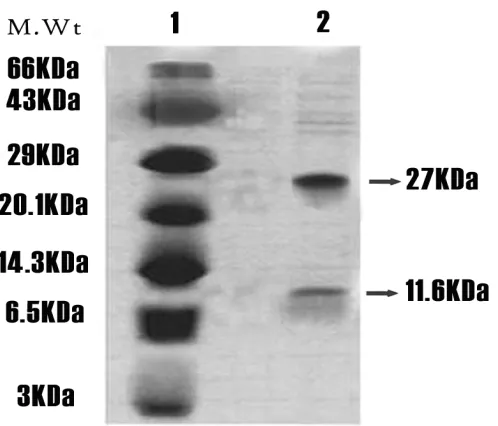
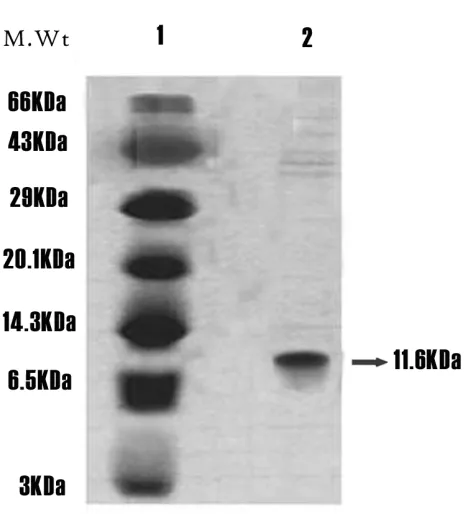
(2) Renuga G et al. IRJP 2 (7) 2011 130-135 (200 rpm) at 30oC inSC-Ura, uracil deficient complete synthetic medium containing 2% glucose. Escherichia coli DH5α (Stratagene) was used for the cloning, sequencing and maintenance of various DNA fragments. The E.coli was grown in LB medium; the required antibiotics were added according to the reference recommendation. 7 For recombinant protein production, a yeast shuttle vector pYES2 was used. The pYES2 is a 2 μm based multicopy yeast plasmid and contains the URA3 gene and the GAL1 promoter for selection and expression in S. cerevisiae, as well as ori and Amp for the selection and propagation in E. coli. Construction of the yeast expressing vector encoding LTB The LTB gene was cloned by PCR with primers5’TGTGGATCCATCGCTCCTCAGTCTATTA ACA-3’(Forward)and5’ GCTTTAAGAATTCCTATTTTCCATACTG3’(Reverse) were designed according to the eltB mature peptide gene sequence for LTB (accession number M 17874). Plasmid DNA was extracted from Enterotoxigenic Escherichia coli producing LT (E20738a) was used as template for gene amplification. PCR reaction was carried out as follows: denaturation at 95ºC for 1 min, annealing at 55ºC for 1 min and an extension at 72ºC for 1min for a total of 30 cycles. For further analysis, the amplified eltB cassette was confirmed by digestion with restriction enzyme claI. The resultant eltB cassette was digested with both BamHI and EcoRI and recovered in pBluescript KSII.8 The cassette was then excised and subcloned between the BamHI and EcoRI sites of pYES2 to create yeast expressing plasmid. The resulting plasmid contained the eltB cassette (construction of the yeast inducible GAL I promoter, its BamHI site is located downstream of native GALI transcriptional start site, construct) was expected to direct the production of mature LTB.Yeast cells were transformed by the method of lithium chloride 2. SDS- PAGE and immunoblotting Recombinant S.cerevisiae was analyzed for the presence of LTB protein by SDS PAGE analysis. The amount of yeast total soluble protein content was estimated by Lowry’s method 4 and TSP was separated by 15% SDS PAGE. Immunoblotting was used to determine the identity of recombinant protein by the method of Bradford assay.9 The separated protein bands were electrophoretically transferred from the gel to nitrocellulose membrane and the presence of recombinant LTB was detected with anti enterotoxin monoclonal antibodies and rabbit anti mouse Ig G. IRJP 2 (7) July 2011. peroxidase conjugate (Sigma). The reaction was developed by diaminobenzidie-H2O2 solution 10. RESULTS The heat labile enterotoxin (LT) from E.coli is a multimeric protein consisting of a 27 KDa subunit A (LT-A) and a pentamer of 11.6KDa subunit B (LT-B). LT-B specifically binds to the GM1 gangliosides on the epithelial cells allowing entry of LT- A into the cells. The gene encoding LT-B was cloned into pYES2 and expressed in S. cerevisiae. In order to construct the yeast expression vector the confirmed fragments were sub cloned from pBluescript in to pYES2 (Fig1). The transformants were selected and the plasmid was extracted for further confirmation. PCR was used to create eltB gene fragment encoding the sequence of mature LTB. The eluted PCR product was analyzed by digestion with ClaI yielded fragments at the expected positions (Fig 2). To construct the yeast expression vector and facilitate the sequencing, the fragments were cloned to pYES2 and transformed in E. coli DH5α for amplification. Expression and Preparation of cell extract Figure 3 revealed SDS-PAGE analyses of total soluble proteins (TSP) showed only a thin band of recombinant LTB in monomer form with the expected molecular mass of near to covalently associated B subunits (LT-B (11.6 KDa) forming a ring like pentamer.LT-B is able to bind to ganglioside GM1 found ubiquitously on the cell membrances of mammals and to other related reportors, such as GD Ib-ganglioside and certain galactoproteins. The LT and its related toxin (CT) are extremely potent immunogens following mucosal or systemic delivery. It has been shown that LT acts as a strong mucosal adjuvant, which enhances serum and local immune responses to co administered antigens where most antigens are unable to induce immune responses. Plasmid recovery from transformants Figure 4 showed recombinant strains on the agar plate, out of several transformed colonies were raised on selective media; few colonies were selected and checked for the presence of eltB gene by PCR. The result indicated that the amplified product confirmed the presence of the eltB fragment in the transformed yeast, but not in the untransformed and intact pYES2.Yeast transformation was confirmed the presence of recombinant plasmids in the selected colonies. The recovered plasmids were further analyzed by PCR to confirm the presence of eltB cassette. Expression of transformed protein in S.cerevisiae strain was induced in the presence of 2% galactose. SDS PAGE analyses of TSP showed only a thin band of. Page 130-135.
(3) Renuga G et al. IRJP 2 (7) 2011 130-135 recombinant LTB in monomeric form with the expected molecular mass of near to 11. KDa (Fig 5). The recombinant yeast were grown in 0.1 M potassium phosphate buffer buffered pH 6.4 medium containing 2% galactose and supplemented with amino acids at 30oC under shaking condition for 48 hrs. The cells suspended in the same volume of induction medium and the induced cells were collected by centrifugation (1500rpm x 5min), washed once with fresh medium then resuspended in solution containing of 10mMTris-Cl, 1M EDTA and 50ml of PMSF. Then the cells were ruptured by vortex process, the cell extract was centrifuged to recover total soluble protein. An aliquot of 40 ml concentrated protein containing 50mg protein were separated by 12% sodium dodecylsulfat poly acrylamide gel electrophoresis and the recombinant band detected on SDS PAGE gel stained with commassive blue . Therefore LT has been incorporated into putative mucosal vaccines to guard against a range of infectious agents. However its inherent toxicity and allergen city have hampered progress for human use. Many studies have indicated that LT-B could be used as a potent adjuvant 8.The results showed that the newly synthesized recombinant protein could not assemble to its pentamericform as native bacterial protein. However, immunoblotting analysis showed the yeast derived LTB protein was antigenically indistinguishable from bacterial protein. Immuno dot blotting Mice were immunized intramuscularly with a mixture of 0.1 ml (5 mg) of LTB protein and equal volume of Freund’s complete adjuvant. Booster immunization was given at a same dose two weeks later. Expression system produced LTB subunits were capable of inducing both systemic and mucosal antibodies in mice and human. For anti LTB, 100 ml blood obtained once a week prior to feeding (days 1,5,and 12), immediately after collection, the blood sample was centrifuged for 10min to separate serum from blood and stored at –20oC until assayed. Immuno dot blotting was used to determine the identity of recombinant protein. According to SDS-PADE results, immuno dot blot was carried out on the samples of 24 h. Total soluble protein from transformants induced with galactose contained a single immunoreactive band developed on nitrocellulose membrance under inducing conditions. Figure 6 showed the presence of recombinant LTB was detected with anti LTB toxin monoclonal antibodies showed significant cross- reaction with the yeast total soluble protein. As indicated in the results that the S. cerevisiae could produce the heat-labile enterotoxin B subunit of. IRJP 2 (7) July 2011. Escherichia coli (LTB). It is clear that the accumulation and concentration of proteins are important factors for the oligomeric assembly of them. The focus of this research was to produce native LTB intracellularly, and to avoid secretion and some unwanted modifications such as glycosylation.Yeast was used as vector carrying eltB fragment and expected recombinant protein is expressed in intra cytoplasm. Recombinant LTB produced in S.cerevisiase retained its antigenicity as indicated immune blotting analysis. In bacterial and yeast systems, the level of gene expression is strictly related to specific codons 2.It would be possible to increase the expression levels of prokaryotic LTB in S. cerevisiae by specific codon optimization. Further studies must be conducted to confirm this idea. Several studies have been devoted to the use of adjuvants to potentiate the immune responses to antigens. This effort has been particularly important in recent years with the development of synthetic, purified, subunit and recombinant vaccines, which are generally poor immunogens. Whole recombinant yeast has remarkable potential as a vaccine vector. It is well established that recombinant yeast confers a potent adjuvant property against recombinant antigens.The vaccine formulation should be non-toxic and should function without the need for additional adjutants, but still be able to activate the APCs. Whole-recombinant yeast perfectly shows these properties. DISCUSSION The major problem in the development of new vaccines against ETEC will be to make them sufficiently inexpensive and to develop a formulation that can be readily distributed to huge population in high risk areas. Booster doses will probably be needed for each of new oral vaccines and the formulations will be need to be sufficiently simple that the vaccine might even be selfadministrated at time of risk. All of this shows that whole recombinant yeast can be used as a safe, effective and inexpensive vaccine delivery system and developing such formulation could possibly circumvent problems such as the cost of development, delivery and administration of the current vaccines especially in developing countries. ACKNOWLEDGEMENT The first author is grateful to the Council for Scientific and industrial research, New Delhi for financial assistance. REFERENCES 1. Black RE. Epidemiology of traveler’s diarrhea and relative importance of various pathogens. Rev Infect Dis. 1990; 12(1): 73-79.. Page 130-135.
(4) Renuga G et al. IRJP 2 (7) 2011 130-135 2. 3. 4. 5.. 6.. Hill J, Donald KA, Griffiths DE, Donald G. DMSO –enhanced whole cell yeast transformation. Nucleic Acids Res. 1991; 19: 5791. Hirst TR, Randall LL, Hardy SJS. Cellular location of heatlabile enterotoxin in Escherichia coli. J Bacteriol. 1984; 157: 637-642. Lowry OH, Rosebrough NJ Farr AL, Randall RJ. Protein measurement with the Folin phenol reagent. J Biol Chemn. 1951; 193(1): 265–275. Rodriguez VM, Montero C, Machado H, Joglar M. The evaluation of yeast derivatives as adjuvants for the immune response to the BM 86 antigen in cattle.BMC Biotechnol. 2002; 1: 2-3. Sambrook J, Russell DW (2001) Molecular Cloning: A laboratory manual. 3rd ed, Cold Spring Harbor Laboratory Press, New York. 7.. Stubbs AC, Wilson CC. Recombinant yeast as a vaccine vector for the induction of cytotoxic T-lymphocyte responses. Curr Opin Mol Ther. 2002; 4: 35–40. 8. Tochikubo K, Yasuda Y. Principles of mucosal immunity and development of mucosal vaccines using cholera toxin b subunit and its related adjuvants. Rec Res Devel Microbiol. 2000; 4: 387- 405. 9. William NA, Hirst TR, Nashar TO. Immuno modulation by the cholera like enterotoxins from adjuvant to therapeutic. Immunol Today. 1999; 20: 95-101. 10. Yu PN, Neamati S, Tarasov Q, Sheikh MS, Wang YX. Codonoptimized cloning, expression and. Characterization of the Cterminal region of human apoptotic protein GADD34 in Escherichia coli. Cell Cycle. 2004; 3: 75-79. Figure 1: Construction of Pyes2 Vector Structure of yeast expression vector containing elt b gene under the control of GAL 1 promoter, cassette resistance against ampicillin in E.coli, URA3 for the selection of recombinant yeast. Ori pUC is the replication origin of pUC for maintenance of the plasmid in E.coli. CYC1 is the transcription termination signal for the efficient termination, 2 m origin is the replication origin of the yeast.. Figure 2: PCR amplification of elt B gene isolated from ETEC Lane1: PCR amplified elt b fragment Lane2: λ DNA Hind III marker. IRJP 2 (7) July 2011. Page 130-135.
(5) Renuga G et al. IRJP 2 (7) 2011 130-135. Figure 3: SDS-PAGE shows the LTB protein Lane1: Protein marker indicates seven different intense bands of various sizes. Lane 2: Enterotoxigenic of E.coli showed two different intense bands on SDS gel which may represent 27KDa and 11.6KDA.The low molecular size protein band as 11.6KDa could be considered as a LTB subunit protein. Fig 4: Recombinant plasmids in the transformed yeast The presence of recombinant plasmids in the transformed yeast; the plasmids were recovered from the yeast by blue white selection techniques. Out of several colonies raised on the selective media, five colonies were selected and the presence of eltB was confirmed by PCR following the plasmid recovery from transformants.. IRJP 2 (7) July 2011. Page 130-135.
(6) Renuga G et al. IRJP 2 (7) 2011 130-135. Figure 5: LT-B bands eluted by SDS-PAGE. Shows SDS-PAGE gel prepared from transformant colonies cell lysate specific fractions. The arrow indicates the 11.6 KDa protein bands whose intensity corresponds to LT-B activity in purified fraction. Lane1: Standard Protein marker Lane2: Eluted LTB protein showed sharp band as 11.6 KDa, and confirmed as LTB.. Crude protein. Eluted LT-B protein. Transformed LT-B protein. Figure 6: Immuno dot blot analysis for recombinant protein Immuno dot blot analysis was used for evaluation of the presence and antigenicity of the new recombinant protein.. Source of support: Nil, Conflict of interest: None Declared. IRJP 2 (7) July 2011. Page 130-135.
(7)
Figure

Related documents
CTA imaging showed 90% stenosis of proximal left internal carotid artery (ICA) with free floating thrombus (FFT) within the lumen along with adjacent calcified atheromatous
Therefore, the present study aimed to describe secular trends in the incidence rate of gastric cancer in Changle and to evaluate the independent effects of age, period of diagnosis,
After a careful exploration of the existing lossless image compression methods, we present a computationally simple lossless image compression algorithm where the
The results showed a significant increase in bone mineral density in the first year of treatment, an effect maintained over six years and showed the positive effect of the drug
Section II delineated the operations of the actual wireless network with caching, while Section III, the main contribution of this work, provided a macroscopic formulation based on
ABSTRACT : This paper presents a designing scheme of high-speed real-time serial pipelined Fast Fourier Transform (FFT) processor on FPGA which is based on Coordinate
Outlined below are the effects and conclusions drawn from studies utilizing, ultrafine particles (PM <0.1µm in diameter), ambient PM (i.e. PM collected or concentrated prior
The February 2003 forecasts produced by the non-transformed Winters Additive and Seasonal Exponential Smoothing models are compared to the actual lumber demand observed for that
