SPECIAL ARTICLE
Sodium Bicarbonate: Basically Useless Therapy
Judy L. Aschner, MDa,b,c, Ronald L. Poland, MDd
aDepartment of Pediatrics,bCenter for Molecular Toxicology, andcVanderbilt Kennedy Center for Research on Human Development, Vanderbilt University Medical
Center, Nashville, Tennessee;dDepartment of Pediatrics, University of New Mexico Health Sciences Center, Albuquerque, New Mexico
The authors have indicated they have no financial relationships relevant to this article to disclose.
ABSTRACT
Common clinical practices often are unsupported by experimental evidence. One example is the administration of sodium bicarbonate to neonates. Despite a long history of widespread use, objective evidence that administration of sodium bicar-bonate improves outcomes for patients in cardiopulmonary arrest or with metabolic acidosis is lacking. Indeed, there is evidence that this therapy is detrimental. This review examines the history of sodium bicarbonate use in neonatology and the evidence that refutes the clinical practice of administering sodium bicarbonate during cardiopulmonary resuscitation or to treat metabolic acidosis in the NICU.Pediatrics
2008;122:831–835
S
ODIUM BICARBONATE HAS been used in clinical medicine since the late 1950s.Given the long and pervasive practice of administering sodium bicarbonate to patients of all ages, one would hope that the evidence to support its use is well substantiated in the literature. Unfortunately, the evidence supporting the use of sodium bicarbonate in any clinical context is far from compelling. The rationale for its use in cardiopulmonary arrest was based on the premise that acidemia impairs myocardial performance and attenuates blood pressure, heart rate, and cardiac contractility in response to catecholamines. Therefore, clinicians have been taught to correct acidosis with sodium bicarbonate before giving epinephrine during
cardio-pulmonary resuscitation (CPR). However, the assumption that correction of acidemia through infusion of sodium bicarbonate improves CPR outcomes has been refuted by clinical and animal studies. To the contrary, there is increasing evidence that this once-common practice is detrimental to myocardial function and reduces the likelihood of successful resuscitation.1
LACK OF EVIDENCE FOR EFFICACY AND POTENTIAL FOR HARM DURING CARDIAC ARREST
Doubts about the value of sodium bicarbonate infusion during cardiac arrest date back to the 1980s. In 1985, Graf et al2reported that cardiac output and blood pressure decreased more quickly in dogs breathing a hypoxic gas mixture
when sodium bicarbonate was used to treat their lactic acidosis. In 1990, Kette et al3showed that, although sodium
bicarbonate corrected arterial metabolic acidosis, it led to a decrease in intramyocardial pH and reduced the likelihood of successful resuscitation. In a follow-up article in 1991, the same group showed that hypertonic solutions, such as sodium bicarbonate, affected cardiac resuscitation adversely by reducing coronary perfusion pressure.4 Coronary
perfusion pressure, defined as aortic pressure minus right atrial pressure, has been shown to be an important determinant of successful cardiac resuscitation. Compared with animals given isotonic saline solution, those given hypertonic saline solution or sodium bicarbonate had a lower coronary perfusion pressure and were far less likely to be resuscitated successfully after cardiac arrest.4A 1998 review article by Levy5summarized the results of⬎30 animal
studies evaluating the efficacy of sodium bicarbonate administration during CPR. Among studies with survival as the primary outcome, 4 showed benefit and 7 did not. When myocardial performance was assessed, 12 studies concluded that administration of sodium bicarbonate during CPR worsened myocardial performance, 2 studies showed no difference, and no study demonstrated benefit.5
Studies with human patients also challenge the benefits of sodium bicarbonate administration during cardiac arrest. Publications dating back to the 1970s have demonstrated that the administration of sodium bicarbonate during CPR causes hypernatremia, hyperosmolality, and metabolic alkalosis.6Both metabolic alkalosis and hyperosmolality
after CPR have been associated with increased mortality rates.6,7 Regrettably, there has been only 1 prospective,
randomized, controlled trial (RCT) of sodium bicarbonate use in adults after cardiac arrest.8That study failed to show
a benefit of sodium bicarbonate in return of spontaneous circulation or in survival rates. Among 19 retrospective adult studies examining mortality rates and other outcomes, none demonstrated benefit, 11 showed no difference in outcomes, and 8 suggested a deleterious effect of sodium bicarbonate administration during CPR.5Equally distressing,
only 1 RCT of sodium bicarbonate use in neonates has been published.9 That trial of 55 newborn infants with
asphyxia who required assisted ventilation at 5 minutes after birth found no benefit of sodium bicarbonate in
www.pediatrics.org/cgi/doi/10.1542/ peds.2007-2400
doi:10.1542/peds.2007-2400 Key Words
sodium bicarbonate, metabolic acidosis, neonatal resuscitation, NICU, clinical practice
Abbreviations
CPR— cardiopulmonary resuscitation RCT—randomized, controlled trial
Accepted for publication Jan 7, 2008
Address correspondence to Judy L. Aschner, MD, Vanderbilt Children’s Hospital, Neonatology, 11111 Doctor’s Office Tower, 2200 Children’s Way, Nashville, TN 37232-9544. E-mail: [email protected]
mortality rates or rates of abnormal neurologic exami-nation results at discharge. No long-term neurodevelop-mental outcomes were assessed.9,10To date, there have
been no human studies in any age group demonstrating a beneficial effect of sodium bicarbonate on survival rates after cardiac arrest.
BIOCHEMICAL BASIS FOR HARMFUL EFFECTS DURING CARDIAC ARREST
As noted by Singer et al11 in 1956, infusion of sodium
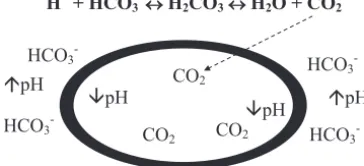
bicarbonate results in the immediate formation of car-bon dioxide. For every 1 mol of proton neutralized by bicarbonate, an equimolar amount of carbon dioxide is produced (Fig 1). In the early minutes of a cardiopul-monary arrest, both minute ventilation and pulcardiopul-monary blood flow are low. The futility of using sodium bicar-bonate in a situation in which carbon dioxide cannot be readily eliminated can be appreciated with the Hender-son-Hasselbach equation, pH ⫽ pK1 ⫹ log [HCO3⫺]/
[CO2] (pK1⫽6.1). This equation shows that pH depends
on the ratio of HCO3⫺and CO2present in the blood. It is
also known that, for any biological buffer system, opti-mal buffering occurs when pH and pKare within 1 pH unit of each other. The greater the gap between pKand the target pH value, the less effective is the buffer. The apparent pK of this “buffer” is 6.1, well outside the optimal buffering range of the normal blood pH of 7.4. (The pKis determined as the pH at which the relevant salt and acid concentrations, in this case the molar con-centrations of HCO3⫺ and CO2, are equal.) Therefore,
the bicarbonate system can buffer an acid load effec-tively only when the lungs can remove excess carbon dioxide from the blood effectively. When impaired ven-tilation brings the HCO3⫺/CO2ratio closer to 1:1,
addi-tion of sodium bicarbonate moves the pH toward the apparent pKof 6.1. In fact, to achieve a pH value of 7.4, the HCO3⫺/CO2molar ratio must be 20:1.1
From this discussion, it follows that administration of sodium bicarbonate to a patient with inadequate minute ventilation would cause worsening acidosis, with carbon dioxide accumulation and a shift of the Henderson-Has-selbach equation to the left. The carbon dioxide gener-ated diffuses rapidly across cell membranes to equilibrate between intracellular and extracellular compartments, leading to intracellular acidosis, whereas the bicarbonate lags behind in the vascular space, leading to metabolic
alkalosis1(Fig 1). The negative consequence is an
imme-diate decrease in intracellular pH and impairment of cellular function.
During CPR, even with optimal ventilation, decreased cardiac output persists. Intracellular acid accumulates be-cause of venous hypercarbia. However, arterial and end-tidal carbon dioxide levels may be normal or low.12
There-fore, the intracellular acidosis associated with the use of sodium bicarbonate may not be reflected in the arterial blood gas values that are so closely monitored and relied on by clinicians during and after cardiac arrest.12 Given the
chemical facts, it is not surprising that many controlled clinical studies of bicarbonate administration have failed to show benefit and several have documented harm.
CONCLUSIONS ON USE OF SODIUM BICARBONATE DURING CPR Data for adults and neonates do not support the admin-istration of buffers during cardiac arrest. Deleterious ef-fects on myocardial performance after administration of bicarbonate during CPR were reported in several adult human studies, whereas no human study has demon-strated a beneficial impact of bicarbonate on survival rates. Because objective evidence fails to establish that the benefits of sodium bicarbonate outweigh the risks, changes were made to the neonatal resuscitation guide-lines issued at the Guideguide-lines 2000 Conference.13There
are “insufficient data to recommend routine use of bi-carbonate in resuscitation of the newly born.”13 The
guidelines further state, “In fact, the hyperosmolarity and CO2-generating properties of sodium bicarbonate
may be detrimental to myocardial or cerebral func-tion.”13Similarly, the 2005 American Heart Association
guidelines for CPR no longer recommend therapy with buffers during cardiac arrest, noting lack of evidence that bicarbonate improves the likelihood of successful defi-brillation or survival rates.14 These guidelines expound
on the adverse effects linked to bicarbonate administra-tion during cardiac arrest, which include (1) compromis-ing coronary perfusion pressure by reduccompromis-ing systemic vascular resistance; (2) creating extracellular alkalosis, which shifts the oxyhemoglobin saturation curve and inhibits oxygen release to the tissues; (3) producing hy-pernatremia and hyperosmolarity, both of which have been associated with increased mortality rates; (4) pro-ducing excess carbon dioxide, which freely diffuses into myocardial and cerebral cells and paradoxically may contribute to intracellular acidosis; and (5) exacerbating central venous acidosis, which paradoxically may inac-tivate simultaneously administered catecholamines. The American Heart Association guidelines warn that arterial blood gas monitoring during cardiac arrest is not a reli-able indicator of the severity of tissue hypoxemia, hy-percarbia, or tissue acidosis, and they admonish us to recall that restoration of oxygen content with appropri-ate ventilation with oxygen, support of tissue perfusion and cardiac output with good chest compressions, and then rapid return of spontaneous circulation are the mainstays of acid-base balance restoration during car-diac arrest.14
H+ + HCO
3-↔ H2CO3↔ H2O + CO2
HCO3- HCO3
-HCO3
-pH
pH CO2
CO2
pH
pH
HCO3
-CO2
pH = pK1 + log [HCO3-]/[CO2] (pK1 = 6.1)
FIGURE 1
Fate of carbon dioxide (CO2) after administration of sodium bicarbonate. The oval
“BASIC” FACTS ON USE FOR NEONATAL METABOLIC ACIDOSIS
Metabolic acidosis is a common finding in NICUs, and administration of sodium bicarbonate is a common re-sponse to a blood gas sample with a low pH. Although depression of intracellular pH can have adverse effects on cell function, several natural defense mechanisms help maintain a narrow range of intracellular pH values in the presence of dramatic extracellular metabolic aci-dosis.15Before treating a laboratory value, it is important
to consider the underlying cause and whether the treat-ment might be worse than the problem it is meant to correct. A growing body of literature warns of potential adverse effects of sodium bicarbonate administration and challenges the efficacy of such treatment.12
What follows is a brief overview of mechanisms lead-ing to metabolic acidosis and some of the associated clinical conditions. This is followed by current evidence about the potential risks and questionable benefits of bicarbonate therapy.
Acidosis is the process leading to an abnormally high concentration of hydrogen ions; acidemia refers to an abnormally low pH in the blood. Metabolic acidosis is diagnosed when the blood pH is below 7.30 with a low bicarbonate concentration and a normal or low PCO2.
Metabolic acidosis is the consequence of 1 of 3 funda-mental mechanisms, that is, (1) loss of base via renal or gastrointestinal routes, (2) intake of more acid than the kidneys can excrete (eg, high-protein diet or renal in-sufficiency), or (3) abnormal metabolism resulting in increased endogenous acid levels, with inorganic acids (eg, nitrates, sulfates, and phosphates) from rapid tissue catabolism in very ill patients or organic acids from in-complete oxidation of fuels (eg, lactate, acetoacetate, and methylmalonate).
Bicarbonate loss can be the result of renal tubular acidosis or chronic diarrhea.16,17 In both cases,
hyper-chloremia is common, hypokalemia may occur, and the serum anion gap, defined as [Na⫹]⫺([Cl⫺]⫹[CO2]), is
normal (6 –15 mmol/L). In contrast, the other mecha-nisms, discussed below, are all associated with an in-creased anion gap attributable to abnormal accumula-tion of anions (inorganic or organic). These acids often are not measured directly. It is important to note that bicarbonate concentrations decrease naturally when an-other weak acid, such as lactic acid, is present in excess, because carbonic acid is formed and converted to carbon dioxide and water. The usual physiologic response to metabolic acidosis is an attempt to compensate by in-creasing ventilation and reducing PCO2, returning pH
toward normal. When the PCO2is not reduced as much
as expected, mixed acidosis is present and⬎1 underlying mechanism leading to acidosis should be considered.
Late metabolic acidosis of prematurity is an example of an increase in the hydrogen ion concentration attrib-utable to intake in excess of renal clearance. In this situation, the ability of immature kidneys to excrete an acid load associated with a net-acid diet is exceeded. The urinary pH usually decreases below 5.5, and growth is impaired. This was more common when premature in-fant formulas were casein based but it still occurs,
espe-cially with intravenous alimentation. The anion gap is increased because of accumulating inorganic anions.18
The severe catabolic state of extremely ill neonates is an example of a condition that increases serum levels of inorganic acids (eg, phosphates and nitrates), which contribute to the metabolic acidosis seen in such infants. The most common mechanism for metabolic acidosis, however, is increased levels of organic acid, usually lactic acid, resulting from abnormal metabolism. Lactic acid levels in the circulation are increased when mitochon-dria are unable to convert lactate to carbon dioxide, water, and adenosine triphosphate. The mechanisms in-volve mitochondria that are not functioning properly (eg, Leigh disease or cyanide poisoning) or mitochondria that are deprived of oxygen. Common clinical conditions associated with oxygen deprivation at the tissue or cel-lular levels are hypoxemia, compromised cardiac output (cardiogenic, septic, or hypovolemic shock), severe ane-mia, carbon monoxide poisoning, and methemoglobin-emia attributable to a genetic defect or exposure to a chemical or drug, such as inhaled nitric oxide.
These widely differing, underlying causes of meta-bolic acidosis require different approaches to treatment. If the problem is chronic loss of base and the acidosis is leading to secondary morbidities such as growth failure, then administration of base (such as acetate in the in-travenous alimentation solution, sodium citrate, or di-lute sodium bicarbonate) may be appropriate. Even un-der these circumstances, however, the efficacy and safety of sodium bicarbonate replacement therapy have not been proven. A trial comparing bicarbonate with acetate or placebo in infants with persistent metabolic acidosis attributable to chronic renal bicarbonate losses would be a welcome addition to the field of neonatology. If the problem is poor perfusion, then addition of base will do little to correct the problem. Indeed, in the pres-ence of poor perfusion, administration of base is likely to cause intracellular acidosis and venous hypercarbia. Suc-cessful treatment of metabolic acidosis, therefore, is highly dependent on proper identification and specific treatment of the underlying process. Once the process is known, a logical effective approach to therapy becomes possible. For example, in infants resuscitated success-fully after severe perinatal distress, some degree of met-abolic acidosis (lactic acidosis) persists for hours after birth. However, the underlying cause, hypoxia-asphyxia in the intrapartum period, has resolved. If blood pH were to be monitored serially, it very likely would increase spontaneously, eliminating the need for any buffer ther-apy. If the problem is poor cardiac output, then targeted measures to improve cardiac contractility and cardiac output might prove effective.
HISTORICAL RATIONALE FOR TREATING METABOLIC ACIDOSIS WITH SODIUM BICARBONATE
article describing early intravenous administration of glucose and sodium bicarbonate. This practice, which consisted of infusing a solution of 10% glucose in water, with 5 to 15 mEq/dL dilute sodium bicarbonate, at a rate of 65 mL/kg per day was widely adopted. Compared with historical control data, mortality rates for infants receiving the regimen described by Usher19 were
re-markably reduced. Usher20published a follow-up article
in 1967 in which he reported the results of administering as much sodium bicarbonate as necessary to correct the pH of neonates with respiratory distress syndrome. A hypertonic solution of 20 mEq/dL sodium bicarbonate in 10% dextrose was administered at a rate of 10 to 50 mL/kg over 3 hours. Compared with the results reported in 1963,19mortality rates doubled, and increased
intra-cranial hemorrhage was noted at autopsy.12,20In 1972,
Ostrea and Odell21 challenged the use of any sodium
bicarbonate for infants with respiratory distress syn-drome, pointing out that the chemical features of the intervention predict no benefit and highlighting the added danger of hypertonic infusions.
Although the regimen described by Usher19
repre-sented a major advance at the time, the role of sodium bicarbonate per se in the infusion was not addressed systematically until 1977, when Corbet et al22reported a
RCT of bicarbonate in preterm infants. They compared sodium bicarbonate (30 infants) and no treatment (32 infants) and demonstrated that the addition of sodium bicarbonate to the intravenous infusion of newborns with acidemia was no more effective in decreasing mor-bidity (intracranial hemorrhage) and mortality rates than glucose and water alone.22 Furthermore, the pH
was corrected just as quickly without sodium bicarbon-ate as with it. In the same year, Steichen and Kleinman23
reported that, in puppies with hypercarbic acidosis and hypoxemia, sodium bicarbonate caused only a transient increase in pH, followed by a decrease, resulting in lower pH values than in the nontreated control animals. Fur-thermore, sodium bicarbonate caused a decrease in ox-ygenation, consistent with the alveolar air equation. Whether the sodium bicarbonate was given over 3 min-utes or 3 hours, the hypoxemic acidemic animals given sodium bicarbonate fared worse than those given 5% dextrose in water alone. The animals with the best out-comes were those kept well oxygenated, which illus-trates the importance of maintaining oxygen delivery to the tissues in the prevention and treatment of metabolic acidosis.12,23
A 2005 Cochrane Systematic Review24attempted to
evaluate the available evidence from RCTs of preterm infants with metabolic acidosis who were treated with infusion of base versus placebo or infusion of a fluid bolus. Only 2 small RCTs were found. The first was the aforementioned trial by Corbet et al.22The second RCT
compared sodium bicarbonate and albumin fluid bolus in 36 infants with metabolic acidosis.25The infants who
received sodium bicarbonate had higher arterial blood pH values and lower base excess values 2 hours after the intervention. Other clinical outcomes were not reported. Neither trial assessed long-term neurodevelopmental outcomes. Appropriately, the authors of the Cochrane
review concluded that there was insufficient evidence to determine whether infusion of sodium bicarbonate or fluid bolus reduced morbidity and mortality rates in preterm infants with metabolic acidosis.24If there is not
a single publication demonstrating that sodium bicar-bonate is beneficial for infants with respiratory distress syndrome and a base deficit, why does it remain a com-ponent of clinical practice in many NICUs to treat such infants with sodium bicarbonate? This is a prime exam-ple of the double standard toward evidence-based med-icine in neonatology. We hold new medications and interventions to a much higher standard for efficacy and safety than we do established but equally unproven therapies.
EVIDENCE FOR HARM
If there is no evidence that bicarbonate therapy is ben-eficial, is there any evidence that it can do harm? Indeed, there are clinical data that suggest that this drug should be used with caution, particularly in preterm infants. As early as 1967, Usher20showed that vigorous attempts to
correct acidemia with large infusions of sodium bicar-bonate were associated with increased mortality rates and increased intracranial hemorrhage in premature in-fants. Several other retrospective studies reported a strong relationship between intracranial hemorrhage and rapid infusions of hyperosmolar sodium bicarbon-ate.26,27It was suggested that the rate and osmolality of
the infusion were key factors and that the use of sodium bicarbonate should be limited to slow infusion of a dilute solution.27 A recent study compared the effects of
so-dium bicarbonate, given as a rapid bolus versus a slow infusion over 30 minutes, on cerebral hemodynamics and oxygenation in preterm infants, using near-infrared spectrophotometry.28The authors found increases in
ce-rebral blood volume in both cases, but the increase was more pronounced when sodium bicarbonate was ad-ministered rapidly. The deleterious effect of sodium bicarbonate infusion on intracellular pH also might con-tribute to negative outcomes.
There is accumulating evidence that sodium bicar-bonate can have an adverse effect on systemic target organs, such as the heart, in young children beyond the neonatal period. Lipshultz et al29 showed a direct
rela-tionship between serum bicarbonate levels and myocar-dial injury, as measured with serum cardiac troponin T levels. The authors questioned the value of bicarbonate use for patients with metabolic acidosis, noting the det-rimental effects of bicarbonate with respect to hemody-namics, left ventricular function, intracellular pH, and oxygen delivery and consumption. In pediatric popula-tions and in animal models, the possibility of worse clinical outcomes has been raised by several reports demonstrating that bicarbonate exacerbates cardiomyo-cyte injury and depresses cardiac function in patients with ongoing myocardial ischemia and/or acute renal failure.30–32Neonates, who have been purported to have
a high prevalence of myocardial injury,33may be
CONCLUSIONS ON USE OF SODIUM BICARBONATE TO TREAT NEONATAL METABOLIC ACIDOSIS
Despite⬎50 years of experience with sodium bicarbonate, the data do not support a net beneficial effect of sodium bicarbonate in infants with metabolic acidosis. A reason-able but unproven exception is the replacement of base for ongoing renal or gastrointestinal losses. Possible adverse effects associated with the use of sodium bicarbonate in-clude fluctuations in cerebral blood flow, intracranial hem-orrhage, diminished oxygen delivery to tissues, worsening intracellular acidosis, aggravated myocardial injury, and deterioration of cardiac function. Lastly, it must be ac-knowledged that current published recommendations for dose, dilution, and rate of administration are largely arbi-trary. Appropriately powered RCTs of sodium bicarbonate therapy to treat metabolic acidosis in NICU patients are long overdue. In the meantime, clinicians should resist the common impulse to administer bicarbonate to infants with metabolic acidosis, recognizing the risks of immediate worsening of the intracellular milieu. Instead, they should concentrate their efforts on understanding and treating the underlying cause of the acidosis; primum non nocere.
REFERENCES
1. Hein HA. The use of sodium bicarbonate in neonatal resuscitation: help or harm?Pediatrics.1993;91(2):496 – 497 2. Graf H, Leach W, Arieff AI. Evidence for a detrimental effect of
bicarbonate therapy in hypoxic lactic acidosis. Science. 1985; 227(4688):754 –756
3. Kette F, Weil MH, von Planta M, Gazmuri RJ, Rackow EC. Buffer agents do not reverse intramyocardial acidosis during cardiac resuscitation.Circulation.1990;81(5):1660 –1666 4. Kette F, Weil MH, Gazmuri RJ. Buffer solutions may
compro-mise cardiac resuscitation by reducing coronary perfusion pres-sure [published correction appears in JAMA. 1991;266(15): 3286].JAMA.1991;266(15):2121–2126
5. Levy MM. An evidence-based evaluation of the use of sodium bicarbonate during CPR.Crit Care Clin.1998;14(3):457– 483 6. Ma´ttar JA, Weil MH, Shubin H, Stein L. Cardiac arrest in the
critically ill, part II: hyperosmolar states following cardiac ar-rest.Am J Med.1974;56(2):162–168
7. Weil MH, Ruiz CE, Michaels S, Rackow EC. Acid-base deter-minants of survival after cardiopulmonary resuscitation. Crit Care Med.1985;13(11):888 – 892
8. Dybvik T, Strand T, Steen PA. Buffer therapy during out-of-hospital cardiopulmonary resuscitation. Resuscitation. 1995; 29(2):89 –95
9. Lokesh L, Kumar P, Murki S, Narang A. A randomized controlled trial of sodium bicarbonate in neonatal resuscitation: effect on immediate outcome.Resuscitation.2004;60(2):219 –223
10. Beveridge CJ, Wilkinson AR. Sodium bicarbonate infusion during resuscitation of infants at birth.Cochrane Database Syst Rev.2006;1(1):CD004864
11. Singer RB, Deering RC, Clark JK. The acute effects in man of a rapid intravenous infusion of hypertonic sodium bicarbonate solution, part II: changes in respiration and output of carbon dioxide.J Clin Invest.1956;35(2):245–253
12. Howell JH. Sodium bicarbonate in the perinatal setting: revis-ited.Clin Perinatol.1987;14(4):807– 816
13. Niermeyer S, Kattwinkel J, Van Reempts P, et al. International guidelines for neonatal resuscitation: an excerpt from the Guidelines 2000 for Cardiopulmonary Resuscitation and Emer-gency Cardiovascular Care: international consensus on science.
Pediatrics. 2000;106(3). Available at: www.pediatrics.org/cgi/ content/full/106/3/e29
14. Emergency Cardiovascular Care Committee, Subcommittees and Task Forces of the American Heart Association. 2005 American Heart Association guidelines for cardiopulmonary resuscitation and emergency cardiovascular care.Circulation. 2005;112(24 suppl):IV1–IV203
15. Kanaan A, Douglas RM, Alper SL, Boron WF, Haddad GG. The effect of chronic elevated carbon dioxide on the expression of acid-base transporters in the neonatal and adult mouse.Am J Physiol Regul Integr Comp Physiol.2007;293(3):R1294 –R1302 16. Quigley R, Baum M. Neonatal acid base balance and
distur-bance.Semin Perinatol.2004;28(2):97–102
17. Roth KS, Chan JCM. Renal tubular acidosis: a new look at an old problem.Clin Pediatr (Phila).2001;40(10):533–543 18. Premji SS, Fenton TR, Sauve RS. Higher versus lower protein
intake in formula-fed low birth weight infants.Cochrane Data-base Syst Rev.2006;1(1):CD003959
19. Usher R. Reduction of mortality from respiratory distress syn-drome of prematurity with early administration of intravenous glucose and sodium bicarbonate.Pediatrics.1963;32(6):966 –975 20. Usher R. Comparison of rapid versus gradual correction of
acidosis in RDS of prematurity.Pediatr Res.1967;3:221 21. Ostrea EM, Odell GB. The influence of bicarbonate
adminis-tration on blood pH in a “closed system”: clinical implications. J Pediatr.1972;80(4):671– 680
22. Corbet AJ, Adams JM, Kenny JD, Kennedy J, Rudolph AJ. Controlled trial of bicarbonate therapy in high-risk premature newborn infants.J Pediatr.1977;91(5):771–776
23. Steichen JJ, Kleinman LI. Studies in acid-base balance, part I: effect of alkali therapy in newborn dogs with mechanically fixed ventilation. J Pediatr. 1977;91(2):287–291
24. Lawn CJ, Weir FJ, McGuire W. Base administration or fluid bolus for preventing morbidity and mortality in preterm in-fants with metabolic acidosis.Cochrane Database Syst Rev.2005; 2(2):CD003215
25. Dixon H, Hawkins K, Stephenson T. Comparison of albumin versus bicarbonate treatment for neonatal metabolic acidosis. Eur J Pediatr.1999;158(5):414 – 415
26. Simmons MA, Adcock EW III, Bard H, Battaglia FC. Hyper-natremia and intracranial hemorrhage in neonates. N Engl J Med.1974;291(1):6 –10
27. Papile LA, Burstein J, Burstein R. Relationship of intravenous sodium bicarbonate infusions and cerebral intraventricular hemorrhage.J Pediatr.1978;93(5):834 – 836
28. van Alfen-van der Velden AA, Hopman JC, Klaessens JH, Feuth T, Sengers RC, Liem KD. Effects of rapid versus slow infusion of sodium bicarbonate on cerebral hemodynamics and oxygenation in preterm infants.Biol Neonate.2006;90(2):122–127
29. Lipshultz SE, Somers MJ, Lipsitz SR, Colan SD, Jabs K, Rifai N. Serum cardiac troponin and subclinical cardiac status in pedi-atric chronic renal failure.Pediatrics.2003;112(1):79 – 86 30. Sirieix D, Delayance S, Paris M, Massonnet-Castel S,
Carpen-tier A, Baron JF. Tris-hydroxymethane and sodium bicarbon-ate to buffer metabolic acidosis in an isolbicarbon-ated heart model.Am J Respir Crit Care Med.1997;155(3):957–963
31. Marangoni R, Civardi F, Masi F, et al. Lactate versus bicarbon-ate on-line hemofiltration: a comparative study.Artif Organs. 1995;19(6):490 – 495
32. Wakabayashi Y, Ohwada T, Kikawada R. Haemo-dialysis/-filtration using sodium bicarbonate depresses cardiac function in critically ill patients with acute renal failure. Jpn Circ J. 1994;58(2):81– 86
DOI: 10.1542/peds.2007-2400
2008;122;831
Pediatrics
Judy L. Aschner and Ronald L. Poland
Sodium Bicarbonate: Basically Useless Therapy
Services
Updated Information &
http://pediatrics.aappublications.org/content/122/4/831
including high resolution figures, can be found at:
References
http://pediatrics.aappublications.org/content/122/4/831#BIBL
This article cites 29 articles, 5 of which you can access for free at:
Subspecialty Collections
http://www.aappublications.org/cgi/collection/neonatology_sub
Neonatology
sub
http://www.aappublications.org/cgi/collection/fetus:newborn_infant_
Fetus/Newborn Infant following collection(s):
This article, along with others on similar topics, appears in the
Permissions & Licensing
http://www.aappublications.org/site/misc/Permissions.xhtml
in its entirety can be found online at:
Information about reproducing this article in parts (figures, tables) or
Reprints
http://www.aappublications.org/site/misc/reprints.xhtml
DOI: 10.1542/peds.2007-2400
2008;122;831
Pediatrics
Judy L. Aschner and Ronald L. Poland
Sodium Bicarbonate: Basically Useless Therapy
http://pediatrics.aappublications.org/content/122/4/831
located on the World Wide Web at:
The online version of this article, along with updated information and services, is
by the American Academy of Pediatrics. All rights reserved. Print ISSN: 1073-0397.