R E S E A R C H A R T I C L E
Open Access
Effectiveness of contrast-associated acute
kidney injury prevention methods; a
systematic review and network
meta-analysis
Khalid Ahmed
1,2*, Terri McVeigh
1, Raminta Cerneviciute
1, Sara Mohamed
1, Mohammad Tubassam
2,
Mohammad Karim
3and Stewart Walsh
1,2,4Abstract
Background:
Different methods to prevent contrast-associated acute kidney injury (CA-AKI) have been proposed in
recent years. We performed a mixed treatment comparison to evaluate and rank suggested interventions.
Methods:
A comprehensive Systematic review and a Bayesian network meta-analysis of randomised controlled
trials was completed. Results were tabulated and graphically represented using a network diagram; forest plots and
league tables were shown to rank treatments by the surface under the cumulative ranking curve (SUCRA). A stacked
bar chart rankogram was generated. We performed main analysis with 200 RCTs and three analyses according to
contrast media and high or normal baseline renal profile that includes 173, 112 & 60 RCTs respectively.
Results:
We have included 200 trials with 42,273 patients and 44 interventions. The primary outcome was CI-AKI,
defined as
≥
25% relative increase or
≥
0.5 mg/dl increase from baseline creatinine one to 5 days post contrast
exposure. The top ranked interventions through different analyses were Allopurinol, Prostaglandin E1 (PGE1) & Oxygen
(0.9647, 0.7809 & 0.7527 in the main analysis). Comparatively, reference treatment intravenous hydration was ranked
lower but better than Placebo (0.3124 VS 0.2694 in the main analysis).
Conclusion:
Multiple CA-AKI preventive interventions have been tested in RCTs. This network evaluates data for all the
explored options. The results suggest that some options (particularly allopurinol, PGE1 & Oxygen) deserve further
evaluation in a larger well-designed RCTs.
Keywords:
Contrast induced acute kidney injury, Contrast nephropathy, Prevention methods, Contrast associated
acute kidney injury
Background
Rationale
Contrast Associated acute kidney injury (CA-AKI) also
known as Contrast-induced acute kidney injury (CI-AKI)
previously known as contrast induced nephropathy
(CIN) is the third leading cause of hospital-acquired
acute renal injury, accounting for 12% of cases [1]. It is
defined as an abrupt deterioration in renal function
following exposure to contrast media (CM) in the
ab-sence of other aetiological factors [2]. The absolute and
relative values used to define CI-AKI vary, but are most
commonly quoted as a relative increase of > 25% or an
absolute increase of 0.5 mg/dL and
≥
0.3 mg from
base-line serum creatinine measurement within 1
–
3 (4
–
5 days
less frequently used) of contrast exposure [3
–
7]. In
CI-AKI, the serum creatinine level begins to rise within
24 h of contrast exposure, peaking after 72 h, and
usually returning to baseline within 1
–
3 weeks [6].
The proposed pathophysiology of CI-AKI is acute
tubu-lar necrosis. The underlying mechanisms are thought to
be vasoconstriction, leading to cellular hypoxia, or direct
* Correspondence:[email protected]1
Lambe Institute for Translational Research, Discipline of Surgery National University of Ireland, Galway, Republic of Ireland
2Department of Vascular surgery, Galway University Hospital, Galway,
Republic of Ireland
Full list of author information is available at the end of the article
toxicity of contrast media to renal tubular cells [8,
9].
Multiple therapies have been postulated to prevent
CI-AKI act by affecting these mechanisms or their
meta-bolic mediators.
There is ongoing discussion about the impact of new
contrast media on the size of the problem and the
out-comes of prevention methods or even the existence of
the problem, on the other side these conclusions were
challenged as coming only from retrospective studies
that does not take in account patients factors or
indica-tions for using contrast media in deferent cases with
def-erent baseline renal profile [10,
11].
In recent years, there have been many systematic
re-views and meta-analyses for direct pair-wise
compari-sons of individual interventions suggested for CI-AKI
prevention. With so many options explored, it is difficult
to determine the treatment options most likely to show
benefit
in
large-scale
trials.
Unlike
conventional
meta-analysis, Network facilitates simultaneous
compari-son of indirect relationships between multiple
interven-tions. The network can establish an estimate of
comparative efficacy between two or more treatments
compared to the same control intervention [12
–
14]. We
undertook a network-meta-analysis of preventive
strat-egies for CA-AKI to determine the treatment most likely
to be beneficial based upon currently available evidence.
Methods
We conducted a systematic review and network
meta-analysis in accordance with the PRISMA extension
for Network Meta-Analyses [15].
Protocol and registration
No registered protocol.
Eligibility criteria
We consider all randomized controlled trials in which
patients underwent a contrast-enhanced procedure with
CI-AKI as a primary or secondary outcome. We evaluate
studies in which a prevention method was compared to
placebo, control or other intervention. Excluded from
the analysis were other research designs, including
non-randomised control trials; clinical trials; trials
com-paring different doses of the same intervention and trials
using re-randomization of the same sample (Crossover
design). For this review, we defined CI-AKI as an
in-crease of more than or equal to 0.5 mg/dl and/or 25%
increase in baseline serum Creatinine one to 5 days post
contrast exposure [3].
Information sources
We searched for English-language trials in PubMed,
Embase and Cochrane Central Register of Controlled
Trials without any date restrictions. The final search was
undertaken on 25th April 2017.
Search strategy and study selection
Two authors (Ahmed, Walsh) searched Electronic
data-bases using Mesh terms
“contrast nephropathy”,
“con-trast nephropathy prophylaxis”,
“contrast nephropathy
prevention”, with the Boolean operator
“OR”
as
appro-priate. Titles and abstracts of identified studies were
assessed first, with full texts reviewed thereafter. The
study was included if the methodology fulfilled inclusion
criterion.
Data collection
Data were recorded concerning sample size, adverse
events, procedures performed, study inclusion and
ex-clusion criteria, intervention type and dose, contrast
media volume, CI-AKI definition, and contrast medium
type and osmolality.
The geometry of the network
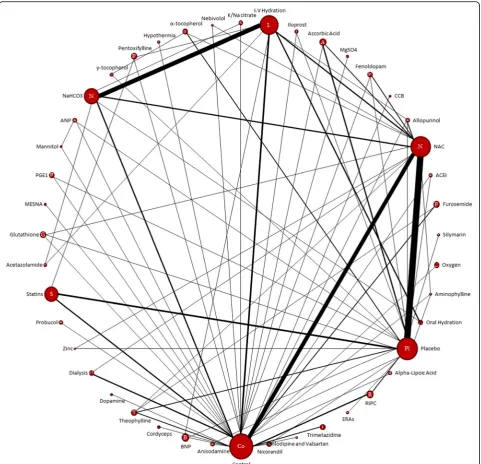
A network diagram was created using NetMetaXL tool to
graphically represent the size of the trial and the number
of pairwise comparisons between interventions. The size
of each intervention node is proportional to a number of
patients included in the trial, while the thickness of
inter-connecting lines is proportional to the number of pairwise
comparisons between any two interventions.
Risk of bias
The Cochrane tool for risk of bias assessment (RevMan
5.3) was used to assess bias within individual studies. A
bias graph was generated to portray the risk of bias
over-all across the included trials.
Summary measures
Odds ratios with 95% confidence intervals were
calcu-lated and presented in the form of Forest plots we
gen-erated a league table, which ranks summary estimates in
order of the impact of the intervention on the primary
outcome measure [10]. In the league table, interventions
were ranked from those with the highest effect to the
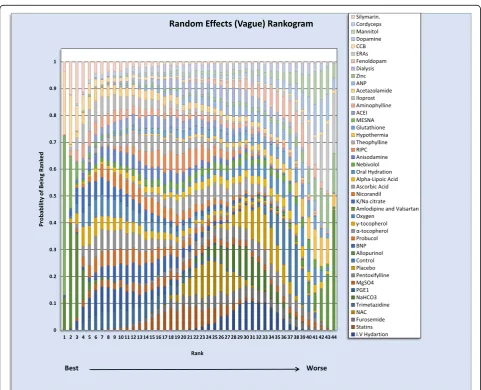
lowest. A stacked bar chart rankogram was also created
to represent ranking probabilities and their uncertainty.
Analysis methods
Zero cells were adjusted using an adjusted continuity
correction factor accounting for potential differences in
sample size, centered around 0.5.
As NetMetaXL is a relatively new tool, we run a
separ-ate set of analyses for the same data on GeMTC R
pack-age to validate our results with no noticeable differences.
We performed analysis with both fixed effects models
and random effects random-effect hierarchical models.
For Bayesian computation; detailed statistical approach
and diagnostics are provided in Additional file
1.
Assessment of consistency, model fit, and convergence
In NetMetaXL,
‘inconsistency plot’
was generated to
fa-cilitate visual assessment of conflicts between direct and
indirect evidence with limitation in our analysis due to a
substantial number of nodes on excel. Heterogeneity for
vague and informative priors was provided within the
forest plot results & Monte Carlo error < 5% of the
standard deviation (SD) used to assess convergence.
For GeMTC R package Gelman-Rubin statistics used
numerically and graphically to evaluate convergence while
deviance information criterion (DIC) was used for
deter-mining model fits and the model with smaller DIC value
was considered better.
Additional analyses
In addition to the main analysis we performed three other
analysis, the first excluding RCTs with any partial use of
hyperosmolar contrast media and in the other two RCTs
were divided according to baseline renal profile.
For each of the four analyses we performed sub-analysis
excluding studies with zero values as corresponding
ef-fects estimates may be subject to numerical instability,
generally over-estimate the effect, and that can be
ob-served in the wide associated confidence intervals.
Results
Study selection
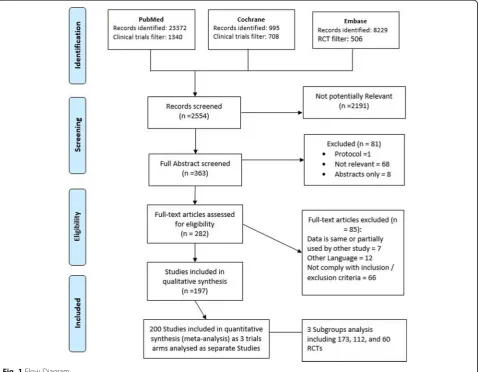
A total of 32,596 study titles were identified in the initial
literature search, of which 200 fulfilled criteria for
inclu-sion [4,
5,
7,
17–209] (Fig.
1). Some studies were excluded
as some data were partially included or re-analyzed in a
follow-up study involved in our review [210–215]. A total
of 32,399 studies were excluded after remove duplication
the most common reasons for exclusions after full
exam-ination included observational methodology; different
out-come measures, inadequate definition of CI-AKI; unclear
evidence of randomization; old studies that did not
com-ply with eligibility criteria for more than one reason [216–
279]. The twelve studies published in a non-English
lan-guage included those from centers in Germany [280,
281],
China [282–287], Spain [288], France [289], Turkey [290]
and Italy [291]. Eight further potentially suitable studies
were identified in abstract form only, but were excluded
as no full-text article could be identified [292–299].
Study characteristics
Additional file
2
outlines individual study characteristics
(study inclusion and exclusion criteria; procedure
per-formed; baseline renal function; definition of CI-AKI
used in the study; contrast medium volume and
osmolal-ity). In total, 197studies fulfilled the inclusion criteria,
including three which had multiple trial arms requiring
separate analyses (Yang 2014, Kumar 2014 & Chen
2008). A total of 200 comparative analyses were
there-fore included in our analyses. Coronary angiography
accounted for 145 (72.5%) of the contrast-dependent
procedures were. Less frequently reported procedures
included contrast-enhanced CT imaging (
n
= 16, 8%),
peripheral angiography with/without angioplasty and
stenting (
n
= 3, 1.5%) endovascular aneurysm repairs
(EVAR) (n = 1, 0.5. %). Multiple procedures were
in-cluded in 35 studies (17.5%). Low osmolar contrast
agents were used in 111 (55.5%), iso-osmolar agents in
44 studies (22%), and hi-osmolar media in 3 studies
(1.5%). Twenty-six (13%) trials permitted physician
dis-cretion in the selection of contrast media, while a
fur-ther 16 (8%) did not specify the contrast medium
utilized. More recent studies we observed better design
with an exclusion for patients using alternative CI-AKI
prevention interventions from participation or stratified
those methods among arms of the trial.
Network structure
The relationship and comparisons between included
studies are demonstrated in the network diagram (Fig.
2).
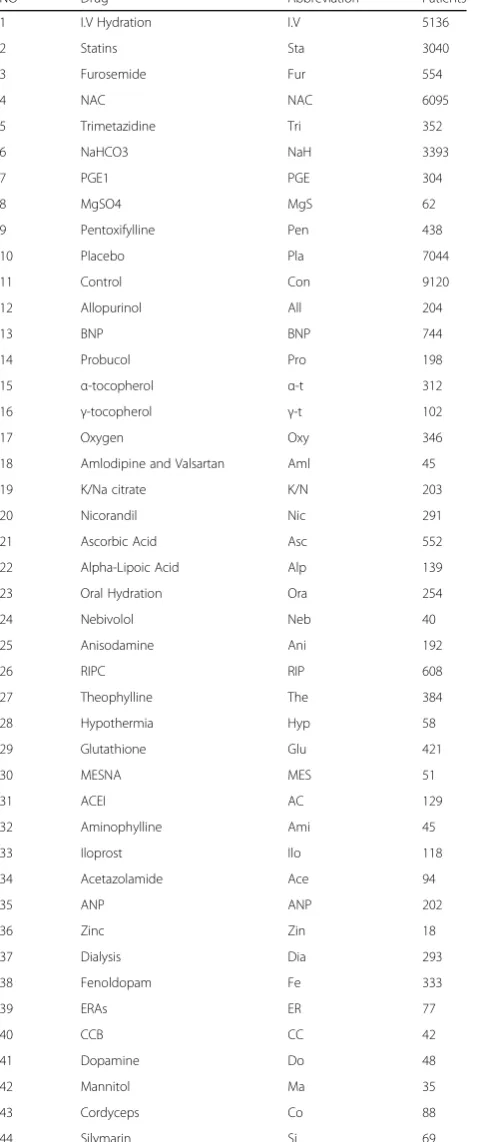
Forty-four interventions are included in this network
(Table
1).
Network geometry
Data from 42,273 patients recruited to 200 trials
investi-gating 44 interventions were included in our analyses; a
summary of network characteristics is provided in
(Table
2). Nine hundred and forty-six pair-wise
compari-sons were possible, of which 81 used data from direct
comparisons in Additional file
3. The most commonly
investigated comparisons are between N-acetylcysteine
(NAC) and placebo (36 studies, 8,202patients); and
intravenous normal saline and intravenous sodium
bicar-bonate (24 studies, 5,481patients). The interventions
most commonly investigated were NAC, NaHCO3,
Sta-tins, Intravenous Hydration (I.V), and placebo or
con-trol. The characteristics of individual interventions are
outlined in Additional file
3.
Risk of bias
Risk of bias assessed by two authors (Khalid, Walsh). In
case of disagreement, other authors were consulted.
Sum-mary for individual studies provided in Additional file
4
while (Fig.
3) shows the risk of bias graph across all
stud-ies. Most of the studies demonstrated unclear to low risk
of bias while most of the high risk of bias were observed
in attrition bias domain. As the outcome measure
(CA-AKI) is dependent on laboratory results it seems
reason-able to assume the risk of bias attributed to blinding of
outcome assessment domain was low by default.
Synthesis of results
The Renal Association, British Cardiovascular
Interven-tion Society and the Royal College of Radiologists among
many other medical bodies recommend using intravenous
volume expansion as a prevention method for CA-AKI
[300]. Thus, we considered intravenous hydration
clinic-ally the reference intervention in this analysis, in addition
to the node size and the multiple arms within the network
which make it very good comparator.
Sensitivity analysis
Flow chart for the main analyses and sub-analyses is
included in Additional file
1. From the main analysis
200 RCTs we run sub-analysis that includes 184
RCTS in which we exclude all studies with zero
values (
n
= 7). All figures and tables are included in
Additional file
3.
The second analysis involved 173 RCTs after excluding
studies reporting any use of hyperosmolar contrast
media, the sub-analysis without zero values RCTs
in-clude 159 RCTS.
Trials with high baseline renal profile were in analysis 3
which includes 112 RCTs and sub-analysis for 105 RCTS.
The 4th analysis includes 60 and 53 RCTs respectively.
Analysis specifications, figures and tables provided in
Additional file
5, Additional file
6
and Additional file
7.
When interpreting sub-analyses results in conventional
direct pairwise comparisons the main effect results from
the size of the excluded studies because there is no
ex-clusion for interventions and they will always be present
at both sides of the forest plot. This impact the overall
diamond shape effect estimates size and confidence
interval will either shift towards one treatment or
touch-ing the line of no effect indicattouch-ing no superiority for any
intervention. This is different in Network Meta-analysis
in which we can see changes in connections dynamic
(Network Diagram) and interventions numbers
repre-sented by node sizes and number of connections
be-tween them both can be affected or totally removed by
the excluding studies. In the latter case the Network
Diagram and characteristics of interventions and
com-parisons provide detailed visualization to help compare
the main vs sub-analysis. In Additional file
3, Additional
file
5, Additional file
6
and Additional file
7
we detailed
all excluded studies, the affected interventions, Network
Diagrams and the characteristics of the interventions
and comparisons.
Assessment of consistency
An
‘inconsistency plot’
(Fig.
5) was generated to assess
inconsistency. Inconsistency in network meta-analysis is
similar to heterogeneity in conventional meta-analysis but
consistency concerns the relation between the treatments
whereas heterogeneity concerns the variation between
trials within a pairwise comparison between two
treat-ments. Inconsistency is caused by imbalances in the
distri-bution of effect modifiers in the direct and indirect
evidence. Effects modifiers in this large sample include
but are not limited to patient factors, drug interactions,
contrast media volume and type and renal function
pre-intervention. Inevitably, some modifiers exist that cannot
be completely eliminated in large multi-treatment network
meta-analysis, leading to some inconsistency, indicating a
need for careful interpretation of the results [301]. The
consistency plot shows individual data points’
posterior
mean deviance contributions for the consistency model
(horizontal axis) and the unrelated mean effects model
(vertical axis) along with the line of equality. In our analysis,
the main limitation is excel inability to handle a large
amount of nodes. However, there should be a consideration
Table 1
Interventions within Network Diagram
NO Drug Abbreviation Patients
1 I.V Hydration I.V 5136
2 Statins Sta 3040
3 Furosemide Fur 554
4 NAC NAC 6095
5 Trimetazidine Tri 352
6 NaHCO3 NaH 3393
7 PGE1 PGE 304
8 MgSO4 MgS 62
9 Pentoxifylline Pen 438
10 Placebo Pla 7044
11 Control Con 9120
12 Allopurinol All 204
13 BNP BNP 744
14 Probucol Pro 198
15 α-tocopherol α-t 312
16 γ-tocopherol γ-t 102
17 Oxygen Oxy 346
18 Amlodipine and Valsartan Aml 45
19 K/Na citrate K/N 203
20 Nicorandil Nic 291
21 Ascorbic Acid Asc 552
22 Alpha-Lipoic Acid Alp 139
23 Oral Hydration Ora 254
24 Nebivolol Neb 40
25 Anisodamine Ani 192
26 RIPC RIP 608
27 Theophylline The 384
28 Hypothermia Hyp 58
29 Glutathione Glu 421
30 MESNA MES 51
31 ACEI AC 129
32 Aminophylline Ami 45
33 Iloprost Ilo 118
34 Acetazolamide Ace 94
35 ANP ANP 202
36 Zinc Zin 18
37 Dialysis Dia 293
38 Fenoldopam Fe 333
39 ERAs ER 77
40 CCB CC 42
41 Dopamine Do 48
42 Mannitol Ma 35
43 Cordyceps Co 88
44 Silymarin Si 69
ACEIAngiotensin Converting-Enzyme Inhibitor,ANP Atrial Natriuretic Peptide,
BNPB-Type Natriuretic Peptide,CCBCalcium Channels Blockers,CI-AKIContrast Induced Acute Kidney Injury,CINContrast Induced Nephropathy,ERAs
Endothelin Receptor Antagonism,MESNA2-Mercaptoethane Sulfonate Sodium,
MgSo4Magnesium Sulphate,NAC N-acetyl cysteine,NaHco3Sodium Bicarbonate,PGE1Prostaglandin E1,RIPCRemote Ischemic Preconditioning
Table 2
Network Characteristics
Characteristic Number
Number of Interventions 44
Number of Studies 200
Total Number of Patients in Network 42,273
Total Number of Events in Network 4602
Total Possible Pairwise Comparisons 946
Total Number Pairwise Comparisons with Direct Data 81
Number of Two-arm Studies 179
Number of Multi-Arms Studies 21
Number of Studies with No Zero Events 184
Number of Studies With At Least One Zero Event 16
Fig. 3Risk of Bias Graph
of individual pairwise comparisons effect estimates
gener-ated within the forest plot.
In GeMTC R analyses I
2statistics and DIC was much
smaller for Random effect indicating less heterogeneity
compared with a fixed effect which is expected to
pro-vide the nature of the network. Detailed scores are
pre-sented in Additional file
1
while Gelman and Rubin’s
convergence diagnostics were added to corresponded
analyses in Additional file
3, Additional file
5, Additional
file
6
and Additional file
7.
In general, the main analysis reviled some interesting
re-sults with Allopurinol, Prostaglandin E1 (PGE1) & Oxygen
were ranked high with good both statistical and clinical
outcomes in relatively fewer number of studies comparing
with other interventions studied in larger number of RCTs
e.g. NAC, Statins, Hydration, NaHco3 and RIPC. The
re-sults were stable throughout different sub analysis
consid-ering the changes in network diagram being affected by
excluded studies in all 7 networks. The model fitting and
the consistency within the network was good considering
the large size and it is understandable that it was better
fit-ted in the 7 sub-groups analysis specially after excluding
zero values studies. It is very important here to remember
in network ranking is the probability of being the best
within the interventions and we need to look at the forest
plot for each comparison.
Discussion
Summary of evidence
This is a systematic review and network meta-analysis
(multi-treatment comparison) of studies investigating
methods for the prevention of contrast-induced
nephrop-athy. We identified 200 eligible trials, of which 3 had 2
different arms and thus analysed separately. Data from a
total of 42,273 patients undergoing 44 different
interven-tions were included. Intravenous hydration (Nacl) was
used as the reference treatment as there is a consensus
supported by evidence accepting it as a method of
preven-tion with no clear superiority for other I.V fluids [81]. in
our network it was also included in many multiple arms
Table 3
Interventions ranking the treatments names column
follow the league table (which arranges the presentation of
summary estimates by ranking the treatments in order of most
pronounced impact on the outcome under consideration) the
numerical values represents the cumulative results of the
probability of being best in which the highest score is 1 or
100% (see Rankogram)
Treatment SUCRA Treatment SUCRA
Allopurinol 0.9647 NaHCO3 0.3419
MESNA 0.9427 Pentoxifylline 0.3391
PGE1 0.7809 I.V Hydration 0.3124
α-tocopherol 0.7614 Placebo 0.2694
Oxygen 0.7527 Oral Hydration 0.2517
K/Na citrate 0.7469 Hypothermia 0.2021
Trimetazidine 0.7151 Control 0.1658
Probucol 0.7042 Amlodipine and Valsartan 0.05485
γ-tocopherol 0.689 ACEI 0.5783
BNP 0.6767 Aminophylline 0.6593
Anisodamine 0.6594 Iloprost 0.7481
Nicorandil 0.6442 Acetazolamide 0.6242
Theophylline 0.629 ANP 0.3291
RIPC 0.5692 Zinc 0.198
Statins 0.5497 Dialysis 0.4319
MgSO4 0.5177 Fenoldopam 0.2296
NAC 0.4592 ERAs 0.06734
Nebivolol 0.4543 CCB 0.7249
Ascorbic Acid 0.4433 Dopamine 0.1916
Alpha-Lipoic Acid 0.4322 Mannitol 0.1905
Furosemide 0.4027 Cordyceps 0.4459
Glutathione 0.3554 Silymarin 0.7934
Analysis Random Effects (Vague)
RCTs which make it statistically a very good comparator.
While only randomized control trials were included,
de-fining the outcome and inclusion criteria, help to
minimize the number of effect modifiers at play in
differ-ent studies, thus minimising inconsistency. However, the
assumption of homogeneity should be accepted with
cau-tion in light of the large numbers of trials and patients
included.
It is very important for readers more familiar with
general probability measure in which the value one is
assigned to the entire probability space to recognize
that SUCRA use posterior probabilities for each
treat-ment to be among the
n
- best options (cumulative
probabilities) thus the sum add to > 1. The word best
referred to the number of times that an intervention
ranks first out of the total number of random
sam-ples [14] In Rankogram the first column represent
the chance of being first best out of100% and the
sec-ond represent the chance of being secsec-ond best up to
last column; the overall ranking for each treatment is
the sum and that the reason each treatment
probabil-ity is calculated out of 100%.
We can generally categorize the 44 ranked
tions in groups. The first group is high ranked
interven-tions with relatively fewer number of studies and this
group is mainly for further research consideration
des-pite good design RCTs, good clinical outcomes, and our
conscious effort to eliminate the effect of small node
ef-fect on the network and the fact we accommodate and
accounted for the different in interventions size when
calculating the probability but we cannot ignore that this
may still play in favour of small studies and we think
they deserve another look with larger well-designed
tri-als, this group includes mainly Allopurinol,
Prostaglan-din E1 (PGE1) & Oxygen; Allopurinol a xanthine
oxidase Inhibitor used for treatment of gout and
man-agement of hyperuricemia associated with chemotherapy
and was assessed in 4 trials with 204 patients with recent
published evidence suggesting some benefits [302] while
PGE1 in 4 trails with total 304 patients. Interestingly
Oxygen was highly ranked before and after exclusion of
zero events studies and the total number of patients was
346 in 2 studies.
The scorned group is the middle group which included
in decent number of studies and the interventions in this
group with safe and or well tested profile can be used in
patient care at the same time continuously evaluated
and this group can include RIPC, Statins (which usually
in use specially by cardiac and vascular patients), NAC,
NaHco3, I.V hydration, Oral hydration and hypothermia.
This group needed the physician to consult his local
guidelines after evaluating each patient individually and
some interventions like hypothermia is not applicable
for all patients.
The sub-analyses in our network for was performed
after excluding studies with zero events to eliminate
favor-able effect profile. It produced better statistical results and
helped compare the results without the interventions
in-volved in a small number of trials.
Research & Clinical impact
For health care providers, the results of this meta-analysis
do not suggest changes to current clinical practice. The
prevention methods assessed in large studies should be
evaluated on a case-by-case basis, bearing in mind the
co-morbidities, clinical needs and prior risk factors of the
in-dividual patient with special consideration to national and
local guidelines. Interventions with safe profile and
sup-portive evidence from direct pair-wise meta-analysis can
be considered as additional or second-line therapies for
CA-AKI prevention. For clinical researchers, the
highly-ranked treatments with relatively small number of trials
merit further examonation in larger RCTs.
Limitations
One limitation of this meta-analysis is the exclusion of
non-English language studies (
n
= 12). The inclusion of
these studies may add to the supportive evidence for the
use of some interventions, although the effect size of
these trials is likely to be minimal in light of the sample
sizes in question. Another limitation is the difference in
contrast media used which may affect the outcomes; we
excluded studies that used hyperosmolar contrast media
to minimise this effect with some evidence suggesting
similar CIN incidence for iso and low-osmolar CM in
coronary angiography patients [303]. In large Network,
another consideration is our inability to account for
other possible effect modifiers, and our assumptions
re-garding homogeneity and similarity across a large
num-ber of studies thus it is important to look at each
intervention ranking through the multiple analyses
pro-vided in the supplemnts.
forest plot in our network, we think the results from
pair-wise reviews is important; the nature of conventional
meta-analysis prevent utilization of multiple arms trials
and creating indirect comparison but it can be used to
look at sections of more comprehensive
network-meta-analysis in addition to the fact that It is more flexible in
terms of subgroup analysis and thus assessment of effects
modifiers e.g. type of contrast media in this case.
Conclusion
This systematic review and network meta-analysis
pro-vide a comprehensive analysis of currently utilized
CA-AKI prevention interventions. Results arising from this
network identified some highly-ranked interventions
throughout analyses and sub-analyses (e.g., Allopurinol,
PGE1 & Oxygen) which were included in small number
of trials and merit further examination on a larger scale
in the context of a well-designed RCTs.
Additional files
Additional file 1:Analysis flow chart and statistical approach. (DOCX 125 kb)
Additional file 2:Studies characteristics. (DOCX 889 kb)
Additional file 3:Main Analysis 200–184 RCTs. (DOCX 46108 kb)
Additional file 4:Risk of Bias Table. (DOCX 1056 kb)
Additional file 5:Excluding hyperosmolar 173–159 RCTs. (DOCX 41962 kb)
Additional file 6:High Baseline Renal Profile 112–105 RCTs. (DOCX 32278 kb)
Additional file 7:Normal Baseline Renal Profile 60–53 RCTs. (DOCX 16081 kb)
Abbreviations
ACEI:Angiotensin Converting-Enzyme Inhibitor; ANP: Atrial Natriuretic Peptide; BNP: B-Type Natriuretic Peptide; CCB: Calcium Channels Blockers; CI-AKI: Contrast Induced Acute Kidney Injury; CIN: Contrast Induced
Nephropathy; CM: Contrast Media; ERAs: Endothelin Receptor Antagonism; MESNA: 2-Mercaptoethane Sulfonate Sodium; MgSo4: Magnesium Sulphate; NAC: N-acetyl cysteine; NaHco3: Sodium Bicarbonate; PGE1: Prostaglandin E1; RCT: Randomise Control Trails; RIPC: Remote Ischemic Preconditioning
Acknowledgements
We acknowledge Ms. Geraldine Curtin and the staff in the James Hardiman library, NUI Galway, for their kind assistance in acquiring relevant papers and Information.
Funding
This research was funded by the National University of Ireland Galway.
Availability of data and materials N/A (2ndry data from published studies).
Authors’contributions
KA: Study design, Literature search, figures, data collection, data Analysis, data interpretation and writing. TM: Critical appraisal, review and edit. RC Figures Editing: SM Figures Editing. MT Critical appraisal, review and edit. MK Methodology, statistical data analysis, data interpretation, review and edit. Professor SW: Methodology, literature search, data interpretation Critical appraisal, review, and edit. All authors read and approved the final manuscript.
Ethics approval and consent to participate N/A.
Consent for publication N/A.
Competing interests
The authors declare that they have no competing interests.
Publisher
’
s Note
Springer Nature remains neutral with regard to jurisdictional claims in published maps and institutional affiliations.
Author details
1
Lambe Institute for Translational Research, Discipline of Surgery National University of Ireland, Galway, Republic of Ireland.2Department of Vascular surgery, Galway University Hospital, Galway, Republic of Ireland.3School of Population and Public Health, University of British Columbia, Scientist / Biostatistician, Centre for Health Evaluation and Outcome Sciences (CHEOS), St. Paul’s Hospital, Vancouver, Canada.4HRB Clinical Research Facility Galway, Galway, Republic of Ireland.
Received: 13 November 2017 Accepted: 22 October 2018
References
1. Mohammed NM, Mahfouz A, Achkar K, Rafie IM, Hajar R. Contrast-induced nephropathy. Heart Views. 2013;14(3):106–16.
2. Goldfarb S, McCullough PA, McDermott J, Gay SB. Contrast-induced acute kidney injury: specialty-specific protocols for interventional radiology, diagnostic computed tomography radiology, and interventional cardiology. Mayo Clin Proc. 2009;84(2):170–9.
3. Goldenberg I, Matetzky S. Nephropathy induced by contrast media: pathogenesis, risk factors and preventive strategies. CMAJ. 2005;172(11):1461–71. 4. Castini D, Lucreziotti S, Bosotti L, Salerno Uriarte D, Sponzilli C, Verzoni A, et
al. Prevention of contrast-induced nephropathy: a single center randomized study. Clin Cardiol. 2010;33(3):E63–8.
5. Maioli M, Toso A, Leoncini M, Gallopin M, Tedeschi D, Micheletti C, et al. Sodium bicarbonate versus saline for the prevention of contrast-induced nephropathy in patients with renal dysfunction undergoing coronary angiography or intervention. J Am Coll Cardiol. 2008;52(8):599–604. 6. Mehran R, Nikolsky E. Contrast-induced nephropathy: definition,
epidemiology, and patients at risk. Kidney Int Suppl. 2006;100:S11–5. 7. Spargias K, Alexopoulos E, Kyrzopoulos S, Iokovis P, Greenwood DC,
Manginas A, et al. Ascorbic acid prevents contrast-mediated nephropathy in patients with renal dysfunction undergoing coronary angiography or intervention. Circulation. 2004;110(18):2837–42.
8. Tumlin J, Stacul F, Adam A, Becker CR, Davidson C, Lameire N, et al. Pathophysiology of contrast-induced nephropathy. Am J Cardiol. 2006; 98(6A):14K–20K.
9. Wong PC, Li Z, Guo J, Zhang A. Pathophysiology of contrast-induced nephropathy. Int J Cardiol. 2012;158(2):186–92.
10. Ehrmann S, Aronson D, Hinson JS. Contrast-associated acute kidney injury is a myth: yes. Intensive Care Med. 2018;44(1):104–6.
11. Weisbord SD, du Cheryon D. Contrast-associated acute kidney injury is a myth: no. Intensive Care Med. 2018;44(1):107–9.
12. Thorlund K, Druyts E, Toor K, Jansen JP, Mills EJ. Incorporating alternative design clinical trials in network meta-analyses. Clin Epidemiol. 2015;7:29–35.
13. Salanti G, Higgins JP, Ades AE, Ioannidis JP. Evaluation of networks of randomized trials. Stat Methods Med Res. 2008;17(3):279–301. 14. Salanti G, Ades AE, Ioannidis JP. Graphical methods and numerical
summaries for presenting results from multiple-treatment meta-analysis: an overview and tutorial. J Clin Epidemiol. 2011;64(2):163–71.
15. Hutton B, Salanti G, Caldwell DM, Chaimani A, Schmid CH, Cameron C, et al. The PRISMA extension statement for reporting of systematic reviews incorporating network meta-analyses of health care interventions: checklist and explanations. Ann Intern Med. 2015;162(11):777–84.
16. Brown S, Hutton B, Clifford T, Coyle D, Grima D, Wells G, et al. A Microsoft-excel-based tool for running and critically appraising network meta-analyses—an overview and application of NetMetaXL. Syst Rev. 2014;3:110.
18. Adolph E, Holdt-Lehmann B, Chatterjee T, Paschka S, Prott A, Schneider H, et al. Renal insufficiency following radiocontrast exposure trial (REINFORCE): a randomized comparison of sodium bicarbonate versus sodium chloride hydration for the prevention of contrast-induced nephropathy. Coron Artery Dis. 2008;19(6):413–9.
19. Akyuz S, Karaca M, Kemaloglu Oz T, Altay S, Gungor B, Yaylak B, et al. Efficacy of oral hydration in the prevention of contrast-induced acute kidney injury in patients undergoing coronary angiography or intervention. Nephron Clin Pract. 2014;128(1–2):95–100.
20. Albabtain MA, Almasood A, Alshurafah H, Alamri H, Tamim H. Efficacy of ascorbic acid, N-acetylcysteine, or combination of both on top of saline hydration versus saline hydration alone on prevention of contrast-induced nephropathy: a prospective randomized study. J Interv Cardiol. 2013;26(1):90–6.
21. Allaqaband S, Tumuluri R, Malik AM, Gupta A, Volkert P, Shalev Y, et al. Prospective randomized study of N-acetylcysteine, fenoldopam, and saline for prevention of radiocontrast-induced nephropathy. Catheter Cardiovasc Interv. 2002;57(3):279–83.
22. Amini M, Salarifar M, Amirbaigloo A, Masoudkabir F, Esfahani F. N-acetylcysteine does not prevent contrast-induced nephropathy after cardiac catheterization in patients with diabetes mellitus and chronic kidney disease: a randomized clinical trial. Trials. 2009;10:45.
23. Angoulvant D, Cucherat M, Rioufol G, Finet G, Beaune J, Revel D, et al. Preventing acute decrease in renal function induced by coronary angiography (PRECORD): a prospective randomized trial. Arch Cardiovasc Dis. 2009;102(11):761–7. 24. Aslanger E, Uslu B, Akdeniz C, Polat N, Cizgici Y, Oflaz H. Intrarenal application
of N-acetylcysteine for the prevention of contrast medium-induced nephropathy in primary angioplasty. Coron Artery Dis. 2012;23(4):265–70. 25. Baker CS, Wragg A, Kumar S, De Palma R, Baker LR, Knight CJ. A rapid
protocol for the prevention of contrast-induced renal dysfunction: the RAPPID study. J Am Coll Cardiol. 2003;41(12):2114–8.
26. Balderramo DC, Verdu MB, Ramacciotti CF, Cremona LS, Lemos PA, Orias M, et al. Renoprotective effect of high periprocedural doses of oral N-acetylcysteine in patients scheduled to undergo a same-day angiography. Rev Fac Cien Med Univ Nac Cordoba. 2004;61(2):13–9.
27. Baskurt M, Okcun B, Abaci O, Dogan GM, Kilickesmez K, Ozkan AA, et al. N-acetylcysteine versus N-N-acetylcysteine + theophylline for the prevention of contrast nephropathy. Eur J Clin Investig. 2009;39(9):793–9.
28. Berwanger O, Cavalcanti AB, Sousa AM, Buehler A, Castello-Junior HJ, Cantarelli MJ, et al. Acetylcysteine for the prevention of renal outcomes in patients with diabetes mellitus undergoing coronary and peripheral vascular angiography: a substudy of the acetylcysteine for contrast-induced nephropathy trial. Circ Cardiovasc Interv. 2013;6(2):139–45.
29. Bidram P, Roghani F, Sanei H, Hedayati Z, Golabchi A, Mousavi M, et al. Atorvastatin and prevention of contrast induced nephropathy following coronary angiography. J Res Med Sci. 2015;20(1):1–6.
30. Bilasy ME, Oraby MA, Ismail HM, Maklady FA. Effectiveness of theophylline in preventing contrast-induced nephropathy after coronary angiographic procedures. J Interv Cardiol. 2012;25(4):404–10.
31. Boscheri A, Weinbrenner C, Botzek B, Reynen K, Kuhlisch E, Strasser RH. Failure of ascorbic acid to prevent contrast-media induced nephropathy in patients with renal dysfunction. Clin Nephrol. 2007;68(5):279–86. 32. Boucek P, Havrdova T, Oliyarnyk O, Skibova J, Pecenkova V, Pucelikova T, et
al. Prevention of contrast-induced nephropathy in diabetic patients with impaired renal function: a randomized, double blind trial of sodium bicarbonate versus sodium chloride-based hydration. Diabetes Res Clin Pract. 2013;101(3):303–8.
33. Brar SS, Shen AY, Jorgensen MB, Kotlewski A, Aharonian VJ, Desai N, et al. Sodium bicarbonate vs sodium chloride for the prevention of contrast medium-induced nephropathy in patients undergoing coronary angiography: a randomized trial. JAMA. 2008;300(9):1038–46. 34. Briguori C, Airoldi F, D’Andrea D, Bonizzoni E, Morici N, Focaccio A, et al.
Renal insufficiency following contrast media administration trial (REMEDIAL): a randomized comparison of 3 preventive strategies. Circulation. 2007; 115(10):1211–7.
35. Briguori C, Colombo A, Airoldi F, Violante A, Castelli A, Balestrieri P, et al. N-acetylcysteine versus fenoldopam mesylate to prevent contrast agent-associated nephrotoxicity. J Am Coll Cardiol. 2004;44(4):762–5. 36. Briguori C, Manganelli F, Scarpato P, Elia PP, Golia B, Riviezzo G, et al.
Acetylcysteine and contrast agent-associated nephrotoxicity. J Am Coll Cardiol. 2002;40(2):298–303.
37. Brueck M, Cengiz H, Hoeltgen R, Wieczorek M, Boedeker RH, Scheibelhut C, et al. Usefulness of N-acetylcysteine or ascorbic acid versus placebo to prevent contrast-induced acute kidney injury in patients undergoing elective cardiac catheterization: a single-center, prospective, randomized, double-blind, placebo-controlled trial. J Invasive Cardiol. 2013;25(6):276–83.
38. Burns KE, Priestap F, Martin C. N-acetylcysteine in critically ill patients undergoing contrast-enhanced computed tomography: a randomized trial. Clin Nephrol. 2010;74(4):323–6.
39. Carbonell N, Blasco M, Sanjuan R, Perez-Sancho E, Sanchis J, Insa L, et al. Intravenous N-acetylcysteine for preventing contrast-induced nephropathy: a randomised trial. Int J Cardiol. 2007;115(1):57–62.
40. Carbonell N, Sanjuan R, Blasco M, Jorda A, Miguel A. N-acetylcysteine: short-term clinical benefits after coronary angiography in high-risk renal patients. Rev Esp Cardiol. 2010;63(1):12–9.
41. Chen SL, Zhang J, Yei F, Zhu Z, Liu Z, Lin S, et al. Clinical outcomes of contrast-induced nephropathy in patients undergoing percutaneous coronary intervention: a prospective, multicenter, randomized study to analyze the effect of hydration and acetylcysteine. Int J Cardiol. 2008;126(3):407–13. 42. Cho R, Javed N, Traub D, Kodali S, Atem F, Srinivasan V. Oral hydration and
alkalinization is noninferior to intravenous therapy for prevention of contrast-induced nephropathy in patients with chronic kidney disease. J Interv Cardiol. 2010;23(5):460–6.
43. Cicek M, Yildirir A, Okyay K, Yazici AC, Aydinalp A, Kanyilmaz S, et al. Use of alpha-lipoic acid in prevention of contrast-induced nephropathy in diabetic patients. Ren Fail. 2013;35(5):748–53.
44. Coyle LC, Rodriguez A, Jeschke RE, Simon-Lee A, Abbott KC, Taylor AJ. Acetylcysteine In Diabetes (AID): a randomized study of acetylcysteine for the prevention of contrast nephropathy in diabetics. Am Heart J. 2006; 151(5):1032 e9–12.
45. Durham JD, Caputo C, Dokko J, Zaharakis T, Pahlavan M, Keltz J, et al. A randomized controlled trial of N-acetylcysteine to prevent contrast nephropathy in cardiac angiography. Kidney Int. 2002;62(6):2202–7. 46. Dussol B, Morange S, Loundoun A, Auquier P, Berland Y. A randomized trial
of saline hydration to prevent contrast nephropathy in chronic renal failure patients. Nephrol Dial Transplant. 2006;21(8):2120–6.
47. Dvorsak B, Kanic V, Ekart R, Bevc S, Hojs R. Ascorbic acid for the prevention of contrast-induced nephropathy after coronary angiography in patients with chronic renal impairment: a randomized controlled trial. Ther Apher Dial. 2013;17(4):384–90.
48. Efrati S, Dishy V, Averbukh M, Blatt A, Krakover R, Weisgarten J, et al. The effect of N-acetylcysteine on renal function, nitric oxide, and oxidative stress after angiography. Kidney Int. 2003;64(6):2182–7.
49. Er F, Nia AM, Dopp H, Hellmich M, Dahlem KM, Caglayan E, et al. Ischemic preconditioning for prevention of contrast medium-induced nephropathy: randomized pilot RenPro trial (renal protection trial). Circulation. 2012;126(3):296–303.
50. Erley CM, Duda SH, Rehfuss D, Scholtes B, Bock J, Muller C, et al. Prevention of radiocontrast-media-induced nephropathy in patients with pre-existing renal insufficiency by hydration in combination with the adenosine antagonist theophylline. Nephrol Dial Transplant. 1999;14(5):1146–9. 51. Erol T, Tekin A, Katircibasi MT, Sezgin N, Bilgi M, Tekin G, et al. Efficacy of
allopurinol pretreatment for prevention of contrast-induced nephropathy: a randomized controlled trial. Int J Cardiol. 2013;167(4):1396–9.
52. Erturk M, Uslu N, Gorgulu S, Akbay E, Kurtulus G, Akturk IF, et al. Does intravenous or oral high-dose N-acetylcysteine in addition to saline prevent contrast-induced nephropathy assessed by cystatin C? Coron Artery Dis. 2014;25(2):111–7. 53. Ferrario F, Barone MT, Landoni G, Genderini A, Heidemperger M, Trezzi M, et al.
Acetylcysteine and non-ionic isosmolar contrast-induced nephropathy—a randomized controlled study. Nephrol Dial Transplant. 2009;24(10):3103–7. 54. Firouzi A, Eshraghi A, Shakerian F, Sanati HR, Salehi N, Zahedmehr A, et al.
Efficacy of pentoxifylline in prevention of contrast-induced nephropathy in angioplasty patients. Int Urol Nephrol. 2012;44(4):1145–9.
55. Firouzi A, Maadani M, Kiani R, Shakerian F, Sanati HR, Zahedmehr A, et al. Intravenous magnesium sulfate: new method in prevention of contrast-induced nephropathy in primary percutaneous coronary intervention. Int Urol Nephrol. 2015;47(3):521–5.
57. Gare M, Haviv YS, Ben-Yehuda A, Rubinger D, Bdolah-Abram T, Fuchs S, et al. The renal effect of low-dose dopamine in high-risk patients undergoing coronary angiography. J Am Coll Cardiol. 1999;34(6):1682–8.
58. Geng W, Fu XH, Gu XS, Wang YB, Wang XC, Li W, et al. Preventive effects of anisodamine against contrast-induced nephropathy in type 2 diabetics with renal insufficiency undergoing coronary angiography or angioplasty. Chin Med J. 2012;125(19):3368–72.
59. Goldenberg I, Shechter M, Matetzky S, Jonas M, Adam M, Pres H, et al. Oral acetylcysteine as an adjunct to saline hydration for the prevention of contrast-induced nephropathy following coronary angiography. A randomized controlled trial and review of the current literature. Eur Heart J. 2004;25(3):212–8. 60. Gomes VO, Lasevitch R, Lima VC, Brito FS Jr, Perez-Alva JC, Moulin B, et al.
Hydration with sodium bicarbonate does not prevent contrast nephropathy: a multicenter clinical trial. Arq Bras Cardiol. 2012;99(6):1129–34.
61. Gomes VO, Poli de Figueredo CE, Caramori P, Lasevitch R, Bodanese LC, Araujo A, et al. N-acetylcysteine does not prevent contrast induced nephropathy after cardiac catheterisation with an ionic low osmolality contrast medium: a multicentre clinical trial. Heart. 2005;91(6):774–8. 62. Gu GQ, Lu R, Cui W, Liu F, Zhang Y, Yang XH, et al. Low-dose furosemide
administered with adequate hydration reduces contrast-induced nephropathy in patients undergoing coronary angiography. Cardiology. 2013;125(2):69–73.
63. Gulel O, Keles T, Eraslan H, Aydogdu S, Diker E, Ulusoy V. Prophylactic acetylcysteine usage for prevention of contrast nephropathy after coronary angiography. J Cardiovasc Pharmacol. 2005;46(4):464–7.
64. Gunebakmaz O, Kaya MG, Koc F, Akpek M, Kasapkara A, Inanc MT, et al. Does nebivolol prevent contrast-induced nephropathy in humans? Clin Cardiol. 2012;35(4):250–4.
65. Gupta RK, Kapoor A, Tewari S, Sinha N, Sharma RK. Captopril for prevention of contrast-induced nephropathy in diabetic patients: a randomised study. Indian Heart J. 1999;51(5):521–6.
66. Hafiz AM, Jan MF, Mori N, Shaikh F, Wallach J, Bajwa T, et al. Prevention of contrast-induced acute kidney injury in patients with stable chronic renal disease undergoing elective percutaneous coronary and peripheral interventions: randomized comparison of two preventive strategies. Catheter Cardiovasc Interv. 2012;79(6):929–37.
67. Han Y, Zhu G, Han L, Hou F, Huang W, Liu H, et al. Short-term rosuvastatin therapy for prevention of contrast-induced acute kidney injury in patients with diabetes and chronic kidney disease. J Am Coll Cardiol. 2014;63(1):62–70. 68. Hashemi M, Kharazi A, Shahidi S. Captopril for prevention of contrast induced
nephropathy in patients undergoing coronary angioplasty: a double blind placebo controlled clinical trial. J Res Med Sci. 2005;10(5):305–8. 69. Heguilen RM, Liste AA, Payaslian M, Ortemberg MG, Albarracin LM,
Bernasconi AR. N-acethyl-cysteine reduces the occurrence of contrast-induced acute kidney injury in patients with renal dysfunction: a single-center randomized controlled trial. Clin Exp Nephrol. 2013;17(3):396–404. 70. Heng AE, Cellarier E, Aublet-Cuvelier B, Decalf V, Motreff P, Marcaggi X, et al. Is
treatment with N-acetylcysteine to prevent contrast-induced nephropathy when using bicarbonate hydration out of date? Clin Nephrol. 2008;70(6):475–84. 71. Hoole SP, Heck PM, Sharples L, Khan SN, Duehmke R, Densem CG, et al.
Cardiac remote ischemic preconditioning in coronary stenting (CRISP stent) study: a prospective, randomized control trial. Circulation. 2009;119(6):820–7. 72. Hsu TF, Huang MK, Yu SH, Yen DH, Kao WF, Chen YC, et al. N-acetylcysteine
for the prevention of contrast-induced nephropathy in the emergency department. Intern Med. 2012;51(19):2709–14.
73. Huber W, Schipek C, Ilgmann K, Page M, Hennig M, Wacker A, et al. Effectiveness of theophylline prophylaxis of renal impairment after coronary angiography in patients with chronic renal insufficiency. Am J Cardiol. 2003; 91(10):1157–62.
74. Inda-Filho AJ, Caixeta A, Manggini M, Schor N. Do intravenous N-acetylcysteine and sodium bicarbonate prevent high osmolal contrast-induced acute kidney injury? A randomized controlled trial. PLoS One. 2014; 9(9):e107602.
75. Investigators ACT. Acetylcysteine for prevention of renal outcomes in patients undergoing coronary and peripheral vascular angiography: main results from the randomized acetylcysteine for contrast-induced nephropathy trial (ACT). Circulation. 2011;124(11):1250–9. 76. Jaffery Z, Verma A, White CJ, Grant AG, Collins TJ, Grise MA, et al. A
randomized trial of intravenous n-acetylcysteine to prevent contrast induced nephropathy in acute coronary syndromes. Catheter Cardiovasc Interv. 2012;79(6):921–6.
77. Jo SH, Kim SA, Kim HS, Han SJ, Park WJ, Choi YJ. Alpha-lipoic acid for the prevention of contrast-induced nephropathy in patients undergoing coronary angiography: the ALIVE study - a prospective randomized trial. Cardiology. 2013;126(3):159–66.
78. Jo SH, Koo BK, Park JS, Kang HJ, Cho YS, Kim YJ, et al. Prevention of radiocontrast medium-induced nephropathy using short-term high-dose simvastatin in patients with renal insufficiency undergoing coronary angiography (PROMISS) trial—a randomized controlled study. Am Heart J. 2008;155(3):499 e1–8. 79. Jo SH, Koo BK, Park JS, Kang HJ, Kim YJ, Kim HL, et al. N-acetylcysteine versus
AScorbic acid for preventing contrast-induced nephropathy in patients with renal insufficiency undergoing coronary angiography NASPI study-a prospective randomized controlled trial. Am Heart J. 2009;157(3):576–83. 80. Jurado-Roman A, Hernandez-Hernandez F, Garcia-Tejada J, Granda-Nistal C,
Molina J, Velazquez M, et al. Role of hydration in contrast-induced nephropathy in patients who underwent primary percutaneous coronary intervention. Am J Cardiol. 2015;115(9):1174–8.
81. Kama A, Yilmaz S, Yaka E, Dervisoglu E, Dogan NO, Erimsah E, et al. Comparison of short-term infusion regimens of N-acetylcysteine plus intravenous fluids, sodium bicarbonate plus intravenous fluids, and intravenous fluids alone for prevention of contrast-induced nephropathy in the emergency department. Acad Emerg Med. 2014;21(6):615–22. 82. Kay J, Chow WH, Chan TM, Lo SK, Kwok OH, Yip A, et al. Acetylcysteine for
prevention of acute deterioration of renal function following elective coronary angiography and intervention: a randomized controlled trial. JAMA. 2003;289(5):553–8.
83. Kefer JM, Hanet CE, Boitte S, Wilmotte L, De Kock M. Acetylcysteine, coronary procedure and prevention of contrast-induced worsening of renal function: which benefit for which patient? Acta Cardiol. 2003;58(6):555–60. 84. Khoury Z, Schlicht JR, Como J, Karschner JK, Shapiro AP, Mook WJ, et al. The
effect of prophylactic nifedipine on renal function in patients administered contrast media. Pharmacotherapy. 1995;15(1):59–65.
85. Kimmel M, Butscheid M, Brenner S, Kuhlmann U, Klotz U, Alscher DM. Improved estimation of glomerular filtration rate by serum cystatin C in preventing contrast induced nephropathy by N-acetylcysteine or zinc—preliminary results. Nephrol Dial Transplant. 2008;23(4):1241–5. 86. Kinbara T, Hayano T, Ohtani N, Furutani Y, Moritani K, Matsuzaki M. Efficacy
of N-acetylcysteine and aminophylline in preventing contrast-induced nephropathy. J Cardiol. 2010;55(2):174–9.
87. Kitzler TM, Jaberi A, Sendlhofer G, Rehak P, Binder C, Petnehazy E, et al. Efficacy of vitamin E and N-acetylcysteine in the prevention of contrast induced kidney injury in patients with chronic kidney disease: a double blind, randomized controlled trial. Wien Klin Wochenschr. 2012;124(9–10):312–9.
88. Klima T, Christ A, Marana I, Kalbermatter S, Uthoff H, Burri E, et al. Sodium chloride vs. sodium bicarbonate for the prevention of contrast medium-induced nephropathy: a randomized controlled trial. Eur Heart J. 2012;33(16):2071–9. 89. Ko YG, Lee BK, Kang WC, Moon JY, Cho YH, Choi SH, et al. Preventive effect
of pretreatment with intravenous nicorandil on contrast-induced nephropathy in patients with renal dysfunction undergoing coronary angiography (PRINCIPLE study). Yonsei Med J. 2013;54(4):957–64. 90. Koc F, Ozdemir K, Altunkas F, Celik A, Dogdu O, Karayakali M, et al. Sodium
bicarbonate versus isotonic saline for the prevention of contrast-induced nephropathy in patients with diabetes mellitus undergoing coronary angiography and/or intervention: a multicenter prospective randomized study. J Investig Med. 2013;61(5):872–7.
91. Koc F, Ozdemir K, Kaya MG, Dogdu O, Vatankulu MA, Ayhan S, et al. Intravenous N-acetylcysteine plus high-dose hydration versus high-dose hydration and standard hydration for the prevention of contrast-induced nephropathy: CASIS—a multicenter prospective controlled trial. Int J Cardiol. 2012;155(3):418–23.
92. Koch JA, Plum J, Grabensee B, Modder U. Prostaglandin E1: a new agent for the prevention of renal dysfunction in high risk patients caused by radiocontrast media? PGE1 study group. Nephrol Dial Transplant. 2000;15(1):43–9. 93. Kong DG, Hou YF, Ma LL, Yao DK, Wang LX. Comparison of oral and
intravenous hydration strategies for the prevention of contrast-induced nephropathy in patients undergoing coronary angiography or angioplasty: a randomized clinical trial. Acta Cardiol. 2012;67(5):565–9.
95. Kooiman J, Sijpkens YW, van Buren M, Groeneveld JH, Ramai SR, van der Molen AJ, et al. Randomised trial of no hydration vs. sodium bicarbonate hydration in patients with chronic kidney disease undergoing acute computed tomography-pulmonary angiography. J Thromb Haemost. 2014; 12(10):1658–66.
96. Kotlyar E, Keogh AM, Thavapalachandran S, Allada CS, Sharp J, Dias L, et al. Prehydration alone is sufficient to prevent contrast-induced nephropathy after day-only angiography procedures—a randomised controlled trial. Heart Lung Circ. 2005;14(4):245–51.
97. Kumar A, Bhawani G, Kumari N, Murthy KS, Lalwani V, Raju CN. Comparative study of renal protective effects of allopurinol and N-acetyl-cysteine on contrast induced nephropathy in patients undergoing cardiac catheterization. J Clin Diagn Res. 2014;8(12):HC03–7.
98. Kurnik BR, Allgren RL, Genter FC, Solomon RJ, Bates ER, Weisberg LS. Prospective study of atrial natriuretic peptide for the prevention of radiocontrast-induced nephropathy. Am J Kidney Dis. 1998;31(4):674–80. 99. Kurnik BR, Weisberg LS, Cuttler IM, Kurnik PB. Effects of atrial natriuretic
peptide versus mannitol on renal blood flow during radiocontrast infusion in chronic renal failure. J Lab Clin Med. 1990;116(1):27–36.
100. Lavi S, D’Alfonso S, Diamantouros P, Camuglia A, Garg P, Teefy P, et al. Remote ischemic postconditioning during percutaneous coronary interventions: remote ischemic postconditioning-percutaneous coronary intervention randomized trial. Circ Cardiovasc Interv. 2014;7(2):225–32. 101. Lawlor DK, Moist L, DeRose G, Harris KA, Lovell MB, Kribs SW, et al.
Prevention of contrast-induced nephropathy in vascular surgery patients. Ann Vasc Surg. 2007;21(5):593–7.
102. Lee SW, Kim WJ, Kim YH, Park SW, Park DW, Yun SC, et al. Preventive strategies of renal insufficiency in patients with diabetes undergoing intervention or arteriography (the PREVENT trial). Am J Cardiol. 2011;107(10):1447–52. 103. Lehnert T, Keller E, Gondolf K, Schaffner T, Pavenstadt H, Schollmeyer P.
Effect of haemodialysis after contrast medium administration in patients with renal insufficiency. Nephrol Dial Transplant. 1998;13(2):358–62. 104. Leoncini M, Toso A, Maioli M, Tropeano F, Villani S, Bellandi F. Early
high-dose rosuvastatin for contrast-induced nephropathy prevention in acute coronary syndrome: results from the PRATO-ACS study (protective effect of Rosuvastatin and antiplatelet therapy on contrast-induced acute kidney injury and myocardial damage in patients with acute coronary syndrome). J Am Coll Cardiol. 2014;63(1):71–9.
105. Li G, Yin L, Liu T, Zheng X, Xu G, Xu Y, et al. Role of probucol in preventing contrast-induced acute kidney injury after coronary interventional procedure. Am J Cardiol. 2009;103(4):512–4.
106. Li W, Fu X, Wang Y, Li X, Yang Z, Wang X, et al. Beneficial effects of high-dose atorvastatin pretreatment on renal function in patients with acute ST-segment elevation myocardial infarction undergoing emergency percutaneous coronary intervention. Cardiology. 2012;122(3):195–202. 107. Li WH, Li DY, Qian WH, Liu JL, Xu TD, Zhu H, et al. Prevention of
contrast-induced nephropathy with prostaglandin E1 in high-risk patients undergoing percutaneous coronary intervention. Int Urol Nephrol. 2014;46(4):781–6. 108. Li XM, Cong HL, Li TT, He LJ, Zhou YJ. Impact of benazepril on
contrast-induced acute kidney injury for patients with mild to moderate renal insufficiency undergoing percutaneous coronary intervention. Chin Med J. 2011;124(14):2101–6.
109. Ludwig U, Riedel MK, Backes M, Imhof A, Muche R, Keller F. MESNA (sodium 2-mercaptoethanesulfonate) for prevention of contrast medium-induced nephrotoxicity - controlled trial. Clin Nephrol. 2011;75(4):302–8. 110. Luo SJ, Zhou YJ, Shi DM, Ge HL, Wang JL, Liu RF. Remote ischemic
preconditioning reduces myocardial injury in patients undergoing coronary stent implantation. Can J Cardiol. 2013;29(9):1084–9.
111. Luo Y, Wang X, Ye Z, Lai Y, Yao Y, Li J, et al. Remedial hydration reduces the incidence of contrast-induced nephropathy and short-term adverse events in patients with ST-segment elevation myocardial infarction: a single-center, randomized trial. Intern Med. 2014;53(20):2265–72.
112. MacNeill BD, Harding SA, Bazari H, Patton KK, Colon-Hernadez P, DeJoseph D, et al. Prophylaxis of contrast-induced nephropathy in patients undergoing coronary angiography. Catheter Cardiovasc Interv. 2003;60(4):458–61. 113. Maioli M, Toso A, Leoncini M, Micheletti C, Bellandi F. Effects of hydration in
contrast-induced acute kidney injury after primary angioplasty: a randomized, controlled trial. Circ Cardiovasc Interv. 2011;4(5):456–62. 114. Malhis M, Al-Bitar S, Al-Deen ZK. The role of theophylline in prevention
of radiocontrast media-induced nephropathy. Saudi J Kidney Dis Transpl. 2010;21(2):276–83.
115. Marenzi G, Assanelli E, Marana I, Lauri G, Campodonico J, Grazi M, et al. N-acetylcysteine and contrast-induced nephropathy in primary angioplasty. N Engl J Med. 2006;354(26):2773–82.
116. Marenzi G, Ferrari C, Marana I, Assanelli E, De Metrio M, Teruzzi G, et al. Prevention of contrast nephropathy by furosemide with matched hydration: the MYTHOS (induced diuresis with matched hydration compared to standard hydration for contrast induced nephropathy prevention) trial. JACC Cardiovasc Interv. 2012;5(1):90–7.
117. Marenzi G, Marana I, Lauri G, Assanelli E, Grazi M, Campodonico J, et al. The prevention of radiocontrast-agent-induced nephropathy by hemofiltration. N Engl J Med. 2003;349(14):1333–40.
118. Markota D, Markota I, Starcevic B, Tomic M, Prskalo Z, Brizic I. Prevention of contrast-induced nephropathy with Na/K citrate. Eur Heart J. 2013;34(30):2362–7.
119. Masuda M, Yamada T, Mine T, Morita T, Tamaki S, Tsukamoto Y, et al. Comparison of usefulness of sodium bicarbonate versus sodium chloride to prevent contrast-induced nephropathy in patients undergoing an emergent coronary procedure. Am J Cardiol. 2007;100(5):781–6.
120. Matejka J, Varvarovsky I, Vojtisek P, Herman A, Rozsival V, Borkova V, et al. Prevention of contrast-induced acute kidney injury by theophylline in elderly patients with chronic kidney disease. Heart Vessel. 2010;25(6):536–42. 121. Menting TP, Sterenborg TB, de Waal Y, Donders R, Wever KE, Lemson
MS, et al. Remote ischemic preconditioning to reduce contrast-induced nephropathy: a randomized controlled trial. Eur J Vasc Endovasc Surg. 2015;50(4):527–32.
122. Merten GJ, Burgess WP, Gray LV, Holleman JH, Roush TS, Kowalchuk GJ, et al. Prevention of contrast-induced nephropathy with sodium bicarbonate: a randomized controlled trial. JAMA. 2004;291(19):2328–34.
123. Miao Y, Zhong Y, Yan H, Li W, Wang BY, Jin J. Alprostadil plays a protective role in contrast-induced nephropathy in the elderly. Int Urol Nephrol. 2013;45(4):1179–85.
124. Miner SE, Dzavik V, Nguyen-Ho P, Richardson R, Mitchell J, Atchison D, et al. N-acetylcysteine reduces contrast-associated nephropathy but not clinical events during long-term follow-up. Am Heart J. 2004;148(4):690–5. 125. Moore NN, Lapsley M, Norden AG, Firth JD, Gaunt ME, Varty K, et al. Does
N-acetylcysteine prevent contrast-induced nephropathy during endovascular AAA repair? A randomized controlled pilot study. J Endovasc Ther. 2006;13(5):660–6.
126. Morikawa S, Sone T, Tsuboi H, Mukawa H, Morishima I, Uesugi M, et al. Renal protective effects and the prevention of contrast-induced nephropathy by atrial natriuretic peptide. J Am Coll Cardiol. 2009;53(12):1040–6.
127. Motohiro M, Kamihata H, Tsujimoto S, Seno T, Manabe K, Isono T, et al. A new protocol using sodium bicarbonate for the prevention of contrast-induced nephropathy in patients undergoing coronary angiography. Am J Cardiol. 2011;107(11):1604–8.
128. Ng TM, Shurmur SW, Silver M, Nissen LR, O’Leary EL, Rigmaiden RS, et al. Comparison of N-acetylcysteine and fenoldopam for preventing contrast-induced nephropathy (CAFCIN). Int J Cardiol. 2006;109(3):322–8.
129. Ochoa A, Pellizzon G, Addala S, Grines C, Isayenko Y, Boura J, et al. Abbreviated dosing of N-acetylcysteine prevents contrast-induced nephropathy after elective and urgent coronary angiography and intervention. J Interv Cardiol. 2004;17(3):159–65.
130. Oguzhan N, Cilan H, Sipahioglu M, Unal A, Kocyigit I, Kavuncuoglu F, et al. The lack of benefit of a combination of an angiotensin receptor blocker and calcium channel blocker on contrast-induced nephropathy in patients with chronic kidney disease. Ren Fail. 2013;35(4):434–9.
131. Oldemeyer JB, Biddle WP, Wurdeman RL, Mooss AN, Cichowski E, Hilleman DE. Acetylcysteine in the prevention of contrast-induced nephropathy after coronary angiography. Am Heart J. 2003;146(6):E23.
132. Onbasili AO, Yeniceriglu Y, Agaoglu P, Karul A, Tekten T, Akar H, et al. Trimetazidine in the prevention of contrast-induced nephropathy after coronary procedures. Heart. 2007;93(6):698–702.
133. Ozcan EE, Guneri S, Akdeniz B, Akyildiz IZ, Senaslan O, Baris N, et al. Sodium bicarbonate, N-acetylcysteine, and saline for prevention of radiocontrast-induced nephropathy. A comparison of 3 regimens for protecting contrast-induced nephropathy in patients undergoing coronary procedures. A single-center prospective controlled trial. Am Heart J. 2007;154(3):539–44.