Building
Vol. 19, No. 2 December 2019
© 2019 by the author(s). This is an Open Access article distributed under the terms of the Creative Commons Attribution 4.0 International (CC BY 4.0) License (https:// creativecommons.org/licenses/ by/4.0/), allowing third parties to copy and redistribute the material in any medium or format and to remix, transform, and build upon the material for any purpose, even commercially, provided the original work is properly cited and states its license.
Citation: Okoro, C.S., Musonda, I., Agumba, J.N. 2019. Validity and reliability of a transportation infrastructure sustainable performance framework: a study of transport projects in South Africa. Construction Economics and Building, 19:2, 126-143. https://doi. org/10.5130/AJCEB.v19i2.6730
ISSN 2204-9029 | Published by UTS ePRESS | https://epress. lib.uts.edu.au/journals/index. php/AJCEB
infrastructure sustainable performance
framework: a study of transport projects in
South Africa
Chioma Sylvia Okoro1*, Innocent Musonda2, Justus Ngala Agumba3
1 College of Business and Economics, Johannesburg Business School, Department of Finance and Investment Management, Auckland Park Campus, University of Johannesburg, South Africa; [email protected], [email protected]; +27115594926
2 Faculty of Engineering and the Built Environment, Department of Quantity Surveying and Construction Management, Doornfontein Campus, University of Johannesburg, South Africa;
[email protected]; +27115596655
3 Faculty of Engineering and Built Environment, Department of Building Sciences, Tshwane University of Technology, Pretoria; [email protected]; +27123822895
*Corresponding author: Chioma Sylvia Okoro, College of Business and Economics,
Johannesburg Business School, Department of Finance and Investment Management, Auckland Park Campus, University of Johannesburg, South Africa; [email protected], chiomasokoro@ gmail.com; +27115594926
DOI: 10.5130/AJCEB.v19i2.6730
Article history: Received 12/08/2019; Revised 28/10/2019; Accepted 02/11/2019; Published 02/12/2019
Abstract
preliminary common factor analysis. The findings validated that a four-factor structure, with eleven variables, could adequately measure transportation infrastructure project sustainability (PS). The CFA structure achieved construct, convergent and discriminant validity, with fewer variables than were theorised and subsequently established in the common factor analysis. The validated four-factor structure is envisaged to be useful to transportation infrastructure project stakeholders in better decision-making on project selection being cognizant of these factors, which are indicative of the worthwhileness of projects. In addition, monitoring of the projects during the operational stage, based on the identified indicators, could be done with the aim of delivering long-term benefits to generations of users.
Keywords
Infrastructure, South Africa, Sustainability, Transportation, Confirmatory factor analysis
Introduction
Transportation plays an essential role in countries’ competitiveness, balanced and liveable urban spatial development, access to water and energy, and food security, and is critical for social inclusion and improved quality of life (United Nations, 2015). It confers mobility and impacts on the development and welfare of the population through employment and income creation, connecting and providing to businesses and vital services, and therefore enhances economic development and growth (Friedrich and Timol, 2011; Chen and Cruz, 2012; Vilana, 2014). Despite the significance of transportation infrastructure, such projects are fraught with uncertainties, which if not considered during the planning of the projects and/or continuous monitoring to sustain intended performance, is detrimental to the immediate community and society. Sustainability performance across the life cycle of an infrastructure project is a crucial aspect in achieving the goal of sustainable development (Amiril et al., 2014). This then behoves transportation planners, policymakers and indeed researchers to find ways to maintain sustainability of such projects.
Sustainability in infrastructure development enables sound economic development, job creation and productivity; enhances quality of life; and promotes a more efficient and effective use of financial resources (investors’ margins) (Montgomery, 2015). However, sustainability of infrastructure is hampered by lack of finance, governance and policy problems, planning inefficiencies and technical capacity (Bueno, Vassallo and Chueng, 2015). Therefore, research on transportation infrastructure project sustainability is paramount in order to ensure that projects continue to deliver intended benefits to generations of users.
regarded as a secondary factor. This is inadequate since failure to address all sustainability risks on projects is likely to result in long-lasting and potentially irreversible impacts on wellbeing, health and the economy (Bhattacharya, Oppenheim and Stern, 2015). Further, it is important to note that transportation sustainability assessments group and apply indicators differently, depending on the approach (system versus sub-system), data restrictions and local contexts (Karjalainena and Juhola, 2019). Since most studies focus on specific factors of the transportation system in different local contexts, the value of the current paper is in the holistic consideration of all factors that affect transportation system, as identified through literature review as well as interviews and document analysis, in the local context (Schiff, Small and Ensor, 2013; Velazquez et al., 2015).
The objective of the current study is therefore to validate critical project sustainability (PS) indicators that should be used in the evaluation of transportation infrastructure. The study employs confirmatory factor analysis to validate the underlying structure of sustainability indicators established in a previous study through exploratory factor analysis (Okoro, Musonda and Agumba, 2019). By validating the common factors established from factor analysis, the study provides a reliable tool for ex-ante and ex-post evaluation of transportation infrastructure projects in order to ensure that lasting benefits are obtainable for generations of users.
Literature review
OVERVIEW OF SUSTAINABLE TRANSPORTATION CONCEPT
Sustainability connotes the ability of a project to maintain an acceptable level of benefit flows through its economic life or to maintain its operations, services and benefits during its projected lifetime (Muskin, 2017). Infrastructure sustainability is concerned with “’fit for purpose assets’, where fitness is a function of an asset’s capacity to be:
• continually useful over its entire life;
• a consistent and integral part of the wider infrastructure ‘jigsaw’, fulfilling community expectations by helping to solve sustainability challenges; and
• resilient and adaptable to changing circumstances (Stapledon, 2012).
infrastructure. The implication therefore is that a clear distinction between and among economic, social, and environmental sustainability aspects or concepts is not always possible, since they overlap and interrelate (Litman, 2016). Thus, integrating economic, social and environmental sustainability aspects can only be effective if proper institutional arrangements are in place in the respective countries (Brouwer and van Ittersum, 2010).
Therefore, sustainability encompasses interrelated indicators that enable continual functioning and expected service over generations of users, without disrupting the quality of life of the citizenry. Since transport developments are intended to serve generations for a long time, such investments should provide assurance of lasting positive impacts and benefits (for example, mobility needs, access, efficiency and affordability) that are continually and satisfactorily experienced for eons, without compromising the ability of future generations to meet these needs (Yu et al., 2018; Karjalainena and Juhola, 2019). Sustainability in the current study therefore connotes the ability of a transportation infrastructure project to continue performing as was expected or projected over a long term, or throughout its life cycle (Bueno, Vassallo and Chueng, 2015).
TRANSPORTATION INFRASTRUCTURE PROJECT SUSTAINABILITY MEASURES A plethora of infrastructure sustainability indicators exists in different contexts and sectors. Rating systems have been used, for instance, Leadership in Energy and Environmental Design (LEED), Civil Engineering Environmental Quality Assessment (CEEQUAL), Illinois Liveable and Sustainable Transportation (I-LAST), Green Leadership in Transportation Environmental Sustainability rating program (GreenLITES), Infrastructure Voluntary Evaluation Sustainability Tool (INVEST), the Climate Bonds Initiative (Climate Bonds, 2019), and so on. However, albeit they are usually regionally-based and contain context-sensitive and desirable sustainability elements of the location where they were conceived, they are inadequate since they focus on either environmental, or economic assessments and therefore fail to fully address all components of sustainability holistically (Bueno, Vassallo and Chueng, 2015). Additionally, they are usually based on historical trends and relationships and thus could be biased (Lyons and Davidson, 2016). Consequently, it is necessary to review and identify specific factors used to measure sustainability in transport infrastructure sectors, and within a specified context.
A cornucopia of factors was therefore identified from extant literature as indicative of sustainability. These include the following:
• Financial and economic factors (affordability, costs, revenue/cash flow) (Jeon, Amekudzi and Guensler, 2010; Litman, 2016; Xue et al., 2017; Rouhani, 2018; Kermanshachi and Safapour, 2019);
• Environmental factors (preservation of the environment and compliance with environmental regulations (Karlaftis and Kepaptsoglou, 2012);
• Social factors (accessibility, public acceptability/complaints, demand, willingness to pay set fees, user satisfaction, safety, comfort and convenience (Dhingra, 2011; Pavlina, 2015; Karjalainena and Juhola, 2019);
• Physical infrastructure factors (condition and capacity of infrastructure) (Ramani et al., 2009);
Essentially, sustainability assessment measures should possess representativeness, relevance, policy sensitiveness and predictability, to cater for the complexity of factors that must be considered in infrastructure sustainability (Cottrill and Derrible, 2015).
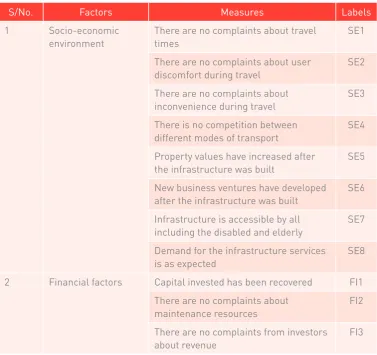
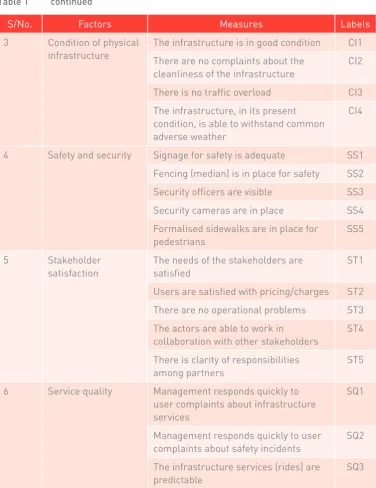
In summary, sustainability in the current study connotes the ability of a project to continue performing as was expected or projected over a long term, or throughout its life cycle (Bueno, Vassallo and Chueng, 2015). Therefore, twenty-eight variables, grouped into six factors, were observed to adequately measure sustainable performance of transportation infrastructure projects (Table 1), from literature review and a subsequent qualitative phase (which refined the framework). The variables included socio-economic environment (SE1 – SE8), financial factors (FI1 – FI3), condition of physical infrastructure (CI1 – CI4), safety and security (SS1 - SS5), stakeholder satisfaction (ST1 – ST5), and service quality (SQ1 – SQ3) as shown in Figure 1. These were theorised to adequately measure transport project sustainability as identified from the literature review and multi-case study qualitative inquiry and used for the quantitative investigation.
Table 1 Theorised transport infrastructure sustainability measures
S/No. Factors Measures Labels
1 Socio-economic
environment
There are no complaints about travel times
SE1
There are no complaints about user discomfort during travel
SE2
There are no complaints about inconvenience during travel
SE3
There is no competition between different modes of transport
SE4
Property values have increased after the infrastructure was built
SE5
New business ventures have developed after the infrastructure was built
SE6
Infrastructure is accessible by all including the disabled and elderly
SE7
Demand for the infrastructure services is as expected
SE8
2 Financial factors Capital invested has been recovered FI1
There are no complaints about maintenance resources
FI2
There are no complaints from investors about revenue
S/No. Factors Measures Labels 3 Condition of physical
infrastructure
The infrastructure is in good condition CI1 There are no complaints about the
cleanliness of the infrastructure
CI2
There is no traffic overload CI3
The infrastructure, in its present condition, is able to withstand common adverse weather
CI4
4 Safety and security Signage for safety is adequate SS1
Fencing (median) is in place for safety SS2
Security officers are visible SS3
Security cameras are in place SS4
Formalised sidewalks are in place for pedestrians
SS5
5 Stakeholder
satisfaction
The needs of the stakeholders are satisfied
ST1
Users are satisfied with pricing/charges ST2 There are no operational problems ST3 The actors are able to work in
collaboration with other stakeholders
ST4
There is clarity of responsibilities among partners
ST5
6 Service quality Management responds quickly to
user complaints about infrastructure services
SQ1
Management responds quickly to user complaints about safety incidents
SQ2
The infrastructure services (rides) are predictable
SQ3
Research method
RESEARCH DESIGN
The current paper is part of a wider study, which investigated the influence of feasibility studies on project sustainability. The broad study adopted a sequential exploratory approach, whereby the results from a qualitative multi-case study (in conjunction with the theoretical findings) phase informed and guided the data collection in the second quantitative phase, and developed theories were refined, to be subsequently tested using survey research in the quantitative phase (Darke, Shanks and Broadbent, 1998). However, only the results of the project sustainability
framework validation are presented here. The underlying structure of sustainability indicators found in Okoro, Musonda and Agumba (2019) is validated in the current paper.
Prior to data collection for the broader study, ethical clearance was obtained from the university authorities. Consent was also obtained from some of the participants’ superiors as and where required. Prior to the main research (qualitative and quantitative phases), a pilot study was undertaken to simplify and clarify some of the questions. Unstructured interviews as well as a draft questionnaire were pilot-tested. During the pilot study, it was discovered that a qualitative phase could precede the quantitative phase (in lieu of the concurrent approach initially proposed). It was therefore necessary to refine the questions and reduce the length of the questionnaire. A number of questions were subsequently rephrased considerably, and others deleted, prior to the qualitative research, and ensuing quantitative phase. The pilot study therefore improved test or content validity of the research tools. In addition, pilot-testing served to identify essential research approval processes in the government entities sampled, which were observed to differ from one to another.
DATA COLLECTION
The questionnaire was distributed by hand, as well as online via email and google forms, and contained questions which sought information regarding transportation infrastructure sustainability measures, on a five-point Likert scale, with responses ranging from 1=strongly disagree to 5=strongly agree. Empirical quantitative data were amassed from 132 respondents selected through purposive and snowball sampling techniques. This sample size was
considered to be adequate in producing reliable results in studies of this nature (structural equation modelling (SEM). Sample sizes as small as N = 50 can produce reliable SEM results with normally distributed data and at least three reliable indicators per factor (Hoyle and Gottfredson, 2015).
The respondents in the quantitative phase (reported in the current paper) comprised built environment professionals in the nine provinces of South Africa, who had been involved in transportation infrastructure projects, at the feasibility and/or operational stages. The respondents comprised 69% and 31% public and private entity professionals, respectively, consisting of directors, deputy directors and heads of departments that formed majority (25%) of the respondents. Others were project managers (15%), engineers (12%) and safety officers (10%). In addition, respondents included executive/deputy managers (8%), development managers/ agents (6%), feasibility study consultants (4%), quantity surveyors (4%), planners (4%), academics (3%), and technical assistants on projects (2%). These were involved in various transportation projects (road, bridge, rail, airport and tunnel), at different project stages. Therefore, effort was made to obtain responses from a variety of entities to increase generalisability and reliability of the results.
DATA ANALYSIS
cases is generally the rule, a ratio of 5 to 1 was considered sufficient (with 132 cases) in the current study (Kenny, 2015). The maximum likelihood method used in the analysis accommodated missing data (Carter, 2006). However, missing data was still treated in order to enable assessment of multivariate normality and the presence of outliers, which gravely affect parameter estimates and model fit (Gao, Mokhtarian and Johnston, 2008). Missing values were treated using mean imputation, which entailed computing the average response on a particular variable with missing data and imputing the value for the missing data, respectively.
Multivariate normality and outliers were assessed using univariate skewness and
multivariate kurtosis (Mardia’s coefficient), as well as Mahalanobis d-squared distance tests. An absolute skewness value of 1.0 or lower indicates a normally distributed data (Awang, 2012). Kurtosis values greater than 1.96 and large multivariate kurtosis (Mardia’s) coefficients indicate significant non-normality (Byrne, 2001). The outliers were thus identified and removed from further analysis, using Mahalanobis squared distance (D), which identified seven cases with the highest d-squared values (with p values less than 0.005) as outliers and were deleted. The definability of the model was assessed using the degrees of freedom, df, which should be positive (greater than 1) for a model to be considered analysed or defined (Byrne, 2001). The degrees of freedom, which is the difference between the known and unknown parameters (to be estimated) in a model should be positive. When the number of degrees of freedom is negative, the model is under-identified and cannot be estimated or defined (Weston and Gore, 2006).
The model-generating CFA was thereafter undertaken to determine the model of factors that best fit or represented the data underlying the theory. Absolute and comparative fit indices were used and the two-index presentation strategy as advocated by Hu and Bentler (1999) was adopted. Absolute fit indices show how well a hypothesised model reproduces or matches the sample data, while comparative, relative or incremental fit indices compare the fit of one model to the data to the fit of another model to the same data (Iacobucci, 2010). These included Comparative fit index (CFI) (close to 0.95 or 0.90), Relative chi-square (CMIN/df) (χ2 to df ≤ 2 or 3). Standardised root mean square residual (SRMR) (> 0.05 to 0.08; the lower the better), and Root mean square error of approximation (RMSEA) (Close to 0.06; 0.08 – reasonable fit; > 0.10 – poor fit) (Hu and Bentler, 1999; Schreiber et al., 2006).
Additionally, the standardised residual matrix (items with high correlations above 1.0), factor loadings or variance explained in the model ((squared multiple correlations below 0.5 were problematic items), and the modification indices (items that may be redundant in the model) were assessed. Problematic items were deleted iteratively, and the model was rerun, bearing in mind that item deletion may not exceed 20% of the total number of items and latent constructs should have at least two or three items. Further, statistical significance of the parameter estimates was established in order to make reliable conclusions on whether the measurement model is appropriate or needs to be revised further. This was done with reference to the squared multiple correlation and the factor loading values, which should be less than 1.0, and the critical ratio values, akin to Z statistic, which should be greater than 1.96 at the 0.05 significance level (Byrne, 2006).
VALIDITY AND RELIABILITY CONSIDERATIONS
EFA using the Cronbach’s alpha test and the results indicated good internal consistency with values ranging from 0.76 to 0.84 before EFA and 0.92 (N=14) after EFA. The construct reliability of the EFA model, which was the CFA input model, was good. The inter-construct correlations should not be more than 0.85 to achieve discriminant validity (Ahmad, Zulkurnian and Khairushalimi, 2016). The CFA model was assessed for uni-dimensionality, reliability and validity. Uni-dimentionality requires that all factor loadings should be positive and above 0.5 for newly developed items and 0.6 or higher for established items and this was attained through the item-deletion procedure for low loading items (Awang, 2012). The reliability and validity of the measurement models were assessed using model fit indices, composite reliability (CR) and average variance extracted (AVE) statistics as stated below (Awang, 2012). The CR measures the confidence level of latent variables in the CFA model considering the factor loadings an error-variance, and a value greater than 0.6 or 0.7 is needed to achieve composite reliability (Xue, Liu and Shu, 2018). An AVE > 0.5 is required for the respective constructs to achieve reliability (Awang, 2012).
where λ is the factor loading (standardised regression weights), and n is the number of items in the construct.
Further, convergent validity was achieved during CFA in this study with all the AVE values exceeding 0.50 (Awang, 2012). The model fit indices, which met the required levels, indicated that the model was reliable and achieved construct validity (Marsh et al., 2004). Discriminant validity was also achieved when all the redundant items in the model were either deleted or constrained as “free parameters”, discriminant validity was reached (Awang, 2012). The modification indices results indicated pairs of items, which were redundant or covarying highly with each other, having values greater than 15, resulting in poor model fit. In addition, when the square root of the AVE was greater than the inter-construct correlations, then discriminant validity was achieved (Ahmad, Zulkurnain and Khairushalimi, 2016). In other words, the inter-construct correlations were not high (not greater than 0.85) and thus the values were not measuring the same thing; discriminant validity was achieved (Musonda, 2012; Ahmad, Zulkurnain and Khairushalimi, 2016).
Results and analysis
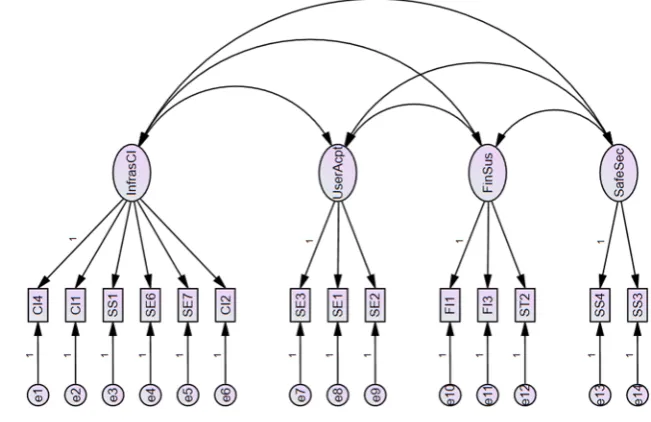
Figure 1 CFA input model (framework after EFA)
DIAGNOSTIC FIT ANALYSIS AND MODEL MODIFICATION
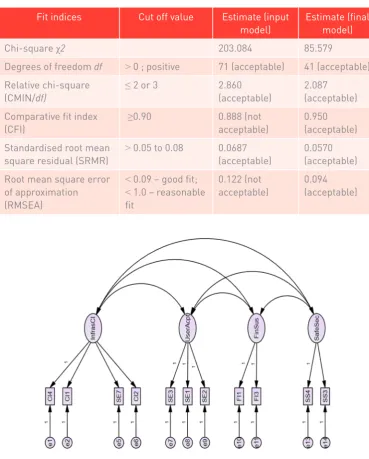
The evaluation of the input model showed that there were no high correlations (exceeding 0.80) between the latent constructs. This indicated that there was discriminant validity for the PS input model. However, the input model did not match the data as indicated by the CFI = 0.888 (cut-off value = 0.90) and RMSEA = 0.122 (cut-off value = 0.09) indices in Table 2. An examination of other output from the first run was therefore undertaken to determine if the model fit could be improved.
An examination of the standardised residuals covariance matrix revealed that there were no high residual covariances (above 2.58). However, SE6 and SS1 covaried with four and three other items in the model, respectively, with values more than 1.0 and they were deleted successively. The model fit indices (Table 2) showed the results after the deletion. It was notable that the model fit improved significantly after the third run with CMIN/df = 1.986, falling below the recommended 2.0, CFI = 0.949, close to 0.95 (cut-off value > 0.90), RMSEA = 0.089 (cut-off value = < 0.09), and SRMR = 0.0586 (cut-off value > 0.05 to 0.08). Based on the two-index presentation strategy advocated by Hu and Bentler (1999), the model after the third run was observed to be an excellent fit to the sample data.
Table 2 Model fit indices for input and final PS model
Fit indices Cut off value Estimate (input model)
Estimate (final model)
Chi-square χ2 203.084 85.579
Degrees of freedom df > 0 ; positive 71 (acceptable) 41 (acceptable) Relative chi-square
(CMIN/df)
≤ 2 or 3 2.860
(acceptable)
2.087 (acceptable) Comparative fit index
(CFI)
≥0.90 0.888 (not
acceptable)
0.950 (acceptable) Standardised root mean
square residual (SRMR) >
0.05 to 0.08 0.0687 (acceptable)
0.0570 (acceptable) Root mean square error
of approximation (RMSEA)
< 0.09 – good fit;
< 1.0 – reasonable fit
0.122 (not acceptable)
0.094 (acceptable)
Figure 2 Validated project sustainability model
STATISTICAL SIGNIFICANCE OF PARAMETER ESTIMATES
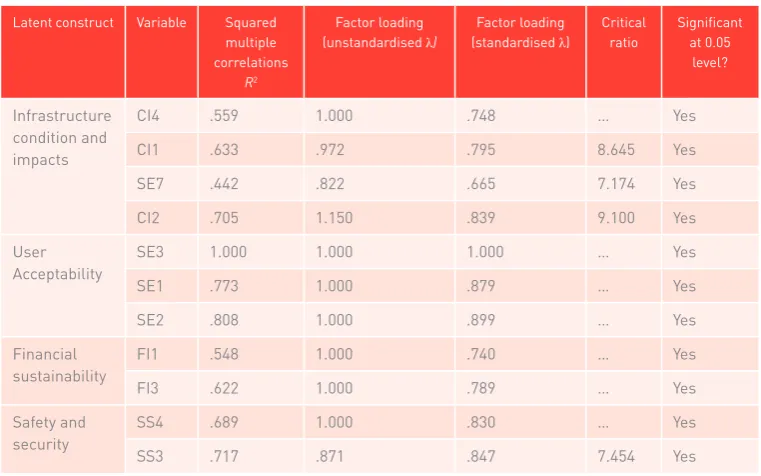
An examination of the factor loadings (regression weights), standard errors and critical ratio estimates was undertaken to determine if the model parameters were statistically significant (Byrne, 2006). The PS final measurement model parameters exhibited statistical significance with the squared multiple correlations values all less than or equal to 1.0 and therefore reasonable. The parameter estimates had high correlation values (above 0.4). The correlation values suggested a high degree of linear association between the indicator variables and their latent constructs, and therefore reasonable.
standard error, had to be greater than 1.96 at the 0.05 significance level for it to be said to be statistically different from zero and considered significant. Table 3, containing the parameter estimates, showed that the critical ratio values were all above 1.96 and therefore statistically significant.
Table 3 Parameter estimates of the selected PS measurement model
Latent construct Variable Squared
multiple correlations
R2
Factor loading (unstandardised λ)
Factor loading (standardised λ)
Critical ratio
Significant at 0.05
level?
Infrastructure condition and impacts
CI4 .559 1.000 .748 … Yes
CI1 .633 .972 .795 8.645 Yes
SE7 .442 .822 .665 7.174 Yes
CI2 .705 1.150 .839 9.100 Yes
User Acceptability
SE3 1.000 1.000 1.000 … Yes
SE1 .773 1.000 .879 … Yes
SE2 .808 1.000 .899 … Yes
Financial sustainability
FI1 .548 1.000 .740 … Yes
FI3 .622 1.000 .789 … Yes
Safety and security
SS4 .689 1.000 .830 … Yes
SS3 .717 .871 .847 7.454 Yes
… Values not determined due to unstandardised regression weight of 1.0
RELIABILITY AND VALIDITY OF THE PROJECT SUSTAINABILITY MODEL
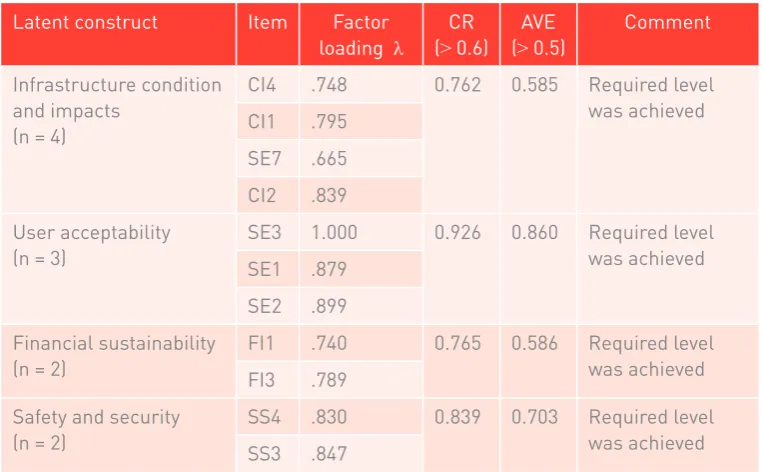
The inter-construct correlations between the constructs from the EFA (CFA input diagram) ranged from 0.46 to 0.78, and thus indicating discriminant validity of the four-factor structure. The reliability of the CFA model was evaluated using the CR and AVE tests. Table 4
indicated that the required levels were met as the CR and AVE values exceeded recommended thresholds of 0.6 and 0.5, respectively (Awang, 2012). Convergent validity was achieved by the AVE values all being above 0.5. Construct validity was achieved by the model being of good fit, with all the fit indices within the recommended cut-off ranges. Discriminant validity was also achieved by the modification indices being below 15 and the inter-construct correlations were lower than 0.85.
Table 4 Reliability results for selected PS measurement model
Latent construct Item Factor loading λ
CR (> 0.6)
AVE (> 0.5)
Comment
Infrastructure condition and impacts
(n = 4)
CI4 .748 0.762 0.585 Required level
was achieved CI1 .795
SE7 .665 CI2 .839 User acceptability
(n = 3)
SE3 1.000 0.926 0.860 Required level
was achieved SE1 .879
SE2 .899 Financial sustainability
(n = 2)
FI1 .740 0.765 0.586 Required level
was achieved FI3 .789
Safety and security (n = 2)
SS4 .830 0.839 0.703 Required level
was achieved SS3 .847
Table 5 Discriminant validity for PS measurement models
Construct Infrastructure condition and
impacts
User acceptability
Financial sustainability
Safety and security Infrastructure
condition and impacts
0.76
User
acceptability
0.57 0.93
Financial sustainability
0.73 0.44 0.77
Safety and security
0.63 0.46 0.46 0.84
Discussion
The validated CFA four-factor solution revealed that critical transportation infrastructure project sustainability measures include:
• condition and impacts - including ability to withstand common adverse weather, infrastructure is in good condition, accessibility to all including the disable and elderly, and no complaints about cleanliness;
• user acceptability - including no complaints about inconvenience during travel, no complaints about travel times, and no complaints about user discomfort during travel; • financial management factors - including capital invested has been recovered and no
• safety and security – including security cameras are in place and security officers are visible).
The above findings slightly align with Amiril et al. (2014) study which found that in addition to the traditional iron-triangle consideration of social, economic and environmental sustainability aspects, the quality and functionality as well as project financing are critical sustainability elements. The criticality of the wide-range of factors, which emerged from the analysis, has also been emphasised. The condition of transportation infrastructure with regard to its ability to withstand poor weather conditions or natural disasters and being in good condition (generally) were identified as important performance measures for road infrastructure in South Africa (Friedrich and Timol, 2011). These views were also shared by Jeon, Amekudzi and Guensler (2010) and Stapledon (2012) who emphasised the importance of technical and structural conditions and network capacity in sustainability assessments. Likewise, user acceptability was defined in line with the satisfaction of travel needs of the stakeholders including the end-users (Amiril et al., 2014; Yu et al, 2018). Safety and security were classified under social factors in Amiril et al. (2014) and Litman (2019).
The findings, which excluded institutional factors, are somewhat inconsistent with Karjalainena and Juhola’s (2019) views, which stressed the importance of effective and comprehensive management of transport systems through political will and good governance. Nonetheless, given the range of objectives, impacts and options considered in transportation developments, which invariably affect different people in many ways, a variety of factors need to be considered in order to ensure that decisions are consistent with strategic long-term goals of sustainable transportation development (Litman, 2019).
Conclusion
The study sought to validate the underlying structure of transportation infrastructure project sustainability framework established from a previous study by the author. The objective of the study has been achieved. Project sustainability was initially theorised to be measured by a six-factor structure comprising socio-economic factors, financial factors, condition of physical infrastructure, safety and security, stakeholder satisfaction and service quality, with twenty-eight items. However, the EFA indicated a four-factor solution including infrastructure condition and impacts, user acceptability, financial sustainability as well as safety and security, with fourteen items. Using a model generating approach to CFA, the primary focus was to validate a measurement model that best described the sample data, and as such, modifications were necessary based on the sources of misfit identified.
It is notable that environmental sustainability factors were not included explicitly in the study, albeit literature evidence as to their import. Sustainability in the current study was taken to be “the ability of a project to continue performing as was expected or projected over a long term, or throughout its life cycle. Therefore, the environmental sustainability aspect included was with respect to the impact on the condition of the infrastructure. Future studies could incorporate a wider scope to include environmental aspects to a greater extent. Additionally, the relative importance of the factors was not presented in the current study. Future studies could be dedicated to establishing the relative importance of the measures as well as the relations among the variables.
References
Ahmad, S., Zulkurnain, N.N.A. and Khairushalimi, F.I., 2016. Assessing the validity and reliability of a measurement model in structural equation modelling (SEM). British Journal of Mathematics and
Computer Science, 15(3), pp.1-8. https://doi.org/10.9734/bjmcs/2016/25183
Amiril, A., Nawawi, A.H., Takim, R. and Latif, S.N.F., 2014. Transportation infrastructure project sustainability factors and performance. Procedia - Social and Behavioral Sciences, 153(2014), pp.90-98.
https://doi.org/10.1016/j.sbspro.2014.10.044
Awang, Z., 2012. Validating the measurement model: CFA. Ch. 3 in A Handbook for SEM. https://
www.researchgate.net>download. [Accessed 9 December 2018]
Bhattacharya, A., Oppenheim, J. and Stern, N., 2016. Driving sustainable development through better infrastructure: Key elements of a transformation program. Global Economy and Development. [pdf] Washington, DC: The Brookings Institution. Available at: https://www.brookings.edu/wp-content/
uploads/2016/07/07-sustainable-development-infrastructure-v2.pdf [Accessed 19 June 2017].
Brouwer, F.M. and van Ittersum, M. eds, 2010. Environmental and Agricultural Modelling: Integrated approaches for policy impact assessment. Netherlands: Springer Science and Business Media.
Bueno, P.C., Vassallo, J.M. and Chueng, K., 2015. Sustainability assessment of transport infrastructure projects: A review of tools and methods. Transport Reviews, 35(5), pp.622-49. https://doi.org/10.1080/01 441647.2015.1041435
Byrne, B.M., 2001. Structural equation modelling with AMOS: Basic concepts, applications and programming. Mahwah, NJ, US: Lawrence Erlbaum Associates Publishers.
Byrne, B.M., 2006. Structural equation modeling with EQS: Basic concepts, applications and programming. 2nd ed. Mahwah, NJ, US: Lawrence Erlbaum Associates Publishers.
Carter, R.L., 2006. Solutions for missing data in structural equation modeling. Research and Practice in Assessment, 1(1), pp.1-6.
Chen, D. and Cruz, P., 2012. Performance of transport infrastructure. Journal of Performance of Constructed Facilities, 26(2), pp.136-37 10.1061/(ASCE)CF.1943-5509.0000326.
Climate Bonds, 2019. City of Cape Town Green Bond Framework 2017/05/29.[online] Available at:
https://www.climatebonds.net/certification/city-of-cape-town. [Accessed 20 October 2019].
Darke, P., Shanks, G. and Broadbent, M., 1998. Successfully completing case study research: Combining rigour, relevance and pragmatism. Information Systems Journal, 8(1998), pp.273-89. https://doi.
org/10.1046/j.1365-2575.1998.00040.x
Dhingra, C., 2011. Measuring public transport performance: Lessons for developing cities. Sustainable Urban Transport Technical Document #9. Available at: https://www.sutp.org>contents>resources. [Accessed 8 June 2016].
Friedrich, E. and Timol, S., 2011. Climate change and urban road transport: A South African case study of vulnerability due to sea level rise. Journal of the South African Institution of Civil Engineering, 53(2), pp.14-22.
Gamalath, I.M., Perera, H.L.K. and Bandara, J.M.S.J., 2014. Environmental impact assessment of transport infrastructure projects in Sri Lanka: Way forward. Journal of Tropical Forestry and Environment, 4(1), pp.85-96. https://doi.org/10.31357/jtfe.v4i1.1833
Gao, S., Mokhtarian, P. and Johnston, R., 2008. Non-normality of Data in Structural Equation Models.
Transportation Research Record, 2082(1), pp.116-24. https://doi.org/10.3141/2082-14
Hoyle, R.H. and Gottfredson, N.C., 2015. Sample Size Considerations in Prevention Research Applications of Multilevel Modeling and Structural Equation Modeling. Prevention Science, 16(7), pp.987-96. https://doi.org/10.1007/s11121-014-0489-8
Hu, L. and Bentler, P.M., 1999. Cut-off criteria for fit indexes in covariance structure analysis: Conventional criteria versus new alternatives. Structural Equation Modeling, 6(1), pp.1-55. https://doi. org/10.1080/10705519909540118
Iacobucci, D., 2010. Structural equations modelling: Fit indices, sample size and advanced topics. Journal
of Consumer Psychology, 20(1), pp.90-98. https://doi.org/10.1016/j.jcps.2009.09.003
Jeon, C.M., Amekudzi, A.A. and Guensler, R.L., 2010. Evaluating plan alternatives for transportation system sustainability: Atlanta Metropolitan Region. International Journal of Sustainable Transportation, 4(4), pp.227–47. https://doi.org/10.1080/15568310902940209
Kaare, K.K. and Koppel, O., 2012. Performance indicators to support evaluation of road investments. Discussions on Estonian Economic Policy: Theory and Practice of Economic Policy. Journal of Economic Literature, 20(2), pp.88-107.
Karjalainena, L.E. and Juhola, S., 2019. Framework for assessing public transportation sustainability in planning and policy-making. Sustainability, 11(4) 1-20. Doi: 10.3390/su11041028.
Karlaftis, M. and Kepaptsoglou, K., 2012. Performance measurement in the road sector: A cross-country review of experience. Discussion Paper No. 2012-10, Greece: International Transport Forum. [online] Available at: https://www.itf-oecd.org/sites/default/files/docs/dp201210.pdf [Accessed 28 June 2016]. Kenny, D.A., 2015. Measuring model fit. [online] Available at: http://www.davidakenny.net/cm/fit.htm. [Accessed 22 March 2019].
Kermanshachi, S. and Safapour, E., 2019. Gap analysis in cost estimation, risk analysis and contingency computation of transportation infrastructure projects: A guide to resource and policy-based strategy establishment. Practice and Periodical on Structural Design and Construction, 25(1). https://doi. org/10.1061/(ASCE)SC.1943-5576.0000460.
Litman, T. (2019). Well Measured: Developing Indicators for Sustainable and Livable Transport Planning 18 March 2019. Victoria transport Policy Institute. https://www.vtpi.org/wellmeas.pdf
Accessed 13 July 2019.
Lyons, G. and Davidson, C. (2016). Guidance for transport planning and policymaking in the face of an uncertain future. Transportation Research Part A: Policy and Practice, 88:104-16. https://doi. org/10.1016/j.tra.2016.03.012
Marsh, H.W., Hau, K. and Wen, Z., 2004. In search of golden rules: Comment on hypothesis-testing approaches to setting cut-off values for fit indices and dangers in overgeneralising Hu and Bentler’s (1999) findings. Structural Equation Modeling: A Multidisciplinary Journal, 11(3), pp.320-41. Montgomery, R. (2015). How can we promote sustainable infrastructure? https://www.weforum.org/
agenda/2015/11/how-can-we-promote-sustainable-infrastructure/ Accessed 13 July 2019
Montgomery, R., Schirmer, H. and Hirsch, A. (2015). Improving environmental sustainability in road projects. Environment and Natural Resources. Global Practice Discussion Paper 02. February 2015. Washington DC: World Bank http://documents.worldbank.org/curated/en/220111468272038921/
Improving-environmental-sustainability-in-road-projects Accessed 8 January 2018
Muskin, J. A. (2017). Sustainability in development projects: How do we do it and how do we want to? In: The Practice of International Development, Kielson, J. and Gubser, M. (eds.). Routledge
Musonda, I. (2012). Construction health and safety (H&S) performance improvements: A client-centred model. Unpublished Doctoral Thesis. University of Johannesburg, South Africa.
Nokelainen, P. (2007). Structural equation modeling with AMOS. Research Centre for Vocational Education. Accessed 29 November, 2018.
Okoro, C. S., Musonda, I. and Agumba, J. N. (2019). An exploratory factor analysis of transportation project sustainability indicators: A case of projects in South Africa. CIB WBC 2019, 17-21 June, Hong Kong, China.
Park, Y., Mount, J., Liu, L. and Xiao, N. (2019). Assessing public transit performance using real-time data: spatiotemporal patterns of bus operation delays in Columbus, Ohio, USA. International Journal of Geographical Information Science. 10.1080/13658816.2019.1608997
Pavlina, P. (2015). The Factors Influencing Satisfaction with Public City Transport: A Structural Equation Modelling Approach. Journal of Competitiveness, 7(4): 18 – 32. https://doi.org/10.7441/ joc.2015.04.02
Quium, A. S. M. A. (2014). The institutional environment for sustainable transport development. UNESCAP.https://www.unescap.org/sites/default/files/Article%204_Institutional%20environment%20
for%20sustainable%20transport%20development.pdf Assessed 20 March 2018
Ramani, T., Zietsman, J., Eisele, W., Rosa, D. Spillane, D. and Bochner, B. (2009). Developing sustainable transportation performance measures for Texas Department of Transportation’s Strategic Plan. Technical report. http://static.tti.tamu.edu/documents/0-5541-1.pdf. Accessed 7 June 2016
Rouhani, O. M. (2018). Financing Sustainability and Resiliency of Transportation Infrastructure in an Era of Fiscal Constraint. Munich Personal RePEc Archive, Paper No. 88504 https://pdfs.
semanticscholar.org/d358/86b683e0e283616bb68b358e73811a463c86.pdf Accessed 26 October 2019
Schreiber, J. B., Stage, F. K., King, J., Nora, A. and Barlow, E. A. (2006). Reporting structural equation modeling and confirmatory factor analysis: A review. Journal of Educational Research, 99(6):323-338.
https://doi.org/10.3200/joer.99.6.323-338
Stapledon, T. (2012). Why infrastructure sustainability is good for your business. Cooperative Research Centre (CRC) for Infrastructure and Engineering Asset management (CIEAM).https://www.wfeo.
org>wp-content>uploads. Accessed 07 January 2018
United Nations (2015). Financing Sustainable Transport. Position Paper. Position Paper. https://
sustainabledevelopment.un.org/content/documents/7618AdvisoryGroupTransport.pdf Accessed 29
March 2019.
Velazquez, L., Munguia, N., Will, M. and Zavala, A. (2015). Sustainable transportation strategies for decoupling road vehicle transport and carbon dioxide emissions. Management of Environmental quality an international journal, 26(3); 378-388. https://doi.org/10.1108/meq-07-2014-0120
Vilana, M. (2014). Department of Transport Presentation to the Gauteng e-toll review panel. Republic of South Africahttps://www.nra.co.za/content/DOT_Presentation_to_Gauteng_eToll_Review_Panel_
Final_Version.pdf Accessed 28 June 2016
Wai, S. H., Yusof, A. M. and Ismail, S. (2012). Exploring success criteria from the developer’s perspective. International Journal of Engineering Business Management, 4(33): 1-9. https://doi.org/10.5772/51096
Weston, R. and Gore, P. A. (2006). A Brief Guide to Structural Equation Modeling. The Counseling Psychologist, 34(5): 719-751. https://doi.org/10.1177/0011000006286345
Xue, B., Liu, B. and Shu, T. (2018). What matters in achieving infrastructure sustainability through project management practices: A preliminary study of critical factors. Sustainability, 10(12). Doi: 10.3390/su10124421
Xue, Y., Guan, H., Corey, J., Wei, H. and Yan, H. (2017). Quantifying a Financially Sustainable Strategy of Public Transport: Private Capital Investment Considering Passenger Value. Sustainability, 9(269): 1-20; doi:10.3390/su9020269
Yu, M., Zhu, F., Yang, X., Wang, L. and Sun, X. (2018). Integrating Sustainability into Construction Engineering Projects: Perspective of Sustainable Project Planning. Sustainability, 10(784): 1-17. doi:10.3390/su10030784