Page 164
THE CONDITIONS OF THE COMPETENCE DEVELOPMENT OF PROFESSIONALS IN THE PHYSICAL TRAINING AND SPORTS SPHERE
Olga Petrova1, Elena Orlova2, Svetlana Sokolovskaia2, Stanislav Sokolovskii2
1
Vice-Rector for Academic Affairs, Lobachevsky State University, Nizhni Novgorod, Russia
2
Faculty of Physical Education and Sports, Lobachevsky State University, Nizhni Novgorod, Russia
Abstract
This article examines the conditions for formation of competence of sports professional in modern conditions and in the near future, fully justified by the structure of psychological preparedness of professionals to professional activity effective professional work, which consists of five components: cognitive, motivational and target, operational, reflective and valued-semantic. As one of the most important factors influencing the formation of the complete psychological readiness of students, defined by psychological communication culture of educational institutions.
Some detail discusses the formation of psychological readiness of students for professional activity for each structural component that provides guidelines and recommendations developed by the implementation of the program.
Keywords: professionalism, psychological readiness for professional work, psychological culture of educational institution, preparation program
1.INTRODUCTION
Nowadays universities around the world compete with each other for funding research work, attracting leading scientists, talented students, creative teachers who have not only professional competencies, but also soft skills. Universities engaged in educational activities in the field of healthy lifestyles, coaching and sports activities are no exception [6].
The system of higher education is experiencing fundamental changes influenced by three factors: formation of the Knowledge society, information and communication revolution and globalization of all the processes that occur in society [9]. This gives rise to a global transformation in universities, predetermining the development of Third Generation universities. The described trends are expressed in the following: 1. Leading universities are looking for opportunities to cooperate with high-tech companies. 2. Universities of the ‘third generation’ are becoming the core of the concentration of international advanced experience, including technological and entrepreneurial, i.e. a place which students, teachers, and corporations are keen to visit. 3. The form of organization of science is changing: from monodisciplinarity to interdisciplinarity.
If you look beyond the horizon of higher education, it is obvious that the professions that will emerge in the coming years in the high-tech sectors of the Russian industry will require new competencies that are at the junction of several fields. Multidisciplinarity will be one of the competitive advantages of the future specialist [8]. In industry, agriculture, physical culture and sports there will be a need for specialists with interrelated competences that allow them to design and adapt new products, conduct marketing and organize the processes of their creation.
Page 165
such professions as a fitness trainer, sports trainer, physical culture instructor, and valeologist will still be in demand. But besides the universal (general cultural), general professional and professional competencies (hard skill), these specialists will also have to possess metaprofessional skills (soft skills) [6]. Such as multilingualism and multiculturalism; interdisciplinary communication skills; customer-oriented approach, ability to work with customer needs; ability to manage projects and processes; work in high uncertainty mode and quick change of task conditions; creativity; programming of IT solutions (work with artificial intelligence); ability to work with teams, groups and individuals; system thinking [4].
Thus, a professional of physical culture and sports in the current contexts should have a number of competencies implemented directly in his professional activities (coaching, teaching, methodical, organizational and managerial) - hard skill, as well as future-oriented competencies and skills, based on society development trends and globalization of economic and social development processes (soft skills). In view of this, competence of a professional is determined by the level of professional readiness either for effective performance at the level of skills that are demanded today, or for effective performance in the near future.
Along with the distinction of levels of professional readiness there are also distinguished levels of psychological readiness of an individual for professional activity (F. Genov, M.A. Dyachenko and L.A. Kandybovich, L.A. Emelyanova, Y.M. Zabrodin, L.N. Zakharova, E.A. Klimov, A.A. Krylov, V.N. Loskutov, P.A. Rudik, and others).
The authors determine psychological readiness as a mental state, the result of individual psychological support of professional activity development. A complete psychological readiness that meets the level of professionalism has a five-component structure that combines a cognitive, motivational, objective, operational, reflexive, and value-semantic component [3].
As a result of theorizing, the optimization of all components of students' psychological readiness and its compliance with the requirements of professionalism of the future have become the goal of developing a program for the psychological training of physical culture and sports professionals.
The main objectives of the program of psychological preparation of students correspond to the structure of psychological training and constitute the content of the following program blocks:
- cognitive: mastering the system of professional knowledge and ideas on a wide range of general pedagogical, psychological, managerial and other issues, as well as special knowledge related to the specifics of the physical culture and sports sphere, world trends in the development of related areas, including IT-technologies;
- motivational: creating motivational readiness for professional activity; the formation of an active life position to mastering the skills that are in demand now and the skills of the future, the desire to achieve success as a value of professional activity; ensuring the conditions of personal self-determination of the student, awareness of his individuality and self-actualization;
- operational: the development of professional skills to analyze and interpret specific working situations, to design their activities and team activities in accordance with the goal, available resources, customer-oriented approach in a stable and rapidly changing environment; the formation of the ability to set professional tasks and creatively solve them using, among other things, skills in programming and IT solutions; development of necessary communicative (including multicultural) and organizing skills;
- reflective: optimization of professional reflection, gradual mastering not only procedural, but objective and personal types of reflection, optimization of self-esteem and confidence in success; development of self-regulation of students' professional and personal growth and self-control of personal development;
Page 166
A similar structure and directions are implemented in the program of optimization of the psychological culture of communication in the work with the faculty teaching staff. It is clear that ensuring the full psychological readiness of students, which would respond to the attributes of a professional of the future, is impossible without the teaching staff adopting a basic concept underlying the training.
Our program is based on a reflexive-action approach, which assumes a high degree of activity in mastering professional activity, awareness, and reflexive thinking of future specialists in the physical culture and sports sphere. The forms of work corresponding to the content are implemented in each of the named blocks of the program (lectures, seminars, group trainings, discussions, business games, solving and analyzing situations, developing projects, etc.).
The developed program of psychological training is a conceptual and technological result of a theoretical and experimental study of the process of professionalization of students of physical culture and sports faculty.
2. MATERIALS AND METHODS
The study was conducted on the basis of Physical Education and Sports Department in Lobachevsky State University of Nizhni Novgorod. 80 students of Physical Education and Sports Department took part in it. Input diagnostics was carried out at the beginning of the school year (September 2018), the final diagnostic - at the end (May 2019).
To achieve this goal, the following methods and techniques were used:
1. Diagnostic method - testing to determine the motivation of professional training of Physical Culture and Sports Department students (V. G. Katashev);
2. Method of a formative experiment. In the course of the formative experiment, there was used a specially developed program, which helps to form the psychological readiness of graduates for professional activities aimed at developing both hard skills and soft skills.
3. Mathematical methods of statistics - for processing the data of the changes.
A technique of V. G. Katashev was used in order to diagnose students' motivational readiness for professional training [2]. This technique is aimed at determining the level of motivation for learning in the university (high, medium, low levels).
The point of the technique is to conduct a survey, results of which form an evaluation scale is formed with a set of points. The questionnaire consists of 6 questions and 44 statements. The Likert scale is also used. It is a method of aggregate assessments, according to which respondents are asked to correlate the degree of their agreement or disagreement with this statement, it is estimated from 1 (surely no) to 5 (definitely yes) points.
Results are analyzed on four levels (four lines). Each line has 11 questions, so the smallest amount of points can be 11, the highest - 55.
Each level corresponds to its level of motivation. The line, on which the maximum number of points will be collected, will indicate the level of motivation for studying at the university. With the same number of points on several lines, priority is given to a nominally higher level of motivation.
The author of the technique also notes that since the first level is classified as uncharacteristic for students, only the second, third and fourth levels are interpreted (2, 3, 4 line - low, medium and high levels).
Page 167
CONTENTS OF THE PROGRAM OF STUDENTS' PSYCHOLOGICAL TRAINING
COGNITIVE PREPARATION
In this unit of the program of psychological training work is aimed at expanding the indicative basis of the professional activity of future sports and fitness specialists through the building of understanding of the areas of work of a physical training and sports professional, taking into account world trends, requirements of professions today and in the near future, goals and results of a professional. The adequate development of professional motivation, the optimal building of a conceptual model of activity and the mastery of the operational side of activity depend on the solution of the tasks from this stage of psychological training.
The content of this unit’s classes is determined by the results of diagnostics of the level of cognitive readiness, which revealed its insufficient level among students. The content of classes includes such topics as ‘The concept and approaches to professional activity in the physical culture and sports field’, ‘The specifics of the work of a physical education teacher and sports coach in terms of professional standards’, ‘Types of activities and careers in the physical culture and sports field in the present and the future’, ‘Criteria for the success of the activity of a professional in the physical culture and sports sphere’,’What does it mean to be a professional?’, ‘Major trends defining the image of the workplace in the 21-st century’, ‘Changes in various fields of economy, IT-technologies, physical training and sports services’, ‘Skills of the XXI century’, ‘The profession of the future of physical training and sports sphere’ and other topics.
The main forms of activities of this stage of psychological training: lectures with the use of such techniques as brainstorming, independent search for definitions and content of concepts, schematization of concepts, questions for the audience; seminars with preliminary independent work of students on the study of literature and on the use of dialogical communication on given topics. It is important for students to familiarize themselves with the peculiarities of the state of the modern market for physical culture and sports services, current sports and recreational areas, market needs at the current stage, the results of the research ‘Atlas of new professions’, economic trends in the country and in the world, the latest developments in the IT sphere, pharmacology, sports psychology and medicine and other related fields of knowledge. To present this information, it is necessary to use the results of published marketing research, the results of scientific research, as well as the interaction of specialists from various fields of knowledge. As one of the final tasks of the block, students compile a psychological portrait of a successful and effective modern specialist and professional of the future in the form of a description of his main functions, as well as the necessary competencies and professionally important personal qualities.
MOTIVATIONAL AND TARGET TRAINING
Work on this block is one of the central ones and it is aimed at ensuring the formation of a motivational and targeted component of the students' psychological readiness. Practical tasks used at this stage are focused on students' awareness of the need for self-actualization (actualization of their capabilities, realization of their potential abilities) as the predominant motive of professional activity, the formation of an individual profile of self-improvement, the definition of goals for the development of their professional activities, definition and understanding of the meaning of future professional activities and their own professional identity.
The main topics of seminars in this block
• Personality, personality potential and motivation. Professional personality types. Acquaintance with the classification of personality types of E. Spranger, J. Holland, E. Fromm, G. Selye, C. Jung. Analysis of examples of different types, analysis of self. Exercise to assess yourself according to E. Spranger's classification. Testing by J. Holland and analysis of the results.
Page 168
• Self-actualizing personality. Thematic block of conversations and mini-lectures on the theories of A. Maslow, C. Rogers, V. Frankl. The study of issues of the psychology of success, theories of motivation to achieve success.To actualize the personal motivation of students there are used practical exercises such as ‘I have the right’, ‘Deficient and existential personality’, ‘Real and ideal goals’, ‘Obstacles to personal growth’, ‘Goals’ (according to W. James), the task ‘Building Goals’, practical classes according to the program of N. B. Enkelmann on the topics: ‘How to achieve success’, ‘Success, prosperity and dedication of oneself’, ‘Motivation and strategic planning’, ‘Self-management’. In this block of the program and in future ones, trainings and the method of project training are actively used.
OPERATIONAL TRAINING
The purpose of work in this block of the program was the development of the operational component of the psychological readiness of students. The main form of work is practical training on theoretical and practical modeling, solution and analysis of professionally significant situations of specialist's and professional's activity in the field of physical culture and sports. For practical work in this direction there was used a catalog of professionally significant situations selected and developed by us for these purposes. It should be noted that the study of situations, their analysis, activity design, skills training were carried out simultaneously for the purposes of motivational and reflexive training of students.
This also included work on such exercises as ‘Habits development’, ‘Decision making in uncertain situations’, ‘Client-oriented approach and consideration of client needs’, as well as the participation of students in role-playing training games ‘Confident behavior rehearsal’. A special role in shaping the operational readiness for professional activity is played by the development of the project. Students are divided into teams depending on their personal characteristics and leadership qualities, develop the idea of the project and decide how to implement it. An important criterion of the developed idea is its novelty, competitiveness and relevance in modern society. In the process of working on the project, many practical skills of a professional in the physical training and sports field (hard skills) and metaprofessional competencies (soft skills) are developed.
The results of projects are presented to the attestation commission, which often includes representatives of business, municipal physical education and sports organizations, authorities, high-tech companies. The implementation of projects developed by students often takes place on the platforms of these organizations and with their direct participation. The results of project implementation are presented at international student competitions, exhibitions, forums and conferences.
VALUE-SEMANTIC TRAINING
One of the main tasks of this unit, in addition to familiarizing with information materials about the place of the moral and spiritual component in the structure of professionalism, was modeling, analyzing, solving and analyzing professionally significant conflict situations, working out the ability to work with teams, groups and individuals of various nationalities and cultures. In each situation, the adoption of a decision is connected with the moral, value, choice, with the definition of student's life position.
An important task of this unit is building moral concepts with the use of the definitions of key universal moral concepts from the works of the classics of psychological science, journalism and fiction.
The work was carried out with the following set of moral concepts: human values, duty, mercy, loyalty, abstinence, compassion, modesty, respect, prudence, hard work, honor, conscience, justice, honesty, patriotism, culture (including physical), healthy lifestyle , good, evil, virtue, dignity, faith, hope, love.
Page 169
REFLECTIVE TRAINING
Work in this unit is aimed at building the reflexive component of the psychological readiness of students. The content of the block includes building analytical and design skills of students, the development of reflective thinking, the skills of practical use of psychological knowledge in the course of theoretical and practical modeling of professional activity, as well as a lesson on the topic "Creativity as one of the most important characteristics of professionalism." Work on this block contains elaboration of various solutions to problem situations typical for the activities of physical culture and sports organizations, their consequences for different categories of participants, consideration of the concepts of "reflection", "reflexive thinking", "creativity", "creative process", working out skills to use reflective thinking, as well as the stages of the creative process to solve practical situations.
The main form of work - practical exercises with using practical and theoretical modeling of professional activity and analysis of situations.
The content of the reflexive component of psychological preparation is defined as the search for psychological means of reorienting a student from an external type of regulation of activity to an internal one. Therefore, reflexive psychological training is carried out in practically all blocks of the described program. As a final assignment of this unit, students were asked to create a reflective psychological self-portrait. The method of self-description (psychological self-portrait) was used both as a diagnostic tool, as a material for self-observation, and as a self-report on the participation in the psychological training program. As a plan for self-description there were proposed ideological and value-semantic positions-questions that were set on the program’s classes. The self-portrait developed by the students was subjected to reflexive analysis according to the following criteria:
1. Subjectivity (degree of expression in subject’s self-representation of knowledge of his personal characteristics as opposed to objectivity, reflecting the idea of himself as an actor).
2. Latitude (diversity of sides of the personality, which are reflected in the self-presentation of the subject).
3. Depth (the presence or absence of reflections on himself from the perspective of personal reflection in the self-representation of the subject).
4. Modality (as a negative or positive assessment of the subject himself, his significance).
5. Realism (the presence or absence in the self-interpretation of the subject of inadequate information and self-assessments).
6. Integrity and consistency (the presence or absence in the self-interpretation of the subject of conflicting opinions and assessments of himself).
7. Activity of a personal position (degree of manifestation of activity, independence, self-reliance, willingness to cooperate and transfer his position to a wide range of situations).
8. Orientation (prevailing value orientations underlying the description: instrumental (tools) or terminal (goals).
9. Spirituality (the degree of realization in the self-presentation of the spiritual and moral view on one’s own personality).
Self-description analysis was used to refine the test diagnostics data at the final stage of the study.
3. RESULTS
Page 170
Fig. 1. Results of input diagnostics (September 2018)
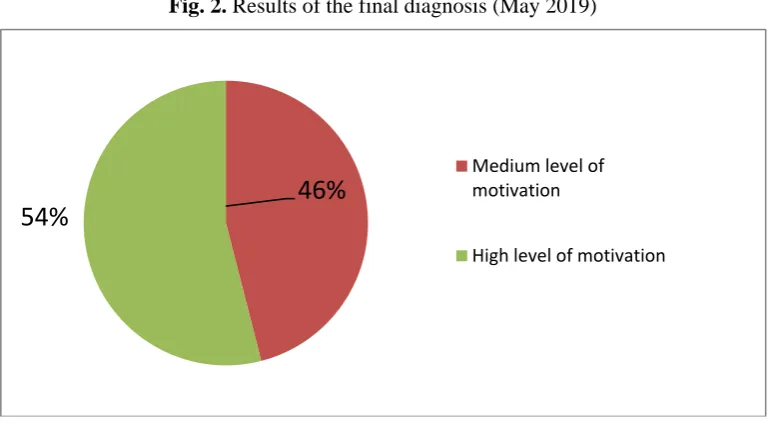
Fig. 2. Results of the final diagnosis (May 2019)
Pictures show that after the program, the level of the motivational component of psychological readiness has significantly increased. The low level of motivation disappeared completely. The medium level decreased, the number of students with high level of motivation has increased dramatically.
4. DISCUSSION
Increasing the level of motivation of students for professional training is the basis for developing professional competence, including various professional and metaprofessional skills. The effectiveness of the developed program of psychological readiness is inextricably linked with having a full course of bachelor study. Evaluation of the effectiveness of all the methods used in the developed program is possible only at the end of training. The indicators of complete development of all types of skills determine the competitiveness and need in graduates on the labor market.
In addition, the organization of training for the developed program should be guided by the following principles:
15%
70%
15%
Low level of motivation
Medium level of motivation
High level of motivation
46%
54%
Medium level of motivation
Page 171
1. The use of this program of psychological training is expedient and most effective along with studying and targeted optimization of the organizational, cultural and socio-psychological conditions of professional training that were formed in an educational institution. This naturally implies the second position.
2. The program of special psychological training of students should be coupled with purposeful work with the teaching staff of optimization of the psychological culture of communication, its gradual dialogization, interdisciplinarity, strengthening of creative, business and moral orientations.
3. In order to carry out psychological training of graduates for work in the conditions of a creative, personality-oriented dialogical culture of communication, the goal of the educational activity of the faculty and the real goals of the students should be aligned with each other.
4. A prerequisite is to bring the individual goals of students, which, as is well known, depend on the motivation to study and are very different, into conformity and structure. Therefore, it is necessary to identify and correlate: a) the goal of psychological training from the standpoint of education (educational and professional), b) the goal of psychological training from the standpoint of future professional activity (professional), c) the goal of psychological training from the standpoint of personality (life). If the first two types of goals are the so-called deficient goals (according to A.Maslow), then the third type is an existing goal that can be accepted by students regardless of the characteristics of individual motivation or any pragmatic considerations. Creating an approximate basis for the future professional activity of graduates, that meets the requirements of the profession, and forming the necessary level of competence can also be educational and professional goals. The main personal, life, existential goal of psychological training is the transition of students from an object a position in the motivation of professional activity and in decision making to a subjectival, personal position, the development of an active attitude to life, self-actualization motivation, self-development in professional activity, finding and realizing the meaning of their own professional personality. This understanding of the goal corresponds to the level of professionalism.
5. Psychological training of graduates is based with due account for the actual motivation of students. The student is a future specialist and professional - an adult, personally developed person with a plenty of internal conditions, mediating any external intervention, even if very qualified, capable of making free choice. Without taking into account the characteristics of his values, personal development and identity, any training system will not be effective. Assessing the motivation of self-actualization as the motivation of a professional, it is necessary to emphasize the high requirements for awareness of the activity in this case. The objective position of a professional requires taking deliberate responsibility for others, a constructive, developing movement. The reflexivity of the position determines the behavior of a person in any situation, and the degree of his dependence on this situation or freedom from it. The professional is characterized, above all, by creative freedom in work (L.N. Zakharova, V.A. Ponomarenko, V.V. Ryzhov). This necessitates the analysis and finding not only the sources of actualization of the need for self-realization, but also the development of approaches to combining this need with the reflexivity of the position, internal self-regulation, which lead to personal self-development. Along with reflexivity, feedback is of particular importance in the process of program implementation.
6. Since the implementation of the program is of a substantive nature, and psychology experts solve only a certain part of the tasks of professionalization, it is advisable to carry out psychological training in conjunction with specialists in professionally oriented disciplines, as the result depends on the productive interaction of teachers from a wide range of academic disciplines.
7. Activity approach requires the study of psychological phenomena in the context of the activity and activity of the subject. Therefore, when using the program, students are required to be active in each study assignment and in each block of the program.
Page 172
9. Nonjudgmentalism in the process of work towards the personal qualities of each other is an indispensable condition for working in the program. Assessments are required in the choice of actions, decision-making methods (especially towards themselves). Nonjudgmentalism of personal qualities, especially in the period of work on the concept of self-actualization, allows students to participate in the presentation of their understanding and the general discussion of the various manifestations of the stated thesis openly.
5. CONCLUSIONS
As a result of the study, there were developed new ideas about the conditions for the building of the competence of a professional in the physical training and sports sector now and in the near future as well as ideas about his readiness for effective professional activity. This approach is very promising.
REFERENCES
1. Atlas of new professions. http://atlas100.ru/ (appeal date 07/21/2019)
2. Katashev, V. (2002) Research of motivation of professional training. Development of model of system of education in higher educational institution (on experience of the Kazan state University): the report on research work. http://old.kpfu.ru/infres/nikolaev/2002/gl2_2_1.htm (appeal date 07/21/2019).
3. Kuzmina, S.V. (2011) Psychological culture of communication as a factor of professional training, 202 p.
4. Loshkareva, E., Luksha, P., Ninenko, I., Smagin, I., Sudakov, D. (2017) Future skills: what you need to know and be able to do in the new complex world. https://worldskills.ru/assets/docs/media/WSdoklad_12_okt_rus.pdf (appeal date 06/21/2019)
5. Luksha, P. (2016) Linking the educational system, labor markets and innovative economy: the results of the foresight Competence - 2030. http://profitcon.ru/matetials/28032013/Peskov-DN-Obrazovatelnaia-sistema-rynki-truda-i-innovatcionnaia-ekonomika-forsait Kompetentcii-2030.pdf (appeal date 06/21/2019)
6. Orlova, E.A. (2019) Educational programs in the field of physical culture and sports: contradictions and directions of development. Theory and practice of physical culture. Vol. 4/
7. Peskov, D. (2017) Foresight Education – 2030. http://leader-id.ru/event/223/ (appeal date 03/18/2019)
8. The road to academic excellence: Formation of research universities. 2012, 300 p.