S T U D Y P R O T O C O L
Open Access
A multi-level system quality improvement
intervention to reduce racial disparities in
hypertension care and control: study protocol
Lisa A Cooper
1*, Jill A Marsteller
2, Gary J Noronha
3, Sarah J Flynn
1, Kathryn A Carson
4, Romsai T Boonyasai
1,
Cheryl A Anderson
5, Hanan J Aboumatar
1, Debra L Roter
6, Katherine B Dietz
1, Edgar R Miller III
1,
Gregory P Prokopowicz
1, Arlene T Dalcin
1, Jeanne B Charleston
1, Michelle Simmons
7and Mary Margaret Huizinga
8Abstract
Background:Racial disparities in blood pressure control have been well documented in the United States. Research suggests that many factors contribute to this disparity, including barriers to care at patient, clinician, healthcare system, and community levels. To date, few interventions aimed at reducing hypertension disparities have addressed factors at all of these levels. This paper describes the design of Project ReD CHiP (Reducing Disparities and Controlling Hypertension in Primary Care), a multi-level system quality improvement project. By intervening on multiple levels, this project aims to reduce disparities in blood pressure control and improve guideline concordant hypertension care.
Methods:Using a pragmatic trial design, we are implementing three complementary multi-level interventions designed to improve blood pressure measurement, provide patient care management services and offer expanded provider education resources in six primary care clinics in Baltimore, Maryland. We are staggering the introduction of the interventions and will use Statistical Process Control (SPC) charting to determine if there are changes in outcomes at each clinic after implementation of each intervention. The main hypothesis is that each intervention will have an additive effect on improvements in guideline concordant care and reductions in hypertension disparities, but the combination of all three interventions will result in the greatest impact, followed by blood pressure measurement with care management support, blood pressure measurement with provider education, and blood pressure measurement only. This study also examines how organizational functioning and cultural
competence affect the success of the interventions.
Discussion:As a quality improvement project, Project ReD CHiP employs a novel study design that specifically targets multi-level factors known to contribute to hypertension disparities. To facilitate its implementation and improve its sustainability, we have incorporated stakeholder input and tailored components of the interventions to meet the specific needs of the involved clinics and communities. Results from this study will provide knowledge about how integrated multi-level interventions can improve hypertension care and reduce disparities.
Trial Registration:ClinicalTrials.gov NCT01566864
Keywords:Quality improvement, Hypertension, Health disparities, Pragmatic trial, Organizational culture, Community-based participatory research, Study design
* Correspondence:[email protected] 1
Department of Medicine, Johns Hopkins University School of Medicine, 2024 East Monument Street, Suite 2-515, Baltimore, Maryland 21287, USA Full list of author information is available at the end of the article
Implementation Science
© 2013 Cooper et al.; licensee BioMed Central Ltd. This is an Open Access article distributed under the terms of the Creative Commons Attribution License (http://creativecommons.org/licenses/by/2.0), which permits unrestricted use, distribution, and reproduction in any medium, provided the original work is properly cited.
Introduction
Critical health disparities exist between African Americans and their white counterparts in the United States. Car-diovascular disease accounts for more than one-third of the differences in life expectancy between African Americans and whites [1]. This disparity is largely attributed to hypertension and poor blood pressure control [1,2]. In population-based surveys, African Americans compared to non-Hispanic whites are more likely to have hypertension, are treated less often, and have lower rates of blood pressure control when treated [3,4].
The pursuit of remedies for these disparities between African Americans and whites has uncovered multi-factorial sources of the problem, including barriers to access, adherence and guideline compliance at the patient, provider, healthcare system, and community levels. The fundamental questions of which factors to address and how to address them are difficult to an-swer. Although interventions to date may address one or another source of disparities [5-7], few if any have intervened on multiple actors in the system: patients, clinicians, healthcare organizations and communities. Further, even successful interventions to reduce dispar-ities may not be sustained past the end of the research funding. Interventions may ultimately fail when: the intervention was not adapted well to the organization where it was implemented; clinicians did not endorse the intervention; patients and their families were not actively engaged; or the communities where patients live posed so many challenges that patients could not maintain adherence to the intervention over time. In-terventions are more likely to be sustained if they can answer such questions as: Do the patients, families, and clinicians understand the intervention? Is it relevant to what they care about? Does it address the adherence barriers they face? Does the intervention fit the local organization where it is being implemented?
The impracticality of standardizing every aspect of healthcare delivery makes the classic randomized con-trolled trial challenging to conduct in real world set-tings. Thus, we applied a pragmatic trial design to test whether racial disparities in blood pressure can be improved in six community practices in Baltimore, Maryland. Using this pragmatic approach with con-cepts from Community-Based Participatory Research [8], we seek to show effectiveness in uncontrolled, routine clinical care [9]. This project realizes the im-portance of adapting the intervention to specific char-acteristics of the clinic sites, taking into account clinician attitudes about the intervention, directly ad-dressing patient adherence barriers, and engaging the community to make the intervention more sustainable when the research study is over.
Methods
Study design and specific aims Specific aims
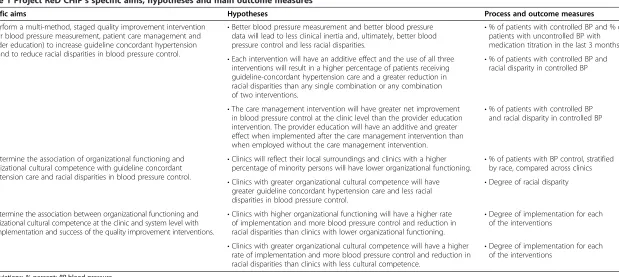
This ongoing study has three specific aims, which are reflected in Table 1 with associated hypotheses and pri-mary outcome measures. First, we are implementing a multi-level system quality improvement intervention to reduce racial disparities in blood pressure control via three multi-level interventions designed to standardize the measurement of blood pressure, provide patient care management services, and offer expanded provider edu-cation resources.
Second, we aim to determine the association of orga-nizational functioning and cultural competence at the clinic level (as perceived by providers and staff ) with im-provements in guideline concordant hypertension care and reductions in racial disparities in hypertension. Third, we seek to examine the relationship of organi-zational functioning and cultural competence with im-plementation success and effectiveness of each of the interventions. During the course of this project we will also examine the relationship of the interventions with improvements in patient level factors such as knowledge, attitudes, experience, activation levels, and medication adherence.
While we expect that each intervention will increase guideline-concordant hypertension care, we hypothesize that the combination of all three interventions will result in the greatest improvement in hypertension care and the largest reduction in racial disparities in blood pres-sure control. We further hypothesize that organizational functioning and cultural competence will be associated with guideline-concordant care and smaller racial dispar-ities at baseline, and that higher scores on these orga-nizational characteristics will be associated with more effective interventions, improvements in patient out-comes, and reductions in disparities over time.
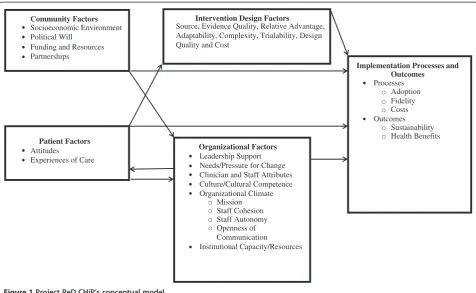
Project ReD CHiP (Reducing Disparities and Control-ling Hypertension in Primary Care) is one of three re-search projects in the Johns Hopkins Center to Eliminate Cardiovascular Health Disparities, which is one of 10 NIH-funded Centers for Population Health and Health Disparities (CPHHD) [10]. The conceptual model we used to design Project ReD CHiP recognizes that its implemen-tation and outcomes are influenced not only by the three interventions but also by patient, provider, organizational and community factors (Figure 1). This model is adapted from the works of Shediac-Ritzkallah and Bone [11], Simpson [12], and Damschroderet al.[13]. In addition to using a multi-method approach to address these factors, a Community and Provider Advisory Board formed of local stakeholders including political leaders, healthcare pro-viders, patients, faith community representatives, and individuals from various community organizations has
Cooperet al. Implementation Science2013,8:60 Page 2 of 15
Table 1 Project ReD CHiP’s specific aims, hypotheses and main outcome measures
Specific aims Hypotheses Process and outcome measures
To perform a multi-method, staged quality improvement intervention (better blood pressure measurement, patient care management and provider education) to increase guideline concordant hypertension care and to reduce racial disparities in blood pressure control.
•Better blood pressure measurement and better blood pressure data will lead to less clinical inertia and, ultimately, better blood pressure control and less racial disparities.
•% of patients with controlled BP and % of patients with uncontrolled BP with medication titration in the last 3 months •Each intervention will have an additive effect and the use of all three
interventions will result in a higher percentage of patients receiving guideline-concordant hypertension care and a greater reduction in racial disparities than any single combination or any combination of two interventions.
•% of patients with controlled BP and racial disparity in controlled BP
•The care management intervention will have greater net improvement in blood pressure control at the clinic level than the provider education intervention. The provider education will have an additive and greater effect when implemented after the care management intervention than when employed without the care management intervention.
•% of patients with controlled BP and racial disparity in controlled BP
To determine the association of organizational functioning and organizational cultural competence with guideline concordant hypertension care and racial disparities in blood pressure control.
•Clinics will reflect their local surroundings and clinics with a higher
percentage of minority persons will have lower organizational functioning. •
% of patients with BP control, stratified by race, compared across clinics
•Clinics with greater organizational cultural competence will have greater guideline concordant hypertension care and less racial disparities in blood pressure control.
•Degree of racial disparity
To determine the association between organizational functioning and organizational cultural competence at the clinic and system level with the implementation and success of the quality improvement interventions.
•Clinics with higher organizational functioning will have a higher rate of implementation and more blood pressure control and reduction in racial disparities than clinics with lower organizational functioning.
•Degree of implementation for each of the interventions
•Clinics with greater organizational cultural competence will have a higher rate of implementation and more blood pressure control and reduction in racial disparities than clinics with less cultural competence.
•Degree of implementation for each of the interventions
Abbreviations:%percent;BPblood pressure.
Cooper
et
al.
Implementa
tion
Science
2013,
8
:60
Page
3
o
f
1
5
http://ww
w.implemen
tationscien
ce.com/cont
provided guidance throughout the project. Project ReD CHiP was approved by the Johns Hopkins Institutional Review Board, protocol number 00037622.
Study populations and settings
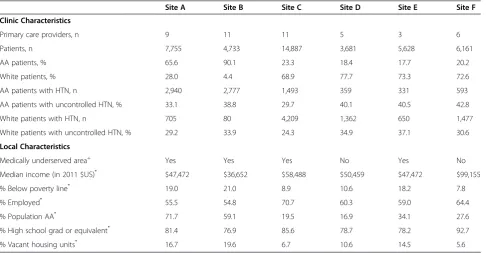
We are implementing Project ReD CHiP from 2010 to 2015 in six Johns Hopkins Community Physician (JHCP) primary care practices in the Baltimore, Maryland metropolitan region (Table 2). JHCP is a network of over 35 primary care and specialty practices serving the state of Maryland and greater Washington, D.C. region. JHCP has a tradition of innovation in health services delivery and has more than 1,000 employees and 370 physicians pro-viding care for more than 230,000 patients annually. The clinic sites involved in Project ReD CHiP are located in both Baltimore City and Baltimore County and four of the practices are located in medically underserved areas. The six sites were chosen because they are community-based and serve patients from a variety of socio-demographic backgrounds. These practices were recruited with support from JHCP organizational leadership.
The clinic sites involved in Project ReD CHiP include 45 internal medicine, family practice and medicine/ pediatric primary care providers (PCPs) that care for approximately 42,845 patients. Medical assistants (MAs; n = 50), registered dietitians (RDs; n = 3), and doctors of pharmacy (PharmDs; n = 4) also have important roles
in this project. While individual PCPs can choose not to participate in the interventions, patient data from these providers will be included in the overall clinic measures as this is a multi-level system quality improvement intervention.
Interventions
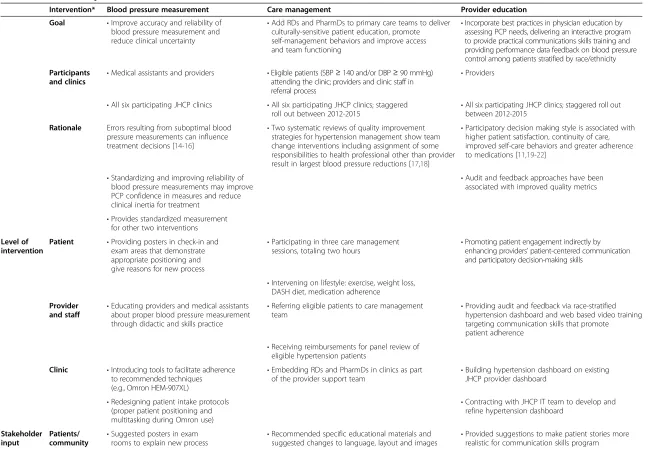
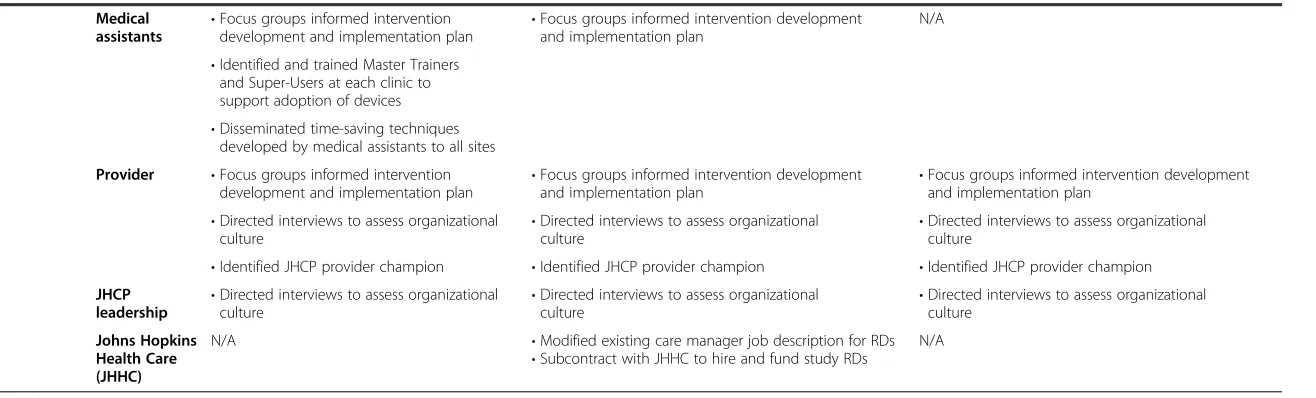
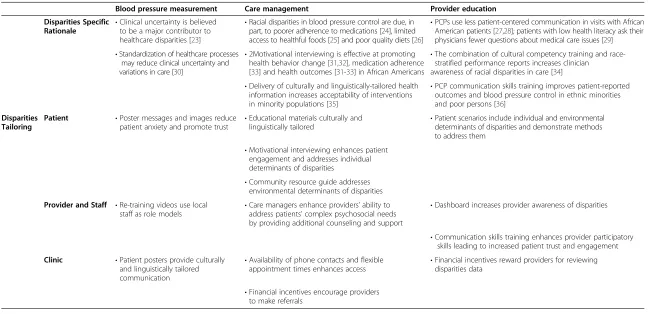
Project ReD CHiP includes three primary interventions: improvement of blood pressure measurement using an automated device and a standardized protocol; care man-agement services provided by embedded PharmDs and RDs; and provider education, communication training, and individualized provider audit and feedback (Table 3). We responded to stakeholder input and also specifically designed each of the interventions in this multi-method project to target factors known to contribute to hyperten-sion disparities. Components of each intervention were additionally tailored to address disparities at patient, pro-vider, and clinic levels (Table 4). Each intervention is discussed in detail below.
During the project’s development phase, physicians, nurse practitioners and MAs participated in baseline focus groups to discuss the feasibility and acceptability of the planned interventions. Research staff also attended clinic meetings and provider retreats and hosted webinars and workshops to hear feedback from individuals working in the clinics. At each site, organizational leaders as well as senior and practice level administrators completed Community Factors
Socioeconomic Environment Political Will
Funding and Resources Partnerships
Patient Factors
Attitudes
Experiences of Care
Intervention Design Factors
Source, Evidence Quality, Relative Advantage, Adaptability, Complexity, Trialability, Design Quality and Cost
Organizational Factors
Leadership Support Needs/Pressure for Change Clinician and Staff Attributes Culture/Cultural Competence Organizational Climate
Mission Staff Cohesion Staff Autonomy Openness of Communication
Institutional Capacity/Resources
Implementation Processes and Outcomes
Processes Adoption Fidelity Costs Outcomes
Sustainability Health Benefits
Figure 1Project ReD CHiP’s conceptual model.
Cooperet al. Implementation Science2013,8:60 Page 4 of 15
semi-structured interviews with research staff. The results from these activities helped to shape the interventions. We will conduct follow-up focus groups and semi-structured interviews at the end of implementation to help increase the long-term effectiveness and sustain-ability of the interventions.
Blood pressure measurement
The blood pressure measurement intervention aims to improve blood pressure control and reduce disparities by improving the accuracy and reliability of clinical mea-surements. Previously published studies have shown that adherence to recommended blood pressure techniques in clinical practice are suboptimal and that errors in measurements can influence clinicians’ treatment deci-sions [14-16]. Additionally, many clinical blood pressure measurements are associated with terminal digit bias, the phenomenon where measurements are rounded off, commonly to zeros [37,38].
In the blood pressure measurement intervention we provided each PCP/MA team at the clinics with an automated blood pressure measurement device (Omron HEM-907XL). This device features programmable set-tings that only inflate the blood pressure cuff after a timed, three minute rest period (adjusted from the stan-dard five minute countdown to accommodate concerns regarding workflow) and then automatically obtains three consecutive measurements, each separated by 30
seconds. The device displays the mean of the three mea-surements and the MA records the mean value in the electronic medical record (EMR). In addition to facili-tating the use of pre-measurement rest periods and obtaining sequential measurements, the use of these de-vices eliminates the terminal digit bias often associated with manual measurements and provides PCPs with valid and reliable blood pressure readings for every patient. As clinical uncertainty is believed to be a sig-nificant contributor to healthcare disparities [23], the introduction of automated blood pressure devices en-sures the standardization of an important healthcare process, which may reduce clinical uncertainty and vari-ations in care [30].
At initial rollout, hypertension specialists held educa-tion sessions at each site to introduce the devices and provide clinicians and staff with evidence for the import-ance of accurate blood pressure measurements. Research team members provided on-going site level support for 15 months as the staff became accustomed to the de-vices. We placed culturally and linguistically tailored posters explaining the new procedure for blood pressure measurement throughout the clinics to promote patient engagement. To improve sustainability of the interven-tion, the device maintenance and personnel training re-sponsibilities are being transferred to the organization’s quality improvement department and key staff at indi-vidual clinic sites.
Table 2 Description of study clinics
Site A Site B Site C Site D Site E Site F
Clinic Characteristics
Primary care providers, n 9 11 11 5 3 6
Patients, n 7,755 4,733 14,887 3,681 5,628 6,161
AA patients, % 65.6 90.1 23.3 18.4 17.7 20.2
White patients, % 28.0 4.4 68.9 77.7 73.3 72.6
AA patients with HTN, n 2,940 2,777 1,493 359 331 593
AA patients with uncontrolled HTN, % 33.1 38.8 29.7 40.1 40.5 42.8
White patients with HTN, n 705 80 4,209 1,362 650 1,477
White patients with uncontrolled HTN, % 29.2 33.9 24.3 34.9 37.1 30.6
Local Characteristics
Medically underserved area+ Yes Yes Yes No Yes No
Median income (in 2011 $US)* $47,472 $36,652 $58,488 $50,459 $47,472 $99,155
% Below poverty line* 19.0 21.0 8.9 10.6 18.2 7.8
% Employed* 55.5 54.8 70.7 60.3 59.0 64.4
% Population AA* 71.7 59.1 19.5 16.9 34.1 27.6
% High school grad or equivalent* 81.4 76.9 85.6 78.7 78.2 92.7
% Vacant housing units* 16.7 19.6 6.7 10.6 14.5 5.6
+ By site address.
* By Zip Code Tabulation Area, American Community Survey, 2007–2011. The zip codes representing the residences of the majority of the patients at each site are included.
Abbreviations:AAAfrican American,nnumber,USUnited States.
Cooperet al. Implementation Science2013,8:60 Page 5 of 15
Table 3 Features of Project ReD CHiP’s interventions
Intervention* Blood pressure measurement Care management Provider education Goal •Improve accuracy and reliability of
blood pressure measurement and reduce clinical uncertainty
•Add RDs and PharmDs to primary care teams to deliver culturally-sensitive patient education, promote self-management behaviors and improve access and team functioning
•Incorporate best practices in physician education by assessing PCP needs, delivering an interactive program to provide practical communications skills training and providing performance data feedback on blood pressure control among patients stratified by race/ethnicity
Participants and clinics
•Medical assistants and providers •Eligible patients (SBP≥140 and/or DBP≥90 mmHg) attending the clinic; providers and clinic staff in referral process
•Providers
•All six participating JHCP clinics •All six participating JHCP clinics; staggered roll out between 2012-2015
•All six participating JHCP clinics; staggered roll out between 2012-2015
Rationale Errors resulting from suboptimal blood pressure measurements can influence treatment decisions [14-16]
•Two systematic reviews of quality improvement strategies for hypertension management show team change interventions including assignment of some responsibilities to health professional other than provider result in largest blood pressure reductions [17,18]
•Participatory decision making style is associated with higher patient satisfaction, continuity of care, improved self-care behaviors and greater adherence to medications [11,19-22]
•Standardizing and improving reliability of blood pressure measurements may improve PCP confidence in measures and reduce clinical inertia for treatment
•Audit and feedback approaches have been associated with improved quality metrics
•Provides standardized measurement for other two interventions
Level of intervention
Patient •Providing posters in check-in and exam areas that demonstrate appropriate positioning and give reasons for new process
•Participating in three care management
sessions, totaling two hours •
Promoting patient engagement indirectly by enhancing providers’patient-centered communication and participatory decision-making skills
•Intervening on lifestyle: exercise, weight loss, DASH diet, medication adherence
Provider and staff •
Educating providers and medical assistants about proper blood pressure measurement through didactic and skills practice
•Referring eligible patients to care management
team •
Providing audit and feedback via race-stratified hypertension dashboard and web based video training targeting communication skills that promote patient adherence
•Receiving reimbursements for panel review of eligible hypertension patients
Clinic •Introducing tools to facilitate adherence to recommended techniques (e.g., Omron HEM-907XL)
•Embedding RDs and PharmDs in clinics as part
of the provider support team •
Building hypertension dashboard on existing JHCP provider dashboard
•Redesigning patient intake protocols (proper patient positioning and multitasking during Omron use)
•Contracting with JHCP IT team to develop and refine hypertension dashboard
Stakeholder input
Patients/ community •
Suggested posters in exam
rooms to explain new process •
Recommended specific educational materials and suggested changes to language, layout and images •
Provided suggestions to make patient stories more realistic for communication skills program
Cooper
et
al.
Implementa
tion
Science
2013,
8
:60
Page
6
o
f
1
5
http://ww
w.implemen
tationscien
ce.com/cont
Table 3 Features of Project ReD CHiP’s interventions(Continued)
Medical assistants •
Focus groups informed intervention
development and implementation plan •
Focus groups informed intervention development and implementation plan
N/A
•Identified and trained Master Trainers and Super-Users at each clinic to support adoption of devices •Disseminated time-saving techniques
developed by medical assistants to all sites
Provider •Focus groups informed intervention
development and implementation plan •
Focus groups informed intervention development
and implementation plan •
Focus groups informed intervention development and implementation plan
•Directed interviews to assess organizational
culture •
Directed interviews to assess organizational
culture •
Directed interviews to assess organizational culture
•Identified JHCP provider champion •Identified JHCP provider champion •Identified JHCP provider champion
JHCP
leadership •
Directed interviews to assess organizational
culture •
Directed interviews to assess organizational
culture •
Directed interviews to assess organizational culture
Johns Hopkins Health Care (JHHC)
N/A •Modified existing care manager job description for RDs
•Subcontract with JHHC to hire and fund study RDs
N/A
* All of the interventions aim to improve blood pressure control and reduce disparities in blood pressure; all introduce organizational change.
Cooper
et
al.
Implementa
tion
Science
2013,
8
:60
Page
7
o
f
1
5
http://ww
w.implemen
tationscien
ce.com/cont
Care management
The care management intervention seeks to address blood pressure management by providing patient education, promoting self-management behaviors, and introducing organizational change. Poor adherence to medications [24], limited access to healthful foods [25], and poor quality diets [26] contribute to racial dispar-ities in blood pressure control. The care management team aims to reduce disparities and achieve guideline concordant care through the promotion of self-management skills and medication titration.
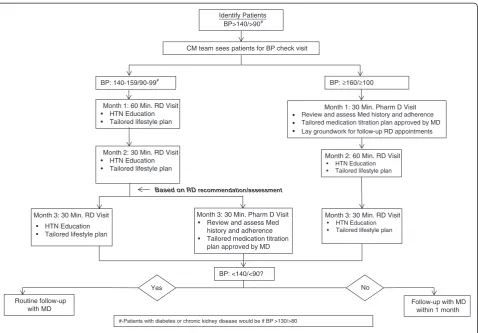
Patients with a diagnosis of hypertension (ICD9 codes) and with their most recent blood pressure ≥140/≥90 mmHg are eligible for care management services. Care managers (either RDs or PharmDs) review the clinic’s electronic patient registry, which abstracts data from the practice’s EMR, to identify eligible patients to outreach via telephone. Providers in the clinic also refer eligible patients directly to the care managers for care manage-ment services. Eligible patients receive three sessions to-taling 120 minutes with an RD and/or a PharmD (Figure 2). The RD covers lifestyle behaviors related to the management of hypertension including the DASH diet, weight loss, and exercise. The PharmD addresses is-sues related to medication adherence and titration, if ne-cessary. Embedding care managers in the clinic allows for additional patient counseling and enhances pro-viders’ability to address patients’complex needs.
Recognizing the effectiveness of motivational inter-viewing in promoting health behavior change [31,32], medication adherence [33], and health outcomes [31-33] in African Americans, our care managers utilize motiv-ational interviewing techniques to assess patients’ know-ledge of hypertension, current self-management practices, barriers to self-management, and individual preferences in managing hypertension. Additionally, the care managers provide education and recommendations specific to pa-tients’needs, preferences, and cultural context through the use of customizable, literacy-sensitive modules about blood pressure management. The care managers also utilize a community resource guide to help address the environ-mental determinants of disparities. Delivery of culturally and linguistically tailored health information increases the acceptability of interventions in minority populations [35].
Provider education
The provider education intervention aims to improve blood pressure control and reduce disparities by deliver-ing individualized performance feedback and introducdeliver-ing additional provider-tailored educational resources. It has been shown that PCPs use less patient-centered commu-nication in visits with African American patients [27,28], and patients with low health literacy ask their physicians fewer questions [29]. In developing this intervention, we
recognized that the combination of race stratified per-formance reports and cultural competency training in-creases clinician awareness of disparities in care [34] and thus incorporated these strategies.
Through this intervention providers are given access to a web-based dashboard that imports clinic measurements and patient information from the EMR. The dashboard in-creases providers’ awareness of disparities by identifying the percentage of their patients achieving guideline-concordant hypertension control overall as well as among their African American and white patients.
To advance providers’ patient-centered communication skills we developed a training website containing a series of ultra-brief (approximately 30 second) video demonstra-tions of targeted skills using simulated patient-provider in-teractions. A pilot study using this approach found that clinicians reported significant changes in routine use of demonstrated skills even after less than 15 minutes of ex-posure to the website [39]. Moreover, in earlier work we found that providing clinicians with communication skills training can reduce disparities and improve patient-reported outcomes and blood pressure control in ethnic minorities [36]. The videos illustrate a variety of assess-ment and partnership skill examples to improve the patient-provider encounter and promote patient adher-ence. A variety of patient scenarios are presented and the videos demonstrate methods to help providers address individual and environmental determinants of disparities. Prior to viewing the video clips, providers complete a self-assessment regarding their use of specified communi-cation behaviors during visits with uncontrolled hyperten-sive patients. Immediately after viewing the skills videos, they are asked to complete a short survey regarding their intention to use the demonstrated communication tech-niques. Six months after their first use of the website, phy-sicians are contacted again and asked to report on their use of specified communication behaviors and encouraged to return to the website.
Data collection, outcome measures, and statistical analysis plan
Data collection
Prior to implementation, PCPs and MAs at each clinic completed a‘motivation survey’to assess several areas of focus relevant to the acceptance and implementation of the interventions. The areas of focus included respon-dents’ readiness to change; perception of barriers to safety/quality and addressing healthcare disparities; per-ception of workflow and organizational stress; medica-tion prescripmedica-tion practice; and how respondents felt the interventions would affect the care they provide to their patients. To better assess organizational functioning and examine how perceptions of the organization’s teamwork and safety culture could influence the interventions, we
Cooperet al. Implementation Science2013,8:60 Page 8 of 15
Table 4 Multi-level disparities tailoring in Project ReD CHiP’s interventions
Blood pressure measurement Care management Provider education Disparities Specific
Rationale •
Clinical uncertainty is believed to be a major contributor to healthcare disparities [23]
•Racial disparities in blood pressure control are due, in part, to poorer adherence to medications [24], limited access to healthful foods [25] and poor quality diets [26]
•PCPs use less patient-centered communication in visits with African American patients [27,28]; patients with low health literacy ask their physicians fewer questions about medical care issues [29]
•Standardization of healthcare processes may reduce clinical uncertainty and variations in care [30]
•2Motivational interviewing is effective at promoting health behavior change [31,32], medication adherence [33] and health outcomes [31-33] in African Americans
•The combination of cultural competency training and race-stratified performance reports increases clinician
awareness of racial disparities in care [34]
•Delivery of culturally and linguistically-tailored health information increases acceptability of interventions in minority populations [35]
•PCP communication skills training improves patient-reported outcomes and blood pressure control in ethnic minorities and poor persons [36]
Disparities Tailoring
Patient •Poster messages and images reduce patient anxiety and promote trust •
Educational materials culturally and
linguistically tailored •
Patient scenarios include individual and environmental determinants of disparities and demonstrate methods to address them
•Motivational interviewing enhances patient engagement and addresses individual determinants of disparities
•Community resource guide addresses environmental determinants of disparities
Provider and Staff •Re-training videos use local
staff as role models •
Care managers enhance providers’ability to address patients’complex psychosocial needs by providing additional counseling and support
•Dashboard increases provider awareness of disparities
•Communication skills training enhances provider participatory skills leading to increased patient trust and engagement
Clinic •Patient posters provide culturally and linguistically tailored communication
•Availability of phone contacts and flexible
appointment times enhances access •
Financial incentives reward providers for reviewing disparities data
•Financial incentives encourage providers to make referrals
Cooper
et
al.
Implementa
tion
Science
2013,
8
:60
Page
9
o
f
1
5
http://ww
w.implemen
tationscien
ce.com/cont
created an ‘organization survey’ by adding questions to the Safety Attitude Questionnaire [40], which JHCP ad-ministers annually to all providers and staff. These sur-vey responses have been used to describe the baseline organizational environment at each of the six clinic sites. In the care management intervention, after patients attend three visits with the care managers they will complete surveys to assess their experiences with the program. Additionally, at two time points throughout the study we are conducting a patient survey at two of the participating clinics. We will anonymously survey 210 hypertensive patients in the waiting room at each of the selected sites. The responses will help assess the im-pact of the intervention on patient-reported outcomes, including patient knowledge, attitudes, experiences of care, and self-reported behaviors at each site.
Outcome and process measures
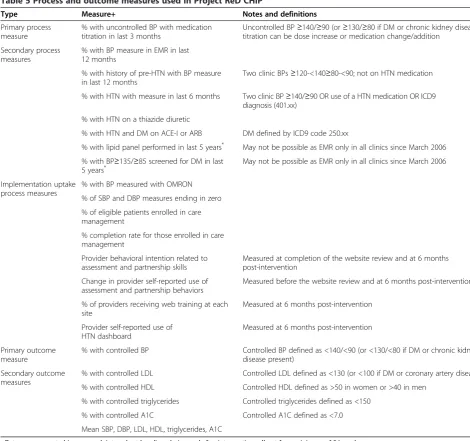
We are retrospectively extracting a range of process and outcome measures (already collected by the clinics) from JHCP’s EMRs (Table 5). We are collecting aggregate data at the system, clinic and provider levels. Data will be expressed as an aggregate percentage for a time period
of one week, with the denominator equal to the number of patients seen in clinic by all PCPs that week and the numerator equal to the number of patients that achieved the measure as defined in Table 5. Race/ethnicity, gen-der, age, and presence of other chronic illnesses (dia-betes, chronic kidney disease, coronary artery disease) categories will be extracted and the aggregate data will be stratified by these categories. Race/ethnicity is self-reported at the initial clinic visit.
Statistical analysis plan
We will use Statistical Process Control (SPC) charting of measures over time to determine if there is a change at the system level after the implementation of the inter-vention and how long after implementation the change is evident [41,42]. SPC is a set of statistical methods based on the theory of variation that can be used to make sense of any process or outcome measured over time. Data will be visually inspected in a graphical dis-play of a p-chart (for disdis-playing proportion per time period). In this case, the x-axis will be each week of data collection (total of 24 weeks in the baseline data collec-tion) and the y-axis will be the percent of patients seen that week with controlled blood pressure. We will
Identify Patients BP>140/>90#
CM team sees patients for BP check visit
BP: 140-159/90-99# BP: ≥160/≥100
Routine follow-up with MD
Month 1: 60 Min. RD Visit • HTN Education • Tailored lifestyle plan
Month 2: 30 Min. RD Visit • HTN Education • Tailored lifestyle plan
Month 1: 30 Min. Pharm D Visit • Review and assess Med history and adherence
• Tailored medication titration plan approved by MD • Lay groundwork for follow-up RD appointments
Month 3: 30 Min. RD Visit
• HTN Education • Tailored lifestyle plan
Month 3: 30 Min. Pharm D Visit • Review and assess Med
history and adherence • Tailored medication titration
plan approved by MD
Month 2: 60 Min. RD Visit • HTN Education • Tailored lifestyle plan
Month 3: 30 Min. RD Visit • HTN Education • Tailored lifestyle plan
BP: <140/<90?
Yes No
Follow-up with MD within 1 month
#-Patients with diabetes or chronic kidney disease would be if BP >130/>80 Based on RD recommendation/assessment
Figure 2Project ReD CHiP’s flowchart for patients in care management.
Cooperet al. Implementation Science2013,8:60 Page 10 of 15
distinguish normal variation from special causes (un-usual changes in the pattern of data that can be assigned to a specific cause) using a range of statistically-driven tests, including: one value outside the control limits; two of three consecutive values above or below the mean and more than two standard deviations away from the mean; eight or more values falling above or below the mean; or six or more values in a row steadily increasing or decreasing (that is, showing a trend) [42].
We are also collaborating with health economists at our institution and other CPHHD centers to design and conduct a collection of cost-effectiveness analyses from
health system, patient and societal perspectives, based on data from several of the ongoing interventions cur-rently being studied by the CPHHD. We intend to cap-ture program, patient and spillover healthcare costs, and cost offsets. The program perspective will determine the budgetary impact of implementing the interventions. Both patient and health system perspectives measure factors impacting individuals’ ability to adhere to the protocol. The success of interventions depends, in large part, on this. Additionally, interventions may have sig-nificant spillover effects, such as additional costs or cost offsets, on the healthcare system, which could impact Table 5 Process and outcome measures used in Project ReD CHiP
Type Measure+ Notes and definitions
Primary process measure
% with uncontrolled BP with medication titration in last 3 months
Uncontrolled BP≥140/≥90 (or≥130/≥80 if DM or chronic kidney disease); titration can be dose increase or medication change/addition
Secondary process measures
% with BP measure in EMR in last 12 months
% with history of pre-HTN with BP measure in last 12 months
Two clinic BPs≥120-<140≥80-<90; not on HTN medication
% with HTN with measure in last 6 months Two clinic BP≥140/≥90 OR use of a HTN medication OR ICD9 diagnosis (401.xx)
% with HTN on a thiazide diuretic
% with HTN and DM on ACE-I or ARB DM defined by ICD9 code 250.xx
% with lipid panel performed in last 5 years* May not be possible as EMR only in all clinics since March 2006
% with BP≥135/≥85 screened for DM in last
5 years* May not be possible as EMR only in all clinics since March 2006
Implementation uptake process measures
% with BP measured with OMRON
% of SBP and DBP measures ending in zero
% of eligible patients enrolled in care management
% completion rate for those enrolled in care management
Provider behavioral intention related to assessment and partnership skills
Measured at completion of the website review and at 6 months post-intervention
Change in provider self-reported use of assessment and partnership behaviors
Measured before the website review and at 6 months post-intervention
% of providers receiving web training at each site
Measured at 6 months post-intervention
Provider self-reported use of HTN dashboard
Measured at 6 months post-intervention
Primary outcome measure
% with controlled BP Controlled BP defined as <140/<90 (or <130/<80 if DM or chronic kidney disease present)
Secondary outcome measures
% with controlled LDL Controlled LDL defined as <130 (or <100 if DM or coronary artery disease)
% with controlled HDL Controlled HDL defined as >50 in women or >40 in men
% with controlled triglycerides Controlled triglycerides defined as <150
% with controlled A1C Controlled A1C defined as <7.0
Mean SBP, DBP, LDL, HDL, triglycerides, A1C
+Data are aggregated in one week intervals at baseline, during and after intervention roll-out for a minimum of 24 weeks. *These measures will only be performed in clinics that have had the EMR system in place for at least 5 years.
Abbreviations:%percent,BPblood pressure,DMdiabetes mellitus,EMRelectronic medical record;HTNhypertension,ACE-Iangiotensin converting enzyme inhibitor,ARBangiotensin receptor blocker,SBPsystolic blood pressure,DBPdiastolic blood pressure,LDLlow density lipoprotein,HDLhigh density lipoprotein, A1Cglycated hemoglobin.
Cooperet al. Implementation Science2013,8:60 Page 11 of 15
the sustainability of the program within study sites and the likelihood of broader dissemination.
Trial status
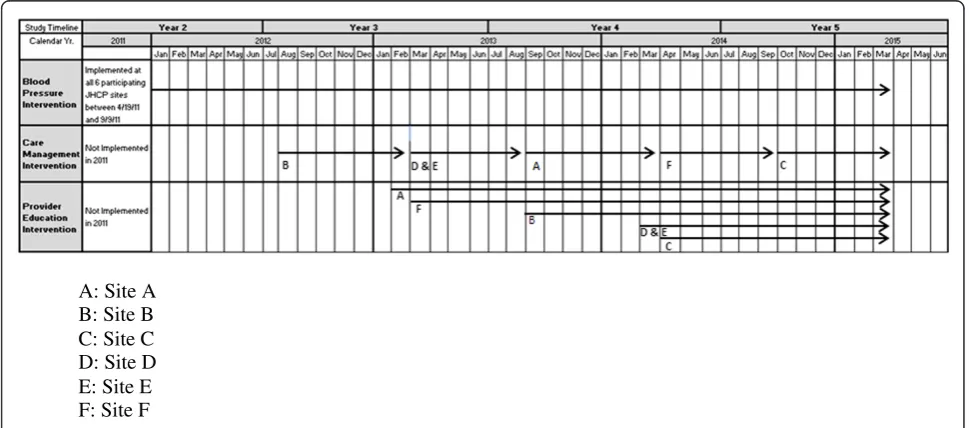
The blood pressure intervention was introduced to all six clinic sites by September 2011 (Figure 3). In three of the clinics, the care management intervention starts six to nine months before the provider education intervention and in the other three clinics the care management inter-vention starts six to nine months after the provider edu-cation intervention. At the time of this writing, care managers have been embedded in one clinic site and are beginning to expand their services to two other sites. Providers at two of the sites have access to the dashboard and have seen the online communication training videos. We will continue to stagger the introduction of the care management and provider education interventions to the remaining clinics over the next two years.
Discussion
This study aims to reduce racial disparities in blood pres-sure control and improve guideline concordant hyperten-sion care by implementing a multi-level system quality improvement intervention. Because we have applied a pragmatic trial design, our interventions take place within existing clinic practices. In this discussion, we describe the changes we made to the intervention design to meet the needs of local settings and the lessons we have learned so far while implementing the projects.
We worked collaboratively with each clinic site as well as with leaders from the JHCP organization to improve the design of the interventions. Through focus groups and directed interviews, we learned about their concerns
regarding certain components of the proposed interven-tions and we made changes to the intervention design prior to implementation based on their feedback. For ex-ample, to avoid interference with patient flow, clinic staff requested that there be at least one blood pressure de-vice for each PCP. They felt that the care management services should have cultural and community relevance. We also learned that physicians preferred the dashboard to be developed in similar format and delivery to existing provider dashboards at JHCP. We responded to each of these suggestions and these changes were incorporated into the intervention design.
In addition to adapting certain elements of the inter-vention in direct response to specific clinic needs, it has also proven important to work with local champions throughout the implementation process. Prior to intro-ducing the automated blood pressure devices, we identi-fied one MA at each site as a ‘super-user’ These MAs not only encouraged their co-workers to follow the new protocol for measuring blood pressure, but they also served as liaisons between the research and clinic staff. In the care management intervention, we chose to have PharmDs who were already familiar with the clinical practices serve as part of the intervention team. They suggested that a triage system be created that would allow the patients with the most uncontrolled blood pressures to see the PharmD first to focus on issues of medication adherence. Their knowledge of the patient populations served at each clinic and their established relationships with clinic staff helped to improve uptake of the care management intervention.
We introduced the interventions in the context of other studies and other health system changes that were taking
A: Site A B: Site B C: Site C D: Site D E: Site E F: Site F
Figure 3Project ReD CHiP’s anticipated intervention timeline.
Cooperet al. Implementation Science2013,8:60 Page 12 of 15
place at the clinics. Although we took steps in the devel-opment phase to incorporate site-level feedback, under-stand the organizational climate, and anticipate barriers to change, certain site level factors required us to make ad-justments after initial implementation of the interventions. For example, in response to challenges with patient re-cruitment in the care management intervention at the first clinic, we adjusted our scheduling approach to better meet patient and provider needs. Instead of identifying patients only through the electronic patient registry, care managers also began to utilize direct referrals from providers. In par-ticular, care managers found it more effective to focus their efforts on recruiting patients who are already present in the clinic for other appointments, instead of depending on reaching patients by phone. Responding to provider feedback, care managers now hold sessions with patients immediately before scheduled appointments with their PCP and also offer evening appointments once a week.
We underestimated the demand for additional site level support to assist with overcoming workflow and time management issues after the introduction of the auto-mated devices in the blood pressure intervention. We also discovered the need to collect qualitative and quantitative data to determine if sites were adhering to the established protocol. Responding to these concerns, research staff members were able to offer time-saving techniques, moni-tor adherence to the protocol, and assist with device main-tenance through weekly visits to each of the clinic sites. Additionally, we developed instructional videos to ensure that new clinic staff members are trained in the protocol for proper use of the automated devices.
Many of our initial challenges involved restrictions with data access and slow information technology (IT) development. Our initial approach required clinical data to be transferred from the practices’ EMR to the re-search team for further analysis to define eligible pa-tients and outcome data. With this approach, we had difficulties obtaining the data we needed in a usable and timely fashion. In addition, delays in the development of the dashboard website pushed back the rollout of the provider education intervention. We eventually moved to an approach that better utilizes the strengths of the community-based practice organization, which has an extensive history of utilizing EMR data to improve clin-ical quality. The community-based organization became responsible for more of the data abstraction, leveraging their experience with the nuances of their system. Part-nering more extensively with members of the organiza-tion’s IT department helped to speed the data retrieval and dashboard development processes. The anticipated introduction of a new EMR system across the entire organization in 2013 highlights the importance of continu-ing to develop these relationships throughout the duration of the project.
Limitations of the study deserve mention. First, it is not mandatory for physicians to view the communica-tions skills training sessions or utilize the elements on the dashboard. This may result in reduced uptake and a potential dilution of the overall effect of the provider education intervention. Additionally, the care manage-ment intervention may not be intensive enough to en-courage sustained behavior change if patients do not attend all three sessions. Furthermore, in the blood pressure measurement intervention, we are making every attempt to collect high quality data, but are pri-marily relying on self-reports and qualitative measures to assess adherence to the blood pressure measurement protocol. This will limit the precision with which we can examine adherence. The main limitation for the organizational assessments is that some of our measures will only be collected once, so we will not know how these have changed over the course of the intervention. However, other organizational measures will be col-lected multiple times, for both intervention and non-intervention sites, allowing estimation of change over time and relative to an unexposed group. Lastly, in a complex healthcare delivery system, additional system-wide or practice-based quality improvement efforts may con-found the results, for example, efforts to meet the‘ mean-ingful use of EMRs’ metrics may improve health system-patient communication. Because data will be evaluated on the system level, other unanticipated factors, in addition to unique clinic level issues, could limit the study’s ability to detect changes in our desired outcomes.
In conclusion, Project ReD CHiP is a multi-faceted, multi-level intervention that targets patients, clinicians, the healthcare organization, and the community to im-prove hypertension care and reduce racial disparities in blood pressure control. We strengthened the project’s design by tailoring intervention components to meet the needs of the individual clinics. By incorporating prin-ciples of community-based participatory research and through the continual engagement of clinic staff, pro-viders, and organizational leaders, planning for sustain-ability has been a priority of the project. We recognize that its implementation and outcomes are influenced by a variety of factors and have worked to address these barriers. Furthermore, employing a pragmatic trial de-sign and introducing the interventions into uncontrolled, primary care settings enhances the generalizability of our results and could encourage other clinics to incorp-orate our findings into routine care. Project ReD CHiP will provide knowledge about how integrated multi-level interventions can reduce disparities in blood pressure control; how organizational functioning can affect guide-line concordant hypertension care; and how to design sustainable quality improvement interventions in community-based clinical settings.
Cooperet al. Implementation Science2013,8:60 Page 13 of 15
Competing interests
The authors declare that they have no competing interests.
Authors’contributions
LC, GN, RB, CA, HA, DR, EM, GP, AD, JC, MS, and MH conceived of and designed the study. LC, JM, GN, KC, RB, HA and MH participated in the analysis and interpretation of data. KC provided statistical expertise. LC, JM, SF and KD drafted the article. All authors read and approved the final manuscript.
Acknowledgements
The authors would like to thank all of the research staff at Johns Hopkins (workgroup members, care managers, trainees and administrative staff), the staff at all of the participating clinical sites, all of the participating providers, the organizational leaders and the patients, for making the completion of this study possible. This work is supported by grants from the National Heart, Lung and Blood Institute (P50HL0105187 and K24HL083113). The authors would also like to thank the members of the Johns Hopkins Center to Eliminate Cardiovascular Health Disparities Community and Provider Advisory Board for guidance throughout the project; Dr. Theodore Speroff for feedback on drafts of the grant proposal; Jennifer Halbert, Wendy Greenberg and the JHCP IT Department for assistance with assembling data; and Mary Twomley for her project management during early stages of the project. Publication of this article was funded in part by the Open Access Promotion Fund of the Johns Hopkins University Libraries.
Author details
1Department of Medicine, Johns Hopkins University School of Medicine, 2024
East Monument Street, Suite 2-515, Baltimore, Maryland 21287, USA. 2Department of Health Policy and Management|, Johns Hopkins Bloomberg
School of Public Health, Baltimore, Maryland, USA.3Department of Medicine, University of Rochester Medical Center, Rochester, New York, USA. 4
Department of Epidemiology, Johns Hopkins Bloomberg School of Public Health, Baltimore, Maryland, USA.5Department of Family and Preventative Medicine, University of California San Diego School of Medicine, La Jolla, California, USA.6Department of Health, Behavior and Society, Johns Hopkins Bloomberg School of Public Health, Baltimore, Maryland, USA.7Community and Provider Advisory Board, Johns Hopkins Center to Eliminate
Cardiovascular Health Disparities, Baltimore, Maryland, USA.8Department of Medicine, Vanderbilt University Medical Center, Nashville, Tennessee, USA.
Received: 14 March 2013 Accepted: 24 May 2013 Published: 4 June 2013
References
1. Wong MD, Shapiro MF, Boscardin WJ, Ettner SL:Contribution of major diseases to disparities in mortality.N Engl J Med2002,347:1585–1592. 2. Egan BM, Zhao Y, Axon RN:US trends in prevalence, awareness, treatment,
and control of hypertension, 1988–2008.JAMA2010,303(20):2043–2050. 3. Hijjar I, Kotchen TA:Trends in prevalence, awareness, treatment and
control of hypertension in the United States, 1988–2000. JAMA2003,290(2):199–206.
4. Giles T, Aranda JM Jr, Suh DC, Choi IU, Preblick R, Rocha R, Frech-Tamas F: Ethnic/racial variations in blood pressure awareness, treatment, and control.J Clin Hypertens2007,9(5):345–354.
5. Chobanian AV, Bakris GL, Black HR, Cushman WC, Green LA, Izzo JL Jr, Jones DW, Materson BJ, Oparil S, Wright JT Jr, Roccella EJ, National High Blood Pressure Education Program Coordinating Committee:Seventh Report of the Joint National Committee on Prevention, Detection, Evaluation, and Treatment of High Blood Pressure.Hypertension2003,42:1206–1252. 6. Glynn LG, Murphy AW, Smith SM, Schroeder K, Fahey T:Interventions used
to improve control of blood pressure in patients with hypertension. Cochrane Database Syst Rev2010,3, CD005182.
7. Walsh JM, McDonald KM, Shojania KG, Sundaram V, Nayak S, Lewis R, Owens DK, Goldstein MK:Quality improvement strategies for hypertension management: a systematic review.Med Care2006,44(7):646–657. 8. Horowitz CR, Robinson M, Seifer S:Community-based participatory
research from the margin to the mainstream: are researchers prepared? Circulation2009,119:2633–2642.
9. Roland M, Torgerson DJ:Understanding controlled trials: what are pragmatic trials?BMJ1998,316:285.
10. Cooper LA, Boulware LE, Miller ER, Golden SH, Carson KA, Noronha G, Huizinga MM, Roter DL, Yeh HC, Bone LR, Levine DM, Hill-Briggs F, Charleston J, Kim MT, Wang NY, Aboumatar HJ, Halbert JP, Ephraim PL, Brancati FL:Creating a trans-disciplinary research center to reduce cardiovascular health disparities in Baltimore, Maryland: lessons learned. Am J Public Health2013. In press.
11. Shediac-Rizkallah MC, Bone LR:Planning for sustainability of community-based health programs: conceptual frameworks and future directions for research, practice, and policy.Health Educ Res1998,13(1):87–108. 12. Simpson DD:A conceptual framework for transferring research to
practice.J Subst Abuse Treat2002,22(4):171–182.
13. Damschroder LJ, Aron DDC, Keith RE, Kirsh SR, Alexander JA, Lowery JC: Fostering implementation of health services research findings into practice: a consolidated framework for advancing implementation science.Implement Sci2009,4:50.
14. Ray GM, Nawarskas JJ, Anderson JR:Blood pressure monitoring technique impacts hypertension treatment.J Gen Intern Med2012,27(6):623–629. 15. Dickson BK, Hajjar I:Blood Pressure Measurement Education and
Evaluation Program improves measurement accuracy in community-based nurses: a pilot study.J Am Acad Nurse Pract2007,19(2):93–102. 16. Kay LE:Accuracy of blood pressure measurement in the family practice
center.J Am Board Fam Pract1998,11(4):252–258.
17. Scheirer MA, Hartling G, Hagerman D:Defining sustainability outcomes of health programs: Illustrations from an on-line survey.Eval Program Plan 2008,31(4):335–346.
18. Evashwick C, Ory M:Organizational characteristics of successful innovative health care programs sustained over time.Fam Community Health2003,26(3):177–193.
19. Pronovost PJ, Goeschel CA, Colantuoni E, Watson S, Lubomski LH, Berenholtz SM, Thompson DA, Sinopoli DJ, Cosgrove S, Sexton JB, Marsteller JA, Hyzy RC, Welsh R, Posa P, Schumacher K, Needham D:Sustaining reductions in catheter related bloodstream infections in Michigan intensive care units: Observational study.BJM2010,340:c309. 20. Pronovost PJ, Berenholtz SM, Goeschel CA, Needham DM, Sexton JB,
Thompson DA, Lubomski LH, Marsteller JM, Makary MA, Hunt E:Creating high reliability in health care organizations.Health Serv Res2006, 41(4 Pt 2):1599–1617.
21. Blasinsky M, Goldman HH, Unutzer J:Project IMPACT: A report on barriers and facilitators to sustainability.Adm Policy Ment Health2006,33(6):718–729. 22. Scheirer MA:Is sustainability possible? A review and commentary on
empirical studies of program sustainability.Am J Eval2005,26(3):320–347. 23. Balsa AI, Seiler N, McGuire TG, Bloche MG:Clinical uncertainty and
healthcare disparities.Am J Law Med2003,29(2–3):203–219. 24. Odedosu T, Schoenthaler A, Vieira DL, Agyemang C, Ogedegbe G:
Overcoming barriers to hypertension control in African Americans. Cleve Clin J Med2012,79(1):46–56.
25. Franco M, Diez Roux AV, Glass TA, Caballero B, Brancati FL:Neighborhood characteristics and availability of healthy foods in Baltimore.Am J Prev Med2008,35(6):561–567.
26. Franco M, Diez-Roux AV, Nettleton JA, Lazo M, Brancati F, Caballero B, Glass T, Moore LV:Availability of healthy foods and dietary patterns: the Multi-Ethnic Study of Atherosclerosis.Am J Clin Nutr2009,89(3):897–904. 27. Johnson RL, Roter D, Powe NR, Cooper LA:Patient race/ethnicity and
quality of patient-physician communication during medical visits. Am J Public Health2004,94(12):2084–2090.
28. Cené CW, Roter D, Carson KA, Miller ER 3rd, Cooper LA:The effect of patient race and blood pressure control on patient-physician communication.J Gen Intern Med2009,24(9):1057–1064.
29. Katz MG, Jacobson TA, Veledar E, Kripalani S:Patient literacy and question-asking behavior during the medical encounter: a mixed-methods analysis.J Gen Intern Med2007,22(6):782–786.
30. Balsa AI, McGuire TG:Prejudice, clinical uncertainty and stereotyping as sources of health disparities.J Health Econ2003,22:89–116.
31. Resnicow K, Jackson A, Wang T, De AK, McCarty F, Dudley WN, Baranowski T:A motivational interviewing intervention to increase fruit and vegetable intake through Black churches: results of the Eat for Life trial. Am J Public Health2001,91(10):1686–1693.
32. Zoellner JM, Connell CC, Madson MB, Wang B, Reed VB, Molaison EF, Yadrick K:H.U.B city steps: methods and early findings from a community- based participatory research trial to reduce blood pressure among African Americans.Int J Behav Nutr Phys Act2011,8:59.
Cooperet al. Implementation Science2013,8:60 Page 14 of 15
33. Ogedegbe G, Chaplin W, Schoenthaler A, Statman D, Berger D, Richardson T, Phillips E, Spencer J, Allegrante JP:A practice-based trial of motivational interviewing and adherence in hypertensive African Americans. Am J Hypertens2008,21(10):1137–1143.
34. Sequist TD, Fitzmaurice GM, Marshall R, Shaykevich S, Marston A, Safran DG, Ayanian JZ:Cultural competency training and performance reports to improve diabetes care for black patients: a cluster randomized, controlled trial.Ann Intern Med2010,152(1):40–46.
35. Fisher TL, Burnet DL, Huang ES, Chin MH, Cagney KA:Cultural leverage: interventions using culture to narrow racial disparities in health care. Med Care Res Rev2007,64(Suppl 5):243S–282S.
36. Cooper LA, Roter DL, Carson KA, Bone LR, Larson SM, Miller ER 3rd, Barr MS, Levine DM:A randomized trial to improve patient-centered care and hypertension control in underserved primary care patients.J Gen Intern Med2011,26(11):1297–1304.
37. Niyonsenga T, Vanasse A, Courteau J, Cloutier L:Impact of terminal digit preference by family physicians and sphygmomanometer calibration errors on blood pressure value: implication for hypertension screening. J Clin Hypertens (Greenwich)2008,10(5):341–347.
38. Thavarajah S, White WB, Mansoor GA:Terminal digit bias in a specialty hypertension faculty practice.J Hum Hypertens2003,17(12):819–822. 39. Roter DL, Wexler R, Naragon P, Forrest B, Dees J, Almodovar A, Wood J:The
impact of patient and physician computer mediated communication skill training on reported communication and patient satisfaction. Patient Educ Couns2012,88(3):406–413.
40. Modak I, Sexton JB, Lux TR, Helmreich RL, Thomas EJ:Measuring safety culture in the ambulatory setting: the safety attitudes questionnaire— ambulatory version.J Gen Intern Med2007,22(1):1–5.
41. Shewhart WA:Economic control of quality of manufactured product.New York: D Van Nostrand Company; 1931.
42. Carey R:Improving Healthcare with Control Charts: Basic and Advanced SPC Methods and Case Studies.Milwaukee: ASQ Quality Press; 2003.
doi:10.1186/1748-5908-8-60
Cite this article as:Cooperet al.:A multi-level system quality improvement intervention to reduce racial disparities in hypertension care and control: study protocol.Implementation Science20138:60.
Submit your next manuscript to BioMed Central and take full advantage of:
• Convenient online submission
• Thorough peer review
• No space constraints or color figure charges
• Immediate publication on acceptance
• Inclusion in PubMed, CAS, Scopus and Google Scholar
• Research which is freely available for redistribution
Submit your manuscript at www.biomedcentral.com/submit
Cooperet al. Implementation Science2013,8:60 Page 15 of 15