Facial Expression Classification using Distance
Measures for Emotion Detection
1
Ritika Sharma,
2Ritika Mehra
1,2Dept. of Computer Science and Engineering, RPIIT, Bastara Karnal, Karnal, Haryana, India
Abstract
Facial Expression Recognition (FER) has essential real world applications. Its applications include, but are not limited to, Human Computer Interaction (HCI), psychology and telecommunications. It remains a challenging problem and active research topic in computer vision, and many novel methods have been proposed to tackle the automatic facial expression recognition problem. The main challenge here is to perform decoupling of the rigid facial changes due to the head-pose and non-rigid facial changes due to the expression, as they are non-linearly coupled in images. Another challenge is how to effectively exploit the information from multiple views (or different facial features) in order to facilitate
the expression classification. Thus, accounting for the fact that
each view of a facial expression is just a different manifestation of the same underlying facial expression related content is expected
to result in more effective classifiers for the target task. The facial
expression image sequence contains not only image appearance information in the spatial domain, but also evolution details in the temporal domain. The image appearance information together with the expression evolution information can further enhance recognition performance. Although the dynamic information provided is useful, there are challenges regarding how to capture this information reliably and robustly. For instance, a facial expression sequence normally constitutes of one or more onset, apex and offset phases. In order to capture temporal information and make temporal information of training and query sequences comparable, correspondences between different temporal phases need to be established. As facial actions over time are different across subjects, it remains an open issue how a common temporal feature for each expression among the population can be effectively
encoded while suppressing subject-specific facial shape variations.
In this work, a new dynamic facial expression process is created
using Efficient Distance Measures for Emotion detection.
Keywords
Face Recognition, Expression Classification
I. Introduction
Facial expression [1] is an critical shape of emotional kingdom and intellectual kingdom. Psychologist show that most effective 7% of the overall facts is passed via language, and 38% is transported via language auxiliary, which includes the rhythm of speech, tone, and so forth. But the Ratio of records which surpassed by way of facial
features has reached fifty five% of the entire. Therefore, loads of
treasured statistics can get via facial features popularity that gives an powerful manner to the perceive individual’s consciousness and intellectual hobby. Because of this, facial features recognition, displaying important theoretical research fee, practical fee and the lifestyles utility value, has end up an important studies subject matter.
Facial expression reputation researches date again to the 19th century. Using computer technology in characteristic extraction and type of facial expression has aroused full-size interest from researchers [2]. Facial expression reputation have been widely
utilized in human pc interplay, affective computing, intelligent control, psychological analysis, sample recognition, security monitoring, social cognition, machine vision, social leisure and
different fields.
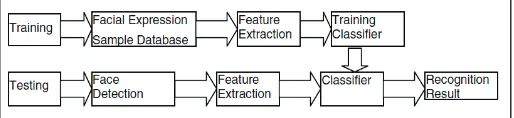
Fig. 1: Facial Expression Recognition System Framework
A. State of the Art
1. Facial Expression Feature Extraction
Expression characteristic selection techniques can be divided into 3 categories: deformation feature extraction technique, movement function extraction method, and statistical feature extraction technique.
2. The Deformation Feature Extraction Method
Deformation feature extraction method way extracting a few
facial deformation facts’s consisting of: geometric deformation or texture changes, the former one specially refers back to the changed relative distance between feature factors because of the type of expression, the latter one specially refers back to the textures’ appearance or disappearance and changes in gradient resulting from the changing expressions.
3. Motion Feature Extraction Method
Motion function extraction approach is mainly used to extract a
few function factors or feature area’s movement information from sequential expression photos, inclusive of: the motion distance and direction of function points. The common strategies encompass:
characteristic factor monitoring, optical go with the flow strategies,
and version strategies.
Feature factor monitoring method method monitoring the motion of feature factors that are chosen in face function region, and getting parameters to do the face recognition. At present, this approach has little calculation to extract best part of the characteristic points, but it loses a few useful capabilities.
4. Statistical Feature Extraction Method
Statistical characteristic extraction approach describes the traits of expression pictures via facts, such as: histogram or second invariant. Because of it’s invariance, statistical function extraction approach is greater useful than other strategies to the image’s rotation, translation and size variant .At the equal time it calls for a long time for the big quantity of computing, and it is simple to ignore precise facts of neighborhood diffused functions.
5. Expression Classification
specially contains neural networks, guide vector gadget, AdaBoost approach, K-Nearest-Neighbor (KNN), impartial thing analysis (ICA), Fisher linear discriminant analysis et al .The latter includes
the hidden markov model approach (HMM), regression neural
community technique, spatial and temporal motion power templates approach. In recent years, hidden markov version, synthetic neural
community (ANN), Bayesian type, guide vector gadget (SVM)
and AdaBoost have emerge as the maximum mainstream method of facial expression popularity.
6. Methods Based on Hidden Markov Model
Hidden Markov Model (HMM) is a markov manner that contains hidden unknown parameters, and may efficiently describe the
statistical model of the random signal facts. It’s a success in speech recognition and has begun for use in face popularity. Aa face reputation technique primarily based on one-dimensional hidden
markov version and singular value decomposition. HMM-primarily based face recognition techniques have the following benefits: they
permit expression adjustments and big head rotation, do now not want to retrain all of the samples after adding new samples, however part of parameters are given through experience.
7. Methods Based on Artificial Neural Networks
Artificial neural network (ANN) machine is an algebra mathematics
system approximately statistics processing simulated human brain neural machine. A facial action reading gadget primarily based on Gabor wavelet and FACS (Facial Action Coding System), the
machine used neural community as a classifier and the price of reputation category up to ninety%. Artificial neural community
has the advantage of the excessive-velocity ability because of it’s parallel processing mechanism, it’s allotted storage result in the potential to get better function extraction and feature a self-studying function, even as it’s high parallelism and non-linear feature restriction development to some diploma [3].
8. Methods Based on Bayesian Network
A Bayesian community is a probabilistic graphical model that’s based totally on Bayesian formula and presents random variables
via directed acyclic graphs. A Bayesian classification that taken
under consideration the previous take a look at samples’ impacting even as classifying a pattern in the photo sequences. Research
carried out Naive Bayes classifier, tree more desirable simple Bayesian classifier and HMM as the type of function expression. Bayesian community can improve the classification accuracy,
however it calls for a bunch of parameters that a part of them are given by means of human stories, and the anticipated result deviates from the real end result if the range of education samples is small.
9. Methods Based on Support Vector Machine
Support vector system approach is based totally on structural hazard minimization principle for type technique. In a high- or
infinite- dimensional area, it constructs a hyperplane or set of
hyperplanes that schooling records factors are marked as belonging to one of the categories which has the most important distance to
other categories. A decomposition algorithm for SVM’s slowly
education and complexity in time and space, and the algorithm carried out correct consequences in face detection. Because of
the hard classifier education and large computing in testing and different issues [4], A SVM-based hierarchical structure classifier which mixed a linear SVM and a nonlinear SVM, the previous
dominated out maximum of the non-face area fast within the
picture whilst the latter confirmed face candidate location. With
the advantages like structural risk minimization of guide vector
system, SVM’s carried out researches turns into extra.
10. Methods Based on Adaboost Algorithm
The core idea of Adaboost is combining vulnerable classifiers collectively to a stronger final classifier (robust classifier) via
converting the distribution of facts. A type approach based at the Adaboost set of rules, the author used Haar functions to construct
a susceptible classifier space, and were given a facial expression
classifier using continuous Adaboost algorithm for gaining knowledge of. Experiment outcomes show that this method has the equal accuracy however is 300 instances faster almost than aid vector machine [5]. However studies additionally indicates that this type isn’t always true in small samples.
II. Literature Survey
Tripathi, A., Pandey, S., & Jangir, H., (2018) [1], In this paper, facial features popularity (FER) machine is presented the usage of eigenvector to recognize expressions from facial pictures. One of the gap metric techniques referred to as Euclidean distance
is used to find out the distance of the facial features which was
related to each of the face pics. A complete, green version using a
multilayer perceptron has been superior whose input is a 2D facial
spatial function vector incorporating left eye, proper eye, lips, nostril, and lips and nostril collectively. The expression reputation
definiteness of the proposed technique the usage of multilayer
perceptron model has been compared with J48 selection tree and support vector system. The very last end result indicates that the
designed version could be very efficacious in recognizing six facial
emotions. The proposed methodology shows that the popularity charge is far better than J48 and assist vector gadget.
Munir, A., Hussain, A., Khan, S. A., Nadeem, M., & Arshid,
S., (2018) [2], Automatic facial features popularity has always
been a challenging assignment to apprehend human conduct from actual world snap shots. Certain sort of troubles are associated with such images that consist of terrible illumination, distinct
orientations and ranging pose. The proposed approach first
applies Fast Fourier Transform and Contrast Limited Adaptive Histogram Equalization (FFT+CLAHE) method to compensate
the bad illumination. Then merged binary pattern code (MBPC) is
generated for each pixel. Two bits per neighbourhood are produced to shape a sixteen-bit code in keeping with pixel. This code merges local capabilities to enhance the effectiveness of facial features
popularity machine. MBPC descriptor captures changes along
quality edges and prominent pattern round eyes, eye brows, mouth, bulges and wrinkles of the face. The consequences of proposed approach are as compared with extraordinary versions of LBP and LGC based totally techniques for both holistic and zoned photos.
Static Facial Expression in Wild (SFEW) dataset is chosen for experimentation. Results really imply that the counseled MBPC
based technique surpasses different techniques with ninety six. Five% and sixty seven.2% accuracy for holistic and division based
totally approach respectively. Moreover, consequences indicate
that the performance of holistic approach is much better than department primarily based technique.
Goyal, S. J., Upadhyay, A. K., Jadon, R. S., & Goyal, R.,
(2018) [3], Human to human communication machine requires
facial expressions which can be the set of symbols. This has a
amazing significance. For human laptop interplay, a robust and
been advanced which recognize the real-time problems. Earlier structures had been advanced to undertake the discrete states emotion model to apprehend the FER machine for expressions. This paper focuses on actual-existence demanding situations associated with FER systems.
Bedeloglu, M., Topcu, ¦., Akgul, A., D÷ger, E. N., Sever, R., Ozkan, O., ... & ¦olak, O. H., (2018) [4], In this look at, it’s miles aimed to decide the diploma of the improvement in emotional expression of full face transplant sufferers from photos. Hence, a rehabilitation system may be planned in line with the determination of levels as a later paintings. As envisaged, in full face transplant instances, the willpower of expressions can be harassed or can’t be done because the healthful manage group. In order to perform picture-primarily based evaluation, a manipulate institution consist of 9 healthful men and a couple of full-face transplant patients participated within the observe.
Appearance-based totally Gabor Wavelet Transform (GWT) and Local Binary
Pattern (LBP) methods are adopted for recognizing impartial and
6 emotional expressions which include angry, scared, satisfied,
hate, pressured and unhappy. Feature extraction was performed via the usage of each strategies and combination of these techniques serially. In the completed expressions, the extracted features of the maximum distinct zones within the facial location where the attention and mouth area, were used to categorise the emotions. Also, the mixture of those location features has been used to improve classifier overall performance. Control topics and transplant patients potential to carry out emotional expressions had
been determined with K-nearest neighbor (KNN) classifier with region-precise and approach-specific decision stages. The effects
have been in comparison with healthy group. It has been observed that transplant sufferers dont replicate some emotional expressions. Also, there have been confusions among expressions.
Allaert, B., Mennesson, J., Bilasco, I. M., & Djeraba, C., (2018) [5], Recent methodologies for facial expression reputation were proposed and feature received proper results in close to-frontal view. However, these situations do not pretty represent in-the-wild
challenges, in which expressions are herbal and the difficulty is
freed from its movement. This is pondered within the accuracy drop of facial features strategies received on current databases. Two challenges (head pose variations and large displacements) in facial expression recognition are studied in this paper. Experiments are proposed which will quantify the effect of loose head moves using representative expression recognition tactics (LBP, LBP-TOP,
HOOF). They suggest an experimental protocol (SNaP-2DFe)
that information, beneath managed mild, facial expressions with cameras: one attached on the pinnacle and one positioned in the front of the subject. As in each cameras facial expressions are the identical, variations in performances measured on every digicam display the effect of head pose variations and large displacements at the underlying reputation technique.
Valstar, M. F., Sßnchez-Lozano, E., Cohn, J. F., Jeni, L. A., Girard, J. M., Zhang, Z., ... & Pantic, M., (2017) [6], The area of Automatic Facial Expression Analysis has grown rapidly in latest years. However, in spite of progress in new methods in addition to benchmarking efforts, most reviews nonetheless recognition on either posed expressions, close to-frontal recordings, or both. This makes it hard to inform how current expression reputation processes perform under situations where faces seem in a wide variety of poses (or camera perspectives), displaying ecologically valid expressions. The major impediment for assessing that is the provision of suitable information, and the challenge proposed here addresses this dilemma. The FG 2017 Facial Expression
Recognition and Analysis undertaking (FERA 2017) extends FERA 2015 to the estimation of Action Units incidence and depth
underneath specific digicam views. In this paper they present
the 1/3 venture in automated reputation of facial expressions, to be held at the side of the twelfth IEEE convention on Face and
Gesture Recognition, May 2017, in Washington, United States. Two sub-challenges are defined: the detection of AU incidence, and the estimation of AU depth. In this paintings they define the
assessment protocol, the facts used, and the effects of a baseline technique for each sub-challenges.
III. Proposed Work
Emotions play a very vital role in our everyday lives. It has the capacity to have an effect on the choices made with the aid of the individual , attention to accept; reasoning capability as well as the health of humans the great of lifestyles one spends . It has been
verified in that humans with more fantastic feelings in their lives
have possibilities of more healthy and longer lives. Researchers have detected the emotions from the voice tone, heartbeat rate, dilation of eyes, facial expressions, and so on. Facial expressions are considered to be the maximum distinguished way to reveal the emotions. However, feelings aren’t the handiest purpose
that influences the expressions. Facial expressions deliver fifty
5 percent of information all through the verbal exchange . This is the cause that this area has gained a lot interest over a few decades. And the applications include robotics, speakme video games, behavioural researches, human pc interactions, sensors, imaginative and prescient systems and so on. The facial expression
analysis started long term lower back via Darwin who claimed that the emotions are in-born and specific in human beings. The
movement of the face is considered to be the primary purpose at the back of the expressions; hence if we are able to recognize this motion, then we can easily recognize the expression . There are six
types of emotions, specifically: satisfied, unhappy, anger, disgust,
surprised and fear this is additionally known as basic emotions or prototypes feelings Automatic facial expression evaluation is one of the maximum energetic research regions these days, numerous researchers have proposed so many algorithms for
efficient reputation of facial expressions robotically. The picture
is segmented into areas and various algorithms are applied on them to extract.
In recent years, dynamic facial features reputation has end up a brand new studies subject matter and gets more and more attention.
Different from the recognition hassle in static photographs, the
aim of dynamic facial features recognition is to estimate facial expression kind from an image series captured in the course of bodily facial expression system of a topic. The facial features picture series contains not simplest image look information in the spatial domain, however also evolution information inside the temporal area. The photograph look information collectively with the expression evolution data can in addition enhance recognition overall performance. Although the dynamic information supplied is useful, there are demanding situations concerning the way to capture this statistics reliably and robustly. For instance, a facial features series generally constitutes of 1 or greater onset, apex and offset levels. In order to capture temporal statistics and make temporal facts of schooling and query sequences similar, correspondences among extraordinary temporal phases want to be hooked up. As facial moves over the years are exclusive throughout topics, it stays an open problem how a not unusual temporal feature for each expression the various population may
form versions. In this work, a brand new dynamic facial expression manner is created the use of hybrid Genetic and Neural Network primarily based approach.
IV. Result Analysis
A. Genetic Algorithm
GA is an iterative process Each iteration is called generation. A chromosome of length of 6 bits and a population of 20 are chosen in our work. The selected chromosome is an approximate solution. The GA process is described in the following steps:
Step 1:
• Represent the problem variable domain as
chromosome of a fixed length and population, with suitable
cross overprobability and mutation probability
Step 2:
• Define a fitness function to measure the performance, or fitness of an individual chromosome in the problem
domain
Step 3:
• Randomly generate an initial population of chromosomes.
Step 4:
• Calculate the fitness of each individual chromosome.
Step 5:
• Select a pair of chromosomes for matting from the current population. Parent chromosomes are selected with a
probability related to their fitness. Highly fit chromosomes
have a higher probability of being selected for mating
compared to less fit chromosomes.
Step 6:
• Create a pair of offspring chromosomes by applying the genetic operators – crossover and mutation
Step 7:
• Place the created offspring chromosomes in the new population
Step 8:
• Repeat from step 5 until the size of new chromosome population becomes equal to the size of the initial population
Stpe 9:
• Replace the initial chromosome population with the new population
Step 10:
• Go to step 4, and repeat the process until the
termination criterion is satisfied.
Fig. 22: Fitness Value of Fitness Function With Respect to
Generation
Fig. 23: Average Distance Between Individual Fitness With
Respect to Generation
Fig. 24 Fitness of Each Individual During Training
112 Epochs
0 20 40 60 80 100
M
ea
n
S
qu
ar
ed
E
rr
or
(
m
se
)
10-1 100 101
Best Validation Performance is 0.66929 at epoch 106
Train Validation Test Best
Fig. 25: Mean Squared Error Approaching Very Close to Zero
at 106 Iteration
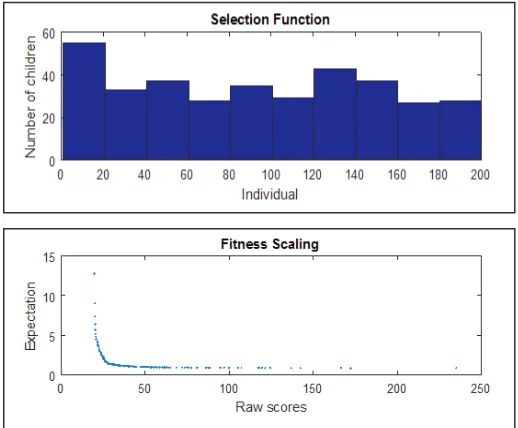
Fig. 26: The Selection Function uses the Scaled Fitness Values to Select the Parents of the Next Generation.
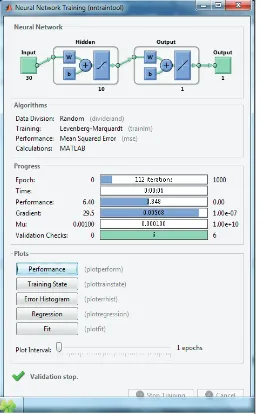
Fig. 27: Architecture of Proposed Neural Network using 10 Hidden Layers
Fig. 28: Training of Back Propagation Neural Network The gradient is the gradient of the square of the error function
error = (knowntarget - variableoutput)
with respect to the unknown weights and biases.
Typically, the training objective is to optimize te choice of weights nd biases by minimizing the sum of the squared errors by using
the method of steepest descent. as shown in figure.
gr
ad
ie
nt
10-5 100
105 Gradient = 0.0056839, at epoch 112
m
u
10-4 10-2
100 Mu = 0.0001, at epoch 112
112 Epochs
0 20 40 60 80 100
va
l f
ai
l
0 5
10 Validation Checks = 6, at epoch 112
Fig. 29: Gradient Decent of Neural Network During Training With 112 Iterations
In
st
an
ce
s
0 10 20 30 40 50 60 70 80
-2
.7
67
-2
.5
29
-2
.2
92
-2
.0
55
-1
.8
18
-1
.5
8
-1
.3
43
-1
.1
06
-0
.8
68
5
-0
.6
31
3
-0
.3
94
-0
.1
56
7
0.
08
05
3
0.
31
78
0.
55
51
0.
79
23
1.
03
1.
26
7
1.
50
4
1.
74
1
Error Histogram with 20 Bins
Errors = Targets - Outputs
Training Validation Test Zero Error
Fig. 30: Error Histogram Shows no of Errors Achieved and
Instances Close to Zero Error
Fig. 31: Overall Test Accuracy and Classification of Its Class in
Facial Expression
V. Conclusion and Future Works
In recent years, dynamic facial expression recognition has become a
new research topic and receives more and more attention. Different
from an image sequence captured during physical facial expression process of a subject. The facial expression image sequence contains not only image appearance information in the spatial domain, but also evolution details in the temporal domain. The image appearance information together with the expression evolution information can further enhance recognition performance. Although the dynamic information provided is useful, there are challenges regarding how to capture this information reliably and robustly. For instance, a facial expression sequence normally constitutes of one or more onset, apex and offset phases. In order to capture temporal information and make temporal information of training and query sequences comparable, correspondences between different temporal phases need to be established. As facial actions over time are different across subjects, it remains an open issue how a common temporal feature for each expression among the population can be effectively encoded while suppressing
subject-specific facial shape variations. In this work, a new
dynamic facial expression process is created using hybrid Genetic and Neural Network based approach.
The system used in the experiment detects the face from the image using Eigen Face technique, and then segments the fore head, eyes, lips and chin from it. Sobel operator is then applied to get the binary histogram of the image. Then using the segments as feature vector, training of the system is done by taking the inputs from both live camera and database. The last step was testing the images using two approaches; genetic algorithm and neural networ. The accuracy achieved by was 97.547% This shows that hybrid genetic algorithm and neural network technique outperforms existing approaches.
References
[1] Tripathi, A., Pandey, S., & Jangir, H. (2018). Efficient Facial
Expression Recognition System Based on Geometric Features Using Neural Network. In Information and Communication
Technology for Sustainable Development (pp. 181-190).
Springer, Singapore.
[2] Ruiz-Garcia, A., Elshaw, M., Altahhan, A., & Palade, V.
(2018). A hybrid deep learning neural approach for emotion recognition from facial expressions for socially assistive robots. Neural Computing and Applications, 29(7), 359-373.
[3] Munir, A., Hussain, A., Khan, S. A., Nadeem, M., & Arshid, S.
(2018). Illumination Invariant Facial Expression Recognition
Using Selected Merged Binary Patterns for Real World
Images. Optik-International Journal for Light and Electron Optics.
[4] Goyal, S. J., Upadhyay, A. K., Jadon, R. S., & Goyal, R. (2018). Real-Life Facial Expression Recognition Systems: A Review. In Smart Computing and Informatics (pp. 311-331). Springer, Singapore.
[5] Bedeloglu, M., Topcu, ¦., Akgul, A., D÷ger, E. N., Sever, R., Ozkan, O., ... & ¦olak, O. H. (2018). Image-based Analysis
of Emotional Facial Expressions in Full Face Transplants.
Journal of Medical Systems, 42(3), 42.
[6] Allaert, B., Mennesson, J., Bilasco, I. M., & Djeraba,
C. (2018). Impact of the face registration techniques on facial expressions recognition. Signal Processing: Image Communication, 61, 44-53.
[7] Valstar, M. F., Sßnchez-Lozano, E., Cohn, J. F., Jeni, L. A., Girard, J. M., Zhang, Z., ... & Pantic, M. (2017, May). Fera
2017-addressing head pose in the third facial expression
recognition and analysis challenge. In Automatic Face & Gesture Recognition (FG 2017), 2017 12th IEEE International Conference on (pp. 839-847). IEEE.
[8] Itier, R. J., & Neath-Tavares, K. N. (2017). Effects of task demands on the early neural processing of fearful and happy facial expressions. Brain research, 1663, 38-50.
[9] Soleymani, M., Asghari-Esfeden, S., Fu, Y., & Pantic, M.
(2016). Analysis of EEG signals and facial expressions for continuous emotion detection. IEEE Transactions on Affective Computing, 7(1), 17-28.
[10] Scotland, J. L., McKenzie, K., Cossar, J., Murray, A., & Michie, A. (2016). Recognition of facial expressions of
emotion by adults with intellectual disability: Is there
evidence for the emotion specificity hypothesis?. Research