Technology-Embedded Hybrid Learning
Muzammil Behzad, Nida Adnan, Sanna Aziz Merchant
COMSATS Institute of Information Techology, Islamabad 44000, Pakistan
Email:
{
muzammil, nida, sanna
}
@vcomsats.edu.pk
Abstract—With the rapid surge in technological advancements, an equal amount of investment in technology-embedded teaching has become vital to pace up with the ongoing educational needs. Distance education has evolved from the era of postal services to the use of ICT tools in current times. With the aid of globally updated content across the board, technology usage ensures all students receive equal attention without any discrimination. Importantly, web-based teaching allows all kind of students to learn at their own pace, without the fear of being judged, including professionals who can learn remotely without disturbing their job schedules. Having web-based content allows low-cost and robust implementation of the content upgradation. An improved, yet effective, version of the education using such tools is Hybrid Learning (HL). This learning mode aims to provide luxurious reinforcement to its legitimate candidates while maintaining the quality standards of various elements. Incorporated with both traditional and distance learning methods, along with exploiting social media tools for increased comfort level and peer-to-peer collaboration, HL ultimately facilitates the end user and educational setup. The structure of such a hybrid model is realized by delivering the study material via a learning management system (LMS) designed in compliance with quality standards, which is one of the fundamental tackling techniques for controlling quality constraints. In this paper, we present the recently piloted project by COMSATS Institute of Information Technology (CIIT) which is driven by technology-embedded teaching model. This model is an amalgam of the traditional class room model with the aid of state-of-the-art online learning technologies. The students are enrolled as full-time students, with all the courses in traditional classroom mode, except one course offered as hybrid course. This globally adapted model helps the students to benefit from both face-to-face learning as well as gaining hands-on experience on technology-enriched education model providing flexibility of timings, learning pace, and boundaries. Our HL model is equipped with two major synchronous and asynchronous blocks. The synchronous block delivers real-time live interaction scenarios using discussion boards, thereby providing a face-to-face environment. Interactions via social network has witnessed equally surging improvement in the output performance. The asynchronous block refers to the lecture videos, slides and handouts, prepared by imminent professors, available 24/7 for students. To ensure quality output, our HL model follows the course learning outcomes (CLOs), and program learning outcomes (PLOs) as per international standards. As a proof of concept, we have deployed a mechanism at the end of each semester to verify the effectiveness of our model. This mechanism fundamentally surveys the satisfaction levels of all the students enrolled in the HL courses. With the surveys already conducted, a significant level of satisfaction has been noted. Extensive results from these surveys are presented in the paper to further validate the efficiency and robustness of our proposed HL model.
Index Terms—CIIT virtual campus, CLOs, educational tools, hybrid learning, integrated management system, learning management system, PLOs, technology-embedded teaching, web-based teaching.
F
1
I
NTRODUCTIONE
DUCATION is a humanly-inherited right and a genet-ically adopted instinct to learn right from natal day. To learn, humans have adapted different methods over the time. With the advent of formal education and training, tools according to the era were used in teaching. Be it a wall to write or leaves for inscription, education has always been supported by the tools. Over the decades, technology have evolved so much that man cannot even think of living without the support of all the gadgets around. Educational models also evolved with this technological surge. Over the years, the teaching paradigm shifted from teaching in a physical classroom to distance education. However, these two models have always been compared in terms of the quality of education being delivered. In todays fast paced life, it is the need of time to have a mechanism that can save time and motivate students to learn. Today, students are more focused on the practical learning than just cramming and that is the demand of market too. Furthermore, access to education is also privilege to many. There are many people who are deprived of the education because of financial constraints, cultural barriers, time, their physical disability or due to lack of an educational setup in their surroundings.Addressing the issues discussed above, distance educa-tion was formulated. However, as already stated, the quality of distance education in comparison to physical education has always been a challenge. With the advent of technology, the introduction of ICT tool for education have led to new teaching paradigm. These tools are assisting teaching and at the same time, they are becoming a substitute for physical classroom. Students, who are unable to come to a physical campus, can enjoy the luxury of education at their door step with the traits of physical classroom. A statistical piece of information, to support this, has been shown in Figure 1. This figure demonstrates that the development of online enrollments from 2002 2007 has surged drastically. To bridge the gap between literate and illiterate population, it is the need of time to adapt to such models where we build universities by clicks, rather than bricks.
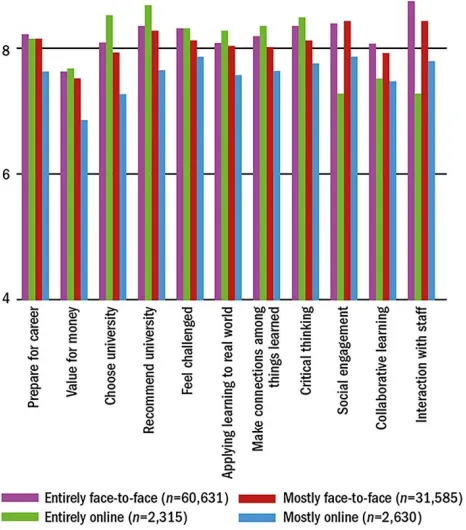
Similarly, a recent survey was carried out by Times Higher Education on students of US to assess their satis-faction as shown in Figure 2. This survey fundamentally focused on the learning methods in which the students showed more satisfaction, and hence, an improved learning performance was achieved. As can be seen, those students,
Fig. 1: Growth in Online Enrollment from 2002 2007
who were getting education on completely online courses, turned out to be the most satisfied students on almost all the evaluation measures. These results verify technology-enriched learning as key to the future of higher education.
Coming towards the role of technology in our daily life; we have gadgets embedded around us everywhere. With the rapid increase in the use of social media and connectivity, it is easier to reach out to students using these tools instead of binding them to traditional class rooms only. The role of practical work can never be negated. However, there are many course contents that can delivered online without the need of physical classroom setup. This leads to the concept of online teaching, later transformed to differ-ent offshoots like blended learning, hybrid learning. These modes basically combine the essence of physical teaching
Fig. 2: Student engagement scores by course delivery method (Graph Courtesy: Times Higher Education)
with online benefits. Within the class, there are many factors influencing the pace of learning for a student. Apart from content and faculty quality, peer to peer interaction, teachers physical presence, time lines, hands-on experience, and a few more factors basically determine the success factor for students in traditional class room model.
In an online model, the key benefits are self-paced learning, online access to content, low cost solution, quick response, study from anywhere and anytime, boundary free education and a lot more. Catering to the current needs, these two modes are combined to provide a fruitful model in form of Hybrid Learning (HL). HL incorporates the benefits of both models and try to address the limitations of each model by complementing it with the other. Globally, the concept of Massive Open Online Courses (MOOCs) have been established since decades. This concept allows the students to learn at their own pace, and if needed, they can apply for certification as well. This solution not only lim-ited to courses. There are many best standard universities around the world, offering their full programs on e-learning modes. These programs have the same quality, content and standards, as of the physically delivered program. The mode is however offered as online mode that helps to reach more and more students and provide better productivity.
In this connection, efforts have been made since decades to standardize this mode of education. One of the first of its kind, the Online Learning Consortium (OLC) is an organization that is providing institutional and professional education online, adapting to the standards of higher ed-ucation (Online Learning Consortium, n.d.). This organi-zation is a non-profit organiorgani-zation, active since 2 decades. Considering the strong dependence on technology, all these models are now assisted by the tools, especially designed for educational models. These tools play a supportive role in teacher assistance, as well as they help to access masses. In this paper, we will discuss the role of these tools, along with the models based on these tools, for effective student engagement, outreach and success. Also, we will be com-menting on the role of Learning Management System which serves as a class room for the students.
Rest of the paper is divided as follows: Section 2 high-lights the related work carried out in this field, while Section 3 provides an insight of some important success milestones achieved through the usage of technology-embedded tools and frameworks. A detailed version of our technology-mediated hybrid learning model is presented in Section 4 along witg the performance evaluation results. Finally, Section 5 concludes the paper.
2
R
ELATEDW
ORKand future challenges and to prepare a generation for cur-rent and unforeseen, future challenges, imparting mastery of both content and skills. The graduates of the modern era are required to display appropriate levels of computer liter-acy along with information literliter-acy. Graduates are expected to demonstrate not only skills and knowledge of their subject domain, but also general skill of reasoning, problem solving, time management, collaboration along with digital competence, hence the roles and responsibilities of teachers and institutions have changed (Oliver, 2003).
With the increased availability of resources for students outside of the classroom, the brick-and-mortar model of im-parting education is not expected to have the same strength it enjoyed before the dawn of Internet, if the current model continues to remain isolated from the power of technology. This is especially relevant, considering the Web 2.0 principle (Greenhow, Robelia, & Hughes, 2009) and the facilities the millennial students tend to use and abuse (Roehl, Reddy, & Shannon, 2013).
Technology has long been affectively understood as a supplementary tool to achieve educational reforms (Oliver, 2003). According to the author, embedding technology into education allows learning to become more relevant to the stakeholders; furthermore, the learning outcomes become targeted and learning opportunities diversify. The grow-ing need to make education delivery more efficient and flexible has encouraged moves to adopt technology into learning strategies. Information and communication tech-nologies (ICT) are of the nature to support and encourage independent learning.
The need to deliver these required ”21st Century Skills”, as reinforced by Rotherham and Willingham (2010), has never been more fitting than in the currently rising flood of information and models for delivery thereof. Currently, knowledge is doubling every month; staying up to date is a great challenge with the traditional model of knowledge delivery. The technological movement has helped to over-come real physical barriers to the free and open flow of information (Bishop & Verleger, 2013).
Following Twiggs (2003) classification of hybrid learning models, COMSATS Institute of Information Technology has used the emporium model for a couple of courses, in which students work entirely online but within a learning manage-ment system. The learning managemanage-ment system is operated by moderators who provide on-demand help. To obtain the level of hybrid learning, the asynchronous and synchronous elements are balanced. The adoption of hybrid learning, the combination of face-to-face and technology-mediated instruction, is increasing in higher education around the world. The combination of technology-mediated courses along with face-to-face courses provide the perfect blend of both forms of learning (Auster, 2016). It has also been predicted that hybrid learning will soon become the new traditional model of education. (Ross & Gage, 2006)
It has been noted that integrating technology into the pedagogy to support the learning process, instead of just integrating technology into the curriculum allows technol-ogy to become an integral part of the learning experience. (Eady & Lockyer, 2013) Students learn more by becoming immersed in the process of learning, rather than having all the information provided to them. Technology-embedded
education has been implemented on a wide variety of courses, see (Zhao & Breslow, 2013).
Student access to technology is no longer a privilege, it is a requirement to achieve the refurbished learning out-comes. Due to the various tools introduced in education, it has become easier for students to indulge in synchronous and asynchronous elements, which encourages collabora-tive learning through various and more comfortable modes, such as online discussion boards, live sessions and social media tools (Eady & Lockyer, 2013).
With the introduction to technology-embedded educa-tion, the moderators of the hybrid learning courses are to be trained in both pedagogy and technology, which are the base of the model (Nason, 2008). Technology supports the roles of teachers in not only providing students with content of the course, but also providing timely and proper feed-back along with monitoring students progress and assessing their accomplishments (Eady & Lockyer, 2013). Technology-mediated learning is not only based on technology, but also on many consequences of using technology, such as active learning (Khan, Egbue, Palkie, & Madden, 2017), student-centered learning (Ross & Gage, 2006) and problem-based learning (Bishop & Verleger, 2013).
Tools not only allow to deliver the content effectively, but also provide a platform to easily create, store and share digital learning resources (Eady & Lockyer, 2013). With the emergence of technology-mediated learning, alternate theories for learning have appeared. In most of these theo-ries, social interaction is seen to play a critical role in the process of learning and cognition. Social media, such as Facebook, has helped in providing the platform for easy and convenient social interactions as well as facilitate and support online learning (Khan & Bakhsh, 2015).
The use of technology alone does not guarantee the learning of 21st century skills (Keane, Keane, & Blicblau, 2016), neither does it ensure full effectiveness of content delivery, but without technology, educators are less likely to achieve the learning outcomes required (Salomon, 2000). A combination of approaches is thus needed (Pantazis, 2002), along with meaningful development of technology based knowledge and a well-designed learning system (Eady & Lockyer, 2013), which are the key ingredients for the in-tended outcome of technology-mediated education.
As Salomon (2000) argues, technology is only an oppor-tunity; but there is a huge difference between what technol-ogy can do, what it does and what it should be doing. He continues to say that technology can only change education to the extent to which it allows it. Likewise, technology is changing all the time, but choosing the best tools in the correct amount for the intended outcome is crucial for the effectiveness of the technology impartment (Eady & Lockyer, 2013). What may be technologically possible, may not always be desirable (Salomon, 2000).
purchased (Coursera) (edX).
The effectiveness of technology-mediated learning is not the only thing involved in the hybrid learning model. More focus should be placed on the guidance for implementing and adopting the model itself (Halverson, Graham, Spring, & Drysdale, 2012). Garrison and Kanuka (2004) noted that institutional direction and policy are the core to introducing hybrid learning, further, they suggest that assigning a task force to address all matters of hybrid learning will be the only way to successfully run the model. Graham, Woodfield and Harrison (2013) provide a framework for implementa-tion with their three-stage process of strategy, structure and support; they also explain that the lack of attention on any one of these stages can prevent success of the hybrid model. The quality of education has been associated with strong teachers having high degrees (Oliver, 2003), but this is only possible in the face-to-face, traditional model. Evaluation of hybrid or online learning courses requires a different approach (Garrison & Kanuka, 2004). It is important to have a set quality standards and accountability measures for online based education (Piper, 2010). Garrison and Kanuka (2004) present that the success of the hybrid learning course is evaluated on the satisfaction of the stakeholders in terms of teaching, learning, technology and administration.
The success and quality of the hybrid learning model has been viewed in regard to these prospects. Studies show that the students indulged in hybrid learning courses aca-demically perform better than their peers and present better knowledge of the content (Peterson, 2016). This is due to the flexibility and ease of access to course content. Furthermore, after studying a course in the hybrid mode, students walk away with a more positive feeling (Auster, 2016), also they are satisfied with the course overall (Peterson, 2016).
Technology-mediated education is often associated with reduced cost, but investment that is placed in the develop-ment of the technology-based courses is paid off by saving on delivery through large scale uptake. Hence, the cost of running the traditional model is comparatively more per student as compared to the online model, even adding the cost of establishing the technological infrastructure (Battaglino, Haldeman, & Laurans, 2012).
3
K
EYC
HALLENGESA
DDRESSED VIAT
ECHNOLOGY-E
MBEDDEDL
EARNINGThere are various tools available online for support of education. We will be discussing a few independent tools used in education in this section. More appropriately, we will basically highlight the importance of technology by gauging the challenges of providing quality education, ben-efited using technology tools. Whether these tools are used separately, or they are embedded in Learning Management System (LMS), they help in improving the output of stu-dent performance. There are many LMS solution in market that can be used by the academicians and educational institutions for the delivery. However, these commercially available LMS are often costly and have limitations as well. Therefore, custom LMS design, specifically for an institu-tion, is quite in vogue. In custom built software, it is easy to incorporate all the technology tools, as it is, or their functionality. This provides an added advantage of saving
one from the hassle of compatibility, pricing, licensing and modification issues.
A few tools we all are familiar with, are available since decades now. Microsoft is on top of all when it comes to educational content. Word, Power Point, Excel and rest of the tools are the ones which many students have used in their academic life. These tools are used by teachers to generate content and help material. Google is also changing the education delivery game. There are numerous apps available by Google which are useful in improving learning. Google classroom is a top example of class management. It has assessments, feedback, lecture schedule, and a lot more. The functionality of these kind of tools is combined in an LMS which provides a one-go solution for a class. Now coming to the challenges that are addressed by these tools.
The first and most important point is global content updating. The primary issue with content, especially in Pakistan is, that the books used are mostly outdated and most of the time, the content being followed is obsolete in other parts of the world. When content is available online, same content can be replaced across and additionally, it can be updated from time to time as per the global trends.
The next important point is related to Pakistan especially where we have a disparity in educational setup. Here, the content and educational standards vary a lot, even in provinces. Furthermore, the concept of Government and Private institutions have created a big gap in the teaching trends. With content available online, same content can be distributed across the board, addressing the issue of disparity and inequality. This will also address the gender based issues, cultural barriers, poverty, as the content will be available to everyone, regardless of their situation.
The next challenge is related to types of students. There are different kinds of students. Some are early pickers, while others are late bloomers. Some students grab the concept in a second, while other may have to re-visit the lecture, get additional help and re-enforce. The hybrid models basically address all kinds of students equally with the help of these technology tools or in a simpler form, LMS. With the availability of content 24/7, the students can learn at their own pace, without the fear of being judged.
Professionals are also most benefited from these kinds of models. Those who are doing jobs, are sometimes unable to leave the job and study along. Additionally, at times, there may be a skill needed while a person is working in the field. This model caters to those needs as well. Using this framework for course delivery, professional develop-ment courses can be well arranged with quick results. The most powerful impact of these tools is on cost. These tools basically provide low cost solution as building physical resources and hiring all the associated team costs a lot more than having the content on cloud, delivering it amicably, without worrying about investment on infrastructure. These tools come in handy for student assessment and motivation as well. Around the globe, teachers are using tools for assessment and focus on other important tasks. These tool tracks and report student progress instantly. This instant feedback motivates students.
education leads to a more informal and impactful approach. Students are more responsive and are more updated when they are provided content using social media tools. Peer to peer interaction is also aligned using this informal method. Overall, the whole future is dependent on technology now. It is estimated that in coming times, everything will be automated and so will be education. To prepare well for the future, and keeping the benefits of technology embedded teaching in mind, it is important that we adapt to the new models as soon as possible so that we may not lag behind rest of the world.
4
T
ECHNOLOGY-E
MBEDDEDH
YBRIDL
EARNING 4.1 Hybrid LearningWith the passage of time, teaching pedagogies have changed drastically thereby pushing for novel tools and techniques to be introduced especially for higher education. In this regard, numerous distance-based educational approaches have been proposed, and are already in practice. Although these approaches are extensively adopted for specific pro-grams or institutes, and they have their impact in those very certain programs, however, their implementation to-wards technically advanced-programs, such as engineering, computer science, information security, computer networks, etc., is not very popular. Importantly, a much smaller contri-bution of research and development has been noted that is being directed toward seeking degree programs via online learning models. However, to tackle this issue, and provide various educational institutes with the flexibility of learning timings, pace, and boundaries, hybrid learning has emerged out as a backbone learning model to support the required technological upgrades in the existing educational models.
Hybrid learning (HL) is a novel educational model that incorporates both the physical as well as the distance-based online learning system. Specifically, much wider application platforms for HL model are the degree programs that are offered at different universities. An important aspect of this model is that it is independent of the type of degree or institute, and can be equally applied at any institute by having the appropriate resources, and by following manda-tory as well as the recommended set of rules. Therefore, the HL format can be implemented to any institute, uni-versity or organization where the content delivery follows both online and onsite facilities. A significant objective of this mode of learning is to provide a technology-mediated environment whereby students can have advanced learning and understanding by integrating both remote as well as physical systems, hence, giving them hands-on experience for education in the future.
4.2 Technology-Mediated Hybrid Learning Model by COMSATS Institute of Information Technology
In this work, our focus is to specifically highlight and present the technology-mediated hybrid learning model recently piloted by COMSATS Institute of Information Tech-nology (CIIT), Pakistan with the foundation being set by its virtual campus. The arrival of modern processing machines has severely transformed many characteristics of our lives, which demands refining the practices of conveying knowl-edge and skills in tertiary education. CIIT has emerged out
as a pioneer institution in Pakistan to combat all the future challenges associated with such educational transformation. Along with the secondary advantages of keeping the cur-riculum updated and in accordance with the recent prac-tices of other globally prominent educational universities, the primary benefits for implementing hybrid model lie in their proposal of offering flexibility for presently-registered students and faculty, enlargement of the prevailing curricula portfolio and spreading CIITs outreach and international existence.
4.3 HL Working Guidelines
To make improvements on the motivation mentioned pre-viously, CIIT campuses work on following key features to integrate a hybrid learning environment for the students enrolled on regular basis:
• CIITs existing quality assurance infrastructure is equally implemented for the new hybrid learning model.
• To assign hybrid courses for teaching or moderation, the criteria is kept similar for faculty as in other non-hybrid courses. Such policies have already been a part of the CIITs education system.
• The academic procedures for offered hybrid courses are as per the instructions given by Higher Education Commission, Pakistan.
• CIITs focus candidates are especially the unregis-tered students of underprivileged regions, employed employees, businesspersons, in-service people, aca-demic faculty, government personnel or jobless grad-uates. The courses offered in HL are supposed to portray the capabilities of CIITs faculty in the best possible manner via extended use of the technologi-cal frameworks, hence, overcoming multiple barriers across all its campuses.
• An efficient and effective mechanism is developed to capture response of teaching and learning in order to improve, or maintain at the least, the output quality of this system.
• The teaching approaches for HL courses are an extension to the existing methods to facilitate the preservation of present quality practices.
• HL courses certify engagement of current registered candidates across different campuses of CIIT, and it is scalable to non-enrolled students as well.
• HL courses guarantee higher outreach from renowned faculty associates to students in different CIIT campuses, and perhaps a desirable substitute for unregistered students across the country.
• CIIT dedicates resources to advance the existing infrastructure for technology-mediated education in order assist the enrolled students of its system.
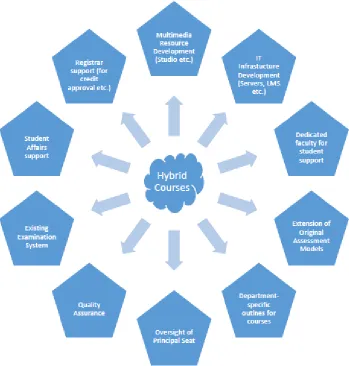
Fig. 3: Departments and infrastructure to support HL courses
4.4 Fully Supported Model
The mentioned HL model is fundamentally an improved version of the current teaching methodologies of CIITs regular campuses. Therefore, it includes the facilities of all its campuses with an essential backing of the various offices at principal seat such as, registrar, examination, IT, academic and departments in different characteristics of development, infrastructure, delivery support, implemen-tation, mechanism, assessment and feedback. The help and support provided by these bodies is represented graphical in Figure 3.
In this connection, the faculty not only offers a part of their specific knowledge proficiency and skills, but various academic bodies play their part in program expansion; con-tinuing support and supervision for excellence, evaluation and feedback of the offered HL courses. This is because the HL students deserve not only flexibility of advanced educational opportunities but they also have the right to ask for a broader range of value-added courses and essential support of top-notch technologies to assist them to prosper in their future endeavors.
4.5 System Design
The tool designed for HL model is a Learning Management System (LMS), custom designed for HL courses. This tool
acts as a virtual classroom for our students and have dif-ferent capabilities like video lecture content, live sessions, assessments, feedback, marks management, graded discus-sion boards, moderated discusdiscus-sion board for peer to peer interaction and a lot more. This, however, is merely an upshot of the integration of ICT with HL model. In spirit, CIIT aims to develop its own online profile by reinforcing a database of learning material accompanied by the existing educational practices.
LMS acts as a classroom for the teacher, who is teach-ing the course. The teacher is available to have an online meeting with the students via live session tool, upload and manage assessments, provide feedback and can do all the course related activities. In addition to this, students also have timely face to face meetings with their instructor. This learning managements system (LMS) is called as Integrated management system (IMS) in the hybrid mode of learning.
4.6 Integrated Management System
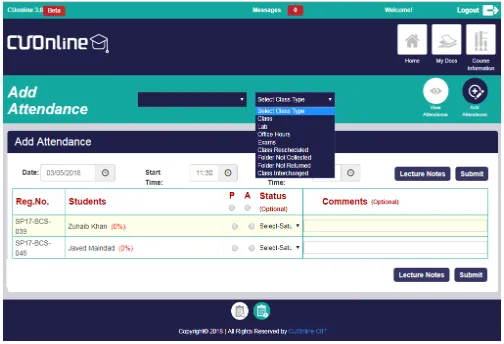
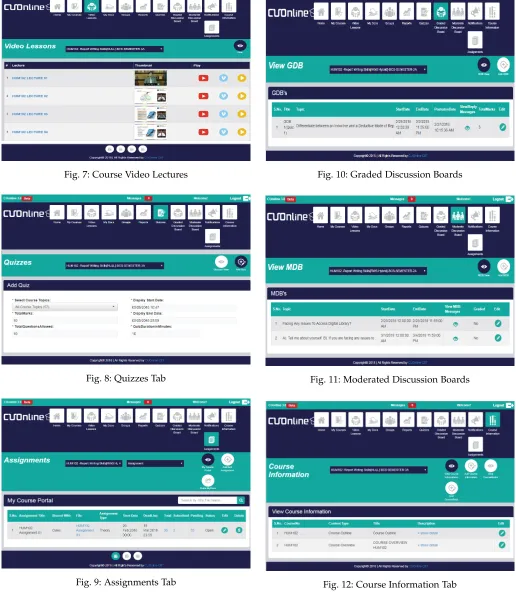
and student consoles for the corresponding functionalities. To enjoy the exciting features of IMS, the students login to their CUOnline portal using the CUOnline login system. Once logged in, a student is redirected to IMS home page. This home page contains all important features in the form of various tabs such as, marks summary, live sessions, learning resources (lectures slides, handouts, etc.), moder-ated and graded discussions boards, assignments, quizzes, lecture videos, attendance, course information, etc.
In the course information tab, important announcements from the respective teachers/moderators are placed. These announcements may be about the upcoming passements, exams, or even the marks being uploaded. The marks summary tab highlights the percentage of grade received based on the assessments taken so far, while the course information outlines the main topics to be covered in the course along with the information about teacher, course books, etc. Similarly, learning resources is an important tab that contains the lectures slides, handouts and any other document in soft form regarding course lectures. As-signments and quizzes tabs contain the information about previously taken, currently pending, and the assessments to be taken in future. The videos tab has the lectures videos for the particular course while attendance list out the attendance for each student. Some of these are displayed pictorially from Figures 4 - 13.
4.7 Assessments System
In our HL model, the students are assessed within ev-ery course through quizzes, assignments, graded and/or moderated discussions forums, sessional/mid-terms and fi-nal/terminal exams. The suggested and currently prevailing distribution of marks are as per the HEC given guidelines. For a much better learning of the students, we propose to use a smart assessment system (SAS) for students which is in the form of an Android app. This system may not neces-sarily be utilized for evaluation of HL courses only but may also be combined with non-hybrid courses. The chief users of this system are the dedicated faculty as administrators. Their responsibilities include:
• Managing the app
• Managing announcement boards in the app • Managing (add, edit, delete) topics and questions
• Generating, checking and marking assessments
Students are the end-users of this SAS and their respon-sibilities include:
• To register an account on the app
• Login to the account and check for updates for any
upcoming/ongoing assessments
• Attempt desired Quiz, GDB, and/or sessional within due time
• View their results in time and notify any inconsisten-cies within stipulated time
Students will be able to view the results, topic-wise and lectuwise; view aggregate results and view overall re-sults. A section for the Head of Department of the concerned course is designed, as well. His/her authorities extend to:
• Viewing overall results of students (course-wise, semester-wise and batch-wise)
• Viewing progress of students
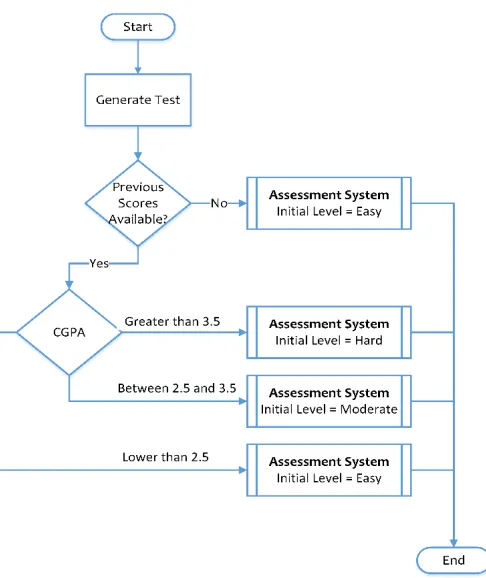
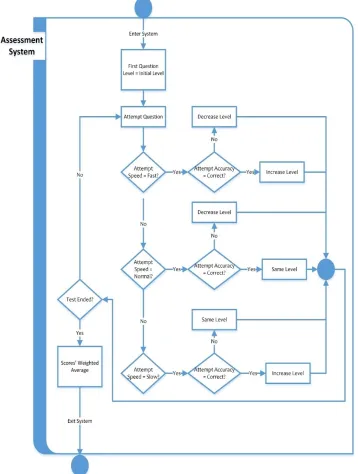
We have also proposed a smart assessment system to improve the cognitive capacity of different student. The functional operations of this system have been shown in detail as flowcharts in Figure 15 - 16.
Fig. 4: IMS Login System - CUOnline
Fig. 5: IMS Home Page
Fig. 7: Course Video Lectures
Fig. 8: Quizzes Tab
Fig. 9: Assignments Tab
4.8 Quality Assurance
Over the last 18 years, CIIT has witnessed immense growth in terms of number of campuses, student intake, revenue and more importantly the quality of education. To maintain this pace of progress with the proposed learning model, we highlight how quality is maintained. In general, the described quality assurance framework is a blend of
ex-Fig. 10: Graded Discussion Boards
Fig. 11: Moderated Discussion Boards
Fig. 12: Course Information Tab
Fig. 13: Live Sessions Interface
Fig. 14: Generation of Reports
• The infrastructure and means at dispense for the sus-tenance and conveyance of the curriculum, including support mechanisms for students and administrative support;
• The scheme, preparation, evaluation and apprising of learning materials;
• Methods of assessment and external examining;
• Mechanisms in place for student communication and representation, aiding both concerted learning and involvement in the quality assurance of the hybrid courses;
• The availability of support and training for staff for
the delivery of hybrid courses.
The additional functionality of our proposed Quality Assurance body of the campuses of CIIT will operate on the guidelines listed below:
• Promote public confidence that the quality and
stan-Fig. 15: Flowchart of Smart Assessment System
dards of hybrid courses within the degrees are safe-guarded and enhanced;
• Review the quality of teaching, mentoring and learn-ing in each hybrid course;
• Review the quality standards of the content of each hybrid course;
Fig. 16: Working Details of the Smart Assessment System
• Define clear and explicit standards as points of refer-ence for reviews to be carried out;
• hybrid course specifications, including information to clarify outcomes and skills imparted in the hybrid course;
• Develop quality assurance processes and methods of
evaluation to affirm that the quality of provision and the standard of hybrid courses are being maintained at least at par with regular courses;
• Ensure that research and other scholarly activities re-lated to the model of hybrid course are safeguarded;
• Ensure that the universitys global presence in terms
of the repository of hybrid courses are designed to fit in with international trends and technological progress;
• Ensure that staff supporting hybrid courses receive appropriate training and development;
• Supplement and defend the standing of the institu-tion as regards to the monitoring, design, develop-ment, delivery and feedback of hybrid courses;
• Develop procedures for the following:
– Approval of new hybrid courses;. . .
– Continuous monitoring and evaluation in-cluding program monitoring, faculty monitor-ing and students perception;
– Departmental Academic Review of hybrid courses;
– Student feedback for each hybrid course;
– Moderator feedback for each hybrid course;
• Carry out surveys and self-assessments to ensure
that defined standards are met and suggest possible improvements, if applicable;
• Extend working of mechanism of self-assessment
reports (SAR) to include hybrid courses.
The established assessment cycle of the Quality Enhance-ment Cells, with step-by-step actions clearly outlined, of each respective campus is once every 2 years. Considering the pace and outreach of hybrid courses, all departments with hybrid courses shall go through a self-assessment once every semester specifically for hybrid courses. Qual-ity Enhancement Cells of each respective campus will be responsible for planning, coordination and follow-up of the self-assessment activities.
4.9 Evaluation Results
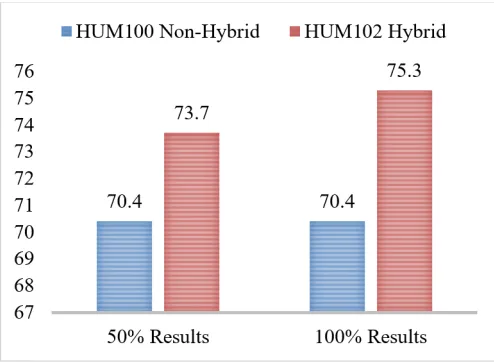
As one of the evaluation criterion of the success of our HL system, a comparison between hybrid and non-hybrid course was carried out. By comparing the results of the offered HUM102 hybrid course in Fall 2017 with that of its prerequisite course HUM100 which students passed in their previous semesters, i.e., it was studied by the same students in the face-to-face environment previously, a sig-nificant piece of improvement in the results are observed in the newly adopted course offered in HL system. This is depicted in Figure 17 where the graph shows comparisons of students of all the campuses based on the non-hybrid versus hybrid course.
Fig. 17: Comparison of Average Results
5
C
ONCLUSIONTechnology is improving at a very rapid speed and it demands almost all the systems in the world to pace up with it. A similar demand is directed towards the tradi-tional learning methodologies for its survival. Therefore, in this paper, we highlighted the need of reforms in the prevailing educational models. We discussed the upgraded models of learning which can be preferably used to cope up with the technological advancements as well as improve the overall learning performance. Specifically, we presented
the technology-mediated hybrid learning model piloted na-tionwide by COMSATS Institute of Information Technol-ogy, Pakistan. The performance measures and the analyt-ical results indicate that this model, in fact, is a desirable model keeping in mind the current trends in education. We supported our model with the help of real-time evaluation results showing both an increasing interest in the use of technology as well as improvements in overall learning of the students.
R
EFERENCES[1] C. J. Auster, “Blended Learning as a Potentially Winning Combina-tion of Face-to-Face and Online Learning: An Exploratory Study”,
Teaching Sociology, 44(1), 39-48., 2016
[2] T. B. Battaglino, M. Haldeman, E. Laurans, “The Costs of Online Learning”, Retrieved from http://www.edexcellencemedia.net/publications/2012/20120110-the-costs-of-online-learning/20120110-the-costs-of-online-learning.pdf, 2012 [3] J. L. Bishop, M. A. Verleger, “The Flipped Classroom: A Survey of
the Research”,120th ASSEE Annual Conference & Exposition. Atlanta: American Society for Engineering Education, 2013
[4] M. J. Eady, L. Lockyer, “Tools for Learning: Technology and Teach-ing Strategies”,Learning to Teach in the Primary School, 71, 2013 [5] D. R. Garrison, H. Kanuka, “Blended Learning: Uncovering its
Transformative Potential in Higher Education”, The Internet and Higher Education, 7(2), 95-105, 2004
[6] C. R. Graham, W. Woodfield, J. B. Harrison, “A Framework for Institutional Adoption and Implementation of Blended Learning in Higher Education”,The Internet and Higher Education, 4-14, 2013 [7] C. Greenhow, B. Robelia, J. E. Hughes, “Learning, Teaching, and
Scholarship in a Digital Age: Web 2.0 and Classroom Research: What Path Should We Take Now?”,Educational Researcher, 38(4), 246-259, 2009
[8] L. R. Halverson, C. R. Graham, K. J. Spring, J. S. Drysdale, “An Analysis of High Impact Scholarship and Publication Trends in Blended Learning”,Distance Education, 33(3), 381-413, 2012 [9] T. Keane, W. F. Keane, A. S. Blicblau, “Beyond Traditional Literacy:
Learning and Transformative Practices using ICT”,Education and Information Technologies, 21(4), 769-781, 2016
[10] Khan Academy. (n.d.),Retrieved from https://www.khanacademy.org/
[11] A. Khan, O. Egbue, B. Palkie, J. Madden, “Active Learning: En-gaging Students to Maximizw Learning in an Online Course”,The Electronic Journal of E-Learning, 15(2), 107-115, 2017
[12] S. Khan., S. T. Bakhsh, “A Study on the Role of Facebook in E-Learning”,I. J. Education and Management Engineering, 5, 1-11, 2015 [13] H. McCausland, D. Wache, M. Berk, “Computer Literacy: Its
Im-plications and Outcomes, A Case Study from the Flexible Learning Centre”,University of South Australia, 6-89, 1999
[14] MIT OpenCourseWare. (n.d.), Retrieved from https://ocw.mit.edu/index.htm
[15] C. Nason, “A Qualitative Study of the Implementation of a Com-munity College Hybrid Course”,Master’s Thesis at Queens University of Canada, 2008
[16] R. Oliver, “The Role of ICT in Higher Education for the 21st Century: ICT as a Change agent for Education”,Proceedings of the Higher Education for the 21st Century Conference, Curtin, 2003 [17] Online Learning Consortium. (n.d.), Retrieved from
https://onlinelearningconsortium.org/
[18] C. Pantazis, “Maximizing E-Learning to Train the 21st Century Workforce”,Public Personnel Management, 31(1), 21-26, 2002 [19] D. J. Peterson, “The Flipped Classroom Improves Student
Achievement and Course Satisfaction in Statistics Course: A Quasi-Experimental Study”,Teaching of Psychology, 43(1), 10-15, 2016 [20] T. Piper, “What Policy Changes do Experts Recommend K-12
Instructional Leaders Enact to SUpport the Implementation of Online Instruction and Learning?”,Doctoral Dissertation, ProQuest Dissertation and Theses, 2010
[21] A. Powell, “A Case Study of E-Learning Initiatives in New Zealand’s Secondary Schools”, Doctoral Dissertation at Pepperdine University, 2011
[23] B. Ross, K. Gage, “Global Perspectives on Blended Learning: Insight from WebCT and our Customers in Higher Education”,
Handbook of Blended Learning: Global Perspectives, Local Designs, 155-168, 2006
[24] A. J. Rotherham, D. T. Willingham, “21st-Century Skills: Not New, but a Worthy Challenge”,American Educator, 34(1), 17-20, 2010 [25] G. Salomon, “It’s Not Just the Tool, but the Educational Rationale
that Counts”,Ed-Media Meeting, Montreal, 2000
[26] C. A. Twigg, “Improving Learning and Reducing Costs: New Models for Online Learning”,Educause Review, 38(5), 28-38, 2003 [27] Y. Zhao, L. Breslow, “Literature Review on Hybrid/Blended
Learning”,Teaching & Learning Laboratory, 2013
Muzammil Behzadreceived his partially-funded B.S. degree with distinctions (double medalist and valedictorian) from CIIT, Pakistan, and his fully-funded M.S. degree from King Fahd Univer-sity of Petroleum and Minerals (KFUPM), Saudi Arabia, both in Electrical Engineering. Presently, he is serving as Research Associate as well as Pioneer Member of Office of Hybrid Learning at CIIT. His research interests are oriented around signal and image processing, wireless and dig-ital communications, wireless sensor networks, e-learning and hybrid learning, and their applications. He is a lifetime member of Pakistan Engineering Council (PEC), student member of Institute of Electrical and Electronics Engineers (IEEE), and member of Society for Industrial and Applied Mathematics (SIAM). He currently holds more than 6 years of experience in teaching and research.
Nida Adnanis currently a Ph.D. Scholar at Col-lege of Electrical and Mechanical Engineering (CEME), NUST in the department of computer engineering. She received her M.S. (Computer Engineering) from CEME, NUST, and her B.S. (Computer Engineering) from UET, Taxila. She is serving as Head of Department, Computer Science, at CIIT, Virtual Campus. Her research interests revolve around image processing, com-puter vision, education models and e-learning. She has more than 8 years of experience in teaching and research.