University of Pennsylvania
ScholarlyCommons
Publicly Accessible Penn Dissertations
2017
Language And The Gentrifying City: An
Ethnographic Study Of A Two- Way Immersion
Program In An Urban Public School
Sofia Chaparro
University of Pennsylvania, [email protected]
Follow this and additional works at:https://repository.upenn.edu/edissertations
Part of theBilingual, Multilingual, and Multicultural Education Commons, and theLinguistics
Commons
This paper is posted at ScholarlyCommons.https://repository.upenn.edu/edissertations/2213 Recommended Citation
Chaparro, Sofia, "Language And The Gentrifying City: An Ethnographic Study Of A Two- Way Immersion Program In An Urban Public School" (2017).Publicly Accessible Penn Dissertations. 2213.
Language And The Gentrifying City: An Ethnographic Study Of A
Two-Way Immersion Program In An Urban Public School
Abstract
Two-Way bilingual immersion programs, which bring together language majority and language minority children with the goals of bilingualism and biliteracy for all, are becoming increasingly popular in the United States. And while research shows high academic achievement for both language majority and language minority speakers, as measured by standardized testing (Thomas & Collier, 2002), several studies highlight the problematic tensions that arise around issues of equity, power, and the role and status of Spanish�(e.g. Cervantes-Soon, 2014; Fitts, 2006; Vald�s, 1997). I add to this literature by examining both the larger social processes that bring different groups of people together in the same urban space - such as gentrification and immigration - and how families and children differently experience the program. Through this ethnographic, discourse analytic study, I shed light on the social dynamics that influenced the creation of this program, including a funding crisis in the district along with a movement by middle class mostly white parents to "opt-in" to the public school system. I show how the efforts of one group to support and promote this program were driven by a desire for equity but also enmeshed in a system that reproduced class and race privilege. I demonstrate the stark differences in the realities of parents who composed the group of "English-speakers" and those who were the parents of the "Spanish-speakers." Yet, in the classroom, I illustrate how children showed a wider range of proficiencies than their labels allowed. I argue that, through everyday interactions children socialized each other into both languages, and into a range of ways of communicating that went beyond linguistic codes. Finally, through the concept of raciolinguistic socialization, I show how race and class impacted children’s trajectories, which were consequential to not only their identities, but also decisions to stay or leave the program itself. Children and families from vastly different class, cultural, racial, and linguistic backgrounds are differently subject (or not) to processes of racialization and marginalization, which have consequences for their schooling experiences and eventual outcomes. As such, both these processes, and these programs, merit more scholarly attention.
Degree Type
Dissertation
Degree Name
Doctor of Philosophy (PhD)
Graduate Group
Education
First Advisor
Nelson Flores
Second Advisor
Keywords
Bilingual Education, Ethnography, Gentrification, Immigration, Two-Way Immersion, Urban Schools
Subject Categories
LANGUAGE AND THE GENTRIFYING CITY: AN ETHNOGRAPHIC STUDY OF A TWO-
WAY IMMERSION PROGRAM IN AN URBAN PUBLIC SCHOOL
Sofía E. Chaparro Rodarte
A DISSERTATION
in
Education
Presented to the Faculties of the University of Pennsylvania
in
Partial Fulfillment of the Requirements for the
Degree of Doctor of Philosophy
2017
Supervisor of Dissertation Co-Supervisor of Dissertation
_____________________ ________________________
Nelson Flores, Betsy R. Rymes,
Assistant Professor of Education Professor of Education
Graduate Group Chairperson
________________________
J. Mathew Hartley, Professor of Education
Dissertation Committee:
Betsy R. Rymes, Professor of Education
Nelson Flores, Assistant Professor of Education
Nancy H. Hornberger, Professor of Education
Stanton E. F. Wortham, Professor of Education and Dean of the Lynch School of
LANGUAGE AND THE GENTRIFYING CITY: AN ETHNOGRAPHIC STUDY OF A
TWO-WAY IMMERSION PROGRAM IN AN URBAN PUBLIC SCHOOL
COPYRIGHT
2017
DEDICATION
I dedicate this work to the children, parents, teachers and individuals who opened their
lives and shared their experiences with me
Le dedico este trabajo a los niños, padres, maestras, y personas que me abrieron las
ACKNOWLEDGMENTS
Getting to this point has been an effort of many who have guided, supported, and
encouraged me along the way. I could not have asked for better co-chairs and advisors, Betsy and
Nelson. Thank you for your caring guidance, your generosity, and for opening doors and
opportunities to present my work with others. Betsy, thank you for your optimism and
excitement for my work - I always left our meetings energized and felt validated in the ideas I
proposed. Nelson, thank you for your careful attention to detail, your critical questions that
always pushed my work forward, and for las porras que siempre me echas in social media and
IRL (in real life). Nancy and Stanton, thanks for being not only part of my committee but also,
and importantly, part of my formation as a scholar from day 1 when I began graduate school. I
feel honored to have had the opportunity to count such great scholars as my mentors.
I have benefited from the friendship, mentorship, and camaraderie from the amazing
people that have come before me: Holly, Sarah, Roseann, Mariam, Cécile, Catrice, Krystal, and
Haley. Holly, thank you for taking me under your wing when I was a confused former teacher
trying to figure out what grad school was all about. Camra peeps, thank you for the amazing
adventure the first year of not only figuring out grad school, but also trying to figure out
filming/visuality/scholarship/ethnography all at the same time: Leya, Matt, Arjun, Gabriel,
Veena, Amit, and especially John - who made it all happen and who I want to be like when I
grow up. My comrades in arms - Miranda, Coleman, Jojo, Frances (Bebé), Aldo, Mark, Andrea,
Siwon, Yeting, Kristina, Jenn, Katherine, David, and Gareth - it has been a pleasure to learn along
with you. Thank you for the many times you listened to my work, gave me thoughtful feedback,
and helped me get to this point. Coleman, I would not have survived the last couple of weeks
without the knowledge that you were just as miserable as me in the library. Or without our
This would not have been possible without the love and support from my family and
friends. Mami, Papi, Marini, y Natalie - que les puedo decir? Son mi mundo y mi razón de ser,
junto con mis adorados sobrinos Lucas, Emma Lucía, y pronto Luciana. Papás Chaparro, esto fue
posible por ustedes y gracias a su visión de cómo educarnos de manera bilingüe desde que
estábamos chiquitas. I love you and hope I've made you proud. Talar, Amanda, and Nina, grad
school has been so incredibly fun with the adventures we've had together, and I would not have
survived without you and our incredible friendship. Talar, thank you for your editing magic and
all you did for me in this last week. I don't think anyone (other than my committee) will have read
my dissertation as closely as you did, all so you could provide me with feedback and get me
ready for my presentation. YOU are an angel. Angelo, thanks for keeping me fit and sane on our
runs with Zaza, and always making me laugh like a good husband. Nina, your excitement for life
is contagious and I have the most fun when you're around - we'll have to live a bi-state lifestyle,
my HSLF. Ida, mai waife, we did it! I couldn't have asked for a better summer writing and travel
partner - and I look forward to many more writing retreats to come!
A mi equipo de natación, 1 y 2, les debo mi salud y mi increíble condición física ;). Mi
Coush, gracias por los entrenamientos y sus enseñanzas. Mi Estimado, ¿donde estaría sin usted?
Pues creo que en el mismo lugar, peeeeero sin las risas, las conversaciones, las vivencias, el
mezcal, y sin su amistad y su gran persona. Majo, si no hubieras sido tan buena alumna, yo nunca
hubiera sido la Blackship ;). Gracias por tus porras y tu amistad. ¡Y sigues tú! Caro, Mariela, Y
Jorge - estas últimas semanas fueron claves y nadar con ustedes me mantuvo sana de mente y
cuerpo. Caro, ¿con quien hubiera estudiado tantos fines? Ahora sigue pagarlos con puras
celebraciones.
Hay personas que aún al no ser parte de este proyecto, siempre han sido grandes mentoras
Penn, y por tu ejemplo es como supe que ser profesora sería posible. Espero sepas cuánto te
admiro y cuánto agradezco tu apoyo. Tía Elea, ¿con quien más hubiera podido compartir estas
experiencias sin sentirme como la “rara” académica? Poca gente entiende estos mundos en los
que vivimos, y compartirlos contigo ha sido un honor y placer.
A mis queridas "Ms. O" y "Ms. A", sin ustedes este trabajo no sería posible. Gracias por
su trabajo y todo lo que hacen. "Ms. O", sobretodo, gracias por abrirme las puertas de tu salón de
clase, siendo el primer año tan difícil. Gracias por tu confianza y tu amistad. Esto es para ustedes
y por su labor como maestras.
ABSTRACT
LANGUAGE AND THE GENTRIFYING CITY: AN ETHNOGRAPHIC STUDY OF A
TWO-WAY IMMERSION PROGRAM IN AN URBAN PUBLIC SCHOOL
Sofía Chaparro Rodarte
Nelson Flores
Betsy Rymes
Two-Way bilingual immersion programs, which bring together language majority and
language minority children with the goals of bilingualism and biliteracy for all, are
becoming increasingly popular in the United States. And while research shows high
academic achievement for both language majority and language minority speakers, as
measured by standardized testing (Thomas & Collier, 2002), several studies highlight the
problematic tensions that arise around issues of equity, power, and the role and status of
Spanish (e.g. Cervantes-Soon, 2014; Fitts, 2006; Valdés, 1997). I add to this literature by
examining both the larger social processes that bring different groups of people together
in the same urban space - such as gentrification and immigration - and how families and
children differently experience the program. Through this ethnographic, discourse
analytic study, I shed light on the social dynamics that influenced the creation of this
program, including a funding crisis in the district along with a movement by middle class
mostly white parents to "opt-in" to the public school system. I show how the efforts of
one group to support and promote this program were driven by a desire for equity but
also enmeshed in a system that reproduced class and race privilege. I demonstrate the
"English-speakers" and those who were the parents of the "Spanish-speakers." Yet, in the
classroom, I illustrate how children showed a wider range of proficiencies than their
labels allowed. I argue that, through everyday interactions children socialized each other
into both languages, and into a range of ways of communicating that went beyond
linguistic codes. Finally, through the concept of raciolinguistic socialization, I show how
race and class impacted children’s trajectories, which were consequential to not only their
identities, but also decisions to stay or leave the program itself. Children and families
from vastly different class, cultural, racial, and linguistic backgrounds are differently
subject (or not) to processes of racialization and marginalization, which have
consequences for their schooling experiences and eventual outcomes. As such, both these
TABLE OF CONTENTS
ACKNOWLEDGMENTS ... iv
ABSTRACT ... vii
LIST OF TABLES ... xi
LIST OF FIGURES ... xii
Chapter 1: Introduction ... 1
Research Questions ... 4
Chapter Outlines ... 5
Significance ... 9
Chapter 2: Literature Review and Conceptual Framework ... 11
Literature Review ... 11
Conceptual framework ... 33
Chapter 3: Research Methods and Setting ... 45
Research Setting: George Washington School and its surrounding area ... 48
Participants, Roles & Positionality ... 52
Ethnography & Discourse Analysis ... 63
Data Collection ... 66
Data Analysis ... 74
Chapter 4: Creating a TWI Program amid Neoliberal School Reforms, the “Opt in” Movement, and Changing Demographics in Philadelphia ... 78
Public School Closings, the Doomsday budget, and the “Friends of” Movement ... 81
The birth of the TWI program at GW ... 87
The Ed committee, “pre-‐parents” and the TWI program ... 89
The Realtor Tour: Changing the Narrative ... 98
The TWI Program: The Double-‐edged sword of Putting GW on the "map" ... 103
Conclusion ... 119
Chapter 5: Leading Parallel Lives: School, Parents and Communities ... 123
Ms. O's Perspective ... 127
The "English-‐speakers" ... 132
The "Spanish-‐speakers" ... 151
Conclusion ... 170
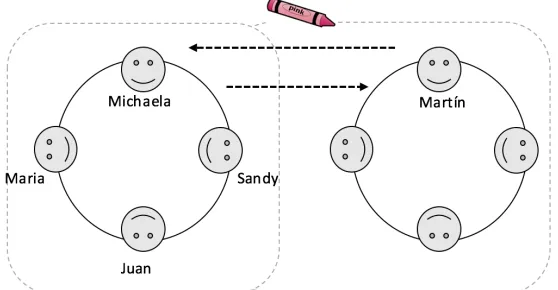
Chapter 6: Martín and the Pink Crayon: The Organization of Children’s talk in a Two-‐ Way Immersion bilingual classroom ... 175
Student Interaction in TWI Settings ... 178
The Interactional Organization of one Kindergarten Classroom ... 183
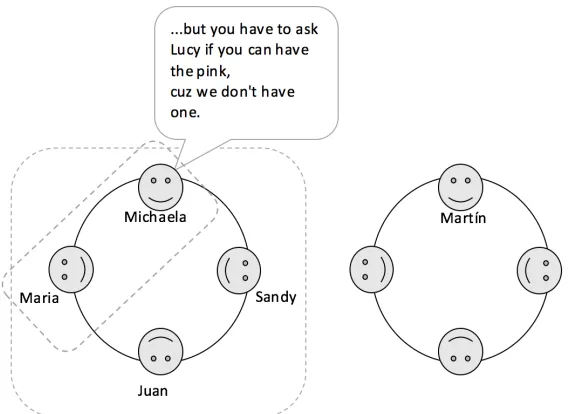
Example 1: Martín and the Pink Crayon ... 184
Example 2: Tara & Landon ... 191
Conclusion ... 212
Chapter 7: But mom! I don't want to be a Spanish Boy: Trajectories of Raciolinguistic Socialization ... 216
Race/Class ... 216
Raciolinguistic Ideologies and Language Socialization ... 219
1. Racialization and class anxieties ... 223
2. Class and race privilege ... 234
3. Classed and Raced Marginalization ... 245
Conclusion ... 268
Chapter 8: The Peril and Promise of TWI Programs ... 271
Contributions to the Field ... 271
Theoretical and Methodological Interventions ... 272
Implications for Practice from a Raciolinguistic Perspective ... 273
Coda ... 276
LIST OF TABLES
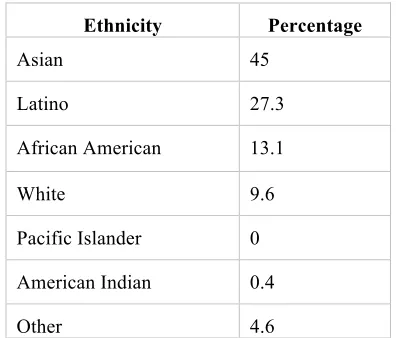
Table 1: Ethnic Breakdown of George Washington School ... 50
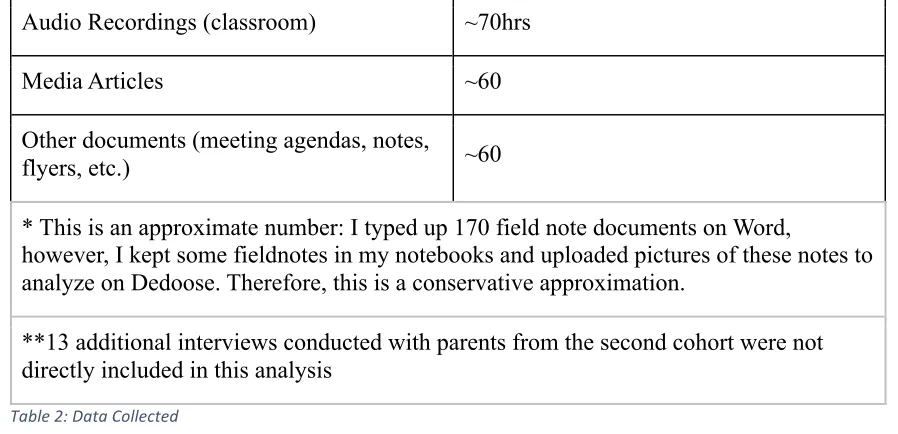
Table 2: Data Collected ... 75
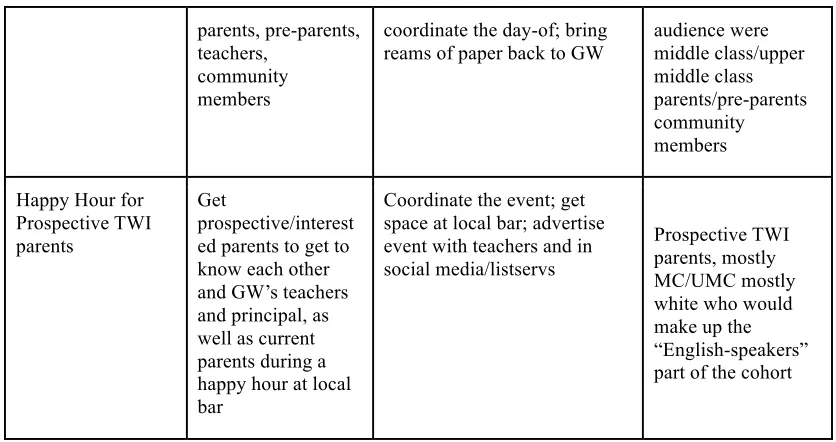
Table 3: NCA Education Committee Projects ... 96
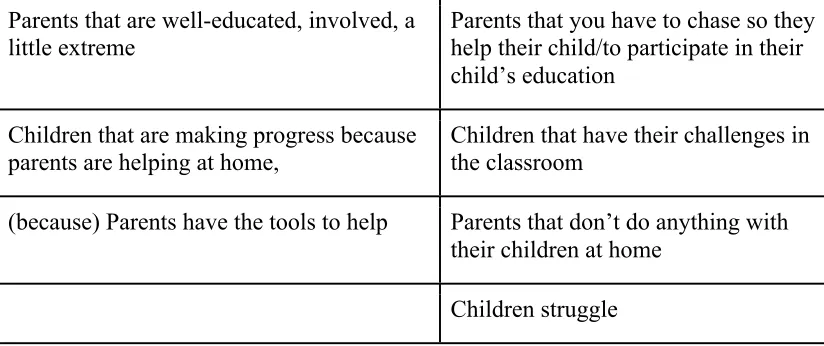
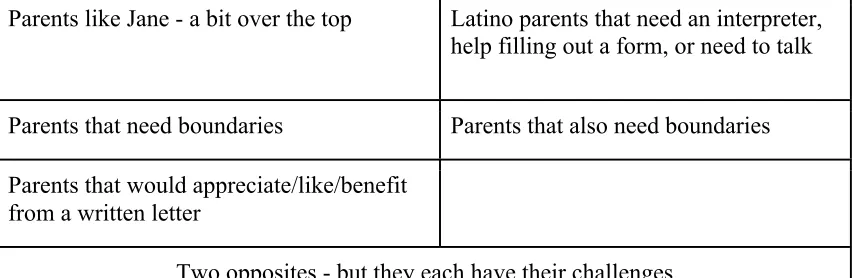
Table 4: Parent Juxtapositions 1 ... 128
Table 5: Parent Juxtapositions 2 ... 129
Table 6: Dialogue ... 193
Table 7: Dialogue ... 196
Table 8: Transcript 1, Pt.1 -‐ Adriana, Zoe & Kelsy ... 203
Table 9: Transcript 1, Pt.2: Adriana, Zoe & Kelsy ... 204
Table 10: Trancript 2, Pt.1 -‐ Adriana, Zoe & Kelsy ... 206
Table 11: Transcript 2, Pt. 2 -‐ Adriana, Zoe & Kelsy ... 207
Table 12: Jane an Esteban's labels for Santiago ... 227
Table 13: Transcript -‐ At Zoe's Table ... 239
LIST OF FIGURES
Figure 6. 1 ... 185
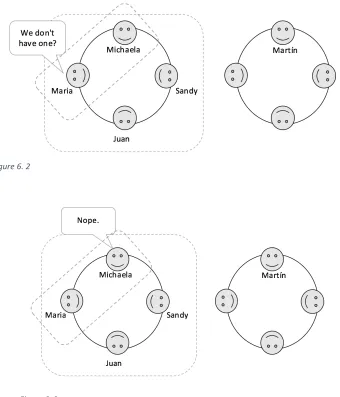
Figure 6. 2 ... 186
Figure 6. 3 ... 186
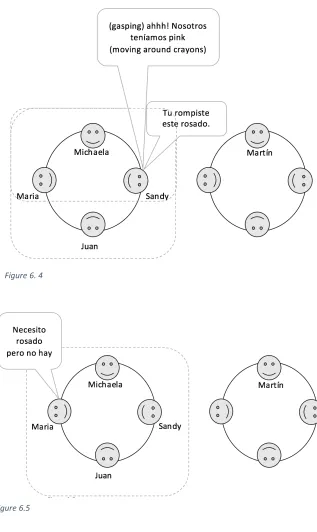
Figure 6. 4 ... 187
Figure 6. 6 ... 188
Figure 6. 7 ... 190
Figure 6. 8 ... 191
Figure 6. 9 ... 193
Figure 6. 10 ... 194
Figure 6. 11 ... 194
Figure 6. 12 ... 197
Figure 6. 13 ... 197
Figure 6. 14 ... 198
Chapter 1: Introduction
As I walked in to the newly painted light blue classroom, Ms. O1 was in the midst
of conducting a parent interview with a Mexican mother. Ms. O, who is Venezuelan,
called María over to the table to conduct an assessment, as her mother eagerly looked on.
After explaining what they were going to do, Ms. O began: “Pon el bolígrafo sobre la
nube.” [Place the pen on top of the cloud]. María stared at Ms. O with big eyes and a shy
smile, but did not move. Her mother interjected: “Casi no entiende el español” [she
hardly understands Spanish]. Ms. O then repeated the command in English, several times,
until María did as she was told. I was surprised by the mother’s comment, (since María is
part of a Spanish-speaking Mexican family), and I wondered whether it was the case that
María did not actually understand Spanish or if her lack of response to the command was
due to an unfamiliarity with the term ‘bolígrafo’ for pen, as opposed to the term ‘pluma’,
which can be more familiar to some Spanish speakers.
In our conversation later in the afternoon, Ms. O described one of her previous
interviews with Santiago and his mom, Jane, who is white American and whose husband
is Costa Rican. Jane told Ms. O to please push Santiago to speak more Spanish, since he
refuses to at home. Santiago quickly objected: “But mom, I’m not a Spanish boy!” Ms. O
wondered whether Santiago, whose family will bring him from a wealthier area outside
the catchment of the school, associated speaking Spanish only with Mexican immigrants.
Santiago and María are kindergarten classmates this school year in a brand new
1 The names of all individuals and organizations throughout this dissertation are
bilingual Spanish-English two-way immersion program, located within a public school in
a large urban school district. María’s family emigrated from Mexico several years ago,
and settled into this area of the city, where a large part of the growing Mexican
population resides. Santiago, on the other hand, lives outside the school’s neighboring
area, in a more affluent part of town. Santiago’s mother, Jane, learned about the two-way
immersion program through social media networks, and after attending a parent meeting
and touring the school, decided to enroll Santiago. The individuals responsible for
advertising the program in these social media networks are members of a neighborhood
civic association in this gentrifying part of town, who are supportive of the program and
who were aggressively publicizing it in order to ensure sufficient enrollment in its first
year. Several families are counting on this program to exist for when their young children
become school-aged, and have decided to invest time and resources into ensuring its
success.
The institution that is bringing together these groups of people is a Two-Way
Immersion (TWI) program within an urban public school - one I call George Washington
School - that offers both Spanish and English speakers the opportunity of a dual language
education. Two-way immersion programs, which by definition bring together language
majority and language minority children with the express goals of bilingualism and
biliteracy, are becoming increasingly popular in the U.S. (Collier & Thomas, 2004). And
while the research literature points to the many benefits of this model, including higher
academic achievement in both languages of instruction for both groups of students
(Lindholm-Leary, 2001; Thomas & Collier, 2002), studies have highlighted the
Spanish (Cervantes-Soon, 2014; Fitts, 2006; McCollum, 1999; Palmer, 2009; Scanlan &
Palmer, 2009). These studies – perhaps inspired by Valdés’ (1997) ‘Cautionary note’ on
who benefits from these programs – have documented the pressures that arise from the
asymmetrical power relations between English as a dominant language and Spanish as a
minority language, and how those consequently affect students, their language practices,
and their investment in each language (Cervantes-Soon, 2014; DePalma, 2010;
McCollum, 1999; Potowski, 2004). Some of these studies also noted the problematic use
of simplified Spanish in service of English speakers (Delgado-Larocco, 1998; McCollum,
1999; Valdés, 1997).
While two-way programs have been the object of considerable scholarly
attention, one of the least explored phenomena in the literature are the processes that
create fertile grounds for these programs to exist in the first place. In other words, there
are larger social, economic, and ideological processes that contribute to the rise in
number and demand for this type of program, and that have made this particular TWI
program possible. In this case, two of these processes are immigration and gentrification.
This is exactly the problematic that I explored through this dissertation study: how
socio-political processes – in particular, gentrification and immigration, and the ideological
discourses that go along with them – come to bear on the creation and development of
two-way programs.
Part and parcel of what these larger social processes do, in creating spaces for
TWI programs, is bringing together students, like María and Santiago, that have very
whose cultural, linguistic, economic, and migratory trajectories are enormously different.
Moreover, the stakes for each child, and each family, are different: they are as different
for English-speaking and bilingual children who belong to middle and upper middle class
families as they are for newly arrived children coming from working class Latino
households, and for Italian-American and African-American children whose families are
long-time residents in the community. Thus, it is essential to explore the motivations of
different families to support this program and enroll their children in it, and the ways in
which students and families experience the program. And while parents and
adult-members of families might have different motivations for their children to participate in
this TWI bilingual program, the ways in which children experience it themselves is a
different matter.
Research Questions
In this dissertation, I investigate the following questions:
1) How have large-scale social processes, such as gentrification and
immigration, influenced and facilitated the creation of this two-way immersion
program?
2) What are the experiences of children and families in the first year of the
program? How do language, class and race impact these experiences?
3) Throughout the course of the program, how do the children interact with
each other, particularly those with whom they do not yet share a common
Chapter Outlines
In the second chapter of this dissertation I review the bodies of literature that have
informed my work, and that I hope to contribute to with this study. The literature on
bilingual education generally, and two-way immersion specifically, frames the impetus
for doing a study that considers both larger social processes along with interactional
everyday realities in the classroom. Additionally, I turn to the small yet growing literature
on gentrification and education within the sociology of education, along with studies on
immigration and education, to inform and situate my analysis of the effects of these
dynamics on public schools in cities and metropolitan areas. In this chapter I also lay out
the theoretical framework that guides my inquiry. I situate my study within the linguistic
anthropology of education. First, language as part of individuals' communicative
repertoires undergirds my analysis, as well as a view of language learning as language
socialization. In other words, as opposed to examining language development in a more
traditional sense, wherein I would pay attention to the acquisition of forms of language, I
focus on how language learning is happening in concert with other features of interaction,
interactions which I consider part of a process of peer language socialization. A concept
that is key is that of trajectories of socialization (Wortham, 2005), that in tandem with the
concept of raciolinguistic ideologies (Flores & Rosa, 2015), frame my argument for the
concept of raciolinguistic socialization. Finally, I bring together these lens on an analysis
that takes into account the political economy and socio-historicity of the emergence of
the realities and pressures of an underfunded public school system and market-based
reform strategies.
Chapter 3 describes the research setting for this study as well as my research
methods. It was important to situate this study in its actual location - the city of
Philadelphia. This was in order to be able to discuss this study within the context of the
city's history and the context of current processes of re-development and gentrification, as
well as the recent efforts of middle class parents to improve the city's public schools.
Methodologically, this is an ethnographic, discourse analytic study. In other words,
within the frame of an ethnographic study, I pay attention to language use and
language-in-use as empirical phenomena whose study can elucidate everyday experiences of
participants. I describe the data collection methods and process of analysis that both of
these undertakings require, spending much time discussing my positionality and
relationships within the field. As an ethnographic study, these were key to the kinds of
information I had access to, and in and of themselves revealed gendered, classed, and
racialized dynamics.
In Chapter 4, I tell the story of how the two-way immersion program at George
Washington School came to be. I describe the conditions that came together for this
program to become a desirable and feasible option. First, I describe the funding crisis and
market-based reform efforts that created a competitive environment where district
schools faced significant pressure to perform in the midst of the imminent possibility of
being closed. Concomitant to this, and a process that gained traction as a result, middle
class parents who had opted to "stay in the city" began demanding better options for
schools. These groups formed in parts of the city that are gentrifying, and as such, the
schools that have benefited from their efforts are located in neighborhoods that have a
growing number of new residents, that tend to be white, middle class, and highly
educated. Through the analysis of the efforts one such group, the Neighborhood Civic
Association's Education Committee, I analyze how the group's efforts to support George
Washington and its new TWI bilingual program were driven by a genuine desire for
equity in schooling opportunities and to improve conditions for all children, yet
ironically, also reproduced the dynamics of race and class privilege. In other words, their
initiatives and activities, which took hard work, time, and energy, were mostly geared at
attracting more parents – middle class and mostly white – to invest in the school by
enrolling their children in it and joining the group's efforts to improve the school.
Chapter 5 tells the story of parents' parallel lives. The diversity in the
neighborhood that attracted many of the white middle class parents did not mean that
such diversity led to meaningful everyday intercultural connections – in fact, the different
cultural and linguistic groups that have a presence in the surrounding neighborhood
seemed to lead lives in which they were in the same physical place, but hardly occupying
the same spaces. This shone through in my interviews with parents, particularly as they
elucidated their starkly different everyday realities and their trajectories of migration.
Also, I talk about the diversity within the groups of parents of children that were labeled
"English-speakers" and "Spanish-speakers," underscoring how the differences in parents'
needs and concerns influenced the school and placed different demands on the teacher.
In Chapter 6, I turn my attention to the experiences of the children, presenting
and interactional roles that children take up. Through this framework, I illustrate the
importance of spatial arrangements of children, who, by virtue of their physical
positioning, become participants in interactions that occur in both languages (and through
a variety of other means of communicating). I argue that these are moments of peer
communicative socialization, where children model and apprentice each other into
different ways of speaking, which include not only English and Spanish, but also, other
ways of interacting and of participating in literacy events. With these analyses, I hope to
contribute to the way researchers frame interactions in bilingual classrooms, so that we
understand them through a broader lens that allows us to consider all that transpires
through children's talk, which goes beyond simply a choice of code.
In Chapter 7, I examine how race and class impacted students' experiences within
this bilingual program. First, I describe how this kind of bilingual program regiments
who "English speakers" and "Spanish speakers" are; categories that adhere not so much
to actual language competencies, but to racial and ethnic backgrounds. In other words, in
TWI programs, English is enregistered as belonging mostly to the white children, and
Spanish is enregistered as belonging to the Latino children, precluding those that are
already bilingual, or that are bi-racial, to occupy both categories simultaneously. Given
this raciolinguistic ideology, I examine how being socialized into such a space affects
children's trajectories in different ways. I call this process raciolinguistic socialization,
and illustrate it through the cases of Santiago, Zoe, Monica and Larissa. Through field
notes, parent interviews, and classroom interactions over time, I analyze students'
trajectories of raciolinguistic socialization in the classroom, stressing how the intersection
Finally, I conclude in Chapter 8 with a discussion of the implications of this study
as well as its methodological and theoretical contributions. I end with a series of portraits
and questions for what the future years of this program might look like, as well as how
the trajectories and lives of these children might unfold in the coming years.
Significance
Two-Way Immersion programs in the United States are growing in number and
popularity. At the same time, more urban spaces are being gentrified and middle class
parents are demanding better schooling options for their children growing up in the city.
Given the presence of Spanish-speaking immigrants and immigrant families in large
metropolitan areas, many are turning to TWI programs as viable, attractive options. And
while these programs have proven successful in several measures, including standardized
testing in both languages and for both language minority and language majority students,
many difficult issues arise in the challenging, muddy endeavors of implementing such
programs. Issues of equity, power, diversity, class, race, and resources must be addressed.
This study illustrates how these issues arise and are lived through in one such program –
thus contributing to the growing literature on TWI programs and enriching the body of
work that serves to guide practitioners and administrators interested in this model.
The intellectual merit of this study lies in the examination of the wider social
processes around these programs – to look at this moment in time, and how processes at
different scales (Lemke, 2000; Wortham, 2012) have come together to create fertile
received scholarly attention in various disciplines, yet rarely have they been considered
concomitantly with bilingual education scholarship. Furthermore, a much of the research
on TWI programs that informs this study is quantitative, making an ethnographic,
discursive perspective desirable. Additionally, a linguistic anthropological perspective
allows me to focus on everyday interactions – of both adults and children – and examine
these in relation to and as part and parcel with the larger social processes I describe
above. Finally, understanding children’s interactions through a communicative repertoire
perspective allows us to see how children learn a wide range of ways to communicate
from each other, which brings about a fresh perspective that helps us think beyond coded
Chapter 2: Literature Review and Conceptual Framework
My dissertation has been informed by scholarship on bilingual education
generally, and two-way immersion research specifically. Within this field, I consider both
the quantitative research conducted on TWI programs as well as the qualitative studies
that have identified some of the most pressing challenges. Additionally, in order to
understand the larger social context around the creation of the TWI program that is the
focus of this study, I draw on scholarship concerning immigration and gentrification in
relation to urban schooling. After reviewing the major bodies of literature that inform
this study, I explain the principal theoretical concepts that frame my work.
Literature Review
Bilingual Education Research and Two Way Immersion
The study of bilingual education has been historically approached from various
angles. From the 1950’s to the 1980’s, three major tendencies dominated research and
practice in the field of bilingual education: a focus on models and types of bilingual
education, research on achievement and outcomes, and an emphasis on language
competence and balanced bilingualism (Martin-Jones, 2007). In particular, emphasis on
models of bilingual education engendered a number of typologies for the categorization
of bilingual education programs, which resulted in some inconsistency and confusion in
the naming of programs. Hornberger (1991) sought to clarify this by extensively
reviewing the literature, comparing typologies, and proposing a new framework. Under
models being based on a program’s goals towards language, culture and society, and
types encompassing the characteristics through which programs are implemented, such as
program structure and characteristics in student and teacher populations. Three bilingual
educational models result from this framework: a transitional model, with the goals of
language shift, cultural assimilation, and social incorporation; a maintenance model, with
the goals of language maintenance, strengthened cultural identity, and civil rights
affirmation; and the enrichment model, with the goals of language development, cultural
pluralism, and social autonomy. Hornberger advocated enrichment bilingual education
models as the most promising, and it is under this model that two-way immersion is
found.
Similar to the various typologies that exist to distinguish among bilingual
educational approaches, there were also several terms that were used early on to refer to
two-way immersion programs – these included two-way immersion, two way bilingual
education, language immersion, Spanish immersion, and dual language education
(Lindholm, 1987; Hornberger, 1991). The most commonly used terms are two-way
Immersion or dual language education, which some scholars use interchangeably (e.g.
Lindholm-Leary, 2001). Others, myself included, use the term dual-language education to
refer to programs that use two languages to educate, but whose students may be a
homogenous group of majority, minority, or bilingual speakers, and reserve the term
two-way immersion to refer to programs that teach in both the majority and minority language
and have both majority and minority language speakers (and thus both groups are being
‘immersed’ in their second language). These programs are often defined by having three
3) positive cross-cultural attitudes amongst students (Lindholm-Leary, 2001; Howard,
Sugarman, & Christian, 2003).
The earliest two-way immersion program on record was begun in Dade County,
Florida, where many Cuban refugees, mostly from middle and upper class backgrounds,
who were fleeing from the Castro regime had settled (Bikle, Hakuta, & Billings, 2004).
Thinking their stay in the United States to be temporary, they sought to educate their
children in Spanish as well as English. Meanwhile, English-speaking middle class
families enrolled their students as well, reflecting an increased desire for foreign
language instruction (Baker, 2006). It was during this same time that the experiment of
Canadian immersion programs was born in St. Lambert’s, where a group of parents, with
the help of researcher Wallace Lambert, collaborated to create a French-immersion
kindergarten for English speaking children in Quebec. The success of the Canadian
immersion model became well-known and influential for the development of similar
immersion programs in the United States (Baker, 2006; Bikle, Hakuta, & Billings, 2004),
and since then, two-way immersion programs have been steadily increasing in number.
The Center for Applied Linguistics’ online directory lists 453 as of March 2015
(http://www.cal.org/twi/directory/index.html); whereas in 1992 there were 124 listed, and
in 1999 there were 261 (Lindholm-Leary, 2001).
Under Hornberger’s (1991) framework, both the Canadian immersion and
two-way immersion programs in the US fall under the enrichment model, given their similar
goals. They might fall under different types, given the different characteristics in student
of biliteracy, another framework conceptualized by Hornberger for situating research,
policy and practice of bilingual education (Hornberger & Skilton-Sylvester, 2000;
Hornberger, 1989). The continua consists of nested scales that represent the media,
contexts, development and content of biliteracy, and suggests that the more a learning
environment allows learners to draw from every point of the continua, the more
successful learning can be. Analyzing TWI programs from a language policy perspective,
and within the heuristic of the continua of biliteracy, Jeon (2003) argued that because
TWI programs value both the more powerful and less powerful ends of the continua,
TWI programs in theory can be vehicles to achieve the goal of cultural and linguistic
pluralism. Thus, ideally, TWI programs are based on ideologies of linguistic pluralism
and are also “anticipated to promote secure majority and minority students in a
collaborative power relationship between them” (Jeon, 2003, p.140). However, even
though dual language models might presuppose a commitment to language pluralism
inherent in their goals and structure, programmatic, social, and linguistic practices must
still be closely examined, for, as several scholars have elucidated, these are not
unproblematic even within TWI programs. Freeman (1998, 2000) found that although
the teachers within a dual language middle school program in Philadelphia were
committed to challenging the dominant power relations as demonstrated in their teaching
and language practices, there were challenging ideologies within the teaching staff and
amongst the student population that defied their efforts. Furthermore, programmatic
decisions undermined this pluralistic language ideology: only the Communications Team
school with little English proficiency, thus creating a prevailing association amongst the
students that the Communications Team was the “hick” team (p. 217).
A significant feature of the framework of the continua of biliteracy is the
recognition that certain ends of the continua are traditionally more powerful in society
than others, and within the contexts of biliteracy, these would be the monolingual,
literate, macro contexts – as opposed to the bilingual, oral, and micro contexts
(Hornberger & Skilton-Sylvester, 2000). In her own work of distinguishing amongst
different approaches to bilingual education, (García, 2009) extends this idea of a
monolingual – bilingual continuum by using the lens of heteroglossic versus monoglossic
language ideologies. By monoglossic García refers to an assumption that “legitimate
linguistic practices are only those enacted by monolinguals” (p. 115), and accordingly, a
monoglossic view of bilingualism values and evaluates each language according to
monolingual standards. In contrast, a heteroglossic view of language considers the
“multiple co-existing norms which characterize bilingual speech” (p. 117), and does not
equate a bilingual as two monolinguals in one, a view that has also been advanced by
Grosjean (2001) and widely endorsed by many scholars. Another dimension through
which García differentiates bilingual programs is whether they are additive, subtractive,
or dynamic. This refers to the learning and overall goals of the programs in terms of
language – whether the program seeks to transition the learners from one language to
English (subtractive), whether it seeks to add on an additional language (additive), or
whether it recognizes the dynamic, fluid nature of language practices in which teaching in
and through both languages enriches the communicative repertoires of the learners
separate languages in one or more ways in order to develop each according to a
monolingual standard are operating under monoglossic ideologies that can be detrimental
to minority language speakers. This is so in part because linguistic minorities may speak
non-standard varieties of a standard language, and thus programs that are meant to
‘empower’ bilinguals can have the unintended effect of belittling the language practices
and language varieties that students come to school with (García, 2012). Under García’s
dimensions of bilingual education, TWI programs, given their strict separation of
languages, are structured according to monoglossic language ideologies.
Bilingual educational programs, whether classified according to their overall
goals, their underlying linguistic ideologies, or their positioning along continua, have
particular histories and are implemented in specific sociohistorical and demographic
contexts. As Freeman’s (2000) research shows, the particularities of context and the
sociocultural make up of communities and their histories must be closely examined
especially within dual language programs. Although there is an increasing literature that
engages anthropological approaches to the study of language (e.g. Heller, 2007), a good
portion of literature in the field of bilingual education, and especially that which has been
the most influential to practice, has drawn from concepts in the field of second language
acquisition and sociolinguistics. And while ideologies are used abstractly to classify
models and approaches to bilingual education, these are not used as a conceptual lens to
investigate everyday linguistic practices. Thus, I hope to make a contribution to the field
by taking a linguistic anthropological lens to the study of languaging in a TWI program,
and methodological framework guiding my inquiry, I will summarize the additional
literatures from which this study draws and to which it will contribute.
Two-Way Immersion Education Research
There is great optimism associated with Two-Way Immersion programs in the
United States. This positive outlook seems warranted based on the research available on
these programs, which consists of program evaluation and effectiveness studies that
analyze quantitative achievement data based on test scores (e.g. Thomas & Collier,
2002), case study analyses of a particular programs (e.g. de Jong, 2002; Senesac, 2002),
and implementation guides for practitioners (e.g. Calderón & Minaya-Rowe, 2003;
Cloud, Genesee, & Hamayan, 2000; Howard, Sugarman, Christian, Lindholm-Leary, &
Rogers, 2007). In general, reviewers of TWI literature agree that both small and large
scale studies, as well as cross-sectional and longitudinal analyses, have shown that
students in TWI programs are successful in measures of reading, math, and language
development in both languages of instruction (Bikle et al., 2004; Howard et al., 2003;
Lindholm-Leary & Howard, 2008; Lindholm-Leary, 2012).
Using data from several studies, Lindholm-Leary (2012) reports that students who
had attended dual language programs (a label which she uses interchangeably with TWI
programs), by their secondary schooling, were just as likely or more likely to pass high
school exit exams, were less likely to drop out of high school, were just as likely or more
likely to be enrolled in higher level math classes, and finally, ELLs who had participated
in DLE were more likely to close the achievement gap with native English speaking peers
Bickle et al (2004) point out, though, is that within TWI programs, language minority
students never outperform their language majority peers in standardized testing. That is,
while language minority students score as well or better than their language minority
peers in other programs, and in some studies have been shown to approach language
majority peers in other programs, they never, as a group, outperform the language
majority peers in their program. The exception to this is in language and reading tests in
the minority language; Spanish speaking students do outperform English speaking
students in Spanish language measures (Lindholm-Leary & Howard, 2008). However,
these tests tend not to carry the same weight in terms of meeting yearly progress
measures set by district and state accountability measures. This leads Lindholm-Leary &
Howard (2008) to point out a first language advantage in testing; that is, that language
majority English speakers do better in English tests, while students who were considered
native Spanish speakers at the outset of the program do better in Spanish language and
reading tests, and that overall, Spanish speakers tend to show more ‘balanced
bilingualism’ – or equal command of both languages.
Thomas and Collier (1997, 2002) have conducted the most comprehensive
evaluation of educational programs for language minority students to date. Using records
from about 700,000 students from five school districts across the United States, the
authors conducted both cross-sectional and longitudinal analyses. In their 1997 report,
Thomas and Collier report three key predictors of success for language minority students:
1) "cognitively complex on-grade-level academic instruction through students' first
language for as long as possible" (p.15) with similar instruction through the second
academic curriculum through two languages" (p.16), and 3) a "transformed sociocultural
context for language minority students' schooling" (p.16) - in other words, creating
additive bilingual contexts in which students' linguistic and cultural backgrounds are
valued and developed. For both the 1997 and 2002 report, TWI was the program with the
best long-term results, where student achievement was above grade level for both
language majority and language minority children in all measures. In fact, the data in
support of TWI programs led the authors to publish another follow up report in which
they describe TWI programs as “astoundingly” effective, provide data to demonstrate
how more than any other program they have evaluated, TWI programs close the
achievement gap for all students participating in the program, and state that, in fact, it is
“the only program for English learners that fully closes the gap” (Collier & Thomas,
2004, p.1). The authors assert that their research report is more like a “wake up call” to
scholars and practitioners, stating that,
[A]fter almost two decades of program evaluation research that we have conducted in 23 large and small school districts from 15 different states, representing all regions of the U.S. in urban, suburban, and rural contexts, we continue to be astonished at the power of this school reform model (p. 1).
While many researchers and reviewers share this optimistic and confident stance,
other scholars have chosen to illustrate some of the incredible challenges inherent in
these programs. Valdés (1997) early on voiced her concerns in her incisive ‘Cautionary
Note’. Contextualizing her discussion within the larger literature of school failure of
minoritized and economically disadvantaged students, and in particular Mexican-origin
students, she highlights three main areas of concern with Two Way Immersion programs:
the minority language, the issue of intergroup relations, and the wider issues of language,
power and inequality. The difficulties she raises have rarely been addressed in the
literature; nonetheless, some scholars have taken up her concerns by examining issues of
equity and power within TWI programs.
Drawing on Bourdieu’s theories of capital and linguistic markets, some
researchers have highlighted the higher social and symbolic capital associated with the
majority language and majority language speakers. This often results in higher value
being placed on the learning and speaking of English by students, something that
McCollum (1999) discussed in her ethnographic case study of one TWI program. She
contends that students, even Mexican American bilinguals, preferred English over
Spanish in formal and informal interactions. Her analysis led her to conclude that this
was due to three main factors: the devaluing of students’ Spanish vernacular by the
Spanish teacher, the valuing of English as the language of power institutionally and
structurally (in school announcements, state tests, etc.), and the valuing of English as a
way to become "cool" or "popular" because it meant speaking English during Spanish
time (oppositional behavior) and knowing more kids by virtue of being able to
communicate with them. Thus, McCollum’s critique of the TWI program that she
studied, which was a program created by decision of the central district office, was that
while it explicitly valued Spanish in the curriculum, it was nonetheless reproducing social
inequality through the “hidden curriculum” that valued the cultural capital of the
Also drawing on Bourdieu’s theories of symbolic capital and domination, Palmer
(2009) examines classroom discourse in one TWI classroom in order to examine power
dynamics between the middle class majority language speakers and the minority
language students. Palmer describes how Ms. Melanie, a bilingual white American
teacher committed to social justice and to providing an equitable learning environment,
was able to manage her middle class outspoken students during whole group discussion,
ensuring equitable turn-taking. However, this was a constant struggle and unfortunately,
not something that occurred during English time with Ms. Emma, the English teacher
who struggled to keep her white, language majority students from dominating
conversations.
Similarly, Fitts (2006) studied communicative interactions within one 5th grade
TWI classroom in an established school program in Colorado to examine the ways in
which students discursively distanced themselves or identified with people, groups, and
ways of speaking. By looking at language ideologies and language practices at this site,
she found that there was a strong ‘ideology of equality’ that permeated spoken and
written discourse throughout the school – where often the idea that languages and
speakers are equal was paramount. Yet, this ideology also worked to silence important
challenges and differences that did not fit under an ‘equality’ frame – for example,
discussions of diversity that downplayed differences while emphasizing similarities
amongst groups of students at the school were welcomed, while explicit discussion of
differences was avoided. This is an important point, since children at this school came
In her study, Fitts (2006) also illustrates how the practice of constantly identifying
students according to their ‘native’ languages created a “fetishization of the ‘native
speaker’” (p.354), which led to the need for ‘authentication’ on the part of Latino
students. In other words, ethnolinguistic identification and competence in the language
are separate issues that can be conflated in the case of Latino students, where some may
be more comfortable speaking English yet still identify strongly with Latino culture. Fitts
discusses how identity and language proficiency are intimately tied and important to
unpack for Latino students, and are a much more sensitive issue than for non-heritage
speakers of Spanish. In her conclusion, Fitts (2006) encourages others to examine"who
gets to be bilingual and in what sorts of situations children embrace or turn away from
speaking in certain languages or registers" (p. 356).
Clearly, the issues experienced by Latino students learning English and Spanish
are quite distinct from those of language majority children learning a second language
(Spanish). As Valdés pointed out, "For minority children, the acquisition of English is
expected. For mainstream children, the acquisition of a non-English language is
enthusiastically applauded" (p. 417). The distinct expectations and societal standings of
language majority and language minority students already make for an ‘uneven playing
field’. Not only that, but the distinct relationship towards Spanish and its ties to students’
ethnolinguistic identities as Latinos is complex and affects students’ use of Spanish and
classroom experiences. Potowski (2004), for example, highlights this issue in her study of
students’ use of and investment in Spanish in a TWI program. Unsurprisingly, she found
that students preferred to use English for socializing, so that there was a diglossia in the
English for social talk. Through ethnographic observations and linguistic analysis,
Potowski even found that students “sometimes preferred to remain silent rather than
speak Spanish with each other" (p.89).
Issues of equity within TWI also extend to other dimensions. Scanlan and Palmer
(2009) examined the role of race and ability in the admission, recruitment, and retention
policies and practices at two TWI schools – one public and one parochial. They found
that while at the public school African American students were underrepresented in the
TWI program as compared to the mainstream program (while whites were
overrepresented), at the private school students with special needs were simply not
admitted – an exclusion the school could make due to their status as a private parochial
school. Thus, the authors illustrate the way in which TWI programs, which often strive
for and are founded on lofty goals of equity and social justice, are paradoxically
promising linguistic and cultural inclusion and diversity, while also being exclusionary in
other dimensions, such as race, ethnicity, class and disability.
In fact, in a separate article Palmer (2009) highlights many of the existing
tensions relating to equity at her focal school, which had a TWI strand. The school, which
was located in a working class African American and Latino neighborhood in Northern
California, had a diverse student population where African American students
represented 30% of the students, yet only composed 5% of the TWI classes. Conversely,
White children, who were bused from more affluent parts of the city, represented 28% of
the total school population but 45% of the TWI students. Palmer found that there was a
problems and not suited for the TWI program. This perspective created resentment
among the mainstream teachers who perceived the TWI classes to be more manageable.
Other teachers were also concerned about the Latino families that were left out of the
TWI program - because of the way TWI is designed and implemented, half of the spots in
TWI classrooms went to language majority speakers (mostly middle class white
children). This meant that the program served half of the Latino families that the
transitional bilingual program used to serve. Palmer points out the discomforting fact that
only with the presence of majority language families can other students take part in this
program: "it is only possible for these marginalized communities to reap the benefits of
the program because of the converging interests of the white middle-class community"
(2010, p.95).
Although these studies have shed light on the complex and difficult issues that
arise in two-way programs, they have focused their attention on single classroom or
school dynamics without greater attention to processes and relationships outside of the
focal institution. The sole focus on local dynamics provides a narrow lens for examining
a complex issue that goes beyond the walls of individual classrooms and schools. Indeed,
as Valdés (1997) points out, educational researchers, policymakers, and practitioners
often seek to find solutions to complex societal problems in micro-level classroom
policies and programs that focus on one issue (language), out of a plethora of historical
and sociopolitical conditions that perpetuate societal inequalities and the continued
minoritization, racialization, and discrimination of non-mainstream students and families.
Overlooking the very processes that bring middle class language majority families into
implications for the study of TWI programs. I now turn to a broad review of two such
processes, gentrification and immigration, as they relate to urban schooling.
Immigration, Gentrification, and Two-Way Immersion
The literature on TWI programs I have reviewed above often mentions the
differential social status of the language majority families with those of the language
minority families – where the language majority students tend to be white, and middle to
upper middle class, and language minority students tend to be working class Latino
immigrants or children of immigrants. While this generalization does not hold for all
TWI programs in the country, it applies to a good number, and holds true for this site as
well. Rarely, however, do critical ethnographies of TWI programs analyze the larger
social processes that bring these two demographic groups together in the same urban
space. In this case, immigration and gentrification are two social phenomena that have
created a situation in which a TWI is both viable and desirable. More precisely stated,
Spanish speaking immigrant and Latino families make a TWI program viable, while
English dominant middle class families might find such a program desirable – and as is
the case in this program, might take pro-active steps for this to become an option for their
children. In this section, I review some of the literature that touches upon the ways that
scholars have examined how these two phenomena – separately - affect urban schooling,
and how in this moment of market-based urban revitalization and school reform, these
two processes come together to create a ‘fertile ground’ for TWI programs to flourish.
Immigration to the United States has nearly doubled between 1990 and 2007,
just under 12% of the total population, or about 33.5 million people, were foreign-born,
and out of this number more than half (53.3 %) immigrated from Latin America. These
figures, however, underestimate the number of immigrants and children of immigrants
coming in to US schools: in 2007, children of immigrants represented one in five children
under the age of 18 in the United States. Between 1990 and 2007, the number of children
of immigrants grew by 8.1 million, which accounts for 77% of the growth in the US
children population during that time. This means that children of immigrants are the
fastest growing segment of the population of the United States (Fortuny & Chaudry,
2009). Given that large numbers of immigrant families live in large metropolitan areas
(Larsen, 2004), it can be assumed that it is mostly urban public schools that receive these
young immigrants and children of immigrants whose families reside in large cities.2
Urban schools have historically served disadvantaged, low-income students and families,
and have been plagued with financial strains due to diminishing tax bases (Rong &
Brown, 2002). Furthermore, immigrants that reside in urban areas are more likely to be
poor and less educated than immigrants who reside in suburban areas, further intensifying
the problems that arise from serving low income populations, whether native or foreign
born (Rong & Preissle, 1998, as cited in Rong & Brown, 2002). Large numbers of
immigrants and children of immigrants enter US schools with limited English
proficiency; schools must be prepared with knowledgeable teachers and resources to
educate multilingual students. Thus, immigration poses particular challenges to urban
2 Although recent trends indicate that immigrants are choosing states such as NC, NV,
public schools, although some researchers claim that not enough research has been done
on this matter (Ellen, O’Regan, & Conger, 2009).
It is this intensity, as well as the place of origin of immigrants – mostly Latin
America and Asia, as opposed to Europe in previous decades - that makes some scholars
term this the “new” immigration (Suarez-Orozco, 2001). Suarez-Orozco (2001)
attributes this new wave of immigration to the processes of globalization – which links
economic, demographic, social and cultural changes in this moment. One of the
characteristics that sets this time period apart, or why globalization today is distinct from
change in other eras, is “the regime of global capitalism,” where “the production of goods
and services is completely internationalized” (2001, p. 348). Others, indeed, might refer
to this economic process as neoliberalism. Whichever term one may use to define the
forces that are contributing to the large numbers of immigrants from Latin America in
particular, it is important to point out that it has been changing urban communities in
large cities since the 1990’s. Philadelphia is no exception, with vibrant Mexican and
Asian communities settling near the historically Italian sector of town – the area that is
the focus of this study.
Yet, concomitant with these changes of the urban landscape is another social
process: gentrification. Gentrification has long been a concern of urban sociologists, yet,
it is not until recently that gentrification scholars are paying attention to young families
with children and their role in urban schooling (Billingham & Kimelberg, 2013). Middle
and upper middle class parental groups are playing an increasingly influential role in
social-networks – yet the results of this involvement is mixed (Cucchiara & Horvat,
2009; Cucchiara, 2013; Posey, 2012). Comparing two qualitative case studies of public
elementary schools, Cucchiara and Horvat (2009) investigated the reasons why and to
what effects middle-class parents enroll their children in urban schools. While it was true
for both cases that middle class parents brought in resources which benefited all the
students, when parents took on a more individualistic approach to parental involvement,
as was the case in one of the schools, their participation had the effect of marginalizing
lower-income families and reifying class hierarchies. In contrast, when parents took on a
more collective orientation to involvement, as was the case in the second school, there
was a greater benefit to all children and families in the school, without necessarily
marginalizing others. While there are major differences in the socio-historical periods in
which white middle class involvement began in each of the case studies, as well as
variability amongst parents at both schools in their emphasis of individual versus
collective interests, the authors conclude that the overarching ethos of involvement at
each school mattered greatly and made a difference in its effects.
In contrast to Cucchiara and Horvat’s findings, Posey (2012) found that,
regardless of the parental approaches to school involvement, white middle class parental
involvement in one public school increased marginalization and inequality. Posey studied
a parent group composed of middle and upper middle class families in a large California
city that was heavily invested in supporting their local, predominantly African American
low income school. Posey found that parents were 'key actors' in local school and
neighborhood change and were often driving that change. However, parents’ efforts to
race, ultimately threatened the diversity of the school: six to seven years after the parent
group had formed, the economic and racial demographics of the school had significantly
changed - mainly, a decline in the African American population and increase in the White
student population. Posey states that "parents with a collective orientation and desire for
diversity may play a role in processes of exclusion based upon the broader policy context
within which the parents are operating" (p.6), and thus suggests a "potential paradox" in
which parents may "ultimately serve as catalysts of gentrification and greater exclusion in
urban public schooling" (p.6). This greater exclusion in public schooling is also
something Cucchiara (2013) highlighted in her study of a public elementary school in
Philadelphia. Cucchiara focused on the marketing efforts of a group of parents to attract
more middle and upper middle class parents to Grant, which had the effect of
marginalizing African American and working class families. This was evident
particularly in the ways in which ‘neighborhood’ parents were constructed as the desired
and most desirable customers, while ‘transfer’ students and families were discursively
constructed as a problem for the school. Because this particular school had a reputation
for being a good school, many families sought to transfer their children to Grant from
other catchment areas – these families were mostly Black and working class. The heavy
focus on marketing to middle and upper middle class neighborhood parents sent a clear
message of exclusion to those who were not middle class nor from the neighborhood –
something which they expressed clearly in their interviews.
Indeed, it was the difficult school selection process that the parents in Cucchiara’s
study were hoping to influence with their marketing efforts to middle class families. This