169
RURAL COMMUNITY ADULT LITERACY
DEVELOPMENT THROUGH COMMUNITY
LEARNING CENTERS PROGRAM IN THE
ISLAMIC REPUBLIC OF IRAN: TWO
CASE STUDIES
Akbar Zolfaghari, Mohammad Shatar Sabran University Putra Malaysia, Selangor, Malaysia E-mail:[email protected], [email protected]
Azam Zolfaghari Payame Noor University, Yazd, Iran E-mail: [email protected]
Abstract
Literacy and community development have an unbroken connection. Literacy is a very important tool for community development. The main goal of community development is to improve the quality of life. In order to improve the quality of life, the government of Iran has implemented several programs to promote the level of literacy. CLCP is the newest and the most important literacy program in Iran post revolution that has been introduced by the Iran’s Development Plans. It has been emerged as a result of shortcomings of the previous literacy programs to solve the problem of illiteracy in the country. Therefore, the general objective of this study was to examine the role of the program in rural community adult literacy development while the specifi c objective of this study was to describe the factors contributed to the success of the program in Iran. For the purpose, two rural communities namely Golshan and Nasr Abad into two different states of Kerman and Yazd in Iran were selected as the case studies. The selection was based on their literacy level. The community with the lowest literacy level in each state was chosen
Key words: community learning centers program, community, literacy, development, community development.
Introduction
In the era globalization, there are 9 million illiterates in the Islamic Republic of Iran. Iran has 70 million populations. Adults formulate the main illiterate’s population in the country. In Iran, adult in education referred to the persons aged over 10 years who have lagged behind formal education system and enrolled in adult literacy classes (Zolfaghari & Shatar Sabran, 2009; Zolfaghari, Shatar Sabran, & Zolfaghari, 2009). In the country, the government of Iran has set up the CLCP to promote the level of literacy among people especially adults in rural and remote communities.
170 Kerman and Yazd. The location of the communities of Nasr Abad and Golshan in Iran are shown in Figure 1.
Figure 1. The Location of Communities of Golshan and Nasr Abad in Iran.
Source:(Geographical Organization of Forces of Islamic Republic of Iran, 2005)
According to the latest national statistics of Iran, total population of Nasr Abad and Golshan is 1950 and 2090 people respectively. Most population of the communities are above 10 years old (Statistical Center of Iran, 2006a, 2006b). Most of them are engaged in agriculture activities. A few people of these communities work in the governmental and non-governmental sectors. Besides farm-ing, the people of Nasr Abad and Golshan are also involved in other income generating activities such as make paving blocks, and wooden furniture. Few earn a living as building and construction laborers and hairdressers (Statistical Center of Iran, 2006a, 2006b).
Several facilities are available in these communities such as Medical Center, Pharmacy, Doctor’s Offi ce, Water Connections, Electric, Banks, Post Offi ce, Telecommunication Company, Football and Volleyball Lands, Daily Markets, Computer Concierge Service, Fax Service, Internet Point, Laun-dry, Photography and Photocopier (Statistical Center of Iran, 2006a, 2006b). There are also several facilities for education in these communities. Among of them are Kindergarten, Primary, Guidance, Secondary, Pre-Universities Schools and a CLC (Statistical Center of Iran, 2006a, 2006b). CLC is also a non-formal program that has been implemented to improve the level of literacy in these communities. In the context of these communities, all people who can read and write a text in Farsi, whether or not they have an educational certifi cate are literate (UNESCO Institute for Statistics, April 2008). With these descriptions, in this paper, rural community literacy development is defi ned as expansion of the reading, writing and do simple calculation skills at the rural community level (Yopp & Singer, 1994). The primary goal of rural community literacy development is to promote the quality of life among people in rural communities. CLCP is addressed as the most important tool for rural community literacy development in the communities of Nasr Abad and Golshan. How the program has played a role in this process is question which should be answered
Problem Statement
171 Volume 15, 2009
Table 1. Literacy Growth Level in Iran before CLCP.
Year Literacy Level (%) Annual Literacy Growth Level (%)
1995 78.2 0.3
1996 78.5 0.3
1997 78.8 0.3
1998 79.1 0.3
1999 79.5 0.4
Source:(Literacy Movement Organization of Iran, 1999)
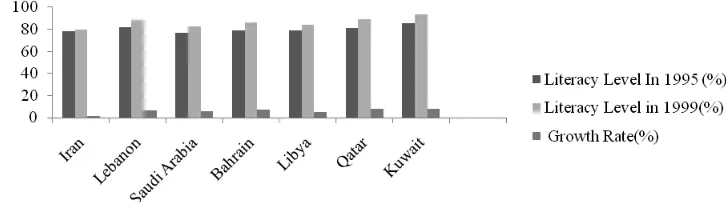
Table 2. Literacy Level in Developing Countries during 1995-1999.
Countries Literacy LevelIn 1995(%) Literacy LevelIn 1999(%) Literacy Growth Level (%)
Annual Literacy Growth Level
(%)
Iran 78.2 79.5 1.3 0.3
Lebanon 81.7 88.3 6.6 1.1
Saudi Arabia 76.9 82.9 6.0 1.0
Bahrain 79.3 86.5 7.2 1.2
Libya 78.8 84.2 5.4 0.9
Qatar 81.2 89.0 7.8 1.3
Kuwait 85.3 93.3 8.0 1.5
Source:(Ministry of Education of Iran, 2006)
Figure 2. Literacy Level in Developing Countries during 1995-1999.
Source: (Ministry of Education of Iran, 2006)
Several studies have analyzed the factors which could contribute to the failures of the literacy activities in the Islamic Republic of Iran (Adli & Javdan, 1999 ; Afshang, 1997). These studies showed the three main factors which are as follows:
Absence of an effective program in the communities 1.
Lack of commitment by the people 2.
Lack of peoples’ participation 3.
stud-172 ies examined that the lack of an effective program resulted in defi ciencies in other elements such as community participation and peoples’ commitment (Davoudpour, 1994; Ghafari, 1997).
Hence, due to the failure of previous literacy programs in Iran, the government has decided to introduce a new program in order to achieve higher levels of literacy. In the early 2000s, Iran’s government has launched the Community Learning Centers Program (CLCP) to increase the level of literacy at community level. The selected communities for this study have joined the program in 2003. Communities with the low literacy levels in the states were selected. This study is going to examine that what is the role of CLCP in community literacy development in Iran with the special reference to the communities of Golshan and Nasr Abad in the States of Kerman and Yazd. Finding out the factors which have contributed to success of the program in this process is other goal of this study.
Methodology of the Study
This was a qualitative study. All data of this study have been collected and analyzed by researcher based on the informants’ perceptions, meanings, concepts, defi nitions, characteristics, metaphors, symbols, and descriptions. The nature of this type of study is exploratory and open-ended. This study has explored the informants’ attitudes, behaviors and experiences through varies methods such as face to face interview, focus group discussion and participation observation. Four tools as researcher, fi eld notes, video camera and audio recorder have been used to collect and analyze the data of this study.
Data Collection
Three types of data were collected in achieving to the goals of the study. They were educators, learners and executives data. Learners data were collected from people who have participated in the program in these communities to learn the literacy skills. Educators data were collected from people who have participated in the program to teach illiterates. Executives data were collected from people who have participated in the program to help both educators and learners in achieving their goals. These people were selected because they were involved directly with the program in these communities. There were two types of data that have been collected in this study: the primary and the secondary data. The primary data have been collected by having both Face to Face interview and Focus Group Discussion (FGD), while the secondary data have been collected through the printed and unprinted media, published and unpublished articles, journals, books and reports.
Data Analysis
173 Volume 15, 2009 Results of the Study
Based on the results, all three different groups involved in this study have agreed that one of the main roles of CLCP was to improve the literacy skills in these communities. They were believed that CLCP could promote the literacy skills as follows:
Reading: Ability to read a simple paragraph and to recognize the words 1.
Writing: Ability to write a sentence in Iranian language in Persian scripts 2.
Do simple calculating: Ability to do a simple calculation. Ability to solve a problem that 3.
involves simple numbers or quantities
All of the informants of the study have agreed that, CLCP as an educational tool has played a very important role in developing literacy skills in these communities. They were stated that learners who have participated in the program are well thought how to read, write and do simple calculation. In CLCP literacy classes, learners have learned literacy skills; because, they were going to apply their skills immediately in problem solving and to see practical applications for their learning.
Based on the documentations, in 2003, there were 320 illiterates who joined the CLCP in Golshan. After one year of joining the program (2004), 237 adults have reported that, they have achieved literacy equivalent to grade 1-2 (level A). In Nasr Abad as well as Golshan, there were 327 illiterates who joined the program in 2003. After a year (2004), 279 of them have reported that, they have achieved literacy skills equivalent to grade level A. Based on the results, the level of literacy in the community of Golshan before the implementation of CLCP was 74% and increased to 94% after the implementation of CLCP. The level of literacy in the community of Nasr Abad before the program was 75% as well and increased to 95% after the implementation of CLCP. The details of results of literacy level after the implementation of CLCP in the communities of Golshan and Nasr Abad that have been studied is shown in Table 3 and Figure 3.
Table 3. Literacy Level in Golshan and Nasr Abad after CLCP.
Year Golshan (%) Nasr Abad (%)
2003 74 75
2004 81 83
2005 88 87
2006 94 95
Source:(Literacy Movement Department of Anar, 2007; Literacy Movement Department of Taft, 2007)
Figure 3. Literacy Level in Golshan and Nasr Abad after CLCP.
Source:(Literacy Movement Department of Anar, 2007; Literacy Movement Department of Taft, 2007)
174 Discussions of the Study
This study has shown that literacy level in communities of Golshan and Nasr Abad before the program was 74% and 75% receptively. The percentage, however, has increased to 94% and 95% within four years after the introduction of the program in these communities. This is due to the fact that, through CLCP, the adults in the communities are taught how to read, write, and do simple cal-culation. On the average, the annual literacy growth level before the program in the communities was 0.3% while this level has reached out to 4% after the introduction of CLCP in the communities. This means that, the annual literacy growth level has become around thirteen fold after the program in Iran (Literacy Movement Department of Anar, 2007; Literacy Movement Department of Taft, 2007).
Factors Contributed to the Success of CLCP in Improving the Level of Literacy
Based on the study, what made the CLCP famous is not merely because of the successful roles that the program has implemented, but what makes it more interesting is the fact that the success of CLCP depended more on its relationship with other factors. This argument is supported by the results of the study that were gathered from two selected communities which participated in the CLCP. The informants of the study were believed that the government, community participation, good educators, local leaders, international organizations have helped the program in community literacy development in these communities. According to them, all of these factors worked together to the success of CLCP. Each factor has its own advantages and strengths. Removing one factor will retard the process of achieving success. This was because every single factor is inter-connected to each other. One factor is no more or less important than the other. For example, one of the factors was local leaders.
The informants were believed that local leaders could act as spokes persons and as bridges be-tween the government and the local people. They noted that local leaders also forwarded the demands of the local people to the government. The informants said that without this factor, it was very diffi cult to convey any message or information from the national authorizations to the local people.
Based on the study, community participation has also made contributions to the program’s ability in contributing to the success of CLCP in community literacy development. Community participation has allowed CLCP to perform its duties in a more effi cient and effective way. The program did not have to waste its time convincing the people in the community to get together and work hard. Instead, it could use its time to concentrate on other major issues. With strong support, effort and time from the local people, CLCP in these communities was able to achieve its objectives with much less diffi culty.
The presence of good educators in these communities couldn’t be ignored to the success of the program. There is not much CLCP can do without the presence of good educators, regardless of how effective, effi cient and good the CLCP was. Informants of the study expressed that, good educators has allowed CLCP to well implement its duties. Based on the study, the existence of good educators has made it possible to use materials in CLCP with less diffi culty. The selection of the right programs was also another function of good educators that was important to the success of CLCP in these communities.
In addition to the factors above, the government of Iran has also helped the program in improving the level of literacy among adults in these communities. The government has supported the program by furnishing the literacy classes, preparing the textbooks, establishing the planning objectives and providing the guidelines, information, and plans and funding levels. The government has also al-located the remarkable budgets and facilities for CLCP in these communities to promote the level of literacy and decrease the level of illiteracy.
175 Volume 15, 2009
Community Learning Centers Program in Other Developing Countries
Researches show that in addition to Iran, CLCP has also played a very important role to promote the level of literacy in other CLCP participating countries such as Bangladesh, Thailand, Nepal, and Indonesia (Zolfaghari & Shatar Sabran, 2009; Zolfaghari, Shatar Sabran, & Zolfaghari, 8-11 July 2009; Zolfaghari, et al., 2009). In Bangladesh, CLCP could help increasing the level of literacy through the basic and post literacy programs. In the country, the level of literacy after the implementation of CLCP has improved to around 23%. The literacy level in Bangladesh before the program was 26.1%. The percentage, however, has increased to 49% seven years after the program(Dhaka Ahsania Mission & Department of Non-Formal Education, 2008; The Bangladesh Bureau of Statistics, 2008).
Thailand has also had a successful experience in improving the level of literacy through CLCP. In the country, CLCP has presented the literacy activities within basic literacy, post-literacy and continuing education programs. It has increased the level of literacy to 93.5% from 90.5%.
Besides Bangladesh and Thailand, CLCP has also played an effective role in community literacy development in Indonesia. The level of literacy growth in the country was higher than Thailand but lower than Bangladesh. The annual literacy growth was 1.2% in Indonesia. Through CLCP, the adults of the communities in the country are taught how to read, write, and do simple calculation. The literacy level in Indonesia before the CLCP was 78%. The percentage, however, increased to 86.8% seven years after the program (Statistics Indonesia (BPS), 2008).
In addition to three countries above, Nepal had also a successful experience in the program. In the country, CLCP has also played a suitable role in teaching the literacy skills. The literacy level before the program was 14%. The percentage, however, increased to 34.9% seven years after the program(Central Bureau of Statistics of Nepal, 2008; Ministry of Education and Sports of Nepal, 2008). Based on the Central Bureau of Statistics of Nepal, the level of literacy has improved to around 20.9 % after the CLCP.
Conclusion and Suggestions
Based on the discussions above, it can be concluded that the CLCP as an educational tool has played a very encouraging role to develop the literacy skills among adults in these communities. On the average, the level of literacy in these communities has been promoted to around 20% through CLCP four years after the implementation of the program. Comparing two abovementioned com-munities, it can be resulted that although, CLCP has different impacts in different years, however, overall, it has played an important and equal role in developing the literacy skills in these communities. The detail of the level of CLCP effect in community literacy development in two abovementioned communities is shown in Figure 4.
Figure 4. The Rate of the CLCP’s Effect in Golshan and Nasr Abad.
176 will retard the process of achieving success in the program. This is, because, every single factor is inter-connected to each other. One factor is no more or less important than the others.
Based on the statements above, the following recommendations are made to promote the level of literacy among people not in these communities but communities in developing countries:
Combination of the literacy, job and life skills 1.
Capacity building of the CLCP personnel 2.
Localization of the textbooks 3.
It is hoped that, these recommendations will become signifi cant guidelines for the Ministries of Education for future community literacy development programs in the country.
References
Abedi, L. (1991). Investigation of the Literacy Plans to Accorded with Literates Needs. Esfahan: Literacy Movement Organization.
Adli, M., & Javdan, G. (1999 ). Effective Factors on Illiterates’ Non-welcome of Literacy Classes in Dargaz.
Khorasan: Literacy Movement Department.
Afshang, N. (1997). The Rejected Factors of Literacy Fifth Graders in Gilan. Gilan: Literacy Movement Department.
APPEAL (2005). Regional workshop on strengthening linkages and networks through Community Learning Centres (CLCs) Retrieved May 26, 2008, from http://www2.unescobkk.org/elib/publications/090/strengthen-ing_CLC.pdf
Central Bureau of Statistics of Nepal (2008). Statistical Year Book Retrieved Nov 2, 2008, from http://www. cbs.gov.np/statistical_year_book.php
Davoudpour, M. (1994). Investigation of Compulsion Literacy in view’s Learners and Instructors in Markazi. Arak: Literacy Movement Department.
Dhaka Ahsania Mission, & Department of Non-Formal Education (2008). The Community Learning Center in Bangladesh Retrieved Nov 11, 2008, from http://www.bbs.gov.bd/
Ebrahimian, A. (2002). Education for All; Progress of Community Learning Centers in Iran. Tehran: Literacy Movement Organization.
Geographical Organization of Forces of Islamic Republic of Iran (2005). Identity Certificate of Iran’s Villages; Geographical Culture of Islamic Republic of Iran’s Villages (10 ed. Vol. 112). Tehran: Geographical Organiza-tion of Forces of Islamic Republic of Iran.
Ghafari, H. (1997). Effective Challenges in Educational Development in Saghez. Kurdistan: Literacy Move-ment DepartMove-ment.
Jamshidi, G. (1988). Literacy Movement of Organization Iran’s Performances during 1979-1994. Tarbiat Modares University, Tehran
Literacy Movement Department of Anar (2007). Activities of Literacy Movement Department of Anar. Anar: Literacy Movement Department of Anar.
Literacy Movement Department of Taft (2007). Activities of Literacy Movement Department of Taft. Taft: Literacy Movement Department of Taft.
Literacy Movement Organization of Iran (1999). Statistical Yearbook of Literacy Movement Organization.
Tehran: Literacy Movement Organization.
Ministry of Education and Sports of Nepal (2008). Educational Statistics of Nepal Retrieved Nov 2, 2008, from http://www.moe.gov.np/moe/stats/stat_nfec.php
Ministry of Education of Iran (2006). Statistical Yearbook of Ministry of Education. . Tehran: Ministry of Education
Sabagheian, Z. (1992). Literacy Matters and Problems in Iran (Vol. 1). Tehran: Shahid Beheshti University press.
177 Volume 15, 2009 Statistical Center of Iran (2006b). Statistical Yearbook of Iran Retrieved 12-1-2008, 2008, from http://amar.
sci.org.ir
Statistics Indonesia (BPS) (2008). Statistical Yearbook of Indonesia 2007 Retrieved Nov 13, 2008, from http:// www.bps.go.id/
The Bangladesh Bureau of Statistics (2008). Statistical Yearbook of Bangladesh 2007 Retrieved Nov 13, 2008, from http://www.bbs.gov.bd/
UNESCO (2005). Education for All; Literacy for Life Retrieved May 26, 2008, from http://unesdoc.unesco. org/images/0014/001442/144270e.pdf
UNESCO Institute for Statistics (April 2008). Literacy and Adult Education Statistics Programme Retrieved Feb 7, 2009, from http://portal.unesco.org/education/en/files/41640/11254982355Metadata_Literacy_08_2005. xls/Metadata_Literacy_08_2005.xls
Yopp, H. K., & Singer, H. (1994). Toward an interactive instructional reading model: Explanation of activa-tion of linguistic awareness and met linguistic ability in learning to read. In H. Singer & R. B. Ruddell (Eds.),
Theoretical Models and Processes of Reading (4 ed., pp. 381-390). Newark, Del: International Reading As-sociation.
Zolfaghari, A., & Shatar Sabran, M. (2009). Community Learning Centers Program and Community Literacy Development in Developing Countries. Serdang: UPM.
Zolfaghari, A., Shatar Sabran, M., & Zolfaghari, A. (8-11 July 2009). Community Learning Centers Program as Educational Tool for Community Literacy Development in Developing Countries Paper presented at the Furth International Conference on Interdisciplinary Social Sciences, University of Athens, Greece
Zolfaghari, A., Shatar Sabran, M., & Zolfaghari, A. (2009). Community Learning Centers Program in Com-munity Literacy Development in Asian and the Pacific Countries: Bangladesh, Iran, Vietnam and Pakistan as Case Studies. Pakistaniaat: A Journal of Pakistan Studies, 1(1), 10-29.
Adviced by Paramasivam Muthusamy, University of Putra Malaysia, Malaysia
Akbar Zolfaghari Ph.D Student in Community Development in Faculty of Human Ecology at University of Putra Malaysia, 43400, UPM, Serdang, Selangor, Darul Ehsan, MALAYSIA.
Phone: 006-0122646430
E-mail: [email protected] Website: http://www.upm.edu.my/
Mohammad Shatar Sabran Associate Professor in Leadership and Community Development at the Faculty of Human Ecology and the Director for Curriculum Center, University Putra Malaysia, 43400, UPM, Serdang, Selangor, Darul Ehsan, MALAYSIA. Phone: 006-0389468557
E-mail: [email protected] Website: http://www.upm.edu.my/
Azam Zolfaghari Bachelor Student in Social Sciences, Research Branch in Faculty of Social Sciences at Payame Noor University (PNU), Blv. 17 Shahrivar, Yazd. Iran. Phone: 0098-9139946824.