International Journal of Engineering and Technology Research Published by Cambridge Research and Publications
IJETR ISSN-2329-7309 (Print)
81
Vol. 19 No.5 September, 2020.
SATELLITE COMMUNICATION FOR 5G NETWORK
1ABDULKADIR ABUBAKAR, 2JAMILU BALA HAMZA,
1BOYA N. SAMSON, 1ZAHRADDIN UMAR DAHIRU,
1BALA A.M.,
1Department of Electrical/ Electronic Engineering Technology, Federal Polytechnic, Bauchi, 2Department of Electrical Engineering, Waziri Umaru Federal Polytechnic, Kebbi, Nigeria Abstract
The fifth generation (5G) vision is driven by the prediction that data traffic requirements will increase by up to 1000 times by 2020. However, the available spectrum will not be sufficient to satisfy this huge demand. There will be the need to use much smaller cells where resources can be adapted dynamically in space and time. Moreover, techniques like multiple-input multiple-out- put (MIMO) antennas, high-frequency reuse, and precoding will be adopted to enhance the capacity. 5G systems will need to achieve important key performance indicators (KPIs), in terms of low latency, high level of security, massive device connectivity, and consistent quality of service (QoS) provisioning. Therefore, satellite communications will play a significant role in 5G as a complementary solution for ubiquitous coverage, broadcast/multicast provision, and emergency/ disaster recovery.
Keywords: Satellite, Communication, 5th Generation, Network, future trends and challenges
Introduction
Today, there is growing interest in the integration of a satellite component into the 5G ecosystem. The European Space Agency (ESA) recently launched the Satellite for 5G initiative (ARTES framework) encompassing development projects, service trials, and testbeds for the achievement of the satellite 5G component. Moreover, the EU NetWorld 2020 European Technology Platform, coordinating the EU R&D efforts toward 5G systems, has developed white papers where the satellite is just a 5G RAN. The EU-funded 5G Public-Private Partnership (5GPPP) is another important initiative for the implementation of future 5G systems, where the satellite is a part of the big picture (Giambene et al., 2018). The 5G is expected to provide user bit rates up to 10 Gb/s and to have round-trip times (RTTs) as small as 1–10 ms for some application scenarios (Joint Programming Initiative Urban Europe, 2019). Recent studies estimate that about 4 billion people of the world’s population still lack Internet access. The cost of pure terrestrial coverage will quickly become unbearable with increasing capacity needs for rural, remote, and even urban areas. Satellites will have unique opportunities for providing 5G services in rural areas. Moreover, satellites will also support
International Journal of Engineering and Technology Research Published by Cambridge Research and Publications
IJETR ISSN-2329-7309 (Print)
82
Vol. 19 No.5 September, 2020.
machine-type communications, paving the way to new applications, including smart agriculture, environmental protection, transportation, ani- mal tracking, and so on (Giambene et al., 2018).
Methodology
The methods of conducting research and analysis has two major approaches: The quantitative research and qualitative research methods. Each method has its own techniques; Qualitative research involves collecting and analyzing non-numerical data (e.g., text, video, or audio) to understand concepts, opinions, or experiences. It can be used to gather in-depth insights into a problem or generate new ideas for research. The quantitative research is the process of collecting and analyzing numerical data. It can be used to find patterns and averages, make predictions, test causal relationships, and generalize results to wider populations (Borgen & Hiebert, 2006). However, in this research we combined the two approaches to understand the current importance practices, challenges and the future used of 5G networks in satellite communication.
Current Practices for Satellite 5G
The advanced communications of 5G are expected to transform three major use cases (ITU-R Recommendation M.2083): Enhanced Mobile Broadband (eMBB), Ultra-Reliable and Low-Latency Communications (URLLC), and Massive Machine-Type Communications (mMTC).
Satellite has a critical role to play in each of these categories.
Figure 1: Current Practices in 5G Satellite Communication
International Journal of Engineering and Technology Research Published by Cambridge Research and Publications
IJETR ISSN-2329-7309 (Print)
83
Vol. 19 No.5 September, 2020.
1. Enhanced Mobile Broadband (eMBB): With 5G comes the opportunity to offer
vastly enhanced and faster broadband connectivity (e.g., voice, video, and data) to wide area networks, hotspots for mobile or fixed networks.
• 5G to Premises: Satellite will complement terrestrial networks, such as broadband connectivity to a home or office, in an underserved area, or to enterprise sites as a backup.
• 5G Fixed Backhaul: Satellite will bring broadband connectivity where it is difficult to deploy terrestrial connections in rural and remote areas across a wide geographic region only or best covered by satellite.
• 5G Mobility Backhaul: Satellite will bring broadband connectivity to remotes or UEs on the move, such as airplanes, trains, vehicles or maritime vessels.
2. Ultra-Reliable and Low-Latency Communications (URLLC): The second set
of 5G use cases are URLLC applications that are particularly important for mission-critical and pseudo-real-time applications. Let’s consider the case of autonomous cars, where latency is absolutely critical. To operate successfully, autonomous cars need to be able to talk to each other and their surroundings (also referred to as ‘vehicle-to-everything’ or ‘V2X’) within milliseconds. Until the introduction of 5G, there has been no network capable of handling the sheer scale and low latency required to make autonomous driving a reality. The 5G standard is about to change that with lightning speed connections and smart routing. It is clear that satellite connectivity, regardless of its orbit (GEO, MEO, LEO), will not support certain latency sensitive applications and services, and therefore is not an optimal access technology option in V2X or autonomous driving per se; however, it will have a role in the connected car application at large, such as in passenger infotainment and car software updates. In the case of the connected car, multicasting will allow media streaming, such as OTT and software updates, to be broadcasted to millions of cars simultaneously, vastly reducing the congestion that would otherwise be put on the base station. Satellite will complement the terrestrial buildout through traffic offloading. This would also require the endpoints (base stations or cars) to be hybrid in nature, with satellite and cellular connectivity modem technology incorporated.
3. Massive Machine Type (mMTC) Communications: The third set of use cases are
mMTC for M2M or IoT devices and sensors. SDN functionality will play a critical role here as it allows for a given UE to be serviced with far fewer resources, in return enabling several UEs to be serviced with the equivalent resource of a single 4G UE. This already showcases the promised scale that comes with 5G.
The 5G architecture needs to dramatically scale as it will be connecting and backhauling data from millions of smart devices and sensors inside homes and urban
International Journal of Engineering and Technology Research Published by Cambridge Research and Publications
IJETR ISSN-2329-7309 (Print)
84
Vol. 19 No.5 September, 2020.
infrastructure, as they will become prevalent in smart cities of the future. While small in nature, the sheer aggregated volume of this M2M and IoT connectivity will have a major impact on the network load. In order to offload 5G networks, one opportunity for satellite can be backhauling non-latency sensitive data from these devices, or more precisely, from the aggregation points back to the core network.
Figure 2: Future 5G Satellite Applications (The 5G Future and the Role of Satellite, 2019).
5GCHALLENGES
Regardless of the research efforts achieved to fill the gap between the current satellite communication networks and their intended network virtualization evolution, some problems have been identified, which need to be further examined and solved before recommending a stable and standardized network architecture. The first matter to look into is how to distribute the different layer functionalities that include the software-defined networking (SDN) architecture, such as, in which nodes to find the three SDN planes. This issue involves different factors, such as the high propagation delays for satellite links and also the processing power capabilities of the considered components. Satellite networks might use diverse types of satellites acting at different altitudes (GEO, MEO, LEO) and categorized by different sizes (e.g., Pico, Nano, micro) (The 5G Future and the Role of Satellite, 2019).
International Journal of Engineering and Technology Research Published by Cambridge Research and Publications
IJETR ISSN-2329-7309 (Print)
85
Vol. 19 No.5 September, 2020.
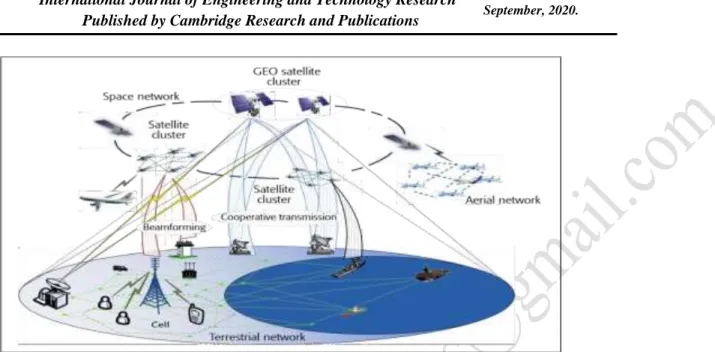
Figure 3: Space Information Networking Architecture (Bai et al., 2018).
1. Cross-Layer Resource Management: Most recent studies on resource
allocation in multisatellite systems are mostly based on a single layer, such as the physical layer or link layer. To further improve the system performance and provide a better quality of service (QoS) demanded by 5G communications, the cross-layer design must be considered to jointly optimize resource scheduling factors.
2. Heterogeneous Network Structure: Figure 3 shows information
interaction between different networks is one of the critical problems in space information networks. A variety of intrinsic properties of space, aerial, and ground communication systems stresses joint optimization of satellite communication architectures, including time/frequency scheduling, beam forming design (Bai et al., 2018).
FUTURE TRENDS OF 5G
Mobile satellites today provide services to air, sea and remote land areas via GEO operators (e.g Inmarsat, Thuraya) and non-GEO operators (e.g. Iridium, Globalstar, O3b). These operate in L, S and more recently Ka bands, to both handheld and vehicle-mounted as well as some fixed terminals. Air interfaces and network functions have tended to be proprietary although some 3 integration with MSS and 3GPP network interfaces exist. Fixed satellites today provide backhaul services to cellular in C, Ku and Ka bands, and also services to moving fixed terminals on vehicles in C-, Ku-, X- and Ka-bands. The satellite has been an overlay, rather than an integrated system except in S-band where an integrated satellite and terrestrial MSS standard has been adopted.
International Journal of Engineering and Technology Research Published by Cambridge Research and Publications
IJETR ISSN-2329-7309 (Print)
86
Vol. 19 No.5 September, 2020.
A growing area of interest is in the transport sector where safety services and V2V (Vehicle to Vehicle) are seen as ideal for satellite delivery. Satellite is also used extensively for low rate SCADA (Supervisory Control and Data Acquisition) applications dealing with remote installations such as to/from pipelines, oil and gas etc. Satellite is also used in cases of failure in the cellular system due to natural or man-made disasters. Increased data requirements for applications such as oil and other mineral exploration and security via UAV’s has spurred the need for more spectrum and the use of higher frequencies such as Ka-band (Networks, 2014).
Looking towards the future to 2020/5 there will be a trend to larger and more powerful GEO satellites taking capacities from 100’s Gbps to over a Terabit/s. Several hundreds of spot beams will, via higher order frequency reuse increase the capacity in the limited spectrum. Advances in satellite payload technology via new materials and optimized designs will enable up to 30m deployable antennas at L/S bands and increased payload powers from 20 to 30KW. Onboard signal processing will enable improved connectivity and flexibility to meet changing traffic patterns and demands e.g. adaptive beamforming and hopping and interference management to increase capacity. Alternative architectures involving clusters of GEO’s and possibly fragmentation of link functions between the connected (possibly with ISL’s) clustered satellites may evolve. Following the recent innovative use of different orbits, new non-GEO systems are likely to appear possibly using all-optical technology—between satellites and from satellite to ground and possibly using constellations of smaller and cheaper satellites. Satellite and terrestrial system integration are already a trend and this will continue with the development of interoperability standards to allow the two sectors to interconnect efficiently both at the network level and at IP levels. This form of technological complementarity, relying on network hybridization, is already a reality (Networks, 2014).
Satellite Communication (SatCom) systems can address a wide range of services such as broadcast, broadband and narrowband services to fixed, portable and mobile terminals over global or regional coverage:
• Broadcast systems have been optimized to deliver TV programs. • Broadband services support IP services
• Most mobile satellite services are delivering 3G-like services
Among others, the following main evolutions in capabilities are expected in both Geo Stationary Orbit (GSO) and Non-Geo Stationary Orbit (NGSO) satellite systems performance:
International Journal of Engineering and Technology Research Published by Cambridge Research and Publications
IJETR ISSN-2329-7309 (Print)
87
Vol. 19 No.5 September, 2020.
• Higher Service rate and throughputs thanks to multi-beam payload and larger antenna for narrow beams to maximize the frequency re-use
• Increased spectrum efficiency
• Higher energy efficiency (W/km2 and W/kbps)
The progressive convergence of traditional broadcast services and the internet calls for a new role for SatCom. This process of convergence is, inter alia, about making sure users can access a maximum of high-quality audio-visual content on any of their devices whether they live in urban or rural areas. Satellites can proficiently be part of a hybrid network configuration, consisting in a mix of broadcast infrastructures and broadband infrastructures managed in such a way that it brings, seamlessly and immediately, converged services to all end-users (Networks, 2014).
CONCLUSION
In this paper we have discussed the main areas where satellite can play a role in 5G network in which it will improve the coverage, reliability, availability and bandwidth enhancement and reduction of latency of the overall network especially in 5G use cases. The considered area covered current practice, future trends and challenges.
RECOMMENDATION
In this research, we considered current practice, future trends and challenges of 5G network for SatCom. The future work can expand the scope by exploring other areas and benefits towards the economic growth of the third world countries.
REFERENCES
Bai, L., Zhu, L., Zhang, X., Zhang, W., & Yu, Q. (2018). Multi-satellite relay transmission in 5G: Concepts, techniques, and challenges. IEEE Network, 32(5),
38–44. https://doi.org/10.1109/MNET.2018.1800038
Borgen, W., & Hiebert, B. (2006). Career guidance and counselling for youth: What adolescents and young adults are telling us. International Journal for the Advancement of Counselling, 28(4), 389– 400. https://doi.org/10.1007/s10447-006-9022-5
Giambene, G., Kota, S., & Pillai, P. (2018). Satellite-5G Integration: A Network Perspective. IEEE Network, 32(5), 25–31. https://doi.org/10.1109/MNET.2018.1800037
IMT-2020 (5G) Promotion Group, “5G vision and requirements,” http://www.imt-2020.cn. View at:
Google Scholar
Joint Programming Initiative Urban Europe. (2019). Strategic Research and Innovation agenda 2.0.
January.
Networks, I. C. (2014). NetWorld2020 ’ s – SatCom WG The role of satellites in 5G. July, 1–20. The 5G Future and the Role of Satellite. (2019).