RELATION TO FUNCTIONAL AND NUTRITIONALSTATUS
AMONG HOSPITALIZED ELDERLIES
Stojchevska P. Viktorija
,
1Jovanovska Tanja,
1Bogdanova Biljana,
1Belevska Maja,
2Rajchanovska Domnika,
1Filov Izabela
11
Higher Medical School, University St. Kliment Ohridski - Bitola, Republic of Macedonia 2
Clinical Hospital Bitola, Republic of Macedonia
Primljen/Received 19. 03. 2018. god. Prihva}en/Accepted 10. 06. 2018. god.
Abstract:Introduction:Adding years to life is a great achievement when this is accompanied by a good level of health and well-being and independence. Major indicators for prediction mortality risk in older adults are the nutrition status and physical functional ability. The aim of this study is to present the nutritive and func-tional status among institufunc-tionalized elderlies and the re-latedness with certain risk factors.Material and meth-ods:Cross-sectional study has been conducted at cer-tain nursing homes with participation of individuals over 60 years old. As for the research Scale of Daily Li-ving Activities (ADL) has been used to present the func-tional capacity of the elderly and MNA has been used to detect the nutrition status.Results:The results from the research conducted among elderlies have shown the fol-lowing socio-demographic characteristics: out of 127 participants, most of them were females- 77% and 69% at the age between 75 and 84. Most of the elderlies (in 68%) have completed secondary education. The results from MNA have shown that 69,2% are well- nourished, 27,6% are at risk for malnutrition and 3,2% are malnou-rished. There is a relatedness of the nutrition status with the gender (p < 0,001) and the level of education (p < 0,001).ADL scale among 127 elderly participants has shown that 37% are independent, 45% are with a moder-ate impairment and 18% are with severe functional im-pairment. In comparison with the females, the males show higher level of functional ability in all ADL com-ponents except the continence.Conclusion:The results from the research have shown that the nutrition status among elderlies is satisfactory, emphasizing the factors such as gender, education level and functional ability as key points for the level of nutrition status at the elderlies. Key words:malnutrition, functional capacity, el-derly.
INTRODUCTION
Aging among population worldwide is quite pres-ent regardless of its level of developmpres-ent. Even though the progression is higher in the developed countries yet the population aging includes those countries where the young people is present as well (1). In Macedonia the presence of people over 60 years in 2012 expressed in percentage is 17,5% and those over the age of 80 is 2,3% from the total number of population.
Adding years to life is a great achievement when this is accompanied by a good level of health and well-being and independence. Nevertheless ageing in-creases the dependence of other people due to reduc-tion of the level of funcreduc-tional independence (2). Major indicators for prediction mortality risk in older adults are the nutrition status and physical functional ability (3). A decline in functional status is a profound predictor of mortality (4). The death rate increases from 8 % in individuals with no disability, to 15% with one or more Instrumental Activities of Daily Living (IADL) disabilities, to 21% in persons with one or two ADL dependencies, and up to 37% in those with five or six ADL dependencies during a 2-year period (5). Many studies have shown that malnutrition among el-derly increases the death rate opposite to elel-derly with good nutrition status (5-10).
Nursing homes are the ones offering proper care for elderly of 80 years and above (11). The inability to live at home is intensifying the necessity of institutio-nal care of elderly offered by the nursing homes (12). Nursing homes across Europe provide care for 2 to 10% of the elderly (13, 14). Several studies have shown that the institutionalized female elderly register higher prevalence of malnutrition in terms of elderly people in general (15-18).
2018; 13(2): 163–169 ID: 267003660
Mini Nutritional Assessment (MNA) is s method used for identification of malnutrition risk among el-derly. The MNA is a simple, low cost and noninvasive method that can be done at bedside (19). Added MNA scores allow one to screen the elderly who have an ade-quate nutritional status, those who are at risk of malnu-trition and those who are malnourished.
The aim of this study is to present the nutritive and functional status among institutionalized elderlies and the relatedness with certain risk factors.
MATERIAL AND METHODS
Cross-sectional study has been conducted at certain nursing homes in R. Macedonia with participation of in-dividuals over 60 years old. Before the start of the rese-arch, the author has provided consent from the relevant authorities of the institutions. Each participant was expla-ined in details about the aim of the research as well as the anonymity and the voluntary aspect of this study. Before the beginning of the anonymous questionnaire a verbal and official /sighed consent has been provided by each participant (addition 1). Out of 148 elderlies the research
has been conducted to 127 as of the absence or inability to participate due to mental disorder.
Nutritional Status
MNA (addition 2) has been used to detect the nu-trition status, which is composed of 18 items such as: anthropometry: body mass index (weight in kilograms / Height in Meters x Height in Meters), calf circumfer-ence (measuring the calf at the widest part) and arm cir-cumference (the distance between the acromial surface of the scapula (bony protrusion surface of upper shoul-der) and the olecranon process of the elbow (bony po-int of the elbow) on the back of the arm.), dietary (num-ber of meals, autonomy to feed, water and food inges-tion), and global assessment (medicines, residence, mobility, dementia, stress, how does the patient consi-der his/her health status and nutritional status). The in-terpretation of the results is done based on the total sco-re such as: 24 and above asco-re considesco-red as adequate no-urished, 17 to 23,5 are considered as individuals at risk of malnutrition and 17 and below are considered to be malnourished (7).
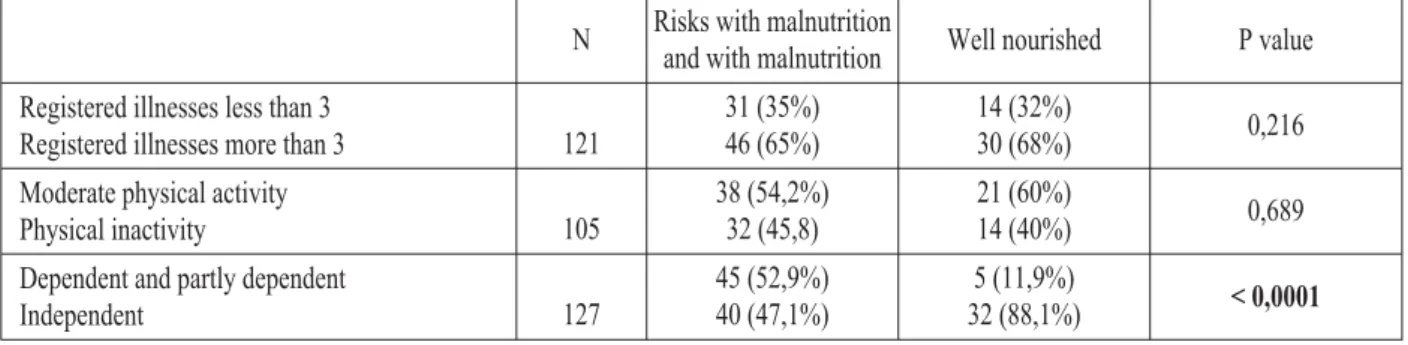
Table 2.Factors linked with the nutrition status among hospitalized elderly in R. Macedonia
N Risks with malnutrition
and with malnutrition Well nourished P value
Registered illnesses less than 3
Registered illnesses more than 3 121
31 (35%) 46 (65%)
14 (32%)
30 (68%) 0,216
Moderate physical activity
Physical inactivity 105
38 (54,2%) 32 (45,8)
21 (60%)
14 (40%) 0,689
Dependent and partly dependent
Independent 127
45 (52,9%) 40 (47,1%)
5 (11,9%)
32 (88,1%) < 0,0001 ANOVA
Source of Variation SS df MS F P-value F crit
Between Groups 253.5 2 126.75 6.019789 0.021899 4.256495
Within Groups 189.5 9 21.05556
Total 443 11
Table 1.Variable associated with functional activates, gender and BMI
Addition 1
Consent form for participants
1. I understand that my participation is voluntary and that I am free to withdraw at any time without gi-ving any reason.
2. I understand that confidentiality and anonymity will be maintained and it will not be possible to identify me in any publications
___________________ __________________
Functional capacity
As for the research Scale of Daily Living Activiti-es (ADL) has been used to prActiviti-esent the functional capa-city of the elderly. It is consisted of activities demon-strating daily living independency. The scale is asses-sed with values 1- for independent and 0- for depend-ence. The score of 6 indicated complete independence, score 4 indicated moderate impairment and 2 and be-low indicate severe functional imparement (20, 21).
Data were analyzed with the Statistical Package for Social Science (SPSS), version 19.0. The analysis involved elderly with malnutrition and risk of it, using Pearson correlation coefficient with significance level of 5%. Poisson regression has been performed, presen-ting the reasons for raw and adjusted prevalence and their respective confidence intervals at 95% (CI 95%). Variables that were associated with significance level (p < 0.10) were included in the model.
RESULTS
The results from the research conducted among elderlies have shown the following socio-demographic characteristics: out of 127 participants, most of them were females- 77% and 69% at the age between 75 and 84. Most of the elderlies (in 68%) have completed sec-ondary education.
As for the estimation of their own health condi-tion, most of the participants (in 47%) have stated that their health is good and 41% of the elderlies estimated their health condition as poor. 76% of them use more than 3 medications a day and 17% of them use less than 3 medications a day. As of the results at 61% of the par-ticipants less than 3 diseases has been registered as pre-sents and 34% reported more than 3 diseases.
According to BMI 19% are with low wight, 33% are with a normal weight, 31% are overweight and 17% are obese. Mid value of BMI is 22,3 with statistical sig-nificance between males and females (p < 0.001).
The results from MNA have shown that 69, 2 % are well- nourished, 27,6% are at risk for malnutrition and 3,2% are malnourished. There is a relatedness of the nutrition status with the gender (p < 0,001) and the level of education (p < 0,001).
ADL scale among 127 elderly participants has shown that 37% are independent, 45% are with a mod-erate impairment and 18% are with severe functional impairment. In comparison with the females, the males show higher level of functional ability in all ADL com-ponents except the continence. From the results of the chosen items (functional activates, BMI and gender) represented in the table no 1 we have: independent (37%), moderate impairment (45%) and severe
functi-onal impairment (23%). According to the represented results we have significant differences between the groups (p < 0,05).
Regarding the variables related to elderly health, it has been found that presence of more than 3 diseases, physical inactivity and functional capacity for ADLs was associated to nutritional status. Table 2 presents PR (Prevalence Rations) of independent variables and their confidence intervals. It was observe as a result of the multivariate analysis, that only the variable functi-onal capacity for ADL was statistically significant.
DISCUSSION
This research presents the socio- demographic characteristics, health, nutritive status, activity daily li-ving among institutionalized elderlies. As for the study most of the participants expressed in percentage were females at the age between 75 and 84. Most of the par-ticipants have completed secondary education. The participants that were mostly included in this research estimate their own health condition as good and most of them use more than 3 medications a day, and for most of them less than 3 diseases are registered.
Self-evaluating research among elderlies in Korea has shown that 78% of the people have registered an il-lness that is related with the estimation of their own he-alth (22).
The morbidity in this research can be explained with the fact that the institutionalizing of the elderlies is mostly a result of the presence of illness and inability for different types of care to this population.
According MNA scores 27,6% from the partici-pants were at risk of malnutrition and 3.2% were regis-tered as malnourished. Those results were with a lower range than most of the international studies, whereas the results from 32 multinational studies including 6,821 institutionalized elders indicated that the preva-lence of malnutrition and its risk were 5-71% and 27-70% respectively (17). A study conducted at a nurs-ing homes in Spain presented a prevalence of 2,8% of participants are with malnutrition and 37,3% are at risk of malnutrition. (23).
The nutrition status among participants is most probably registered as good due to the exclusion of the severely ill and elderlies suffering with dementia, dur-ing the conduct of this research.
In this study the nutrition status has shown relat-edness also with the gender and the level of education among hospitalized elderlies.
High proportion of elderly with low weight mostly man was found in the research done by Mene-zes and Marucci (25). As for the education and nutriti-onal status a relatedness was indentified in a other stu-dies conducted in Brazil (26). As for this study along with the aforementioned studies conducted in Brazil most of the examined are registered with a low level of education. This result may be related to low socioeco-nomic status and poor access to information. Barreto et al.also suggests that low education is a risk factor for low weight, explained by lower income in old age (27). The results of ADL scale have shown that most of the participants are able to perform their basic daily ac-tivities, comparing that males show higher percentage of independence in all components of ADL except the continence, than females.
Similar results were shown with the study conduc-ted at nursing homes in Lebanon where the males have shown higher level of functional ability compared to the females (28).
This study has also shown relatedness of the nutri-tion status and presence of more than 3 diseases among participants which is confirmed with the results of the research of Stratton RJ whereas the results shown that Somatic diseases may also increase the risk of malnu-trition (29).
Participants included in this research show moderate physical activity and physical inactivity in the hospitali-zed elderly. Study conducted by Walid Kamal M. Abdel-basset approved beneficial effects of physical activity on depression status and pain in elderly people (30).
The results have shown a relation with the nutri-tion status and the funcnutri-tional capacity of ADL same as
the research conducted in Brazil where it has been ob-served that dependent or partially dependent individu-als for performing ADLs are approximately 1.6 times more malnourished or at risk of malnutrition than inde-pendent individuals (24).
Nutrition status among institutionalized elderly affects the impaired functional capacity, appearing whether as a cause of a consequence. It is possible that nutritional status is an important factor in maintaining functional capacity, due to some aspects such as the lo-west level of physical activity and muscle atrophy (31).
CONCLUSION
The results from the research have shown that the nutrition status among elderlies is satisfactory, empha-sizing the factors such as gender, education level and functional ability as key points for the level of nutrition status at the elderlies.
MNA and ADL are both simple and noninvasive scales that can easily be administered among hospitali-zed elderlies. Simple applying can be effective and economic manner of identification of persons that are in need of intervention.
DECLARATION OF INTEREST
The autors declare that there are no conflicts of in-terests.
Licensing
This work is licensed under a Creative Commons Attribution 4.0 International (CC BY 4.0) License.
Sa`etak
ODNOS FUNKCIONALNOG I NUTRITIVNOG STATUSA KOD STARIH
Stojchevska P. Viktorija,1Jovanovska Tanja,1Bogdanova Biljana,1Belevska Maja,2 Rajchanovska Domnika,1Filov Izabela1
1
Higher Medical School, University St. Kliment Ohridski - Bitola, Republic of Macedonia
2
Clinical Hospital Bitola, Republic of Macedonia
Uvod:Starenje je izrazito uspe{no kada je pra}e-no dobrim nivoom zdravlja, blagostanja i nezavispra}e-nosti. Glavni indikator za predvi|anje rizika mortaliteteta kod starijih ljudi je nutritivni status i funkcionalna fi-zi~ka sposobnost.Ciljove studije bio je da se predstavi nutritivni i funkcionalni status me|u institucionalizo-vanih starih osoba u korelaciji sa odre|enim faktorima rizika.Materijal i metode:studija slu~ajeva i kontrola je sprovedena u odre|enim stara~kim domovima sa u~e{}em pojedinaca koji su imali preko 60 godina. Za analizu je uzeta Merna skala dnevnih aktivnosti (ADL) koja je prezentovala funkcionalni kapacitet starih lica
REFERENCES
1. Ageing in the twenty-first century: a celebration and a challenge. United Nations Population Fund (UNFPA) and Help Age International, 2012.
2. Tolson D, Rolland Y, Andrieu S, Aquino JP, Beard J, Benetos A, et al. International Association of and Geriatrics: a global agenda for clinical research and quality of care in nursing homes. J Am Med Dir Assoc. 2011; 12(3): 184-9.
3. Tsai AC, Lee LC, Wang JY. Complementarity of the mini-nutritional assessment and activities of daily living for pre-dicting follow-up mortality risk in elderly Taiwanese. Br J Nutr. 2013; 109(4): 658–66.
4. Thomas DR, Kamel H, Azharrudin M, Ali AS, Khan A, Javaid U, et al. The relationship of functional status, nutritio-nal assessment,and severity of illness to in-hospital mortality. J Nutr Health Aging. 2005; 9(3): 169–75.
5. Manton KG. A longitudinal study of functional change and mortality in the United States. J Gerontol Soc Sci. 1988; 43(5): S153–61.
6. Beck AM, Ovesen L, Osler M. The “Mini Nutritional Assessment” (MNA) and the “Determine Your NutritionalHe-alth” Checklist (NSI Checklist) as predictors of morbidity and mortality in an elderly Danish population. Br J Nutr. 1999; 81(1): 31–6.
7. Persson MD, Brismar KE, Katzarski KS, Nordenström J, Cederholm TE. Nutritional status using mini nutritional asses-sment and subjective global assesasses-sment predict mortality in ge-riatric patients. J Am Geriatr Soc. 2002; 50(12): 1996-2002.
8. Donini LM, Savina C, Rosano A, De Felice MR, Tas-si L, De Bernardini L et al. MNA predictive value in the fol-low-up of geriatric patients. J Nutr Health Aging. 2003; 7(5): 282–93.
9. Vellas B, Guigoz Y, Garry RJ, Nourhashemi F, Benna-hum D, Lauque Set al. The Mini Nutritional Assessment (MNA) and its use in grading the nutritional state of elderly patients. Nu-trition.1999; 15(2): 116–22.
10. Chan M, Lim YP, Ernest A, Tan TL. Nutritional assess-ment in an Asian nursing home and its association with mortal-ity. J Nutr Health Aging. 2010; 14(1): 23–8.
11. Long-term Care for Older People. The OECD Health Project ŠInternet¹. OECD Publishing; 2005 Jun 30; Available from: http://dx.doi.org/10.1787/9789264015852-en.
12. Akner G: Analysis of multi morbidity in individual el-derly nursing home residents. Development of a multi morbidity matrix. Arch Gerontol Geriatr. 2009; 49(3): 413–19.
13. Lobo A, Santos P, Carvalho J, Mota J. Relationship be-tween intensity of physical activity and health-related quality of life in Portuguese institutionalized elderly. Geriatr Gerontol Int. 2008; 8(4): 284–90.
14. Drageset J, Natvig GK, Eide GE, Clipp EC, Bondevik M, Nortvedt MW, et al. Differences in health-related quality of
life between older nursing home residents without cognitive im-pairment and the general population of Norway. J Clin Nurs. 2008; 17(9): 1227–36.
15. Donini LM, Scardella P, Piombo L, Neri B, Asprino R, Proietti AR, et al. A malnutrition in elderly: Social and econo-mic determinants. J Nutr Health Aging. 2013; 17(1): 9–15.
16. Vandewoude M, VanGossum A.Nutritional screening strategy in nonagenarians: the value of the MNA-SF (mini nutri-tional assessment short form) in NutriAction. J Nutr Health Ag-ing. 2013; 17(4): 310–4.
17. Guigoz Y. The mini nutritional assessment (MNA) Re-view of the literature – What does tell us?. J Nutr Health Aging. 2006; 10 (6): 466–87.
18. Tsai AC, Ho CS, Chang MC. Assessing the prevalence of malnutrition with the Mini Nutritional Assessment (MNA) in a nationally representative sample of elderly Taiwanese. J Nutr Health Aging. 2008; 12(4): 239–43.
19. Guigoz Y, Garry JP. Mini nutritional assessment: A practical assessment tool for grading the nutritional state of el-derly patients. Facts Res Gerontol. 1994; 4(2): 15-59.
20. Morris JN, Fries BE, Morris SA. Scaling ADLs within the MDS. J. Gerontol. A Biol.Sci.Med.Sci. 1999; 54:(11) M546–53.
21. Snowden M, McCormick W, Russo J, Srebnik D, Comtois K, Bowen J, Teri L et al. Validity and responsiveness of the minimum data set. J. Am. Geriatr. Soc. 1999; 47(8): 1000-4.
22. Woo E, Han C, Jo SA, Park MK, Kim S, Kim E at all. Morbidity and related facgors among elderly people in South Korea: results from the Ansan Geriatric (AGE) cohort study. BMC Public Health. 2007; 7:10.
23. Serrano-Urrea R, Garcia-Mesequer MJ. Malnutrition in an elderly population without cognitive impairment living in nursing homes in Spain: study of prevalence using the Mini Nu-tritional Assessment test. Gerontology. 2013; 59(6): 490–8.
24. Amorim Sena Pereira ML, de Almeida Moreira P, Cunha de Oliveira C, Carneiro Roriz AK, Teresópolis Reis Amaral M, Lima Mello A at all. Nutitional status of institutiona-lized elderly Brazilians: a study with the MNA. Nutr Hosp. 2014; 31(3): 1198-204.
25. de Menezes TN, Marucci MD. Avaliaçno antro-pométrica de idosos residentes em Instituiçtes de Longa PermanLncia de Fortaleza-CE. Rev Bras. Geriatr Gerontol. 2010; 13(2): 235-43.
26. Pereira Machado RS, Santa Cruz Coelho MA. Risk of malnutrition among Brazilian institutionalized elderly: a study with the Mini Nutritional Assessment (MNA) questionnaire. J Nutr Health Aging. 2011; 15(7): 532-5.
27. Barreto SM, Passos VMA, Lima-Costa MFF. Obesity and underweight among Brazilian elderly: the Bambuí Health and Aging Study. Cad Saude Publica. 2003; 19(2): 605-12.
o{te}enjima. U pore|enju sa `enama, mu{karci su po-kazali vi{i nivo funkcionalne sposobnnosti u svim ADL komponentama, osim kontinencije.
Zaklju~ak:Rezultati ove studje pokazali su da je nutritivni status me|u starim licima zadovoljavaju}i i
da skre}e pa`nju na pol, nivo obrazovanja i funkcional-ne sposobnosti kao klju~funkcional-ne ta~ke u nutritivnom statusu starih.
28. Doumit JH, Nasser RN, Hanna DR. Nutritional and he-alth status among nursing home residents in Lebanon: compari-son across gender in a national cross sectional study. BMC Pub-lic Health. 2014; 14:629.
29. Stratton RJ, Green CJ, Elia M. Disease-related Malnu-trition: an evidencebased approach to treatment. CABI Publish-ing. 2003; 93-155.
30. Abdelbasset WK, Subash GN. Relationship betwe-en physical activity and health-related quality of life in el-derly people: a cross section study. Sanamed. 2017; 12(2): 87-92.
31. Moreira PL, Villas Boas PJF. Avaliaçno nutricional e capacidade functional de idosos institucionalizados em Botuca-tu/SP. Geriatria Gerontologia. 2011; 5(1): 19-23.
Correspondence to / Autor za korespondenciju Viktorija Prodanovska-Stojchevska
Str. Prevalec no. 21