Weaving Stored Procedures
into Java
Outline
● Introduction
● Stored procedure wrapper
– Problems before the wrapper – How it works
– How to use it
– More features including sharding
Zalando
tech.zalando.com ● 14 countries ● 1 Billion € net revenues for 2012 ● 3(+1) warehouses ● Europe's largestonline fashion retailer
Zalando platform
● Modern open source
software stack ● Mostly Java ● PostgreSQL database backend ● 150 developers and counting, technology surpasses 300 in total tech.zalando.com
PostgreSQL setup
● ~ 20+ Servers PostgreSQL master servers ● ~ 5.000 GB of data
● Started with PostgreSQL 9.0 rc1 ● Now running version 9.0 to 9.2
– cascading replication very welcome
– maintenance improvements great ( drop concurrently )
– Index only scan, pg_stat_statement improvements
● Machine setup
– 8- to 48- cores, 16GB to 128GB
PostgreSQL availability
● BoneCP as Java connection pool
● All databases use streaming replication
– Service IP for switching
● Failover is manual task
– Monitored by Jave app, Web frontend
● Significant replication delays sometimes
Stored procedure experience
● Performance benefits
● Easy to change live behavior
● Makes moving to new software version easy ● Validation close to data
● Run a very simplistic transaction scope ● Cross language API layer
● More than 1000 stored procedures
Outline
● Introduction
● Stored procedure wrapper
– Problems before the wrapper – How it works
– How to use it
– More features including sharding
Execution of stored procedures
● Using spring's BaseStoredProcudere
– Initially a lot of work per stored procedure – One class per stored procedure
– Write row mappers for domain object mapping
● Missing type mapper on Java side
– Spring type mapper insufficient
● Enums, array of types, nesting, and hstore missing
“Ancient” history
@SProc(name = "update_customer") @SProcParameters( value = { @SProcParameter(name = "p_number", type = SqlType.VARCHAR), @SProcParameter(name = "p_phone", type = SqlType.VARCHAR), @SProcParameter(name = "p_birthday", type = SqlType.DATE), @SProcParameter(name = "p_email", type = SqlType.VARCHAR), @SProcParameter(name = "p_first_name", type = SqlType.VARCHAR), @SProcParameter(name = "p_last_name", type = SqlType.VARCHAR), @SProcParameter(name = "p_gender", type = SqlType.CHAR), @SProcParameter(name = "p_title", type = SqlType.VARCHAR) } ) public class UpdateCustomerProc extends BaseStoredProcedure { public UpdateCustomerProc(final DataSource dataSource) { setDataSource(dataSource); setResultMapper(new ModificationResultMapper()); declareAndCompile(); } public StatusMessage updateCustomer(final Customer customer) { return (StatusMessage) executeWithSingleResult(customer.getCustomerNumber(), [...] customer.getSex().getDbValue(), title); }Goals of our wrapper
● Write as little code as possible on Java side ● One location for procedures of same topic ● One call path to any stored procedure
● “Natural” feeling for using stored procedures
– Procedure call should look like Java method call – RPC like
Outline
● Introduction
● Stored procedure wrapper
– Problems before the wrapper – How it works
– How to use it
– More features including sharding
Under the hood
Service Object Proxy Object StoredProcedure Object JDBC Connection Datasource Datasource Provider Invoke method() Typemapper StoredProcudure lookupFeatures
● New spring compatible type mapper
– From simple types to nested domain objects – Supports PG enum to Java enum
● Accessing sharded data supported
– Result “aggregation” across shards – Parallel query issuing
● Advisory locking via annotation
● Set custom timeout per stored procedure
Type mapper
● Annotations for class and member variables
– @DatabaseType and @DatabaseField
● CamelCase to camel_case conversion ● JPA 2.0 @Column annotation supported ● Addition type conversions include:
– Nested PostgreSQL types to Java objects – hstore to Map<String,String>
– PostgreSQL enum to Java enum ( by name ) – PostgreSQL array[] to List<?>()
Outline
● Introduction
● Stored procedure wrapper
– Problems before the wrapper – How it works
– How to use it
– More features including sharding
Using the wrapper
● Considere Java to PostgreSQL plpgsql ● First define the Java interface
Using the wrapper
Using the wrapper
● Define DTO classes if necessary
– Input parameters – ResultSet mapping
Using the wrapper
● Next create analogous PostgreSQL types
● Or use “OUT” columns
CREATE FUNCTION load_customer( INOUT id int, OUT name text,
OUT address t_address[] ) RETURNS SETOF record AS
CREATE TYPE t_customer AS ( id int, name text,
Outline
● Introduction
● Stored procedure wrapper
– Problems before the wrapper – How it works
– How to use it
– More features including sharding
Running SQL queries
● @SProcCall(sql=”[...]”) may run any query
– Benefit from type mapper – Relatively easy to use
– Although mixing SQL into Java source
@SProcCall(sql=”UPDATE t SET name = ?” + “ WHERE id = ? ”
+ “ RETURNING id”)
int updateName(@SProcParam String newName, @SProcParam int userId);
Sharding support
● Parameter annotation @ShardKey
● @ShardKey and @SProcParam may overlap
● ShardedObject interface for custom classes ● Added datasource providers for translation
@SProcCall
Customer getCustomer(@ShardKey int shardId,
@SProcParam String cnumber) @SProcCall
Different datasource providers
DataSource Provider DataSource ShardedObject Key ShardKey Strategy DataSource DataSource 01 11 *0 SKU Article MD5 [...]10 SKU123 BitmapSearch and “Merge” result set
● Use searchShards where you do not know
the shard
– will run on all shards return on first find
● Use runOnAllShards execute on all shards
– Search name like 'Na%' and return one collection
Shard 1 Shard 2 search() search() ResultSet ResultSet Wrapper Thread 1 Thread 2 List<Result>
Auto partitioning
● Java method called with one large collection
– Wrapper will split collection according to key – Execute SQL for split collection on each shard
● Default behavior if @ShardKey is a collection
Set of EANs (13 char) Set 1 (13 char) Set 2 (13 char) Shard 1 Shard 2 Shard Strategy
Java bean validation
● Annotation based validation ( JSR 303 )
● Relying on hibernate validator
● Automatically checked inside wrapper
– Less boiler plate code
Value transformers
● Global registry for type conversions
– e.g. for use with JodaTime class
– Enables transparent handling of legacy types
● Usefull for ::text to Java class conversion
– Type safe domain classes – ::text => class EAN
Per stored procedure timeout
● Trouble with global statement timeout
– Long running queries and supposedly fast ones
● Added @SProcCall(timeout=x)
– X is timeout in ms
– Allows overwrite for long running jobs
– Ensures limited run time for “fast” functions
Concurrency with advisory locks
● Single database serves many Java instances
– Synchronization may be required
● Wrapper features one enum for different locks
– @SProcCall(advisoryLockType=LOCK1) – Easy locking
Transaction support
● Spring's @Transactional should work
– More or less datasource dependent
– Sharded environment more complicated
● For multi shard operations wrapper provides
– Context is one procedure equals one transaction – Immediate commit on each shard
– Commit only if all executions were successful – Use two phase commit
Outline
● Introduction
● Stored procedure wrapper
– Problems before the wrapper – How it works
– How to use it
– More features including sharding
PGObserver
● Build to monitor PostgreSQL performance
– Stored procedures as execution unit
– Track table statistics to assist identifying causes
● Infrastructure
– One Java data gatherer
– Web frontend in using Python
– Metric data is stored in PostgreSQL
PGObserver database view
IO related stats CPU vs Sproc Load
Top 10 by calls Top 10 by runtime
Sequential scan in live env.
Avg. run time per call
Avg. self time per call Total runtime per monitored 15min
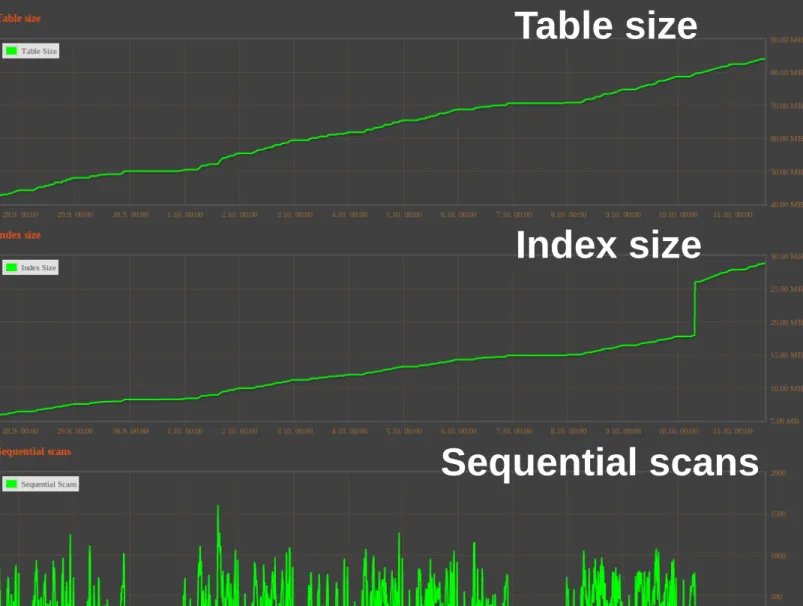
Table I/O data excerpt
Table size
Index size
Summary
● Stored procedures can improve performance ● Type mapper great library to reduce code for
mapping layer
● Wrapper makes procedure usage a lot easier ● Stored procedure and performance monitoring
in general is very important Visit us on:
http://www.github.com/zalando