www.ijemst.com
The Mathematical Experiences of Black
Males in a Predominantly Black Urban
Middle School and Community
Julius Davis1
1Bowie State University
To cite this article:
Davis, J. (2014). The mathematical experiences of Black males in a predominantly Black
urban middle school and community.
International Journal of Education in Mathematics,
Science and Technology, 2
(3), 206- 222
This article may be used for research, teaching, and private study purposes.
Any substantial or systematic reproduction, redistribution, reselling, loan, sub-licensing,
systematic supply, or distribution in any form to anyone is expressly forbidden.
Authors alone are responsible for the contents of their articles. The journal owns the
copyright of the articles.
Volume 2, Number 3, July 2014, Page 206-222
ISSN: 2147-611X
The Mathematical Experiences of Black Males in a Predominantly Black
Urban Middle School and Community
Julius Davis1 * 1Bowie State University
Abstract
There is a growing body of research focused on the mathematical experiences of Black males in the United States of America. This research has emerged to challenge the dominant narrative in mathematics education focused on Black males’ low performance on international, national, and state standardized tests. There is very little research that has explored the impact of high-stakes testing in mathematics on Black males in urban areas. Using qualitative research methods, this study examines the middle school mathematics experiences of four Black males and provides insight into their responses to challenges they face in urban communities, schools, and math classrooms. Critical race theory was used to illuminate Black males’ desire to be challenged in the classroom and describe the community, school, and classroom conditions that impact their lived realities and mathematics experiences.
Key words: Black males; middle school mathematics; urban; standardized testing in mathematics
Introduction
The President of the United States of America, Barack Obama, has launched two policy initiatives designed to improve the educational and mathematical experiences of Black males in P–12 schools. The first policy initiative, the Teach Campaign, was created to recruit more Black men into the teaching profession, particularly in areas like mathematics, to help improve the educational experiences of Black males in P–12 schools (Davis, Jones-Frank, & Clark, 2013). The second and newest policy initiative, My Brother's Keeper, was designed to help Black males have better lives and schooling outcomes. As a part of My Brother's Keeper, one of the charges issued to the taskforce was to highlight the challenges affecting young Black males. The initiative grew in response to the highly publicized slayings of two Black male teenagers, Trayvon Martin and Jordan Davis, whose killers were found not guilty based on the application of Florida’s“stand your ground” law.
Haygood, Dennis, and Horwitz (2012) state that the Trayvon Martin shooting stirred up memories of the Civil Rights Movement. Many international communities were outraged by Martin's shooting and stated that the U.S. is not, in fact, post racial as some have claimed. His shooting and the acquittal of his murderer illustrate how institutional and structural racism still exists in the U.S. (Fulkerson, 2012). McGee (2014) reported that a high-achieving Black male math student, refused to attend or even consider any college or university in Florida as a result of the “stand your ground” law. The Martin and Davis killings—just two of many—have highlighted and underscored the urgency of the condition of many young Black males, not only regarding education but also their basic right to life.
In mathematics education, the murders of two Black male teenagers during the United States civil rights era were addressed in Danny Martin's (2009c) plenary keynote address at the North American Psychology of Mathematics Education conference:
Society has always had a high threshold for Black pain.... Their lives were taken because they were
Black children.... We should not lose sight of particularity.... Any analysis of Black children's behavior in the world, including mathematics education, that fails to contextualize or appreciate what life was like, or is like, for these children is shortsighted and bound to be limited in its explanatory power.
*
There will be some who read this paper and say, “Get over it. Stop whining. Stop playing the race card. That's ancient history. Things have gotten better,” and so on. However, these dismissals and resistance only amount to a desire to maintain that status quo and to avoid the work of understanding how society's laws, policies, and practices routinely continue to converge in subjugating Black children. (p. 30)
The national focus on Black males and societal laws, policies, and practices in the U.S. echoes concerns regarding their achievements and experiences in mathematics education. The dominant narrative in this field about Black males’ performance revolves around international, national, and state standardized test results. For example, National Assessment for Educational Progress standardized test results suggest that “only 12 percent of black eighth-grade boys are proficient in mathematics, compared to 44 percent of white boys” (Gabriel, 2010, para. 3).These standardized test results are framed as a racial achievement gap and widely accepted as factual and indisputable evidence that Black males are intellectually inferior to White males in math (Martin, 2009b). Tate (1993) states that “standardized tests do not measure the commitment of the Black student who must venture through streets inflicted with crime, drugs, and other artifacts of urban neglect and decay to attend school that is staffed with less qualified teachers, fewer resources, and poorer facilities” (p.16).
Many mathematics education researchers have different perspectives on how the achievement gap should be framed and discussed (Gutierrez, 2008; Gutierrez & Dixon-Roman, 2011; Lubienski, 2008; Martin, 2009b; Stinson, 2010). Lubienski calls for mathematics education researchers to focus on analyses of the achievement gap (instead of the actual gap itself) and move toward analyses that are more skilled and nuanced. While Gutierrez (2008) also advocates for continued analysis of the achievement gap, she also calls for the mathematics education research community to “focus on advancement, excellence and gains in marginalized communities” (p. 362). Stinson (2010) argues that the overreliance on the achievement gap analyses in mathematics education research continues to reify White male students as the norm and math as a White male domain. Martin (2009b) provides a counterargument to the focus on the achievement gap, which creates a racial hierarchy of mathematics ability, one that frames Black students as inferior, mathematically illiterate, and less-than-ideal math learners. When White students do not perform at the level of Asian students, there is no discussion of an achievement gap. Instead, their poor performance is often explained as a problem with teacher knowledge and curriculum issues (Martin, 2009b).
Fortunately, there is a growing body of research focused on high-achieving Black males (Berry, 2003; Jett, 2009; Nobles, 2010; Stinson, 2004). This research body challenges the dominant narrative in mathematics education about Black males’ low standardized test and academic performance. Thompson and Davis (2013) argue that the mathematics education community must move away from a focus on individual achievement and toward a focus on collective achievement, which would ensure that “low performing” Black males begin to achieve at high levels. Martin (2009a; 2009b) argues that the so-called racial achievement gap is shortsighted without an understanding of both Black students' mathematics experiences and the contexts in which they live and learn. Martin further (2009b) argues that the vast majority of mainstream mathematics education research and policies purporting to explain so-called racial achievement gaps between Black and White males rely on inadequate and impoverished approaches to and explanations of race, racism, and racialized inequality. Martin (2007) calls for mathematics education researchers to use the experience lens to understand the mathematics experiences of Black males. In this article, I first examine the literature on Black males’ mathematics experiences with a focus on middle school years. Next, I describe critical race theory, the theoretical framework used to understand Black males’ mathematical experiences. Then, I describe the research methods used to investigate the middle school mathematics experiences of Black male students from a research project spanning over one year in an urban community.
The Middle School Mathematics Experiences of Black Males
Research of Black males' mathematics experiences has illuminated four major findings related specifically to middle school. First, Black males start experiencing academic problems in math in middle school (Thompson & Davis, 2013). Second, Black males' middle school peers influence their approach to learning, which determines their achievement level (Berry & McClain, 2010; Berry, et al, 2011; Thompson & Davis, 2013). Third, middle school is a critical period for helping Black males develop healthy mathematics, racial, and cultural identities of what it means to be a Black male math learner (Berry & McClain, 2010; Berry et al, 2011; Nyamkye, 2010; Thompson & Davis, 2013). Fourth, student-teacher relationships are important to Black males’ ability to learn math in middle school (Berry, 2003; Thompson & Davis, 2013).
Learning Mathematics in Middle School
Middle school math is critical for Black males. It is a tipping point in their academic careers where they either experience mathematics success or failure (or a mixture of both) (Berry, 2003; Kirkwood, 2012). If they are not already present, the mathematics problems Black males experience often start at this stage and not only affect their performance but also their attitudes and dispositions. According to Cluster (2012), Black males experience academic problems in general middle school math classes as well as algebra. Algebra is a critical subject in middle school that provides the foundation for high school and college-level mathematics (Kirkwood, 2012). Algebra is viewed as a gatekeeper to advanced high school math courses, which also provide access to collegiate STEM disciplines that serve as entryways to high-paying occupations (Martin, 2009b; National Mathematics Advisory Panel, 2008; National Council of Teachers of Mathematics, 2000; National Science Board, 2012; RAND Mathematics Study Panel, 2003; Quality Education for Minorities Network [QEM], 2010; Toldson & Esters, 2010).
Not all Black males get the opportunity to take algebra in middle school. It is not always clear what math topics Black males experience problems learning or why they experience these problems. A Black male in Cluster's (2012) study indicated that learning about variables was confusing to him in middle school. Kirkwood (2012) found that slope (e.g., slope intercept, point slope form), math formulas, direct variation, line of best fit, and other algebraic concepts from the Springboard Middle School math curriculum was challenging for males in his study. Another issue Black males’ face with math is a lack of exposure to higher-level concepts (Cluster, 2012). Research suggests that many Black male students are looking to be challenged in their classes (Berry, 2003). When they are challenged, they are more engaged and less likely to get bored or be disruptive. There are a number of studies that have illustrated that boredom and a lack of challenge contribute to Black male disengagement in math classrooms (Berry, 2003; Kirkwood, 2012).
Peer and Family Members’ Influence on Mathematics Learning
Peers and family members are important in helping Black male middle school students achieve at high levels in mathematics. They also help develop healthy mathematics and racial identities. Peers can positively and negatively influence Black males’ ability to achieve. Research has demonstrated that peers can positively influence Black male students’ performances in mathematics through competition, support, encouragement, and learning communities in and out of the classroom (Berry, et al, 2011; Cluster, 2012; Kirkwood, 2012; Thompson & Davis, 2013; Walker, 2006). Kirkwood (2012) and Thompson and Davis (2013) found that Black males who performed well and viewed themselves as capable mathematics learners felt a sense of responsibility to both help their peers learn and serve as role models for others. Being around like-minded, goal-oriented peers played a major role in helping Black males become high achievers. (Berry & McClain, 2010; Berry, et al, 2011; Hrabowski, Maton, and Grief, 1998; Kirkwood, 2012; Thompson & Davis, 2003). Likewise, Black males who associated with peers who performed poorly also performed poorly and had bad experiences, which led them to devalue mathematics (Berry & McClain, 2010; Berry, et al, 2011; Hrabowski, et al, 1998; Kirkwood, 2012; Thompson & Davis, 2013).
that the way Black males make sense of what it means to be a Black male is critical to understanding their participation, engagement, and development of mathematics identities.
In addition to peers, family members can also have a positive impact on Black males’ ability to learn math (Cluster, 2012; Kirkwood, 2012; Walker, 2006). Some scholars have reported that older family members sometimes teach younger Black male family members advanced mathematics concepts in home and community settings before they are introduced in school (Cluster, 2012; Kirkwood, 2012). Older siblings have also sought to positively influence their younger siblings’ academic and mathematics performances by being positive role models (Cluster, 2012; Kirkwood, 2012; Walker, 2006). Berry (2003), Kirkwood (2012), and Hrabowski, et al, (1998) found that mothers and fathers played a significant role in helping Black males achieve at high levels in mathematics. Black males’ perceptions of their parents’ ability to do math played a role in their perceptions of their own capabilities (Cluster, 2012; Kirkwood, 2012). In Hrabowski and his colleagues’ findings (1998), mothers were the central figures in making sure Black males achieved academically and mathematically in both single and two-parent households. Mothers ensured that their sons were placed in appropriate math classes and programs; oversaw the completion of homework and assisted as needed; held conferences with teachers when academic or behavior problems occurred; supported their sons’ involvement in extracurricular activities; transferred their sons to different schools and classes as needed; and held high expectations for their sons and demanded academic excellence in all subjects, including mathematics. Hrabowski and associates (1998) also found that fathers were involved in their sons’ schooling and mathematics education in middle school. Hrabowski et al. (1998) and Kirkwood (2012) found that the fathers’ education levels played a major role in their ability to provide mathematics and social guidance and mentoring to their sons. They believed it was their responsibility to prepare their sons to handle the challenges and mistreatment faced by Black males in society, schools, and mathematics settings.
Mathematics, Racial, and Cultural Identity Development
Research on Black males in mathematics has consistently reported findings that both high- and low-achieving Black male students have developed positive and negative mathematics, racial, and/or cultural identities Berry & McClain, 2010; Berry, et al, 2011; Corey, 2000; Thompson & Davis, 2013). The following quote provides a definition for mathematics identity:
...The dispositions and deeply held beliefs that students hold about their ability to perform and participate effectively in mathematical contexts and use mathematics to change the conditions of their lives. A mathematics identity encompasses a person’s self-understanding of himself or herself and how they are seen by others in the context of doing mathematics. Therefore, a mathematics identity is expressed in narrative form as negotiated self, is always under construction, and results from negotiation of our own assertions and the external ascriptions of others. (Martin, 2000, p. 41)
According to Martin (2000), mathematics identities are constructed along with the development of other identities students construct (e.g., racial, cultural, ethnic, gender, occupational, academic). Racial identity, specifically, refers to the ways in which students view themselves in relation to their larger community and other communities, how they think others view them, how they understand their own position in society and the ways others have positioned them, and their meanings and importance of race (Nyamekye, 2010). Black males’ parents were also found to engage their sons in racial socialization practices that helped them to develop healthy racial and mathematics identities as Black male mathematics learners.
Thompson and Davis (2013) argue that racial and cultural identity development is different among Black students in mathematics settings. On the one hand, racial identity development pertains to the ways social constructions of race shape Black students’ identity. On the other hand, cultural identity pertains to the development of ethnic identities that connect them to their cultural heritage in Africa. McGee and Martin's (2011) results suggest that racial and cultural identity development is complex because it is sometimes influenced by racial and ethnic identities that are constantly under construction.
There are moments in some high-achieving Black males’ academic careers where their mathematics and racial identities are not positive. It generally relates to periods where they are not doing well in math or not achieving at high levels. When Black males possess negative mathematics and racial identities, they are considered low achieving. However, low-achieving Black males do not always possess negative mathematics and racial identities (Corey, 2000). Researchers have found that low-achieving Black males sometimes possess positive mathematics and racial identities that do not necessarily correspond to high achievement but, instead, to positive perceptions of themselves and ability (Thompson & Davis, 2013). Berry and McClain (2010) found that participants developed strong beliefs in their mathematics abilities, and experienced caring mathematics teachers, which all contributed to their development of positive mathematics identities.
Teacher Influence on Mathematics Learning
Math teachers of Black males have been reported to have a positive and/or negative impact on their dispositions as well as their performances and attitudes about mathematics. Both high- and low-achieving Black males encountered math teachers that positively and negatively shaped their mathematical experiences. Student-teacher relationships are important to Black males’ ability to learn middle school mathematics. Positive student-teacher relationships were often associated with high achievement. The relationship impacts Black males’ approach to learning and engagement in mathematics. Receiving encouragement and support from math teachers propelled Black males to achieve at high levels (Cluster, 2012; Thompson & Davis, 2013). The support and encouragement was often accompanied by high expectations.
Math teachers who take extra time during and after school to help struggling Black males expose them to higher-level mathematics and increase their confidence and aptitude to learn. Both high- and low-achieving Black males appeared to experience encounters with teachers who held low expectations of them. These teachers’ expectations either served as a motivation for them to learn and do well or discouraged them from trying (Berry, 2003; Cluster, 2012; McGee & Martin, 2011). Some researchers have found that math teachers possess higher expectations for Black males than they possess for themselves (Thompson & Davis, 2013). Teachers’ high and low expectations have contributed to their decisions to recommend (or not recommend) Black males for higher-level mathematics courses or enrichment programs (Berry, 2003; Walker, 2006). Math teachers played a major role in encouraging Black males to purse a college major and career in STEM or related areas (Hrabowski et al, 1998; Cluster, 2012).
Critical Race Theory in Mathematics Education
William Tate (1993) introduced critical race theory to the field of education by critically analyzing mathematics standards and standardized testing practices in mathematics education. Tate (1993) argues that standardized testing practices in mathematics were intended to reproduce Black social and workforce standing in the larger society. Tate later joined forces with Gloria Ladson-Billings to formally explain the theoretical tenets of critical race theory in education (Ladson-Billings & Tate, 1995). There are three propositions: (1) “race is a significant factor for determining inequity;” 2) the U.S. is based on property rights; 3) race and property provide an analytical tool for understanding social, school, and mathematics inequity” (Ladson-Billings & Tate, 1995, p. 48). These scholars not only illustrate the significance of critical race theory in the field of education but mathematics education as well. Ladson-Billings and Tate (1995) argue that social constructions of race and property values determine the quality and quantity of the mathematics, science, and foreign language curriculum and course offerings Black students receive. To explain what Ladson-Billings and Tate (1995) call intellectual property, they provide the following critical race theory story of two boys:
geometry or trig[onometry] classes offered). His science choices were general science, life science, biology, and physical science. (p. 54).
This story gives voice to the different types of intellectual property in the form of curriculum and course offerings at an upper-middle-class White school and a predominantly Black urban school. These differences shape the students’ opportunity to learn mathematics. Ladson-Billings and Tate (1995) argue further that mathematics standards that detail what students should know and be able to do must be accompanied by material resources and real property (e.g., certified and prepared teachers, technology, etc.) to support their learning. Advances in critical race theory in education indicate that there are five defining elements of critical race theory in education: (1) race and racism are endemic and permanent features of American society and structures; (2) it challenges the dominant ideology; (3) it is commitment to social justice; (4) it centralizes the experiential knowledge of people of color; (5) it uses an interdisciplinary approach to better understand racism, sexism, and classism (Soloranzo & Yosso, 2002, p. 26).
There is very little research that has explored the impact of high-stakes testing in mathematics on Black males in urban areas impacted by “crime, drugs, and other artifacts of urban neglect and decay” (Tate, 1993, p. 16). This study begins to fill a void in the research literature. The conditions of urban communities impact the schooling and mathematics education of Black males. Race, class, and gender are a significant factor for understanding their schooling and mathematics experiences. The dominant narrative about Black males in mathematics is that they perform at low levels in class and on standardized tests. This narrative indicates that Black males and their parents are, without question, to blame for their low performance. Very little consideration has been given to the possibility that other outside factors affect their performance. This study provides insight into the challenges Black males face in urban areas and their responses to the challenges.
Method
The larger study on which this research is based used qualitative methods to research Black middle school students’ lived realities, schooling, and mathematics education. Qualitative researchers both collect and analyze interview and observational data (Creswell, 2007). There are different qualitative traditions, designs, and approaches to investigating research questions. The current study used critical ethnography to study Black students’ lived realities, schooling, and mathematics education. Critical ethnography in education developed because of a two-way dialectic to understand the dialectic relationship between social and historical accounts of structures and cultural accounts of human actors (Anderson, 1989). The research questions guiding this study were as follows:
What are the lived realities of Black middle school students who attend school surrounded by a poor and working class, racially segregated Black community?
a. How do these lived realities shape their mathematics education?
How do Black middle school students’ consciousness of their lived realities, schooling, and mathematics education materialize culturally?
I report data from an ethnographic research study of Black youth that occurred over the period of one year in Chester Heights, Baltimore. In the following sections, I describe the setting, research participants, data collection and analysis, and trustworthiness.
Setting
average. One-third of the juvenile arrests in Chester Heights were for drug-related offenses, and 75% of Black juveniles has at least 1 prior offense. Also, functional illiteracy was widespread among adults. Over 7,000 residents had dropped out of high school; over 1,500 had never attended high school; and 340 had received no formal schooling. Historically, the Baltimore school system served over 80,000 students from preschool to 12th grade. The racial composition was 85 % Black, 8 % White, and 5 % Latino. Over 80% of the students were eligible for free and reduced meals (FARMS), an indicator the school district used to determine the number of families with lower income backgrounds. Historically, the push for standardized testing in the school system began as the federal government passed the Elementary and Secondary Education Act of 1965, requiring school systems to use tests to determine if students learned and compare them across the nation. As the racial demographics of the school system changed in the 1970s (David, 1994; Orr, 1999; Stringfield & Yakimowski, 2005; Robinson, 2005), so did the instruction in math and other subject areas. It shifted from helping students develop a deeper understanding of mathematics to a focus mainly on standardized testing. As the school system shifted from being predominantly White to predominantly Black, the focus of instruction shifted to having the predominantly Black student population passes the state-administered standardized tests.
Chester Heights has nine schools in the Baltimore City Public School System (BCPSS). They include five elementary schools, three middle schools, and one high school. All of the school buildings are in poor condition; most of the teachers do not meet the state certification requirements; and all of the schools report low standardized test scores in all tested subjects. Two of the middle schools fail to meet state standards—others have failed for multiple years. Two of the middle schools have received the state of Maryland’s “persistently dangerous” categorization. The schools in Chester Heights have not served their residents well. Only thirty percent of the residents have a high school diploma; and over 40% either left high school without graduating (35.3%), did not attend high school at all (8.4%), or have no formal schooling (1.7%).
Park Middle School, is one of three middle schools in the community. It is categorized as persistently dangerous. The school had three different principals over a three-year time period. During the time of this study, the school had received a new principal along with three other administrators for each grade level. One of the principal’s goals was to improve student test scores during the school year. There were 58 staff members employed: 32 teachers, 3 instructional support teachers (IST), 4 administrators, and 19 school operations staff members. The teachers possessed the following certification: 40% conditional certification, 33.3% advanced professional certification, 3.7% standard state certification, and 7.4% resident teacher certification. At the time of this study, the student body (483 students) was 97% Black, 2% Latino, and .79% White. Eighty-five percent of the students received free or reduced lunch. The high rates of discipline problems seen in Park Middle School paralleled the juvenile arrest and crime rates of Chester Heights. The average number of disciplinary office referrals was over 10 per day and 1,800 for the school year. Students at Park Middle School were put on long- and short-term suspension a combined total of 484 and 594 times, respectively.
The Math Department
Park’s math department is located on the 2nd floor in a restricted area. It is comprised of 10 female math teachers—nine Black (one from Africa) and one Philippine. Only two teachers were certified in mathematics. Over the previous three years, the department had a different chairperson each year. One of the chairpersons did not have a background in mathematics; she gave students wrong information and outwardly displayed negative attitudes about mathematics. During the year of this study, the chairperson had a math background and had served as a teacher, department chairperson, and principal prior to this position. She had teachers incorporate the remedial math plan, and Maryland School Assessment (MSA) assignments and assessments, such as brief constructed responses, extended constructed responses, and MSA assessments.
The principal and the BCPSS administrative staff offered special incentives for students to participate in the in-school math program and the Just Do It Math Program. The principal offered the students who attended both the in-school and Saturday school program an IPod and an overnight, out-of-state field trip. The school system took the students on three field trips: a Black museum, the local science center, and an aquarium. The math department and principal also initiated an in-school math program that replaced select students’ gym, art, and health classes. Only 7th and 8th grade students who scored close to proficient on the MSA were allowed to participate in this program. The in-school program was developed by Park administrators for students who performed and scored basic or near proficient on the MSA. The students met twice a week during their elective course (e.g., music, health, gym, art) for a special class that focused on preparing them for the next MSA. The work primarily consisted of worksheets.
The Just Do It Math Program focused on 7th and 8th grade students who scored basic or near proficient on the MSA Math Benchmark. The program ran for approximately 15 weeks at a neighboring middle school. The goal was to get the students’ scores to the proficient level. Students were picked up by bus from identified elementary schools in their neighborhood. Two Park teachers, Mrs. Renee Taylor and Mrs. Laura Green, taught the program. They were recruited and selected by principals and other administrators in the school system. Mrs. Taylor and Mrs. Green taught two sessions with no more than 15 students in each class. On the last day, students were asked to write a response to the following questions in paragraph form:
1. How did you feel you did on the MSA math?
2. What things did you see on the test that we did on Saturdays? (Be Specific) 3. Do you feel that the Saturday Program helped or didn’t help?
4. Can you suggest something that would make you more successful on the test next year? (Be specific.)
The last day also included a program where students received awards, displayed their talents, and were invited to a lunch during which students, parents, teachers, and administrators interacted.
Participants
I used judgment sampling (Creswell, 2007) to select the Black middle school students who participated in this study. I based my selections on the following criteria: (1) role in the community; (2) knowledge of being a math student and living in the community; (3) innate ability to communicate; (4) ability to cooperate; (5) impartiality. The first criterion was the only one that could be determined in advance. The other four criteria were illuminated during the research process. The study mainly focused on 7th and 8th grade students because they played a major role in shaping the community, school, and mathematics classroom cultures.
The male research participants for this study were Raheem, Shaun and Deon who served as cultural informants in the larger study. In the larger study, I captured ethnographic snapshots of 15 Black middle school students. Ethnographic snapshots were used because many of the students were not present in school on a regular basis due to high rates of suspension, expulsion, truancy, and absenteeism. However, the snapshots help to illuminate Black students’ lived realities, schooling, and mathematics education. They also include the experiences of students who are not often represented in the research literature. I used ethnographic snapshots to include Keith's experiences.
Table 1: Black males’ mathematics course grades
Name Grade 1st Qtr 2nd Qtr 1st Sem 3rd Qtr 4th Qtr 2nd Sem Final
Raheem 8th 60 75 68 70 70 70 77
Keith 8th 60 65 65 70 * * *
Deon 7th 75 75 75 60 85 73 74
Shaun 7th 80 90 85 90 95 93 90
Note: Grades taken directly from report card. * Not reported/Not available
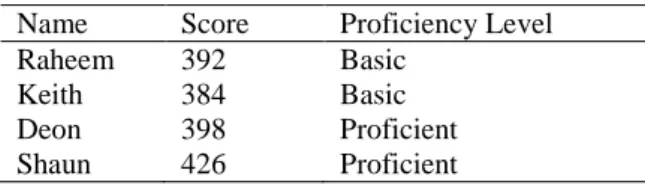
Table 2: Black males’ MSA scores and proficiency level in mathematics
Name Score Proficiency Level
Raheem 392 Basic
Keith 384 Basic
Deon 398 Proficient
Data Collection
Data collection consisted of extensive fieldwork; gathering data through structured, semi-structured, and unstructured interviews; three types of observations (e.g., community/home, school, and classroom); and document collection (e.g., school newsletters, newspaper documents, letters, etc.). I collected data everywhere I found it—in the school, classroom, community, homes, or interactions with stakeholders. Anything I heard, saw, or stumbled upon was used as data (Quantz, 1992). I conducted two structured interviews of six Black students, each lasting up to two hours. The interviews explored students’ lives, mathematics and schooling experiences, peers, and perspectives of community. Follow-up interviews were based on students’ responses to interview questions. All semi-structured and follow-up interviews were recorded and transcribed. Unstructured interviews were not planned but occurred during informal interactions with students or other stakeholders in multiple settings (e.g., homes, community, school, classrooms, etc.).
Unstructured interviews and field notes were the main approach used to capture the ethnographic snapshots of Black students. I conducted three types of non-participant and participant observations of community/homes, school, and mathematics classroom (Dobbert, 1982). Community/home observations focused on students who participated in my study, students I saw from the school, and my personal interactions in the community (e.g., shopping, eating, etc.). Observations at the school and classrooms occurred four to five times each week. I recorded field notes of observations in written or verbal form at the time of occurrence or immediately after. I recorded the observations using three levels: (1) complete detail (I wrote or audio recorded observations verbatim); (2) moderate detail (I wrote or audio recorded key observations that pertain to my study focus); (3) low detail (I wrote or audio recorded observations that pertained to the students).
Data Analysis
I employed three phases of data analysis: cognitive, formal, and application (Creswell, 2007; LeCompte & Schensul, 1999; Quantz, 1992). The cognitive phase allowed me to analyze piles of information gathered from seeing and hearing (LeCompte & Schensul, 1999). During this phase, I began to develop a mental picture of what the data could reveal and what stories could be told (LeCompte & Schensul, 1999). The formal phase involved transcribing interview data and having participants review transcripts (Creswell, 2007). The interview transcripts were reviewed to ensure accuracy, clarity, and totality of data (Creswell, 2007). A general review of the data was performed by reading through all of the data collected (e.g., observations, field notes, documents, etc.) to gain a sense of the data overall. I wrote memos, reflective notes, and field note summaries to sort the information. I used Bogdan and Biklen’s (2003) notion of jotting down ideas and notes in the margins of the various data sources. I wrote the initial stories and snapshots of Black middle and high school students as well as significant events and activities that occurred in the community, school, and classrooms. I used data sources to note patterns and uncover themes that were internally consistent but distinct from one another. I challenged patterns, themes, assumptions, and biases by searching for disconfirming evidence. I then situated such evidence into larger constructs. The application phase involved putting the parts into an analysis of the whole that raised the critical implications of Black middle school students’ lived realities, schooling, and mathematics education.
Trustworthiness
rich descriptions. I created an audit trail of interview transcripts, audio recordings, observations, and other artifacts to ascertain confirmability.
Results
Raheem
Raheem was a 14-year-old 8th grade student who came to the U.S. at the age of three from Trinidad. Raheem lived with his mother, sister, and two brothers in an apartment in Chester Heights, which became home to many of the city’s migrating international population. Although his family resides in Baltimore, Raheem’s father lived in Trinidad. His mother worked in one of the surrounding counties in Maryland as a nurse’s assistant. She traveled to work using public transportation, which became a strain anytime she had to leave early to address an issue between Raheem and his math teacher, Mrs. Green. In fact, all of Raheem’s discipline problems took place in his math classroom or with his math teacher. Raheem had a long history with his 8th grade math teacher, Mrs. Green, because she was also his original 6th grade teacher. (She was later switched to 8th grade and Mrs. Edwards took her place.) Raheem thinks the “shortage of teachers” played a role in the change.
Raheem was of the belief that Mrs. Green had something against him because he was the main person in his class receiving consequences for behavioral problems. He was also of the belief that if “I messed up, slip up, one time, it’s a big deal. I’d get in trouble,” but when his classmates did something wrong, they rarely received any consequences. Students would “be getting up out of their seats” and “disrespecting” Mrs. Green, “not really paying [her] no mind.... They just laugh at her like she’s a joke to them.” Essentially, Raheem felt that most of his peers’ disorderly behavior went unpunished despite the obvious disrespect they showed. He sensed that Mrs. Green was “scared of the class” even though “she trie[d] to act tough [when] she’s not.” Raheem developed an “I don’t care” attitude towards Mrs. Green because of the punishment he received for his behavior and the disrespect she allowed his classmates to direct at her without consequence.
Although Mrs. Green encouraged Raheem to do well in mathematics, he had a problem with her lackadaisical approach to ensuring that his peers learned as well. Raheem expressed his thoughts about Mrs. Green’s treatment of him and his peers by saying the following:
I really don’t care what she’s saying about me or who I am, because I know that I’m smart, and when she says she’s not picking on me, she just wants me to do better and she thinks I’m smart,... she’s supposed to say that to all students, and I don’t find that’s right.
According to Raheem, Mrs. Green believed that some of the students were “lost causes” and she could not do anything to help them. He found this to be very problematic because he felt one of Mrs. Green’s roles was to “help lost causes.” He thought she should have “put effort into it, like, how she’s doing me. If I slip up, she really wants me to get back on track.” He felt she didn’t put forth effort to get the rest of the class back on track. Raheem believed Mrs. Green’s way of explaining mathematical concepts was difficult to understand for him and his peers. There were times when “the class [would] quiet down and do the work but [it] doesn’t last for long”. During this time, Mrs. Green would do the following:
[Explain] stuff on the board, and some of the kids probably don’t get it and they ask a lot of questions, and she tries to answer them and whatever, but she don’t really explain it as well as some other teachers do.
He points out that Mrs. Green would say that the class was “difficult,” but Raheem believed “she puts [the work] in difficult terms” when “it [could be explained in] plain and simple [terms].” Raheem felt “she really beats around the bush instead of just getting down to the point.” When Raheem would ask Mrs. Green to explain a mathematical topic, she would use “difficult words—well, not difficult words but big words.” As she defined the word, he would ask, “Why you just didn’t say that in the first place instead of going through all this?” Raheem believed Mrs. Green’s boring and unchallenging lessons made him and his peers uninterested in what she was teaching. He made the following remarks about Mrs. Green’s teaching:
would get it but in a way [that] it’s not funny. She’s not funny. She’s not able to keep people’s attention.
Raheem was of the belief that many students would “probably just, like, drop off of math class because she... [was] so boring. They really don’t pay her no mind.” He continued on:
I mean, she is really a boring teacher. Like, when she talks, I’m like, “I don’t want to listen to her.” And then she goes over the same old stuff and I’m like, “Man, I know this! It’s easy!” And, I just don’t feel challenged in her class.
By his 7th grade year, Raheem was more focused on his schooling and math than he had ever been. It all began to make sense. “[I] got it. It was like—easy, and after that, it was just a breeze through math. Like, math was easy.” He went on to explain further:
When I hit 7th grade... and then there was just—for some reason, like, when she taught it to me, it was easy, and I actually stayed back for coach class and stuff like that. And math just became a breeze. I was the first one done and the first one with my hand up. Sometimes she wanted to call on me, but she already knew I knew, so she did not call on me.
In the 7th grade, Raheem improved his ability to do math because he “just kept on doing work, more work and more work. So I got better at it until I could do stuff in my head.” He expounded on how he improved his mathematical abilities:
I raised my hand. She [Mrs. Edwards] would work with me one-on-one and sometimes she worked with the whole group if the whole group didn’t understand it. And, like, if I still wanted more to learn about it, I stayed after school for coach class.
Raheem felt he “just clicked” with Mrs. Edwards. “[I] started paying attention and got the work done, and it was easy. And then I just kept on working at it and I finally got it.” Seventh grade was a breakthrough year for Raheem in mathematics. Many of the problems he experienced in 6th grade and elementary school disappeared when he changed his approach. The assistance he received from his teacher, Mrs. Edwards, also played a major role in helping him learn mathematical concepts that previously seemed difficult.
In elementary school, Raheem experienced academic problems in mathematics. He recalls “not [being] good [in] math at all.” From first to fifth grade, Raheem considered math his worst subject because he felt he “didn’t understand nothing. I don’t know why, but I just did not get the multiplication, the times tables—that was the hardest thing in the world for me.” Raheem repeatedly stated that he “hated math” in elementary school even though he had caring teachers. He “just didn’t care” about his schooling or education in mathematics. The academic problems Raheem experienced in math in elementary school continued in 6th grade. He “didn’t really get the work done,” partly because he “didn’t put effort into the 6th grade.”
Keith
Keith was a 14-year-old Black male in the 8th grade. I met him when he was a participant in the in-school math program. During that time, Keith came to school regularly. He rarely missed a day. Keith and I instantly connected. He was very outspoken. He also dominated discussions about math in the program. In most cases, he was always one of the first students to finish. He was known in the school by administrators, teachers, and students for being good in mathematics.
Despite his promise and potential, Keith left school for several months to sell drugs to pay off his mother's debt to a neighborhood drug dealer. His mother was an avid drug user who had accumulated a significant debt with a neighborhood dealer. The dealer threatened to kill her if she did not pay. To appease the dealer, Keith’s mother told him to sell drugs. She saw no other option. Keith agreed.
Deon
Deon was a 14-year-old, dark, skinny Black male who liked to spend time in the streets of his Chester Heights community, riding dirt bikes and playing basketball. Deon lived with his mother and little sister in a row house. His mother was in school to be a nurse and worked as a nursing assistant. Deon babysat his two-year-old sister on a regular basis. Deon was in the top 7th grade class and in Mrs. Darko’s math class, but he hung around with 8th graders, many of whom were in gangs. When I initially met Deon, he complained about how easy the work was. He said he had no plans to do the work, because he already knew how to do it.
Deon did not like that he had three different math teachers in one school year:
I didn’t really like that I had to move back and forth from Ms. Edwards to Ms. Darko to Ms. Nagase’s class. But I would rather be in Ms. Edwards class ‘cause it’s like she teach faster. Like, when I’m in the other two classes, nobody don’t listen to nothing. Ms. Edwards teaches you better.
Deon felt he performed better in math when Mrs. Edwards was his teacher. He believed he earned a grade of “85” in her class. When he was in Mrs. Darko’s and Mrs. Nagase’s classes, he remembered earning grades from “70 to, like, 65” because “I used to go to class, but sometimes I won’t do nothing because I didn’t like Mrs. Darko or Mrs. Nagase.” Sometimes Deon did not go to class “because I knew they probably wouldn’t be doing nothing.” Instead, he would go to the gym to play basketball. Deon estimated that, between his social studies, government, and math classes, he cut class “about 5 to 10” times over the school year. Most of the time, he cut class because he felt he already knew the information being taught.
In the 6th grade, Deon experienced difficulty in mathematics. He explained that the only reason he had a hard time was because he usually got suspended and would miss out on new work every week. His suspensions were usually the result of his absences in Mrs. Simon’s science class. He stated that he didn’t go to the class, “because everybody used to run around” According to him, the school “was off the hook” because students were “bad” and behaved “poorly.”
Shaun
Shaun was a quiet and well-groomed 13-year-old seventh grade Black male. He lived with his mother, stepfather, and little brother. He had never lived with his biological father. (He was absent for the first five years of Shaun’s life because he was incarcerated for selling drugs.) Shaun had an hour-long daily commute to school. During the course of this study, I learned that Shaun’s biological father still sold drugs. Shaun rarely saw his father, but they had a relationship nonetheless.
Both Shaun’s parents grew up in Tightlock, a community neighboring Chester Heights. It was known for the sale of illegal drugs. It was also known for murder, a persistent and debilitating result of the influx of drugs into the community. Before moving to Chester Heights, Shaun lived in the Tightlock community with his mother. In fact, most of his family lived there when he was younger, including his cousin Deon Jordan (mentioned above). Shaun had 2 cousins, including Deon, attending Park Middle School.
Shaun was in the top 7th grade class and in Mrs. Darko’s math class. Shaun and Deon were in the same math classes in 6th and 7th grade and both in the top classes at these grade levels. Shaun expressed that he wanted more challenging work. He felt the work he was getting was too easy and he had already done it before. Mrs. Hall explained to Shaun that the Math Action Plan, designed by the math department, was intended to provide students with a review of various mathematical topics to help them do better on the MSA. Shaun and his peers were concerned that their whole 90 minutes of class time was spent on topics they had already learned. In my interview with Shaun, he mentioned this specific concern. “In the beginning, we were just doing a review of last year, and this year she was teaching new stuff like multiplying decimals... integers and stuff.”
Mrs. Hall explained to Shaun and his peers that only the first twenty minutes of class time should be spent on reviewing concepts. However, it appeared that more than half of the class session was spent on reviewing previously learned materials.
Shaun pointed out that the work wasn’t challenging enough for him and that the teacher’s teaching style often resulted in class disruption. “When I first got to middle school it was hard a little bit, but then once you get used to it, it would not be really that hard.” Overall, the schoolwork seemed easier “because most of the stuff, I already knew how to do.” Rather than focus on the whole class, the teacher would use one-on-one instruction, which left the rest of the class disengaged. “[Mrs. Nagase] would be, like, writing on the board, going around one-by-one helping kids.” Many times, most of the students would try to get her attention to receive help, but because she spent a considerable amount of time helping one or two students, behavioral problems increased in the class.
In 6th grade, Shaun was in Mrs. Felicia Palmer’s class. Mrs. Palmer taught the 6th and 8th grade students who were identified through standardized test scores as being suited for more advanced coursework. Shaun had Mrs. Palmers class with Deon in the 6th grade. Shaun felt he was being challenged in Mrs. Palmer’s class. The work “was a little bit harder.”
Shaun's older cousins played a major role in helping to him to learn. They taught him math and his curiosity led him to read his older cousins’ math books. In the summer, Shaun’s older cousins would teach him mathematical concepts they learned during the school year. His cousins would show him how to do problems they learned in school. Most of the concepts Shaun “already knew” came as a result of his cousins’ teaching lessons.
Even though he learned a lot from his cousins, Shaun realized he “ain’t know it all the way.” Shaun believed he had “so many difficulties” learning math because his cousins were not able to teach him everything he needed to know about the concepts. The key pieces Shaun was missing led to math being “a little difficult” at times for him. At the same time, his cousins’ instruction also made learning math easy. After school, Shaun’s cousins would bring their books to his house. Shaun would read out of them when he was bored. He also wanted to see if it was any different from his books at school.
Shaun usually got good grades in math and credited his success to his parents. Shaun stated, “I usually get 90’s or 95’s.” When I looked through his cumulative records and reviewed his report cards, I found Shaun’s statement to be accurate. The lowest grade I found in math was an 80. I also found that Shaun performed at high levels on standardized tests in all subject areas taken, in particular mathematics. Shaun repeatedly told me, “I like math. That’s my favorite subject.” Part of the reason he liked it and did well in it stemmed from his belief that his mother and father also did well in the subject. During our interview, he said, “My mother and father was good in math too, and I figured since they good in math, I would be good in math too.” Shaun’s attitude and performance correlated with the existing body of literature on successful Black males in math (Berry 2003; Berry & McClain, 2010; Berry et al, 2011).
Discussion
From a critical race theory perspective, race is a significant factor for determining inequity in math settings, schools, and society for Black males (Ladson-Billings & Tate, 1995). In this study, Black males’ intellectual property in math was limited by high-stakes testing, teachers, and classroom management. The majority of the school year focused on preparing Black males for the state-wide standardized tests. The remedial math plan, and the in-school and Just Do It programs were designed to prepare Black males and other students for the MSA. The students, Keith and Raheem for example, were taken out of their elective courses to participate in these programs. (Deon was also on the list to attend but never did.) The focus on getting Black males to perform at certain levels on the MSA interfered with their developing conceptual understanding and procedural fluency in math (see Davis & Martin, 2008).
The quality of intellectual property Black males received from their teachers was limited by the teachers’ qualifications, instructional styles, and relationships with the students. As Tate (1993) posits, Black students in urban schools are often taught by less qualified math teachers. In this study, only two teachers were certified to teach mathematics. This lack of qualification greatly affects the students’ ability to fully understand the information.
The teaching styles used also impacted the students’ performances in mathematics. Raheem reported that his teacher’s teaching styles lacked pizzazz and was boring. Shaun noted that his teachers spent too much time working with one or two students when the entire classes needed assistance. As shown in the ethnographic vignettes above, student-teacher relationships positively and negatively impacted the students’ ability to learn. When Black males developed positive relationships with their math teachers, they performed at higher levels and worked with their teachers to learn topics and concepts they had previously experienced difficulty learning (Jett, 2009; Kirkwood, 20012; Stinson, 2004). Black males who possessed negative relationships with their math teachers experienced conflicts with them on a regular basis, committed disciplinary infractions that resulted in consequences, and/or disengaged from the learning process.
In this study, Black males possessed positive and negative math identities that shaped how they learned. For example, Raheem went through a period in elementary school and sixth grade where he did not like mathematics. He performed poorly even though he had caring teachers. He experienced problems learning multiplication. In seventh grade, he improved his ability to do math by working harder and working closely with his teacher. Raheem’s success led to the development of a positive math identity in the seventh grade that followed him to the eighth grade. Despite problems with his math teacher, Raheem viewed himself as a smart, capable learner.
Shaun consistently earned good grades in mathematics, which was his favorite subject. His affinity for the subject contributed to his development of a positive math identity. His math identity was also shaped by his perception that both his parents were good in the subject. He was then able to easily see himself as someone who could perform well. The findings for this study are consistent with extant literature about the impact of Black males’ perceptions of their parents’ math abilities on their own perceived abilities. The legacies of their parents encourage them to see themselves as either capable or incapable learners of math (Cluster, 2012; Kirkwood, 2012).
Shaun was influenced by his older male cousins who helped him. At the same time, he experienced problems learning because of the lack of completeness in his cousins’ lessons. This finding is consistent with Cluster’s (2012), Kirkwood’s (2012) and Walker’s (2006) results that indicate that family members can have a positive impact on Black males’ ability to learn mathematics. The results from this study suggest that family members who assist Black males in learning math must first ensure that they have a firm grasp of the concepts they intend to teach. The results from this study did not provide insight into how Black males develop positive or negative racial and/or cultural identities (Thompson & Davis, 2013). Further research is needed to better understand how these identities are developed among Black males in general and in math settings.
Critical race theory operates from the premise that racism is a permanent element in all aspects of American society, including schools and math classrooms (Ladson-Billings & Tate, 1995; Tate, 1993). The lack of jobs, poverty, employment issues, juvenile incarceration, drugs, vacant properties, and poor education are the result of racism, and they directly affect the conditions that shape Black males’ communities, schools, and math classroom experiences. These conditions keep Black males, their families, and communities subordinate to other groups and seem to justify racist assumptions and beliefs about Blacks being predisposed to criminality, deviant behavior, and laziness to name a few. From a critical race theory perspective, Black males and their families are not to be blamed for the oppressive elements that shape their communities, families, schools, and math classrooms. Keith and Shaun, for example, were personally impacted by the influx of drugs into their community. Keith was arrested for selling drugs—a scenario that mirrors the high rates of juvenile incarceration in his community—and Shaun’s father sold drugs and served time for doing so.
with high rates of unemployment, poverty, drugs and other artifacts of urban decay and neglect, they possessed a strong desire to learn and be challenged intellectually.
Conclusion
In order to improve the educational and mathematical experiences of Black males, like the Teach Campaign and
My Brother’s Keeper initiatives have attempted to do, issues of race, racism, classism, and other forms of oppression must not be dismissed. It should not take the abuse of laws such as the “stand your ground” law to prompt people to acknowledge and take action against racial discrimination, racism, and other forms of oppression. Responding to individuals who commit racist acts addresses racism only at an individual level and negates the way it functions as an institutionalized system that also includes individual acts.
As Martin (2009b) indicates, dismissing and resisting issues of race, racism, classism, and other forms of oppression maintains the status quo and hinders people’s ability to understand how society’s laws, policies, and practices continue to oppress Black children, males in particular. This approach must also be taken in the field of math and education as a whole, where research and policies purporting to help Black males actually reify their oppression by using inadequate and impoverished approaches to and explanations of race, racism, and racial inequality (Martin, 2009b). For example, as Martin (2009b) and others (Stinson, 2010) have noted, focusing on the so-called racial achievement gap in math between Black and White males situates Black males as inferior, mathematically illiterate, and less-than-ideal learners. White males, on the other hand, are seen as ideal even though they are not the highest performers in math when compared to Asian male students.
As Tate (1993) notes, standardized tests in math are inadequate measures of the commitment to learning of Black male students in urban areas. Using the experiential lens, advocated by Martin (2007), provides a space for math educators to understand that there are Black males attending urban schools who see themselves as capable math learners, achieve at high levels, seek to be challenged in their classes, and have the capability to perform at even higher levels with encouragement and unwavering support. Math teachers must have high expectations of their Black male students in order to create the environment they need to succeed.
References
Anderson, G. L. (1989). Critical ethnography in education: Origins, current status, and new directions. Review of Educational Research, 59(3), 249–270.
Berry III, R. Q. (2003). Voices of successful African-American male middle school mathematics students. (Unpublished doctoral dissertation). University of North Carolina, Chapel Hill, NC.
Berry III, R.Q. & McClain, O.L. (2009). Voices, power, and multiple identities: African-American boys and mathematics success. New England Mathematics Journal, 41, 17–26.
Berry III, R.Q., Thunder, K., McClain, O.L. (2011). Counter narratives: Examining the mathematics and racial identities of Black boys who are successful with school mathematics. Journal of African-American Males in Education, 2(1), 10–23.
Bogdan, R. C., & Biklen, S. K. (2003). Qualitative research for education: An introduction to theories and methods (4th Ed.). Boston, MA: Allyn and Bacon.
Cadwallader, M. (1995). Urban geography: An analytical approach. Upper Saddle River, NJ: Prentice Hall. Cluster, N.A. (2012). What about me? Successful African American males in mathematics (Unpublished
doctoral dissertation). University of Georgia, Athens, GA.
Corey, D. L. (2000). An African American male student learning mathematics in a web-based environment: How the absence of traditional classroom cultural differences effects his learning. (Unpublished doctoral dissertation). The Florida State University, Tallahassee, FL.
Creswell, J. W. (2007). Qualitative inquiry and research design: Choosing among five traditions (2nd Ed). Thousand Oaks, CA: Sage Publications.
David, E. M. (1994). Blurring the color line: The desegregation of the Baltimore city public schools, 1954-1994. The Urban Review, 26(4), 243-255.
Davis, J., Jones-Franks, T., & Clark, L. (2013). The case of a Black male mathematics teacher teaching in a unique urban context: Implications for recruiting Black male mathematics teachers. In C. W. Lewis & I. A. Toldson (Ed.), Black male teachers: Diversifying the nation’s workforce. Bingley BD161WA, UK: Emerald Group Publishing Limited.
Dobbert, M. L. (1982). Ethnographic research: Theory and application for modern schools and societies. New York: Praeger Publishers.
Fulkerson, J. S. (2012). International condemnation over Trayvon’s killing: The shot of apparent U.S. racism, as it’s being heard round the world. Latitude News. http://www.latitudenews.com/story/international-condemnation-over-trayvons-killing/
Gabriel, T. (2010). Proficiency of Black students is found to be far lower than expected. New York Times. http://www.nytimes.com/2010/11/09/education/09gap.html?_r=0
Gutierrez, R. (2008). A “gap-gazing” fetish in mathematics education? Problematizing research on the achievement gap. Journal for Research in Mathematics Education, 39, 357–364.
Gutierrez, R. & Dixon-Roman, E. (2012). Beyond gap-gazing: How can thinking about education comprehensively help us (re)envision mathematics education?. In B. Atweh, M. Graven, W. Secada and P. Valero (Eds.), Mapping equity and quality in mathematics education. New York: Routledge/Taylor & Francis.
Haygood, W., Dennis, B. & Horwitz, S. (2013). Fla. Shooting stirs memories of civil rights era. Washington Post. http://www.washingtonpost.com/politics/trayvon-martins-killing-galvanizes-florida-community-civil-rights-groups/2012/03/21/gIQAbQslSS_story.html
Hrabowski, F., Maton, K. & Grief, G. (1998). Beating the odds: Raising academically successful African-American males. New York, NY: Oxford University Press.
Jett, C. (2009). African-American men and college mathematics: Gaining access and attaining success. (Unpublished doctoral dissertation). Georgia State University, Atlanta, GA.
Kirkwood, K. (2012). Algebra matters: An ethnographic study of successful African American male Algebra I students in a suburban middle school. (Unpublished doctoral dissertation). California State University, Fullerton, CA.
Ladson-Billings, G, (1994), The dreamkeepers. San Francisco, CA: Jossey-Bass.
Ladson-Billings, G., & Tate, W., F. (1995). Toward a critical race theory of education. Teachers College Record, 97(1), 47–68.
LeCompte, M. D., & Schensul, J. J. (1999). Designing & conducting ethnographic research. Walnut Creek, CA: Sage Publications.
Lincoln, Y. S. & Guba, E. G. (1985). Naturalistic inquiry. Beverly Hills, CA: Sage Publications.
Lubienski, S.T. (2008). On “gap-gazing” in mathematics education: The need for gaps analyses. Journal for Research in Mathematics Education, 39, 350–356.
Martin, D. B. (2000). Mathematics success and failure among African American youth: The role of
sociohistorical context, community forces, school influence, and individual agency. Mahwah: Lawrence Erlbaum Associates.
Martin, D. B. (2007). Beyond missionaries or cannibals: Who should teach mathematics to African American children? The High School Journal, 91(1), 6-28.
Martin, D. B. (Ed). (2009a). Mathematics teaching, learning and liberation in the lives of Black children. New York, NY: Routledge.
Martin, D. B. (2009b). Researching race in mathematics education. Teachers College Record, 111(2), 295–338. Martin, D. B. (2009c). Little Black boys and little Black girls: How do mathematics education and research treat
them? In Swars, S. L., Stinson, D. W., & Lemons-Smith, S. (Eds.), Proceedings of the 31st Annual Meeting of the North American Chapter of the International Group for the Psychology of Mathematics Education (pp. 22-41). Atlanta, GA: Georgia State University.
Martin, D. B. & McGee, E. (2009). Mathematics literacy for liberation: Reframing mathematics education for African-American children. In B. Greer, S. Mukhophadhay, S. Nelson-Barber, & A. Powell (eds.),
Culturally responsive mathematics education (pp. 207-238). New York, NY: Routledge.
McGee, E. (2014). Risk and protective factors in mathematically talented Black male students: Snapshots from 9-12th grades. Paper presented at American Educational Research Association Annual Conference. Philadelphia, PA.
McGee, E. & Martin, D.B. (2011). From the hood to being hooded: A case study of a Black male PhD. Journal of African-American Males in Education, 2(1), 46–65.
Murrell, P. (1994). In search of responsive teaching for African-American males: An investigation of students experiences of middle school mathematics curriculum. The Journal of Negro Education, 63(4), 556– 569.
National Council of Teachers of Mathematics (2000). Principles and standards for school mathematics. Reston, VA: Author.
National Mathematics Advisory Panel (NMAP). (2008). Foundations for success: The final report of the national mathematics advisory panel. Washington, DC: U.S. Department of Education.