Address for correspondence Dr. Uzma Mirza
Dermatology Department,
Lahore General Hospital/ Ameer-ud-Din Medical College, Lahore
Email: [email protected]
Original Article
Association of dyslipidemia with psoriasis
Introduction
Psoriasis is a T cell-centered disorder, caused by hyperproliferation and reduced differentiation of keratinocytes.1 Psoriasis is a common, recurrent, inflammatory disease of the skin. Even though the etiology of psoriasis is still not known, the emerging evidence indicates that it might be a complex disorder which is caused by the interaction of multiple genes, the environmental factors and immune system.2
The approximate annual rough incidence for men is 57.6 per 100,000 population, whereas for women it is 54.4 per 100,000. According to Neimann et al.3 the global epidemiology shows the frequency between 0.6 to 4.8%. According to various researches, psoriasis is said to be a Th1-dominant disease caused because of increased cytokines of the Th1 pathway, interferon gamma (IFN) and interleukin (IL-2) found in psoriatic plaques.4
Psoriasis is related with an increase in mortality and morbidity of cardiovascular events. According to Cohen et al.,5 patients having a large body area with psoriatic lesions were found to encounter the cardiovascular events Uzma Akbar Mirza, Ijaz Hussain*, Usma Iftikhar*
Department of Dermatology, Lahore General Hospital/ Ameer-ud-Din Medical College, Lahore * Department of Dermatology, King Edward Medical University/ Mayo Hospital, Lahore
Abstract
Objective To determine association between psoriasis and dyslipidemia.Methods This cross-sectional study was done at Dermatology Department, Lahore General Hospital, Lahore. Non-probability convenient sampling 106 cases and 106 age-and gender-matched controls) were included in this research. Blood samples from both cases and controls were taken after fasting of 12 hours. Informed consent was taken in order to determine the level of their lipid profile. SPSS 21 version was utilized to evaluate the collected data.
Results The mean age of cases and controls in current study was 31.74± 5.27 and 31.24 ±5.29 years, respectively. In cases there were 51 (48.1%) female and 55(51.9%) male patients while in control group, there were 68 (64.1%) males and 38 (35.9%) females. There was significant association of cases and dyslipidemia and there were 54 times more chances of having dyslipidemia for cases. The overall logistic model showed that there were 219.633 times more chances of dyslipidemia for cases, moreover, raised triglyceride and low HDL had significant association with cases while age and gender have no significant role.
Conclusion Dyslipidemia is positively associated with psoriasis regardless of age, gender and severity of disease. As dyslipidemia is a major risk factor for microvascular complications and proved risk factor for cardiovascular disease, we must include serum fasting lipid profile as a routine investigation in psoriatic patients and early screening must be ensured to minimize the risk of cardio vascular diseases.
Key words
more repeatedly.
It can be said that the psoriasis is associated with dyslipidemia which is known as risk factor of cardiovascular disease.6 The incidence of dyslipidemia in psoriasis changes both the quality, as well as, the expectancy of life. It also enhances the risk of developing cardiovascular diseases which further make periodic investigation for these patients mandatory, in addition to a multidisciplinary patient follow-up.7
Metabolic syndrome was seen to be 2.9 times more frequent amongst patients with psoriasis. The most common diseases recognized were arterial hypertension [35.6% in cases vs. 20.6% in controls] and hyperlipidemia [29.9% vs. 17.1%]. While the prevalence ratio (PR) of rheumatoid arthritis (PR 3.8), for Crohn's disease (2.1) and for ulcerative colitis (2.0) was also found to be elevated in psoriatic patients.8 Psoriasis is often stated to be related with severe cardiovascular risks. Comorbidities such as hypertension, dyslipidemia, diabetes, and obesity appear to be raised in psoriatic patients compared with the general population. Psoriasis may alone cause adverse cardiac outcomes with or without traditional cardiovascular risk factors.9,10
However, few studies contrast the results of above stated studies and show no association between psoriasis and dyslipidemia. A population based study of National Health and Nutrition Examination Survey (NHANES 2013) documented that psoriasis was not positively associated with alternation in serum lipids. Among the 353 psoriatic patients, the weighted odds ratio (OR) of total cholesterol >200 mg/dl was 0.96, of HDL-cholesterol <40 mg/dl was 0.92, LDL-cholesterol >130 mg/dl was 0.67 and of triglycerides >150 mg/dl was 1.20 weighted.6
There is lack of local data concerning the correlation between psoriasis and dyslipidemia. Cardiovascular diseases in our country have reached epic levels, and key element like dyslipidemia, can lead to early screening and diagnosis of cerebrovascular accident (CVA). Due to sparse relevant studies in Pakistan, and controversial results in international studies, we aimed to determine the association of dyslipidemia with psoriasis. If a significant relationship between psoriasis and dyslipidemia is reached, we will be able to screen such patients early for potential risk of cardiovascular disease.
Methods
Dyslipidemia was defined as an increased in total cholesterol levels or low-density lipoprotein (LDL), or decrease in levels of high-density lipoprotein (HDL) cholesterol,11 with cholesterol (200mg/dl to 260mg/dl), triglycerides (150mg/dl to 200mg/dl), LDL (<50 mg/dl in case of males, <63 mg/dl in case of females), VLDL (>32mg/dl) and HDL (<40mg/dl).
All 212 cases and controls recruited in this study, which fulfilled selection criteria from Dermatology department of LGH, Lahore. Prior to the study an informed consent was taken from each patient and control. Demographic profile (such as name, age, sex and contact no.) was also taken. Cases were enrolled in group A and controls (healthy, age- and sex-matched subjects) were enrolled in group B. 3ml of serum was taken by vacutainer tubes following 12 hours of fasting to evaluate the lipid profile. Blood sample was centrifuged at 3000-4000 rpm for 10 minutes. SELECTRA-PROXL fully automated analyzer, made in Netherlands, Software version 4.2X was used to run lipid profile.
The enzymatic assessment of serum triglycerides (TG) was done by modified glycerol-3-phosphate oxidase/peroxidase technique consuming those tools, which are commercially available (TG liquicolor system reagent for Humastar 600 GPO method). Enzymatic analysis of serum total cholesterol (TC) was implemented by using rectified cholesterol oxidase/ peroxidase (CHOLESTEROL liquicolor system reagent for Humastar 600 CHOD-PAP method). HDL-Cholesterol and LDL-Cholesterol were evaluated by using Enzymatic Calorimetric Test. VLDL-Cholesterol was estimated by using the succeeding formula: VLDL= TG ÷ 5.
The extent of psoriasis was demarcated by psoriasis area severity index (PASI).12 The 4 locations of disease are the head (h), the upper limb (u), the trunk (t) and the lower limbs (l). It was recorded by consuming 3 parameters; erythema (E), infiltration (I) and desquamation (D). Severity scale of 0-4 was used to grade each of the parameter where; 0 indicate nil, 1 is equal to mild, 2 present moderate, 3 means severe and 4 demonstrate very severe. The area wise percentage involvement was calculated for the involved sites as: 1 ≤ 10% area; 2 = 10-29%; 3 = 30-49%; 4 = 50-69%; 5 = 70-89%; and 6 = more than 90%. The final formula for PASI scores is PASI = 0.1 (Eh + Ih + Dh) Ah + 0.2 (Eu + Iu + Du) Au + 0.3 (Et + It + Dt) At + 0.4 (El + Il + Dl) A1.12 All data was collected on predefined proforma.
Age, sex, psoriasis, PASI, dyslipidemia, cholesterol, triglyceride, HDL, LDL and VLDL. Data were analyzed using Statistical package for social science (SPSS) version 21. Quantitative variables like age, Cholesterol, Triglyceride, HDL, LDL and VLDL were obtainable as mean ± S.D. Qualitative variables like, gender and dyslipidemia were calculated as frequency and percentage in both cases and controls. Association of dyslipidemia was seen with both cases and control) with the help of Chi-square test. Logistic regression investigation was applied and Odds ratio was also determined. P value <0.05 was determined to be significant.
Results
no significant difference of gender in cases and controls.
Among cases, 23 (21.70%) patients had mild, 24 (22.64%) had moderate and 59 (55.66%) cases had severe psoriasis.
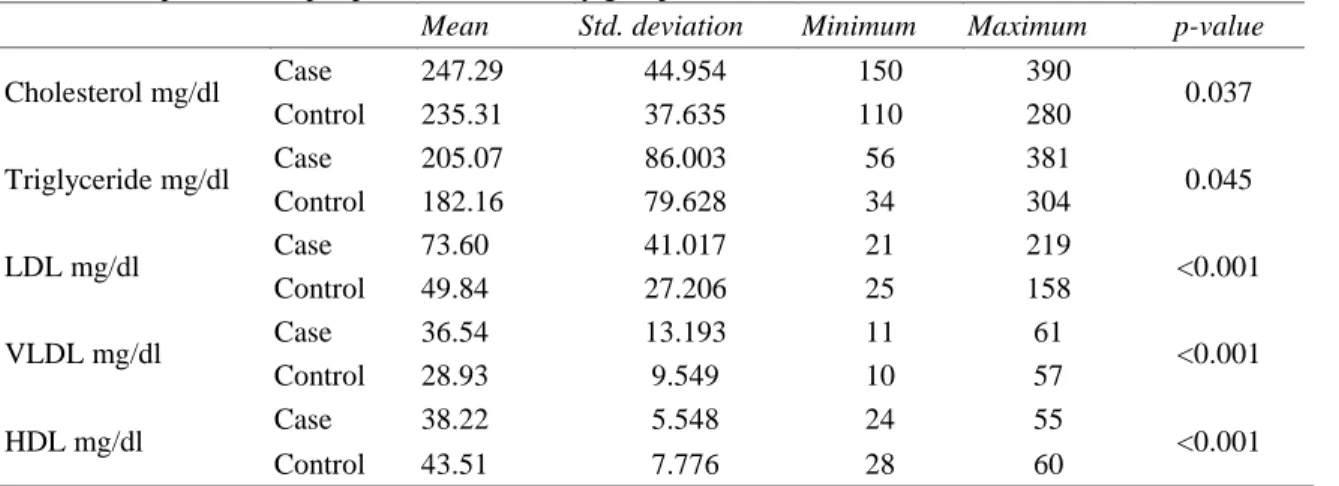
Table 1 compares serum lipid levels in cases and control. Mean cholesterol in cases was 247.29±44.954 mg/dl and in controls was 235.31±37.635 mg/dl, with significant higher value in cases. The mean triglycerides in both cases and controls were 205.07± 86.003 mg/dl and 182.16 ± 79.628 mg/dl, respectively, significantly higher in cases. Mean LDL was
also significantly higher in cases (73.60±41.017 mg/dl) compared with controls (49.84 ± 27.206 mg/dl), p value <0.001.
The average VLDL was 36.54± 13.193 mg/dl in cases while in controls was 28.93 ± 9.549 mg/dl, p-value < 0.01. Mean HDL in case and controls was 38.22 ± 5.548 mg/dl and 43.51± 7.776 mg/dl, respectively, with significantly higher mean in cases.
All parameters (cholesterol, triglyceride, LDL) were statistically significantly raised in cases as compared to controls and HDL was significantly
Table 1 Comparison of lipid profile in both study groups.
Mean Std. deviation Minimum Maximum p-value
Cholesterol mg/dl Case 247.29 44.954 150 390 0.037
Control 235.31 37.635 110 280
Triglyceride mg/dl Case 205.07 86.003 56 381 0.045
Control 182.16 79.628 34 304
LDL mg/dl Case 73.60 41.017 21 219 <0.001
Control 49.84 27.206 25 158
VLDL mg/dl Case 36.54 13.193 11 61 <0.001
Control 28.93 9.549 10 57
HDL mg/dl Case 38.22 5.548 24 55 <0.001
Control 43.51 7.776 28 60
Table 2 Comparison of Lipid Profile in both study groups Study Groups
p-value
Case Control
Raised cholesterol 53 (50%) 6 (5.66%) <0.001 Raised triglyceride 50 (47.16%) 8 (58.49%) <0.001
Raised LDL 57 (53.77%) 15 (14.15%) <0.001
Raised VLDL 58 (54.72%) 39 (36.79%) 0.009
Low HDL 74 (69.81%) 40 (37.73%) <0.001
Table 3 Comparison of dyslipidemia in both study groups Study Groups
Case Control Total
Dyslipidemia
Yes 96 16 112
90.6% 15.1% 52.8%
No 10 90 100
9.4% 84.9% 47.2%
Total 106 106 212
Table 4 Logistic regression model of dyslipidemia.
Beta p-value Odds ratio 95.0% C.I. for EXP(B) Lower Upper
Age .032 .482 1.032 .945 1.128
Sex .426 .367 1.532 .606 3.869
Raised cholesterol .856 .152 2.354 .729 7.605
Raised triglyceride -1.720 .021 .179 .042 .768
Raised LDL -.837 .191 .433 .123 1.520
Raised VLDL .896 .233 2.449 .562 10.668
Low HDL -1.877 .020 .153 .031 .747
Dyslipidemia 5.392 .000 219.633 34.054 1416.513
Constant -3.014 .054 .049
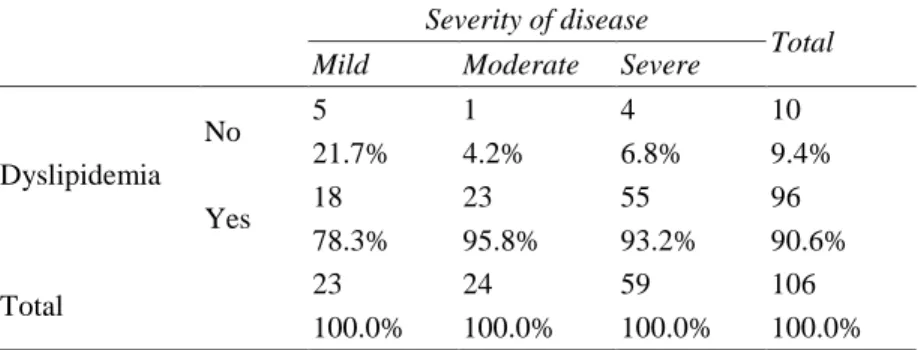
Table 5 Correlation of dyslipidemia and severity of disease. Severity of disease
Total Mild Moderate Severe
Dyslipidemia
No 5 1 4 10
21.7% 4.2% 6.8% 9.4%
Yes 18 23 55 96
78.3% 95.8% 93.2% 90.6%
Total 23 24 59 106
100.0% 100.0% 100.0% 100.0%
Chi-square = 5.34; p-value = 0.06
lower in cases when compared with controls, p
value < 0.05, Table 2.
Among cases, 96 (90.6%) had dyslipidemia and in controls only 16 (15.1%) had dyslipidemia (Table 3). There was significant association of cases and dyslipidemia and there were 54 times more chances of having dyslipidemia for cases The overall logistic model (Table 4) shows that, there were 219.633 times more chances of dyslipidemia for cases, moreover raised triglyceride and low HDL had significant association with cases while age and gender has no significant role.
Table 5 shows the correlation between dyslipidemia and severity of disease. Dyslipidemia was seen in all grades of psoriasis.
Discussion
psoriatic patients as compared to general population.13
The mean age of cases and controls in current study was 31.74±5.27 and 31.24±5.29 years respectively. The mean age in both groups was same, p <0.05. In cases there were 51 (48.1%) female and 55 (51.9%) male patients while in control group, there were 68 (64.1%) male and 38 (35.9%) female patients. Among cases, 23 (21.7%) patients had mild, 24 (22.6%) had moderate and 59 (55.7%) cases had severe psoriasis. The mean duration of disease in case group was 3.35±1.46 years with minimum and maximum duration of disease 1 and 7 years. In another study conducted on psoriasis on 70 subjects %).15 The average age was 47.14 years (SD= ±15.41), and there were 36 males (51.43%) while 34 females (48.57%). The mean age in our study was lower compared with the study of Salihbegovic et al.14 In our study, we had higher male ratio but the above cited study reported higher female ratio. So, the age and gender distribution is comparable to that study. Dyslipidemia is a strong risk factor for developing cardiovascular disease, and has been involved in inflammatory pathways concerned with psoriasis. A considerable clinical outcome can be obtained with the recognition of the relationship between psoriasis and dyslipidemia.14,15
Dsouza and Kuruville16 compared cholesterol and LDL-cholesterol in psoriatics and controls. The dyslipidemia frequency in psoriatic patients was observed to be 62.85%. Most frequently it was hypertriglyceridemia (39%) and hypertriglyceridemia with a lowered value of HDL (36%).
The average age of psoriatic patients with dyslipidemia was 48.76 years (SD=±14.72).
While the 16.15 years (SD=±12.63) was the average duration of the disease. The PASI average score was 16.65. There was significant positive association between increase in PASI score value and dyslipidemia (r=0.41;
p=0.0001).14
One Indian study compared psoriatic patients with and without metabolic syndrome which were 29/13 and 78/30, respectively.17 In cases, a higher prevalence of metabolic syndrome was observed (28%) as compared to the controls (6%) with an odds ratio (OR) of 6.09, p <0.05. A high prevalence of hypertension, impaired fasting glucose and hypertriglyceridemia was also found in cases compared to controls. In this study, a positive association of psoriasis and dyslipidemia is also established.
Psoriasis has a well-established relationship with dyslipidemia, which is a risk factor for cardiovascular disease.6 The incidence of dyslipidemia in psoriatic patients changes the quality and expectancy of life. Dyslipidemia enhances the risk of developing cardiovascular diseases for which proper investigation is required, along with follow-up of patient with multidisciplinary approach.7
Table 7 Comparison of studies on dyslipidemia in psoriasis.
Authors Region Year Study
design
Sample size
p-value
Conclusion
Salihbegovic et al.[14] Bosnia 2015 Cross-sectional
70 0.0001 Psoriasis is connected with dyslipidemia.
Nisa and Qazi [17] India 2010
Case-control
300 <0.05 There is a significantly higher prevalence of metabolic syndrome in psoriasis patients as compared to general population
Ma et al. [15] USA 2013
Cross-sectional
13418 >0.05 Psoriasis is not significantly associated with alterations in certain lipid levels.
Santos et al. [7] Brazil 2013 Descriptive 72 0.132 The occurrence of dyslipidemia and obesity
in patients with psoriasis may alter the quality and expectancy of life of these patients,
Gupta et al. [18] India 2011
Case-control
100 <0.00 hyperlipidemia along with increase in lipid peroxidation and decrease in antioxidants levels are a feature of psoriasis.
Moreover, in the study by Nisa and Qazi (2010),18 there was higher risk of increased total cholesterol, HDL, LDL, Triglycerides, apolipoprotein B and HDL/ LDL.
Table 6 compares a few studies done on the subject of dyslipidemia in psoriasis.
Conclusion
Dyslipidemia is highly associated with psoriasis regardless of age, gender and severity of disease. As it is a known risk factor for microvascular complications and cardiovascular disease, fasting lipid profile must be included as a routine investigation in psoriasis and early screening must be ensured to minimize the risk of cardiovascular diseases.
Recommendations
Serum fasting lipid profile should be part of routine investigation of every patient of psoriasis to prevent cardiovascular diseases
References
1. Cimmino MA. Epidemiology of psoriasis and psoriatic arthritis. Reumatismo. 2007;59 Supple 1:19-24.
2. Gelfand JM, Weinstein R, Porter SB, Neimann AL, Berlin JA, Margolis DJ. Prevalence and treatment of psoriasis in the
United Kingdom: a population-based study. Arch Dermatol. 2005;141:1537-41.
3. Neimann AL, Porter SB, Gelfand JM. The epidemiology of psoriasis. Expert Rev Dermatol. 2006;1(1):63-75.
4. Traub M, Marshall K. Psoriasis--pathophysiology, conventional, and alternative approaches to treatment. Altern Med Rev. 2007;12(4):319-31.
5. Cohen AD, Sherf M, Vidavsky L, Vardy DA, Shapiro J, Meyerovitch J. Association between psoriasis and the metabolic syndrome. Dermatology. 2008;216:152-5. 6. Ma C, Harskamp CT, Armstrong EJ,
Armstrong AW. The association between psoriasis and dyslipidaemia: a systematic review. Br J Dermatol. 2013;168:486-95. 7. Santos M, Fonseca HM, Jalkh AP, Gomes
GP, Cavalcante AD. Obesity and dyslipidemia in patients with psoriasis treated at a dermatologic clinic in Manaus. An Bras Dermatol. 2013;88:913-6.
8. Augustin M, Reich K, Glaeske G, Schaefer I, Radtke M. Co-morbidity and age-related prevalence of psoriasis: analysis of health insurance data in Germany. Acta Dermato-Venereologica. 2010;90:147-51.
9. Pearson KC, Armstrong A. Psoriasis and cardiovascular disease: epidemiology, mechanisms, and clinical implications. Psoriasis Targets Ther. 2012;2:1-11. 10. Miller IM, Ellervik C, Yazdanyar S, Jemec
GB. Meta-analysis of psoriasis, cardiovascular disease, and associated risk factors. J Am Acad Dermatol. 2013;69:1014-24.
12. Bhor U, Pande S. Scoring systems in dermatology. Indian J Dermatol Venereol Leprol. 2006;72:315.
13. Gottlieb AB, Dann F. Comorbidities in patients with psoriasis. Am J Med. 2009;122:1150.e1-9.
14. Salihbegovic EM, Hadzigrahic N, Suljagic E, Kurtalic N, Hadzic J, Zejcirovic A et al. Psoriasis and dyslipidemia. Mater Sociomedica. 2015;27(1):15.
15. Ma C, Schupp CW, Armstrong EJ, Armstrong AW. Psoriasis and dyslipidemia: a population‐based study analyzing the
National Health and Nutrition Examination Survey (NHANES). J Eur Acad Dermatol Venereol. 2014;28:1109-12.
16. Dsouza PH, Kuruville M. Dyslipidemia in psoriasis: as a risk for cardiovascular disease. Msjonline.org
17. Nisa N, Qazi MA. Prevalence of metabolic syndrome in patients with psoriasis. Indian J Dermatol Venereol Leprol. 2010;76(6):662. 18. Gupta M, Chari S, Borkar M, Ch M.