R E S E A R C H
Open Access
A cost-benefit/cost-effectiveness analysis of
proposed supervised injection facilities in
Montreal, Canada
Ehsan Jozaghi
*, Andrew A Reid and Martin A Andresen
Abstract
Background:This paper will determine whether expanding Insite (North America’s first and only supervised injection facility) to more locations in Canada such as Montreal, cost less than the health care consequences of not having such expanded programs for injection drug users.
Methods:By analyzing secondary data gathered in 2012, this paper relies on mathematical models to estimate the number of new HIV and Hepatitis C (HCV) infections prevented as a result of additional SIF locations in Montreal.
Results:With very conservative estimates, it is predicted that the addition of each supervised injection facility (up-to a maximum of three) in Montreal will on average prevent 11 cases of HIV and 65 cases of HCV each year. As a result, there is a net cost saving of CDN$0.686 million (HIV) and CDN$0.8 million (HCV) for each additional supervised injection site each year. This translates into a net average benefit-cost ratio of 1.21: 1 for both HIV and HCV.
Conclusions:Funding supervised injection facilities in Montreal appears to be an efficient and effective use of financial resources in the public health domain.
Keywords:Supervised injection facility, Harm reduction, Cost-benefit, Cost-effectiveness
Introduction
The spread of infectious diseases among injection drug users (IDUs) is a serious public health concern. In a re-cent systematic review and meta-analysis analyzing research studies from Western Europe, Asia, Latin America, Australasia, Eastern Europe, and North America it was found that acquired immunodeficiency syndrome (AIDS) and a number of other blood-borne diseases transmitted through shared needles and syrin-ges are of the leading causes of death across 67 cohorts of IDUs [1]. The extent of these health concerns is par-ticularly troubling. The World Health Organization notes that globally approximately 16 million people in-ject drugs and of those 3 million are living with the hu-man immunodeficiency virus (HIV) [2]. While rates of injection drug use and the contraction of infectious dis-eases may be elevated in certain regions of the world,
first world countries are not exempt from these problems.
In Canada, for example, based on the most recent data available there were 1695 deaths attributable to illegal drug use in 2002 [3]. AIDS is a significant cause of death related to illicit drugs, with 87 identified AIDS deaths at-tributed to injection drug use in that year [3]. Further, ap-proximately 70 percent of new hepatitis C virus (HCV) infections in Canada are attributable to injection drug use and needle sharing [4]. The spread of infectious diseases is not, however, the only concern.
These problems are of particular concern in Canada’s urban areas where IDU populations are large. In Montreal, Quebec for example, the IDU population has been esti-mated at between 4,300 and 12,500 individuals [5]. This elevated IDU population translates into increased infec-tion rates. In fact, HIV and HCV prevalence rates for IDUs in Montreal have been estimated to be as high as 18 per-cent and 68 perper-cent, respectively [6]. Despite having vari-ous harm reduction strategies implemented in the greater Montreal area (such as 11 needle depots, 11 community * Correspondence:[email protected]
School of Criminology, Simon Fraser University, 8888 University Drive, Burnaby, British Columbia, Canada V5A 1S6
health centres, two methadone clinics and 150 pharmacies that distribute approximately 800,000 syringes), IDUs con-tinue to share their injection drug equipment [7,8]. Recent data from Montreal indicates rising incidents of HIV and HCV among IDUs from 2004 to 2006 [9,10].
Recognizing these growing concerns, the Quebec gov-ernment has shown interest in adopting further strategies to reduce the spread of infectious diseases in its IDU population. One such strategy is a supervised injection facility such as Insite that has been in operation in Vancouver, British Columbia since 2003—North America’s first and only legal supervised injection facility. Though its continued operation has faced legal obstacles, in a recent Supreme Court of Canada case the continuation of Insite’s operation was upheld (PHS Community Services v. Attor-ney General of Canada, BCSC, 2008; Canada [AttorAttor-ney General] vs PHS Community Services Society, 2011 SCC 44). Buoyed by this most recent Supreme Court of Canada ruling, and in order to reduce the public health and fiscal impacts of injection drug use, the Quebec government has shown interest in opening supervised injection facilities (SIFs) in Montreal [11]. According to Quebec’s Health and Social Services Minister, Yves Bolduc, SIFs“will offer ser-vices that will monitor the health of drug addicts and en-courage them to seek detoxification and rehabilitation” [10]. Health officials in the City of Montreal have already proposed three SIFs plus a mobile SIF that will attempt to reach the IDU population [10]. At this point, however, it is unclear exactly what magnitude of impact the proposed SIFs may have for the City of Montreal. An obvious ques-tion that is of great concern to City officials is: Are SIFs an efficient and effective use of financial resources? This issue is of critical importance because of the recently established more restrictive rules made by the Federal government in order to establish a supervised injection facility [12,13].
The current paper presents cost-effectiveness and cost-benefit analyses for various SIF operation scenarios in Montreal in an effort to inform public policy on this complex issue. Specifically, the analyses estimate the number of new HIV and HCV infections prevented as a result of operating SIFs using mathematical modelling with conservative parameter estimates. The dollar costs of illnesses avoided are compared to the operational cost of a SIF. The analyses are then extended to consider the impact of opening additional SIFs. As long as the mar-ginal benefits outweigh the marmar-ginal costs of additional SIFs hours and locations, the expansion of SIF should be recommended. At some point, however, it is expected that the marginal cost of expansion will exceed the mar-ginal benefits.
Related studies
Due to inherent issues associated with the legality of in-jection drug use in many countries around the world,
few SIFs have been put into practice [14]. Consequently, research examining the cost-benefit and cost-effectiveness characteristics of SIFs is very limited [13]. The first pub-lished economic analysis of the SIF portion of Insite con-sidered a complex dynamic compartmental simulation model for the City of Vancouver as a whole and projected new HIV and hepatitis C infections over a 10-year time horizon with and without Insite [15]. In their baseline model, the authors estimated 1191 new HIV and 54 new hepatitis C cases were averted, a simple average over the 10 years of 120 new cases of HIV each year. Considering the lifetime cost of a new HIV infection at $210 555 [16], these averted cases led to an annual savings of $25 million, and a benefit-cost ratio of 16.84, assuming a $1.5 million cost of operations for the SIF portion of Insite [17].
Therefore, this model predicted that Insite prevented 80 percent of all new IDU cases of HIV each year for all of British Columbia when approximately 5 percent of all in-jections in Vancouver’s DTES took place within Insite. This model is complex, dynamic, and considers a score of variables, but the results are quite simply not believable.
Another economic costing study showed that Insite as a whole (SIF, needle exchange program, etc.) was extremely cost-effective, but the SIF alone contributed very little: 83.5 new HIV cases were averted each year, with 2.8 attrib-uted to the SIF [16]. Considering the values used above, this led to a benefit-cost ratio of 0.37. Clearly, these latter results indicate that Insite should not continue its SIF ac-tivities if costs are to determine that choice.
Using a mathematical modeling approach, a cost-benefit and cost-effectiveness analysis of Insite was also under-taken that resulted in much more believable results [17]. These researchers considered 4 mathematical models used in the needle exchange evaluation literature, varying par-ameter values in a sensitivity analysis, and found that 19 to 57 new cases of HIV are averted, an average of 35 cases averted each year. This led to benefit-cost ratios ranging from 1.94 to 5.8, an average of 3.56.
Most recently, researchers conducted a costing study to determine if an expansion of the SIF program could im-prove upon the cost-benefit and cost-effectiveness estimates found in the earlier research [13]. The study also explored the degree to which the services could be expanded before diminishing returns would take effect. The analyses demon-strated that while expanding Insite may lead to further cost savings, this result was dependant on behavioral changes in the IDU population [13]. In other words, Insite would have to recruit new users from the IDU population in order for additional cost-savings to be achieved.
to needle-sharing in his models. Overall, these studies indi-cated that Insite was cost-saving for society, but for different reasons: the SIF [13,15,17] and the needle exchange pro-gram [16]. Because the SIF within Insite is the contentious aspect of Insite, we focus our analysis on the SIF. We con-sider this reasonable because these two functions of Insite are separable and distinguishable. And because of the em-pirical support for changes in the behaviour of IDUs [17] and the realistic nature of the simple mathematical model-ing approach [13,17], we follow the methodology of these researchers.
While most of the studies related to Insite found positive cost-benefit and cost-effective results when considering the Vancouver-based SIF, it would be irresponsible to assume that the same benefits would be experienced for the imple-mentation of SIFs in other geographic locations. As a result, with increasing interest in adopting SIFs in the Montreal area, cost-benefit and cost-effectiveness analyses in that specific location are warranted.
Methods
Model
For the purposes of the current analysis, it was necessary to rely on a model that could reflect the effects of providing
clean injection equipment and adopting safer injecting be-haviors within its scope of calculation. Drawing from the methodological approach adopted in recent research on the economic impact of a needle exchange program in Edmon-ton, Alberta, Canada [17], the current study uses a math-ematical model to estimate the number of HIV and HCV infections that could be prevented through the establish-ment of a SIF in Montreal [18]. The number of new HIV infections avoided, (A), is calculated as follows:
A¼INsd½1−ð1−qtÞm;
where (I) is the IDU population that is HIV or HCV nega-tive, (N) is the number of needles in circulation, (s) is the needle sharing rate, (d) is the percentage of needles not cleaned before use, (q) is the HIV or HCV prevalence in the IDU population, (t) is the probability of HIV or HCV transmission when using an HIV/HCV infected needles, and (m) is the number of sharing partners when injections are shared.
Variables and parameters
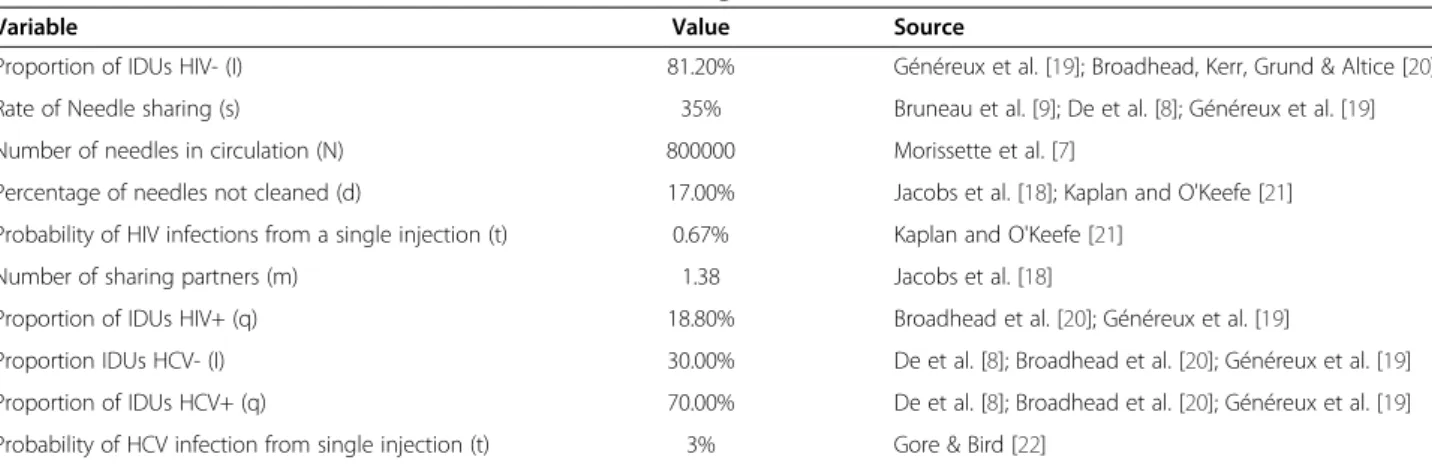
The values of the variables and parameters identified in the above equation were derived from Montreal-specific
Table 1 Sources for variables used in mathematical modeling
Variable Value Source
Proportion of IDUs HIV- (I) 81.20% Généreux et al. [19]; Broadhead, Kerr, Grund & Altice [20]
Rate of Needle sharing (s) 35% Bruneau et al. [9]; De et al. [8]; Généreux et al. [19]
Number of needles in circulation (N) 800000 Morissette et al. [7]
Percentage of needles not cleaned (d) 17.00% Jacobs et al. [18]; Kaplan and O'Keefe [21]
Probability of HIV infections from a single injection (t) 0.67% Kaplan and O'Keefe [21]
Number of sharing partners (m) 1.38 Jacobs et al. [18]
Proportion of IDUs HIV+ (q) 18.80% Broadhead et al. [20]; Généreux et al. [19]
Proportion IDUs HCV- (I) 30.00% De et al. [8]; Broadhead et al. [20]; Généreux et al. [19]
Proportion of IDUs HCV+ (q) 70.00% De et al. [8]; Broadhead et al. [20]; Généreux et al. [19]
Probability of HCV infection from single injection (t) 3% Gore & Bird [22]
Table 2 The cumulative annual cost saving, cost - effectiveness and cost–benefit of SIF in Montreal using the Jacobs et al. [18] model
Variables Annual cost of operation
Sharing rate
# of HIV averted
# of HCV averted
HIV cost saved
HCV cost saved
Cost-effectiveness ratio HCV
Cost-effectiveness ratio HIV
Cost-benefit ratio HCV
Cost-benefit ratio HIV
Post SIF $2,182,800 35% 14 84 $764,970 $769,212 $25,986 $155,914 1.35 1.35
Two SIF $4,365,600 28% 26 162 $1,108,830 $1,327,566 $26,948 $167,908 1.25 1.25
Three SIF $6,548,400 21% 32 195 $189,360 $304,485 $33,582 $204,637 1.03 1.03
Four SIF $8,731,200 18% 37 227 -$940,665 -$753,739 $38,463 $235,978 0.89 0.89
Five SIF $10,914,000 16% 43 261 -$1,860,135 -$1,741,677 $41,816 $253,814 0.83 0.83
Six SIF $13,096,800 13% 48 294 -$2,990,160 -$2,764,758 $44,547 $272,850 0.77 0.77
Seven SIF $15,279,600 10% 53 327 -$4,120,185 -$3,787,839 $46,727 $288,294 0.73 0.73
estimates, including published data; however, when city-specific data were not available, values from the medical and scientific literature were used as estimates (see Table 1). When several estimates were available in the medical and scientific literature, selection preference was given to values leading to lower bound benefits, making the estimates con-servative. At its core, the cost-benefit and cost-effectiveness analysis of this study relied on the number of HIV and HCV infections prevented. In addition, however, the life-time costs of treating HIV and HCV infections, the oper-ational costs of the potential SIFs in Montreal, new HIV and HCV cases prevented for each additional facility, and fi-nally, the desirable number of facilities were all required for complete model specification.
Infectious disease cases prevented
With respect to previous costing studies of SIFs, it has been demonstrated that it is safe to presume that SIFs are able to prevent the risk of new HIV cases because there will be a certain number of known“clean”injections (not shared) as opposed to“dirty”injections (shared) outside of the facility [13,16,17]. In line with previous literature then, the current study employed a point estimate of 0.3 for behavioral change [13,15,16]. To provide a more conservative estimate,
an odds ratio of 0.3 was only used for the first and second potential SIFs in Montreal; this was done to limit the num-ber of new users of the Montreal SIFs simply because we cannot expect all IDUs to start using such facilities.
Using the same odds-ration as the Vancouver study that estimated 20–30 new HIV infections prevented, the math-ematical model used in the current analysis estimated that the number of new HIV infections would fall from 67 to 53 with the establishment of the first SIF [23]. This repre-sented a reduction of 14 new HIV cases per year using the model [18]. In addition, the model used [18] estimated that 84 new cases of HCV would be averted with the establish-ment of the first SIF in Montreal. Considering the param-eter values and the model employed here, the predicted decline in HCV is from 410 to 326. As with the study of Vancouver’s SIF, we do not consider the impact of the SIF on secondary transmissions, such as those through sexual contact, because reliable data are not available.
The medical cost of New HIV and HCV cases
The range of lifetime cost-savings (in 2012 dollars) from averted cases of HIV is great, ranging from $174,410 [24], to US$200,000 [25-27], to more than $289,970 when considering the very successful HAART program [28].
Table 3 The marginal annual cost saving, cost - effectiveness and cost–benefit of SIF in Montreal using the Jacobs et al. [18] model
Variables Annual cost of operation
Sharing rate
Marginal # of HIV averted
Marginal # of HCV averted
Marginal Marginal Marginal Marginal Marginal Marginal
HIV cost saved
HCV cost saved
cost-effectiveness
ratio HCV
cost-effectiveness
ratio HIV
cost-benefit ratio HCV
cost-benefit ratio HIV
Post SIF $2,182,800 35% 14 84 $764,970 $769,212 $25,986 $155,914 1.35 1.35
Two SIF $2,182,800 28% 12 78 $343,860 $558,354 $27,985 $181,900 1.26 1.16
Three SIF $2,182,800 21% 6 33 -$919,470 -$1,023,081 $66,145 $363,800 0.53 0.57
Four SIF $2,182,800 18% 5 32 -$1,130,025 -$1,058,224 $38,463 $436,560 0.52 0.48
Five SIF $2,182,800 16% 6 34 -$1,200,540 -$987,938 $41,816 $363,800 0.55 0.58
Six SIF $2,182,800 13% 5 33 -$1,130,025 -$1,023,081 $66,145 $436,560 0.53 0.57
Seven SIF $2,182,800 10% 5 33 -$919,470 -$1,023,081 $66,145 $436,560 0.53 0.57
Average $2,182,800 7% 8 47 -$498,360 -$531,079 $46,442 $272,850 0.76 0.77
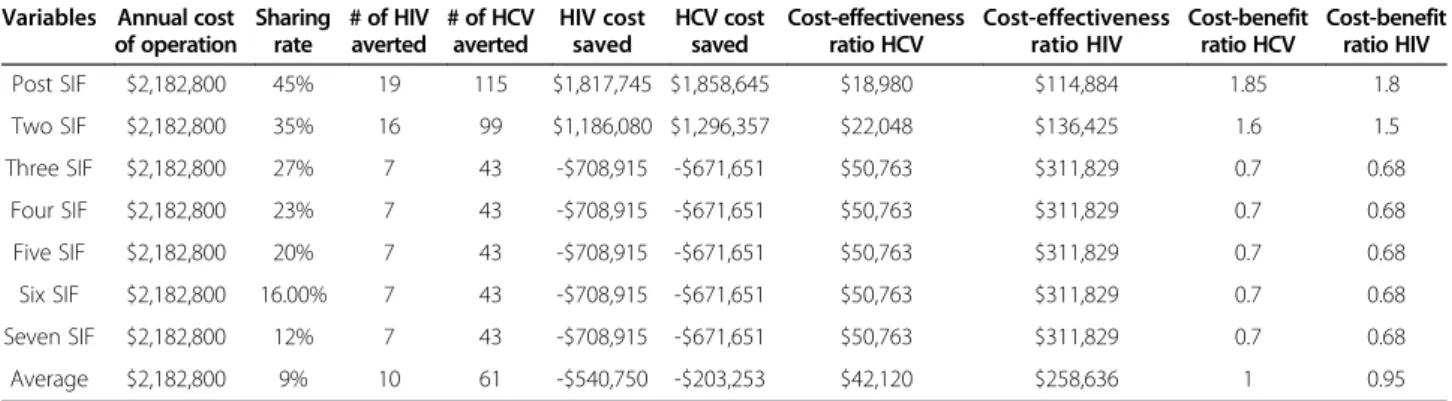
Table 4 The sensitivity analysis at 45% sharing rate for marginal annual cost saving, cost - effectiveness and cost–benefit of SIF in Montreal
Variables Annual cost of operation
Sharing rate
# of HIV averted
# of HCV averted
HIV cost saved
HCV cost saved
Cost-effectiveness ratio HCV
Cost-effectiveness ratio HIV
Cost-benefit ratio HCV
Cost-benefit ratio HIV
Post SIF $2,182,800 45% 19 115 $1,817,745 $1,858,645 $18,980 $114,884 1.85 1.8
Two SIF $2,182,800 35% 16 99 $1,186,080 $1,296,357 $22,048 $136,425 1.6 1.5
Three SIF $2,182,800 27% 7 43 -$708,915 -$671,651 $50,763 $311,829 0.7 0.68
Four SIF $2,182,800 23% 7 43 -$708,915 -$671,651 $50,763 $311,829 0.7 0.68
Five SIF $2,182,800 20% 7 43 -$708,915 -$671,651 $50,763 $311,829 0.7 0.68
Six SIF $2,182,800 16.00% 7 43 -$708,915 -$671,651 $50,763 $311,829 0.7 0.68
Seven SIF $2,182,800 12% 7 43 -$708,915 -$671,651 $50,763 $311,829 0.7 0.68
However, the current study assumed a lower cost-savings for HIV infections among IDUs (recognizing that IDUs may experience certain self-imposed barriers or other societal limitations making it less likely for an IDU to take full advantage of the medical system), a lower bound value of $210, 555 was chosen [29]. This value is based on the most recent research in this area [13,16,30].
With respect to costing studies for HCV, the cost-savings range from $20,000 per completed patient course of treatment [31], to $30,000 [28], to more than $69,188 [32]. Once again, here a conservative figure of $35,143 (2012 Dollars), as reported in [33], was chosen.
New infectious disease cases
Because no other study has calculated the number of sharing partners in an IDU population, the current model drew from [18] to obtain a value of 1.38. Further, although (d)—the percentage of needles not cleaned be-fore use—was 50 percent in [18], the current analysis used the more conservative estimate of 17 percent that was implemented in [21] to make our estimates that much more conservative. The number of total injec-tions within Montreal was also unavailable; therefore, the current study used the product of the number of
IDUs (4,300) and the number of injections per year (913) to arrive at a parameter estimate of 3.926 million injections [18,34-36].
Cost of SIFs
In order to estimate the cost of establishing SIFs, the analysis must consider the variable and fixed operating cost of existing SIFs. As a result, the study drew these parameters from Insite, the only available comparison facility. The total annual operating cost of Insite in Vancouver is estimated to be $3 million [13,16,37]. This $3 million figure includes primary healthcare, peer counselling, education, housing services, public health screening (immunisation and diagnostic), addiction counselling and case management [13,16,37].
The annual operating cost of Insite in terms of property rental, and supervised injection facility provisions such as injection kits (e.g., insulin syringes with attached needles, bottles of sterile water for injection, latex condoms, alco-hol swaps, cost of disposal of used syringes), staff salaries, and equipment purchases is estimated to be $1.53 million [13]. When considering the expansion of Insite from 18 to 24 hours, the operational cost of Insite reaches $2.182 mil-lion (2012 dollars)–a one-third increase in the hours of operation [13]. As a result, the current study used $2.182
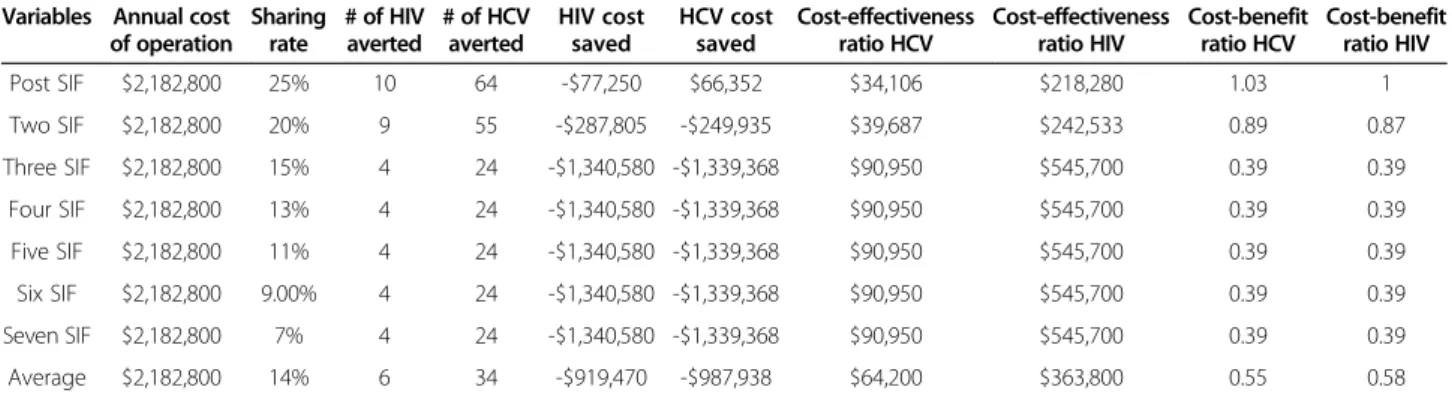
Table 5 The sensitivity analysis at 25% sharing rate for marginal annual cost saving, cost - effectiveness and cost–benefit of SIF in Montreal
Variables Annual cost of operation
Sharing rate
# of HIV averted
# of HCV averted
HIV cost saved
HCV cost saved
Cost-effectiveness ratio HCV
Cost-effectiveness ratio HIV
Cost-benefit ratio HCV
Cost-benefit ratio HIV
Post SIF $2,182,800 25% 10 64 -$77,250 $66,352 $34,106 $218,280 1.03 1
Two SIF $2,182,800 20% 9 55 -$287,805 -$249,935 $39,687 $242,533 0.89 0.87
Three SIF $2,182,800 15% 4 24 -$1,340,580 -$1,339,368 $90,950 $545,700 0.39 0.39
Four SIF $2,182,800 13% 4 24 -$1,340,580 -$1,339,368 $90,950 $545,700 0.39 0.39
Five SIF $2,182,800 11% 4 24 -$1,340,580 -$1,339,368 $90,950 $545,700 0.39 0.39
Six SIF $2,182,800 9.00% 4 24 -$1,340,580 -$1,339,368 $90,950 $545,700 0.39 0.39
Seven SIF $2,182,800 7% 4 24 -$1,340,580 -$1,339,368 $90,950 $545,700 0.39 0.39
Average $2,182,800 14% 6 34 -$919,470 -$987,938 $64,200 $363,800 0.55 0.58
Table 6 The sensitivity analysis at 45% sharing rate for cumulative annual cost saving, cost - effectiveness and cost–benefit of SIF in Montreal
Variables Annual cost of operation
Sharing rate
# of HIV averted
# of HCV averted
HIV cost saved
HCV cost saved
Cost-effectiveness ratio HCV
Cost-effectiveness ratio HIV
Cost-benefit ratio HCV
Cost-benefit ratio HIV
Post SIF $2,182,800 45% 19 115 $1,817,745 $1,858,645 $18,980 $114,884 1.85 1.8
Two SIF $4,365,600 35% 35 214 $3,003,825 $3,155,002 $20,400 $124,731 1.7 1.7
Three SIF $6,548,400 27% 42 256 $2,294,910 $2,448,208 $25,580 $155,914 1.4 1.4
Four SIF $8,731,200 23% 49 299 $1,585,995 $1,776,557 $29,201 $178,188 1.2 1.2
Five SIF $10,914,000 20% 56 341 $877,080 $1,069,763 $32,006 $194,893 1.1 1.1
Six SIF $13,096,800 16.00% 63 384 $168,165 $398,112 $34,106 $207,886 1 1
Seven SIF $15,279,600 12% 70 427 -$540,750 -$273,539 $35,784 $218,280 0.96 0.98
million for each (proposed) SIF implemented in Montreal. For simplicity, we assume that the Montreal SIFs would provide the same injection kits and have similar costs as-sociated with property rental, staff salaries, and equipment purchases overall—the same service provision as in the Vancouver SIF. This is believed to be a conservative esti-mate because, according to the Canada Mortgage & Hous-ing Corporation report, rental vacancy rates are higher in Montreal, resulting in lower commercial rent than Vancouver [38]. Further, British Columbia has the highest paid registered nurses and staff in the country [39].
Results and discussion
The model used here [18], predicted the number of new HIV and HCV cases prevented based on the needle shar-ing rate. This included the impact of behavioral changes in injection activities outside of the SIF. The behavioral change, according to Table 2 and Table 3, was only con-sidered twice (once for the first SIF and later for the sec-ond SIF)—this modeling decision is apparent in the marginal number of new HIV cases averted in Tables 3, 4 and 5. This calculation of behavioral impact is based on a conservative odds-ratio that falls within the limit specified by Kerr et al. (2005) [40].
As expected, the results presented in Table 2 and Table 3 show that increasing the scope of SIFs through site expan-sion would result in a decrease of HIV infection cases. The model predicts: 14–53 fewer HIV cases and 84–327 fewer HCV cases annually, with the marginal range being much smaller: 5–14 fewer HIV cases and 33–84 fewer HCV cases annually.
This range disparity, as outlined in Table 2 and Table 3, translates into substantial differences between the eco-nomic evaluation of SIFs with respect to the cumulative versus marginal estimates: the total effect of establishing SIFs and the effect of establishing each subsequent SIF, respectively.
For example, according to Table 3, the cumulative an-nual estimates of new HIV cases averted, translates into a cost savings for society ranging from $0.764 million (benefit) for the first SIF to -$4.1 million (loss) for the seventh SIF. Benefit-cost ratios range from 1.35 to 0.73, and cost-effectiveness values range from $155,914 to $288,294 (cost per lifetime treatment). The cumulative annual estimates of new HCV cases averted translate into a cumulative cost savings that range from $0.769 million (benefit) for the first SIF to -$3.7 million (loss) for the seventh SIF. Benefit-cost ratios range from 1.35
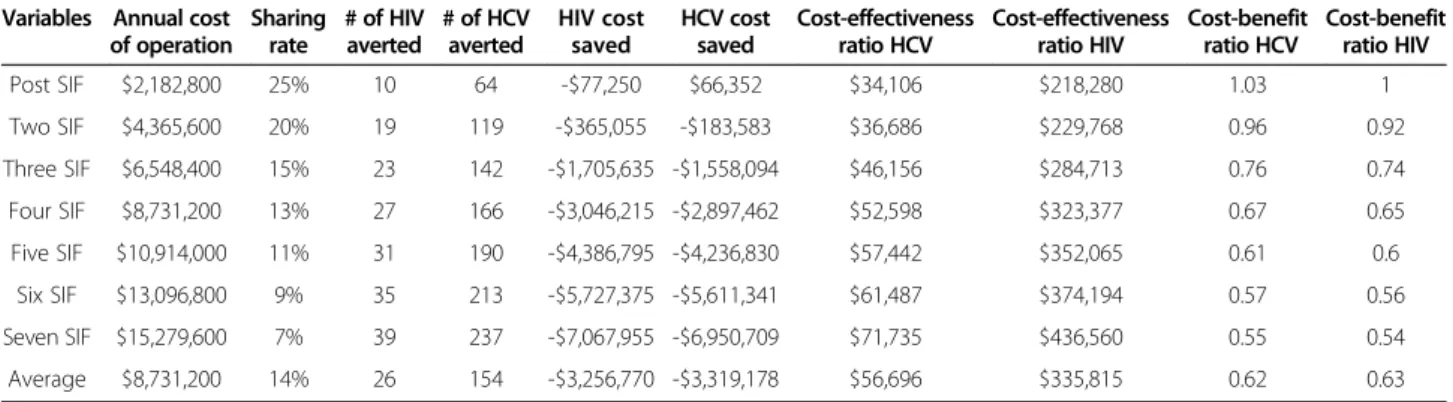
Table 7 The sensitivity analysis at 25% sharing rate for cumulative annual cost saving, cost - effectiveness and cost–benefit of SIF in Montreal
Variables Annual cost of operation
Sharing rate
# of HIV averted
# of HCV averted
HIV cost saved
HCV cost saved
Cost-effectiveness ratio HCV
Cost-effectiveness ratio HIV
Cost-benefit ratio HCV
Cost-benefit ratio HIV
Post SIF $2,182,800 25% 10 64 -$77,250 $66,352 $34,106 $218,280 1.03 1
Two SIF $4,365,600 20% 19 119 -$365,055 -$183,583 $36,686 $229,768 0.96 0.92
Three SIF $6,548,400 15% 23 142 -$1,705,635 -$1,558,094 $46,156 $284,713 0.76 0.74
Four SIF $8,731,200 13% 27 166 -$3,046,215 -$2,897,462 $52,598 $323,377 0.67 0.65
Five SIF $10,914,000 11% 31 190 -$4,386,795 -$4,236,830 $57,442 $352,065 0.61 0.6
Six SIF $13,096,800 9% 35 213 -$5,727,375 -$5,611,341 $61,487 $374,194 0.57 0.56
Seven SIF $15,279,600 7% 39 237 -$7,067,955 -$6,950,709 $71,735 $436,560 0.55 0.54
Average $8,731,200 14% 26 154 -$3,256,770 -$3,319,178 $56,696 $335,815 0.62 0.63
Table 8 The cumulative ten years cost - effectiveness and cost–benefit of sif in montreal using the Jacobs et al. [18] model
Variables Annual cost
of operation
# of HIV averted
# of HCV averted
Cost-effectiveness ratio HCV
Cost-effectiveness ratio HIV
Cost-benefit ratio HCV
Cost-benefit ratio HIV
Post SIF $21,828,000 140 840 $25,986 $155,914 1.35 1.35
Two SIF $43,656,000 260 1620 $26,948 $167,908 1.25 1.25
Three SIF $65,484,000 320 1950 $33,582 $204,637 1.03 1.03
Four SIF $87,312,000 370 2270 $38,463 $235,978 0.89 0.89
Five SIF $109,140,000 430 2610 $41,816 $253,814 0.83 0.83
Six SIF $130,968,000 480 2940 $44,547 $272,850 0.77 0.77
Seven SIF $152,796,000 530 3270 $46,727 $288,294 0.73 0.73
to 0.73, and incremental cost-effectiveness values range from $25,986 to $46,727 (cost per lifetime treatment).
In contrast, the marginal estimates of Montreal’s SIF expansion translate into a much smaller return. This is particularly true with respect to its benefit-cost and cost-effectiveness ratios. For instance, the marginal benefit-cost ratio varies from 1.35 to 0.77 for HIV and 1.35 to 0.76 for HCV. The marginal cost-effectiveness value for HIV ranges from $155,914 to $436,560 (cost per life- time treatment). The HCV marginal cost-effectiveness value ranges from $25,986 to $66,145 (cost per lifetime treatment).
Furthermore, Table 2 and Table 3 show that both cumu-lative benefit-cost ratios dwindle after the third SIF. For example, Table 2 shows that a cost savings of $189,360 is present for the third SIF (HIV) results, but the further ex-pansion to four SIFs leads to a $0.940 million loss. A simi-lar loss due to SIF expansion can be seen for HCV where a $304,485 cost saving (for the third SIF) changes to a 0.753 million dollar loss (for the fourth SIF). More specif-ically, the benefit-cost ratio for both HIV and HCV dimin-ish after the third SIF (from 1.03 to 0.89). Incremental cost-effectiveness ratios also diminish after the third SIF with HIV ($204,637 to $235,978 cost per lifetime treat-ment) and HCV ($33,582 to $38,463 cost per life- time treatment). This means that they both exceed their cost-effectiveness ratios of $210, 555 and $35,143 respectively.
Finally, sensitivity analysis was conducted for the models employed. These employed different initial needle-sharing rates (see Tables 4, 5, 6 and 7). Similar to [17] and [13], the current analysis used 20 and 40 per cent initial needle-sharing rates. Convincingly, the results from both the baseline and sensitivity analysis in these analyses demon-strate that the establishment of an SIF program in Montreal would save tax payers money.
The estimates of 130–140 HIV reductions and 840 HCV reductions over 10 years (with consideration for growth in IDUs population) is still cost effective for the first three SIFs. Results ranged from $155,914 to $204,638 for HIV (cost per lifetime treatment) and $33,582 to $33,582 for HCV (cost per lifetime treatment). Further, the benefit-cost ratio is above 1 for both HIV and HCV for the first three SIF over 10 years of establishment (see Table 8).
Conclusions
The current analysis set out to assess whether establishing a SIF in Montreal would have a (net) positive fiscal impact on society. In particular, it assessed whether or not this policy initiative would save public health care funds by averting new HIV and HCV infections. Moreover, upon completion of the economic evaluation for the proposed SIF in Montreal, the optimal number of SIFs was assessed based on marginal cost-saving, cost-effectiveness, and benefit-to-cost ratios.
The results presented here suggest that establishing SIFs in Montreal will benefit the publically funded health care system. Further, the implementation of additional SIFs would serve a as a fiscally responsible course of action. It should be noted that although expansion beyond the third SIF location may not provide the same economic return, it may still be considered cost-effective (even if it is not cost saving) given that the analyses used highly conservative es-timates in the baseline calculations. For example, the poten-tial for cost-savings with respect to cellulitis, subcutaneous abscesses, endocarditis, and incidence of soft-tissue infec-tions averted were not considered in the calculainfec-tions.
In addition, for incidents of HIV and HCV, the lower bound estimates were considered. For example, when con-sidering HIV, the current analyses omitted the parameters found to be specified in the HAART program and instead, relied on the lower cost estimates for HIV and HCV. Hence, only at very high levels of coverage is there a diminishing return in the number of new HIV and HCV infections averted for each dollar invested. Moreover, even if the calculations predicted that the expansion beyond the fourth SIF may not be economically desirable (because the benefit-to-cost ratio or cost-effectiveness ratios are not favourable), they could become so in the future because other studies have shown that future benefits will out-weigh the start-up costs [41]. As a result, the current model most certainly underestimated the benefits.
While some researchers remain sceptical with respect to the economic rationale for ancillary SIFs [16,30], it should be noted that other models used in recent research have consistently demonstrated the benefits of such expansion [13]. The main difference between the current study’s findings and those in [16,30] is the consideration of behav-ioral change. Behavbehav-ioral change has been shown to be an important aspect of the result not only in this costing study, but other studies as well [13,17]. The conditions under which the establishment of a SIF will be economic-ally efficient and cost-saving stem from two sources; one being the provision of clean injecting equipment, and the other being the easier accessibility of services that translate into transformative changes in IDUs behavior (e.g., injec-tion behavior outside Insite becomes less risky).
policy makers who seek to find practical, cost-effective solutions to serious health care problems in a climate of scarce public resources.
Competing interests
The authors declare that they have no competing interests.
Authors’contributions
EJ: data gathering, performed the statistical analysis; AAR: drafted the manuscript; MAA: methodological study design and drafting of manuscript. All authors read and approved the final manuscript.
Received: 21 April 2013 Accepted: 3 July 2013 Published: 9 July 2013
References
1. Mathers BM, Degenhardt L, Buccello C, Lemon J, Wiessing L, Hickman M:
Mortality among people who inject drugs: a systematic review and meta-analysis.Bull World Health Organ2013,91:102–123.
2. World Health Organization:HIV/AIDS: Injecting drug use.2013 [http://www. who.int/hiv/topics/idu/en/index.html]
3. Rehm J, Ballunas D, Brochu S, Fischer B, Gnam W, Patra J, Popova S, Sarnocinska-Hart A, Taylor B:The Costs of Substance Abuse in Canada 2002: Highlights.Ottawa, ON: Canadian Centre on Substance Abuse; 2006. 4. Canadian Centre on Substance Abuse:Injection Drug Users Overview; 2011.
http://www.ccsa.ca/Eng/Topics/Populations/IDU/Pages/InjectionDrugUsers Overview.aspx.
5. Archibald CP, Jayaraman GC, Major C, Patrick DM, Houston SM, Sutherland D:
Estimating the size of hard-to-reach populations: A novel method using HIV testing data compared to other methods.AIDS2001,15:S41–S48. 6. Roy E, Arruda N, Vaillancourt E, Boivin J, Morissette C, Leclerc P,et al:Drug
use patterns in the presence of crack in downtown Montreal.
Drug Alcohol Rev2012,31:72–80.
7. Morissette C, Cox J, De P, Tremblay C, Roy E, Allard R,et al:Minimal uptake of sterile drug preparation equipment in a predominantly cocaine injection population: Implications for HIV and hepatitis C prevention.
Int J Drug Policy2007,18:204–212.
8. De P, Cox J, Boivin JF, Platt RW, Jolly AM, Alexander PE:HIV and HCV discordant injecting partners and their association to drug equipment sharing.Scand J Infect Dis2007,41:206–214.
9. Bruneau J, Daniel M, Kestens Y, Zang G, Généreux M:Association between HIV-related injection behavior and distance to and patterns of utilisation of syringe-supply programmes.J Epidemiol Community Health2008,
62:804–810.
10. Jozaghi E:The science versus the politics: The need for supervised injection facilities in Montreal, Canada.Int J Drug Policy2012,23:420–421. 11. Andresen MA, Jozaghi E:The point of diminishing returns: an
examination of expanding Vancouver’s Insite.Urban Studies2012,
49(16):3531–3544.
12. CTVNews.ca Staff:CMA 'deeply concerned' about tighter rules for safe injection sites.2013. http://www.ctvnews.ca/health/cma-deeply-concerned-about-tighter-rules-for-safe-injection-sites-1.1313766.
13. O'Neil P:Vancouver's supervised injection site will survive new federal rules, supporter say.2013. http://www.vancouversun.com/health/Vancouver +supervised+injection+site+will+survive+federal/8488985/story.html. 14. Semaan S, Fleming P, Worrell C, Stolp H, Baack B, Miller M:Potential role of
safer injection facilities in reducing HIV and Hepatitis C infections and overdose mortality in the United States.Drug Alcohol Depend2011,
118:100–110.
15. Bayoumi AM, Zaric GS:The cost-effectiveness of Vancouver’s supervised injection facility.Can Med Ass J2008,179(11):1143–1151.
16. Pinkerton SD:Is Vancouver Canada’s supervised injection facility cost-saving?Addiction2010,105:1429–1436.
17. Andresen MA, Boyd NT:A cost–benefit and cost-effectiveness analysis of Vancouver’s supervised injection facility.Int J Drug Policy2010,21:70–76. 18. Jacobs P, Calder P, Taylor M, Houston S, Saunders LD, Albert T:Cost
effectiveness of streetworks’needle exchange program of Edmonton.
Can J Public Health1999,90(3):168–171.
19. Généreux M, Bruneau J, Daneil M:Association between neighborhood socioeconomic characteristics and high-risk injection behavior amongst
injection drug users living in inner and othe city areas in Montreal, Canada.Int J Drug Policy2010,21:49–55.
20. Broadhead RS, Kerr TH, Grund JP, Altice FL:Safer injection facilities in North America: Their place in public policies and health initiatives.
J Drug Issues2002,32:329–355.
21. Kaplan EH, O’Keefe E:Let the needles do the talking! Evaluating the New Haven needle exchange.Interfaces1993,23:7–26.
22. Gore SM, Bird AG:Study size and documentation to detect injection-related hepatitis C in prison.Quantitative J Med1998,91:353–357. 23. Des Jarlais DC, Arasteh K, Hagan H:Evaluating Vancouver’s supervised
injection facility: Data and dollars, symbols and ethics.Can Med Assoc J 2008,179(11):1105–1106.
24. Gold M, Gafni A, Nelligan P, Millson P:Needle exchange programs: An economic evaluation of a local experience.Can Med Assoc J1997,
157(3):255–262.
25. Chen RY, Accortt NA, Westfall AO, Mugavero MJ, Raper JL, Cloud GA,et al:
Distribution of health care expenditure for HIV-infected patients.
Clin Infect Dis2006,42:1003–1010.
26. Holtgrave DR, Pinkerton SD:Updates of cost of illness and quality of life estimates for use in economic evaluations of HIV prevention programs.
J Acquir Immune Defic Syndr Hum Retrovirol1997,16:55–61. 27. Pinkerton SD, Holtgrave DR:Assessing the cost-effectiveness of HIV
prevention interventions: a primer.InHandbook of Economic Evaluation of HIV Programs.Edited by Holtgrave DR. New York: Plenum; 1998:33–43. 28. Werb D, Wood E, Kerr T, Hershfield N, Palmer RWH, Remis RS:Treatment
costs of hepatitis C infection among injection drug users in Canada, 2006–2026.Int J Drug Policy2011,22:70–76.
29. Albert T, Williams G, Legowski B, Remis R:The economic burden of HIV/AIDS in Canada.Ottawa, ON: Canadian Policy Research Networks; 1998. 30. Pinkerton SD:How many HIV infections are prevented by Vancouver
Canada’s supervised injection facility?Int J Drug Policy2011,22:179–183. 31. Krajden M, Kuo M, Zagorski AM, Yu A, Krahn M:Health care costs
associated with hepatitis C: A longitudinal cohort study.Canadian J Gastroenterol2010,24(12):717–726.
32. Martin N, Vickerman P, Miners A, Foster GR, Hutchinson SJ, Goldberg DJ, et al:Cost-effectiveness of Hepatitis C virus antiviral treatment for injection drug user populations.Hepatology2012,55(1):49–57. 33. National Centre in HIV Epidemiology and Clinical Research:Epidemiological
and economical impact of potential increased hepatitis C treatment uptake in Australia.Sydney: The University of New South Wales; 2010.
34. Holtgrave DR, Pinkerton SD, Jones TS, Lurie P, Vlahov D:Cost and cost-effectiveness of increasing access to sterile syringes and needles as an HIV prevention intervention in the United States.J Acquir Immune Defic Syndr Hum Retrovirol1998,18(Suppl 1):S133–S138.
35. Laufer FN:Cost-effectiveness of syringe exchange as an HIV prevention strategy.J Acquir Immune Defic Syndr2001,28:273–278.
36. McClean ME:Vancouver drug use epidemiology-2001: Vancouver and BC site report for the Canadian community epidemiology network on drug use. Vancouver, BC: Vancouver-Richmond Health Board; 2002.
37. Health Canada:Vancouver’s Insite service and other supervised injection sites: What has been learned from research? Final report of the export advisory committee.Ottawa (ON): Health Canada; 2008.
38. Canada Newswire:A slightly softer rental market in the Montreal metropolitan area.2006 [http://search.proquest.com/docview/453170769?accountid=13800] 39. Nurses Union:Overview of key nursing contract provisions.2011. http://www.
nursesunions.ca/sites/default/files/2011.07.contract_comparison.e.pdf. 40. Kerr T, Tyndall M, Li K, Montaner J, Wood E:Safer injection facility use and
syringe sharing in injection drug users.Lancet2005,366:316–318. 41. MSIC Evaluation Committee:Final report on the evaluation of the Sydney
Medically Supervised Injection Center.Sydney (Australia): Authors; 2003.
doi:10.1186/1747-597X-8-25
Cite this article as:Jozaghiet al.:A cost-benefit/cost-effectiveness
analysis of proposed supervised injection facilities in Montreal, Canada.