Refugee Students: Educational Challenges and Strategies for Leaders Working with Third World Populations
Thomas Collins Cooper, III
A dissertation submitted to the faculty of the University of North Carolina at Chapel Hill in partial fulfillment of the requirements for the degree of Doctor of Education in the School of
Education.
Chapel Hill 2014
Approved By: Kathleen Brown
Laurel Crissman
Carolyn Ledford
Stanley Schainker
© 2014
ABSTRACT
Thomas Collins Cooper III: Refugee Students: Educational Challenges and Strategies for Leaders Working with Third World Populations
(Under the direction of Kathleen Brown)
Each year, the United States resettles more refugees than any other country in the world. These students are placed into foreign learning environments where they are forced to adapt to new academic settings while also adjusting to a new culture. Often times, these students are escaping a violent past and are placed with teachers who have limited training in dealing with such issues. The passage of the No Child Left Behind Act (NCLB) of 2001 was intended to identify failing schools, however it has also lead to potential gaps that students can fall through. In this dissertation, third world refugee students who come to the United States and may not meet the minimum requirements to be counted in the NCLB accountability demographic are identified, their challenges are examined, and strategies are presented for school leaders to utilize for the benefit of refugee students. This mixed methods study explores a school devoted to newly arrived students in the United States. Through the use of interviews, observations, and data analysis, a framework was created that will aid social justice minded leaders as they create learning environments that can help third world refugees succeed. This document provides school leaders with intentional implementation strategies within a three-tiered framework that can be used to guide districts towards a more comprehensive and culturally responsive
ACKNOWLEDGEMENTS
First and foremost, I need to thank God for putting me where I need to be, providing me with the necessary skills, and opening the doors for me to be successful.
To my wife, NikiLeigh, for her commitment, sacrifice, and constant support that has allowed me to finish the coursework in a timely manner.
I would like to extend a thank you to my late father Collins, and mother Linda. Their unwavering support over the last 30 years has been second to none. They always believed in me, supported me, and encouraged me to do my best and pursue my passions (even when I broke rule #3).
To my sister, Paula, brother, Chris, nieces, Jessica and Alyssa, and nephew, Landon, thank you for your support and encouragement these past years. I would not be where I am today without the love and support of my family.
To my grandmother Pauline, you are one of the biggest forces in keeping me going with this project. I hope this “book” sits on your table for many years to come.
To Doug and Tammy Britt, my other parents, thank you for supporting Niki and I over the past three years. I know you understand the sacrifices it took and I cannot thank you enough for the support of our goals and dreams.
To my church family, thank you for your prayers, guidance, and support over the many years at Providence and Hope Community Church. Your prayers have been heard and the power of God has been displayed.
To the Taylor family, I also want to say a special thank you for your support over the years. Whitney was a wonderful person and a great teacher. I hope to have the influence over children the way she did and continue her passion for helping others.
TABLE OF CONTENTS
LIST OF TABLES ... Error! Bookmark not defined.
LIST OF CHARTS AND FIGURES ... xi
CHAPTER I – INTRODUCTION ... 1
Purpose of the Study ... 2
Research Questions ... 3
Conceptual Framework ... 4
Research Design Overview ... 5
Limitations and Anticipated Outcomes ... 6
Rationale for the Study ... 8
Definitions of terms ... 8
Conclusion ... 9
CHAPTER II – LITERATURE REVIEW ... 11
Background of Refugees in America ... 11
Challenges to Educating Refugees ... 18
Strategies for Educating Refugees ... 25
Conclusion ... 39
Theoretical Framework ... 39
Conclusion ... 53
Rationale for Research Design ... 54
Research Design ... 55
Research Questions ... 59
Role of the Researcher ... 60
Site Selection and Participants ... 61
Establishing Trustworthiness ... 63
Data Collection ... 64
Ethics ... 66
Data Analysis ... 66
Research Limitations ... 67
Research Assumptions ... 68
Conclusion ... 69
CHAPTER IV – SITE DESCRIPTION ... 71
State and District Description ... 71
School Description (for 2013-‐2014) ... 71
Staff description and Breakdown ... 79
Curriculum ... 81
Data ... 83
Conclusion ... 85
CHAPTER V – DATA ANALYSIS ... 87
Support and Commitment ... 90
Financial. ... 91
Community ... 94
District and site-‐based leadership ... 97
Training ... 98
Professional development ... 99
Cultural training ... 100
Curriculum ... 102
Specialized Help and Support ... 104
Support staff ... 105
Inclusion ... 107
Understanding the Group ... 107
Status ... 108
Tourist vs. immigrant ... 110
Relationships ... 111
Parent Role ... 113
Students ... 113
School belonging ... 114
Self-‐Awareness ... 115
Resilience ... 116
Conclusion ... 117
CHAPTER VI -‐ RECOMMENDATIONS ... 119
Recommendations Based on Findings ... 120
Digging Deeper: What needs to be added to the literature? ... 143
Questions for Further Research ... 145
APPENDIX 1: POTENTIAL TEACHER INTERVIEW QUESTIONS ... 147
APPENDIX 3: POTENTIAL DISTRICT LEADER INTERVIEW QUESTIONS ... 149
APPENDIX 4: POTENTIAL COMMUNITY SSUPPORT INTERVIEW QUESTIONS ... 150
APPENDIX 5: POTENTIAL CLASSROOM OBSERVATION PROTOCOL ... 151
LIST OF TABLES Table
1. State Top Five Refugee Population 2012 17
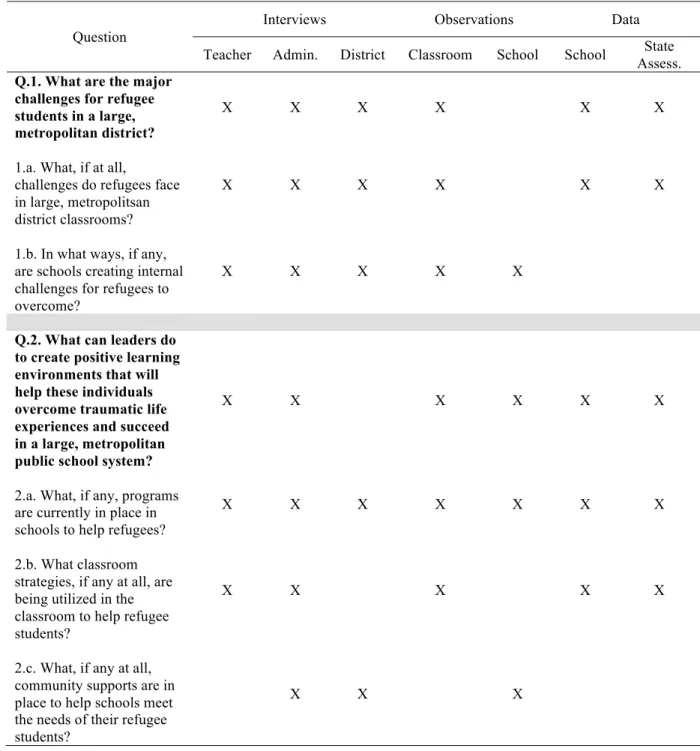
2. Research Question Cross Walk 60
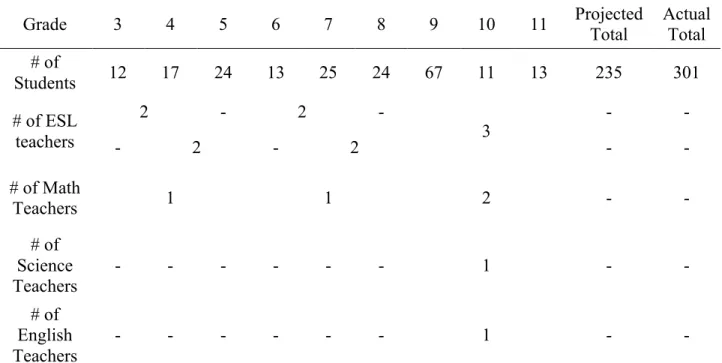
3. 20-day counts for Welcomers students 75
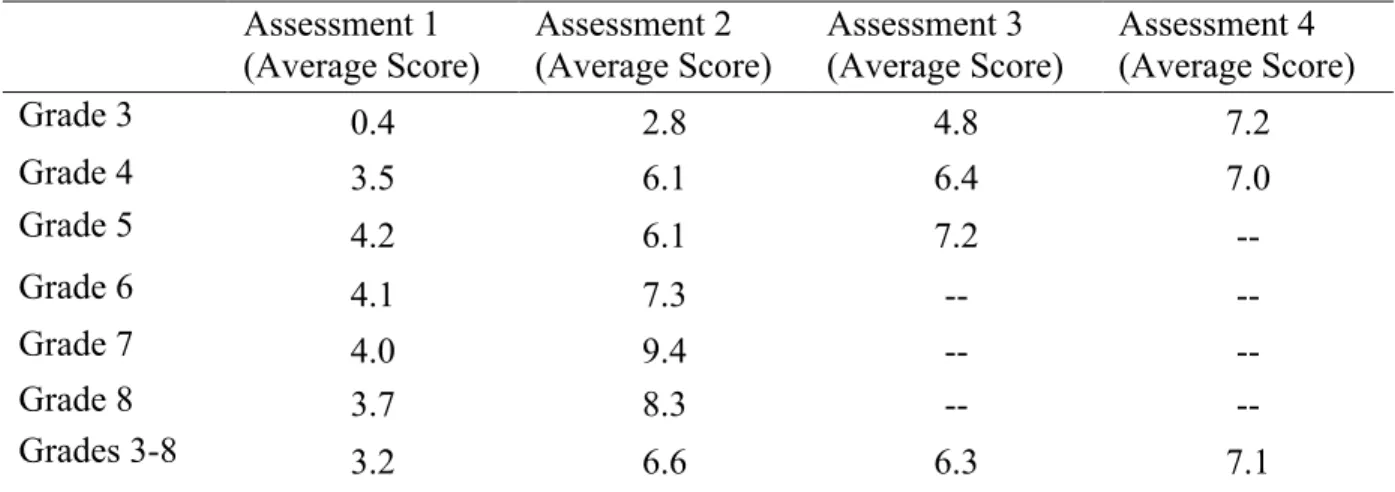
4. Fountas & Pinnell data for the 2013-2014 school year 84
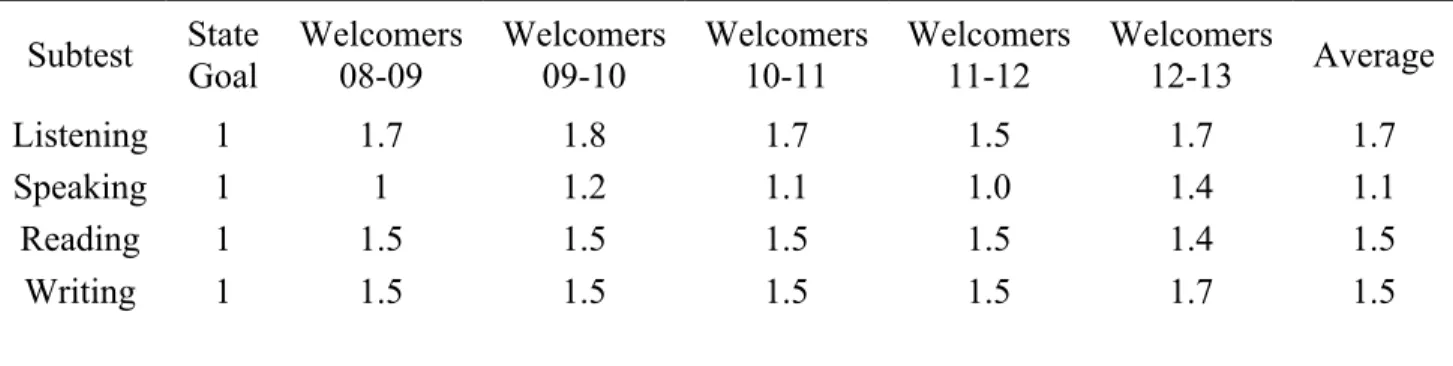
5. WIDA/W-APT Test data 85
LIST OF CHARTS AND FIGURES
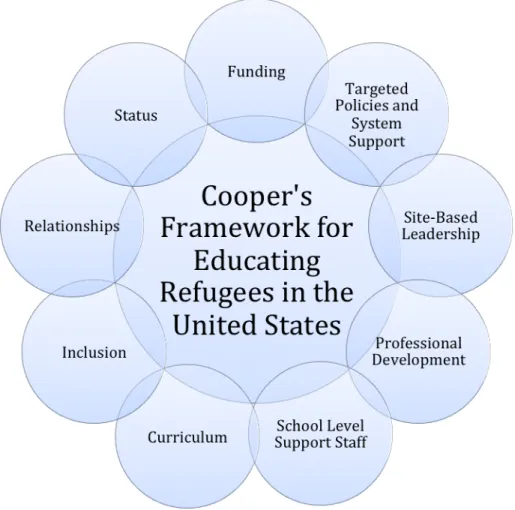
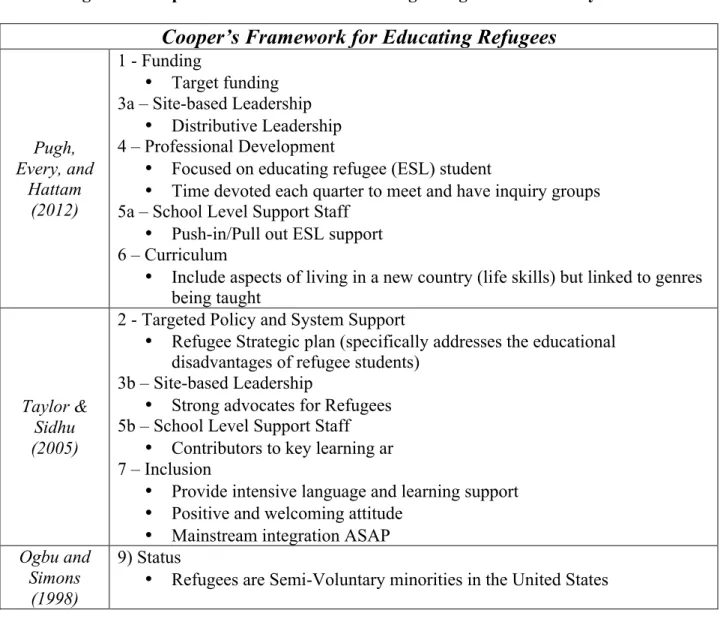
Figure 1: County Resettlement Sites of the State Refugees Admitted in 2012 18 Figure 2: Cooper’s Framework for Educating Refugees in the United States 42 Figure 3: Cooper’s Framework for Educating Refugees in the United States by source 43
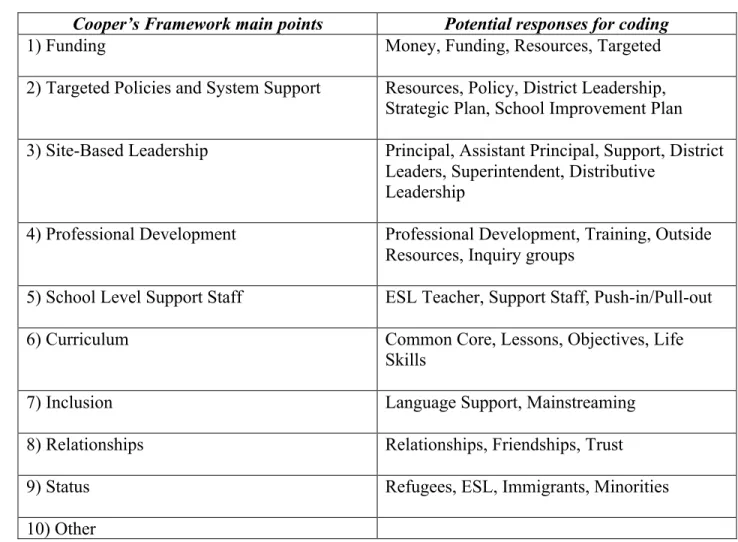
Figure 4: Potential Coding Responses 67
Figure 5: Emergent Themes 88
Figure 6: Tiers of implementation by importance 122
Figure 7: Starting Point Resources 145
CHAPTER I – INTRODUCTION
The No Child Left Behind legislation passed in 2001exposed gaps in the achievement levels between different groups of students in the American classroom. Refugees are one of the groups prone to being “left behind,” given their past experiences, sparse populations across the country, and the unique challenges they face resettling in a new country. Additionally, many of these individuals bring a traumatic past with them, and, without a school staff that understands and adjusts to their needs, they will most likely not make it to high school graduation.
Since World War II, the United States has had a growing number of refugees in the American education system. While this number peaked in the 1980s with the passage of the Refugee Resettlement Act of 1980, the United States has had an average of 50,000 refugees enter each year and a total of around three million entering the country since 1975 (U.S. Dept. of State, 2013) and make up roughly 10% of the immigrant population entering the United States. Just under half of those admitted into the United States are under the age of 18 and are entitled to education services. As they only make up a small percentage of the population and do not necessarily create an achievement gap that is identifiable to districts using current accountability measures, these students face the potential of being left behind by schools.
Currently, over 45 million refugees around the world—a 20-year high—await
populations would be a disservice to those individuals and could potentially become a larger political and economic issue for the American population if they are not educated.
After providing a broad history for this demographic, this study looks to identify educational challenges refugees face as they enter school systems across the United States. It also provides strategies that could help schools meet the needs of refugee populations in their community. While it may be difficult to make generalizations about all refugee communities, including their financial and language obstacles, it is apparent that many groups must work to overcome cultural differences. These shared challenges are the subjects that will make up the focus of this research.
Purpose of the Study
The purpose of this study is to identify a population within the American school system that typically does not make up a large enough subgroup in most school districts to warrant changes to the schools’ culture but whose educational needs are potentially not understood or met. For many refugees, refugee agencies serve as a life support for living in the United States and these groups rely on grants to provide their services. Statistics from global-, national-, and state-level databases will be used to illustrate just how large this population is and how this influx of individuals could change the educational landscape of some districts.
Refugees make up a unique population whose needs districts may have limited experience and resources. As such, these students face multiple challenges as they enter the classroom. Many of these refugees are coming from countries that are facing challenges including war, disease, famine, or other destabilizing conflict; as a result, educational
classroom can be a daunting place for such a child. In addition, the child’s psychosocial
obstacles and discrimination from other students may add to the challenge of providing a suitable classroom environment. This study also provides solutions for school leaders that could help refugees succeed within the American classroom. Proposed solutions include language access, parental involvement, equity and excellence, and professional development for educators. While this is not an inclusive list, they are the most common components found within the research compiled for this paper and provide the theoretical background for this paper.
By identifying these challenges and possible solutions, I have created Cooper’s Framework for Educating Refugees in the United States, which can be employed by districts with an increase in refugee students to help them acculturate more quickly and succeed
academically. Although not created as a one-size-fits-all for all districts with regard to refugee education, it can serve as a starting point or add to the current resources districts can employ. Research Questions
To better understand what refugee education looks like in the American education system, the following questions have been developed to guide this research and create Cooper’s Framework for Educating Refugees in the United States:
1) What are the major challenges for refugee students in a large, metropolitan district? 2) What can leaders do to create positive learning environments that will help these
individuals overcome traumatic life experiences and succeed in a large, metropolitan public school system?
form of a framework that can be implemented in schools in the United States who have refugee populations.
Conceptual Framework
This research study addresses the unmet needs of the refugee population in the United States. These students are some of the 50,000-plus refugees that resettle in the United States each year and enter the school systems across America with limited knowledge of the language and cultures that make up the United States’ education system. Many of these refugees are placed in resettlement cities (Denver, CO; Fort Wayne, IN; Minneapolis, MN; Greensboro, NC; Chapel Hill, NC; and New York, NY) where there are community supports in place to aid in the resettlement. Because of this grouping, not a lot of research has been done on a national level as to the impact these students are having on the education system as a whole or in areas that are not designated as resettlement sites. Equally as absent from the research are suggested strategies that could potentially help schools meet the needs of refugee students. With continuous conflict in various places around the world, it is not likely that the refugee population in our schools will decrease, and therefore, research on the topic is needed.
Utilizing global and national research, as well as case studies of refugee education programs in Australia (Pugh, Every, & Hattam, 2012; Taylor & Sidhu, 2012), this study
proposes a Framework for Educating Refugees in the United States to serve as a potential guide for districts experiencing an increase in their refugee populations. The nine parts of the
by districts with pre-existing community supports in place that can support the school district in educating their refugee students.
Research Design Overview
A critical ethnography was used to view the challenges refugees face as they enter the American classroom and develop a tool that can be used by districts to help these students overcome these obstacles and succeed in their educational journey. The study aims to identify the students who fit this demographic, challenge current practices when dealing with students from these backgrounds, and make recommendations schools can follow to help these students succeed. Critical ethnography is used to discover what works when working with refugees, with an understanding that the current system is potentially failing to meet the individual needs of refugee learners.
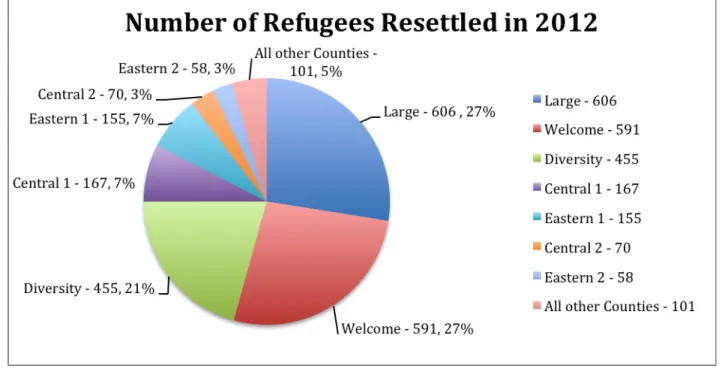
The district used for this research is Welcome County, which is located in the central part of a large southeastern state and is its third largest city in terms of population (NCpedia, 2013). This county is located within 90 miles of the four other largest cities in the state. According to the state’s Department of Health and Human Services, this county resettles 27% of the refugees who enter the state, the second highest, behind the state’s largest city. This county was chosen as a resettlement site in 1986 by a Cambodian delegation. Since then it has become more
separate school, Welcomers School, created for newly arrived refugee students’ first year in American schools.
A variety of data collection strategies were used to complement the current research and Cooper’s Framework for Educating Refugees in the United States. Interviews with teachers, district leaders, site-based leadership, and community supports provide first-hand experience and expertise from professionals who are involved in the day-to-day interactions of the Welcomers School and Welcome School District. Observations were also utilized, as interactions between teachers and their refugee students could serve to be just as important as the content they teach. As there were no student interviews, observations of student interactions with peers, teachers, and the curriculum provide the researcher with the refugee’s perspective in the classroom. In addition, analysis of documents including curriculums being used, school improvement plans, and annual goals created by the Welcomers School provides insight as to how the district and school leadership adapt to the needs of refugee students. This analysis yields key ideas that are used by the school that may be different from the other schools in the district but serve a purpose for teaching refugees.
Limitations and Anticipated Outcomes
participation to be high in the Welcomers School. Lack of access to the students was also a limitation. It was assumed that, as most of the students have been in the country less than a year, their English abilities would not warrant an adequate interview; therefore, they were not included in the interview process.
Access to the district leaders was also a limitation, as these individuals have very demanding schedules and other focuses that limited their availability for the research. It was anticipated that many of the teachers and leaders at the Welcomers School would embrace the research topic as this is their chosen profession and, according to first principal, they were
recruited to come to the school. However, it was expected that district leaders may not share this sentiment and proved to be a bit harder to gain entry on a face-to-face basis.
A final limitation is that this research was conducted within a district that has already committed resources to refugee education. Schools that choose to use this framework in the future may not have the same supports in place to ensure its success. While the framework is written as a guide for schools within the United States that experience an increase in refugee populations, there are additional components necessary for it to function successfully. Thus, this study may represent a best-case scenario that is difficult for other school systems to replicate.
This research seeks to make available first-hand experiences, ideas, and strategies that are currently being employed by high refugee population schools. Through the interview process, personal experiences and specific details that the teachers of the Welcomers School emerged that added to the research. By observing the teachers, I was able to identify strategies they
incorporate into their lessons that come second nature to them and may not be included in the interviews they provide. Each of these collection techniques helped to create a practical
their refugee populations. This framework can also be used by districts to update or simply revamp current plans they already have in place for their refugee populations.
Rationale for the Study
The American public education system requires states and communities to offer a free, quality education to all residents. Despite No Child Left Behind’s shifts to focus on
accountability for students and teachers, it is possible that certain demographics of students are possibly falling through the cracks. As previously discussed, with an average of 50,000 refugees entering the United States each year, schools are faced with making a place for students who have experienced traumatic upheaval and/or limited educational access, putting them at a potentially significant disadvantage. Identifying the challenges these students must overcome within the school setting and providing strategies that may help them will allow teachers to reflect on their teaching and adjust as needed to meet the needs of these students. This can only occur if the resources are in place to support their efforts and a commitment is made at the leadership level.
The study sheds light on a potential student demographic within our country that is not receiving the type of education they are entitled under current education policy. In turn, they could have a harder time contributing to society since they lack simple education skills. Definitions of terms
• Refugee: Someone who is unable or unwilling to return to their country of origin owing
• Resettlement Agency: An agency, or group, created to help meet the needs of refugees as
they arrive in the country and provide “new populations with the opportunity to
maximize their potential in the United States” (“What We Do,” 2013). These agencies are usually contracted to work with refugees from their first 30 days up to citizenship, depending on the grant and the goals of the agency (L. Roughton, personal
communication, August 23, 2013).
• Community Support: An agency, or group, that advocates for refugees after the
resettlement agency’s time has expired. This could also include community governance and public services such as transportation, community colleges, ESL instruction and testing, police, etc.
• Acculturation: The process of an individual changing to become culturally similar to the
groups they are interacting. (McBrien, 2005)
• Assimilation: Commonly understood to be a process in which individuals give up their
old culture, exchanging it for the culture of their new society. (McBrien, 2005)
• Inclusion: Opportunities where refugee students are integrated into the mainstream
learning environment in order to learn the culture and routines of the traditional classroom that are absent from their separate setting environment.
Conclusion
CHAPTER II – LITERATURE REVIEW
The education of refugees in America is not a highly researched topic and, thus, many of the resources available are, like the students they research, global. This chapter briefly explores the history of refugee entry into the United States by looking at policies the government has put in place, agencies that support these individuals, and current statistics of the refugee landscape. This paper then describes a few of the challenges currently facing the education of refugee students, both academically and culturally. The study also briefly touches on the psychosocial obstacles refugee students must overcome in order to be successful in the American education system. Then, based upon the current literature, solutions are offered that could help refugee students acculturate more quickly and better access their rights as American students. The theoretical framework outlines Cooper’s Framework for Educating Refugees in the United States. This framework describes nine steps that schools with a high refugee population could implement to help these students address challenges and achieve scholastically and socially. Background of Refugees in America
History and definitions of refugees in America. Since its creation in 1950, the United
Nations High Commissioner for Refugees (UNHCR) has helped tens of millions of people restart their lives (“UNHCR,” 2013). Currently there are 14 countries that serve as sites for
Generally speaking, refugees have made up the social fabric of the United States since its founding; however, refugees as a separate immigrant group were not officially recognized until 250,000 Europeans were admitted into the country at the conclusion of World War II. Since then, the United States has passed multiple laws that have allowed entry into the country. The most recent, Refugee Resettlement Act of 1980, officially included the United Nation’s criteria of refugees as:
Someone who is unable or unwilling to return to their country of origin owing to a well-founded fear of being persecuted for reasons of race, religion, nationality, membership of a particular social group, or political opinion (Convention and Protocol, 1951/1996, p. 3). Since the passage of this act, the United States has invited over 1.8 million refugees into the country (“Refugee 101,” 2013), including 58,179 in 2012, according to the 2012 Yearbook of Immigration Statistics created by the Office of Immigration Statistics.
Various theorists (McBrien, 2005; Ogbu & Simons, 1998) have provided and referenced theories to describe the position and acclimation process refugees go through upon arrival in their host country. Ogbu and Simons’ (1998) Voluntary Spectrum provides a model for identifying immigrant minorities and understanding why they left their home country. On one end are the voluntary minorities, who purposefully leave their home for reasons including economic and educational opportunities. At the other end are Involuntary minorities, who are described as someone being brought to the new country against their will. Refugees are placed in the middle of this spectrum and are identified as Semi-voluntary minorities who are not necessarily coming to the United States to improve their status (Ogbu & Simons, 1998) but out of fear.
experience for refugees. Acculturation is the process of an individual changing to become culturally similar to the groups with which they are interacting. McBrien explained that one method of acculturation, assimilation, is “a process in which individuals give up their old culture, exchanging it for the culture of their new society” (p. 331). Supporters of cultural pluralism, on the other hand, have argued that refugees adapt quicker if they retain their homeland values while adding on the language and customs of the host country (McBrien). Other terms related to cultural pluralism include biculturalism, transculturalism, and additive assimilation.
As Semi-voluntary minorities in their host country, refugees face acculturation with a history of traumatic experiences and displacement (McBrien, 2005). Because this differs from the voluntary minority status that other immigrants hold, this study focuses on the challenges refugees encounter upon entry to the United States and strategies to help them succeed in the educational system. While many of the challenges and strategies presented in the research are applicable to refugees and immigrants, this study focuses on the specific needs of refugees and the experiences they have prior to entering the education system.
Government policies. Following the conclusion of World War II, the United States
admitted 250,000 Europeans as refugees. This number increased with the passage of the
Displaced Persons Act of 1948, which allowed 400,000 more Europeans into the United States. This legislation led as well to the inclusion of refugees from Communist countries (China, Cuba, Hungary, Korea, Poland, and Yugoslavia) in the 1950s and 1960s with the passage of the
with the policies of UNHCR. This alignment occurred with the passage of the Refugee
Resettlement Act of 1980 when the government began to include the wording and terms used by the United Nations and standardized the resettlement process and services provided for refugees who are being admitted to the U.S. (“Refugee Council USA,” 2013).
Grants. Various organizations and offices provide grants for refugee hosts to support
families coming to the United States. The Office of Refugee Resettlement (ORR) created the Refugee School Impact Grant (RSIG) in 1998 (“Information for Refugee School,” 2013) to support school systems with high numbers of refugees within their district. Numerous project grants are also available to support school systems and can be found in the Catalog of Federal Domestic Assistance (www.cfda.gov). These grants include the Refugee and Entrant Assistance Discretion Grant (USDHHS), U.S. Committee for Refugees and Immigrants’ (USCRI) Matching Grant Program, and the Individual Development Account program (IDA). Others are also available to help support the acculturation process of refugees within the United States.
The common goal of these grants and programs is self-sufficiency for refugees. Both the Refugee and Entrant Assistance and the Matching Grant program explain that any newcomer’s success is tied to their ability to achieve and sustain self-sufficiency (“USCRI,” 2013). The IDA program helps individuals find housing, start businesses, or buy vehicles for employment
as part of this grant in 2012.
Resettlement agencies and host groups. The United States has a multitude of resource
agencies that help newly arrived refugees acculturate into the United States. Some of the more prominent agencies include Church World Service (CWS), Ethiopian Community Development Council (ECDC), Episcopal Migration Ministries (EMM), Hebrew Immigrant Aid Society (HIAS), International Rescue Committee (IRC), Lutheran Immigration and Refugee Service (LIRS), U.S. Committee of Refugees and Immigrants (USCRI), and United States Conference of Catholic Bishops/Migration and Refugee Services (USCCB), also known as Voluntary Agencies (volags) or Resettlement Agencies. This is not an all-inclusive list of the resource agencies available in the United States and globally; however they are the most frequently referenced agencies on the U.S. Office of Refugee Resettlements website with regard to the state’s matching grant opportunities.
These agencies offer a range of services and supports to refugees. The most obvious is assistance with resettlement, but other kinds of assistance are available as well. CWS, for example, will make arrangements for refugees to be contacted by one of their participating local churches to help provide a connection to the community. HIAS assigns staff members to help refugees in orienting to life in the United States. Legal services are another area of assistance provided by these groups. Refugees entering the country often need help with employment documents or petitions and paperwork to bring additional family members into the United States
Resettlement funds these programs and provides matched savings accounts programs designed to help refugees save for specific purchases (“About Individual Development Accounts,” 2013) including home purchases, small business development, or post-secondary education or training. Each of these agencies was founded around times in America’s history that saw an influx of refugees into the country and thus participate with the countries from which those refugees came. While all agencies have worked with refugees from around the world, a few of the agencies have actually had offices in other countries. For example, CWS has an office in Nairobi, Kenya. The USCRI has partnerships in Thailand, Haiti, and Morocco, while the HIAS has an office in Argentina. Many of these agencies have offices around the country as well. The CWS, for example, has 37 “sister churches.” In addition, many American churches (The United Methodist Church, Moravian Church in America, etc.) have sites around the country that serve as the host groups for refugees, providing the resources and help that refugees need to be successful. According to the state’s DHHS website, Welcome County’s state has 10 agencies that are contacts for refugees in four of the state’s biggest cities.
Statistics. Globally, 80% of the world’s refugees live in under-developed countries, with
42 million displaced people worldwide (Anselme & Hands, 2010). The number of refugees admitted into the United State declined each year between the passage of the Refugee
Resettlement Act of 1980 and 2012, but the annual numbers have fluctuated greatly over the last 32 years. In 1980, the United States admitted over 207,000 refugees, whereas 2012 saw 58,179 people admitted.
number of young people between the ages of 12 and 24 years make up approximately 35% of refugees in the world today. As the national population of the United States becomes more ethnically and culturally diverse, policy makers at local levels are pushed to create policies to prepare for the inclusion of these students into the school systems they lead.
One of the many hurdles for policy makers is that, around the world, nearly 90% of displaced persons went without access to education (Anselme & Hands, 2010). This influx of students with limited formal education creates challenging situations for American schools. Couple this with the fact that approximately 20% of the English Language Learner (ELL) population in the United States speaks one of 400 or so languages (Field, 2008), and it is clear that major changes are needed in order to educate these students and have successful schools for all. Field (2008) also found that the state in which Welcome County is located is one of six states that have seen more than 300 % growth in the ELL population. Although a large majority of this growth is Hispanic immigrants, there are still numerous refugees as well.
In 2012, this state had the 10th largest refugee resettlement population by state, with 2,110 individuals (ORR, 2013), and 3rd in the southeastern United States. Table 1, on next page,
illustrates the top five refugee groups relocated to the state in the fiscal year 2012 as reported by ORR (2012). Chart 1, on next page as well, shows the breakdown by county of the state’s DHHS’ findings.
TABLE 1: State Top Five Refugee Population 2012
Nationality Total Number Admitted in 2012 Percent of the state’s 2012 Refugees
Burma 785 37.2%
Bhutan 639 30.3%
Iraq 148 7.0%
Somalia 93 4.4%
Figure 1: County Resettlement Sites of the State Refugees Admitted in 2012
*Adapted from chart on NCDHHS website
This figure illustrates the way refugees are dispersed in the state as well as the large refugee population that Welcome County has compared to the other districts in the state. Challenges to Educating Refugees
Academically. The UNHCR definition of a refugee states that refugees leave their home
countries for “fear of being persecuted.” Pugh, Every, and Hattam (2012) have found in their research on Australian primary schools with high refugee populations that refugee students face additional barriers to schooling their classmates may not: violent experiences, long stays in refugee camp, limited access to education. They have concluded that unrealistic expectations in a foreign setting, coupled with lack of access to prior education, create additional burdens for these students to overcome as they seek educational opportunities.
education in their home country; however, their language abilities are holding them back here. This does not take into consideration how long they were in the refugee camps with limited educational access. Identifying the needs of the students as quickly as possible is extremely important to the success of the refugee student; however, educators need to be careful not to group all refugees together, as refugees are not a homogenous group (Kaprielian-Churchill, 1996) and therefore should not be treated as such.
The challenge of learning English is another hurdle for refugee students to overcome as they develop the language and one that may not be as clear-cut as it appears. McBrien’s (2005) review of literature found that students may be competent at spoken English yet be considerably behind their classmates in academic English. This divide between spoken and academic English is a grey area that could potentially put refugee students at a greater disadvantage if not
addressed and understood. Teachers must be aware of their students’ actual academic English abilities rather than making assumptions based on what they hear from students’ conversations. Field (2008) has found in her work with administrators and teachers working with English Language Learners in various states across the country that many educators see linguistic and cultural diversity as problems to overcome rather than as resources to develop. By embracing these differences, schools not only allow their refugee students to feel included, but they also increase the cultural awareness of the other students in the class.
As students become overwhelmed by the language barrier, or misidentified as being able to use academic English, they become more prone to failure and giving up.
Kaprielian-Churchill’s (1996) work with refugees in Canada found that such students may leave school because they think they are too far behind academically, and they will never be able to catch up.
economically. Refugees in the United States often face a marked change in socioeconomic when they flee their home country, leaving behind careers and income. This shift may create an
academic barrier as the normal routines for these individuals have completely changed.
Refugees are often seen as poor because of their living conditions, the clothes they wear, or their language abilities, creating a stereotype that follows them into the classroom setting. Kiche (2010) argued that poverty’s association with low education aspirations has been discounted by evidence of high educational aspirations and expectations among immigrant youth who are disproportionately represented in low-income brackets.
Along those same lines, one of the false narratives associated with refugee students is that they are academically behind, just because they may not speak the language. According to the LIRS Immigration Myths vs. Facts sheet (“LIRS,” 2013), more than 11% of foreign-born
workers in the United States have advanced degrees but are unable to use them either because the United States does not recognize them or because they have a limited language base that
prohibits entry into their fields of study in America. So, to say that refugees are unable to succeed in American schools, or that poverty among refugees is a reason that they fail
academically, is an overly broad statement. Poverty may prevent these students from focusing solely on school if these students may have a more involved role in assisting the family (Fuligni, Tseng, and Lam, 1999), but it is not a sole factor in their success or failure.
Class placement is also an area where refugees may find obstacles that could hinder their academic success in the American classroom. McBrien’s (2005) idea of cultural
refugee students could suffer, as they will be sorted to lower-ability tracks that could interfere with interpersonal relationships within the school setting. This can affect students academically as well. Field (2008) found higher drop-out rates among English language learners than English speakers. Kiche also observed that students tend to conform to the educational expectations of the ability group they find themselves placed. Placing refugee students who have limited English abilities and school experiences with their lower-ability American counterparts could have a negative effect on their view of education and cause them to fail. In this scenario, regardless of their actual ability, these students are not being given the opportunity to excel to their full potential. Instead, they are being labeled because of their language abilities.
Culturally. As refugees are leaving their home out of fear and not necessarily out of
desire to live in America, the possibility exists that there could be a resistance to the host country’s culture or a longer process of accepting their new culture as part of their own. This is especially true of older students or adults. McBrien (2005) found that cultural crossings among refugee students contributed to identity confusion for adolescents and that this crossing can create tensions between students’ academic and social lives as well as their home lives with parents. Schools are often the sites where culture and family traditions of refugees are challenged the most and where refugee children begin to acculturate to American values and customs (Garrett, 2006). As refugee students struggle for acceptance in a foreign country, they adapt to what they see. This adaptation may conflict with their home culture and create conflicts within the family.
younger refugees may not have the connection with their home country that their parents have, especially if they moved to their host country at an earlier age. With such a young population coming into the United States and the social pressures that go along with being a student in today’s classroom, schools need to be aware of these differences and respect them. Kaprielian-Churchill’s (1996) research on Ontario’s refugee population and their special needs found that an approach that combines the culture of the home with the culture of society in a respectful way is the most efficacious in the adaptation and learning process. There also needs to be a willingness by both family and school to accept the concept of a dual heritage to help the refugee child maintain a solid foundation in the home and branch out in the new culture they are in.
One area that is often referenced with regards to refugees in education is that of perceived lack of parent support in the school (Bhattacharya, 2000; Garrett, 2006; McBrien, 2005; Ogbu & Simons, 1998). This cultural difference could potentially alter a teacher’s perception of a student and create yet another wall for the refugee student to overcome. Teachers need to keep in mind that there are differences in cultures and potentially other obstacles that hinder a parent from being more involved in the student’s academics. Battacharya (2000), in her research on refugees and their access to higher education, found that parents’ self-consciousness about their inability to speak “correct” English and conflicting work schedules were the most common reasons for not attending school functions. Garrett (2006) found that refugees value English as a Second Language instruction and see their lack of English proficiency as a barrier to a better life. This report also found that the priority for refugee families when coming to the United States is to find work and to support the family financially, which could mean working multiple jobs and not providing the flexibility for parents to attend school-based meetings. Without flexible
Psychosocially. As refugees enter the public school sector, many of them do so with
external factors that hinder their educational success, including being academically behind, learning a new culture that is different from their own, and violent, traumatic past experiences. Couple these with the long relocation times that many refugees endure, and these individuals are clearly at risk for academic disadvantage. These are issues that refugees bring into the
classrooms with them and must be attended to for them to be able to adjust to “normalized” life. Not only are they coming to a new country with its own unique, and foreign, set of cultures, but these students have to filter this information to see where they fit in and how it connects to their home country and way of life. McBrien (2005) identified several things as essential to the psychosocial well-being of refugee students: a need for a sense of safety, a sense of self, and an adjustment to the cultural expectations of a new country while maintaining a connection to their heritage.
While all students should be held to a high standard in the classroom, consideration needs to be taken as to what the refugee student is capable of. If not, McBrien (2005) suggested, refugee students can experience trauma from the classroom teacher who is expecting the student to perform complex skills and demonstrate cultural understanding in a language that is not native to them. Kaprielian-Churchill (1996) argued that educators need to allow refugee students to be the master of their own “rhythm” of schooling. This could mean that students need longer to finish school than the typical four years of high school. The potential need for longer periods in school should be acknowledged by teachers and the school system instead of forcing the students out before they have mastered the skills and knowledge they need.
students adapt more quickly than their parents, they are caught between the challenges of finding their identity within the host country and their parents’ desire to retain the culture of the home country from which they fled. This potential conflict between parent and child can add to the adjustment period for refugees and even add more trauma to their lives outside of the relocation and the school transition. McBrien (2005) found that a bicultural identity is psychologically beneficial for some refugee students. Either way, it seems that different refugees experience aspects of acculturation differently, and the process causes added stress such as depression and anxiety that refugees have to overcome on top of being in a new country (Kanu, 2008).
Discrimination and Stereotypes. Through the country’s actions and policies, America
has supported the idea that it is the great “melting pot” by opening its doors to nearly two million refugees. However, widespread acts of discrimination against immigrants challenges the ideal presented by those policies. As welcoming as the United States has been, there are still fears, concerns and actions that affect many citizens’ perceptions of refugees. Another area of public fear is the push in some regions for the exclusive or primary use of the English language, which McBrien (2005) found to be a response to the public’s fear of an increasingly diverse U.S. population.
Schools provide an arena for racial undertones and beliefs to be present and American fears to be displayed with regard to refugees and other immigrants. In Living in America: Challenges Facing New Immigrants and Refugees, the researchers found that Arab parents
animosity within the family unit.
American schools must also be aware of hidden racism. McBrien (2005) found that not only attitudinal racism but also structural racism placed immigrant students on the margins. Policy makers are guilty of structural racism, as laws are sometimes written to reflect the mood of the country at the time. Examples include the recent push for English to be made the official language of the United States and the lack of allocation of resources to help ELL students in the public schools. McBrien (2005) found that politicians play a role in shaping people’s lives and attitudes toward new comers.
Strategies for Educating Refugees
Article 22 of the Conventions and Protocol of 1951/1967 states that “Contracting States shall accord to refugees the same treatment as is accorded to nationals with respect to elementary education” (p. 15). In her review of literature surrounding refugees and American education over a 25-year period, McBrien (2005) found that schools can serve as centers for acculturation for refugee students who are often adapting to a new language, culture, and home. She also found that many researchers have warned against rapid acculturation in dealing with refugee students. Schools are a not only legally bound to provide educational services, but the role they play on the acculturation process is critical essential for the refugee student development.
the more rural districts these positions are not available. Primary language support needs to be present in order for students to develop their English skills where their primary language is their reference point for understanding English.
Language access. One of the biggest hurdles that most refugees have to overcome when
coming to the United States is learning English. In a study of Arizona refugees, the Women’s Refugee Commission (2009) found that the lack of English language skills was identified by those who were interviewed as the single greatest obstacle to quick and successful integration in their host society. Most refugees believe they cannot improve their lives and get better
employment opportunities until they have a better grasp of the English language (Garrett, 2006). With the experiences that refugees are entering the country with and the obstacles they face with basic needs, schools need to be patient and consistent with their instruction. Kaprielian-Church’s (1996) study on schooling provided in refugee camps found that, depending on their age of immigration, refugee children require 5 to 6 years in an English as a Second Language setting to reach the level of English language proficiency required for academic competence in the
classroom.
country, and reduced the likelihood of dropping out. Therefore, refugees need to be identified early in order to get the language services they need.
While teachers need to be patient with refugee students, they also need to be aware of the students’ actual abilities in order to prevent delaying their academic success. Maxwell (2011) found that the longer students are classified as English-language learners, the greater the
possibility they would drop out of school. She referenced research that found drop-out rates for ELL students were 10% higher than that of their peers. Maxwell also noted that the likelihood for drop-out increased as the student progressed to higher grade levels. In addition to refugee students’ needing to be accurately identified and given the support they need, they require regular reevaluations. Kaprielian-Churchill (1996) found that initial placement usually becomes permanent placement for refugee students. A lack of reevaluation could hinder refugee students’ growth and lead them to drop out of school due to various factors. Educational leaders also need to be aware of policies that could increase cultural disconnect and cause children to lose not only their native language but also to fall short of acquiring full proficiency in English (McBrien, 2005).
The British Council has created a reference guide titled Innovations in English Language Teaching for Migrants and Refugees (“British Council,” 2012) for English-language societies
where refugee or migrant students are receiving educational services. This collection of articles provides resources for teaching English in a variety of ways. For the focus of this document, two pedagogies align with Cooper’s Framework for Educating Refugees in the United States: Writing bilingual stories: developing children’s literacy through home languages (Dakin, 2012) and
unique attributes each refugee child brings into the classroom and builds upon these skills instead of trying to push them aside to focus on English only.
In Writing bilingual stories, Dakin (2012) explains the importance of language and how it allows us to define our life in our own words, not through stereotypes. Dakin’s research is based on a study with 8-10-year-olds in an English primary school in which students were instructed to write a story in both their home language and in English to add to the library’s bilingual book collection. Dakin found that the project provided children with the opportunity to maintain language skills and identity from their home country that they felt they were losing while building their English skills. Davis’ (2012) study found that although children may know the words in English, using them in an academic setting is often more difficult. The teachers in this research developed students’ academic language by using teaching opportunities to practice these new words in the academic setting. Davis suggested that multilingual students need to be taught four broad types of vocabulary: synonyms for words they already know, multiple
meanings for words they already know, literary metaphor and imagery, and academic vocabulary (subject-specific). The researcher found that successful teachers planned explicitly for
vocabulary development with their language learners.
Parental involvement. In 2012, 32% of the refugees who came to the United States were
expectations and cultural biases in order to keep these differences from impacting student
learning. Limited language ability seems to be the likely reason for parents’ lack of involvement in schools; however, Garrett (2006) found that in some cases, it is not so much the language barrier but also the lack of education of the parent and their feelings of intimidation regarding interacting with school officials. In these cases, Anselme and Hands (2010) argued, schools should consider providing livelihood training and other opportunities for parents of their refugee students, which could open the schools up for these parents and foster conversations that could benefit the child in a non-threatening or non-intimidating way. These livelihood trainings could take the form of American school expectations for parents, what parent conferences look like, and suggestions for ways in which parents can be involved in the school setting.
Support could come in the shape of refresher courses, basic skills courses, or even accelerated learning during holiday breaks or weekends. With students at various academic levels, refugee host groups could offer such programming to fill this void and help these families acculturate more quickly.
In her research, Epstein created Epstein’s Framework of Six Types of Involvement (Epstein et al., 2002) that outlines types of involvement schools can utilize in order to increase parent participation in the school. Comer created The Comer Process (Comer, 1996) where he focuses on developing the whole child through holistic strategies that include action by
administrators, teachers, and parents alike to come together and foster both educational and social components of the students’ life. Both Epstein and Comer have challenged schools to assist, communicate, involve, and provide resources for parents to help with the educational process. Just as refugee students are new to the American classroom, their parents also face a learning curve, and their views of education may be different than the schools’. Epstein and Comer provided examples of these processes in urban school districts around the country to show their success with high-need populations, which could also translate to refugee families. Facilitating communication and providing parents with skills to help their child succeed in the American classroom will increase the likelihood of their involvement in the school, and the chances their child will succeed may also increase.
The Virginia Department of Education has also created a document for their schools to utilize to increase parent involvement, entitled Improving Student Achievement and Outcomes through Parent and Family Involvement: Tips and Strategies for Increasing Parent and Family
Involvement in Virginia Schools. This document, informed by a State Department of Education
ways in which schools can interact with parents by providing a list of examples schools can take and put into action. There are several overarching themes between this document and Epstein and Comer’s work (i.e., communication, parenting support at home, etc.); however, each adds their own dynamic to the research. While Epstein and Comer works provide more of a
theoretical document aimed at providing research for parental involvement, the Virginia document is more of a practitioner’s manual for providing ideas that could easily be implemented to support refugee families immediately.
According to the Family Background Obligations Theory (FBOT), refugee students’ time is based on family needs, background experiences, and priorities and thus must be taken into consideration when working with students from various cultures. Kiche (2010) explained that family background factors (i.e., education, income, ethnicity, etc.) affect students’ beliefs and behavior. By understanding the background factors and potential obstacles that refugee students must overcome, teachers can work with these influences instead of responding to them
inappropriately. While there may be barriers that keep the parents from being involved in the academic process (long hours, language barrier, etc.) in the formal sense of engagement (volunteering, conferences), their encouragement and the aspirations they hold for their
children’s education can be very important and influence the view of education for the refugee child (Fuligni, 1997).
Equal access. By signing the Refugee Resettlement Act of 1980, the United States has
deny refugees their right to education, nor remove states’ responsibility to provide it” (p. 90). These rights are recognized in Bhattacharya’s (2000) study of 6-17 year-old refugees within the New York public school system. She found that all of the immigrant parents in her study
acknowledged that the American educational system ensured all children an equal opportunity to benefit from public school instruction, a right generally not available in their home countries. However, there may be a disconnect between this sentiment and the parents’ outward actions, such as their attendance at school meetings.
In order for refugee students to feel comfortable in their learning environment and focus on their education, schools need to be aware of whether school culture is welcoming to
immigrants or not. In other words, schools need to address the concept of what it is to be “American” and must challenge the notion that “Whiteness” is the means to being American (McBrien, 2005). As mentioned earlier, political and social pressures can guide people’s ideals and unconsciously shape the learning environment. Schools need to work with community support groups to maximize the resources available to help refugee students succeed to their highest potential, while also being aware of the obstacles their refugee students are facing outside of school. McBrien (2005) found in her review of literature that connections are needed between school and the refugee community. By finding these ties and utilizing them to connect with students, teachers can relieve some of the pressure placed on students and potentially opening channels for conversation to take place so that student needs are met more effectively. Without this knowledge of the students’ background, refugee students are denied the needed support and acknowledgment of their non-mainstream identities (Roberts & Lock, 2001).
given little to no educational opportunities, especially if the family does not have the financial resources to send each child to school. Mareng’s (2010) experience as a participant observer within the Kakuma Camp in Kenya found that, in many refugee communities, parents often favored education for their male children over their females. For this reason, Anselme and Hands (2010) argued that interventions in refugee education must be gender-specific so as to offer females the opportunity to prosper in their host country.
In 2009, The National Academy of Education (www.naeducation.org) created an
education policy brief that highlights some of the history of the American education system and provided recommendations for the federal government to follow when implementing equity and excellence for all students. While these briefs are geared toward the federal government, they can just as easily be applied to the district level in response to equity and excellence for their populations. The policy brief states that our nation’s education system cannot truly be excellent if it is not equitable and it is the aim of the education system for all children to learn and acquire needed skills to survive, which requires continuous demonstration, evaluation, and improvement of policy by leaders (“Policy Brief,” 2009). While No Child Left Behind increased the federal government’s role in education, it also pinpointed areas where sub-groups of students were failing because they were previously masked in the overall numbers of the school. This brief pinpoints areas where changes could be made to further increase awareness of students’ ability levels and potential areas where they could possibly fail. For refugee students who are not even recognized as a subgroup within the databases of the state, this could ensure they are given the resources they need to succeed.
In 2011, U.S. Secretary of Education (Arne Duncan) appointed 28 members to the
Department of Education’s Equity and Excellence Commission. This commission was created to examine the impact of school resources on educational opportunity and recommend ways that school finance can be improved to increase equity and achievement (“US Secretary of
focus on systems of finance, and to recommend ways in which federal policies could address such disparities. (“U.S. Department of Education,” 2013)
From this brief, four recommendations were made to help schools meet the needs of students in high-poverty communities: parent engagement and education, working with communities to meet health needs, extended learning time, and at-risk student populations. Commission members contended that families play critical roles in their children’s cognitive, social, and emotional development and acknowledge that family engagement is one of the strongest predictors of education success for children (“US Department of Education,” 2013). With families more involved in the school, students have a better chance at succeeding and schools can become more involved in the community, creating a revolving door of parents in the school and schools out in the community. Another recommendation that would benefit refugees is extended learning time. As refugee students are often behind in education, these extensions would allow them the opportunity to catch up to their peers, or provide them a safe environment to go their own pace in order to be successful.
Cultural sensitivity for teachers is a must in the potential conflict areas mentioned above. Teachers need to understand that some interactions that occur within the school building are due to the differences in culture. For example, parents not being as active in the school may be due to their culture’s view of education. The female’s place in society can also be an area of conflict between home cultures and school cultures that teachers need to be aware of. Family
topics, along with others, are areas where teachers need to be trained for cultural sensitivity purposes.
An example of a school in the same state as Welcome County with a large refugee population that has committed to focusing on equity and excellence is Diversity Elementary School in Diversity City. In their latest School Improvement Plan (SIP), the school leadership focused on equity and excellence by including it in the title. Diversity City has a large Burmese population, and this population is visible in this school with Burmese/Karen being one of the three primary languages spoken in the school, along with English and Spanish. For the 2012-2013 school year, this school committed to equity and excellence by implementing Sheltered Instruction Strategies (SIOP), which supports teachers in delivering high-quality instruction. The school also including equity as a focus for teachers’ individual professional development plans (PDP). Diversity Elementary supports their immigrant population through translation and interpretation services. This school has made equity and excellence a priority and utilized research-based programs and processes to ensure their students’ needs are being met.
Professional development. As refugees continue to enter school systems in the United
States, each with their own unique story and background, teachers need to be trained to help these students acculturate and receive the education they are entitled (Anselme & Hands, 2010; Kaprielian-Churchill, 1996; McBrien, 2005; Pugh, Every, & Hattam, 2012). Through
The Victorian Foundation for Survivors of Torture (www.foundationhouse.org.au) offers workshops on working with students with disrupted educations, provides in-depth refugee background seminars, and will also come to schools where teachers are working with refugee populations. Shriberg et al. (2010) found in their research of Colorado Refugee Education Programs that many community agencies are qualified and available to offer informal trainings and should be sought out and utilized. They also found that teachers wanted to share practices with one another across the district, which also serves as a form of professional development that would not require outside resources.
In order for schools to be successful in converting techniques learned in professional development into practice, this training should be imbedded in their value system, mission statements, and School Improvement Plans on an annual basis. Pugh, Every, and Hattam (2012) argued that refugee students within the schools are not the only ones who will be adapting, and that teachers and classmates will also need to adapt to the learning styles and needs of their new classmates. As with native-born American students, the more awareness the teachers have of refugee students’ backgrounds, the more effectively they will be able to help them integrate into mainstream society (Kaprielian-Churchill, 1996).
promote inclusivity, distribute leadership so all members of the staff are involved, and engage parents.
While professional development opportunities will help their students, teachers should also utilize parent and community support. McBrien (2005) argued that school staff should be instructed in cultural sensitivity and Cheng (1998) called for teachers to learn about the cultures and experiences of their international students in order to facilitate their acquisition of language and academic skills. Cultural sensitivity could be as simple as outside professional development training that teaches the staff about the cultures, histories, or individual stories of some of the refugee students and how American actions might unintentionally create awkward situations for students.
Professional development not only helps teachers to become better educators of refugees but also increases the chances of success for the students inside and outside of the classroom. Battacharya (2000) identified three factors that reduce the risk of refugee drop-out: having a life goal, valuing education as a way to accomplish that goal, and believing in the positive role of school. Adding cultural sensitivity and home culture training about the students they teach, teachers are better prepared to understand the impact of the various experiences refugees have on their education. Through professional development that focuses on refugee student needs and obstacles they are overcoming, teachers are able to help refugee students create a life goal, show them that education is a valuable way to reach that goal, and provide a positive educational experience for the student to succeed in to reach these goals. Ogbu (1982) further explained that teachers can provide a positive educational experience by building trust between students and host country adults. These relationships could result in culturally responsive instruction,
high standards while holding them accountable, and promoting parent and community involvement within the educational experience. Each of these strategies are ways in which school staff members can change the life of refugee students and help them succeed in the American education system.
Conclusion
The literature regarding refugee education in America is lacking when compared to other minority populations that make up the American education system. Generally, the research found was based on specific refugee regions and camps (Kenyans, South Pacific Asians, etc.), the backgrounds of the individuals being resettled, and some of the specific struggles these individual groups had to overcome in their journey to resettlement. Australia and Canada had research that dealt with school culture and meeting the individual needs of refugees. Two of these articles, Pugh, Every, & Hattam (2012) and Taylor & Sidhu (2012), make up the foundation of the framework that this project aims to create.
Theoretical Framework
The Refugee Resettlement Act of 1980 officially opened the United States’ borders to refugees from around the world. Using language from the United Nation’s 1951 Conventions and Protocols, the Act established certain rights for refugees, one of which is the right to state-funded K-12 education.
brought to light some of the educational inequities within the school system; however, there are populations of students, including many refugees, that are still not getting the education they deserve.
Cooper’s Framework for Educating Refugees in the United States will be based on a combination of three approaches to educating refugee youth. The Whole School Approach to refugee education, as researched by Pugh, Every, and Hattam (2012) in the Australian Primary School system, makes up the backbone of Cooper’s framework, and it is supported by Taylor and Sidhu’s (2005) research on inclusive education models. The Whole School Approach was initiated by the researchers looking at the United Primary School located in Southern Australia, a unique school in that 80% of the students within the school are from non-English-speaking backgrounds. In their research, the authors interviewed school leadership (principal and assistant principal) as well as teachers, completed observations in classrooms and staff meetings, and analyzed school documents. From these interviews, observations, and documents, the research team was able to identify areas that made this school successful in educating refugee students.