Early intervention for lactate dehydrogenase
elevation improves clinical outcomes in patients
with the HeartMate II left ventricular assist device:
Insights from the PREVENT study
Thenappan Thenappan, MD,
aJohn M. Stulak, MD,
bRicha Agarwal, MD,
cSimon Maltais, MD, PhD,
bPalak Shah, MD,
dPeter Eckman, MD,
eSitaramesh Emani, MD,
fJason N. Katz, MD,
gIgor Gregoric, MD,
hMary E. Keebler, MD,
iNir Uriel, MD,
jEric Adler, MD,
kJoyce Chuang, PhD,
lDavid J. Farrar, PhD,
lKartik S. Sundareswaran, PhD,
land Ranjit John, MD
aFrom theaDepartment of Medicine, University of Minnesota, Minneapolis, Minnesota, USA;bDepartment of Surgery, Mayo Clinic, Rochester, Minnesota, USA;cAllegheny General Hospital, Pittsburgh, Pennsylvania, USA;dInova Heart and Vascular Institute, Falls Church, Virginia, USA;eMinneapolis Heart Institute, Minneapolis, Minnesota, USA; f
Department of Medicine, Ohio State University Medical Center, Columbus, Ohio, USA;gDepartment of Medicine, University of North Carolina, Chapel Hill, North Carolina, USA;hDepartment of Surgery, The University of Texas Health Science Center at Houston/Memorial Hermann Hospital, Houston, Texas, USA;iDepartment of Medicine, Vanderbilt University, Nashville, Tennessee, USA;jDepartment of Medicine, University of Chicago Medical Center, Chicago, Illinois, USA;kDepartment of Medicine, University of California San Diego,
La Jolla, California, USA; and thelAbbott, Pleasanton, California, USA.
KEYWORDS:
Heart failure; cardiomyopathy; hemolysis; thrombosis; anticoagulation; cardiac transparent; HeartMate II; pump thrombosis; serum lactate dehydrogenase
BACKGROUND: Hemolysis, assessed by elevated serum lactate dehydrogenase (LDH), is strongly associated with HeartMate II pump thrombosis (PT). However, it is unknown whether early intervention for elevated LDH circumvents the risk of serious PT requiring pump exchange. We sought to evaluate the relationship between elevated LDH and clinical outcomes, the effectiveness of early medical intervention, and risk factors for elevated LDH.
METHODS: We studied 268 patients in the prospective, multicenter PREVENT study who had 2 or more LDH measurements at≥30 days post-implant. Elevated LDH was defined as LDH≥2.5×upper limit of normal (ULN) for 2 consecutive measurements.
RESULTS: Fourteen percent of patients had elevated LDH. Stroke-free survival at 6 months was lower in patients with elevated LDH vs patients with normal LDH (83±6% vs 93±2%,p¼0.035). Elevated LDH resolved without intervention in 19% of patients, with intensified medical therapy in 43% and required surgical intervention in 38%. For patients receiving only medical therapy, survival was 94± 6% at 6 months post-treatment. In this subgroup, resolution of symptoms with intensified medical therapy was sustained in 15 of 16 patients, with PT occurring in 1 patient at 171 days after initial treatment for elevated LDH (202 days post-implant). Early medical intervention at moderately elevated LDH (2.5× to 3.2× ULN), as compared with higher levels (43.2×ULN), led to more sustained resolution of symptoms without subsequent PT or need for surgical intervention (91% vs 26% at 6 months post-treatment,p¼0.002).
1053-2498/$ - see front matterr2018 International Society for Heart and Lung Transplantation. All rights reserved.
https://doi.org/10.1016/j.healun.2017.10.017
E-mail address:[email protected]
CONCLUSIONS: Early medical intervention can successfully resolve moderate LDH elevations (2.5×to 3.2×ULN) with a low incidence of death or PT at 6 months post-treatment.
J Heart Lung Transplant 2018;37:25–32
r2018 International Society for Heart and Lung Transplantation. All rights reserved.
Pump thrombosis (PT) is a major complication of left ventricular assist devices (LVADs),1with an incidence of 2% to 4% in HeartMate II (HMII; Abbott, Pleasanton, CA) patients in the original clinical trials.2,3 Real-world con-temporary estimates have suggested an increase in PT risk from 2009 to 2013,4and another study from 3 large centers reported a peak incidence of 8.4% at 3 months.5To address this, the PREVENT study, a prospective, multicenter clinical trial, was designed to standardize surgical and medical practices for the HMII. PT rates in the PREVENT study were 2.9% and 4.8% at 3 and 6 months, respectively.6 PT is associated with significant morbidity and mortality, including heart failure, thromboembolic stroke and reopera-tion for pump exchange.7,8 Thus, early recognition and treatment of PT, along with better upfront management strategies, remains a critical focus.
An increase in serum lactate dehydrogenase (LDH), a marker of intravascular hemolysis, has been shown to identify patients at high risk of PT with high sensitivity.5,7,9 LDH elevations may occur before symptoms of PT, making it an ideal target for early intervention. The current knowledge regarding LDH level and its relationship to PT is mainly based on single-center, retrospective analyses.7,9 In addition, although most publications have shown that patients with elevated LDH are“at risk”for PT and stroke, little is known about the efficacy of intensified medical therapy in HMII patients presenting with elevated LDH but no evidence of heart failure or abnormal pump parameters,8 and no study to date has provided an LDH threshold at which intensified medical therapy may actually help circumvent the risk of a serious PT event requiring pump exchange.
PREVENT is thefirst study to prospectively collect serial LDH levels and anti-thrombotic therapeutic interventions for patients undergoing HMII implantation. In this secondary analysis, our objectives were to: (a) characterize the relationship between elevated LDH levels and clinical outcomes; (b) determine the effectiveness of early medical intervention for elevated LDH; and (c) identify risk factors for elevated LDH.
Methods
Study design and cohort
PREVENT was a prospective, single-arm study that was conducted at 24 participating centers across the United States. Patients enrolled in the study were followed for 6 months post-implant or until an outcome was reached. The study was designed to evaluate outcomes in HMII patients with the adoption of recommended practices focused on surgical implantation techni-que, anti-coagulation regimen, pump speed and blood pressure
management to reduce PT. Detailed inclusion and exclusion criteria of the PREVENT study have been reported previously.6 All patients provided written informed consent and the study protocol was approved by the institutional review boards of the participating institutions. The most recent Interagency Registry for Mechanically Assisted Circulatory Support (INTERMACS) definition for PT was utilized in the study (see Table S1 in the Supplementary Material online at www.jhltonline.org/). All suspected and confirmed PT was adjudicated by an independent assessor.6
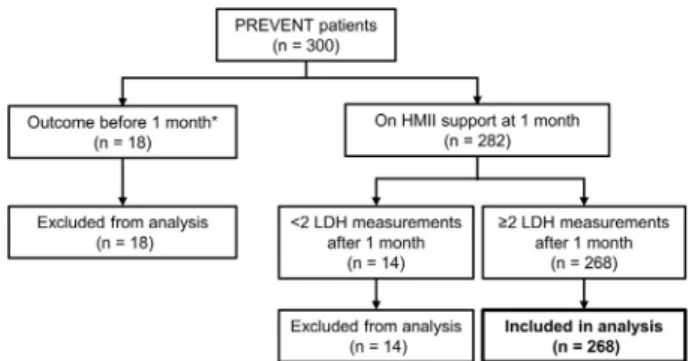
For this analysis, we included patients from PREVENT who were on HMII support for at least 30 days and had 2 or more LDH measurements taken ≥30 days post-implant. We restricted our analysis to LDH levels ≥30 days after HMII implantation to eliminate post-operative alterations in LDH levels. Of the 300 patients enrolled in PREVENT, we excluded 18 patients who were on HMII support foro30 days and 14 patients who did not have 2 LDH measurements after 30 days post-implant (Figure 1). Of all the excluded patients, there was only 1 confirmed PT event that led to subsequent pump explantation, which occurred on Day 3 post-operatively. A total of 268 patients formed the cohort for this analysis.
Serum LDH measurement and analysis
All LDH measurements obtained from patients during the follow-up period were collected as a log. LDH levels were measured routinely at each follow-up visit (1 week, 1 month, 3 months and 6 months post-implant) and at the clinical discretion of the treating physician. If a patient had multiple LDH measurements in a single day, only the highest LDH value from that day was used. Because the normal reference values for LDH differed between participating centers (seeTable S2in theSupplementary Materialonline), the levels were normalized to the upper limit of lab normal (× ULN) to determine whether or not LDH was elevated.
Based on LDH level, patients were categorized into 2 groups: an elevated LDH group or a control group. Patients with LDH levels ≥2.5× ULN that were sustained over 2 consecutive measurements and days formed the elevated LDH group (see Figure S1 online). An LDH threshold of ≥2.5×ULN was chosen because it has been used previously to identify patients at risk for suspected PT.9Patients with no LDH elevation formed the control group.
Management of LDH elevations
LDH elevations were treated at the discretion of the physician. All anti-thrombotic therapy administered to patients (including intra-venous and oral agents) enrolled in the PREVENT study were prospectively captured as a log. Treatment strategies for elevated LDH were categorized into 3 groups: no intervention; intensified medical therapy only; and surgical intervention. Intensified medical therapy was defined as 1 or more of the following: treatment with intravenous heparin; low-molecular-weight heparin; intravenous direct thrombin inhibitor; and/or addition of new anti-platelet therapy.8 No patient received tissue plasminogen activator for treatment for suspected PT. Surgical interventions included pump exchange, pump explantation, urgent cardiac transplantation for
PT, or pump stoppage with outflow graft ligation for patients with intractable hemolysis or clinical heart failure despite intensified medical therapy.
Outcomes
To evaluate the effectiveness of intensified medical therapy for elevated LDH, the following outcomes were studied:
1. Acute medical resolution: Elevated LDH is treated successfully with intensified medical therapy alone without subsequent surgical intervention or occurrence of suspected pump throm-bosis at3 months post-treatment.
2. Sustained medical resolution: Elevated LDH is treated successfully with intensified medical therapy alone without subsequent surgical intervention or occurrence of suspected pump thrombosis at6 months post-treatment.
The PREVENT study had a follow-up duration of 6 months from initial implantation. To evaluate 6-month outcomes after initial medical intervention for an LDH elevation, additional adverse event and outcomes data were collected from Abbott’s patient device tracking and PT complaint databases. These additional data were limited to the period of time from (a) when
Table 1 Baseline Demographics and PREVENT Recommendations in Patients With and Without Elevated LDH
Total cohort (N¼268)
Elevated LDH (n¼37)
Control
(n¼231) p-value
Significant OR (95% CI)
Baseline characteristics
Age (years) 57±13 58±13 57±13 0.70
Female 47 (18%) 8 (22%) 39 (17%) 0.49
Destination therapy 210 (78%) 32 (86%) 178 (77%) 0.28
INTERMACS Profile 1 34 (13%) 5 (14%) 29 (13%) 1.00
INTERMACS Profile 2 or 3 188 (70%) 26 (70%) 162 (70%) INTERMACS Profile 4 or 5 46 (17%) 6 (16%) 40 (17%)
Ischemic etiology 120 (45%) 18 (49%) 102 (44%) 0.72
Body mass index (kg/m2) 29±6 31±7 29±6 0.23
PCWP (mm Hg) 24±9 23±10 24±9 0.45
Mean right atrial pressure (mm Hg) 36±11 12±8 12±7 0.89
Creatinine (mg/dl) 1.4±0.7 1.5±1.1 1.4±0.6 0.70
History of atrialfibrillation 80 (30%) 11 (30%) 69 (30%) 1.00 Known hypercoagulable disorder 39 (15%) 4 (11%) 35 (15%) 0.62 Non-adherence to PREVENT recommendations
Partial vs good adherencea 116 (43%) 24 (65%) 92 (40%) 0.007b 2.8 (1.4 to 5.8)
No heparin bridging 11 (4%) 2 (5%) 9 (4%) 0.65
Pump speed out of operating room (rpm) 8,875±429 8,778±492 8,890±417 0.06
o8,600 82 (31%) 18 (49%) 64 (28%) 0.013b 2.5 (1.2 to 5.0)
o9,000 157 (59%) 24 (65%) 133 (58%) 0.47
Pump speed at 30 days (rpm) 9,154±349 9,097±396 9,164±341 0.16
o8,600 21 (8%) 4 (11%) 17 (7%) 0.51
o9,000 55 (21%) 11 (30%) 44 (19%) 0.19
International normalized ratio 2.1±0.4 2.0±0.7 2.1±0.3 0.19
o2.0 92 (34%) 19 (51%) 73 (32%) 0.025b 2.3 (1.1 to 4.6)
o1.5 21 (8%) 10 (27%) 11 (5%) o0.001b 7.4 (2.9 to 19.1)
No aspirin at 30 days 49 (18%) 4 (11%) 45 (19%) 0.26
Average MAP≥90 mm Hg 75 (28%) 7 (19%) 68 (29%) 0.24
The ORs are presented for significant univariable correlates of elevated LDH (po0.05). CI, confidence interval; INTERMACS, Interagency Registry for Mechanically Assisted Circulatory Support; LDH, lactate dehydrogenase; MAP, mean arterial pressure; OR, odds ratio; PCWP, pulmonary capillary wedge pressure; rpm, rotations per minute.
aGood adherence is defined as: following all surgical recommendations; heparin bridging; and pump speed≥9,000 rpm at 30 days. Patients without good
adherence are defined as having only partial adherence to PREVENT recommendations.
b
the patient completed the 6-month follow-up per PREVENT protocol to (b) the 6-month duration from the initial medical intervention for LDH elevation. This data collection was limited to patients receiving only intensified medical therapy. The databases were queried for any suspected PT events or outcomes (death, pump exchange, transplant, explant) that occurred during the specified time periods.
Statistical analysis
Categorical data are expressed as frequency and proportions, and continuous data are presented as mean ± standard deviation or median (Quartiles 1 to 3) as appropriate. For continuous variables, comparison between groups was performed with Student’st-test or Wilcoxon’s rank sum test. Fisher’s exact test was used to compare proportions for categorical variables. Time-to-event analysis was performed using the Kaplan–Meier method and log-rank test. For survival and stroke-free survival, patients were censored at withdrawal, transplant, device explant or study completion. Receiver-operating characteristic (ROC) curve analysis identified the LDH threshold at which successful resolution with medical therapy alone was most likely. For this analysis, serum LDH values just before initiation of therapy were used. Multivariable logistic
regression was used to model patients with elevated LDH. Significant univariable correlates for elevated LDH (international normalized ratio [INR]o1.5 and partial adherence to PREVENT recommendations) were entered into a stepwise multivariable logistic analysis (entry criteriapo0.1, exit criteriap≥0.05). INR values used in the logistic regression included INR at time of the elevated LDH or median INR for patients in the control group. p o 0.05 was considered statistically significant. Statistical analysis was performed using SAS software (SAS Institute, Inc., Cary, NC).
Results
The baseline characteristics of the study cohort are presented inTable 1. Patients’mean age was 57±13 years and 82% were male. The majority of patients had a non-ischemic cardiomyopathy (55%), were INTERMACS Profile I to III at the time of implantation (83%), and were implanted as destination therapy (78%). The average duration of HMII support was 171±28 days.
Trends in serum LDH
The median LDH levels for the total cohort at 30 days post-implant and for the remaining duration of LVAD support were 1.4 (1.2 to 1.7)×ULN and 1.3 (1.1 to 1.7)×ULN, respectively. LDH measurements at monthly intervals are shown inFigure 2. Of the 268 patients, 14 patients (5.2%) had confirmed PT during the 6-month follow-up period. Patients with confirmed PT had significantly higher LDH levels at 30 days post-implant compared with those with no confirmed PT (2.3 [1.5 to 4.1] vs 1.4 [1.2 to 1.7]×ULN, po0.001). Similarly, the median (2.8 [1.7 to 5.5] vs 1.3 [1.1 to 1.6]×ULN,po0.001) and peak (5.8 [3.8 to 7.4] vs 1.6 [1.3 to 2.3] × ULN, p o 0.001) LDH values during LVAD support were higher in patients with confirmed PT vs those without confirmed PT. In addition to LDH, there was a trend for median plasma-free hemoglobin to be higher in patients with confirmed PT (25 [9 to 30] vs 10 [4 to 29] mg/dl,p¼0.06).
Figure 2 Distribution of LDH measurements at monthly intervals. LDH, lactate dehydrogenase; ULN, upper limit of normal.
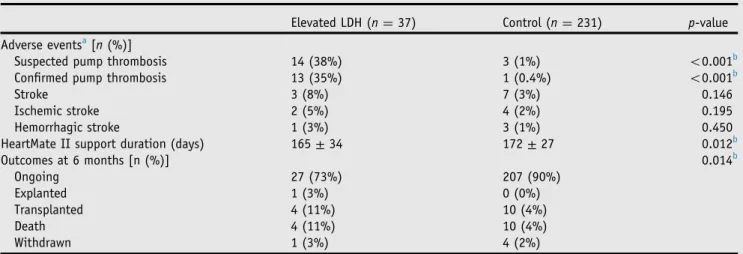
Table 2 Adverse Events and Outcomes in Patients With and Without Elevated LDH at 6 Months Post-implant
Elevated LDH (n¼37) Control (n¼231) p-value
Adverse eventsa[n(%)]
Suspected pump thrombosis 14 (38%) 3 (1%) o0.001b
Confirmed pump thrombosis 13 (35%) 1 (0.4%) o0.001b
Stroke 3 (8%) 7 (3%) 0.146
Ischemic stroke 2 (5%) 4 (2%) 0.195
Hemorrhagic stroke 1 (3%) 3 (1%) 0.450
HeartMate II support duration (days) 165±34 172±27 0.012b
Outcomes at 6 months [n (%)] 0.014b
Ongoing 27 (73%) 207 (90%)
Explanted 1 (3%) 0 (0%)
Transplanted 4 (11%) 10 (4%)
Death 4 (11%) 10 (4%)
Withdrawn 1 (3%) 4 (2%)
Elevated LDH and clinical outcomes
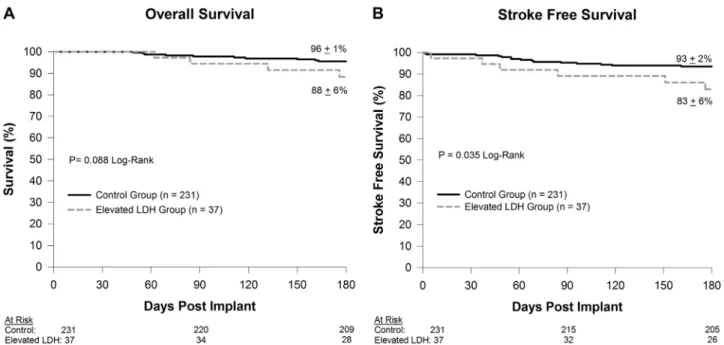
Of the 268 patients, 37 (14%) had an elevated LDH (≥2.5× ULN). Adverse events for the elevated LDH and control groups are shown inTable 2. Freedom from confirmed PT in patients with elevated LDH was lower at 63.1± 8.2% compared with 99.6 ± 0.4% for the control group (p o 0.001). There was a trend toward lower 6-month survival in patients with elevated LDH compared with the control group, but this was not statistically significant (88± 6% vs 96±1%,p¼0.088;Figure 3A). However, patients with elevated LDH had a lower stroke-free 6-month survival compared with the control group (83 ± 6% vs 93 ± 2%, p¼0.035;Figure 3B).
Treatment strategy for elevated LDH
Figure 4 summarizes the treatment strategies used for management of elevated LDH. LDH normalized without intervention in 7 patients (19%). In these patients, the LDH levels remained≥2.5×ULN for a median of 19 (11 to 33) days. During this time, the median LDH and INR levels were 3.1 (3.1 to 3.8) × ULN and 2.1 (1.6 to 2.3),
respectively. At 6 months post-implant, 1 patient died from an ischemic stroke and 1 patient had a routine cardiac transplant. There were no cases of suspected PT in this group.
There were 14 patients (38%) who received intensified medical therapy (71% intravenous heparin, 21% bivalirudin, or 7% enoxaparin), but subsequently required additional surgical intervention due to worsening heart failure symptoms and abnormal pump parameters. All except 1 of these patients had at least 1 clinical marker of hemolysis (anemia, low hematocrit, hyperbilirubinemia, hemoglobinu-ria). The surgical procedures performed included 11 pump exchanges, 2 urgent cardiac transplants and 1 pump stoppage with ligation of the outflow graft.
The remaining 16 patients received only intensified medical therapy for elevated LDH. Intensified medical therapy included 1 of the following: intravenous heparin (62.5%); enoxaparin (12.5%); bivalirudin or argatroban (12.5%); clopidogrel (6.25%); or dipyridamole (6.25%). Only 2 of these 16 patients (12.5%) had elevated LDH in combination with at least 1 clinical marker of hemolysis.
Clinical outcomes after intervention with intensified medical therapy alone
Clinical outcomes at 6 months post-treatment were evaluated in the 16 patients who received only intensified medical therapy for elevated LDH. Six-month survival post-treatment was 94±6%, with 1 patient undergoing a routine cardiac transplant (65 days post-treatment) and 1 patient expiring from right heart failure (52 days post-treatment) (Figure 5). There was 1 case of suspected pump thrombosis (6%) that occurred 171 days after intensified medical treatment with dipyridamole (202 days post-implant). At the time of the suspected PT, the patient was admitted and given intravenous heparin. Suspected PT resolved with Figure 3 Comparison of overall survival (A) and stroke-free survival (B) between patients with and without elevated LDH. LDH, lactate dehydrogenase.
treatment, and the patient continued on support with the same device. The remaining 15 patients had no cases of suspected PT at 6 months post-treatment.
LDH level at time of medical intervention
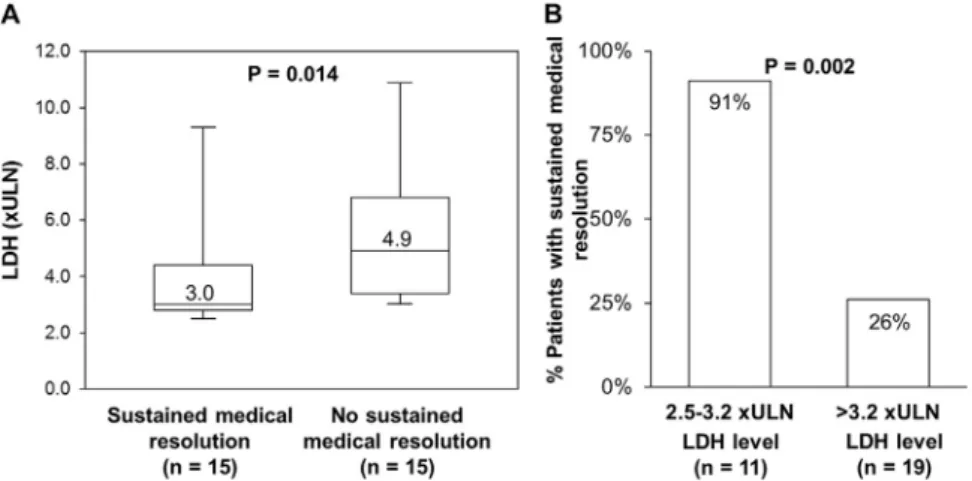
At 3 months after initial medical intervention, there were 16 patients who had successful resolution with no subsequent cases of suspected PT (acute medical resolution) and 14 patients who required surgical intervention. In patients who had acute medical resolution, the median LDH level at time of medical intervention was 3.0 (2.8 to 4.2)×ULN, which was significantly lower than that in patients who needed surgical intervention (5.1 [3.8 to 7.4]×ULN, p¼0.011). ROC analysis was used to identify the LDH intervention threshold, which would most likely result in acute medical resolution of elevated LDH. When therapy was instituted at a moderate LDH level of 2.5× to 3.2× ULN vs a higher LDH level of43.2×ULN, intensified medical therapy was more likely to be successful (91% vs 32%, odds ratio [OR]
¼21.7 [2.2 to 210.1],p¼0.002).
LDH levels at time of medical intervention in patients with and without sustained medical resolution are shown in
Figure 6A. Similar to 3-month outcomes, if therapy was instituted at LDH levels of 2.5× to 3.2× ULN, medical treatment was also more likely to result in sustained resolution of elevated LDH (91% vs 26%, OR ¼ 28.0 [2.8 to 278.0], p ¼ 0.002; Figure 6B) at 6 months after initial medical intervention.
Risk factors for elevated LDH
Baseline characteristics were similar between patients with and without elevated LDH; however, adherence to PRE-VENT recommendations varied between the groups (Table 1). Good adherence to PREVENT recommendations was defined as following all surgical recommendations, heparin bridging and 30-day pump speed ≥9,000 revolu-tions per minute (rpm).6 On univariable analysis, patients
with partial adherence to PREVENT recommendations, with an INRo2.0 oro1.5 and with lower pump speed coming out of the operating room (o8,600 rpm), were more likely to have elevated LDH (Table 1). On multivariable analysis, INRo1.5 (OR¼7.3 [2.8 to 19.5],po0.001) and partial adherence to PREVENT recommendations (OR¼2.8 [1.3 to 5.9], p ¼ 0.008) were entered into the model and identified as predictors of elevated LDH.
Discussion
Several key findings emerged from this study. Stroke-free 6-month survival was lower in patients with elevated LDH compared to those without LDH elevation. In patients receiving only intensified medical therapy for elevated LDH, survival was high and the incidence of pump thrombosis was low at 6 months post-treatment. Acute and sustained resolution with medical therapy alone was more likely if the intervention occurred at a moderate LDH level (2.5×to 3.2×ULN) compared with higher values. Finally, a low INR and partial vs good adherence to PREVENT recommenda-tions6increased the risk of LDH elevation. Thesefindings, taken together, emphasize the importance of adopting PREVENT recommendations for reducing PT risk,6regular LDH monitoring for early diagnosis of HMII PT, and early intervention of elevated LDH with intensified medical therapy to avoid surgical pump exchange and death.
Early diagnosis and treatment of PT can lead to successful resolution without the need for surgical intervention. LDH, a marker of hemolysis, has been proposed to detect PT early in HMII patients. This recommendation is primarily based on a retrospective, single-center study, where LDH values 42.5× ULN had a specificity of 97% and a sensitivity of 78% for identifying confirmed PT.9 Likewise, higher LDH values at 1 month after HMII LVAD implantation has been associated with increased risk of pump thrombosis.4,5,10,11Consistent with these previous reports, patients who developed confirmed PT in our analysis had a higher LDH at 1 month after device implantation compared with those who had no PT. Thus, elevated LDH levels at 1 month post-implant can identify patients at risk of developing PT and provide an opportunity to intensify anti-platelet or anti-coagulation therapy to reduce thrombus formation and possibly avoid the need for surgical interventions in the future.
The freedom from PT requiring pump exchange or explant in patients with elevated LDH at 6 months was lower in our study when compared with the study by Cowger et al (63.1±8.2% vs 82±4.7%).7This difference is likely due to the fact that the Cowger et al study was conducted in an earlier era when the importance of surgical intervention for hemolysis was not yet fully recognized. Results from the PREVENT study reflect current medical practice, where a pump exchange is likely to be performed early, before onset of end-organ dysfunction, if medical therapy fails to resolve symptoms of suspected PT.
In the present analysis, LDH normalized without intervention in 19% of patients, resolved with intensified medical therapy alone in 43%, and required surgical intervention in 38%. The key factor in determining whether Figure 5 Six-month survival post-treatment in patients
elevated LDH would resolve with intensified medical therapy alone was the degree of LDH elevation at the time of intervention. LDH elevations were more likely to have sustained resolution with medical therapy alone in 91% of patients when LDH levels were 2.5× to 3.2× ULN as opposed to only 26% of patients with LDH values 43.2× ULN. With mild elevation in LDH, the thrombus burden in the pump is likely low and more likely to respond to intensification of anti-platelet or anti-coagulant therapy alone. For HMII patients presenting with LDH levels of 2.5×to 3.2×ULN, anti-platelet therapy and anti-coagulant therapy should be intensified aggressively as first-line therapy to avoid surgical intervention.
In a recent retrospective review by Levin et al, early surgical intervention was associated with less risk of death or stroke at 1 year compared with intensified medical therapy in HMII LVAD patients presenting with hemol-ysis.8 Stroke-free survival at 1 year was 52% in patients treated with intensified medical therapy alone. In our analysis, survival at 6 months was high at 94% in patients who received only intensified medical therapy. There was only 1 death and this was due to right heart failure. In addition, only 1 patient developed suspected pump thrombosis at 6-month follow-up, which also resolved with intensified medical therapy without the need for a surgical pump exchange. Levin et al did not provide the threshold for medical therapy initiation. It is likely that patients having adverse events with intensified medical therapy received treatment at a much later stage of LDH elevations in their study. It should be noted that Levin et al followed these patients for up to 1 year after treatment for hemolysis. Our analysis only followed patients for 6 months post-treatment, and we did not have stroke data past the study termination. These observations support the need for long-term, multi-center, prospective studies where timing to medical or surgical intervention using LDH as a marker is emphasized. There are several limitations in our study that merit consideration. PREVENT is a non-randomized study with no control group. The study follow-up was only 6 months, thus limiting our ability to assess events that may have occurred after the study completion. However, for the subgroup of patients with medically resolvable elevated
LDH, additional databases were utilized to evaluate longer term outcomes past the study termination. Finally, the number of hemolytic and PT events in the PREVENT study was low, which decreased the overall power of our analysis. Nonetheless, this is thefirst study to assess trends in LDH levels and their relationship to outcomes and response to treatment strategies in a prospective, multicenter fashion.
In conclusion, elevated serum LDH (≥2.5× ULN) is associated with higher risk of pump thrombosis, but moderate elevations (2.5×to 3.2×ULN) are more likely to resolve with intensified medical therapy than higher values (43.2×ULN). In patients with medically resolvable elevated LDH, the occurrence of PT and death is low at 6 months post-treatment. In this short-term analysis, we have shown that early medical intervention can successfully resolve moderate elevations in LDH (2.5×to 3.2×ULN) with high survival and low rates of PT at 6 months post-treatment.
Disclosure statement
The PREVENT study (Clinical Trial Registry Number NCT02158403) was sponsored and conducted by Thoratec Corporation (now Abbott). S.M. is a consultant for Abbott and Medtronic. P.S. has received grant support from Haemonetics and Medtronic. P.E. is a consultant for Abbott and Medtronic. S.E. is consultant for Abbott. N.U. is a consultant for Novartis and Medtronic, and has received grant support from Abbott, Medtronic and Novartis. J.C., D.F. and K.S. are employees of Abbott. R.J. has received grant support from Abbott. The remaining authors have no conflicts of interest to disclose.
Appendix A.
Supporting information
Supplementary data associated with this article can be found in the online version atwww.jhltonline.org.
References
1. Mehra MR, Stewart GC, Uber PA. The vexing problem of thrombosis in long-term mechanical circulatory support. J Heart Lung Transplant 2014;33:1-11.
2. Miller LW, Pagani FD, Russell SD, et al. Use of a continuous-flow device in patients awaiting heart transplantation. New Engl J Med 2007;357:885-96.
3. Slaughter MS, Rogers JG, Milano CA, et al. Advanced heart failure treated with continuous-flow left ventricular assist device. New Engl J Med 2009;361:2241-51.
4. Kirklin JK, Naftel DC, Pagani FD, et al. Pump thrombosis in the Thoratec HeartMate II device: an update analysis of the INTERMACS registry. J Heart Lung Transplant 2015;34:1515-26.
5. Starling RC, Moazami N, Silvestry SC, et al. Unexpected abrupt increase in left ventricular assist device thrombosis. New Engl J Med 2014;370:33-40.
6. Maltais S, Kilic A, Nathan S, et al. PREVENTion of HeartMate II pump thrombosis through clinical management: the PREVENT multi-center study. J Heart Lung Transplant 2017;36:1-12.
7. Cowger JA, Romano MA, Shah P, et al. Hemolysis: a harbinger of adverse outcome after left ventricular assist device implant. J Heart Lung Transplant 2014;33:35-43.
8. Levin AP, Saeed O, Willey JZ, et al. Watchful waiting in continuous-flow left ventricular assist device patients with ongoing hemolysis is associated with an increased risk for cerebrovascular accident or death. Circ Heart Fail 2016:9.
9. Shah P, Mehta VM, Cowger JA, et al. Diagnosis of hemolysis and device thrombosis with lactate dehydrogenase during left ventricular assist device support. J Heart Lung Transplant 2014;33: 102-4.
10. Kirklin JK, Naftel DC, Kormos RL, et al. Interagency Registry for Mechanically Assisted Circulatory Support (INTERMACS) analysis of pump thrombosis in the HeartMate II left ventricular assist device. J Heart Lung Transplant 2014;33:12-22.