ORIGINAL RESEARCH ARTICLE
Prevalence and Risk Factors of Repeat Pregnancy among South
African Adolescent Females
DOI: 10.29063/ajrh2019/v23i1.8
Desiree Govender
1,2*, Saloshni Naidoo
2and Myra Taylor
2Kwazulu-Natal Department of Health, South Africa1; Discipline of Public Health Medicine, University of KwaZulu-Natal2
*For Correspondence: Email: [email protected]
Abstract
In the era of HIV/AIDS, repeat pregnancies among adolescents indicate the growing problem of high-risk sexual behavior and the status of reproductive health services. A cross sectional survey was conducted to establish the prevalence and risk factors of repeat pregnancies among South African adolescents. A total of 326 adolescents participated in this study at a district hospital in, KwaZulu-Natal, South Africa from June 2017 to November 2017. Data was analysed using R Software. Out of the 326 adolescents, 19.9% had experienced a repeat pregnancy. The risk factors associated with adolescent repeat pregnancy included a history of spontaneous abortion (p<0.001) and previous contraceptive use (p<0.001). A higher level of education (p<0.001) and emotional support from family (p=0.007) were found to be significant protective factors against adolescent repeat pregnancy. These findings have implications for future interventions aimed at reducing repeat pregnancy among adolescents. (Afr J Reprod Health 2019; 23[1]: 73-87).
Keywords: Adolescents, repeat pregnancy, HIV, contraception, spontaneous abortion
Résumé
À l'ère du VIH/sida, les grossesses répétées chez les adolescentes indiquent le problème croissant des comportements sexuels à haut risque et de l'état des services de santé de la reproduction. Une enquête transversale a été menée pour déterminer la prévalence et les facteurs de risque de grossesses répétées chez les adolescentes sud-africaines. 326 adolescents au total ont participé à cette étude dans un hôpital régional à KwaZulu-Natal, en Afrique du Sud, de juin 2017 à novembre 2017. Les données ont été analysées à l'aide de R Software. Sur les 326 adolescentes, 19,9% avaient eu une nouvelle grossesse. Les facteurs de risque associés aux grossesses répétées chez les adolescentes comprenaient des antécédents d‘avortement spontané (p <0,001) et une utilisation antérieure de contraceptifs (p <0,001). Un niveau d'éducation plus élevé (p <0,001) et un soutien affectif de la famille (p = 0,007) se sont révélés être des facteurs de protection importants contre les grossesses répétées chez les adolescentes. Ces résultats ont des implications pour les futures interventions visant à réduire le nombre de grossesses répétées chez les adolescentes. (Afr J Reprod Health 2019; 23[1]: 73-87).
Mots-clés: Adolescentes, grossesse répétée, VIH, contraception, avortement spontané
Introduction
Adolescent pregnancy is a complex public health problem worldwide. Around 16 million adolescent females aged 15-19 years give birth annually1.The World Health Organisation estimates that 3 million adolescent females in the 15 to 19-year age category undertake unsafe abortions annually1. In South Africa, of the 1 084511 births registered in 2015, 13.4% occurred to mothers in the 15 to 19-year age category2. In general, the average rate of
adolescent pregnancy in South Africa in 2014 was 47 births per 1 000 South African women aged 15 to 19 years3. Adolescent childbearing is associated with adverse medical, socio-economic, psychological and parenting outcomes4. The risk factors for adolescent repeat pregnancy include contraception use, lack of social support, poor partner support, school dropout and depression.4
median age for first time marriages were 34 years for males and 29 years for females, in South Africa6. Sexual debut amongst females in most developing countries mostly takes place within marriage, however, in South Africa this sexual initiation pattern differs in that South African females predominantly have their first sexual intercourse experience outside marriage7. In this regard, adolescent pregnancy in South Africa is related to early sexual initiation8. Furthermore, adolescent pregnancy is a result of unprotected sexual intercourse and hence is a risk factor for sexually transmitted infections (STIs) and HIV/AIDS9.According to the 2013 South African National Antenatal Sentinel HIV and Syphilis Prevalence Survey, the HIV prevalence among pregnant women in the age categories 15 to 19 years and 15 to 24 years was 12.7% and 19.9% respectively10.
Existing literature states that children born to adolescent mothers face a higher risk of premature birth, blindness, cerebral palsy, chronic respiratory problems, deafness, dyslexia, hyperactivity, cognitive impairments and death at infancy11-12. Children born to adolescent mothers are also likely to have poor academic performance at school and live under poor socio-economic circumstances12. In this context, the problem of social inequality worsens. Available data suggest that boys born to adolescent mothers are 13% more likely to engage in unlawful activities and face incarceration, while girls born to adolescent mothers have a higher risk of becoming adolescent mothers themselves13.
There is also the likelihood that adolescent mothers will have more than one pregnancy during the adolescent period and that this will further compound the adverse child health outcomes12.A second pregnancy or additional pregnancies for an adolescent girl before the age of 20 years is known as an adolescent repeat pregnancy14.Maravilla et al14 argues that adolescent repeat pregnancy reflects the reproductive health status of adolescents and the health systems capacity in addressing the needs of adolescent females after the first pregnancy. Adolescent repeat pregnancy is likely to occur in South Africa considering the high adolescent pregnancy rates15.
Previous studies on adolescent repeat pregnancy in Australia and Thailand have indicated prevalence rates of 33% and 20% respectively16-17. To date, there has been only one study in South Africa that has investigated the prevalence of adolescent repeat pregnancy in an urban setting15.Mphatswe
et al15 found that the prevalence of repeat pregnancy amongst a sample of 341 adolescent females attending a regional hospital in an urban township in KwaZulu-Natal was 17.6%. However, there is still a dearth of information on adolescent repeat pregnancy and its associated factors in South Africa. This study set out to establish the prevalence and risk factors of repeat pregnancies among South African adolescent females.
Methods
Study design and setting
A cross sectional study was conducted at a 300-bed district hospital in Ugu, KwaZulu-Natal, South Africa. The hospital serves three local municipalities, namely Umdoni, Vulamehlo, and Umzumbe North. Umdoni municipality is a mixture of urban and rural settlements while Vulamehlo and Umzumbe are surrounded primarily by rural settlements. Within these three municipalities, there are communities of low socio-economic status with poor access to basic services. The hospital is a referral centre for ten Primary Health Care (PHC) clinics and four mobile clinics18.
Study population
The population of interest was adolescent females aged 13 to 19 years who attended the prenatal clinics, postnatal wards and gynaecology outpatient departments, at the district hospital, between June and November 2017. The study population was limited to adolescents who satisfied the following inclusion criteria: 1) pregnant/parenting adolescents aged 13 to 19 years; 2) pregnant and parenting adolescents under 18 years of age (but above 13 years) who obtained permission from their parent/s or legal guardian/s
the aim and objectives of the study. Pregnant adolescents with cognitive impairments were excluded from the study. We did not approach adolescents attending the Termination of Pregnancy clinic as our questionnaire had questions that were related to current pregnancy health practices and social support after delivery of the current pregnancy. These questions were sensitive and would have possibly contributed to psychological distress and discordance. Adolescents attending the prenatal clinics, the postnatal and gynaecology wards were informed by the nursing operational managers about the study. If the adolescents indicated an interest in the study, they were referred to the researcher and research assistants.
Sample size
The researcher consulted local literature to determine the prevalence of adolescent repeat pregnancy in KwaZulu-Natal. According to Mphatswe et al15 adolescent repeat pregnancy in a sample of 341 adolescents was 17.6%. Therefore, the anticipated population proportion was 17.6%. The level of precision was set at 0.05 and the confidence level was set at 95%. The sample size was calculated using the following assumptions: 1) precision =5%; 2) prevalence =17.6%; 3) population size =infinite; and 4) 95% confidence interval specified limits (12.6%-22.6%). The minimum sample size required for the survey study was 223 adolescent females.
Data collection tool
An adolescent pregnancy, sexual and reproductive health questionnaire was developed in consultation with maternal health clinicians, a school health manager and clinical psychologists. The formulation of questions on socio-demographic characteristics was guided by an ecological perspective on adolescent pregnancy. The following categories of information were requested on socio-demographic factors: 1) adolescent‘s characteristics and clinical history; 2) adolescent‘s living arrangements; 3) family characteristics; 4) socio-economic status; 5) schooling and employment; 6) social and financial
support; and 7) the baby‘s father. Knowledge and practice of sexual and reproductive health care included questions on 1) contraception use, knowledge and access; 2) knowledge about HIV/AIDS/STIs transmission and prevention; 3) sexual risk behaviour and prevention; 4) personal attitudes towards sexuality and reproduction; 5) peer influences; 6) depression screening (EPDS); and 7) prenatal care and current pregnancy health knowledge and practices. A pilot study was conducted to ensure face validity and to improve the contents of the questionnaire. The average time that it took to administer the questionnaire was approximately 20 minutes.
Recruitment and training of the fieldworkers
A total of two fieldworkers were recruited from the local communities to assist in the collection of the survey data. The recruitment criteria for the fieldworkers included an ability to converse in both English and isiZulu and the ability to use a mobile phone. The fieldworkers were trained by the researchers on the contents of the questionnaire, the inclusion and exclusion criteria of adolescent females, the completion of the consent form, and the ethical issues involved in obtaining informed consent. Furthermore, they received training on the use of the Mobenzi. Researcher® interface. Training included skills on the use and care of a cellular phone, the Mobenzi. Researcher® software, and accessing the survey returns by cellphone.
Data collection
Data analysis
Descriptive statistics were used to summarise the baseline categorical data in frequency distribution tables. Continuous data were reported in median and interquartile ranges (IQR). Bivariate analysis was performed to identify independent variables that were associated with adolescent repeat pregnancy. The statistical significance for categorical variables were ascertained with a Fisher‘s exact test. The Fisher‘s exact test was used because it is conservative and works in all instances even when some of the categories of a variable have a few observations in them (when sample sizes are small). Comparisons between continuous variables were performed using the Wilcoxon signed-ranked test because as a non-parametric test it is suitable even when continuous variables are not normally distributed. Independent variables found to be significant on bivariate analysis were included in the multivariable logistic regression analysis. A univariate logistic regression analysis was done to analyse the association between the potential confounders and adolescent repeat pregnancy. The reason for the univariate logistic regression analysis was to demonstrate that the confounding variables on their own share a relationship with adolescent repeat pregnancy. The multivariable model adjusted for possible confounder variables that could confound the relationship between the outcome (adolescent repeat pregnancy) and exposure of interest. The variables that seemed to be candidates for confounding variables, which were adjusted for in the multivariable model, included: age, highest education level, and mother‘s marital status. The accepted level of significance was 0.05 (α=0.05).
Results
Socio-demographic profile of adolescent
females
A total of 326 adolescent females completed the questionnaire. The average age of the adolescent females was 18 (IQR = 17-19) with 13.5% between the ages of 14 to 16 years. Many of the characteristics of the adolescent females were homogenous within the study sample (e.g. in terms
of ethnicity and being single); the adolescent females were predominantly of African ethnicity (n=320; 98%). Of the 326 adolescents interviewed, only 5 (1.5%) were married (Table 1). The majority (n= 305; 93.6%) had indicated that their highest level of education was senior secondary school but only 2.5% (n=8) were employed full time. Overall, 155 (47.5%) adolescent females were currently not attending school.
Family
characteristics
and
living
arrangements
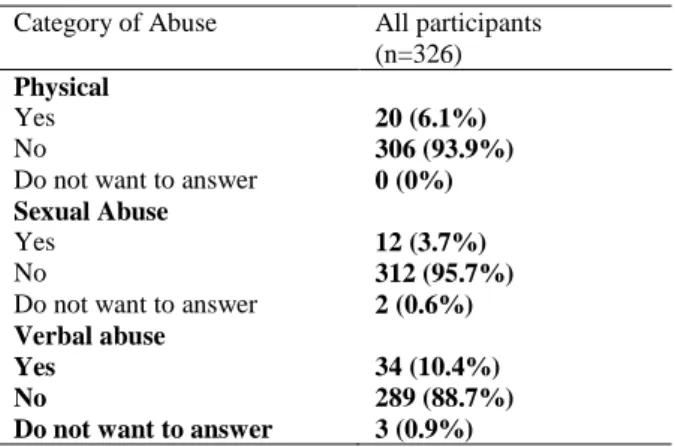
A total of 73 (22.4%) reported that their biological mother was deceased, while 132 (40.5%) reported that their biological father was deceased (Table 1). The educational status of the adolescent‘s biological mothers was low, as only 116 (35.6%) had secondary school education. Seventy-one (21.7%) indicated that their mothers had their first child before the age of 20 (median age was 18; IQR= 17-21 years). Of the 326 adolescents, 69 (21.2%) knew of siblings that had children before the age of 20. In total, 34 (10.4%) of adolescents admitted to experiencing verbal abuse, 20 (6.1%) to experiencing physical abuse, and 12 (3.7%) to experiencing sexual abuse (Table 2). Most of the adolescent females (n=151, 47%) lived with their siblings only (Figure 1).
Prevalence of repeat pregnancy, obstetric
histories of adolescent females
Sixty-five (19.9%) of the adolescent females experienced an adolescent repeat pregnancy while the majority were primigravida (80.1%) (Table 3). The HIV and STI prevalence amongst the adolescent females were 17.8% (58) and 4% (13) respectively. Only 49.7% of the participants could identify 5 contraceptive methods out of ten. Seventy -one (21.8%) of the adolescents had used contraception in the last 12 months prior to the current pregnancy.
Obstetric information of the adolescent
females
Partner relationship characteristics
Table 1: Socio-demographic characteristics of adolescent females in Kwa Zulu Natal, South Africa
Characteristics All participants
(n=326)
Age 18 (IQR 17 – 19)
Ethnic group
African 320 (98%)
Indian 3 (0.9%)
Coloured 3 (0.9%)
Religious practices
Christianity 291 (89.3%)
Islam 3 (0.9%)
Atheist 31 (9.5%)
Jehovah witness 1 (0.3%)
Spoken home language
Zulu 299 (91.7%)
Xhosa 19 (5.8%)
English 7 (2.1%)
Seswati 1(0.3%)
Marital status
Single 321 (98.5%)
Married 5 (1.5%)
Highest educational status
Primary school 9 (2.8%)
Junior secondary 12 (3.7%)
Senior Secondary 305 (93.6%)
Employment
Employed full time 8 (2.5%)
Unemployed 318 (97.5%)
Family characteristics Biological mother alive
Yes 253(77.6)
No 73 (22.4%)
Marital status of biological mother
Single 147 (45.1%)
Married 102 (31.0%)
Other 78 (23.9%)
Education completed by biological mother
None 28 (8.6%)
Primary school 46 (14,1%)
Secondary school 116 (35.6%)
Post-secondary 6 (1.8)
Do not know 130 (39.9%)
Age biological mother had her first child
Median 18 (IQR 16 – 21).
13-19 years 71 (21.7%)
29-39 years 43 (13.7%)
Do not know 212 (65%)
Siblings who became parents before the age of 20
69 (21.2%)
Biological father alive
Yes 194 (59.5%)
No 132 (40.5%)
Marital status of biological father
Single 85 (26.1%)
Married Other
91 (27.9%) 150 (46.0%) Education completed by biological
father
None 42 (12.9%)
Primary school 26 (7.9%)
Secondary school 68 (20.8%)
Post-secondary 6 (1.8%)
Do not know 184 (56.4%)
found to be 22.69 years (SD=3.85) (Table 4) Adolescents with a partner who was at least 5 years older had significantly higher incidences of repeat pregnancies (p =0.051). Of the 65 adolescents with repeat pregnancies, only 41 (63%) were still in a relationship with the partner responsible for the previous pregnancy. Adolescents with repeat pregnancies were more likely to have a partner that had some form of employment than those without repeat pregnancies. Adolescents who thought their partners would provide them and their children with emotional support had significantly higher rates of repeat pregnancies (p=0.050).
Partner relationship characteristics
Bivariate analysis
Among the 65 repeat pregnancies, 23 (35.4%) had experienced previous spontaneous abortions (Table 5). Repeat pregnancies were associated with poor obstetrical outcomes such as history of previous spontaneous abortions (p<0.0001). The age of adolescent females was significantly associated with adolescent repeat pregnancies Older adolescents had higher repeat pregnancies than their younger counterparts (p<0.0001). Adolescents who were using contraceptives before pregnancy had significantly higher rates of repeat pregnancies (p<0.0001). There was a significant association between the engagement of unprotected sex in the last 12 months with more than one partner, and adolescent repeat pregnancies (p=0.033). Adolescents who reported having STIs were more likely to have experienced adolescent repeat pregnancies (p=0.009). Similarly, adolescent repeat pregnancies were significantly associated with a higher prevalence of HIV (36.9% vs 13%, p<0.0001). Adolescents who reported the absence of emotional support from their immediate family had significantly higher repeat pregnancies (p=0.026) (Table 5)
Table 2: Adolescents responses to physical, sexual and verbal abuse experiences
Category of Abuse All participants (n=326)
Physical
Yes 20 (6.1%)
No 306 (93.9%)
Do not want to answer 0 (0%) Sexual Abuse
Yes 12 (3.7%)
No 312 (95.7%)
Do not want to answer 2 (0.6%) Verbal abuse
Yes 34 (10.4%)
No 289 (88.7%)
Do not want to answer 3 (0.9%)
would provide support were significantly less likely to report a repeat pregnancy (p=0.023). Having a secondary school level of education was a protective factor for adolescent repeat pregnancy (p<0.0001). Thus, better educated adolescent females were significantly less likely to report a repeat pregnancy.
Factors associated with adolescent repeat
pregnancy
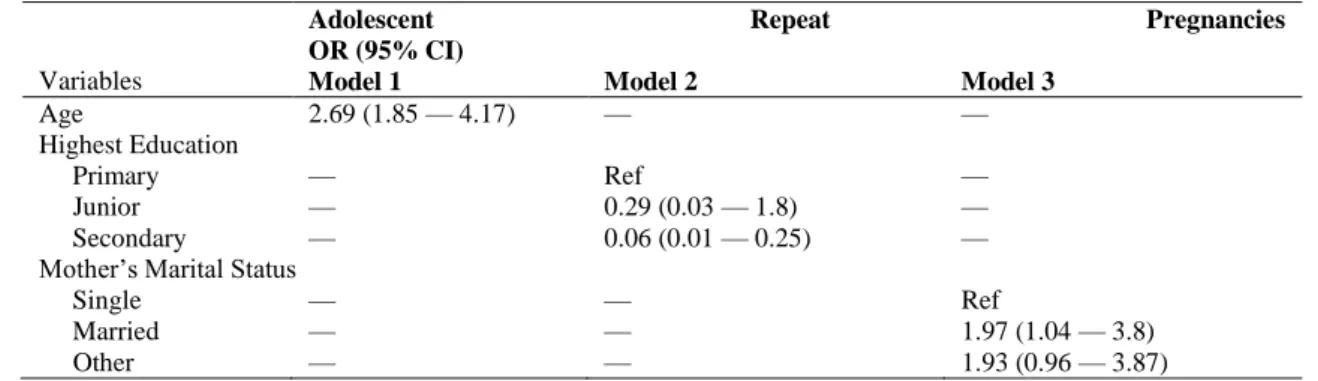
The potential confounding variables that were identified included age, highest education level and mother‘s marital status. The association between the potential confounding variables and adolescent repeat pregnancy is presented in Table 6. The univariate analysis demonstrates that age, highest educational status and mother‘s marital status, on their own share a relationship with repeat pregnancies and thus warranted being included in the analysis. For each year increase in the age of the participant, the odds of having repeated pregnancies increased by a factor of 2.69. Adolescent females who had at least secondary school education had a 0.94% reduction in the odds of having a repeat pregnancy when compared to girls who had only a primary school education. Adolescent females who had a mother who was married were 2 times more likely to have repeat pregnancies, compared to adolescent females whose mothers were single.
The multivariable logistic regression analysis indicated that the following factors that were significantly associated with repeat
pregnancies. These included history of poor obstetric outcome (spontaneous abortion) (adjusted odds ratio (OR) 29.48, 95% CI 10.05-105.47, p<0.001) and previous contraceptive use (adjusted odds ratio (OR) 6.11, 95% CI 3.08-12.37, p<0.001) (Table 7). Adolescent females who perceived emotional support from an aunt had a lower risk of a repeat pregnancies (adjusted odds ratio (OR) 0.15, 95% CI 0.03-0.52, p=0.007).
Discussion
This cross-sectional study shows the prevalence of adolescent repeat pregnancy to be 19.9%. The demonstrated prevalence of repeat pregnancies in this current study is consistent with the findings in countries like Thailand, Germany and USA, with adolescent repeat pregnancies of 20%, 17.3%, 18.3% respectively17,19,20.The literature establishes a comprehensive socio-ecological model for the predictors of adolescent repeat pregnancy14,21.The socio-ecological model is used to categorise the predictors of adolescent repeat childbearing according to individual factors, partner relationship, family, peer, school and community factors22-23. The findings of the bivariate analysis supported the existing literature on the risk factors of adolescent repeat pregnancy. However, after adjusting for potential confounders in the multivariable logistic regression, only a few variables maintained a statistically significant association with adolescent repeat pregnancy. (Figure 2)
In bivariate analysis, fourteen variables (see figure 2) were significantly associated with having a repeat pregnancy. However, in the multivariable analysis, age, higher education, marital status of mother, previous poor obstetric outcome (spontaneous abortion), previous contraceptive use in the last 12 months and perceived support from an aunt, were retained.
The systematic review by Maravilla et al14
Figure 1: Living arrangements of adolescent females in KwaZulu Natal, South Africa
the findings of our study found that 35.4% of adolescents with a repeat pregnancy had experienced a spontaneous abortion (p<0.001). A spontaneous abortion may result in depression which is also a known risk factor for adolescent repeat pregnancy14. Studies suggest that after a spontaneous abortion, the individual may want to conceive again as a way of coping with the loss of the first pregnancy14,22.The adolescents with repeat pregnancies in our study were older, in comparison to the adolescents with first pregnancies (p<0.001). In this regard, childbearing at a young age also influences adolescent repeat pregnancy.
Some researchers have reported that low maternal educational status is associated with adolescent repeat pregnancy22-23. South Africa is
regarded as a patriarchal country with large disparities in gender equality and education23. Therefore, it is not surprising that the bivariate analysis showed that low maternal educational status was associated with adolescent repeat pregnancy in our study (p=0.097). It is known that adolescent females with low educational levels have a higher risk of repeat pregnancies21-22. Raneri and Weimann24 revealed that adolescents who dropped out of school prior to the previous
pregnancy had a high risk of repeat pregnancy (OR 1.75, CI: 1.20-2.55, p<0.01)
Consequently, our study found that adolescents with higher education levels had lower repeat pregnancies on both the bivariate
and the multivariable logistic regression analyses.
71, 22%
5, 1% 7, 2%
65, 20%
18, 6% 151, 47%
6, 2%
I live with my parents and siblings I live with my father and sibling only
I live with my parent/step parent and siblings I live with my mother and siblings only
I live with my extended family (parents/siblings/grandparent/s) I live with my siblings only
Table 3: Obstetric information of adolescents‘ females
in Kwa Zulu Natal, South Africa
Clinical information All participants (n=326) Obstetric history
Number of pregnancies
1 261 (80.1%)
2 60 (18.4%)
3 5 (1.5%)
Number of deliveries
1 97(29.8%)
2 203 (62.3%)
3 26 (8%)
Number of live births
0 101 (31.0%)
1 199 (61.0%)
2 26 (8%)
Number of still births
0 324 (99.4%)
1 2 (0.6%
Number of spontaneous abortions
0 298 (91.4%)
1 27 (8.3%)
2 1 (0.3%)
Medical conditions
High blood pressure 23 (7.1%)
Diabetes 2 (0.6%)
Varicose veins 19 (5.8%)
Anaemia 25 (7.7%)
Epilepsy 3 (0.9%)
Asthma 12 (3.7%)
Sexually transmitted infections
13 (4.0%)
HIV positive 58 (17.8%) Contraceptive
Characteristics
Had unprotected sex in the last 12 months with more than one sexual partner
16 (4.9%)
Used contraception prior to current pregnancy
71 (21.8%)
Contraceptive methods used prior to pregnancy (n=71)
Male condom 28 (39%)
Female condom 1(1.4%)
OCP 3 (4.2%)
Injectable 35(49.3%)
Implanon 8 (11.3%)
Withdrawal 1 (1.4%)
Studies by Rigsby21 and Rowland22 identified dysfunctional families and poor mother-daughter relationships as predictors of adolescent repeat pregnancy. Adolescents in our study who reported no emotional support from their immediate family members had higher repeat pregnancies (p=0.026). The implication of maternal support was
established on bivariate analysis as lower repeat pregnancies were noted in adolescents who received support from their mothers (p=0.025). On multivariable analysis, the perceived absence of emotional support from the immediate family and perceived support from the participant‘s mother did not show a statistically significant relationship with adolescent repeat pregnancy.
Intergenerational relations (biological mother having her first child before the age of 20 and siblings who became parents before the age of 20) have a profound effect on adolescent child bearing. Wall-Wieler et al25 found that adolescent girls who had at least one older sister who experienced a pregnancy before the age of 20, had a higher risk of becoming pregnant between the ages of 14 to 19 years (OR 3.38, 99% CI 2.77-4.13). An adolescent girl whose biological mother had her first child before the age of 20 years also had a higher risk of early child bearing (OR 1.57, 99% CI 1.30-1.89). In our study, however there were no significant associations with intergenerational relations and adolescent repeat pregnancy.
Table 4: Partner characteristics of adolescent females in Kwa Zulu Natal, South Africa
Partner characteristics All participants (n=326)
Age 22.69 years (16-23)
Number with partner ≥ 5 years older 265 (81.2%) Employment status:
Employed full time 135 (41.4%)
Employed part time 48 (41.7%)
Unemployed 143 (43.8%)
Intimate partner violence 12 (3.7%)
Partner provides financial support Perceived emotional support from partner
122 (37.4%) 196 (60.1%)
Table 5: Bivariate analysis of the association between adolescent repeat pregnancies and selected factors within the socio-ecological model
Variables Repeat Pregnancy
(n=65)
First pregnancy (n=261)
P value
Individual factors
Age 19.0 (18.0-19.0) 18.0 (17.-19.0) < 0.0001
History of spontaneous abortion 23 (35.4%) 5 (1.9%) < 0.0001
Had unprotected sex with more than one partner in last 12 months
7 (10.8%) 9 (3.4%) 0.033
Living with HIV 24 (36.9%) 34 (13.0%) < 0.0001
Ever had a sexually transmitted infections (STIs) 7 (10.87%) 6 (2.3%) 0.009 Used contraceptives prior to current pregnancy 32 (49.2%) 39 (14.9%) <0.0001
Family factors
Age mother had her first biological child 18.0 (16.0-21.0) 18 (16.0-21.0) 0.83 Sibling became a parent before the age of 20 14 (21.5%) 55 (21.1%) 0.61
Mother’s marital status 0.064
Single 21 (32.3%) 126 (48.3%)
Married 25 (38.5%) 76 (29.1%)
Other 19 (29.2%) 59 (22.6%)
Educational status of mother 0.097
Secondary 16 (24.6%) 100 (38.3%)
Less than primary 60 (23.0%) 29 (44,6%)
Don‘t know 101 (38.7%) 20 (30.8%)
Perceived Support
Perceived absence of emotional support from immediate
family 3 (4.6%) 1(0.4%) 0.026
Perceived emotional support from mother 28 (43.1%) 154 (59.0%) 0.025 Perceived emotional support from aunt 3 (4,6%) 39 (14.9%) 0.023
Partner relationship factors
Intimate partner violence 3(4.6%) 9 (3.4%) 0.35
Partner currently provides financial support 31 (47.7%) 91 (34.9%) 0.065 Age Disparate Relationships (Partner ≥ 5 years) 37 (56.9%) 112 (42.9%) 0.051 Perceived emotional support from partner 46 (70.8%) 150 (57.5%) 0.050
School factors
High education level <0.0001
Primary 7 (10.8%) 2 (0.8%)
Junior 6 (9.2%) 6 (2.3%)
Secondary 52 (80.0%) 253 (96.9%)
Table 6: Association between potential confounding variables and adolescent repeat pregnancies
OR, Odds Ratio CI, Confidence Interval
Table 7: Multivariate logistic regression analysis investigating the influence of selected variables on adolescent repeat pregnancy when adjusting for confounders
Variable Adjusted Odds
Ratio (AOR)
95% CI of the AOR
Spontaneous abortion 29.48** 10.05-105.47
HIV 3.4 1.65-6.99
STIs 4.38 1.14-16.9
Used contraceptives in last 12 months
6.11** 3.08-12.37
Had unprotected sex with more than one partner in last 12 months
3.01 0.98-8.87
Partner currently provides financial support
1.18 0.63-2.2
Perceived emotional support from partner
1.93 0.98-4.0
Age Disparate Relationships (Partner ≥ 5 years)
1.35 0.73-2.5
Perceived emotional support from mother
0.54 0.25-1.16
Perceived emotional support from aunt
0.15** 0.03-0.52
Perceived absence of emotional family support
9.8
0.57-326.38
** Indicates an odds ratio significantly different from 1.00 at a 5% significance level.
CI confidence interval
strength and support during times of crises28. Solomon and Liefeld29 revealed the importance of family support in the reduction of repeat
pregnancies though the Family Growth Centre (FGC) intervention (p=0.002).
Partner relationship factors are an important component in the socio-ecological framework22. Increased partner support has been linked to adolescent repeat pregnancy14. Surprisingly, this study also found that adolescents who perceived that their partners would provide emotional support had higher rates of repeat pregnancies (p=0.050). Repeat pregnancies were more common among adolescents who reported current financial support from their partners (p=0.065). There are many assumptions regarding the link of increased partner support and adolescent repeat pregnancy. These could be attributed to gender relations, intimate partner violence, sex negotiation and a partner wanting a baby14, 23. For instance, studies by Raneri and Weimann24 and Jacoby et al30 have documented that the experience of intimate partner violence is associated with repeat pregnancies among adolescents (p<0.01 and p<0.01 respectively). This finding was not observed in our study. However, South African studies have emphasized the influence of gender relations, oppression of women and sexual relations that affect the reporting of intimate partner violence23, 31. Furthermore, younger people tend to tolerate abusive relationships32. The variables indicating increased partner support (current financial support and perceived emotional support) were not retained in the multivariable logistic regression model.
Adolescent Repeat Pregnancies
OR (95% CI)
Variables Model 1 Model 2 Model 3
Age 2.69 (1.85 — 4.17) — —
Highest Education
Primary — Ref —
Junior — 0.29 (0.03 — 1.8) —
Secondary — 0.06 (0.01 — 0.25) —
Mother‘s Marital Status
Single — — Ref
Married — — 1.97 (1.04 — 3.8)
Govender et al. Adolescent Repeat Pregnancy in South Africa
Figure 2: Adolescent repeat pregnancy and associated factors within the socio- ecological model
Adolescent females who had a mother who was married were twice as likely to have repeat pregnancies as compared to adolescent females whose mothers were single. In this study, repeat adolescent pregnancy was higher in adolescent females whose mothers were married. Conversely, numerous studies have highlighted that being raised by a single mother increases an adolescent‘s risk of early pregnancy and childbearing33-34. Although our findings regarding the mother‘s marital status and adolescent repeat pregnancy are unusual, they are not unique because marital instability is also a risk factor for adolescent pregnancy25.As previously noted, the median age in first time marriages for South African women is
29 years5. Our study examined the current marital status of the participant‘s mother and not transitions in marital status.
Studies in South Africa and Australia have documented that adolescent females involved with older men (five years and older) have a higher risk of repeat pregnancies (p<0.001 and p<0.05 respectively)15-16. The finding of the bivariate analysis also corroborated that adolescent females in relationships with older men (five years and older) had a higher incidence of repeat pregnancies (p<0.051) but this exposure variable was not statistically significant in multivariate logistic regression analysis. However, in the era of HIV/AIDS, the initial finding of the association Socio-ecological model
Individual factors
Partner relationship factors Family factors
Peer and school factors Social and community factors
Signficant Associations on Bivariate analysis
Age
Poor obstetric outcome
Unprotected sex with more than one partner in the last 12 months
Living with HIV
Ever had a sexually transmitted infection (STI) Used contraception prior to current pregnancy
Mother's marital status
Perceived absence of emotional support from immediate family
Percieved emotional support from mother Percieved emotional support from aunt Partner currently provides financial support Age disparate relationship (Partner ≥ 5 years)
Percieved emotional support from partner High educational level
Signficant Associations on Multivariable Logistic Regression
Poor obstetric outcome
Used contraception prior to current pregnancy
Percieved emotional support from aunt
between adolescent repeat pregnancy and the age disparate relationships (young women partnering with older men) is compelling. Sexual relationships between adolescent females and older men are characterised by transactional sex23. Often in such relationships, there is an unequal power dynamic which places adolescent females at risk of unwanted pregnancies. The sexual relationships between young women and older men are considered a public health threat to South Africa because it is driving the rate of HIV transmission33. The HIV prevalence with adolescents with repeat pregnancies was 36.9% in comparison to 13% in first time mothers (p<0.01). Research has shown a significant association between intimate partner violence and being HIV positive33.HIV and STIs were not retained in the multivariable logistic regression model.
An unexpected finding in our study was that adolescents who reported contraceptive use in the last 12 months had a higher risk of repeat pregnancies (p<0.001). Lewis et al16 had also noted this finding amongst Australian adolescents. The authors alluded that adolescents use contraceptives inconsistently. In our study, only 71 (21.8%) reported using contraception prior to the
pregnancy. The most commonly used
contraceptive methods were the injection (35/71=49%), the male condom (28/71= 39%) and Implanon (8/71=11%). The reported proportion of contraceptive use in our study (21.8%) is much lower in comparison to a South African study by Ehlers36 which found that only 48% of 250 adolescent mothers had used contraception. In another South African study, it was found that adolescent learners in Limpopo knew about the various forms of contraception but lacked knowledge about the use of the oral contraceptive37. Most of the female learners in the Limpopo study (63%) had negative attitudes towards contraceptives due to various myths, fear of parental authority, and rejection by their male partners for using contraception. More than half (56.9%) of the adolescents with repeat pregnancies in our study believed that contraceptives caused sterility in women.
The reported levels of contraception uptake and use are low amongst both married and unmarried
adolescents38-39. Although most married adolescents do not want a pregnancy, their contraceptive use is lower than that of sexually active unmarried adolescents40. There is therefore an unmet need for contraception amongst adolescents in general. Numerous studies have focused on the use of long acting reversible contraceptives (LARC) as an intervention to reduce adolescent repeat pregnancy14,41-43. A study by Tocce et al41 revealed that only 2.6% of adolescent mothers (n=4/153; Relative Risk=5.5; CI: 1.9 -12.7) with immediate postpartum Etonogestrel implant insertion experienced a repeat pregnancy at 12 months versus 18.6% (38/204) of the control group adolescent females. While research has shown that long acting reversible contraceptives is an important intervention in the reduction of adolescent repeat pregnancy but on the contrast, research also indicates that depression in adolescents leads to risky sexual behaviour and poor use of contraception14. In this regard, mental health has a significant influence on contraception use. While there are existing programmes to assist pregnant and parenting adolescents, mental health care is not integrated into these programmes. An important consideration to note is that pregnant and parenting adolescents may also find accessing mental health services more challenging than their adult counterparts44.
Strengths and Limitations of the
Study
Conclusion
In this study, we have established the prevalence of adolescent repeat pregnancy and its risk factors among South African adolescent females. Moreover, these findings may have implications for future interventions that are aimed at reducing adolescent repeat pregnancy. Adolescent reproductive health research traditionally focuses on primary pregnancy prevention, but secondary pregnancy prevention should be put forward as essential research. Additional research is required to determine the influence on partner support and the risk of repeat pregnancies among adolescents. Our study found that a history of poor obstetrical outcome such as a spontaneous abortion is a significant risk factor for adolescent repeat pregnancy. In this regard, we suggest that psycho-social interventions are required for adolescents who have experienced poor obstetrical outcomes Under-recognised resources such as informal networks of women (aunts, grandmothers and godmothers) who can serve as sources of information and support for adolescent parents, should also be explored. Therefore, we emphasise the need for holistic research regarding secondary pregnancy prevention in adolescents.
Acknowledgements
The research reported in this publication was supported by the Fogarty International Centre (FIC), NIH Common Fund, Office of Strategic Coordination, Office of the Director (OD/OSC/CF/NIH), Office of AIDS Research, Office of the Director (OAR/NIH), National Institute of Mental Health (NIMH/NIH) of the National Institutes of Health under Award Number D43TW010131. The content is solely the responsibility of the authors and does not necessarily represent the official views of the National Institutes of Health.
The authors acknowledge the contributions of Dr. Roxanne Beauclair, The South African Department of Science and Technology/National Research Foundation (DST/ NRF) Centre of Excellence in Epidemiological Modelling and Analysis (SACEMA), Stellenbosch University, South Africa.
The authors also acknowledge the adolescents who participated in the research.
Competing Interest
The authors declare that they have no financial or personal relationships that may have inappropriately influenced them in writing this article.
Authors’ Contributions
D.G. contributed towards data collection, data analysis and writing of the manuscript. S.N. and M.T. revised the manuscript.
References
1. World Health Organisation. Adolescent pregnancy. Fact sheet no: 364. 2014. Available from: http://www.who.int/mediacentre/factsheets/fs363/en / (accessed 21 March 2018)
2. Statistics South Africa. Recorded live births 2013- 2015. Statistical Release P0305. 2016 Available from: www.statssa.gov.za/publications/P0305/P03052014. pdf (accessed 21 March 2018)
3. World Bank. World development indicators: Adolescent fertility rate (births per 1,000 women ages 15–19). 2015. Available from: http:// data.worldbank.org/ indicator/ SP.ADO.TFRT (accessed 24 March 2018)
4. Cox JE, Burman MP, Woods ER, Famakinwa O and Harris SK. Evaluation of raising adolescent families together program: a medical home for adolescent mothers and their children. American Journal of Public Health 2012; 102(10):1879-85.
5. Richter L, Mabaso M, Ramjith J and Norris S A. Early sexual debut: voluntary or coerced? Evidence from longitudinal data in South Africa - the Birth to Twenty Plus study. South African Medical Journal 2015; 105(4): 204-307.
6. Statistics South Africa. Marriages and divorces. Statistical Release P0307. 2016 Available from: www.statssa.gov.za/publications/P0305/P03052014. pdf (accessed 21 March 2018)
7. Singh S, Wulf D, Samara R and Cuco YR. Gender differences in the timing of first sexual intercourse: Data from 14 countries. Family Planning Perspectives 2000; 26: 21-26.
8. Marteleto L, Lam D and Randchod C. Sexual behaviour, pregnancy and schooling among young people in urban South Africa. Studies in Family Planning. 2008; 39(4): 351-368.
10. National Department of Health, South Africa. The 2012 National Antenatal Sentinel HIV & Herpes Simplex Type 2 Prevalence Survey. Pretoria: NDOH. Available from: www.doh.gov.gov.za (accessed 2 January 2017)
11. Pun KD and Chauhan M. Outcomes of adolescent pregnancy at Kathmandu University Hospital, Dhulikhel, Kavre. Kathmandu University Medical Journal. 2011; 9(33): 50-53.
12. The Schuyler Centre for Analysis and Advocacy. Teenage Births: Outcomes for Young Parents and their Children. 2008. Available from: http://www.scanny.org/.../teen_pregnancy
(accessed 15 December 2016)
13. East PL, Reyes BT and Horn EJ. Association between adolescent pregnancy and a family history of teenage births. Perspectives on Sexual Reproductive Health. 2007; 39(2): 108-115.
14. Maravilla JC, Betts KS, Couto E Cruz C and Alati R. Factors influencing repeated teenage pregnancy: a review and meta-analysis. American Journal of Obstetrics and Gynecology. 2017; 217(5): 527-545. 15. Mphatswe W, Maise H and Sebitloane M. Prevalence of repeat pregnancies and associated factors among teenage mothers in KwaZulu-Natal. International Journal of Gynecology and Obstetrics. 2016; 133: 152-155.
16. Lewis LN, Doherty DA, Hickey M and Skinner SR. Predictors of sexual intercourse and rapid repeat pregnancy among teenage mothers: An Australian prospective longitudinal study. Medical Journal of Australia. 2010; 193(6): 338-42.
17. Talungchit P, Lertbunnaphong T and Russameeecharoen K. Prevalence of repeat pregnancy including pregnancy outcome of teenage women. Siriraj Medical Journal. 2017; 69: 363-368.
18. KwaZulu-Natal Department of Health. GJ Crookes Hospital. 2016. Available from: http://www.kznhealth.gov.za/gjcrookeshospital/htm (accessed 19 May 2016)
19. Reime B, Schuckling BA and Wenzlaff P. Reproductive outcomes in adolescents who had a previous birth or an induced abortion compared to adolescents‘ first pregnancies. BMC Pregnancy Childbirth 2008; 8: 4. 20. Centers for Disease Control and Prevention (CDC). Vital
signs: Repeat births among teens ‒ United States, 2007-2019. MMWR Morbidity Mortality Weekly Report. 2013; 62(13): 249-255.
21. Rigsby DC, Macones GA and Driscoll DA. Risk factors for rapid repeat pregnancy among adolescent Mothers: A review of the literature. Journal of Pediatric and Adolescent Gynecology. 1998; 11: 115-126.
22. Rowland S. Social predictors of repeat adolescent pregnancy and focused strategies. Best Practice & Research Clinical Obstetrics and Gynecology. 2010; 24(5): 605-616.
23. Jewkes R, Vundule C, Moforah F and Jordaan E.
Relationship dynamic and teenage pregnancy in South Africa. Social Science and Medicine. 2001; 52(5): 733-44.
24. Wall-Wieler E, Roos LL and Nickel NC. Teenage pregnancy: the impact of maternal adolescent childbearing and older sister‘s teenage pregnancy on a younger sister. BMC Pregnancy and Childbirth. 2016; 16: 120.
25. Raneri LG and Weimann M. Social ecological predictors of repeat adolescent pregnancy. Perspectives on Sexual and Reproductive Health. 2007; 39(1): 39-47.
26. Tracy A, Richer A and Erkut S. The role of extended family in diverse teens' sexual health. Journal of Adolescent Research. 2015; 30(1): 31-56.
27. Leech TG, Adams EA and Littlefield. A. Community Conversation on Adolescent Pregnancy and Parenting Services: Networks of Support, Gatekeepers to Care, and Non-Compulsory Fathering in a Black Urban Community. Journal of Health Disparities Research and Practice. 2014; 7(7): 46-62.
28. Iwelunmor J, Airihenbuwa CO, Okoror TA, Brown DC and Belue R. Family systems and HIV/AIDS in South Africa. International Quarterly of Community Health Education. 2006; 27(4): 321-35.
29. Solomon R and Leifeld CP. Effectiveness of a family support centre approach to adolescent mothers: Repeat pregnancy and school dropout. Family Relations. 1998; 47(2): 139-144.
30. Jacoby M, Gorenflo D, Black E, Wunderlich C and Eyler E. Rapid repeat pregnancy and experiences of interpersonal violence among low income individuals. American Journal of Preventative Medicine. 1999; 16(4): 318-21.
31. Rees K, Zweigenthal V and Joyner K. Health Sector responses to intimate partner violence: A literature review. African Journal of Primary Health Care and Family Medicine. 2014; 6(1): 8.
32. Jewkes RK, Dunkle K, Ndua M and Shai N. Intimate partner violence, relationship and incidence of HIV infection in young women in South Africa: a cohort study. Lancet. 2010; 376: 41-8.
33. De Oliveira T, Kharsany ABM, Graf T, Cawood C, Khanyile D and Grobler A, Puren A, Madurai S, Baxter C, Karim QA, Karim SS. Transmission networks and risk of HIV infection in KwaZulu-Natal, South Africa: A community-wide phylogenetic study. Lancet HIV. 2017; 4(1): e41-e50.
34. Ugoji FN. Parental Marital status and peer influence as correlates of teenage pregnancy among female teens in South Nigeria. Gender and Behaviour. 2011; 9(2): 4125-4138.
36. Ehlers VJ. Adolescent mothers' utilisation of
contraceptive services in South Africa. International Nursing Review. 2003; 50: 229-41.
37. Ramathuba DU, Khoza L and Netshikweta, ML. Knowledge, attitudes and practice of secondary school girls towards contraception in Limpopo province.Curationis. 2012; 35(1): 1-7.
38. World Health Organisation. Contraception in
Adolescence. 2004. Available from: whqlibdoc.who.int/publications/2004/9241591447_ eng.pdf (Accessed 10 May 2016)
39. Horgan RP and Kenny LC. Review management of teenage pregnancy. The obstetrician and gynaecologist. 2007; 9: 153-158.
40. Morris JL and Rushwan H. Adolescent sexual and reproductive health: Global challenges. International Journal of Gynecology and Obstetrics. 2015; 131(1): S40-S42.
41. Tocce KM, Sheeder JL and Teal SB. Rapid repeat pregnancy in adolescents: do immediate postpartum contraceptive implants make a difference? American Journal of Obstetrics and Gynaecology. 2012; 206(481): e1-e7.
42. Damle LF, Gohari AC, McEvoy AK, Desale SY and Gomez-Lobo V. Early initiation of postpartum contraception: Does it decrease rapid repeat pregnancy in adolescents? Journal of Pediatric and Adolescent Gynecology. 2015; 28: 57-62.
43. Steven-Simons C, Kelly S and Singer D. Preventing repeat adolescent pregnancies with early adoption of the contraceptive implants. Family Planning Perspectives. 1999; 31(2): 88-93.