Rachel M. Carriere. Copyright Education: A Study of the Impact of Formal Copyright Training for Special Librarians. A Master‟s Paper for the M.S. in L.S degree. November, 2010. 57 pages. Advisor: Rebecca Vargha.
This paper describes a study conducted to examine copyright knowledge among special librarians in the United States to determine factors that may promote an increased knowledge of copyright and how it operates in a particular setting. A review of the literature indicates that awareness of copyright is high, but actual knowledge of copyright is lacking. Little research has been done specifically on the special librarian population, but the literature suggests the importance of the librarian as a facilitator of copyright compliance, and demonstrates a need for copyright education. This study used an online survey to solicit the opinions of special librarians on the issue, garnering 122 usable
responses. Results indicate that more than half of the librarians surveyed were not comfortable with their copyright knowledge and showed a positive correlation between comfort and training. Results may be of interest to copyright educators, library managers, librarians, and those assessing MLS curricula.
Headings:
Copyright -- Teaching Surveys -- Copyright
LIBRARIANS
by
Rachel M. Carriere
A Master‟s paper submitted to the faculty of the School of Information and Library Science of the University of North Carolina at Chapel Hill
in partial fulfillment of the requirements for the degree of Master of Science in
Library Science.
Chapel Hill, North Carolina November 2010
Approved by
ACKNOWLEDGEMENTS
TABLE OF CONTENTS
List of Figures ... 3
List of Tables ... 4
Introduction ... 5
Literature Review... 7
Methodology ... 13
Results ... 20
Discussion ... 39
References ... 46
LIST OF FIGURES
Figure 1: Respondents by type of special library ………. 20
Figure 2: Respondents by years since completing the MLS degree ……… 21
Figure 3: Number of respondents by score on copyright quiz ………. 22
Figure 4: Number of respondents with multiple types of formal training ………... 25
Figure 5: Institutional copyright enforcement as reported by respondent ………... 27
Figure 6: Correct and incorrect answers on the copyright quiz questions vs. comfort level ………... 30
Figure 7: Correct and incorrect answers on the copyright quiz questions vs. formal training ………..31
LIST OF TABLES
Table 1: Distribution of copyright quiz answers by question ... 23
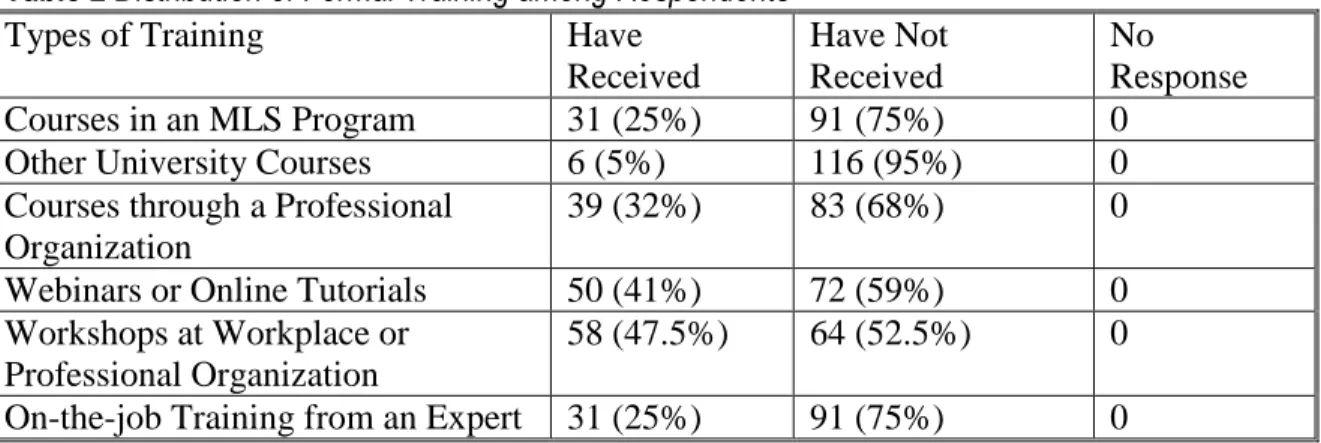
Table 2: Distribution of formal training among respondents ... 24
Table 3: Presence of perceived barriers among respondents... 26
Table 4: Other responses for perceived barriers …………... 26
Table 5: Continuous variables significantly associated with comfort level of copyright knowledge... 28
Table 6: Variables significantly associated with self-led copyright research ... 29
INTRODUCTION
Copyright management is often considered a responsibility of libraries. This is logical, as the library supports the learning and exchange of ideas that often incorporates copyright or intellectual property restrictions. In this digital age where the lines of fair use are becoming increasingly blurred and copyright is a growing issue that many librarians face every day, it is especially important for libraries to educate users on their actions relating to copyright, for the protection of both the library and the user.
In order for libraries to fully and correctly inform users of copyright and regulate copyright compliance the staff must have some expertise in copyright. Few libraries have a staff member whose position requires total expertise in U.S. copyright law. Instead, it is often assumed that each librarian has a working knowledge of copyright and the regulations pertinent to their activities.
In special libraries, which characteristically have fewer staff than academic or public libraries, the individual librarian takes on increased responsibility. However, special libraries are also environments in which the communication of copyright to users may become jeopardized by lack of resources or expertise.
The purpose of this study is to examine copyright knowledge among special librarians in the United States to determine factors that may promote an increased knowledge of copyright and how it operates in a particular setting. This study seeks to examine the hypothesis that special librarians who have received formal copyright
Much of the recent literature reviews the copyright education of users and the copyright knowledge of users and academic educators. The education of librarians – and special librarians in particular – is not an area that has been thoroughly explored.
This study attempts to glean information from special librarians about the type of formal training that they have undergone and their level of copyright knowledge to determine the level of correlation between the two. To do this, the study asks the following questions:
1) Is the type or amount of formal training received by a librarian reflected in a higher score on an objective test of general U.S. copyright law?
2) What kind of barriers to copyright education and enforcement are perceived by special librarians?
3) Does institutional policy and enforcement have an impact in the level of copyright knowledge of an individual librarian?
A review of the literature explains the need for a current assessment of copyright knowledge and education for special librarians, as articulated by working professionals in the field. It also includes an overview of other factors that act as behaviors that
LITERATURE REVIEW
Self-Reported Copyright Knowledge
Self-reported knowledge of copyright law is the most inclusive way to measure copyright knowledge because it allows for more reporting of how copyright operates in particular settings. This is because, as Lesley Ellen Harris notes, copyright is often difficult to interpret and librarians must often make their own judgment calls based on their understanding of copyright law and how it applies in their workplace (2008).
Pogue‟s study on the knowledge of intellectual property concepts among
academic faculty and administrators (2004) relies on self-reported data from university members regarding facets of intellectual property relevant to distance education. The results showed that while two thirds of respondents were aware of university intellectual property policies, only one fourth of the total respondents reported knowing the details of the policies. All participants agreed that the protections of U.S. copyright law are
important, but more than one third of respondents admitted that their knowledge of the law was vague. (2004, ix). Administrators proved more knowledgeable than faculty, but the overall reported proficiency from both groups was severely lacking. Questions in Pogue‟s survey required participants to select the types of intellectual property and U.S.
The study that is most relevant to the special librarian population being examined in this research was conducted in the UK (Arundale, 2002). The study uses a survey to explore the attitudes of library managers regarding the legal knowledge and expertise of themselves and their staff. It was originally conceived as a survey to test the attitudes about the inclusion of elements of law in Library and Information Science curricula. Despite returning a sample size too small to be reliable, the results still displayed interesting patterns. Participants were asked to report awareness of ten aspects of law relevant to libraries and then to rank them in order of perceived importance. While awareness of copyright was reported almost universally, there was no consistency in the reporting of importance of copyright or the other aspects.
The research shows a general lack of copyright knowledge and skewed levels of the perceived importance of copyright law among academics. This is often the basis for suggesting the implementation of copyright education programs. There is much research conducted regarding the knowledge of copyright among members of academic
institutions, but the same studies have not been applied to librarians, especially those outside of large academic institutions. If the results among librarians resemble those of academics, then there may be a similar argument made for librarians to participate in formal copyright education and training programs.
Copyright Knowledge Assessment
Chase‟s study (1995) assesses the knowledge of the 1976 Copyright Act among
media directors in higher education. The study analyzes demographic information (title, years of experience, level of education, etc.) and tests participants on various areas of the copyright act. Only 18% of the participants reached the proficiency level of 75% on the written exam. Tested sections of the Copyright Act included exclusive rights, fair use, and related guidelines covering classroom use of materials. Follow-up interviews conducted on a random 10% of participants revealed, however, that there is a clear awareness of copyright regulations in the profession, even if proficiency with them is lacking.
A study of similar design conducted seven years later (Renner, 2002) surveys undergraduate and graduate educators at a variety of institutions to determine their knowledge regarding the use of materials in online courses. Renner‟s study concludes
that educators have an awareness of copyright but lack a working knowledge of copyright law. Those who were aware of their institution‟s copyright policies scored significantly
higher on the assessment. In the follow-up interviews, educators expressed concern regarding legal issues and requested services and workshops to help them remain informed.
Barriers to copyright education
administering copyright education for the institution. Because of this, librarians have the responsibility of maintaining a working knowledge of these laws and making their users aware of them. Francois suggests that barriers to delivering copyright education include outreach to students and faculty, skewed perceptions by all parties of the importance of copyright as an issue, and the lack of staff and expertise to run the programs. She reports that all “faculty, librarians, academic counsel, and administrators must seek professional development to become conversant in law and institutional policies” (2009, 142).
Another survey (Abrizah, 2009) works off the findings that scholars are lacking in knowledge of copyright and publishing issues. Copyright and plagiarism are reported as the biggest concerns among the scholarly community and the survey finds alarmingly low levels of copyright knowledge among participants as well as self-reported anxiety
towards these issues.
Horava‟s survey of copyright communication in Canadian academic libraries also
finds that libraries report not having the resources or expertise to fully manage copyright (2010, 23). Horava concludes that major challenges also include lack of coordination and awareness on the institutional level. He also pinpoints fair use policies as being
particularly misunderstood among Canadian libraries and includes in his final recommendations the drafting of library and institutional policies to protect the best interests of the institution.
Copyright Compliance
survey where participants self-report levels and enforcement of compliance in their libraries. In the study, most librarians report that their library only follows strict
copyright regulations some of the time, and roughly half of the libraries report that their library somewhat strictly enforces copyright compliance (only two libraries reported very strict enforcement). 92% (all but one) of the respondents reported no known knowledge of their library being charged with a copyright violation. Oliver notes that there is no standard practice for which party is responsible for copyright compliance. She agrees that further examination of institutional copyright policies may shed more light on her survey results.
Most of the literature regarding copyright compliance addresses best practices for libraries. Lesley Ellen Harris writes that copyright policies are the best compliance tools for libraries (2009) while Kozumplik and Kreutziger (2010) discuss working fair use and compliance training sessions into information literacy training.
Copyright policies in the library and institution
Writing a copyright policy is a behavior that acts as a strong indication of
METHODOLOGY
Data Collection Method
This study focused on the input of practicing special librarians in determining whether they are comfortable with their level of copyright expertise. Therefore, a web-based survey instrument was designed and administered to the sample population. The survey will collect both quantitative and qualitative responses and attempts to collect both subjective and objective responses.
Using a web-based survey instrument allows the study to reach a large number of people around the country in a wide variety of institutions. Other advantages of using a web survey include short turn-around time and the ability to include forks in the logic, i.e. to route people out of the survey who do not meet the eligibility requirements. According to Van Selm and Jankowski (2006), benefits of web surveys go beyond the reduction of cost and time, ability to reach large numbers of respondents, and the anonymity it
provides to participants to include the additional ease during data processing and analysis by automatically filtering incomplete surveys and automatically coding closed-end questions (p. 19).
Sampling and Recruitment
The population of this study consists of members of the Special Libraries
and must be working in the United States. Nonprobability convenience sampling was used because of the lack of a sampling frame for this population.
Invitations to participate in the survey were sent to the members of five mailing lists of the SLA – the Knowledge Management Division (DKM), the Museums,
Archives, and Humanities Division (DMAH), the Solo Librarian Division (DSOL), the Social Sciences Division (DSOC), and the North Carolina Chapter of SLA (CNC). The email invitations include a brief description of the study along with a link to the survey. The description explains the nature of the study as well as requesting voluntary
participation in the study and ensuring the confidentiality of the results. The survey took approximately five minutes to complete and was administered between September 29, 2010 and October 20, 2010. Data analysis began immediately after the survey was closed.
Survey Instrument
The survey was constructed using Qualtrics survey software. It was comprised of three sections: demographic information, a short copyright quiz, and questions about copyright at the personal and institutional levels. Most of the questions are closed-ended with a small number of open-ended questions to provide supplemental qualitative
information to the data collected. Prior to the distribution of the survey, it was reviewed by two faculty members at the University of North Carolina‟s School of Information and
The first section of the survey was designed to collect relevant demographic information such as years since completing the MLS degree, position title, country of work, and the type of special library in which they work. Participants who indicated that they did not have an MLS or were working towards the degree were routed to the end pages of the survey where they were thanked for their participation. The same occurred for participants who indicated that they work outside of the United States.
The second section of the survey was comprised of a six question quiz about U.S. copyright. The questions asked about fair use factors, copying for preservation, the CONTU agreement on photocopying for Interlibrary Loan, the Digital Millennium Copyright Act (DMCA) of 1998, the kind of material that can be copyrighted and copyright notices for public copy machines.
The first question lists the four correct factors for determining fair use and one made-up factor (the number of copies made) and asks respondents to determine which of the five options is not a factor for determining fair use. As explained by the Columbia University Copyright Advisory Office, “the four factors come directly from the fair use
provision, Section 107 of the U.S. Copyright Act, and they have been examined and developed in court rulings” (Columbia CAO Fair Use webpage, 2009). The four factors are weighed and balanced against each other to ultimately conclude whether a work is being used correctly within the fair use guidelines.
three specific requirements for unpublished works: it must be reproduced for
preservation, security, or to deposit in an appropriate library of archives for research use; it must currently reside in the collections of the library or archive making the
reproduction; the copies that are made in digital format must not be made publicly available outside of the library or archive.
The third question, about the CONTU guidelines, asks respondents whether it is true or false that libraries may not request or deliver more than five articles a year from a particular journal. This is true, according to the “rule of five”. The Columbia Copyright
Advisory Office states that the CONTU guidelines “generally allow a library to receive, in one year, up to five copies of articles from the most recent five years of a journal title” (2009). The “rule of five” means that, for all journals published within five years of the
current date, up to five articles may be copied from that title for Interlibrary Loan. Institutions should not request more than five articles from any title in a given calendar year, nor may they fill requests for more than five articles from a single title.
The fourth question is about the Digital Millennium Copyright Act (DMCA) of 1998. It lists four actions and asks respondents to identify which one is not a result of the DMCA. The correct answer is the first response, that it “holds internet service providers liable for transmitting information over the internet that infringes on copyright.” In fact,
the DMCA looks to protect internet service providers. As explained in the U.S. Copyright Office Summary of the DMCA (1998), Title II of the DMCA limits the liability of ISPs for transmitting third party content that infringes on copyright (p. 9).
ideas and content within them are not always subject to copyright. The fifth survey question asks respondents to identify as true or false the statement which is adapted from Bielefield & Cheeseman (1993): “There are specific things that cannot be copyrighted. Ideas, procedures, processes, systems, methods of operation, concepts, principles, or discoveries cannot be copyrighted regardless of the form in which they are described, explained, illustrated, or embodied in a work” (1993, 16). The statement, adapted for the survey question, is true.
The sixth and final question on the copyright quiz asks about notices of copyright located near public copiers. Respondents are asked whether it is true or false that there are specific requirements for a verbatim text to be placed on or near public copy
machines. It is true. The Code of Federal Regulations states that “a display warning of
copyright and an order warning of copyright shall consist of a verbatim reproduction of the following notice, printed in such size and form and displayed in such a manner as to comply with paragraph (c) of this section” (37 C.F.R. § 201.14).
The purpose of the six question copyright quiz is to provide objective data that attempts to identify a respondent‟s level of copyright knowledge. This objective data can
then be compared to the more subjective responses gathered in the third section of the survey.
be irrelevant to their work and whether they are comfortable with how much they know about U.S. copyright law.
Since copyright compliance is difficult to measure, the questions in this section about copyright in the institution are the only methods that the survey employs that attempt to gather this type of information. Respondents are given a Likert-type scale on which to comment on how strict their institution is at enforcing copyright, with responses ranging from Not Very Strict to Very Strict. They are also asked to provide information about whether or not their institution has a written copyright policy and to rate their perceived knowledge of any copyright policy that their institution has.
Also gathered in the third section is the crucial information about what kinds of training the respondents have had. There are six types of formal training for respondents to select as well as the option to enter an “other” value. Additionally, they are asked
whether they have ever conducted any self-led research to learn more about copyright. Lastly, respondents are given the option to provide any comments that they believe are relevant to the survey.
Data Analysis
Data gathered from the survey‟s closed-ended questions were analyzed using JMP
statistical discovery software where missing values were left as such. The comments gathered in the open-ended questions of the survey were analyzed using content analysis methods. Mean values and standard deviations were calculated for the continuous data such as years since MLS, knowledge of the institution‟s policy, and the scores of the copyright assessment. Chi square and Kendall‟s tau tests were used to generate measures
Ethical Considerations
The main ethical consideration that accompanies web-based surveys is that of confidentiality and anonymity. To address these issues, questions were designed carefully to avoid collecting any personally identifying information. Qualtrics software automatically collects IP addresses from respondents in an attempt to ensure that surveys are only completed once per person. To avoid any possibility of linking responses back to any person, IP information was discarded upon disabling the online survey and was not included in any step of the data analysis.
RESULTS
After October 20, 2010 the survey had yielded 170 results, 122 of which were usable. There are two reasons that a survey was unusable. 26 of the respondents indicated that they had not completed an MLS or that they work outside of the United States and thus were routed to the end of the survey. The 22 other unusable responses were because the surveys did not contain any data, either because the respondent clicked on the link without intending to complete the survey, or because they elected not to finish the survey after beginning it.
Respondent Characteristics
Figure 1 shows that the largest number of survey respondents came from corporations or for-profit businesses (n=36, 30%), followed by academic institutions (n=22, 18%),
profits (n=21, 17%), government agencies (n=10, 8%), and smaller numbers from the other four designations. The high number of study participants from corporations or for-profit businesses may be explained by the mailing lists to which invitations were mailed. The Knowledge Management Division has the largest membership of an SLA mailing list with an estimated 724 members, and many of those librarians are employed by
corporations. Additionally, the Solo Librarian Division mailing list is very active, and many of those librarians are also employed by corporations and businesses. Nine of the respondants, 7%, do not currently work in special libraries. In some cases this appears to be because the respondant is no longer working, having indicated that they completed their MLS several decades ago. Other respondants indicated that they are currently working outside the field. The four respondents that selected an “other” type of library
indicated the various settings as a combination corporate/academic institution, a private family, a research institute, and an art library.
As indicated in figure 2, respondents reported a range of years since completing the MLS degree, from 0 to 44 years. The mean value for years since completing an MLS degree is 14.6 years, the median value is 11 years, and the mode for this data set is 2 years. This shows that, even though the spread of years across the participants is large, most of the respondents (over 30%) have had their MLS degrees for fewer than 5 years. Quiz Results
The second portion of the survey was made up of the six-question quiz on aspects of U.S. copyright law. 115 of the 122 respondents completed all six questions of the quiz. The average quiz score of the respondents, excluding the seven who did not finish, is 54.5%. As figure 3 indicates, both the median and mode scores are 50% correct, or 3 of 6 answers correct.
Of the six questions, the second question about libraries and archives copying
unpublished works for preservation had the highest amount, 76% (n=93) of respondents answering correctly. Question four, about the actions of the Digital Millennium
Copyright Act was the question most commonly answered wrong, by 59% (n=72) of the respondents. Table 1 below shows how the respondents answered each of the six questions, including the number of respondents out of the 122 that chose not to answer the question.
Table 1 Distribution of Copyright Quiz Answers, by Question
Copyright Quiz Questions Correct Incorrect Did Not Answer 1. Fair Use Factors 58 (48%) 63 (51%) 1 (1%)
2. Copying for Preservation 93 (76%) 28 (23%) 1 (1%) 3. CONTU Restrictions (Rule of 5) 54 (44%) 66 (54%) 2 (2%) 4. DMCA Actions 45 (37%) 72 (59%) 5 (4%) 5. Copyright for Processes, Etc. 64 (53%) 53 (43%) 5 (4%) 6. CFR Copyright Notice 75 (62%) 43 (35%) 4 (3%)
Respondents’ Formal Training
Six types of formal training were identified for participants to select, in addition to the option to input an “other” value. Only 18 respondents out of 122 (14.8%)
respondents (n=6) having participated in them. 12 respondents indicated an “other” value in addition to their marking of the six provided options. Two respondents noted
“consultation with lawyers” as another form of training. A few other respondents noted that their training was “self-taught on the job” (n=3). For the purposes of this survey
those responses will not be counted under formal training, but will be marked under the category of self-research. Two other responses noted using the Copyright Clearance Center (CCC) website as a source of formal training. The remaining seven responses indicated that some respondents “didn‟t have an entire course in an MLS program, but some courses covered copyright principles.”
Table 2 Distribution of Formal Training among Respondents
Types of Training Have
Received
Have Not Received
No Response Courses in an MLS Program 31 (25%) 91 (75%) 0
Other University Courses 6 (5%) 116 (95%) 0 Courses through a Professional
Organization
39 (32%) 83 (68%) 0 Webinars or Online Tutorials 50 (41%) 72 (59%) 0 Workshops at Workplace or
Professional Organization
58 (47.5%) 64 (52.5%) 0 On-the-job Training from an Expert 31 (25%) 91 (75%) 0
Many of the respondents (n=66, 54%) indicated that they have received multiple types of formal training. Figure 4 demonstrates the distribution of the amount of types of training received by study participants.
conducted self-led copyright research. There were only five respondents that had not participated in any formal or self-led training.
Figure 4
Perceived Barriers and Comfort Level with Copyright Knowledge
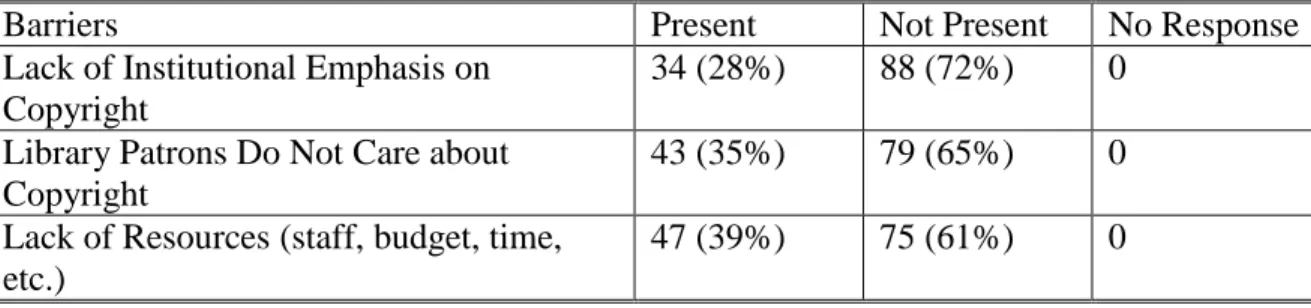
Study participants were asked to identify any barriers they felt impeded their education on copyright. Three options were presented, as well as a space for an “other”
Table 3 Presence of Perceived Barriers among Respondents
Barriers Present Not Present No Response
Lack of Institutional Emphasis on Copyright
34 (28%) 88 (72%) 0
Library Patrons Do Not Care about Copyright
43 (35%) 79 (65%) 0 Lack of Resources (staff, budget, time,
etc.)
47 (39%) 75 (61%) 0
Of the 12 text responses for an “other” value for barriers, six convey that they
have no perceived barriers. Responses in this manner include “I find information on an as needed basis,” “I have never run into copyright problems in my 31+ years as a librarian,” “most of the materials in my library are not protected by copyright (gov docs),” and simply “I have no barriers.” One respondent says that, though “it is confusing to keep [copyright law] straight, there are no barriers to education.” Table 4
displays the remaining five responses. Table 4
“Other” responses for perceived barriers
There is so much emphasis on fair use and less on copyright as it pertains to corporate issues.
There is a national lack of respect for copyright. No one seems to know our company‟s stand
Many classes are not oriented for corporate libraries.
Also in this portion of the survey, participants were asked whether or not they are comfortable with their current level of copyright. 58 respondents (48%) checked yes and 64 (52%) responded no.
Copyright in the Institution
The last portion of the survey asks participants to provide information about how their institution manages copyright, in terms of enforcement and policy. Figure 5 shows the distribution of responses regarding enforcement of copyright in the institution.
Figure 5
Few respondents find their institutions to be very strict in the enforcement of copyright in the workplace. The majority of respondents (46%) find that their institutions somewhat strictly enforce copyright.
whereas 27 respondents (22%) were not sure if their institution had a written policy. Three participants (3%) did not respond. A follow-up question asked participants to rate their knowledge of their institutions copyright policy (written or not). Ratings are between 1 and 5, with 5 being very knowledgeable. The mean rating was 3.44, with 19 participants not responding. Among the respondents that reported a written policy in their institution, the mean rating of knowledge of the policy was 3.78.
Measures of Association
T-tests were performed using JMP statistical discovery software to determine statistical significance between variables. Tests were run at the .05 level. P values lower than .05 indicate a significant association between variables by determining that the probability they are not related is very low (below 5%). T-tests were run between the value of the presence or absence of comfort with copyright knowledge and the variables with continuous data: value of the years since completing copyright, the score on the copyright quiz, and the rated knowledge of the institutional policy. Statistical
significance was found among all three relationships. Table 5 illustrates the probability values at a 95% confidence level.
Table 5
Continuous Variables Significantly Associated with Comfort Level of Copyright Knowledge Comfort Level vs.
Variable Probability (P) Years Since MLS Prob>|t| 0.0452 Score on quiz Prob>|t| 0.0098 Knowledge of policy Prob>|t| 0.0033
series of testing had a significant probability value. The score on the copyright quiz and the rating of policy knowledge were not significant, but the association of years since completing the MLS to the presence of formal training was significant with a value of prob>|t| 0.0198. This means that as the number of years rises since a respondent has received their MLS, it is more likely that they will also have received some form of formal training. T-tests were also run against the score on the copyright quiz and each of the six types of formal training, and those results were also not statistically significant.
The last series of t-tests were run comparing variables to the presence or absence of self-led research on copyright. In complete contrast to the results from the series of t-tests with formal training, the test with self-led research against the number of years since receiving an MLS did not return a significant probability for association. However, the tests against knowledge of the copyright policy and the score on the copyright test did yield significant probabilities. This is shown in table 6.
Table 6
Variables Significantly Associated with Self-Led Copyright Research Self-Led Research vs.
Variable Probability (P) Score on test Prob>|t| 0.0017 Knowledge of policy Prob>|t| 0.0485
This significance of the relationships with self-led research that were absent with the variable of formal training may mean that self-led research has a higher impact on
copyright knowledge and one‟s ability to learn the impact of copyright in their institution.
found that many of the professional copyright course offerings available do not orient themselves to focus on the issues faced in special library environments.
Figure 6 Correct and Incorrect Answers on the Copyright Quiz Questions vs. Comfort Level
In addition to t-tests, Chi Square tests were also performed to examine
Figure 6 shows that there is a correlation between those who correctly answered the question as more likely to be comfortable with their level of copyright knowledge than those who answered the question incorrectly. Though that correlation is visible in comparisons of the other five questions it is not as pronounced, and therefore it is not conclusive whether it is a significant correlation.
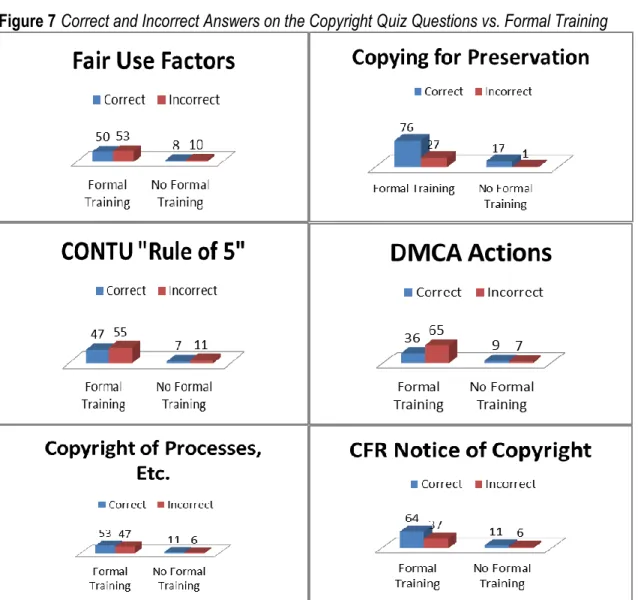
Figure 7 Correct and Incorrect Answers on the Copyright Quiz Questions vs. Formal Training
of Prob>ChiSq 0.0305. As figure 7 demonstrates, respondents who correctly answered the question about libraries and archives copying for preservation were more likely to have had formal training that those did not answer it correctly. There appears to be little correlation between the quiz responses and the presence of formal training. One possible explanation for the significance found in the question about copyright for preservation is that in addition to so few respondents reporting having received no formal training, that question was the one with the highest rate of correct answers. The lack of respondents with no formal training may also explain why significance was not found with the overall quiz scores.
The next series of performed tests compared the quiz responses against the variable of self-led copyright research. Two of these comparisons have values that show a high probability of statistical significance. Fair Use Factors is again yielding a
significant value, with Prob>ChiSq 0.0138. In addition, the question about CONTU Guidelines and the “rule of 5” has a significant Chi Square value, Prob>ChiSq 0.0329.
Figure 8 Correct and Incorrect Answers on the Copyright Quiz Questions vs. Self-Led Copyright Research
Table 7
Nominal Variables Significantly Associated with Comfort Level of Copyright Knowledge Comfort Level vs.
Variable Probability (P)
Self-Led Research Prob>ChiSq 0.0039 Formal Training Prob>ChiSq 0.0030 Professional Organization Courses Prob>ChiSq 0.0009 Professional Development Workshops Prob>ChiSq 0.0483
It is worth noting that courses through a professional organization and workshops for professional development are both in the top three most commonly received types of formal training (with 39 and 58 respondents, respectively). The other type of training in the top three is webinars and online tutorials with 50 participants, which was not
significantly correlated with the comfort level of respondents. One possible reason for this is that webinars and tutorials provide less hands-on training and may or may not allow for individuals to address issues of particular interest to them.
Other Responses
commented about this is that they feel that they are prepared to “identify and investigate copyright challenges effectively.”
Four other themes emerged that were each discussed by five respondents. These are the lack of copyright in the MLS curriculum, the challenges and importance of staying up-to-date on copyright, the availability of lawyers or experts available for consultation, and the complexity of copyright law and its applications. Respondents discussing the curriculum in MLS programs all agree on the importance of copyright education and that it would be helpful to have learned more while taking courses. One respondent states, “my MLS program offered no copyright education, except for a brief
lecture. Copyright, especially in the corporate setting is extremely important and I find it amazing that it is glosssed [sic] over in library school.” Another, in further agreement
with that statement, says “I feel that I spend a lot more time dealing with copyright issues than I would have ever predicted and wish that I could educate myself futher [sic] in a formal matter (course, etc.).” The consensus is that copyright was touched on in classes only in brief comments by the instructor, but not in any formal manner.
Several respondents also noted that they have lawyers or experts on staff available for them to consult over copyright concerns. Five responses echo this statement,
including the following:
Since I work for a large corporation and have access to corporate attorneys who are expert in copyright matters (and welcome and encourage questions), any copyright questions beyond "the basics" are directed to them as the final
The experience of these librarians is in direct conflict to the experiences of other special librarians who have provided responses. For example, a solo librarian who struggles to glean the information regarding copyright that pertains to her setting explains the following:
I am having a hard time figuring out just what is allowed and what isn't in terms of copyright. Since I am a solo librarian, there is no one with copyright
experience to ask questions of. I plan on taking a course and reading up on the subject, but at this point there are several tasks that I have been asked to complete, but I am not sure about their legality due to copyright law. I wish that I knew more about this subject and that there was someplace to go where I could ask my questions and get clear answers.
The unique setting of many special libraries as a barrier in educating oneself about and applying copyright law was another theme of the individual responses. Three other librarians gave details about their struggle to discern how the law applied to their environment. One states that much of what is covered in copyright courses is too
general, and “when I ask questions of the teachers, I'm always told to consult a copyright attorney which a nonprofit organization cannot afford to do. So help with applying the law to my unique library is my biggest challenge.” One respondent says that it seems
futile to even learn general copyright law because the situations that arise are so specific to the corporate environment and the individual item. Determining which exemptions apply to a special library – for example, a non-profit research institution – was cited as the source of some confusion, especially among patrons.
knowledge. Keep in mind there was no Internet when I finished my MLS.” Other
respondents find that there is always more to learn and that the knowledge base is constantly changing. One respondent notes that they are arranging a workshop for her staff to discuss copyright updates and reminders. Another respondent states that formal training has been helpful, but that he/she has to work to stay knowledgeable:
It's shocking how difficult the questions [in the copyright quiz] were for me, given that I took a copyright course in 2007. I'm not at all confident of my answers, which tells me that I need to spend more time reviewing the facts of copyright law on a regular basis if I am to use this information in the course of my professional career.
Also complicating copyright training is the complex nature of the laws themselves. Five respondents remarked how laws are left vague and few examples of precedence exist. One respondent says that examples of what can and cannot be done are more effective than learning the details of the law. Another writes:
Being fully compliant is effectively impossible when it comes to obtaining materials due to the vagueness of laws, the lack of resolved court cases to set precedent, and the fact that it is not feasible or outright impossible to obtain the proper permissions for every work. This makes education difficult because you must tell users that everything is done on a case by case basis, which is not something they (or the organization as a whole) would like to hear.
Another respondent believes that the only way to be fully educated and confident about copyright is to become a copyright attorney. The stated reason for this belief is that there are no black and white answers to copyright questions since most cases are decided individually in court. It is infeasible for a librarian to follow the individual cases to learn how to apply the outcomes. One survey response stated that “some of these [survey]
Two respondents discussed the enforcement of copyright law in this manner believing that they, as a library, will not get sued. One respondent said that the institution feels that copyright violations pose a low risk to the organization, and another stated that “librarians feel that they are not as likely to get caught as others--that there's too much
bad PR for a company that would sue a library for it to happen. I do not think this is a wise position.” The „who will know?‟ attitude is certainly prevalent in some
environments, and it is important for librarians to be educated to learn the common issues facing corporate and special libraries so that they can mitigate risk.
Lastly, five of the responses address the survey instrument specifically. As mentioned previously, some respondents found the six copyright questions irrelevant to their everyday experiences with copyright. Aside from feeling that knowing where to look to find the information was more important than knowing the regulations
DISCUSSION Limitations of the Study
There were several limitations of this study, the first one being representation of the total population. It must be considered that the responses were obtained from a convenience sample of special librarians who were subscribed to the five mailing lists to which invitations were distributed. One of the selected mailing lists was for a state chapter of SLA librarians from North Carolina. It is unknown to the researchers if there is a disproportionate amount of respondents from this state among survey participants.
The estimated response rate on the survey is 23%, but it falls to 16% when only the usable survey responses are measured. This rate is calculated based on a very rough estimation of the number of SLA members reached through the invitation emails. The Special Libraries Association releases rough numbers for each mailing list, but because it is not known to the researchers how many members belong to multiple lists it is difficult to determine exactly how many librarians were reached. Therefore, the number is taken from the membership of the largest mailing group used in the survey: the Knowledge Management Division‟s mailing list with approximately 724 members.
In attempting to limit variables in the special librarian population, this study only selected for librarians who have earned an MLS degree. However, a significant number of practicing librarians in special library environments do not hold this particular degree. One potential respondent, who was routed out of the survey after selecting that she does not have an MLS, emailed the researcher and consented to have her comments included in this discussion. She intended to “speak up for those of us who are practicing – in a thoroughly professional manner, involved in SLA, and considered a professional by SLA, etc. – without having gone through the system.” This participant makes the excellent point that there is another relevant population of librarians who should be considered in this research. She also noted that she has been a librarian for 30 years and has become very interested in copyright and participated in numerous seminars and workshops on the subject. The exclusion of career librarians without an MLS from this study leaves
research on this topic incomplete.
Additionally, because of the voluntary nature of the survey, some self-selection is implicit in the submitted responses. This self-selection and the decision of some
respondents not to answer all survey questions can be problematic because in those cases the survey is failing to collect data from a portion of the population for undiscovered reasons.
responses may not accurately reflect the actual opinions or thoughts of respondents, something that must be taken in to consideration when reviewing the survey analysis.
A respondent pointed out a possible short-coming of the survey in collecting demographic information. The survey selects for librarians that have an MLS and that work in the U.S., however it does not ask participants in what country they received their MLS education. The researcher determined that it is not as relevant to the study since librarians working in the United States are subject to U.S. copyright law and still have the responsibility to maintain compliance. Nonetheless, the fact that some of the respondents may have been educated outside of the U.S. (the respondent mentioned above earned an MLS in Canada) should be considered when reviewing the results of this study.
Other overarching issues with the copyright quiz are that it is difficult to create six questions about copyright law that are challenging enough to determine relative levels of copyright knowledge among respondents, yet general enough to be relevant to all special librarians. Special librarians work in a wide variety of environments, as previously mentioned, and have an equally wide variety of job responsibilities, some of which do not involve copyright and others that require the librarian to become a copyright expert. The other issue, also previously mentioned, is that many librarians who are conversant in copyright law rely on resources to recall the specifics of the law. The ability of librarians to recall answers to the six facets of copyright law discussed in the quiz may have no relation to their copyright competency. Additionally, there is a difference between knowing the specifics of copyright law and knowing how to apply it in the workplace. Being able to correctly and confidently apply copyright law is the ultimate ability for this study to address, however, for the purposes of a survey of this scale, knowledge of general U.S. copyright law is substituted as a behavior indicative of the overall ability.
Recommendations for Further Research
the survey instrument could be tailored to the specific issues that are common in the environment. Additionally, other information may be easier to gather and analyze, such as the barriers faced in receiving and applying copyright education, and the nature of the institutional copyright policies.
Though the population should be narrowed to select librarians in similar
environments and functions, this study narrowly focused only on librarians with an MLS degree. Future surveys of the special librarian population may benefit from the inclusion of all practicing librarians, including those without an MLS degree.
Future research should also consider the feedback from participants in this study who stated that knowing the intricacies of copyright law is not necessary so long as one knows where to look up the pertinent information. Future studies may want to consider a different method of determining copyright proficiency than a quiz of copyright
knowledge.
Summary and Conclusion
this study supports previous research that finds subjects lacking in general copyright knowledge and confidence in working within the law.
Results showed that the librarians who reported that they were comfortable with their level of copyright knowledge were more likely to have had a higher number of years passed since they received their MLS. They were also the respondents that were more likely to score higher on the copyright quiz and to report a higher level of knowledge of their institutional copyright policy. Respondents who had conducted copyright research on their own were also more likely to score higher on the quiz and give themselves a higher rating of their understanding of the institutional copyright policy. Due to the variety of the populations and the limitations of the survey instrument, no strong
generalizations can be made from this study about the overall effect of formal training on copyright knowledge. However, based on participant responses, workshops through professional organizations in the workplace were shown to be the most popular form of formal training and more than half of the respondents reported having received multiple forms of formal training.
The findings of this study will be of most interest to copyright educators who are looking to design materials and programs for the special library population. Educators will find the individual responses of experiences and issues particularly useful to get an idea of the variety of conflicting backgrounds. The results of this study may also be useful to those designing the curriculum for MLS programs in determining the
REFERENCES
Abrizah, A. (2009). The cautious faculty: their awareness and attitudes towards institutional repositories. Malaysian Journal of Library & Information Science 14(2): 17-37.
Arundale, J. (2002). How much law should librarians know? New Library World 103(10): 376-384.
Bielefield, A. & L. Cheeseman. (1993). Libraries & Copyright Law. New York: Neal-Schuman.
Chase, M.E. (1995). An analysis of knowledge levels of media directors concerning relevant copyright issues in higher education. In Proceedings of the 1995 Annual National Convention of the Association for Educational Communications and Technology (AECT): 55-71.
Columbia University Copyright Advisory Office. (2009). Copyright Checklist for Libraries: Copies for Preservation or Replacement. Retrieved 9/27/10 from http://copyright.columbia.edu/copyright/files/2009/10/copyrightchecklist108prese rvation.pdf
Columbia University Copyright Advisory Office. (2009) Libraries and Copyright. Retrieved 9/27/10 from http://copyright.columbia.edu/copyright/libraries-and-copyright/
Eiblurn, P. & S.C. Ardito. (1999). Document delivery & copyright: librarians take the fifth. Online 23(5): 73-78.
Francois, O. (2006). Copyright education programs. In Bonner, K. M. (Ed.), The Center for Intellectual Property handbook (pp. 123-152). New York: Neal-Schuman Publishers, Inc.
Harris, L.E. (2010). Copyright and licensing: job growth areas for librarians. Information Outlook 14(5): 37.
Harris, L.E. (2009). Developing a copyright compliance tool for your library. Information Outlook 13(2): 34-35.
Harris, L.E. (2009). Licensing Digital Content: A Practical Guide for Librarians (2nd ed.). Chicago: American Library Association.
Horava, T. (2010). Copyright communication in Canadian academic libraries: A national survey. The Canadian Journal of Information and Library Science 34(1): 1-38. Kozumplik, C. & J. Kreutziger. (2010). Copyright compliance: Conducting a Fair Use
training session. Community & Junior College Libraries 16: 21-36.
Oliver, A. (2008). Current practices and philosophy on electronic reserves, course management systems, and copyright compliance: A survey of the Council of Public Liberal Arts Colleges libraries. Journal of Interlibrary Loan, Document Delivery & Electronic Reserve 18(4): 425-437.
Pogue, M. I. (2004). A comparison of administrator and faculty self-report and
knowledge of distance education, related intellectual property laws and policy, and tenets of academic freedom. (UMI No. 3136197) Retrieved May 16, 2010 from ProQuest Dissertations and Theses database.
Renner, J. R. (2002). An analysis of the knowledge levels of post-secondary educators in public/state, private, and two-year colleges and universities regarding copyright ownership of online/web-based courses. (UMI No. 3066409) Retrieved May 16, 2010, from ProQuest Dissertations and Theses database.
Schlosser, M. (2009). Unless otherwise indicated: A survey of copyright statements on digital library collections. College & Research Libraries 70(4): 371-385. U.S. Copyright Office. (1998). Digital Millennium Copyright Act of 1998: U.S.
Copyright Office summary. Retrieved 9/27/10 from http://www.copyright.gov/legislation/dmca.pdf
Van Selm, M. & N.W. Jankowski. (2006). Conducting Online Surveys. Quality & Quantity 40(3): 435-456.
Vesely, S. A. (2007). Do you need a copyright librarian? Internet Reference Services Quarterly 11(4): 69-82.