MEDICAID HOME- AND COMMUNITY-BASED LONG-TERM CARE SERVICES IN THE AGE OF OLMSTEAD
Gregory Joseph Boyer
A dissertation submitted to the faculty of the University of North Carolina at Chapel Hill in partial fulfillment of the requirements for the degree of Doctor of Philosophy in the
Department of Health Policy and Management.
Chapel Hill 2013
Approved by:
Jonathan B. Oberlander, PhD
Peggye Dilworth-Anderson, PhD G. Mark Holmes, PhD
Thomas R. Konrad, PhD
©2013
ABSTRACT
GREGORY JOSEPH BOYER: Medicaid Home- and Community-Based Long-Term Care Services in the Age of Olmstead
(Under the direction of Jonathan B. Oberlander, PhD)
Medicaid home- and community-based services (HCBS) provide formal
long-term care to people who would otherwise be served in institutions. HCBS include home
health, personal care, and waiver services. The 1999 Olmstead vs L.C. ruling mandates
states to serve Medicaid long-term care recipients in the least restrictive setting possible.
The three studies in this mixed-methods dissertation seek to understand the political,
socio-demographic, economic, policy, and supply influences on HCBS, the effect of
greater HCBS spending on institutional expenditures, and challenges to HCBS expansion
since the Olmstead ruling.
HCBS spending and utilization are related to several key variables. Economic and
supply factors have a robust relationship with HCBS expansion. Socio-demographic
factors, notably state populations of racial and ethnic minorities, affect HCBS. However,
these effects differ among home- and community-based programs. There is no consistent
partisan influence on state HCBS spending and utilization.
Greater state investment in 1915(c) waiver programs appears to have, at best, a
neutral relationship or, at worst, a weak positive relationship with state institutional
Medicaid long-term care spending. Thus, the results do not support prior work indicating
that HCBS programs reduce institutional spending. In addition, supply and policy factors
Drawing on interviews with state Medicaid officials, this study identifies both
barriers and catalysts to HCBS growth since Olmstead. Barriers to HCBS expansion
include both financial, such as funding crises, as well as non-financial factors, such as
administrative burdens. However, informants said that HCBS programs enjoy broad,
bipartisan support from state policy makers as well as support from advocacy groups.
This study provides a new contribution to understanding influences on state
HCBS spending, the effects of HCBS on institutional care, and the barriers and catalysts
to HCBS expansion since Olmstead. Given the implementation of the 2010 Patient
Protection and Affordable Care Act, the population aging, and ongoing state fiscal crises,
these findings will help guide future research in Medicaid HCBS.
Acknowledgements
First, I must acknowledge my advisor and chair, Jon Oberlander. Jon is a
tremendous mentor, teacher, and resource. Most notably, Jon has been an attentive editor
and aid with my writing. My writing is now much better and continues to improve with
Jon’s help. Beyond the technicalities of writing, Jon also helped me to focus on a
dissertation topic. Jon steered me towards a topic that engaged me from the start and
allowed me to write a dissertation about everything that’s caught my interest: politics, the
welfare state, long-term care, the elderly and disabled, and state spending. For that, I am
very grateful.
The rest of my dissertation committee has also been invaluable. Mark Holmes has
been an incredible resource for my quantitative work. Often, after hours of hitting my
head against the desk, Mark would quickly provide context and solutions to a statistics
problem. In addition, Mark has always encouraged me to translate statistics and findings
into everyday language as I start my career as a researcher. Karl Kronebusch has also
been a great help. Having already done so much research on Medicaid, his expertise was
a tremendous addition to my work. Likewise, Bob Konrad provide expertise regarding
the context of long-term care, aging, and the welfare state. My work is much better with
Bob’s aid. Finally, Peggye Dilworth-Anderson has helped me in many ways. Peggye’s
qualitative research expertise provided guidance in adding the necessary qualitative piece
and Jon) in the Carolina Program on Health and Aging Research (CPHAR) at the
Institute on Aging. This support helped me to complete my work and provided vital
training as I start my career as an aging researcher. For these and many additional,
countless reasons, I am grateful to my committee.
I must also express gratitude to the Ph.D. program chair, Morris Weinberger.
Morris and I first met when I came to interview for the program in January 2007. Since
then, Morris has been an incredible advocate for me during my time at UNC. My tenure
in Chapel Hill has had some adversity and Morris was not just an advocate, but also an
ally as I completed my studies.
I want to also acknowledge and thank Tandrea Hilliard and Nathan Nickel.
Tandrea was a tremendous help in my qualitative analysis. I would surely still be lost in
my transcripts without her help. Her expertise and humor made a tedious process less so,
and reminded me that research can be fun, even if it entails tremendous amounts of work.
Words fail to successfully convey my gratitude to Nathan. While I am very grateful that
he read my Stata code, this action was the mere tip of the iceberg of his aid. Throughout
this process, Nathan has been a helpful friend and ally in my development as a
researcher. No question was too silly to bring to him, even after he moved to Canada! In
addition, Nathan and I are tremendous friends. Some people that I have met have maybe
changed the course of my day; others have changed the course of my life. Nathan is the
latter kind. Again, no words can convey my gratitude.
I am tremendously blessed to have an incredible circle of friends in Chapel Hill.
Many thanks go to Derek Applewhite, Ryan Fink, Derrick Mathews, Jason Nelson, Justin
A special thanks to friends Justin Clapp and Joseph Lee who have allowed me to be their
frantic, and sometimes less-than-pleasant-to-be-around roommate as I finished my
dissertation. Something tells me, however, that the rent checks made my mood swings
more bearable. I also thank Brad Wright for his help with statistics as a TA, and
professional help as I transition from student to researcher.
Finally, and most importantly, I have to thank my family. This dissertation is
dedicated to my mother, Joan Boyer, who did not live to see me graduate high school,
much less earn a Ph.D. However, she and my dad, Jim, raised me to accept nothing but
the best out of myself and always encouraged my scholastic ambitions. I also want to
thank my brother, Chad Boyer, another great role model for my success. I am thankful for
their concern and encouragement as I made progress and could not ask for a better
family. Too often, I would obfuscate about where I was in my progress and would beg to
talk about anything other than my schoolwork. Of course, they only asked because they
Preface
Consistent with the three-paper option, chapter one provides the introduction and specific
aims. Chapter 2 provides the background and new contribution. Chapter 3 provides the
data and methods used. Chapters 4, 5, and 6 are each a manuscript exploring a specific
aim. Since these chapters are to be submitted for publication, there are redundancies
across chapters as well as differences in formatting. Chapter 7 concludes the dissertation
Table of Contents
List of Tables………xiv
List of Figures………...………xv
List of Abbreviations………xvi
CHAPTER 1. Introduction and Specific Aims…………...…….………..1
1.1Specific Aim 1………...2
1.2Specific Aim 2………...3
1.3Specific Aim 3………...3
References…………...……….……....4
CHAPTER 2. Background and Significance…………...………....5
2.1 Overview………5
2.2. An Increasing Need for Long-Term Care and Consumer Preferences……….5
2.3 Origins of the Three Largest Medicaid HCBS Programs: Home Health, 1915(c) Waivers, and Personal Care Services………...7
2.4 Olmstead vs. L.C. and Post-Olmstead Medicaid HCBS Developments……..10
2.5 HCBS Literature………..23
2.6 Summary and New Contribution……….28
References ……….29
CHAPTER 3. Research Design and Methods…………..……….….36
3.1 Overview………..36
3.3 Sample Size And Statistical Power for Quantitative Analysis………42
3.4 Measurement for Quantitative Analysis……….……….42
3.5 Quantitative Analysis and Hypotheses………49
3.6 Qualitative Data Sources and Sample………..58
3.7 Qualitative Analysis……….………61
References.…..………..……….63
CHAPTER 4. Medicaid Home- and Community-Based Services in the Age of Olmstead: Spending and Utilization 1996-2008……….………69
4.1 Introduction………..69
4.2 Background and Policy Context………..71
4.3 Conceptual Model………..………..75
4.4 Methods………..………..86
4.5 Results………..………..………..92
4.6 Discussion………..………..96
4.7 Limitations………...………..………102
4.8 Conclusion………...………..………103
4.9 Tables 4.1-4.7………105
References………..………..………122
CHAPTER 5. The Impact of 1915(c) Medicaid Waiver Investment on State Institutional Long-Term Care Expenditures, 1996-2008……….132
5.1 Introduction……...132
5.2 Background...133
5.4 Results...144
5.5 Discussion......145
5.6 Limitations...147
5.7 Conclusion...148
5.8 Tables 5.1-5.3...150
References...159
CHAPTER 6. State Medicaid Officials’ Perceptions of Challenges to HCBS Expansion Since Olmstead vs L.C...165
6.1 Introduction...165
6.2 Background...166
6.3 Methods………...170
6.4 Findings………...171
6.5 Discussion………...188
References………....192
CHAPTER 7. Conclusions…….………...195
7.1 Overview………195
7.2 Summary of Findings……….………195
7.3 Policy Implications………198
7.4 Limitations………..……...199
7.5 Future Research……….201
APPENDIX A Medicaid Assisted Living Financing Structure, 2007……….203
APPENDIX B Missing Data for Independent Variables……….204
APPENDIX C First Stage Output for Aim 2 Analyses………...205
APPENDIX E Qualitative Interview Guide………212
APPENDIX F Codebook……….217
APPENDIX G Selected Findings from Aim 3………244
List of Tables
Table 2.1 “Olmstead Letters” From the CMS to State Medicaid Directors………..12
Table 2.2 General District and Appellate Rulings Following the Olmstead Ruling………..18
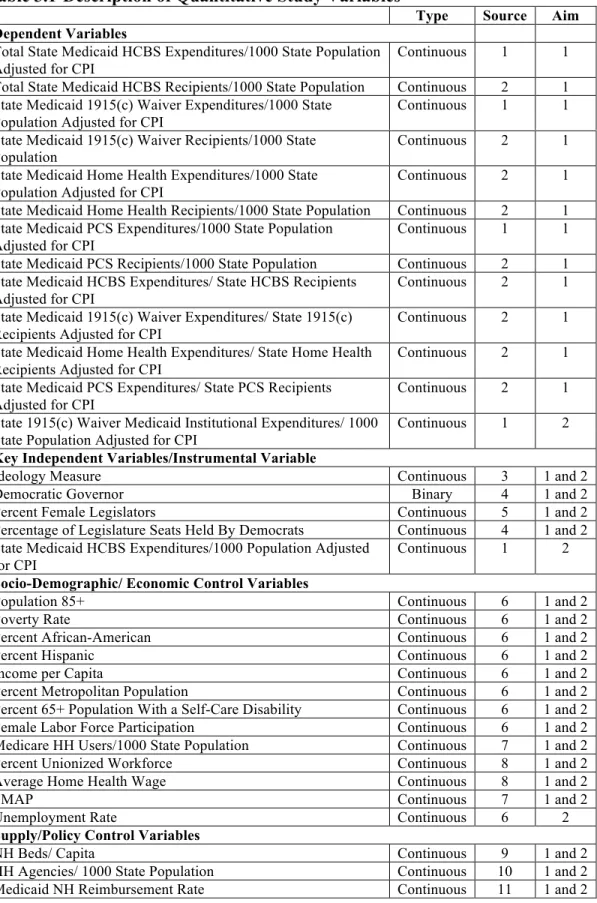
Table 3.1-Description of Quantitative Study Variables………...…………..44
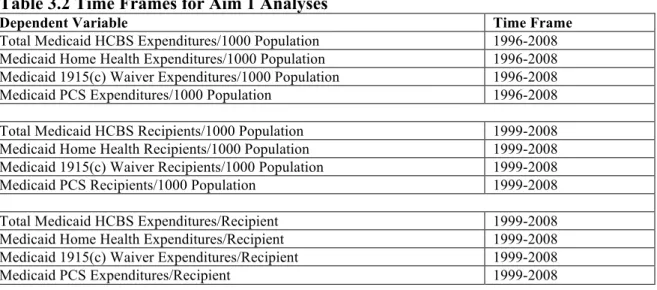
Table 3.2 Time Frames for Aim 1 Analyses………...………...50
Table 4.1 Chapter 4 Summary Statistics………..105
Table 4.2 Spending Per Capita Results………107
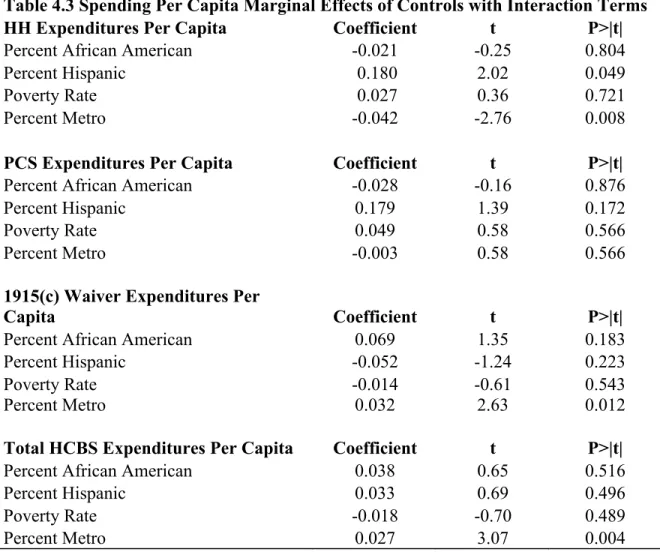
Table 4.3 Spending Per Capita Marginal Effects of Controls with Interaction Terms……….………...…….111
Table 4.4 Recipients Per Capita Results………..112
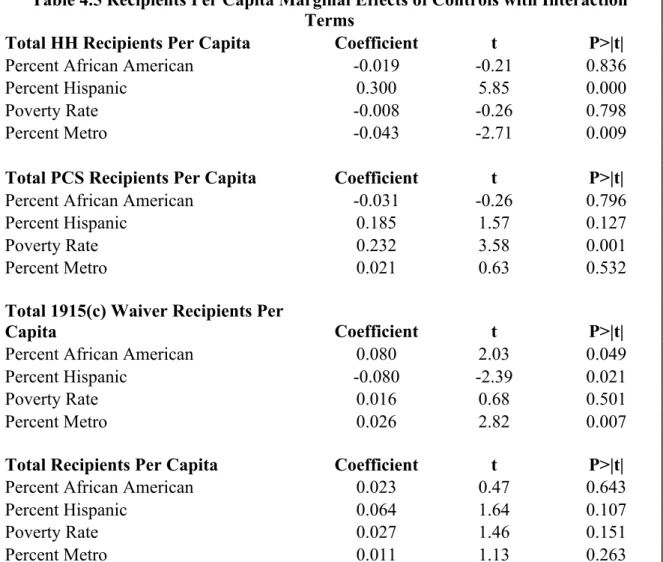
Table 4.5 Recipients Per Capita Marginal Effects of Controls with Interaction Terms……….………116
Table 4.6 Spending Per Recipient Results………...117
Table 4.7 Spending Per Recipient Marginal Effects of Controls with Interaction Terms….………121
Table 5.1 Chapter 5 Summary Statistics………..150
Table 5.2 Results from Contemporaneous Analyses………...151
List of Figures
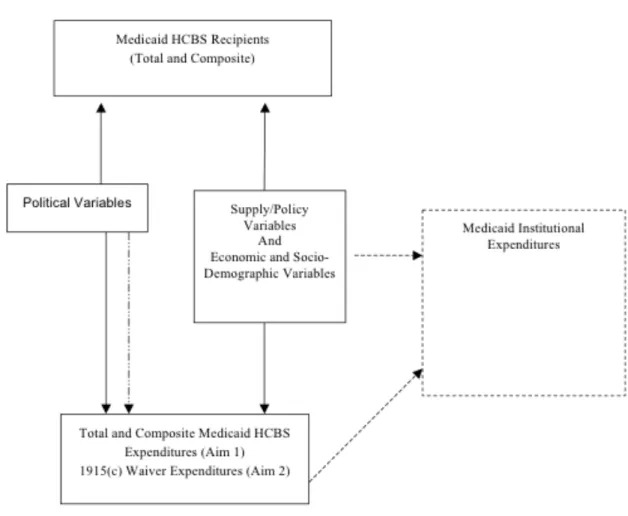
Figure 3.1-Theoretical Framework For Quantitative Analysis………..36
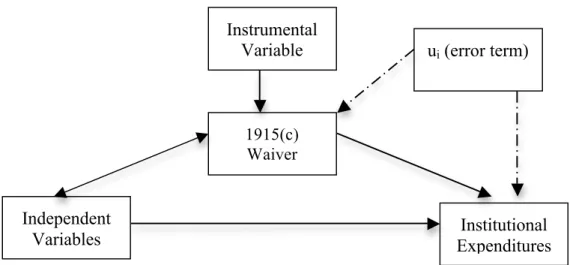
Figure 3.2-Theoretical Framework for Aim 2………...54
List of Abbreviations
2SLS Two-Stage Least Squares
2SLSFE Two-Stage Least Squares with Fixed Effects
ACA Affordable Care Act
ADA Americans with Disabilities Act
ADL Activity of Daily Living
CPI Consumer Price Index
DRA Deficit Reduction Act of 2005
FE Fixed Effects
FMAP Federal Medical Assistance Percentage
HCBS Home-and Community-Based Services
IADL Instrumental Activity of Daily Living
ICFMR Intermediate Care Facility for Individuals with
Mental Retardation
IV Instrumental Variable
LTC Long-Term Care
MR/DD Mentally Retarded/Developmentally Disabled
OLS Ordinary Least Squares
PCS Personal Care Services
UCSF PAS University of California San Francisco Center
Chapter 1: Introduction and Specific Aims
Long-term care (LTC) services are for persons requiring assistance with Activities
of Daily Living (ADL) (e.g. bathing and dressing) and/or Instrumental Activities of Daily
Living (IADL) (e.g. shopping or doing housework) (RA Kane, Kane, & Ladd, 1998).
Medicaid pays for long-term care in two settings: institutional care and home-and
community-based services (HCBS) (Howard, Ng, & Harrington, 2011). HCBS are
services provided to persons who would otherwise be served in institutions and include
home health, personal care, and waiver services (Center for Personal Assistance Services,
2012). Approximately 12 million Americans need assistance with ADLs or IADLs.
Since approximately 1.5-1.8 million Americans receive nursing home care, roughly 10
million people in the community require long-term care services. Half of the people
needing long-term care in the community are elderly (Kaye, Harrington, & LaPlante,
2010). Even though seniors are not the only group that uses long-term care, demand for
long-term care will increase as the population over age 65 grows from 44 million in 2010
to 72 million by 2030 (Vincent & Velkoff, 2010).
Over the last thirteen years, the federal government has played a critical role in
the expansion of HCBS. In 1999, the United States Supreme Court ruled in Olmstead vs.
L.C. that states must provide Medicaid long-term care in the least-restrictive setting
possible (Rosenbaum, 2000). In the years following Olmstead, the federal government
include the 2001 New Freedom Initiative, new HCBS programs under the Deficit
Reduction Act of 2005, and, most recently, new incentives for states to expand HCBS
under the 2010 Patient Protection and Affordable Care Act of 2010 (Carlson & Coffey,
2010; Harrington, Ng, Laplante, & Kaye, 2012; New Freedom Initiative, 2003). Thus,
HCBS programs are an integral, and increasingly prominent, component of the long-term
infrastructure.
This mixed-methods study examines interstate variation in HCBS programs, the
impact of HCBS programs on institutional expenditures, and the challenges states
confront in expanding HCBS. First, a longitudinal analysis explores the political,
economic, socio-demographic, supply, and policy influences on Medicaid HCBS
expenditures during 1996-2008. In addition, I examine Medicaid HCBS recipients, and
expenditures per recipient during 1999-2008 (Aim 1). Second, I analyze the effect of
Medicaid 1915(c) waiver expenditures on Medicaid institutional long-term care
expenditures for years 1996-2008 (Aim 2). Third, I conduct semi-structured interviews of
state Medicaid officials and perform a qualitative analysis of challenges to HCBS
expansion since 1999 (Aim 3). This dissertation addresses the following specific aims:
1.1.Specific Aim 1: To study the political, economic, socio-demographic, supply, and policy influences on HCBS utilization and expenditures.
Longitudinal trend analyses examine HCBS utilization and expenditures. I define
utilization as Medicaid HCBS recipients per 1000 state population and expenditures as
expenditures per 1000 state population (per capita) and/or per recipient. I regress the
variables influencing HCBS. This aim studies years 1999-2008 for recipients and
expenditures per recipient and years 1996-2008 for expenditures per capita
1.2.Specific Aim 2: To study the effect of Medicaid 1915(c) waiver expenditures on Medicaid institutional expenditures.
In a second longitudinal analysis, I regress institutional Medicaid expenditures on
1915(c) waiver expenditures using the same economic, socio-demographic, supply and
policy control variables in aim 1. I explore several models including pooled OLS,
instrumental variable regression, fixed effect analyses and instrumental variable
regression with fixed effects. This aim studies years 1996-2008.
1.3. Aim 3: To explore challenges to HCBS expansion since the Olmstead decision.
For the qualitative component to this mixed methods dissertation, I investigate the
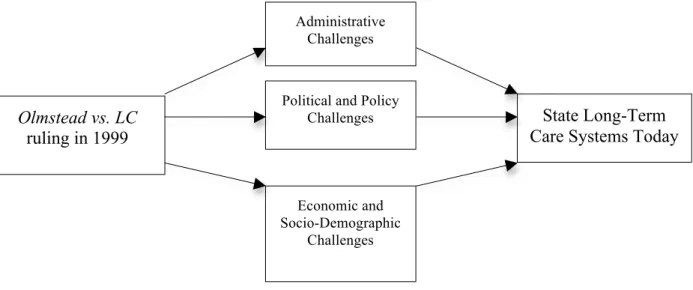
administrative, socio-demographic, economic, policy, and political challenges to HCBS
expansion since the Olmstead ruling. I use semi-structured, topical interviews and
thematic analysis of 18 Medicaid officials, each from a different state.
This study has important policy implications. It provides information about the
factors influencing HCBS expenditures and recipients. Further, studying the effect of
HCBS spending on institutional long-term care spending clarifies how much these
programs can save state Medicaid budgets. Finally, identifying challenges to HCBS
expansion helps illuminate the issues that states must grapple with as efforts continue to
References
Carlson, E., & Coffey, G. (2010). 10-Plus Years After the Olmstead Ruling. Washington, DC: National Senior Citizens Law Center.
Center for Personal Assistance Services (2012). from
http://www.pascenter.org/home_and_community/index.php?PHPSESSID=e5302 73f3f8a5c2ef96319884c03cf12#about
Harrington, C., Ng, T., Laplante, M., & Kaye, H. S. (2012). Medicaid Home- and
Community-Based Services: Impact of the Affordable Care Act. Journal of Aging & Social Policy, 24(2), 169-187.
Howard, J., Ng, T., & Harrington, C. (2011). Medicaid Home and Community-Based Services Programs: Data Update: Kaiser Family Foundation.
Kane, R., Kane, R., & Ladd, R. (1998). The Heart of Long-Term Care. New York: Oxford University Press.
Kaye, H., Harrington, C., & LaPlante, M. (2010). Long-Term Care: Who Gets It, Who Provides It, Who Pays, And How Much? Health affairs, 29(1), 11-21.
New Freedom Initiative (2003). Retrieved October 28, 2012, from http://www.hhs.gov/newfreedom/init.html
Rosenbaum, S. (2000). Legal Report: The Olmstead decision: Implications for State Health Policy. Health Affairs, 19(5), 228-232.
Vincent, G. K., & Velkoff, V. A. (2010). THE NEXT FOUR DECADES The Older Population in the United States: 2010 to 2050: U.S. Census Bureau.
Chapter 2: Background and Significance
2.1 Overview
The growing elderly population is driving the demand for long-term care and
those in need of care often want to receive it in the home. While institutional care is
required for some persons, home- and community-based care is more appropriate for
many and preferred by most. In addition, a legal mandate from the Olmstead ruling and
the passage of the Patient Protection and Affordable Care Act (ACA) make this study
very timely. In 1999, the United States Supreme Court ruled that states that provide
long-term care must do so in the least restrictive environment possible. Additionally, new
incentives for states to expand their HCBS programs through the ACA highlight the
ongoing importance of Medicaid HCBS. Findings from past studies indicate that HCBS
programs show promise in addressing these trends and challenges, but these studies do
not describe such programs in depth in recent years, analyze their effect on institutional
expenditures, or identify challenges to HCBS expansion in the years following the
Olmstead ruling.
2.2 An Increasing Need for Long-Term Care and Consumer Preferences
Long-term care need is defined as people requiring help with Activities of Daily
Living (ADL), such as bathing or dressing, and with Instrumental Activities of Daily
Living that include shopping or doing housework (IADL). Most long-term care is
is paid for and provided by a variety of people including nurse aides, nursing assistants,
home health aides, and practical nurses (RA Kane, et al., 1998). Formal long-term care
delivery encompasses both institutional (nursing home) care and HCBS. Approximately
12 million Americans, or 4 percent of the population, need assistance with ADLs or
IADLs. Since approximately 1.5-1.8 million Americans receive nursing home care,
roughly 10 million people in the community, half of whom are elderly, are in need of
long-term care services (Kaye, et al., 2010). Even though seniors are not the only group
that uses long-term care, demand for long-term care will increase as those aged over 65
will grow from 44 million in 2010 to 72 million by 2030 (Vincent & Velkoff, 2010).
Scholars and policy analysts have examined attitudes towards long-term care
delivery. A 2000 AARP study found that 71 percent of Americans over age 45 want to
stay in their homes as long as possible. Sixty-three percent believed that their current
home will be where they will always live. Furthermore, if they needed help 82 percent
would prefer not to move away from their home. A small minority, nine percent,
preferred to move to a formal long-term care facility (Bayer & Harper, 2000).
In a study of Virginians aged 60 or older, McCauley and Blieszner (1985) found
similar results for long-term care preferences. Seventy percent of respondents had
positive attitudes toward receiving paid in-home care. Only 28 percent of those asked
were inclined to seek long-term care in a nursing home (McAuley & Blieszner, 1985).
Similarly, Eckert et al. (2004) surveyed over 1500 Marylanders aged 40-70 years and
found that most prefer to receive long-term care at home or in the community. Like
McCauley and Blieszner, few respondents preferred nursing homes. Using state reports,
older people again preferring to receive services where they reside rather than in a
nursing home.
These preferences are noteworthy as many baby-boomers enter retirement
without adequate savings. Baby-boomers are different than previous retirees because
they are more likely to live alone in old age due to divorce, they have higher incomes,
and they have lower numbers of adult offspring (Easterlin, Schaeffer, & Macunovich,
1993; Macunovich, Easterlin, Schaeffer, & Crimmins, 1995). However, most adults
currently have little saved. Seventy-five percent of U.S. adults aged 50-64 have less than
$30,000 saved for retirement (Schwartz Center for Economic Policy Analysis, 2012).
These trends suggest that many boomers will have limited resources for informal care,
coupled with an inability to pay for formal long-term care.
2.3 Origins of the Three Largest Medicaid HCBS Programs: Home Health, 1915(c) Waivers, and Personal Care Services
The Social Security Act of 1935 provided cash assistance to those outside of
public facilities such as almshouses. This law created a new type of consumer. The
advent of Social Security provided a measure of financial independence to seniors to
purchase long-term care. In time, private and public facilities would also receive public
monies to provide long-term care (Vladeck, 1980).
This relationship strengthened with the passage of the Medicare and Medicaid in
1965. The Johnson administration sought to avoid the inclusion of nursing home care in
Medicare. However, with the addition of Medicaid the government became responsible
for a significant portion of long-term care expenditures in the United States (Vladeck,
as the predominant payer for long-term care in the United States (RA Kane, et al., 1998;
Kaye, et al, 2010; Vladeck, 1980).
1915(c) Medicaid Waivers
By the 1970s, Medicaid costs were straining state budgets. In an effort to reduce
nursing home care costs, states initiated demonstration projects, which are today known
as 1915(c) waivers. State-wideness and certain Medicaid eligibility requirements were
“waived” in order to study possible cost savings from these demonstration projects. The
anticipated cost savings from these demonstration projects were not realized. However,
these HCBS demonstration projects became a permanent fixture in the Medicaid program
in the form of 1915(c) waivers (RA Kane, et al., 1998; Weissert, 2008). Populations
currently served with 1915(c) waivers include the elderly, disabled, mentally
retarded/developmentally disabled, children, persons with HIV/AIDS, and people with
traumatic brain injuries/spinal cord injuries. In 2008, over 1.2 million people received
home care services through 1915(c) waivers in forty-eight states, an increased from just
over 687,000 recipients 1999 (Howard, et al., 2011).
Medicaid Personal Care Services Benefit
Since 1975, states have had the option of offering the PCS benefit through
Medicaid Title XIX to expand their long-term care services. These services have several
names such as personal attendant services, personal assistance services, and attendant
care services. PCS are provided to people with disabilities of all ages in need of help
ADLs and IADLs, services provided under the PCS include but are not limited to the
following: medical and non-medical transportation; “cuing” services to assist persons
with cognitive impairments so they can perform tasks themselves; animal assistance;
emergency support; and case management (Kitchener, Ng, & Harrington, 2007). PCS
programs and served over 900,000 Americans in 2008, up from 528,000 recipients in
1999 (Howard, et al., 2011).
Medicaid Home Health Benefit
States have been required to provide home health services through their respective
Medicaid programs since 1970 (Smith, O'Keefe, Carepenter, Doty, & Kennedy, 2000).
Thus, these services are unlike 1915(c) waiver programs or PCS that are optional services
(Kitchener et al., 2007). States must provide services to those who are eligible to receive
nursing home care, however one does not have to require an institutional level of care to
receive the home health benefit. By law, states must provide the following services with
their home health programs: nursing, home health aids, medical supplies and equipment,
and necessary appliances for home care (Smith, et al., 2000). Similar to the other two
areas of HCBS, home health services have expanded significantly. Medicaid home health
served over 900,000 in 2008, up from 680,000 in 1999 (Howard, et al., 2011).
Assisted Living Services and HCBS
States use their assisted living programs to provide HCBS. However, “assisted
living” covers a variety of services carrying various definitions across states. The term
two categories of state-licensed facilities. First, states license adult foster care or family
care facilities that typically serve up to five residents in the provider’s home. In addition,
states license group resident care facilities that typically serve more than six people in a
continuum of settings, encompassing residential homes and more commercialized
settings that resemble nursing homes. This latter type of residential care is known by
many names including board and care homes, rest homes, adult care homes, domiciliary
care homes, and assisted living (Mollica, Sims-Kastelein, & O'Keefe, 2007).
States pay for their assisted living services in a variety of ways in relation to
HCBS: through Medicaid 1915(c) waivers or 1115 waivers, the state’s Medicaid plan,
and/or general state funds. As of 2007, 35 states use Medicaid waivers to pay for assisted
living services, 13 use their state Medicaid plan, and seven use other state funds (Mollica,
et al., 2007). Appendix A shows state payment methods for Assisted Living in 2007.
2.4 Olmstead vs. L.C. and Post Olmstead Medicaid HCBS Developments
In 1999, the United States Supreme Court ruled in Olmstead vs. L.C. that states
must provide services to Medicaid recipients outside of institutions if recipients can be
served in the community. The plaintiffs in Olmstead were two mentally ill women who
were institutionalized even though they had been deemed able to live in the community
(Rosenbaum, 2000).
The case concerned the General Prohibitions of Against Discrimination of the
Americans with Disabilities Act (ADA). The law requires public entities to “administer
programs and activities in the most integrated setting appropriate to the needs of qualified
basis of disability unless the public entity can demonstrate that making modifications
would fundamentally alter the nature of the service, program or activity” (ADA, 1990).
The court ruled that the “unjustified isolation” of people with disabilities is
discrimination under the ADA. While the states’ responsibilities are “not boundless”
they must have a comprehensive, working plan to address this ruling in place and a wait
list that moves at a reasonable pace (Rosenbaum, 2000).
Executive and Legislative Medicaid Actions Since 1999
Following the Olmstead ruling the Clinton administration, and later the George
W. Bush and Obama administrations, issued a series of letters to the states to provide
guidelines for Medicaid HCBS programs. The first letter, dated January 14, 2000,
provided guidelines for developing “effectively working plans” for moving people from
institutions to the community” which later become known as “Olmstead plans.” The
federal government “strongly recommended” that states adopt the principles provided in
the first letter as would serve as guidelines for the HHS Office for Civil Rights to
investigate ADA compliance (Carlson & Coffey, 2010; Rosenbaum & Teitelbaum,
2004). Table 2.1 lists subsequent advisement letters (known as “Olmstead Letters”) from
Table 2.1 “Olmstead Letters” From the CMS to State Medicaid Directors Letter Date Advisement Found in Letter
July 25, 2000 States cannot condition Medicaid home health services based on a person being “home bound.” 1
July 25, 2000 States may make retainer payments to personal care providers when an enrollee is moved to an institution to ensure consistent income for providers. 1
July 25, 2000 States can cover case management services up to 180 days prior to placement in the community from the nursing home. Furthermore, home modifications can be made while a person is residing in the institution in preparation for transition. 1
January 10, 2001 States may not limit the number of 1915(c) waiver enrollees that receive coverage for a particular service within a waiver. 2
January 10, 2001 States must require that waiver services are sufficient as a safe alternative to institutional care.1
January 10, 2001 A reduction in the state’s enrollment limit may not negatively impact any person already receiving services. 1
January 10, 2001 States may use income deductions to allow medically needy Medicaid eligibility more accessible. 1
May 9, 2002 Sates may use HCBS Waivers to cover one-time expenses of moving people from institutions to the community. 1
July 14, 2003 States may pay for medical equipment for people transferring form institutions to the community through Medicaid home health, HCBS waivers, or other programs.1
May 20, 2010 CMS may provide technical assistance so that state Medicaid programs can operate in to make living in the community more feasible.1
May 20, 2010 HHS and the U.S. Department of Housing and Urban Development have partnered to make housing more accessible for individuals with low-income and/or disabilities. 1
Real Choice Systems Change Grants
In 2000, Congress approved the Real Choice Systems Change Grants for
Community Living program. These grants were intended to improve infrastructure for
states to provide HCBS. The initial grants provided incentives to provide greater
consumer-directed care, which included more consumer involvement and
single-point-of-entry system to those needing long-term care. As of 2009, CMS had awarded 352 Real
Choice Grants totaling over $280 million. While this program has ended, these grants
funded improvements to the long-term care infrastructure in effort to provide “a more
balanced long term care system” (Carlson & Coffey, 2010; Real Choice Systems Change
Grant Program (RCSC), 2012).
New Freedom Initiative
In light of the Olmstead ruling, President George W. Bush issued Executive Order
13217 on June 18, 2001, as part of the New Freedom Initiative (NFI). The initiative’s
intent is to remove barriers to live in the community for people with disabilities.
Specifically this act provides resources for states to move from institution-based care by
improving community-based care infrastructure (New Freedom Initiative, 2003).
However, states have been struggling to meet the goals of the NFI given rising deficits
and greater institutional spending (Kitchener, Ng, Miller, & Harrington, 2005)
The Deficit Reduction Act of 2005
The Deficit Reduction Act of 2005 (DRA) brought in a new wave of innovations
Program (MFP). With this program, the money “follows” the person as they transition
from institutional care to community-based care. States receive increased reimbursement
for every person transitioned to the community for the first 12 months (Carlson &
Coffey, 2010). Currently, forty-three states and the District of Columbia have MFP grants
accounting for just under 12,000 people being transitioned to the community from
institutional settings (Irvin, et al., 2011).
The DRA authorizes the Medicaid HCBS State Plan Benefit, which is the section
1915(i) benefit. This program allows states to provide HCBS to beneficiaries who are not
enrolled in Medicaid waivers. Clinical eligibility standards are less restrictive than
standards used for nursing home services and states are not limited to spending caps for
this program (Carlson & Coffey, 2010;Deficit Reduction Act of 2005; Kitchener, et al.,
2005; Weissert, 2008).
The DRA also increased “self-directed personal assistance services.” This
program allows enrollees to hire, fire, supervise, and mange service providers that may
include family members. States may place limits on the number of enrollees in this
program and restrict this program to particular areas of their respective states (Carlson &
Coffey, 2010; Deficit Reduction Act of 2005).
The Older Americans Act Renewal
In 2006, Congress reauthorized the Older Americans Act, first passed in 1965,
continuing support for HCBS. A key feature of the reauthorization is the Community
Living Program, which enables individuals to avoid nursing home placement. These
nursing home placement (HHS Announces $8.8 Million For New Community Living
Programs Grants Help Seniors Maintain Independence, 2009). Grants from this program
have been awarded to 16 states for amounts up to $1,000,000 (Carlson & Coffey, 2010).
The Administration on Aging and CMS created the Aging and Disability
Resource Centers in 2003. These agencies’ intent is to be “one-stop shops” for consumers
and to avoid nursing home placement in favor of receiving care in the community. As of
2009, 200 of these centers operate in 54 states and territories (Carlson & Coffey, 2010;
Federal Policy Guidance, 2012).
Patient Protection and Affordable Care Act of 2010
The 2010 Patient Protection and Affordable Care Act (ACA), signed into law by
President Barack Obama on March 23, 2010, will shape long-term delivery in the coming
years. Under the ACA, states are encouraged to rebalance their state long-term care
systems. Via the State Balancing Incentive Payments Program states that are spending
below 50% of total Medicaid long-term care monies on HCBS may be chosen to receive
a higher federal funding match for their state’s HCBS during the “balancing incentive
period” to occur October 1, 2011 through September 30, 2015. These states must reach
50 percent by October 1, 2015 and will receive an increase of two percentage points in
their FMAP if they achieve the 50 percent threshold. States that devote less than 50
percent of their long-term care resources to HCBS in 2009, must achieve this threshold
by October 1, 2015. If chosen to participate in the State Balancing Incentive Payments
Program, these states will receive an increase of five percentage points in their respective
“balancing incentive period” (until October 1, 2015). States are required to use the
additional funds for HCBS, and HCBS eligibility restrictions must be the same as those
in place on December 31, 2010. Congress appropriated three billion dollars for this
program (ACA, 2010;Carlson & Coffey, 2010).
The ACA allows for the HCBS Attendant Service Option, also known as the
Community-First Choice Option. This policy adds a new Medicaid service for those in
need of long-term care where recipients receive coverage for attendant services necessary
to help perform ADLs or IADLs. Recipients must have the authority to select manage
and fire providers who may be family members. Training is available to recipients to
acquire these skills. This benefit must be available statewide, and wait lists for this
option are prohibited. States that adopt this option receive a six-percentage point increase
in the FMAP for service covered under the benefit (ACA, 2010; Carlson & Coffey, 2010)
Money Follows the Person programs were expanded and improved under the
ACA. New five-year grants will be allowed to original grantee states and those states not
already participating in the program. Initially, only Medicaid recipients in institutional
care for 180 days were eligible, but the threshold is now 90 days under the ACA. Other
improvements include the increased access to the State Plan Benefit. An income limit is
still in place for the program, but the “spend-down” requirement has been lifted for states
Judicial Activity Since Olmstead
In the last decade, several court cases have addressed the application of the ADA
and the implications of the Olmstead ruling. It is important to note that decisions made
by federal district courts and circuit courts are binding in those respective districts and/or
circuits (Carlson & Coffey, 2010). Table 2.2 shows court rulings in regards to general
matters such as creating Olmstead plans and defining a “fundamental alteration” to a state
Medicaid program. Following table 2.2, I discuss litigation involving the “reasonable
pace” definition in Olmstead and liberty and coverage assessment litigation. 1
1 Please refer to “Olmstead and Olmstead Related Lawsuits” page
Table 2.2 General District and Appellate Rulings Following the Olmstead Ruling
Case Court Ruling
Preventing Institutionalization and Notification of HCBS Availability Fisher v.
Oklahoma
United States Court of Appeals for the Tenth Circuit
Those living the community and those already receiving institutionalized care, can bring claims against the state. If possible, states must both keep people in the community and move those form nursing homes to the community. 1
Messier v. Southbury Training School
United States District Court for the District of Connecticut
The state has an obligation to develop community-based alternative and these alternatives must be made know to the public.2
Clarification of “Fundamental Alteration” Language in Olmstead Townsend v.
Quasim
United States Court of Appeals for the Ninth Circuit
While states are not required to make “fundamental alterations” to their Medicaid programs, the loosening of income standards (so they are equivalent for HCBS and nursing home services does not constitute an alteration of state’s policies.3
Grooms v. Maram Northern District of Illinois
The expansion of clinical eligibility standards was not “fundamental alteration” of a Medicaid program.4
Claims from States that Costs of HCBS Expansion Are Too Prohibitive Cota v.
Maxwell-Jolly
District Court for Northern California
The state cannot deny HCBS due to budgetary constraints.5
Disability Advocates v. Patterson
United States District Court for the Eastern District of New York.
The court ruled that the “dependency-based” model of nursing home care would be more costly in the long-term for the state.6
Rulings Concerning Olmstead Plans Frederick L. v.
Department of Welfare of PA
United States Court of Appeals for the Third Circuit
The court ruled that state Olmstead plans must specify a time frame for placement in a community setting, the estimated number of people to place, the eligibility standards for HCBS, and a description of how relevant agencies will collaborate. The state’s plan is not adequate if it provides just assessments of whether those in institutional care continue to require the same level of care.7
Sanchez v. Johnson
United States Court of Appeals for the Ninth Circuit
The court provides the state with more flexibility in creating an Olmstead plan compared to Frederick L. v. Department of Welfare of PA. -The court ruled that “a comprehensive deinstitutionalization scheme” that was effective in light of budgetary constraints and the requirement to provide other services is sufficient for a state’s Olmstead plan.8
Disability Advocates v. Patterson
United States District Court for the Eastern District of New York.
The court ruled that the state’s expansion of programs was insufficient evidence of a plan to move people out of institutional settings.
The court ruled that residents of adult homes must be educated about their choices to understand the types of services
available.6
Litigation Regarding “Reasonable Pace” Definition
Several court cases since the Olmstead ruling involve the “reasonable pace”
clause of the Olmstead ruling. Courts are guided by three aspects of the law in defining
“reasonable pace”: the Olmstead ruling and the ADA; federal Medicaid law; and previous
court cases. Federal law mandates that Medicaid services should be provided by state
agencies “promptly to recipient without any delay caused be the agency’s administrative
procedures.”2 In subsequent rulings, courts have tended to use this “reasonable
promptness” provision (Rosenbaum & Teitelbaum, 2004).
The courts have ruled that insufficient funding for state services is not a defense
for failing to provide HCBS with reasonable promptness. In Benjamin v. Ohl, the U.S.
District Court for Southern District of West Virginia ruled that “the defendant cannot
escape liability by a conclusory declaration that no more money will be provided to meet
the States’ obligation under the Medicaid Act of the ADA.” (Benjamin v. Ohl, 1999;
Rosenbaum & Teitelbaum, 2004)
Liberty and Coverage Assessments Litigation
A critical piece of the Olmstead decision centers on integrating Medicaid
recipients into the community. The Supreme Court set the standard for state conduct on
this matter:
“[Community integration] is in order when the state’s treatment professionals have determined that the community placement is appropriate, the transfer from the
institutional care to a less restrictive setting is not opposed by the affected individual, and
the placement can be reasonably accommodated, taking into account the resources available to the state and the needs of others with mental disabilities.” 3
However, the Supreme Court was not clear about the individual assessment of how to
determine an individual’s eligibility for community integration. Courts and states must
address two forms of assessments: “liberty” assessments concerning an individual
residing in an institution where the state seeks to move the individual to the community
and “coverage” assessments, which involve an individual making a claim for benefits and
services necessary to live in the community (Rosenbaum & Teitelbaum, 2004).
Liberty assessments must satisfy both the ADA and basic due process
considerations. The courts have identified specific criteria for a fair threshold assessment
process, including one that is accessible to the individual and can be sought out and not
solely based on the judgment of the state. In addition, a liberty assessment must utilize a
qualified professional with the appropriate training and skills (Rosenbaum & Teitelbaum,
2004).
The alternative forms of assessments, “coverage assessments”, utilize
individualized evaluation processes concerning resources to live in the community. These
assessments determine whether the state can provide resources with reasonable
modification and how to provide these services. The U.S. Court of Appeals for the Third
Circuit ruled in Easley v. Snyder that states may reject requests for more personal support
services required to help those with disabilities perform tasks that Medicaid recipient of
HCBS waiver services could perform on their own (Easley v. Snyder, 1994). The
3 Olmstead v. L.C. 527 U.S. 587 (1999).
rationale is that people applying for these services must perform, as a prerequisite, certain
tasks without the assistance of a personal aide (Rosenbaum & Teitelbaum, 2004).
Consumer Preferences for Long-Term Care and Ongoing Challenges
Despite consumer preferences and the expansion of HCBS programs over the last
decade, state Medicaid long-term care systems still rely heavily on nursing home care
(Howard, et al., 2011). This reliance is known as the “institutional bias”, which is the
tendency to place people in nursing homes, no matter their level of need (Bishop, 1999;
Blaser, 2008).
Kane and colleagues categorize the challenges of overcoming the institutional
bias and other barriers to HCBS expansion into political, logistical and philosophical
barriers (RA Kane, et al., 1998). Politics influence state long-term care systems. State
legislators are not overly concerned with long-term care, but do listen to those that have
access to the political process including industry, professional, and senior groups (RA
Kane, et al., 1998). The influence of the nursing home lobby is not surprising given that
Medicaid is the dominant payer of nursing home services (Kaye, et al., 2010). In
addition, home health agencies and nursing organizations tend to oppose the delivery of
formal long-term care not provided by a nurse or a licensed professional. Thus, these
groups can limit the amount of formal home care provided in their respective states.
Groups representing seniors can also resist changes in social programs if they believe that
changes will lead to reduced services (RA Kane, et al., 1998).
Logistical obstacles also reinforce the tendency of states to rely heavily on
matching rate and/or a state not having sufficient funds to start new programs (RA Kane,
et al., 1998). All states except for Vermont must balance their budgets (State Balanced
Budget Provisions, 2012). States must continue to support expansive institutional
long-term care systems even if they choose to enlarge their HCBS programs. Financial
dynamics make it difficult to devote public monies for new programs. In addition to the
burden of paying for new services, deciding what new services to provide and what
agencies will govern these programs create logistical problems. For example, the
determination of which government agency has jurisdiction can create challenges in
states with stronger counties (RA Kane, et al., 1998).
Furthermore, states use cost controls such as restricting eligibility standards,
limiting enrollment, and establishing wait lists to limit Medicaid HCBS expenditures. As
of 2010, 26 percent of Medicaid waiver programs (approximately 77 waivers out of 293
programs) use more restrictive financial eligibly standards for HCBS waiver programs
than for nursing homes. The average length of time spent on waiting list ranges from 6
months for a mental health waiver placement to 36 months for a Mentally
Retarded/Developmentally Disabled waiver placement. Over half of states that have PCS
programs use service limitations to control program costs. Nineteen states use
expenditure controls or service restrictions to control home health costs (Howard, et al.,
2011).
Finally, Kane and colleagues argue that philosophical barriers prevent HCBS
expansion (1998). These barriers include the beliefs that: HCBS care is more expensive
than institutional care; case loads will rise dramatically with subsidized HCBS care (this
require nursing home care and not care in general (RA Kane, et al., 1998). This last point
reaffirms the “medical-centric” philosophical underpinnings shaping long-term care
delivery in the United States. As Mary O’Neil Mundinger (1983) notes “it was
mistakenly believed that the care for the elderly would be more acute care whereas their
needs are for more support services”(p.41). In short, the predisposition towards
institutional care delivery impedes HCBS expansion.
2.5 HCBS Literature
The literature on HCBS addresses descriptive differences between state programs;
the impact of state spending on HCBS; one-state or multi-state analyses on the costs and
benefits of HCBS; and limited longitudinal or cross-sectional analyses. Since the
Olmstead ruling, few studies account for state-to-state variation of HCBS programs, the
impact of HCBS programs on nursing home expenditures, or the ongoing challenges to
HCBS expansion.
Several studies found interstate differences in HCBS programs. These included
wide differences in participants per capita for 1915(c) waiver programs (Harrington,
Leblanc, Wood, Satten, & Tonner, 2002; Kitchener, et al., 2005; Kitchener, Ng, Miller, &
Harrington, 2007) and PCS program expenditures (LeBlanc, Tonner, & Harrington,
2000).Furthermore, studies have shown an inadequate number of waiver slots
(Harrington, Leblanc, Wood, Satten, & Tonner, 2002) and an unequal distribution of
resources across target groups (e.g. aged recipients or mentally retarded/developmentally
disabled waiver recipients) (Harrington, Carrillo, Wellin, Norwood, & Miller, 2001).
(Kitchener, Ng, & Harrington, 2004) and one-third use more restrictive eligibility criteria
than institutional services (Chen & Thompson, 2010; Tonner & Harrington, 2004).
Several limited studies have identified additional obstacles to waiver and/or PCS
programs including inadequate supply of providers, limited state legislative support,
federal regulatory burdens (Harrington, et al., 2002; Kitchener, et al., 2007), waitlists
(Kitchener, et al., 2007) and lengthy application procedures (Chen & Thompson, 2010).
A second focus in the literature concerns the potential benefits of state HCBS
investment. HCBS programs reduce the number of elderly who go without care (Kemper,
Weaver, Short, Shea, & Kang, 2008). In addition, states with more HCBS spending have
a higher likelihood of seniors using HCBS services; more informal care (Muramatsu &
Campbell, 2002); lower end-of-life nursing home relocation (Muramatsu, Hoyem, Yin, &
Campbell, 2008); and lower risk of nursing home admission for childless seniors.
Murumatsu and colleagues (2008) found that doubling HCBS expenditures per person
over age 65 reduces nursing home admission by 35 percent. Similarly, Hahn and
colleagues (2011) concluded that investment in HCBS waiver programs resulted in a
reduction in the population of low-needs nursing home residents.
Some scholars argue that more HCBS spending will lead to greater public
spending (Greene, Lovely, & Ondrich, 1993; Kemper, 1988; Weissert, 1985, 1986, 1993;
Weissert, Cready, & Pawelak, 1988; Wiener & Stevenson, 1998) and that HCBS
programs fail to achieve cost savings compared to nursing home care (Weissert, 2008).
Weissert (1986) notes that while those in the community need care and are at a high risk
to be institutionalized, HCBS programs do not save public funds because “they cost extra
spend too much, it’s hard to save money” (Weissert, 1993, p. SS119). An examination of
The National Channeling Project showed that channeling increases costs. In fact, the new
costs of case management and community services with channeling were not offset by
savings from preventing nursing home use (Kemper, 1988). Greene and his colleagues
(1993) extend this argument, writing “community service programs require rigorous and
systematic management of the resource allocation process if they are to achieve their
potential for efficiency (p.187).”
Other studies of HCBS have, in contrast, found that these programs decrease
public expenditures. Two studies from the mid-1990s concluded that expansion of HCBS
programs was a cost-effective alternative to institutional long-term care (Alecxih, Lutzky,
& Corea, 1998; Scanlon, et al., 1994). A more recent study concludes that HCBS waivers
saved approximately $44,000 per participant in comparison to institutional care.
Multiplying these savings to all waiver recipients in 2002 yields a prediction of estimated
savings ranging from $2 billion to $40 billion (Kitchener, Ng, Miller, & Harrington,
2006). Furthermore, states that spend more on HCBS programs have experienced lower
overall Medicaid expenditures (Kaye, LaPlante, & Harrington, 2009) and Medicaid
long-term care expenditures (Kaye, 2012). The long-term “savings” in this context are savings for
the state. Institutional expenses go towards care and housing, while HCBS are funds
spent mostly on care. Thus, these comparisons are to be interpreted as state dollars saved
as spent per recipient.
Several studies have examined individual state HCBS programs. Seniors in
Florida most in need use HCBS or nursing home care (Borrayo, Salmon, Polivka, &
Polivka, & Soberon-Ferrer, 2006). Analyses in Michigan show decreased HCBS
resources lead to more adverse outcomes including hospitalization, emergency room use,
and/or permanent nursing home placement (D'souza, James, Szafara, & Fries, 2009);
strong associations between caregiver dissatisfaction; and greater likelihood of elderly
hospitalization (Shugarman, Buttar, Fries, Moore, & Blaum, 2002). Similarly, seniors in
Missouri that live in the community experience better clinical outcomes than those in a
nursing home (Marek, et al., 2005).
Several additional studies have used a single state to examine how HCBS
expenditures affected public spending. Arizona’s HCBS long-term care program has
saved significant amounts of money on nursing home care (Weissert, Musliner, Lesnick,
& Foley, 1997). Dementia patients in Indiana who received HCBS services have higher
inpatient use, but had lower overall health care expenditures (Sands, et al., 2008). A
Maryland study showed HCBS in “lower doses” can be more cost-effective than “higher
doses”. Higher doses of HCBS included the use of case management, personal care,
assisted living, respite care, environmental adaptation, personal emergency response
systems, and/or home-delivered meals. Lower doses included PCS and case management
(Smith & Frick, 2008).
Many cross-sectional and longitudinal studies have examined HCBS drivers and
trends. Older studies show mixed results with socio-demographic drivers of HCBS
expenditures and utilization. A study using 1992 CMS data for all 50 states showed little
correlation between HCBS expenditures and demographic measures. The
socio-demographic factors that were not statistically significant in HCBS expenditures included
(Miller, Harrington, Ramsland, & Goldstein, 2002) state’s over 65 population living
alone, or the percentage of a state’s population aged 18-64 that are severely disabled (RL
Kane, Kane, Veazie, & Ladd, 1998). However, an analysis of the 1996 Longitudinal
Study of the Aged identified racial disparities in use of community-based long-term care
(Johnson & Wolinsky, 1996). More recent analyses examine socio-demographic and
economic measures influences on HCBS expenditures and/or utilization. Greater HCBS
spending is associated with having a greater proportion of people aged over 85
(Harrington, Carrillo, Wellin, Miller, & LeBlanc, 2000; Kitchener, Carrillo, &
Harrington, 2004; Miller, Harrington, & Goldstein, 2002; Miller, Harrington, Ramsland,
et al., 2002); more women in the workforce (Kitchener, Carrillo, & Harrington, 2004;
Miller, Harrington, Ramsland, et al., 2002); a larger minority population and metropolitan
population ( Kitchener, et al., 2004); greater personal income per capita (Harrington, et
al., 2000; Kitchener, et al., 2004; Miller, Harrington, & Goldstein, 2002; Miller,
Harrington, Ramsland, et al., 2002; Miller, Ramsland, Goldstein, & Harrington, 2001);
and the percentage of Medicaid investment not devoted to long-term care (Lockhart,
Giles-Sims, & Klopfenstein, 2008).
In addition, these studies show the influence of policy and health services supply
on HCBS expenditures and/or utilization. HCBS provision is influenced by Certificate of
Need laws for nursing homes (Miller, Harrington, & Goldstein, 2002; Miller, Harrington,
Ramsland, et al., 2002) and home health agencies ( Kitchener, et al., 2004); and the
supply of nursing home and residential care beds (Harrington, et al., 2000; Kitchener, et
al., 2004; Miller, Harrington, & Goldstein, 2002; Miller, Harrington, Ramsland, et al.,
utilization and/or expenditures, but the results were inconclusive (Harrington, et al.,
2000; Kitchener, et al., 2004; Miller, Harrington, & Goldstein, 2002; Miller, Harrington,
Ramsland, et al., 2002; Miller, et al., 2001).
2.6 Summary and New Contribution
Given state fiscal pressures and the aging population, long-term care delivery is
now and will continue to be a critical issue for state Medicaid programs. Furthermore, the
Olmstead ruling requires states to move beyond the traditional “institutional bias” to
home- and community-based care. The literature presents descriptive studies of state
HCBS programs, promising research on public expenditures, and older analyses of HCBS
programs. However, since the Olmstead ruling, few studies account for the changing,
growing elderly population and its influences on state Medicaid HCBS programs; how
HCBS programs influence institutional expenditures; or the state-specific challenges to
HCBS expansion.
I address these gaps in three ways. In chapter 4, I study the interstate variation in
drivers of HCBS. Next, in chapter 5, I examine the impact of HCBS program expansion
and its effect on institutional long-term care expenditures. Last, in chapter 6, I investigate
the administrative, socio-demographic, economic, policy and political challenges to
HCBS expansion since the Olmstead ruling. This dissertation aims to provide a fuller
References
Alecxih, L. M., Lutzky, S., & Corea, J. (1998). Estimated Cost Savings from the use of Home and Community-Based Alternatives to Nursing Facility Care in Three States. Washington, DC: AARP.
Americans With Disabilities Act (ADA).(1990).28.CFR., sec 41.51(d) and 28C.F.R. sec, 25.130(b)(7).
Bayer, A. H., & Harper, L. (2000). Fixing to Stay: AARP.
Benjamin v. Ohl, Civ. No. 3:99-0339(Southern District of West Virginia 1999).
Bishop, C. (1999). Where are the missing elders? The decline in nursing home use, 1985 and 1995. Health Affairs, 18(4), 146-155.
Blaser, A. W. (2008). Younger Individuals with Disabilities: Compatibility of Long-Term Care and Independent Living. . In C. Massie Mara & L. J. Olson (Eds.),
Handbook of Long-Term Care Administration and Policy. Boca Raton: CRC Press.
Borrayo, E., Salmon, J., Polivka, L., & Dunlop, B. (2002). Utilization across the continuum of long-term care services. The Gerontologist, 42(5), 603-612.
Boulet v. Cellucci, 107 F. Supp.2d (District of Massachusetts, 2000).
Bryson v. Shumway, 177 F. Supp. 2d 78 (District of New Hampshire 2001).
Carlson, E., & Coffey, G. (2010). 10-Plus Years After the Olmstead Ruling. Washington, DC: National Senior Citizens Law Center.
Catanzano v. Dowling, 847 F. Supp. 1070 (Western District of New York, 1994).
Chen, Y., & Thompson, E. (2010). Understanding Factors That Influence Success of Home-and Community-Based Services in Keeping Older Adults in Community Settings. Journal of Aging and Health, 22(3), 267-291.
Cota V. Maxwell-Jolly, 688 F. Supp. 2d 980, 995 (Northern District of California 2010).
Deficit Reduction Act of 2005, Pub. L. No. 109-171, 120 STAT. 4 (2005).
Disability Advocates, Inc. V. Paterson, 653 F. Supp. 2d 184, 289, 291-292. (Eastern District of New York 2009).
D'souza, J. C., James, M. L., Szafara, K. L., & Fries, B. E. (2009). Hard Times: The Effects of Financial Strain on Home Care Services Use and Participant Outcomes in Michigan. The Gerontologist, 49(2), 154-165.
Easley v. Snyder, 36 F.3d 297 (3rd Circuit 1994).
Easterlin, R., Schaeffer, C., & Macunovich, D. (1993). Will the baby boomers be less well off than their parents? Income, wealth, and family circumstances over the life cycle in the United States. Population and Development Review, 19(3), 497-522.
Eckert, J. K., Morgan, L. A., & Swamy, N. (2004). Preferences for receipt of care among community-dwelling adults. Journal of Aging and Social Policy, 16(2), 49-65.
Federal Policy Guidance (2012). from http://www.medicaid.gov/Federal-Policy-Guidance/Federal-Policy-Guidance.html?filterBy=SMD%23dynamic-list
Fisher v. Oklahoma Health Care Authority, 335 F.3d 1175 (10th Circuit, 2003)
Frederick L v. Department of Public Welfare of Pennsylvania, 422 F.3d 151, 156 (3rd Circuit 2005).
Greene, V., Lovely, M., & Ondrich, J. (1993). The cost-effectiveness of community services in a frail elderly population. The Gerontologist, 33(2), 177-189.
Grooms V. Maram, 563 F. Supp. 2d 840, 856-58 (Northern District of Illinois 2008).
Hahn, E. A., Thomas, K. S., Hyer, K., Andel, R., & Meng, H. (2011). Predictors of low-care prevalence in Florida nursing homes: the role of Medicaid waiver programs. The Gerontologist, 51(4), 495-503.
Harrington, C., Carrillo, H., Wellin, V., Miller, N., & LeBlanc, A. J. (2000). Predicting State Medicaid Home and Community Based Waiver Participants and
Expenditures, 1992–1997. The Gerontologist, 40(6), 673-686.
Harrington, C., Carrillo, H., Wellin, V., Norwood, F., & Miller, N. (2001). Access of Target Groups to 1915 (c) Medicaid Home and Community Based Waiver Services. Home Health Care Services Quarterly, 20(2), 61-80.
Harrington, C., Leblanc, A. J., Wood, J., Satten, N. F., & Tonner, M. C. (2002). Met and Unmet Need for Medicaid Home- and Community-Based Services in the States. Journal of Applied Gerontology, 21(4), 484-510.
Irvin, C., Lipson, D., Wenzlow, A., Simon, S., Bohl, A., Hodges, M., et al. (2011). Money Follows the Person 2010 Annual Evaluation Report. Cambrdige, MA: Mathematica Policy Research
Johnson, R., & Wolinsky, F. (1996). Use of community-based long-term care services by older adults. Journal of Aging and Health, 8(4), 512-537.
Kane, R., Kane, R., & Ladd, R. (1998). The Heart of Long-Term Care. New York: Oxford University Press.
Kaye, H., Harrington, C., & LaPlante, M. (2010). Long-Term Care: Who Gets It, Who Provides It, Who Pays, And How Much? Health affairs, 29(1), 11-21.
Kaye, H. S. (2012). Gradual Rebalancing Of Medicaid Long-Term Services And
Supports Saves Money And Serves More People, Statistical Model Shows. Health Affairs, 31(6), 1195-1203.
Kemper, P. (1988). The evaluation of the National Long Term Care Demonstration. 4. Case management under channeling., 23(1), 161-174.
Kemper, P., Weaver, F., Short, P. F., Shea, D., & Kang, H. (2008). Meeting the Need for Personal Care among the Elderly: Does Medicaid Home Care Spending Matter? Health Services Research, 43(1p2), 344-362.
Kitchener, M., Ng, T., & Harrington, C. (2004). Medicaid 1915 (c) home and
community-based services waivers: A national survey of eligibility criteria, caps, and waiting lists. Home Health Care Services Quarterly, 23(2), 55-69.
Kitchener, M., Ng, T., & Harrington, C. (2007). State Medicaid home care policies: Inside the black box. Home Health Care Services Quarterly, 26(3), 23-38.
Kitchener, M., Ng, T., Miller, N., & Harrington, C. (2005). Medicaid home and
community-based services: National program trends. Health Affairs, 24(1), 206-212.
Kitchener, M., Ng, T., Miller, N., & Harrington, C. (2006). Institutional and community-based long-term care: a comparative estimate of public costs. Journal of Health & Social Policy, 22(2), 31-50.
LeBlanc, A., Tonner, C., & Harrington, C. (2001). State Medicaid programs offering personal care services. Health Care Financing Review, 22(4), 155-174.