Physical Activity/Exercise and
Diabetes: A Position Statement of
the American Diabetes Association
Diabetes Care 2016;39:2065
–
2079
|
DOI: 10.2337/dc16-1728
The adoption and maintenance of physical activity are critical foci for blood glucose
management and overall health in individuals with diabetes and prediabetes.
Recom-mendations and precautions vary depending on individual characteristics and health
status. In this Position Statement, we provide a clinically oriented review and
evidence-based recommendations regarding physical activity and exercise in people with type 1
diabetes, type 2 diabetes, gestational diabetes mellitus, and prediabetes.
Physical activity includes all movement that increases energy use, whereas
exer-cise is planned, structured physical activity. Exerexer-cise improves blood glucose control
in type 2 diabetes, reduces cardiovascular risk factors, contributes to weight loss,
and improves well-being (1,2). Regular exercise may prevent or delay type 2
di-abetes development (3). Regular exercise also has considerable health bene
fi
ts for
people with type 1 diabetes (e.g., improved cardiovascular
fi
tness, muscle strength,
insulin sensitivity, etc.) (4). The challenges related to blood glucose management
vary with diabetes type, activity type, and presence of diabetes-related
complica-tions (5,6). Physical activity and exercise recommendacomplica-tions, therefore, should be
tailored to meet the speci
fi
c needs of each individual.
TYPES AND CLASSIFICATIONS OF DIABETES AND PREDIABETES
Physical activity recommendations and precautions may vary by diabetes type. The
primary types of diabetes are type 1 and type 2. Type 1 diabetes (5%
–
10% of cases)
results from cellular-mediated autoimmune destruction of the pancreatic
b
-cells,
producing insulin de
fi
ciency (7). Although it can occur at any age,
b
-cell destruction
rates vary, typically occurring more rapidly in youth than in adults. Type 2 diabetes
(90%
–
95% of cases) results from a progressive loss of insulin secretion, usually also
with insulin resistance. Gestational diabetes mellitus occurs during pregnancy, with
screening typically occurring at 24
–
28 weeks of gestation in pregnant women not
previously known to have diabetes. Prediabetes is diagnosed when blood glucose
levels are above the normal range but not high enough to be classi
fi
ed as diabetes;
affected individuals have a heightened risk of developing type 2 diabetes (7) but may
prevent/delay its onset with physical activity and other lifestyle changes (8).
TYPES OF EXERCISE AND PHYSICAL ACTIVITY
Aerobic exercise involves repeated and continuous movement of large muscle
groups (9). Activities such as walking, cycling, jogging, and swimming rely primarily
on aerobic energy-producing systems. Resistance (strength) training includes
exer-cises with free weights, weight machines, body weight, or elastic resistance bands.
Flexibility exercises improve range of motion around joints (10). Balance exercises
bene
fi
t gait and prevent falls (11). Activities like tai chi and yoga combine
fl
exibility,
balance, and resistance activities.
1Department of Human Movement Sciences, Old
Dominion University, Norfolk, VA 2
Departments of Medicine, Cardiac Sciences, and Community Health Sciences, Faculties of Medi-cine and Kinesiology, University of Calgary, Cal-gary, Alberta, Canada
3Department of Social Sciences, Augustana
Campus, University of Alberta, Camrose, Alberta, Canada
4
School of Kinesiology and Health Science, York University, Toronto, Ontario, Canada
5Baker IDI Heart & Diabetes Institute,
Mel-bourne, Victoria, Australia 6
Harvard Medical School and Joslin Diabetes Center, Boston, MA
7William Sansum Diabetes Center, Santa
Bar-bara, CA
8Department of Health Behavior, Gillings School of
Global Public Health, University of North Carolina, Chapel Hill, NC
Corresponding author: Sheri R. Colberg, scolberg@ odu.edu.
This position statement was reviewed and ap-proved by the American Diabetes Association Professional Practice Committee in June 2016 and ratified by the American Diabetes Associa-tion Board of Directors in September 2016.
© 2016 by the American Diabetes Association. Readers may use this article as long as the work is properly cited, the use is educational and not for profit, and the work is not altered. More infor-mation is available at http://www.diabetesjournals .org/content/license.
Sheri R. Colberg,
1Ronald J. Sigal,
2Jane E. Yardley,
3Michael C. Riddell,
4David W. Dunstan,
5Paddy C. Dempsey,
5Edward S. Horton,
6Kristin Castorino,
7and
Deborah F. Tate
8POS
IT
ION
ST
ATEM
EN
BENEFITS OF EXERCISE AND
PHYSICAL ACTIVITY
Aerobic Exercise Benefits
Aerobic training increases
mitochondri-al density, insulin sensitivity, oxidative
enzymes, compliance and reactivity of
blood vessels, lung function, immune
function, and cardiac output (12).
Mod-erate to high volumes of aerobic activity
are associated with substantially lower
cardiovascular and overall mortality
risks in both type 1 and type 2 diabetes
(13). In type 1 diabetes, aerobic training
increases cardiorespiratory
fi
tness,
de-creases insulin resistance, and improves
lipid levels and endothelial function
(14). In individuals with type 2 diabetes,
regular training reduces A1C, triglycerides,
blood pressure, and insulin resistance
(15). Alternatively, high-intensity interval
training (HIIT) promotes rapid
enhance-ment of skeletal muscle oxidative
capac-ity, insulin sensitivcapac-ity, and glycemic
control in adults with type 2 diabetes
(16,17) and can be performed without
deterioration in glycemic control in
type 1 diabetes (18,19).
Resistance Exercise Benefits
Diabetes is an independent risk factor
for low muscular strength (20) and
accelerated decline in muscle strength
and functional status (21). The health
bene
fi
ts of resistance training for all
adults include improvements in muscle
mass, body composition, strength,
phys-ical function, mental health, bone
min-eral density, insulin sensitivity, blood
pressure, lipid pro
fi
les, and
cardiovascu-lar health (12). The effect of resistance
exercise on glycemic control in type 1
diabetes is unclear (19). However,
resis-tance exercise can assist in minimizing
risk of exercise-induced hypoglycemia
in type 1 diabetes (22). When resistance
and aerobic exercise are undertaken in
one exercise session, performing
resis-tance exercise
fi
rst results in less
hypo-glycemia than when aerobic exercise is
performed
fi
rst (23). Resistance training
bene
fi
ts for individuals with type 2
di-abetes include improvements in
glyce-mic control, insulin resistance, fat mass,
blood pressure, strength, and lean body
mass (24).
Benefits of Other Types of Physical Activity
Flexibility and balance exercises are
likely important for older adults with
di-abetes. Limited joint mobility is frequently
present, resulting in part from the
forma-tion of advanced glycaforma-tion end products,
which accumulate during normal aging
and are accelerated by
hyperglyce-mia (25). Stretching increases range
of motion around joints and
fl
exibility
(10) but does not affect glycemic
con-trol. Balance training can reduce falls risk
by improving balance and gait, even
when peripheral neuropathy is present
(11). Group exercise interventions
(re-sistance and balance training, tai chi
classes) may reduce falls by 28%
2
29%
(26). The bene
fi
ts of alternative training
like yoga and tai chi are less established,
although yoga may promote
improve-ment in glycemic control, lipid levels,
and body composition in adults with
type 2 diabetes (27). Tai chi training
may improve glycemic control,
bal-ance, neuropathic symptoms, and
some dimensions of quality of life in
adults with diabetes and neuropathy,
although high-quality studies on this
training are lacking (28).
BENEFITS OF AND
RECOMMENDATIONS FOR
REDUCED SEDENTARY TIME
Recommendations
c
All adults, and particularly those
with type 2 diabetes, should
de-crease the amount of time spent
in daily sedentary behavior.
B
cProlonged sitting should be
inter-rupted with bouts of light activity
every 30 min for blood glucose
bene
fi
ts, at least in adults with
type 2 diabetes.
C
c
The above two recommendations
are additional to, and not a
re-placement for, increased
struc-tured exercise and incidental
movement.
C
Sedentary behavior
d
waking behaviors
with low energy expenditure (TV
view-ing, desk work, etc.)
d
is a ubiquitous
and signi
fi
cant population-wide in
fl
uence
on cardiometabolic health (29,30). Higher
amounts of sedentary time are associated
with increased mortality and morbidity,
mostly independent of
moderate-to-vigorous physical activity participation
(31
–
35). In people with or at risk for
developing type 2 diabetes, extended
sedentary time is also associated with
poorer glycemic control and clustered
metabolic risk (36
–
39). Prolonged sitting
interrupted by brief (
#
5 min) bouts of
standing (40
–
42) or light-intensity
am-bulation (41,43,44) every 20
–
30 min
im-proves glycemic control in sedentary
overweight/obese populations and in
women with impaired glucose
regula-tion. In adults with type 2 diabetes,
inter-rupting prolonged sitting with 15 min
of postmeal walking (45) and with 3 min
of light walking and simple body-weight
resistance activities every 30 min (46)
improves glycemic control. The
longer-term health ef
fi
cacy and durability of
reducing and interrupting sitting time
remain to be determined for
individu-als with and without diabetes.
PHYSICAL ACTIVITY AND TYPE 2
DIABETES
Recommendations
c
Daily exercise, or at least not allowing
more than 2 days to elapse between
exercise sessions, is recommended to
enhance insulin action.
B
c
Adults with type 2 diabetes should
ideally perform both aerobic and
resistance exercise training for
op-timal glycemic and health
out-comes.
C
c
Children and adolescents with
type 2 diabetes should be
en-couraged to meet the same
phys-ical activity goals set for youth in
general.
C
c
Structured lifestyle interventions
that include at least 150 min/week
of physical activity and dietary
changes resulting in weight loss
of 5%
–
7% are recommended to
prevent or delay the onset of
type 2 diabetes in populations at
high risk and with prediabetes.
A
Insulin Action and Physical Activity
intermittently (51,52). Even low-intensity
aerobic exercise lasting
$
60 min enhances
insulin action in obese, insulin-resistant
adults for at least 24 h (53). If enhanced
insulin action is a primary goal, then daily
moderate- or high-intensity exercise is
likely optimal (54).
Regular training increases muscle
capillary density, oxidative capacity,
lipid metabolism, and insulin signaling
proteins (47), which are all reversible
with detraining (55). Both aerobic and
resistance training promote adaptations
in skeletal muscle, adipose tissue, and
liver associated with enhanced insulin
action, even without weight loss (56,57).
Regular aerobic training increases muscle
insulin sensitivity in individuals with
pre-diabetes (58) and type 2 pre-diabetes (59) in
proportion to exercise volume (60). Even
low-volume training (expending just
400 kcal/week) improves insulin action
in previously sedentary adults (60).
Those with higher baseline insulin
resis-tance have the largest improvements,
and a dose response is observed up
to about 2,500 kcal/week (60).
Resis-tance training enhances insulin action
similarly (56), as do HIIT and other
modes (2,15
–
17). Combining
endur-ance exercise with resistendur-ance exercise
may provide greater improvements
(61), and HIIT may be superior to
con-tinuous aerobic training in adults with
diabetes (16).
Physical Activity in Adults With Type 2 Diabetes
The Look AHEAD (Action for Health in
Diabetes) trial (62) was the largest
ran-domized trial evaluating a lifestyle
in-tervention in older adults with type 2
diabetes compared with a diabetes
sup-port and education control group. The
intensive lifestyle intervention group
targeted weight loss of at least 7%
through a modest dietary energy de
fi
-cit and at least 175 min/week of
unsu-pervised exercise. Major cardiovascular
events were the same in both groups,
possibly in part due to greater use of
cardioprotective medications in the
dia-betes support and education group (62).
However, as reviewed by Pi-Sunyer (63),
the intensive lifestyle intervention group
achieved signi
fi
cantly greater sustained
improvements in weight loss,
cardiore-spiratory
fi
tness, blood glucose control,
blood pressure, and lipids with fewer
medications; less sleep apnea, severe
diabetic kidney disease and retinopathy,
depression, sexual dysfunction, urinary
incontinence, and knee pain; and better
physical mobility maintenance and
qual-ity of life, with lower overall health care
costs. This trial provided very strong
evi-dence of profound health bene
fi
ts from
intensive lifestyle intervention.
More-over, aerobic exercise clearly improves
glycemic control in type 2 diabetes,
par-ticularly when at least 150 min/week
are undertaken (64). Resistance
exer-cise (free weights or weight machines)
increases strength in adults with type 2
diabetes by about 50% (24) and improves
A1C by 0.57% (64). A meta-analysis of
12 trials in adults with type 2 diabetes
reported a greater reduction (difference
of
2
0.18%) in A1C following aerobic
compared with resistance training but
no difference in cardiovascular risk
marker reduction (65). For glycemic
control, combined training is superior
to either type of training undertaken
alone (61,66). Therefore, adults with
type 2 diabetes should ideally perform
both aerobic and resistance exercise
training for optimal glycemic and health
outcomes.
Physical Activity in Youth With Type 2 Diabetes
Randomized trials evaluating exercise
interventions in youth with type 2
dia-betes are limited and inconclusive,
although bene
fi
ts are likely similar
to those in adults. In the Treatment
Op-tions for Type 2 Diabetes in Adolescents
and Youth (TODAY) study (67), youth
aged 10
–
17 years with type 2 diabetes
were stabilized on metformin and then
randomized to metformin plus placebo,
metformin plus rosiglitazone, or
metfor-min plus lifestyle intervention and
fol-lowed for a mean of 3.86 years. The
lifestyle intervention included modest
weight loss achieved through dietary
en-ergy restriction and increased
physi-cal activity (minimum 200 min/week
of moderate to vigorous activity for
most;
.
300 min/week for already active
youth), along with metformin use. The
rate of glycemic failure (A1C
.
8.0% or
need to initiate insulin) was not signi
fi
cantly
reduced in the lifestyle plus metformin
group compared with metformin only or
metformin plus rosiglitazone. Given the
lim-ited data in youth with type 2 diabetes, it is
recommended that children and
adoles-cents with type 2 diabetes meet the same
physical activity goals set for youth in
gen-eral (http://www.cdc.gov/physicalactivity/
basics/children): a minimum 60 min/day
of moderate-to-vigorous physical activity,
including strength-related exercise at least
3 days/week.
Prevention and Treatment of Type 2 Diabetes With Lifestyle Intervention
Structured lifestyle intervention trials
that include physical activity at least
150
–
175 min/week and dietary energy
restriction targeting weight loss of
5%
2
7% have demonstrated reductions
of 40%
–
70% in the risk of developing
type 2 diabetes in people with impaired
glucose tolerance (66). A recent
system-atic review of 53 studies (30 of diet and
physical activity promotion programs vs.
usual care, 13 of more intensive vs. less
intensive programs, and 13 of single
programs) that evaluated 66 lifestyle
intervention programs reported that,
compared with usual care, diet and
phys-ical activity promotion programs reduced
type 2 diabetes incidence, body weight,
and fasting blood glucose while improving
other cardiometabolic risk factors (68).
Trials evaluating less resource-intensive
lifestyle interventions have also shown
ef-fectiveness (3), and adherence to
guide-lines is associated with a greater weight
loss (69).
PHYSICAL ACTIVITY AND TYPE 1
DIABETES
Recommendations
c
Youth and adults with type 1
dia-betes can bene
fi
t from being
phys-ically active, and activity should be
recommended to all.
B
c
Blood glucose responses to
phys-ical activity in all people with
type 1 diabetes are highly
vari-able based on activity type/
timing and require different
ad-justments.
B
c
Additional carbohydrate intake
and/or insulin reductions are
typi-cally required to maintain
glyce-mic balance during and after
physical activity. Frequent blood
glucose checks are required to
implement carbohydrate intake
a n d i n s ul i n d os e a dj us t m e n t
strategies.
B
are advantages and disadvantages
to both insulin delivery methods.
C
cContinuous glucose monitoring
dur-ing physical activity can be used to
detect hypoglycemia when used as
an adjunct rather than in place of
capillary glucose tests.
C
Physical Activity and Sports in Youth and Adults With Type 1 Diabetes
Youth experience many health
bene-fi
ts from physical activity
participa-tion (9). A meta-analysis of 10 trials in
youth
,
18 years of age with type 1
diabetes found signi
fi
cant improvements
in A1C in exercisers (70), and
exercis-ing more than three sessions/week
for longer (
.
1 h/session) and doing both
aerobic and resistance exercise may
be bene
fi
cial (70). In adults, regular
phys-ical activity has been associated with
de-creased mortality (71). There is insuf
fi
cient
evidence on the ideal type, timing,
inten-sity, and duration of exercise for optimal
glycemic control.
Effects of Activity Type and Timing on Glycemic Balance
Blood glucose responses to physical
ac-tivity in type 1 diabetes are highly
vari-able (72). In general, aerobic exercise
decreases blood glucose levels if
per-formed during postprandial periods
with the usual insulin dose
adminis-tered at the meal before exercise (73),
and prolonged activity done then may
cause exaggerated decreases (74
–
76).
Exercise while fasting may produce a
lesser decrease or a small increase in
blood glucose (77). Very intense activities
may provide better glucose stability (22)
or a rise in blood glucose if the relative
intensity is high and done for a brief
du-ration (
#
10 min) (78). Mixed activities,
such as interval training or team/individual
fi
eld sports, are associated with better
glucose stability than those that are
pre-dominantly aerobic (18,79
–
82), although
variable results have been reported for
in-termittent, high-intensity exercise (80).
Management of Food and Insulin With Physical Activity
Variable glycemic responses to physical
activity (72) make uniform
recommen-dations for management of food intake
and insulin dosing dif
fi
cult. To prevent
hypoglycemia during prolonged (
$
30 min),
predominantly aerobic exercise,
addi-tional carbohydrate intake and/or
reduc-tions in insulin are typically required.
For low- to moderate-intensity aerobic
activities lasting 30
2
60 min
under-taken when circulating insulin levels are
low (i.e., fasting or basal conditions),
;
10
2
15 g of carbohydrate may prevent
hypoglycemia (83). For activities
per-formed with relative hyperinsulinemia
(after bolus insulin), 30
2
60 g of
carbo-hydrate per hour of exercise may be
needed (84), which is similar to
carbohy-drate requirements to optimize
perfor-mance in athletes with (85) or without
(86) type 1 diabetes.
As recommended in Table 1, blood
glucose concentrations should always
be checked prior to exercise undertaken
by individuals with type 1 diabetes. The
target range for blood glucose prior to
exercise should ideally be between 90
and 250 mg/dL (5.0 and 13.9 mmol/L).
Carbohydrate intake required will vary
with insulin regimens, timing of
exer-cise, type of activity, and more (87),
but it will also depend on starting blood
glucose levels. As an alternative or a
complement to carbohydrate intake,
re-ductions in basal and/or bolus insulin
dose should be considered for
exercise-induced hypoglycemia prevention;
lowering insulin levels adequately
dur-ing activity may reduce or eliminate
the need for carbohydrate intake. For
example, a 20% reduction in basal insulin
for individuals on multiple daily
injec-tions (MDI) can be made for doses both
before and after exercise, but this
strat-egy may not fully attenuate the decline
in glucose during the activity (89).
Con-tinuous subcutaneous insulin infusion
(CSII) users can reduce (90) or suspend
(91) insulin delivery at the start of
exercise, but this strategy does not
always prevent hypoglycemia (91,92).
Performing basal rate reductions
30
2
60 min before exercise may reduce
hypoglycemia due to pharmacokinetics
of rapid-acting insulin analogs used in
CSII (93). For exercise performed within
2
2
3 h after bolus insulin via CSII or
MDI, 25%
2
75% reductions in insulin
may limit hypoglycemia (Table 2).
Fquent blood glucose checks are
re-quired when implementing insulin and
carbohydrate adjustments.
Table 1—Suggested carbohydrate intake or other actions based on blood glucose levels at the start of exercise
Pre-exercise blood glucose Carbohydrate intake or other action
,90 mg/dL (,5.0 mmol/L) cIngest 15–30 g of fast-acting carbohydrate prior to the start of exercise, depending on the size of the individual and intended activity; some activities that are brief in duration (,30 min) or at a very high intensity (weight training, interval training, etc.) may not require any additional carbohydrate intake. cFor prolonged activities at a moderate intensity, consume additional carbohydrate, as needed
(0.5–1.0 g/kg body mass per h of exercise), based on blood glucose testing results.
90–150 mg/dL (5.0–8.3 mmol/L) cStart consuming carbohydrate at the onset of most exercise (;0.5–1.0 g/kg body mass per h of exercise), depending on the type of exercise and the amount of active insulin.
150–250 mg/dL (8.3–13.9 mmol/L) cInitiate exercise and delay consumption of carbohydrate until blood glucose levels are,150 mg/dL (,8.3 mmol/L).
250–350 mg/dL (13.9–19.4 mmol/L) cTest for ketones. Do not perform any exercise if moderate-to-large amounts of ketones are present. cInitiate mild-to-moderate intensity exercise. Intense exercise should be delayed until glucose levels
are,250 mg/dL because intense exercise may exaggerate the hyperglycemia.
$350 mg/dL ($19.4 mmol/L) cTest for ketones. Do not perform any exercise if moderate-to-large amounts of ketones are present. cIf ketones are negative (or trace), consider conservative insulin correction (e.g., 50% correction)
before exercise, depending on active insulin status.
cInitiate mild-to-moderate exercise and avoid intense exercise until glucose levels decrease.
Use of CSII and MDI for Activity
Individuals using CSII or MDI as a
basal-bolus regimen can exercise with few
re-strictions. CSII offers some advantages
over MDI due to greater
fl
exibility in
basal rate adjustments and limiting
postexercise hyperglycemia (98), with
some limitations. For example, aerobic
exercise may accelerate basal insulin
ab-sorption from the subcutaneous depot
(74), whereas basal insulin glargine
ab-sorption is largely unaffected (99). Skin
irritation, pump tubing, and wearing a
pump that is visible to others can be
concerns (100). In certain sports, such
as basketball or contact sports,
wear-ing pumps and other devices may be
prohibited during competition.
Frus-tration with CSII devices and exercise
may lead to discontinuation of pump
therapy (100).
Use of Continuous Glucose Monitoring With Activity
Continuous glucose monitoring (CGM)
may decrease the fear of
exercise-induced hypoglycemia in type 1 diabetes
by providing blood glucose trends that
allow users to prevent and treat
hypo-glycemia sooner (83). Although a few
studies have found acceptable CGM
accuracy during exercise (101
–
104),
others have reported inadequate
accu-racy (105) and other problems, such as
sensor
fi
lament breakage (103,104),
in-ability to calibrate (102), and time lags
between the change in blood glucose
and its detection by CGM (106).
Differ-ences in sensor performance have also
been noted (107
–
109). Although it is a
potentially useful tool during and after
exercise (110), CGM values have
tradi-tionally required con
fi
rmation by
fi
nger-stick glucose testing prior to making
regimen changes, but approval of
non-adjunctive use is likely forthcoming in
the near future.
RECOMMENDED PHYSICAL
ACTIVITY PARTICIPATION FOR
PEOPLE WITH DIABETES
Recommendations
c
Pre-exercise medical clearance is
generally unnecessary for
asymp-tomatic individuals prior to
begin-ning low- or moderate-intensity
physical activity not exceeding the
demands of brisk walking or everyday
living.
B
c
Most adults with diabetes should
engage in 150 min or more of
moderate-to-vigorous intensity
activity weekly, spread over at
least 3 days/week, with no more
than 2 consecutive days without
activity. Shorter durations
(mini-mum 75 min/week) of
vigorous-intensity or interval training may
be suf
fi
cient for younger and
more physically
fi
t individuals.
B
for type 2 diabetes,
C
for type 1
diabetes
c
Children and adolescents with
type 1 or type 2 diabetes should
engage in 60 min/day or more of
moderate or vigorous intensity
aerobic activity, with vigorous,
muscle-strengthening, and
bone-strengthening activities included
at least 3 days/week.
C
c
Adults with diabetes should engage
in 2
–
3 sessions/week of resistance
exercise on nonconsecutive days.
B
for type 2 diabetes,
C
for type 1
diabetes
c
Flexibility training and balance
training are recommended 2
–
3
times/week for older adults with
diabetes. Yoga and tai chi may
be included based on individual
preferences to increase
fl
exibility,
muscular strength, and balance.
C
cIndividuals with diabetes or
predi-abetes are encouraged to increase
their total daily incidental
(non-exercise) physical activity to gain
additional health bene
fi
ts.
C
cTo gain more health bene
fi
ts from
physical activity programs,
partic-ipation in supervised training is
recommended over nonsupervised
programs.
B
Pre-exercise Health Screening and Evaluation
The American College of Sports
Medi-cine (ACSM) recently proposed a new
model for exercise preparticipation
health screening on the basis of
1
) the
individual
’
s current physical activity
levels;
2
) the presence of signs or
symp-toms and/or known cardiovascular,
metabolic, or renal disease; and
3
) the
desired exercise intensity, all of which
are risk modulators of exercise-related
cardiovascular events (111). The ACSM
no longer includes risk factor
assess-ment in the exercise preparticipation
health screening process. However,
their recommendation is that anyone
with diabetes who is currently
seden-tary and desires to begin physical
activ-ity at any intensactiv-ity (even low intensactiv-ity)
should obtain prior medical clearance
from a health care professional (111).
We believe this recommendation is
ex-cessively conservative.
Physical activity does carry some
po-tential health risks for people with
dia-betes, including acute complications like
cardiac events, hypoglycemia, and
hy-perglycemia. In low- and
moderate-intensity activity undertaken by adults
with type 2 diabetes, the risk of
exercise-induced adverse events is low. In
indi-viduals with type 1 diabetes (any age)
the only common exercise-induced
ad-verse event is hypoglycemia. No current
evidence suggests that any screening
protocol beyond usual diabetes care
re-duces risk of exercise-induced adverse
events in asymptomatic individuals with
diabetes (112,113). Thus, pre-exercise
medical clearance is not necessary for
asymptomatic individuals receiving
dia-betes care consistent with guidelines
who wish to begin low- or
moderate-intensity physical activity not
exceed-ing the demands of brisk walkexceed-ing or
everyday living.
However, some individuals who plan
to increase their exercise intensity or
who meet certain higher-risk criteria
Table 2—Suggested initial pre-exercise meal insulin bolus reduction for activity started within 90 min after insulin administration
Exercise intensity
Exercise duration
30 min 60 min
Mild aerobic (;25%VO2max) 225%* 250%
Moderate aerobic (;50%VO2max) 250% 275%
Heavy aerobic (70%275%VO2max) 275% N-A
Intense aerobic/anaerobic (.80%VO2max) No reduction recommended N-A
may bene
fi
t from referral to a health
care provider for a checkup and possible
exercise stress test before starting such
activities (6). In addition, most adults
with diabetes may also bene
fi
t from
working with a diabetes-knowledgeable
exercise physiologist or certi
fi
ed
fi
tness
professional to assist them in
formulat-ing a safe and effective exercise
pre-scription. A combination of careful
consideration of multiple factors and
sound clinical judgment based on the
individual
’
s medical history and
physi-cal examination will determine their
de-gree of risk of acute complications and
identify the most appropriate physical
activities to avoid or limit.
Aerobic Exercise Training
People with diabetes should perform
aerobic exercise regularly. Aerobic
activ-ity bouts should ideally last at least
10 min, with the goal of
;
30 min/day
or more, most days of the week for
adults with type 2 diabetes. Daily
exercise, or at least not allowing more
than 2 days to elapse between exercise
sessions, is recommended to decrease
insulin resistance, regardless of diabetes
type (16,19). Over time, activities should
progress in intensity, frequency, and/or
duration to at least 150 min/week of
moderate-intensity exercise. Adults
able to run at 6 miles/h (9.7 km/h) for at
least 25 min can bene
fi
t suf
fi
ciently from
shorter-duration vigorous-intensity
activ-ity (75 min/week). Many adults,
includ-ing most with type 2 diabetes, would be
unable or unwilling to participate in such
intense exercise and should engage in
moderate exercise for the recommended
duration (Table 3).
Youth with type 1 or type 2 diabetes
should follow general recommendations
for children and adolescents. These
in-clude 60 min/day or more of
moderate-or vigmoderate-orous-intensity aerobic activity,
with vigorous, muscle-strengthening,
and bone-strengthening activities at
least 3 days/week (9).
Low-volume HIIT, which involves
short bursts of very intense activity
in-terspersed with longer periods of
recov-ery at low to moderate intensity, is an
alternative approach to continuous
aer-obic activity (16,19). However, its safety
and ef
fi
cacy remain unclear for some
adults with diabetes (114,115). Those
who wish to perform HIIT should be
clinically stable, have been
partici-pating at least in regular
moderate-intensity exercise, and likely be supervised
at least initially (116). The risks with
advanced disease are unclear (116),
and continuous, moderate-intensity
ex-ercise may be safer (117). The optimal
HIIT training protocol has yet to be
determined.
Resistance Exercise Training
Adults with diabetes should engage in
2
2
3 sessions/week of resistance
exer-cise on nonconsecutive days (Table 3)
(9). Although heavier resistance
train-ing with free weights and weight
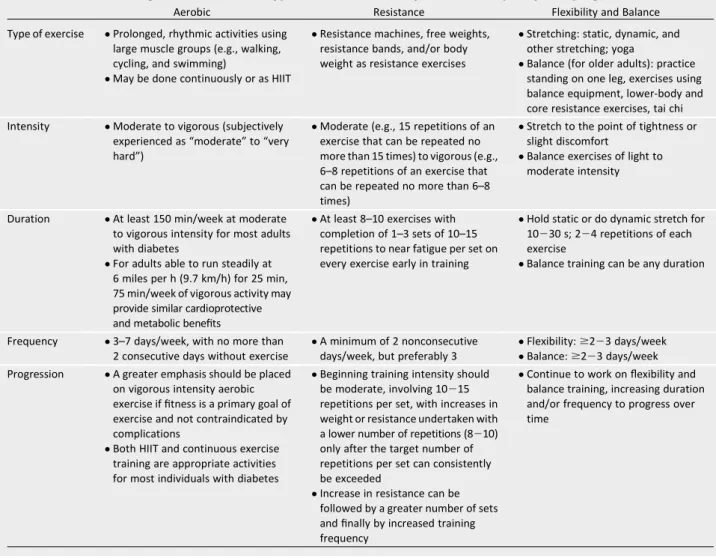
Table 3—Exercise training recommendations: types of exercise, intensity, duration, frequency, and progression
Aerobic Resistance Flexibility and Balance
Type of exercise cProlonged, rhythmic activities using large muscle groups (e.g., walking, cycling, and swimming)
cMay be done continuously or as HIIT
cResistance machines, free weights, resistance bands, and/or body weight as resistance exercises
cStretching: static, dynamic, and other stretching; yoga
cBalance (for older adults): practice standing on one leg, exercises using balance equipment, lower-body and core resistance exercises, tai chi
Intensity cModerate to vigorous (subjectively experienced as“moderate”to“very hard”)
cModerate (e.g., 15 repetitions of an exercise that can be repeated no more than 15 times) to vigorous (e.g., 6–8 repetitions of an exercise that can be repeated no more than 6–8 times)
cStretch to the point of tightness or slight discomfort
cBalance exercises of light to moderate intensity
Duration cAt least 150 min/week at moderate to vigorous intensity for most adults with diabetes
cFor adults able to run steadily at 6 miles per h (9.7 km/h) for 25 min, 75 min/week of vigorous activity may provide similar cardioprotective and metabolic benefits
cAt least 8–10 exercises with completion of 1–3 sets of 10–15 repetitions to near fatigue per set on every exercise early in training
cHold static or do dynamic stretch for 10230 s; 224 repetitions of each exercise
cBalance training can be any duration
Frequency c3–7 days/week, with no more than 2 consecutive days without exercise
cA minimum of 2 nonconsecutive days/week, but preferably 3
cFlexibility:$223 days/week cBalance:$223 days/week Progression cA greater emphasis should be placed
on vigorous intensity aerobic exercise iffitness is a primary goal of exercise and not contraindicated by complications
cBoth HIIT and continuous exercise training are appropriate activities for most individuals with diabetes
cBeginning training intensity should be moderate, involving 10215 repetitions per set, with increases in weight or resistance undertaken with a lower number of repetitions (8210) only after the target number of repetitions per set can consistently be exceeded
cIncrease in resistance can be followed by a greater number of sets andfinally by increased training frequency
machines may improve glycemic
con-trol and strength more (118), doing
re-sistance training of any intensity is
recommended to improve strength,
bal-ance, and ability to engage in activities of
daily living throughout the life span.
Flexibility, Balance, and Other Training
Completing
fl
exibility exercises for each
of the major muscle-tendon groups on
2 or more days/week maintains joint
range of movement (Table 3) (12).
Al-though
fl
exibility training may be
desir-able for individuals with all types of
diabetes, it should not substitute for
other recommended activities (i.e.,
aerobic and resistance training), as
fl
exibility training does not affect
glu-cose control, body composition, or
in-sulin action (6). Adults with diabetes
(ages 50 years and older) should do
exercises that maintain/improve balance
2
2
3 times/week (Table 3) (11,12),
par-ticularly if they have peripheral
neu-ropathy (11). Many lower-body and
core-strengthening exercises
conco-mitantly improve balance and may be
included. Yoga and tai chi can be
in-cluded based on individual
prefer-ences to increase
fl
exibility, strength,
and balance.
Daily Movement
Increasing unstructured physical
activ-ity (e.g., errands, household tasks, dog
walking, or gardening) increases daily
energy expenditure and assists with
weight management (119
–
121).
Un-structured activity also reduces total
daily sitting time. Increasing
nonexer-cise activity, even in brief (3
2
15 min)
bouts, is effective in acutely reducing
postprandial hyperglycemia and
im-proving glycemic control in those with
prediabetes and type 1 and type 2
dia-betes, most prominently after meals
(41,43
–
46,75,122
–
124). Increasing
un-structured physical activity should be
encouraged as part of a whole-day
ap-proach, or at least initially as a stepping
stone for individuals who are sedentary
and unable/reluctant to participate in
more structured exercise.
Supervised Versus Nonsupervised Training
Supervised aerobic or resistance
train-ing reduces A1C in adults with
type 2 diabetes whether or not they
include dietary cointervention, but
unsupervised exercise only reduces A1C
with a concomitant dietary intervention
(64). Similarly, individuals undertaking
supervised aerobic and resistance
exer-cise achieve greater improvements in
A1C, BMI, waist circumference, blood
pressure,
fi
tness, muscular strength,
and HDL cholesterol (125). Thus,
super-vised training is recommended when
feasible, at least for adults with type 2
diabetes.
PHYSICAL ACTIVITY AND
PREGNANCY WITH DIABETES
Recommendations
c
Women with preexisting
diabe-tes of any type should be advised
to engage in regular physical
ac-tivity prior to and during
preg-nancy.
C
c
Pregnant women with or at risk
for gestational diabetes mellitus
should be advised to engage in
20
–
30 min of moderate-intensity
exercise on most or all days of
the week.
B
Physical activity and exercise during
pregnancy have been shown to bene
fi
t
most women by improving
cardiovascu-lar health and general
fi
tness while
re-ducing the risk of complications like
preeclampsia and cesarean delivery
(126). Regular physical activity during
pregnancy also lowers the risk of
devel-oping gestational diabetes mellitus
(127,128). Exercise programs including
at least 20
2
30 min of moderate-intensity
exercise on most or all days of the week
are recommended (126). Once
gesta-tional diabetes mellitus is diagnosed,
either aerobic or resistance training can
improve insulin action and glycemic
con-trol (129). In women with gestational
diabetes mellitus, particularly those
who are overweight and obese,
vigorous-intensity exercise during pregnancy
may reduce the odds of excess
gesta-tional weight gain (130). Ideally, the
best time to start physical activity is prior
to pregnancy to reduce gestational
dia-betes mellitus risk (131), but it is safe to
initiate during pregnancy with very few
contraindications (126). Any pregnant
women using insulin should be aware
of the insulin-sensitizing effects of
exercise and increased risk of
hypogly-cemia, particularly during the
fi
rst
tri-mester (129).
MINIMIZING EXERCISE-RELATED
ADVERSE EVENTS IN PEOPLE WITH
DIABETES
Recommendations
c
Insulin regimen and carbohydrate
intake changes should be used to
prevent exercise-related
hypogly-cemia. Other strategies involve
in-cluding short sprints, performing
resistance exercise before aerobic
exercise in the same session, and
activity timing.
B
c
Risk of nocturnal hypoglycemia
following physical activity may be
mitigated with reductions in basal
insulin doses, inclusion of bedtime
snacks, and/or use of continuous
glucose monitoring.
C
c
Exercise-induced hyperglycemia
is more common in type 1
diabe-tes but may be modulated with
insulin administration or a
lower-intensity aerobic cooldown.
Exer-cising with hyperglycemia and
elevated blood ketones is not
rec-ommended.
C
c
Some medications besides insulin
may increase the risks of
exercise-related hypoglycemia and doses
may need to be adjusted based
on exercise training.
C
c
Older adults with diabetes or
any-one with autonomic neuropathy,
cardiovascular complications, or
pulmonary disease should avoid
exercising outdoors on very hot
and/or humid days to prevent
heat-related illnesses.
C
c
Exercise training should progress
appropriately to minimize risk of
injury.
C
Hypoglycemia
Exercise-induced nocturnal
hypogly-cemia is a major concern (137).
Hypo-glycemic events occur typically within
6
2
15 h postexercise (138), although
risk can extend out to 48 h (139). The
risk of nocturnal hypoglycemia may be
minimized through
;
20% reductions of
daily basal insulin dose with reduced
prandial bolus insulin and low glycemic
index carbohydrate feeding following
evening exercise for those on MDI (89).
For CSII users, basal rate reductions of
20% at bedtime for 6 h after afternoon
exercise may limit nocturnal
hypoglyce-mia (140). Inclusion of a bedtime snack,
glucose checks overnight, and/or use
of CGM with alarms and automatic
pump suspension may also be warranted
(141,142).
Hyperglycemia
Exercise-induced hyperglycemia is more
common in type 1 diabetes. Purposeful
insulin omission before exercise can
promote a rise in glycemia, as can
mal-functioning infusion sets (143).
Individ-uals with type 2 diabetes may also
experience increases in blood glucose
after aerobic or resistance exercise,
par-ticularly if they are insulin users and
administer too little insulin for meals
before activity (144). Overconsumption
of carbohydrates before or during
exer-cise, along with aggressive insulin
reduc-tion, can promote hyperglycemia during
any exercise (89).
Very intense exercise such as sprinting
(134), brief but intense aerobic exercise
(145), and heavy powerlifting (146,147)
may promote hyperglycemia, especially if
starting blood glucose levels are elevated
(145). Hyperglycemia risk is mitigated if
intense activities are interspersed
be-tween moderate-intensity aerobic ones
(82,148). Similarly, combining resistance
training (done
fi
rst) with aerobic
train-ing (second) optimizes glucose stability
in type 1 diabetes (23). To correct
post-exercise hyperglycemia, a conservative
(50% of usual) correction can be
admin-istered (77) or an aerobic cooldown may
be done to lower it (I.S. Mill ´an, personal
communication). Excessive insulin
cor-rections after exercise increase
noctur-nal hypoglycemia risk, which can result
in mortality (149).
Individuals with type 1 diabetes should
test for blood ketones if they have
unex-plained hyperglycemia (
$
250 mg/dL).
Exercise should be postponed or suspended
if blood ketone levels are elevated
(
$
1.5 mmol/L), as blood glucose levels
and ketones may rise further with even
mild activity.
Medication Effects
Adults with diabetes are frequently
treated with multiple medications for
diabetes and other comorbid conditions.
Some medications (other than insulin)
may increase exercise risk and doses
may need to be adjusted (150,151).
Although appropriate changes should
be individualized, Table 4 lists
gen-eral considerations and guidelines for
medications.
Heat-Related Illness During Physical Activity
Physical activity increases bodily heat
production and core temperature,
lead-ing to greater skin blood
fl
ow and
sweat-ing. In relatively young adults with
type 1 diabetes, temperature regulation
is only impaired during high-intensity
exercise (152,153). With increasing
age, poor blood glucose control, and
neuropathy, skin blood
fl
ow and
sweat-ing may be impaired in adults with
type 1 (152,154) and type 2 (155)
diabe-tes, increasing the risk of heat-related
Table 4—Exercise considerations for diabetes, hypertension, and cholesterol medications and recommended safety and dose adjustments
Type/class of medication Exercise considerations Safety/dose adjustments
Diabetes
Insulin cDeficiency: hyperglycemia, ketoacidosis cExcess: hypoglycemia during and after exercise
cIncrease insulin dose pre- and postexercise for deficiency
cDecrease prandial and/or basal doses for excess insulin Insulin secretagogues cExercise-induced hypoglycemia cIf exercise-induced hypoglycemia has occurred,
decrease dose on exercise days to reduce hypoglycemia risk
Metformin cNone cGenerally safe; no dose adjustment for exercise
Thiazolidinediones cFluid retention cGenerally safe; no dose adjustment for exercise
Dipeptidyl peptidase 4 inhibitors
cSlight risk of congestive heart failure with saxagliptin and alogliptin
cGenerally safe; no dose adjustment for exercise
Glucagon-like peptide 1 receptor agonists
cMay increase risk of hypoglycemia when used with insulin or sulfonylureas but not when used alone
cGenerally safe; no dose adjustment for exercise but may need to lower insulin or sulfonylurea dose
Sodium–glucose
cotransporter 2 inhibitors
cMay increase risk of hypoglycemia when used with insulin or sulfonylureas but not when used alone
cGenerally safe; no dose adjustment for exercise
Hypertension
b-Blockers cHypoglycemia unawareness and unresponsiveness; may reduce maximal exercise capacity
cCheck blood glucose before and after exercise; treat hypoglycemia with glucose
Other agents cRegular exercise training may lower blood pressure; some agents increase risk of dehydration
cDoses may need to be adjusted to accommodate the improvements from training and avoid dehydration
Cholesterol
Statins cMuscle weakness, discomfort, and cramping in a minority of users
cGenerally safe; no dose adjustment for exercise
Fibric acid derivatives cRare myositis or rhabdomyolysis; risk increased with gemfibrozil and statin combination
Table 5—Physical activity consideration, precautions, and recommended activities for exercising with health-related complications
Health complication Exercise considerations Physical activity recommendations/precautions
Cardiovascular diseases
Coronary artery disease cCoronary perfusion may actually be enhanced during higher-intensity aerobic or resistance exercise.
cAll activities okay.
cConsider exercising in a supervised cardiac rehabilitation program, at least initially.
Exertional angina cOnset of chest pain on exertion, but exercise-induced ischemia may be silent in some with diabetes.
cAll activities okay, but heart rate should be kept$10 bpm below onset of exercise-related angina.
Hypertension cBoth aerobic and resistance training may lower resting blood pressure and should be encouraged.
cSome blood pressure medications can cause exercise-related hypotension.
cEnsure adequate hydration during exercise. cAvoid Valsalva maneuver during resistance
training.
Myocardial infarction cStop exercise immediately should symptoms of myocardial infarction (such as chest pain, radiating pain, shortness of breath, and others) occur during physical activity and seek medical attention.
cRestart exercise after myocardial infarction in a supervised cardiac rehabilitation program. cStart at a low intensity and progress as able to
more moderate activities.
cBoth aerobic and resistance exercise are okay. Stroke cDiabetes increases the risk of ischemic stroke.
cStop exercise immediately if symptoms of a stroke (occurring suddenly and often affecting only one side of the body) happen during exercise.
cRestart exercise after stroke in a supervised cardiac rehabilitation program.
cStart at a low intensity and progress as able to more moderate activities.
cBoth aerobic and resistance exercise are okay. Congestive heart failure cMost common cause is coronary artery disease
and frequently follows a myocardial infarction.
cAvoid activities that cause an excessive rise in heart rate.
cFocus more on doing low- or moderate-intensity activities.
Peripheral artery disease cLower-extremity resistance training improves functional performance (161).
cLow- or moderate-intensity walking, arm ergometer, and leg ergometer preferred as aerobic activities (162).
cAll other activities okay. Nerve disease
Peripheral neuropathy cRegular aerobic exercise may also prevent the onset or delay the progression of peripheral neuropathy in both type 1 and type 2 diabetes (163).
cProper care of the feet is needed to prevent foot ulcers and lower the risk of amputation (6). cKeep feet dry and use appropriate footwear, silica
gel or air midsoles, and polyester or blend socks (not pure cotton).
cConsider inclusion of more non–weight-bearing activities, particularly if gait altered.
Local foot deformity cManage with appropriate footwear and choice of activities to reduce plantar pressure and ulcer risk (164).
cFocus more on non–weight-bearing activities to reduce undue plantar pressures.
cExamine feet daily to detect and treat blisters, sores, or ulcers early.
Foot ulcers/amputations cModerate walking is not likely to increase risk of foot ulcers or reulceration with peripheral neuropathy (165).
cWeight-bearing activity should be avoided with unhealed ulcers.
cExamine feet daily to detect and treat blisters, sores, or ulcers early.
cAmputation sites should be properly cared for daily. cAvoid jogging.
Autonomic neuropathy cMay cause postural hypotension, chronotropic incompetence, delayed gastric emptying, altered thermoregulation, and dehydration during exercise (6).
cExercise-related hypoglycemia may be harder to treat in those with gastroparesis.
cWith postural hypotension, avoid activities with rapid postural or directional changes to avoid fainting or falling.
cWith cardiac autonomic neuropathy, obtain physician approval and possibly undergo symptom-limited exercise testing before commencing exercise (166).
cWith blunted heart rate response, use heart rate reserve and ratings of perceived exertion to monitor exercise intensity (167).
cWith autonomic neuropathy, avoid exercise in hot environments and hydrate well.
illness. Chronic hyperglycemia also
in-creases risk through dehydration caused
by osmotic diuresis, and some
medica-tions that lower blood pressure may
also impact hydration and electrolyte
balance. Older adults with diabetes or
anyone with autonomic neuropathy,
cardiovascular complications, or
pul-monary disease should avoid exercising
outdoors on very hot and/or humid
days.
Orthopedic and Overuse Injuries
Active individuals with type 1 diabetes
are not at increased risk of tendon injury
(156), but this may not apply to
sed-entary or older individuals with
diabe-tes. Given that diabetes may lead to
exercise-related overuse injuries due
to changes in joint structures related
to glycemic excursions (157),
exer-cise training for anyone with diabetes
should progress appropriately to avoid
excessive aggravation to joint surfaces
and structures, particularly when
tak-ing statin medications for lipid control
(158).
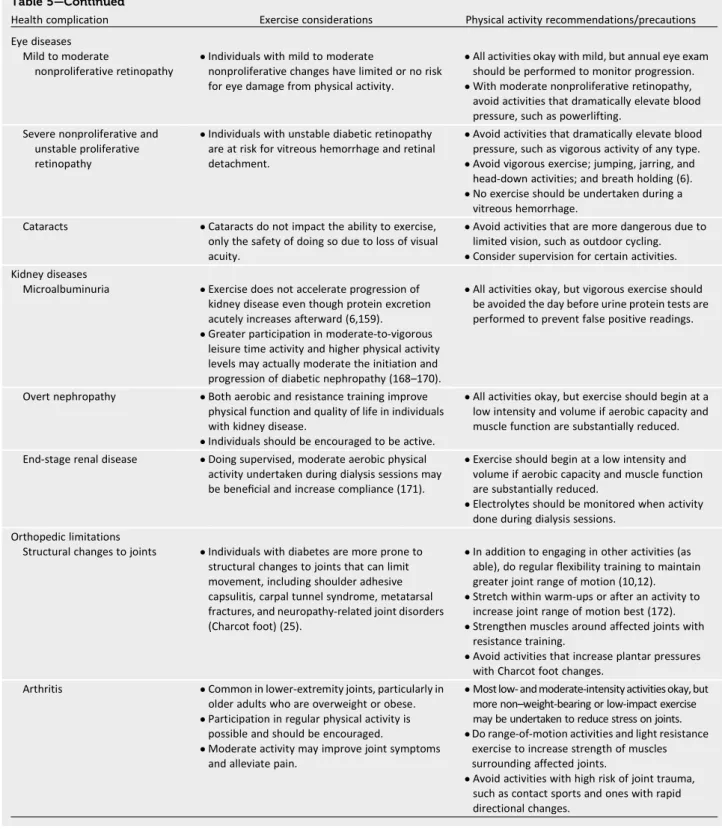
Table 5—Continued
Health complication Exercise considerations Physical activity recommendations/precautions
Eye diseases Mild to moderate
nonproliferative retinopathy
cIndividuals with mild to moderate
nonproliferative changes have limited or no risk for eye damage from physical activity.
cAll activities okay with mild, but annual eye exam should be performed to monitor progression. cWith moderate nonproliferative retinopathy,
avoid activities that dramatically elevate blood pressure, such as powerlifting.
Severe nonproliferative and unstable proliferative retinopathy
cIndividuals with unstable diabetic retinopathy are at risk for vitreous hemorrhage and retinal detachment.
cAvoid activities that dramatically elevate blood pressure, such as vigorous activity of any type. cAvoid vigorous exercise; jumping, jarring, and
head-down activities; and breath holding (6). cNo exercise should be undertaken during a
vitreous hemorrhage.
Cataracts cCataracts do not impact the ability to exercise, only the safety of doing so due to loss of visual acuity.
cAvoid activities that are more dangerous due to limited vision, such as outdoor cycling. cConsider supervision for certain activities. Kidney diseases
Microalbuminuria cExercise does not accelerate progression of kidney disease even though protein excretion acutely increases afterward (6,159). cGreater participation in moderate-to-vigorous
leisure time activity and higher physical activity levels may actually moderate the initiation and progression of diabetic nephropathy (168–170).
cAll activities okay, but vigorous exercise should be avoided the day before urine protein tests are performed to prevent false positive readings.
Overt nephropathy cBoth aerobic and resistance training improve physical function and quality of life in individuals with kidney disease.
cIndividuals should be encouraged to be active.
cAll activities okay, but exercise should begin at a low intensity and volume if aerobic capacity and muscle function are substantially reduced.
End-stage renal disease cDoing supervised, moderate aerobic physical activity undertaken during dialysis sessions may be beneficial and increase compliance (171).
cExercise should begin at a low intensity and volume if aerobic capacity and muscle function are substantially reduced.
cElectrolytes should be monitored when activity done during dialysis sessions.
Orthopedic limitations
Structural changes to joints cIndividuals with diabetes are more prone to structural changes to joints that can limit movement, including shoulder adhesive capsulitis, carpal tunnel syndrome, metatarsal fractures, and neuropathy-related joint disorders (Charcot foot) (25).
cIn addition to engaging in other activities (as able), do regularflexibility training to maintain greater joint range of motion (10,12). cStretch within warm-ups or after an activity to
increase joint range of motion best (172). cStrengthen muscles around affected joints with
resistance training.
cAvoid activities that increase plantar pressures with Charcot foot changes.
Arthritis cCommon in lower-extremity joints, particularly in older adults who are overweight or obese. cParticipation in regular physical activity is
possible and should be encouraged.
cModerate activity may improve joint symptoms and alleviate pain.
cMost low- and moderate-intensity activities okay, but more non–weight-bearing or low-impact exercise may be undertaken to reduce stress on joints. cDo range-of-motion activities and light resistance
exercise to increase strength of muscles surrounding affected joints.
MANAGING PHYSICAL ACTIVITY
WITH HEALTH COMPLICATIONS
Recommendations
c
Physical activity with vascular
dis-eases can be undertaken safely but
with appropriate precautions.
B
cPhysical activity done with
pe-ripheral neuropathy necessitates
proper foot care to prevent,
detect, and prevent problems
early to avoid ulceration and
am-putation.
B
c
The presence of autonomic
neu-ropathy may complicate being
active; certain precautions are
warranted to prevent problems
during activity.
C
c
Vigorous aerobic or resistance
exercise; jumping, jarring,
head-down activities; and breath
hold-ing should be avoided in anyone
with severe nonproliferative and
unstable proliferative diabetic
ret-inopathy.
E
c
Exercise does not accelerate
pro-gression of kidney disease and can
be undertaken safely, even during
dialysis sessions.
C
c
Regular stretching and
appropri-ate progression of activities should
be done to manage joint changes
and diabetes-related orthopedic
limitations.
C
Macrovascular and microvascular
diabetes-related complications can develop and
worsen with inadequate blood glucose
control (159,160). Vascular and neural
complications of diabetes often cause
physical limitation and varying levels of
disability requiring precautions during
ex-ercise, as recommended in Table 5.
PROMOTING THE ADOPTION AND
MAINTENANCE OF PHYSICAL
ACTIVITY
Recommendations
c
Targeted behavior-change
strate-gies should be used to increase
physical activity in adults with
type 2 diabetes.
B
c
When using step counters, adults
with type 2 diabetes should
ini-tially set tolerable targets for
steps/day before progressing
to-ward higher goals.
C
c
For adults with type 2 diabetes,
Internet-delivered interventions
for physical activity promotion
may be used to improve
out-comes.
C
Behavior-Change Strategies
Behavioral interventions can signi
fi
-cantly increase physical activity in adults
with type 2 diabetes (173), and A1C
reductions produced by such
interven-tions have been sustained to 24 months
(174). Five key techniques have been
identi
fi
ed:
1
) prompt focus on past
suc-cess,
2
) barrier identi
fi
cation/problem-solving,
3
) use of follow-up prompts,
4
) provision of information on where/
when to perform the behavior, and
5
) prompt review of behavioral goals
(175). However, motivational
inter-viewing is not signi
fi
cantly better than
usual care (176), and other intervention
fac-tors associated with weight loss, such as
number and duration of contacts, have
been inconsistent or not associated with
greater participation (177).
Step counters/pedometers have been
widely studied as a behavior-change
tool. Wearing the device may prompt
activity, and it provides feedback for
self-monitoring. Pedometer use in
adults with type 2 diabetes increased
their daily steps by 1,822, but did not
improve A1C (178). Using a daily steps
goal (e.g., 10,000) was predictive of
in-creased participation, even using
self-selected step goals (178). Thus, adults
with type 2 diabetes should initially set
feasible/achievable targets for steps/day
before progressing toward higher goals.
Adults should avoid taking
,
5,000 steps/
day (179
–
181) and to strive for
$
7,500
steps/day (182). The positive
fi
ndings
for pedometers are not universal (175),
however, and some individuals may
re-quire greater support to realize bene
fi
ts.
Longer-term ef
fi
cacy and
determina-tion of which populadetermina-tions can bene
fi
t
from pedometers and other wearable
activity trackers (183) require further
evaluation.
Technology-Based Strategies
Given that the majority of individuals
with type 2 diabetes have access to the
Internet, technology-based support is
appealing for extending clinical
inter-vention reach. For adults with type 2
diabetes, Internet-delivered physical
activity promotion interventions may
be more effective than usual care (184).
Effective
Internet-based
programs
included monitoring of physical activity,
feedback, goal setting, and support
from a coach via phone/e-mail (184).
More evidence is needed regarding social
media approaches, given the importance
of social and peer support in diabetes
self-management (185).
CONCLUSIONS
Physical activity and exercise should be
recommended and prescribed to all
in-dividuals with diabetes as part of
man-agement of glycemic control and overall
health. Speci
fi
c recommendations and
precautions will vary by the type of
di-abetes, age, activity done, and presence
of diabetes-related health
complica-tions. Recommendations should be
tai-lored to meet the speci
fi
c needs of each
individual. In addition to engaging in
reg-ular physical activity, all adults should be
encouraged to decrease the total amount
of daily sedentary time and to break up
sitting time with frequent bouts of activity.
Finally, behavior-change strategies can be
used to promote the adoption and
main-tenance of lifetime physical activity.
Duality of Interest.No potential conflicts of interest relevant to this article were reported.
References
1. Chen L, Pei JH, Kuang J, et al. Effect of lifestyle intervention in patients with type 2 diabetes: a meta-analysis. Metabolism 2015;64:338–347 2. Lin X, Zhang X, Guo J, et al. Effects of exercise training on cardiorespiratoryfitness and bio-markers of cardiometabolic health: a systematic review and meta-analysis of randomized con-trolled trials. J Am Heart Assoc 2015;4:4 3. Schellenberg ES, Dryden DM, Vandermeer B, Ha C, Korownyk C. Lifestyle interventions for patients with and at risk for type 2 diabetes: a systematic review and meta-analysis. Ann In-tern Med 2013;159:543–551
4. Yardley JE, Hay J, Abou-Setta AM, Marks SD, McGavock J. A systematic review and meta-analysis of exercise interventions in adults with type 1 diabetes. Diabetes Res Clin Pract 2014;106:393–400
5. American Diabetes Association. Foundations of care and comprehensive medical evaluation. Sec. 6. InStandards of Medical Care in Diabetesd2016.
Diabetes Care 2016;39(Suppl. 1):S23–S35 6. Colberg SR, Sigal RJ, Fernhall B, et al.; Amer-ican College of Sports Medicine; AmerAmer-ican Diabetes Association. Exercise and type 2 dia-betes: the American College of Sports Medicine and the American Diabetes Association: joint position statement. Diabetes Care 2010;33: e147–e167
7. American Diabetes Association. Classifi ca-tion and diagnosis of diabetes. Sec. 2. In Stan-dards of Medical Care in Diabetesd2016.