CONCURRENT SEXUAL PARTNERSHIPS:
PREDICTORS OF INITIATION AND RELIABILITY OF REPORTS
Diana Maria Sanchez
A dissertation submitted to the faculty of the University of North Carolina at Chapel Hill in partial fulfillment of the requirements for the degree of Doctor of Philosophy in the
Department of Epidemiology in the Gillings School of Global Public Health.
Chapel Hill 2015
Approved by:
© 2015
ABSTRACT
Diana Maria Sanchez: Concurrent Sexual Partnerships: Predictors of Initiation and Reliability of Reports. Analysis of the Project on Partner Dynamics.
(Under the direction of Victor J. Schoenbach)
Concurrent sexual partnerships contribute to STI/HIV transmission. STI/HIV risk may differ depending upon the circumstances and motivations surrounding concurrency. Greater understanding of motivations for concurrency initiation may assist prevention programs. However, most concurrency studies are cross-sectional, which limits ability to be certain which factors preceded concurrency initiation. Also, concurrency is a function of relative timing of when partnerships begin and end. But do people accurately report the dates on which they had sexual intercourse? For example, memory failure and imprecision can compromise the accuracy of reported dates, with implications for STI/HIV research and control programs.
The Project on Partner Dynamics (POPD) interviewed 536 young adults and 151 of their sexual partners. The 536 index participants were recruited from Los Angeles area community sites and interviewed every 4-months about perceptions and behaviors. At 8- and 12-months, index participants brought a partner for interview (“partner participant”). The 151 unique index-partner dyads were
interviewed separately and jointly about partnership dates. Poisson regression models using generalized estimating equations (GEE) estimated the association between perceived partner non-monogamy (PPNM) and concurrency initiation (incidence). We also compared index and partner participants’ reports of dates of first and last sex to estimate inter-partner agreement (IPA), and used linear regression to model the log of the differences.
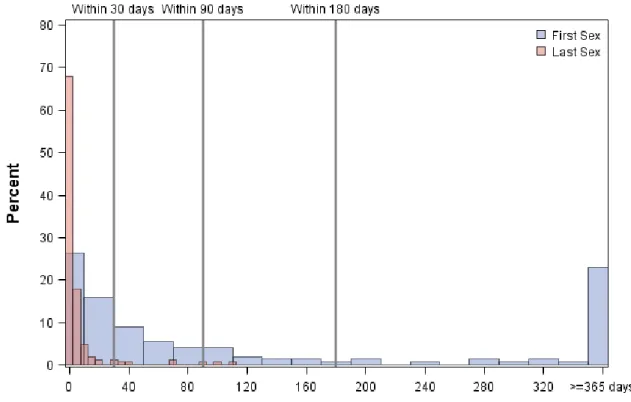
participants who were female (54.7% vs. 45.3% for first sex; 62.5% vs. 37.5% for last sex), had fewer sex partners (58.5% vs. 41.5% first sex; 54.8% vs. 45.2% last sex), or had greater commitment (56.3% vs. 43.7% first sex; 52.2% vs. 47.8% last sex) were in more agreement with joint dyad reports.
ACKNOWLEDGEMENTS
This dissertation is the product of years of guidance and collaboration, and I have many to thank. First, this work would not have been possible without the tireless support of my dissertation chair and advisor, Victor Schoenbach. Dr. Schoenbach (“Vic”) has provided thoughtful mentorship in every aspect of the dissertation, and has been a true champion of this work. He has been incredibly generous with his time and wisdom, and – at each stage of the dissertation, from initial development to final presentation – treated me as a fellow Epidemiology colleague, while challenging me to apply what I have learned in coursework and experience. Although I did not keep an exact count, I can confidently say that Vic and I have spent hundreds of hours together in consultation, editing, and discussions. Vic makes a profound investment in each one of his students’ academic, personal and professional development, and it has been my sincere privilege to be one of his advisees.
I would also like to thank my committee members –Charles Poole, Marie Harvey, Adaora Adimora, and Peter Leone – for their expert support and guidance, and their instrumental feedback on analysis and interpretation.
These analyses are the product of a collaboration between the University of North Carolina at Chapel Hill and those from Oregon State University and Purdue University, who developed and managed the Project on Partner Dynamics (POPD) study. I owe a large debt of gratitude to the Principal Investigators of the POPD study, Marie Harvey and Chris Agnew, for generously allowing me to use their data for these analyses, and to Vic – for fostering collaboration with this group. The POPD study members – Marie Harvey, Chris Agnew and Jocelyn Warren – were incredibly supportive and helpful with each stage of the analyses, and I owe my sincerest thanks to them.
I would also like to offer my sincerest thanks to my family and friends, especially: my husband, Adam, for his patience, encouragement and listening ear through every phase of my doctoral training; my mother, MariCeli, who completed her own doctorate degree as I entered mine, and acted as a role model as I pursued my own degree; my father, who has always cheered me on in my education; my siblings, Sara and Julio David, for offering their love and humor at each step of my doctoral training; and my other wonderful family members and friends for their wisdom, counsel, and support.
TABLE OF CONTENTS
List of Tables ... xii
List of Figures ... xiii
List of Abbreviations ... xiv
Chapter 1: Critical Review of the Literature ... 1
Concurrent Sexual Partnerships ... 1
Concurrent Sexual Partnerships: High-risk Groups ... 1
Motivational Factors in Initiating Concurrent Sexual Partnerships ... 2
Quality of Sexual Partnership Histories ... 3
Factors Associated with Agreement and Reliability ... 4
Limitations of Reliability and Agreement Studies ... 4
Summary ... 5
Chapter 2: Specific Aims and Hypotheses ... 7
Hypotheses ... 8
Specific Aim 1... 8
Specific Aim 2... 8
Chapter 3: Analytic Approach ... 9
Project on Partner Dynamics (POPD) Study ... 9
POPD Recruitment ... 9
POPD Interviews ... 9
Data Management and Cleaning ... 11
Aim 2: Missing Sexual Partnership Data, Exclusions and Logic Checks ... 13
Outcome Measures ... 13
Prevalent and Incident Concurrent Sexual Behavior ... 13
Absolute Differences between Index and Partner-Reported Dates ... 14
Inter-Partner Agreement (IPA) ... 15
Dyad Agreement ... 15
Covariates ... 16
Perceived Partner Non-Monogamy (PPNM) ... 16
Covariate: Relationship Commitment ... 17
Covariate: Relationship Power ... 19
Covariate: Gender ... 19
Covariate: Age... 19
Covariate: Race/ethnicity ... 19
Covariate: Alcohol or other drug use before or during sex, past 4 months ... 20
Covariate: Age of sexual debut ... 20
Covariate: Duration of partnership ... 20
Covariate: Recall interval ... 21
Covariate: Absolute age difference between index and partner ... 21
Covariate: Agreement on frequency of sex, past 4 months ... 22
Covariate: Dyad monogamy ... 22
Statistical Analyses ... 23
Specific Aim 1 Analysis ... 23
Specific Aim 2 Analysis ... 25
Chapter 4: Perceived Partner Non-monogamy and Sexual Concurrency ... 27
Abstract ... 27
Objectives ... 27
Results ... 27
Conclusions ... 27
Introduction... 28
Methods... 29
Sample ... 29
Missing Data, Exclusions, and Logic Checks ... 30
Definitions of Prevalent and Incident Concurrency ... 31
Definition of Perceived Partner Non-Monogamy... 31
Statistical Analyses ... 32
Results ... 33
Demographic Characteristics ... 33
Prevalence and Incidence of Concurrency ... 35
Perceived Partner Non-Monogamy and Concurrency ... 36
Discussion ... 37
Conclusions ... 40
Acknowledgements ... 40
Chapter 5: Inter-partner and Dyad Agreement on Sexual Partnerhsip Dates ... 41
Abstract ... 41
Background ... 41
Methods ... 41
Results ... 41
Conclusions ... 42
Introduction... 42
Methods... 43
Inter-Partner Agreement ... 45
Individual-Dyad Agreement ... 46
Results ... 46
Date of First Sex: Inter-Partner Agreement ... 50
Date of First Sex: Individual-Dyad Agreement ... 53
Date of Last Sex: Inter-Partner and Individual-Dyad Agreement ... 53
Discussion ... 55
Conclusions ... 57
Acknowledgements ... 57
Chapter 6: Discussion ... 58
Specific Aims and Key Findings ... 58
Specific Aim 1... 58
Hypotheses ... 58
Key Findings... 59
Specific Aim 2... 59
Hypotheses ... 59
Key Findings... 59
Strengths and Limitations ... 60
Specific Aim 1... 60
Specific Aim 2... 61
Validity of Reported Sexual Partnership Data... 62
Quality of Reported Dates and Concurrency Misclassification ... 63
Directions for Future Research and Practice ... 65
Summary of Recommendations for Research and Practice ... 66
Conclusions ... 66
Appendix 1.2: Literature Review on Reported Sexual Partnership Dates ... 68
Appendix 3.1: Directed Acyclic Graph ... 77
Appendix 3.2: Distribution of Inter-Partner Differences ... 78
Appendix 4.1: Manual Review of Incident Concurrency Cases ... 79
Appendix 4.2: Agreement in Perceived Partner Non-Monogamy ... 80
Appendix 4.3: Rationale for Interventions Related to Partner Perceptions ... 81
Appendix 4.4: Sensitivity and Specificity of Perceived Partner Non-Monogamy ... 82
Appendix 4.5: Positive and Negative Predictive Value of Perceived Partner Non-Monogamy ... 83
Appendix 6.1: Perceived Partner Non-monogamy and Concurrency ... 84
Appendix 6.2: Accuracy of Perceived Partner Non-Monogamy POPD Study ... 85
Appendix 6.3: Perceived Partner Non-Monogamy Literature Summary ... 86
LIST OF TABLES
Table 3.1: Frequency and Handling of Errors in Reported Sexual Partnership Data from Index Participants Enrolled in the Project on Partner Dynamics... 12
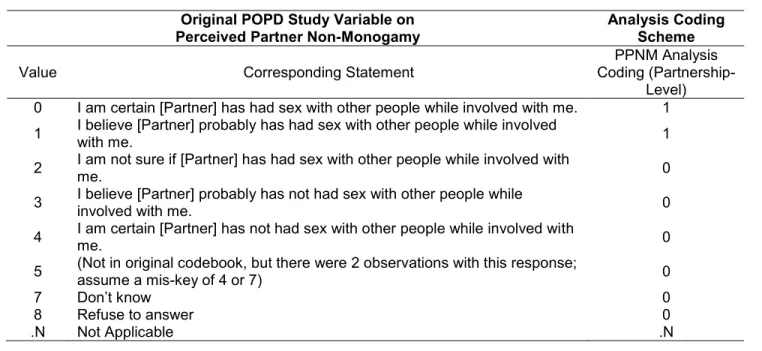
Table 3.2: Perceived Partner Non-Monogamy Coding Scheme ... 16
Table 4.1: Selected Baseline Characteristics of Participants Enrolled in the Project on Partner Dynamics ... 34
Table 4.2: Prevalence and Incidence of Concurrent Sexual Partnerships Among Those Enrolled in the Project on Partner Dynamics ... 35
Table 4.3: Unadjusted Associations of Selected Participant Characteristics with Prevalent and Incident Concurrency ... 36
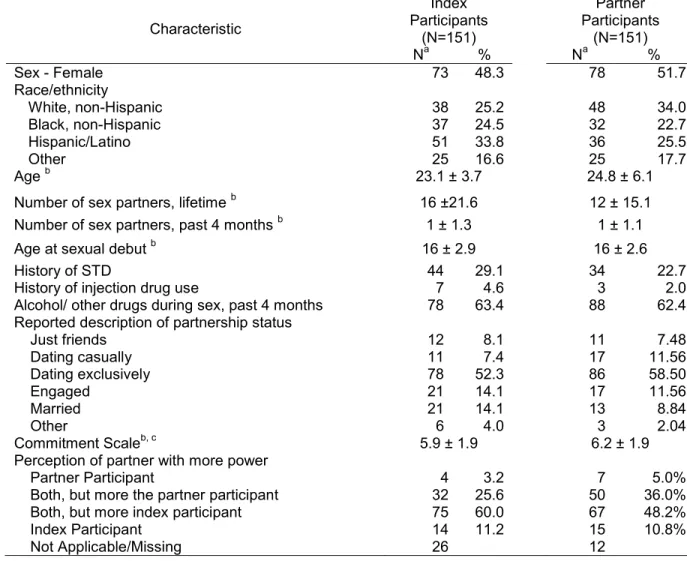
Table 5.1: Select Characteristics of Index and Partner Participants Enrolled in the Project on Partner Dynamic 2006-2009…….……….……….….… 48
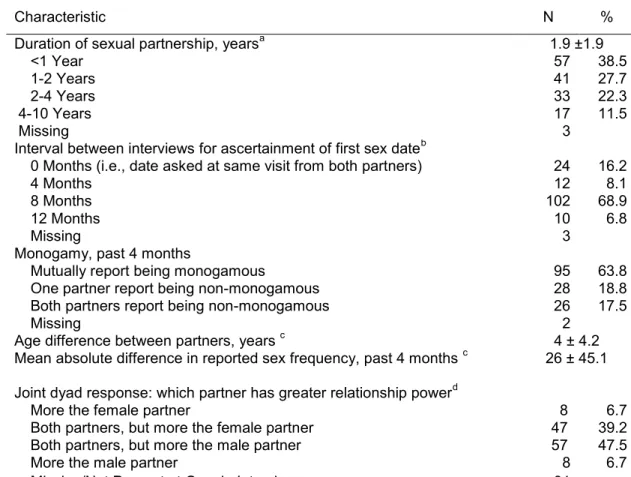
Table 5.2: Select Characteristics of Dyads (n=151) Enrolled in the Project on Partner Dynamics ... 49
Table 5.3: Inter-partner Agreement on Dates of First and Last Sexual Intercourse ... 51
Table 5.4: Crude and Adjusted Associations Between Partnership Characteristics and Log of Mean Inter-partner Differences ... 52
LIST OF FIGURES
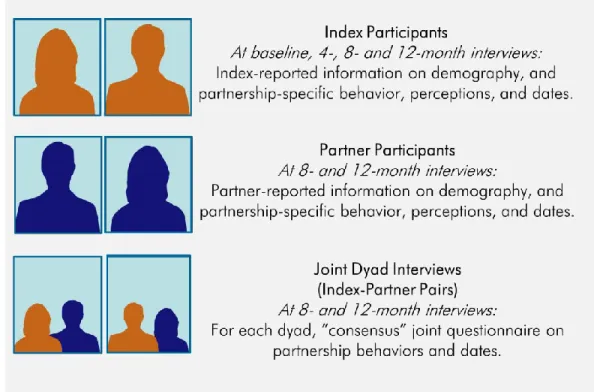
Figure 3. 1: Sources of Partnership Data in the Project on Partner Dynamics, 2006-2009. ... 10
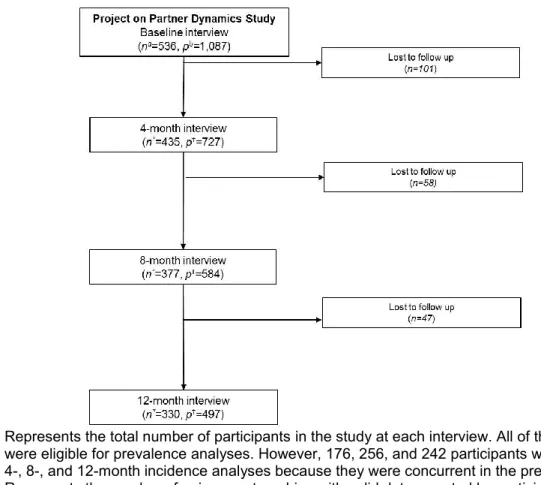
Figure 4.1: Project on Partner Dynamics Study Participants and Participant-Reported
Partnerships Throughout One-Year of Follow Up ... 33
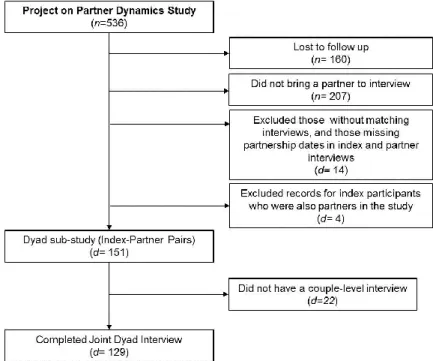
Figure 5.1: Participants and Dyads Enrolled in the Project on Partner Dynamics, 2006-2009. ... 47
LIST OF ABBREVIATIONS
STI Sexually transmitted infections STD Sexually transmitted diseases HIV Human Immunodeficiency Virus PPNM Perceived partner non-monogamy POPD Project on Partner Dynamics IPA Inter-partner agreement AOD Alcohol or other drug use
RR Risk Ratio
PR Prevalence Ratio
CHAPTER 1: CRITICAL REVIEW OF THE LITERATURE
Concurrent Sexual Partnerships
Concurrent sexual partnerships, or partnerships which overlap in time, alter the structure of sexual risk networks and may facilitate the spread of sexually transmitted infections1-5. In a mathematical model, Morris and Kretzschmar demonstrated that concurrent sex partnerships increase the transmission of HIV through a population.5 Epidemiologic studies have suggested concurrency to be associated with increased rates of HIV, syphilis, chlamydia, gonorrhea and Human papillomavirus (HPV) infection among various populations in the United States.1,3,5-10 In fact, it has been suggested that characterization of sexual partnership overlap, versus the number of sex acts or sex partners alone, may be a more meaningful correlate of STI/HIV risk in certain sexual networks.10
Concurrent Sexual Partnerships: High-risk Groups
among young adults and racial/ethnic minorities. Understanding the factors associated with initiating concurrent sexual behavior is an important step in reducing STI rates in these populations.
Motivational Factors in Initiating Concurrent Sexual Partnerships
Gorbach et al. (2002) identified six distinct concurrent partnership types in regard to underlying motivations: reciprocal, reactive, compensatory, transitional, separational, and experimental.17 The different types are associated with different STI/HIV risk profiles, network configurations, and STI/HIV risk.15,17-19 We hypothesize perceived partner non-monogamy (PPNM) – the belief that a sex partner has additional sexual partners outside their sexual relationship – to be associated with concurrency, including the initiation of reactive concurrency. As described by Gorbach, reactive concurrent partnerships may be initiated following awareness of a partner’s involvement in other relationships (i.e., perceived partner non-monogamy), motivated by the desire to establish fairness in the relationship and feelings of jealousy.17 Reactive concurrent partnerships are often deliberately casual in nature, and as a result, are associated with higher risk.15,17
Cross-sectional associations between PPNM have been previously observed in both
Elucidating the social and behavioral motivations for initiating concurrency may provide valuable information for crafting STI/HIV prevention messages, particularly for high-risk groups.
Quality of Sexual Partnership Histories
Dates of sexual partnership are frequently collected in STI research – such as studies of concurrency, gap length and duration – as well as STD control programs, such as contact tracing. Concurrency can be measured through direct query (e.g., “Have you had sexual intercourse with one partner while involved in a sexual relationship with another?”). A second method for capturing
concurrency, recommended by the UNAIDS Reference Group,21 involves comparing dates of first and last sexual intercourse with different partners. The two approaches differ in the demands placed on
participants and result in overlapping but not identical classifications of concurrency. Comparison of dates is a common method since participants do not need to explicitly acknowledge stigmatized partnering patterns, but people’s ability to report the starting and ending dates of their sexual partnerships has not been established.
Retrospective self-report of partnership dates is subject to memory failure, stigma, social desirability bias and imprecision.9,22-30 The extent to which these errors affect the estimation of
concurrency is unclear. The quality of measurement is critically important in concurrency research18 as well as STD control programs, such as contact tracing.
Thus, in practice, investigators may assess agreement as a surrogate for validity, by measuring the extent of agreement and interpreting it according to relative confidence in the measures being compared.
Factors Associated with Agreement and Reliability
Existing research has found that reliability and agreement of reported sexual behavior are lower among those with multiple sex partners,31 in non-monogamous relationships and in non-marital
relationships.32 These findings suggest that data on concurrent sexual partnerships are more susceptible to error than data on non-concurrent partnerships. Research specifically focusing on the quality of concurrent sex behavior measurement is limited, and several gaps exist. Notably, the focus of studies examining the quality of sexual partnership data has been on measures such as sex frequency or number of sex partners. Information on the agreement and validity of individuals’ recall of information used to establish concurrency, such as dates of sexual activity, is extremely limited.
Limitations of Reliability and Agreement Studies
partner agreement is essential to establishing a margin of error for concurrency estimates and for identifying predictors of greater reporting error.
Comparing partners’ individual reports of their dates of first and last sex to dates reported when partners are interviewed as a joint dyad provides an additional opportunity to investigate agreement and potential validity. Joint dyad interviewing has shown utility in psychological research on family, marriage and cognition.33-36 Joint dyad interviewing allows partners to remind each other about information relevant to recall, to discard false information, and to corroborate each other’s recall.33-35,37 As a result, joint dyad interviews may provide a better source of data than one partner’s recall of events or behavior.34,35 Comparing joint reports to individual recall in dyads, Harris and colleagues (2012) found that while joint reporting led to decreased completeness of recall (e.g., leaving information out of reports), it also led to improved agreement of data recalled (i.e., “collaborative consensus”).35 However, joint dyad interviewing can be affected by relative power and influence within partnerships,35 leading to “collaborative inhibition”, which may be problematic for measuring value-laden behaviors such as condom use and private
information such as relationship satisfaction, since a respondent may be constrained when expressing individual opinions and beliefs in the presence of the partner. For less stigmatized behaviors or less sensitive data such as dates, however, group-level information may represent a more nearly valid data source.
Summary
Various studies have found associations between concurrency and STI/HIV risk.1,3,5-10 Qualitative and cross-sectional research has also suggested that different motivations for being involved in
concurrent sexual partnerships may be associated with varying degrees of STI/HIV risk.15,17-19 In specific, concurrency motivated by a partner’s non-monogamy is thought to be higher risk than other types of concurrency.15,17,20 However, to date, concurrency research has used cross-sectional research, and thus factors associated with concurrency initiation are unknown.
partnership dates remains unclear, as does the extent to which potential imprecision affects
measurement related to sexual partnerships. Opportunities for assessing quality of dates arise from comparisons of two partners within a dyad, as well as comparing individual dyads to a joint dyad
CHAPTER 2: SPECIFIC AIMS AND HYPOTHESES
Though a substantial body of literature supports the association between concurrent sexual partnerships and risk of STI/HIV,1,3,5-10 little is known regarding factors involved in the initiation of
concurrency or the quality of concurrent sexual partnership data. Previous findings on concurrent sexual behavior have been based on cross-sectional data and, as a result, factors involved in the initiation of concurrency are unclear. Further, retrospective self-report of partnership dates are widely used in STI research and STD control, but are subject to methodological challenges, including memory failure, imprecision and recall bias.29,31,38,39
Knowledge about predictors of concurrency initiation may provide insights into STD and
concurrency reduction programs, particularly among at-risk groups such as young adults and racial/ethnic minorities. Additionally, few studies have assessed the quality of sexual partnership data, and the extent to which these methodological challenges affect measurement remain unclear. Information on the quality of sexual partnership dates has important implications for STI research (e.g., studies of concurrency, gap length and duration) as well as STD control programs using dates of intercourse (e.g., partner
notification).
We analyzed data collected by the Project on Partner Dynamics (POPD), a one year longitudinal study of 536 young adults in the Los Angeles area during 2006-2009. These data were used to examine the association between perceived partner non-monogamy and initiation of concurrent behavior, as well as the validity of sexual partnership dates within dyads.
The aims of this analysis were to:
1. Estimate the association between the belief that one’s partner has another sexual partner (perceived partner non-monogamy) and initiation of a concurrent partnership during the following 4 months.
2a. Estimate the percent agreement of reported dates of first and of last sexual
intercourse within sexual partnerships (i.e., comparing index and partner participants’ responses)
2b. Compare individual partner reports for dates of first and last sex with those obtained in a joint dyad interview
2c. Identify factors associated with agreement between individual and joint dyad responses
Hypotheses
Hypothesis were informed by a critical review of the literature and defined a priori. For each aim, the hypotheses were as follows:
Specific Aim 1: Estimate the association between the belief that one’s partner has another sexual partner (perceived partner non-monogamy) and initiation of a concurrent partnership during the following 4 months.
Hypothesis:
A. Perceived partner non-monogamy predicts the index partner’s initiation of a concurrent partnership during the following 4 months.
Specific Aim 2: Evaluate agreement between sexual partners’ reports of the dates of their first and last sexual intercourse.
Hypotheses:
A. In inter-partner analyses, partnerships with larger age differences and/or substance abuse will tend to have lower accuracy for reporting dates.
CHAPTER 3: ANALYTIC APPROACH
Project on Partner Dynamics (POPD) Study
Analyses were conducted on data from 536 index participants and 151 sex partners of index participants (“partner participants”) from the Project on Partner Dynamics (POPD) study, a longitudinal study of heterosexual men and women aged 18-30 in the Los Angeles area. The primary objective of POPD was to examine the influence of heterosexual relationship dynamics on sexual risk perceptions, intentions, and behaviors. The study tracked a racially and ethnically diverse sample over one year as they initiated, maintained and/or terminated sexual relationships.
POPD Recruitment
Participants were recruited from community locations, including: STD clinics, family planning clinics and community organizations. Eligibility criteria were: 1) age 18-30 years; 2) unprotected sex in the previous three months; and 3) any of the following: (a) multiple sexual partners in the past year, (b) STI treatment in the past 2 years, (c) ever having injected drugs, or (d) having had a sex partner who was (for women only) a man who had sex with men, who used injection drugs, who was HIV+, who had been exposed to an STI during the past year, whom the participant believed had sex with someone else during the past year, or whom the participant suspects may have sex with someone else in the next year (while still in the relationship with the participant). The POPD study excluded anyone who was HIV+ (by self-report), not fluent in either English or Spanish, or who anticipated moving from the area within the next year. Participants were interviewed in their preferred language.
POPD Interviews
8- and 12-month interviews (median of 4-months between interviews) (Figure 3.1). Each interview asked specific information about each of the participant’s sex partners, identified by initials or nickname, during the recall interval. For sensitive questions, participants had the option of entering answers to directly into the computer themselves.
In scheduling 8-month interviews, POPD field staff asked participants if they had a current sex partner (age 18 years or older) they were willing to ask to participate in POPD. Index participants were invited to bring only one current sex partner (“partner participant”) to interview. If a partner was recruited, the index and partner participants were interviewed separately about demographic characteristics, risk behaviors, and relationship-specific perceptions, behaviors and beliefs. The index participant and
accompanying partner participant were then invited to participate in the joint dyad interview, in which both participants completed a short survey together. Joint dyad surveys collected the dyad’s joint responses for 23 questions, which included: dates of partnership, frequency of sex, alcohol and other drug use before or during sex, contraceptive and safer sex behaviors and intentions, and dyadic power (Figure 3.1). At 12-months, index participants were again invited to bring their partners for interview. If a sex partner was not recruited, index participants were interviewed alone.
Data Management and Cleaning
Data for POPD consisted of the following data sources: administrative records for baseline and each follow-up interview (i.e., records of unique index and partner participant IDs and dates of interview), index participant questionnaire data for baseline and each follow-up, partner participant questionnaire data for 8- and 12-month interviews, and joint dyad questionnaire data for 8- and 12-month interviews (Figure 3.1). Data management and cleaning steps were taken to ensure that the data were in an
appropriate format to identify errors and clean data (e.g., errors in sexual partnership dates, or with linking index and partner participants), and in the necessary format for analyses (e.g., re-shaping the dataset for analysis and modeling).
Aim 1: Missing Sexual Partnership Data, Exclusions and Logic Checks
For each partnership, we identified missing, out-of-range and seemingly erroneous dates. We identified a total of 18 unique types of errors, which fell under the following five categories: 1) reported date of last sex came after interview date; 2) reported date of last sex was in previous recall period; 3) reported date of last sex came before date of first sex; 4) first and/or last dates of sex missing; and 5) other errors (Table 3.1). For each, a rationale for how to proceed was based on UNAIDS guidelines,21 where applicable, or by consensus of POPD researchers. Data management steps used in these analyses were similarly adopted in other analyses of POPD data.40
We corrected or imputed values for 285 of the errors, and excluded records for 135 of the errors (32% of all errors; <5% of total partnership data).
Aim 2: Merging Sexual Partnership Information
We analyzed data from index, partner and joint dyad interviews where there was sufficient information to link index and partner participants, and where at least one comparison in reported dates could be made for either date of first or last sex (i.e., index vs. partner; partner vs. dyad; or index vs. dyad). There were 5 instances where index participants were partner participants in another interview, and vice versa. To avoid duplicate comparisons, in these situations, we included only one set of interviews for each unique index-partner pair: in cases where one of the partners was recruited into the POPD study earlier (4 out of 5 cases), we used the record corresponding to the index participant who was interviewed earliest; in cases where both persons in the dyad were recruited as index participants on the same day (1 out of the 5 cases), we used the record corresponding to the partner participant that was recruited into the study earlier.
Table 3. 1: Frequency and Handling of Errors in Reported Sexual Partnership Data from Index Participants Enrolled in the Project on Partner Dynamics
Error Pattern Example Cause(s) Frequency
Reported date of last sex came after interview date
Due to discrepancy in interview date, apparent typo in date of last sex, or else, no obvious reasons.
86
Reported date of last sex was in the
previous recall period Due to not being an active sexual partnership at the time of the interview. 111
Reported date of last sex came before
reported date of first sex Non-sequential dates of sex due to apparent typos in year of partnership. 31
Dates of sexual activity are missing Due to not being an active sexual partnership at the time of the interview, or skipping the question. 56
Aim 2: Missing Sexual Partnership Data, Exclusions and Logic Checks
We identified missing, out-of-range and seemingly erroneous dates by examining interview dates, dates of first and last sex from index and partner participants, and dates of first and last sex from joint dyad interviews. For all data management steps, we corrected errors found within one source of data (i.e. data within just one interview) because: 1) using multiple sources of data to clean data would limit our ability to interpret agreement in the context of routinely collected data, as only one source of data is available in most research and practice settings; and 2) using multiple sources to correct data could bias agreement estimates, making agreement higher than it was.
If a date of first or last sex fell after the date of interview, as confirmed by administrative records, we excluded the date from analysis unless it appeared to be a recall ort transcription error in the year. Altogether, a total of 12 corrections and edits were made: 10 to dates of sex (approximately 1% of all date information used in analyses) and 2 to interview dates.
Outcome Measures
Prevalent and Incident Concurrent Sexual Behavior
When identifying concurrency by comparing dates of partnership, the UNAIDS Reference Group on Estimates, Modelling, and Projection guidelines suggest utilizing a relatively short period of recall (6 months).21 Those reporting no overlapping sexual partnerships in the past 4 months were classified as not having been concurrent in the past 4 months (=0). If the overlap in two partnerships was greater than one day, we classified them as concurrent due to overlap in dates in the past 4 months (=1). If the overlap in two partnerships was less than one day (e.g., reported last sex date of one partnership was identical to the first sex date of another partnership), we assumed that these are reflective of a dissolution-initiation pattern rather than concurrency, and coded them as non-concurrent as measured by date overlap (=0).
Participants with insufficient data to be classified definitively as missing all dates of partnerships, concurrent due to overlap (=1) or non-concurrent due to overlap (=0) were included as missing data.
For each recall period (approximately 4 months), prevalent concurrency was defined dichotomously as an overlap in time between two or more partnerships during the recall period, based on self-reported dates of first and last intercourse. Participants lost to follow-up or missing partnership data were excluded. Concurrency was classified as incident if the participant was not concurrent (i.e., no prevalent concurrency) during the previous recall period. To ensure accuracy, concurrency was identified independently by visual review and with a Stata program developed by POPD researchers Isaac Washburn (Oklahoma State University) and Jocelyn Warren (Oregon State University). All cases of inconsistency between visual review and the Stata algorithm were then reconciled by the POPD study team by manually reviewing partnership records.
Absolute Differences between Index and Partner-Reported Dates
For each dyad, dates of first and last sex were collected through: (1) separate interviews of index participant and partner participants; and (2) a joint dyad interview in which index participants and partner participants completed a questionnaire together (Figure 3.1). During separate interviews, index and partner participants were asked about all sex partners in the past 4 months. For each reported sex partner, dates of first and last sexual encounter were ascertained by the questions: “What was the date of the first time you had sex with [PARTNER]?” and “What was the date of the last time you had sex
with [PARTNER]?”.
We assessed inter-partner differences in report by comparing dates of first and last sexual encounters as reported by the index and partner participant. To do so, we calculated the absolute number of days between reported dates of first and last sex, as well as the mean, median and 75% quartile of absolute differences.
In addition to comparisons between index and partner reports, we compared each partner’s report of date of first sex in a partnership to the dyad’s report from the joint dyad interview. In joint dyad interviews, dyads were asked, “What is the date of the first time you had sex with one another?” and instructed to agree upon the day, month, and year. Based on previous research on joint dyad
participants—who were instructed to discuss their responses and thought-process out loud—could help each other recall specific details related to the initiation of their sexual partnership.33-37
Inter-Partner Agreement (IPA)
We used inter-partner absolute differences to create a percent agreement measure. Among partnerships where two values for first and last sex were non-missing: agreement to the day reflected those for whom date of first and last sex match, to the day; agreement within 30 days reflected those for whom date of first and last sex match in terms of being within 30 days of each other (example: July 1, 2007 and May 28, 2007 would be considered to agree within 30 days); agreement within the calendar year reflected those for whom date of first and last sex are precise in terms of being within the same year (example: January 1, 2007 and January 17, 2007). Similarly, agreement to within 7-, 14-, 30-, 90-, 180-, and additionally for first sex only, 365- days, were calculated.
Dyad Agreement
We examined characteristics of participants who had more agreement with joint dyad reports by comparing dates of sex reported by index and partner participants to those from joint dyad interviews. For each dyad, we identified which of the two participants had more agreement with joint dyad reports in terms of: age (older vs. younger participant); sex (male vs. female participant); role in study (index vs. partner participant); number of sex partners in lifetime (greater vs. fewer); relationship commitment (more vs. less, as reported as a subset of the Investment Model Scale41); and power (more vs. less relationship power, as decided by the dyad in the joint dyad interview).
Covariates
Perceived Partner Non-Monogamy (PPNM)
In the POPD study, perceived partner non-monogamy was collected for each active, reported partnership at each interview; those who reported a break-up with a partnership were not asked about perceived partner non-monogamy, as this perception might be highly influenced by the break-up and unreliable.
For each active sex partner, the original question in the study asked respondents: “Which of these statements best describes your sexual relationship with [Partner Name]?” Possible responses were coded on a 5-point scale, detailed in the following table:
Table 3. 2: Perceived Partner Non-Monogamy Coding Scheme Original POPD Study Variable on
Perceived Partner Non-Monogamy Analysis Coding Scheme
Value Corresponding Statement
PPNM Analysis Coding
(Partnership-Level) 0 I am certain [Partner] has had sex with other people while involved with me. 1 1 I believe [Partner] probably has had sex with other people while involved with me. 1 2 I am not sure if [Partner] has had sex with other people while involved with me. 0 3 I believe [Partner] probably has not had sex with other people while involved with me. 0 4 I am certain [Partner] has not had sex with other people while involved with me. 0 5 (Not in original codebook, but there were 2 observations with this response; assume a mis-key of 4 or 7) 0
7 Don’t know 0
8 Refuse to answer 0
.N Not Applicable .N
sex with other people while involved with me” was coded as PPNM. Because of uncertainty about reporting accuracy, PPNM information was not collected for partnerships reported as terminated. Thus, at the participant-level, PPNM data was missing for participants who had no active partnerships at the time of the interview.
Perceived partner non-monogamy was not collected for terminated or broken-up partnerships, due to concerns about data quality and bias. However, there was a skip logic error at 4-month and 8-month interviews where those who reported break-ups were asked about perceived partner non-monogamy. As a result, for 166 partnerships and 27 unique subjects, perceived partner non-monogamy was assessed. These data are excluded in our modeling analysis, as it was the original intention of the study not to include data for these partnerships.
In the study, at all interviews after baseline, participants could have reported that they had no sex partners in the previous 4 months. (At baseline, they had to have sex partners to be included into the study.) We included a coding clause so that those who did not have any sex partners in the past 4 months (i.e., reported 0 sex partners, and had no partnership data) were coded as not having PPNM for that interval (e.g., PPNM=0). Additionally, during the process of data cleaning for the concurrency analysis, we manually designated some subjects as having no sex partners, if they did not have any usable sexual partnership date information, either due have out-of-range, seemingly erroneous or irreconcilable sexual partnership dates. For consistency in coding, those that had unusable concurrency data were coded as not having PPNM for the interview interval as well.
We coded PPNM as present or absent for each participant recall period, rather than in relation to specific partners, because concurrency that arises in response to PPNM need not necessarily involve the partner who was believed to be non-monogamous. In our statistical analyses we examined the relationships of concurrency with PPNM from the same recall period (“recent PPNM”; 0-4 months ago) and with PPNM from the preceding recall period (“distant PPNM; 4-8 months ago).
Covariate: Relationship Commitment
We hypothesized that feelings of relationship commitment may influence one’s remembering of relationship events, including dates of intercourse. In the POPD study, relationship commitment was
includes seven questions assessing commitment (e.g., “I want our relationship to last forever” and “I am committed to maintain my relationship with my partner”), allowing Likert-type responses, ranging from 0
(do not agree at all) to 8 (agree completely). Relationship commitment was a 7-question subset of the Investment Model Scale, a 23-question inventory including questions of commitment, satisfaction, quality of alternatives, and investment size. The commitment subset of the Investment Model asked participants about their level of agreement with the following 7 statements:
1. “I want our relationship to last a very long time.”;
2. “I am committed to maintaining my relationship with my partner.”;
3. Reverse-coded: “I would not feel very upset if our relationship were to end in the near
future.”
4. Reverse-coded: “It is likely that I will date someone other than my partner within the next
year.”;
5. “I feel very attached to our relationship – very strongly linked to my partner.”; 6. “I want our relationship to last forever.”; and
7. “I am oriented toward the long-term future of my relationship (for example, I imagine being with my partner several years from now).”
Each question had a 9-point Likert scale (0 – 8), with higher responses (8 on a given question) representing more commitment, and lower scores (0 on a given question) representing lower commitment. (Note that statements 3 and 4 on the commitment sub-scale are reverse-coded.) The participant’s total commitment score was calculated as an average of non-missing responses.
In our dyad agreement analyses, the participant in the dyad with the higher score was coded as having “greater commitment” on the scale, and vice-versa. Dyadic power was collected during joint interviews with the question “Thinking about one another, who do you think has more power in the relationship?”, with possible responses including “She does”, “Both of us, but more her”, “Both of us, but
more him”, or “He does”. We coded “She does” and “both partners but more her” as the dyad perceiving
Covariate: Relationship Power
In order to explore the effect of dyadic power on influencing the joint dyad response, we examined which participant in the dyad (the one perceived to have more vs. less power in the dyad) was more likely to provide dates of sex consistent with the joint dyad report. Dyadic power was collected during joint interviews with the question “Thinking about one another, who do you think has more power in the relationship?”, with possible responses including “She does”, “Both of us, but more her”, “Both of us,
but more him”, or “He does”. We coded “She does” and “both partners but more her” as the dyad
perceiving the female partner to have more power, and coded perception of power for males similarly.
Covariate: Gender
Males and females have been found to have different risks of both initiating concurrent
behavior,3,14 and in perceiving partner concurrency.11,19,42,43 In statistical models, gender was coded with two dummy variables, one for “male” and another for “female”. We also included gender in our dyad agreement analyses, hypothesizing that, in heterosexual dyads, female versus male partners may provide individual responses which most similar to joint dyad reports.
Covariate: Age
We hypothesized that among young adults aged 18-30, age may be associated with both perceived partner non-monogamy and concurrency, such that younger persons are more likely to both perceive partner concurrency and initiate concurrent sexual behavior. We included age as a categorical variable in concurrency analyses, with dummy variables representing the following age ranges: 18-24, and 25-30.
Covariate: Race/ethnicity
Covariate: Alcohol or other drug use before or during sex, past 4 months
Previous studies have found associations between substance use and reported concurrency11,14 as well as agreement. 44,45 Alcohol or other drug (AOD) use with partners was assessed for each partner during each recall period with the question “Thinking about the times you had intercourse with [Partner Name] during the past 4 months, did you use alcohol or other drugs before or during sex with them at any
of those times?” . Responses were dichotomous, and coded as either “Yes”, “No” or “I don’t know”.
In concurrency analyses (Aim 1), AOD was summarized dichotomously at the person-level (i.e., for each index participant, at each interview), with AOD use ever representing AOD use with any partnerships in the past 4 months (=1), and no AOD use (=0) representing those who reported no AOD use with all of their partners in the past 4 months.
In agreement analyses (Aim 2), we utilized dyad-specific responses for AOD use when modeling inter-partner agreement. Because we believe that engagement in AOD use by either index or partner participant could conceivably have an effect on agreement of reports, we coded AOD use within the partnership, so that either the index or partner participant reporting AOD before or during sex within the past 4 months was coded as having AOD at the partnership (=1); if both partners reported not using AOD before or during sex than, at the partnership-level, we coded no AOD use (=0).
Covariate: Age of sexual debut
Earlier age of sexual debut has been associated with concurrency.11,14 We hypothesized that there may be an association between earlier age of sexual debut and partner’s non-monogamy. We chose the following categorical coding scheme, after considering the distribution of responses as well as the substantive rationale for addressing stages of development: ≤15 (young adolescence); 16-18 (middle adolescence), ≥18 (young adulthood). Each category for age of sexual debut was coded with dummy variables.
Covariate: Duration of partnership
reference point to calculate duration, we chose the index participant as the reference, because they were often asked about date of first sex prior to partner participant’s recruitment, and therefore may have provided a more valid estimate of date of first sex, since it would have been ascertained closer to the event. We modeled duration of relationship in inter-partner agreement regression using a continuous variable.
Covariate: Recall interval
Brewer and colleagues found that the time between partner interviews (recall interval) affected inter-partner agreement on dates.22 In the POPD study, although date of last sex was always assessed during the same interview date for index and partner participants, index and partner participants often had date of first sex ascertained at different interviews. Index participants were asked about date of first sex when they first identified the partner in an interview, which occurred as early as in baseline interviews. Partner participants, in contrast, were not asked about date of first sex with the partner until they were recruited into the POPD study by the index participant, up to 8-12 months after the index participant initially reported date of first sex.
Therefore, for analyses of inter-partner agreement of first sex, we included a variable on recall interval, which was calculated as the amount of time between when the partner participant’s report of first sex was collected, and when the index participant’s report of first sex was collected. In analyses of inter-partner agreement on dates of first sex, recall interval was initially coded with 3 dummy variables representing: 0 months between index and partner participant recall (i.e., first sex collected during same interview), 4-months between index and partner participant recall of first sex; and 8-12 months between index and partner participant recall of first sex. However, in the final analysis, we collapsed 8- and 12- months recall interval categories due to small numbers for 12-month intervals, as only 10 dyads fell into this category.
Covariate: Absolute age difference between index and partner
interviews to report their age with the question “How old were you on your last birthday?”. We calculated the absolute differences between index and partner participant’s reports. If either (or both) participant was missing information on age, we coded the absolute difference in age between participants to be missing.
Covariate: Agreement on frequency of sex, past 4 months
Dyads which agree on the frequency of sex have a higher likelihood on agreeing on the dates of sex22. During individual interviews, both index and partner participants were asked about frequency of anal and vaginal sex in the past 4 months with the question: “How many times have you had vaginal or anal intercourse with [PARTNER] during the past 4 months?”. We calculated the mean absolute
difference of reported frequency of sex between index and partner, and used this continuous variable in inter-partner agreement analyses.
Covariate: Dyad monogamy
We hypothesized that a greater number of sex partners in the past 4 months may be associated with poorer recall within a dyad, and therefore lead to more inaccurate recall of dates. We used reported number of partners in the past 4 months as a surrogate for partnership monogamy, coding dyad
Statistical Analyses
We created three datasets for these analyses: one which contains only the index participants’ reported sexual partnerships throughout the year (Specific Aim 1 analyses; N=536 participants); another containing records linking the index respondent to a partner participant (Specific Aim 2, inter-partner agreement analyses; N=151 dyads); and another containing index, partner and joint dyad responses (Aim 3 dyad agreement analyses; N=129 dyads). The first dataset was used to estimate the association between perceived partner non-monogamy and subsequent initiation of concurrent sexual partnerships (Specific Aim 1). The second and third datasets were used to assess agreement on dates of first and last sexual intercourse within dyads (Specific Aim 2).
Specific Aim 1 Analysis
We hypothesized that the perception of a sex partner’s involvement in other sexual relationships (perceived partner non-monogamy, or PPNM) may be a motivational factor in one’s subsequent initiation of concurrent behavior (concurrency initiation, or incident concurrency). Using Poisson generalized estimating equations, we estimated the association between perceived partner non-monogamy and initiation of concurrency over the following 4-months producing three study intervals of interest: baseline to 4-months; 4- to 8-months; and 8- to 12-months.
Concurrency prevalence, with associated 95% confidence intervals, was estimated for the recall periods associated with baseline, 4-month, 8-month, and-12 month interviews. Concurrency incidence proportions were estimated for recall periods after the baseline interview. Participants who were coded as concurrent during a recall period were excluded from the concurrency incidence analyses for the
immediately following recall period. Associations between concurrency and PPNM were estimated (across all recall periods) with Poisson regression using generalized estimating equations (GEE) with a robust variance estimator, to account for multiple observations per participant.
GEE models have been used widely in longitudinal studies, serial cross-sectional studies, and specifically in the modeling of sexual behavior initiation46 . GEE has a number of advantages for modeling POPD data: first, GEE takes full advantage of longitudinal data and allows analysis of partnership
correlated observations and repeated measurements from the same participants. Utilization of GEE with a Poisson distribution for our dichotomous outcome essentially acts as an extension of traditional Poisson regression, while accounting for repeated records per subject and correlation between events.
In our analysis, we are interested in estimating the risk of concurrency associated with perceiving, versus not having perceived, partners’ non-monogamy. Because our outcome of concurrency was quite common in our sample, utilization of logistic regression to generate Odds Ratios would overestimate the Risk Ratio. While Poisson regression has a history of use in rare, counts-based data, literature supports its use in analyzing binary data,47-49 even in datasets where outcomes may be common, 48,49 or where data are longitudinal,47,48 or where data are correlated.48 Though Poisson may typically overestimate error, literature has shown that a modified Poisson regression with a robust sandwich variance estimator (easily requested through SAS PROC GENMOD) can produce efficient and valid estimate of the Risk Ratio without issues of convergence in binomial regression. In our study, with repeated observations of up to four interview from over 536 participants, cluster size is large, and research demonstrates that when such conditions are present, Poisson regression with robust variance estimators can provide valid
estimates of the Risk Ratio.48
We have thus chosen to utilize generalized estimating equations to estimate the association between perceived partner non-monogamy and concurrency, using a Poisson regression (e.g., log link and Poisson distribution), and specifying an unstructured working correlation and robust sandwich variance estimator. The unstructured working correlation poses no assumptions about correlation, and is efficient where the number of observations per cluster is less than 5.
reported in this paper was approved by the University of North Carolina at Chapel Hill Institutional Review Board.
Specific Aim 2 Analysis
For each of the 151 index-partner dyads, interviewed at 8- and 12-months, we assessed quality of reported dates with two comparisons: the first comparing individual index and partner participants’ responses on dates of sexual intercourse to each other (Inter-Partner Agreement), and the second comparing index and partner participants’ responses to the joint dyad report (Dyad Agreement).
Inter-Partner Agreement
We characterized agreement in dates of first and last sex between index and partner participants (Inter-Partner Agreement, IPA). To do this, we calculated the mean absolute difference, in days, between index and partner reports, and percent agreement to within 0-, 7-, 14-, 30-, 90-and, additionally for date of first sex, 365-days. We used linear regression to estimate associations between participant and
partnership characteristics and the log of mean absolute differences between index and partner
participants. We modeled the log, rather than the crude, mean absolute inter-partner in order to address the positive skew and outliers in inter-partner differences, and ensure variable normality (See Appendix 3.2for more information on the distribution of inter-partner differences). Selection of regression covariates was informed by the literature, and were either known or hypothesized to be associated with agreement a
priori: recall interval,22 duration of partnership,22,44 age difference between partners,44 difference in
reported frequency of sex between partners,38,51 exclusivity,32,38,44 STD history (hypothesized; coded as either index or partner participant), and alcohol or other drug use before or during sex with each other44,45 (reported by either index or partner participant).45,46
Dyad Agreement
vs. less, as reported as a subset of the Investment Model Scale);41 and power (more vs. less relationship power, as decided by the dyad in the joint dyad interview).
CHAPTER 4: PERCEIVED PARTNER NON-MONOGAMY AND SEXUAL CONCURRENCY
Abstract
Objectives
We examined the association between perception of a partner’s non-monogamy (PPNM) and simultaneous or subsequent concurrency among at-risk heterosexual young adults in Los Angeles.
Methods
We used Poisson regression models to estimate the relationship of PPNM with incident concurrency among 536 participants interviewed at four-month intervals during one year. Concurrency was defined as an overlap in reported sexual partnership dates; PPNM was defined as believing a partner was also having sex with someone else.
Results
Participants (51% female; 30% non-Hispanic White, 28% non-Hispanic Black, 27%
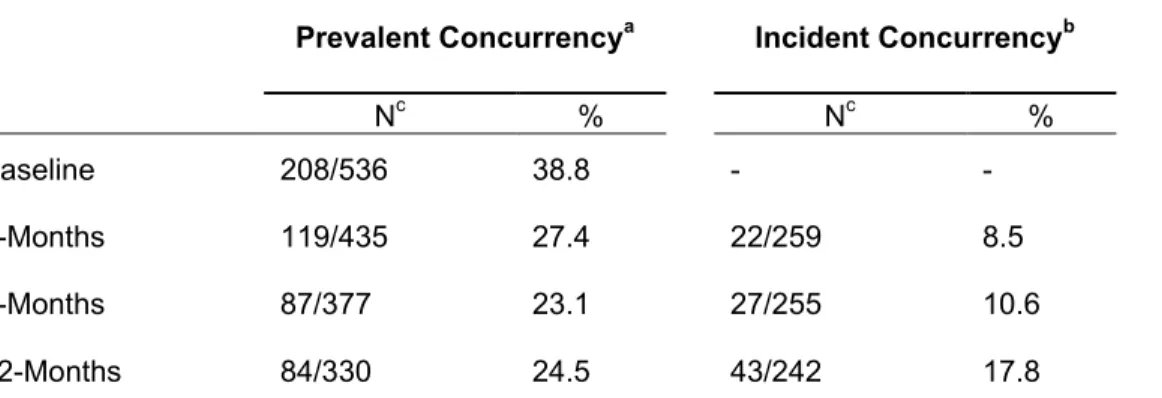
Hispanic/Latino) had a mean age of 23 years and lifetime median of 9 sex partners. At each interview (baseline, 4-, 8-, and 12-months), concurrency prevalence was, respectively, 38.8%, 27.4%, 23.1%, and 24.5%. Four-month concurrency incidence at 4-, 8- and 12- months was 8.5%, 10.6%, 17.8%,
respectively. Participants with recent PPNM were more likely to initiate concurrency (crude 4-month RR=4.6; 95%CI=3.0, 7.0; adjusted 4-month RR=4.0, 95%CI=2.6, 6.1).
Conclusions
Introduction
Concurrent sexual partnerships have been suggested as a significant contributing factor in STI/HIV transmission and acquisition2,52-55 by altering the structure of sexual risk networks and facilitating spread. Concurrency has been shown to be more common among young adults and racial/ethnic minorities, for a variety of social and behavioral reasons.11,12,17,53,56 In a study examining concurrency patterns among adolescent STD clinic attendees aged 14-19 years, having concurrent sexual partnerships within the last 6 months was common (31%) and associated with having chlamydia and gonorrhea.56 In a study of partnerships among a sample of young adults, Gorbach et al. found that 26% of partnerships had one or both partners involved in concurrent sexual relationships with others, and that those in partnerships in which one or both partners were non-monogamous were nearly 4 times as likely to report an STI diagnosis.17 Using nationally representative data from the 2002 National Survey on Family Growth (NSFG), Adimora and colleagues estimated that about 11% of men11 and about 6% of women57 had a concurrent partnership in the previous 12 months. Concurrency was associated with racial/ethnic minority status, age under 30 years, early age at first intercourse, and substance use. Javanbahkt and colleagues found that concurrency was common among African American, Hispanic and Asian women, and associated with risk of Human Papillomavirus (HPV) infection.8 Sexual partner concurrency may in part account for disproportionately high STI rates among young adults and racial/ethnic minorities. Understanding the factors associated with engaging in concurrent sexual behavior is an important step in reducing STI rates in these populations.
understanding of non-exclusivity in the relationship or whether one partner’s concurrency arises in response to the other’s.
Specific motivations for concurrency are thought to be associated with varying degrees of STI/HIV risk.17,18 In a qualitative study, Gorbach and colleagues (2002) identified six distinct concurrent partnership types in regard to underlying motivations: reciprocal, reactive, compensatory, transitional, separational, and experimental.17 These different types are associated with different STI/HIV risk profiles, network configurations, and STI/HIV risk.17,18 In our study, we seek to explore reactive concurrency, which, as described by Gorbach, is concurrency initiated following awareness of a partner’s involvement in other relationships. 17 Reactive concurrent partnerships are possibly motivated by the desire to establish fairness in the relationship and jealousy; they are often deliberately casual in nature, and as a result, are associated with higher risk. 17
Elucidating the social and behavioral motivations for initiating concurrency may provide valuable information for crafting STI/HIV prevention messages, particularly for high-risk groups. In this paper, we present longitudinal data on the potential contribution of perceived partner non-monogamy in motivating concurrency among a diverse sample of young adults.
Methods
Sample
We examined data from 536 individuals enrolled in the Project on Partner Dynamics (POPD), a cohort study of young adult heterosexual men and women in the Los Angeles area. POPD’s primary objective is to examine the influence of heterosexual relationship dynamics on sexual risk perceptions, intentions, and behaviors. Between 2006 and 2008, participants were recruited directly from community locations, including STD clinics, family planning clinics and community organizations, and indirectly through print and online advertisements. Eligibility criteria included age (18-30 years), reporting
Exclusion criteria included HIV infection (self-reported), current pregnancy, not speaking English or Spanish, or expecting to move outside the study area within a year. Eligible participants completed up to four interviews during one year, as they initiated, maintained and/or terminated sexual relationships.
Computer- and interviewer-assisted surveys were conducted in the participant’s preferred language (English or Spanish) using Questionnaire Development System (QDS) software, with interviewers matched to participants based on birth sex and in most cases, race/ethnicity. Participants were asked their sexual partnerships during a recall period of the past four months (at baseline) or the time since the previous interview (referred to here as the “recall period”; the median time between interviews was 4 months). For each partner, identified by initials or nickname, the participant was asked about the following items during the recall period: date of first sex (vaginal or anal sex; only ascertained for a newly reported partner), date of last sex (vaginal or anal), frequency of sex (vaginal, anal), whether the participant thought that the partner had other partners during the relationship with the participant (i.e., perceived partner non-monogamy), and alcohol or other drug use before or during sex.
Missing Data, Exclusions, and Logic Checks
For each partnership, we identified missing, out-of-range and seemingly erroneous dates. In cases where the date of first or last sex was missing, or date of last sex came before date of first sex, we set first and last sex dates in that interval to be equal to each other unless the frequency of sex was 0, in which case we excluded the partnership. In cases where dates of first or last sex reported were later than the interview date: if the problem was an apparent error in reported year, we corrected the year;
Definitions of Prevalent and Incident Concurrency
For each recall period, prevalent concurrency was defined dichotomously as having an overlap in time between two or more partnerships during the recall period, based on self-reported dates of first and last intercourse. Participants lost to follow-up or missing partnership data were excluded. Concurrency was classified as incident if the participant was not concurrent (i.e., no prevalent concurrency) during the previous recall period. Concurrency was coded using both a computer program and by manual review, to ensure classification accuracy.
Definition of Perceived Partner Non-Monogamy
We hypothesized that perception of a partner’s involvement in another sexual relationship (perceived partner non-monogamy, PPNM) may motivate the participant to initiate concurrency, such as in cases of reactive concurrency, 17 which we hypothesize occurs relatively quickly. For each ongoing partner during each recall period, PPNM was coded dichotomously using information from the question, “Which of the following best describes your relationship with [partner]”. A response “I am certain [partner] has had sex with others while involved with me” or “I believe he/she probably has had sex with other people while involved with me” was coded as PPNM. Because of uncertainty about reporting accuracy, PPNM information was not collected for partnerships reported as terminated. Thus, at the participant-level, PPNM data was missing for participants who had no active partnerships at the time of the interview.
We coded PPNM as present or absent for each participant-recall period, rather than in relation to specific partners, because concurrency that arises in response to PPNM need not necessarily involve the partner who was believed to be non-monogamous. In our statistical analyses we examined the
Statistical Analyses
Concurrency prevalence, with associated 95% confidence intervals, was estimated for the recall periods associated with baseline, 4-month, 8-month, and-12 month interviews. Concurrency incidence proportions were estimated for recall periods after the baseline interview. Participants who were coded as concurrent during a recall period were excluded from the concurrency incidence analyses for the
immediately following recall period. Associations between concurrency and PPNM were estimated (across all recall periods) with Poisson regression using generalized estimating equations (GEE) with a robust variance estimator, to account for multiple observations per participant. In longitudinal data, even when outcomes are common, several papers have demonstrated that modified Poisson regression with robust variance estimators can produce efficient and valid estimates of the risk ratio, in cases where the cluster size is large. 47-49
A directed acyclic graph (DAG)50, informed by a review of the literature, was used to identify potential confounders included in final models. DAG-identified confounders consisted of: birth sex, race/ethnicity, age at sexual debut, lifetime number of sex partners at baseline, and alcohol or other drug use during sex for the recall period for which PPNM was reported. All statistical modeling was conducted in SAS 9.4 (SAS Institutes, Cary, NC).
Figure 4.1: Project on Partner Dynamics Study Participants and Participant-Reported Partnerships Throughout One-Year of Follow Up
a Represents the total number of participants in the study at each interview. All of these participants were eligible for prevalence analyses. However, 176, 256, and 242 participants were ineligible at 4-, 8-, and 12-month incidence analyses because they were concurrent in the previous interval. b Represents the number of unique partnerships with valid data reported by participants present at
each interview, after excluding partnership reports with missing, out-of-range, or irreconcilable partnership date data: 5, 56, 43, and 31 partnerships at baseline, 4-month, 8-month, and 12-month interviews, respectively.
Results
Demographic Characteristics
Table 4.1: Selected Baseline Characteristics of Participants Enrolled in the Project on Partner Dynamics
Characteristic Na %
Birth Sex
Female 275 51.3
Male 261 48.7
Age (years) b 23 [3.8]
18-24 336 62.7
25-30 200 37.3
Race/ethnicity
White, non-Hispanic 159 29.7
Black, non-Hispanic 151 28.2
Hispanic/Latino 149 27.8
Other 77 14.4
Age at sexual debut (years)b 16 [2.6]
≤15 192 35.9
16-18 269 50.3
>18 74 13.8
Number of sex partners, lifetimeb 15 [18.9]
1 19 3.6
2-5 138 25.8
6-10 146 27.3
11-49 196 36.7
>49 35 6.6
Number of sex partners, past 4
monthsb 2 [1.5]
1 245 45.7
2 151 28.2
>2 140 26.1
Alcohol or other drug use during sexc
Yes 399 74.6
No 136 25.4
History of STD diagnosis
Yes 134 25.0
No 398 74.3
Don’t know 4 0.8
History of injection drug use
Yes 11 2.1
No 525 98.0
Sex with an injection drug user, ever
Yes 53 9.9
No 453 84.5
Don’t know 30 5.6
a Total number of non-missing observations. Missing observations: number of sex partners in lifetime (2); age at sexual debut (1); alcohol and other drug use in the past 4 months (1). b Mean and [standard deviation]. Median and (Interquartile Ranges) for age, age at sexual debut,
number of sex partners in lifetime, and number of sex partners in the past four months are as follows: 23 (6); 16 (3); 9 (13); 2 (2).
Prevalence and Incidence of Concurrency
Across the 1,678 4-month recall periods among participants, there were 498 periods with prevalent concurrency; in 92 of these periods, the participant had no concurrency in the preceding recall period, and was therefore classified as an incident case. A total of 271 participants (50.6%) were concurrent during one or more periods, including 117 (43.2%) females and 154 (56.8%) of males. Participants who were ever, versus never, concurrent in the study were, at baseline, more likely to be male (50.6% vs. 43.2%), and to report greater lifetime numbers of sex partners (19 vs. 11) and alcohol or other drug use during sex at baseline (82.3% vs. 66.7%).
Table 4.2: Prevalence and Incidence of Concurrent Sexual Partnerships Among Those Enrolled in the Project on Partner Dynamics
Prevalent Concurrency
a Incident Concurrencyb
Nc % Nc %
Baseline 208/536 38.8 - -
4-Months 119/435 27.4 22/259 8.5
8-Months 87/377 23.1 27/255 10.6
12-Months 84/330 24.5 43/242 17.8
a For each participant, prevalent concurrency at each interview was defined by an overlap in reported sexual partnership dates.
b Incident concurrency was defined as concurrency newly reported at an interview.
c Denominators for prevalence are all participants interviewed. Denominators for incidence are participants who were not concurrent during the previous recall period.
Prevalence and incidence of concurrency throughout the study are featured in Table 2. A substantial number of participants – 291 (54.3%), 175 (41.9%), 131 (36.2%) and 131 (34.0%),
![Table 4.1: Selected Baseline Characteristics of Participants Enrolled in the Project on Partner Dynamics Characteristic N a % Birth Sex Female 275 51.3 Male 261 48.7 Age (years) b 23 [3.8] 18-24 336 62.7 25-30 200 37.3 Race/ethnicity](https://thumb-us.123doks.com/thumbv2/123dok_us/8302336.2198835/48.918.239.678.142.885/selected-baseline-characteristics-participants-enrolled-dynamics-characteristic-ethnicity.webp)