THE MIDDLE MANAGER ROLE IN ACADEMIC LIBRARIES
Ericka J. Patillo
A dissertation submitted to the faculty at the University of North Carolina at Chapel Hill in partial fulfillment of the requirements for the degree of Doctor of Philosophy in the School of Information
and Library Science.
Chapel Hill 2017
Approved by: Barbara B. Moran Paul Solomon Diane Kelly Claudia Gollop
ABSTRACT
Ericka J. Patillo: The middle manager role in academic libraries (Under the direction of Barbara B. Moran)
Dedicated to Dr. Deborah K. Barreau, my initial doctoral advisor, and Evangelist Evelyn B. Brown, my aunt, whose memories inspired me to
ACKNOWLEDGEMENTS
None of this would have happened without the love and support of several people, especially Barbara Patillo and Renee McBride, who turned their lives upside down so I could pursue this dream. This also could not have happened without the financial and moral support of UNC-CH’s Initiative for Minority Excellence, through which I received funding for Initial Summer Research, my first year of coursework, and expenses for travel for data collection. I especially want to thank my friends at United Church of Chapel Hill and my writing group, particularly Rachael Clemens and Angela Murillo.
TABLE OF CONTENTS
LIST OF FIGURES . . . ix
LIST OF TABLES . . . x
CHAPTER 1: INTRODUCTION . . . 1
1.1 Rationale . . . 2
1.2 Statement of the problem . . . 3
1.3 Purpose of the study . . . 4
1.4 Research design . . . 5
1.5 Definitions of terms . . . 6
1.6 Overview of the research design appropriateness . . . 6
1.7 Research questions . . . 7
1.8 Theoretical/conceptual frameworks . . . 8
1.8.1 Pilot study . . . 8
1.8.2 Role theory . . . 10
1.8.3 Middle manager activity and behaviors . . . 11
CHAPTER 2: REVIEW OF THE LITERATURE . . . 13
2.1 An overview of role theory . . . 13
2.2 Theory and research related to middle management . . . 25
2.2.1 The nature of managerial work . . . 25
2.2.2 The nature of middle management . . . 27
2.2.3 Strategy and sensegiving . . . 30
2.2.4 Middle managers’ vulnerability to role conflict and ambiguity . . . 40
2.2.5 Impacts of role conflict and role ambiguity . . . 45
CHAPTER 3: METHODOLOGY . . . 53
3.1 Research method and design appropriateness . . . 54
3.1.1 Case study research design . . . 56
3.1.2 Case study methods . . . 58
3.1.3 Research design trustworthiness . . . 60
3.1.4 The researcher’s role . . . 62
3.1.5 Data collection overview . . . 63
3.2 Research questions . . . 64
3.3 Participant selection . . . 65
3.4 Sampling, or bounding the collection of data . . . 66
3.5 Data collection procedures . . . 69
3.6 Instrumentation . . . 70
3.7 Data capture protocol . . . 73
3.8 Data management . . . 74
3.9 Data analysis . . . 76
3.10 Ethical considerations . . . 82
CHAPTER 4: RESULTS . . . 84
4.1 Overviews . . . 85
4.1.1 Overview of Libraries . . . 85
4.1.2 Overview of Middle Managers . . . 91
4.1.3 Overview of Senior Managers . . . 91
4.1.4 Overview of Direct Reports . . . 92
4.2 Research Questions . . . 93
4.2.1 Research Question 1 . . . 93
4.2.2 Research Question 2 . . . 103
4.2.3 Research Question 3 . . . 107
4.2.4 Research Question 4 . . . 108
4.3 Cross case analysis . . . 110
4.3.2 UrbanULibrary . . . 117
4.3.3 RuralULibrary . . . 120
CHAPTER 5: DISCUSSION . . . 127
5.1 Status of the employees . . . 127
5.2 Orientation of the middle manager’s work unit . . . 128
5.3 Time-in-position of the middle manager . . . 130
5.4 What “middle management” means . . . 131
5.5 Impact of this study . . . 142
5.5.1 Forming the middle management role . . . 142
5.5.2 LIS education . . . 143
5.5.3 Theoretical concepts . . . 144
CHAPTER 6: CONCLUSIONS . . . 155
6.1 Empirical contributions . . . 155
6.2 Theoretical contributions . . . 157
6.3 Practical contributions . . . 159
APPENDIX A: INTERVIEW QUESTIONS . . . 162
APPENDIX B: QUESTIONNAIRE FOR MIDDLE MANAGERS . . . 165
APPENDIX C: TRADITIONAL MANAGERIAL ACTIVITIES . . . 167
LIST OF FIGURES
Figure 2.1 A model of the role episode (Katz & Kahn, 1966, 182) . . . 18
Figure 2.2 The taking of organizational roles (Katz & Kahn, 1966) . . . 21
Figure 2.3 Characteristics of strategic roles (Floyd & Wooldridge, 1996) . . . 37
Figure 4.1 Expectations of all participants and MMs . . . 94
Figure 4.2 Expectations by role type . . . 95
Figure 4.3 Expectations of all participants, by library . . . 96
Figure 4.4 Expectations consensus for each MM role set . . . 97
Figure 4.5 MM calendar activities . . . 102
Figure 4.6 Overall Strategic Activity and Ambiguity . . . 110
Figure 4.7 Expectations of DowntownULibrary, by role type . . . 111
Figure 4.8 Expectations of all DowntownULibrary participants . . . 114
Figure 4.9 Overall Strategic Activity and Ambiguity (DowntownULibrary) . . . 116
Figure 4.10 Expectations by role type (UrbanULibrary) . . . 118
Figure 4.11 Expectations of all participants (UrbanULibrary) . . . 121
Figure 4.12 Expectations of all participants (RuralULibrary) . . . 123
LIST OF TABLES
Table 2.1 Categories of Managerial Activities (Luthans et al., 1988a) . . . 26
Table 2.2 Middle Management Work (Floyd & Wooldridge, 1996) . . . 30
Table 2.3 Middle Managers’ Four Strategic Roles . . . 36
Table 3.1 Example of stratified purposeful sampling. . . 68
Table 3.2 Start List of Codes. . . 77
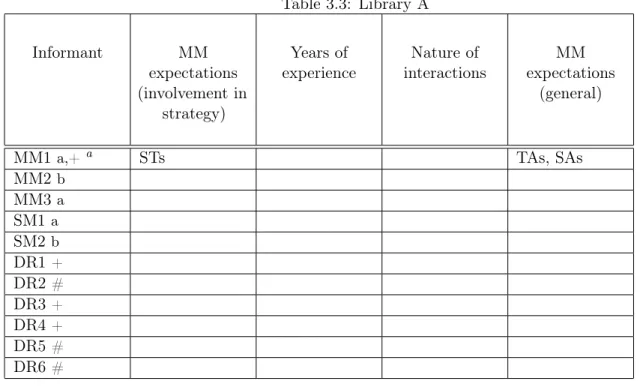
Table 3.3 Data matrix example: Library A . . . 80
Table 3.4 Data matrix example: MM activities . . . 80
Table 3.5 Data matrix example: MM conflict and ambiguity . . . 81
Table 3.6 Data matrix example: Expectations . . . 81
Table 4.1 DowntownULibrary Department Head Responsibilities . . . 87
Table 4.2 RuralULibrary Department Head Responsibilities . . . 89
Table 4.3 Department Heads at DowntownULibrary and RuralULibrary . . . 90
Table 4.4 Stratified purposeful sampling used in this study. . . 91
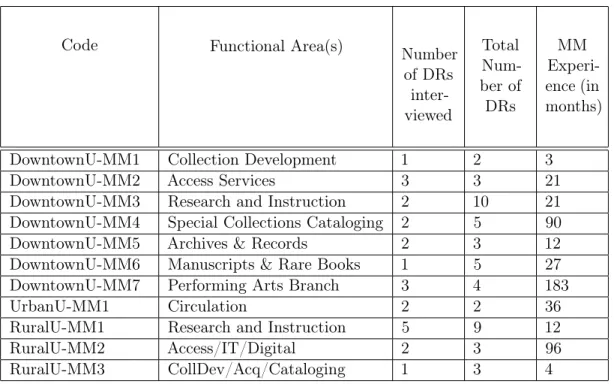
Table 4.5 Brief descriptions of MM participants . . . 92
Table 4.6 Range of expectations sent to MMs . . . 96
Table 4.7 Conflict, Ambiguity and Turnover Intention Scores . . . 107
Table 4.8 MMs’ Strategic Activity Scores . . . 108
Table 4.9 MMs’ Strategic Activity Scores (mean) . . . 109
Table 4.10 Correlation of MM Conflict and Strategic Activity . . . 109
Table 4.11 Expectations of department heads at DowntownULibrary . . . 113
Table 4.12 DowntownULibrary MM Questionnaire Scores . . . 115
Table 4.13 DowntownULibrary MMs’ Strategic Activity Scores . . . 116
Table 4.14 UrbanULibrary MM Questionnaire Scores . . . 119
Table 4.15 UrbanULibrary MMs’ Strategic Activity Scores . . . 120
Table 4.16 Expectations of department heads at RuralULibrary . . . 122
Table 4.17 RuralULibrary MM Questionnaire Scores . . . 124
CHAPTER 1 Introduction
One factor that influences organizational effectiveness is the extent to which employees understand their roles and the expectations of the organization. A role is a socially defined pattern of behavior that is expected of an individual in a designated function in a particular position within a group, organization, or society. In the organizational setting, roles are designed to fulfill the goals and objectives of the organization. Materials such as job descriptions, organizational charts, and governance documents articulate the behaviors that are expected of individuals who hold positions; however, documents are not the only “role senders”. People who interact with the individuals in these positions also have expectations about their behaviors, and occasionally these expectations clash. Incongruent expectations among a position’s role set members can cause the incumbent to experience role conflict, role ambiguity, stress, and turnover intentions, which, in turn, may impact organizational effectiveness, measured in efficiency, productivity, profit margins, and goal accomplishment.
to the middle manager leaving the organization. Turnover is costly for organizations in terms of expense and effectiveness.
Middle managers are vulnerable to role conflict and role ambiguity because of the nature of their positions. Middle managers hold boundary-spanning positions that put them in contact with a variety of employees, operations, strategies and clients. In addition to holding boundary-spanning positions, middle managers, who are already known to be involved with strategy implementation, are also increasingly involved in strategy formation. Middle managers’ involvement in strategy formation is an emerging phenomenon. Middle manager involvement in strategic activities and boundary-spanning activities contributes to increased levels of role ambiguity and role conflict. In turn, role conflict and role ambiguity are related to higher intentions to leave oneâs job.
The present study examined these phenomena within the academic library context, providing a description and analysis of the experiences of several middle managers who work in university libraries. Through interviews with the members of the middle managers’ role set (the focal middle managers, their direct supervisors, and their direct reports), analysis of organizational documents and middle managers’ calendars and resumes, and observations of the middle managers in their natural environment, what emerged is a bricolage of the meanings of the middle manager role within the academic library context. The expectations consensus indicates that academic library middle managers are expected to communicate effectively, maintain technical proficiency in their functional areas, guide, direct and motivate employees in their units, maintain relationships, and coordinate the work of their units. Overall, the academic library middle managers who participated in this study reported low role conflict, role ambiguity, and turnover intentions, and on average, they participate in strategic activities only occasionally. However, analysis of the rich data gathered indicated employee status, the nature of the library unit, and time-in-position of the middle manager as factors that influence the middle manager’s experience of role conflict, role ambiguity and turnover intentions.
1.1 Rationale
There are few empirical research contributions about middle managers in the academic library context. An intensive, naturalistic, multiple case study was the best approach for the purposes of this study because it allowed for a close examination of a small sample of academic library employees and relevant organizational documents in some detail, and it emphasized research in context.
focused on the meanings of the academic library middle management role. This study assumes that context is an important factor in understanding middle manager roles; that is, middle management in academic libraries is formed and understood differently than middle management in other enterprises, especially for-profit entities. Understanding how the middle management role is perceived and how the expectations are formed are important factors in organizational effectiveness and managerial training.
Role theory is an appropriate lens to use to interpret the organizational realities of academic library middle managers because it has been used to examine the role characteristics of other middle managers. Sociologists and social psychologists study human social behavior, including that within the context of organizations. Originating in the 1930s (Mead, 1934; Moreno, 1947; Linton, 1936), role theory has been utilized to study the behaviors, attitudes, and cognition of people in organizations. Organizational actors assume roles and act to produce outcomes that maintain and re-energize the work of the organization. The roles in an organization come about through planning and design, but also through the social interplay of people’s perceptions and expectations. Role theory is useful as a lens to examine the ways in which the organizational actors create and influence the roles of middle managers.
1.2 Statement of the problem
Modern managerial trends have suggested that the flattening of hierarchies, indicated by the elimination of multiple organizational layers and the direct supervision of frontline employees by higher level administrators, increases efficiencies by “taking out the middle man” and distributing decision making authority throughout the organization, especially “on-the-ground” at the point of need (e.g., to have the authority to make an autonomous decision when serving a customer). Other potential benefits of eliminating middle management positions include more direct lines of communication between and among front-line staff, professionals and senior-level managers, leading to the democratization of organizational information, and the decrease in personnel expenditures due to the elimination of positions.
other organizational actors may interact with and benefit from middle managers differently, and arbitrarily decreasing middle management positions might negatively impact the organization. The employees in the middle manager’s organizational unit may have a different perception of the behaviors that constitute the middle manager’s role than what is articulated in organizational documents or by the middle manager’s direct supervisor.
Because middle managers’ contributions to the goals and mission of the organization are not always easily discernible, top administrators may unnecessarily eliminate these positions during economic crises, major restructuring projects, and after the implementation of innovative technologies without careful consideration. For example, flattening the organizational hierarchy to create cost-cutting advantages and efficiencies may increase the remaining managers’ spans of control to the extent that they become ineffective managers. Senior level administrators may not be aware of the ways in which their middle managers help lower-level employees make sense of organizational events; this is one role that may be understood by viewing middle management from the perspectives of other closely related positions in the organization. Middle-level managers, with their unique vantage point, hold much of the organization’s knowledge and memory, which means they may better facilitate change processes than the executives or remaining staff. Flattening hierarchies and restructuring are activities that are stressful for the remaining middle managers, who now have more responsibilities.
What does middle management mean in today’s academic libraries? Even in organizations with well-documented position descriptions or governance documents, the middle manager (MM) may have duties and perform activities that are not articulated in organizational documents. And, the middle manager has multiple relationships in the organization, with their superiors, their peers, their direct reports, external clients and other stakeholders. All of these organizational actors have expectations of the middle manager, and they may or may not be congruent. How MMs perceive these competing expectations may affect their abilities to do their work, and they may also create other consequences like stress.
1.3 Purpose of the study
manager? The objectives of this study were to explore and describe the roles of the academic library middle manager through the lenses of the members of the middle manager’s role set; to learn if there are discrepancies among the expectations sent to the middle manager; to learn if these expectations include strategic activities; and to discover any evidence that supports the antecedents and conditions of role conflict and role ambiguity that are found among middle managers in other contexts and settings.
Since there is little evidence-based knowledge about the role of middle managers in academic libraries, the study employed a multi-level, multiple case study research design to learn the expecta-tions of academic library middle managers from an analysis of the organizational setting in which the middle manager’s work occurs. The examination included observations of the work setting, analysis of organizational documents, interviews with members of the middle manager’s role set (middle managers, senior level managers that supervise middle managers, and supervisors who report to middle managers), and the middle manager’s responses to role conflict, ambiguity, and turnover intentions questionnaires. In other contexts, middle managers have been found to hold boundary-spanning positions, to participate in strategic activities, and to experience role conflict and ambiguity and its consequences; this research will help determine how findings in the management and sociology literature regarding middle managers might apply to the academic library setting.
Middle management in academic libraries is often discussed in the Library and Information Science (LIS) literature but seldom studied in a systematic way. Given this situation, it is important to examine the role of middle management in academic libraries more closely and through several lenses. This study increases understanding of the roles of middle management in university libraries. 1.4 Research design
This intensive, naturalistic study used a multiple case study approach to construct an under-standing of the role expectations of academic library middle managers. Through observations, interviews, questionnaires, and document analysis, qualitative and quantitative data were gathered from the organizational setting, several members of the middle managers’ role set, and organizational documents.
is the case, so the number of cases was dependent upon the number of middle managers per library and the level of participation of the middle managers. The number of cases was 11.
The data were initially analyzed based on codes derived from the middle manager strategic activity scale (Floyd & Wooldridge, 1996), the Taxonomy of Managerial Performance Requirements (Borman & Brush, 1993), and the abridged role conflict and ambiguity scales (Murphy & Gable, 1988). Data matrices enabled cross-case analyses and revealed patterns of expectations and activities across organizations and middle management positions.
1.5 Definitions of terms
Middle Manager: “any individual who is regularly involved in, or interfaces with, the organization’s operations and who has some access to upper management” (Floyd & Wooldridge, 1996, 111).
Role: A socially defined pattern of behavior that is expected of an individual in a designated function in a particular position within a group, organization, or society (Bass, 2008).
Role Theory: A theoretical lens that theorizes the functions and behaviors of individuals within a complex sociological environment. It is premised upon individuals behaving according to social identities and situations (Biddle, 1986).
Role Set: The set or group of people that are in contact with the actor and have expectations for how the actor will function and behave (Robinson, 2012).
Role Expectations: The expectations held by persons in the actorâs role set concerning the function and behaviors of the actor (Robinson, 2012).
Role Perception: What an individual sees are the behaviors needed to enact a role (Bass, 2008).
Role Conflict: The concurrent presence of incompatible and/or conflicting role expectations (Robinson, 2012).
Role Ambiguity: A condition of uncertainty about what is expected and what role behavior will be accepted and rewarded (Bass, 2008).
1.6 Overview of the research design appropriateness
about role expectations (Jusoh et al., 2011), role conflict (Madden, 2013; Floyd & Wooldridge, 2000), and turnover intentions (Madden, 2013) from a large number of subjects; other research designs have used observations (Hales & Mustapha, 2000) and interviews (Robinson, 2012; Hales & Mustapha, 2000; Mantere, 2008) to collect and analyze qualitative data related to middle managers or mid-level positions and role factors.
In an attempt to understand a particular social situation and a role within a particular context, the range of research design possibilities was narrowed to the naturalistic paradigm. Few of the earlier studies gathered data from all of the role senders in a particular organizational setting1. Katz and Kahn (1966) suggested that such a comprehensive view would be most useful in understanding role behavior in an organizational setting. An intensive, naturalistic approach is more likely to deliver rich data enabling the identification of the competing role expectations and perceptions directed at one focal personâthe middle manager in academic librariesâand whether or not this person experiences role conflict, ambiguity, or turnover intentions. Also, in previous studies of middle manager activity, conflicting findings about their involvement in strategic activity appear to be related to the research design; this study attempts to address these methodological issues by gathering data from the middle managers as well as the members of their role set. The choice of methodology was based on a determination of the best fit for an exploration of the meanings of the middle manager role in an academic library setting from the points of view of several organizational actors and the organization itself.
1.7 Research questions
1. What are the role perceptions and expectations of the academic library middle manager? This question addresses the foundation for this study and is addressed using in-depth interviewing techniques, observations, and document analysis. What do the middle managers believe to be the roles and expectations for themselves, and what do the environment (the context) and the members of the middle managerâs role set tell us about these roles and expectations? Is there agreement among the members of the middle managerâs role set regarding middle manager
1
strategic activity? How do expectations vary among the members of the middle managersâ role set?
1a. What activities and behaviors do academic library middle managers engage in to fulfill their roles and job duties?
2. Where do the perceived roles and expectations originate? How do academic library employees learn what middle manager means? What words are used in organizational documents to describe what middle managers are expected to do?
3. To what extent do academic library middle managers experience role conflict, role ambiguity, and turnover intentions?
4. How are middle manager role conflict, role ambiguity, or turnover intentions related to the middle managers’ participation in strategic activities?
1.8 Theoretical/conceptual frameworks
To situate this study in the existing research and demonstrate its usefulness, three major discourses were examined: organizational role theory (ORT), middle manager strategic activity, and academic library administration. An earlier pilot study used a grounded theory approach; it is introduced here to support the use of role theory and the naturalistic methodology.
1.8.1 Pilot study
A number of key concepts emerged during the data collection and analysis process. A primary concept was role conflict in that the senior managerâs expectations of this middle management role were different than the expectations of the middle managerâs peers and direct reports. Specifically, the senior manager expected vision and leadership, while the middle managerâs peers and direct reports expected technical expertise in addition to vision, leadership, and traditional managerial functions such as training and mentoring. Role theorists assert that characteristics of the role sender influence how the role is sent and how those role perceptions are perceived. Role senders who have more power, authority or influence are more likely to have their expectations met. Role senders who have less power, authority or influence, or who send conflicting or incongruent role perceptions, may be discounted or ignored by the focal person (Katz & Kahn, 1966).
Another key concept that emerged in the findings of the pilot study was role ambiguity. Based on observation and participant responses, it came to light that a recent restructuring had taken place, and multiple people expressed a lack of clarity about the middle manager’s new responsibilities.
The third key concept that emerged was a conflict between values espoused and values enacted. There was at least one lost opportunity to enact the value of collaboration, which was articulated in several library documents. Also, although the middle managerâs job description indicated specific collaboration partners, these did not include her peers, with whom the middle manager frequently collaborated on a number of cross-departmental projects.
Finally, the researcher observed many behaviors of the middle manager that may be classified as sensegiving activities. Sensegiving is a turbid theoretical construct, and what constitutes sensegiving activities is an unsettled area; however, the observations, though limited, made in this pilot study can be compared to those found in several studies on sensegiving and managers (Smith et al., 2010). The middle managerâs behaviors and interpretations during sensegiving activities may influence othersâ expectations of the middle manager role.
this exploration suggested that sensegiving and strategic and traditional management activities might be useful frameworks for describing the expectations of middle manager behavior in academic libraries.
1.8.2 Role theory
Role theory is a theoretical lens that attempts to explain and predict the functions and behaviors of individuals within a complex sociological environment. It is premised upon individuals behaving according to social identities, situations, and expectations (Biddle, 1986). It is most commonly used to describe that which an actor is expected to do, i.e., the actions and behaviors associated with a specific social position (Robinson, 2012). In this study, the complex sociological environment is the academic library, and the specific social position is that of middle manager. Relevant role theory concepts include the organizational perspective, role expectations, role conflict, role ambiguity, and turnover intentions.
Organizational perspective
The organizational role theory perspective focuses on the pre-planned, task-oriented and hi-erarchical social systems found in formal organizations (Biddle, 1986). Organizational roles and role behaviors are often position-based and defined by documents such as job descriptions and organizational charts (Katz & Kahn, 1966), but they are also influenced by the social interplay of peopleâs perceptions and expectations. The organizational setting impacts the perceptions and expectations of organizational roles (Katz & Kahn, 1966; Lynch, 1976). Organizational role theory is applicable as a framework to examine the ways in which the organizational actors create and influence the roles of middle managers.
Expectations
Role conflict, role ambiguity, and turnover intentions
The concepts of role conflict and role ambiguity express possible outcomes of incongruent expectations among the members of a role set. Role conflict and role ambiguity have been found to be negatively associated with six different aspects of job satisfaction and positively associated with tension, anxiety, propensity to leave the organization, and individual productivity (Jackson & Schuler, 1985; Madden, 2013; Tubre & Collins, 2000). Middle managers who experience incongruent expectations from the members of their role set are more likely to have lower job satisfaction, lower job performance, and higher turnover intentions.
1.8.3 Middle manager activity and behaviors
There have been many attempts to describe and codify managerial activity. The activities and expectations that middle managers face are varied and contextual (Katz & Kahn, 1966; Lynch, 1976). Relevant research deals with three categories of managerial activity: traditional (or classic functions), strategy, and sensegiving. For this study, The Taxonomy of Managerial Performance Requirements categories were used to describe middle managers’ traditional activities. Complete Taxonomy definitions are provided in Table C.1.
The Taxonomy of Managerial Performance Requirements Dimension Names (Borman & Brush, 1993):
1. Planning and organizing
2. Guiding, directing, and motivating subordinates and providing feedback 3. Training, coaching, and developing subordinates
4. Communicating effectively and keeping others informed 5. Representing the organization to customers and the public 6. Technical proficiency
7. Administration and paperwork
8. Maintaining good working relationships
9. Coordinating subordinates and others resources to get the job done 10. Decision making/problem solving
11. Staffing
12. Persisting to reach goals 13. Handling crises and stress 14. Organizational commitment
17. Selling/influencing
18. Collecting and interpreting data
Strategic activities of the middle managers were explored using Floyd and Wooldridge’s Four Strategic Roles (Floyd & Wooldridge, 1996):
1. Championing strategic alternatives 2. Synthesizing information
3. Facilitating adaptability
4. Implementing deliberate strategy
The strategic activities questionnaire is available in Chapter B.
Sensegiving activities vary and no theoretical construct for sensegiving was used in this study. Sensegiving activities include meetings, de-briefings after meetings, modeling behavior, etc.
CHAPTER 2
Review of the Literature
To situate this study in the existing research and demonstrate its usefulness, three major areas of literature were examined. First, role theory scholarship is reviewed including approaches used by theorists to understand middle management. Second, types of middle manager activity are described. Finally, the LIS literature is examined to establish the context of the academic library.
2.1 An overview of role theory
Organizational effectiveness largely depends on the extent to which employees understand their roles and the expectations of the organization. Organizational role theory presents a useful framework for studying the positions, roles, expectations and behaviors at play in organizations. Organizational actors assume roles and act to produce outcomes that maintain and re-energize the work of the organization. The roles in an organization come about through planning and design, but also through the social interplay of people’s perceptions and expectations. Role expectations, behaviors and activities, role consensus, role ambiguity and role conflict have impacts in the organizational setting, particularly on job satisfaction, performance and turnover intentions. If expectations are ambiguous or in conflict, the consequences may negatively impact the organization and its goals and objectives. Organizational role theory (ORT) is a particular theoretical perspective that can be utilized to examine the ways in which organizational documents and organizational actors create and influence the roles of middle managers.
roles, within and across various societal realms, and these roles may have congruent or competing expectations. For example, a woman may be a mother and an employee, and the sets of behaviors expected for each position are different; at some points they might overlap, and in others they might conflict. A single mother who is a low-wage earner with two wage jobs is compelled to work more than 40 hours a week to provide housing and food for her child; when this mother needs time off work to tend to her child’s health, to meet with teachers, and to perform other maternal activities, she cannot afford to take the time off work as this would cause a decrease in her income. This mother may experience stress as she tries to deal with these incongruent expectations. Role theory provides one way to explore the relationships among these roles and behaviors, and provides a framework for possible outcomes and consequences of role perceptions and expectations.
Several terms contribute to the ensuing literature review and discussion1:
Role: A socially defined pattern of behavior that is expected of an individual in a designated function in a particular position within a group, organization, or society (Bass, 2008).
Role Sender: A person who is in contact with the actor and has expectations for how the actor will function and behave.
Role Set: The set or group of people that are in contact with the actor and have expectations for how the actor will function and behave (Robinson, 2012).
Role Expectations: The expectations held by persons in the actor’s role set concerning the function and behaviors of the actor (Robinson, 2012).
Role-repertoire: This term refers to the unit larger than role-set, and would include all the role-sets of a particular person (Heiss, 1990).
Role Perception: What an individual sees are the behaviors needed to enact a role (Bass, 2008).
Role Ambiguity: A condition of uncertainty about what is expected and what role behavior will be accepted and rewarded (Bass, 2008).
Role Strain: The experience of an actor when the role obligations associated with the role are greater than can be accomplished without stress and strain (Robinson, 2012).
Stress: The experience of the actor as a consequence of the culmination of physiological and psychological demands placed upon the actor in the role (Robinson, 2012).
Role Overload: A situation in which role requirements exceed the limits of time, resources, and capabilities (Bass, 2008).
Coping: The process or processes employed by an actor to limit or negate the negative aspects of stress (Robinson, 2012).
The five major perspectives of role theory are Functional, Symbolic Interactionist, Structural, Organizational, and Cognitive Role Theory (Biddle, 1986), and they represent the broad range of the conceptualizations of role theory from early thought to contemporary theorizing. Because the vocabulary varies across these theoretical perspectives, Biddle (1986) provides a summary of key concepts that have stimulated research. These key concepts are consensus, conformity, role conflict, and role taking.
intellect and mental capacity. According to the symbolic interactionist perspective, role taking is the process through which we originally see ourselves. “It is through the perspectives of others that we become aware of self and act toward self” (Charron, 1995, 107). The self continues to be defined and redefined through interaction with others. Role taking is necessary for understanding the other and being understood by the other, and contributes to all interaction, to the individual, and to group life. Taking the role of the other is basic to human cooperation, is the basis for human symbolic communication, and allows us to see the present both from our own past and from future perspectives. This concept explains one process through which MMs receive and interpret the expectations sent to them from the members of their role set and through which role set members send expectations.
Symbolic Interactionist and Organizational Role Theory perspectives provide diverse explanations of role taking and role consensus that, if taken together, present a more satisfying description. Symbolic Interactionism holds that we are who we are because of the expectations of and interactions with our social groups, and the ability to exhibit appropriate role behavior determines ongoing participation in group life (Charron, 1995). However, the assumption of shared norms as an underlying principle of consensus is problematic (Biddle, 1986). In ORT, the expectations of people who hold positions in organizations are primarily determined by organizational objectives and articulated in official documentation (Katz & Kahn, 1966; Biddle, 1986); however, each role sender has their own expectations of organizational positions and sends them to the job occupant. A role sender’s role expectations reflect the sender’s conception of the focal person’s position and his or her abilities (Katz & Kahn, 1966). In addition to the expectations of others, consideration of the actor’s own perception of their role adds to the complexity of understanding role consensus, role taking, and role behaviors. Consensus, role conflict and role taking are three of the key concepts that undergird the current study.
behaviors the people in her role sets believe make up her roles. This woman may experience role conflict because some of the role expectations of mother are incompatible with the role expectations of employee (especially of two organizations, which may cause additional role conflict); this is known asinterrole conflict (Katz & Kahn, 1966). This woman may eventually experience role strain and stress in trying to keep up with the (competing) demands of her multiple roles.
Role conflict can also come from the absence of role consensus among the woman’s role set. If the people (or institutions) who form the role set for her role as mother disagree about the behaviors required for this role, she may experienceintersender conflict, which means that expectations from one role sender are in conflict with the expectations from other role senders. Another type of role conflict isintrasender conflict, in which the expectations from one role sender are themselves incompatible (Grover, 1993; Katz & Kahn, 1966).
The ORT perspective focuses on the pre-planned, task-oriented and hierarchical social systems found in formal organizations (Biddle, 1986). The roles in an organization come about primarily through planning and design, and role behaviors are specified in written documents and coded presentations (Katz & Kahn, 1966). According to ORT, “role” is defined as a set of recurring behaviors or activities that are performed within a specific position or job within an organization (Biddle, 1986; Katz & Kahn, 1966; Kahn et al., 1964). Katz and Kahn (1966), in their seminal work
The social psychology of organizations, suggest a framework for “the taking of organizational roles” by modeling the environment, the process, the relationships, the mediators, and the consequences of role expectations and role sending within the context of a type of open system: the formal organization. Katz and Kahn assert that their theory links the “organizational and individual levels by making explicit the social-psychological processes by which organizational roles are defined and role behavior is evoked in the ongoing organization” (Katz & Kahn, 1966, 172). They argue that because organizations are contrived social forms, they persist during situations of personnel turnover as long as the psychological cement holds.
make up the role set of the focal position. Unlike the relationships that occur among roles outside the organizational setting, in formal organizations, role behaviors are specified in written documents and coded presentations, and “the roles people play are more a function of the social setting than of their own personality characteristics” (Katz & Kahn, 1966, 174). Indeed, according to some role theorists, middle management is a structured and formally defined role that includes concrete behavioral expectations (Ashforth, 2001; Biddle, 1986), and this role can be learned and performed by a wide range of individuals regardless of their personal preferences (Guillen & Saris, 2013). In the open systems perspective, the approach is to identify the relevant subsystem and “locate the recurring events which fit together in converting some input into an output. This can be done by ascertaining the role expectations of a given set of related offices, since such expectations are one of the main elements in maintaining the role system and inducing the required role behavior” (Katz & Kahn, 1966, 174). While the roles are assumed to be based on normative expectations, norms may vary among individuals, and pressures of informal groups may also influence expectations (Biddle, 1986).
Figure 2.1: A model of the role episode (Katz & Kahn, 1966, 182)
Katz and Kahn (1966) focus on four role theory concepts within the context of the organizational setting [See Figure 2.1, A model of the role episode] that constitute theirrole episode: role expectations, sent role, received role, androle behavior. In their explanation of arole episode, they describe the
behavioral standards applied to the holder of a particular office or position; the sent role refers to information sent by members of the role set to the focal person in order to influence role behavior;
received role is the focal person’s perceptions of their role based on information sent from their role set and those they sent to themselves; androle behavior is the focal person’s response, indicated by actions. Note the response can be compliance or resistance, or there may be additional side effects, such as stress or role strain. In ORT terms, role-compliance is achieved when expectations are clear and well defined and the incumbent performs as expected. When both the organization and the incumbent are in agreement, resulting in the high performance of the incumbent, then role-consensus is said to be in operation (Day, 2011; Katz & Kahn, 1966).
The role-episode review process is necessarily dynamic, and is underpinned by four assumptions:
• that an employee will “take” or accept a role that is conferred upon them by members of the organization (the role-taking assumption); and
• there will be consensus regarding the expectations of all roles (the role-consensus assumption); and
• that employees will comply to the behavior that is expected (the role-compliance assumption); and
• the belief that role-conflict will arise if expectations are not consensual (the role-conflict assumption) (Biddle, 1986).
The role-sending and role-receiving functions continue until the role occupant has complied with the role expectations of the members of his or her role set (Wickham & Parker, 2007). The role episode indicates evolving role expectations (Day, 2011).
In the organizational setting, there are many positions, and each could be focal depending on the focus of the study. Each organizational actor has a role set, has role expectations, sends roles, receives roles and has role behavior. Furthermore, as Katz and Kahn note, there are limitations to the model. First of all, role expectations is chosen as a convenient starting point; secondly, in an organization there is usually more than one role sender and more than one set of expectations and these may be in conflict; finally, there is the abstraction of the role episode from the context of organizational events. The authors include intrasender, intersender, and interrole conflict as factors that inhibit role consensus throughout the organization. These were described above. Katz and Kahn also make reference to person-role conflict, which refers to conflict that occurs when “role requirements violate the needs, values or capacities of the focal person” (Katz & Kahn, 1966, 185). This kind of conflict may also lead to behaviors by the focal person that are unacceptable to members of his role set. A particular kind of role conflict that is prevalent in the workplace is that of role overload, which is a type of intersender conflict whereby the role senders’ expectations are legitimate, but due to the limitations of time and/or quality requirements, the focal person cannot accomplish all of the expected tasks. He must decide which pressures are more important, leading to a kind of person-role conflict.
In addition to the role episode, Katz and Kahn theorized on the causal factors involved in the taking of organizational roles, represented in Figure 2.2. Here, the authors demonstrate how organizational, personality and interpersonal factors influence the expectations, perceptions and behaviors of the role senders and the focal person. Organizational factors, which may be stable or unstable, affect how the role senders determine what the role expectations are. Organizational factors include structure, policies, rewards and penalties. For example, role-taking expectations are set out in organizational documents (Day, 2011) such as organizational charts, job descriptions and promotion policies. Organizational factors may be inadequate as causal factors in the contemporary organizational context because of the additional influences of nonwork-related role requirements (Wickham & Parker, 2007). The personality traits of the focal person and the interpersonal relations between the focal person and the role sender affect how the role is sent, how the role is received, and how the role behavior of the focal person is interpreted by the role senders.
Figure 2.2: A theoretical model of factors involved in the taking of organizational roles (Katz & Kahn, 1966, 187)
when organizational actors are unsure about the behaviors and activities involved in their jobs, are unsure about the criteria upon which they will be evaluated, and may be uncertain about how their jobs fit into the overall organizational strategy (He et al., 2011). Role ambiguity is negatively associated with organizational commitment and job satisfaction (Ngo et al., 2005; Slattery et al., 2008). Role theory has been used to examine how factors such as time constraints and inconsistencies in role requirements, organization, rewards, and modes of accountability in multiple role situations cause role ambiguity, role conflict and role strain (Richards & Templin, 2012). Role identity and role conflict have each been used as a lens to study the ways in which women organize their roles and perceive themselves within their roles (Graham, 2000).
study indicates the extent to which there is role consensus among the participants.
Role theory has been used to study the impacts of role conflict and ambiguity in a number of professions: the ministry (Robinson, 2012), coaching (Richards & Templin, 2012), teaching (Gurr & Drysdale, 2013) and middle management (Madden, 2013). Robinson (2012) found that pastors in Brethren in Christ churches experience role ambiguity and role strain due to the competing expectations among congregants as well as conflicting expectations from church bishops. Many pastors deal with their stress by leaving the ministry. Richards and Templin (2012) explored the interrole conflict among coaches who also have physical education teaching responsibilities and recommend that more empirical research be done in this area. Gurr and Drysdale (2013) found that middle-level secondary school leaders, such as subject department heads, experience role ambiguity, unsure about the extent to which they should focus on their teaching versus their leadership roles. Madden (2013) tested the relationships between psychological capital and role conflict among middle managers. Psychological capital is made up of four specific positively-oriented strengths and capacities: hope, optimism, resiliency, and self-efficacy. Madden found that role conflict can have damaging consequences on the middle managers personally, as well as negatively affecting organizational performance.
One line of research that has emerged as having connections to role theory is coping. When actors experience role strain or stress due to role conflict, they seek ways to alleviate that stress. Actors may respond by withdrawing from or severing ties with the role senders (Robinson, 2012; Kahn et al., 1964), actions which might be deleterious if one remains in the workplace. Actors may also cope with stress with deception. Grover (1993) employed role theory to examine causes for lying and deception in the workplace. He theorized that role conflict that causes distress in organizational actors precedes lying, which is a mechanism for reducing role strain and stress. Actors may also respond by leaving the job or the organization, or by experiencing turnover intentions.
sent role expectations are considered by the focal person as illegitimate or coercive, the reaction may be strong resistance that results in behaviors that are opposite of the expectations. “How closely the received role corresponds to the sent role is an empirical question for each focal person and set of role senders, and will depend upon properties of the senders, the focal person, the substantive content of the sent expectations, the clarity of the communication, and the like” (Katz & Kahn, 1966, 177). In addition, the focal person him- or herself is a self-sender, with beliefs and attitudes about what the position’s responsibilities and objectives are. The person may have an ‘occupational self-identity’ through which they occupy a position that has organizational expectations they are willing to comply with, even if those acts violate their own personal values.
Organizational role theory becomes more complex when the realities of organizational situations are considered. The simplest arrangement is that one activity defines role and office (to use Katz and Kahn’s term for organizational space); this structure suggests role/position specialization (or silos) that requires coordination at a higher level. In a library with a physical collection, the job of shelver might consist of one activity: returning books to their appropriate places in the stacks. The activity defines the role; the office is the organizational space associated with that role and activity. The situation may become more complex in several ways:
• Multiple activities may be defined into a single role. • Multiple roles may be defined into a single office.
• Multiple offices may be held by a single person (Katz & Kahn, 1966, 180).
The circulation assistant may be responsible for multiple activities: shelving, circulation trans-actions, directional and finding questions, and other non-programmed situations (e.g., a patron complaint, an unforeseen event). Each of these activities require training and explicit procedures; as the complexity, number of tasks, and number of people in this role increase, the need for coordination rises.
This complexity is evident if we look at the higher levels of management in large organizations. For example, a front-line supervisor has two roles, to oversee activities as well as to participate in them.2 Middle and top managers may have multiple roles across production, procurement, marketing,
2
etc. An example of multiple offices held by a single person is the dean of a graduate school who is also University Vice-President for Research, or an academic library middle manager who is also a library faculty member.
Katz and Kahn make a number of predictions based on the complexities of organizational roles:
1. The more activities in a role, the more varied and satisfying it will be, and the more likely the coordination among the activities.
2. The more interrole coordination required, the more coordination activities are assigned to upper management.
3. The more coordination required in a given office, the more generalization and standardization is sought to create programmatic solutions.
4. The greater the programming of inter-job coordination, the greater the use of authority and sanctions to gain role performance compliance (Katz & Kahn, 1966, 181-82).
According to Katz and Kahn, “a complete study of an organization would require that each office in it be successively treated as focal, its role set identified, the role expectations and sent role measured, and the received role and role behavior similarly described” (Katz & Kahn, 1966, 183).
In addition to these workplace complexities, the focal person’s non-work roles may be contributing factors that are not considered in traditional ORT (Wickham & Parker, 2007).
in specific congregations; newly trained pastors perceive their role based upon training whereas their new congregants may have a different set of expectations based on their experiences. Middle managers in academic libraries face similar circumstances: are their own mental models for middle managers the same as the models of the persons in their role set? Have they learned the roles differently? How do librarians learn middle management? How does continuing to work with their previous middle manager influence their behaviors?
According to Floyd and Lane (2000), organizational positions have primary and secondary sets of roles. The primary roles are dictated by the position’s association with the operational goals of the organization. The primary role expectations may be articulated in organizational documents and are also related to the organizational structure. The secondary roles are behaviors that support the organization’s objectives but are less closely linked to the daily operational functions and are not overtly expected. Managers may have a variety of secondary roles, including those related to strategic processes and to helping their subordinates make sense of organizational events. The roles associated with a particular management position will vary based upon its level in the organization’s hierarchy.
2.2 Theory and research related to middle management
2.2.1 The nature of managerial work
goals of the manager (Luthans et al., 1988a), and job-related expectations (Katz & Kahn, 1966). Various attempts have been made to describe the activities expected at the middle management level: Researchers have observed the behaviors and activities managers perform during their workday (Mintzberg, 1980; Luthans et al., 1988a; Smith et al., 2010) and codified the activities (Borman & Brush, 1993); analyzed the characteristics of managers’ work (Hales, 2001; Mosley, 2009; Borman & Brush, 1993); developed theoretical models to explain and predict managers’ behaviors (Plate, 1969; Presthus, 1962); and analyzed employers’ expectations of managers (Bailey, 1981).
Two seminal works from the management literature provide potentially exhaustive lists of managerial activities. Based on the observations of 457 managers from organizations of all sizes in both private and public sectors over a period of four years, Luthans et al. (1988a) found that managers engage in four categories of activities (Table 2.1): traditional management (planning, decision making, and controlling); routine communication (exchanging routine information and handling paper work); human resource management (motivating, disciplining, handling conflict, staffing, and training); and networking (socializing or politicking, and interacting with outsiders). In the second study, Borman and Brush (1993) conducted a factor analysis of 187 managerial performance dimensions gathered from 26 empirical studies of managers across several organizational contexts and used the results to create the Taxonomy of Managerial Performance Requirements, a list of 18 areas of competence designed to illuminate a universal terminology for capturing ways to not only evaluate managerial performance but to collate research on managerial work. Guillen and Saris (2013) used the taxonomy as Borman & Brush intended: a benchmark set of categories and a comprehensive list of manager performance requirements to help compare different managerial jobs. It was used extensively in the current study; the full Taxonomy is included in the Appendix in Table C.1.
Table 2.1: Categories of Managerial Activities. Based on Luthans et al. (1988a)
Activity Descriptive Categories Derived from Free Observation
Routine Communication Exchanging information, Handling paperwork Traditional Management Planning, Decisionmaking, Controlling
Networking Interacting with outsiders, Socializing/Politicking
2.2.2 The nature of middle management
“Middle management is not a well-defined concept: a chain of middle-line managers with formal authority, which connects the operating core to the strategic apex (Mintzberg, 1975) or a chain which runs from just below the top to the first-line supervisors. The middle managers in this chain differ in status, knowledge, career possibilities, responsibilities, etc. The only thing they have in common is that they all are “in between”, not an easy place in any organization” (Van Gils, 1997, 43).
Middle managers’ contributions to organizations, their role expectations, and the activities they perform to achieve their own and their organization’s goals remain misunderstood and unclear. In times of instability, economic downturns and technological innovations, large, complex organizations tend to look to contract the middle management ranks (Hassard et al., 2009). Instead, organizations need to be clear about the contributions of their middle managers before eliminating their positions in attempts to flatten hierarchies and close budget gaps. Studies that have explored middle manager role behaviors and expectations are reviewed in the following paragraphs.
or go-between who translates the organization’s goals for and to the workers and who reports departmental successes and challenges to the top management (Van Gils, 1997; Osterman, 2008). Middle managers make decisions about how to implement the organization’s strategic objectives (Beck & Plowman, 2009; Floyd & Wooldridge, 1996; Williams, 2001). Many managers in today’s organizations may not have subordinates but may oversee primary cross-departmental activities (Mantere, 2008; Osterman, 2008); this type of MM may be found in both upper and operational middle management (Mantere, 2008). According to Van-Gils, MMs embody the roles codified by Mintzberg (1973): interpersonal, decisional and informational roles; however, these role behaviors vary depending upon the nature of the organization and the external environment (Lynch, 1976), or the nature of the MMs’ duties and careers (Osterman, 2008). Clearly, “middle management” is unclear.
A recent attempt to define middle management gives a broad scope of several activities:
“Middle managers are individuals who make decisions about how to implement the organization’s strategic objectives . . . Middle managers interpret information and knowledge from top managers to make it meaningful to those below them in the hierarchy who are responsible for technical activities. At the same time they interpret information and knowledge from functional managers about technical and day-to-day realities of the organization . . . They then select those pieces of information that need top management attention. Thus, middle managers are responsible for interactions with those above them, with those they supervise, and with their peers.” (Beck & Plowman, 2009)
In addition to Beck and Plowman’s stipulation that middle managers implement strategic objectives, other research supports the notion that middle managers are also involved in strategy formation. The operational definition used in the current study is vague enough to include myriad activities and captures the “in-betweenness” of middle management positions: “any individual who is regularly involved in, or interfaces with, the organization’s operations and who has some access to upper management” (Floyd & Wooldridge, 1996, 111).
Williams, 2001); behaviors (Luthans & Larsen, 1986; Luthans et al., 1988b, 1985, 1988a); change management (Osterman, 2008; Kanter, 1986); adaption to restructuring (Hassard et al., 2009); boundary-spanning, internally as well as externally (Osterman, 2008); and sensemaking/sensegiving (Smith et al., 2010; Beck & Plowman, 2009). Perhaps because this territory is so murky, some researchers do not specify the characteristics of their middle managers beyond distinguishing them as not top managers and not frontline supervisors. Their focus is solely on the roles assumed by and expected of these managers. In these studies, MMs’ strategic, sensegiving, and/or coordinating roles are the primary considerations (Floyd & Wooldridge, 1996, 2000; Mantere, 2008; Osterman, 2008). Coordination, or working together to carry out the organization’s objectives and tasks, is a key role that middle managers have had throughout the 20th century, and this role continues. Middle managers in the early 20th century coordinated the tasks of the departments in their organizations (Niles, 1941), and arguably, for today’s middle managers, leading and coordinating the work of teams is an important consideration (Osterman, 2008). In fact, it may be one of the few universal roles among middle managers, especially when “middle managers” with no direct reports are included in the analysis – for example, project managers whose work crosses multiple organizational boundaries have coordination as one of their chief concerns.
Previous studies have used interviews (Luthans et al., 1988a; Smith et al., 2010; Floyd & Wooldridge, 1992), questionnaires (Floyd & Wooldridge, 2000), observation (Luthans & Lockwood, 1984; Smith et al., 2010) and document analysis (Smith et al., 2010) to gather data about the role behaviors of middle managers. Luthans et al. (1988a) observed a broad range of 457 managers across several organizations and established four categories of behavior (see Appendix C for a comprehensive list): traditional management, human resources management, networking, and routine communication. These categories and data are useful for discussion of managerial behaviors. The “real managers” studies included a wide variety of organizations so as to make broad statements about management exclusive of organization type.
there are tangible and intangible outcomes, and everyday sensegiving presents many opportunities for the manager to explicitly and symbolically influence performance and morale. The authors link the plant managers’ values and sensegiving activities to clear expectations, enhanced motivation and commitment (sentiment outcomes) and to company performance and successful change efforts (substantive outcomes). These techniques also helped to connect espoused values to enacted values. Their findings indicate that the symbolic aspects of middle managers’ activities may be more important than the instrumental ones. Sensegiving will be discussed in further detail below.
Taken together, these two studies suggest methods for exploring the contributions of middle management in a comprehensive way. Luthans et al. (1988a) used interviews, questionnaires and observation of hundreds of mid-level managers, their subordinates and colleagues from numerous organizations in order to describe the behaviors and activities of these managers. Through interviews with and observation of the plant managers, Smith et al. (2010) tried to make some connections between the managers’ behaviors and the organizations’ goals, values and performance. This research influenced the methods chosen for the current study.
2.2.3 Strategy and sensegiving
In addition to the more traditional or classic monitor-and-control managerial functions, middle managers in contemporary organizations may also make atypical or implicit/tacit contributions: participating in strategy formation and performing sensegiving activities. This section discusses the changing nature of middle management involvement in the strategy formation process and the interpretation of organizational events.
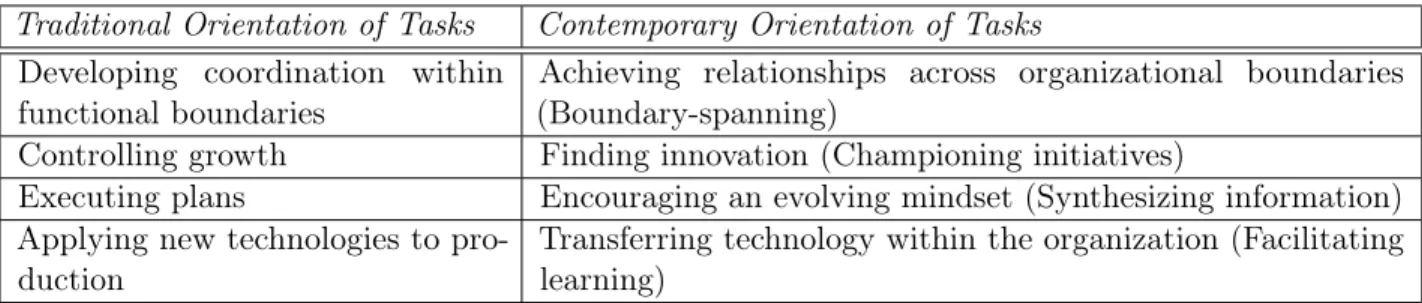
Table 2.2: The Changing Orientation of Middle Management Work (Floyd & Wooldridge, 1996, 7)
Traditional Orientation of Tasks Contemporary Orientation of Tasks
Developing coordination within functional boundaries
Achieving relationships across organizational boundaries (Boundary-spanning)
Controlling growth Finding innovation (Championing initiatives)
Executing plans Encouraging an evolving mindset (Synthesizing information) Applying new technologies to
pro-duction
Transferring technology within the organization (Facilitating learning)
management, Floyd and Wooldridge (1996) present a compelling take on contemporary middle management work. The contemporary orientation seems much more centered around organizational relationships, the MM’s place in the social and technical networks, and the ways in which MMs influence and interpret meaning across the organization. The contemporary dimensions correspond to Floyd and Wooldridge’s four strategic middle manager roles, described and discussed in the strategy section below.
specifically strategy formation and implementation and sensegiving.
Strategy The strategic role of the middle manager, if such a role exists, is a complex and controversial one. The traditional middle management position emerged in stable yet growing organizations, and the MM’s focus in those organizations was on the efficient and effective maintenance of operations. The evolution of the middle management role, primarily due to IT diffusion and restructuring, has included a more active involvement with senior level management and the potential for increased involvement in the strategy formation and implementation process. Scholars have drawn differing conclusions about MMs’ role in strategy.
Prior to and through the 1960s, senior management made the decisions and set the agendas, while middle managers interpreted and carried them out (Kotter, 1990; Floyd & Wooldridge, 1996; Osterman, 2008). In this context, middle managers may have made numerous decisions, but with little autonomy or involvement in setting the direction of the organization. Some scholars argue that it is still the case today that middle managers have the responsibility of implementing strategic change but have little involvement in its formation and little influence on top managers’ agenda setting (Kotter, 1990; Osterman, 2008; Hassard et al., 2009); others theorize that in contemporary organizations, where middle managers interact with direct reports, peers, senior managers and external clients and stakeholders, middle managers are uniquely suited to contribute to both strategy implementation and formation (Floyd & Wooldridge, 1996; Beck & Plowman, 2009; Dutton et al., 1997). These contradictory findings are interesting and point to what may be significant differences based upon research design; that is, recent studies that used interviews with middle managers to gather data found little involvement with strategy formation (Osterman, 2008; Hassard et al., 2009), but studies that included document analysis, observation and interviews with those who interact with the MMs (peers, supervisors) concluded that middle managers do influence strategy and could have greater involvement (Floyd & Wooldridge, 1996).
decentralisation we found involved devolvement of authority alongside cuts to employment numbers, which tended to mean a centralisation of core strategic goals and concepts and the re-establishment of top management prerogative. Senior management’s core message in the 2000s is communicated down the hierarchy clearly and repetitively, similarly to how it was done in the time C. Wright Mills was writing” (Hassard et al., 2009, 23). This is a rather damning reference, considering that Mills was writing about MMs as cogs in the organizations of the 1950s. Floyd and Wooldridge (1996) suggest that middle managers of the post-war era were not involved in strategy formation because for most companies in that era, strategy was stable and the middle managers kept the internal operations on track: “they were chiefly concerned with planning for growth, monitoring costs, identifying variances, and resolving problems that operating managers could not handle. In brief, middle managers during this period oversaw the execution of a calculated, formal strategy that was articulated explicitly in detailed plans” (Floyd & Wooldridge, 1996, 5). Floyd and Wooldridge and others (Sullivan, 1992) argue that this singular internal focus is an artifact of the past, although the realities of the contemporary workplace might reveal that “middle managers live inside organizations and have little voice regarding the strategies of those organizations” (Osterman, 2008, 6). Floyd and Wooldridge might respond that this way of thinking is a legacy from the past and “continues as a source of confusion about middle management in today’s business context” (Floyd & Wooldridge, 1996, 5).
value by “modifying the implementation of deliberate strategy” (Currie, 2000, 17) and by “facilitating adaptability” (Floyd & Wooldridge, 1996). That MMs hold such critical positions and such valuable access to information is one reason why their elimination through flattening hierarchies should be carefully considered before being implemented. Once these linchpins in the organization’s social and technical networks disappear, it is difficult to recover the organization-level competencies and the boundary-spanning capabilities that have been lost (Currie, 2000; Floyd & Wooldridge, 1996).
Despite this disagreement about MMs’ participation in strategy formation, there appears to be consensus that contemporary middle managers are the “strategy practitioners” (Jarzabkowski et al., 2007) who take the strategic directions and goals of organizations, interpret them, and turn them into tactical and operational objectives to be carried out by the technical and professional operatives (Williams, 2001; Osterman, 2008; Hassard et al., 2009; Rouleau, 2005; Van Gils, 1997). This process includes the MMs gaining their own understanding of the strategic direction; the design, coordination and management of single and inter-departmental projects to achieve the new goals; and effective communication among all of the stakeholders, including senior management, other MMs, subordinates and customers. In these unstable environments (Floyd & Wooldridge, 1996), the nimble MM’s interpretation of the strategic direction and events is critical (Beck & Plowman, 2009; Rouleau, 2005; Gioia & Chittipeddi, 1991). In the past, the MM was seen as the go-between carrying out senior management’s orders; now, given flattened hierarchies and greater autonomy, the MM’s own interpretation of goals and events is seen as a factor in the strategy implementation process.
Strategy is emergent as well as deliberate (Currie, 2000). Senior level executives may identify the correct strategic direction, but they are ineffective and inefficient in making that strategy happen (Williams, 2001; Floyd & Wooldridge, 1996), because “top management’s plans are often out of sync with organizational realities” (Floyd & Wooldridge, 1996, 17). MMs can mitigate this gap because of their knowledge of the organization’s capabilities, awareness of customer demands, access to competitors and suppliers, and access to senior level administrators who form strategy. If permitted by senior management, MMs might have much to add to strategy during the formulation process as well as the implementation; and, feedback from the MMs during the implementation phase might alter the strategy.
line (Floyd & Wooldridge, 1996). In one piece of this significant work (which now has several derivatives), Floyd and Wooldridge identified five steps that were typically found in strategic decision making: (1) proposing objectives, (2) generating options, (3) evaluating options, (4) developing details and (5) taking necessary actions. They asked a selected set of middle managers from twenty firms to assess their level of participation in each step, while separately they measured the MMs’ organization’s financial performance. Floyd and Wooldridge found that enhanced firm performance was associated with middle management involvement in (1) proposing objectives, (2) generating options, and (3) evaluating options, and that improved firm performance was not associated with middle management involvement in (4) developing details or (5) taking necessary actions (Floyd & Wooldridge, 1996).
Based upon the discovery that middle management involvement in three strategic decision making steps enhanced organization performance, Floyd and Wooldridge identified and developed four strategic middle management roles. Table 2.3 presents an overview of the roles and some identifiable characteristics. Floyd and Wooldridge developed a psychometric scale to measure middle managers’ involvement in strategic activities based on this research. The scale was administered to the middle manager participants in the current study in order to ascertain their perception of their involvement in these strategic activities and how this involvement may or may not correlate to their experience of role conflict, role ambiguity, and turnover intentions.
Floyd and Wooldridge found that senior managers often discouraged MMs’ strategic roles and considered them secondary to command and control functions. The fact that MMs can control or influence executives’ perceptions through information filtering and championing behavior can be seen as a negative, and some senior-level managers as well as middle managers feel that championing should be used sparingly and only by those middle managers that have earned the right to spend this kind of currency with top managers (Mosley, 2004).