Clinical Infectious Diseases
V I E W P O I N T S
Toward Earlier Inclusion of Pregnant and Postpartum
Women in Tuberculosis Drug Trials: Consensus
Statements From an International Expert Panel
Amita Gupta,1,aJyoti S. Mathad,8,aSusan M. Abdel-Rahman,9Jessica D. Albano,10Radu Botgros,18Vikki Brown,11Renee S. Browning,3Liza Dawson,3 Kelly E. Dooley,2Devasena Gnanashanmugam,3Beatriz Grinsztejn,19Sonia Hernandez-Diaz,13Patrick Jean-Philippe,4Peter Kim,3Anne D. Lyerly,12 Mark Mirochnick,15Lynne M. Mofenson,5Grace Montepiedra,14Jeanna Piper,3Leyla Sahin,7Radojka Savic,16Betsy Smith,3Hans Spiegel,4 Soumya Swaminathan,20D. Heather Watts,17and Amina White6
1
Division of Infectious Diseases and Department of International Health, Johns Hopkins University, and2
Divisions of Clinical Pharmacology and Infectious Diseases, Johns Hopkins University School of Medicine, Baltimore,3
Division of AIDS, National Institute of Allergy and Infectious Diseases,4
Department of Health and Human Services, HJF-DAIDS, a division of The Henry M. Jackson Foundation for the Advancement of Military Medicine, contractor to the National Institute of Allergy and Infectious Diseases,5
Eunice Kennedy Shriver National Institute of Child Health and Human Development, National Institutes of Health, and6
Department of Bioethics, NIH Clinical Center, Bethesda, and7
Division of Pediatric and Maternal Health, FDA Office of New Drugs, Silver Spring, Maryland;8 Division of Infectious Diseases, Center for Global Health Weill Cornell Medical College, New York, New York;9
Division of Clinical Pharmacology, Children’s Mercy Hospital, Kansas City, Missouri;10 Post Approval & Strategic Services, and11
Women’s Health and Medical Affairs, INC Research, Raleigh, and12
University of North Carolina at Chapel Hill Center for Bioethics and Department of Social Medicine;13
Department of Epidemiology, and14
Department of Biostatistics, Center for Biostatistics in AIDS Research, Harvard T. H. Chan School of Public Health, and15
Department of Pediatrics, Boston University School of Medicine, Massachusetts;16
Department of Bioengineering and Therapeutic Sciences, Schools of Pharmacy and Medicine, University of California San Francisco;17 Office of the Global AIDS Coordinator, US Department of State, Washington D.C.;18
European Medicines Agency, London, United Kingdom;19
Instituto de Pesquisa Clinica Evandro Chagas-Fiocruz, Rio de Janeiro, Brazil; and20
National Institute for Research in Tuberculosis, Chennai, India
Tuberculosis is a major cause of morbidity and mortality in women of childbearing age (15–44 years). Despite increased tuberculosis risk during pregnancy, optimal clinical treatment remains unclear: safety, tolerability, and pharmacokinetic data for many tubercu-losis drugs are lacking, and trials of promising new tubercutubercu-losis drugs exclude pregnant women. To advance inclusion of pregnant and postpartum women in tuberculosis drug trials, the US National Institutes of Health convened an international expert panel. Discussions generated consensus statements (>75% agreement among panelists) identifying high-priority research areas during pregnancy, including: (1) preventing progression of latent tuberculosis infection, especially in women coinfected with human im-munodeficiency virus; (2) evaluating new agents/regimens for treatment of multidrug-resistant tuberculosis; and (3) evaluating safe-ty, tolerability and pharmacokinetics of tuberculosis drugs already in use during pregnancy and postpartum. Incorporating pregnant women into clinical trials would extend evidence-based tuberculosis prevention and treatment standards to this special population.
Keywords. tuberculosis; MDR tuberculosis; latent tuberculosis infection; pregnancy; clinical trials.
Worldwide, approximately 500–800 million women are infect-ed withMycobacterium tuberculosis, and 3.2 million develop ac-tive tuberculosis annually, at least 216 000 during pregnancy, and 480 000 die [1,2]. Tuberculosis is a leading causes of death in women of childbearing age (15–44 years), and, if un-treated, a common cause of nonobstetric maternal mortality [3– 6], pregnancy complications, and infant mortality [4–9]. Women of childbearing age are more likely than men to pro-gress from latent tuberculosis infection (LTBI) to active tuber-culosis, possibly owing to immune changes associated with pregnancy and higher rates of human immunodeficiency virus (HIV) infection [1, 10, 11]. However, tuberculosis
prevention and treatment during pregnancy poses challenges, particularly in the setting of HIV coinfection.
Several physiologic adaptations occur throughout pregnancy, which peak in the third trimester and significantly affect drug disposition (Supplementary Figure 1) [12,13]. The safety and efficacy of individual or multidrug regimens for pregnant women cannot be predicted without clinical trials, yet safety and pharma-cokinetic (PK) data during pregnancy are lacking for many tu-berculosis drugs. Importantly, pregnant women continue to be excluded from new tuberculosis drug trials, limiting access to promising new treatment regimens for tuberculosis disease and infection.
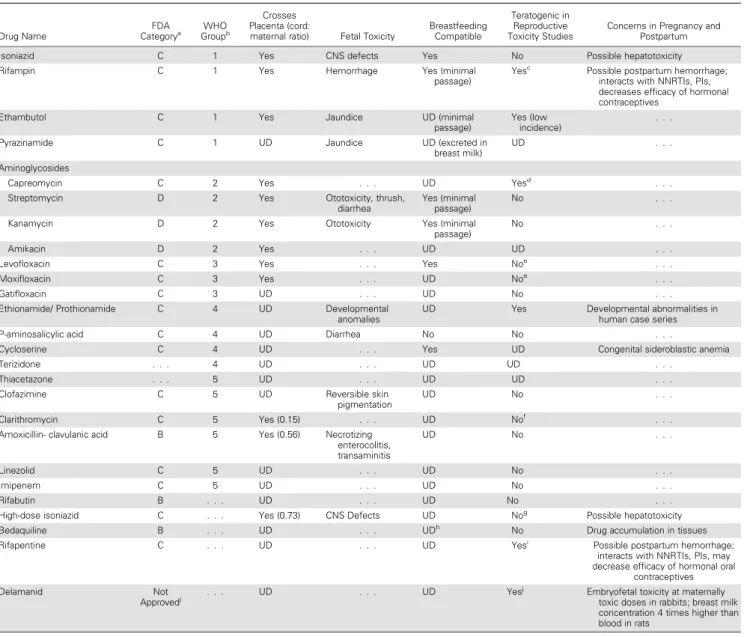
First-line antituberculosis therapy (ATT) for drug-sensitive tuberculosis is highly effective. However, in absence of well-controlled studies in pregnant women,first-line tuberculosis drugs have been listed as US Food and Drug Administration (FDA) pregnancy category C (ie, no adequate well-controlled human studies have been performed, but benefits may be accept-able despite potential risks) (Taccept-able1) [17,14]. Data regarding safety, tolerability, and the pharmacokinetics of tuberculosis drugs during pregnancy have not been collected or reported
Received 8 September 2015; accepted 20 November 2015; published online 9 December 2015.
a
A. G. and J. S. M. contributed equally to this work.
Correspondence: A. Gupta, Center for Clinical Global Health Education, Division of Infectious Diseases and Department of International Health, Johns Hopkins University, 600 N Wolfe St, Phipps 540B, Baltimore, MD 21287 ([email protected]).
Clinical Infectious Diseases®
2016;62(6):761–9
Table 1. Food and Drug Administration Category and World Health Organization Grouping of Drugs Used for Tuberculosis Treatment
Drug Name
FDA
Categorya GroupWHOb
Crosses Placenta (cord:
maternal ratio) Fetal Toxicity
Breastfeeding Compatible
Teratogenic in Reproductive Toxicity Studies
Concerns in Pregnancy and Postpartum
Isoniazid C 1 Yes CNS defects Yes No Possible hepatotoxicity Rifampin C 1 Yes Hemorrhage Yes (minimal
passage)
Yesc Possible postpartum hemorrhage;
interacts with NNRTIs, PIs, decreases efficacy of hormonal contraceptives
Ethambutol C 1 Yes Jaundice UD (minimal passage)
Yes (low incidence)
. . .
Pyrazinamide C 1 UD Jaundice UD (excreted in breast milk)
UD . . .
Aminoglycosides
Capreomycin C 2 Yes . . . UD Yesd . . .
Streptomycin D 2 Yes Ototoxicity, thrush, diarrhea
Yes (minimal passage)
No . . .
Kanamycin D 2 Yes Ototoxicity Yes (minimal passage)
No . . .
Amikacin D 2 Yes . . . UD UD . . .
Levofloxacin C 3 Yes . . . Yes Noe . . .
Moxifloxacin C 3 Yes . . . UD Noe . . .
Gatifloxacin C 3 UD . . . UD No . . .
Ethionamide/ Prothionamide C 4 UD Developmental anomalies
UD Yes Developmental abnormalities in human case series
P-aminosalicylic acid C 4 UD Diarrhea No No . . .
Cycloserine C 4 UD . . . Yes UD Congenital sideroblastic anemia
Terizidone . . . 4 UD . . . UD UD . . .
Thiacetazone . . . 5 UD . . . UD UD . . .
Clofazimine C 5 UD Reversible skin pigmentation
UD No . . .
Clarithromycin C 5 Yes (0.15) . . . UD Nof . . .
Amoxicillin- clavulanic acid B 5 Yes (0.56) Necrotizing enterocolitis, transaminitis
UD No . . .
Linezolid C 5 UD . . . UD No . . .
Imipenem C 5 UD . . . UD No . . .
Rifabutin B . . . UD . . . UD No . . .
High-dose isoniazid C . . . Yes (0.73) CNS Defects UD Nog Possible hepatotoxicity
Bedaquiline B . . . UD . . . UDh No Drug accumulation in tissues
Rifapentine C . . . UD . . . UD Yesi Possible postpartum hemorrhage;
interacts with NNRTIs, PIs, may decrease efficacy of hormonal oral
contraceptives
Delamanid Not
Approvedj . . . UD . . . UD Yes
j Embryofetal toxicity at maternally
toxic doses in rabbits; breast milk concentration 4 times higher than blood in rats
Sources: AAP Statement (2001); Micromedex 2.0;www.fda.gov. Toxicities known in nonpregnant populations not described in table.
Abbreviations: CNS, central nervous system; FDA, Food and Drug Administration; NNRTIs, nonnucleoside reverse-transcriptase inhibitors; PIs, protease inhibitors; UD, undetermined; WHO, World Health Organization.
aFDA categories are defined as follows: A, adequate and well-controlled (AWC) studies in pregnant women have failed to demonstrate a risk to the fetus in the first trimester of pregnancy; B,
animal reproduction studies have failed to demonstrate a risk to the fetus and there are no AWC studies in humans or animal reproduction studies have shown an adverse effect but AWC studies in pregnant women have failed to demonstrate a risk to the fetus AND the benefits from the use of the drug in pregnant women may be acceptable despite its potential risks; C, animal reproduction studies have shown an adverse effect on the fetus, there are no AWC studies in humans OR there are no animal reproduction studies and no AWC studies in humans AND the benefits from the use of the drug in pregnant women may be acceptable despite its potential risks; D, there is positive evidence of human fetal risk based on adverse reaction data from investigational or marketing experience or studies in humans BUT the potential benefits from the use of the drug in pregnant women may be acceptable despite its potential risks; X, studies in animals or humans have demonstrated fetal abnormalities and/or there is positive evidence of human fetal risk based on adverse reaction data from investigational or marketing experience, and the risks involved in use of the drug in pregnant women clearly outweigh potential benefits.
FDA pregnancy letter categories will be eliminated during the next 3–5 years; instead, explanations concerning potential benefits and risks to the mother, fetus, and breastfeeding child will be provided based on available data [14].
b
WHO tuberculosis drug groups are defined as follows: group 1, first-line agents; group 2, injectables; group 3, fluoroquinolones; group 4, oral bacteriostatic second-line agents; and group 5, agents with unclear efficacy.
c
Teratogenic in rodents given 1–2 times the maximum human dose.
d
Teratogenic in rats given 3.5 times the human dose.
eLevofloxacin was not teratogenic in rats at 9.4 times the human dose or rabbits at 1.1 times the human dose. Moxifloxacin was not teratogenic in cynomolgus monkeys at 2.5 times the human
dose, in rats at 0.24 times the human dose, or in rabbits at maximum human doses; rat and rabbit offspring, however, had delayed skeletal development. Temafloxacin, another quinolone, caused toxic cartilage effects in immature dogs [15].
f
Equidoses of the maximum human dose in monkeys resulted in fetal growth retardation at plasma levels double that of human serum levels.
gBased on standard isoniazid dosing. h
Concentrated in rat breast milk.
i
Based on studies in rats and rabbits. A small case series in humans (n = 6) showed no evidence of teratogenicity.
j
systematically, leading to inconsistencies in national and inter-national treatment guidelines. The World Health Organization, for example, recommends the use of pyrazinamide during preg-nancy infirst-line ATT, but the US Centers for Disease Control and Prevention does not, owing to inadequate data on potential adverse fetal effects [18–20].
Multidrug-resistant (MDR) tuberculosis presents another challenge, because treatment options remain extremely limited during pregnancy. Most aminoglycosides, key in MDR tubercu-losis treatment, are potentially ototoxic and nephrotoxic for the fetus [4], and reproductive toxicity studies suggest that other second-line drugs for MDR tuberculosis, such as ethion-amide-prothionamide, may have teratogenic potential (Table1). Although new compounds are in development and new oral drugs have been recently approved for MDR tuberculosis treat-ment in the United States (bedaquiline) and Europe (bedaqui-line and delamanid), lack of safety or PK data during pregnancy severely limits their use in this population.
Next, a significant proportion of women who die of tuberculo-sis during pregnancy and postpartum are coinfected with HIV [1,21,22]. Notably, poor adherence to dual ATT and antiretrovi-ral (ARV) therapy is problematic in this population [23,24]. Combination tuberculosis/HIV regimens lead to increased pill burden, overlapping toxic effects, and drug-drug interactions, and pregnancy introduces gestational age–dependent changes in pharmacokinetics and drug tolerability [12,13]. Rifamycins, for example, are essential infirst-line ATT but alter the metabolism of ARVs recommended during pregnancy and concentrations of hormonal contraceptives, significantly complicating family plan-ning for postpartum women with tuberculosis [25,26].
Finally, controlling the global tuberculosis epidemic requires preventing LTBI progression to active disease [27]. The World Health Organization currently recommends LTBI treatment among HIV-infected persons residing in high burden settings and in child contacts of persons with tuberculosis even when LTBI testing is unavailable [28]. Although pregnant women, par-ticularly if HIV-infected, are at high risk of LTBI progression [10], the standard regimen (daily isoniazid for≥6 months) has never been systematically assessed for safety and PK data in preg-nancy, though it seems safe in the small numbers studied [29]. Newer, shorter preventive regimens (eg, 12 once-weekly doses of isoniazid plus rifapentine; 1 month of daily isoniazid plus ri-fapentine) are now available or under study in nonpregnant pop-ulations, but pregnant women are excluded from clinical trials of these regimens [30,31].
Pregnant women should be allowed to access and benefit from advances in tuberculosis treatment. Pregnancy provides an important healthcare system entry point, at which women can be screened and treated for both tuberculosis and LTBI [32–35]. Development of evidence-based treatment standards for pregnant women will require inclusion of this special pop-ulation into studies of newly approved and investigational drugs
for MDR tuberculosis. Because persons living with HIV are at highest risk of developing tuberculosis, there is a critical need to study drug interactions, optimal dosing of ATT, ARVs, and hor-monal contraception [36,37] in pregnant and postpartum women coinfected with HIV and tuberculosis. Studies of ARV therapy in pregnancy provide a good template for how ATT can be studied [26].
We present (1) research considerations in pregnant and post-partum women based on literature review and (2) our consen-sus statements on 4 key research questions described below. We also propose clinical research priorities for the prevention and treatment of tuberculosis in pregnant and postpartum women.
METHODS
Consensus Statement Generation
In May 2013, the National Institutes of Health (NIH) convened an international expert panel of recognized HIV and tuberculo-sis clinicians, women’s health researchers, opinion leaders, and community representatives in Bethesda, Maryland, to partici-pate in a workshop,“Towards Earlier Involvement of Children and Pregnant Women in Trials of New TB Drugs.”Panelists were tasked with generating consensus statements supporting pathways for accelerated inclusion of pregnant women and chil-dren (reported separately [38]) in trials of tuberculosis drugs. Subject matter experts were identified based on review of pub-lished work; government, regulatory agency, and other partici-pants were selected based on professional discipline with an aim to represent key perspectives concerning participation of preg-nant women in tuberculosis drug trials (eg, legal and regulatory affairs, medical ethics, reproductive toxicity, and clinicians with experience in recruiting pregnant women into drug trials).
Discussions were framed by 4 guiding questions developed a priori by the organizing members (R. S. B., P. J. P.) and listed in
“Results”section. A subgroup of panelists was tasked with con-ducting a preworkshop literature review (A. G., J. S. M., R. S. B., P. J. P., H. S.) that informed draft statements. Draft statements were then reviewed with panelists via a preworkshop teleconfer-ence, and subject matter experts addressed the guiding ques-tions during the in-person workshop. Group consensus (>75% agreement among panelists) was required for consensus statement edits; experts from regulatory agencies participated in discussions as nonvoting panelists. Consensus statements were subsequently presented at the plenary session for discussion andfinalized where needed via teleconference with all panelists.
Literature Search Strategy
publication date and language, were reviewed as retrievable and translated as needed; any relevant new information was included in the consensus discussion section. The following search terms were used:tuberculosis, anti-TB treatment, multidrug-resistant tuberculosis treatment, multidrug-resistant tuberculosis outcomes, pregnancy, postpartum, lactation/breastfeeding, pharmacokinetics, pharmacovigilance, clinical trials, drug development, HIV-infected, anddevelopmental and reproductive toxicology.
RESULTS
Regulatory and Ethical Considerations for Research During Pregnancy and Postpartum
Nonclinical Studies
The International Conference on Harmonization of Technical Requirements for Registration of Pharmaceuticals for Human Use guidance [39], endorsed by the FDA and the European Medicines Agency, states that nonclinical reproductive toxicity studies [40] and the standard battery of genotoxicity tests [41] should be conducted before including pregnant women in any phase of clinical trials (Supplementary TableandSupplementary Figure 2).
Clinical Studies
Before including pregnant women in phase II or III clinical studies, safety data from previous human exposure in nonpreg-nant individuals are needed [42,43]. This is also specified in the Code of Federal Regulations[44], (45CFR46, Subpart B), indi-cating that“Where scientifically appropriate, preclinical studies, including studies on pregnant animals, and clinical studies, in-cluding studies on nonpregnant women, have been conducted and provide data for assessing potential risks to pregnant women and fetuses.” These regulations also require that studies with pregnant women hold out the prospect of direct benefit for the pregnant woman and/or the fetus, or if there is no prospect of direct benefit the studies entail no more than minimal risk and are aimed at developing important biomedical knowledge which cannot be obtained by other means.
Assessment of minimal risk can be variable and subjective, and can be particularly challenging in the setting of pregnancy [45]. Critical consideration of disease severity and treatment options are essential in the case of pregnant women with tuber-culosis, particularly MDR tuberculosis. Potential benefit of re-search on new drugs for MDR tuberculosis in this population would be significant, and consideration must also be given to the consequences of off-label use in the absence of evidence-based guidance. It is safer to administer ATT during pregnancy in a research setting, given the rigorous safety monitoring, requi-site informed consent requirements, and ability to confirm cor-rect dosing [46]. Access to the benefits of research is an essential component of the ethical principle of justice in clinical research, and pregnant women have not benefited fairly from research given their under-representation in past trials [47, 48]. In
November 2013, the FDA issued a draft guidance for pulmonary tuberculosis drug development, which specifically includes a sec-tion on drug development in pregnant women [49].
PK Studies
The 2004 US FDA guidance on PK studies in pregnancy recom-mends that PK studies should be conducted for all drugs already used during pregnancy that have limited available safety and/or PK data and all new drugs with anticipated use during pregnan-cy [50,51]. Likewise, 2005 European Medicines Agency guide-lines on drug exposure in pregnancy recommend systematic collection of information on pregnant women and fetal effects, particularly in settings where drug therapy is essential for ma-ternal and/or fetal benefit. Furthermore, the 2008 European Medicines Agency guidance based contraindications of drug use during pregnancy on the need for treatment in addition to relevant nonclinical studies and human experience [52].
Expert Panel Consensus Statements: 4 Guiding Questions
Question 1: When can phase I, II, or III studies be conducted in pregnant women and women of childbearing potential, and what data are needed to facilitate their inclusion? Drug develop-ers should accelerate reproductive toxicity testing, and suppor-tive incensuppor-tive measures should be considered. Participation of pregnant and postpartum women should be encouraged in phase III trials of drugs that have phase II clinical trial safety and PK/pharmacodynamic data from nonpregnant women. Finally, inclusion of pregnant and postpartum women should be encouraged in clinical trials of any tuberculosis drug likely to be used during pregnancy and postpartum after approval.
Question 2: Which tuberculosis drugs and populations of pregnant and postpartum women should be studied? What are the highest priorities? There is no single ethical principle to guide prioritization of disease severity versus frequency of harms. The panel developed and prioritized a list of tuberculosis drug studies and populations of pregnant and postpartum women to be studied based on ethical, scientific, and public health considerations, as follows.
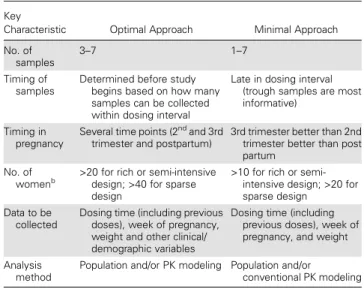
Priority 2: Opportunistic studies of pregnant or postpartum women with drug-sensitive tuberculosis receiving a tuberculosis drug or regimen with limited data in pregnancy or postpartum. The rationale is that nonpregnant women participating in stud-ies of investigational tuberculosis drugs may become pregnant during the study or may receive new and existing drugs in clin-ical practice. Opportunistic collection of safety and PK data will help improve tuberculosis management in pregnant and post-partum women (Table2) [53,54].
Priority 3: Women of childbearing potential, including postpartum women, who take hormonal contraception and tuberculosis drugs. The rationale is that several hormonal contraceptives interact with tuberculosis drugs, particularly rifamycins. Tuberculosis drug trials often require that women of childbearing potential receive hormonal contraception for pregnancy prevention. Studies should evaluate the effect of tuberculosis drugs on concentration and efficacy of hormonal contraceptives and drug-drug interactions between ARVs, tuberculosis drugs, and hormonal contraception. To prevent pregnancies in these studies, nonhormonal contraception (eg,
intrauterine devices and condoms) should be provided along with hormonal contraception.
Priority 4: Pregnant/postpartum women with tuberculosis disease or LTBI not meeting the above criteria. The rationale is that most women with tuberculosis have drug-sensitive tuber-culosis disease, are HIV uninfected, and are being treated with a current standard regimen. Studies on the treatment history of tuberculosis and optimal treatment regimens in these popula-tions could potentially have a high public health impact.
Question 3: Which candidate drugs/regimens should be pri-oritized? In accordance with the prioritization of populations described above, Table3displays the panel’s prioritization of specific tuberculosis drugs/regimens to be studied in pregnant and postpartum women. All drugs and regimens have been or are currently being studied in phase IIb or III studies in non-pregnant populations.
Question 4: What are relevant trial designs to study tubercu-losis drugs and regimens in pregnant and postpartum women?
PK Studies
PK data generated from nonpregnant trial participants provide limited information on drug disposition and drug safety in pregnancy [56,57]. Based on the 2004 FDA guidance, PK stud-ies are needed for drugs when,“pregnancy is likely to alter sig-nificantly the PK of a drug [50].”To characterize the PK of tuberculosis drugs in pregnancy, the standard approach is to conduct intensive PK sampling in a small group of women in a stand-alone trial or in the context of a phase I/II treatment trial. Typically, intrasubject comparisons of PK parameters dur-ing pregnancy versus postpartum are made usdur-ing a classic non-compartmental analysis approach. In phase III or IV trials or in clinical settings where pregnant women are already receiving the drug, investigators can use sparse sampling, generally
de-fined as collecting <3 samples in a dosing interval, coupled with population PK analyses or opportunistic sampling from specimens drawn for clinical purposes (Table2) [58].
Cross-sectional studies can assess PK parameters of interest in parallel cohorts using the categorical variable of trimester during pregnancy. Longitudinal studies can incorporate serial assessments of PK by gestation, parturition, and lactation which allow for paired analyses and smaller sample sizes. Ultimately, logistical, statistical and analytical challenges of various trial designs should focus on informing treatment decisions for pregnant women.
Innovative PK/Pharmacodynamic Modeling to Estimate Target Doses for Pregnant Women
Sparse sampling strategies coupled with population PK analy-sis has the following advantages over intensive PK analyanaly-sis in a small group of women: (1) reduction in blood sampling for individual participants; (2) improved ability to characterize variability in drug pharmacokinetics, including the effects of important covariates (eg, age, weight, race, HIV status, phar-macogenetics, and companion drugs) on PK parameters; and
Table 2. Characteristics of Optimal Versus Minimal Opportunistic Approaches to Pharmacokinetic Sampling for the Study of Tuberculosis Drugs During Pregnancya
Key
Characteristic Optimal Approach Minimal Approach
No. of samples
3–7 1–7
Timing of samples
Determined before study begins based on how many samples can be collected within dosing interval
Late in dosing interval (trough samples are most informative)
Timing in pregnancy
Several time points (2nd and 3rd trimester and postpartum)
3rd trimester better than 2nd trimester better than post partum
No. of
womenb >20 for rich or semi-intensive design; >40 for sparse design
>10 for rich or semi-intensive design; >20 for sparse design
Data to be collected
Dosing time (including previous doses), week of pregnancy, weight and other clinical/ demographic variables
Dosing time (including previous doses), week of pregnancy, and weight
Analysis method
Population and/or PK modeling Population and/or
conventional PK modeling
Abbreviation: PK, pharmacokinetic.
a
Opportunistic collection of safety and PK data from women at different stages of pregnancy who are receiving drug(s) of interest as part of clinical care may improve the understanding and management of tuberculosis and human immunodeficiency virus treatment in pregnant and postpartum women. Although such studies can efficiently provide critical PK data, clinical outcome data may be biased since enrollment is limited to subjects who tolerate and have an adequate clinical response to the drug(s) being studied. Examples of such approaches are employed in International Maternal Pediatric Adolescent AIDS Clinical Trials Network (IMPAACT) studies P1026s, P1078, and P2001 (Table 5) and have also been used to assess rifampin, isoniazid, and efavirenz concentrations and interactions. In general, opportunistic PK sampling should involve the collection of as many samples as possible in a dosing interval (maximum of 5–7 samples spread equally in a dosing interval), but even a single sample can be useful if that is all that is feasible. If it is known ahead of time that opportunistic design is possible, relevant optimal sampling time windows can be determined. Dosing times must be recorded correctly, and pregnancy-related variables must be collected. In general, the more participants enrolled the better, but usually any design including >20 women is informative.
b
(3) more power to characterize longitudinal changes in drug disposition. Mathematical modeling using PK data from pregnant women and PK or outcomes data from nonpregnant adults can be used to predict appropriate doses in pregnant women at different stages in pregnancy. Furthermore, popula-tion PK modeling can describe drug distribupopula-tion in breast milk and in newborns. Physiologically based PK modeling can help predict exposures during pregnancy but is limited by current knowledge of the structural and functional changes occurring in the primary organs of drug disposition at different gesta-tional stages [52,57].
Safety Monitoring and Pharmacovigilance
Clinical trials of tuberculosis drugs in pregnant women should include close maternal and fetal monitoring with clearly defined safety stopping rules and safety monitoring committee over-sight. If a woman becomes pregnant during a trial, the tubercu-losis drug’s preclinical development toxicity profile, availability of alternative treatment regimens, and stage of pregnancy should determine whether trial continuation is offered. For women who continue in a trial, an additional informed consent process should be implemented that includes risks of untreated maternal disease, risks and benefits of the study agent, alternative treatment options, and embryofetal toxicity counseling. At
minimum, data should be collected on pregnancy outcomes and the health of the mother and child ( pregnancy registry use is encouraged). Data should include (1) pregnancy outcome,
Table 3. Summary of Proposed Research Priorities for Tuberculosis Drugs in Pregnant and Postpartum Women
Drug
Research Prioritya
Conditions to be Studied Rationale for Priority
Moxifloxacin/ levofloxacin
First tier MDR tuberculosis (including isoniazid monoresistance); MDR tuberculosis exposure and LTBI; drug-sensitive tuberculosis (treatment shortening)
Important in MDR tuberculosis regimens; widely available; reasonable safety data in pregnancy [18,55]
Disadvantage: Concern for fetal musculoskeletal deformities
Isoniazid/ rifapentine
First tier LTBI Large public health benefit in tuberculosis prevention; effective in nonpregnant and HIV-infected adults; pregnant/postpartum women have increased risk of tuberculosis; women preferentially access healthcare during pregnancy; poor completion rates with current longer regimen; correct dosing in pregnancy not established
High-dose isoniazid
First tier MDR tuberculosis Widely available and reasonable safety in pregnancy at standard doses Disadvantage: Potential for increased hepatotoxicity in pregnancy
Pyrazinamide Second tier Drug-sensitive tuberculosis Discrepancy between WHO and CDC recommendations on use in pregnancy; enables shortening of first-line ATT from 9 to 6 mo, a benefit currently not extended to pregnant women in the United States; important in MDR tuberculosis regimens
Clofazimine Second tier MDR tuberculosis; pre-XDR tuberculosis; XDR tuberculosis
Long history of use in leprosy and now some use in MDR tuberculosis in pregnancy; standard of care in pre-XDR and XDR tuberculosis; alternative to injectables in pregnancy
Disadvantages: Skin discoloration (reversible); limited tuberculosis data in nonpregnant adults
Bedaquiline Second tier MDR tuberculosis FDA category B; important in MDR tuberculosis regimens
Disadvantages: Limited clinical experience; long half-life and potential for drug accumulation in tissues; boxed warning for cardiac arrhythmias
Delamanid Second tier MDR tuberculosis Important in MDR tuberculosis regimens; more favorable adverse effect profile Disadvantages: Not FDA approved; can cause QT prolongation; limited clinical
experience
Linezolid Second tier M/XDR tuberculosis Benefit in M/XDR tuberculosis treatment
Disadvantages: Adverse effects include myelosuppression, peripheral neuropathy, thrombocytopenia, and optic neuritis
Abbreviations: ATT, antituberculosis therapy; CDC, Centers for Disease Control and Prevention; FDA, Food and Drug Administration; HIV, human immunodeficiency virus; LTBI, latent tuberculosis infection; MDR, multidrug resistant; WHO, World Health Organization; XDR, extremely drug resistant.
a
Proposed research priority classification for tuberculosis drugs used during pregnancy or postpartum, defined as follows: first tier: highest priority drugs/regimens for MDR tuberculosis and HIV-infected LTBI/tuberculosis exposure; second tier: high-priority drugs for drug-sensitive tuberculosis, MDR tuberculosis, and XDR tuberculosis.
Table 4. Summary of Consensus Statements
Pregnant and postpartum women should be eligible for all phase III trials designed for treatment of MDR tuberculosis unless there is a compelling reason for exclusion; aminoglycoside drugs, for example, should be excluded during pregnancy because of their teratogenic potential, but this should not preclude evaluation of other promising new agents.
Drug companies developing new tuberculosis drugs should be encouraged to complete reproductive toxicity studies early in drug development, before beginning phase III trials; these data are needed to adequately inform decisions about the inclusion of pregnant women in subsequent clinical trials.
Specific trials of shortened treatment regimens for LTBI should be designed for pregnant women to facilitate treatment completion of regimens and reduce the risk of progression to tuberculosis disease during the high-risk pregnancy/postpartum period.
Targeted PK studies in pregnant and postpartum women should be nested into all trials to provide data on appropriate dosing of drugs during pregnancy and postpartum, when evidence-based dosing guidelines are not already available and particularly when pregnancy is likely to have a significant impact on drug disposition.
A registry should be established to accumulate data on the outcomes of pregnancies exposed to any tuberculosis drugs to allow monitoring of adverse events and to provide data to inform inclusion of pregnant women in clinical trials.
including live births, stillbirth, miscarriage, and pregnancy termi-nations; (2) small size for gestational age and low birth weight (<2500 g); (3) preterm birth; (4) congenital malformations; and (5) maternal and infant morbidity and mortality rates.
Pregnancy Registries
Evaluation of the risk of a particular drug exposure in pregnan-cy is commonly based on data collection from post-approval observational studies; drug data regarding potential teratogenic-ity usually is limited to nonclinical animal data. Pregnancy expo-sure registries are prospective, observational studies that monitor for evidence of teratogenicity and safety of medication. Well-designed registries offer advantages over spontaneous, nonsys-tematic adverse event reporting by clinicians [59]. Regulatory guidance documents address study design, monitoring, evalua-tion, and data interpretation [17,55,59,60].
DISCUSSION
A summary of the consensus statements and priorities is shown in Table4. Despite substantial tuberculosis-related morbidity and mortality in pregnant/postpartum women and their in-fants, drug-sensitive tuberculosis, MDR tuberculosis and LTBI care is currently being provided without sufficient clinical trial data on drug safety and dosing. Studies in pregnant or postpar-tum women with tuberculosis are needed to provide accurate data to improve clinical treatment decisions. Engagement of trial sponsors, pharmaceutical companies, regulatory authori-ties, and health systems, including those in countries most affected by tuberculosis, are needed to support a pathway for ac-celerated inclusion of pregnant and postpartum women in trials of tuberculosis drugs. Clinical trials should reflect the public health priorities of the sites where they are conducted and
occur in settings where similar trials are already being conduct-ed in nonpregnant adults. Ideally, a plan for making new drugs available (ie, post-trial access) at the local level should be ob-tained before clinical trials commence. Establishing high-qual-ity evidence demonstrating the efficacy and safety of new drugs can lead to advocacy in favor of rapid availability. Importantly, a mindset of presumed inclusion of pregnant and postpartum women into trials of promising tuberculosis agents should be adopted, as is already the case for pregnant women with HIV infection, who have significantly benefited from early inclusion in clinical trials. Involvement of local site investigators and community advisory boards and adequate support and over-sight of trial conduct is critical to the process [61,62].
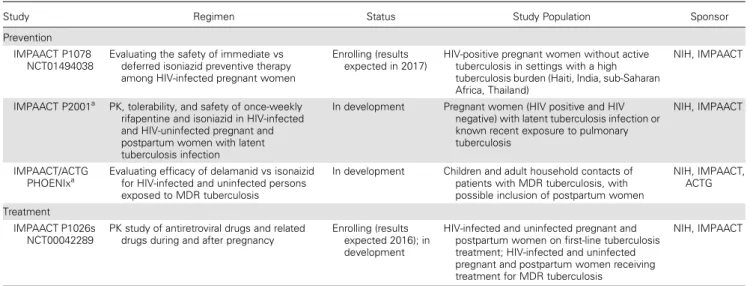
Since this workshop, investigators have made some progress in initiating new studies and modifying existing studies to help
fill the data void for tuberculosis management in pregnancy (Table5). A working group has been established to develop a pregnancy registry for tuberculosis drug studies. Only through responsible inclusion of pregnant and postpartum women in tuberculosis trials will we be able to provide clinicians and pol-icy makers with the evidence needed to optimize their care globally.
Supplementary Data
Supplementary materialsare available athttp://cid.oxfordjournals.org. Consisting of data provided by the author to benefit the reader, the posted materials are not copyedited and are the sole responsibility of the author, so questions or comments should be addressed to the author.
Notes
Acknowledgments. We are grateful to the following individuals for assis-tance in the planning and conduct of the workshop and/or drafting of the manuscript: Sheryl Zwerski, Rahel Abebe, Arthur Stone, and Josh Duberman. Table 5. Ongoing and Planned Clinical Trials in Pregnant Women (Current as of October 2015)
Study Regimen Status Study Population Sponsor
Prevention IMPAACT P1078
NCT01494038
Evaluating the safety of immediate vs deferred isoniazid preventive therapy among HIV-infected pregnant women
Enrolling (results expected in 2017)
HIV-positive pregnant women without active tuberculosis in settings with a high tuberculosis burden (Haiti, India, sub-Saharan Africa, Thailand)
NIH, IMPAACT
IMPAACT P2001a
PK, tolerability, and safety of once-weekly rifapentine and isoniazid in HIV-infected and HIV-uninfected pregnant and postpartum women with latent tuberculosis infection
In development Pregnant women (HIV positive and HIV negative) with latent tuberculosis infection or known recent exposure to pulmonary tuberculosis
NIH, IMPAACT
IMPAACT/ACTG
PHOENIxa Evaluating efficacy of delamanid vs isonaizid for HIV-infected and uninfected persons exposed to MDR tuberculosis
In development Children and adult household contacts of patients with MDR tuberculosis, with possible inclusion of postpartum women
NIH, IMPAACT, ACTG
Treatment IMPAACT P1026s
NCT00042289
PK study of antiretroviral drugs and related drugs during and after pregnancy
Enrolling (results expected 2016); in development
HIV-infected and uninfected pregnant and postpartum women on first-line tuberculosis treatment; HIV-infected and uninfected pregnant and postpartum women receiving treatment for MDR tuberculosis
NIH, IMPAACT
Abbreviations: ACTG, AIDS Clinical Trials Group; HIV, human immunodeficiency virus; IMPAACT, International Maternal Pediatric Adolescent AIDS Clinical Trials Network; MDR, multidrug resistant; NIH, National Institutes of Health; PHOENIx, Protecting Households On Exposure to Newly Diagnosed Index; PK, pharmacokinetic.
a
Author contributions. All authors contributed to preworkshop state-ments preparations, were panel members or attended panel discussions or were manuscript section authors or reviewers. A. G. and J. S. M. cowrote the first draft of the manuscript and H. S., P. J. P., and R. B. assisted coauthors with subsequent revisions. All authors have reviewed and approved the manuscript.
Disclaimer. The views expressed in written conference materials or publications and by speakers and moderators at Department of Health and Human Services (DHHS)–sponsored conferences do not necessarily reflect the official policies of the DHHS or individual DHHS or other US government agencies including the National Institutes of Health (NIH), the Centers for Disease Control and Prevention, the Food and Drug Admin-istration, the US Department of State, or the US Agency for International Development; nor does mention of trade names, commercial practices, or organizations imply endorsement by the US government. The views ex-pressed in this article are the personal views of the authors and may not be understood or quoted as being made on behalf of or reflecting the posi-tion of the European Medicines Agency or one of its committees or working parties.
Financial support. The authors are grateful to the following individuals for assistance for the planning and conduct of the workshop and/or drafting of the manuscript: Sheryl Zwerski, Sarah Read, Larry Fox, Judi Miller, Ellen O’Gara, Tyseaia Squirewell McFarlane, Rahel Abebe, Brenda Collins, An-drea Williams, and Josh Duberman. This work was supported with funds from National Institute of Allergies and Infectious Diseases (NIAID)/NIH. This project has also been funded in part with federal funds from the NIAID, NIH, Department of Health and Human Services, under Contract No. HHSN272200800014C.
Potential conflicts of interest. J. D. A. and V. B. are employees of INC Research, a contract research organization that conducts clinical studies under contract with pharmaceutical companies, including but not limited to assessments of fetal exposures during pregnancy to drug and biologic products. M. M. reports personal fees from Abbott Laboratories and person-al fees from Farmanguinhos/FIOCRUZ outside the submitted work. All other authors report no potential conflicts. All authors have submitted the ICMJE Form for Disclosure of Potential Conflicts of Interest. Conflicts that the editors consider relevant to the content of the manuscript have been disclosed.
References
1. World Health Organization. Global tuberculosis report 2015. Available at:http://
www.who.int/tb/publications/global_report/en/. Accessed 2 December 2015. 2. Sugarman J, Colvin C, Moran AC, Oxlade O. Tuberculosis in pregnancy: an
esti-mate of the global burden of disease. Lancet Glob Health2014; 2:e710–6.
3. Zumla A, Bates M, Mwaba P. The neglected global burden of tuberculosis in
preg-nancy. Lancet Glob Health2014; 2:e675–6.
4. Mathad JS, Gupta A. Tuberculosis in pregnant and postpartum women:
epidemi-ology, management, and research gaps. Clin Infect Dis2012; 55:1532–49.
5. Grange J, Adhikari M, Ahmed Y, et al. Tuberculosis in association with HIV/AIDS emerges as a major nonobstetric cause of maternal mortality in Sub-Saharan
Africa. Int J Gynaecol Obstet2010; 108:181–3.
6. Pillay T, Khan M, Moodley J, Adhikari M, Coovadia H. Perinatal tuberculosis and
HIV-1: considerations for resource-limited settings. Lancet Infect Dis2004;
4:155–65.
7. Jana N, Barik S, Arora N, Singh AK. Tuberculosis in pregnancy: the challenges for
South Asian countries. J Obstet Gynaecol Res2012; 38:1125–36.
8. Desai M, Phillips-Howard PA, Odhiambo FO, et al. An analysis of pregnancy-re-lated mortality in the KEMRI/CDC health and demographic surveillance system
in western Kenya. PLoS One2013; 8:e68733.
9. Ahmed Y, Mwaba P, Chintu C, Grange JM, Ustianowski A, Zumla A. A study of maternal mortality at the University Teaching Hospital, Lusaka, Zambia: the emergence of tuberculosis as a major non-obstetric cause of maternal death. Int
J Tuberc Lung Dis1999; 3:675–80.
10. Zenner D, Kruijshaar ME, Andrews N, Abubakar I. Risk of tuberculosis in preg-nancy: a national, primary care-based cohort and self-controlled case series study.
Am J Respir Crit Care Med2012; 185:779–84.
11. Kourtis AP, Read JS, Jamieson DJ. Pregnancy and infection. N Engl J Med2014;
371:1077.
12. Frederiksen MC. Physiologic changes in pregnancy and their effect on drug
dis-position. Semin Perinatol2001; 25:120–3.
13. Anderson GD. Pregnancy-induced changes in pharmacokinetics: a
mechanistic-based approach. Clin Pharmacokinet2005; 44:989–1008.
14. Food and Drug Administration. Pregnancy and lactation labelingfinal rule.
Avail-able at:http://1.usa.gov/1CpyUFt. Accessed 10 April 2015.
15. Krasula RW, Pernet AG. Comparison of organ-specific toxicity of temafloxacin in
animals and humans. Am J Med1991; 91:38s–41.
16. European Medicine Agency. European Medicines Agency recommends two new
treatment options for tuberculosis.2013. Available at:http://www.ema.europa.eu/
docs/en_GB/document_library/Press_release/2013/11/WC500155472.pdf. Accessed 24 November 2013.
17. Food and Drug Administration. Guidance for industry: establishing pregnancy
ex-posure registries.2002. Available at:http://www.fda.gov/downloads/Drugs/
GuidanceComplianceRegulatoryInformation/Guidances/ucm071639.pdf. Accessed 13 March 2014.
18. World Health Organization. Treatment of tuberculosis: guidelines. Geneva,
Swit-zerland: World Health Organization;2010.
19. Centers for Disease Control and Prevention. Treatment of tuberculosis. MMWR
Recomm Rep2003; 52(RR-11):1–77.
20. Karabay O, Gozdas HT. Should pyrazinamide be preferred in tuberculosis
treat-ment during pregnancy? Indian J Med Res2013; 138:147.
21. Khan M, Pillay T, Moodley JM, Connolly CA. Maternal mortality associated
with tuberculosis-HIV-1 co-infection in Durban, South Africa. AIDS2001;
15:1857–63.
22. Loto OM, Awowole I. Tuberculosis in pregnancy: a review. J Pregnancy2012;
2012:379271.
23. Nachega JB, Uthman OA, Anderson J, et al. Adherence to antiretroviral therapy during and after pregnancy in low-income, middle-income, and high-income
countries: a systematic review and meta-analysis. AIDS2012; 26:2039–52.
24. Matsui D. Adherence with drug therapy in pregnancy. Obstet Gynecol Int2012;
2012:796590.
25. Dooley KE, Denti P, Martinson N, et al. Pharmacokinetics of efavirenz and treat-ment of HIV-1 among pregnant women with and without tuberculosis
coinfec-tion. J Infect Dis2015; 211:197–205.
26. Panel on Treatment of HIV-Infected Pregnant Women and Prevention of Perina-tal Transmission. Recommendations for use of antiretroviral drugs in pregnant HIV-1-infected women for maternal health and interventions to reduce perinatal
HIV transmission in the United States.2014. Available at:http://aidsinfo.nih.gov/
contentfiles/lvguidelines/perinatalgl.pdf. Accessed 10 July 2014.
27. World Health Organization Stop TB Partnership. The global plan to stop TB 2011–
2015. Transforming thefight: towards elimination of tuberculosis. Available at:
http://www.stoptb.org/assets/documents/global/plan/tb_globalplantostoptb2011-2015.pdf. Accessed 15 March 2015.
28. World Health Organization. Recommendation on 36 months isoniazid preventive therapy to adults and adolescents living with HIV in resource-constrained and
high TB- and HIV-prevalence settings: 2015 update. Available at:http://www.
who.int/tb/publications/2015_ipt_update/en/. Accessed 15 March 2015. 29. Taylor AW, Mosimaneotsile B, Mathebula U, et al. Pregnancy outcomes in
HIV-infected women receiving long-term isoniazid prophylaxis for tuberculosis and
antiretroviral therapy. Infect Dis Obstet Gynecol2013; doi:10.1155/2013/195637.
30. Sterling TR, Villarino ME, Borisov AS, et al. Three months of rifapentine and
iso-niazid for latent tuberculosis infection. N Engl J Med2011; 365:2155–66.
31. Martinson NA, Barnes GL, Moulton LH, et al. New regimens to prevent
tubercu-losis in adults with HIV infection. N Engl J Med2011; 365:11–20.
32. Mathad JS, Bhosale R, Sangar V, et al. Pregnancy differentially impacts perfor-mance of latent tuberculosis diagnostics in a high-burden setting. PLoS One 2014; 9:e92308.
33. Tiam A, Machekano R, Gounder CR, et al. Preventing tuberculosis among
HIV-infected pregnant women in Lesotho: the case for rolling out active casefi
nd-ing and isoniazid preventive therapy. J Acquir Immune Defic Syndr2014; 67:
e5–11.
34. Searle C, Coovadia H. Integrating tuberculosis services into a PMTCT HIV
pro-gramme in South Africa. Int J Tuberc Lung Dis2013; 17:1247.
35. Uwimana J, Jackson D. Integration of tuberculosis and prevention of mother-to-child transmission of HIV programmes in South Africa. Int J Tuberc Lung Dis
2013; 17:1285–90.
36. Tittle V, Bull L, Boffito M, Nwokolo N. Pharmacokinetic and pharmacodynamic
drug interactions between antiretrovirals and oral contraceptives. Clin
Pharmaco-kinet2015; 54:23–34.
37. Food and Drug Administration. Guidance for industry. Pharmacokinetics in
pregnancy—study design, data analysis, and impact on dosing and labeling.
Avail-able at:http://www.fda.gov/downloads/Drugs/. . ./Guidances/ucm072133.pdf.
Accessed 12 March 2014.
38. Nachman S, Ahmed A, Amanullah F, et al. Towards early inclusion of children in
tuberculosis drugs trials: a consensus statement. Lancet Infect Dis2015;
39. International Conference on Harmonisation of Technical Requirements for Registration of Pharmaceuticals for Human Use. ICH harmonised tripartite guideline. Guidance on nonclinical safety studies for the conduct of human
clinical trials and marketing authorization for pharmaceuticals M3(R2).2009.
Available at: http://www.ich.org/fileadmin/Public_Web_Site/ICH_Products/
Guidelines/Multidisciplinary/M3_R2/Step4/M3_R2__Guideline.pdf. Accessed 13 March 2014.
40. International Conference on Harmonisation . Detection of toxicity to
reproduc-tion for medicinal products & toxicity to male fertility S5(R2).2005. Available
at:http://www.ich.org/fileadmin/Public_Web_Site/ICH_Products/Guidelines/ Safety/S5/Step4/S5_R2__Guideline.pdf. Accessed 13 March 2014.
41. International Conference on Harmonisation of Technical Requirements for Reg-istration of Pharmaceuticals for Human Use. ICH harmonised tripartite guideline. Guidance on genotoxicity testing and data interpretation for pharmaceuticals
in-tended for human use S2(R1).2011. Available at:http://www.ich.org/fileadmin/
Public_Web_Site/ICH_Products/Guidelines/Safety/S2_R1/Step4/S2R1_Step4.pdf. Accessed 13 March 2014.
42. Chervenak FA, McCullough LB. An ethically justified framework for clinical
inves-tigation to benefit pregnant and fetal patients. Am J Bioeth2011; 11:39–49.
43. Blehar MC, Spong C, Grady C, Goldkind SF, Sahin L, Clayton JA. Enrolling
preg-nant women: issues in clinical research. Womens Health Issues2013; 23:e39–45.
44. Code of Federal Regulation, Title 45 Public Welfare, Department of Health and
Human Services, part 46, Protection of Human Subjects, Subpart B–Additional
Protections for Pregnant Women, Human fetuses and Neonates Involved in Research [volume No 66] Federal Register [Page 56779] (2001) (45 CFR 46,
sec-tion § 46.204). Available at:http://www.hhs.gov/ohrp/humansubjects/guidance/
45cfr46.html. Accessed 1 December 2015.
45. Lyerly AD, Mitchell LM, Armstrong EM, et al. Risk and the pregnant body.
Hastings Cent Rep2009; 39:34–42.
46. Lyerly AD, Little MO, Faden RR. Reframing the framework: toward fair inclusion
of pregnant women as participants in research. Am J Bioeth2011; 11:50–2.
47. Kass NE, Taylor HA, King PA. Harms of excluding pregnant women from clinical
research: the case of HIV-infected pregnant women. J Law Med Ethics1996;
24:36–46.
48. Lyerly AD, Little MO, Faden RR. Pregnancy and clinical research. Hastings Cent
Rep2008; 38:inside back cover.
49. Food and Drug Administration. Guidance for industry. Pulmonary tuberculosis:
developing drugs for treatment. Available at:http://www.fda.gov/downloads/
drugs/guidancecomplianceregulatoryinformation/guidances/ucm373580.pdf. Accessed 3 March 2015.
50. Food and Drug Administration. Guidance for industry. Pharmacokinetics in
preg-nancy—study design, data analysis, and impact on dosing and labelling.2004.
Available at:http://www.fda.gov/downloads/Drugs/. . ./Guidances/ucm072133.
pdf. Accessed 12 March 2014.
51. Guideline for the Study and Evaluation of Gender Differences in the Clinical Eval-uation of Drugs:III. Revised policy on inclusion of women of childbearing
poten-tial in Clinical Trials. Federal Register 1993; 58(139):39407. Available at:http://
www.fda.gov/downloads/RegulatoryInformation/Guidances/UCM126835.pdf. Accessed 11 December 2015.
52. European Medicines Agency. Committee for Medicinal Products for Human Use. Guideline on risk assessment of medicinal products on human reproduction and
lactation: from data to labelling.2008. Available at:http://www.ema.europa.eu/
docs/en_GB/document_library/Scientific_guideline/2009/09/WC500003307.pdf. Accessed 12 March 2014.
53. Wyska E, Jusko WJ. Approaches to pharmacokinetic/ pharmacodynamic
model-ing durmodel-ing pregnancy. Semin Perinatol2001; 25:124–32.
54. Ke AB, Rostami-Hodjegan A, Zhao P, Unadkat JD. Pharmacometrics in
pregnan-cy: an unmet need. Annu Rev Pharmacol Toxicol2014; 54:53–69.
55. Food and Drug Administration. Reviewer guidance: evaluating the risks of
drug exposure in human pregnancies.2005. Available at:http://www.fda.gov/
downloads/scienceresearch/specialtopics/womenshealthresearch/ucm133359.pdf. Accessed 13 March 2014.
56. Sheffield JS SD, Mirochnick M, et al. Designing drug trials: considerations for
pregnant women. Clin Infect Dis2014; 59(suppl 7):S437–44.
57. McIlleron H, Abdel-Rahman S, Dave JA, Blockman M, Owen A. Special popula-tions and pharmacogenetic issues in tuberculosis drug development and clinical
research. J Infect Dis2015; 211(suppl 3):S115–25.
58. FDA. Guidance for industry. Exposure-response relationships—study design, drug
analysis, and regulatory applications.2003. Available at:http://www.fda.gov/
Drugs/GuidanceComplianceRegulatoryInformation/Guidances/ucm064982.htm. Accessed 29 October.
59. Brown V, Albano J, Phelps K, Whitehouse J. Use of pregnancy registries for risk management. In: Sietsema WK, Sprafka JM, eds. Risk management principles for
devices and pharmaceuticals: global perspectives on the benefit: risk assessment of
medicinal products. 1st ed. Rockville, MD: Regulatory Affairs Professional Society, 2012:95–100.
60. European Medicines Agency. Committee for Medicinal Products for Human Use. Guideline on the exposure to medicinal products during pregnancy: need
for post-authorisation data.2005. Available at:http://www.ema.europa.eu/docs/
en_GB/document_library/Regulatory_and_procedural_guideline/2009/11/ WC500011303.pdf. Accessed 13 March 2014.
61. Shapiro RL HM, Ogwu A, et al. Antiretroviral regimens in pregnancy and
breast-feeding in Botswana. N Engl J Med2010; 362:2282–94.
62. Chasela CS HM, Jamieson DJ, et al. Maternal or infant antiretroviral drugs to
reduce HIV-1 transmission. N Engl J Med2010; 362:2271–81.
63. International Maternal Pediatric Adolescent AIDS Clinical Trials Network.
Stud-ies. Available at:http://impaactnetwork.org/studies/index.asp#devel. Accessed 1