STRATEGIES FOR INCREASING EGFR MUTATION TESTING OF PATIENTS WITH NON-SMALL CELL LUNG CANCER
Patricia Pozella
A dissertation submitted to the faculty of the University of North Carolina at Chapel Hill in partial fulfillment of the requirements for the degree of Doctor of Public Health in the Department of Health
Policy and Management in the Gillings School of Global Public Health.
Chapel Hill 2014
Approved by: Elizabeth Balkite Edward Brooks Suzanne Hobbs John Paul
ABSTRACT
Patricia Pozella: Strategies for Increasing EGFR Mutation Testing of Patients with Non-Small Cell Lung Cancer
(Under the direction of Edward Brooks and Suzanne Hobbs)
Background: More than 228,000 people are diagnosed with non-small cell lung cancer (NSCLC) each year in the United States, and most die within a year. Newer targeted medications, including erlotinib and afatinib, work at a molecular level to produce profound and sustained benefit for a small percentage of patients. Specific genetic mutations, including changes in the EGFR gene, identify individuals more likely to respond to targeted therapies. Published literature shows that using results of EGFR testing to guide treatment decisions results in significantly better treatment
outcomes. Mutation testing is done routinely at most academic medical centers and cancer centers; however, use in community settings is highly variable and significantly less common. Reasons for the disparity in testing rates are unknown.
Methods: Twenty-three key informant interviews were conducted with community
oncologists practicing in southeastern states to identify facilitators and barriers to use of EGFR testing in community settings.
or none of their patients expressed confidence in their abilities to make optimal treatment decisions based on clinical judgment and experience instead of relying on test results.
Conclusions: This study suggests there is much work to be done to increase use of EGFR testing by oncologists practicing in community settings. The first step involves convening a task force with representatives from a variety of constituencies that will develop and implement an integrated communications plan focusing on three audiences--community oncologists, other
To my father, William (Bill) Pozella, who encouraged me to the very end and gave me the inspiration to finish. I know he would be proud.
ACKNOWLEDGMENTS
This has been a very long journey but I had tremendous support from many people, who provided much needed encouragement, understanding and nudging when I needed it most. I know my friends and family share in the joy (and relief) that comes from my finishing this milestone. They never lost faith and confidence in my ability to cross the finish line. I am very thankful to have had them along for the ride. I want to say special thanks to the following:
To my family and friends
My wonderful daughter, Cailyn. You have been with me every step of the way, as always. I am blessed to have you in my life. You have provided inspiration and encouragement, and have spent
countless hours doing what was needed so that I could finish this dissertation. I am very proud of you and your accomplishments. As with so many things in our lives, we share the momentous achievement of graduating at the same time (but, as promised, I crossed the finish line first). Love you, always.
My Mom for loving me.
My Uncle Joe (DiPace) – you took over from my Dad when the time came. You gently nudged me along the path. Your encouragement helped keep me going.
My friends Beth, Thanta, and Mary Anne – you encouraged me and have been there when I needed you most.
To my committee
Ned Brooks – My wonderful committee chair and the most patient person I know. I am so fortunate you played this important role in my life and education. You have been there for me and have never lost faith that I would graduate (eventually). I am grateful for your kindness, guidance, and wisdom. Thank you for hanging in there until I finished!
Sue Hobbs – You, too, have had patience and have provided critical guidance and support. Being the last holdover from the residential program has led to some bumps in the road; you have eliminated roadblocks that would have kept me from completing my degree. Thank you for co-chairing with Ned. I cannot not imagine having two better people guiding my way.
Beth Balkite, John Paul and Stephanie Wheeler – Thank you for being on my committee and for providing valuable guidance, feedback, and support.
Others Important Carolinians
Lynette Jones – What would I have done without you? Thank you for all of your help navigating the bureaucracy.
Margaret Dardess – My mentor at GSK. I would not have begun this journey if you had not encouraged me to pursue a doctorate in public health. I have become a public health advocate, which contributes to my work on behalf of others. Thank you for having the insight to guide me in this direction.
Special Advisors
Table of Contents
LIST OF TABLES ... ii
LIST OF FIGURES ... xii
CHAPTER 1 ... 1
Overview ... 1
Background ... 2
CHAPTER 2 - LITERATURE REVIEW ... 7
Part One: Understanding Non-Small Cell Lung Cancer and Treatments ... 7
Part Two: Influencing Physicians' Clinical Behaviors and Decisions ... 11
CHAPTER 3 - METHODS ... 14
Research Purpose ... 14
Introduction ... 14
Ethics Approval ... 15
Study Recruitment ... 16
Interview Overview ... 17
Telephone and Audio Recording Technology ... 18
Analysis Plan ... 18
Study Limitations ... 19
CHAPTER 4 - RESULTS ... 21
Frequency of EGFR Testing ... 22
Future Use of EGFR Testing ... 25
Facilitators and Barriers to Use of EGFR Testing ... 25
Facilitators of EGFR testing ... 26
Clinical literature and practice guidelines ... 26
Patient-related factors ... 27
Other influencers ... 27
Physician-specific and EGFR test-specific ... 27
Barriers to EGFR testing ... 28
Patient-related factors ... 28
Physician-specific factors ... 29
EGFR test-specific factors ... 29
Clinical evidence and practice guidelines ... 30
Other influencers ... 30
Discussion ... 30
Study Limitations ... 32
CHAPTER 5 – THE IMPLEMENTATION PLAN ... 34
Implementation Plan ... 34
Creating a Sense of Urgency ... 35
Forming a Powerful Coalition ... 36
Overcoming Obstacles ... 39
Community Oncologists. ... 39
Other Healthcare Professionals. ... 43
Pathologists. ... 43
Directors and Managers of Hospital Laboratories ... 43
Oncology Nurses ... 44
Patients and Their Families, Caregivers, and Advocates... 44
Creating Short-Term Wins ... 46
Building on the Change ... 46
Anchoring Change in the Culture ... 46
Publication and Dissemination of Research and Pilot Results ... 48
Expansion Planning ... 49
Conclusion ... 49
APPENDIX A – LITERATURE REVIEW ... 51
APPENDIX B – INTERVIEW RECRUITMENT EMAIL ... 110
APPENDIX C – INTERVIEW RECRUITMENT TELEPHONE SCRIPT ... 112
APPENDIX D – INTERVIEW GUIDE ... 114
LIST OF TABLES
Table 1 - Factors Influencing Physicians' Clinical Behavior ... 11
Table 2 - Interventions Aimed at Changing Physicians' Clinical Behavior ... 12
Table 3 - Summary of Key Informant Characteristics ... 22
Table 4 - Characteristics and Their Impact on EGFR Testing Rates ... 25
Table 5 - Summary of Recommendations ... 47
Table 6 - Factors Influencing Physicians' Clinical Behavior ... 107
LIST OF FIGURES
Figure 1 - Survival Statistics for Advanced or Metastatic NSCLC ... 9
Figure 2 - Treatment Paradigm for Patients with Advanced or Metastatic NSCLC ... 9
Figure 3 - Treatment Response Rates by EGFR Mutation Status ... 10
Figure 4 - Interview Guide Overview ... 18
Figure 5 - Data Analysis Framework: A Priori Coding Categories... 19
Figure 6 - Frequency of EGFR Testing ... 23
Figure 7 - Testing Frequency by Years in Oncology Practice... 24
Figure 8 - Facilitators by Prevalence of EGFR Testing ... 28
Figure 9 - Barriers by Prevalence of EGFR Testing ... 30
Figure 10 - Summary of Category Mentions by Key Informants ... 32
Figure 11 - Influence Map ... 48
Figure 12 - Tyrosine Kinase Stimulates Cell Division and Proliferation ... 56
Figure 13 - Mechanism of Action of Tyrosine Kinase Inhibitors ... 56
Figure 14 - Progress to More Personalized Lung Cancer Treatment ... 57
Figure 15 - Examples of Skin Reactions Caused by Erlotinib ... 61
Figure 16 - Basic Steps in EGFR Mutation Testing ... 64
CHAPTER 1
Overview
Prevention and treatment of lung cancer are major public health issues. Over 228,000 people are diagnosed in the U.S. with non-small cell lung cancer (NSCLC) each year; most are diagnosed with late stage incurable cancer and will die within one year (American Cancer Society, 2013). Beyond the cost in human lives, lung cancer treatments account for almost 10% of the billions spent each year on cancer care (ASCO, 2012; Mariotto, 2011) with most of the money being spent during patients’ last year of life.
There are two main treatment options for these individuals—traditional chemotherapy and newer targeted oral medications. There are obvious advantages to taking an oral medication instead of receiving intravenous infusions; however, response rates to oral therapies used in a general population of patients being treated for advanced or metastatic NSCLC are very low (Shepard F. A., 2005). Researchers have discovered the presence of specific mutations in the epidermal growth factor receptor (EGFR) gene in a tumor sample predict treatment response to certain oral medications (Eberhard, 2008; John, 2009; Levenson, 2008; Maemondo, 2010; Mok, 2009; Riely, 2006).
Molecular tests used to identify the presence of EGFR mutations are widely available and moderately priced (Printz, 2010).
For individuals who have an EGFR mutation, the response to an oral therapy can be dramatic and prolonged; however, these same people tend to do poorly when treated with traditional
The only way to know for sure if a patient’s tumor harbors the EGFR mutation is to test for it (Cataldo, 2011; Gazdar A. , 2010; Lennes, 2011; Maione, 2010; Printz, 2010; Shepard F. A., 2011; West J. H., 2010). Despite overwhelming evidence that pretreatment EGFR testing is the best way to determine the most appropriate treatment option for individual patients with NSCLC, many
oncologists do not test patients’ tumors for EGFR mutations before prescribing treatment (Alt, 2011). Little is known about why. Lung cancer experts often speculate about the reasons, but there are no published data confirming their suspicions.
This research effort seeks to enhance the understanding of the factors oncologists consider when deciding whether to test tumor samples for EGFR mutations before prescribing treatment for patients with advanced or metastatic NSCLC. The research findings, along with insights gained from a review of relevant literature will be used to develop a plan for increasing the use of EGFR testing by oncologists.
Background
Cancer is a significant public health burden from both the prevention and treatment
perspectives; over 1.6 million Americans are expected to be diagnosed with some form of cancer in 2013 (American Cancer Society, 2013). It is the second leading cause of death in the United States, behind cardiovascular disease, accounting for slightly more than one in four deaths annually
(American Cancer Society, 2013; Janne, 2006; Jemal, 2010). Each year over 228,000, individuals in the U.S. receive the devastating news they have lung cancer.
lifespan (Gazdar A. F., 2009; Perez-Soler, 2009; West, 2010). Median survival is 8 to 10 months at diagnosis even with aggressive treatment (American Cancer Society, 2013; Dancey, 2007; Levenson, 2008; Sequist L. B., 2007). The median time to cancer progression averages three to five months after initial treatment (Shepard F. A., 2005; Shepard F. A., 2005), and only 30 to 40% of patients are alive one year after diagnosis (Dowell, 2005).
The good news is there has been a great deal of progress made in recent years in the understanding of the underlying genetics of lung cancer (Amler, 2005; John, 2009; Murdoch, 2008; Printz, 2010; Sequist L. V., 2008), which has lead to the development of a small number of targeted drug therapies that prolong survival in a subset of patients diagnosed with advanced or metastatic NSCLC. In November 2004, the US Food and Drug Administration (FDA) approved one of the targeted medications, erlotinib (brand name Tarceva®), for use in patients with advanced NSCLC whose cancer has continued to progress after at least one prior traditional chemotherapy regimen (Genentech Inc., 2012; Huff, 2010).
As is the case with most new cancer therapies, the approval of erlotinib was trumpeted by media outlets, which generated significant enthusiam and interest among patients and the medical community (Arp, 2005; Beil, 2009; Calfee, 2006; Langreth, 2010; Pho, 2011; Tsao A. , 2001). Lester Crawford, MD, the acting FDA Commissioner was quoted in press coverage as saying, “’with the approval of Tarceva, thousands of patients with lung cancer will not only have access to another treatment option, but one that extends life’” (U.S. Food and Drug Administration, 2004). Indeed, a small percent of patients with advanced NSCLC have a dramatic and prolonged response to erlotinib (Shepard F. A., 2005; Shepard F. A., 2005); unfortunately, the vast majority of patients do not benefit from the medication, although media reports may suggest otherwise (Arp, 2005; Beil, 2009; Calfee, 2006; Langreth, 2010; Pho, 2011; Tsao A. , 2001).
rate in the group treated with erlotinib was 8.9% compared with less than 1% in the group treated with placebo. Overall survival for patients treated with erlotinib was two months longer than those treated with placebo (6.7 months vs. 4.7 months respectively), which is a statistically significant difference.
Clearly, the medication does not work for all patients, so clinicians are left with the task of attempting to prospectively identify individuals who are likely to be among the small percentage of people who will respond to the medication. Researchers have observed in clinical trials of erlotinib and a similar drug, gefitinib (brand name Iressa™), used in a general population of people with advanced or metastatic NSCLC that individuals who responded to medication tended to share certain easily identifiable characteristics (Giaccone G. , 2005; Lynch, 2004; Paez, 2004; Pao W. M., 2004; Shepard F. A., 2005; Shepard F. A., 2005). Unfortunately, these traits—alone or in combination--are not infallibly predictive of response to erlotinib and the absence of these characteristics is not a reliable indicator an individual will not respond to treatment (Balko, 2006; Nierendgarten, 2010; Perez-Soler, 2009); assuming either can lead to inappropriate over or under prescribing of erlotinib
If personal observations and clinical experience are not enough to accurately guide a physician’s treatment decisions how can we improve the odds of selecting good candidates for erlotinib therapy (Printz, 2010)? As mentioned above, the presence of specific identifiable genetic mutations (changes) in the EGFR gene found in lung tumor tissue predict a patient’s likelihood of benefitting from treatment with erlotinib (Eberhard, 2008; John, 2009; Levenson, 2008; Maemondo, 2010; Mok, 2009; Riely, 2006).
Only 10 to 20% of patients in the U.S. with adenocarcinoma-type advanced or metastatic NSCLC tumors harbor genetic mutations in specific regions of the EGFR gene known to be
associated with positive clinical response to erlotinib (Amler, 2005; Giaccone G. a., 2005; Keedy V. L., 2011; Lynch, 2004; Paez, 2004; Pao W. L., 2005; Tsao M. S.-R., 2005). However, not all patients with these mutations will benefit from the medication (Ciardiello, 2008; Giaccone G. a., 2005; Reck, 2010; Sequist L. V., 2008).
EGFR mutations can be detected using commercially available tests; the tests mitigate the need to rely solely on a physician’s observations and clinical judgment based on phenotypic (observed) patient, tumor and demographic characteristics (Pennell, 2010). In this paper, the terms EGFR molecular testing, EGFR molecular mutation testing, EGFR mutation testing, EGFR testing, mutation testing, and biomarker testing are used interchangeably.
The FDA does not require physicians to perform an EGFR test before prescribing erlotinib (Genentech and (osi) oncology, 2011); physicians are free to prescribe it for any patient with lung cancer without restriction. But there are clear advantages to prospectively identifying patients who are more likely to respond to erlotinib, as well as those who lack the EGFR mutation and are unlikely to respond (Cataldo, 2011; Gazdar A. , 2010; Lennes, 2011; Maione, 2010; Printz, 2010; Shepard F. A., 2011; West J. H., 2010).
What are the implications of prescribing erlotinib for patients who are unlikely to respond to treatment? There are many, ranging from the costs associated with purchasing ineffective
they have little chance of responding to erlotinib, which leaves chemotherapy as the only viable treatment option except for a very small number of patients who harbor other genetic mutations, which make them more likely to respond to other targeted therapies.
CHAPTER 2 - LITERATURE REVIEW
The literature review conducted for this dissertation is very detailed and lengthy. Rather than including the complete literature review in this chapter of the manuscript, it has been moved to Appendix A to facilitate readability. Instead, this chapter contains a brief overview of the contents of Appendix A, which contains two parts and a summary. Part one has a detailed review of the
epidemiology and etiology of lung cancer, as well as treatment options. It also contains a summary of the role tumor genetics play in treatment selection for patients with NSCLC, the availability of molecular tests that identify EGFR mutations that predict treatment response, and the low rate of use of EGFR tests by oncologists practicing in the U.S. Part two of chapter two includes a review of factors that influence and motivate physicians’ behavior.
Part One: Understanding Non-Small Cell Lung Cancer and Treatments
The effectiveness of traditional chemotherapy reached a plateau in the 1970s, leaving little hope for extended survival among those diagnosed with advanced or metastatic NSCLC (Breathnach, 2001; Maione, 2010). However, the tide began turning in the past decade with the launch of a small number of new oral targeted medications, including erlotinib, developed as a result of research into the genetic basis of lung cancer (Amler, 2005; John, 2009; Murdoch, 2008; Printz, 2010; Sequist L. V., 2008). The majority of patients who respond to erlotinib have a dramatic response resulting in remission that is sustained over a period of two to five years (Shepard F. A., 2005; Shepard F. A., 2005); unfortunately, the response rate in the general population of people treated for advanced or metastatic NSCLC is below 10%.
histology tended to have better response rates and treatment outcomes than individuals who lack these traits (Giaccone G. , 2005; Lynch, 2004; Paez, 2004; Pao W. M., 2004; Shepard F. A., 2005; Shepard F. A., 2005). As a result, these characteristics have become an informal guide for oncologists who are making treatment decisions for patients with NSCLC. While this approach is more accurate than relying on a physician’s “gut feel”, it often leads to inappropriate prescribing of erlotinib (Balko, 2006; Nierendgarten, 2010; Perez-Soler, 2009). Studies show less than one quarter of patients with advanced or metastatic NSCLC, including those with the characteristics listed above, have a mutation in the EGFR gene predictive of a positive response to erlotinib (Amler, 2005; Giaccone G. a., 2005; Keedy V. L., 2011; Lynch, 2004; Paez, 2004; Pao W. L., 2005; Tsao M. S.-R., 2005); of those, approximately half will respond to erlotinib (Printz, 2010).
Why is it important to select the right course of therapy initally when patients can be switched easily to another treatment regimen? Researchers predicted early on that response rates would be similar regardless of whether patients started on chemotherapy or erlotinib and then switched to the other when their cancer progressed (Brooks, 2012; Gandara, 2010; Gridelli C. B., 2008; West J. H., 2010; West J. H., 2010; West J. H., 2010). However, results of recent studies indicate the order of treatment—standard chemotherapy given first followed erlotinib or vice versa matters greatly with respect to treatment outcomes. People who have an EGFR gene mutation fare significantly better when treated with erlotinib first instead of chemotherapy; the opposite is true for people without a mutation. For example, patients without an EGFR mutation who received
(Brooks, 2012; Gandara, 2010; Lennes, 2011)
Patient with advanced or metastatic
NSCLC
Perform an EGFR test
EGFR + begin erlotinib
EGFR- begin chemotherapy
No EGFR test
Begin chemotherapy
Figure 1 - Survival Statistics for Advanced or Metastatic NSCLC
(Brooks, 2012; Gandara, 2010; Lennes, 2011; Mok, 2009; Rosell, 2012)
Although a growing body of published data confirms the benefits of prospective EGFR mutation testing of tumor tissue taken from patients with advanced or metastatic NSCLC, many oncologists continue treating every patient the same, as if NSCLC is a homogeneous disease (Gridelli C. B., 2008). Oncologists who understand individual patients may respond differently to erlotinib most often use the characteristics listed above to identify patients they think are more likely to respond instead of ordering EGFR tests to confirm their suspicions.
According to a study presented by Julie Lynch, PhD, at the 2011 American Association for Cancer Research (AARC) Cancer Disparities Conference, EGFR mutation testing is vastly underused by oncologists in the US even though it is a significantly more reliable predictor of treatment
response than treatment decisions made on the basis of clinical judgment or observations alone (Alt, 2011; Lynch J. A., 2013; Shepard F. A., 2011). A recent article quoting Marc Ladanyi, MD, a lung cancer specialist practicing at Memorial Sloan Kettering Cancer Center, suggests testing rates may have improved somewhat in major cancer centers since the release of the Lynch data, but tests are still being significantly underutilized by oncologists practicing in community settings (Chustecka, 2013).
EGFR Test
EGFR+ (10% to 20% of
patients)
Erlotinib 50%-85%
Chemotherapy 18%
EGFR- (80% to 90% of
patients)
Erlotinib 1.1%
Chemotherapy 28 - 35%
Test result
First-line treatment
On paper, the choice seems clear, but obviously it is not or use of EGFR testing would be more widespread. There are obviously barriers to adoption of molecular testing, but there are no published data providing insights into the reasons why many oncologists choose not to order EGFR tests before prescribing treatment for their patients with NSCLC.
Part Two: Influencing Physicians' Clinical Behaviors and Decisions
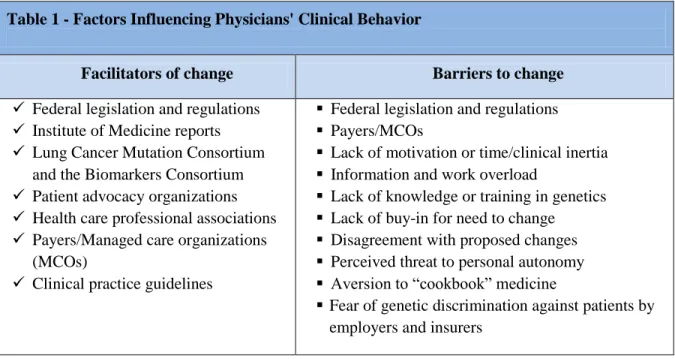
Motivating physicians to change their clinical practice behaviors is no easy task (Grimshaw J. M., 2004; Lomas, 1989; Osarogiagbon, 2011; Roila, 2004; Satterlee, 2008; Wong R. K., 2012). There are a myriad of factors influencing change; some are positive and others are negative. Several factors were explored in part two of chapter two (see Appendix A); they are listed in the table below (Cochrane Effective Practice and Organisation of Care Group, 2012; Edwards, 2009; Flodgren G. E., 2011; Flodgren G. P., 2011; Freemantle, 1995; Giguère, 2012; Ivers, N., 2012; O’Brien, 2008; Pantoja, 2009; Satterlee, 2008).
Table 1 - Factors Influencing Physicians' Clinical Behavior
Facilitators of change Barriers to change Federal legislation and regulations
Institute of Medicine reports Lung Cancer Mutation Consortium
and the Biomarkers Consortium Patient advocacy organizations Health care professional associations Payers/Managed care organizations
(MCOs)
Clinical practice guidelines
Federal legislation and regulations Payers/MCOs
Lack of motivation or time/clinical inertia Information and work overload
Lack of knowledge or training in genetics Lack of buy-in for need to change
Disagreement with proposed changes Perceived threat to personal autonomy Aversion to “cookbook” medicine
Fear of genetic discrimination against patients by employers and insurers
M. D., 1999; Wong R. K., 2012). However, motivating physicians to follow established guidelines remains a significant challenge (Aspinall, 2007; Freemantle, 1995; Fuchs, 2011; Green, 2007; Grimshaw J. M., 2012; Grimshaw J. M., 2004; Institute of Medicine, 2001; Oxman, 1995).
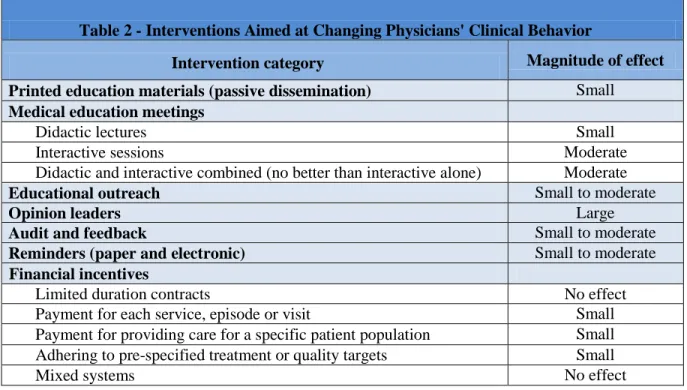
The Cochrane Collaboration has published a number of formal systematic reviews of published studies and literature reviews exploring the effectiveness of specific behavior-change interventions aimed at physicians (Cochrane Effective Practice and Organisation of Care Group, 2012; Edwards, 2009; Flodgren G. E., 2011; Flodgren G. P., 2011; Freemantle, 1995; Giguère, 2012; Ivers, 2012; O’Brien, 2008; Pantoja, 2009; Satterlee, 2008). The table below displays a summary of intervention types, along with their relative ability to motivate desired changes in physicians’ behavior.
Table 2 - Interventions Aimed at Changing Physicians' Clinical Behavior
Intervention category Magnitude of effect
Printed education materials (passive dissemination) Small Medical education meetings
Didactic lectures Small
Interactive sessions Moderate
Didactic and interactive combined (no better than interactive alone) Moderate
Educational outreach Small to moderate
Opinion leaders Large
Audit and feedback Small to moderate
Reminders (paper and electronic) Small to moderate
Financial incentives
Limited duration contracts No effect
Payment for each service, episode or visit Small
Payment for providing care for a specific patient population Small Adhering to pre-specified treatment or quality targets Small
Mixed systems No effect
The benefits of increasing use of EGFR testing are unmistakable and appear now to be irrefutable (Cataldo, 2011; Gazdar A. , 2010; Lennes, 2011; Maione, 2010; Printz, 2010; Shepard F. A., 2011; West J. H., 2010). Even so, adherence to clinical practice guidelines recommending routine use of EGFR testing remains much lower than might be expected after sustained efforts to motivate oncologists to adopt testing as standard practice when caring for patients with NSCLC (Alt, 2011; Chustecka, 2013; Lynch J. A., 2013).
There are a number of factors that can influence a physician’s decision to use EGFR testing; however, little is known about how oncologists weigh various factors when making decisions. Chapter 3 describes the research methodology for beginning to identify the factors influencing oncologists’
CHAPTER 3 - METHODS
Research Purpose
The goal of this research was to begin identifying factors oncologists consider when deciding whether to perform EGFR testing of lung tumor samples taken from patients with advanced or metastatic NSCLC. It was anticipated that some factors would be more important than others to individual physicians with some factors increasing the likelihood an oncologist will order an EGFR test for a specific patient and others weighing against testing.
Introduction
The Lynch data presented at the 2011 American Association for Cancer Research (AARC) Cancer Disparities Conference, and the subsequent publication of the research results in Genetics in Medicine in 2013, indicate EGFR mutation testing is vastly underused by oncologists treating patients with lung cancer in the U.S. (Alt, 2011; Lynch J. A., 2013). A pair of recent articles by Chustecka suggest testing rates may have improved in major cancer centers and academic medical centers since the Lynch data were published, but remain low in community oncology practice settings (Chustecka, 2013; Chustecka, 2013).
A thorough review of clinical and behavioral literature, medical media, and the Internet revealed no published data, qualitative or quantitative, identifying the reasons behind the variability in the use of EGFR testing by oncologists. Thought leaders in the lung cancer research and clinical practice
communities--who treat a small percentage of cancer patients--have speculated about the reasons why other oncologists do not routinely use the widely available tests (Cataldo, 2011; Gandara, 2010; Hirsch, 2006; Lennes, 2011; Maemondo, 2010; Maione, 2010; Nierendgarten, 2010; Shepard F. A., 2011; West, 2010). However, experts were not the subject of interest in this research, nor do they appear to have any objective proof their opinions about the behavior and motivation of others reflect the actual beliefs and actions of their colleagues.
The research study was done to begin understanding why some community-based oncologists do not routinely perform EGFR tests; this step was necessary before a plan could be developed for
motivating more routine use. Key informant interviews were used to gather data; the interviews provided an opportunity to hear directly from community oncologists who treat NSCLC about how they decide whether they’re going to order EGFR tests for the patients they are treating. The interview format allowed the researcher to develop deeper insights and understanding than structured quantitative
questionnaires or surveys. The interviews also facilitated deeper exploration into the thought processes, behaviors and perceptions of research subjects.
Ethics Approval
Ethics approval was obtained from the UNC Public Health-Nursing Institutional Review Board (study #13-2569, 7-26-2013), and verbal consent was obtained from each subject at the beginning of their interview.
Study Population
with advanced and metastatic NSCLC. Because 85% of all individuals with NSCLC present with late stage disease, oncologists treating patients with lung cancer are higly likely to have extensive experience managing patients who are candidates for EGFR testing (American Cancer Society, 2013). Oncologists’ experience treating this patient population was confirmed twice, once during the recruitment process and again at the beginning of the telephone interview.
A targeted strategy was used to identify research subjects. Oncologists were identified from the web sites of state oncology associations, community hospitals, oncology practices, and lung cancer advocacy groups; emphasis was placed on recruiting oncologists who treat patients with NSCLC in North Carolina and other southern states. Physician names were cross referenced to their medical practice web sites to identify prospectively—to the extent possible--oncologists who treat lung cancer and to confirm their contact information.
Jared Weiss, M.D., Assistant Professor, Thoracic, Head and Neck Cancer Programs, University of North Carolina Chapel Hill provided assistance and advice during the recruitment phase of the key informant interviews.
Study Recruitment
After a list of potential subjects was compiled, a personalized email (Appendix B) was sent inviting them to participate in the study. Oncologists who did not have published email addresses were recruited by telephone (Appendix C) instead of by email. The invitation had information about the purpose of the study, the type of information sought, details about the interview (e.g., length of time, recording), and communicated clearly that the research was being conducted independently without any external funding. The study was done in partnership with the Lung Cancer Initiative of North Carolina to increase the speed of recruitment. Oncologists usually have little free time for non-clinical activities; therefore, they were assured the interview would last no longer than 30 minutes.
telephone calls were made to anyone who did not respond to the initial invitation within a week. A second follow-up call was made three to five days later to anyone who still had not responded. A maximum of two follow-up telephone calls were made to oncologists who did not respond to the initial communication. Non-responders were considered non-contactable and were removed from the list of potential research participants.
Interview scheduling was done during the recruitment phone calls or in follow-up emails. An email confirmation was sent immediately to each participating oncologist with the date and time for the interview, along with the toll-free dial-in information and conference code. A final reminder email was sent to the oncologists 24 to 48 hours before the interview.
Interview Overview
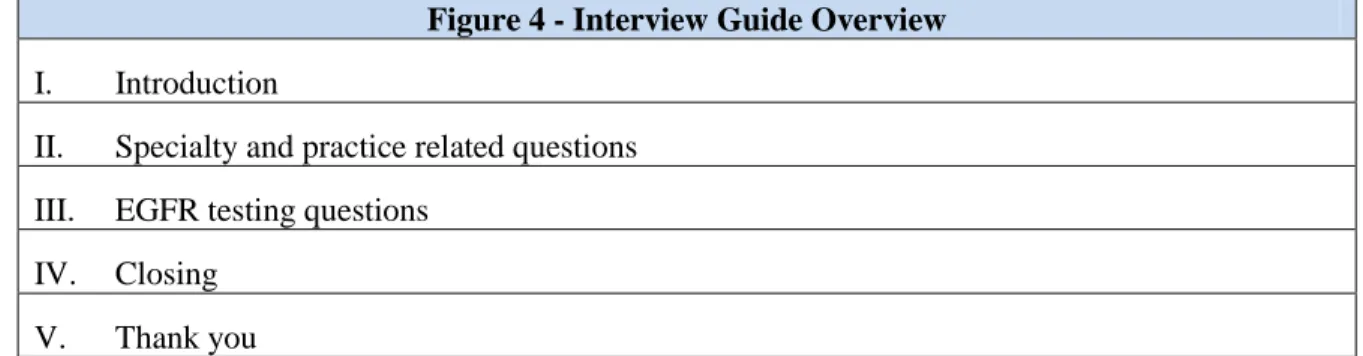
After consent was obtained, the interviews began with a brief overview of the purpose of the study to help orient study participants to the task, along with the importance of their participation; they were reminded the interviews were being recorded so they could be transcribed verbatim for analysis purposes. Subjects were encouraged at the beginning and throughout the interview to elaborate when responding to questions. The interviews were semi-structured; the interview guide ensured the question wording and order were consistent across interviews.
A pseudonym was assigned to each participant and personally identifiable information was excluded from this manuscript to protect the confidentiality of study participants.
Figure 4 - Interview Guide Overview I. Introduction
II. Specialty and practice related questions III. EGFR testing questions
IV. Closing V. Thank you
Telephone and Audio Recording Technology
The telephone calls were conducted using freeconferencecall.com, which provides free web-based conference call services and high quality audio recording capabilities eliminating the need for a separate recording device (Global Conference Partners). A small fee was paid to secure a toll-free dial-in number to eliminate any long distance fees for participants.
Analysis Plan
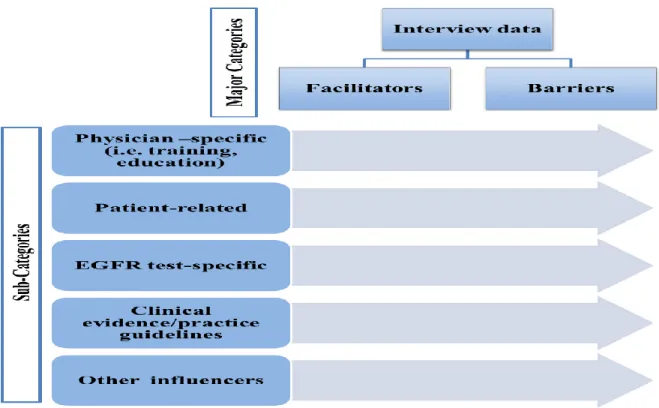
Figure 5 - Data Analysis Framework: A Priori Coding Categories
The audio recordings from the interviews were transcribed verbatim. The transcribed text was imported into MAXQDA 11, which is the qualitative data analysis software program that was used for coding the transcripts and content analysis (MAXQDA).
The researcher reviewed the transcribed interviews to confirm the presence of the two major categories and any factors that fit into the decision criteria/influencer categories displayed in the diagram above. No additional categories were identified during the coding and analysis processes; all factors mentioned by the key informants fit into the established data analysis framework.
A descriptive analysis of the research findings is presented in chapter four. Study Limitations
Internet search engine. However, it is possible published or unpublished quantitative or qualitative research data or studies were missed during the investigation. In any event, the results of this research effort will add to any knowledge and data available on the subject.
CHAPTER 4 - RESULTS
Subject recruitment was more successful than anticipated. Twenty-three (vs. 20 expected) community oncologists participated in the study. All interviews were conducted by telephone between August 19 and October 14, 2013, and were transcribed verbatim; the average length of the interviews was 19.5 minutes (range 11 to 26 min.). Data coding and analysis was performed using MAXQDA 11.
Key Informant Characteristics
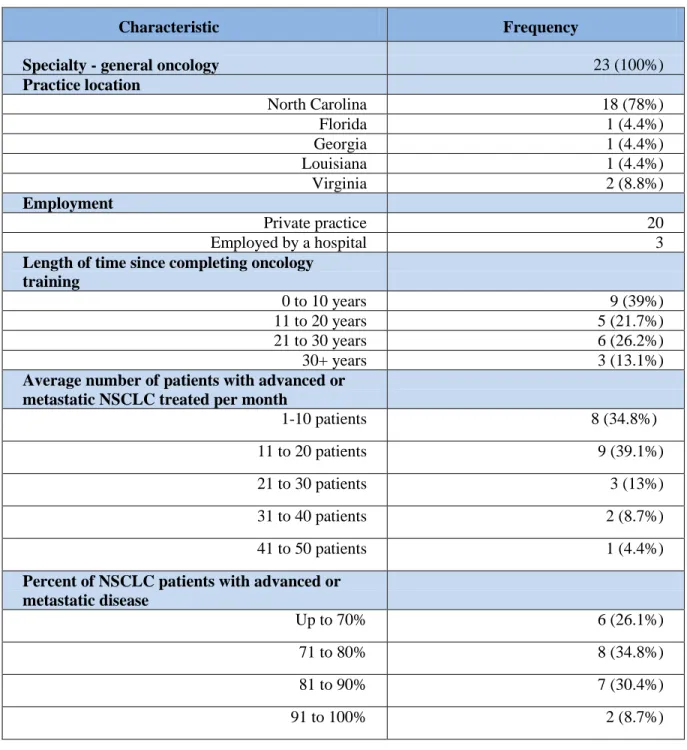
All participants met the inclusion criteria. They all practice general oncology and currently treat patients with advanced or metastatic non-small cell lung cancer. All participants practice in the southern U.S. Over three-quarters (78%) are located in North Carolina; the remaining oncologists practice in Florida (1), Georgia (1), Louisiana (1), and Virginia (2).
Table 3 - Summary of Key Informant Characteristics
Characteristic Frequency
Specialty - general oncology 23 (100%)
Practice location
North Carolina 18 (78%)
Florida 1 (4.4%)
Georgia 1 (4.4%)
Louisiana 1 (4.4%)
Virginia 2 (8.8%)
Employment
Private practice 20
Employed by a hospital 3
Length of time since completing oncology training
0 to 10 years 9 (39%)
11 to 20 years 5 (21.7%)
21 to 30 years 6 (26.2%)
30+ years 3 (13.1%)
Average number of patients with advanced or metastatic NSCLC treated per month
1-10 patients 8 (34.8%)
11 to 20 patients 9 (39.1%)
21 to 30 patients 3 (13%)
31 to 40 patients 2 (8.7%)
41 to 50 patients 1 (4.4%)
Percent of NSCLC patients with advanced or metastatic disease
Up to 70% 6 (26.1%)
71 to 80% 8 (34.8%)
81 to 90% 7 (30.4%)
91 to 100% 2 (8.7%)
Frequency of EGFR Testing
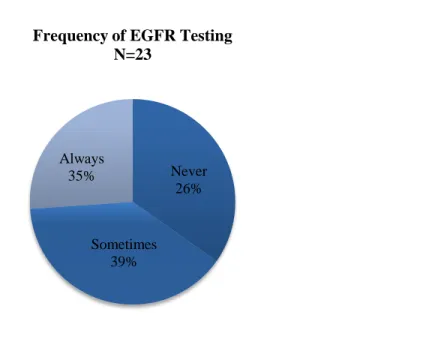
(34.8%) reported testing every patient; nine (39.1%) test some of their patients; and the remaining six (26.1%) never perform EGFR tests.
Figure 6 - Frequency of EGFR Testing
A Student’s t-test (independent variables, one tailed, unequal variances (type 3)) was used to evaluate the characteristics and behavior-related information collected to determine which
characteristics, if any, were significantly associated with oncologists who use EGFR mutation tests compared with those who do not. A p-value < .05 was considered statistically significant.
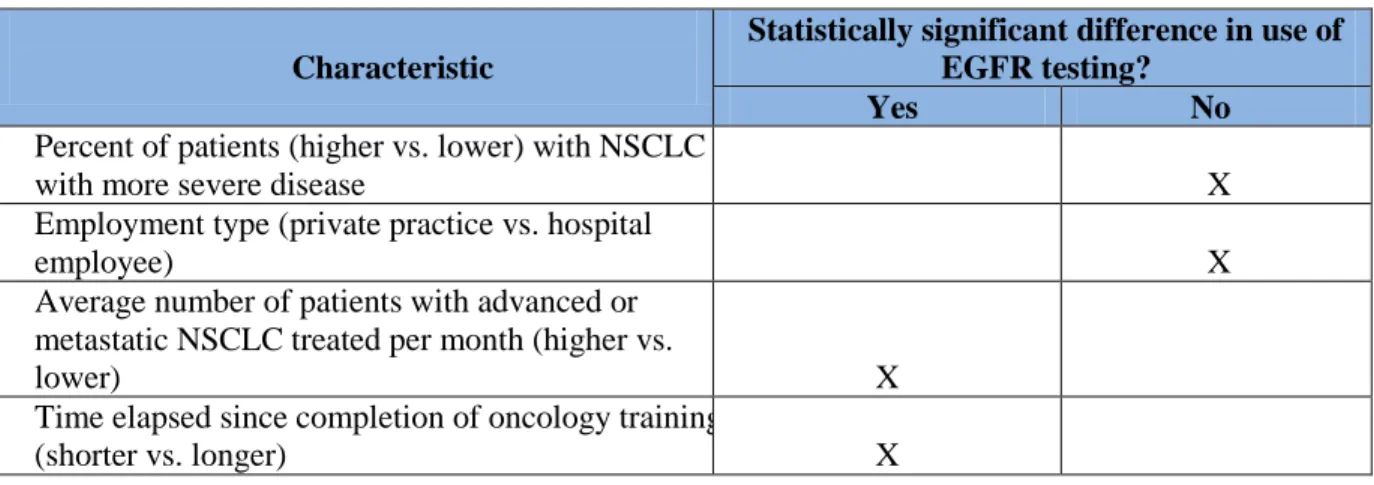
Having a higher percentage of patients with more severe NSCLC did not influence physicians’ testing behaviors, nor did employment type (private practice vs. hospital, p = .45). However, oncologists treating a higher average number of patients with advanced or metastatic NSCLC per month were significantly more likely to test at least some of their patients (p = .005). Those who reported never using EGFR tests treat an average of 10 patients per month, those who sometimes order tests treat an average of 19 patients per month, and oncologists who always order tests treat an average of almost 22 patients per month. The difference in the average number of
Always 35%
Sometimes 39%
Never 26%
patients treated per month between those who sometimes test compared with those who always test was not statistically significantly different (p = .309).
Time elapsed since completion of oncology training also had a significant impact on testing behavior. Of the nine oncologists who completed their specialty training within the past ten years, eight reported testing all of their patients and one tests some patients; this group was significantly more likely to perform EGFR tests than those who have been practicing oncology longer than ten years (P < .05). Five participants completed their training between 11 and 20 years ago; of those, three sometimes test patients and two never do. Five oncologists completed their training between 21 and 30 years ago; four of them test some patients and one does not. The three physicians who have been in practice over 30 years never order EGFR tests. All groups were significantly more likely to order an EGFR test than oncologists who completed their oncology training more than 30 years ago (P < .05).
Figure 7 - Testing Frequency by Years in Oncology Practice
0 1 2 3 4 5 6 7 8 9
0-10 11-20 21-30 30+
Num ber o f O nco lo g is ts
Years Since Completing Oncology Training
Testing Frequency by Years in Oncology Practice
Always
Sometimes
Table 4 - Characteristics and Their Impact on EGFR Testing Rates
Characteristic
Statistically significant difference in use of EGFR testing?
Yes No
Percent of patients (higher vs. lower) with NSCLC
with more severe disease X
Employment type (private practice vs. hospital
employee) X
Average number of patients with advanced or metastatic NSCLC treated per month (higher vs.
lower) X
Time elapsed since completion of oncology training
(shorter vs. longer) X
Future Use of EGFR Testing
Physicians were asked, “Do you expect your future use of EGFR testing to increase, decrease, or stay the same?” No one was planning to decrease his or her use of EGFR testing in the future. Seventeen physicians expect their use to remain at the current level and six expect their use to increase or are unsure whether their use will increase or remain the same. The eight oncologists who routinely order EGFR tests for all of their patients expect to continue testing all of their patients. Of the nine physicians who test some patients, five expect their use will remain steady, two believe they will increase their use, and two are unsure. Four of the six (67%) physicians who report never using EGFR tests expect they will not begin testing patients; three of the four have been in practice 30 years
or longer. The two remaining “never” respondents said they will begin testing in the future. Facilitators and Barriers to Use of EGFR Testing
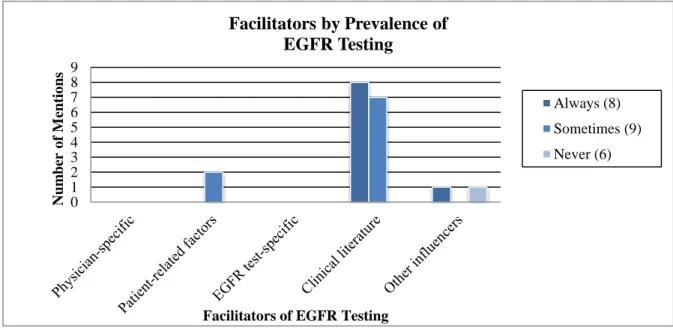
It was anticipated there would be sub-categories within the main categories of facilitators and barriers based on the literature review including physician-specific factors (e.g. training, experience); patient-related (e.g. health, willingness to be tested); EGFR test-specific (biopsy required, length of time to get results); clinical evidence and practice guidelines; and a general category for other influencers. These influencers can be classified as either facilitators or barriers depending on the responses provided by individual physicians. While influencers falling into all of categories were mentioned during the interviews, some were mentioned much more frequently than others were. The clinical literature and practice guidelines category dominated the facilitators named by oncologists who perform EGFR tests and two different categories--patient-related and physician-specific factors--dominated the barriers cited by those who sometimes or never perform EGFR tests.
Facilitators of EGFR testing. Oncologists who reported testing some or all of their patients were asked, “What are your main reasons for ordering EGFR mutation tests for your patients?” and “Is there any one thing that stands out in your mind as a particularly compelling reason to test your patients?”. The six oncologists who never test patients were not asked these questions; however, one of them mentioned during the interview they would consider testing at least some patients if a trusted colleague recommends it.
Clinical literature and practice guidelines. This was the most frequently mentioned factor influencing the decision to use EGFR testing. The eight oncologists who always test and seven of the nine who test some patients mentioned clinical literature and practice guidelines as the most
with chemotherapy. Not only do EGFR test results guide my first treatment decision, they provide guidance for follow-on treatment.”
Two participants mentioned following the National Comprehensive Cancer Network (NCCN) treatment guidelines for non-small cell lung cancer.
Even when probed for additional reasons for ordering EGFR tests, none of the participants mentioned any other factors that influence their decisions.
Patient-related factors. Of the two remaining oncologists who test at least some patients, one tests only those patients who ask to be testedand the other tests only those patients who prefer to use oral therapy over chemotherapy to determine prospectively whether the patient has an EGFR mutation that would make them more likely to respond to treatment.
Other influencers. One of the eight oncologists who test all of their patients mentioned that testing is done reflexively (automatically) by the pathology department on all NSCLC tissue biopsies performed at their local hospital. “I don’t even have to think about it. It was not always this way. My partners and I worked with the hospital pathologist to get it done automatically. It’s the right thing to do based on the clinical literature.” One oncologist who tests some patients was motivated to start ordering EGFR tests after it was recommended by a respected colleague.
Figure 8 - Facilitators by Prevalence of EGFR Testing
Barriers to EGFR testing. All study participants--including those who reported always ordering EGFR tests--were asked the following two questions, “What is the main reason or reasons you decide not to order an EGFR mutation test for a patient?” and “Is there any one thing that is the most compelling reason for not testing your patients?”. The eight oncologists who test all of their patients were also asked the questions to determine if there is any situation that causes them to avoid testing a patient. All responses were grouped into the five sub-categories mentioned above.
Patient-related factors. The health of a patient plays a significant role in the decision not to perform EGFR tests for many physicians; it was the most frequently mentioned barrier to testing. Of the eight who reported testing all of their patients, all but one reported there are patient-specific circumstances that preclude testing, including patients who are too sick to undergo a biopsy; those who are in hospice care or actively dying; and those who refuse to be treated. One physician tests every patient—including those in hospice—because individuals with an EGFR mutation are highly likely to respond to targeted treatment regardless of their health status. If a patient tests positive for an EGFR mutation, they are withdrawn from hospice and started on erlotinib. Patients who do not harbor an EGFR mutation remain in hospice. All of the nine doctors who test at least some of their
0 1 2 3 4 5 6 7 8 9 Num ber o f M ent io ns
Facilitators of EGFR Testing
Facilitators by Prevalence of
EGFR Testing
Always (8)
Sometimes (9)
patients cited similar situations where they avoid testing; in addition, this group also mentioned other factors, including: the physical condition of the patient (frailty); patient refusal to be tested; lack of (patient) understanding of the importance of EGFR testing; and pressure from the patient and patient’s family to begin treatment immediately.
Physician-specific factors. Of the oncologists who sometimes or never use EGFR testing, the nine who sometimes test (100%) and four who never test (67%) used a variety of words and phrases that suggest they are confident in their ability to select the best treatment for a patient based on their clinical judgment and experience; this was the second most frequently cited barrier to EGFR testing. The following three quotes are illustrative of the self-confidence theme. “I really don't need to test most of my patients because I rely on previous experience to select the best treatment for a given patient.” “I don't believe it is necessary. There is data showing testing is a nice to do but not necessary.” “I'm not convinced testing a patient is any better than using my clinical judgment. I’ve been doing this a long time. I believe I know what is best for the patient, so there is no reason to test them.”
The two other physicians who never test patients said they do not know enough about EGFR testing to make a well-informed decision about using it. None of the oncologists who test all of their patients mentioned any physician-specific factors.
EGFR test-specific factors. Test-related factors were mentioned by 9 physicians (5
sometimes and 4 never testers); they included cost, length of time it takes to get results, the need for a biopsy, and insufficient tissue available to perform the test. The following quote is from an
Clinical evidence and practice guidelines. Five oncologists—including three who test some patients and two who never test—indicated a need for additional proof that EGFR testing leads to better treatment outcomes. One doctor who tests some patients said, “I would say that it's too soon to tell if using EGFR testing is going to help my patients so I'm not ready to test everyone. If I’m going to start someone on chemotherapy there’s no reason to test.” Another mentioned, “Guidelines are just that, guidance and are not required.” A third oncologist who never uses EGFR testing said, “I need more proof that testing is worth the effort.”
Other influencers. One oncologist who does not use EGFR testing mentioned that no colleagues do it either.
Figure 9 - Barriers by Prevalence of EGFR Testing
Discussion
Twenty-three general oncologists who practice in community settings participated in the key informant interviews. They all practice in the southeastern US and completed their oncology training prior to being interviewed. Participants were asked whether they always, sometimes or never perform
0 1 2 3 4 5 6 7 8 9 10 Num ber o f M ent io ns
Barriers to EGFR Testing
Barriers by Prevalence of EGFR Testing
Always (8)
Sometimes (9)
EGFR tests on patients with advanced or metastatic NSCLC. Eight of the twenty-three reported testing all of their patients, nine test some patients, and six never use the test.
Having a higher percentage of patients with NSCLC who have advanced or metastatic disease and employment situation—private practice vs. being employed by a hospital—did not influence the likelihood of performing EGFR tests. However, two characteristics were associated with an increased likelihood of performing EGFR testing on at least some patients; these included treating an average of more than ten patients with advanced or metastatic NSCLC a month, and length of time since
completion of oncology training. Oncologists who have been in practice ten years or less were significantly more likely to test at least some patients than physician who have been in practice longer; those who have been in practice over 30 years were the least likely to use EGFR testing.
The factors influencing a physician’s decision to perform EGFR testing were categorized as facilitators or barriers. In addition to these two main categories, five sub-categories were identified a priori, including: physician-specific factors (e.g. training, experience); patient-related (e.g. health, willingness to be tested); EGFR test-specific (biopsy required, length of time to get results); clinical evidence and practice guidelines; and a general category for other influencers. Participants
Figure 10 - Summary of Category Mentions by Key Informants
The most commonly mentioned facilitator was clinical literature and practice guidelines, and the second most common was patient-related factors, followed by other influencers. The most commonly mentioned barrier was patient-related factors, followed by physician-specific, test-specific, clinical literature and guidelines, and other influencers. A consistent theme emerged during the discussion of barriers to testing. Thirteen physicians, including all nine “sometimes” testers and four “never” testers used words and phrases suggesting they are confident in their ability to make the best treatment decisions for their patients based on their clinical judgment and experience, which obviates the need for EGFR testing.
Study Limitations
their own words in a confidential setting. However, time and resource constraints limited the number of interviews that were conducted.
Twenty-three community-based oncologists participated in the study. The study participants were purposely selected for their knowledge and experience treating lung cancer patients; they all practice oncology in the southern U.S. Therefore, the cohort may not be representative of community oncologists practicing throughout the U.S. Based on time and resource constraints, the number of key informant interviews was limited. It is possible there are additional factors influencing oncologists’ decisions about EGFR tests that were not identified during the interview process. In order to increase the reliability and generalizability of the data, it is important that a larger study involving more oncologists across a wider geographic area and with a greater variety of practice types be conducted in the future.
Despite the limitations outlined above, the data collected combined with information
CHAPTER 5 – THE IMPLEMENTATION PLAN
The findings of this study, although not generalizable, provide valuable insight into the thought processes of community oncologists treating patients with late stage NSCLC. These data, along with information gathered during the literature review, provide a foundation for formulating an approach for increasing the use of EGFR testing based on John Kotter’s eight-step process for change, which was originally described in his book, Leading Change (Kotter, 1996). Each of Kotter’s eight steps, including creating a sense of urgency, forming a powerful coalition, creating a vision for change, communicating the vision, overcoming obstacles, creating short-term wins, building on the change, and anchoring change in the culture are discussed in detail below.
Interventions will be aimed at three target audiences, including community oncologists; other healthcare professionals; and lung cancer patients, their families, caregivers, and advocates. Not all of Kotter’s steps apply to the all three constituencies.
Implementation Plan
impact of interventions on EGFR testing rates, albeit on a small scale. Each tactic implemented in the NC pilot will be evaluated after completion to identify interventions that work best to motivate an increase in EGFR testing by community oncologists before rolling them out to a broader audience. Nationwide outreach and education efforts are extremely expensive and it is highly unlikely sufficient funding will be available without proof that tactics used produce meaningful results. Using a pilot approach provides an opportunity to evaluate tactics and collect the data necessary for fundraising to support a national campaign. It also conserves resources by avoiding ongoing use of tactics that do not produce meaningful results.
Creating a Sense of Urgency
Creating a sense of urgency is the crucial first step for initiating change. There are compelling reasons for increasing the rate of EGFR testing. The first step in creating a sense of urgency is making professional and patient groups aware that there is a variance in testing rates and sharing the facilitators and barriers to testing uncovered during this research. Eight of the oncologists interviewed reported testing all of their patients; they were uniformly shocked to learn that many of their colleagues do not. These oncologists consider testing to be the standard of care and assume all of their colleagues concur. Responses from these eight oncologists suggest that oncologists who are in the position to help reverse the trend might not even be aware of the existing disparities; making them aware of the published data and these research results is a critical step in beginning the process of change.
Background information about the variation in testing rates and the study results will be shared with the North Carolina Oncology Society (NCOS), the statewide professional organization for oncologists. This information will allow them to participate in developing training and
Carolina. They are members of NCOS and are in a position to provide advice on the best way of capturing the attention of the appropriate individuals in NCOS to help speed access and sharing of information.
The Lung Cancer Initiative of North Carolina (LCI), an advocacy organization, was a partner in this research. They have seen the results and already have a sense of urgency about this issue because they understand testing impacts the quality of care received by lung cancer patients in North Carolina. I presented the study results to LCI members including patients, advocates, and health care professionals at their annual meeting and volunteer recognition dinner held on February 9, 2014, in Durham, North Carolina. I am working with LCI to explore ways of breaking down barriers to testing from both the physician and patient perspectives.
Genentech, the pharmaceutical company marketing erlotinib has asked me to share the study results with them. They understand the importance of tying the prescribing of erlotinib to EGFR testing results so that patients get the best possible treatment even if it results in the prescribing of other medications (Genentech, 2014). Genentech will be part of the planning process and will help implement the integrated plan for increasing EGFR testing rates. Pfizer, another pharmaceutical manufacturer has also expressed interest in learning more about this study and participating in efforts to increase molecular testing rates. Admittedly, pharmaceutical companies are interested in this research because it will help them increase sales, but their participation and support also serves the greater good of increasing testing rates.
Forming a Powerful Coalition
state funded cancer initiatives (North Carolina Oncology Society). The LCI is the only established advocacy organization focused specifically on the care of lung cancer patients in North Carolina.
Pharmaceutical manufacturers provide significant financial, educational, and logistical support to these two organizations. For years, drug companies were opposed to testing, which they saw as limiting the use and revenue for targeted therapies. However, they are now supporting efforts to increase molecular testing for EGFR and other mutations that predict response to specific
treatments. Together, the LCI and NCOS, with support from pharmaceutical manufacturers, and individual and corporate donors have the combined resources and contacts to reach a large number of community oncologists and lung cancer patients in North Carolina. The first step, however, is for them to commit to working together to create complementary initiatives for influencing physicians and patients to establish a dialogue about EGFR testing, regardless of who initiates the conversation.
Drs. Garst and Weiss are active members of both North Carolina-based organizations and are in the best position to bring them together to tackle this problem. I will ask them to facilitate a meeting between the two organizations and personnel from pharmaceutical companies to establish an EGFR testing task force to begin working on a vision and plan for increasing the use of EGFR testing in North Carolina. I will be a founding member of the task force.
Creating a Vision for Change
This research provides extra impetus for change because, for the first time, specific
The first responsibility of the task force will be developing a vision statement to guide the work of the group. A vision statement is the formal statement of an organization’s purpose in the context of its values; it helps ensure all members are working toward the same end, which facilitates cooperation and achievement of the vision. Creating a vision statement without expert guidance is more difficult than it seems, and often results in a confusing combination of vision, mission, and values statements. I will ask Leslie Burnside, MHA, who is an expert in visioning, to work with the task force to develop a powerful vision. She will also help develop a mission statement defining the purpose of the group.
Having a vision and mission is not enough—the task force must also establish overarching objectives supporting achievement of the group’s vision and mission. The objectives will be specific, measureable, attainable, reasonable, and time bound. Without shared objectives, task force members could go off on their own, undermining the value of forming a guiding coalition to tackle this issue. Communicating the Vision
The task force will develop a comprehensive communications plan supporting the
achievement of the overarching objectives; the various tactics in the plan will be integrated so they build on each other to maximize impact and motivate desired behavior. Every tactic in the plan will have measureable objectives ensuring tactics contribute to achieving the group’s overarching objectives. In addition to other measures, the task force will ask manufacturers of EGFR tests to provide monthly counts of tests performed in North Carolina, which will be monitored for changes over time. The tactics achieving their objectives will be implemented on a national level as soon as possible without waiting for completion of other tactics in the communications plan; this approach facilitates a faster ramp-up on a broader scale. Tactics not producing the desired results will be discontinued to minimize wasteful expenditure of human and financial resources.
members of their respective organizations, as well as to the broader lung cancer community. A press release explaining the work of the task force, summarizing study results, and providing directions about how and where to obtain an EGFR mutation test will kick off implementation of the plan. The release will be sent to the news and health editors at all media outlets (print, broadcast, and digital) in the state of North Carolina. Follow-up phone calls will be made to news organizations pitching the story and making task force members and others available for interviews. All spokespersons will be media trained to ensure they can communicate the key talking points effectively.
Overcoming Obstacles
As noted in chapter 4, there were a number of barriers mentioned during the key informant interviews. The task force will take a strategic multi-pronged approach to overcoming the barriers by targeting communications to a number of audiences, including community oncologists, other
healthcare professionals, and patients and their families, caregivers, and advocates.
Community Oncologists. Oncologists who test some patients are likely to be easier to motivate than those who never test. They may simply be unaware EGFR testing improves outcomes for all patients, not just those with a mutation. On the other hand, 87% of oncologists interviewed who test some or none of their patients expressed confidence in their ability to make the best treatment decisions for their patients based on their clinical experience and judgment alone. Clinical literature indicates their confidence is misplaced. Unfortunately, a majority of never and sometimes testers interviewed reported having no intention of adopting or expanding their use of EGFR testing, suggesting that it will take a significant amount of effort to motivate them to change their behavior.
than when using third parties—including pathologists, hospital laboratory managers, oncology nurses, and patients—to influence community oncologists.
Some physicians interviewed want more proof EGFR testing produces better outcomes and others admitted to being ill informed about testing. It is clear from the responses education is an essential strategy for increasing the rate of testing. Oncologists must have knowledge and understanding of the critical role testing plays in delivery of high quality care before they can be motivated to use it. What tactics should be used for educating oncologists? As noted in the literature review, there is substantial variability in the impact of change efforts, which indicates a need to offer a range of educational experiences in a variety of settings and formats. When creating the
communications plan, the task force will focus on interventions known to have a higher likelihood of successfully motivating behavior change in physicians.
Peer influence is arguably the most reliable method of influencing physician behavior. Identifying and including local and regional thought leaders in the planning stage will help ensure their alignment with the vision and mission of the task force. Task force members have relationships with oncologists who practice in North Carolina; they will use their networks to identify and engage oncologists respected by their peers. Members of the task force will decide who among them is best suited to recruit individual thought leaders to participate in the outreach efforts. The thought leaders recruited will be asked to take advantage of any opportunity—casual or formal--they have to talk to peers about the importance of molecular testing.
consistent, concise and compelling communications regardless of the sophistication of the audience. Studies show interactive educational methods are more effective at motivating behavior change than passive methods or a combination of the two; therefore, the kits will include interactive exercises for use in engaging audience members during presentations.
One issue that has not yet emerged in the literature or during my research, but that would add weight to the argument in favor of testing, is the threat of medical malpractice lawsuits based on the failure to perform and base treatment on results of molecular testing. I will ask Dean Harris, a member of the faculty of the Gillings School of Global Public Health, to recommend individuals who are knowledgeable about medical malpractice law and may be willing to research whether any such lawsuits exist. If there has been successful litigation, the issue of legal liability will be woven into the messaging for targeted healthcare professional audiences because anyone participating in the direct care of patients with NSCLC is vulnerable to legal action.
The task force will also work with the North Carolina Health Education Centers (AHEC) to fund and develop an accredited live continuing education program for doctors and nurses practicing in NC (NC AHEC, 2014). AHEC is one of the leading providers of continuing education programs for health care professionals working in NC; their mission includes
enhancing the quality of care and health outcomes for residents of North Carolina. The program office, which is responsible for developing educational programming, is located on the campus of the University of North Carolina Chapel Hill. AHEC has 10 regional centers across the state allowing them to increase access and ease of participating in educational programs and
conferences. The task force will supplement AHEC’s publicity efforts to increase awareness of the continuing education programs and boost attendance.
Many oncologists interviewed avoid testing patients in hospice care because, by definition, patients in hospice receive palliative care instead of potentially curative treatment. However, one oncologist interviewed tests patients in hospice that have not yet been tested because individuals with one or more specific EGFR mutations often have an almost immediate, profound, and sustained response to erlotinib treatment. Testing patients in hospice gives them a chance at living significantly longer with good quality of life. Sharing this oncologist’s approach will likely resonate most with oncologists who already test some or all of their patients. After presenting results of my research at the LCI meeting on February 9, two oncologists in attendance mentioned that testing patients in hospice had never occurred to them, but they are planning to start doing so immediately, which is exactly the response I am hoping to get when we begin actively educating community oncologists. Information about testing patients in hospice will be included in both kits. Patients, families and caregivers are important audiences for this
Other Healthcare Professionals. There are healthcare professionals that can influence community oncologists in a variety of ways to increase their use of EGFR testing.
Pathologists.
Pathologists analyze and perform tests on tissue extracted during biopsy procedures. Pathologists can increase the use of EGFR testing in two ways. First, they can use their personal and professional relationships, and position in the hospital to motivate community oncologists to create standing orders for EGFR testing of tumors confirmed to be NSCLC. The second way is by instituting reflexive testing, which is automatic ordering of laboratory tests based on a specific diagnosis or results of an initial test (Eastep, 2011). Reflexive testing does not require any action by oncologists; it is an institutional protocol triggered by the presence of certain tumor characteristics.
In June 2013, the College of American Pathologists published an evidence-based guideline recommending using EGFR testing to inform prescribing of targeted therapies for the treatment of NSCLC (College of American Pathologists, 2013). Pathologists can use this guideline as proof of the value of EGFR testing, along with results of published studies. Task force members will work with the North Carolina Society of Pathologists (NCSP) to leverage professional kit contents for use by the Society and pharmaceutical sales representatives to educate pathologists practicing in community hospitals about the importance of routinely performing EGFR mutation tests. The materials will urge pathologists to proactively engage community oncologists in conversations about the role and importance of EGFR testing, and consider instituting reflexive EGFR testing in their hospitals. The NCSP members will be made aware of AHEC continuing education programs so they can publicize the events to their medical colleagues.