CAUSES AND TREATMENT OF HERPES SIMPLEX VIRUS RECURRENCES
Christina Ludema
A dissertation submitted to the faculty of the University of North Carolina at Chapel Hill in partial fulfillment of the requirements for the degree of Doctor of Philosophy in the Department of Epidemiology.
Chapel Hill 2012
Approved by: Stephen R. Cole Charles Poole
ABSTRACT
CHRISTINA LUDEMA: Causes and treatment of herpes simplex virus recurrences (Under the direction of Stephen R. Cole)
Trials have demonstrated that prophylactic acyclovir treatment reduces the cumulative risk of first herpes simplex virus (HSV) recurrence after randomization, and studies have suggested that ultraviolet (UV) exposure may increase the risk of HSV recurrence. We estimated the effect of acyclovir on cumulative risk of multiple recurrences and time outdoors on risk of ocular HSV recurrences. These goals were accomplished using the Herpetic Eye Disease study, a 12-month placebo-controlled randomized trial of twice-daily oral acyclovir to prevent ocular HSV recurrence.
iv
v
vi
ACKNOWLEDGEMENTS
In addition to my family to whom this dissertation is dedicated, I would like to thank a number of people who made it possible for me to complete this work. Dr. Stephen Cole, my advisor, is a keen scholar and a dedicated mentor. He has put a tremendous amount of work into this document and into my education and training more generally. Thank you. Fellow members of the Cole advising group provided feedback and support for this and other work: Jess Edwards, Dr. Petra Sander, Dr. Ashley Naimi, Dr. Chanelle Howe, and Dr. Karminder Gill. Committee members supported me through developing and refining this work: Dr. Charlie Poole, Dr. Jennifer Smith, Dr. Vic Schoenbach, Dr. David Wohl. Dr. Kirk Wilhelmus provided invaluable substantive perspective.
Many thanks are due to Dr. Roy Beck and others at the Jaeb Center for Health Research for access to these data and to the participants that entrusted their data to research. Thanks also to Chris Fuhrmann from the Southeast Regional Climactic Center for accessing NOAA UV and weather data.
vii
TABLE OF CONTENTS
LIST OF TABLES ... x
LIST OF FIGURES ... xi
LIST OF ABBREVIATIONS ... xii
Chapter 1. CRITICAL REVIEW OF THE LITERATURE ... 1
1.1 Epidemiology of HSV ... 1
1.2 Epidemiology of Herpetic Disease ... 2
1.3 Pathobiology of HSV ... 3
1.4 Causes of Recurrence ... 3
1.5 UV Exposure ... 4
1.6 Therapeutic Strategies for HSV Infection and Recurrence ... 6
Chapter 2. STATEMENT OF SPECIFIC AIMS ... 10
2.1 Statement of Specific Aims and Hypotheses ... 10
2.2 Significance ... 11
2.3 Innovation ... 12
2.3.2 Assessment ... 13
Chapter 3. METHODS ... 14
3.1 Study Population and Setting ... 14
3.2 NOAA Data ... 16
3.3 Statistical Methods for Chapter 4 (Aim 1) ... 17
ix
Chapter 4. PROPHYLACTIC ORAL ACYCLOVIR AND MULTIPLE
HERPES SIMPLEX VIRUS RECURRENCES ... 25
4.1 Introduction ... 25
4.2 Methods ... 26
4.3 Results ... 30
4.4 Discussion ... 33
Chapter 5. ASSOCIATION BETWEEN UNPROTECTED UV EXPOSURE AND OCULAR HERPES SIMPLEX VIRUS RECURRENCE ... 42
5.1 Introduction ... 42
5.2 Methods ... 44
5.3 Results ... 49
5.4 Discussion ... 51
Chapter 6. DISCUSSION ... 61
6.1 Summary ... 61
6.2 Limitations ... 61
6.3 Strengths ... 63
6.4 Future Directions for Public Health Policy ... 64
6.5 Future Directions for Research ... 64
6.6 Conclusion ... 65
Appendix 1. DATA COLLECTION FORMS FROM THE HEDS ... 66
Appendix 2. ADDITIONAL TABLES AND FIGURES FOR CHAPTER 4 ... 69
Appendix 3. ADDITIONAL TABLES AND FIGURES FOR CHAPTER 5 ... 70
x
LIST OF TABLES
Table 1.1 Estimates of the incidence of ocular herpes disease………...7
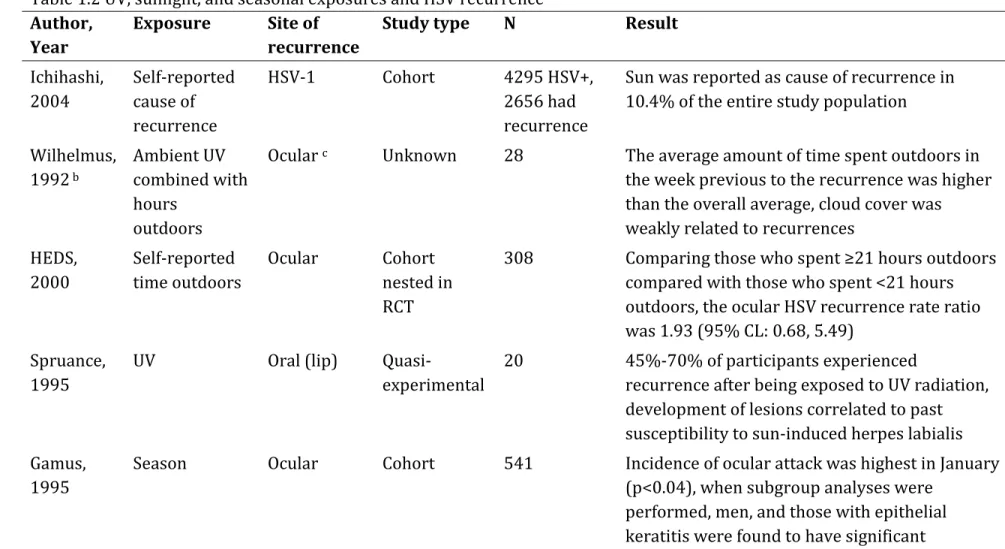
Table 1.2 UV, sunlight, and seasonal exposures and HSV recurrence………8
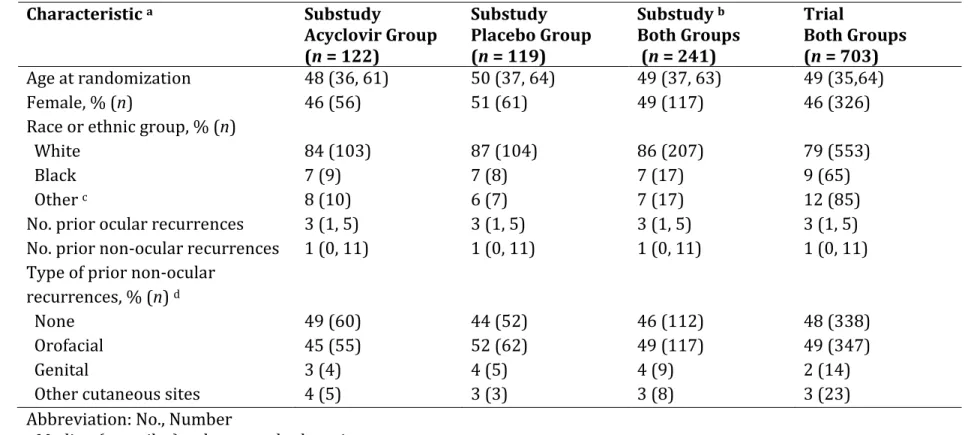
Table 4.1 Characteristics of 703 Trial and 241 Substudy Participants Followed for HSV Recurrence Over 12 Months, United States, 1993-1997………..…………37
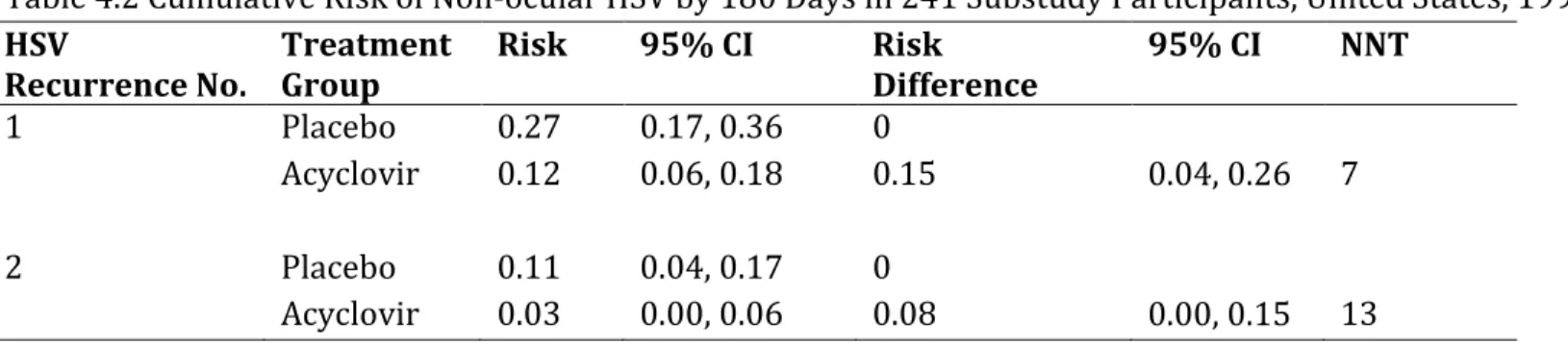
Table 4.2 Cumulative Risk of Non-ocular HSV by 180 Days in 241 Substudy Participants, United States, 1993-1997………..……...38
Table 4.3 Recurrence of Non-ocular HSV in 241 Substudy Participants, United States, 1993-1997………...39
Table 5.1 Baseline characteristics of 308 total participants and 44 participants who experienced an ocular HSV recurrence, Herpetic Eye Disease Study, 1993-1997………..55
Table 5.2 Follow up characteristics of 10,480 person-weeks overall and stratified by self-reported sun exposure, Herpetic Eye Disease Study, 1993-1997………56
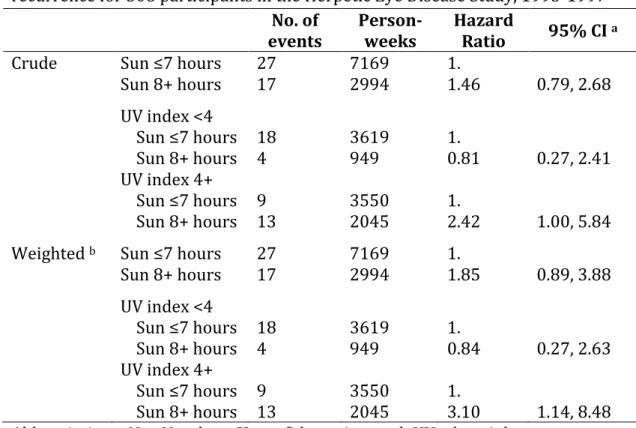
Table 5.3 Estimated effect of sunlight and UV index exposure on time to HSV recurrence for 308 participants in the Herpetic Eye Disease Study, 1993-1997………..………58
Table A.3.1 Adjusted hazard ratios using full weights and trimmed weights…….………...…70
Table A.3.2 Rates of ocular HSV recurrences by time spent outdoors………...70
Table A.3.3 Distribution of time spent outdoors by UV index………..70
xi
LIST OF FIGURES
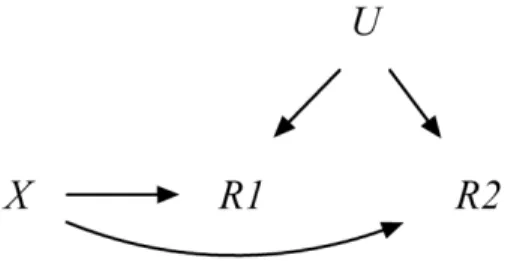
Figure 3.1 DAG for recurrent events in a randomized trial………...24 Figure 4.1 Kaplan-Meier estimates of the cumulative risk of first and
second non-ocular HSV recurrence………..40 Figure A.2.1 Estimated log cumulative hazard functions for acyclovir
treated and placebo groups to non-ocular recurrence………...……….69 Figure A.3.1 Number of HEDS participants over time on study………..72 Figure A.3.2 Proportion of participants who spent 8+ hours
outdoors by time on study……….73 Figure A.3.3 UV index value for participants by time on study………...74 Figure A.3.4 Median stress by weeks on study………..75 Figure A.3.5 Proportion of participants who use contacts by time on
study………75 Figure A.3.6 Boxplots of UV index versus reported time spent
outdoors pooled over 30 imputations………76 Figure A.3.7 Crude Kaplan-Meier estimates of the cumulative risk of
xii
LIST OF ABBREVIATIONS
HEDS Herpetic Eye Disease study HSV herpes simplex virus
Chapter I
CRITICAL REVIEW OF THE LITERATURE
1.1 Epidemiology of HSV
2 1.2 Epidemiology of Herpetic Disease
After initial infection, HSV can be reactivated, resulting in recurring eruptive or inflammatory lesions. The consequences of recurrence vary by anatomical site. Ocular recurrences can lead to corneal scarring and loss of visual acuity (16). Orofacial and genital recurrences can result in painful lesions, and genital recurrences can increase susceptibility to co-infection with human immunodeficiency virus (16, 17). At any site, clinical HSV recurrences are associated with viral shedding (18). However, shedding does occur in the absence of symptoms (19), and some individuals never display symptoms of herpetic infections (15).
The age and sex adjusted incidence of symptomatic ocular HSV infections is estimated to be 11.8 per 100,000 person years (95% CL: 10.6, 13.0), and there is no difference in incidence between men and women, but incidence does increase with age with approximately 5 additional cases/100000 person years for each 10 year increase in age (20). Older estimates of ocular HSV incidence are shown in Table 1. After initial infection, an individual may develop recurrent disease, with a 10% a year risk of recurrence (20).
3 1.3 Pathobiology of HSV
HSV-1 and HSV-2 are neurotropic viruses; after initial infection at skin and mucosal surfaces, the virus migrates to neuronal cell bodies where it establishes latent infection. The strain of the virus, host genetics, and other factors are thought to affect whether an individual displays symptoms at initial infection (24). After initial infection, the virus travels to the sensory ganglia associated with the site of the initial infection (i.e., trigeminal ganglia for infections above the neck, sacral ganglia for infections below the neck) and establishes latency. Latency is defined as maintaining at least one functional viral genome in the absence of virus replication, assembly or pathologic effect. There is some evidence that herpes may additionally be able to establish latency in the cornea, though this question cannot be definitively answered until there are more sensitive HSV DNA tests (25). Reactivation leading to herpes virus production can be asymptomatic (i.e., shedding) or symptomatic (i.e., recurrence). In comparison to a primary infection, recurrences are often shorter in length with many of the symptoms (e.g., redness, pain, swelling) attributed to the host’s immune response.
1.4 Causes of Recurrence
4 1.5 UV Exposure
There are many complex mechanisms through which UV exposure is thought to impact HSV recurrences; we will review two primary mechanisms hypothesized from animal models and cell culture. The first pathway is a direct effect of UV on HSV reactivation. Initially, UV radiation damages the ends of a nerve containing latent HSV inducing cell repair pathways. Cell repair, through c-Jun and c-Fos, activates the HSV transcription promoter (i.e., ICP0) leading to HSV transcription and reactivation (33). Additionally, these repair pathways circumvent the activity of HSV latency-associated transcript to prevent infected neurons from apoptosis (34), reactivating HSV.
The second pathway is through immune response depression due to UV exposure. UV radiation has been shown to suppress HSV antigen presentation in epidermal cells (35). UV is also likely to lead to the reduction of type 1 cytokine release, an important part of immunological control for viruses (36). T regulatory cells are induced in the lymph nodes draining the irradiated site, which release immunosuppressive modulators when stimulated by an antigen (37-40). Garssen et al. extrapolated from an animal model that 100 minutes of sunlight around noon on a clear summer day in southern Mediterranean countries would lead to a 50% suppression in the T cell response to a microbe (41). This localized immunosuppression may allow sufficient viral replication to cause a recurrence.
5
2). Laboratory exposures to UV-B radiation have been used to induce recurrences within 1 to 7 days of exposure (27); however, some individuals were more susceptible to UV radiation than others (48). There has been one study and one abstract examining the relationship between time spent outdoors (i.e., at UV exposures that are reflective of daily life) and HSV recurrences.
The Herpetic Eye Disease Study was a randomized trial that enrolled 703 participants to assess the effect of prophylactic acyclovir on prevention of ocular herpes recurrences (49). As part of a nested cohort, 308 participants filled out weekly logs on various exposures thought to cause recurrences (50). Comparing those who spent ≥21 hours outdoors compared with those who spent <21 hours outdoors, the ocular HSV recurrence rate ratio was 1.93 (95% CL: 0.68, 5.49). There were 4 events and 40 events during weeks where participants spent ≥21 and <21 hours outdoors; therefore precision was not optimal for this endpoint. Without accounting for ambient UV, the effect of UV on ocular HSV recurence is likely diluted by time spent outdoors when UV index was low. Additionally, there was no accounting for time-varying confounding.
6
1.6 Therapeutic Strategies for HSV Infection and Recurrence
Treatment strategy for ocular HSV disease usually consists of trifluorothymidine, a nucleoside analog that interferes with DNA replication, topical or oral acyclovir, and possible adjuvant therapy of topical interferon (26). In the cases of disease that are primarily caused by inflammatory response (i.e., stromal keratitis), topical corticosteroids and long-term prophylactic use of acyclovir is recommended (52). Acyclovir is an antiviral drug that is used widely to treat HSV infections. Acyclovir, after being converted to its active form by HSV, interferes with HSV DNA replication more strongly that cellular DNA replication (53). Despite widespread use, the incidence of acyclovir resistance is low, particularly in immunocompetent individuals (54-56). None of these treatment strategies have been found to reduce viral shedding (57).
7
Table 1.1 Estimates of the incidence of ocular herpes disease
Author, Year Location Year(s) Population Ocular HSV incidence
a (95% CI)
Young, 2010 Olmstead County, MN
1976-2007 Geographic cohort, numerator from ICD-9 codes in linked medical records, denominator from census, age and sex adjusted to US white population in 2000
11.8 (10.6, 13.0) 9.2 (8.1, 10.3) b
Labetoulle,
2005 France Sept-Dec 2002 Sample of ophthalmologists, extrapolated incidence per Dr to all Drs in France, denominator was population of France in 2002
13.2 (10.4, 15.9) b
Liesegang,
1989 Rochester, MN 1950-1982 Geographic cohort, numerator from chart review and codes in linked medical records, denominator from census, age and sex adjusted to US white population in 1980
8.4 (6.9, 9.9)
Mortensen,
1979 Funen county, Denmark
1976-1978 Geographic cohort, registration of patients through ophthalmologists, denominator from census 12
b,c
Ribarić, 1976 Croatia Not enough information to determine methods, seems that incident herpetic keratitis was considered among children only
4.2-12.5 b
Abbreviation: CI, confidence interval; Dr, doctor
a Per 100,000 person years b Keratitis only
8
Table 1.2 UV, sunlight, and seasonal exposures and HSV recurrence Author,
Year Exposure Site of recurrence Study type N Result Ichihashi,
2004
Self-reported cause of recurrence
HSV-1 Cohort 4295 HSV+,
2656 had recurrence
Sun was reported as cause of recurrence in 10.4% of the entire study population
Wilhelmus, 1992 b
Ambient UV combined with hours
outdoors
Ocular c Unknown 28 The average amount of time spent outdoors in
the week previous to the recurrence was higher than the overall average, cloud cover was weakly related to recurrences
HEDS,
2000 Self-reported time outdoors Ocular Cohort nested in RCT
308 Comparing those who spent ≥21 hours outdoors compared with those who spent <21 hours outdoors, the ocular HSV recurrence rate ratio was 1.93 (95% CL: 0.68, 5.49)
Spruance, 1995
UV Oral (lip)
Quasi-experimental
20 45%-70% of participants experienced
recurrence after being exposed to UV radiation, development of lesions correlated to past susceptibility to sun-induced herpes labialis Gamus,
1995 Season Ocular Cohort 541 Incidence of ocular attack was highest in January (p<0.04), when subgroup analyses were performed, men, and those with epithelial
9
Author,
Year Exposure Site of recurrence Study type N Result Brant,
1994 Season Ocular Case-control 44 No seasonal variation in first infection was observed (data not reported), but reported that highest incidence was observed in January Ucchio,
1993 Season Ocular Cohort 101 First recurrences occurred most frequently in Dec-May, second and third recurrences did not exhibit much seasonal variation, but were few Rooney,
1991
UV Oral (lip) Experimental 38 Patients were exposed to UV on a site of
previous recurrence on the lip on two different occasions, one with use of sunscreen, and the other unprotected, during unprotected exposure ¾ developed lesions, while during exposure with sunscreen use none developed lesions Liesegang,
1989
Season Ocular Cohort 122 No apparent seasonal trends in first infection or in recurrences
Bell, 1982 Season Ocular Cohort 141 Recurrences most likely Nov-Feb Mortensen,
1979 Season Ocular Cohort 107
a No apparent seasonal trends in occurrences of
ocular HSV
Norn, 1970 Season Ocular Cohort 226 a No apparent seasonal trends in occurrences of
ocular HSV Abbreviation: HSV, herpes simplex virus; UV, ultraviolet
a Included incident cases as well as recurrent ones b Abstract
Chapter II
STATEMENT OF SPECIFIC AIMS
2.1 Statement of Specific Aims and Hypotheses
The overall goal of this study is to contribute to the knowledge about treatment and prevention of HSV recurrence in two specific ways. First, as outlined in Aim 1, to assess the effect of acyclovir on HSV recurrences subsequent to the first after randomization. Second, as outlined in Aim 2, to estimate the effect of UV exposure on risk of ocular HSV recurrences.
2.1.1 Specific Aim 1
11 2.1.2 Specific Aim 2
Our second specific aim is to estimate the total effects of time varying unprotected time spent outdoors on risk of ocular HSV recurrence, explore whether total effects are modified by UV index. We hypothesize that increased unprotected time spent outdoors will exhibit a positive dose-response association with HSV recurrence; will be modified (i.e., stronger) on days with a higher UV index.
2.2 Significance
Aim 1 examines the effect of randomized, prophylactic acyclovir on first and subsequent non-ocular recurrences (primarily orofacial). While the effect of prophylactic acyclovir on first recurrence post-randomization has been researched for ocular (49), orofacial (59-61), and genital herpes (62-67), no studies have looked at its effect on recurrences subsequent to the first. The experience of the patient does not end with a first recurrence after starting prophylactic acyclovir, so research is needed to inform best clinical practice.
Aim 2 quantifies the association of time spent outdoors with recurrence of clinical ocular and nonocular HSV infections. The literature for an association between sunlight exposure and HSV recurrence includes a wide range of effect estimates. Spruance et al. exposed people with oral HSV to ultraviolet (UV) radiation and observed a high rate of recurrence approximately 1 to 7 days after UV exposure, however there was no control group (27).
12
are borne-out, resultant clinical advice will help infected individuals better understand risk of recurrence while on prophylactic acyclovir and reduce morbidity by a reduction in the rate of recurrent episodes. In addition to improved clinical guidance, environmental controls may be feasible if a clear association between sunlight exposure and HSV recurrence is established (e.g., sunglasses designed to block critical UV wavelengths or UV blocking eye drops).
2.3 Innovation
2.3.1 Time-varying Confounding
Regarding Aim 2, Standard analytic methods fail to estimate the total effect of possible triggers on HSV recurrence whether or not we attempt to control for confounding. We will use marginal structural models (68-70) which are quantitative methods that disentangle the effects of multiple time varying triggers for HSV recurrence using complex longitudinal data.
13 2.3.2 Assessment
Chapter III METHODS
3.1 Study Population and Setting
3.1.2 The Herpetic Eye Disease Study: Acyclovir Prevention Trial
The HEDS Acyclovir Prevention Trial was conducted to assess the effect of prophylactic acyclovir on ocular herpes recurrences. Participants were recruited through contact with ophthalmology offices located near the coordinating centers. Eligible participants were at least 12 years old and had a documented history of ocular HSV recurrence in the prior year with no clinical symptoms or treatment in the prior month. Patients were excluded if they were receiving antiviral or immunosuppressive therapy or had a history of immune dysfunction, renal insufficiency, allergy or adverse reaction to acyclovir, or keratoplasty or keratorefractive surgery in the involved eye. Seven hundred and three immunocompetent participants aged 12 to 90 years were enrolled from 74 clinical sites in the United States between 1992 and 1996 (49).
15
continued and use of topical corticosteroid treatment was left to the discretion of the clinician. Patients and clinic personal were masked to the treatment assignments; data analysts and the monitoring committee were not masked.
Compliance was assessed by counting the number of capsules remaining in each bottle when it was returned. When the bottle was not returned, compliance was estimated by the participant’s report and from medication cards they used to record when medication was taken.
3.1.2 RFS substudy
A subset of participants volunteered for a nested prospective substudy to assess potential triggers of ocular HSV recurrence (50). Three hundred and eight participants filled out weekly diaries about the number of hours spent outdoors, eye injury, illness, contact lens use, menstrual cycle, and stress. Participants stopped filling out weekly diaries when they had an ocular recurrence. The protocol and informed consent forms for the trial and substudy were approved by the institutional review boards at the participating sites, and all participants provided written informed consent.
3.1.3 Data Quality
16 3.2 NOAA Data
The UV index is defined as 𝐼𝑈𝑉 =𝑘×∫250𝑛𝑚400𝑛𝑚𝐸𝜆 ×𝑠(𝜆)𝑑𝜆, where the integral
is taken from 250 nanometers (nm) to 400 nm, 𝐸𝜆 is the solar spectral irradiance,
s(λ) is the erythema reference action spectrum (76), which weights the ultraviolet
irradiance to values that cause skin redness, and 𝑘 is a constant. UV indices are predicted by a computer model that relates atmospheric ozone levels to UV incidence on the ground, forecasted cloud coverage, and elevation (77). Index values usually range from 0 to 10, though values as high as 17 have been measured in locations where ozone is depleted. While 𝑠(𝜆) is a skin related measure, the same spectrum affects ocular tissue (although additional wavelengths detrimentally affect the retina) (78, 79).
17 3.3 Statistical Methods for Chapter 4 (Aim 1)
I will address Aim 1, estimating the effect of acyclovir on recurrences after the first, in Chapter 4. The clinical trial and cohort substudy, eligibility, treatment, and data quality have been addressed. Here we concentrate on statistical analysis.
3.3.1 Methods for recurrent events
When analyzing recurrent events in randomized trials, there are two primary difficulties. First, one of the benefits of randomization is that the placebo group and the treatment group are exchangeable (i.e., you could give the treatment to the placebo group and vice versa and expect to see the same results) conditional on complete follow-up. To ensure that people who are ineligible to get an event are not included in your analysis (i.e., immortal person-time), you might include only people who have had a first event in your analysis for a second event (i.e., conditioning on a prior event). However, once you condition on a first event (which is a post-randomization variable), you no longer have the benefits of exchangeability conferred by randomization (83). Instead, you have an observational study of people who have already had a first event.
18
common descendant of U and X. I consider traditional methods for analyzing recurrent events in light of these difficulties.
Recurrent events can be analyzed using a counting process approaches like the method described by Andersen and Gill (85). The rate of recurrent events, 𝑑𝜇(𝑡), can be modeled with a proportional rate model 𝑑𝜇(𝑡) =𝑑𝜇0(𝑡)exp (𝛽𝑋). However,
we were interested in comparing the effect of acyclovir on a second or later recurrence compared with the first, and so we needed methods that estimated risks of each recurrence separately.
Another method, described by Prentice, Williams, and Petersen (86) is to model the time between events, meaning the model for the 𝑘th event is conditional on the occurrence of the 𝑘 −1th event. The hazard for this model is ℎ(𝑡) =
ℎ0𝑠(𝑡) exp(𝛼𝑋), where ℎ0𝑠 is the unknown, recurrence (𝑠) specific baseline hazard.
This formulation of the model estimates a common effect across recurrences, but a recurrence-specific effect can be estimated if 𝛼= 𝛼𝑠. This approach, however, does
condition on a previous recurrence breaking randomization as discussed above. Additionally, as Wei (87) and Ghosh (83) note, this model implicitly assumes that the hazard time for the 𝑘+ 1th event is independent of the 𝑘th event.
Another approach was proposed by Wei, Lin, and Wessfeld which models each recurrent event separately (87). The hazard for the 𝑘th event is ℎ𝑘(𝑡|𝑥) =
ℎ0𝑘(𝑡) exp(𝛾𝑥), where ℎ0𝑘(𝑡) is the unspecified baseline hazard and 𝑘 =
1, … ,𝐾 indexes the number of recurrences. As above, this model can be modified to
19
to model HSV recurrences. We counted person-time from the randomization day until each recurrence (i.e., first or second) or censoring (87). Therefore, participants contributed time at risk for the second HSV recurrence even if they did not have a first HSV nonocular recurrence. While this approach counts immune person-time (88), it provides a valid assessment of the effect of randomized treatment on multiple recurrence times as discussed by Wei et al (87), Ghosh (83), and Therneau et al (89).
3.3.2 Additional methods for Chapter 4
Participants were followed from randomization until drop-out from the study or 12 months later, which was the end of prophylactic acyclovir treatment. Participants were considered right censored if they dropped out or after 30 days of missing self-report diaries.
We used the complement of the Kaplan-Meier survival curve estimator (90) to estimate the cumulative risk of HSV recurrence. As a measure of absolute effect, we estimated risk differences by the difference in Kaplan-Meier estimates of risk between the two groups. Variance of the estimated risk difference was calculated by summing the Greenwood variance estimates from the two groups.
The number of persons who would require acyclovir treatment to reduce the recurrence caseload by one case, or number needed to treat (NNT), was calculated as the reciprocal of the estimated risk difference.
20
accumulated since randomization. We used the Poisson approximation to estimate the variance of rates (91).
As a measure of relative effect, we estimated the hazard of non-ocular recurrence for the acyclovir group relative to the placebo group. Specifically, we fit a Cox proportional hazards model using Efron’s method for handling ties (92). The hazard at time t for recurrence k, for k = 1, 2 was modeled as
ℎ𝑘(𝑡|𝑥) =ℎ0𝑘(𝑡)exp{β𝑘𝑥}, where x = 1 if assigned acyclovir and 0 otherwise, ℎ0𝑘(𝑡)
is a recurrence-specific reference hazard function (93), and exp(β𝑘) is the relative
hazard comparing those assigned to acyclovir to those assigned placebo. To account for possible bias introduced by analysis of a subsample of the randomized trial, we also present results adjusted for measured variables that were thought to be predictive of recurrence or predictive of being in the subsample, including gender, race or ethnic group (as white versus other), the categorized number of prior non-ocular recurrences (as: 0, 1-10, and 11+), and age at randomization (49). Age was modeled using a restricted quadratic spline with five knots placed at the 17th, 33rd,
50th, 67th, and 83rd percentiles, which were 31, 40, 42, 54, and 66 years (94) to
21
The proportional hazards assumption was assessed graphically by plotting non-parametric estimates of the log cumulative hazard function computed separately for each arm. We also tested the proportional hazards assumption by including an interaction term of treatment group and time.
3.4 Statistical Methods for Chapter 5 (Aim 2) 3.4.1 Marginal Structural Models
A marginal structural pooled logistic regression model (68, 95, 96) is defined as log�𝑃�𝑌𝑖𝑗𝑥̅,𝑐̅=0= 1�/�1− 𝑃�𝑌𝑖𝑗𝑥̅,𝑐̅=0 = 1���= 𝑏0𝑗 +𝑏1𝑔(𝑥̅), where 𝑌𝑖𝑗𝑥̅,𝑐̅=0 is the time
varying potential outcome of an indicator of HSV recurrence over the visit interval
(𝑗,𝑗+ 1]. We estimate 𝑏= {𝑏0𝑗,𝑏1} as 𝛽= {𝛽0𝑗,𝛽1} by maximizing a weighted
version of the Bernoulli likelihood function 𝐿(𝛽) =∏ ∏𝐽−1𝑝𝑖𝑗𝑌𝑖𝑊�𝑖× (1− 𝑗=0
𝑁 𝑖=1
𝑝𝑖𝑗)(1−𝑌𝑖)𝑊�𝑖, where 𝑝𝑖𝑗 = 1/{1 +𝑒𝑥𝑝 �− �𝛽0𝑗+𝛽1𝑔(𝑥̅)��.
Then the (discrete-time) hazard ratio is given as exp (𝛽1). Marginal structural
models do not adjust for confounding by including covariates in the model, but adjust for confounding by weighting subjects according to the inverse of their probability of receiving exposure. The result is that such methods provide valid estimates of exposure effects even when time varying covariates act as both confounders and are affected by prior exposure.
Given the measured covariate histories, subject-specific inverse probability of treatment/exposure weights (henceforth, weights) are constructed as 𝑊𝑖𝑗 = ∏ 𝑓(𝑋𝑓(𝑋𝑖𝑚|𝑋�𝑖𝑚−1,𝐶̅𝑖𝑚=0,𝑇𝑖>𝑡𝑖𝑚)
𝑖𝑚|𝑋�𝑖𝑚−1,𝐶̅𝑖𝑚=0,𝑇𝑖>𝑡𝑖𝑚,𝑍�𝑖𝑚−1) 𝑗
22
follow up between visit 𝑗 and𝑗+ 1. The denominator of these weights can be understood as the probability that a participant received their own observed exposure given their past exposure and covariate histories and continued study participation. The numerator is the probability that the participant received their observed exposure conditional only on their past exposure history and continued study participation. We augmented our weights with an inverse probability-of-censoring weight that has a similar structure to this weight but instead uses covariates to predict the probability of not dropping out of the study.
3.4.2 Additional Methods for Chapter 5
Observed data were weighted by the product of stabilized inverse probability-of-exposure-and-censoring weights to account for confounding and selection bias by measured characteristics.
Time spent outdoors was dichotomized into two groups: 0 to 7 hours and 8+ hours due to the relatively small number of ocular recurrences. According to World Health Organization, reporting guidelines, UV index values of 2 or less, 3-5, 6-7, 8-10, and 11+ are considered low, moderate, high, very high, and extreme risk, respectively. Protection, including long sleeves, sunglasses and a hat are recommended for days when the UV index is 3+, and sunscreen is recommended for days when the UV index is 6+ (77). The median UV index the week prior to an ocular HSV recurrence was 4. We dichotomized the UV index at 4 to minimize variance.
23
(92). Inferences from all 30 multiple imputations were combined using Rubin’s multiple imputation formula (80). Wald-type 95% confidence limits were estimated using the standard large-sample approximation for variance in the crude and weighted data, and the robust variance for weighted data (70).
To our knowledge, there is no established method for testing proportional hazards in the context of multiply-imputed covariates. A common method to test proportional hazards is to assess the slope (H0=0, P < 0.05, Wald test) of a linear
model fit to the Schoenfeld residuals (98). To account for the multiply-imputed data, we combined the slopes and variances of the Schoenfeld residuals over the 30 imputations using Rubin’s multiple imputation formula (80).
24
Figure 3.1 DAG for recurrent events in a randomized trial. X is the exposure, and R1 and R2 are the first and second recurrent events, respectively. U represents
Chapter IV
PROPHYLACTIC ORAL ACYCLOVIR AND MULTIPLE HERPES SIMPLEX VIRUS RECURRENCES
4.1 Introduction
Approximately 70% of the United States population is seropositive for herpes simplex virus (HSV) type 1 or 2 (1, 2). After initial infection, HSV can be reactivated, resulting in recurring eruptive or inflammatory lesions. The consequences of recurrence vary by anatomical site. Ocular recurrences can lead to corneal scarring and loss of visual acuity (16). Orofacial and genital recurrences can result in painful lesions, and genital recurrences can increase susceptibility to co-infection with human immunodeficiency virus (16, 17). At any site, clinical HSV recurrences are associated with viral shedding (18). Reducing the frequency of HSV recurrences benefits the individual and decreases the spread of HSV to the susceptible population (100).
26
clinical HSV recurrence during one year among the acyclovir group were 0.55 (95% confidence interval (CI): 0.41, 0.75) and 0.51 (95% CI: 0.38, 0.69) times that of the placebo group, respectively (49). However, we are unaware of published studies that explored the effect of acyclovir on second HSV recurrences.
We estimated the protective effect of acyclovir on the first and second non-ocular HSV recurrence after randomization in the Herpetic Eye Disease Study. Because it is possible that individuals experiencing subsequent HSV recurrences may be non-responsive to treatment with acyclovir, we hypothesized that the protective effect of acyclovir would be weaker for a second non-ocular HSV recurrence than for the first non-ocular HSV recurrence.
4.2 Methods
4.2.1 Herpetic Eye Disease Study
27
forms for the trial and substudy were approved by the institutional review boards at the participating sites, and all participants provided written informed consent.
4.2.2 Prophylactic Treatment with Acyclovir
Participants were randomized to 400 mg of oral acyclovir or placebo taken twice daily for 12 months (49). Treatment was assigned by permuted-block design with equal allocation. Assigned treatment was continued for the 12-month duration of the trial regardless of ocular or non-ocular HSV recurrences. Results below are based on an intent-to-treat analysis in the sense that participants were analyzed in their randomized groups, regardless of compliance with the assigned treatment.
4.2.3 Ascertainment of Non-Ocular HSV Recurrences
28
any recurrence reported during the subsequent two weeks as a part of the same recurrence episode (101, 102).
4.2.4 Statistical Methods
Participants were followed from randomization until drop-out from the study or 12 months later, which was the end of prophylactic acyclovir treatment. Participants were considered right censored if they dropped out or after 30 days of missing self-report diaries. We counted person-time from the randomization day until each recurrence (i.e., first or second) or censoring (87). Therefore, participants contributed time at risk for the second HSV recurrence even if they did not have a first HSV nonocular recurrence. While this approach appears to count immune person-time (88), it provides a valid assessment of the effect of randomized treatment on multiple recurrence times as discussed by Wei et al (87), Ghosh (83), and Therneau et al (89).
29
for both treatment groups, calculated as the number of HSV recurrences divided by the person-time accumulated since randomization. We used the Poisson approximation to estimate the variance of rates (91).
As a measure of relative effect, we estimated the hazard of non-ocular recurrence for the acyclovir group relative to the placebo group. Specifically, we fit a Cox proportional hazards model using Efron’s method for handling ties (92). The hazard at time t for recurrence k, for k = 1, 2 was modeled as
ℎ𝑘(𝑡|𝑥) =ℎ0𝑘(𝑡)exp{β𝑘𝑥}, where x = 1 if assigned acyclovir and 0 otherwise, ℎ0𝑘(𝑡)
is a recurrence-specific reference hazard function (93), and exp(β𝑘) is the relative
hazard comparing those assigned to acyclovir to those assigned placebo. To account for possible bias introduced by analysis of a subsample of the randomized trial, we also present results adjusted for measured variables that were thought to be predictive of recurrence or predictive of being in the subsample, including gender, race or ethnic group (as white versus other), the categorized number of prior non-ocular recurrences (as: 0, 1-10, and 11+), and age at randomization (49). Age was modeled using a restricted quadratic spline with five knots placed at the 17th, 33rd,
50th, 67th, and 83rd percentiles, which were 31, 40, 42, 54, and 66 years(94) to
30
information on more than one HSV recurrence. The proportional hazards assumption was informally assessed graphically by plotting non-parametric estimates of the log cumulative hazard function computed separately for each arm. We also tested the proportional hazards assumption by including an interaction term of treatment group and time. All analyses were conducted using SAS version 9.2 (SAS Institute, Inc., Cary, North Carolina).
4.3 Results
Eighty-six percent of the substudy participants were white and 49% were female. The median age at randomization was 49 years old (quartiles: 37, 63). The median number of ocular and non-ocular recurrences ever prior to study entry were three (quartiles: 1, 5) and one (quartiles: 0, 11), respectively; 49% of participants reported a prior orofacial HSV recurrence. No notable differences in baseline characteristics were seen in either the acyclovir and placebo substudy groups as compared with the larger randomized trial (Table 4.1).
31
acyclovir group and 92% of participants in the placebo group were at least 80% compliant with their assigned treatment.
During follow up, 93 non-ocular recurrences were reported: 47 were first recurrences, 23 were second recurrences, 11 were third recurrences, seven were fourth recurrences, and five were fifth or greater recurrences. At the end of follow-up, 194 participants (80%) had not experienced any non-ocular recurrences.
The estimated cumulative risk is shown in Figure 4.1 of a first (panel A) and a second (panel B) non-ocular HSV recurrence by randomized group over follow up. By 180 days, the estimated risk of first recurrence was 27% and 12% in the placebo and acyclovir groups (Table 4.2), respectively (first risk difference = 15%, 95% CI: 4, 26, number needed to treat = 7). The estimated risk of second recurrence by 180 days was 11% and 3% in the placebo and acyclovir groups, respectively (second risk difference = 8%, 95% CI: 0, 15, number needed to treat = 13). There was a notable difference between the risk difference estimates (difference of risk differences = 7%, 95% CI: -7, 20); a test of equality of the risk difference for first and second recurrences was not indicative of heterogeneity (P value = 0.30).
32
recurrences frequently contributed less time to the first recurrence analysis than to the second recurrence analysis (Table 4.3).
The unadjusted hazards of first and second recurrences in the acyclovir group were approximately half those in the placebo group (first HR = 0.51; 95% CI: 0.28, 0.92 and second HR = 0.55; 95% CI: 0.29, 1.0). Hazard ratios adjusted for sex, race or ethnic group, prior non-ocular recurrences, and age were similar to unadjusted results, albeit with slightly wider confidence intervals (Table 4.3). The ratio of first and second recurrence HRs is 0.93 (95% CI: 0.33, 2.06), indicating homogeneity. The summary HR was 0.52 (robust 95% CI: 0.28, 0.96), assuming the effect is the same across recurrences.
33 4.4 Discussion
We estimated the effect of acyclovir on first and second non-ocular recurrences, and our analysis mirrored results of the Herpetic Eye Disease Study of 703 participants (HR = 0.51; 95% confidence interval: 0.38, 0.69) for the effect of acyclovir on first non-ocular recurrences. Our analysis resulted in wider confidence intervals because we used a subsample of 241 participants with weekly data collected on multiple non-ocular HSV recurrences. While acyclovir did not prevent all recurrences, those in the acyclovir group experienced a lower rate of recurrence than those in the placebo group.
The estimated difference in the cumulative risk of first recurrence increases after three to four months (Figure 4.1, panel A), suggesting that some people may be more liable to experience HSV recurrence regardless of treatment, and after these participants have a recurrence in the first three to four months the effect of treatment is revealed in the remaining participants who are at lower risk for HSV recurrence. The hazard ratio for a second recurrence after 169 days (median of the case distribution for second recurrences) was closer to the null than during the first 169 days. While a decreasing biologic effect of acyclovir on second recurrences is possible, this result could also be the consequence of depletion of particularly susceptible individuals from the study over time (103).
34
acyclovir. We found a similar hazard ratio of first and second recurrences, but the absolute risk difference was smaller for second recurrences than for the first.
It should be noted that we examined the effect of acyclovir on first and second recurrences after randomization. These events could have been part of a long line of recurrences that a participant experienced or the first time a participant noticed an HSV infection at a specific site. Fifteen percent of participants (n=7) who experienced at least one non-ocular HSV recurrence during the study reported no non-ocular episodes before study entry. These participants may have had a primary infection with HSV that was analyzed as a recurrence, or they may not have noticed the lesion that accompanied initial infection.
Frequency of HSV recurrence is associated with serotype, viral genetics (104-106), recurrence site (22), and time since infection (107). This study population consisted of participants with ocular herpes that was most likely due to HSV-1. The recurrence rates that we found were similar to a randomized trial that reported rates of first genital herpes after randomization of 55 cases per 100 person-years in the placebo group and 30 cases per 100 person-years in the acyclovir group (108).
35
36
HSV-2, but those tests were not done in the trial. Finally, we were unable to investigate the effect of acyclovir on HSV recurrence subsequent to a second recurrence due to small numbers. Therefore, we do not know if the waning efficacy of acyclovir suggested on the absolute scale would also be observed in later recurrences.
37
38
Table 4.1 Characteristics of 703 Trial and 241 Substudy Participants Followed for HSV Recurrence Over 12 Months, United States, 1993-1997
Characteristic a Substudy
Acyclovir Group (n = 122)
Substudy Placebo Group (n = 119)
Substudy b Both Groups (n = 241)
Trial
Both Groups (n = 703)
Age at randomization 48 (36, 61) 50 (37, 64) 49 (37, 63) 49 (35,64)
Female, % (n) 46 (56) 51 (61) 49 (117) 46 (326)
Race or ethnic group, % (n) White
Black Other c
84 (103) 7 (9) 8 (10) 87 (104) 7 (8) 6 (7) 86 (207) 7 (17) 7 (17) 79 (553) 9 (65) 12 (85)
No. prior ocular recurrences 3 (1, 5) 3 (1, 5) 3 (1, 5) 3 (1, 5)
No. prior non-ocular recurrences 1 (0, 11) 1 (0, 11) 1 (0, 11) 1 (0, 11) Type of prior non-ocular
recurrences, % (n) d
None Orofacial Genital
Other cutaneous sites
49 (60) 45 (55) 3 (4) 4 (5) 44 (52) 52 (62) 4 (5) 3 (3) 46 (112) 49 (117) 4 (9) 3 (8) 48 (338) 49 (347) 2 (14) 3 (23) Abbreviation: No., Number
a Median (quartiles) unless noted otherwise
b Within 30 days after randomization, these participants enrolled in a substudy to assess potential triggers of ocular HSV
recurrence
c Other includes those who self-reported as Asian, Hispanic, and other; the substudy population included 12 Asians and 5
Hispanics
39
Table 4.2 Cumulative Risk of Non-ocular HSV by 180 Days in 241 Substudy Participants, United States, 1993-1997 HSV
Recurrence No. Treatment Group Risk 95% CI Risk Difference 95% CI NNT
1 Placebo 0.27 0.17, 0.36 0
Acyclovir 0.12 0.06, 0.18 0.15 0.04, 0.26 7
2 Placebo 0.11 0.04, 0.17 0
40
Table 4.3 Recurrence of Non-ocular HSV in 241 Substudy Participants, United States, 1993-1997 HSV
Recurrence No.
Treatment
Group No. Events No. Person-Years
Rate / 100 Person-Years
Crude Hazard Ratio
95% CI Adjusted Hazard Ratio a
95% CI
1 Placebo 29 64 45.3 1 1
Acyclovir 18 79 22.8 0.51 0.28, 0.92 0.50 0.27, 0.94
Total 47 143 32.9
2 Placebo 14 76 18.4 1 1
Acyclovir 9 85 10.6 0.55 0.29, 1.03 0.54 0.27, 1.05
Total 23 161 14.3
Combined Placebo 43 140 30.7 1 1
Acyclovir 27 164 16.5 0.52 0.28, 0.96 b 0.51 0.27, 0.96 b
Total 70 304 23.0
Abbreviation: CI, Confidence interval; No., Number
41
Figure 4.1 Kaplan-Meier estimates of the cumulative risk of first (panel A) and second (panel B) non-ocular HSV recurrence for acyclovir treated (dashed) and placebo (solid) groups in 241 substudy participants.
Chapter V
ASSOCIATION BETWEEN UNPROTECTED UV EXPOSURE AND OCULAR HERPES SIMPLEX VIRUS RECURRENCE
5.1 Introduction
Approximately 70% of the US population is seropositive for herpes simplex virus (HSV) type 1 or 2 (3). After initial infection, HSV becomes latent in neuronal cell bodies, including those affecting the eye, but can be reactivated resulting in recurring eruptive lesions. Ocular HSV lesions can cause corneal scarring, and recurrent ocular HSV infections are a leading cause of visual loss (25, 47). Antiviral treatment is available for ocular HSV disease; in more severe cases physicians may recommend prophylactic treatment to prevent recurrences (26, 52). However, prophylaxis may not be entirely effective, making it essential to understand and intervene on causes of ocular recurrence.
self-43
reports (50), typically of the number of hours spent outdoors; however, this measure does not account for season- and weather-varying UV.
44
We used weekly prospective data on self-reported hours of sunlight exposure, UV index measurements from the National Oceanic and Atmospheric Association, physician-documented HSV recurrences, and marginal structural models to estimate the total effect of unprotected UV exposure on ocular HSV recurrence.
5.2 Methods
5.2.1 Herpetic Eye Disease Study
45
regardless of whether weekly reports were resumed (i.e., drop out).
The parent study protocol and informed consent forms were approved by the institutional review boards at the participating sites, and all participants provided written informed consent. Our analysis protocol was reviewed by the UNC Biomedical Institutional Review Board.
5.2.2 Ascertainment of HSV Recurrences
Ocular HSV recurrence was ascertained by a study-certified ophthalmologist using slit-lamp biomicroscopy at clinical examinations during months 1, 3, 6, 9, 12, 13, and 15 after randomization, and at additional times when participants attended the clinic reporting new ocular symptoms. Dates of recurrence were recorded, and analyses were conducted for first ocular HSV recurrence after enrollment.
5.2.3 Assessment of Sunlight Exposure, Covariates, and UV index
Weekly forms completed by participants were used to measure self-reported hours outdoors. Participants responded to the question “In the past week, approximately how many total hours did you spend outdoors unprotected by a brimmed hat or other protective clothing?”, and responded in categories of 0 to 7, 8 to 14, 15 to 21, 22 to 28, or 29+ hours.
46
psychological stress. Psychological stress was recorded by the participants weekly on the global stress rating scale (121), responding with 7-point Likert scale in answer to the question “How stressed did you feel in the past week?” As trial personnel collected data for the first trial visit, there were no missing data for time-fixed variables. Contact lens use (21% missing), psychological stress (25% missing), and time outdoors (24% missing) missing at baseline were set to study-wide median values; in the weeks following baseline, the previous week’s covariate and exposure data were carried forward for a maximum of 3 weeks when weekly reports were missing. Of the 9,855 weeks after baseline included in the study, 20% was carried forward contact lens use, 21% was carried forward psychological stress, and 20% was carried forward time outdoors.
47 5.2.4 Statistical Analysis
Time spent outdoors was dichotomized into two groups: 0 to 7 hours per week and 8+ hours per week due to the relatively small number of ocular recurrences. According to World Health Organization, reporting guidelines, UV index values of 2 or less, 3-5, 6-7, 8-10, and 11+ are considered low, moderate, high, very high, and extreme risk, respectively. Protection, including long sleeves, sunglasses and a hat are recommended for days when the UV index is 3+, and sunscreen is recommended for days when the UV index is 6+ (77). The median UV index the week prior to an ocular HSV recurrence was 4; we dichotomized the UV index at 4 to improve precision.
Absolute incidence differences were estimated using additive Poisson regression (122). Hazard ratios were estimated using Cox proportional hazard models (97) with time on study as the time scale, and Efron’s approximation for tied event times (92). Inferences from all 30 multiple imputations were combined using Rubin’s multiple imputation formula (80). Wald-type 95% confidence limits were estimated using the standard large-sample approximation for variance in the crude models, and the robust variance for weighted models (70). The proportional hazards assumption was tested by computing the slope and variance of the Schoenfeld residuals and combining these values over the 30 imputations using Rubin’s multiple imputation formula (80). A Wald test of the slope being equal to 0 (proportional hazards) was considered significant at the P < 0.10 level.
48
selection bias by measured characteristics. Dichotomized hours outdoors and dropout were modeled using standard pooled logistic models (99). Candidate confounders included age, gender, race or ethnic group, number of prior ocular recurrences, number of prior non ocular recurrences, randomized assignment, psychological stress, glasses or sunglass use, and contact use. Randomized assignment was not considered as a confounder as it is not thought to be associated with time outdoors. Not included as confounders in the final weight model were race or ethnic group, number of prior ocular recurrences, number of prior non ocular recurrences, and glasses or sunglass use because addition of these variables did not alter the final effect estimate.
Time-fixed covariates included in the final model were age and gender. Age at baseline was included in the model using restricted quadratic splines with 3 knots, at 39, 52, and 65 years (94). Time-varying covariates included in the final model were psychological stress (lagged 1 week), UV index (not lagged), contact use (lagged 1 week), time spent outdoors (lagged 1, 2, and 3 weeks), and interaction terms between UV index and lagged outdoor exposures. Weights were stabilized by history of hours outdoors.
49 5.3 Results
Table 1 presents the data at study entry for 308 participants of the nested substudy, who were followed for a median of 29.5 weeks. At study entry, the participants had a median age of 49 years, 48% were female, and 85% self-reported as white. Compared to the entire population (n=308), those who had an ocular HSV recurrence were slightly older and less likely to have had self-reported non-ocular recurrences prior to study entry.
Table 2 presents data averaged over 10,163ocular HSV recurrence-free person-weeks of follow up. In most of the person-weeks, observed participants reported 0-7 unprotected hours outdoors. Glasses and sunglass use were frequent, with 80% of participants using them on a regular basis. There were few differences between the weeks where participants reported 0-7 hours outdoors compared with 8+ hours outdoors. There were a total of 44 HSV recurrences, yielding an incidence of 4.3 events per 1000 person weeks. Of the 308 participants, 159 (52%) were administratively censored after more than 3 weeks of missing reports (Web Figure 1).
From our crude additive Poisson model, when comparing weeks with 0-7 and 8+ hours outdoors, we estimated an incidence difference of -0.50 cases per 1,000 person-years (95% CI: -2.01, 1.01) during weeks with a UV index <4, and 3.73 cases per 1,000 person-years (95% CI: 2.98, 4.48).
50
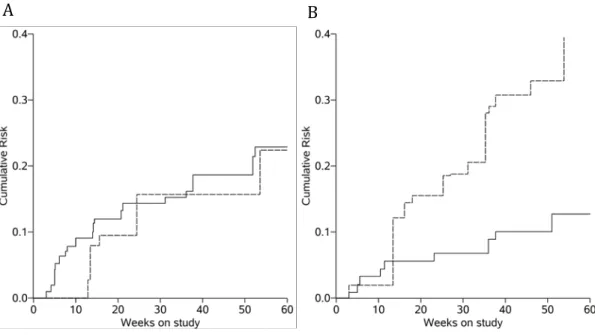
imputations, are shown in Figure 1. For the weighted analysis, in the weeks where the UV index was <4, the incidence of ocular HSV recurrence at 60 weeks was 23% for those exposed to 0-7 hours outdoors and 22% for 8+ hours. In the weeks where the UV index was 4+, the incidence of ocular HSV recurrence at 60 weeks was 13% for those exposed to 0-7 hours outdoors and 46% for 8+ hours.
Table 3 shows the estimates of the hazard ratio for ocular HSV recurrence due to sunlight exposure. Within levels of UV index exposure, we estimated crude hazard ratios of 0.81 (95% CI: 0.27, 2.41) and 2.42 (95% CI: 1.00, 5.84) for weeks with <4 UV index and 4+ UV index, respectively (ratio of hazard ratios: 2.99, 95% CI: 0.42, 21.4). The hazard ratios from a marginal structural Cox model that accounted for potential confounding by time-varying psychological stress and contact use, and baseline age and gender were 0.84 (95% CI: 0.27, 2.63) and 3.10 (95% CI: 1.14, 8.48), comparing 8+ hours outdoors to 0-7 hours, for weeks with <4 UV index and 4+ UV index, respectively (ratio of hazard ratios: 3.68, 95% CI: 0.43, 31.4).
51
When restricted to the 155 participants who were randomized to receive acyclovir treatment (who experienced 23 events), similar patterns of crude hazard ratios comparing 8+ hours outdoors to 0-7 hours were observed. The crude hazard ratio for weeks with a <4 UV index was 0.74 (95% CI: 0.16, 3.36) and for weeks with 4+ UV index was 5.07 (95% CI: 1.34, 19.2). Results for the same groups for the weighted model were 1.10 (95% CI: 0.24, 5.02) and 7.57 (95% CI: 1.91, 30.1). Among the 153 who were randomized to receive placebo, results for the same groups for the crude and weighted models were 0.85 (95% CI: 0.16, 4.41) and 0.97 (95% CI: 0.26, 4.07), and 0.65 (95% CI: 0.11, 3.74) and 0.86 (95% CI: 0.18, 4.16), respectively.
5.4 Discussion
As the HEDS analysis did not appropriately adjust for time-varying psychological stress or contact lens use, we expected to observe a different hazard ratio of ocular HSV recurrence attributable to sunlight exposure. We found little evidence of time-varying confounding as evidenced by the similar effect estimates obtained from the crude and weighted models.
52
results rely and very few events, and are difficult to interpret in the absence similar effects observed in the literature.
There are many ways that UV exposure is thought to impact HSV recurrences; we review two mechanisms here. The first pathway is through immune response depression due to UV exposure. UV radiation has been shown to suppress HSV antigen presentation in epidermal cells (35), and lead to the reduction of type 1 cytokine release (36), an important part of immunological control for viruses such as HSV. Garssen et al. extrapolated from an animal model that 100 minutes of sunlight around noon on a clear summer day in southern Mediterranean countries would lead to a 50% suppression in the T cell response to a microbe (41). This localized immunosuppression may allow sufficient viral replication to cause a recurrence.
The second pathway by which UV radiation is thought to affect recurrence is directly through HSV reactivation. Initially, UV radiation damages the ends of a nerve containing latent HSV inducing cell repair pathways. Cell repair, through the c-Jun and c-Fos transcription factors, activates the HSV transcription promoter (ICP0) leading to HSV transcription and reactivation (33). Additionally, these repair pathways circumvent the activity of HSV latency-associated transcript (LAT) to prevent infected neurons from apoptosis (34), in turn, reactivating HSV.
53
exposure. While our assessment of UV exposure is more specific than previous studies, other methods (e.g., a UV dosimeter) would more finely delineate exposure.
There are limitations to this research. We assumed no unmeasured confounding and no informative censoring by unmeasured factors; if either of these assumptions were not met, our hazard ratios would be biased. In particular, psychological stress is a difficult quantity to reliably measure and may not be well captured in this study. Second, the results from this nested cohort may not generalize to a target population of those with ocular HSV disease that may differ in composition from trial populations (123, 124), often highly selective samples. Third, 51% of the participants were censored after not completing 3 weekly logs in a row. Fourth, while a fuller account of the covariate histories, a less restrictive functional form for age and time on study, and a broader set of covariates (e.g., region, systemic illness, acyclovir treatment) did not appreciably alter our results, there could have been model misspecification. Fifth, we assume positivity (125), that is a non-zero probability of exposure at every level of the observed confounders in the population.
54
estimate to the one we estimated (127). However, we improved upon previous work by including UV index data to decrease unquantified exposure variation.
There are several strengths of this research. Ocular HSV recurrences were well documented and confirmed by study-trained physicians. The use of prospective data helps ensure the proper temporal order between exposures, confounders, and ocular HSV recurrences. Excluding weekly reports completed tardily minimizes recall bias (120). The use of time-updated reports reduces bias due to measurement error (128). Use of modern methods that allow feedback offers the opportunity to disentangle the relationship between UV and stress. Randomization to a certain number of hours spent outdoors may be difficult to implement and would likely have low compliance. Without randomized evidence, a thorough analysis of prospective observational data with repeated measures provides the best estimates of etiologic effects.
Findings from this and further research could guide clinicians in recommending behavioral interventions for those with ocular HSV. Physicians could recommend restriction on a patient’s time outdoors during peak hours of UV exposure on days with high UV index. Another possible route for prevention of recurrence would be UV-blocking sunglasses, though it should be noted that many of the participants in this study did wear some type of glasses, so perhaps a brimmed hat or glasses with particularly strong UV protection should be considered.
55
56
Table 5.1 Baseline characteristics of 308 total participants and 44 participants who experienced an ocular HSV recurrence, Herpetic Eye Disease Study, 1993-1997
Characteristic All participants (n=308) Ocular HSV recurrences (n=44) No. % Median (IQR) No. % Median (IQR)
Age at randomization (years) 49 (37, 63) 54 (38, 65)
Female 147 48 22 50
Race or ethnic group White
Black Other a
263 20 25 85 6 8 41 1 2 93 2 5
Acyclovir treatment group 155 50 23 52
Study center location New Orleans Houston San Francisco Atlanta Chicago Milwaukee Philadelphia New York 33 21 61 66 44 37 21 25 11 7 20 21 14 12 7 8 5 2 5 10 8 6 6 2 11 5 11 23 18 14 14 5
No. prior ocular recurrences b 4 (1, 5) 3 (2 , 6)
No. prior non-ocular recurrences b 5 (0, 11) 0 (0, 9)
Abbreviations: No., Number; IQR, interquartile range
57
Table 5.2 Follow up characteristics of 10,480 person-weeks overall and stratified by self-reported sun exposure, Herpetic Eye Disease Study, 1993-1997
Characteristic
Follow up (n=10,163 person-weeks)
Sun 0-7 hours/week
(n=7,169 person-weeks) (n=2,994 person-weeks) Sun 8+ hours/week
No. % Median (IQR) No. % Median (IQR) No. % Median (IQR)
Age at randomization (years) 52 (39, 65) 52 (40, 66) 49 (36, 63)
Female 4,822 47 3,616 50 1,206 40
Race or ethnic group White
Black Other a
8,933 565 665 83 6 6 6,350 382 437 89 5 6 2,583 183 228 86 6 8
Acyclovir treatment group 5,337 53 3,708 52 1,629 54
Study center location New Orleans Houston San Francisco Atlanta Chicago Milwaukee Philadelphia New York 955 755 1,929 1,878 1,560 1,525 697 864 9 7 19 18 15 15 7 9 665 616 1,253 1,383 1,046 1,062 517 637 9 9 17 19 15 15 7 9 300 139 676 495 514 463 180 227 10 5 23 17 17 15 6 8
Current contact use b 1,024 10 787 11 237 8
Glasses/sunglass use while outside b
8,037 79 5,631 79 2,406 80
Overall stress b, c
58 4 5 6 7 (highest) 1,667 1,005 493 260 16 10 5 3 1,210 750 350 200 17 10 5 3 457 255 143 60 15 9 5 2
UV index 4.5 (2.4, 6.5) 3.9 (2.1, 6.2) 5.5 (3.3, 7.0)
Time spent outdoors b
0 to 7 hours 8 to 14 hours 15 to 21 hours 22 to 28 hours 29 or more hours
7,169 1,742 668 265 319 71 17 7 3 3 7,169 0 0 0 0 100 0 0 0 0 0 1,742 668 265 319 0 58 22 9 11 Abbreviations: No., Number; UV, ultraviolet; IQR, interquartile range
a Other includes those who self-reported as Asian (401, 237, 164) and Hispanic (281, 199, 82) for total follow up, Sun 0-7, and
Sun 8+ respectively
b Before carrying forward data, the following amounts of data were missing (percentage of weeks prior to recurrence,
drop-out or end of study period): contact use (20%), glasses/sunglass use (27%), overall stress (22%), time spent drop-outdoors (20%)
c Stress was measured by asking the question “In the past week, how stressed have you felt overall” to which participants
59
Table 5.3 Estimated effect of sunlight and UV index exposure on time to HSV recurrence for 308 participants in the Herpetic Eye Disease Study, 1993-1997
No. of
events Person-weeks Hazard Ratio 95% CI a
Crude Sun ≤7 hours 27 7169 1.
Sun 8+ hours 17 2994 1.46 0.79, 2.68 UV index <4
Sun ≤7 hours
Sun 8+ hours 18 4 3619 949 1. 0.81 0.27, 2.41 UV index 4+
Sun ≤7 hours
Sun 8+ hours 9 13 3550 2045 1. 2.42 1.00, 5.84 Weighted b Sun ≤7 hours 27 7169 1.
Sun 8+ hours 17 2994 1.85 0.89, 3.88 UV index <4
Sun ≤7 hours
Sun 8+ hours 18 4 3619 949 1. 0.84 0.27, 2.63 UV index 4+
Sun ≤7 hours
Sun 8+ hours 9 13 3550 2045 1. 3.10 1.14, 8.48 Abbreviations: No., Number; CI, confidence interval; UV, ultraviolet
a Robust variances, variances for results stratified by UV index account for variance
between imputations
b Accounting for: time-varying psychological stress and contact use and baseline age
60
Figure 5.1 Weighted Kaplan-Meier estimates of the cumulative risk of ocular HSV recurrence for person weeks with a UV index value <4 (panel A) and 4+ (panel B) for high sunlight exposure (dashed) and low sunlight exposure (solid) pooled over 30 imputations in 308 Herpetic Eye Disease Study participants
Chapter VI DISCUSSION
6.1 Summary
The goal for this dissertation was to estimate the effects of acyclovir on orofacial recurrences and time outdoors on ocular HSV recurrences. This research was motivated by the burden HSV recurrences are to individuals, particularly ocular HSV recurrences which are a leading cause of infectious visual loss.
We obtained estimates of the effect of acyclovir on second orofacial recurrences. We noted that to maintain the benefits of randomization and to avoid collider-stratification bias, analyses that included immortal person-time were required. Acyclovir did have a similar relative effect on second recurrences when compared with first recurrences. We also analyzed the effect of time outdoors on ocular HSV recurrences using marginal structural models to account for time-varying confounding. We found an association, though imprecise, between time outdoors with ocular HSV recurrences when UV index was high.
6.2 Limitations
62
who take part in randomized trials may not be representative of these two target populations. Trial participants are more likely to have health-seeking behaviors, but also may be more likely to have serious disease. Additionally, there was a high rate of administrative censoring in our study due to weekly report completion. If the participants that remained under study were not representative of those who did not, this could cause selection bias in our results. Further study of these two exposures, prophylactic acyclovir and time spent outdoors, should be done in populations that are similar to the general population with HSV recurrences.
In both Chapters 4 and 5, we observed a decreasing effect of exposure (i.e., acyclovir and time outdoors) over time. While it is concedable that the effect of these exposures waned over time, depletion of susceptible participants in the trial over time is a possible explanation.
The primary limitation in Chapter 4 was the measurement of the outcome, non-ocular recurrences. Though it was most likely that the outcomes reported by the study participants were orofacial recurrences, this was not verified by a clinician nor was the site documented by the participant. A second limitation was the small number of third or later recurrences. A third limitation was the estimation of effects using only intent-to-treat analysis. Had the trial collected time-varying compliance data, we could have properly adjusted for compliance in an as-treated analysis (129).
63
differently (e.g. time spent outside in the early morning hours might be different from that during the afternoon). Additionally, an intervention to set individuals who usually spend 8+ hours outdoors to 0-7 hours would have to mimic the distribution of exposure found in the 0-7 hour group to see a similar effect estimate to the one we estimated. While we significantly improved on the measurement of UV
compared to prior studies, matching UV values to a person’s study center is not the ideal precise personal measurement.
6.3 Strengths
The primary strength of the results presented in Chapter 4 was that they were nested in a randomized trial of acyclovir. Though we did restrict to those who filled out weekly diaries, measured covariates remained balanced, adjusted results were similar to unadjusted results, and results for first non-ocular recurrence were similar to results in the larger trial, suggesting that minimal selection bias was induced by restricting to the substudy. We also used statistical methods to allow consistent estimation of hazard ratios for first and second recurrences.