CHILD WELFARE DECISION-MAKING: DOES RACE MATTER?
Kanisha Coleman Brevard
A dissertation submitted to the faculty at the University of North Carolina at Chapel Hill in partial fulfillment of the requirements for the degree of Doctor of Philosophy in the School of
Social Work.
Chapel Hill 2017
Approved by: Mark F. Testa Paul Lanier
©2017
ABSTRACT
Kanisha Coleman Brevard: Decision-making in Child Welfare: Does Race Matter? (Under the direction of Mark F. Testa)
continue to be explored to understand how race, type of allegation, and caseload racial
TABLE OF CONTENTS
LIST OF TABLES……….………..viii
LIST OF FIGURES………ix
LIST OF ABBREVIATIONS………..x
CHAPTER 1: THE INFLUENCE OF STATE AND FEDERAL POLICIES ON RACIAL DISPROPORTIONALITY IN THE ILLINOIS CHILD WELFARE SYSTEM.………...1
Introduction………..1
Examining Racial Disproportionality at the State Level……….3
Literature Review………..………...6
Poverty and Racial Disproportionality in Illinois………6
Racial Disproportionality and Permanency in Illinois……….8
Child Welfare Policies and Programs Targeting Racial Disproportionality………..10
Co-occurring Problems……….……….15
Discussion………..17
Conclusion………..…...20
References………...…...21
CHAPTER 2: RACE, ALLEGATION TYPE, AND CHILD MALTREATMENT INVESTIGATIONS……….….27
Introduction………,………...27
Literature Review………...……….28
Social explanation for racial disproportionality: Implicit bias………..29
Environmental Explanations of Racial Disproportionality…………...………….31
Method………...33
Sample……….………...34
Measures………34
Analytic Plan………...………...37
Results………..………..38
Descriptive Statistics………..38
Findings from Two-level Hierarchical Models……….….38
Discussion………..45
Limitations ………48
Conclusion………...………..48
References………....………..50
CHAPTER 3: SUBSTANTIATION DISPARITIES AMONG CHILD WELFARE CASEWORKERS: A MULTILEVEL STUDY……….………...56
Introduction………...……….56
Literature Review………...………57
The Impact of Caseworkers………...……….57
Risk Assessment………...……….58
Theoretical Perspectives for Understanding Race and Decision Making...………..…..60
An Integrative Framework: The Decision-Making Ecology Model………...61
Method………...63
Sample………63
Measures………..………..64
Analytic Plan………..65
Results………...…….66
Descriptive Statistics……….……….66
Findings from Two-level Hierarchical Models………..………68
Discussion……….……….74
Limitations…………...………..77
Conclusion………...………..77
LIST OF TABLES Table 1.1 Summary of efforts to reduce racial disproportionality
and disparities in child welfare in Illinois………..11
Table 2.1 Allegation types………...…..35
Table 2.2 Sample descriptive statistics………..39
Table 2.3 Predictors of substantiation………42
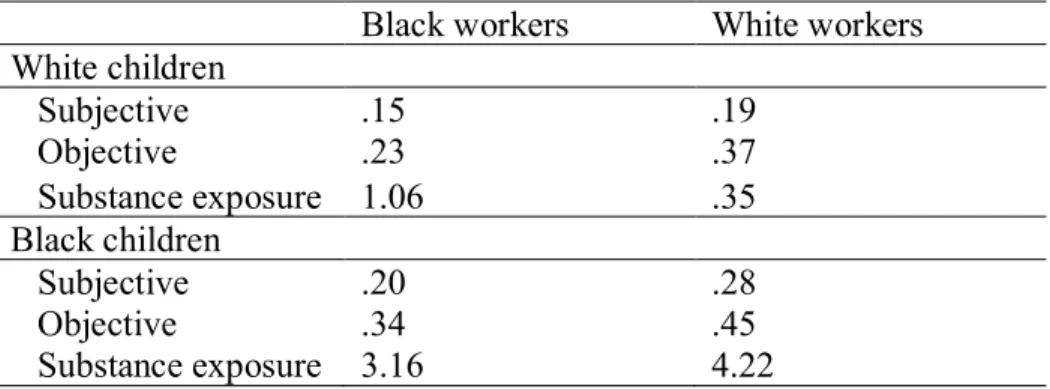
Table 2.4 Predictive margins for child race x worker race x allegation type………44
Table 3.1 Calculation of substantiation disparity index………...64
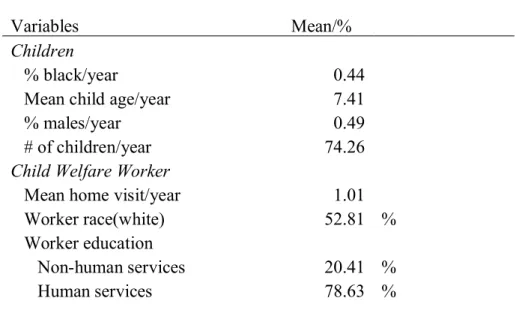
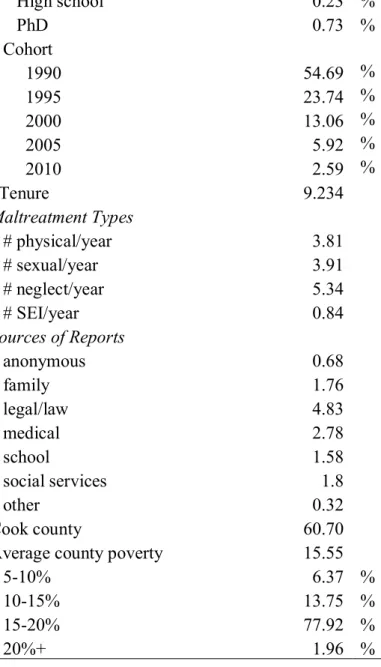
Table 3.2 Sample descriptive statistics………..…67
LIST OF FIGURES
LIST OF ABBREVIATIONS AECF Annie E. Casey Foundation
AFDC Aid to Families with Dependent Children CANTS Child Abuse & Neglect Tracking System
DCFS Illinois Department of Children and Family Services HLM Hierarchical Linear Modeling
IAAFC Illinois African American Family Commission LN Natural-logarithm
NSCAW National Survey of Child and Adolescent Well-being PEI Permanency Enhancement Initiative
PEP Permanency Enhancement Project PII Permanency Innovations Initiative RD Racial disproportionality
SG Subsidized Guardianship
CHAPTER 1: THE INFLUENCE OF STATE AND FEDERAL POLICIES
ON RACIAL DISPROPORTIONALITY IN THE ILLINOIS CHILD WELFARE SYSTEM Introduction
Historically, black children in the United States are more likely to experience
disproportionate outcomes compared with children from other racial and ethnic groups. In the juvenile justice system, black youth are more likely to be profiled, arrested, jailed, and sent to group homes for juvenile (e.g., Erickson, 2014; Shook & Goodkind, 2009). In the education system, they are more likely to drop out of school, be expelled, or suspended compared to children from other racial and ethnic groups (e.g., Gregory et al., 2010; Losen, 2011). In the child welfare system, the focus of the current study, they are more likely to be reported, investigated, have their allegations substantiated, enter foster care, and remain in foster care longer than white children (Rolock, 2008; U.S. Department of Health and Human Services [UHHS], Administration on Children, Youth and Families [ACF], 2012).
In almost every state, black children are overrepresented in the child welfare system
(CWS) compared to their representation in the state’s general population. This
least preferred placement and youth are often placed in congregate care because of severe mental and behavioral problems (Chow, Mettrick, Stephan, & Waldner, 2014). However, a national report on congregate care in the U.S. found that nearly 32% of black youth, aged 13 and older, who spent time in substitute care in 2008 showed no signs of a clinical disorder or disability (UHHS, 2015). This finding suggest black children either are wrongly assessed as having behavior issues or non-family like placements are inappropriately used for youth who are considered hard to place in a potentially adoptive home. Placements that do not meet the needs of children may have the potential to unnecessarily disrupt connections between youth and their families, delay permanency, and lead to negative outcomes in adulthood.
Some scholars attribute disproportionate outcomes to blacks’ disproportionate exposure to risk factors and the lack of prevention efforts in their communities (Bartholet, 2009; Cross, 2008). Black children are more likely to live in areas of concentrated poverty compared with white children (e.g., Drake & Rank, 2009) and are more likely to experience child abuse and neglect (Sedlak & Broadhurst, 1996). The increased likelihood of maltreatment can also be influenced by family structure. Research shows children living in single-parent households are more likely to be maltreated, and black women are the heads of most black households (Brooks, 2016; Hill, 2006). Black women are also more likely to experience chronic stress than women from other racial and ethnic groups (Geronimus, 1991). Thus, the challenges that come with being the sole provider of a family, as well as living in an area of high poverty, can compromise parenting and increase the likelihood of child welfare involvement.
decision-making is another possible explanation for overrepresentation. This perspective suggests that the way blacks and their parenting behaviors are socially constructed in society can influence reporting patterns and decisions made at different stages of the child welfare process.
Using race and other factors unrelated to the case to produce a decision can be done at an explicit (conscious) or implicit level (unconscious). It can compromise the reliability of decision-making tools designed to reduce subjectivity and the likelihood of errors (Bodenhausen, 1988; Dettlaff et al., 2011; Gawronkski & Payne, 2011). Recent research has explored how racial bias may explain disproportionate outcomes found at each stage of the child welfare decision-making process. At the frontend, biased reporting from professionals and community members may explain the high numbers of black families reported to the system (UHHS, 2012). Moreover, once a family becomes involved in the system, some studies suggest that the complex and subjective nature of child welfare decision-making can lead to racial disparities in service provision (Garcia, Palinkas, Snowden, & Landsverk, 2013), entry into foster care (Kim, Chenot, & Ji, 2011), and length of stay in foster care (Wulczyn, 2003). Thus, researchers suggest any approach used to reduce racial disproportionality and disparity should consider how racial bias and environmental risk factors contribute to how blacks are evaluated for child abuse and neglect.
Examining Racial Disproportionality at the State Level
Although racial disproportionality (RD) exists within every state, the degree to which black children are overrepresented varies within and across states. Variations may be due to a number of factors, such as population size, poverty rates, resources, policies, and racial
states with small black populations place more children in foster care and have higher levels of racial disproportionality (Foster, 2012). Although states with large black populations tend to have lower rates of disproportion compared to states with small black populations, states with very large, densely populated cities, such as Illinois and New York, still have high levels of overrepresentation (Foster, 2012). Their high levels of overrepresentation are likely attributed to their higher poverty and maltreatment disparity rates compared to less dense geographic areas. Research indicates that densely populated counties have higher poverty disparity rates compared to rural counties, and poverty disparity rates are positively associated with disparity in rates of maltreatment (Foster, 2012; Lanier et al., 2014; Maguire-Jack et al., 2015). Therefore, in addition to racial composition, variations in rates of poverty and population density can influence the racial makeup of children being investigated for maltreatment.
Racial disproportionality may also be influenced by the racial make-up of its child
welfare workers. Workers’ inability to relate to their clients have been found to negatively
influence case outcomes for families of color (Miller et al., 2012). One study in particular, comprised of 286 caregivers from the National Survey of Child and Adolescent Well-being (second cohort; NSCAW), found that non-white caseworkers compared with white caseworkers were nearly seven times more likely to use active referral strategies for caregivers of the same race rather than simply providing information about housing assistance (McBeath, Chuang, Bunger, & Blakeslee, 2014). Also, research shows that southern states, where over half of black people in the U.S. reside, have lower levels of racial disproportionality compared to northern states (Foster, 2012; U.S. Census Bureau, 2001). Thus, some of the variation in racial
Furthermore, the perceived scope of child welfare policies (Peterson, Joseph, & Feit, 2014) and resource availability can also cause varying levels of racial disproportionality across states. For example, lower protective custody rates in southern states may reflect stricter social policies (Foster, 2012). That is, those living in the south may believe that there should be limited governmental interference in the lives of families. Thus, southern states may take fewer children into foster care and rely more on informal kinship caregivers to serve as substitute caregivers with limited or no child welfare intervention.
The present study uses the state of Illinois to explore how state-level child welfare policies and programs are used to address racial disproportionality. Despite making up 19% of the child population in Illinois in 2007, black children made up 34% of reports received by DCFS (Rolock, 2008). Specifically, black children living in northern Illinois were almost 5 times more likely to be reported compared with other racial groups in the state (Rolock, 2008).
Although Illinois has low child removal rates, children who are removed from their homes stay in foster care for a long time (USHHS, 2010). For example, at the start of the 2013 fiscal year, the median length of stay for children in foster care was 26 months. Illinois was one of four states who had less than 40% of children who became legally free for adoption get adopted in less than 12 months (UHHS, 2016). Also, white children are more likely to reunify with their parents (52%) than black children (38%). They are also less likely to exit foster care (14%) in other ways (e.g., emancipation, runaway) than black children (28%; USHHS, 2010).
state of Illinois. Specifically, the review included a search of bibliographic electronic databases (e.g., PsychINFO, PubMed, Social Services Abstracts, Sociological Abstracts, Dissertations and Theses), state and federal reports (e.g., U.S. Health and Human Services, Illinois Department of Children and Family Services (IDFCS), and philanthropic organizations (e.g., Casey Family Programs, Annie E. Casey Foundation). Reviewing the literature on child welfare policies and programs that hold potential for reducing racial disproportionality is important for the
development of interventions and replication of successful programs. Literature Review
Poverty and Racial Disproportionality in Illinois
Variations in child well-being based on regional differences in policies and resources show that characteristics of communities can play a role in determining child welfare
outcomes, such as problem behaviors, poor psychological functioning, and low test scores in school (e.g., Burton & Jarrett, 2000).
Although black children are more likely to be exposed to poverty, research shows that in communities where child poverty is higher than average in Illinois, child maltreatment rates for white children are also higher, but lower in these communities for black children. This finding suggests different relationships exist between poverty and maltreatment for black and white children in Illinois (Rolock, Dettlaff, Wilder, & Jantz, 2011). It is unclear whether these differences are due to differential effects of poverty for whites and blacks, biased reporting behaviors in communities of high poverty, or some other phenomenon. Therefore, more research is needed to understand how poverty contributes to disparities in child maltreatment.
Moreover, availability of services within poor communities can leave families vulnerable to conditions that may compromise parenting and place them at risk for child maltreatment. Because of gentrification and demographic changes over time in Chicago communities, many service providers have had to assess the need of their services in the changing community, adapt their services to the new population, relocate, or find ways to contact and serve their former clients who have moved away. Thus, some communities in Chicago do not have enough services to meet the needs of a growing population (Goerge et al., 2007).
Furthermore, although parental substance abuse is one of many risk factors for child
abuse and neglect, barriers such as lack of transportation (Friedmann, D’Aunno, Jin, &
Alexander, 2000), child care services (Marsh & Miller, 1985), and drug rehabilitation centers often prevent parents from obtaining help. Research shows that increases in services, such as counseling, transportation, and child care can lead to a decrease in substance use, which is a
Therefore, service availability in communities can reduce the likelihood of child maltreatment from substance abuse. Research shows that the likelihood of substantiation increases when services and supports are not available or can only be accessed through the child welfare system (Font & Maguire-Jack, 2015). Thus, regional differences in racial disproportionality may also be explained by the number and quality of resources available to prevent child maltreatment.
On the other hand, some research shows that regardless of their community’s socio- and economic characteristics, black children are more likely to enter foster care than white children. For example, Rolock and colleagues (2012) found that black children from all types of
communities had greater odds of entering foster care than white children in counties
characterized as been highly organized due to their low arrest rates, low poverty levels, and fewer female headed households.
Racial Disproportionality and Permanency in Illinois
From the late 1990s and early 2000s, Illinois enacted policy and practice changes aimed at increasing the number of permanent placements for children in foster care. One year after the passage of the federal Adoption and Safe Families Act of 1997, the state doubled their number of permanent homes. The state went from having over 50,000 children in state custody in 1997 to slightly over 16,000 by the year 2007. The drop in the number of children in foster care was due to changes that resulted in fewer children entering foster care and more children exiting foster care (Rolock et al., 2011).
Between 1997 and 1999, more children attained permanence through adoption and subsidized guardianship, an alternative permanency option implemented in 1997. Between 1998 and 2004, the average permanency rate for the state was 55% for children who achieved
across regions in the state. The Central region had the highest (69%) permanency rate and Cook county the lowest (41%). Despite having one of the highest permanency rates in the state, the southern region had nearly twice the number of black children entering foster care compared to
their representation in the region’s general population between 2001 and 2007 (Dettlaff et al.,
2009; Rolock, Jantz, Gleeson, & Leathers, 2012). Although the odds of attaining permanency for Cook County increased in the 1990s, from 2004 to 2008 Cook County’s subregions had the
lowest reunification percentages and the longest stays in foster care compared to other regions within the state (Rolock & Testa, 2008; Rolock et al., 2012; Rolock et al., 2011).
During the same time period, from 2002 to 2007, racial disparity in foster care entry increased. For example, black children were over 2 times more likely to enter care in Cook county, nearly 2 times more likely in the Northern and Central regions, and slightly over 1 times more likely in the Southern region (Rolock, 2008). These findings confirm that varying levels of racial disparity across regions can exist within a state and that racial disproportionality can be influenced by the characteristics within a particular region in a state.
reported experiencing more unemployment and lower wages than young adults in the general population (Courtney, Dworsky, et al., 2011; Osgood et al., 2010).
Moreover, the youngest children in Illinois, and nationally, are most likely to experience abuse and neglect and to be placed into foster care. In 2011, about 7,600 infants and toddlers in Illinois had substantiated reports of maltreatment (Murphey et al., 2014). Because infancy is a significant time period when children form secure relationships with their parents, long stays in foster care place children at risk for negative outcomes later in life. Thus, the research suggests that, because they comprise a disproportionate share of those entering child welfare and are less likely to attain permanence, black children and youth are more likely to be at risk for negative long-term outcomes.
Child Welfare Policies and Programs Targeting Racial Disproportionality
(IAAFC, 2014). In addition to Transformation Teams, DCFS has recently partnered with other institutions and organizations to develop Local Action Teams who are tasked with reviewing data on outcomes, unmet needs, and whether practice strategies are reducing racial disparities (Miller & Esenstad, 2015). The Local Action Teams include representatives from the
community, law enforcement, school, mental health providers, juvenile justice, and other organizations.
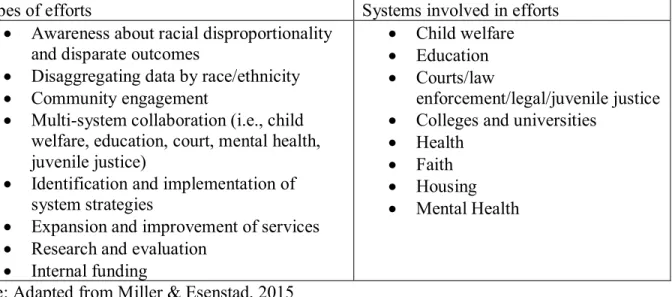
Table 1.1 Summary of efforts to reduce racial disproportionality and disparities in child welfare in Illinois
Types of efforts Systems involved in efforts
• Awareness about racial disproportionality and disparate outcomes
• Disaggregating data by race/ethnicity • Community engagement
• Multi-system collaboration (i.e., child welfare, education, court, mental health, juvenile justice)
• Identification and implementation of system strategies
• Expansion and improvement of services • Research and evaluation
• Internal funding
• Child welfare • Education • Courts/law
enforcement/legal/juvenile justice • Colleges and universities
• Health • Faith • Housing • Mental Health
Note: Adapted from Miller & Esenstad, 2015
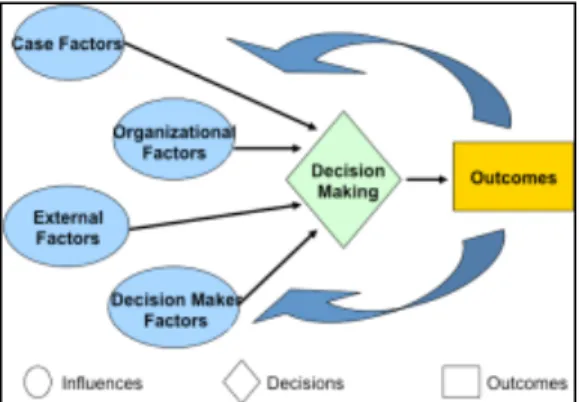
service providers (Dettlaff et al., 2009). Themes gathered from the focus groups fall under many of the components of the Decision-making Ecology (DME) framework shown in Figure 1.1. The DME framework provides a systemic context for child welfare decision-making and includes a range of interacting external, family, organizational, and decision-maker factors that can
influence decisions and child and family outcomes (Baumann, Dalgleish, Fluke, & Kern, 2011).
Figure 1.1 Decision Making Ecology (Baumann et al., 2011)
Moreover, the Permanency Innovations Initiative (PII), is a multisite demonstration
project funded by the Children’s Bureau to improve permanency outcomes for youth placed in
foster care for more than two years. As one of the selected sites by the Children’s Bureau, the
DCFS and its partners, implemented the Trauma Affect Regulation: Guide for Education and Therapy (TARGET), an evidenced-based intervention. The primary goal of TARGET was to help youth (ages 11-16) and their caregivers manage their reactions to trauma in order to reduce barriers to achieving permanence. Although reducing disproportionality was not an explicit focus, the intervention could produce positive outcomes for black youth, who consistently make up a disproportionate share of children in long-term foster care in Illinois (UHHS, 2016).
improve policy, practice, and cross-system partnerships. The project involved the DCFS’s newly
established Office of Racial Equity Practice, which focused on addressing racial
disproportionality and disparities in the child welfare system. This project also developed Local Action Teams and three Regional Transformation Teams to identify causes and effects of disparate outcomes to inform changes in policies and practices. Regional teams included legal stakeholders (i.e., judges, attorneys), DCFS administrators, child welfare workers, and
representatives from community organizations. To guide the team’s efforts, DCFS is in the process of developing a racial equity impact assessment tool to aid in the evaluation of existing and proposed policies and practices targeting racial disparities. The tool is expected to guide the development of a race-informed practice model that can be adopted by state agencies and other institutions (Miller & Esenstad, 2015). The tool will be able to identify unintended consequences of policies and practices affecting families of color. The practice model will take into account the dynamics of implicit bias and institutional racism as child welfare workers and other
stakeholders make decisions about families. Moreover, because judges play a key role in child welfare decision making, PEP conducted a one-day racial equity training for judges as part of the
state’s mandated bi-annual educational conference for judges. DCFS’s long-term goal is to train over 6,000 state and private child welfare personnel and stakeholders using a race-informed practice model, which aims to reduce biased decision-making and racial disparities (Miller & Esenstad, 2015).
Additionally, findings from local interventions show that increased efforts can
resources. After implementing this approach, county data from 2013 showed that the percentage of black children in custody dropped from 27 to 18 percent. This example shows racial
disproportionality can be reduced when workers make it a priority to actively engage parents and link them with service providers in the community who can meet their needs (Miller & Esenstad, 2015).
In an efficacy study of a Chicago parent program (CPP) that served over 200 low-income black and Latino parents of toddlers at risk for child maltreatment, intervention parents used less physical discipline and their children showed fewer behavior problems than controls after a one-year follow-up (Gross et al., 2009). Understanding that this population experience many stressful situations, the intervention developers designed the program in partnership with black and Latino parents from different Chicago communities. Materials used in the intervention were matched
with the families’ values and cultures. The study shows that interventions consistent with the
culture of parents can produce long-term positive outcomes. The intervention also models how to build trust within black and Latino parents by involving them in intervention development.
Policies that promote family preservation are also promising approaches to reduce the overrepresentation of black children in the Illinois child welfare system. Beginning in 1994, the Social Security Act granted waivers to five states willing and able to implement subsidized
guardianships (SG) as part of the federal government’s mission to develop new and effective
year prior to seeking subsidized guardianship (Testa, 2002). The caregivers receive subsidized payments from federal funds given to the state (UHHS, 2011).
Each of the states with subsidized guardianship waiver demonstrations conducted
evaluations to test the use of SG in improving placement outcomes. Findings from a randomized control study conducted in Illinois from January 1997 to June 1999 showed that children in homes receiving SG achieved permanence at a higher rate than children in homes not receiving SG (Testa, 2002). These initial findings prompted the renewal of the waiver for five more years and the recognition of SG as a suitable permanency option. Comparing rates of exits to
guardianship between 2004 and 2008, Rolock and colleagues (2012) found that Cook County, whose foster care population was comprised of majority black children, had the highest rate of exits to guardianship (Rolock, 2012). Also, odds of adoption or guardianship increased for black children from 1985 to 2008 relative to white children (Rolock et al., 2011). For example, after 2005, the odds of permanency increased for black children placed with kin (Rolock & Testa, 2008). In fact, if a child, regardless of race, had spent some time in a kinship placement, then the child was more likely to attain permanence compared with children never placed in a kinship placement (Rolock et al., 2011). Because of its focus on preserving kinship ties, a common value and practice in many black families, subsidized guardianship reduced the number of black children waiting to find permanent homes (Rolock & Testa, 2008; Rolock et al., 2011). Co-occurring Problems
Many families involved in the CWS have more than one life challenge, such as poverty, domestic violence, personal history of child maltreatment, substance abuse, and other life
to re-enter foster care (Lee, S., Jonson-Reid, M., & Drake, B., 2012). Also, children of parents who have abused substances are likely to be placed into foster care (Besinger et al., 1999) and have difficulties achieving permanence (Eiden et al., 2007). After the subsidized guardianship waiver, another Illinois waiver demonstration was implemented in 2000 to focus on reducing parental substance abuse and improving permanency outcomes in Illinois. Findings from the waiver evaluation revealed that simply having access to substance abuse services was not sufficient for actually completing treatment or for achieving reunification. Parents in the
demonstration project, majority of whom were black, had to make progress in treatment in order to increase the likelihood of the child returning home. Families in the demonstration group were more likely to attain reunification (15% vs. 11%) and less likely to have a subsequent report of maltreatment than families in the control group (Ryan, 2006). One plausible reason for the low reunification rates in both groups was the number of co-occurring problems found in the sample (Ryan, 2006). Over half of the sample had at least three risk factors that were assessed at the start
of treatment. Thus, the number (and severity) of problems a family can impact a parent’s ability
to complete treatment plans and the time a child spends in foster care. Also, black families, because of their disproportionate exposure to risks, may be more likely than white families to have co-occurring challenges, and, therefore, may have a difficult time achieving reunification.
Stringent timeframes used by child welfare agencies could also be a contributing factor for low reunification rates among families with multiple risk factors. Time frames established by the Adoption and Safe Families Act, which mandates a twelve-month period to achieve
bureaucratic issues and the number and severity of problems many families of color are exposed to may can contribute to long stays in foster care and, consequently, increase the potential for negative outcomes later in life. Although recent policies (e.g., Fostering Connections Act of 2008) have prioritized efforts to address issues contributing to racial disproportionality, black children are still overrepresented in the child welfare system. Because many of the life challenges that bring black families to the attention of child welfare stem from structural problems, multisystemic approaches such as creating local action teams comprised of partners from other systems (e.g., mental health, legal, faith) are needed to address the multiple problems that increase the risk of child abuse and neglect.
Discussion
Illinois is one of several states using large, multi-system efforts to reduce racial
disproportionality and disparities in child welfare. Because recent research has pointed out the importance of geographic context in the varying rates of racial disproportionality, interventions should be tailored to the contexts of a state and its counties. Child welfare agencies should
identify their organization’s and surrounding community’s ability to meet the tangible, mental,
and cultural needs of their clients. Diverse staff, racial equity training, adequate resources, availability and accessibility of poverty and drug prevention programs, and cross-system efforts have been identified in the literature as areas of improvement that could potentially prevent black children from entering or staying in the child welfare system for long periods of time.
Because of all the possible interrelated factors, racial disproportionality in child welfare is a complex problem. More research is needed to identify the processes linking explanatory factors (e.g., racial bias) to disproportionate and disparate child welfare outcomes. Therefore, in
income, experimental studies should examine black parents’ experiences with child welfare.
Parents should be asked whether or not they felt judged or treated differently because of their race and whether it negatively impacted their relationship with their case worker.
Furthermore, future analyses should also include common actions and services
recommended or mandated by courts (e.g., parenting programs, drug and alcohol rehabilitation), the ability of parents to complete them, and the effectiveness of the programs in achieving permanency goals and improving the well-being of the family. Evaluation of interventions should occur during and after implementation to monitor the fidelity and impact of activities and services on child welfare outcomes. Illinois is one out of few states that prioritizes research and evaluation as key strategies for reducing racial disproportionality. However, evaluations of well-designed interventions that go beyond the use of administrative data to include other relevant data (i.e., county characteristics, worker-parent relationship quality, etc.) that could influence racial disproportionality would provide a better understanding of where racial disproportionality and disparities exist, to what degree, and why.
Furthermore, DCFS has required racial equity training for child welfare workers and key personnel from other systems and institutions as part of their policy initiatives. The purpose of this training is to help those who work with children and families become aware of internalized messages about race that may influence their perceptions and behaviors toward families of color. Becoming familiar with the history of oppression and understanding child maltreatment as being one of the possible consequences of chronic, cumulative stressors faced by many blacks could change the views of workers who place most of the blame on the individual. Future studies
should evaluate the impact of racial equity training on workers’ decisions and their relationships
Positive results for those with training would promote racial equity training as one of the key strategies that could be standardized to reduce racial disproportionality.
Successfully incorporating policies, programs, and specialized training, such as racial equity training, requires child welfare policy makers and administrators to believe that racial disproportionality is an issue that can be partly addressed by the child welfare system. There is still much debate among researchers and practitioners about how much environmental and organizational factors play a role. Some believe that environmental risk factors like poverty are to blame for racial disproportionality, and, therefore, a problem for other systems to address. They view the problem as a reflection of broader issues rather than any biased child welfare policies or practices. Others believe that poverty does not fully account for racial
disproportionality and disparities, and child welfare should work internally, as well as with other systems, to address the problem. There is some research evidence to support both sides (e.g., Detlaff et al., 2011; Rivaux et al., 2008; Sedlak & Broadhurst, 1996). More research is needed to identify what causes racial disproportionality to vary within a state and the practices and policies involved in creating and maintaining the problem. Several studies and initiatives reviewed in the current paper suggest that place and race matter and examining the role of geographic context and racial bias can lead to a better understanding of racial disproportionality and the
development of appropriate interventions.
Limitations
possible approaches or interventions, some of which may be currently in development, are summarized and that evidence-based literature on racial disproportionality is still growing.
Conclusion
Research shows that geographic context and race determine where and to what extent racial disproportionality exists. Because racial disproportionality varies within and across states, interventions should be tailored to the context and needs of the geographic area, as well as the culture of the families. Child welfare leaders within the state have prioritized research and evaluation, community engagement, system and service improvement, and multi-system
collaboration as key strategies needed to achieve racial equity. The state can serve as a model for other states that are seeking to identify sources of racial inequities and to improve their systems’
REFERENCES
Abner, K. S. (2011). Determinants of Welfare Policy Attitudes: A Contextual Level Analysis. Sociological Spectrum, 31(4), 466-497.
Annie E. Casey Foundation. (2015). The 2015 KIDS COUNT data book. Retrieved from http://www.aecf.org/resources/the-2015-kids-count-data-book.
Bartholet E. (2009). The racial disproportionality movement in child welfare: False facts and dangerous directions. Arizona Law Review, 51, 871–932.
Besinger, B. A., Garland, A. F., Litrownik, A. J., & Landsverk, J. A. (1999). Caregiver substance abuse among maltreated children placed in out-of-home care. Child Welfare, 78(2), 221–
239.
Brooks, B. (2015). Black Single Mothers and the Child Welfare System: A Guide for Social Workers on Addressing Oppression. Routledge: New York.
Burton, L. M., & Jarrett, R. L. (2000). In the mix, yet on the margins: The place of families in urban neighborhood and child development research. Journal of Marriage and the Family, 62, 1114–1135. doi:10.1111/ j.1741-3737.2000.01114.x
Children’s Bureau. (2016). “Site Visit Report: Illinois Trauma Focus Model for Reducing Long
-term Foster Care Project.” Retrieved from
https://www.childwelfare.gov/topics/management/funding/funding-sources/federal-funding/ cb-https://www.childwelfare.gov/topics/management/funding/funding-sources/federal-funding/cbreports/PII.
Chow, W. Y., Mettrick, J. E., Stephan, S. H., & Von Waldner, C. A. (2014). Youth in group home care: Youth characteristics and predictors of later functioning. The Journal of Behavioral Health Services & Research, 41(4), 503-519.
Coulton, C. J., Crampton, D. S., Irwin, M., Spilsbury, J. C., & Korbin, J. E. (2007). How neighborhoods influence child maltreatment: A review of the literature and alternative pathways. Child Abuse & Neglect, 31(11), 1117-1142.
Courtney, M. E., Piliavin, I., Grogan-Kaylor, A., & Nesmith, A. (2001). Foster youth transitions to adulthood: A longitudinal view of youth leaving care. Child Welfare, 80(6), 685.
Courtney, M. E., & Heuring, D. H. (2005). The transition to adulthood for youth “aging out” of
the foster care system. On your own without a net: The transition to adulthood for vulnerable populations, 27-67.
Cross T. L. (2008). Disproportionality in child welfare. Child Welfare, 872, 11–20.
http://www.aafc.org/Other_Documents/Permanency%20Summary%20Report_FINAL%2 0rev%203-web.pdf.
Drake, B., & Rank, M. R. (2009). The racial divide among American children in poverty: Reassessing the importance of neighborhood. Children and Youth Services Review, 31(12), 1264-1271.
Dworsky, A. (2005). The economic self-sufficiency of Wisconsin's former foster youth. Children and Youth Services Review, 27(10), 1085-1118.
Eiden, R. D., Foote, A., & Schuetze, P. (2007). Maternal cocaine use and caregiving status: group differences in caregiver and infant risk variables. Addictive Behaviors, 32(3), 465–
476.
Erickson, J. (2014). Racial impact statements: Considering the consequences of racial
disproportionalities in the criminal justice system. Washington Law Review, 89(4), 1425-1465.
Faver, C. A., Crawford, S. L., & Combs-Orme, T. (1999). Services for child maltreatment: Challenges for research and practice. Children and Youth Services Review, 21(2), 89–
109. doi:10.1016/S0190-7409(99)00009-2
Font, S. A., & Maguire-Jack, K. (2015). Reprint of “Decision-making in child protective
services: Influences at multiple levels of the social ecology”. Child Abuse & Neglect, 49, 50-62.
Foster, C. H. (2012). Race and child welfare policy: State-level variations in disproportionality. Race and Social Problems, 4(2), 93-101. doi:10.1007/s12552-012-9071-9
Freisthler, B., Midanik, L. T., & Gruenewald, P. J. (2004). Alcohol outlets and child physical abuse and neglect: applying routine activities theory to the study of child maltreatment. Journal of Studies on Alcohol, 65(5), 586-592. doi: 10.15288/jsa.2004.65.586
Friedmann, P. D., D'Aunno, T. A., Jin, L., & Alexander, J. A. (2000). Medical and psychosocial services in drug abuse treatment: Do stronger linkages promote client utilization?. Health Services Research, 35(2), 443.
Garcia, A. R., Palinkas, L. A., Snowden, L., & Landsverk, J. (2013). Looking beneath and in-between the hidden surfaces: A critical review of defining, measuring and contextualizing mental health service disparities in the child welfare system. Children and Youth Services Review, 35(10), 1727-1733. doi:10.1016/j.childyouth.2013.07.013
Goerge, R., Dilts, J., Yang, D. H., Wasserman, M., & Clary, A. (2007). Chicago Children and Youth 1990-2010: Changing Population Trends and their Implications for
Services. Chapin Hall Center for Children.
Gregory, A., Skiba, R., & Noguera, P. A. (2010). The achievement gap and the discipline gap: Two sides of the same coin? Educational Researcher, 39(1), 59–68.
Gross, D., Garvey, C., Julion, W., Fogg, L., Tucker, S., & Mokros, H. (2009). Efficacy of the Chicago Parent Program with low-income African American and Latino parents of young children. Prevention Science, 10(1), 54-65.
Hill R. B. (2006). Synthesis of research on disproportionality in child welfare: An update. Washington, DC: Casey Family Programs, Casey-CSSP Alliance for Racial Equity in Child Welfare.
Hook, J. L., & Courtney, M. E. (2011). Employment outcomes of former foster youth as young adults: The importance of human, personal, and social capital. Children and Youth Services Review, 33(10), 1855-1865.
Kim, H., Chenot, D., & Ji, J. (2011). Racial/ethnic disparity in child welfare systems: A
longitudinal study utilizing the disparity index (DI). Children and Youth Services Review, 33(7), 1234-1244. doi:10.1016/j.childyouth.2011.02.021
Lee, S., Jonson-Reid, M., & Drake, B. (2012). Foster care re-entry: Exploring the role of foster care characteristics, in-home child welfare services and cross-sector services. Children and Youth Services Review, 34(9), 1825-1833. doi:10.1016/j.childyouth.2012.05.007 Losen, D. J. (2011). Discipline policies, successful schools, and racial justice. Boulder, CO:
National Education Policy Center. Retrieved from. http://nepc.colorado.edu/
publication/discipline-policies
Maguire-Jack, K., Lanier, P., Johnson-Motoyama, M., Welch, H., & Dineen, M. (2015).
Geographic variation in racial disparities in child maltreatment: The influence of county poverty and population density. Child Abuse & Neglect, 47, 1-13.
Marsh, J. C., & Miller, N. A. (1985). Female clients in substance abuse treatment. International Journal of the Addictions, 20(6-7), 995-1019.
Marsh, J. C., D'Aunno, T. A., & Smith, B. D. (2000). Increasing access and providing social services to improve drug abuse treatment for women with children. Addiction, 95(8), 1237-1247.
Miller, K. M., Cahn, K., & Orellana, E. R. (2012). Dynamics that contribute to racial disproportionality and disparity: Perspectives from child welfare professionals, community partners, and families. Children and Youth Services Review, 34(11), 2201-2207.
Miller, O. & Esenstad, A. (2015). Strategies to reduce racially disparate outcomes in child welfare. Center for the Study of Social Policy. Retrieved from
http://www.cssp.org/publications/child-welfare/alliance/Strategies-to-Reduce-Racially-Disparate-Outcomes-in-Child-Welfare-March-2015.pdf
Murphey, D., Cooper, M., & Forry, N. (2014). The youngest Illinoisans: A statistical look at infants and toddlers in Illinois. Retrieved from childtrends.org.
Osgood, D. W., Foster, E. M., & Courtney, M. E. (2010). Vulnerable populations and the transition to adulthood. The Future of Children, 20(1), 209-229.
Peterson, A., Joseph, J., & Feit, M. (Eds.). (2014). New directions in child abuse and neglect research. National Academies Press.
Rolock, N. (2008). Disproportionality in Illinois child welfare. Urbana, IL: Children and Family Research Center.
Rolock, N., & Testa, M. F. (2008). Conditions of children in or at risk of foster care in Illinois: An assessment of their safety, stability, continuity, permanence, and well-being. Urbana, IL: Children and Family Research Center.
Rolock, N., Gleeson, J. P., Leathers, S. J., Dettlaff, A. J. & Jantz, I. (2011). The evolution of permanency in Illinois: 1985 to 2010. Chicago, IL: Child Welfare Research Collaborative at the Jane Addams College of Social Work, University of Illinois at Chicago.
Rolock, N., Dettlaff, A. J., Wilder, J. R., & Jantz, I. (2011). The relationship between child victimization and child poverty rates in Illinois. Chicago, IL: Child Welfare Research Collaborative at the Jane Addams College of Social Work, University of Illinois at Chicago.
Rolock, N., Jantz, I., Gleeson, J.P., Leathers, S.J. (2012). Legal permanence in Illinois: Regional analysis of the impact of placement with kin, distance from home, and placement
stability. Chicago, IL: Child Welfare Research Collaborative at the Jane Addams College of Social Work, University of Illinois at Chicago.
Russell, J., & Macgill, S. (2015). Demographics, policy, and foster care rates; A predictive analytics approach. Children and Youth Services Review, 58, 118-126.
doi:10.1016/j.childyouth.2015.09.009
Ryan, J.P. (2006). Illinois alcohol and other drug abuse (AODA) waiver demonstration: Final evaluation report. Children and Family Research Center. Retrieved from
http://cfrc.illinois.edu/pubs/rp_20060101_IllinoisAlcoholAndOtherDrugAbuse(AODA) WaiverDemonstrationFinalEvaluationReport.pdf.
Schneiderman, J. U., Smith, C., & Palinkas, L. A. (2012). The caregiver as gatekeeper for accessing health care for children in foster care: A qualitative study of kinship and unrelated caregivers. Children and Youth Services Review, 34(10), 2123–2130. doi:10.1016/j.childyouth.2012.07.009
Schwartz, A. (2008). Connective complexity: African American adolescents and the relational context of kinship foster care. Child Welfare, 87(2), 77.
Sedlak, A. & Broadhurst, D. (1996). Third national incidence study of child abuse and neglect. Washington, D.C.: US Department of Health and Human Services. Retrieved from childwelfare.gov.
Shook, J. J., & Goodkind, S. A. (2009). Racial disproportionality in juvenile justice: The interaction of race and geography in pretrial detention for violent and serious offenses. Race and Social Problems, 1(4), 257-266. doi:10.1007/s12552-009-9021-3
Smith, B. D., & Marsh, J. C. (2002). Client-service matching in substance abuse treatment for women with children. Journal of Substance Abuse Treatment, 22(3), 161-168.
Smith, B.D., Kay, E.S., Womack, B.G. (2017). How can county-level maltreatment report rates better inform child welfare practice? Children and Youth Services Review, 79, 341-347. Staudt, M. M. (2003). Mental health services utilization by maltreated children: Research
findings and recommendations. Child Maltreatment, 8(3), 195-203. doi:10.1177/1077559503254138
Testa, M. F. (2002). Subsidized guardianship: Testing an idea whose time has finally come. Social Work Research, 26(3), 145-158.
Testa, M. F., & Poertner, J. (Eds.). (2010). Fostering accountability: Using evidence to guide and improve child welfare policy. Oxford University Press.
U.S. Department of Health and Human Services, Administration on Children, Youth and
Families. (2012). Child maltreatment 2011. Washington, DC: U.S. Government Printing Office.
U.S. Department of Health and Human Services, Administration on Children, Youth and Families. (2016). Child Welfare Outcomes 2010-2013 Report to Congress. Washington, DC: U.S. Government Printing Office. Retrieved from
https://www.acf.hhs.gov/cb/resource/cwo-10-13
Woodard, A.T., Chatters, L. M., Taylor, R. J., Neighbors, H. W., & Jackson, J. S. (2010). Differences in professional and informal help-seeking among older Blacks, Black Caribbeans, and non-Hispanic Whites. Journal of the Society for Social Work and Research, 1(3), 124–139. doi:10.5243/jsswr.2010.1
CHAPTER 2: RACE, ALLEGATION TYPE, AND CHILD MALTREATMENT INVESTIGATIONS
Introduction
Children from racial and ethnic minority groups are disproportionality involved in the child welfare system given their proportion in the U.S. child population. For example, despite representing approximately 15 percent of the U.S. child population, black children account for 18% of children with substantiated cases of maltreatment (U.S. Bureau of Census, 2014; U.S. Department of Health and Human Services, 2014). In addition to having higher rates of substantiation, black children are also more likely to be removed from their family homes and account for 24% of children placed in foster care. In contrast, white children, 65% of the U.S. child population, represent only 35% of children with substantiated cases and 43% of children in foster care (UHHS, 2016). The greater proportion of black children who are involved in the child welfare system (CWS) compared to their representation in the U.S population is known as racial disproportionality (Foster, Hillemeier & Bai, 2011).
Racial disproportionality is also prevalent at the state and county levels. From 2005 to
2008, California’s racial disparity levels increased, and black children were 3 times more likely
to have substantiated reports and 4 times more likely to enter foster care compared to white children (Kim, Chenot, & Ji, 2011). In New York, black children were up to 7 times more likely than white children to be reported to child welfare in 39 counties (Krase, 2015). In Illinois, the focus of the current study, black children represented nearly 20% of the state’s population in
2005 and after reforms were put into place to reduce the percentage of all children in foster care, the percentage of black children in foster care reduced to 63% (Rolock, 2008). Despite
reductions of black children in Illinois’s foster care population over time, black children continue
to be overrepresented in the state’s child welfare system (Rolock, 2008).
Although there are environmental explanations for racial disproportionality (e.g., poverty), the current chapter mainly focuses on social explanations associated with higher rates of substantiations found among black children. This chapter examines whether the decision to substantiate an allegation varies by race of the child and of the worker when allegations are difficult to confirm by objective measures. That is, by grouping child abuse and neglect
allegations based on their level of subjectivity, the current study investigated whether allegations that require more subjective judgment on the part of workers are associated with racial
differences in substantiation.
Literature Review
Racial Disproportionality and Future Risks
Because child maltreatment has consequences that can affect mental, physical, and economic well-being in childhood and through adulthood (Whitted, Delavega, Lennon-Dearing, 2012), higher incidents of abuse and neglect in a particular population can result in greater risk of negative outcomes for black children and other children of color (Kraser, 2015). Black
children are more likely to have longer stays in foster care (Barth, 1997; Goerge, 1990; Harris & Courtney, 2003; Wulczyn, 2003) and are less likely to receive recommended mental health services (Garland & Besinger, 1997; Garland et al., 2003; & Zima et al., 2000). Also, black youth with maltreatment histories show more internalizing symptoms and externalizing
of maltreatment for black youth include greater odds of being arrested, a teenage parent, and unemployed (Lansford et al., 2009). Even within racial/ethnic groups, black children who are neglected by their parents are at higher risk for dysthymia, generalized anxiety disorders, homelessness, suicide attempts, and arrests compared with black children without a history of neglect (Widom, Czaja, Wilson, Allwood, & Chauhan, 2013). Despite a need for mental health services, studies show an increasing gap between need and access to services for racial
minorities in child welfare (Garcia, Palinkas, Snowden, & Landsverk, 2013), thus contributing to the disproportionate share of black children in the CWS.
Social explanation for racial disproportionality: Implicit bias
One explanation for racial disproportionality is the impact of racial biases in reporting behaviors and the behaviors of child welfare decision-makers (e.g., caseworkers, supervisors, judges). At the frontend, biased reporting by mandated reporters and community reporters may contribute to high numbers of black families reported to the system. Once a family becomes involved in the system, some studies suggest that the complex and subjective nature of child welfare decision-making can lead to racial disparities in service provision, entry into foster care, and length of stay in foster care (Dettlaff et al., 2011; Drake & Zuravin, 1998; Kim, Chenot, & Ji, 2011; Roberts, 2014).
welfare, workers may unconsciously assess a black family more negatively based on stereotypical expectations than they would a white family.
Racially biased decision-making is not unique to child welfare. For example, a
psychological study on implicit bias found when participants were randomly exposed to images of black and white faces before viewing a picture of a race-neutral object (e.g., a Chinese pictograph), the object was evaluated more negatively by participants who had viewed a picture of a black person (Payne, Cheng, Govorun, & Stewart, 2005). Evidence of biased decision-making has also been found in other fields, such as juvenile justice, education, and medicine. For
example, one recent study found that white medical students’ beliefs about biological differences
between whites and blacks contributed to disparity in pain treatment. Using vignettes, the researchers found that more than half of the sample endorsed these beliefs. Those endorsing beliefs about biological differences were also more likely to report lower pain ratings for blacks and were less accurate in treatment recommendations for black patients compared to white patients with the same health conditions. Notably, participants who did not hold false beliefs about biological differences between whites and blacks did not show the same bias (Hoffman, Trawalter, Axt, Oliver, 2016).
Although the implicit social cognition framework provides an explanation of how cognitive biases can impact decisions, it does not adequately explain to what extent situational
psychological process of decision-making involves aspects of contextual and family risk factors, professional background, conscious and unconscious biases, and adherence to agency policies. Directly measuring implicit racial bias is challenging and complex (Gawronski & Payne, 2011). However, implicit bias research shows that, when controlling for relevant predictors of a
particular outcome, remaining differences in outcomes among blacks and whites are believed to be due to racial biases. Thus, racial bias from well-intentioned workers may contribute to racially disparate outcomes and the persistence of racial disproportionality in child welfare.
Environmental Explanations of Racial Disproportionality
On the other hand, racial disproportionality could arise from disproportionate exposure to environmental risk factors. From a social ecological context, cumulative exposure to risk factors at the environmental level can create conditions for child maltreatment. The links between race, poverty, and child maltreatment are well-established (Berger, 2004; Courtney et al., 1996; Drake et al., 2003; Lanier et al., 2014). Black children are more likely to live in areas of same-race concentrated poverty compared with white children (62% vs. 13%, respectively; Drake & Rank, 2009). Further, states with high levels of disproportionality in poverty also have racial
such as poverty, are controlled for, racial differences diminish (Drake, Lee, & Jonson-Reid, 2009). Thus, the research literature has mixed conclusions about the roles implicit bias and environmental risk factors play in understanding racial disproportionality in child welfare. Current Study
Case substantiation. Although there are many complex decisions workers make that need
to be evaluated for racial bias, the decision to substantiate a child abuse allegation is the focus of the current study. This decision occurs at the frontend of the child welfare continuum and often
determines the type and extent of intervention necessary for a child’s safety. Substantiation is
typically based on a specified level of harm and is determined by agency policies. Before a worker decides whether to substantiate an allegation, an investigation is conducted in which a worker interviews those involved and collects evidence related to the report. To help workers determine if abuse or neglect has occurred, agencies provide definitions of allegations, examples of incidents, and circumstances that may place a child at risk of harm. Some of the definitions in the state of Illinois are very specific while others require a great deal of judgement. For example, substantial risk of physical abuse may be defined as non-accidental danger of physical injury by an adult in the home or incidents of violence or intimidation toward the child that might result in injury. These definitions do not provide any guidelines on how to determine whether an act is accidental or how to assess whether current parenting behavior will lead to future physical abuse.
The study also examined associations between various child, worker, and county characteristics and substantiation. Previous studies have established that worker-level variables influence case decisions for children of color (Fallon et al., 2013; Fluke et al., 2010).
are substantiated more by caseworkers when allegations are less amenable to objective verification. For allegations with high subjectivity, it was hypothesized that cases involving black families would have a greater likelihood of substantiation compared with cases involving white families. The study assumes that, when there is a lack of objective criteria to determine the presence of abuse or neglect, the potential for implicit bias increases and workers may rely on other information, such as racial constructs, to make a decision. Using race as a proxy for other information may cause unnecessary involvement or miss families in need of child welfare services. Therefore, the present chapter aimed to better understand the interacting roles of race and types of allegations in order to identify ways to improve decision-making and reduce disparate outcomes.
Method
Data used in the current chapter came from the Illinois Department of Children and
Family Services’ (DCFS) integrated database, which is a state-level longitudinal and relational database constructed from administrative data gathered by child welfare agencies in Illinois. The DCFS uses several information systems to track children, their families and service providers. The Child Abuse and Neglect Tracking System (CANTS) for child abuse and neglect
investigations is the primary data source for the current study. The CANTS contained
information about when a report was made, who made the report, the date of the investigation, the type of allegation, when a finding was made, and whether the allegation was substantiated. The study also included data from the Child and Youth Centered Information System (CYCIS),
which contained information on workers’ characteristics (e.g., start of employment, title of
Sample
The analytic sample was created by linking data from CANTS and CYCIS using common identification numbers assigned to children, families, and child welfare workers. A random analytic sample of 20,000 children were selected from the DCFS database, which contained longitudinal data of over one million children. The sample had 27% missing observations for the outcome variable that was handled by list-wise deletion. The children selected were black and white and between the ages of 0 and 19 who were born between 1990 and 2015. The sample also included only black and white investigative workers who began employment at DCFS between 1990 and 2015. Thus, the sample size for analysis was 14,573.
The study only focused on children’s first investigation and their most serious allegation. The
seriousness of allegations was ranked in the following order: sexual abuse, physical abuse, substance exposure, neglect, emotional abuse, lack of supervision, and risk of harm. Measures
Dependent variable: Case substantiation. Case substantiation status (1= yes, 0=no) was
used as the outcome variable. The decision to substantiate an alleged report of maltreatment typically comes after a Child Protective Services (CPS) worker conducts an investigative
assessment within 45 days of accepting a report. During the assessment, the investigative worker interviews alleged child victims, other children in the household, adult members of the
household, as well as extended family and service professionals. The worker gathers all available information to determine whether or not a child has been abused or neglected. In Illinois, there
are two conclusions that can result from an investigation: “unfounded” or “indicated” (i.e.,
Child-level predictors: Allegation type. Allegations were grouped into the following
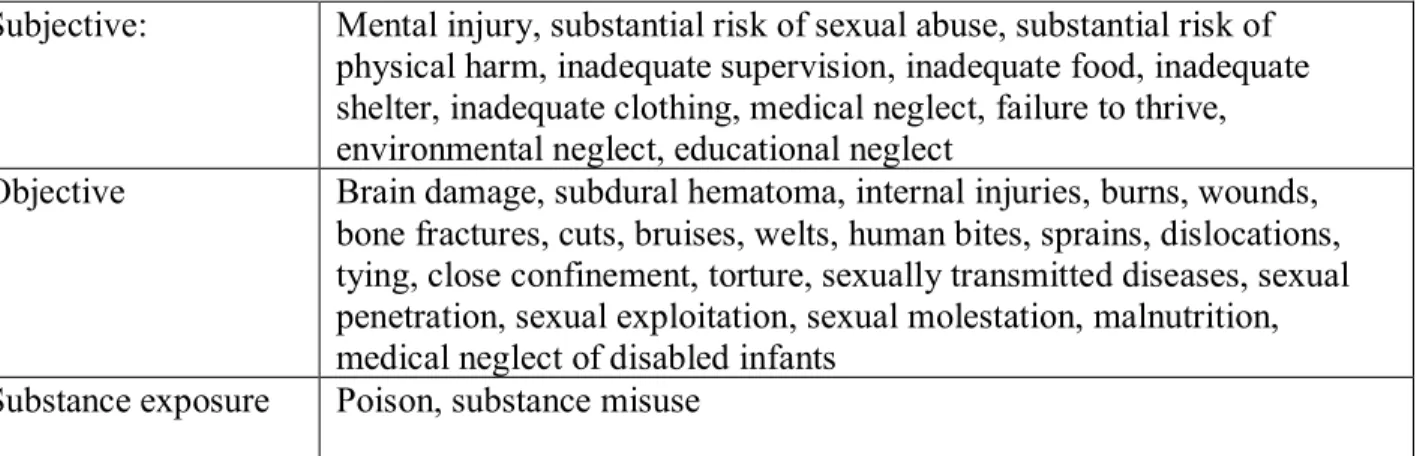
three categories: subjective, objective, and substance exposure. Subjective allegations, such as emotional abuse or environmental neglect, are allegations that may require a worker to rate to what extent a parent has failed to protect or provide for a child. These allegations are often less objective and may demand a great deal of judgment on the part of the worker. These decisions may be especially difficult to make for infants and toddlers and for children with language disabilities. On the other hand, allegations referring to physical signs of injury (e.g., bone fractures) are easier for workers to objectively verify using their own observation or a report from a medical provider. Although, substance exposure can also be confirmed by a medical report, it was placed into its own category in order to compare the magnitude of its association with substantiation. Table 2.1 displays the allegations that were grouped into the three categories. Table 2.1 Allegation types
Subjective: Mental injury, substantial risk of sexual abuse, substantial risk of physical harm, inadequate supervision, inadequate food, inadequate shelter, inadequate clothing, medical neglect, failure to thrive, environmental neglect, educational neglect
Objective Brain damage, subdural hematoma, internal injuries, burns, wounds, bone fractures, cuts, bruises, welts, human bites, sprains, dislocations, tying, close confinement, torture, sexually transmitted diseases, sexual penetration, sexual exploitation, sexual molestation, malnutrition, medical neglect of disabled infants
Substance exposure Poison, substance misuse
Family structure. To measure family structure, the caretakers in the household were grouped into several categories based on their relationship to the child. Caretakers were grouped
whereas “kin and other” included households with relatives and non-relatives, such as a mother’s boyfriend. “Non-kin only” described households with non-relatives, such as adoptive parents,
whereas “non-kin and other” included homes with non-relatives and those listed as “other” in the database. “Institutional or other” included caretakers listed as “other” and institutional
caretakers, as well as a combination of institutional, non-relative, and “other” caretakers.
Type of reporter. Reporters were grouped based on their relationship to the child or affiliation with a system or service. For example, nurses, physicians, dentists, and other medical
personnel were categorized as “medical,” and attorneys, police officers, and other law
enforcement personnel were labeled as “legal.” The types of reporters used in this study included
medical, school, family and friends, social services, legal, anonymous, and other (i.e., child care providers).
Other covariates included child demographic variables (e.g., race, sex, and age), number of caretakers in each household, whether or not the child resided in Cook county, and mean poverty rates for each county.
Worker-level predictors. Length of employment and type of degree may determine
workers’ knowledge and amount of work experience, and, therefore, may influence the outcome
of an investigation. Thus, to account for workers’ professional background, workers’ tenure at
the agency at time of investigation was measured by subtracting the date of the investigation
from the date the worker started working at the agency. Workers’ education was classified into
one of four categories: bachelors or master’s degree in a non-human services-related field,
Analytic Plan
Because of the hierarchical data structure (i.e., children nested within workers and counties) and the use of a binary outcome, a multi-level logistic regression was run using xtmelogit in Stata Statistical Software: Release 14. Hierarchical linear modeling takes into account the effects of nesting and higher-level variables that may explain differences between individuals and groups (Raudenbush & Byrk, 2002). The following three levels initially were used in the models: child, worker, and county. However, after examining the variance
components of an unconditional model, the intra class correlation (ICC) revealed that the
variation in substantiation due to differences between counties was very small (<1.00). Thus, the conditional multi-level models were reduced to two levels: worker and child. Conditional models included worker- and child-level covariates hypothesized to be associated with the likelihood a child will have his or her case substantiated.
First, an unconditional model, which is a model without predictors, was used to divide the total variance in substantiation due to differences between workers. Because the average probability of substantiation may vary between workers, the unconditional model and conditional models included a random intercept for the worker level. The conditional models were an
extension of the unconditional model and included all of the child and worker covariates as fixed effects, as well as a two-way interaction between child and worker race and a three-way
Results
Descriptive statistics
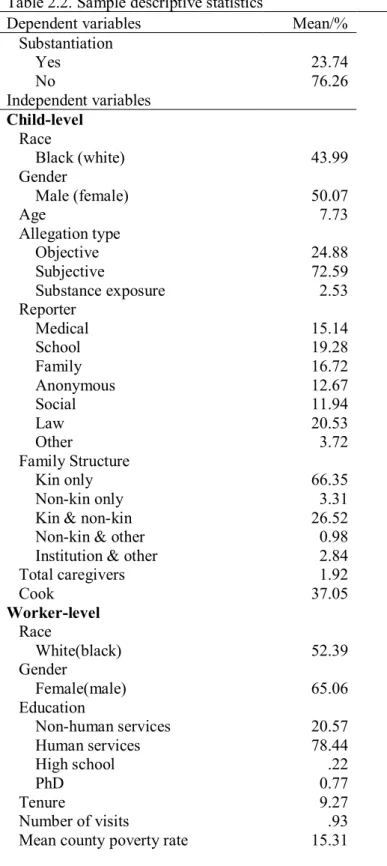
Child level. Table 2.2 displays the characteristics of children and workers in the analytic sample. Overall, 23% of the children in the sample had a substantiated report. Nearly half the children in the sample were black (43%) and more than half were white (57%). The average age of the children in the sample was seven, and half of the sample comprised of boys. Majority of the allegations were subjective (72%) and allegations were most commonly reported by legal (20%) and school personnel (19%). Households were mostly comprised of parents or relatives (66%) with an average of 1.92 caregivers in each household. Also, 37% of the sample resided in Cook County.
Worker level. There were more female (65%) and white investigators (52%) than male (35%) and black investigators (48%) in the sample. Most of the workers possessed a human services-related degree (78%) and had an average of nearly 10 years of work experience. Workers averaged nearly 1 home visit during investigations. The average mean county poverty rate for the sample was 15.31.
Findings from Two-level Hierarchical Models
Table 2.2. Sample descriptive statistics
Dependent variables Mean/%
Substantiation
Yes 23.74
No 76.26
Independent variables
Child-level
Race
Black (white) 43.99
Gender
Male (female) 50.07
Age 7.73
Allegation type
Objective 24.88
Subjective 72.59
Substance exposure 2.53
Reporter
Medical 15.14
School 19.28
Family 16.72
Anonymous 12.67
Social 11.94
Law 20.53
Other 3.72
Family Structure
Kin only 66.35
Non-kin only 3.31
Kin & non-kin 26.52 Non-kin & other 0.98 Institution & other 2.84
Total caregivers 1.92
Cook 37.05
Worker-level
Race
White(black) 52.39
Gender
Female(male) 65.06
Education
Non-human services 20.57
Human services 78.44
High school .22
PhD 0.77
Tenure 9.27
Number of visits .93
Mean county poverty rate 15.31
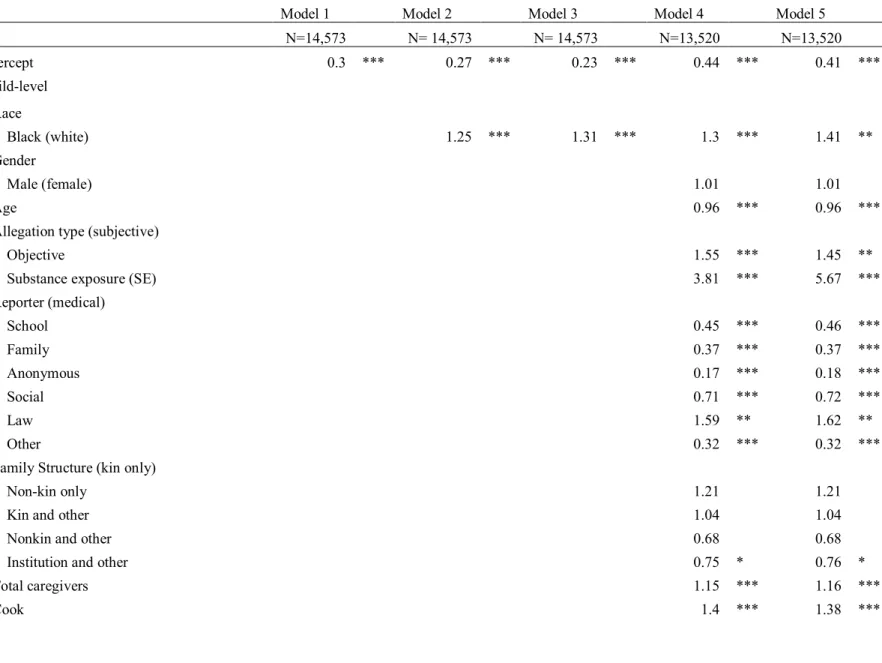
Model 4 included the full list of child and worker covariates. In model 4, black children had 30% greater odds of substantiation compared with white children (p<.001). Older children were 4% less likely than younger children to receive a substantiated report (p<.001). Further, children with more caregivers in their household were 15% more likely to be substantiated (p<.001). Reports from legal professionals were 59% more likely to be substantiated compared with reports from medical professionals (p<.01), whereas all other sources of reports had lower likelihoods of substantiation than reports from medical professionals (p<.001). Compared with subjective allegations, objective allegations were 55% more likely to be substantiated (p<.001), and allegations related to substance exposure had 3.81 greater odds of substantiation (p<.001). Children living in counties with high mean poverty rates were slightly more likely to have an allegation substantiated (p<.10). Also, children residing in Cook County had 40% greater odds of being substantiated compared with children residing outside of Cook County (p<.001).
Furthermore, if a child spent any time in an institutionalized setting, the child had 25% lower odds of being substantiated (p<.05).