BIA EDUCATION RESEARCH BULLETIN, YEAR 1978
Vol. 6, No. 1, January 1978
Policy Making in a Crucible, The Federal Experience in 1
Indian Education, 1950-1970
L Madison Coombs
The Attitudes of White School Administrators and Teachers Toward 13 American Indians
Tim Shaughnessy
The Relationship Between Indian and Non-Indian Teachers' Perceptions 20 of Indian First-Graders Achievement in Reading
J. Romily Enochs
A review of Indian Energy Resources From a Manpower and Education 25 Perspective
Robert K. Chiago
Vol. 6, No. 2, May 1978
Minimum Competencies in BIA Schools 37
Linda Sue Briscoe
Schooling and the American Indian High School Student 41 Thomas R. Hopkins and Richard L. Reedy
Reactions to Frustration and Anxiety By Indian and White Adolescents 49 James C. Martin
A Reading Curriculum for K-6, Indian School Approaches, Materials 55 and Rationale
Barbara Ann Shenk
Vol. 6, No. 3, September 1978
Math Avoidance: A Barrier to American Indian Science Education and 59 Science Careers
Rayna Green
Back to the Basics In Language Arts In the Bureau of Indian Affairs Schools 66 Sandra J. Fox
Bilingual Education Versus Remedial E.S.L. 69
An Evaluation of Eight Reading Programs Implemented for Indian Students 81 In North and South Dakota
POLICY MAKING IN A CRUCIBLE
THE FEDERAL EXPERIENCE IN INDIANEDUCATION, 1950 - 1970
by
L. Madison Coombs
As the decade of the 1950's began, Willard W. Beatty was nearing the end of a 15 year tenure as director of the Federal program of Indian education which began in 1936. Today, a quarter of a century after he left that post, he is acclaimed as one of the most imaginative and innovative figures in the history of Indian education. He came to the Bureau of Indian Affairs from the American progressive education movement in which he played a leading role. He began his Federal service under Indian Commissioner John Collier, anthropologist, reformer, and champion of Indian rights. In 1928 the celebrated Merriam Report had shattered the stodgy, authoritarian, and unabashedly assimilationist character of the BIA's school system. The Indian Reorganization Act, passed in 1934, had given impetus to the control by Indians of their own affairs.
Typical of Beatty's reforms were: the abolition of the remnants of military type organization still lurking in BIA boarding schools; the infusion of new blood with fresh ideas into the supervisory staffs: the use of reservation day schools as focal points for community development and for improved farming, ranching, and homemaking; and the dignifying of the native culture in the schools by the development of learning materials which included use of the native languages and Indian subject matter.
Then came World War II and the BIA's educational program was devastated through loss of personnel, deterioration of school facilities, and the general upheaval and dislocation which war brings about. Margaret Szasz in her book, Education and the American Indian: The Road to Self-Determination, 1928-1973, pays homage to Beatty's early years. She appears to feel, however, that after the war Beatty got off the track by becoming too much of an "acculturationist" in his objectives. If this is true, perhaps it brings us to the question of how Federal Indian policy in the education field has come about.
Who Makes or Influences the Policy Decisions?
Then too, during the two decades with which this paper is primarily concerned, the Bureau of Indian Affairs, a part of the Department of Interior, was under the oversight of the Assistant Secretary for Public Land Management. Typically this official had little conversance with Indian affairs. Moreover, the BIA was always in competition for the budget dollar with bureaus oriented toward public resources. Similarly, the Bureau of the Budget (now the Office of Management and Budget) by its control over funding exerted great influence over the initiation of educational programs. Occasionally, as in the late 1960's, a Secretary of the Interior would take a personal interest in actively directing Indian affairs.
Over the years "Indian interest organizations" have exerted influence on Indian policy — for example, the Association on American Indian Affairs, a New York based group composed mainly of non-Indians. Also, many scholars, particularly anthropologists, sociologists, and linguists, have taken more than an academic interest in Indian matters and have conducted research, written profusely, served as consultants, and played the role of advocate regarding Indian policy.
The most decisive determiner of all, perhaps, has been the social climate of a particular period or era — the temper of the times, so to speak. This will be illustrated in the remainder of this paper. Until recent times Indians themselves have perhaps had the least influence on policy but that is changing rapidly now. But always policy has been made in the crucible of pressing circumstances, usually without benefit of long range planning, and often from among alternatives none of which was desirable.
The Beatty-Thompson Transition
Willard Beatty resigned his position as director of Indian education in 1951 to accept the job of deputy director of UNESCO. It was understood that he had done so because Dillon Myer, the last Indian commissioner in the Truman administration, had demoted him from a line to a staff role, setting up a situation in which he did not believe he could function. His successor, Hildegard Thompson, was made director the following year and Beatty had a hand in selecting her. Mrs. Thompson was a thoroughgoing professional educator who had worked with the people of the Philippines before joining the BIA. At the time of her promotion she was director of Navajo education. How could she hope to succeed in a staff role when Beatty felt he could not? Because, as Beatty is reported to have said, "She can bend farther without breaking than any person I know."
Before his departure from the BIA Beatty had set in motion certain policies and programs that Mrs. Thompson would carry forward for many years, in addition to those which she herself initiated. What were some of these programs? Did they represent a shift from Beatty's earlier philosophy? And if so were there good reasons for it?
The Special Navajo Education Program
and the latter was permitted to return home from Ft. Sumner on the Pecos River where they had been interned for four long years. The treaty provided, among other things, that the Government would provide a teacher for every 30 Navajo children who presented themselves at school. For 78 years relatively few Navajo children presented themselves and by and large the Government was well content to let it go at that. By 1946 the war had come and finally ended and only 6 thousand Navajo children of school age were in school whereas 18 thousand were not. But the war had accomplished something unforeseen. Some 3,400 young Navajo men had served well in the armed forces throughout the world. They were amazed by the variety and complexity of the world beyond the reservation and they were shocked to learn of the handicap which lack of education had imposed upon them. They came home determined that Navajo youngsters would receive an education.
Willard Beatty was an innovative progressive educationist but he was also a pragmatist and he was not doctrinaire. Schools could not be built on the reservation overnight and he used the only space he had available — in old established boarding schools whose enrollments had been declining because Indian youth in their regions were enrolling in public schools. These boarding schools ranged geographically from Oklahoma to Arizona to California to Oregon. Beatty assigned Hildegard Thompson and a staff of experienced teachers to design an educational program which would provide functional English language skills and a basic marketable vocational skill in five years time to out-of-school adolescents who would soon be looking toward marriage and employment. By 1961 more than 4 thousand Navajo students had been graduated from this program and thousands of others had attended for varying lengths of time.
There was much about the program that was not ideal. Boarding schools for Indians have long been an anathema to many persons and the BIA itself for many years has not viewed the boarding school as a preferred way of educating Indian children and youth. Navajo officials approved the plan, no doubt with some misgiving, and Navajo parents suffered it rather than see their children go without an education. Beatty and Thompson believed that in the above described situation the choice was not between desirable alternatives but between the course they chose and a lifetime of illiteracy and poverty for thousands of Navajos.
Educational Research
showing that Indian children were receiving an inferior education in the schools in which they were enrolled. However, there were two findings which escaped notice almost entirely, although they were included in the text of the report. These were: (1) that the white children in the public schools of rural North Dakota and South Dakota achieved significantly higher at every grade level than the white children in the rural schools of eastern Oklahoma; and (2) that both the white children and the Indian children in the public schools in Montana and Wyoming, which had been integrated for a generation, said that all or most of their friends were of their own race. All of these findings were actually precursors of the findings of the monumental Equality of Educational Opportunity survey, commonly referred to as the "Coleman Report," which was conducted by the United States Office of Education some ten years later in 1965. In the early and middle 1950's such comparative data were rare.
There is a tendency for unanticipated and distasteful research findings to be ignored or misinterpreted. The Coleman Report suffered that fate. We will return to a discussion of the latter later in this paper. Actually, Beatty was disappointed in the University of Kansas findings which were published after he left the BIA. He had hoped that improvements which he felt he had made in BIA schools after the war would be reflected in something close to parity between the achievement of BIA pupils and the white pupils in public schools. He was mistaken in this. It would be some years before even professional educators would understand that disadvantaged and culturally different pupils would not achieve such parity, short term, simply by attending good schools. The Eisenhower-Emmons Era
The years of the Eisenhower administration from 1953 to 1961 were not brilliant ones for Indian education. This was the decade of House Concurrent Resolution 108, previously alluded to, which sought to terminate the Government's role as trustee. Termination was actually accomplished with the Menominee and Klamath tribes and while termination was repudiated as national policy before the decade was out, the Government continued to define its trusteeship very narrowly. For example, Federal educational services, whether performed directly by the BIA or by contract with the states under the authority of the Johnson-O'Malley Act, was provided solely on the basis of the tax exempt status of Indian land held in trusteeship by the Federal government. Thus, Federal educational services were awarded only to Indians living on reservations and were denied to urban Indians, even though the latter might have moved to the city with the encouragement of the BIA's "relocation" branch, later named "employment assistance." Treaty obligations were considered to be of little effect.
Navajo Emergency Education Program (NEEP)
During most of the Eisenhower administration the Commissioner of Indian Affairs was Glenn Emmons. The attitudes of Mr. Emmons, a Gallup, New Mexico banker, about relations between Indians and the Federal government and those of, say, John Collier, an anthropologist, were light years apart. Emmons believed that Indian children should be in public schools wherever possible and the transfer of Indian pupils to public schools went on a pace during his administration. But, importantly and to his credit, Emmons believed that Indian children should be in some kind of school. So, between 1953 and 1955 the Navajo Emergency Education Program was carried out. This involved a crash building program on the Navajo Reservation, including the expansion of many existing school facilities. Much of the construction was woefully substandard and, fortunately, most of it has since been replaced.
The Bordertown Program
A unique part of NEEP was what came to be known as the "bordertown" program. This consisted of the BIA's building dormitories in eight communities near to but not on the Navajo reservation (later expanded to other communities near other reservations) compensating the school districts for the construction of additional classrooms, and paying the district tuition for the education of the pupils. Approximately one thousand Navajo pupils were accommodated in this way each year. In 1965, at the direction of the Senate Appropriations Committee, the BIA evaluated this program and concluded that public schools being established on the Navajo Reservation provided a better long range solution because pupils could live at home with less disruption of family and tribal life and the Navajo community could exercise control of the school. In 1971 the program was again evaluated by the Southwestern Cooperative Educational Laboratory at the request of the Navajo Tribe and the BIA. Somewhat surprisingly in view of the supposedly important disadvantages cited above, students, graduates, parents, teachers, school officials, and townspeople expressed general satisfaction with the program and recommended that it be continued.
Indians in Public Schools
Following the Supreme Court's school desegregation decision in 1954 the impetus toward public school enrollment was heightened. More than once the BIA was called upon by a member of Congress or some other interested person to explain why it did not consider itself to be in violation of the Civil Rights Act of 1964 by operating racially segregated schools. The BIA could only explain that it did not operate schools for the purpose of racial segregation but only to provide educational opportunity to Indian pupils who otherwise would be without it.
The Coleman Report found that in 1965 Indian pupils in public schools were the "most integrated" of any ethnic group. That is, they more than any other ethnic group, including whites, had a preponderance of classmates of some ethnicity other than their own. By 1965 the BIA found that Indians represented only about ten percent of the enrollment of the public schools to which they paid Johnson-O'Malley aid.
And yet the relationship between the public schools and Indians and the public schools and the BIA has frequently been an uneasy one. Indian parents often complain of feeling like "outsiders" and it is quite obvious that in most public schools Indians cannot exercise much control because of their small numbers. On the other hand public school officials sometimes resent the "Feds" if they think the BIA is trying to supervise or advise them, while BIA personnel frequently have felt that public school people have little expertise and even less interest in understanding the special educational needs of Indian students and providing for them.
The Kennedy-Udall-Nash Years
John F. Kennedy took office in January of 1961 and named Steward Udall as his Secretary of the Interior. It is clear now that as of that moment the BIA's educational apparatus was in for a shaking up. Udall displayed a keen personal interest in Indian affairs and very soon appointed a task force to investigate. It was the better part of a year before a new commissioner was named and when the appointment came it proved to be Philleo Nash who had been a member of the task force. Nash was an anthropologist by training and a politician and public administrator by inclination and choice. He entered upon his new assignment with zest. He was well liked by the Indian leadership throughout the country and played an active role in the "nuts and bolts" operation of his agency as, for example, in the budget and appropriation process. He came in with a rather poor opinion of the BIA's education program but thought better of it as time went on.
for children and youth, many sponsored by Indian tribes and communities and designed to provide learning opportunity throughout the year, grew from an enrollment of 2,000 in 1960 to 26,000 in 1964. In 1963 the Institute of American Indian Arts, widely acclaimed for its concept and excellence, was established. During the ten year period from 1955 onward the number of Indian youth annually continuing their education beyond high school increased from 2,300 to 7,000 and BIA funds available for scholarship aid at the college level grew from a little over $9,000 to more than $1 million. During her 13 year tenure the number of Indian children in school grew from 99,000 to 134,000 and the number of school age children not in school declined from nearly 20,000 to less than 9,000.
These accomplishments, while substantial, were not dramatized and they drew little attention from either the public or from tribal or government officialdom. For one thing the educational deficit of Indian children was widely accepted as prima facie evidence that the schools had failed. For another, the mounting preoccupation with local Indian control of schools was beginning to obscure interest in the quality of educational programs, per se. As 1965 approached, Mrs. Thompson correctly sensed that the storm of controversy that was gathering was something she could do nothing about, She voluntarily retired in November of 1965.
The Udall•Nash•Bennett Relationship
Eight months elapsed after Hildegard Thompson's retirement before her successor was named and on the job. But a good deal happened in those eight months nevertheless. Secretary Udall made it quite clear that he was very dissatisfied with the educational program of the BIA. He felt that the evidence was plain — Indian students were not achieving as well in school as white students and they were falling farther behind the longer they went; they were dropping out of school earlier and in greater numbers than white students; fewer of them were going to college and fewer of them were graduating. Education was not the only thing wrong with the BIA — unemployment among Indians was as high as 40 percent and per capita income was only about $1500.
By the spring of 1966 Philleo Nash was out as commissioner, his resignation having been called for, and Robert L. Bennett was in. Bennett, a member of the Oneida tribe, was the first commissioner of Indian ancestry since the Civil War. A career man with the BIA, he came to Washington from Alaska where he had been the BIA's area director. He was a graduate of Haskell Indian Institute.
Interim Activities
While awaiting the selection of the new assistant commissioner, some rather significant developments took place under a "caretaker" acting director of education. During the spring an agreement was reached whereby the Rough Rock Boarding School, a newly constructed facility on the Navajo reservation, would be taken over and operated by a Navajo corporation called Dine. It was to be munificently funded jointly by the Office of Economic Opportunity and the BIA and it would be called the Rough Rock Demonstration School. Also, work went on cooperatively between the BIA and the U.S. Office of Education to include Indian pupils attending public schools in the benefits of the Elementary and Secondary Education Act, passed the year before. Efforts went forward, as well, between the BIA, USOE, and the Congress to include, by amendment, Indians attending BIA schools in the benefits of ESEA. And of course there was always the budget making and appropriations seeking which by then had become a year round operation.
Carl Marburger
Carl Marburger became assistant commissioner for education on July 6, 1966. He came from Detroit where he had been an assistant superintendent of schools, responsible for programs for disadvantaged pupils, He had also been a consultant to USOE which recommended him to Secretary Udall. Commissioner Bennett did not participate in the selection and did not meet Marburger until after he had reported for duty. Dr. Marburger was personable and while he knew little about Indians he knew a great deal about disadvantaged urban children. He was greeted with real enthusiasm by Indian activists and by people in the Great Society programs. He also was well received by BIA educators but less well by BIA area directors whom he wished to bypass in dealing with BIA school officials.
Marburger stayed with the BIA exactly one year before leaving to become commissioner of education for the State of New Jersey. It is hard to assess his accomplishments in that brief time. Much of his time was spent getting the feel of his new job. There are two important things that he definitely accomplished. He organized the Indian Education Advisory Committee composed of 16 tribal leaders from all parts of the country, the first such consultative group ever created. And he worked out in cooperation with USOE the BIA participation in the Elementary and Secondary Education Act program which was to give BIA education efforts a tremendous financial lift.
Charles N. Zellers
Bennett as commissioner. Zellers, trained in business administration rather than education, had worked in the District of Columbia school system and the U.S. Office of Education.
One of Zellers first moves was to press forward what Marburger had begun, a reorganization and expansion of the Washington office staff. This involved the addition of specialists in the teaching of English as a second language, in early childhood education in anticipation of kindergartens, in curriculum development to better adapt the learning materials to the cultural background of students, and in psychological and guidance services to ameliorate the problems of boarding school students particularly. Perhaps most significant was what was called Project TRIBE, a plan on the Rough Rock model described briefly earlier, whereby Indian groups could assume responsibility for the operation of their own school. In other words, Zellers tried to move to allay the most prevalent and virulent criticisms of BIA education — that the Indian culture, including the native languages, was being ignored and denigrated, that the boarding schools were barbaric and wreaking havoc with the mental health of the students in them, and that Indian tribes and communities were without authority or influence over the schools which served their children.
The last half of the decade of the 1960's was a turbulent period in the history of Indian education and little has been written about it. It may still be too early to attempt an analysis but perhaps a beginning can be made.
The BIA Historically
For those who are anti-establishment the Bureau of Indian Affairs is a sitting target. Few agencies in the Federal government have been established longer. It goes back to 1824, antedating the Department of the Interior by a quarter of a century. It has always been an unpopular agency, reflecting the uneasy national conscience about our native population which has ranged from rage and rancor to pious tears, bringing with it widely fluctuating policies. Many persons working for the BIA have looked with envy upon the National Park Service which brings so much happiness to millions of Americans each year. There has been a temptation for persons working in the BIA to develop what has been called a "garrison mentality," retreating into an in-group stockade as protection against the verbal arrows and acid pens directed at them. This has been true of Indian employees as well as non-Indians.
sent out to Kansas City to make the proposal to a gathering of Indian representatives. Again the response was decidedly negative. But yet a third time a leading anthropologist made the same recommendation to the new Nixon administration in 1969 and once again the National Congress of American Indians felt it necessary to veto the suggestion.
How could it be that Indians would wish to retain an agency with such a negative image? Might it not be that Indians felt that for good or ill the BIA was their own peculiar and particular agency, however often it may have seemed to fall short of their desires, and they did not wish to get lost in the labyrinthine structure of HEW? And, for whatever comfort it is to people in the BIA, while serving as a "lightening rod" for the frustrations of a wronged and deprived people may seem to be an inglorious role, it can be a useful one.
Biculturalism vs. Acculturation — An Adversary Relationship
In 1970 this writer did a synthesis of the literature of the 1960's on the education of the American Indian. The study revealed two separate and not very sympathetic camps. On the one had are the biculturalists or cultural pluralists, most often scholars in the social sciences. On the other are the acculturationists, often referred to by their critics as assimilationists. This group includes most educational practitioners, at least at the elementary and secondary school levels. Both sides make gestures toward the "both ... and" doctrine — that is both the dignifying and preserving of the native culture and the preparing of Indian youth to cope in the mainstream of present day American life. It is evident, however, that the cultural pluralists have their hearts in the first part — and the practitioners theirs in the second part — of the doctrine. Probably no one since Willard Beatty has worked hard enough at achieving a true combination of the two.
It is time for school people, whether of BIA, public, or denominational schools, to admit that they have been remiss (and this needs to be said by someone who has been a part of the establishment) in not being sensitive enough to the bicultural needs of Indian people. Indian children do need to know about their history, their heroes, and the current affairs of their tribe. Their acquiring of English language skills must be based upon the language they already know, And Indian parents must be involved in decision making about the schools which serve their children. On the other hand the critics of the schools are often intransigent in not trying to understand the practical problems with which school people are faced. For example they do not admit the difficulty of securing enough trained, bilingual Indian teachers or they insist on believing that the BIA operates boarding schools only to save money or to annihilate Indian culture. It is time for detente in the Indian education cold wart
The Great Society Programs
themselves. Beginning in 1964 there emerged the Civil Rights Act of 1964, the Office of Economic Opportunity, Community Action programs, Job Corps, Vista, the Elementary and Secondary Education Act, and much more.
The initial reaction of the BIA was one of satisfaction that the mood of the nation had at last turned favorable toward the plight of American Indians and other disadvantaged peoples. It established liaison with the Office of Economic Opportunity and its component parts. But rising expectations were not to be satisfied by a long term effort and ancient wrongs could not wait to be righted in the next generation. Washington was soon full of bright eyed young people eager to set things right and looking for villains who had caused the problems. The BIA found that it was a prime suspect. This was a jarring experience for people who had not thought of themselves as villains. While it did not basically change the BIA's approval of the Great Society objectives, it made old line workers defensive. This posed a particular problem for Marburger and Zellers when they came in from outside to direct the education program. As Zellers said, being new he could not accept either credit or blame for what had happened in the past. But since the BIA was getting little credit and a great deal of blame it was not hard for BIA people to understand what he meant. And after all he was now head of the education effort, bad image and all. He could not escape the fact and it made it very hard for the BIA to succeed at anything.
A Basic Misconception
The criticism of the education of Indians was finally concentrated in the hearings and report of the Senate Subcommittee on Indian Education, popularly called the Kennedy Report. It was wholly condemnatory of both the Federal and the public school effort. There is persuasive evidence that from the outset one of the objectives of the subcommittee was to effect the transfer of Indian education to HEW but in the face of determined Indian opposition it could not, in the end, recommend it. There were, however, two other very significant studies going on in the middle and late 1960's which, if they had been paid attention to, would have relieved much of the obfuscation about Indian education which the Kennedy Report with its distortions had brought about. These were the Coleman Report, alluded to earlier, and the National Study of Indian Education, commissioned by USOE and directed by Robert J. Havighurst of the University of Chicago.
and effect relationship took hold; that if the first list of things were eliminated the educational deficits would disappear or at least would decrease more rapidly. There was no real evidence to support that conclusion. No doubt the evils included in the first list needed to be corrected for humane, or ethical, or democratic reasons, but there was no warrant for supposing that their correction would erase the educational deficit.
Indeed, Coleman had discovered that the deficits were common to all disadvantaged groups — Negroes, Mexican Americans, Puerto Ricans, and Indians — and that Indians were the highest achieving of these groups, not the lowest. He concluded the deficits were the product of the total society in which the children had grown up, and not primarily of the schools, although he concluded further that the disadvantaged students were far more dependent on the school for help than the more favored students. Havighurst, a respected sociologist on top rank nationally, reached basically the same conclusions. Havighurst, in addition, became so perturbed by some of the innuendoes coming out of the Senate Subcommittee hearings that boarding schools were causing abnormally high suicide rates that he took special pains to investigate the insinuations and found no evidence to support them.
The Kennedy Report contained 60 recommendations, many of them worthwhile, some of them naive, but it did pave the way for greatly increased appropriations for Indian education and for special legislation making it possible for Indian groups to exercise much more authority in the education field.
The Prospect
THE ATTITUDES OF WHITE SCHOOL ADMINSTRATORS AND TEACHERS TOWARD AMERICAN INDIANS
by
Tim Shaughnessy
Within the past few years, a considerable amount of research has been conducted in the area of American Indian attitudes. A large number of these studies focused on educational attitudes and post-secondary aspirations of Indian high school students. Research in this area has typically attempted to identify and measure the effect of ethnic tradition and value systems, measure demand for Indian studies, determine self-concept and educational aspirations and measure predisposition toward college education (North Dakota University, 1974:1). A second major category of the research in this area dealt with the attitudes of Indian parents on various educational concerns (North Dakota University, 1974.) Attitudes of both Indian students and parents toward white educational leaders were also found in the review of the related literature (Birchard, 1970).
Despite the abundant quantity of research that dealt with Indian attitudes to numerous educational phenomena, the recent overwhelming literature on Indian customs, economic conditions, career aspirations and political activism and the interaction between Indians and white society, in both educational and non-educational settings, remarkably little attention was devoted to the analysis of educational leaders toward Indians. In a recent study, Stones (1973:54) determined that "Social scientists have done notably little in the area of studying administrative attitudes and actions concerning racial issues." In Stones' particular study, he reported:
In our review of the literature no studies were found on the specific racial attitudes of school administrators. Studies of this nature are extraordinarily important because administrators are responsible for organizing and supervising the formal educational process of children.
Banks (1972:266) alluded to the need for research in the area of school administrator and teacher attitudes toward minorities since,
The public school has been a partner in a denial of equal opportunity for minorities since it is part and parcel of the social system. It has perpetuated the status quo and helped to reinforce the social caste system.
To overcome this traditional hindrance, Banks concluded that professional public school employees must develop "positive attitudes about ethnic minorities and have high expectations for minority youth" (1972:266).
Their (school administrators) influence in hiring and curriculum decisions calls for intensive research into their attitudes and life and career histories.
Although more indirectly, Thompson (1964:52), in a work concerned with the educational component of the Bureau of Indian Affairs, also expressed the importance of research in the area of assessing educational administrators' attitudes toward Indians. She said, for example: I
Educational quality in the program of any school has its beginning in the attitudes and point of view of the staff. What a staff believes is reflected in the tone or climate of the school, and the school climate is something that is felt more than seen. School leadership is responsible for setting the tone and maintaining climate.
Educational Administrators
Although primarily concerned with white school administrators' perceptions of Indian Education, Billison's (1973) study, reported in Dissertations Abstracts, concluded that school systems with significant Indian populations should recruit and select administrators who have been educated in the culture and customs of the Indians to be served and who display attitudes of concern and sensitivity for these people. His findings, however, showed that the majority of the white administrators' beliefs regarding the Indian people they were serving were grounded on very limited specific knowledge of the Indian tribal groups. The study also indicated that,
The prime motivation of administrators in these schools was to improve their (the administrators) economic and professional status rather than to serve American Indians.
In an article assessing the public education system on the Apache Reservation in Arizona, Parmee (1968:105) felt that the attitudes of public school employees, including administrators, on the reservation reflected a considerable degree of prejudice. He stated, "It appeared that school staff evaluations of Apaches expressed more of personal views and impressions than validated findings." His article contained a brief sample of collected comments which, he felt, illustrated this point. For example:
The trouble is, these Apache people don't want education. They think it is poison. They hold ceremonies every year to do away with all the evils their kids have picked up in school (reservation public school principal).
and
According to Parmee, it was difficult to estimate how many white school personnel shared these views, but "it was plain enough to see that prejudice was not restricted to any one school or occupational level."
In 1969, after two and a half years of investigation through hearings, questionnaires, interviews and travel, the Special Subcommittee on Indian Education of the United States Senate (1969:53) concluded that many school administrators considered Indian Pupils inferior to white students, and thus expected them to fail, both in school and in life. The following conditions were cited in the committee's findings:
A. An anti-Indian attitude is often prevalent in white communities in which Indians receive public school education.
B. Many school districts relegate Indians to the lowest level in their tracking system.
C. Some administrators refuse to cooperate with the Indian community in their school district and discourage or do not permit Indian participation in decision-making.
D. Indians are often promoted each year regardless of grades just so they can be kept in schools, thus assuring the local district of receiving Federal aid because of the presence of Indian students. One public school district goes as far as to falsify Indian achievement test results because the students were so far behind national norms that "it just wouldn't look good."
E. Teachers and administrators are often insensitive to Indian values and ignorant of Indian culture.
Teachers
Like the analysis of white educational administrators' attitudes toward Indians, the systematic investigation of the attitudes and beliefs of white teachers concerning Indians has been scarce. Shafer (1974:2), for example, in his analysis of white teachers' attitudes on the Papago Reservation in Arizona, found difficulty in establishing a background in the literature. "Although," he pointed out, "there is ample research on teacher attitudes in general and with those working with other minority groups, works dealing with teachers of Indians are indeed rare." The literature on teachers of Indian children has also recently been summarized by Berry (1969:2). He noted that:
It is surprising ... that so little research has been directed to the teachers, especially when compared to the volumes of research on other aspects of Indian education.
For this reason, no support literature or information was included in Shafer's study.
When asked (the white teachers) what the contributions were, the responses were such things as art, jewelry, corn, architecture, moccasins, etc. In other words, very superficial material items were considered as major contributions (p. 9).
Shafer concluded that the respondents answers indicated that they did not see Indian culture as intrinsically meaningful. The Indian individual and his culture were valid only when judged by the main white culture. Based on the responses, in Shafer's words,
For the Indian to have a valid culture, he must somehow show how it relates and contributes to American society. It seems that the concept of cultural relativism, where any culture is valid within its own cultural milieu, is not considered (p. 10).
Smith's (1970) study, which was undertaken as part of the preliminary phase of the National Study of American Indian Education, sponsored by the United States Office of Education, attempted to assess white teacher attitudes toward Indian students and Indian parents. Interviews with 15 groups of white teachers in Arizona and New Mexico, which represented 10 schools serving predominantly Indian children on or near the periphery of Indian reservations, revealed:
... that the education of American Indian children in the Southwest was rigid and inflexible, that classrooms were almost totally lacking in local materials and that schools seem unwilling to make any concessions to enlist the enthusiasm or interest of the Indian community (p. 1).
More specifically, according to Smith, it appeared from the statements of those teachers who spoke out during the group interviews that they possessed a mental picture of Indians which they were using as the basis for their teaching. For example,
The teachers expected the more Anglicized children to be the better performers in class. The less Anglicized Indian students seemed to represent somewhat of a mystery and unsettling influence upon teachers. In general, they felt pessimistic that anything could be done with these children (Smith, 1970:1). For the most part, Smith (1970:4) discovered, the white teachers felt, "Indian children were lacking in imagination and the ability to handle abstract ideas."
The statements made by most teachers about parents of Indian children during the interviews indicated, according to Smith, that the teachers' mental picture of Indian parents was extremely negative. The majority of teachers expressed that they felt the Indian parents were negligent as parents and hostile to the teachers and the educational system. (Smith 1970:7) concluded:
Indian parents in the parents' own locale; second, the statements tend to project the teachers' value orientation upon the parents' behavior.
In another study undertaken as part of the National Study of American Indian Education, Birchard (1970:9) also examined white teachers' attitudes toward Indian students and parents. The study, which analyzed teachers' attitudes at selected urban and rural schools throughout the United States, found that although "the typical teacher feels that Indian children are shy and not eager to learn . . and lack the confidence to learn," the majority of teachers possessed positive attitudes toward Indians in general and agreed most highly in rejecting the notion that the native culture, and thus the Indian parents impeded the Indian student's learning.
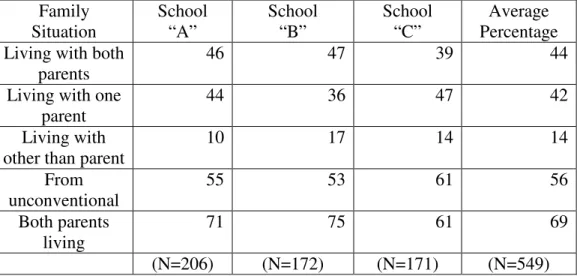
An additional finding of Birchard's study was that in many of the schools in which teachers possessed relatively negative opinions and attitudes toward Indian students and parents were also the schools which were most criticized by these same students and parents. This was demonstrated in the following table:
TABLE 1
A Comparison of the Schools Most Criticized by Indians with the Schools Where Teachers Have the Most Negative Attitudes toward Indians
Nine Schools Most Criticized by
Schools in Which Teachers Had Relatively Negative Attitudes Toward
Students Parents Students Parents
Chicago Chicago Chicago
Hoops Hoopa No data available
Keshena Keshena Keshena
Mocllps Moclips
Neah Bay Neah Bay Neah gay
Pawnee Pawnee Pawnee Pawnee
School C School C
Ponca City Ponca City Ponca City Ponca City
Red Wing-Burnside Red Wing-Burnside St, Francis No data available
St. Joseph St, Joseph St. Joseph St. Joseph
Shawano Shawano Shawano
(Birchard, 1970:11)
Birchard reported another aspect of his findings as being noteworthy. He pointed out the relatively high percentage (nearly 25 percent) of persons who answered the questionnaire items responses of "Undecided" and "Neither." This condition, according to Birchard (1970:7), "suggests the degree to which teachers were unwilling to make generalizations concerning all Indians, in other words, to subscribe stereotypes."
Oasis and Pima Central), however, were most prone to stereotyping. Despite the latter teachers' tendency to stereotype, Birchard states, "they held relatively high numbers of positive attitudes toward the Indians they served" (1970:12).
In his review of the literature, Berry (1969:2) noted that those who teach Indians usually come from parochial backgrounds and are prejudiced toward Indians. He related this phenomenon to the pattern of recruitment frequently noticed in schools with large Indian populations, particularly the reservation schools, A great number of these teachers, he discovered, "often derive from isolated rural areas, frequently near the reservation where they teach, and so import with themselves into the classroom the attitudes of local lower middle class persons."
Anderson and Chilcott (1970:30-31) also witnessed a considerable amount of white teacher, as well as white administrator, prejudice in their study conducted on the White Mountain Apache Reservation in Arizona. They found that, "The three school systems on the reservation, BIA, public and mission, employ teachers who don't like to work with Apache students." A number of the Indians interviewed by Anderson and Chilcott felt that, "A lot of these teachers are here just for their paychecks," and "Some of our children are taught by people who are not interested in helping students, and those who dislike Apache students."
In his analysis of the educational environment on the Hoopa Reservation in California, Myers (1970:8) found "low level prejudices against Indians" to exist among the teachers and other school personnel. These prejudices, according to Myers, were usually based on stereotypical images of what Indians "are supposed to be like" and ranged from "favorable" prejudices such as "These Indian kids are natural artists," "Indians are tremendous natural athletes," and "Indians are great with their hands" to the stereotyped portrayal of Indians as being lazy and unwilling to accept responsibility. However, on the basis of information gathered from observations, questionnaires, structured and unstructured interviews of teachers, principals, superintendents and trustees:
. . . not one individual professionally involved with the schools could be described as anti-Indian or having prejudices against Indians of sufficient strength to result in discriminatory teaching techniques.
BIBLIOGRAPHY
Anderson, Ned and John H. Chilcott. "Formal Education on the White Mountain Apache Reservation: Report of a Self-Study Conference," The National Study of American Indian Education, 1st ser. Chicago: University of Illinois, 1970.
Billison, William. "School Administrators' Perceptions of American Indian Education," Dissertation Abstracts, 33A (June, 1973), 6751A.
Birchard, Bruce A. "Attitudes, Understanding and Interactions: Students, Parents, Teachers and Community Leaders," Perceptions of Indian Education. Chicago: University of Illinois, 1970.
Myers, James E. "Community Background Reports: Education on the Hoopa Reservation," National Study of American Indian Education. Chicago, University of Illinois, 1970.
North Dakota University. Survey of Education Related Attitudes of Tribal and Non-Tribal Workers at Langer Plant at Rolla, North Dakota. Grand Forks, 1970.
Parmee, Edward A. Formal Education and Cultural- Change: A Modern Apache Community and Government Education Programs. Tucson: University of Arizona Press, 1968.
Shafer, Larry. Group Differentiation of Teachers on the Papago Reservation: A Comparison of B.I.A. and County Teachers. Albuquerque: Bureau of Indian Affairs, 1974.
Smith, Waldon P. "The Attitudes and Beliefs of Teachers Concerning the Education of American Indian Children in the Southwest;" American Indian Education Papers, No. 1, Tucson: University of Arizona Press, 1970.
Stones, Michael E. "School Administrator Attitudes and Racism," Inteorated Education, 11, No. 2 (1973), 54-57.
Thompson, Hildegard. Education for Cross-Cultural Enrichment. Washington: Bureau of Indian Affairs, 1964.
United States Senate. Report of the Special Subcommittee on Indian Education. Washington, Government Printing Office, 1969.
THE RELATIONSHIP BETWEEN INDIAN AND NON-INDIAN TEACHERS’ PERCEPTIONS OF INDIAN FIRST-GRADERS
ACHIEVEMENT IN READING
by
J. Romily Enochs
Introduction
Studies by Rosenthal and Jacobson (1968), Brophy and Good (1970), Rubovits and Maehr (1971), and others have shown that the relationship between teacher perception of students and student achievement can be measured and that teacher perception of students has a significant bearing on the learning process and achievement of students. According to Johnson, et al. (1964), there are methods to improve teacher perception of students. If students feel that they are being perceived negatively by their classroom teachers, the children's achievement in these classrooms will have a direct relationship to the perception.
The importance of achievement in reading, according to Robinson (1970), dominates the elementary school curriculum. In the early school years, there is more time devoted to instruction in reading than any other subject area. This is also true from an historical perspective. Robinson (1970) also stated that reading is a deciding factor for the general achievement in school. If a student in the elementary school has not learned to read successfully on his grade level, then he is considered a failure. That a relationship between teacher perception of students and student achievement in the area of reading is important, is well documented in the literature.
Purpose of the Study
The purpose of the study was to identify the perceptions of Indian teachers of Indian students and non-Indian teachers of Indian students in order to determine the effect of the perceptions upon the reading achievement of Indian first-grade students. The Sample
The population of the study consisted of 72 Indian first-grade students enrolled in four elementary schools located in North Central Mississippi and operated by the 'Choctaw Agency, Bureau of Indian Affairs.
Four teachers of Indian first-grade students were used as the instructors in the study. Two teachers were Indian, and two teachers were non-Indian. All of the teachers were females who expressed a willingness to work within the study. They held valid certification in the field of elementary education.
A pre-test and post-test research design was used in the study. The pre-tests, the Metropolitan Readiness Test (Level II, Form P, 1974 edition) and the Adjective Check List (1964) developed by the National Opinion Research Center and used in the Hopkins (1971) study, were used to control initial reading readiness of the Indian first-grade students, and to determine teacher perception.
The Metropolitan Readiness Test (1974) is partitioned into six areas of reading readiness. The following areas were tested in order to compile a total reading readiness score: (1) Beginning Consonants, (2) Sound-Letter Correspondence, (3) Visual Matching,
,
(4) Finding Patterns, (5) School Language, and (6) Listening. Although all six areas were acquired in deriving the total readiness score, only the total raw score was used.
The Adjective Check List (1964) is composed of 38 adjectives and is partitioned into four subscales: (1) Likable, (2) Unlikable, (3) Scholastic Stereotype, and (4) Sensitivity. All of these subscales were of immediate concern to the study.
The post-test, the Metropolitan Achievement Test (Primary I Level, Form F, 1970 edition) was used to measure the achievement in reading of the Indian first-grade students. The test is partitioned into four areas of reading achievement: (1) Word Knowledge, (2) Word Analysis, (3) Reading Sentences, and (4) Reading Stories. Only the total reading score was of immediate concern to the study.
Collection and Analysis of Data
During the first week of September of the 1976-77 academic school year, the Indian first-grade students were given the Metropolitan Readiness Test (1974) and the Adjective Check List (1964) in order to determine initial readiness in reading of the Indian first-grade students and to determine teacher perception of the students,
For a period of 25 weeks, the Indian first-grade students were taught using the same programs of instruction. After 25 weeks of instruction, the students were administered the post-test of reading achievement, the Metropolitan Achievement Test (1970), during the first week of March of the 1976-77 school year.
Three statistical models were employed for data analysis: (1) Least-squares analysis of variance of perceptions on the Adjective Check List (1964), (2) Least-squares analysis of covariance of reading achievement on the Metropolitan Achievement Test (1970), and (3) Multiple regression analysis of correlation between perceptions on the Adjective Check List (1964) and reading achievement on the Metropolitan Achievement Test (1970). In all cases, a difference was considered significant at the .05 level.
The results of the analysis indicated that Indian teachers' perceptions of Indian students are more positive than non-Indian teachers' perceptions of Indian students.
A least-squares analysis of covariance statistical procedure was utilized to determine if differences were significant in reading achievement of the Indian first-grade students taught by Indian and non-Indian teachers. The covariate solution used was the Metropolitan Readiness Test (1974). The criterion measurement was total reading achievement of the Indian first-grade students as measured by the Metropolitan Achievement Test (1970).
Analysis of the difference between the means of students taught by Indian and non-Indian teachers showed that no significant difference existed between the reading achievement of the two groups.
A multiple regression statistical model was employed to find the significance of the multiple correlation between the four subscales on the Adjective Check List (1964) set of perceptions of Indian first-grade students observed by their teachers and the total reading achievement on the Metropolitan Achievement Test (1970) of the students.
Analysis of the multiple correlation between teacher perceptions and reading achievement showed that a positive correlation existed only on the Scholastic Stereotype scale of the Adjective Check List (1964).
Recommendations
Based upon the analyses of data in the study, the following recommendations were made:
A follow-up using the same procedures and subjects at the end of their second and third years in school would be interesting and informative. This would help to ascertain if teacher perception at other levels effects the reading achievement of the Indian students.
Tests and semantic differential scales which measure teacher perception are difficult to find in the literature. Therefore, it would seem that further study in the development of new instruments to measure teacher perception would be appropriate. This would give educators and researchers instruments to measure teacher perception more objectively. Alternate instruments are needed for further assessment of the various aspects of teacher perception.
TABLE 1
Comparison of Perceptions of Choctaw First-Grade Students Held by Choctaw and Non-Choctaw Teachers
Non-Choctaw
Choctaw Teachers Teachers
Least- Least-
Criteria SquaresStandard SquaresStandard (Adjective MeansDeviation MeansDeviation Check List)
(X)◊ (SD) (X) (SD) F
Likable Scale 4.58 9.49 1.03 1.10 4.58*
Unlikable Scale 1.20 3.13 .64 1.02 1.00
Scholastic
Scale 2.20 2.98 .52 .57 10.31*
Sensitivity Scale 12.31 .95 6.64 .82 719.38
**
*
Significant at the .05 level F> 3.98 (df = 1,70)
**
Significant at the .01 level F> 7.01 (df = 1,70)
◊ Arithmetic Mean TABLE 2
Results of Analysis of Covariance Comparing Adjusted Means in Total Reading Achievement of Choctaw Students when Overall Readiness Is
Employed as a Covariate
Source of Variation df Mean Squares F
Covariate (MRT) 1 1499.40 27.64**
Groups (Between) 1 149.49 2.76
Residual (Within) 69
*Significant at the .05 level F > 3.98
**Sogmofocamt at the .01 level F > 7.01 TABLE 3
Comparison of Adjusted Post-Test Means of Total Reading Achievement for Choctaw First-Grade Students Taught by Choctaw and
Non-Choctaw Teachers
Choctaw Teachers Non-Choctaw Teachers
Criterion (X) (X)
TABLE 4
Results of Multiple Regression Correlating Perceptions of Teachers Toward Choctaw Students' Total Reading Achievement
Multiple Changes in Simple
Source of Variation R R2 R2 R F
Forced
Total Readiness
(MRT) .527 .278 .278 .527 26.97**
Free
Scholastic Stereotype
Scale .594 .353 .075 -.447 8.03**
Unlikable Scale .601 .361 .008 -.398 .84
Sensitivity Scale .603 .363 .003 -.193 .28
Likable Scale .606 .368 .004 -.444 .42
*
Significant at the .05 level F> 3.98
**
Significant at the .01 level F> 7.01
BIBLIOGRAPHY
Brophy, J., & Good, T.L. Teacher communication of differential expectations for children's performance: Some behavioral data. Journal of Educational Psychology, 1970, 61, 365-374.
Harvey, W.R. Least-squares analysis of data with unequal subclass numbers. Agriculture Research Service: United States Department of Agriculture. ARS20-8, July, 1960. Hopkins, T.R. Navajo and non-Navajo teachers: A comparison of characteristics.
Unpublished doctoral dissertation, George Washington University, 1971.
Johnson, T.J., Feigenbaum, R., & Weiby, M. Some determinants and consequences of the teacher's perception of causation. Journal of Educational Psychology, 1964, 55, 237-246.
Robinson, H. Significant unsolved problems in reading. Journal of Reading, 1970, 18, 220-221.
Rosenthal, R., & Jacobson, L. Pygmalion in the Classroom. New York: Holt, Rinehart and Winston, Inc., 1968.
A REVIEW OFINDIAN ENERGY RESOURCES
FROM A MANPOWER AND EDUCATIONAL PERSPECTIVE
by
Robert K. Chiago
Introduction
The United States Government owns legal title to Indian lands.1 This title is owned in a manner whereby the United States Government is the trustee and the Indians are the beneficiaries.2 Indians as beneficiaries have the right to use, occupy, and, within limits, to manage and dispose of these lands .3 The Secretary of Interior has been delegated with authority by Congress to act as trustee for the Indians in such a capacity where he cannot unilaterally direct the disposition of tribal resources, although he can prevent any dissipation of Indian lands due to acts of the Indians themselves.4
In accordance with the Omnibus Tribal Leasing Act of 1938, Indian lands can be leased to private corporations subject to approval by the Secretary of Interior who has a statutory responsibility of deriving maximum economic benefits for Indians from their resources .5 The matter of leasing Indian lands is of increasing significance due to Project Independence which, briefly, is to develop this country's internal energy resources to a level whereby dependence on foreign energy will be minimized or alleviated.
Tables 1- 5 point out the importance of Indian lands with regard to overall energy production and also demonstrate the potential of Indian lands for energy resource exploration and future energy production. Indian lands make up 2,3% of the total U.S. land base, but, with the exception of uranium ore production, the production of energy resources from Indian lands is less than 2.3%. If proportions between land percentage and production percentage have any correlation, Indian lands may have energy resources either not currently being developed or not yet discovered.
TABLE ONE
Acreage of Indian Land by Land Category
Tribal Land 40,772,934 acres
Allotted Land 10,244,481 acres Ceded Land 2,157,959 acres Total Indian Lands 53,175,374 acres Indian Lands as a percent of
TABLE 2
Cumulative and Fiscal Year 1974 Coal Production from Indian Lands, and Total United States
Cumulative
(1920-1974) F.Y. 1974
Tons Tons
Indian Lands 66,112,000 11,508,000 Public Lands 311,405,000 20,178,000 Total U.S. Lands 26,977,858,000 (est) 595,500,000
(est) Indian Lands as a percent of
Public and Indian Lands 17.5% 36.3%
Indian Lands as a percent of
Total United States 2.5% 1.9%
TABLE 3
Cumulative and 1974 Oil Production from Lands, Public Total United States
Cumulative
(1920-1974) 1974
Barrels Barrels
Indian Lands 956,905,000 30,685,000 Public Lands 4,990,317,000 168,782,000 Total United States N.A. 3,199,328,000 Indian Lands as a percent of
Public and Indian Lands 16.1% 15.4%
Indian Lands as a percent of
Total United States N.A. 1.0%
TABLE 4
Cumulative and 1974 Gas Production from Indian Lands, Public Lands, and Total United States
Cumulative
(1920-1974) 1974
mcf mcf
Indian Lands 2,311,800,000 125,080,000 Public Lands 16,589,702,000 1,049,699,000 Total United States N.A. 21,711,870,000 Indian Lands as a percent of
Public and Indian Lands 13.8% 3.7%
Indian Lands as a percent of
TABLE 5
Cumulative and Fiscal Year 1974 Crude Uranium Ore Production from Indian Lands, Leased Public and Acquired Lands, and Total United States
Cumulative
(1920-1974) F. Y. 1974
Tons Tons
Indian Lands 18,418,984
1,136,739
Leased Public and Acquired Lands 211,542
0
Total United States NA
NA
Indian Lands as a percent of Leased 8688.2% --
Public & Acquired Lands
Indian Lands as a percent of 16.0% (est) 19.0% (esst)6
Total United States Labor
The discovery of mineral resources on Indian lands has historically created problems for Indians and, to some extent, may have been an underlying factor in the formulation of present day Indian policy. Today, the discovery of energy resources on Indian lands, while financially beneficial, can have harmful side effects.7
Indian preference stems from the Act of June 30, 1934, § 9, 4 Stat. 737, 25 U.S.0 § 45 which provided for the Federal Government to use Indian labor in all aspects on and near the Indian reservations which were being established. In the Indian Reorganization Act of 1934, Indian preference was also provided for in the statutory language. In 1974 the United States Supreme Court held that Indian preference does not constitute invidious racial discrimination in violation of the Due Process Clause of the Fifth Amendment but is reasonable and rationally designed to further Indian self-government; and that Congress did not intend to repeal the Indian preference by passage of the Equal Employment Act of 1972.
Leases with energy corporations usually include Indian preference provisions. Even with Indian preference provisions, however, high rates of Indian unemployment remain a major problem, with some energy corporations not adhering to the Indian preference provisions of their agreement.8
The following are some typical Indian preference provisions contained in contracts between Indian tribes and various corporations:
"INDIAN LABOR — Lessee agreed to employ
Indians when available in all positions for which they are qualified in the judgment of the lessee, and to pay prevailing wages to such _ _ _ employees, and to utilize services of contractor whenever feasible in the judgment of the lessee. Lessee agrees to make special efforts to work Indians, giving priority to qualified members of the
tribe, into skilled, technical and other higher jobs in connection with lessee's operation under this lease.9
"INDIAN LABOR — Company X shall employ Indians, subject to the provision stated below, giving preference to members of the Indian Tribe in all aspects of employment in all positions for which they are qualified and available, and shall pay the prevailing wage rates the salaries for similar services in such and such county.
Company X shall do everything practicable to employ qualified Indians, except for technical or professional personnel who comprise part of Company X's regular staff,
It is understood that other contractors hired by Company X shall not be obligated to give preference to members of the Tribe to the extent that such preference interferes with their established crews.
... There shall be no discrimination in the amount or rate of wages to be paid to tribal employees on the basis of race, creed, color or sex, 10
As indicated by the preceding sample of Indian preference provisions, it is understandable why Indian preference hasn't been successfully enforced on or near Indian reservations. The term "qualified" as defined by some corporations has been used to limit the hiring of Indians. Corporations have imposed qualifications which they knew very few Indians possessed. No effort has been made by them to increase the availability of qualified Indians, Lease terms have not mentioned goals and time tables for the hiring of Indians.
To solve this problem Indian tribes might require lease bids to include the following conditions:
1. Specific goals and time tables for the hiring of qualified Indians by job levels.
2. Specific goals and time tables for the training of Indians for all job levels.
3. Strict penalties for breach of Indian preference provisions.
Until both training and hiring specifications have become standard parts of lease agreements, Indian preference will remain ineffectual.
The influx of large numbers of non-Indians into the four corners area has caused major problems among Navajos residing in the area and such an influx could be even more harmful to smaller and less sophisticated Indian tribes. Employment opportunities for non Indians created as a result of energy resource development could cause members of a particular tribe to become minorities on their own reservations.13 There are many other existing and potential problems of energy resource development of Indian lands which need to be analyzed and carefully considered.
Another problem is the Bureau of Indian Affairs' inability to effectively manage leases of Indian land. A basic principle of management is to make wise decisions. In order to make wise decisions, management must be familiar with all facts pertinent to a lease situation. The writer has not been able to obtain even very basic data from the Bureau of Indian Affairs' offices he has contacted.
The Secretary of Interior, being the trustee of Indian lands whose statutory responsibility includes deriving maximum economic benefit for Indians from such lands when approving leases, should be aware of the expiration dates of all leases, the location and size of such leases, the effect of such leases on the Indians, the rents and royalties per unit, and information on comparable current leases on public or private lands. Without such data, it is obvious that he will not be effective in fulfilling his responsibilities. Data collection and record keeping appear to be a problem which continue to plague most units of administration and management in the Department of Interior and particularly the Bureau of Indian Affairs. Whatever summarized information might be centralized has often been erroneous.14
Education