MINDFULNESS-ORIENTED RECOVERY ENHANCEMENT FOR VIDEO GAME ADDICTION IN U.S. EMERGING ADULTS
Wen Li
A dissertation submitted to the faculty at the University of North Carolina at Chapel Hill in partial fulfillment of the requirements for the degree of Doctor of Philosophy in the School of
Social Work
Chapel Hill 2016
Approved by:
©2016 Wen Li
ABSTRACT
WEN LI: Mindfulness-Oriented Recovery Enhancement for Video Game Addiction in U.S. Emerging Adults
(Under the direction of Matthew Howard)
An emerging literature suggests that video game addiction is increasingly prevalent among emerging adults; however, no evidence-based treatments for video game addiction have been identified. Mindfulness treatment shows positive effects for substance use and gambling disorders, and may be a promising intervention for video game addiction. However, mindfulness treatment has not, heretofore, been adapted and evaluated for video game addiction. To fill this gap, my three-paper dissertation involved adapting and pilot testing Mindfulness-Oriented Recovery Enhancement (MORE) treatment for emerging adults with video game addiction using a randomized controlled trial (RCT) design.
The first paper includes a systematic review of 49 peer-reviewed journal articles
evaluating mindfulness treatment for substance misuse. Meta-analytic results revealed significant small-to-large effects of mindfulness treatment in reducing levels of substance misuse, intensity of craving for psychoactive substances, and stress levels. Further, mindfulness treatments were effective in increasing abstinence from cigarette smoking and enhancing levels of mindfulness at posttreatment compared to alternative treatments.
evaluating effects of MORE for emerging adults with video game addiction. Thirty adults (Mage
= 25.0, SD = 5.4) with video game addiction were randomized to 8 weeks of group-based MORE
or 8 weeks of a support group [SG]. Outcomes included signs and symptoms of video game addiction, craving for video game playing, video gaming-related maladaptive cognitions, perceived stress, coping, and mindfulness, and were measured at pre-and posttreatment using standardized self-report instruments. Analysis of covariance revealed that participation in MORE was associated with significantly greater reductions in signs and symptoms of video game
To Mom and Dad, my mentor, Dr. Matthew O. Howard, and my partner and best friend, Blake Anthony. You have had a tremendous impact on who I am. I could not have accomplished this
ACKNOWLEDGMENTS
I feel fortunate to have a formal opportunity to express my appreciation to those who have helped me complete this dissertation. My deepest gratitude is to my dissertation chair and mentor, Dr. Matthew Howard, an exceptional human being, scholar, and role model. Dr. Howard has patiently guided me through the doctoral process providing me with ample opportunities to learn and grow, and valuable advice for my scholarship, career, and life. I am thankful for him believing in my research. This dissertation would not be possible without his generous support and feedback.
I thank each of my committee members, Dr. Mimi Chapman, Dr. Eric Garland, Dr. Rebecca Macy, and Ms. Marty Weems, for their contribution to the rigor of my dissertation by sharing their expertise and by offering me encouragement and compassion. I would like to thank Dr. Garland for letting me adapt and test MORE treatment (he developed MORE) for video game addiction and providing feedback to make this dissertation more rigorous. I’d like to thank Drs. Chapman and Macy for sharing their expertise in intervention evaluation and resources for working with university students. Thank you to Marty for taking me out for coffee and sharing her valuable insights regarding addiction treatments. I would also like to thank my colleagues, Tricia McGovern and Jennifer O’Brien, for developing and facilitating the support groups for my dissertation study.
Beijing in 2007, and providing me with continuous support during my studies in the U.S.. I also thank Drs. Natasha Bowen, Mark Fraser, Shenyang Guo, Rainier Masa, Cindy Fraga-Rizo, Kathleen Rounds, and Ms. Diane Wyant for their support.
I also want to specifically thank and acknowledge my dear friend and great colleague Jennifer O’Brien. This journey toward my PhD would not be half as fun or productive without
her constant support, encouragement, and inspiration. It is also with deep gratitude that I thank my friends both near and far. I want to personally thank Claire Kennedy, Derek Quezada, Dr. Micaela Mercado, Laurence Bezy, and Chad O’Brien for their unconditional support.
TABLE OF CONTENTS
LIST OF TABLES ... x
LIST OF FIGURES ... xi
LIST OF ABBREVIATIONS... xii
INTRODUCTION ... 1
References: Introduction ... 4
PAPER I: MINDFULNESS TREATMENT FOR SUBSTANCE MISUSE: A SYSTEMATIC REVIEW AND META-ANALYSIS ... 6
Introduction ... 7
Methods ... 12
Results ... 16
Discussion ... 73
Limitations and Conclusion ... 77
References: Paper I ... 79
PAPER II: MINDFULNESS-ORIENTED RECOVERY ENHANCEMENT FOR VIDEO GAME ADDICTION IN U.S. EMERGING ADULTS: PREPARING TO CONDUCT A RANDOMIZED CONTROLLED TRIAL ... 87
Introduction ... 88
Methods and Design of the Randomized Controlled Trial ... 93
Results of Recruitment ... 107
Discussion ... 113
Conclusion ... 116
PAPER III: MINDFULNESS-ORIENTED RECOVERY ENHANCEMENT FOR VIDEO GAME ADDICTION IN U.S. EMERGING ADULTS:
AN EARLY-STAGE RANDOMIZED CONTROLLED TRIAL ... 124
Introduction ... 125
Methods ... 129
Results ... 140
Discussion ... 148
Limitations and Conclusion ... 151
References: Paper III ... 154
SUMMARY ... 161
References: Summary ... 166
LIST OF TABLES
Table 1.1 – Systematic Review of Studies of Mindfulness Treatments Using
Single-Group Designs with Repeated-Measures ... 29 Table 1.2 – Systematic Review of Studies of Mindfulness Treatments Using
Quasi-Experimental Designs with Repeated-Measures ... 36 Table 1.3 – Systematic Review of Studies of Mindfulness Treatments Using
RCT Designs with Repeated-Measures... 42 Table 1.4 – Synthesized Effect Sizes of Mindfulness Treatment on Outcome Variables ... 72 Table 2.1 – Instruments Used to Measure Primary and Secondary Outcomes
at Pretreatment, Posttreatment, and 3-Month Follow-up Assessments ... 104 Table 2.2 – Characteristics of Video Gaming Behaviors among Individuals
Who Responded to the Online Recruitment and Study Eligibility Screening
Questionnaire ... 109 Table 2.3 – Endorsement Rates for Each of the DSM-5 Diagnostic Criteria
for Video Game Addiction ... 111 Table 3.1 – Sample Characteristics and Participants’ Responses on Pretreatment
Measures ... 141
Table 3.2 – Outcomes as a Function of Treatment and Time of Measurement:
Intention-to-Treat Analyses ... 145 Table 3.3 – Predictors of Posttreatment Outcomes Controlling for Pretreatment
Assessment Scores, Age, and Age at Which Participants First Recognized They
LIST OF FIGURES
Figure 1.1 – Flow Chart for Literature Search and Screening Results ... 13 Figure 1.2 – Forest Plot Displaying Random Effects Meta-Analysis for the
Effect of Mindfulness Treatment on Substance Use at Posttreatment Compared
to a Control Condition ... 68 Figure 1.3 – Forest Plot Displaying Random Effects Meta-Analysis for the
Effect of Mindfulness Treatment on Abstinence from Cigarette Smoking
at Posttreatment Compared to a Control Condition ... 69 Figure 1.4 – Forest Plot Displaying Random Effects Meta-Analysis for the
Effect of Mindfulness Treatment on Craving at Posttreatment Compared
to a Control Condition ... 70 Figure 1.5 – Forest Plot Displaying Random Effects Meta-Analysis for the
Effect of Mindfulness Treatment on Stress at Posttreatment Compared
to a Control Condition ... 71 Figure 1.6 – Forest Plot Displaying Random Effects Meta-Analysis for the
Effect of Mindfulness Treatment on Mindfulness at Posttreatment Compared
to a Control Condition ... 72 Figure 2.1 – Theoretical Model of Mindfulness Treatment’s Effects on
Video Game Addiction ... 92 Figure 2.2 – Design and Participant Flow of Mindfulness-Oriented Recovery
Enhancement (MORE) Randomized Controlled Trial ... 94 Figure 2.3 – CONSORT Diagram for Sampling and Recruitment Protocol for
Mindfulness-Oriented Recovery Enhancement Randomized Controlled Trial ... 108 Figure 3.1 – CONSORT Diagram for Sampling and Recruitment Protocol for
Mindfulness-Oriented Recovery Enhancement Randomized Controlled Trial
LIST OF ABBREVIATIONS
ANCOVA Analysis of covariance
APA American Psychiatric Association
CONSORT Consolidated Standards of Reporting Trials
DSM The Diagnostic and Statistical Manual of Mental Disorders
MORE Mindfulness-Oriented Recovery Enhancement
SG Support group
INTRODUCTION
MINDFULNESS-ORIENTED RECOVERY ENHANCEMENT FOR VIDEO GAME ADDICTION IN U.S. EMERGING ADULTS
Video gaming addiction — defined as a pattern of excessive and pathological video game playing — is characterized by signs and symptoms similar to those of substance use and
gambling disorders (Kuss & Griffiths, 2012; Petry et al., 2014). A rapidly increasing number of empirical studies suggest that video game addiction is becoming more prevalent in emerging adults and is associated with physical and psychosocial impairments (e.g., Kuss & Griffiths, 2012; Petry et al., 2014). Internet Gaming Disorder, a subtype of video game addiction, is included in Section 3 of the Diagnostic and Statistical Manual of Mental Disorders-5th Edition (DSM-5; American Psychiatric Association [APA], 2013).
Video game addiction is a serious problem for 4% to 12% of “video gamers” (Kuss &
Griffiths, 2012). Emerging adults with video game addiction often exhibit symptoms of impaired physical health, psychiatric distress, aggression, and co-occurring addictions (e.g., Dong, Lu, Zhou, & Zhao, 2011; Ferrie, De Marco, Grünewald, Giannakodimos, & Panayiotopoulos, 1994; Kohn, 2002). Moreover, emerging adults with video game addiction often experience
problem from leading to severe psychosocial dysfunction. However, no evidence-based treatments for video game addiction have been identified.
Mindfulness treatment is considered an effective intervention for substance misuse and behavioral addictions (e.g., Chiesa & Serretti, 2014; Toneatto, Pillai, & Courtice, 2014). Current literature suggests that video game addiction and substance use disorder share similar risk mechanisms that may be malleable to mindfulness treatment (e.g., Decker & Gay, 2011; Hetzel-Riggin & Pritchard, 2011; Garland, Froeliger, & Howard, 2014; Peng & Liu, 2010). Thus, I hypothesized that mindfulness treatment might be an efficacious intervention for emerging adults who suffer from video game addiction. To test this hypothesis, my dissertation includes a
systematic review of prior studies evaluating mindfulness treatment for substance misuse, adapts a mindfulness treatment (i.e., Mindfulness-Oriented Recovery Enhancement [MORE]; Garland, 2013) for use with people with video game addiction, and pilot tests the adapted MORE
treatment for video game addiction in emerging adults using a randomized controlled trial (RCT) design.
Organization of the Dissertation
This dissertation is an integration of three papers. The first paper, “Mindfulness
addiction. This paper also reviews methodological characteristics of these treatment studies, which helps to inform my RCT adapting and evaluating a mindfulness treatment (i.e., MORE) for video game addiction.
The second paper, “Mindfulness-Oriented Recovery Enhancement for Video Game Addiction in U.S. Emerging Adults: Preparing to Conduct a Randomized Controlled Trial,”
describes an adapted 8-session, 16-hour mindfulness treatment (i.e., MORE) for video game addiction, and determines the feasibility of conducting a RCT to evaluate the adapted MORE treatment for emerging adults with video game addiction. The second paper presents a theoretical justification for mindfulness treatment of video game addiction and a study protocol for the RCT evaluating the adapted MORE treatment, including a description of the MORE treatment manual adaptation, identification of key variables and measures, and a description of the sampling, recruitment, and eligibility screening protocols. The second paper discusses the feasibility and challenges associated with adapting the MORE treatment manual, the RCT protocol, and recruitment and eligibility screening using Internet-based technology.
The third paper, “Mindfulness-Oriented Recovery Enhancement for Video Game
Addiction in U.S. Emerging Adults: An Early-Stage Randomized Controlled Trial,” reports the results of the RCT evaluating the effects of MORE vs. a support group (SG) in reducing severity of video game addiction. Thirty adults ages 18 to 35 with video game addiction were randomized to 8 weeks of MORE or SG interventions. Outcomes measured at pre- and posttreatment
included signs and symptoms of video game addiction, severity of craving for video game
REFERENCES: INTRODUCTION
American Psychiatric Association. (2013). Diagnostic and statistical manual of mental disorders
(5th ed.). Arlington, VA: American Psychiatric Publishing. doi:10.1176/appi.books.9780890425596.744053
Beranuy, M., Carbonell, X., & Griffiths, M. D. (2013). A qualitative analysis of online gaming
addicts in treatment. International Journal of Mental Health and Addiction, 11(2),
149-161. doi:10.1007/s11469-012-9405-2
Chappell, D., Eatough, V., Davies, M. N., & Griffiths, M. (2006). EverQuest—It’s just a computer game right? An interpretative phenomenological analysis of online gaming
addiction. International Journal of Mental Health and Addiction, 4(3), 205-216.
doi:10.1007/s11469-006-9028-6
Chiesa, A., & Serretti, A. (2014). Are mindfulness-based interventions effective for substance
use disorders? A systematic review of the evidence. Substance Use & Misuse, 49(5),
492-512. doi:10.3109/10826084.2013.770027
Decker, S. A., & Gay, J. N. (2011). Cognitive-bias toward gaming-related words and
disinhibition in World of Warcraft gamers. Computers in Human Behavior, 27(2),
798-810. doi:10.1016/j.chb.2010.11.005
Dong, G. G., Lu, Q., Zhou, H., & Zhao, X. (2011). Precursor or sequela: Pathological disorders
in people with Internet addiction disorder. PLOS ONE, 6, e14703.
doi:10.1371/journal.pone.0014703
Ferrie, C. D., De Marco, P., Grünewald, R. A., Giannakodimos, S., & Panayiotopoulos, C. P.
(1994). Video game induced seizures. Journal of Neurology, Neurosurgery &
Psychiatry, 57(8), 925-931. doi:10.1136/jnnp.57.8.925
Garland, E. L. (2013). Mindfulness oriented-recovery enhancement for addiction, stress, and
pain. Washington DC: NASW Press.
Garland, E. L., Froeliger, B., & Howard, M. O. (2014). Mindfulness training targets neurocognitive mechanisms of addiction at the attention-appraisal-emotion
interface. Frontiers in Psychiatry, 4, 1-15. doi:10.3389/fpsyt.2013.00173
Hetzel-Riggin, M. D., & Pritchard, J. R. (2011). Predicting problematic Internet use in men and women: The contributions of psychological distress, coping style, and body
esteem. Cyberpsychology, Behavior, and Social Networking, 14, 519-525.
doi:10.1089/cyber.2010.0314
Kuss, D. J., & Griffiths, M. D. (2012). Internet gaming addiction: A systematic review of
empirical research. International Journal of Mental Health and Addiction, 10, 278-296.
doi:10.1007/s11469-011-9318-5
Peng, W., & Liu, M. (2010). Online gaming dependency: A preliminary study in
China. CyberPsychology, Behavior, and Social Networking, 13(3), 329-333.
doi:10.1089/cyber.2009.0082
Petry, N. M., Rehbein, F., Gentile, D. A., Lemmens, J. S., Rumpf, H. J., Mößle, T., ... & O'Brien, C. P. (2014). An international consensus for assessing Internet Gaming Disorder using
the new DSM‐5 approach. Addiction, 109(9), 1399-1406. doi:10.1111/add.12457
Toneatto, T., Pillai, S., & Courtice, E. L. (2014). Mindfulness-enhanced cognitive behavior
therapy for problem gambling: A controlled pilot study. International Journal of Mental
PAPER I
MINDFULNESS TREATMENT FOR SUBSTANCE MISUSE: A SYSTEMATIC REVIEW AND META-ANALYSIS
High rates of relapse following substance misuse treatment highlight an urgent need for effective therapies. Although the number of empirical studies investigating effects of mindfulness
Introduction
Substance misuse is a prevalent global public health concern. Approximately 250 million people worldwide used illicit drugs in 2013, and 27 million people were problem drug users, (United Nations Office on Drugs and Crime [UNODC], 2015). The global incidence of illicit drug use has increased in the past 5 years (UNOCD, 2015). In the United States, 9.4% (i.e., 24.6 million) of Americans 12 or older were current illicit drug users in 2013 (Substance Abuse and Mental Health Services Administration [SAMHSA], 2014). Further, approximately one-quarter (i.e., 60.1 million) of Americans 12 or older were binge drinkers, and 6.3% (i.e., 16.5 million) reported heavy drinking (SAMHSA, 2014). More than one-fifth (i.e., 55.8 million) of Americans 12 or older were current cigarette smokers (SAMHSA, 2014).
Substance misuse is costly to individuals, families, and society. Approximately 187,100 people worldwide died of drug-related causes in 2013 (UNODC, 2015). Substance misuse also has profound economic costs. The cost of substance misuse to the U.S. including crime, loss of work productivity, and health care, was recently estimated at more than 700 billion dollars annually (National Institute on Drug Abuse [NIDA], 2015).
Witkiewitz & Masyn, 2008). Consequently, cost-effective treatments that reduce substance use and prevent relapse need to be developed, evaluated, and widely implemented.
Mindfulness training is considered a promising treatment for substance misuse (e.g., Chiesa & Alessandro, 2014; Katz & Toner, 2013; Zgierska et al., 2009). “Mindfulness” refers to maintaining a moment-by-moment awareness of one’s thoughts, feelings, bodily sensations, and surrounding environment. “Mindfulness emerges through paying attention on purpose, in the
present moment, and non-judgmentally to the unfolding of experience moment by moment” (Kabat-Zinn, 2003, p.145). Mindfulness practice (e.g., meditation) could facilitate meta-cognition that enables people to become aware of their stream of consciousness. Enhancing cognitive awareness allows for better monitoring of automatic cognitive and emotional processes (Garland, Gaylord, & Park, 2009). Mindfulness also involves acceptance, meaning that people pay attention to their thoughts and feelings without judging them. When practicing mindfulness, people tune their thoughts to what they are sensing in the present moment rather than rehashing the past or imagining the future (Kabat-Zinn, 2003).
Many researchers have considered how mindfulness practices could modify risk
mechanisms underlying addictive behaviors, craving, and relapse. Mindfulness practices could raise an individual’s metacognitive awareness of automatic processes associated with craving,
substance seeking and using, and enhance attention to triggers and the presence of urges, thereby enabling an interruption of the cycle of cognitive, affective, and psychophysiological
could enable individuals not to react to stress or urges for substance use through cultivation of a metacognitive awareness of present moment experience (Garland, 2014). Metacognitive
awareness of present-moment experience could enhance nonreactivity to unwanted thoughts and urges to use psychoactive substances, thereby preventing post-suppression rebound effects from exacerbating cognitions related to substance use that can promote relapse (Tiffany & Conklin, 2000; Garland et al., 2014; Garland, Roberts-Lewis, Tronnier, Graves, & Kelley, 2016). Further, mindfulness practice (e.g., mindful breathing and body scan exercises) could help individuals become desensitized to distressing experiences that trigger substance misuse and reorient their attention to the sensation of breathing or other health-promoting stimuli (Garland, Froeliger, & Howard, 2014a; Witkiewitz, Bowen, et al., 2014). In addition, mindfulness training could enhance stress management and reduce stress-precipitated substance use (Garland, Froeliger, & Howard, 2014b; Kabat-Zinn & Hanh, 2009). Current neurobiological evidence suggests that mindfulness practice may change brain function and cognitions associated with rumination and reactivity to substance-related cues, and thereby reduce risk for craving and relapse (Garland et al., 2014b; Holzel et al., 2011).
reducing substance misuse, craving for substances, and negative consequences of substance misuse. Abroad range of secondary outcomes, including enhancement of patients’ affective and
behavioral functioning and psychosocial well-being, and treatment adherence have also been examined (Chiesa & Alessandro, 2014; Zgierska et al., 2009).
Vipassana Meditation (VM) courses teach participants transcendental meditation, a practice deeply rooted in the Buddhist tradition (Ahir, 1999). VM consists of a standard 10-day, group-based course that involves meditating in silence for 10 to 11 hours per day (Ahir, 1999). VM courses are designed to cultivate participants’ acceptance of thoughts and awareness of
experiences such as craving without reacting to such experiences, and re-orientation away from compulsive thought patterns through the practice of mindfulness meditation (Bowen et al., 2006). VM courses are effective in reducing recidivism, psychiatric symptoms (e.g., depression), and hostility (Alexander, Walton, Orme-Johnson, Goodman, & Pallone, 2003). The effects of VM courses in reducing substance misuse have been evaluated with people involved in the criminal justice system (e.g., Bowen et al., 2006)
and MBSR have been modified to address the needs of diverse client populations (e.g., women; Witkiewitz, Warner, et al., 2014) with a variety of substance misuse problems (e.g., cigarette smoking cessation; Davis, Fleming, Bonus, & Baker, 2007).
Mindfulness-Oriented Recovery Enhancement (MORE) is a manualized treatment that integrates aspects of formal mindfulness training, “Third Wave” CBT, and positive psychology principles into a cohesive therapeutic approach (Garland, 2013). MORE was originally
developed as a group-based treatment for people with alcohol dependence, consisting of 10-weekly, 2-hour group sessions and assigned homework. MORE has also been delivered as an 8-week group-based treatment to address prescription opioid misuse, chronic pain, and psychiatric distress. MORE translated findings from behavioral science and neuroscience into specific strategies that could modify maladaptive coping and automatic habits underlying addictive behaviors (Garland et al., 2014).
Three systematic reviews have been published that support the positive effects of
abstinence rate, and affective and behavioral outcomes. Findings of this study will increase understanding of the relative benefits of mindfulness treatment compared to alternative treatments for substance misuse.
Methods Literature Search
A literature search was conducted in the bibliographic databases PubMed, PsycInfo, and
Web of Science. Reference sections of retrieved articles were also mined for relevant publications. Initial searches were conducted in May, 2015. The search phrases “substance *use,” and “mindfulness” were used to conduct free-text searches with no limits in all
bibliographic databases. This search yielded 128 relevant records in PubMed, 203 records in
PsycInfo, and 106 records in Web of Science. In addition, 32 articles were retrieved from reference sections of published literature reviews of mindfulness interventions/mindfulness meditation (Black, 2014; Chiesa & Alessandro, 2014; Goyal et al., 2014; Katz & Toner, 2013;
Rösner, Willutzki, & Zgierska, 2015; Zgierska et al., 2009). To ensure a comprehensive literature search, more specific searches were conducted in December, 2015 combining the search terms “mindfulness intervention,” “addiction*,” “substance abuse,” “substance use disorder*,” “mindfulness meditation,” “mindfulness-based relapse prevention,” and
“mindfulness-based stress reduction.” Four additional studies were identified and included in this
systematic review during the second round of searches. Selection of Studies
repeated-measures, or randomized controlled trial (RCT) designs with repeated-measures; 3) targeted client populations with substance misuse problems; and 4) were published in peer-reviewed journals. Studies were excluded if they 1) were book reviews, books, book chapters, published abstracts, dissertations, systematic/literature reviews, or treatment guidelines or manuals; 2) only reported qualitative results (e.g., case studies); 3) did not assess substance use-related outcomes; and 4) examined interventions that did not teach formal mindfulness practices (e.g., Acceptance and Commitment Therapy, Dialectical Behavior Therapy, and Spiritual Self-Schema Therapy) or were brief mindfulness inductions in a laboratory setting (e.g., a 20-minute laboratory mindfulness induction; Ussher, Cropley, Playle, Mohidin, & West, 2009), because these studies may have limited clinical implications for interventions based on formal
mindfulness training.
Figure 1.1. Flow chart for literature search and screening results.
Note: *These studies were excluded because they may have limited information and implications with regard to effects of interventions for substance misuse based on formal mindfulness training
Articles initially identified and screened (n = 473)
Articles assessed for inclusion eligibility (n = 93)
Studies included in review (n = 49)
380 studies were excluded because they were:
Duplicates
Non-empirical studies
Not targeting populations with substance misuse 44 studies were excluded*:
Acceptance and Commitment Therapy (n = 15)
Dialectical Behavior Therapy (n = 6)
Spiritual Self-Schema intervention (n = 6)
Yoga training (n = 2)
Brief mindfulness induction (n = 10)
Qualitative methods (n = 2)
Process evaluation (n = 1)
Literature review (n = 2) Single-group
designs (n = 13)
Quasi-experimental
designs (n = 8)
I reviewed titles and abstracts of identified studies (N = 473) for relevance. After removing duplicates, non-empirical studies, and studies that did not target populations with substance misuse problems, 93 studies were assessed for inclusion criteria independently by three raters (W.L., E.L.G., and M.O.H.). There was near unanimity of the three raters with regard to identification of relevant articles and a consensus on the selection of pertinent studies was rapidly achieved via discussion. A total of 44 studies were excluded because they did not meet the selection criteria. Figure 1.1 presents a flow chart depicting the literature search process. Outcome Variables
The primary outcomes examined in this systematic review and meta-analysis were decreases in substance misuse-related behaviors and problems, including severity of substance misuse, craving for substances, and substance use-related problems at posttreatment and follow-up assessments. The forms of substance misuse examined included polysubstance misuse, alcohol misuse, cigarette smoking, and other illicit drug misuse (e.g., marijuana, cocaine, and prescription opioid misuse). Primary treatment outcomes examined in this systematic review and meta-analysis also included abstinence from substance use at posttreatment and follow-up assessments. In addition, secondary outcomes were examined including a) improvements in affective and behavioral functioning (i.e., reductions in mental distress symptoms and stress) at posttreatment and follow-up assessments, 2) increase in mindfulness (e.g., acceptance,
awareness, and nonjudgment of thoughts and feelings) at posttreatment and follow-up assessments, and 3) the treatment adherence and completion rates of selected studies. Data Extraction and Synthesis
mindfulness treatment and control conditions (e.g., treatment modality, length, and duration of each session, and treatment fidelity), outcome measures, and outcome results (e.g.., means, standard deviations, and sample sizes). I pilot-tested the data extraction protocol on two randomly selected studies, and refined it accordingly. I then read all selected studies in their entirety twice and extracted the studies using the data extraction protocol. Dissertation Chair (M.H.O.) then read all studies independently to ensure the accuracy of extracted data.
Dissertation Chair (M.H.O.) reviewed all entries in Table 1, 2 and 3 to ensure their accuracy. Meta-analyses were performed to estimate effect sizes of mindfulness treatment on treatment outcomes including substance misuse, abstinence, craving for substance use, stress, and mindfulness at posttreatment compared to control conditions. Only studies using RCT designs were included in the meta-analyses. Outcome variables used for meta-analyses included severity of substance use at posttreatment measured with standardized measures (e.g., TimeLine FollowBack), point-prevalence of abstinence, craving for substance use measured with
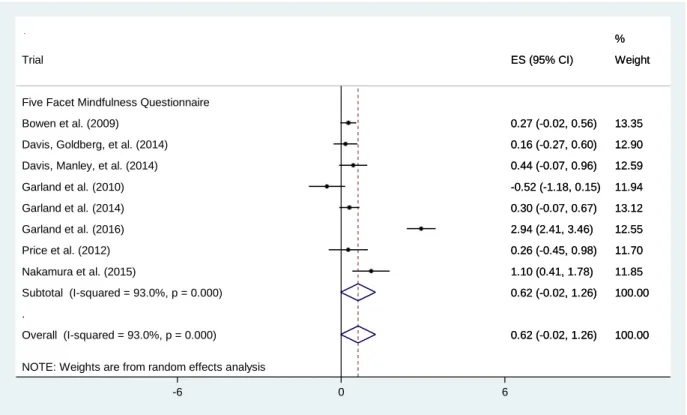
standardized measures (e.g., Penn Alcohol Craving Scale), stress measured with standardized measures (e.g., Perceived Stress Scale), and mindfulness measured with standardized measures (e.g., Five Facet Mindfulness Questionnaire). These outcome variables were continuous
assessments, and sample size per condition) and odds ratios (i.e., number of participants who achieved abstinence and sample size per condition) were included in the meta-analyses.
Cohen’s d/odds ratios and associated 95% CIs were computed for each study as
appropriate and pooled, and then a synthesized effect size was computed for each treatment outcome (i.e., severity of substance misuse, point-prevalence of abstinence, craving, perceived
stress, and mindfulness) using the Stata program metan (Bradburn, Deeks, & Altman, 1999).
Considering that the true value of the estimated effect size for outcome variables might vary across different trials and samples, we used a random effects model rather than fixed effects model, given that the selected studies were not identical (e.g., did not have identical
populations). The random effects model incorporates between-study variation into the study weights and estimated effect size (Bradburn et al., 1999; Harris et al., 2008). The magnitude of Cohen’s d was interpreted using Cohen’s description of .20 as small, .50 as medium, and .80 as
large (Cohen, 1988). The z scores and p values associated with estimated effect sizes were also
computed. In addition, heterogeneity among studies was assessed using I2 and the chi-squared
statistic (i.e., Q). I2 measures the proportion of heterogeneity to the total observed dispersion; I2
of 25% is considered low, 50% considered moderate, and 75% considered high (Higgins, Thompson, Deeks, & Altman, 2003). All analyses were completed using Stata 12 (StataCorp, 2011).
Results Characteristics of Selected Studies
repeated-measures, 8 studies using quasi-experimental designs with repeated repeated-measures, and 28 studies using randomized controlled trial (RCT) designs with repeated measures.
Sample sizes of included studies ranged from 14 to 459. Of the 49 studies, four targeted adolescents with substance misuse problems (i.e., Bootzin & Stevens, 2005; Britton et al., 2010; Himelstein, 2011; Himelstein, Saul, & Garcia-Romeu, 2015). The remaining 45 studies
evaluated mindfulness treatments for substance misusing adults, including seven focused solely on women (i.e., Amaro, Spear, Vallejo, Conron, & Black, 2014; de Dios et al., 2012; Nakamura et al., 2015; Price, Wells, Eonovan, & Rue, 2012; Witkiewitz, Greenfield, & Bowen, 2013; Witiewitz, Warner, et al., 2014; Wupperman et al., 2012) and three solely focused on men (i.e., Lee, Bowen & An-Fu, 2011; Murphy, Pagano, & Marlatt, 1986; Tuab, Steiner, Weingarten, & Walton, 1994). In addition, nine studies evaluated mindfulness treatments for people involved with the criminal justice system (i.e., Bowen et al., 2006; Bowen, Witkiewitz, Dillworth, & Marlatt, 2007; Himelstein, 2011; Himelstein et al., 2015; Lee et al., 2011; Simpson et al., 2007; Witkiewitz, Greenfield, et al., 2013; Witkiewitz, Warner, et al., 2014; Wupperman et al., 2012).
Further, included studies evaluated different types of mindfulness treatment, including mindfulness training adapted from Mindfulness-Based Stress Reduction (MBSR) for smoking cessation (e.g., Brewer et al., 2011; Davis et al., 2007), Mindfulness-Based Relapse Prevention (MBRP; e.g., Bowen et al., 2009; Witkiewitz, Greenfield, et al., 2013), Mindfulness-Oriented Recovery Enhancement (MORE; e.g., Garland, Gaylord, Boettiger, & Howard, 2010; Garland et al., 2014; 2016), Vipassana Meditation (VM) courses (e.g., Bowen et al., 2006; 2007),
community treatment (e.g., Marcus et al., 2009), and mindfulness-based mind-body training (Price et al., 2012; Nakamura et al., 2015; Tang, Tang, & Posner, 2013). In addition, two studies evaluated a multi-component treatment that included components of MBSR for adolescents who were in recovery from substance misuse problems (Bootzin & Stevens, 2005; Britton et al., 2010).
Studies Using Single-Group Designs with Repeated-Measures
Methodological characteristics. Table 1.1 presents detailed information regarding study characteristics and major findings of 13 investigations that examined effects of mindfulness treatments using single-group designs with repeated-measures. Studies using single-group designs cannot establish whether components of mindfulness training contributed to
improvements in treatment outcomes as opposed to other factors (e.g., participant’s level of motivation). Further, more than half of the studies had small samples (i.e., less than 50 participants), which suggests that many studies had low power to detect treatment effects. Further, treatment effects could have easily been affected by outliers in the small samples. Despite the fact that a few studies used objective measures including urinalysis, breathalyzer, and exhaled carbon monoxide measurement to verify participants’ self-reported substance use,
most studies relied solely on participants’ self-reports of substance misuse, psychosocial functioning, and treatment compliance. Additionally, approximately half of the studies did not report information regarding treatment fidelity assessment. Thus, it is often unclear to what extent interventions were delivered as intended.
treatments on polysubstance misuse (i.e., alcohol and drug use; Amaro et al., 2014; Bootzin & Stevens, 2005; Britton et al., 2010; Courbasson, Nishikawa, & Shapira, 2010; Grow, Collins, Harrop, & Marlatt, 2015). Three studies found that mindfulness treatments significantly reduced participants’ severity and frequency of substance misuse, and substance misuse-related problems
at posttreatment and up to 12-month follow-up assessments (Amaro et al., 2014; Courbasson et al., 2010; Grow et al., 2015); however, Grow and colleagues (2015) found that the magnitude of treatment effects was not maintained at 4-month follow-up assessment. Two studies found that mindfulness treatments significantly reduced participants’ craving for alcohol, tobacco, and other drugs over a 4-month follow-up period (Elwafi, Witkiewitz, Mallik, Thornhill & Brewer, 2013; Grow et al., 2015). In contrast, two studies (Bootzin & Stevens, 2005; Britton et al., 2010) did not find evidence suggesting that a multi-component program including MBSR treatment was effective in reducing substance use and increasing abstinence among 55 adolescents.
In addition, two studies examined effects of mindfulness treatments on alcohol misuse (Wupperman et al., 2012; Zgierska et al., 2008). One study evaluated a mindfulness treatment for smoking cessation (Davis et al., 2007); another study evaluated a mindfulness treatment for cannabis/cocaine dependence (Dakwar & Levin, 2013). Wupperman et al. (2012) and Zgierska et al. (2008) found positive effects of mindfulness treatment for adults with alcohol misuse
problems. Participants receiving the mindfulness treatment had a significant reduction in frequency of drinking and heavy drinking at posttreatment, and the reduction in frequency of heavy drinking was maintained at 4-week follow-up assessment (Zgierska et al., 2008). Further, Davis et al. (2007) found that more than half of participants who received mindfulness treatment for smoking cessation maintained abstinence during the 6-weeks following their quit day.
and 55% of participants with cocaine dependence achieved abstinence from substance use after 10 weeks of mindfulness treatment.
Effects of mindfulness treatment on secondary outcomes. Identified studies examined changes in secondary outcomes, including stress, psychiatric distress, sleep, impulsiveness, and mindfulness as a result of mindfulness treatment. Participation in mindfulness treatment was significantly associated with decreases in co-occurring behavioral addictions (e.g., binge eating disorder; Courbasson et al., 2010), stress (Amaro et al., 2014; Davis et al., 2007; Zgierska et al., 2008) , psychiatric distress (Britton et al., 2010; Davis et al., 2007) and mental disorders (e.g., PTSD, depression; Amaro et al., 2012; Zgierska et al., 2008), impulsiveness (Himelstein, 2011), and physical aggression (Wupperman et al., 2012) at posttreatment and subsequent follow-up assessments. Studies also found that mindfulness treatment was effective in enhancing
participants’ mindfulness (Bowen & Kurz, 2012; Zgierska et al., 2008) and sleep quality
(Bootzin & Stevens, 2005; Britton et al., 2010) at posttreatment.
Treatment completion rates (i.e., participants attended at least half of designated treatment sessions) varied from 36% to 93%. Six studies examined the relationship between amount of meditation practice between-sessions/at home and changes in treatment outcomes. Frequency of mindfulness meditation practice between-sessions/at home was significantly positively associated with increases in participants’ self-reported sleep quality (Bootzin &
related to severity of craving, anxiety and depressive symptoms, and stress at posttreatment assessment (Zgierska et al., 2008).
Studies Using Quasi-Experimental Designs with Repeated-Measures
Methodological characteristics. Table 1.2 presents detailed information regarding characteristics and major findings of 8 studies that evaluated mindfulness treatments using experimental designs with repeated-measures. Compared to single-group studies,
quasi-experimental designs allow for a comparison of effects between a mindfulness treatment and an alternative treatment program (e.g., treatment as usual [TAU]). Comparing a mindfulness treatment to a control condition could suggest whether or not components of mindfulness practice contributed to changes in treatment outcomes. All identified studies compared mindfulness treatment to TAU (e.g., Bowen et al., 2006) or to treatment programs that were matched to the mindfulness treatment in terms of duration, dosage, and group structure (e.g., Chen, Comerford, Shinnick, & Ziedonis, 2010).
Further, a majority of quasi-experimental studies assigned participants to mindfulness and control groups that were matched on sociodemographic characteristics (e.g., age, gender, and education) and levels of substance misuse at baseline. Such matches controlled for some pre-existing differences between participants in the mindfulness and control conditions. To better control for preexisting differences, some studies used analytic strategies such as mixed linear modeling or analysis of covariance (ANCOVA; e.g., Bowen et al., 2006; Chen et al., 2010; Marcus, Fine, & Kouzekanani, 2001; Simpson et al., 2007). Although quasi-experimental designs are more rigorous than single-group studies, findings of these studies were limited by participants’ self-selection into treatment or control conditions. A lack of random assignment
between treatment and control groups that were not adequately controlled for, such as participants’ level of motivation to change.
Virtually all quasi-experimental studies relied on self-report measures to assess substance misuse, psychosocial characteristics, mindfulness, and treatment adherence. A few studies had small samples, short-term or no follow-up assessments, and little or no information about treatment fidelity assessment. These limitations might have affected the validity and generalizability of study findings.
Effects of mindfulness treatment on substance misuse. Studies showed consistently positive findings with regard to mindfulness treatment of alcohol and drug misuse in adults (Alfonso et al., 2011; Bowen et al., 2006; 2007; Chen et al., 2010; Simpson et al., 2006).
Specifically, mindfulness treatment was more effective in reducing the amount and frequency of substance misuse at posttreatment and subsequent follow-up assessments across all included studies compared to a control condition except for Alfonso et al. (2011). Additionally,
mindfulness treatment outperformed control conditions vis-a-vis reducing craving for substance use (Chen et al., 2010), withdrawal symptoms (Chen et al., 2010), and substance use-related consequences (Bowen et al., 2006; 2007; Simpson et al., 2006) at posttreatment and follow-up assessments.
mediated the relationship between participation in VM courses and reduced alcohol use and alcohol-related consequences at 3-month follow-up (Bowen et al., 2007). Simpson et al. (2007) concluded that PTSD severity at baseline was not related to inmates’ decisions to participate in
the VM condition vs. TAU and that VM was associated with superior treatment outcomes irrespective of PTSD severity.
Similarly, Alfonso et al. (2011) evaluated an intervention combining mindfulness
meditation and goal management training (for executive dysfunction) in 34 adults with substance misuse, and found the intervention to be effective in improving the duration of abstinence from substance use at posttreatment, but the improvement was not significantly superior to that of TAU (M = 12.7 months, SD = 15.9 vs. M = 4.7 months, SD = 8.1). However, the study found that participation in mindfulness meditation was associated with significantly greater
improvements in neuropsychological functions associated with response inhibition and decision-making relative to TAU.
Additionally, one quasi-experimental study examined the relationship between
meditation practice between-sessions and treatment outcomes, and found that participants’ self-rated quality of meditation practice modeself-rated effects of a mindfulness treatment on reducing withdrawal symptoms, craving for substance use, and anxiety symptoms (Chen et al., 2010). Studies Using Randomized Controlled Trials (RCTs) with Repeated-Measures
Methodological characteristics. Table 1.3 presents detailed information regarding study characteristics and major findings of 28 studies that evaluated mindfulness treatment using RCT designs with repeated-measures. Of the 28 RCT studies, 16 used an alternative psychotherapeutic treatment matched to the mindfulness treatment in terms of intensity, group structure, and dosage as a control condition (e.g., Davis, Manley, et al., 2014; Garland et al., 2010; Garland et al., 2016); 10 studies used TAU as a control condition (e.g., Bowen et al., 2009; Nakamura et al., 2015); and two studies used an inactive control condition (de Dios et al, 2012; Mermelstein & Garske, 2014). All studies reported the degree to which randomization successfully equated the groups at pretreatment. When randomization was not completely successful in equating
treatment and control conditions, the studies used advanced analytical strategies (e.g., mixed linear modeling and ANCOVA) to control for pre-existing group differences in
sociodemographic and outcome variables between participants in the treatment and control conditions.
Despite the strengths of the RCT design, identified studies suffered from several
limitations regarding study design and data analyses. Many studies relied on self-report measures to assess substance misuse, mindfulness, and psychosocial outcomes. Almost half of the studies
had small samples (N < 50); these studies may have been under powered to detect treatment
assessments, and did not use intent-to-treat (ITT) analyses. In such cases, randomization may have been compromised and biases may have been introduced by differential attrition.
Effects of mindfulness treatment on substance misuse. Virtually all studies found that mindfulness treatment was associated with superior substance misuse treatment outcomes at posttreatment and follow-up assessments compared to control conditions (with the exception of Brewer et al., 2009). Specifically, mindfulness treatment was superior to control conditions (e.g., TAU, relapse prevention treatment, CBT, and active support group) in reducing the frequency and amount of alcohol and drug use, number of alcohol and drug-related problems, and levels of craving for substance use, and in increasing abstinence rates (e.g., Bowen et al., 2009; 2014; Garland et al., 2014; 2016; Witkiewitz, Warner, et al., 2014).
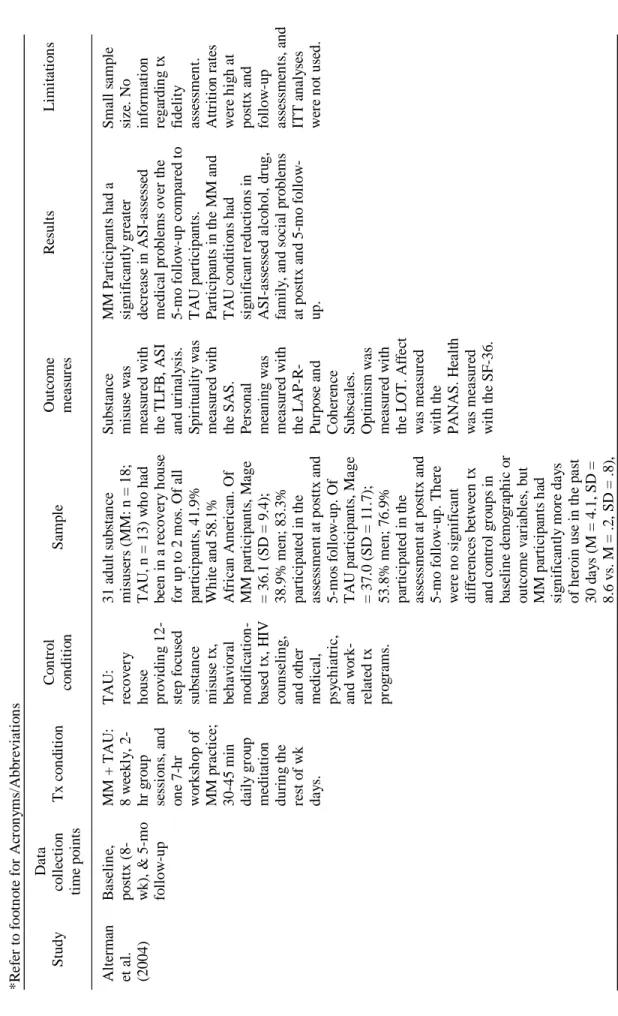
Five RCTs compared mindfulness treatment combined with TAU to TAU alone in samples of adults and adolescents with alcohol and drug misuse problems (Alterman,
Koppenhaver, Mulholland, Ladden, & Baime, 2004; Bowen et al., 2009; Himelstein et al., 2015; Nakamura et al., 2015; Price et al., 2012). Mindfulness treatment plus TAU was more effective in reducing number of days of substance use, craving, and substance-related problems, and in increasing number of days of abstinence during follow-up periods, compared to TAU alone (Bowen et al., 2009; Nakamura et al., 2015; Price et al., 2012). However, two secondary analyses of Bowen et al. (2009) established that the effects of MBRP were not maintained at 4-month follow-up (Hsu, Collins, & Marlatt, 2013; Witkiewitz, Bowen, Douglas, & Hsu, 2013).
attenuated reactivity to depressive symptoms and reduced craving led to significantly fewer days of substance use at 4-month follow-up among MBRP recipients.
Another RCT compared MBRP to CBT and relapse prevention treatment in substance-misusing adults and found that MBRP had more enduring treatment effects in reducing craving and enhancing abstinence at follow-up compared to CBT and relapse prevention interventions (Bowen et al., 2014; Witkiewitz, Warner, et al., 2014). Contrary to the positive findings described above, Brewer et al. (2009) did not observe significant differences between a
mindfulness treatment and CBT in reducing the number of days of alcohol and/or cocaine use at posttreatment. However, this study may have been limited by low statistical power due to a small
sample size (N = 14).
The RCTs consistently found greater effects of mindfulness treatments on cigarette smoking cessation compared to an alternative treatment (with the exception of Davis, Manley, et al., 2014). Four RCTs indicated that participation in mindfulness treatment for smoking cessation was associated with significantly greater increases in abstinence at follow-up compared to the American Lung Association’s Freedom from Smoking Program and Wisconsin Tobacco Quit
Line (Brewer et al, 2011; Davis et al., 2013; Davis, Goldberg, et al., 2014). Further, Tang et al. (2013) documented greater effects of a mindfulness treatment in reducing cigarette smoking compared to a relaxation training program. Additionally, Ruscio et al. (2015) found greater effects of a brief mindfulness treatment that was implemented on a Personal Digital Assistant (PDA) on reducing the number of cigarettes smoked per day over the course of a 2-week intervention compared to a guided sham-meditation practice that was implemented on a PDA.
that MORE was superior in reducing levels of craving for alcohol at posttreatment compared to CBT (Garland et al., 2016), and in decreasing attentional bias toward alcohol-related cues and thought suppression at posttreatment (Garland et al., 2010). Further, Mermelstein and Garske (2014) compared a brief mindfulness treatment that consisted of an “urge surfing” exercise and mindfulness meditation to an inactive control condition in university students with binge drinking problems. Students who received mindfulness training had a significantly greater decrease in number of binge drinking episodes over the 4-week follow-up compared to students who received no intervention. Contrary to the positive findings, three RCTs evaluating
mindfulness treatments in alcohol-misusing adults did not observe significant effects of
mindfulness treatments vis-a-vis decreasing alcohol consumption compared to CBT (Brewer et al., 2009), EMG Biofeedback (Tuab et al., 1994), and running exercises (Murphy et al., 1986). Pertaining to other drug abuse, two RCTs demonstrated that mindfulness treatments were more effective in reducing prescription opioid abuse in adults misusing prescription opioids for chronic pain at posttreatment, compared to a support group (Garland et al., 2014; 2014b); and were more effective in reducing frequency of marijuana use at follow-up compared to an inactive control condition in a sample of adult women (de Dios et al., 2012). Garland et al. (2014)
concluded that effects of MORE on prescription opioid misuse were mediated by increase in nonreactivity; and participation in MORE was associated with a decreased correlation strength of craving and opioid misuse. A secondary analysis of the parent investigation indicated that
MORE participants evidenced less opioid cue-reactivity compared to support group participants (Garland et al., 2014b).
in reducing psychiatric distress and negative affective states (Brewer et al., 2009; Garland et al., 2016; Price et al., 2012; Ruscio et al., 2015; Tuab et al., 1994), negative outcome expectancies of drug use (Lee et al., 2011), stress (Davis, Manley, et al., 2014; Garland et al., 2010; 2016; Price et al., 2012), dissociation experiences (Price et al., 2012), and pain severity and functional interference (Garland et al., 2014). Compared to control conditions, mindfulness treatment significantly increased mindfulness (e.g., Bowen et al., 2009; Davis, Manley, et al., 2014; Garland et al., 2016; Mermelstein & Garske, 2014), emotion regulation (Davis, Goldberg, et al., 2014), attentional control (Davis, Goldberg, et al., 2014), self-efficacy to refuse substance use (Lee et al., 2011; Mermelstein & Garske, 2014), and self-control capacity (Tang et al., 2013) to a greater level.
Bo o tz in & S te v en s (2005) B a se li n e, po st tx , & 3 - & 12
-mo foll
y rs of h er o in us e (M = 3. 4 , S D = 7. 0 v s. M = . 31 , S D = 1 .1) , and ASI -a ss es se d m edi ca l (M = . 5, S D = . 3 v s. M = . 2, S D = . 3) a nd ps y ch ia tri c p ro b le m s (M = . 4, S D = . 3 v s. M = . 2 , S D = . 2) c o m pa re d to T A U pa rt ic ipa nt s a t b a se li n e. Bo w en e t a l. (2 00 9) B a se li n e, po st tx (8 -w k), 2 -, & 4
-mo follow
ci ga re tt es pe r da y a t b a se li n e co m pa re d to n o n -c o m pl et er s (M = 11. 9, S D = 3 .0 v s. M = 15. 3 , S D = 7. 9). D a v is , G o ldb er g, et a l. (2014 ) B a se li n e, 4 - & 24 -w k po st -qui t-da y M T S : o n e, 7
-hr intr
D ec is io n -m a k in g s ki ll s w a s m ea sur ed w it h th e D M S . S el f-e st ee m w a s m ea su re d w it h th e R S E S . P a rt ic ip ant s' b eh a v io ra l re gul a ti o n w a s ob se rve d an d ra te d b y de te n ti o n ca m p st a ff . re gul a ti o n at po st tx co m pa re d to T A U a lo n e. an al y se s di d n o t a cc o un t fo r re pe a te d -m ea su re e ff ec ts an d m is si ng v a lue s a t po st tx a ss es sm en t. N o fo ll ow -up a ss es sm en ts po st tx . H su et a l. (2 01 3) . S ec o n da ry da ta an al y si s of Bo w en e t a l. (2 009 ) B as el in e, po st tx (8 -w k), 2 - & 4 -m o f o ll ow
-up ass
to le ra n ce ; h o w e v er , th e de cr ea se w a s n o t m ai n ta in ed a t th e 4 -mo f o ll ow -up. L ee e t a l. (2011) Ba se li n e & po st tx (10 -wk ) M o di fi ed M BR P : 10 w ee k ly , 1. 5 -hr g ro up se ss io n s T A U : sub st a n ce us e educ a ti o n 24 in ca rc er at ed a dul t m en in T ai w a n (M B R P : n = 10 ; T A U : n = 14) w h o w er e curr ent ly a b st in ent f ro m d rug us e. O f M BR P pa rt ic ip an ts , M a ge = 43 .0 (S D = 5 .6) . O f T A U pa rt ic ip an ts , M a ge = 38 .8 (S D = 7 .9) . T h er e w er e n o si g n if ic an t di ff er en ce s b et w e en M B R P a n d T A U gr o ups i n b a se li n e de m o gr a p hi c an d o ut c o m e v a ri a b le s; h o w e ve r, M B R P pa rt ic ipa nt s ha d si g n if ic an tl y l es s fr eque n t d rug us e co m pa re d to T A U pa rt ic ipa nt s at b a se li n e (M = 3 .8, S D = 1 .8 v s. M = 6 .9 , S D = 2. 9). S ub st an ce m is us e w a s m ea su re d w it h th e D U D IT . S el f-e ff ic a c y t o a v o id dr u gs w a s m ea su re d w it h th e D A S E S . D epr es si o n w a s m ea su re d w it h th e B D I. M BR P p ar ti ci pa nt s ha d a si g n if ic an tl y gr ea te r in cr ea se in n eg a ti v e o ut co m e expe ct a n ci es o f dr ug us e a ss es se d by D U D IT -n ega ti v e a spe ct o f dr ug us e sub sc al e co m pa re d to T A U pa rt ic ipa nt s a t po st tx . M B R P pa rt ic ipa nt s ha d s ig ni fi ca nt pr e-to -po st tx c ha n ge s in dr u g a v o ida n ce s el f-eff ic a c y an d po si ti v e as pe ct o f dr ug us e a ss es se d by D U D IT . S m al l sa m p le si z e. R el ie d o n se lf -r epo rt m ea su re s. N o in fo rm at io n o n tx f ide li ty a ss es sm en t. S tudy di d n o t re po rt a tt ri ti o n ra te s and w h et h er IT T an al y se s w er e us ed. N o f o ll ow -up a ss es sm ent s po st tx . M er m el st e in & G ar ske (2014) A lc o h o l u se
& min
a tt em pt s, o r int en ti o n t o qui t at b a se li n e. T h er e w er e n o s ig ni fi ca nt di ffe re n ce s in b a se li n e de m o gr a p hi cs o r le v el s of c iga re tt e us e b et w e en st udy c o m pl et er s an d n o n -c o m pl et er s. ty p e sc a le . A ff e ct w a s m ea su re d w it h th e P A N A S . P a rt ic ip ant s in th e tx co n di ti o n ha d s ig ni fi ca nt ly lo w er l ev el s of ov er a ll n ega ti v e a ff e ct c o m pa re d t o pa rt ic ipa nt s in t h e co n tr o l co n di ti o n a t 2 -w ks po st b a se li n e. Co m pl et io n ra te w a s 72 .7% f o r b o th tx a n d co n tr o l pa rt ic ip an ts . S ch um an -O li v ie r et a l. (2 01 4) . S ec o n da ry da ta an al y si s of B re w er e t a l. (2 01 1) B as el in e, po st tx (4 -wk ), & 6 -, 12 -, & 17 -w k fo ll ow
-up ass
w er e 100% f o r b o th co n di ti o n s. T ua b e t a l. (1994) B a se li n e 6 -, 12 -, & 18 -mo po st le a v in g t h e tx i n st it ut io n TM : 7 g ro up an d in di v idu a l se ss io n s B F : 20 d a il y , 1 -hr se ss io n s; NT : 5 d a il y 30 -m in se ss io n s, 5 da y s a wk fo r 3 w ks ; R T : A lc o h o l A n o n y m o us m ee ti n gs a n d co un se li ng se rv ic es 250 a dul t m en ( T M : n = 35; B F : n = 2 4; N T : n = 28; R T : n = 31) w it h a lc o h o l a b us e p ro b le m w er e re cr u it ed : 80% A fr ic an A m er ic an. O f pa rt ic ipa nt s in T M gr o up, M age = 44 .3. O f pa rt ic ipa nt s in B F g ro up, M a ge = 44 .3 . O f pa rt ic ipa nt s in N T g ro up, M a ge = 44 .4 . O f pa rt ic ipa nt s in R T g ro up, M a ge = 44 .4 . A lc o h o l us e w a s m ea sur ed w it h so ci a l q ue st io nna ir e in cl udi ng in fo rm at io n a b o ut a m o u n t an d pa tt ern o f dri n ki ng. P sy ch o lo gi ca l st a te w a s m ea su re d w it h th e P M S . P a rt ic ip ant s in T M a n d B F gr o ups ha d a s ig ni fi ca nt ly gr ea te r % o f a b st in en t d a y s co m pa re d to pa rt ic ip an ts i n R T g ro up at 6 -, 12 -, a n d 18 -mo f o ll ow -up a ss es sm en ts ; h o w e ve r, t h er e w er e n o si g n if ic an t di ff er en ce s in % of a b st in en t d a y s b et w e en T M a n d B F pa rt ic ipa nt s. P a rt ic ip ant s in T M a n d B F gr o ups c o m b in ed ha d a si g n if ic an tl y gr ea te r % of pa rt ic ipa nt s w h o w er e co m pl et el y a b st in en t at 6 -, 12 -, a n d 18 -mo f o ll ow -up s co m pa re d to N T a n d R T pa rt ic ipa nt s co m b in ed . P art ic ip ant s in T M g ro up ha d si g n if ic ant im p ro v em en ts o n ps y ch o lo gi ca l st a te s w h en th e y w er e di sc h ar ge d f ro m th e tx i n st it ut io n c o m pa re d to b a se li n e a ss es sm en t. Co m pl et io n ra te s w er e 10 0% fo r a ll tx c o n d it io n s. R el ie d o n s el f-re po rt m ea su re s. No i n fo rm a ti o n re ga rdi n g tx fi de li ty a ss es sm en t. S tudy h a d h ig h a tt ri ti o n ra te s at fo ll ow -up a ss es sm en ts a n d IT T a na ly se s w er e n o t us ed. W it ki ew it z
& Bow
en (2 01 0) . S ec o n da ry da ta an al y si s of B as el in e, po st tx (8 -w k), 2 - & 4 -m o f o ll ow
-up ass
Bo w en e t a l. (2 00 9) thr o ugh a 12 -st ep p ro ce ss -o ri ent ed fo rm a t: 1 .5 -hr gr o up se ss io n s, 1 -2 ti m es wk ly . m ea su re d w it h th e B D I. m o de ra te d th e m edi a ti n g effe ct s of c ra v ing. C ra v in g pa rt ia ll y m edi a te d t h e re la ti o n b et w e en de p re ss iv e sxs a n d s ub st an ce us e fo r T A U pa rt ic ipa nt s, b ut n o t fo r M B R P pa rt ic ipa nt s. M BR P p ar ti ci pa nt s w er e le ss li ke ly t o e xpe ri en ce c ra v in g in r es po n se t o de p re ss io n, an d th e at te n u at ed r ea ct iv it y to de pr es se d m o o d an d re duc ed cra v in g a ls o pr edi ct ed f e w er da y s of sub st a n ce us e at 4 -mo fo ll ow -up. C ra v ing at 2 -mo fo ll ow -up pa rt ia ll y m edi at ed th e re la ti o n shi p b et w ee n de pr es si v e sxs a t po st tx a n d sub st a n ce us e at 4 -mo fo ll ow -up a m o n g T A U pa rt ic ipa nt s, n o t am o n g M BR P pa rt ic ipa nt s. W it ki ew it z , B ow en , et a l. (2 01 3) . S ec o n da ry da ta an al y si s of Bow en e t a l. (2 00 9) B a se li n e, po st tx (8 -wk ), 2 - & 4 -m o f o ll ow
-up ass
M BR P pa rt ic ipa ti o n o n cr a v in g a t po st tx . W it ki ew it z
, Gre
Effect Sizes of Mindfulness Treatment vis-a-vis Posttreatment Outcomes
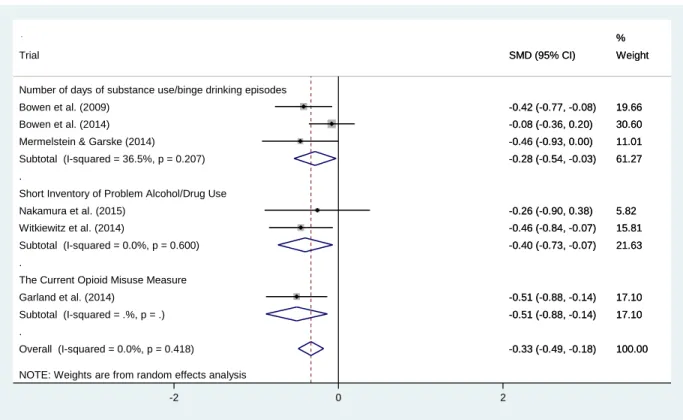
Meta-analyses were conducted for RCTs that compared effects of mindfulness treatment to a control condition on posttreatment values of outcome variables, including severity of substance misuse, point-prevalence of abstinence, craving, stress, and mindfulness. Figure 1.2 illustrates the pooled Cohen’s ds and associated 95% CIs of mindfulness treatment on levels of
substance misuse at posttreatment compared to a control condition (i.e., TAU and alternative treatments). Six trials provided sufficient information (i.e., means, standard deviations, sample size per treatment and control conditions) to calculate effect sizes. The included studies used different measures to assess substance misuse, including number of days of substance use/binge
drinking episodes (n = 3), the Short Inventory of Problem Alcohol/Drug Use (n = 2), and the
Current Opioid Misuse Measure (n = 1). Cohen’s ds were pooled for studies that used different
measures. The Cohen’s ds for studies using different measures were then pooled together to
compute an average effect size. Results revealed a significant, small effect size (d = -.28, 95% CI
[-.54, -.03]) on levels of substance misuse measured with the number of days of substance
use/binge drinking episodes; a small effect size (d = -.40, 95% CI [-.73, .07]) on substance
misuse measured with the Short Inventory of Problem Alcohol/Drug Use; and a significant
medium effect size (d = -.51, 95% CI [-.88, -.14]) on opioid misuse measured with the Current
Figure 1.2. Forest plot displaying random effects meta-analysis for the effect of mindfulness treatment on substance misuse at posttreatment compared to a control condition.
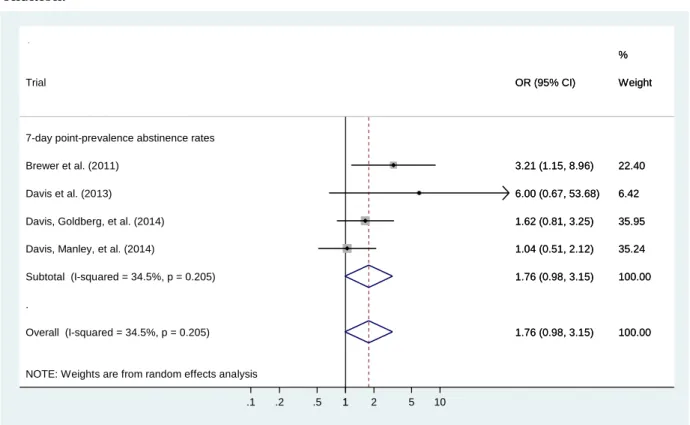
Figure 1.3 illustrates the pooled odds ratios and associated 95% CIs of mindfulness treatments on point-prevalence abstinence from cigarette smoking compared to an alternative treatment across 4 RCTs. The synthesized effect size was 1.76 (95% CI [.98, 3.15]), which suggests that participants who received mindfulness treatment were 76% more likely to achieve abstinence from cigarette smoking at posttreatment compared to their peers who received alternative treatments that were adapted from the American Lung Association’s Freedom from Smoking program (American Lung Association, 2010) and the Mayo Clinic’s Nicotine
Dependence Center program (Boardman, Catley, Mayo, & Ahluwalia, 2005), and Tobacco Quit Line.
NOTE: Weights are from random effects analysis .
. .
Overall (I-squared = 0.0%, p = 0.418) Witkiewitz et al. (2014)
Subtotal (I-squared = 36.5%, p = 0.207)
Number of days of substance use/binge drinking episodes
Subtotal (I-squared = .%, p = .) The Current Opioid Misuse Measure Subtotal (I-squared = 0.0%, p = 0.600)
Garland et al. (2014) Bowen et al. (2014) Mermelstein & Garske (2014)
Nakamura et al. (2015)
Short Inventory of Problem Alcohol/Drug Use Bowen et al. (2009)
Trial
-0.33 (-0.49, -0.18) -0.46 (-0.84, -0.07) -0.28 (-0.54, -0.03)
-0.51 (-0.88, -0.14) -0.40 (-0.73, -0.07)
-0.51 (-0.88, -0.14) -0.08 (-0.36, 0.20) -0.46 (-0.93, 0.00)
-0.26 (-0.90, 0.38) -0.42 (-0.77, -0.08) SMD (95% CI)
100.00 15.81 61.27
17.10 21.63
17.10 30.60 11.01
5.82 19.66 Weight %
-0.33 (-0.49, -0.18) -0.46 (-0.84, -0.07) -0.28 (-0.54, -0.03)
-0.51 (-0.88, -0.14) -0.40 (-0.73, -0.07)
-0.51 (-0.88, -0.14) -0.08 (-0.36, 0.20) -0.46 (-0.93, 0.00)
-0.26 (-0.90, 0.38) -0.42 (-0.77, -0.08) SMD (95% CI)
100.00 15.81 61.27
17.10 21.63
17.10 30.60 11.01
5.82 19.66 Weight %
0
Figure 1.3. Forest plot displaying random effects meta-analysis for the effect of mindfulness treatment on abstinence from cigarette smoking at posttreatment compared to a control condition.
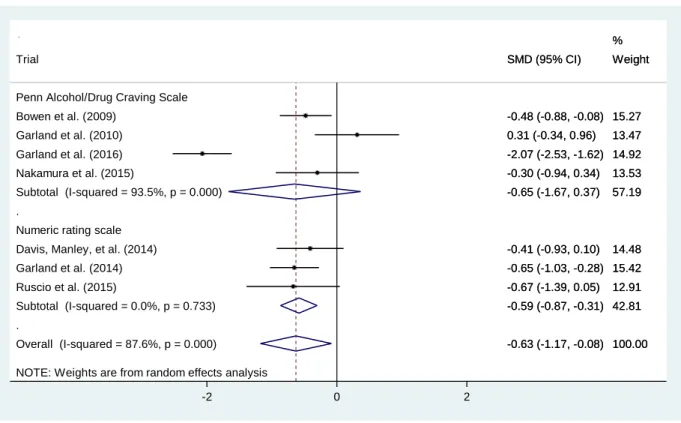
Figure 1.4 presents the pooled Cohen’s ds and associated 95% CIs of 7 RCTs that
provided adequate information to compute effect sizes on craving for substance at posttreatment. The included studies used two measures to assess craving, including the Penn Alcohol/Drug Craving Scale and a numeric rating scale. Specifically, the average effect size of mindfulness treatment on craving measured with the Penn Alcohol/Drug Craving was -.65 (95% CI [-1.67, .37]), and the effect size on craving measured using a numeric rating scale was -.59 (95% CI [-.87, -.31]). Overall, the synthesized effect size of mindfulness treatment on reducing craving was -.63 (95% CI [-1.17, -.08]), suggesting that mindfulness treatment had a significant medium effect on reducing craving at posttreatment compared to a control condition.
NOTE: Weights are from random effects analysis .
Overall (I-squared = 34.5%, p = 0.205) Subtotal (I-squared = 34.5%, p = 0.205) Brewer et al. (2011)
Davis et al. (2013) Trial
Davis, Manley, et al. (2014) Davis, Goldberg, et al. (2014) 7-day point-prevalence abstinence rates
1.76 (0.98, 3.15) 1.76 (0.98, 3.15) 3.21 (1.15, 8.96) 6.00 (0.67, 53.68) OR (95% CI)
1.04 (0.51, 2.12) 1.62 (0.81, 3.25)
100.00 100.00 22.40 6.42 Weight
35.24 35.95 %
1.76 (0.98, 3.15) 1.76 (0.98, 3.15) 3.21 (1.15, 8.96) 6.00 (0.67, 53.68) OR (95% CI)
1.04 (0.51, 2.12) 1.62 (0.81, 3.25)
100.00 100.00 22.40 6.42 Weight
35.24 35.95 %
1
Figure 1.4. Forest plot displaying random effects meta-analysis for the effect of mindfulness treatment on craving at posttreatment compared to a control condition.
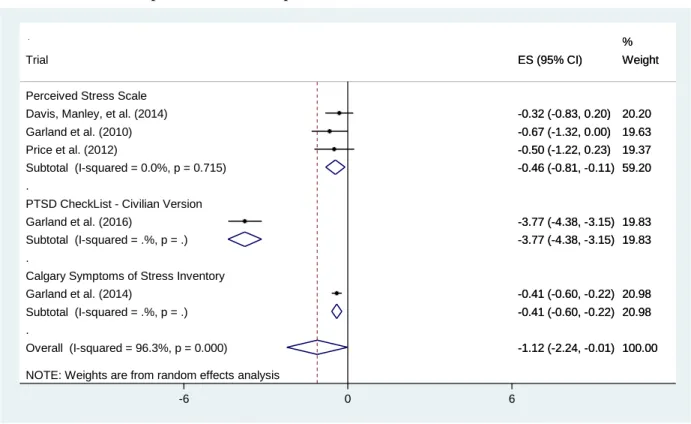
Figure 1.5 presents the pooled Cohen’s ds and associated 95% CIs of 5 RCTs on reducing stress at posttreatment compared to a TAU or alternative treatments. Three studies used the Perceived Stress Scale to measure stress and had an average effect size of -.46 (95% CI [-.81, -.11]). One study assessed participants’ stress using the PTSD CheckList-Civilian Version, and had an effect size of -3.77 (95% CI [-4.38, -3.15]). One study measured participants’ stress using the Calgary Symptoms of Stress Scale and had an effect size of -.41 (95% CI [-.60, -.22]). Overall, the synthesized effect size of mindfulness treatment on reducing stress at posttreatment
compared to a control condition was statistically significant and large (d = -1.12, 95% CI [-2.24,
-.01]).
NOTE: Weights are from random effects analysis .
.
Overall (I-squared = 87.6%, p = 0.000) Davis, Manley, et al. (2014)
Subtotal (I-squared = 0.0%, p = 0.733) Numeric rating scale
Ruscio et al. (2015) Bowen et al. (2009) Trial
Subtotal (I-squared = 93.5%, p = 0.000)
Garland et al. (2014) Nakamura et al. (2015) Garland et al. (2016) Garland et al. (2010)
Penn Alcohol/Drug Craving Scale
-0.63 (-1.17, -0.08) -0.41 (-0.93, 0.10)
-0.59 (-0.87, -0.31) -0.67 (-1.39, 0.05) -0.48 (-0.88, -0.08) SMD (95% CI)
-0.65 (-1.67, 0.37)
-0.65 (-1.03, -0.28) -0.30 (-0.94, 0.34) -2.07 (-2.53, -1.62) 0.31 (-0.34, 0.96)
100.00 14.48 %
42.81 12.91 15.27 Weight
57.19
15.42 13.53 14.92 13.47
-0.63 (-1.17, -0.08) -0.41 (-0.93, 0.10)
-0.59 (-0.87, -0.31) -0.67 (-1.39, 0.05) -0.48 (-0.88, -0.08) SMD (95% CI)
-0.65 (-1.67, 0.37)
-0.65 (-1.03, -0.28) -0.30 (-0.94, 0.34) -2.07 (-2.53, -1.62) 0.31 (-0.34, 0.96)
100.00 14.48 %
42.81 12.91 15.27 Weight
57.19
15.42 13.53 14.92 13.47
0